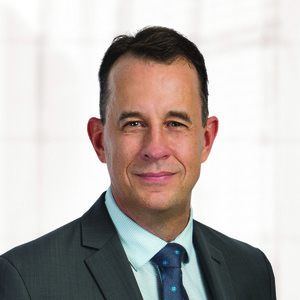
David Christie
President, CEO, and Director at Orford Mining
Replay available
Join us for a great event!

On 6ix: 6ix.com/event/gearing-up-for-a-big-summer-exploration-program-in-nunavik
Automated transcript · Written by software from the replay's audio. It can mishear names and figures; the replay is the record.
0:08 Hello everyone and welcome to Orford Mining's live virtual summit hosted by 6. I'm pleased to introduce our speaker, David Christie, their president and CEO. He's going to be walking us through a company presentation and after we're going to be going into a live Q&A session. So feel free to submit any questions that you might have into the Q&A chat found on the right hand side of your screen. If you'd like to get in touch with the team, feel free to fill out the survey that's linked at the top of the chat. And as always, this event is being recorded and it's going to be available on six.com to watch afterwards. Without further ado, David, I want to pass things over to you so we can get started. Thank you, Cam. And thank you, everyone, for
0:40 attending this afternoon. And on the line, I also have Michelle Sorrentino. She's our VP of Exploration. She'll be on the line for any questions. Going to run through our presentation here. It's an exciting summer we have coming up. We've just finished our Chateau Eagle drilling this past winter. We still have some results yet to come in on that. And it was a really good winter of drilling out in Chateau Eagle. And we're really excited about our Kigovic and Nunavik lithium projects this summer. So it should be a really exciting summer. I'm going to make some forward-looking statements. I'll have you read those at your leisure. This presentation is on our website, by the way. So as you know, we have sort of 4 key pillars to work for. First of all, Jatel. We just finished drilling on our Jatel Eagle project, drilled 2,500 meters there in 2023, hit some really good mineralization across the South Gold Zone, also intersected a brand new gold zone to the north of South Gold. So we're quite excited about the potential there. We'll walk through that quickly.
1:37 Then we have 3 projects in Nunavik, and that's where our efforts will be this summer. So starting in about mid-June, crews will mobilize up to the town. By the end of June, we'll be in our camp with a drill at Kigovic to drill our rab holes, about 40 to 60 of those as we're going to test a lot of targets there this summer. And then at Nunavik Lithium we'll be testing the various pegmatites that we know exist from government mapping and the ones that we see in our remote sensing work that we're doing right now. So we'll be looking at both those things as we move through the summer, taking samples, prospecting, and if at the end of the summer we see something that's worthwhile to drill, we will pop the the rab drill up there and stick a hole into it. So a total of 1839 square kilometers in the province of Quebec, some really good grounds and we're really excited to get back on the ground up there. At West Raglan we're gonna spend about 2 million dollars doing desktop work, geology, geophysics and we're actually flying an airborne survey there. This is all to develop new targets for the following year's work.
2:42 To give you an idea of where we are in the world, this map shows you the very northern tip of Quebec is where our Nunavik projects are and the Jetel Gold down in the Abitibi. Currently sitting around 14 cents, we have a market cap around $24 million. At the end of the year, we had $2.4 million in the bank. We're currently in a financing right now as we speak. And that's in our last press release. You can see that online. Alamos Gold is a very large shareholder of ours and very supportive. And they will be supportive in the issue we're doing right now. And a number of other of our current shareholders will also be supportive. Great team we have with us. I've been in the industry for over 35 years. Then we have Aljay and Michelle, very qualified geologists who have been working both in the Nickel and the Gold business for quite a long time.
3:33 And their experience is extraordinary.
3:39 Our board is an experienced and well-known board. Peter McPhail is our chairman ex-CEO of Alamos, but he was also at Northgate Minerals and Rico after that. So he's been around and knows his stuff. Then we have Lawrence Smith, ex-asset manager and analyst on the street, well-known guy. John McCluskey came to our board a couple of years ago. He is the CEO of Alamos Gold. This guy has built companies. He knows what he's doing that way. Mark Goodman, ex-Dundee. Ben Polinger, he's the VP of Exploration and Business Development at Atex Resources. And of course, Monique Rabideau, a well-known Bay Street lawyer. So our board has huge depth and experience in the mining business. So we're going to start off with Kigavik, sitting up in Nunavik. That's a picture of our camp, by the way, just so you know.
4:28 We're sitting in the northern portion of the belt of the Cape Smith Belt. The green rocks you see on the map here where you find nickel and in the past that's the only area people really spent any time exploring. The rocks to the north of that are not where you find nickel and so in the past the explorers that have explored this Cape Smith belt have really only been looking for nickel and didn't spend a lot of time in this northern portion of the belt. We however have, we believe, discovered a brand new gold district here. We have 4 over 400 square kilometers of ground. We've got gold-bearing showings across the entire length of our project. It has the same kind of age and tectonic settings as some big gold belts in the world, such as the famous Ashanti Belt in West Africa. So we have really good company in the world as far as where we are and we believe we have a camp-scale potential project here. That means we think we could have multiple gold deposits.
5:19 The reason we've got excited from the very beginning is you can see down this map, these are surface showings across the project from like 21 grams to 648 grams to 247 grams. This is across over 40 kilometers of strike length of property. So this is an enormous package of land. We believe across this package, there are more than 1 gold deposits to be found. And that's why we're excited about this property and why we believe so much in it. We have done some drilling there. You can see 11,000 meters of drilling. We've hit gold in almost all our drill holes. This is an exciting thing. So gold is there. There's a gold endowment across the property. We haven't hit those big grays we see in some of those surface showings, but we think we've understood, we now understand why that is and what this summer is going to be targeting those really high grade mineralized intercepts. So it should be a really exciting summer for that point of view.
6:13 The target we're looking for is the type of material you see in the sample picture here. This is a material from the Anik Boulder trend, grades up to 648g. This piece here grades about 50g, I believe it's from the pit the 2 gentlemen are standing in. You see how angular the boulder is there? It hasn't moved far. That's the key thing to remember here. It hasn't moved far at all. We were thinking that some of the material had been moved much further. And that's why last year we were drilling a lot, doing a lot of work at sort of the head of the Boulder train. The big green line there is the Anik Boulder train. We spent a lot of time down in the Southern end of it, because in this area, ice directions from south to north. And we drilled a lot of holes down there. We hit gold in a number of them, up to 8 grams, but not the material that we find in the boulders. A new glacial interpretation by one of the best glacial minds in the country, a guy named Stu Avril. He believes that the boulders with the very high grades that you see to the north of this trend, they haven't moved very far. He believes 100 to 200 meters from source at most, and he believes there's cross-cutting structures that cut this Northeast trending structure, and that's where we need to target.
7:20 So this, we just finished a brand new structural interpretation. We're just finishing this up right now, and you can see there's lots of structures cross-cutting these Northeast trending structures. Where my cursor is right there is the anech trend and these red structures that cut across it to the Northwest are likely where the mineralization is. So this is where we're gonna spend quite a bit of time this year, drill testing these targets close to those mineralized boulders. And we believe this is gonna be the key to understanding this property's mineralization history. You can see this is a map showing the surface sampling we've done across the property. Most of these lines are spaced by a kilometer. Some of them are about 0.5 kilometer or even closer, but lots of underexplored land still where we haven't even done any sampling, but there's also huge areas that are underexplored where we have huge hits in the frost boil sampling. So lots of areas to follow up in here.
8:15 We're going to get in there, take more samples, do more geological mapping, do some geophysics on the ground, and we're going to draw a lot of rab holes, between 40 and 60 rab holes, down to 50 to 100 meters of depth. So this will be an exciting summer. Lots of sampling will be going on, and we'll unravel a big mystery here. Moving south to our other gold project in the Abitibi. This is basically in the center of the Abitibi, the Jatel Camp. Thing to remember here, Jatel hadn't seen any exploration since 1993 when Ignique L'Eco closed its gold mine. We believe that the underexplored nature of this land was a key reason for nothing really going on in this area. But we came in in this area and stakes a number of properties and we acquired another one and we're quite excited what we have there.
9:03 The Jatel Eagle project has been where we've been concentrating our efforts and specifically on the South Gold Zone which sort of in this the northwest corner of the project. We're on the same trend as the Castle Browardy mine to the far west where Hecla is and the Eagle tailbail mine just to the southeast of us here where Maple Gold and Ignique Weigel have a JV. So we're in the same trend, we hit the same rocks, we have the same mine horizon through our properties they have And we have a zone at South Gold that we believe it could be economic. And we're working on towards a resource there. In 2022, we drilled 3 holes just to test our theory that there was thick mineralization there that had potential to have strike extent and continuity. And we proved that that was the case. Then in 2023, we came in and we drilled 14 holes in 2,500 meters, and we've had better grades and more continuous mineralization than we even thought could happen. So we're quite excited about what's sitting there.
10:01 The last hole reported was a hole number 17. We had 1.4 grams over 9.9 meters. This had within it 5 grams over 2.3 meters. Then we hit another section of 1.4 grams over 17 meters and within that there was another section of 5 grams over 2.5 meters. So this has the potential for a big open pit at surface but also has potential for underground mining it as you go to depth. So we're quite excited about the potential here. When we get the rest of our assays back, there's about 6 more holes to fully come back. When those come back, we'll do a full geological interpretation. We'll look at what we need to do to move forward to a resource by this time next year. And this will be what we'll plan for the next drill program. Moving to the north and our critical minerals projects. So in Nunavik, we have 2 different critical minerals projects. We have the West Raglan Nickel project, which is a JV project with Wailu Metals.
10:55 We brought them into the project in 2021 and they've been earning in. We manage and operate the project. And then we have our brand new Nunavik lithium claims. We stake 455 square kilometers of land there, covering the best lithium targets we believe were in the area. Gonna run through first, you know, electric vehicle sales are going to the moon. We all know that. You see more and more electric cars on the roads. This is what drives battery demand. We don't believe no matter what they do to batteries and different kinds of batteries out there, the amount of lithium in them is not gonna really change that much. It's the lightest metal. It holds and releases charge very well. So I think that this is a key thing to remember as we move through different kinds of batteries that will come forward. Nickel prices remain very strong and we believe this is going to continue. The demand for nickel is huge right now for batteries, but also for stainless steel, etc.
11:48 There was a bit of a pullback in lithium pricing at the end of 2022
11:56 into early 2023 but it's still very strong and we believe it will stay strong for quite a long time. Well first on the lithium side 455 square kilometers of property covering about 19 different properties. And you can see some of them are quite small here. Some of them are large. We're always sitting next to the big geological boundaries. The properties are staked basically on map pegmatites by the government of Quebec by lake bottom sediment sample anomalies in the 90th percentile or higher in Quebec for lithium, but also other pathfinder elements. Anomalous grab samples for pathfinders and lithium. And of course, as I mentioned before, we're close to these geological boundaries where spodumene bearing pegmatite rocks can be in place. These maps give a little better definition. So this is the north trend you saw on the previous map. You can see the pegmatites, those are the triangles on there. So these are map pegmatites, we already know we're on the properties from the Quebec government. We've got grab samples showing lithium in them. And we of course have the lake bottom sediment numbers.
12:56 So really prospective land here. And this to the south, so you can see our West Ragland property sitting just to the north of these properties in grey. And then in red are our new lithium projects. So same thing again, you can see the pegmatites with the triangles. You can see the lake bottom sediment sample And you can also see the grab samples here. So we think we've saved what are the best targets in this area for lithium. No one has explored any of these properties for anything really. And there has been no lithium exploration in this part of the world before. One thing I'd like to mention before we move on here is this yellow line you see on the property going from the Raglan Nickel Mine and the Nunavik Nickel Mine. Raglan's been operating since 1999, has more reserves today, or the same reserves today as when they opened the mine. That's their road up to their port facility at Deception Bay.
13:45 And the Nunavik Nickel Mine uses the same port facility. That port facility stays open year round. They ice break that ice all year long so they can ship out concentrates continuously. We're between 0 at the Torque property to about 70 or 80 kilometers at the radiant property away from that port facility? So this is an advantage we have over some other areas which are thousands of kilometers from the nearest port. So this is something to keep in mind. Just quickly comparing the Nunavik region on the right. This is lake bottom sediments, same contouring on both maps. You can see the Nunavik area has the same or better lake bottom sediment anomalies to that of the James Bay region, which is the better known region for lithium so far in the province of Quebec. You can see the Corvette, the James Bay lithium, the Rose, the Wabuchi mines or deposits all within the James Bay area there and the anomalies they have in lithium and lake bottom sediments. And you can see in our area the same type of thing, a big anomaly around radiance, around torque and others here. So we believe we have a very good prospectivity for lithium on our projects.
14:53 Now moving to our West Raglan project. It's a spectacular project. We have over 700 square kilometers of land here. It's very large, over 55 kilometers end to end. We have a number of lithium, or sorry, nickel discoveries already made on the project. We think there's going to be more. Wailu Metals has notified us that they've earned in up to 51% this year, and they are taking the next move to go another 19% to 70% and they have up to 2026 to do that. So this year they decided to make it a target building year. We're flying an airborne survey, we're doing lots of interpretive work to move towards that. There's an optional program to do some groundwork as well. So that'll be the work from them this year.
15:40 2 models we're looking for there. There of course, there's the Raglan nickel model which is on the right. At the Raglan mine, they have 190 individual sulfide lenses in 12 distinct zones. And the nickel copper ratios there are 3 to ones. It's almost 3% nickel and almost 1% copper. And that's the kind of discoveries we've made so far at West Raglan. And then there's the Canadian Royalties Michelin deposit, which is more of an ultrametric dike, but it has a 1 to 1 nickel copper ratio. And it's more of a massive deposit. It's not a whole pile of smaller lenses, but it's a lower grade deposit. You can see the front here showing here we have at the West Ragland project. It's about 2.5 kilometers long, some really high grades like 3.2% Nickel, 1.3% Copper and over 3 grams PGEs over 28 meters. So this is a spectacular kind of intercept.
16:33 So this zone here would be one of the 12 zones that they would have at Raglan. So we need a few more of these. We do have some other zones. We discovered this past year drilling at Boomerang. We hit probably the highest nickel hit we've had outside in the draw outside of the frontier zone. So that's exciting We believe it has room to grow. We've found some new discoveries around the Big Potato area, which are quite exciting So we think there's potential here to find many more showings like Frontier and Boomerang as we continue to explore this project.
17:07 Great relationships with both the First Nations and the communities in the Nunavik area and in the Abitibi. So I'm going to summarize the company very quickly. Strong strategic shareholder support with Alamos Gold. They have been very supportive. We have an exploration committee where we meet with them and they give us advice. But we're very independent still. Massive land position in 2 underexplored gold jurisdictions with great potential. So the Kegevik project we think has potential for camp scale gold deposits. And of course, in the Jatel region, very under-explored, no work since before 1993 there. And so we're grasping at new things there, looking for gold deposits that were ignored in the past when gold was much lower price. And then we're looking at a huge land tenure for lithium targets in Nunavik with 455 square kilometers of new targets that have never been explored for lithium in Nunavik. We think they have great potential.
18:02 We have a great technical and financial partner, West Raglan, with Wailu Metals. It's the same group that bought Norad last year. And then, of course, we're in a safe, proven mining jurisdiction of Quebec, a very supportive province, both financially, technically. So we love being in the province of Quebec. So this year between the 4 projects, including what YLU is spending, we're gonna spend around $7.6 million. That includes what we've already spent at Chateau. So big year in exploration for little Orford and a lot of return, a lot of results to come from that. So watch the space. I think you're gonna be excited to see what you see. Nunavik is gonna be very exciting coming forward. That's all I have, Cam.
18:48 All right, fair enough, David. Really appreciate it. Just as a reminder to everyone in the audience, if you do want to participate in the Q&A, now is the time. Feel free to submit your questions in the Q&A chat found on the right-hand side of your screen. To start, though, David, Jonas has a couple of questions. His first one's this, has the team had a chance to reach any of the pegmatites on the ground yet seen via remote sensing? No we have not been to the ground yet so we stake the ground in early February. I believe there's still snow on the ground there right now, so the snow will be gone sort of mid to end of June and Our crews will be on the ground at the beginning of July Okay, great His fault question is is there a plan to use technology such as an LIBS detector on the ground for sampling? Have they had a chance to test any overlay rock samples in the ground, especially when they had that really warm week in April?
19:38 No, this this area of the world, we will be using that type of analytical device. I'll let Michelle chime in in a second here. But until we get there at the beginning of July, end of June, we will not be on the ground. So there has been no work on the ground on these properties to date. Michelle, you want to talk about the LIBS? Yeah, so LIBS does a really good job at identifying light elements like lithium. So we have those available for the lithium exploration and we've been using portable XRFs as well, which are really good for the heavier elements. So we'll have those on site both for lithium pathfinders and for exploration on Kikavik. Okay, great. Well listen, David, Michelle, I want to thank both of you for coming on today. That looks like all the questions that we received for today at this point. So, again, thank you for coming on. I also want to thank everyone in the audience who's joined us, especially those who have asked questions. But before we wrap up, David, I want to pass things over to you for any closing remarks you might have.
20:35 Yeah, I just want to say, you know, Orford's got a huge summer ahead of us. We have our inaugural summer of exploration on our brand new lithium projects. So we're quite excited to get on the ground there and bang some rocks and take some samples and use the latest technology to
20:50 get real-time analysis of that rock. And then I'm also excited about our Kigvik project. We've come a long way on that project. You've got to remember, no 1 explored that piece of land before us. So this was a brand new exploration project in this world. We believe a brand new gold district. And this summer we've advanced our thinking to a certain point that we believe we're really on the cusp of making those big discoveries. So it'll be a huge summer at Kikavik. And West Ragland, we're very excited to outline a number of new targets there for further drilling in the following years. So it should be a huge summer that way. And we still wait for some more drill results from our Chateau Eagle project. So there's a lot of news coming forward on this company. I think you should watch this space. Lots to come.
Follow Orford Mining into a list and get an email when it puts out news.
President, CEO, and Director at Orford Mining