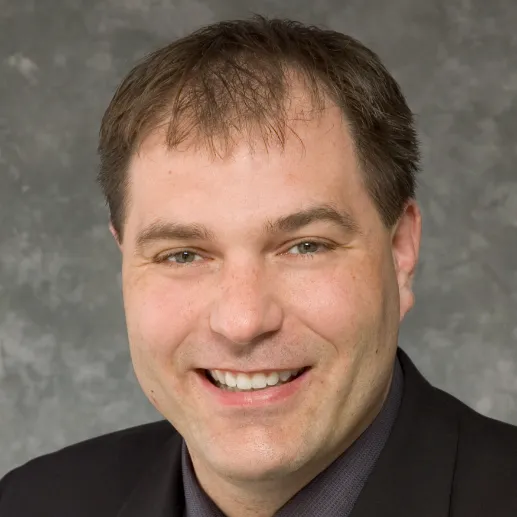
Jason Dunning
Senior Technical Advisor at Spanish Mountain Gold
Replay available
Join us for a fireside chat with Jason Dunning, Senior Technical Advisor at Spanish Mountain Gold. Hear his insights on the Spanish Mountain property and discover what exciting developments lie ahead.

On 6ix: 6ix.com/event/fireside-chat-with-jason-dunning-senior-technical-advisor
Automated transcript · Written by software from the replay's audio. It can mishear names and figures; the replay is the record.
0:03 Okay, as folks are filtering into the room, I'll say good morning, good afternoon, or good evening, depending on where in the world you're tuning in from today. Really appreciate you joining me. I did see a bit of an international audience, so I always appreciate everybody's time. I've got with me today Jason Dunning, Senior Technical Advisor at Spanish Mountain Gold. Jason, how are you today? I'm doing quite well. Thank you very much for asking, Romeo. Awesome. Here's how today's going to work, just for the folks in the room. I've got some questions I'm going to shoot at Jason, so we'll get to the bottom of some stuff for Spanish Mountain Gold. Today's event is interactive. If you do have additional questions that don't fit in, please do ask in the chat today. If there are questions that aren't quite right for Jason but are for somebody else at Spanish Mountain Gold, I'll be sure to pass them on to the team afterwards. So feel free to leave them in, even if they're not quite right for this venue, but we'll get to as many as we can and should today. The only other piece of housekeeping is today's event is being recorded and will be available for replay likely in the mid-afternoon Eastern time.
0:58 It'll come in this same link or on Six's YouTube channel, so keep an eye for it there. But enough out of me, I wanna get into the protein of today's event. So Jason, your career, obviously, and doing my research has spanned multiple major mining companies and projects. So get right to brass tacks, what drew you to Spanish Mountain Gold and what's exciting you about this project? Always good to dive in with a good niggle. What drew me to Spanish Mountain was actually an opportunity to work with Peter Ma, the CEO. I've known him a long time. Him and I have
1:33 been looking for that opportunity. Having worked together previously we knew we had phenomenal synergy, we had a great ability to work together so it was it was like okay let's find that opportunity. So as we move through our years in our different places, you know, we always said, is there an opportunity? But finally, it came around to Spanish Mountain Gold. The project was starting to reimagine itself, redefine itself. And Peter saw a great place where my diversity in experience could actually add significant value to the team. So he made me an offer I couldn't refuse. Always nice when that happens. And I know you've worked extensively in the Caribou Gold Corridor region.
2:19 I'm curious, I know you've worked various different metals there. How does Spanish Mountain compare to other deposits you've evaluated in the area? I mean, both geologically, but also development potential, really. Great question. One of the things that is very striking about the Spanish Mountain Gold Project is even though there's a large resource that's been defined and a lot of meters going back many years has put a good framing around it, it still truly is undiscovered country.
2:53 That was some of my first experiences in the Caribou region, was walking onto map sheets with some of the bigger companies and realizing these are not terrestrial sediments.
3:06 These are seafloor pillows. What's going on here? And then finding trains of massive sulfide or walking into an area where not 1 intrusion was mapped and all of a sudden coming across something that looks like a porphyry system. So I've always seen the Caribou as ripe with opportunity and hence why I refer to it as undiscovered country. So when you look at the property, this past year they've put a new key unit on the map as having host to gold mineralization, which was previously identified in 2011, but never really furthered, Spanish mountain took an opportunity to push it forward and hey, this unit now contains a lot of gold. So all of a sudden you start thinking about the whole host environment and all the structures that run through the property and regionally, and you start thinking, what else has been glossed over? Because as we all know, prospectors and jobs, we get, we get blindsided and myopia based on sometimes the Gossens we see in front of us.
4:07 So I still see this as an area with huge opportunity for growth beyond the deposit itself. And so I can see many, many, many years of exploration programs on the backside of developing this asset. Wow. I want to get into drill results, because I know the recent drill results from the Orca Fault area show, to me, really significant high-grade continuity. So I'd love if you could just walk us through what makes that structural setting so important and how it differs from any previous geological model that you had. Well, again, going back through the history books, there was some phenomenal work done by predecessors
4:46 on the property back in 2008, 2009, and that vintage on structure, both from core as well as from mapping. So when you pull it forward, you start to look at it and you start to think about
5:03 what is going on here, what is the actual control? Because everyone always looks at the deposit and I think they look at it and go, well, it's missing something. When I look at it, I see it as an opportunity. And one of the first observations I made was, are the structures, how are they interrelated? Because it just seemed like there is incredible untapped potential within and in between these drill holes. It's ironic that you see so many higher grade samples in a database and yet for some reason when you do all this phenomenal 3D modeling work, they aren't talking to each other. And if they're not talking to each other, they're not linking to each other, which means you're not populating your models properly.
5:49 So when I look at the structures and we started saying okay, maybe we have to drill a bit tighter, and this was all based on a very thorough analysis by the good team here at Spanish Mountain. When we started to think that way, we all of a sudden came up with a plan because the best place to go was 2 holes drilled from last winter, which was 25 DH 1281 and 1282, which had phenomenal intercepts And it's like, why are those so much better? So good question. And I think it had to do with not only the spacing, but also how those structures interrelate, how they're talking to each other. So it gets back to the fundamentals of the system. And now that we've actually gone back with our proof of concept into this area around those 2 holes, and you saw the results from those first 2 drill holes, wow, definitely there's something going on. Or So we now know we have to drill in a preferred orientation to hit and intersect those structures properly.
6:51 And we now know we have to have an approximate angle in terms of dip
6:56 to also hit them just right. But we also know now that when we look at the holes and we start placing them side by side, we start seeing linkages we never saw before. So hopefully as we start to process the data and we get through the initial joyful glee of seeing those assay results,
7:15 we can start to develop a better way to model this system. Because I think in doing that, if there's an update in 2026, if we better our modeling, then more of these samples that we see throughout the database, throughout the deposit, maybe there's a way we can have them start talking to each other, which could have, and again, could have an impact on the contained metal in the system. And that's the biggest thing why we'd love to see what's coming out of this orca zone. It's really reinforcing getting back to the fundamentals of those structural measurement, which is why we're employing oriented core. And then we started to move to split 2. Awesome. I always try to get by the joyful glee of essay results. So I appreciate that.
8:01 And I know the drill program identified high angle and low angle vein sets with kind of distinct metal associations. So what does that tell us, just for the folks in the room, about the hydrothermal system and what are the implications for drilling? Yeah, Great question. I mean, again, there's been some great, great structural work done here and we know there's at least 4 deformation events, 2 pre, 1 sin and 1 post, the actual mineralizing event. The amazing thing is that there is a diversity of angle. And so you actually got a system that has evolved over time. So it's not just a single pulse of ground prep for the plumbing system. And maybe that's the best way to bring it back. So that ground prep, all of these deformation events have set up these multiple generations of veining, but they've also created a plumbing network that was used by
8:57 that key vein set to deposit mineralization. And the difference being we're seeing in a lot of what, and we like to refer to it as our hall of fame, a lot of the higher grade veins tend to have
9:14 other metals with it, such as, and one of the key ones that we get excited about is galena. When we start seeing galena we start to realize we're probably going to get a bump in gold and sometimes it's quite spectacular or it's just a very good high grade intercept. We're also starting to see in a couple of areas now more chalcopyrite, but there are places where you get disseminated chalcopyrite in the system from earlier on where you don't have this higher grade gold mineralization. And then there's also sphalerite, which can and cannot have association with metals because you can have quartz veins with sphalerite without metal, the precious metals. So as we start to refine and pull this together, we start to identify this is the type of vein we have to go. It's going to be this orientation within.
10:04 And although we log it all through the oriented core process, we are better able to differentiate, which is again supporting the supporting weights of evidence for us having a preferred orientation, which we stated in the news release was 120 degrees azimuth with a dip of around minus 60. That comes from a lot of analysis, a lot of data work.
10:26 Again, it's good to see the team coming together and we're having consensus on this is how we're going to attack this deposit to add significant value for shareholders. Awesome. Now, I know you saw some pretty excellent results from the oriented drill core and split-tube methods. I saw near 100 percent recovery, if I'm not mistaken. How critical is this improved core recovery for understanding structural controls and what insights has it provided for you?
10:54 I think the split tube is one aspect that I've come across in my career and It was almost happenstance that I did, and it was tied to a rock mechanics program. And the more and more I started using the split tube, we started seeing higher and higher recoveries. Too often, drilling programs just let the drillers run amok. And as for most of us who have been to a drill when they're actually emptying out the core barrel, the drillers actually do use a hammer to knock pieces loose. And so it comes out sometimes very jumbled and excuse me, can have like a very broken appearance. With the split tube,
11:36 it's coming out almost as if you see it in the ground. So we're seeing in sections where we actually have fault gouges, we get almost 100% of the fault. It's look, it looks, you know, yeah, it can be a little clay-like, but it's 100%. So it preserves the angles of the contacts with the more intact wall rock. The wall rock may be slightly broken, but again, it comes out looking as if it's a single piece with just little broken edges in it. Previously in years gone by that would have come out like a jumbled mess or in some case a lot of those faults would have been washed away or we would have lost 50%
12:12 of the material. So you have to start thinking If the core is more intact and recovers up, historically what was missing? I don't have an answer for that. But now that we're seeing such high recovery, we have better geological measurements for structure which again is tied to the oriented core. We have more material in the box so the samples are definitely more representative of the intervals that we're sending in. We're not missing stuff so the fines haven't been washed away. That could be the gouge or a clay seam or whatever. All of a sudden now we have a different view of the core and it looks so much better. I think everybody who's been in our core shack, who's been on the project previously has come in and gone and looked, wow, what has happened? This looks amazing. And even the foreman who was with us on the last program, at the last 2 programs, he's looked at it and gone, wow, this is just so much better. The ground looks so now the drillers don't like it.
13:03 I will admit that.
13:05 But again, it's the recovery. It's the look of the core. It's the quality. And that's what we're looking for is the quality. Cause the quality of the core means better measurements, better data capture, and allows the geologists, to have a much more, what's the word I guess, more of an accurate representation when they interpret so that we're doing better modeling in the end result. So I think it's been nothing but add value, nothing but add value to the program. Nice. I know the Phoenix deposit represents a pretty
13:36 significant new discovery with that MAFIC tough hosting. How does the mineralization style compare to the main deposit and what does it suggest to you about the property system? Phoenix is an interesting one because again we actually started seeing a bit of our cenopyrite, but again it's more that it's in that mafic tough unit. It's a unit that was almost not ignored, but it was discounted because there was a big push to around it, well, we have to have this type of a geological sequence like they had in the main deposit.
14:11 We've now shown after dusting off a lot of work that was done back in the vintage of 2011 and and pre that that Phoenix which was again a known occurrence and a potential zone is actually a deposit. So this may think tough much like our outcropping tough target has immense opportunity to host gold. So although there seems to be some differences slightly such
14:40 as the Arsinoe Pirate and we still haven't fully developed what that actually means yet because again it's all new. But I mean at the end of the day the fact that we've got a newly minted resource in a rock unit that was previously not discounted, but pushed to the back of the line, tells us now that we have a huge opportunity to not only grow Phoenix, but learn a lot because we've got another beautiful big gold deposit sitting literally next to it. And so what are the synergies that can start to happen between it? And now you start looking at not only a depth because again, nothing is closed off at both Maine as well as at Phoenix, but also again, a long strike. And what does that mean? So this could also mean wonderful infrastructure challenges as we go through and do our exploration and condemnation drilling for the engineers.
15:33 But like any project, those are good problems to have. Champagne problems for sure.
15:39 Absolutely. Now I want to zoom out and look at the whole 25, 26 drill program. I know you're targeting 9,000, 10,000 meters. What overall, what are your top priorities?
15:48 And also how do you balance infilling versus step-out? Yeah, that's a phenomenal balancing act, I think for any junior company, because again, it's, you know, depending on perceptions on drilling and cost, everyone always wants to get the most per dollar spent. So I look at it as you know the maximizing the value per meter drilled. So if you look at that 9 or 10,000 meters there's a couple of
16:17 There's a couple of things that we really wanted to hit up. 1, we knew that we really wanted to have everything we did add value to a future engineering study. You know, whether at the time when we were conceptualizing this, whether it was a pre-feasibility or a feasibility study. So it had to add significant value into that work. So we had to look at it as to what do we wanna look at? So some of the key things where we wanted to see if we could find more higher grade materials such as we had in that 25 DH 1281 and 1282
16:51 or again in down in the K zone where we had that glorious Bonanza grade hit. So where and how can we can we add that value because that again those additional that additional grade could have profound impact down the road as we integrate into an updated resource. We also wanted to look at, okay, a key part of that is can we move some of the indicated category material in the resource up to measured. So again that ties in with what we previously talked about as potentially that tighter spacing have huge additive value in again allowing those higher grade samples to talk together. So again those were
17:34 key elements. And another part, again, getting back to targets like outcropping Tuf or the A12 target, they are exploration targets but they're also where infrastructure is going to be placed. So irrespective of results, it's a win-win for the company because if we have great results, we make a discovery again, great problem to have.
17:57 If the results are good, but not great, and we say we make a decision that, yep, the infrastructure will stay because it's not going to bring a lot of higher grade ounces into a shallow near-surface pit, we've now got our infrastructure locations and we don't have to look further afield. So it's a win-win from our perspective. But again, as an exploration, as a hunter, I'm looking for that discovery. So I want every meter to count and add potential ounces to the pipeline. Awesome, and there's no greater adrenaline junkie in the world than a junior mining geologist. I love you guys. Now I know the Kzone delivered the highest grade intercept on record at a pretty crazy 719.26 grams of gold. Do you have a model yet for these high grade shoots? And really just personally, how confident are you in their lateral depth extent?
18:45 Again, welcome to the world of working in the precious metal sector. For the K-Zone specifically, we made a conscious decision to push that to the end of this program if we're going to put holes in it because we wanted to be able to amalgamate all the learnings we are gonna get from, again, that preferred orientation and inclination up in the main zone, where we're now seeing the fruits of our labors bear some great higher grade intercepts. So as we learn from that and take
19:17 that away, we'll go back to the existing models where we're working with structural geologists to actually understand those ore chutes and we'll start applying that information so when we go in, we're better targeting in the third dimension. And remember, the K zone was at the south end of the pit. A lot of this is outside of the resource and never been integrated. So a lot of this material was either low grade or waste within previous models, including the PEA that just came out. Because again, a lot of those results were never integrated due to timing.
19:50 So there's a huge opportunity that if we get this right, which is why we're not rushing into it, if we get this right, this could have a very profound impact on the southern end of the pit and could have some major impacts again on the resource and the trickle effect onward. I'm sure you can see where this goes. Sure. I got one for you. So the current MRE doesn't include any of the 2025 winter drill results from the main deposit yet. Based on what you've seen, what impact do you expect the results to have on the, not
20:21 just the estimate, but the mine claim too? Yeah, again, let's hit the nail right on the head. I think there's, without being too forward looking and being a little too glowing, where you look at a hole like 1281 and 1282 drilled this past winter, as well
20:46 as 1292 and 1293 drilled this fall, None of those results are, as you say, in the resource. So if you look at the current block model, there are places, and again, you know, I don't want to be too specific because it's a lot more to pull up a model and spin it in 3D, but there are locations where we're seeing there's not alignment between the metal spread in the block model and the new results or those results not in the resource. So, Because again, that's based on all the historical drill holes. So if you look and we continue to drill that, we're probably going to find areas that may not even have or be part of the block model that has mineralization, which again gets back to what we talked about earlier, is all the new learnings going to allow us to model this differently and better, or enhance it enough so that we have a better, more accurate metal spread in the third dimension.
21:39 I think that's the huge value here is that there's potentially unrealized value sitting within that 3D space. That just hasn't been incorporated because we haven't had the results
21:52 integrated yet. And I think there's a huge opportunity to see some degree of uplift. What it is, I think, is yet to be proven in terms of because we haven't done the modeling or the reprocessing. But again, just visually, when you look at the sections, there's definitely going to be some change. And I can't wait to see, because if you look at the block model around the historical holes, yes, there's gold. Yes, there's a, there's definitely a system there and it did produce a pit. But when you add in all these results that are in the, you know, better than 0.7, all of a sudden now you start to wonder, wow, what is going to be the overall impact? And as we continue to track these areas of higher grade and we have to integrate that in, what is that going to do to the overall resource grade, not only locally within that area, but also on a broader scale? Because again, it's those details that allow all of those higher grade samples that we know are there to talk to each other. As they're talking to each other, more of that grade is proportionally going to be brought into the model.
22:54 There could be some good things that come out of this in 2026 if and when we do an update. Awesome. One thing, the property has over 12 kilometers of prospective strike length, but there's only 2 deposits that are currently defined. So what are you looking at for exploration upside here, particularly in areas like OT and the A12 zone? Well, as we kicked it off and I was talking about my experiences in the caribou, I still see this property as still having untapped potential. There's just an enormous area to the southeast, there's areas to the northwest, there's areas to the north. So this area itself, just on the property, that's 100% Spanish mountain gold, still has huge opportunity for exploration. So once we crack the final equation, the final nut for actually, this is what we're gonna take forward to a construction decision.
23:51 Again, going through those engineering studies. I think in the years afterwards, there's going to be an opportunity for a lot of good exploration work and for this team to roll up their sleeves and truly again, build and look for the next one. Because remember also in the PEA, the Phoenix was not in the PEA. So because it wasn't in the PEA, there's still huge growth opportunity there and that was effectively 360,000 ounces. So just through exploration and systematically walking this out, we could actually add a lot of good fun here for that higher level engineering study. And then just by that thinking, we have the mafic tough, what else has been missed as we move along elsewhere with on the property. So I know I think this will have a long-lived exploration future well beyond the actual shovel in the ground, pulling ounces for Spanish Mountain Gold Project.
24:49 Awesome. I know you guys are advancing both particle and bulk ore sorting studies. So from a technical standpoint, what characteristics of your mineralization make it amenable to ore sorting? And what kind of improvements could we expect in that mill feed grade? That's another great question. It's one of the key areas we know there can be a significant improvement. So, I mean, we talked about the multiple different types of structures. We know there's multiple deformation events, but there's also, as an example, as part of the ore sorting, pyrite. There's multiple generations of pyrite. 3 that have been well documented. Again, some great studies done by codes for, again, predecessors here on the project. And if you look at it, that sulfide content and how we actually walk this through, and The reason we're doing both bulk and particle, the bulk we could actually have a study of, it's actually on the shovels. It's actually on the front end. So you're having that immediate effect of actually sorting waste and low grade from the run of mine material.
26:02 Then you have the particle sorting, which is more tied to the process plant. And then it's another secondary filter. So we have to see which works, do both work? Can they work together? And again, as you start to pull this together, you can imagine if you start to pull that lower grade material out and that waste out so it's not going into the mill, that means you're processing more metal per ton milled, which means a much better ultimate financial model, lower operating costs, and we can take the stream right down into the financial model and too many details for this fireside chat. But it's one of those things in terms of middle grade, it's early, but I think if I look at back in my work history, you can actually see there's minimal metal loss.
26:53 You can see, you know, bumps that are quite substantive. And again, we'll hopefully know that answer real soon. But again, just imagine for everyone on the call here today, if you can take out that low grade in that waste and not send it to the mill diluting the gold content, if you're, if you're sending X, you're going to get X plus. Because you know, you know, there's going to be more gold in every ton milled. And that's a huge additive value to any business case, any financial model for this project. And so this could be one of those key elements, just like us doing the tighter space drilling and the preferred orientation. Think of the ore sorting as that from a process plant perspective that this could be one of those key elements that turns the head grade at the mill completely up.
27:48 One thing, the PEA outlines a really, to me, significant operation with 24.5 year mine life, huge, 26,000 ton per day throughput, huge. So what are you looking at as the critical tech factors that need to be addressed as the project advances towards feasibility? Yeah, I think we've touched on 1 at least initially, is us as a company shooting after that higher grade material, because we know this system has more to offer than what is currently encapsulated within the resource that is in the recent PEA from early July. The company has also spent a lot of time and effort relooking at the tailings moving from conventional to a dry stack and taking that to state of the art applications.
28:35 That has also a correlative effect on water management. We saw a major, major reduction in water. So it's why we're actually doing all of this additional drilling. It's why we're actually doing the ore sorting, because that will help in concert with these, help hopefully lift the grade at the process plant, the head grade. So when you actually look that out within the first 10 years, and if you can have all these wonderful additive aspects work in your favor, those first 10 years, simply because you're in the near-surface environment, could have an immense amount of benefit to the future of this operation.
29:20 And I think we really have to be mindful of that, that it's not just one aspect. There's a bunch of things that the management team here is pushing forward in several key areas to distinguish ourselves from our peers. And I think that right there, especially the dry stack, you know, because again, we want to be mindful to our, to our, the local communities and our local receiving environment, the proposed dry stack methodology with the way we're treating water through reverse osmosis. I mean, it's such a departure from what was done previously here. We've been able to keep a small footprint. We've been able to move to state-of-the-art technologies that again better protects the local receiving environment and actually allows us future accommodations and flexibility if we have to grow the project. This is truly a management team looking at this project in a different light, looking at it in a way that can set us aside and differentiate us from all of our peers. And I think that's where this project has a huge opportunity to become something new and different. It's already a great project, as we saw in the PEA that was published. But I truly believe that if we can have a major impact on those first 10 years with all of this work coming together, then I think this project will take on a whole new light.
30:43 Awesome. So There's a number of questions that came in from the audience over email that I'm just looking at now. For them, I'm going to combine all together and I think they're ones that you can tackle and that's, technically speaking, what's up next at Spanish Mountain Gold is basically the amalgam of their questions. What should investors be looking for as the next big news? Well, if I had that, I think we could really get my hands slapped. So I think we do, again we're working through our drill program so we know we're going to have more drill results coming out over the next several months. I think we've spoken enough that we're moving to next steps in engineering, so somewhere in the next few months something up to that effect may be spoken about by the company in a more formal manner.
31:32 And we know we've got the ore sorting that's in process. So again, when we get the results, when they've been vetted and we understand them, I'm sure the company will share them. So Those are the key things that are starting to queue up and they're all tied to what we've talked about here today. But again, it's all part and parcel of, again, the company trying to take this project to the next level with a fresh set of eyes and a fresh set of ideas. Awesome. There's a couple more questions that don't really quite fit the scope of today's discussion, which I'll pass on to your team. But I want to conclude with 1 that I'd love to ask technical guys, and that's what are you most excited about for the next 3 months of Spanish Mound Gold? What's keeping you awake with excitement right now? There's a lot of things keeping me awake, but I think the one that keeps me awake and potentially could again, have the hugest front end additive value is us cracking this riddle of having all those high grade samples again, above 2 grams, above a gram and a half, above a gram, talking to each other in three-dimensional space. So as we're hunting and we're challenging the 3D models, as we're challenging the historical interpretations, That to me is the essence of what we're doing here because when we fundamentally redefine an already stellar gold resource and we can show that there's still value within ground that has been drilled and apparently paid for by historical programs,
33:02 to me, that is exciting. So I actually get up every morning hoping that the assay lab is going to return another tranche of results. I get excited wanting to see the morning drilling the DDU or daily drilling update and understand where we are, what do we hear, what do we see, because that is where we can actually start to drive ideas and that's what will start also pushing ideas into other areas as well. So that is the main thing for me because it could be redefining again what is an already great, great gold deposit. Awesome. Well, Jason, thank you so much. I always appreciate somebody letting me grill them for a good half hour. For folks in the room, thanks for throwing your questions. The ones I didn't get to today, I will be shooting through to the management team, So don't worry about that. Jason, thank you so much.
33:48 This is so fun. And everybody stay tuned. Watch this space for the updates Jason's talked about today. Take care, everyone.
Follow 6ix into a list and get an email when it puts out news.
Follow Spanish Mountain Gold Ltd. into a list and get an email when it puts out news.
Senior Technical Advisor at Spanish Mountain Gold