Transcript
Automated transcript · Written by software from the replay's audio. It can mishear names and figures; the replay is the record.
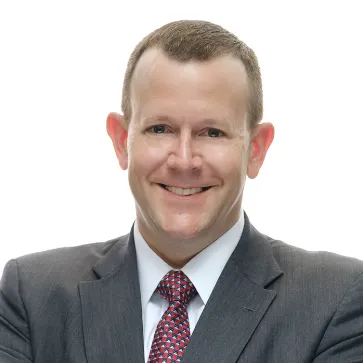
0:07 It's my pleasure today to meet with Dan Wilton, First Mining Gold CEO and Director. How are you today, Dan? I'm well, Romeo. Great to see you. I've got a few questions today about your history. I'm not gonna say ancient history. You're still a young man. Then we'll zoom into the present, talk about first mining, some of the projects, but let's get right into it. Sure.
0:30 So with BCOM from Queens, go Gales, curious if mineral extraction was always on your mind or if the career kind of took you there over time? Yeah, no, it wasn't despite the fact, we knew a bunch of people in my kind of cohort at Queen's, who went into mining engineering, and all the people I know who went into mining engineering, I don't think any of them actually worked at a mine, as it turns out. So, but, so I knew a little bit about it there, but not really. My entry into the mining sector came almost completely by accident.
1:06 I started my career at Morgan Stanley in New York in the mergers and acquisitions group, kind of part of a generalist pool of analysts. And we'd just gone through our training and at the end of the training, you know, the staffer came around on Friday and everyone's super keen to get their first assignment and, you know, he said it's a mining project. And all of a sudden I noticed that a lot of my friends were like going down to tie their shoes or go into the bathroom. And, you know, I was super keen to do whatever. And they kind of looked around and said, Well, we'll give it to the Canadian kid because he must know something about mining, despite the fact that I grew up in Winnipeg and knew more about agriculture than I probably should, but didn't know anything about mining. But that was fortuitous. That basically was the start of my career.
2:02 And what's been most of 30 years working with the mining sector. So, you know, started there, learned, you know, like anything when you're become a bit of a specialist in it. And there weren't that many people who did mining on Wall Street at the time. As soon as you speak the language, then everything that comes in the door comes your way because you now know how to analyze projects and model mines and stuff like that. So that was the start of a beautiful thing. I love it. I've noticed the industry is there's a lot of streams to mining CEO, but one is I was born in a coal mine. I lived mining my whole life. And then one is private equity to mining CEO or analyst to CEO. That's one of the paths I see fairly frequently. I'm curious with that being to some degree your background, what skill set do you think private equity background gives a mining CEO?
2:54 Well, you know, for my case, I think it's different if you've kind of started in a junior role where you're supporting on sort of on the financing transactions and doing analysis. For me, when I was in private equity was the 5 years before I joined at first mining. So pretty well advanced. I'd been in 20 years of my career by the time I started at Pacific Road Capital. It really came down to, you know, thinking strategically, which you have to as you're going to become a large and often kind of stuck investor in these projects. It's about, you know, really being able to back your convictions with capital, which you have to do. You know, a big part of a CEO role is essentially advising or recommending to the board on allocating capital. And that's a lot of what you do as a private equity investor as well.
3:54 But it was really the combination of those 2 things, you know, and the strategic element of identifying strategic assets, strategic resources is critical when every good private equity investor, when they make an investment, even before they make the investment, they need to think about the exit and how are they going to get out of it. Because generally you know you are deploying those funds in order to return them at some point to your investors having made a big profit. So it's easy in this business. It's been one of the challenges in mining private equity. It's easy to get stuck as, you know, particularly in the last 10 years as the only deep pocketed shareholder in the room. And we had this happen to us a few times at Pacific Road. And, you know, it's when the rest of the world knows there's a deep pocketed investor they're quite happy just to you know let you fund it when capital is scarce and it's even it's
4:57 even a tougher environment now in those situations. So you know I think that it it can give you I think an ability to sort of have your convictions on what assets are and what they look like, and then have the experience of, you know, actually really backing your own convictions with your investments. No, it makes sense. And you did, I mean, a lot of your career, both education and work was kind of all over. I mean, you had an MBA in France, you had finance roles in London. What I'm curious about is how you see the landscape for funding and capital raising in Canada compared to Europe and if that's changing at all. Yeah, that's interesting. That's an interesting question because I think, you know, there've been obviously particular with respect to mining companies, such huge changes in the Canadian capital markets over the last 12 years.
5:56 And I was the beneficiary in my banking days of what was essentially a massive and pretty captive pool of capital in Toronto that was always there to support, you know, interesting development projects being advanced. And I've had this discussion with a number of my sort of colleague, developer, CEOs. Many of us worked in the industry in that 2004 to 2011, 2012 timeframe. And so we often ask ourselves, remember what it was like when we had tailwind? Like, you remember, if you were a company with a 5 million ounce gold project in Canada, like, you'd have a 6 or $700 million market cap, and you'd be covered by 10 banks and, you know, have an ability to go raise $50 million for the bought deal whenever you wanted it.
6:54 It's just not that way anymore because that fund management sector, particularly in Toronto, has just been decimated over that 12 year time frame. And I saw some stats a couple of weeks ago that I think like that number has gone from something like $15 billion to $2 billion. Like it's a real decline. And part of it's just overall sectoral change in investing where retail investors aren't giving the mutual fund managers money and paying 2.5% to have them manage their specialty funds anymore.
7:39 Part of it is, it's been a really tough sector to be an investor for 12 years of more or less consistent falling knives. So yeah, I think it means there's been such a change in Toronto that it's difficult to kind of compare over time when I think about it. But certainly, you know, what we see in Europe now, because we have a bunch of shareholders in Europe and a bunch of our long term shareholders, you know, a couple of our institutional shareholders are based over in Europe and they have been more consistently been able to attract capital in kind of in good markets and bad and, you know, keep or grow the size of their funds. And I think I've been doing a good job that way. But I think in part, because they have been able to, with a bit more stable sources of capital, They've been able to think longer term. And I think that's something that we've sort of consistently seen as a general difference between your average, at least in our share registry, our average Swiss or German investor. And particularly, you know, we shouldn't say it's not that our US investors aren't long term. We've got
9:10 a lot of great long term US investors, but I think we tend to see a lot more of the velocity of trading coming from investors in North America.
9:20 That makes sense. I appreciate that context for sure. It's just interesting to compare regions, especially over time. But let's go ahead and zoom into the present or closer to the present anyway. Curious. 2 things. 1, what attracted you to First Mining Gold? And if you'd always known or known of Keith Neumeyer, the company's founder. Yeah, I mean, I knew of Keith, even in my banking days, but didn't really work with him. I think I was actually telling this story today to someone. I think I'd actually only met Keith once before. Before I sat down in his office, you know, more or less having cold called them and kind of tell them that, you know, he should hire me as CEO of First Mining Gold, which was in the fall of 2018.
10:07 Yeah, for whatever reason, Keith didn't, just First Majestic had a great US following and sort of where we were, we weren't able to add a lot of value to that, sort of on the institutional side in Canada. But what was interesting, so as Keith was putting together First Mining in 2015, 2016, a lot of the projects that he ultimately acquired were things that we'd looked at when I was a partner in the private equity fund. Like, and most of them in pretty good detail, like down to block models and you know, really kind of detailed geological reviews, metallurgical reviews of the assets.
10:57 And there's a lot of them that I really liked. You know, we were looking at them in 2013, 2014. So again, a period where everything was going down, we didn't have a real propensity to transact. And then I'd kind of lost track of a bunch of these things because, you know, we hadn't invested in them when they had a 200 or 250 million market cap. They ended up going down to a 50 million market cap and then first mining bought them for 50 or 55 million dollars. That was certainly the case with Gold Canyon, which is where Springpole came from. You know, similar kinds of stories with a number of the other projects that were bought, Coastal Gold that had Hope Brook. We'd looked at Hope Brook. We looked at PC Gold that had Pickle Crow.
11:44 We looked at Gold Lund a few times. Yeah, it was all pretty interesting stuff. So yeah, from that perspective, this was this really intriguing portfolio that was then sitting 3 years down the track after they'd acquired it. And, you know, the share price had come down and come down. And I kind of looked at it as, you know, this a really interesting portfolio of projects
12:15 that obviously has some great backing by virtue of the capital and attention that Keith was able to get on it. But I saw a pretty logical avenue as to where I might be able to add a bit of value to this, which was basically portfolio rationalization and capital allocation. Coming back to that point, you know, we had a couple of big projects that were really the ones that were going to carry the bulk of the value in the company. You could allocate capital to growing those or de-risking them. Sometimes both, but generally one or the other. And then we had a bunch of other really interesting projects that the company had received some inbounds for, just people interested in trying to partner on them or earn into them or something like that.
13:10 And when the gold sector turned, however briefly, in 2020, there was actually a bunch of interest that had come in on a few of our projects, but especially the first one was Pickle Crow. And so we kind of brought to this portfolio a bit of the strategy of how do we work the portfolio to avoid dilution for the shareholders. And I think we've done that pretty successfully as we've looked at it over the last number of years, Like really since that deal in 2020, we brought in partners on Pickle Crow and Hope Brook. We sold Gold Lund to Treasury. We've sold off a bunch of other smaller, earlier stage exploration projects.
14:02 We used to have a big portfolio in Mexico that was costing us real money every year, which was the other thing that we looked at. Like, how do we really make sure that, you know, we're allocating this capital where it's gonna make a difference. And yeah, in the end, that was what we've been able to do between the SilverStream, creating royalties on these companies or the projects that we sold off or partnered, selling those royalties. Like we've been able to generate more than $50 million of cash over the last 4 years. So when you're sitting today with 100 million market cap like in that 50s, you know, largely been spent right into advancing the assets and adding value to the assets.
14:48 You know, it's disappointing when that's not really recognized, but I think that's an indication of, we've done good things for the shareholders by being able to avoid what otherwise would have been just more share dilution. No, for sure. And actually zooming in on the 2, what I would call your current flagship projects, they're kind of at different stages of development. I'm eager to hear your perspective on what advantage you think that bestows on shrewd investors looking for bets right now. Yeah, listen, I think when you look at the deep value of the entire portfolio that we have, and that's really anchored by the 2 kind of core projects at Springpole and DuParcay. There's a bit of natural diversification in there, but I kind of look at it as just really having multiple shots on net to add value.
15:43 And most importantly, when I look at those 2 projects, what I see right now, if you have a positive outlook on gold, which I think a lot of us do follow the sector, the leverage that these big projects have to the gold price and particularly more advanced stage projects have like real fundamental value leverage. So, you know, at Springpole and DuParcay, when you add it up based on our existing technical studies, every $100 in the gold price is $250 million US of after-tax NPV increase. So, I'll never forget, Romeo, 3 or 4 years ago, one of our shareholders, still a shareholder today, good long term shareholder, we were chatting.
16:38 And, you know, it's kind of asking what what's your gold price projection? And I said, Well, you know, here's where I think it could go. And this is, I think maybe even 2019, before Gold had run up and certainly before it pushed up with COVID, but sort of up above that $1,300 level. And I was saying, I've always kind of thought peak to trough moves in Gold price over a cycle. You know, the last trough was 250, the peak was 1900. So can you see something that's a 6X amplitude in Gold price over the course of a cycle? I think you can. So starting at 1100, could that get you to, you know, 7000? Sure. But I was talking about this kind of leverage, even with Springpole then like, you know, every $100 is 200 fees, like, I don't want to hear anything about $100 rise in the gold price. Can you right now do the calculation at what these projects are worth at $5,000 gold?
17:38 Sort of so I'm like, No, let me get it. No, no, I want you to do it right now. So I, you know, calculator and start doing that. And I can't remember what the number was like, but it came out to be something like $15 a share or something like that. Like just astronomical. It's like there, that's why, that's the number we need to be like. But if you have that view, these ounces are in the ground. They're substantially de-risked. By the end of next year, we're anticipating we're going to have EA approval at Springpole. I think there's some interesting things evolving at DuParcay around potentially smaller startup scenarios and things like that. While it is a challenge to have to allocate capital between 2 projects, inevitably what it means, you can't do everything.
18:32 It just means you have to prioritize. And I think that's not a bad thing for companies like us to have to, you know, tighten down and live within a budget and watch the costs and try and be creative about how you get things done more efficiently. But having 2 major projects like this, I think just gives you so many more meaningful shots on that, whether it's an exploration, whether it's massive value re-rating opportunity around environmental assessment approval at Spring Pool, whether it's, I think, continuing to find more at DuParquet, but also, again, I think some of the alternative development scenarios that we're thinking about now that could just give you a really significant lift here in the short term.
19:26 I appreciate that. I'll wrap this up by asking what I always like to ask at the end of these kind of interviews is what are you personally most excited about in 2024, this year at First Mining Gold? You know, I think it has to be that submitting the final environmental assessment document like at Spring Pool, getting that all pulled together. You know, I keep reminding people we're talking to, we're, you know, 6 years into a 7 year process, let's say, and maybe it's 7 and a half years, you know, maybe it's 8 years, but we're 6 years into it. And I remember in 2019, and I'm sure we had shorter timeframes that we thought we'd have things permitted by.
20:16 And it wasn't really till we brought in Steve Lines and our environment team that we have now that we got a real sort of definition around what these permitting timeframes are. But it seemed like a long way away, 2024, 2025, when you were sitting there in 2019. But it literally, the first thing that struck me when I woke up on New Year's Day this year, was like, next year is 2025. We're gonna be sitting here at this time next year. And I know how fast this past year has passed. We're going to be sitting here in 2025, you know, a stone's throw away from having one of the largest undeveloped gold projects in Canada with its environmental assessment approvals. So, you know, I aspire to be an overnight success story, you know, 10 years in the making.
21:19 We're probably 9 years since the creation of first mining. Good things come to those who wait, I guess. That's probably it. I'm very excited about things progressing at DuParc as well. I'm really excited about the exploration opportunity that we have there and what our exploration team has been able to uncover. That's again, we've got probably 10 different shots on goal there to be able to really meaningfully demonstrate how that project's going to grow. But we also have some of this other potentially interesting alternate startup plans that I think will try and bring some definition to investors here over the course of the next couple of months.
22:09 Awesome. Well, Dan, thank you so much. I'm excited to see what happens in 2024. Absolutely. Thanks, Romy. Always a pleasure.