Replay available
On Location at Beaver Creek: Executive Interviews
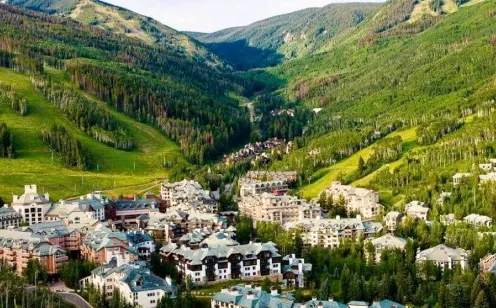
6ix went on location to Beaver Creek to sit down with leaders from a range of companies for a series of candid, one-on-one interviews. Set against the backdrop of the Colorado mountains, these conversations explore what's driving each organization forward.
- Company
- 6ix
- Date
- Wed, Sep 30, 2026, 12:30 PM ET
- Replay
- Watch the replay on this page · 56 min
On 6ix: 6ix.com/event/on-location-at-beaver-creek-executive-interviews
Replay
Transcript
Automated transcript · Written by software from the replay's audio. It can mishear names and figures; the replay is the record.
0:00 I'm here at Beuter Creek Precious Metals Summit with Kit Myers, CEO of Alaska Silver, and incoming CEO Aaron Shuttell. How are you doing today? Pretty good. Good to be here with you. Awesome. For folks who don't know about Alaska Silver, what would you like to tell them in 30 seconds just about the company? Well, it's a great company. We have a major property in Alaska plus 80,000 acres all in state land looks like we're gonna have some good permitting ahead of us to high-grade resources and one of them is a past producing gold mine in Alaska says great to have a past producing mine and we have some core actually air and has it some water pump and that is the really high grade 980 grams per ton silver equivalent and about 75 million ounces of silver equivalent so that's a great start. It's good to have a showstopper at the show. One thing I want to ask about, I know this is your biggest drill season ever I believe with 9,000 meters. What did you find that made you want 3,000 more on top of it? Well we always want to drill more because we have lots and lots of targets to work on.
1:00 One reason that we did some financing to move ahead is our drill production was 25% ahead of schedule and we had another month of work to do and as Aaron says, when you have daylight burning Alaska, you gotta keep working, so. We had some great alteration at Silver Sage, new discovery last year. We had a lot of places to test it. It's totally covered. So we need drilling to understand the structure, trace the mineralization, and it's really a easy decision to make. We drill more when we can. Awesome, I appreciate that. Aaron, coming into the big chair soon in October, what do you think, just for about your personal experience, what do you think you might catch as head of 4 of Alaska's largest native corporations that a classic Bay Street CEO might not catch by the Silver Junior. Well, development in Alaska can be hard. So I know the interior of Alaska very well and I know a lot of businesses that operate in the interior. So as we go into pre-development mode for Illinois Creek and as we do our work, just having those relationships and that background in the industry. So most of my background is in the oil and gas industry, but it does translate pretty well into what we're trying to do here at Elaspe Silver.
2:15 Yeah, speaking of, I know your experience is really about getting stuff done in kind of remote Alaska. So presumably that'll serve you well in this role. Yeah, you got to figure it out. It could be tough. Sometimes it's easy, but a lot of times it's tough and you just got to figure it out. You got to, in a lot of industries in Alaska, you lean on your competitors sometimes. You need a piece of equipment. And I think that's some of the stuff we can bring to bear, all those relationships. And you need a person or equipment or help. Kilo, I posed to you because I know you've been working at Grounds since 1981. So what leads you now, you know, giving it up with a smile? Well having Aaron come in with his vast experience in Alaska has a lot of the same values and goals that Joe and I had as founding the company and As hard as in the right place. He wants to see economic development and mineral resource done the right way. And that is really key to a successful project in Alaska. So I really look forward to this next age as we move ahead. You know, I'll be staying on as executive director to help answer any questions that Aaron has. And I think it's very exciting and I really look forward to it. So it's gonna be a good time. Oh, me too. Anyway, Kit, Aaron, it's great to catch up with you here at the Creek. Yeah, thank you. Hey, thank you very much. I'm at the Creek Precious Metals Summit with Joaquin Marias, CEO of Argento Silver. How are you? I'm doing great. This is a very beautiful conference so far. Yeah, the whole industry comes here for a week.
3:36 It's fun to catch up. One thing for folks who haven't heard of Argenta or the Alcavar project, can you give us just a quick overview? Quick overview, this is a silver play in the North of Argentina. Argenta Silver is a company that has been created in the Fiore Group office, which is Frank Justra backing this up. We also have a very big investor from Argentina who is called Eduardo Edelstein. The project is in the North of Argentina. It's a pure Silver play. I would say, Romeo, that this is one of the only pure Silver plays in the world. There is no lead, no Zinc, no Copper. We have 50Moz of Silver, both in between Infer and Indicated Resources at a very high grade, 482g per ton of Silver. 45Moz of those are in the indicated category and they are very well at risk. So the deposit is open in both ends. We are drilling in both ends at this moment while we are speaking with 2 rigs and we will be working out towards an update of the mineral resource for 2027.
4:38 Awesome. Now, I know that we've just seen the first metallurgical results out of Yatche and the 2 eye-popping numbers are that 95% recovery and also the concentrate grading of 15,000 grams per ton. In plain English just for the folks who aren't geologists watching, what do those numbers mean? Why is that so exciting for investors? All right. So this is very important for us, Romeo, because this is a study that it's a very long study with multiple stages. What we have disclosed is just the very first portion of the study. The very first stage, which is milling the rock, putting that powder into a flotation process with no optimisation at all. So there is a frother that creates the froth and a bonding agent that bonds to the sulfites that are in that powdered rock.
5:25 So the silver is very easily liberated from the rock and it's floating very quickly and it's giving us this concentrate of 90-something percentage as you mentioned. The average on 15 samples that we have run all across the deposit is giving us 95% recoveries. These 15 samples are 15 drill holes all across the deposit. And it's a fantastic number for us because it's telling us that very quickly you can float the silver from the deposit independently on where you are in the deposit and independently on what is the mineralogy on the deposit. 2 of those samples were sent to a cleaning stage. So the froth that is so rich in Silver has been cleaned up and that clean up gave us this amazing sample of 14,857g per ton of Silver, very close to 15kg with 96% recovery.
6:21 But this is only the beginning. There has been no optimization. So there is very little chemicals working in there. There's need to be more optimization so results could even get better than what we have now. The important part of this is that the final concentrate is not even yet ready. We will have that in the next 30 to 60 days. It's beautiful because we will get the final concentrate and we will understand perfectly what are all the characteristics inside that final concentrate. Yeah, that kind of recovery rate on a pure silver play is quite a rare animal. So it's interesting to see. It's a very rare animal. In the industry in general, you will see recoveries of 85 to 90%. That's kind of common. And above 90%, it's rare. But I would say that above 95%, it's quite rare. And a very special territory there for sure. Of course, of course. I know, Obviously, there's still a lot to come left this year, but if you had to pinpoint one thing you're most excited about that you can share with investors, what would that be? Oh, the results that we will be putting out. First of all, we will be disclosing a lot of drilling results that we have been waiting for a long time. Sure. There was a very big lag on the laboratories.
7:33 So we have been waiting these results for many, many, many weeks. It was not our fault. It was a situation of the laboratories that we couldn't control. But now we are starting to get those certificates back And we will be disclosing all these drilling results that we have, plus the final results on the metallurgical test work, which is going to be very interesting to see. And we will be also drilling, that we have been drilling Manicopan. It's a very high-grade target. We will have results from money coming out as well. So very exciting news to wait for in the market. We are aligning everything to update the resource by March, 2027. That's something that we will be discussing probably next year, but I think that a lot of results will be coming out, and I would suggest the audience to stay tuned about that. Awesome. We're really looking forward to seeing what happens next. Great. Joaquin, great to catch up. Thank you. Awesome. So I'm here with Tara Christie, CEO of Banyan Gold. How are you? Excellent. It's a great time here at this conference. I just love how you get to see everybody all in one place. Yeah, the whole industry really is here for a week. It's fun. And for people at Beaver Creek who are new to the Banyan Gold story, can you give us a just 30-second overview, just for folks who might not be aware of it? Sure. We've got a very large resource in the Yukon that's continuing to grow with a big drill program this year.
8:51 So 3.64 million ounces of indicated and 5 million ounces inferred. These types of big deposits that are approaching 10 million ounces are very, very rare And we benefit from existing hydropower lines on our property, existing roads, cell phone service, moderate topography. We're drilling 70,000 meters this year. We've made 2 discoveries at our nitro project property just 25 kilometers away and 5 kilometers from each other. Our resource is growing, we're drilling deeper, we're filling that gap where we're finding higher grade and we're bolstered by a very strong treasury which is going to get us through 2028. How exciting! One thing I definitely wanted to ask you about is last week's pretty remarkable results at Powerline. What is new drilling giving for OMEK this year? Well it's our new geological model and our ability to predict these high-grade domains and project them and so you'll see that in our results delivering high-grade results time and time again. And our focus this year has been because we're leading up to the PEA, we're really thinking about not just drilling off the high-grade zones, but the ones that come in early in the mine profile. So the first 10 years, and you'll see that in our drill results. And once we get the PEA out, we'll be able to talk about our drill results in the context of here's some great PA results and look at this production profile and here all this drilling you know went to those first 3 years you know pushing that the grade up adding ounces and we'll be able to you know that'll put us in a whole different league of people understanding and seeing our projects. It's
10:21 not just more ounces, it's better ounces. How exciting, it's definitely a catalyst to watch out for people on their calendar. One thing that you referenced earlier was the first hole ever at your nitro project found a whole new gold server discovery. So what are you guys looking for up there at Seattle Creek? So Seattle Creek and Roaring Fork, both the first holes into both of those hit high grade. You know up to 17 grams and up to 500 grams silver at Seattle Creek, right? So we're seeing a repeat of the system and We're putting the geology that we know at Ormac into perspective in the district. We have found some intrusives at Seattle Creek. At Ormac, we haven't yet found an intrusive rock type. We have at Seattle Creek and Warring Creek. We put a bunch more holes in there and we've tested 11 targets on our broader land package this year and we'll be back drilling those. So the financing that we did, plan for a really big drill program next year. We're already signing our drill contract for 8 drills next year. We'll drill up to 100,000 meters at ORMAC and an additional 20 to 30,000 meters at NITRA.
11:20 You know we're firing on all cylinders now. That's great. You guys certainly have a healthier treasury than most companies here at the creek. Yeah we have. When we close this financing next week we'll have over 105 million dollars in the bank. Very healthy. So for folks watching, what stands out about Banyan? What among the many gold stories here, what do you think makes Banyan the one to watch? Well, I think the attention we're getting from GDXJ, index inclusion, my meeting schedule is full here. People have noticed us, the perceptions that we had of low grade. People are starting to change that perception and see us as a real project on a rapid path to the development stage, as well as on that exploration upside. You asked me about what do I see at Netra and Ormac. Why are we even drilling those when Ormac is a potentially economic project with the PEA? Because they're materially additive.
12:11 If you can find a 200,000oz, 500,000oz
12:15 deposit on surface within trucking distance of Ormac, that could materially change some of the economics and shows that we have a district on our own property. And with the scale of resource that we have at Ormac, that's likely a project where a mill will run for 30 years. That might be the scale of our mine plan. And if you find there's additional resources that are added to that, that's a generational then opportunity and big companies with big cash balances, which they have are looking to invest in jurisdictions where they're there for a long time. We all know Yukon's hot right now. Sure. There'll be a district mill. Banyan would like to be the one that's the first mover and we're working on all cylinders to get there. Awesome, well Tara thanks so much. It's fun to catch up at the creek. It's fun to catch up in person. In person. Thank you so much. Appreciate it. Blue Jay Gold, How are you today? I'm doing well. We just had a couple of days in the BBCree conference here. So it's been fantastic to be able to meet new faces, you know, and old friends. Yeah, it's one of those weeks where everybody in the whole industry kind of shows up in the same town. So it's like, I'm going to say, folks aren't familiar with Blue Jay Gold. Tell us the 30 2nd pitch for why it's an interesting company to watch. Blue Jay is a newly listed, 2 months, 3 months out of the gate, high-grade gold explorer. We've got almost 1 million ounces, 8 grams. And we're drilling right now, which has brought out new results out just last week. We're expecting drilling to continue for the next, you know, late October and results to come through until, you know, January next year. So lots of catalysts coming out on a high grade gold story in a safe jurisdiction. Yeah. Well, 1
13:46 cool thing about your story, you guys inherited
13:48 a mill, a road, underground working, so much. How does that put you in a different category than a lot of the gold juniors that are here at the creek this week? You can drive there. Yeah. So, you're straight there, you've got the infrastructure, and that was essential for us in picking up the asset. So being able to drive there, you don't need helicopters, you can drive to each of the drill pads you can build. And it's really nice to actually have an existing 50 person camp already on site. And you're just over an hour's drive from the capital of the Yukon. So you've got great amenities that you can actually utilize in your exploration and potentially future in any sort of production that comes from the exploration that we have in terms of discovery and growth in the million ounces that we already have there. Awesome. It's good to have a head start for sure. Halfway through your first drill program at Skim Creek and it's still going at depth, what are you learning throughout this drill season so far about the project?
14:37 It's been incredible. We're coming in straight out of the gate, we have more than 100,000 meters of core that we can leverage from, from the past. It's a large project, 170 square kilometres. We've already fast-tracked 18,000 metres of core logging. That's actually uncovered new indicators of what mineralisation looks like. So there's new vectors. It's actually changed our drilling program already in the early stages. We can see these factors that we could never have seen by the human eye before. So we're going to target that because we think previous drilling may have actually come up short in a few areas. So immediately coming in with new technology to understand the system better, and also just drilling along and extending along mineralization.
15:25 So just in 1 system, the mineralization already discovered a resource, 1.2 kilometers long already, we're just looking to extend that. So it's really nice to get out of the gate, new geology, new understanding and leveraging from that resource base. Hey, so you got results coming up, catalysts through to January, as we've already said. What are you most excited about for the rest of the year for Blue Jay Gold? Geologists from the background, but results, drilling, drilling, drilling. And that's resource expansion on grade is so satisfying to have in a safe jurisdiction. So we're in a great position. Just going to be results rich coming forward for the rest of the season. Awesome. I'm super excited to see what comes up next in the next quarter. Fantastic. So good to catch up with you at the creek. You ready? Yep. Likewise. Andrew from Cascadia Minerals. How are you today? Doing great.
16:12 Awesome. And we're here at the Beaver Creek Conference. All for folks who don't know about Cascadia. Give people about a 30 2nd overview of what the company is all about. Yeah, so we're a copper gold exploration company focused in Yukon, Canada. We've got our flagship CarMax copper gold deposit, so that's a high-grade near-surface copper deposit that's been known about for a long time, but really is just kind of being revitalized by us right now. So it's got a resource of about 650 million pounds of copper, 300,000 ounces of gold, but importantly at a 1% copper equivalent rate. So really nice. It's on a road, it's near power, and we're in the midst of the biggest drill program right now in 20 years and we're making a lot bigger. Yeah, I was about to say, it's the biggest drill program, like you said, since 07, I think. 2007, yeah. Yeah, and it'll be the first time you've done a resource, redone the resource in 2022. How different are you expecting the numbers to be this time around? Yeah, so the 651 million pounds is the current resource.
16:58 That was done by the prior operator to us. We're targeting getting over 1 billion pounds of copper. So we're not going to get that at the end of this year. It's gonna take this year's drilling and next year, but we're feeling pretty good that that's, you know, possible to be done by end of 2027. And you got results at the lab waiting right now. Which one are you most excited for? Which one's keeping you up at night, Andrew? So there's this extension zone that we've been drilling this year. It's kind of a gap between 2 zones in the resource though. 147 zone and zone 2000 S and we've been drilling in between those. It was thought to be an area that was barren and it turns out that actually their geologic model was wrong. And not only is there mineralization there, we've seen some of the best grades in the entire resource. So we put out a whole recently that was 82 meters and 1.12% copper and 0.64 grams gold. It's higher gold grades than we've seen elsewhere in the deposit, really nice continuity. Now we've stepped out beyond that with about another 6 holes. They look interesting visually. We're very excited to see what comes back from the lab. So that's, I think that's what I'm most excited about, just get a feel for the continuity of that. Does that high-grade continue? Because if it does, that is an absolute game-changer for us. Awesome, and one thing I wanted to mention is, I think you guys have Minto restarting, just kind of down the block from you, a couple dozen kilometers.
18:02 What does it mean to have a project of that size coming back online so close to you? I think it's going to draw a lot of attention to the district and just bring people back into it. But it's also a demonstration that, you know, this works. It works in this area and this style of mineralization works as well. And Minto was a very successful operation for many, many years. Went into receivership in 2023 to a variety of market conditions. But the group that's got it now, very keen on getting it back into production. I'm hearing 2028 is their target. And I think, yeah, that's going to be fantastic to have that operating near to us. I don't know if there's direct synergies, but either way, it's a district and people are going to see that district potential. That's exciting. Last thing I want to close on you with, a lot of people obviously at this conference are terminal gold bugs, we'll call them. What are they missing with the story about copper? I mean, there is incredible copper demand coming. You've heard all this news about how not only are we needing more copper as a society, but we're depleting the existing resources.
18:51 And we've not been finding more resources nearly as quickly as we need to replenish that, let alone meet that additional supply. And it's interesting, this has always been that precious metals conference, but more and more people you meet here are really keen on copper as well. And the majors we're meeting with, copper is on top of everyone's list, just as that big thing, the value is going to keep going. I think we're at 670 a pound copper now, at all time highs, that's not going to change anytime soon. So having a copper primary project with a lot of gold on the side as well. Great place to be. Awesome. Andrew, great to catch up with you. John Paltz, CEO of Chesapeake Gold. JP, how are you today? Good. Good. Thanks, Romy. I'm doing very well. How about you, Sal? Good. Good. Thank you. And towards the end of a very, very busy conference. For folks who aren't aware of Chesapeake, Can you give us just a 30-second overview of what's going on at the company? Yeah. So Chesapeake is endowed with a very nice deposit. It's called Metates.
19:39 It's in Durango, Mexico. It's the single largest deposit of Silver. We have about over 400Moz of Silver in the deposit and an additional 19Moz of Gold. So it's 18 when it comes to Gold in the world. And so it's a very exciting project. Probably top 10 when it comes to precious metals.
19:57 The second aspect of the company is actually the technology. Because Metates is actually a refractory deposit. All of that gold and silver is trapped in pyrite. And we have an actual technology where we can actually unlock those crystals. We actually make them to basically flower, oxidize, and open up. And then you can run a standard heap leach technology on it to recover those precious metals. Exciting. I know you've had tons of meetings obviously at this conference. Yeah. How have they been for you so far? Yeah, they've been quite good. I would say 50% of our meetings are actually with corporates. Okay. And the reason why that is is because with the technology We're not only doing it for Metates and bringing that production up, but we're also looking at third-party companies. We have a list of over 200 names that would require the technology because they have sulfide resources. And so we've been meeting with those companies to hopefully bring them into the lab and do test work. Right now, we have 3 companies that we brought into the lab about a year ago. So the results from that test work will be coming out very shortly.
20:52 And then we have another 3 companies that have joined the whole process over the last few months. And so we have 6 companies now in the lab. And so one of the ways that we're bringing value to our shareholders is finding a monetization pathway for this technology. How exciting. I'm glad we're talking to you now because I know very recently you put out some pretty exciting results. I love you could just explain to our viewers what those were like. Yeah. So the key highlight of the results that we put out is the fact that over the last 5 years we've had several phases of results for the technology. The first phase we had you know recoveries that were not where we wanted them to be. Back in 2024, our second phase, we got recoveries up to 74% on the Gold and about 50% on the Silver. And then the latest results, what has happened over time is we had 180 days for those first results, 240 for those second results.
21:43 And the latest as a result is actually 90 days. So we've reduced the amount of oxidation times, but actually we're achieving 70% recovery on the Gold and actually 61% on the Silver. So we've increased the recoveries and reduced the amount of oxidation time. And what that really means for our investors and for the project is that we are going to, 1, bring the project forward in the sense that we don't have to oxidize for so long. So that means less working capital for the project, probably lower project capital costs, definitely lower operating costs. And then we get those metal sales much more closer to the actual day when we start constructing and building. So that's a huge economic benefit for the project and that same technology will also be applied to all those third parties too. Oh great, appreciate the extra context. Just to wrap up today, for folks watching, What are you most excited about for the rest of the year? What's something people should mark in their calendars? Yeah, so one thing that people will be asking is, you know, they want to know that the technology works. Of course. So when I start putting out those press releases on showing those third-party test work from the last year, I think that's one thing that's very exciting.
22:44 Those results are coming very shortly. We also have our long duration columns from the same phase 3. So those results will be coming out shortly thereafter, especially our large diameter columns, which mimic what would happen on the oxidation pads. So they're 20 feet tall. We're running the columns basically, and we can show you what the recoveries look like. And all of that will be fed into a pre-feasibility study that we've been working alongside. Awesome, exciting. Well, great to catch up with you, JP. Yeah, thanks so much, Romeo. I'm here in sunny Beaver Creek, Colorado with the Contango Silver and Gold team. CEO, Rick Van Nuyenhuysen and President Sean Kunkun. Gentlemen, how are you today? It's a lovely day and it's a good way to start the conference. Yeah, awesome. Now, Rick, I'll let you start. For people who don't know, give me a 30 2nd pitch on what Contango's all about. So Contango is a North American based
23:29 gold and silver development stage company. We're producing gold at our Montreux project, about 60,000 ounces of gold a year. And we're growing our growth profile of our 3 other projects, Lucky Shot, Johnson Tract, and Kitsault, to a 200,000 ounce a year gold producer and a 5 million ounce a year silver producer. Safe jurisdiction and we're financed with our cash flow from our Montreau mine. That's actually really my next question is with Montreal producing at 4,300 gold, what can you do that I would say 99% of the junior share of Beaver Creek can't do? Not dilute our shareholders. Yeah, there you go. Yeah, I mean, our cash flow on average, so for the five-year life of the line, is over $100 million at today's gold prices. Next year, we're gonna have a banner year.
24:18 It's the peak year of production, lowest cash costs. We'll probably generate about $200 million of free cash flow at today's goal price. That's more than enough to keep advancing our other projects, again, without deluding our shareholders. So constantly going back to market is a shareholder's nightmare because it just they just see their asset dwindling and dwindling. So that's that's what we can do that most other juniors can't do. Awesome. Appreciate it. And Sean, I'll throw it to you for this morning's news. Obviously big news out of Kitsil Valley this morning. Tell us what that means for the Silver Side of Contango Story. Yeah, no, thank you. Yeah, we're really excited about the resource. It represents one of the highest grade resources in the country, in Canada, one of the largest. You know, I used to always say, you know, it's size meets grade in a safe jurisdiction and today's resource validates that.
25:09 In terms of the numbers, a 93% increase to the indicated category, A lot of conversion on the gold resource up at home. Seek. And if I think back, that was one of the biggest risks on the project. What we're seeing is we're seeing continuity. We're seeing grade. So we put out 150 million ounce silver resource. Well over 300 grand silver EQ. And so, you know, going back to the share structure, we're giving investors exposure to 5oz of Silver for every share of Contango. So it's got grade. It's a lot of data. So you've got 433,000 meters of drilling, almost 1900 drill holes.
25:58 So the confidence we have in that resort is extremely high. Now, what's interesting is we're in the midst of a 50,000 meter drill program. And now that we've streamlined the framework of the resource, we'll be able to bolt on that new information right after we get final assays. So we'll be putting out another MRE in the spring of 2027. And so again, almost 100% increase to the indicated category, a higher degree of confidence. We're giving investors exposure to over 80 million ounces of pure high-grade silver and 1 million ounces of high-grade glue. Awesome. It's certainly a silver and gold bug's dream. Rick, I'll throw it to you for the projects we haven't talked about much today. What's going on next at Lucky Shot and Johnson Track? Well, we're doing now at Lucky Shot, we're underground.
26:50 So all the underground infrastructure's in place to continue our drilling pattern throughout the year. We'll basically keep going. I'm really excited about the CAM vein, which was that new discovery that we had at the Lucky Shot vein system if you will and we extended, you know, we hit it, we sample it, it runs over an ounce, we extended the the underground tunnel about 100 meters so that we could fan drill and see how extensive it is. So it's kind of exciting. Exploration is always exciting and when you discover something new, it makes it even more fun. Yeah sure. And what's near Johnson Track? So Johnson Track, we're just wrapping up the field season. We got a lot done at Johnson track this year, more than we had budgeted for and planned. And just the weather worked out, everything just worked out well. So we got the road completed, got the lay down area for the tunnel that we'll start building next year.
27:43 And we got the campsite, winterized campsite, which means we have to expand it. So we got all that laid out. All this year, which the latter 2 things we were planning on doing next year. So we're ahead of our projections. Okay, ahead of projections, good. And Sean, I'll close with you. Among the approximately 1 trillion companies at Beaver Creek this year, why should investors take a look at Contango? Well, I think what sets us apart is, and again, why are investors here? They're here for return on their investment. What sets us apart of the thousands of junior miners, we have one of the lowest share counts. Sure. And if you factor of the 33 million shares that we have out, 15 are in the hands of management, big institutional owners, strategic investors.
28:30 You have 15 million shares, yet we're in production, we've got a development pipeline, the cash flows there, we don't need to dilute, so it's a very unique investment. Awesome. Well, gentlemen, enjoy the show. I'm here with Kerry Nolm, Chairman of Generation Mining. Kerry, how are you doing? Good. Great. Awesome. Kerry, so tell us about Generation Mining and Marathon for investors who might not be familiar with the story. Generation Mining is developing a copper palladium project in Ontario, Canada. It is fully funded, fully permitted. Construction is starting imminently. It's a 2 year construction and the mine is gonna produce 42 million pounds of copper a year and 168,000 ounces of palladium. Here you build mines before Wheaton River, Thompson Creek.
29:17 Recently, you guys have announced a closing of a $1.3 billion financing package. Congratulations, by the way. Talk to us about how this one compares to the mines you'd built previously. Well, this is by far the biggest raise that I've ever been involved in. And it was a big team effort, raising 1.3 billion Canadian dollars when we have a market cap of 250 million is no small feat. It's a much bigger mine than anything I've ever built. But that said, it's probably one of the most simple mines that I've built because it's traditional technology, it's open pit mining on the Trans-Canada Highway and it's crush, grind, float. It's just about as simple as a mine can get. Your CEO Jamie Levy has mentioned that early work should begin at the beginning of the year. So talk us through what does this mean in so far as the project between now and Christmas?
30:05 So the first things we got to do are get the road in, get the trees cut, and start grading the earth and moving, getting the area ready to do the build. Then in the new year, immediately, when the weather permits, we will be pouring concrete for the mill base, starting to pre-strip for the open pit and using that rock for both more road building and also for the
30:36 tailings facility. So that's all going to start as soon as the weather permits in the new year and then it's a two-year build starting at the beginning of next year. We expect it to be finished towards the end of 2028 with commissioning in 2029. Commissioning is kind of breaking in the mill. Obviously this conference is very much a precious metals one. We had a lot of gold and silver bugs around. Marathon has gold and silver but also platinum and palladium. So why did you make the case for the project for a precious metals investor? Well platinum and palladium are precious metals first of all and half of our revenue is coming from those 2 metals. So right away, we are a precious metals company. Also being a copper company is interesting because if you've looked at the market recently, the gold companies are starting to invest in copper. So it's of interest to gold investors as well.
31:33 Kerry, why don't you tell us a little bit more about the copper element of Marathon for folks who may not understand that aspect of the project. So historically this project has been a palladium project. This palladium was the bulk of the revenue. What's happened with the Copper price going up is it's become actually more of a Copper project, which is interesting. But having more than 1 metal is really beneficial because when you're mining away and 1 metal might be up in price and another one might be down in price, So
32:00 you're always going to be able to make a profit by having a polymetallic mine. And we actually have 5 different metals. So the copper has become the most dominant metal revenue wise. It's currently about half of the revenue with the precious metals being the rest of it. So let's look into the future. It's Precious Metals Beaker Creek 2027. What does the project and the company look like a year from now? Well, we expect that we'll be putting quarterly releases out on the progress of the construction and how we're doing on the budget and all of that stuff and and we fully expect that in a year we'll be almost halfway through construction we'll be able to report that to the market and what happens traditionally is if you make those metrics if you if you make those accomplishments you will start going up what's called the Lassonde curve. And we expect to be moving up that curve in the next year. Gary, thank you so much for your time today.
32:54 Have a great rest of the conference. I'm here with Brian Skanderbeck, CEO of GFG Resources. How's Beaver Creek been so far for you? Excellent so far. Big first day, 14 meetings gone, and I look forward to the next 2 or 3 days. That keeps it exciting. So for folks who aren't aware, give us the 30 2nd pitch for GFG right now. GFC is a district scale explorer focused in Timmins. 65, 75 million market cap company, one of the best discovery stage opportunities out there. Awesome. And I know recently Barik started operating your pen property. What's it like for shareholders to have one of the biggest gold miners in the world operating on one of your properties?
33:26 I just think it's a great credibility stamp. We built this land position over years. We did a lot of work into it. We believed in the asset, but we had 900 square kilometers of ground. So it was time to partner one of these and Barrick was certainly keen to do it. And we negotiated a good deal for both sides. So I think it's a great credibility stamp, view it as a momentum builder, view it as carried discovery optionality. You know, we're working one of the best and brightest teams in the world, Deep Balance Sheets, and they obviously saw a lot of opportunity in the Penn property. Awesome. Lucky to talk to you today, because this morning, obviously, you had a discovery at Goldarm, an anomaly. I'd love if you could tell me about today's news. Sure. Today's news included
34:06 a really new area that we've tested and it's called Hawker. And ultimately what we've done over the last 6 to 12 months is a lot of regional targeting, real general generative work. And one of those areas that came to light was Hawker and high-threshold till anomaly sits on a great looking corridor. And you know what? Nobody's even looked there before. So today's release was relevant in the sense that this is how discoveries happen. It's the building blocks of discovery. So Pay attention. We'll talk about Hawker more in the coming quarter. Exciting. One thing I always like to ask you, and Timmon's obviously not new to mining. How is there still a Districtsdale opportunity in Timmons at this stage? It's fascinating. And you think of these structures and In the end, different geologists think differently. And sometimes we get too model driven. We don't open our eyes and say, there's gold over here. Why isn't there gold over there?
34:54 And Timmins is just like that. They've been there 100 years and yet you can go and find broad areas where they're really immature. And that's what GFC is doing. That's what we've done. And we found great systems looking like that. So to me, it's, it's Timmins offers the right mix, lots of gold in the ground, lots of cover, lots of, lots of optionality. And you know what? There's huge areas yet. There's still hardly been touched. Exciting. And now just to wrap up, I know you got Bearcow involved. You got drills running. What's the next big catalyst for GFG? When we think about it you know we just upped our budget this year to 6 million in the crowd we're gonna be drilling Aljo again in Q4, or at least talked a bit about that. Q1 is a big piece for us. So we're going to be Diamond drilling Nihani in Q1. We'll be hopefully Diamond drilling Hawker at that point. The next 2 Qs, Aldo, Hawker and Nihani. Those 3 are really big catalysts for us. I think the markets really pay attention to those. Well, looking forward to it.
35:47 Brian, have a great conference. Thanks so much. I'm here with Barry O'Shea, CEO of Highland Copper. Barry, how are you? Good, thanks. Nice to be here. Awesome. So, of the million juniors here at Beaver Creek this year, give me a 30-second version of the pitch for Highland Copper. Well, Highland Copper has a fully permitted copper project in the US. There are very few of them. And I'd say if you take a look at the Lassonde curve, we're sitting at that nice valley, prepped for financing production and really stepping up on that curve. How exciting. And I want to talk about permitting actually for a second, because like you said, you're one of the only fully permitted American copper stories. What advantages does that give you that other developers here can't claim? I think it puts timeline in your hands and naturally you need to get through the other components of engineering, permitting, financing, etc. But once you're through those you can build your project. We've demonstrated that with some early site works. We don't have just sub permits, we have license to operate in the region. Time is in our hands.
36:39 And your feasibility study had copper prices of at this point, yesteryear. And I know we're due for an update soon. What does that look like at today's Copper prices? We did our last study at a $4 Copper price. I think we're approaching $7 today. Our long-term consensus is closer to $5. I think the important data point is that from $4 to $5, there's extreme torque. The net asset value of our project actually triples. Also importantly though is that you can't only rely on Copper price changes. When we look to update our Feasibility Study here in the first half of next year, we'll incorporate an updated process flow sheet that's about 2% at points of additional recoveries. We'll look at some life of mine optimizations, ideally bring some new mine life into the project. And very importantly,
37:21 we'll bring in this $50M grant that we've just got from the state of Michigan. That's a dollar for dollar NPV impact to the project. So I think we're going to have the best study we've had out coming next year. Exciting. I do want to talk dollars and cents for a second because I know Ex-Im's expressed interest for up to $250 million US and you've also got that $50 million grant from the state of Michigan as you described. What does the path to construction look like from here for Highline? Yes. So obviously first and foremost, having that first foundational piece of finance from the state of Michigan, $50M is wonderful. As we progress through the balance of this year, we're looking to convert a grant application we have in with the Department of Defense into the first half of next year. We'll update our feasibility study, which allows us to parallel and finish our debt financing and ideally getting the US XM 250 million over the line in Q3 of next year.
38:09 That sets the stage then for the final and relatively small amount of private capital needed, progressing construction readiness through that period and looking to break ground in the first half of 2028 and production in 2030 in that example. So a nice timeframe with a lot of de-risking behind us. Yeah, I love that. And last thing, just to wrap up, I know a lot of people here at Beaver Creek for gold and silver. I love you could just quickly make the case for copper companies, especially ones in America. You know, the fundamentals around copper have been known for a number of years now, the sheer scale of the supply demand imbalance, not just globally, but specific to the U.S. What I've really liked about copper is that it hasn't erratically moved up and down. It's steadily increased over time. I think this demonstration of the strong fundamentals for copper, that's the exact right type of environment that you need for developers. Appreciate it, Barry. Have a great conference. Great. Thanks for having me. Here at Precious Metals Beaver Creek with David Stein, President and CEO of Kuya Silver. David, how are you doing? I'm doing great. Thank you. Thanks for doing an interview. Of course. It's our pleasure. Yeah. For investors who may not be familiar with Kuya Silver or Bethania, What could you tell them?
39:16 A quick overview. Well, simple. We've got a silver mine in Peru that's rapidly growing. And we're doing we're growing production and doing a ton of exploration now. So it's a really exciting project to watch. Fantastic. This time last year, silver was in the 40s. Now we're in the 60s. You guys are drilling more and more every day. How does the silver price impact things at Bethania? Well, we're lucky because We had a low-cost project to begin with. We weren't really stressing about the Silver price even when it was down in the in the 20s and 30s, to be honest. But definitely, as we see prices where they are now in the 60s, that's going to give us a nice healthy margin once we get closer to our ramp up goals at the mine.
40:08 And I think it translates into a very high valuation for the company, especially after we start to deliver some steady cash flow. Fantastic. And you're planning on 20,000 meters of drilling this time around. Talk us through what does a real win look like coming out of that drill program? Well what's great with 20,000 meters is we can do so much with it. Believe it or not we've only drilled 5,000 meters in the whole history of the project. So this is going to be 4 times as much as we've ever drilled. And that's going to allow us to do quite a bit of drilling underground that's going to really be focused on extending the veins deeper, the current vein resources deeper, and then also a long strike. And so we expect big things out of that. And then we'll also be able to take some of those meters with some surface rigs and go and test some of the satellite vein systems that we've uncovered over the last couple of years and they've been sort of sitting as prospects on our map and we're finally going to be able to go drill them and prove that there's resources there. Fantastic, very exciting.
41:12 So take us into the future. It's Precious Metals Beaver Creek 2027. What does Kuya Silver and Bethania look like a year from now? Well we're fully ramped up with our Phase 1 production. So we'd be kind of running annualized at 1 million or more ounces per year of silver production at that time. And a year from now we'll probably be well into the construction of the new Bethania plant. We'll have likely completed a new mineral resource estimate with all the drilling that we're about to do in the next several months. And that's going to be an exciting update. And so I think we're just going to be a lot bigger, more valuable company. I mean, if you look at where some of the Silver peers that sort of got in a little bit ahead of us in this new bull market.
42:04 You know, we're doing the same thing. We're just a couple of years behind them, but these guys are valued in the billions. And, you know, we're still at under 100 million market cap. So I think in a year's time we'll be somewhere between 100 and 1 billion. Maybe not all the way there but we'll be well on the way. Fantastic. It's gonna be an exciting year. Can't wait to see more. Absolutely. Thank you so much David for the time. Thanks. Thanks. Hi, I'm with Ian Bliss, CEO of Northern Shield Resources. Ian, how are you? Very well, thank you. Awesome. I know we're here at the Beaver Creek Precious Metals Summit. For folks who haven't heard of Northern Shield, what are you excited to tell them about at this conference? Well, the main thing is right now we've actually discovered porphyric copper mineralization at our root and cellar property in Newfoundland. So this is a brand new discovery.
42:49 Never heard about it on the island of Newfoundland. At least there's been thoughts about it, but the perception is that I'm not there, but they are there indeed. And this looks very special indeed. You've got a 2 kilometer wide copper anomaly right on a road in Newfoundland that had been discovered before. How is that possible? Well, that's the thing. It doesn't really get any better than that, right? But it is possible. But the big thing about that portion of Newfoundland is these rocks are relatively old. These deposit form relatively near a surface. And so the presumption is they should have been eroded tens or hundreds of millions years ago so it's simply not there but we saw indication the prospector saw indications and there's a lot of other even geological survey have started pointing these things out but still the perception is they're not there. And so we're right from day 1, you know, we're kind of bashing our head against the wall trying to prove they are there. We had all the indications that people kept on
43:41 saying, well, find the porphyry. Well, now we found the porphyry. So you're right. It doesn't get any better. This is not halfway up a mountain. It's not in a jungle. It is along highways. It is totally unexplored, a very welcoming population and deep water ports, as you say. It really doesn't get any better than that. That's tough to beat. So permits are in hand and the first holes ever going into Creston right now. What are the first couple holes I have to show you? Well, I say it is the first few holes. So you're always very optimistic, especially with the Discovery, the outcrop, actually there are the porphyry mineralization, good IP and mag, but again, it's do you focus on the IP, the mag or in some places, you have a lot of minimization without the IP. But you know, you want to see continuous grade, you want to see the right rocks, which is which is the porphyry and the right geochemical signature. I think I think we're going to sink at this time and get and get a good intersection, maybe not the first tool, but I think we're gonna prove the skeptics wrong, in this case, if they're not already doubting themselves right now. Nope, eager to see the results. Last one, you've been doing model-driven discovery since at least 1999.
44:47 What has your experience in Earth and SHIELD taught you that you didn't know before? Well, it's always been a matter about perseverance, but this was probably the real model driven case because out of all the other areas we've explored, there was some degree of a background to logical information and there was here too, but this was probably the least amount of data that we ever started with. I mean there wasn't even proper geophysics, magnetics, and usually the basis is magnetics. Now the government of Newfoundland has that in that area, but when we started we were working off old half-mile space data from the GSC from the 1960s.
45:22 Very little geological information. That's why it took time to build up. We had nothing to really work with, very little to work with. It's been the most testing of that, of model driven model, and then building it up from literally from ground 0. But now we have the proof. We have pore-free style mineralization in Newfoundland. And it's similar to Cady in Australia. They have like 500 million year old rocks and it took them multiple drill holes to find that. So I think we're going to get it on the next program. Hopefully the first hole, but if not the first program. Hey, there's a couple more questions I actually wanted to ask you at Northern Shield. So Thanks for joining me for a couple more. Thanks, and thanks for having me back, Romeo. Awesome. So what you recently found was a discovery of both Boronite and Chalcocyte in the porphyry intrusion at one of your properties.
46:12 Was that a surprise? And what does that actually mean for investors? Yeah. So to answer the first question, it was a surprise. I mean, you're always hoping to find the forfeit Copper mineralization. We are ground-truthing the IP geophysical anomaly at the Creston Copper Target at Root & Cellar. And we actually found out, I was down there at the time, our prospector was out of action, he was unwell, so I was moonlighting as a prospector and went with our summer student.
46:38 And we found a little bit of proper mineralization. We didn't really understand the host rock at the time, but when we cut it and slapped it back in the shop later on that afternoon, polished it and looked at it on the microscope. That's where eventually we started seeing the chalcocite and bonite mineralization. It took us so much by surprise. It took us a few hours, a few days to really realize what we had found. Of course, we were hoping to find that, but we had ground proofs of the IP, figuring we may see some sort of leakage mineralization like we found in the past, but we weren't really expecting to find the porphyry copper mineralization actually outcropping on surface. So yeah, it was a big surprise, obviously a pleasant surprise. It doesn't always work out like that, but this time luck was finally on our side. And so to answer the second part, the significance is very significant. I mean, discoveries or mineral occurrences are not really all rated equally. I mean, gold and even like copper vein material can almost pop up anywhere as singular isolated occurrences.
47:38 But when you're actually finding the copper mineralization in what we call the causative pore-free intrusion, I mean, these are different beasts. They're actually formed by the magmatic and hydrochromal fluids. And so they tend not to be isolated occurrences, unless for whatever reason faulting has sort of cut off the bottom portion of it. But they're being created by that cooling magma and hydrochromal fluids. And so somewhere at depth, there should be this sort of a feeder network to that porphyrite. And so it's a big deal because it is what we're looking for. We didn't even have to drill to find it this time. We will obviously go and drill and and and sort of find out the rest of it. But it's a big deal because now we've actually proven that there are porphyry copper systems in the Bering Peninsula of Newfoundland. Well, nothing like a happy surprise in exploration geology. Exactly.
48:24 It does happen once in a while. Even to us. So like you said, Ian, your model is that there's a whole copper porphyry hiding underneath the Bering Peninsula there. What would you say to convince a skeptic who still doesn't quite believe that that's the case? Well I mean right now we've actually, as I mentioned, we found the porphyry copper at Creston within the Root & Silver property, which is always our, which was our flagship property. And that's what created us to then go and acquire other targets, other land positions across the Bering Peninsula. So we have found the porphyry copper there. So, you know, we've got to obviously drill it and find out the grade and how big it is. But we've actually proven the case that porphyry copper does exist in these much older, older belts. And so, you know, hopefully that's proven the skeptic wrong. Now, part of the greater beer in us, we have, there's a lot of alteration that's been known there from the past. And particularly what they call these litho caps or alteration caps to porphyry systems.
49:16 And this is what you see in a lot of, in BC, in the Golden Triangle in BC, where they're finding these same sort of copper porphyries and epithermal gold systems. The top of the mountains all have these rusty orange caps to them. That's not where the minimization is. That's the lithocat. That's the alterations created by the porphyry system. They're not drilling those, they're drilling down underneath. And so we have these huge little caps. There's 1 there on our fortune trend that's 8km long and about 800m wide. So there's big little caps there. And now that we've proven one at Creston, at Root & Cellar, hopefully we've made believers that now there's a complete cap there. And beyond that, these things tend to turn clusters or caps. You never get, you're very rare to get 1 isolated proper portfolio. We think we have several actually on Root & Cellar itself.
50:01 And clearly within the rest of the beer industry, there's well-known occurrences of these alteration caps, but no one has actually drilled underneath these things. They drilled the alteration zone, essentially drilled the cap and not the head. And so now that we've found one for free system that we're going to be focusing a lot more now on some upgrade in those regional projects as well. But it's not often you can find a brand new middle district corporate for free 1. And that's what we seem to be onto right now. Awesome. There's nothing I love more than proving a skeptic wrong. So looking forward to seeing what comes next Ian. You bet. Thanks so much for having me on. Cheers. Hi, I'm here with Blake Hyland, CEO of Lithium Ionic here at Beaver Creek Precious Metals Summit. Blake, how are you today? Doing well, thanks. How are you? Awesome, good. So first thing for folks who aren't familiar with Lithium Ionic, give us a 30 2nd pitch for the company. Sure. Lithium Ionic is a Brazilian-based hard rock lithium project in Minas Gerais state, one of the most important hard rock lithium belts in the world at this point.
50:57 And we're at the point of basically getting towards production. We're in the permit phase,
51:02 over 50Mt at our Bandera project and looking to push to FID in the next few months. So a very, very exciting time for us. Awesome. I just want to talk about 1 recent decision. You sold the Salinas project for 37.5Mt in the bank and keeping a 2% Royalty. Will you Just give an explanation or give us an update on that deal. Yeah, absolutely. I think in the end, if you look at how you value the Royalty plus the cash involved, I think that we got better than market value on a per ton basis on the asset. It always made sense to do a deal with Pilbara here. They picked up a clean asset to the North. It's a direct extension of this project. We'd outlined about 20-25Mt, give or take. And honestly, it just always made sense to see them advance that project. They were always going to be the ones to do it. So we talked to them a long time, they were great partners in the discussion, and we're really happy to do that transaction.
51:53 And for us, it sets us up in a really great place now to advance Bandera further. With cash in the bank, we can start looking at long lead items. It really just helps us advance the project we're trying to move forward, you know, the most rapidly and with the most value. Awesome. And speaking of Bandera, I know you're fully engineered, you've got water ready, you've got transits. What's between here and a production decision for the project? Yeah, I mean, that's true. The infrastructure is amazing. The project is great. The rocks are great. There's not a lot left. We're in the last stages here of a permit process. We're finalizing the federal side of that process. That leads right into the provincial side or the state side, I should say. And in the end, that ultimately gives us the thumbs up to move forward, close the financing and start building the project. We've really maintained that we want to be in production in early 2028.
52:43 And with the timeline we're on now, we can do that. So it's really a very, very exciting time for the company. I can't imagine another project going from a discovery drill in 2022 to producing in 2028 or permanent even in 2027. So We're really excited. The team's doing a great job and just speaks to the jurisdiction and the infrastructure that already exists there. Exciting. One thing I wanted to ask, I know there's a lot of gold and silver bugs here at Precious Metals Summit. A couple, 1 or 2. Anyway, I know Spodumene, while it's off its peak, it's so well ahead of the numbers you have in your deck. I love that you could just briefly make the case for lithium in the next few years. Yeah, I think that, you know, when spodumene went crazy in 2023 and it was $8,000 a ton, we sort of cautioned people at that time. Like that's maybe a little out of control. And then when it was down at $600 a ton, we cautioned people then that it's a little out of control.
53:35 And now around $2,000 to $2,500,
53:38 this is a great price point for us. We're looking at an all-in sustaining cost in this project of about $650 a ton. So This is a great path forward for us. We used about $1,400 to $2,000 in our model, so it's ideal. I think today, at today's prices, we'd have an NPV of almost $2Bn with an IRR of 100% or so. The project would pay itself off in a year. There really aren't many projects like that out there with great margins that can get up and running as quickly as this for low costs like we can. And I would highlight again, the CapEx of this project is sub $200M. There might be a lot of gold bugs here and silver bugs, but they're not building projects for $100 million. So, you know, we're pretty excited about it. And I think Spodumene and Lithium are going to have its day again. It looks like 27 and 28 are ramping up for a really big time for Lithium. So really, really exciting for us. We're just trying to execute.
54:31 Awesome. Well, looking forward to seeing what happens next with Hematic. Good to catch up with the crew. Appreciate the time. Cheers. Awesome. I'm here at Beaver Creek Precious Metals Summit with Dylan Landel, rockstar of White Gold Core. How are you today? I'm doing well. Awesome. So obviously you're the main geologist at White Gold. I know this year you've got 11,500-meter drill program. What's the Corbin telling you so far? The core is looking good. Correction on that, we are almost drilling 18,000-meter. So 3 drill rigs turning on site and we are just nearing completion of that drill program. And the purpose of that drill program is focused around resource growth. So 80% of that drilling focusing along strike and at depth extensions of those 4 deposits. Okay. And so you're saying this year, the focus on resource growth, Are there any new targets you're really excited about? Yeah, there are. So 20% of the exploration program this year, the diamond drilling, is going after new targets that we've identified.
55:26 And that came as a result of our structural interpretation of the white gold property, where we see a very large east-west structural break. And now we're following up along that structure that we think is key for the gold mineralizing fluids in the property. Exciting. And I know you got a lot of asses out, always exciting for a geologist. What's something you're most excited about coming in this year? I'm excited for all the results. All results are still pending, which is both good and bad. We'll have a lot of news flow going into the off season, which is always great. But particularly this year from the drilling, I'm excited about the VG deposit. I think something that people should know is that the VG deposit is 300,000 ounces defined off the back of 7,500 meters of drilling Which really goes to tell you that it's a really under drilled deposit And what we're seeing from the rocks is that it's a very similar mineralization style hosted in the exact same lithology
56:19 as the Golden Saddle deposit which hosts 2 million ounces. So we think there's a lot of upside and growth potential at the Rege deposit. Awesome, well Dylan, looking forward to seeing what comes next. I'm also excited to see those last results come in.
Follow 6ix into a list and get an email when it puts out news.
Companies on this call
More from 6ix
- Sep 30, 2026 On Location at Beaver Creek: Executive Interviews
- Dec 18, 2025 Terreno Resources 2025 Wrap-Up
- Dec 18, 2025 New Break Resources' End Of Year Wrap-Up
- Dec 11, 2025 American Eagle Extends South Zone Discovery by over 300 Metres
- Nov 24, 2025 North America's Premier Undeveloped Salt Asset
- Nov 24, 2025 Deep Dive on Moray