Transcript
Automated transcript · Written by software from the replay's audio. It can mishear names and figures; the replay is the record.
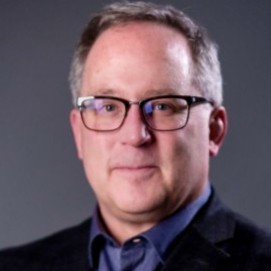
0:07 Hello everyone and welcome to Cordis Metal's live investment summit today, hosted by 6. Today I'm joined by Sean Major, Cordis Metal's CEO and Director. Today Sean's going to walk us through his company presentation and after we're going to move on to a Q&A session where we'll be accepting and answering some questions. You can submit your questions using the Q&A panel found on the right hand side of your screen at any time. And as always, the summit is being recorded and will be available to watch afterwards on SIX.com. And with that, Sean, I'm going to hand things over to you to get things started.
0:35 Okay, thanks, Cam. Welcome, everybody. I'm happy to be back with 6, giving another presentation. Gonna run through our corporate deck, which is available online, and just add a bit of narrative to it. And we'll talk about our broader concept. I guess this session was to kind of cover the story again, but also clarify what we mean in our marketing when we talk about Project Accelerator. So yeah, starting with this title page, the leading a new age of discovery in Nevada.
1:26 We view this as the new age of discovery in Nevada because there are some companies turning their attention toward the valleys and basins in between the mountain ranges. For 200 years, there's been about 200 million ounces extracted in Nevada, and there's about the same potential in the basins, but of course they're shaped like bowls and they're deep gravel in the middle that's covering the bedrock. So our strategy focuses on the edges and you can, This picture is actually a decent representation of that where you can see the range and at the foot of the range or the pediment there is alluvium there and what our work focuses on is the existing mines and deposits or known mines and deposits in the ranges and the extension of the structures from those into the valley. So, if we stay close to the edges, the cover is more shallow there and there are scenarios for economic extraction. In some cases the deposit there is larger than what was known in the range.
2:46 There are only just a few examples of mines in the basins in Nevada. So it's a cautionary statement, of course. You're happy to check that on the website if you like. Our group is, the core of our group has been together for quite a long time, 20 plus years, and We've lived through different cycles and worked on projects all around the world. We've learned a few things there. A lot of our work has focused on historic areas where there's a patchwork of claims and the databases are scattered or non-existent. And so they've been large compilation jobs.
3:38 And we've been able to work internationally and bring value to those teams, to the production teams as minority partners or joint venture partners where our exploration led to significant discoveries that they wouldn't have otherwise come across. Extended the value of the mine or the life of the mine. And we have gone into this cycle of mining in the last 4 years or so, thinking of that success and wanting to build a succession plan. So this slide talks about our team and you can see on the list there, we've got a range of credentials, entrepreneurial, academic, field experience, consulting, a wide range of experience, including the corporate admin and marketing.
4:41 So our group is called the Metals Group, and it's more of a marketing banner than anything. But we, in various forms and combinations, we run half a dozen companies. And the benefit of the Metals Group is that we're able to share some infrastructure. So there are corporate services that are less expensive and geological as well. We have, we're able to have meetings with teams of people to look at opportunities and evaluate them. In this list, you'll see that there's a key man here, Clay Newton, who is, we call him our resident geological expert.
5:29 So Clay is just an exceptional field geologist, but more than that, he is a structural geologist. And so for 30 years, he's been working in the Nevada area on tectonics and structural geology of the Great Basin, the origins of the Great Basin. And he's come up with a method
5:59 and theory that led to identification of hundreds of identification of hundreds of prospects. And in about 2019, before or during the upswing in the gold price, we were speaking with them. Our team was in Nevada at that time looking for opportunities. We hadn't worked in that jurisdiction and we wanted to become established there. Applying what we've learned elsewhere, in other places we've gone in and formed deals with the locals and got up to speed on working in their jurisdiction and by being there, we come across other opportunities. In this instance, we met Clay and he was looking for partners that could handle the corporate and marketing side.
6:53 And we also could add value through our geological team and also our administration. So there is a component of this that is tenure management where you have to stay on top of your claims, they're not cheap to hold on an annual basis. There's a lot of activity in Nevada, so interested parties are constantly staking ground. We brought a digital component to that, where we manage the data through a proprietary database, and it helps us to stay on top of that mineral tenure, which is an overwhelming job if you do it on a manual basis.
7:42 So, we have joined forces with Clay to take his ideas to the market and Part of this acceleration strategy is To move what he's done in over 30 years and bring these projects into fruition on a short timeframe. I'll talk more about that in a few minutes. The slide was talking about some of that pedigree, if you will, trusted team of experts working on a new model in a prolific jurisdiction. That really sums up the value proposition of us working in Nevada.
8:31 You can see here on this graphic that these are the major trends in northern Nevada where there are many mines. These are some of the examples and our methods or Clay's methods generate the prospects and the projects first and they happen to be close to these existing mines and deposits. So it's not just as easy as finding the existing ones and going for a hike and seeing more Gold. Because what we're looking for is buried. You don't have outcropping rock like you do in the mountain ranges, or at least it's very rare.
9:23 Some of our projects have them. So it's difficult, you can't take rock samples. And some of the primary evidence that you might use in traditional exploration are not applicable to our scenario. So we have other ways of looking at it. The reason we're in Nevada is, sums it up right here, very, I don't know if it's eloquent, but there it is. Nevada loves mining and mining loves Nevada. The economy there, and the local economies in particular, are very dependent on mining and they facilitate the industry. You can find support services and labs and it's a very mine friendly jurisdiction.
10:11 The Fraser Institute ranks at number 1 for investment in mining.
10:19 That happened after we were there, but they are a perennially top ranked jurisdiction. As it says here, it's a target rich environment and there's a large range and size of economic deposits. So that's a good thing for risk management in that if you're onto something, you're never exactly sure what size it will be until you are able to drill it and do considerably more work. But even small deposits with low grade can be economic in Nevada. Part of the story about being economic in Nevada is that you can have small operations or large operations, which is well suited for our group.
11:23 We have a kind of a mantra here that we threaten to produce. And so, yes, it's a geological team. We have mining engineers as well in our ranks. And we have several examples around the world where we have bid on taking over mining operations or been partners in mining operations or even run them outright.
11:50 Because of this economic scenario in Nevada, it means that we can advance these projects quite far and build these databases that the upstream companies like to see in a professional manner. And we think that it will help facilitate transactions just because they can access the data that easily through the digital data rooms that we provide. This is another slide about the range and basin concept. I think makes it fairly clear. You can see in the distance, it's similar to our cover page. This graphic in the foreground here is showing the idea that you have the past producing mines are in the exposed ranges. See the red there in the range.
12:49 And with the formation of the basin, there are fault lines where the basin drops, the ranges come up and the mineralization does happen at that time, but it also happened historically. So the same route or same deposition happened and the deposit could become separated. Some of it going in the basin, some of the range, excuse me.
13:20 This also shows here that concept that I started with, which is 200 years of past production, has over 200 million ounces produced, and that's less than half of the land mass in Nevada. So there is half the Great Basin, which extends beyond Nevada, is still open for exploration. The slide talks a little bit about our methodology in the basin. So it started with prospect generation, 250 plus, through base data. There is some government data and regional data.
14:05 Most of the data in Nevada is proprietary. They don't have a public filing of assessment work like we do in Canada and other jurisdictions. So you have to come across this data and store it in a manner that it can be used. That's what we're good at. Once you have kind of defined through structural and tectonic work, a possible location, you go to the field, or at least we do, and there are geobotanical anomalies at the ones that we're interested in. So what that means is there are plants that grow on the hillside or in the valleys that tend to draw the minerals from the soil that are indicator or trace minerals that help us determine whether there's potential for gold beneath that cover.
15:13 So if we get a positive on that, then we move to the claims taking. There's some soils taken, which is, we do some geochemistry. If we can get some rock samples, we do those as well. So this is, you know, a more data-driven approach, but it builds on the geopotamical anomaly, giving us better data. From there, we'd be in the field, observing, doing geological mapping, move towards geophysics, so magnetic surveys, which really help us define the structures. And we sometimes do gravity work as well, because it's inexpensive and it can give you an idea of how deep the bedrock might be.
16:06 So, you know, through these steps, we get the projects that we have to the point where they're drill ready. So in the banner at the top of the slide, it talks about we have a range of projects from grassroots to drill ready. And the most advanced of them are fully permanent bond. That's our objective is to get them to that point and to find partners that would like to take on the drilling aspect. Of course, if we find partners earlier than that, that's fine as well. But, you know, I guess when we're heading into this, we expect to have to show the aspects of the project to do some marketing.
16:52 So we do these early stage steps to be able to eliminate risk and tell the story. It's not too difficult to tell those stories because of the proximity of known deposits and mines. So we can talk a little bit about what we have, but there is that aspect of closeology because you're on trend or on structure from known deposits. We've got a couple of slides here about the 2 projects
17:29 that we acquired from Clay as our qualifying transaction. And so they describe what we have or the status of this, but the more prized of the projects have these known deposits and mines nearby, which gives us an indication of potential and motivates us to go further with them. Grayson is the other project that we used for our qualifying transaction. And it's near Powerline. It has a different basis for that project. There are some notes here that you could refer to if you wish.
18:16 And with either one of those projects, we're happy to take queries from interested partners.
18:27 When we move past Powerline and Grayson, we get into a project list where there's 2 slides here. This is our next 8 projects. So these ones are, you know, a combination, so a variety of projects that are either Carlin type or hypothermal potential deposits. And we have data to back up these slides. We also have proposed scope of work to advance them. And any interested partners could talk to us about those. The obvious question might be what are the standouts?
19:20 We have 20 plus projects in our portfolio now from Clay. He continues to generate new projects and we work with him on that. We've narrowed down the initial portfolio to these groups and we have more data on some of them than others. It has more to do with the timing of when we acquired or identified or advanced these projects.
19:52 So these are more advanced because there's been more work done on them. It doesn't mean that they're any better or worse than the ones that are the other half of the projects. So we're very enthusiastic and optimistic about our potential for discovery on all of the projects that we hold. Some of the more advanced that we have are Grace and Roberts Creek, Colbray. We've had news announcements about Gold Run and acquisition, trying to firm up our land position there. There will be news coming. We've just spent, let's see now, it's about 10 months doing field work and advancing the projects to drill ready stage.
20:47 So we've been receiving some lab results and we will be making announcements here during August leading into the fall. You'll be hearing more about these projects and their potential. There should be some nice graphics with the results of some of our mag surveys, and I'm certain that there will be partners interested in these. So this slide is about the value proposition. This is where I'm gonna talk just a little bit about the project accelerator concept. When we got into this, We went down to Nevada and started looking at projects.
21:34 And we talked to royalty companies and project generators down there who had projects that were looking for partners. And this was prior to the run up in gold price. So we were early and we were surprised by the terms that you could get for projects. So we liked the idea of being that royalty company or being that project generator, as opposed to taking on their projects. Not that taking on the projects is a bad thing, it's just we had a moment in time where we felt we could have built or acquired our own portfolio. And when we met Clay and looked at his projects, that just became the obvious thing to do.
22:25 So what is our concept here?
22:29 Like I said, we can continue to generate projects with great potential, by the way, in underexplored areas of Nevada, which there are a few remaining. You have to have a lot of local knowledge for that. So, you know, Clay is a critical piece. We learn from him as we go. And so, you know, as we learn, our team overall becomes expert in exploration and discovery in Nevada. But this acceleration concept comes from the idea that there's a time right now, we feel about a 2 to 5 year window where producers in Nevada are looking for,
23:21 they continue to build their war chest. They're making very good money at these gold prices. They haven't turned their attention to acquisition yet. And so a 2 to 5 year window where a group like ours with projects like ours could advance them to the point where there are a series of discoveries. So if we had taken on a project from a project generator or a royalty company, we would have 1 or 2 projects in 1 company. In this situation, we have 20 and growing. And These are all very significant projects where the intent and the criteria to narrow down from prospect to project was the scale of the potential.
24:14 We are seeking deposits in seeking deposits in the 1Moz plus range. It's early days, but that is the objective. Rather than focus on 1 area and continue to generate projects and try and attract major partners to it. We've started with a significant number or list of projects, all with great potential.
24:47 We have a low cost to get them to be drill ready. And then our objective here is to drill them and make discoveries, to have multiple discoveries in 1 company, or to spin out these discoveries as we go. So our shareholders would have a piece of the spin out company as well. That part is similar to a project generator, but it's our timeline that matters where we're keeping in mind the economic cycle and the wherewithal or objectives of the upstream companies, their timing for an acquisition strategy is coming. And we want to feed into that along with our partners.
25:35 So as an accelerator, we advance multiple projects to drill ready. We find multiple partners to drill them and make multiple discoveries. We like to think of it as having
25:50 several lottery tickets under 1 banner. When you buy our stock, you're exposed to 20 plus opportunities for a major discovery. That doesn't mean we'll have 20. We have to be realistic. But we could. And if nothing else, we have very high or shall I say, a much better probability than if we had just 1. So that is some of the opportunity that exists for investors, not to mention our stock price at the moment. We just formed last fall. We had to spend a few months getting our data together.
26:37 We're about to announce results. Just, we know these lab results are coming and we have to put out that news. So, you know, our stock price is 12 to 13 cents at the moment, which is, you know, it's higher than our IPO. And just under our last financing, but we're also entering, we're entering a promotional cycle here. And we're also looking at the economy and kind of the environment going forward and what that means for opportunities. Now, this slide talks about our capital structure. It shows that We have around under 45 million shares outstanding.
27:34 We have some money in the bank. We want to attract partners with deals that would include some advanced payments. But the source of cash is primarily in warrants and options going forward, where we could have proceeds of in excess of $3 million. It shows down here if we were to get to the 30 cent range, which you've got to figure that with some discoveries that's attainable, it triggers the exercise of some warrants. So this is showing the outcome of that, that you would have significant working capital coming from the exercise of warrants which would fund us for a few years, which gets us to the point where we would have, we would like to think we'll have discoveries and to have attracted some upstream companies for acquisitions of our projects.
28:45 Now I just want to open it up and take questions if anyone has any. Great. Well, thank you for that, Sean. I'd like to remind everyone in the audience that you can ask any questions you like using the Q&A tab found on the right-hand side of your screen. But Sean, we've actually had a number of questions come in in advance of today's summit. So let's start out with some of those. What's your outlook for gold prices? Well, OK, we're We're not in the business of forecasting gold, but of course we do look at that. And we listen to the pundits and the analysts in the news like everybody else. So Without getting into a debate on the underpinnings of this, you hear a lot of talk about inflation or not, US policy.
29:44 What seems clear is that they've had to be very aggressive with interventionist policies. And that means that central banks eventually have to look at gold or other sources of store of value because you get volatility with inflation and printing money and volatile interest rates. So we look at this and listen to the pundits. They talk about gold being over $2,000 US during this year.
30:30 So what does that mean? Well, it's a difficult concept for some people and there's various theories, but it is related to the value of the dollar declining relative to gold. And it's also due to the fact that gold is a traditional store of value and people use it in their portfolios, not necessarily as an exclusive tool for storage value, but when you have volatile markets and uncertainty in the economy or any threat of a debt crisis, it's one of the assets that sophisticated investors use to preserve the value rather than holding it 100% in cash.
31:24 So they might fear the markets, pull their money out of stocks, but then they evaluate, okay, well, what, where can I put it to store value? Physical gold is one aspect, but gold stocks benefit from that as well. So we focus more on the general economic predictions and the general trend of gold. And we look at the business model that we've been talking about here over the next 2 to 5 years, feel that if gold stays above, it could be above 1200 an ounce. I mean, the producers that made a lot of acquisitions in the last gold cycle have been making money above that dollar value the whole time. So as an industry, we're more concerned with that, the long-term trend staying up, you know, in this range, it could be lower.
32:22 But if we're going to benefit from some euphoria like you've been seeing in other retail markets, it would be nice to see gold up above 2000, which of course means that other aspects of the economy aren't doing so well necessarily. But gold and gold stocks, explorers are not a bad place to look. Great, well thank you for the detailed answer, Sean. Another question that's come in is, what's your timeline look like? Well, okay, I've touched on that. The 2 to 5 year plan. In the shorter run, we do have news to put out.
33:08 So there will be some news. People could understand our projects a little better. It might attract partners. We'd like to attract those partners and see drilling in the next 4 months. Depending on the season, there is a bit of a boom in Nevada, so labs are busy and so are drillers. That could mean that the timeline is extended into the spring months, but certainly over the next year, we expect to continue to put out news as we advance these projects to being drill ready and then news about forming partnerships and drilling and those drill results.
33:56 Okay, thanks. You just touched on it a little bit there and I think your last slide you also did. But this next question is, do you have access to capital and partners? Maybe that would be still something valuable to go over again. Yeah, so There seems to be a lot of money still interested in the mining and exploration business. And we're seeing it, we have the benefit, I guess, of being involved in a number of companies. So certain projects and opportunities definitely are attracting capital still. There's been no hesitation.
34:43 Any of our companies that have tried to raise money in the last 3 years have been oversubscribed. And, you know, Cordis is no different. It's been oversubscribed on all of its placements. So access to capital is not an issue. It's more a matter of the model here. Like, are we gonna fund all of this ourselves or are we gonna look for partners? And there are partners out there who are, We don't just target these advanced companies or upstream companies. That target is a couple of years out. What we're targeting at the moment are other junior companies or new companies looking for a qualifying transaction.
35:33 Or we've spoken to a few different private capital groups that are looking for a project that they would take public. So at the moment, those are those targets are would be partners as well as capital for drilling. There is an appetite for what we're offering. This next question is what are typical terms? Well, I could talk about Nevada. So Nevada is a surprising jurisdiction and we've spent our careers in other jurisdictions and the deals there when you negotiate there people try to sort of keep the NSR component down it's usually you have to you have to put your money up and earn in.
36:39 You kind of, you see benefits or rewards later in the deal structure. In Nevada, there are more royalties involved than I've seen elsewhere. There are advanced payments, option payments. People are willing to take on these drill programs that we're offering. Sometimes they're looking for people who can provide the expertise, which we have in loads. We also have consulting groups that provide field work. So the programs can be scalable for any partners that come in.
37:25 They don't have to have a boatload of internal capacity or talent on the technical side when they're working with us. So that is appealing to capital groups. Fair enough. OK. How will you deliver returns for investors? I've seen a slide from another project generator that has been around for decades. And what they like to show is basically the performance of their primary company in the stock market and then stack the performance of each of their spin outs on top of that.
38:12 So, you know, by being a shareholder of the original company if you get shares in the spin out company, you kind of add all of the returns together to see what kind of a return you'll get on your investment. And when we look at that, we expect to have a similar result for our investors. And you can see that even without getting to a mine, just having exploration projects and success with them, that the stocks perform, junior stocks tend to perform within a range. So you can see that it generates multiple opportunities for a return.
39:02 And by having exposure to multiple projects, you sort of reduce the risk that you have in your investment. There's very little downside. In other words, you can see with our stock, it's not expensive at the moment. It's a heck of a deal. And once we start making these discoveries, I think our stock will perform well itself. And if we are spinning out the projects that will stack and investors will be happy with the returns that they see. Right. Okay.
39:48 What are your annual holding costs or what is your burn rate? Okay, well, we have 2 offices, 3 offices in fact. So our group or our management teams are based in Edmonton and Vancouver. We also have a field office in Nevada and we have a field crew that continues to work. They do claim work and tenure management. We have a contractor for some database management. All of these things add up to about just over 1 million dollars a year.
40:40 So about 100,000 a month. And that's not just keeping the lights on, that's a significant capacity running all the time. And then, you know, the holding costs of our properties is roughly 500,000. These are all Canadian dollars I'm talking about. So the other aspect would be marketing. And that's a flexible charge, but we see it as critical to continue to promote the stock and the outcomes, the results, keep a general awareness in the market. And we also see the advent of the Robinhoods and these other trading platforms that there's a new surge in interest from the retail market that's generating, I guess, it's sort of this speculative euphoria.
41:42 And this is something that's been an aspect of Gold explorers and miners over the years, over the decades, where retail gets behind the stock and depending on the broader economic situation, it becomes something that they just love that short-term momentum. So I think we'll benefit as well. Fair enough. That leads into the next question I have for you. What are your plans for marketing the stock in projects? Well, I guess that kind of heads or dovetails with some other things I've said there. We've got, we have some news that we'll be putting out. I see that as being a continuous stream.
42:35 Now that we've got a critical mass or track record in the field, we'll have results coming out and ideally we'll be announcing the partnerships here as well, which leads to drilling and more news. Fair enough. Great. Well, Sean, I think that's all the questions we have today so far. So I'd like to thank everyone in attendance. And Sean, I'd also like to thank you for the great presentation and some great answers that you've been able to provide. Just to the audience for a moment, if you didn't get a chance to have your questions asked, or if you think of 1 after the summit, we'll be sending out a short survey to you and you can get into direct contact with the Cordis Metals team through that. You can also, of course, always find more information at CordisMetals.com. And with that, Sean, I'll head it back to you for some final words before we wrap up today.
43:23 Well, thanks, Cam, and thanks, everybody, for attending. Yes, I encourage you to contact us if you'd like to know more. I'd also encourage you to look at our stock in the market. The pricing is pretty exceptional at the moment. I think that we've got enough things lined up that you will appreciate being a shareholder. Okay, well, great. Thanks, Sean. And I hope you have a good rest of the day as well as everyone in the audience. Thank you. Cheers.