Transcript
Automated transcript · Written by software from the replay's audio. It can mishear names and figures; the replay is the record.
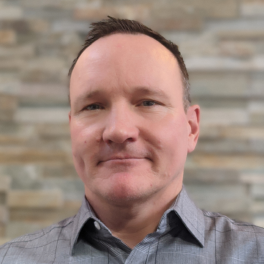
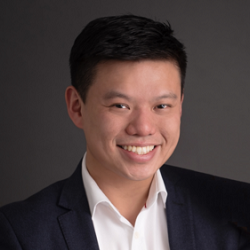
0:11 Hi, everybody. My name is Rob Bruggemann. I'm President and CEO of CanStar Resources. And very pleased to welcome you today to the first investor webinar that the company has hosted and hopefully it's the first of many. With me today is Sam Leung, who is the director of CanStar and he's also a representative of our largest shareholder, which is Adventas Minerals. Welcome, Sam. Hi, Rob. And so what we'll do for the webinar today is we'll go through a reasonably short presentation, gives you an overview of the company, as well as some of the initial expiration results that we issued earlier this morning in a news release. And then there should be plenty of opportunity for questions which you can post.
1:00 So with that, let's jump right into it. We've got the typical disclaimer and forward statements, which you can read at your leisure.
1:12 And then we'll look at CanStar. So CanStar for the past few years has been focused on exploring district scale mineral projects on the island of Newfoundland off the eastern coast of Canada, which we think is very prospective for mineralization, especially using modern exploration methods. What's worth noting, though, is that the company, given the backdrop of gold prices really starting to move earlier this year, decided to switch the focus to gold exploration and also because there's really, I think, a gold rush happening on the island as well. And in September of 2020, I was appointed CEO And we picked up a project that's called the Golden Bay Project in South Central Newfoundland that we're very excited about.
2:07 And that's the project that I'm going to be focusing on today. So we do still have a big land package up at Buckins Mary March. So that's in the vicinity of the the Buckins mine, which historically was one of the highest grade base metal mines in Canada. So significant project, but really the focus will be on Golden Bay for the foreseeable future just because of the potential there and also the size. So we've signed option agreements now to acquire 100% of over 62,000 hectares of claims that are along a 95-kilometre major gold bearing structure. And that structure, as well as some of the mineralization that's been found today, is very analogous to other high-grade, orogenic, or structurally controlled gold deposits, such as Kirkland Lake Gold's Fosterville mine in Australia.
3:04 And this project, Golden Bay, it hasn't actually seen a lot of historical exploration. But from the work that's been done historically, much of which was done in the 80s as well as to date, There are over 20 showings of gold mineralization over about a 30 kilometer distance, including recent samples that have shown visible gold at surface. So As a result of that, we think there's tremendous potential for new discovery, just because so little work has been done. And the work that was done in the 1980s was at a time when these structurally controlled deposits really were not well understood. And the drilling was extremely shallow, typically less than 100 meters. So even though we just optioned these properties very recently, we have managed to get some work done. This morning we put out a news release with some initial assay results focused on the first of 5 trenches that we excavated And we got some good results in that.
4:06 We had 10.17 grams per ton of gold over 3 meters, and 6.2 grams per ton over 5 meters. So this is confirming high-grade gold mineralization at surface with many more assays to come and a lot more exploration to come. But some results that we're quite pleased with out of the gate. So before we get into the real details of the project, I just want to touch on the company. We've got quite a good capital structure with 69 million shares outstanding at a share price of 28 cents. That gives us a market capitalization of about 19 million. Fully diluted share count with warrants and options is about 88 million shares.
4:54 And we have about 1.6 million cash and no debt. And I think the share Ownership is very good. We've got Adventus Mining with a 25% shareholding. Alteus Minerals, which is a strategic investor and also optioned some of the Golden Bay claims to us and has been helping out on the technical front. They hold 11% of the shares and then management and insiders own about 12% of the shares outstanding, which is I think good insider ownership. So collectively with the insiders, that's about 50% of the shares, which is good. Good place to hold those I think long term investors with certainly anticipation of some significant results from the Golden Bay Project in the future. You can see the share price chart here as well.
5:46 So with the gold backdrop, barring the recent drop in gold prices, which we think is temporary, share price has been trending up nicely. And certainly I think as we get more results out, hopefully there's a lot of upside potential and I can see this going much higher. And that's why I'm a shareholder.
6:08 For a company our size I think we've got quite a strong board. So I recently joined as president and CEO as well as being a director. We also have Dennis Peterson, who's a well-known lawyer in Toronto, focuses heavily on junior mining. Our key technical director is Dr. David Palmer. So David used to be CEO of Probe Mines, which was sold to Goldcorp in 2015 for over 500 million dollars, and he's currently CEO of Probe Metals. Sam Leung, who joins us on the webinar today, is VP Corporate Development at Adventus Mining. Prior to that, he also has experience in Corp Dev with Lundin Mining.
6:54 We have Patrick Reid, who has a long history of mining as well as politics in Ontario. And on the technical side, we have Bob Padey as our senior geologist in Newfoundland, supported by some of the technical team at Altius, which includes Dr. Lawrence Winter, who's an exploration advisor. So I believe that gold exploration is really, to some extent, very early in early stages in Newfoundland, that there's a bit of an emerging gold rush in the area. So there are some small gold mines on the island, including Anaconda's mines. The biggest resource that's been in development is Marathon's Valentine Lake project. That's about 4 million ounces resource right now.
7:41 And then recently, the real exploration activity has been in the zone that we're in. So what you can see on this graphic is the mineral claims that have been staked are shown in yellow. And so you can see some distinct trends that typically go towards the Northeast. The blue stars are significant gold projects, including our Golden Bay project at the southern end, and then the red are the known gold occurrences. I'm quite excited about the belt that we're in, which includes Newfound Gold, which had recently quite a spectacular drill result, which was 19 metres of almost 93 grams per tonne of gold. And recently they've put out some additional results which confirm high-grade gold mineralization. Salkomend Minerals similarly had a nice drill result, 25 meters of 33 grams per ton of gold. So that's the type of high-grade gold that we're seeing in this district.
8:38 And I think it's still very early days. And I think there's a lot of work to be done but just tremendous opportunity for new discovery. And we're excited to be a part of that.
8:57 The location that we're in is quite ideal. It's located in the coast of Bays region of southern Newfoundland near a couple of small communities. One of the highways cuts right through the middle of the property. In this area, the straightforward permitting, We can drill year round, do surface exploration from about April to November as well. And the area is fairly well served by service and contract companies. And there's actually the largest hydroelectric generating facilities nearby. And we've got power lines running across the property as well. So good location, good access and I think fairly low cost.
9:49 One of the things I'm quite proud of also is I think we signed some very good option agreements and the reason I say that is the cash payments associated with those option agreements is quite low. So collectively over the 4 years of option agreements, it's only about $325,000 in cash payments. So what that allows us to do is maintain the capital structure and also direct money into expiration rather than paying these optioners. So certainly they do get upside through the equity that we issue to them. It's up to about 14 million shares of CanStar over the over 3 years. And in the event that we come up with an NI 43 101 compliant resource with at least 1 million ounces of gold in M&I, then there's an additional milestone payment of 1 million dollars, which obviously we'd be happy to make.
10:49 I am not a geologist, and we're not going to go too detailed into the geology here, but I just want to touch on high level geology of Newfoundland. What you can see in the graphic on the right is there's a couple of major technostratigraphic zones being Gander, the Dunnage, and we're on the edge of the Gander zone. And what these relate to is the really the tearing apart and then the collision and associated volcanic activity with tectonic plates about 70 to 75 million years ago. And so it's really that activity that set the stage for this mineralization that we're now looking for.
11:35 And based on what we've seen so far, in terms of this type of setting and the type of mineralization that's been identified, we think that some of the mineralization is actually markedly similar to that of Kirkland Lakes Fosterville project in Australia. And what I mean by that is, if you look at the description there, it's visible gold found as disseminated fine specks within host quartz veins, which is exactly what we find here in some instances as well. And there's a picture of a sample below. The other interesting thing about Fosterville is that there is a spatial association with antimony mineralization, which comes in the form of stibnite. On our project as well, there have been some spectacular samples with stibnite and then stibnite and gold.
12:26 So I think a lot of similarities, and obviously, we'd love to find something similar to Fosterville here. And that is the goal.
12:40 Looking more closely at the property, here's a geology map with our claim block. And what's worth noting here is the size of the claim block. It's over 62,000 hectares, so almost 623 square kilometers. It has 95 kilometers of structure that it follows. And of that 95 kilometers, there's currently about 30 kilometers with known high-grade gold mineralization.
13:11 Historically, the work that was done is in the center of this 30-kilometer trend, which probably by no coincidence is where the highway cuts through the center of the property. That work was done by Westfield Minerals. They identified the West Pond Zone and also the 22 West Zone and did pretty extensive exploration work there in terms of soil sampling and also some limited drilling, although generally very shallow. But what that drilling did confirm is good intercepts of multigram gold mineralization. Since the 80s, when this type of gold mineralization and the potential at depth really wasn't understood, there's been very little work done on the property, which translates into a massive opportunity for us.
14:03 So most of the work that was done since the 80s has been just general prospecting and that is identified multiple new gold zones. For example, at the north end of the property over the last couple of years, prospectors there have identified the Hart Hill zone. That's got float samples up to almost 63g per ton of Gold, 20 point float samples of 10g, 20g per ton. And these are new showings with really no extensive work, certainly no drilling. And those are priority future targets. For this year, though, because we had a limited field season, our work is really focused on the south end of this mineralized trend, which most of it is called the Little River area.
14:51 And the reason we focused on that is in part because there's good access, but also prospecting work in 2019 identified visible gold mineralization at surface there. And the best assay from a grab sample that we got there was over 4,000 grams per ton of gold. So that was obviously very, very compelling. It was in an area that had a little bit of work that was done in 2009, but they were not aware of the visible gold. And we're looking at areas nearby. So we focus heavily on this area. This is where we've done the new trench work, and we've already identified or confirmed a number of other high-grade targets.
15:39 So let's take a closer look at this area. So in roughly the center of the graphic where you see the trench, that is what we call the Kendall zone, which was the new showing where we had this grab sample that assayed 4,485 grams per tonne of gold. So quite spectacular coarse free gold in that sample, which I mean it is a grab sample so obviously not everything in this area is going to grade that. But it showed that that type of mineralization potential is here.
16:17 This is the first of 5 trenches. It's actually 2 trenches combined here. And this is the trench on which we put out some results this morning, confirming good widths of nice gold mineralization. Now there's a lot of assays pending here, but we wanted to get these results out. So we've got trenches 3 and 4 just below this image, and then trench 5 is on the right. So this is looking northeast. Mineralization generally trends northeast in this area. But what you can see already just based on the trenches is we've got trenches hundreds of meters apart and other mineralized zones that are also 100 meters plus, and in some cases, even kilometers away. So this is a big, big trend.
17:10 And when you look at some of the highlight samples, for example, we have the blowout zone at the top of this graphic. There
17:21 25 of 97 float samples assayed over a gram per ton of gold. The 8 best samples ran up to 30 grams and averaged about 9. So nice mineralization there at surface. Likewise, the landing zone, and it's probably no coincidence these are along the trail where it's just been easy so far to access and do prospecting. At the landing zone, 5 of 10 float samples are over a gram per ton and we've got an average of over 20 grams per ton. So that's certainly an area we want to take a much closer look at and obviously eventually drill. So still early days here, but just what I want to convey is we're finding nice grades of gold here at surface over a massive area. And this is just a small piece of that 30 kilometer mineralized trend.
18:20 Now, the other thing worth noting is of the 95 kilometers of potential strike, really in the Southern end of that, as well as to the north where access is a little trickier, the reason we believe there's no gold mineralization known there is it just hasn't, the work hasn't been done.
18:40 So those are areas that we're going to be looking at next year as well. So as mentioned, we put out some assay results this morning. Those results are primarily for trench 1, which is shown here on the top right portion of the image, because it's really 2 trenches that were combined into one. We took a number of channel samples through that trench. And what we discovered in 4 of those trenches was visible gold in quartz veins. So we rushed those assays to the lab. You can see in the table on this graphic some of the initial results, which I think are quite promising in terms of confirming gold mineralization over decent widths.
19:30 So we've got in channel F,
19:35 we've got 5 meters of over 6 grams per ton of gold. Trench G included 3 meters of over 10 grams per ton of gold. So this confirms the ability to find new high-grade mineralization. We're obviously going to be looking for repeats of this type of structure. We also want to see outside the quartz veins. When you get into some of The surrounding rocks, what kind of mineralization do you get there? Because we found so far gold mineralization isn't just confined to the quartz veins, you're also finding it in the surrounding rocks. Also many more channel samples that come from this trench as well as the other 4 trenches.
20:21 And then we've got a lot of assay results still in the lab as well, and I expect to get those results back by the end of the year.
20:32 For those of you who follow Newfound Gold, that's an exploration company to the north of us. And it has a market cap of 500 million, so it's quite substantial and certainly more advanced than we are in terms of the exploration program and their drilling, because right now they've got a 100,000 meter drill program underway. But we're quite excited about that to see what they come up with, and certainly hopeful that they make a number of new discoveries. Because what we see is the rocks are very similar. We're in the same metasedimentary rock assemblage. We're along the same major regional tectonic structure. In both cases, there's an abundance of gold occurrences, including high grade and some of this finely disseminated gold in quartz veins.
21:25 Similar mineral metal associations. So we think a lot of potential there, a lot of potential on our property. In the case of Newfound Gold, I think there's been over 25,000 meters of drilling done to date. Our property's only seen 10,000. So I think we're literally scratching the surface. Now, of course, got to note over the 100 kilometers, that's a big, that's a big strike length. And we're likely to see a number of different styles of mineralization. There's going to be some of this coarse free gold. There's going to be some of the finely disseminated gold. And then gold with gold and other structures and other styles of gold mineralization as well. So we're still trying to understand all of the controls on this type of gold mineralization.
22:14 We're going to be doing a lot of work just to pinpoint on this massive land package what the best targets are. And then I think there's potential for a big program next year with a really good chance of a number of new discoveries.
22:36 So just to summarize, it's a big property. Despite limited historic work, we already have 30 kilometers of known high-grade gold mineralization. We've just finished the phase 1 exploration program, which has confirmed visible gold mineralization. It's confirmed our ability to discover new zones, despite only having really 2 months in the field with a lot more results to come. But what's going to happen is we're going to take this data as well as a bunch of the historic data from companies that have done work on the projects. We're going to compile all of that, do our analysis and then come up with with a big drill program, so a big exploration program for next year that's gonna include multiple drill targets as well.
23:25 So, you know, small company, but huge potential. So what I'd like to do now, that concludes the formal presentation. And what I'd like to do now is just open the floor for questions. So I'll turn it over to Sam Leong just to see what questions we have out there. Hi everybody. No, good list of questions already here, Rob. So I guess I'll rapid fire, you can go into it. I'll try to keep them in some order. First question about the work so far is
24:05 on the surface prospecting this year, at the Kendall zone, particular the grab samples, are they pulled from outcrop on the surface and is the outcrop quartz fading?
24:23 Yeah, so there was work done by the prospectors who optioned the property to us. Then there was confirmatory work of some of that by Alteus. But because that wasn't done by CanStar, all of that would be considered historic. But it's still relevant, obviously, to what we're talking about today. And then there's the recent work over the past 2 months that was done by CanStar. Within that, we've got a combination of results. So most of the high-grade results are in float. We've got a couple of boulders. But generally where we've seen the highest grade is obviously in samples with visible gold, which tends to be, yes, quartz veins. Now, in the shales that surround us, quite often we find mineralization in there as well.
25:21 That's not visible, but we'll see sulfide mineralization within that. Okay. Question related to that, you mentioned history, any historic estimates or resource that we know of on the properties? So there hasn't been any resource estimations. As mentioned, the work done by Westfield in the 80s, that was the biggest program. On their West Pond and 22 West targets, there's probably been enough drilling done work that you could come up with an inferred resource, but that's historic work. There's a lot more to be done. So what we prefer to do rather than trying to estimate a resource there now is do the additional work, really understand it, make sure we site our drill holes well, and then we'll see what the right time is to put a resource around that.
26:23 I think we'd be doing it kind of a disservice by trying to put a resource on it now, because this is, it should be viewed as really an early stage exploration with, and being much too early for a resource. Let's do the proper work first. Let's find where the really attractive zones are. Let's drill those and then we'll see what the right time is to resource. Okay, great. Next question here is any geo-chem or geophysics planned in the district? And I guess specifically, are the useful tools for identifying quartz veins?
27:11 Yeah, so just to give you kind of a sense of the scope of this year's program, we collected about 300 grab samples, and then many of which we're still waiting for assays for, and then about 700 soil samples. So those are mainly around the Kendall prospect, but historically on the property, there has been a reasonable amount of soil sampling done. We do believe it's useful. Much of that again was done in the 80s and it's in the process of being digitized and mapped and then we'll analyze it. So what we're doing is, what we have been doing is some infill soil sampling and certainly next year I would anticipate that we're going to do pretty extensive soil sampling because it does work in terms of pinpointing areas where there are going to be anomalies.
28:07 And when you have a property this size, any tools obviously that we can use to highlight priority areas, that's going to be very important. So in terms of news flow going forward, I expect to see some more assay results later on in December, but also as we do this data compilation analysis work, I think we'll come up with some new figures that show the potential of things like geochem. There's airborne mag done on some of the property, on some of the key zones. We're going to be looking at doing some geophysics, including ground mag as well, just to see to what extent we can use that to pinpoint mineralization.
28:54 But yeah, next year, I don't have, we don't have the exact program outlined yet, but I would imagine we'll do a lot of soil sampling for sure across the property. I guess it's a good follow-on question. A number of people have asked when does CanStar plan to drill in 2021 and whether you could give a date range or 0.25 guidance here at this point, Rob, or at least when a decision on that based on current work? Sure, nothing's been formalized yet. I mean, we're literally just getting results in and so we need to digest those and even just step back from a busy field season to say, okay, what did we learn?
29:39 What does it mean? Where do we go from here? But you know, the key thing for me is we don't just want to rush into a drill program. We want to make sure that we do the right work on surface in terms of understanding the controls on the mineralization. Look at a number of these historic targets that we haven't had boots on the ground at recently, and then see what we can come up with, with I think quite a few targets for drilling that we'll also have prioritized. So a rough timeline, I'd say right now, weather has shut down the program.
30:27 So we shut that down last week, completed the trenches, did some additional assaying work and prospecting at the blowout zone as well. So those results are pending. We can get back into the property once the snow is cleared, probably in April. So April we'll resume prospecting and soil sampling. I think it'll take a few months certainly for that work with a big program. And then I'd say we'll be in a position where we can drill a number of these targets starting in the summer of next year. Okay. Speaking of seasons and logistics, I guess on a backdrop of a bit of a gold rush in Newfoundland too, I mean, can you speak to staffing, having appropriate personnel work on the project as well as logistics? I mean, what's the closest town? How do people get there? There are some interests in people wanting to visit the deposit as well, it's interesting.
31:34 Yeah, so those are good questions, especially in light of COVID. As some people may know, in Canada, there was an Atlantic bubble formed between some of the provinces on the East Coast. And really that's because the COVID numbers were low there, they wanted to limit spread. And so it was only people from within the region that could travel there and not have to quarantine. So Obviously that impeded our ability to bring in people from outside the province or outside the region. However, I'm quite pleased with the help of Alteus. We put together a Newfoundland-based team and that is the crew that did the work over the past 2 months. I think it was a very good crew.
32:20 We'll look to bring them back next year as well as a number of other people. There is a bit of a gold rush going on, so it does become harder to find people, but I think it's an exciting project for geologists and prospectors certainly to work on. We will continue to get support from LTS as well. And we've got some time now. I mean, the fact that we were able to option this project, I think the original announcement was at the end of August. We put together a team and we're on the ground within a few weeks of that and managed to get quite a bit of work done. So that was a major feat. We'll have the winter to actually go through things, build out that team.
33:11 But yeah, next year is gonna be probably a major program with a big team. So we're excited about that. Okay, the next one is a bit of a, try to combine a few questions here, a bit more technical to I think you can answer to the extent you can, and then we can put these people in touch with the geos. But the questions are, are there any other sulfide minerals other than the sybnite you mentioned as well? Are there kind of, is there a trace element approach? I mean, are you, are we looking for other things or other signs? What's in the area? Do we have neighbors working, et cetera? Yeah, so on the, yes, obviously the compelling grades are in the quartz veins but we know there's mineralization, gold mineralization in the surrounding rocks as well, in some cases more finely disseminated and associated with sulfides. So we see a variety of sulfides and there's zonation of that as well. So stibnite so far seems to be more associated with the targets further to the north than what we've been looking at.
34:24 Where we are around the Kendall zone, you get arsenopyrite and you get pyrite as well. There probably is some association, we'll have to take a closer look at that. With the sampling that we're doing, we're getting a full spectrum of assays with different minerals, so we can look at correlation there. Some of the historic work was, I think, only gold assays. So that's going to be a bit more limiting. But yeah, certainly I would expect we'll see, or there's going to be important visual aspects in terms of identifying potential mineralization and then certainly on the geochem side as well. It's not going to be perfect, but soils seem to be probably one of the better tools that we have at our disposal and fairly reasonable cost.
35:22 Okay, yeah just a reminder to the people, for questions coming in, Rob at CanStar did publish a technical report earlier in November, So that's available on CDAR. If you can't access CDAR, please do contact Rob or info at canstarresources.com and happy to send you a copy. I guess, so lots of, still lots of questions coming in here, mostly surrounding drilling. I guess here's a question that maybe I can answer. The question is, what does Aventus and Altius plan to do, I guess, as major shareholders? And I think I could speak for Aventus directly and Altius indirectly that we're very much involved. I mean, we're committed to CanStar and a bit of background.
36:11 Aventus became a shareholder in CanStar in 2018 when we consolidated properties around the Buckins camp. And I think we've held on and we've never sold a share in over 2 years as a Ventus, and we continue to to support the company and the really explorate excitement in the new exploration project here that Alteus as well definitely helped in putting together as Rob mentioned. So I think it creates a unique dynamic on with CanStar that we're tight backers of Rob leading the charge here. We're excited with the technical background as he's outlined and we'll remain supportive shareholders here. Next, yeah, with Adventus and Altius.
36:59 Yeah, sorry Sam, just What I was going to say is the goal here of the company and with the Golden Bay Project is to make discoveries. So the nice thing about having about 50% of our shares in insider hands is it affords us with the time to go out and do this proper exploration work before we just rush into drilling to try to understand what we have and to make sure that when we come out with drill results I think they're gonna be very meaningful and lead to new discoveries. So that's really the goal you know it's how big is it gonna get I don't know you know It certainly looks very good at surface, but it's also complex, especially in the area that we're in right now.
37:57 There's been a lot activity with just faulting, offsetting, it's a difficult structural area to interpret. And so it's going to take some work for that structural interpretation, figure out what the deformation means, and really where to look, especially in 3 dimensions. Because obviously, the results we put out today and some of the historical results are good. You've got multiple grams of gold over anywhere from 1 meter to 10 meters. But what we're going to be looking for is where do you get the exceptional grades way above that sort of like Fosterville with, for instance, the swan zone, or where do you get maybe deformation that has led to repeats of the structure where maybe you hit 20 meters or 50 meters of this style of mineralization, as well as the low grade around it.
39:02 So yeah, I think it's, this is something that will take some time. I think we're going to make great advances next year in the exploration program, but it's nice to have Alteus and Adventus in there for ultimately something I think that's going to have, hopefully, big resources and big potential. OK. We will, with the final few questions here, I think 1 is a good one. It's a bit of a macro question based on really solid copper and zinc prices. And a lot of investors who have been in the cancer name from the Bucking's days and Daniel Harbor interest as well. What's the status Rob of the base metal properties and what are your plans?
39:52 All right, has there been more, sorry, let's combine another question here. Has there been interest in these projects as well? Yeah, so I think, you know, the macro backdrop is always important. If the market is hot on base metals, then ideally you want to focus on base metals because the market's going to be more responsive. It's going to be easier to raise money. And obviously, exploration is something where you're always expending money and raising money. So I think I do have a key focus on the capital structure of the company. So I'd say for the foreseeable future, given the potential of the Golden Bay project, that's where we're going to spend the majority of our time and attention and resources.
40:43 That said, I think there is this overall phenomenon due to massive fiscal spending, stimulus, central bank easing that has done well for gold and silver prices. And typically that's what you'd see. And then it's followed by the base metals and other materials because it's really there's devaluation of currencies going on. And so anything with tangible asset value or tangible value, which includes gold, silver, and base metals as well, is going to go up in value. We've seen China recover from COVID very, very well.
41:32 So that combined with some shutdowns in copper and zinc mining is seeing a big resurgence in those pricing, in those prices, I should say. So certainly we're not dropping Buckinsmary March, even though we're shifting our focus away from them somewhat, there will be work done next year. And if there are other companies that come along that have an interest and maybe have the bandwidth and the resources to do some additional work on those properties, then we'd be open on that. But yeah, those are big district packages. There's definitely value there. There's potential for new discovery, whether it be zinc, copper, or even gold there as well.
42:19 Yeah, there'll be less work done on them, but certainly some. And maybe we'll bring in a partner as well. Yeah. I think I'll add to that, Rob, just kind of being in the space intimately this past year, especially COVID this COVID year what we saw in the summer with the, with the jump in Gold prices was, you know, obviously huge excitement in Gold exploration. I think what's more important to a lot of junior miners is the cashing up of the Gold companies. So a lot of their coffers are quite full. And now, what are they going to do with that money? And it's in the backdrop of really kind of a short shortage of investment exploration over a multi-year period. And what we're seeing is something similar happened a bit delayed, a few months delayed, but it's happening in the base metal space as well. So with the copper prices being where they are in particular, the base metal companies now are following the Gold company trend where they started to really receive the free cash flows, really looking at their growth pipelines and looking at new exploration projects, particularly next year and beyond. So I think that bodes well for what we have. I think as Rob mentioned, it's option value optionality for CanStar. And we know firsthand as well that a lot of the mid-tier and bigger base metal producers, They like historic mining regions. It's kind of a broader
43:50 area play from kind of a kind of brownfield exploration of sorts. So stay tuned there. And I think we're as backers here with the Ventus and Altius, we're aware of corporate partners potentially that could come along. All right, I think that answers the most of the questions. There are a number of other questions that are more detailed or specific. I think we'll track them here and we'll reach out to those of you who have questions who weren't answered. Rob, any final comments before we cut the Q&A here and look to probably do this again, I think based on the participation today? Really positive. Yeah, maybe just in closing, I'll maybe just add a few things from a personal perspective.
44:42 So I got involved with CanStar because I knew some of the directors already. I knew the company, I knew Alteus, but I really saw an opportunity with gold exploration in Newfoundland. We're very fortunate that Alteus at that same time, which was the summer, was looking to compile the Golden, or was working on compiling the Golden Bay project. But the reason I got involved with it was, yeah, I was looking for a company in a project with a potential for new discovery, and ideally something in Canada. So I put significant money in financing in September. I'm doing this certainly not for the salary.
45:29 I collect a modest salary, but it's really the equity upside, both through what I've paid for and options as well. But yeah, certainly I've got a vested interest here to see this succeed. Yeah, that's my goal. We have a lean mean team. So we're trying to minimize GNA spending and put money into the ground. So I'm quite proud of that so far. And I certainly hope to make this a stellar success and invite investors. You know, if you've got an interest in this, please reach out to me. You know, very happy always to answer any questions and be available.
46:17 And then we're all in this together and I'm excited and hopefully people are also and I'll leave it at that. Excellent. All right well thank you everybody for your time today. Any other questions, please reach out to Rob directly, and he'll get back to you. Yeah, thanks, everybody, and thank you, Sam. My pleasure.