Transcript
Automated transcript · Written by software from the replay's audio. It can mishear names and figures; the replay is the record.
0:04 Good morning, good afternoon, or good evening, depending on where in the world you're signing in from. I really appreciate everybody's time. I've got with me today Tony Moreau, CEO of American Eagle Gold and Neil Press, the company's resident rock star, vice president of exploration, to discuss this morning's excellent results. Tony, Neil, how are you today? Go ahead, Neil. How are you? Great. Yeah, yeah. Really happy with really happy with the first of all the season. Yeah, awesome. So here's how today is going to work for the folks in the room. This is an interactive event. So please do ask questions in the chat button at any point during today's event at the bottom of your screen. You can also request a meeting using the request meeting button at the bottom of your screen. I'll try and get you in touch with the American Eagle Gold team as soon as we can. Today's format is I'm just going to throw it to Tony Neal to discuss today's results And I've got a couple of questions based on them, but then I'll throw it to you guys, the audience for the questions you submitted in advance over email and any that come in live. The only other boring thing I'll say is that this is being recorded.
0:57 We'll be available for replay in the mid afternoon Eastern time. It's probably around 2 or 3 Eastern. It'll be on Six's YouTube page, but also on this exact same link, so you can feel free to share it along. But enough out of me, I'll throw it to Tony to get us started today. Yeah, thanks, Romu, and thanks for whoever's joining the call right now.
1:13 Look, we wanna get some news out. People have been asking for it. You gotta give the people what they want as I keep on saying, and that was our first hole, hole 83, about 8 week turnaround for assays. So we kind of hit it right on the bat. We started drilling, you know, May 15th. I always say we like doing things in batches. I don't like to live or die by a drill hole, but again, we got to remind people that we're out there, remind people how great NAC is. Hole 83 is nothing short of fantastic, tremendous, exceptional, if I want to use 3 adjectives. To build out that cell zone, which we think is the center of gravity, approximately 100 meters. That's one of our highest grade, best holes drilled to date. Almost 300 meters, a 0.95% copper equivalent starting right from surface.
2:04 Gold was great, copper was great. It's got really good ramifications for the economics of what we think that can be. So we got that final, people want to know how the sausages is made. We got that final assay into our hands evening on Friday. And it takes about 3 business days to turn around and release, kind of film a video, do photos, images, etc. Edit it. But yeah, so after that, we're gonna be doing batches. I was thinking today on my drive to work, sorry, subway to work, we'll probably have between 15 and 20 news releases throughout the year, at least. So we have a lot of news coming, 79 approximately more holes to release. We're on hole 10, 11, 12 right now. We've drilled around 8,000 meters.
2:50 We're gonna be drilling 50, 55,000, maybe even pushing 60,000 meters, 3 rigs drilling all through the season into April. And the big reason for this is, well, first of all, we always kind of have to operate it as if it might be your last season. So we wanna blue sky, get value for everything all across our property. Every single drill hole we've drilled, except for 1 that was in the far south-southeast, has come up with above cutoff grade-long intercepts. So If we can tie this thing all together and not just show high-grade but show tonnage in the billions of scale, that's what we want to do. It's the early stages right now. I'd say it's probably just the bottom of the first inning in terms of our drill program. But we want to make sure people saw this news, remind them how great NAC is and the sub zone is.
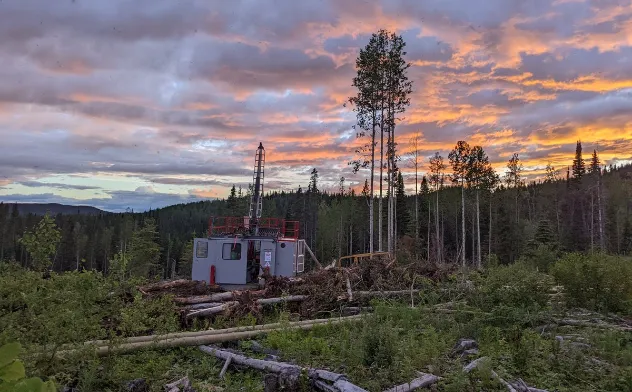
3:39 But Neil's going to talk and I think there's a big chance that we find other high-grade zones throughout the property. About 80% of our drilling here is going to be in untested grounds. And we're just about to start that now. We underwent a really sophisticated infrastructure build program for the last 8 weeks. So we don't want to do a heli drilling. It's not ideal, it costs more, but also more importantly, you get pigeonholes in some holes that you might not want to drill, just because a lot of times you do have a plan, but you have to make calls on the fly and you make calls based on what you've been drilling before. So you want to have the flexibility to change your collar locations and drill if you see really amazing stuff which we expect to see. And we finally finished those roads. It's been really wet in BC recently, at least where we are, unlike Thunder Bay and God bless the people in those fires right now. So we've been having a hard time kind of getting up the hill and doing some of those step outs, but we think in the next week, we're really kind of going to go after that. And that's going to be some really big catalyst, I think for our company. But again, we just want to get some news out there. Happy to answer any questions, but Neil, maybe you want to kind of dovetail and provide some technical expertise and background on this hole?
4:49 Yeah, I mean, yeah, I could kick it over to Romeo if he wants to follow up there with some more targeted questions. Yeah, happy to. I've certainly got a bunch, just based on the release. So if you Don't mind, I'll grill you guys a little bit. Tony, I will start with you, then Neil, I got a bunch for you, so don't worry.
5:08 Pretty impressive to me, opening the season with 154 meters of 1.21% copper equivalent inside those 280 meters of 0.96, but all right at surface, which I think is kind of the most fun part. And it pushes the South Zone another 100 metres north. So when the assays for this hole, the 83, landed on your desk, what stood out to you first, the grade or where it puts the boundaries of the zone? What should people on the call be more excited about? We collared this hole from a hole we drilled last season at the same pad location. That was 2560. 2560 drilled due West and it was okay off the top. It got some sniffs and then it got out of the stock really quickly into some of the bounding rocks, decent grade, consistent with our bigger, lower grade, but still mineralised plume around the system.
6:03 When we drilled down to the southwest, after about 30m, we got into mineralization that looked identical to what you were hitting 150m, 200m south in hole 1. The first hole we drilled on the property, we were just seeing this
6:19 altered veins, fracture-hosted mineralization, boronite, chalcopyrite, later stage quartz veins with some liptonite in them coming through. You know, really consistent with what we typically see in our high-grade South Zone core. And we weren't expecting to hit that until quite a bit deeper because we knew we were coming under the zone and then following up hole 80. And, you know, I think the main impetus of this hole was to follow up the deep results at hole 80, maybe clip a bit of the South Zone. We didn't expect to see the South Zone come almost right to surface, right in this little area. So we're getting a better handle on the geometry of it. We have some control due west from historical holes, depending on how much stock we want to put in those. But we really didn't have a lot of information in this specific area. So yeah, like Tony said, it kind of brought the bounds up about another 100 meters in the North, Northwest or Northeast dimension.
7:15 So very, very good result. I wasn't surprised by the assay results after seeing the core. I think we have a pretty good handle on what's going to come back. I was really happy to see the gold kicking like it does in the South Zone, typically further to the South. So yeah, it was good. It was a pleasant surprise right as we were drilling it. And then happy that our suspicions were validated by the assays. From my point of view, and I take it from where I have an investor capital markets point of view,
7:45 when the assays came to me on Friday, I just saw all this high grade. And it was a really unique hole because you got this first 300 meters, that's high grade stuff. And I'm trying to think of like what you put in the title. And sometimes you're trying to make a zone look good, but I like 20 different options of intervals and every single interval look good. So it was almost like I could close my eyes and pick out a raffle with whatever the interval was. I knew the market would like it. And it's just a really good position to be on from a promotional point of view because the first 300 meters was, it's just delightful to be able to be able to see that. And like Neil said, so hole 1 went completely vertical and it hit that high grade and if you kind of see how it's extending, what, 200,250 meters away from hole 1, Neil?
8:31 Yeah, it's about, I mean, I can be the exact, Just think about that. You got 150 meter deep hole, then you got 300 meter deep hole kind of away from it. Like I just envisioned that as the pit. Now like that is a high grade pit that's just getting bigger that's hopefully gonna pay back the infrastructure extremely quickly. And I know people look for these big 300-meter step outs, but when you have high grade like that, you're doing 100-meter step outs, that really is significant. So that's what I saw and that's what excited me from a point of view. Yeah, hole 1 is is 170 meters to the to the south southwest.
9:06 And then hole 80, which was still coloring into that high grade zone is 200 and 215 meters to the southwest. So the zone is and that that whole, that whole stretch, I mean, like, we could put some more holes in there. But based on the control we have around it, like, you know, we, they would hit the same mineralization. It's just our 78. Right? Where is the deepest part of this zone? The zone is somewhat enigmatic from our broader understanding of the system because we don't really have a good handle on why there's so much Gold in this area specifically. This is the most Gold-rich part of the property. It's right at surface.
9:55 We see other zones of mineralization look very similar. We see the same Boronite veining. We see the same Chalcopyrite veining. We see the same Molybdenite veining sparsely throughout, and we don't get those Gold kicks. We do get Gold, but it's not nearly as consistently mineralised throughout this zone. There's something else happening here that we don't have a perfect handle on what's driving that, what fluid conduits are driving that. The dikes that cut this area aren't particularly well mineralized. In fact, they're some of the least mineralized on the property.
10:27 So there's something going on here that's unique to this little south zone and it's just connected to the broader system as a whole. So yeah, it's, you know, it's, it, it, as much information as we can get in this zone, the better we're doing some fairly tight drilling in here, but that's cause it's a, it's a very important part of the system to try and understand. I got a funny little anecdote actually to share. So I was dropping my daughter off at camp this morning at 8.30 and our lease had already come out at 6. And at the front is a buddy of mine, his kid goes to the same campus as my daughter, I know him. And he's actually at Corp Dev at a mid tier gold company. And we always chat about, you know, just this and that about the industry. I see him at Beaver Creek, see him dropping off. And He's like, man, amazing drill results. He's coming from a Gold company. What he told me, he's like, so the way we're positioning this is like this is a Copper play. So for Copper plays, you need to do the step outs. You need to show with billions of tons of core But he said like he said this zone he says from my perspective corp dev at a mid-tier He goes this is something we'd be interested in because it's actually a gold play in the south And we think that there's millions of bounces there. And the copper is the byproduct. And if you're positioning for this for a mid-tier, like it would be a takeout candidate already because it's already got millions of bounces, I think, forward-looking statement.
11:43 So it's kind of how you kind of position it. So it's really interesting to kind of hear it from that point of view from a gold company, because I hadn't really thought about it that way. And that's something that Eric Sprott actually told me when he called me. He said, when I saw that drill hole, I think hole 80, he's like, you have like 600 meters of over half a gram per ton gold. He goes, I see this also as a gold deposit. And then when the guy said that to me again today, it's like, we have really value here. However you splice up, even if we didn't have everything on the step outs, this sell zone is a deposit on its own. So it's a good backstop. You need to protect yourself in this junior business and we have the protection here with the South Zone. I think we're going to deliver everywhere else. But I just want to kind of share that anecdote because it's freshened up and 3 hours ago. I appreciate it. And yeah, for folks in the room, it's a real champagne problem to not know which good headline to go with. Usually it's trying to make, it's 3 guys in the room trying to get a good headline out of not great news. It's certainly a champagne problem. Neil I got some tech questions for you real quick.
12:42 The upper 500 meters of the hole ran through variably altered babine dikes, cutting screens of sedimentary rock, all carrying quartz chalcopyrite planes and patches of dense disseminated chalcopyrite. So for the geologists in the crowd, and there are a couple, what does that package tell you about where Hole 83 sits within the larger NAC system?
13:01 Well, so the whole south zone, the high-grade south zone is right on the margin of the babbying stock and the host rocks, the sedimentary wall rocks to the porphyry intrusion. We're getting more and more evidence that the Babine stock isn't one single stock like in placement. It's an amalgamation, a composite body of really variable dimension dikes that have been placed. We see internal contacts within the stock, chilled margins of the same rock up against the same rock. And so there's clearly a structural ease towards the centre of the property with where these dikes are placed. And as you get further away from that, you end up with fingers of the stock rock, the stock magma intruding out in narrower segments into the country rock. And that is where we see some of our best mineralization.
14:05 The densely disseminated zones are within those screens of conglomerate sandstone. And then the porphyry stock rocks themselves are still cut by these veins. So it might just be that that is an area that's allowed a later stage overprint of some mineralization because the porphyry stock rocks elsewhere look very similar and we see similar mineralization, but we don't see this Gold enrichment. So the stock margin is a really interesting area. It's where we've hit some of our best Copper grades and our best Gold grades as we go around. And we're pretty heavily focused on starting within the stock and punching out of the stock as we drill around this
14:53 property. And we'll get a better handle on the dimension of where this favourable zone of mineralization is and if it extends out into the IP chargeability halo. But right now in the South zone, that's why we're seeing that interesting association of stock juxtaposed right up against sedimentary rock so regularly, is because we're at this sort of frayed margin of this composite stock-like body. Appreciate it. I've got one more tech question and we'll zoom back up for a second. I'll throw it to you, Tony. But Neil, one more. Deeper down the hole, past the zone of diking, like you said, you're seeing that same dark Potassic alteration as in hole 80, the biotite and magnetite, but with less diking and only the local strong Chalcopyrite.
15:42 Is dike intensity shaping up as the main control on grade here? And how does that guide where you're going next in the South Zone? Yeah, so outside of the stock and even within the stock, there's several phases of diking that
15:58 seem to have an important control on mineralization. So we have this earlier stage of mafic diking that the porphyry stock cuts. That seems to have primed the rock really well to accept this later stage mineralization. So you had a bunch of possibly early magnetite and mafic minerals coming in as a result of probably hornfelsing from this mafic dike and placing that have acted as really good nucleation sites. And that's why we see some really dense zones of disseminations down there. There's also a stratigraphic control. There are beds that are more carbonate rich and act to neutralize and reduce the porphyry fluids and cause deposition of some of the sulfide minerals. So we see some beds within the deeper sedimentary rocks, the more well-bedded units, be very, very strongly mineralized right up against some beds that aren't, right?
16:49 So some of the more siliceous rich beds might occlude some mineralization and some of the more primary carbonate rich beds mineralize that it's taken that mineralization really well, almost like a pseudo-scarn type situation. And we see some scarn-style mineralization. We see epidope, we see garnet, in like right within the heart of a potassium, which you don't necessarily see in a typical porphyry alteration model. So there's a number of factors that drive that. In the case of hole 83 compared to hole 80, hole 83 didn't hit as much of that mafic dike, that earlier priming situation. They hit narrower lenses of it and that correlated to a very strong mineralization.
17:35 Whereas when we step a little bit further outboard of the stock, around where hole 80, hole 78 hit, we see more intercepts of that Mafic Dike, thicker intercepts of that Mafic Dike and correspondingly stronger mineralization in the wall rocks. Great. I appreciate you getting into the tech for everybody in the room. Tony, I'm going to throw 1 to you. I'll intro it, but it's 1 right from the chat. So this is obviously just the beginning of a 50,000m plus drill program, biggest in company's history and one of the biggest running in BC right
18:07 now. What I want to know from the chat, Johan, let's know basically what's the structure when things are coming next? When are the additional holes coming? Are you going to release them as they come in in batches? What's kind of the news release strategy for the rest of the season? Yeah, first of all, thanks, Johan. Always excited to answer the ask-say questions. But yeah, Johan's a friend, met him in Vancouver, from Sweden, big supporter of the company. But look, it's a good question, a lot of people have it. So the way it goes is we're gonna try and do, you know, between 2 and 4 holes at a time, and we're gonna do it for similar zones. So you don't wanna release 1 hole from the South zone and 1 hole from the North zone, you wanna stay focused.
18:49 So we are drilling our different locations together. And when we have, you know, 2 or 3 or 4 holes that can string together that explain a story in this particular zone, we'll put it out. In terms of our releases, I don't want to wait more than 4 weeks for our next result. I'm hoping it'll be sooner than that. So if you want a kind of a worst case scenario, that's kind of timing you're kind of looking at. But like I said earlier, so if you're drilling 80 holes and your average release is 4 holes, you're looking at almost 20 releases and we got 12 months of putting out releases. So on average, you'll be doing around what? 1.7 news releases per month. And some, some months you'll have more, some, some months you'll have less, but It's all depending on when the assays come out. I think we'll get some news out sooner rather than later because we did get some holes through right before the big queue starts.
19:42 But right now you're competing with a huge queue with BC. Like our sister company, Metal Energy is drilling at Niv. Evergold is drilling at Golden Lion. Everyone that's drilling at BC is drilling right now. Obviously, there's going to be a little bit more of a wait for some of the holes that we're drilling right now at NAC. But again, I think worst-case scenario every 4 weeks, but hopefully sooner than that. We want to get news out and we want to keep the party rolling.
20:08 This is why we want to keep on drilling. We don't want to lose momentum. You saw that happen at the end of last year. We released hole 70, Neil. Our stock went up. Usually what happens is you saw this with hole 78. The stock went up, but then we didn't put out a whole for 3 weeks. So people kind of lose interest, they get into another story. But when we put out whole 70, we waited 2 days and we put out a whole 80. So the stock went up over 2 days and instead of kind of coming down, we managed to bump it up again with whole 80. So that's what we kind of want to do this year. We kind of want to do kind of a, you know, A12 combination here. And when we have good news, put out another one and get that price of the stock higher. Because the big thing that's important right now is resistance. So it took us a while to kind of hold heavy over 1 dollar.
20:55 Our next piece of resistance, a dollar 40. So we want to make sure the stock can stay strong above a dollar 40. And it's just kind of stepping up from there. So we've got to work with the market, put out news and keep people interested in the story and hopefully bring new investors in. Hopefully that answers your question, not being too complicated. No, no, I appreciate it. I think it does. Let me know in the chat if you need any additional notes from it. You know, I got one more for you because the step outs really caught my eye. The release says they're not on the drawing board. They're being drilled as we speak. So kind of without giving away the punch line here, what data gave you the conviction to step up big this early And how far from the known mineralization are those rigs sitting today?
21:35 Right now we're not doing any of the massive step outs, but we've been given a lot of confidence in stepping out around the anomaly and within the stock from a lot of the holes we did last season. So a lot of the stock holes we did, 66, 63, 70 particularly, they were all really decently mineralized, right? They had a higher frequency of veining than we typically see. There were zones of dissemination within the rocks, good overprinting, intermediate sulfidation at a later stage, veining that cut everything, that shows some evidence of telescoping. So we think there's potential for large tonnage to be added by doing this. And like Tony said, the potential to hone in on some additional discrete high-grade zones.
22:30 A lot of these zones of veining and breccias that are mineralized, that are narrow in core intercept are interpreted to be very steeply dipping.
22:42 So hitting them is just a matter of getting that right drill density in there. It's an odds game. We want to make sure we're doing systematic tests throughout this to add the tonnage, but with every hole we drill in here, we have additional chance to hit some of these higher-grade zones. That's really well evidenced by our drilling off to the west where some holes were fairly middling and some holes not all that far away were actually really, really quite good because we're hitting these fluid conduits and these intersections with these later stage dikes that seem to be driving the last pulse of our really good Copper mineralization.
23:20 We're just extrapolating that exploration model out around the entire property. We've got enough conviction from the geophysical expressions, the magnetic signature, the IP signature that it's warranted. And now with the extra funding, a miss doesn't necessarily kill his own. It just allows us to continue to step out, right? So, when you don't have a lot of money in the bank, a big step out is a sizable investment. And if it misses, it really makes you a bit more gun-shy to keep testing in that area. We don't necessarily have that limitation. And that's good because I think NAC is, the way to explore NAC is to continue to be tenacious and keep stepping out. The previous operators on this property didn't hit anywhere near as good as a grade we hit because they just didn't have that drilling density.
24:14 It's a really unique porphyry in that sense. A lot of different lines of evidence kind of point us in this direction. And yeah, right now our step outs are focusing on pushing the bounds of our system to the West right now. So pushing the model footprint out there and we're going to then start working our way to the East as the ground dries up and we get the trail set. Can I show, I'll show an image really quickly here?
24:45 You see my screen? We, it's just, yep, we can. So this is hole 83, you know, You can see how far it is from 80 and 78. 80 was over 600m of 0.77% Copper equivalent. 78 was over 700m of 0.71% Copper equivalent from surface. So both really good zones.
25:08 We are doing step outs because we're like, I'll jump back and forth, but this is an older image, but if you look at hole 84, it's really kind of going outside our zone. So is hole 90. So is hole 86. We're doing 1 in between right now. So it's trying to build out this pit. But if you kind of come back here, so if you want to get all of this into a pit, so imagine the high grade area. Imagine like the super high grade areas like this, right? Sure. Imagine it's like this. Imagine a cup, right? If you have a cup, if you stick a ice cream cone inside it, but that ice cream cone has a flat bottom That's kind of what the pit looks like. So if the cups all the high grade you actually can't capture All that high grade in a pit because it comes down you got benches and stuff like that So what's super important actually is is not just a high grade area of here It's can you do you have above like I do have a it doesn't matter if you have super high grade area around it, you just need stuff that's, you just need stuff that is, for example, mineable grade that allows you to build a pit so you can capture all the high-grade in the middle. And that's where some of those holes that we're hitting in, for example, 90, 84, 86, soon to be 95, that's what it's going to capture. Can we build that pit big enough so we can capture all the high-grade in between, but also can that lower-grade, moderate-grade that's on the outskirts towards
26:36 the West, towards the East, is that above cut-off so that can actually go to the mill, provide income for the mine to pay it back. That's kind of the main important reasons why we're doing those step outs. And also to kind of talk about what Neil was saying there, we're doing these step outs. So all these holes we have that we're drilling, we're going to drill them at one point or another. Some of these holes that we're drilling in the sell zone, we have planned for later on, but it's been raining a lot. We tried to move a hole in the big step out. The rig wouldn't stick, so we have to focus more on the step outs of the South Zone, but we're going everywhere. We're going to be drilling 80 colours. There's no area we're not going to drill. This isn't like a Kingfisher where we have hundreds, thousands of square kilometres to drill. We have 25 square kilometres.
27:23 We know where the deposit is. It's just getting bigger. And it's a really big opportunity for us because it allows us to focus. So even South32 asked making sure we're going to do the step outs. They're all going to be drilled. It's just a matter of the sequence of when. But trust me, investors, every single drill that we have planned for this year is going to be drilled. The question is more of a when, not if. Awesome. I appreciate that. I got a couple questions left, I'll work in some of the ones from the chat. For the dozen or so people that came in a bit late, there's a request meeting button at the bottom of your screen, you can press that to request a meeting with the American Eagle Golf Team. One thing I want to talk about is infrastructure, Tony, because I know you built out a permitted trail network that kind of takes helicopters out of the equation or makes them not necessary and lets you drill for most of the year. Because I think a lot of people underestimate how much logistics can make or break an exploration program.
28:13 So somebody in the chat asked, What's your dollar per meter in BC for this campaign? I don't know if you have napkin math on it, or if you can just generally speak to how your current strategy keeps costs low. I can kind of speak to that there. Yeah, it's, helicopters are very expensive this year. Fuel costs are significantly above what they were last year, even so. So right now for for B3, which we were using last year to move the heavy rigs that can drill deeper. We're looking probably at a close to $3,000 an hour all in cost for helicopters. And so that works out to be at a minimum, almost $10,000 a day. So that's a lot of money when you break that over the length of the program. And typically on this project, if we were servicing 2 helicopter rigs, that would be kind of around 4 to 5 hours of flying a day.
29:17 Getting all the core out, you're getting all the fuel in, you're factoring in the days where you're doing potentially up to 2 drill moves. The trail network is also a logistical undertaking. We've worked with the Ministry of forests to get an expanded OLTC that allows us to actually send the timber to a mill. We're working with a local logging outfit. The logs are being taken to Baddeen Forest Products and we're just doing as narrow a path as we need to get the drills in and get the trail in condition that we can drive it year-round with the crew trucks. It's a pretty extensive network and it goes all around the intrusion and the only area where there's some gaps in it is down on the southern margin, but it's actually really decent terrain and we're permitted to build up to 15km of exploration trail.
30:10 That should be more than sufficient for the length of this project. As a cost per metre, it comes down as we drill throughout the season. Then I expect it to pop back up a bit in the winter. In the winter, you've got to bring in the heating, you're using a lot more fuel. But I think all in this season, with the expanded hyperspectral assays we're doing, we're probably gonna be somewhere around 440,450 a meter all in, all in. And that's factoring the winter costs as well. You know, if we were doing helicopter, you could probably add another 70 to $100 a meter all in. Sure. Yeah, certainly relevant. I good, I was talking to an engineer that's kind of helping us out because right now with our drilling, like we want to build towards being able to do technical studies next year, do an MRE, do a PEA.
31:03 But if you're looking at costs, so Neil mentioned it's about $450 all in, all in, that includes drilling and wind fare. And that includes like our camp, our fuel, everything off season work. To drill in the Golden Triangle and the Tutugon, you're looking at $1,000 per meter. And why that's important, it's obviously exploration, like It's lower cost of capital allows you to drill more holes, better chance of making discovery because the more kicks to the can you have in this business, the better. But also from a big company perspective, it comes down to economics and building the mine. And you can almost like linearly extrapolate your cost to build with what your helicopter costs are. So, for example, if it costs us $450 per metre to drill where we are and it costs someone the Golden Triangle $1,000 per metre, all of a sudden, let's say our mine costs $4.5Bn to build, that same mine, that same footprint, that same size in the Golden Triangle will cost closer to $10Bn.
32:01 You're looking at over double the cost to drill, to build in some of these other locations. And really, when you've got to obviously drill and think about, you know, the economics of these big companies, if you do want to be taken over and they've got to pay back their cost of capital as soon as possible, the best way to pay it is to pay his little capital up front. So that's a big advantage at NAC. And that's a good way to extrapolate this question about helicopters and per meter to what the real end goal is, which is building a mine. And it will be probably as cheap here as anywhere else in BC for NAC. So it's a big positive there. That's why people are into NAC, the big companies. Yeah, it's the sweet spot of B.C. For sure for capital costs. I got one on just generally the situation American Eagle Gold finds itself in today. You're sitting on roughly 50 million bucks, programs fully funded from cash, your copper equivalent numbers use 450 copper, 3400 gold, both metals obviously comfortably above that with copper well north of 6 bucks at this point. Between the Treasury and the conservative price tag, it Feels like you got a lot of built in cushion here. Was that deliberate?
33:04 What should investors take from that? In terms of the cash that we have? Yeah. Like, I'm in the seat of like protecting our company. You know, one of my mentors business wise was Steve Latwin, CEO of IAMGOLD. And, you know, he's from the oil and gas industry. He cut his teeth there in the 80s. It was a tough market. And he said, Tony, it always resonates to me. Cash is king. It's the most important thing. Like you can have great rocks, but if you don't have cash like the market knows it they'll sell you off And I learned a really big lesson in January 2023 so We followed up we had hole for hole for arguably like people put us on the map for our hole 1 But hole for really like it was essentially very similar, if not the same as Hercules metals, you know, whole we're brought Barrick in, but we sold off on it because people knew we didn't have cash and they took advantage of the fact that we're gonna have to raise. And, you know, from that memory and that experience, what I always wanted to do was make sure we always had enough money for the following year, for the same program that we had the year previous. So this year we have a 50,000m program.
34:13 If we couldn't raise any money and nothing else happened, we would still be able to afford another 50,000m program that runs in 2028 and still have money left over. And when you're drilling for almost 24-months straight or have news for 24-months straight, and with all the catalysts that we have, there really is no reason for people to sell you off. Why people sell you off is because they know you have to do a raise or they know you're not going to have news for 6 months. We don't have that problem. And I think we can do everything that we want to do in the next 24 months. And that's why we have that capital because we keep on hitting good results. We come out with a good P.A., come up with an MRE. There's no reason for people to sell us because we don't have the cash. And it allows blue sky for our stock. And really, that's kind of the end of the game is creating shareholder value. Awesome. And I'll get in because I know we've got a hard stop pretty soon. I'll get to some of the questions in the chat. One person, You just answered it, but I'll let you reiterate it. Wesley asks, any chance of additional dilution this year?
35:06 I don't think so, you know, unless someone wants to come in, you know, Canadian government or something and offer us, you know, $3 per share, $4 per share. And, you know, I promised to get a fast line on permit so like we're completely cashed out like we brought in Eric Sprott even then we weren't planning to dilute but we knew what Eric Sprott would bring and he brings credibility a new following and allowed us you know to break above that kind of dollar resistance for the long term, which I mentioned earlier. So no plans to dilute. Obviously, you know, South32 and TAC have participation rights, some options and warrants get executed. But besides that, no plans to do any major dilution. Awesome. Jaclyn asked right at the top of the hour, any updates on Pacific Booker, but they do note great results today.
35:54 No update. So we dropped our acquisition attempt of them. Look, we liked it for the price that we offered. We wish them the best of luck. We really do. We want other companies in our region to do well. But we're moving on. We're focused on NAC. That's how we got to where we were in the first place. So we're going to focus on our business. We hope Pacific Booker focuses on theirs and we hope that they do well. So best of luck to them and John and the other John. And yeah, we wish them luck and yeah, hopefully we'll catch up with them someday. Perfect. Appreciate it. Neil, a couple of technical questions for you. D. Morrow from the chat asks, how many cores are in the lab now? And do you get results back from the lab by meter or from the whole core? So we submit the core to the lab in 1 to 3 meter chunks, depending on the density of the mineralization and the size of the core.
36:49 We start in HQ and then we reduce to NQ core. So HQ the maximum we can submit is 2 meters and NQ the maximum we like to submit is 3 meters. We submit those to the labs in 50 sample batches. So our average batch length is about 100 meters, if it works out to be about 2 meters per sample. And so we get those results back finalized in 100 meter chunks, essentially. And we don't have a hard stop at the end of the hole for the batches. So sometimes, you know, the last batch in the hole will spill over into the next hole. It just helps us keep our QAQC accurate to the number of samples. We'd like to do 10% QAQC samples. So that's why we keep that 50 batch number unless it's the end of that ring drilling. It's the only situation where you have 50 samples in a batch.
37:45 So yeah, that said, yeah, basically, you know, we don't get the whole hole submitted at a time. The batch number is depending on, you know, how fast all the holes are drilling. So batch 1 will be from 1 rig, batch 2 might be from another rig, and it might not be till batch 6 that you get another batch from that previous rig in that sequence. So the order that we get the batches back and then the lab seems to analyze those in an order too. So everything's shuffled, right? They get to the lab in order, but depending on what order they take those bags out and lay them in, it just depends on a variety of factors. I'm not really sure how the lab decides that. But yeah, it's not easy to predict down to a precise date of when we're going to get everything back.
38:38 So yeah, every hundred meter segment of a hole generally is about that sort of 6 to 10 week mark, usually averaging on around 8 weeks. Just look, investors, trust the process here. Believe in what we've done here. We've gone from 2 cents to, you know, a buck 40 in March. Like trust the process, have some faith, glass half full. You're not always waiting for a release because we're trying to hide news or it's not good like a lot of times it's because it's really good so like hole 1 we had over limit so you got to wait for some of those gold over limit so it's a good thing waiting sometimes and like I'm sure 87 we're gonna be waiting too because I know there's gonna be over limits on on that hole so you know sometimes the best things in life are worth waiting. And ALS and our labs like to do the overlimit research and it takes a little bit longer. So, yeah, take it as a positive sign. Here you go. I'll throw one last question. Somebody quite eager from the chat, Tom, wants to know if you guys would consider publishing a basic drill hole database on the website so investors can model the deposit independently. Is that anything you'd give any thought to?
39:43 Yeah, look, I think some things you want to keep a little bit close to your chest. We have investor rights agreements with tech and South 32. They have access to the data, we're quite comfortable with the way that we're doing it in terms of providing the composites. And we're working with mining hubs, shout out to mining hub. Andy, Carl, Abby, amazing company, really well priced. You don't have to pay developers. They build these 3D models for you. So we're building a 3D model with them and you can access all of our historical drill holes, the composites, you can see where they are in 3D, you can play around with it in addition to the model that we have. That's probably a good way. But yeah, in order to provide per meter basis, I think we're tied up in the IRA there in terms of our public disclosure.
40:28 I'll give you some background there. Yeah, it's a tricky thing. It's really nice to be transparent. But once you put that data out there in its complete form, you don't have control of what happens with it. And you worry that somebody who's not a professional geologist or professional engineer could take this data and start publishing or putting out on social media claims that might not necessarily be true, right? You know, we know like our mineral footprint is a very, very large tonnage. And that doesn't speak to the overall economics of it. And in the absence of metallurgy data, geotechnical data, all the stuff that goes into to factory and a PA, you know, I, my worry is that something, something misleading could be could be construed from that if, if it's, you know, if it goes that route, right. So when we put a resource model out, we wanna make sure that it is done by someone independent from the company, someone who is qualified to make those kind of calls.
41:37 And it's done fully 43-101 compliant and just putting all of that data out to the market definitely is not 43-101 compliant. Awesome. Appreciate that, Neil. Tony, I'll throw it to you just because I know you guys have a meeting at 1. Throw it to you for last words. Also last chance people to throw an additional questions into the chat. Tony, I'll throw it to you to wrap us up for today. Yeah, look, lots of news to come. Drilling lease till April. We're really excited. We love NAC. Just shout out to our partners, Tech and South32. Amazing partners, great companies to work with. Also kind of a shout out to all the people that kind of, you know, people see me and Neil and I, but you know, it takes a village. Half of our team we have at site is from Lake Babine Nation.
42:23 Absolutely amazing experience working with them. I hope every company has the same experience as I do working with the communities. Just amazing people. I Got to get to know them and really friends with them. But also like the geos behind the scenes, Nick Dudek does all of our modeling, amazing talented geo. Dave Hoke, James Olsen, both helping run the project at site. ITL, our drillers. We have a lady named Anya, who does a lot of our website stuff. This feels like the Oscars, but let's go with it. Nick Ellis does all of our maps. He's amazing. And Andrew Stewart, he takes a lot of grief from me, but he's amazing. He helps us with all of our marketing. And it really is a big team. It's not just me, Neil, Charlie, and Steve. It's everyone. It's an army. And yeah, we have a well-oiled machine. I'm very proud of what we've built. And yeah, we're going to take this thing to the finish line.
43:10 Awesome, Tony. Well, on that, I'll leave us for today. Thanks so much, both you and Neil, for running us through. Let me grill you a bit on today's results and congratulations. Obviously, it's a very exciting way to start drill season result wise. So appreciate your time today. And for the 50 some odd people in the room, thank you so much for joining us. This last chance to hit the meeting request button, it'll hold after we close today's meeting. But Tony, Neil, have a great rest of your day.