Transcript
Automated transcript · Written by software from the replay's audio. It can mishear names and figures; the replay is the record.
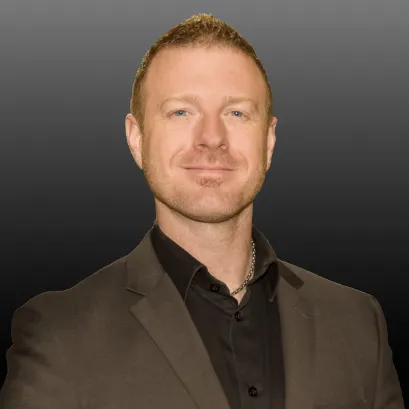
0:04 Hey, good morning, good afternoon, good evening, depending on where in the world you're signing in from today. I know it's a fairly international audience today, so I really appreciate you guys taking time to join us. I'm fortunate today to be joined by Matthew Schwab, Stallion Uranium CEO. Matthew, how are you today? I'm doing great, thanks. Awesome. So here's how today's gonna work. I got a number of questions that I'm gonna ask Matthew right after my housekeeping here. And then if there's still time, I'm gonna open it up to questions from the live audience. So this is an interactive event. There's a chat box at the bottom right of your screen. I'll answer a question as soon as I'm done with housekeeping. There you can ask questions at any point during today's event. We'll try to get to as many as we can today. If for whatever reason we don't get to your question today or if we just don't have 100% information to get back to you, I'll make sure the Stallion team gets your question, full transcript of the event, so they'll get back to you in short order afterwards.
0:51 But we'll try to work them into today's conversation as much as possible, so don't be shy. Feel free to ask questions if you've got them. I'll also say today's event is being recorded, and the replay will be available likely this afternoon, Eastern time, probably right before end of day. But that's enough out of me. Let's get into the main protein of today's event. So I got a bunch of questions. Don't mind if I put you through a bit of a grilling, Matthew. Sounds great to me. Thanks. Perfect. So looking at your background, as I understand it, it includes fairly significant uranium discoveries, including your role at NextGen Energy and the Arrow Deposit Discovery. I'm curious, and I'd like to ask almost everybody this in some ways, what first attracted you to uranium exploration versus all the other things that somebody with a geology background could do?
1:31 That's a great question. And you know what?
1:33 I've always loved geology, even as a kid, before I even really knew what geology was, I was the kid who would bring in rocks from the field, show them to my mom, she'd say, oh, that looks so pretty, and then throw it over the railing off the deck again. But it really comes down to my final summer before finishing university, when I was working with the Saskatchewan Geological Survey with Sean Bosman, we were completing a regional stratigraphic survey of the basin, where we ended up visiting 13 different
2:00 projects, most of which already had Uranium deposits or show-ins on them. And while I love the geology aspect, the really unique part was that on most of those projects, either the CEO, the vice president or the senior geologist would come out to location, stay with us in camp and discuss the project with us. That gave me the opportunity to ask a lot of questions, like what drew you to this industry? What were your biggest successes? Why are you staying in this industry? That kind of thing. That allowed me to grow my passion for geology, but it also gave me a very keen interest in the mergers and acquisitions, which are fairly common in the mining industry. And at the end of that summer, I ended up with 8 job offers, I think it was, and I had the chance to sit back and decide which company seemed the most likely to become an acquisition target.
2:47 At the end of the day, I settled on Hathor Exploration and it was one of the best decisions of my career. And that's really what has driven me through my career to keep pursuing Uranium. That's good. That's a good background story. I always liked the lore, so I appreciate that. Speaking of Hathor, so you're part of that team. For folks who don't know in the audience, that led to a $654 million acquisition by Rio Tinto. What lessons from that experience are you applying today at Stallion?
3:15 Well, of course I learned a lot in my short time at Hathor. I was not part of the discovery, but I was part of the development team. And through that process, I learned a lot more about exploration and permitting and feasibility studies and even the merger and acquisition process. But I think the 2 most important points, first off, is that I learned the value of building a strong team around myself that supports the goals of the company that I'm trying to run at the moment. But secondly, I learned the importance of building value for shareholders, which is really often easier said than done. But it is key to
3:45 illustrate a value proposition showing the potential for the company and those who are invested in it. And those are really the 2 key things that I learned from my time in 11 short months at Hathor. Great. No, that's great. Now, one thing is, as both a geologist and an entrepreneur, who's founded multiple companies, and I do think that's an interesting convergence, how do you balance the technical aspects of exploration with the business demands of leading a public company? Kind of what's your strategy for merging those goals?
4:15 It's been a process, honestly. It's tough to move from a technical aspect to a more capital markets mindset. But it really does lean on what I just mentioned, because I'm very fortunate to have the team and the support that I do have at Stallion. I have a great VP exploration with Darren Stogowski and my board is very supportive of my goals for the company. Beyond that, our financial backers, they're in regular communication with me and they see the potential for our company based on our combined experience and the land patch that we have. And of course at home, I couldn't do this without the constant support of my beautiful fiance and the 5 kids that I have at home who always inspire me. That's nice.
4:54 5 kids, geez, that sounds like- Busy household. Yeah. That's a full-time job after your full-time job, of course. Absolutely. Yeah. So I do want to zoom in on the basin, though, a little of the background. But I know Stallion recently commenced a stepwise moving loop TDM survey on high priority targets in western Athabasca Basin. So I'm curious if you could walk us through what makes Coyote and Lynx targets particularly promising and why this geophysical method is important to targeting. So just stepping back a little bit, one of the first things that we did when I came in as CEO was to completely reevaluate every square kilometer of ground its stallion holds. We went right back to the drawing board and not only re-ranked the targets where they needed to be, but also generated a whole new set of exciting targets. Coyote and Lynx were first identified by the Airborne EM Survey as 2 of the strongest conductor packages on our land.
5:45 Beyond that, they hit every checkbox
5:47 across the board in our ranking criteria for properties such as structural intensity, magnetic signature, alteration potential, depth on conformity, et cetera. So once we get to that point where we're very confident that these are a tier 1 target. We typically move ahead with 2 final surveys, ground gravity, delta line, discrete alteration zones, and then a ground EM survey, which we just kicked off a while ago, to show us the depth and orientation of the conductors so that we can target them with a drill hole at the exact point that you touch
6:18 the unconformity. So it's really critical to make sure that we're putting our drill holes in the best possible place. Oh great. Yeah, it's helpful context. I appreciate that. I know the company recently expanded the Stone Island project through strategic staking. What geological features made the additional, I think it's 1,700 or so hectares, attractive? And more importantly, how does this fit into your broader exploration strategy? Well, as part of that re-evaluation of our targets and our land package, one of the highest priorities we had was to focus on shallower targets where we can just plain and simple better spend our exploration dollars. Stone Island shows many of the same exact signatures as Coyote Links and other targets that we have, But it also covers the edge of the Athabasca Basin, ranging from 400 metres depth on conformity at the deepest right to the Athabasca Basin outcropping its surface on the south edge.
7:10 So it really just gives us more opportunity to continue building high value targets in areas that we can spend our money more effectively to make a discovery.
7:18 Great. Now I got one, this is a, I'm not gonna say controversial talk, but certainly 1 there's multiple opinions on in the industry. I know you guys completed a 5 to 1 share consolidation recently. I'm curious, and like I said, there's a lot of opinions about the strategy in the industry. What advantages do you believe this consolidation provides for the company and its shareholders moving forward?
7:37 When I was brought into the company, it was more or less to move forward in a way that gives us more meaningful exploration. When I came in, we had roughly 150 million shares outstanding, we were trading around 3.5 cents at the time. If at that point I had tried to go out and raise sufficient capital to run a drilling campaign in 2025, I would have had to issue over 200 million shares to, and in that process, I would have significantly diluted the company. So based on input from the board, from our larger shareholders, we decided to instead clean
8:09 up the structure first, reposition ourselves, and then move forward in a way that we can provide a clean start for the company. And that's exactly where we are right now. Great. I appreciate that. I know you've got a JV partner in Atha Energy and you hold what you've described as the largest contiguous project in the Western Basin.
8:28 How does a scale advantage translate to exploration success potential? And are there any drawbacks to having a scale that's so big? Well, first off, yeah, drawbacks. Holding the land is expensive, of course. But there are more advantages than there are drawbacks. There are a few companies out there right now with large land packages in the Athabasca Basin, but the advantage of the land that we hold through the JV with ATHLA is that it's incredibly underexplored. Previously the area that we hold was hard to access, there was little information to use in target generation, but over the past decade with successes at Aero, Triple R, etc.,
9:03 More attention is being paid to the area and more potential is being continually proven time and time again. So besides being sandwiched between 4 of the highest grade deposits on the planet, we have almost 3000 square kilometers of land with only 3 drill holes on it. So there is a lot left to explore. Awesome. I do have a kind of technical question. This is kind of future looking, so bear with me here. But beyond your current focus area, what emerging exploration technologies or methodologies Are you watching as kind of industry expert that you think could change how people explore for uranium in the coming years? Well, historically I've been admittedly old-fashioned when it comes to exploration.
9:43 I really am. I follow a tried-and-true exploration method but over the past few years you really can't ignore the buzz around AI, intelligent target generation, machine learning, that kind of thing. So yes, we've been looking at some options to use those technologies on our current land package. I see it as a way now to fact check our current targeting methods, but also to potentially outline new high priority targets that we may have missed in our process. Of course, it's a potential.
10:11 So without saying much more, you should be seeing more news regarding that in the coming month. Cool. Good to hear. I want to go ahead, zooming out to just the commodity broadly. I know global interest in nuclear energy continues to grow amid clean energy transitions, etc. But how do you see, I know there's some crystal ball gazing here, but how do you see Uranium market fundamentals evolving over the next 3 to 5 years? So the midterm. And how do you think Stallion is positioned to capitalize on those longer term trends? You know, despite the fact that the fundamentals have just gotten better and better over the past 5 years, we all know that predicting trends in the Uranium market,
10:47 it's been a difficult task over the past few years. But at the end of the day, if there's one thing that's certain, it's that demand is growing and production is dropping, plain and simple. It's only a matter of time before utility providers are no longer able to fill contracts. And that's what it'll really take to change the outlook for Uranium. You know, other aspects of course, continue to influence the spot prices such as tariffs, sanctions, but at the end of the day, Canada still produces 15% of the world's Uranium,
11:15 27% of the supply for the United States. So when countries need Uranium, we need to have the reserves to meet those needs. And that's where new discoveries are so important. So our team is plain and simple focused on exactly that, making new world class discoveries. Right. Yeah. I imagine uranium will likely be carved out of any tariff scheme, but that's just my 2 cents. You never know. But what 1 would guess. Yeah. We'll see how it plays out. Yeah. We'll see how it plays out. It changes every 72 hours. So
11:41 we'll see as it evolves. Now, I know that the basin is synonymous with high grade uranium deposits, But in the same breath, that also makes it a really competitive exploration landscape. So not to, but by no means to pitch against other companies in the basin. I'm just curious what you think and what you'd say to investors gives Stallion a competitive advantage in the region. Well, this really goes back to my statements about our land package and the JV with App Energy. One of the major reasons that the rest of the basin has been explored so extensively is access. With roads going up the east and west margins and along the north margin all the way to Fond du Lac, it was much more feasible to explore those areas. So if you were to take our land package and place it over top of the east or north, there would likely be over 10,000 droves on it. And as I said, there are only 3. So there is a lot of room to explore and honestly amazing potential to be realized.
12:31 Awesome. Great. Now, one thing I know that stage between exploration development does require significant capital. I think everybody in the industry knows that. What milestones do you think investors should be watching at Stallion over the next year, year and a half that represent meaningful de-risking of the projects as you go into that next phase?
12:50 Well, as we've stated in the past, we're going through exploration on our high priority targets right now. And as we receive the final data from our ongoing surveys at both Coyote and Lynx, anyone who understands what we do should be very excited. I know that we are, and anyone who doesn't understand it, I'm happy to explain. But besides that, the new initiatives that I mentioned you'll be seeing news on, that should be a significant de-risking factor to our exploration. And we look forward to moving into a more substantial drilling program as soon as possible at Coyote, of course subject to financing.
13:22 But in the end, it's the people running operations that should give shareholders the most faith. There are not many two-person exploration teams that have been involved in 3 high-grade discoveries in a decade. So we're going to do our absolute best to push forward to a meaningful discovery and build that value for shareholders as we've done in the past. Awesome.
13:42 Now there's one question, CFO style question from Dean in the chat asks, what's Stallion's current cash position and what's the company's estimated monthly burn rate? Estimated monthly burn rate is, I'd say a little less than 40,000 a month right now. Cash position, I would say including receivables from our digestitures of other assets, sitting about 1.4, 1.5 million. Great. I appreciate that.
14:12 Dean, the question you just asked, we actually asked right at the beginning of the hour, So that'll be in the replay, which should come to your inbox relatively soon. Just not to retread the same space. One question that came over email from somebody who is, I believe, in the room actually, asked, what's going on with the company that bought Horse Heaven? Who are they? And they'd love if you could explain the deal more and if that property reverts back to sallion if this new entity doesn't complete any exploration work on it. So that was before my time, but I will explain to the best of my ability. It was a divestiture so that we could focus specifically on Uranium.
14:44 We do have additional cash payments coming from that. It is a private company based out of BC, so they're not currently listed. They will be going through the listing process and we do hold 2M shares in that company. As far as what happens if they don't meet the objectives, it will likely come back to Stallion and then we'll deal with it in that process. But right now, again, we hold shares in the company and we're going to use the cash to the best of our ability moving forward with our exploration.
15:11 Awesome. Now, one question I always like to ask, especially as we're still early in the year, What are you most excited about for 2025? What keeps you up at night with excitement for Stallion?
15:21 In the last month and a half here, as I'm seeing preliminary results from our geophysical programs, it is drilling at Coyote. I have spent a lot of time in the Uranium industry, especially in the basin, and I've only seen 2 targets of this level in my entire career. And the other one was Area C on Rook 1 at NextGen, which became the Arrow deposit. So comparing the 2 side by side, I am very, very excited, as are the rest of the geologists that I've discussed this with. So I look forward to sharing those material results
15:52 as they come out and we get the finals. So pay attention. And again, if you don't understand what we're doing, feel free to ask questions and I'd be happy to elaborate on why it's so significant. Awesome, That's great. One question from Michael in the chat. I love this kind of question. So I'm going to throw it right to you. For a perfect season, what would be your priorities beyond drilling?
16:11 Priorities beyond drilling? Well, of course, based on my history and the fact that I've started 8 companies and been part of multiple acquisitions, I would love to merge this company with something bigger and make a much more substantial splash in the basin. And we've had offers for merger, for acquisition, I can't say much about it, But the wheels are always in motion, and we want to build something much, much bigger in the Athabasca. Glad I asked. That's an exciting question to end on. But, Matthew, thanks so much for running through those questions. And folks in the audience, thanks for throwing questions at me. If you think of the perfect question right after we close today, which I know I always do. Please do send it in anyway. I'll make sure that Matthew gets it and gets back to you soon. Oh,
16:51 yeah, but that's it. Matthew, thank you so much. This is really great. Thank you