Tapestry Pharmaceuticals — Investor Presentation (March 2007)
33 slides from Tapestry Pharmaceuticals's investor presentation, Mar 5, 2007
Slide 1: Tapestry Pharmaceuticals, Inc. Presentation to Investors
Tapestry Pharmaceuticals, Inc. Presentation to Investors
Slide 2: Forward-Looking Statements
Forward-Looking Statements Statements in this presentation that are not historical facts are "forward-looking statements" that involve risks and uncertainties. Forward-looking statements can be identified by the use of words such as "may," "will," "should," "anticipates," "expects" or comparable ter
Slide 3: Tapestry Overview
Tapestry Overview Proprietary next generation taxane, TPI 287 Potential for best in class Entering multiple Phase II trials Experienced oncology drug development team Large commercial opportunity Strong cash position Modest burn rate
Slide 4: TPI 287: The Next Generation Taxane
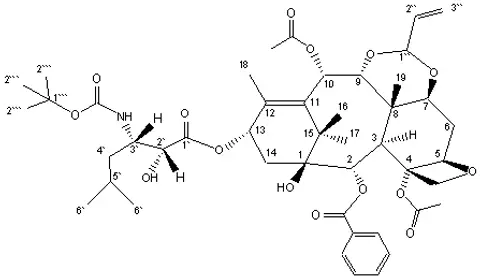
TPI 287: The Next Generation Taxane
Slide 5: TPI 287: The Next Generation Taxane
TPI 287: The Next Generation Taxane Proprietary new chemical entity More potent than paclitaxel or docetaxel in some preclinical tumor models Overcomes major mechanism for taxane resistance (the multiple drug resistance pump) Both intravenous and oral administration
Slide 6: TPI 287: The Next Generation Taxane
TPI 287: The Next Generation Taxane TPI 287 has the potential to: Demonstrate activity in multiple tumor types Show improved activity in a variety of cancers resistant to other taxanes Be combined with other anti-cancer drugs
Slide 7: TPI 287 Clinical Development
TPI 287 Clinical Development Phase I Clinical trials IV Q21 day schedule - completed IV Q7 day x 3 q 4 week schedule - ongoing Oral Phase I/II - planned 2Q07 Phase II Clinical trials Prostate Cancer Lung Cancer Other tumor types
Slide 8: TPI 287: Clinical Development
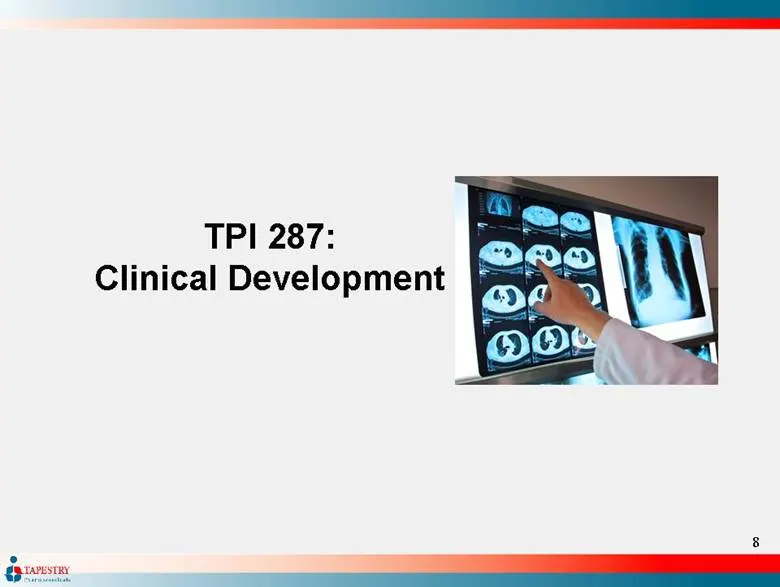
TPI 287: Clinical Development
Slide 9: Phase I development
Phase I development Two Phase I studies exploring different regimens Study 01: dosing once each week for three weeks (Q7D x3) repeated every four weeks Continuing to evaluate this schedule for maximum tolerated dose (MTD) Study 02: dosing once every three weeks (Q21D) TPI 287 well tolerated Trial co
Slide 10: Phase II development
TPI 287 Clinical Development Phase II development Prostate Lung Multiple other tumors types based on preclinical models, MDR1 phenotype, as well as Phase I results Exploration of oral dosing in additional tumor types
Slide 11: TPI 287 Oral Program
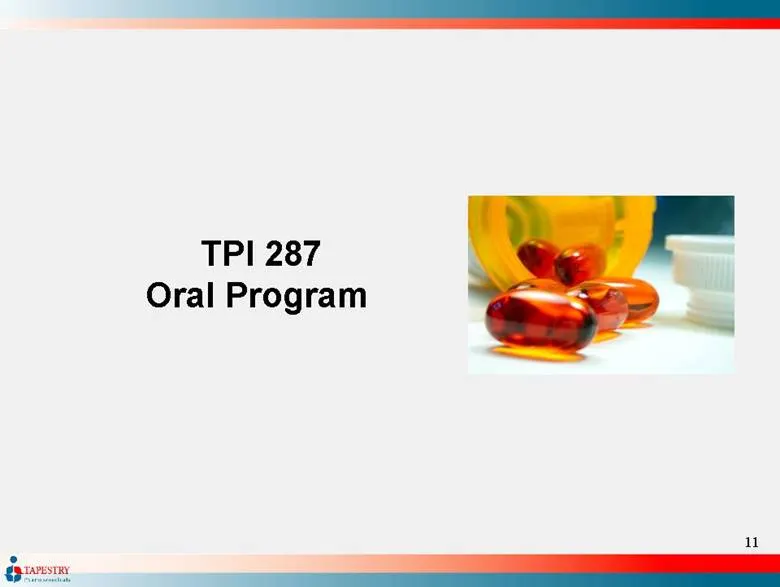
° ven TPI 287 Oral Program
Slide 12: Oral Program for TPI 287
Oral Program for TPI 287 TPI 287 is orally bioavailable in rodents Data presented at the AACR/NCI/EORTC International Conference on Molecular Targets and Cancer Therapeutics in Philadelphia in November 2005 Additional data has demonstrated efficacy of oral dosing in mouse xenografts First clinical s
Slide 13: TPI 287 Pre-clinical Biology Studies
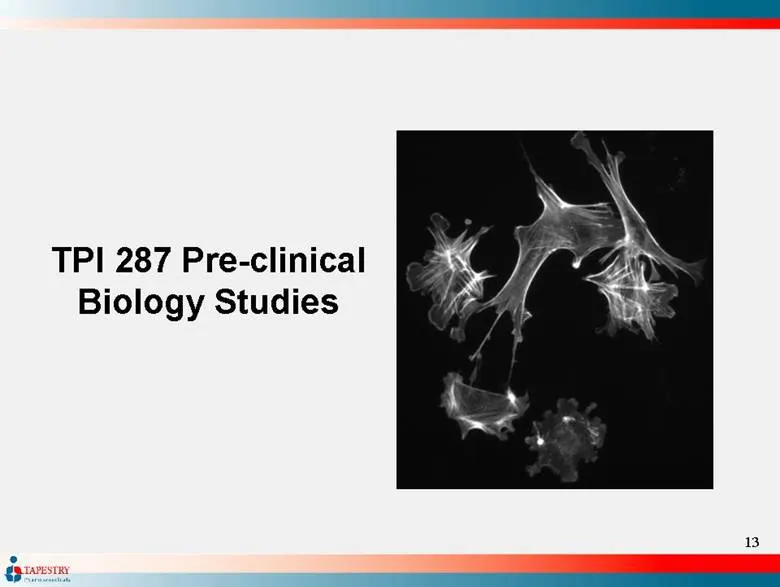
TPI 287 Pre-clinical Biology Studies
Slide 14: TPI 287 Differentiation
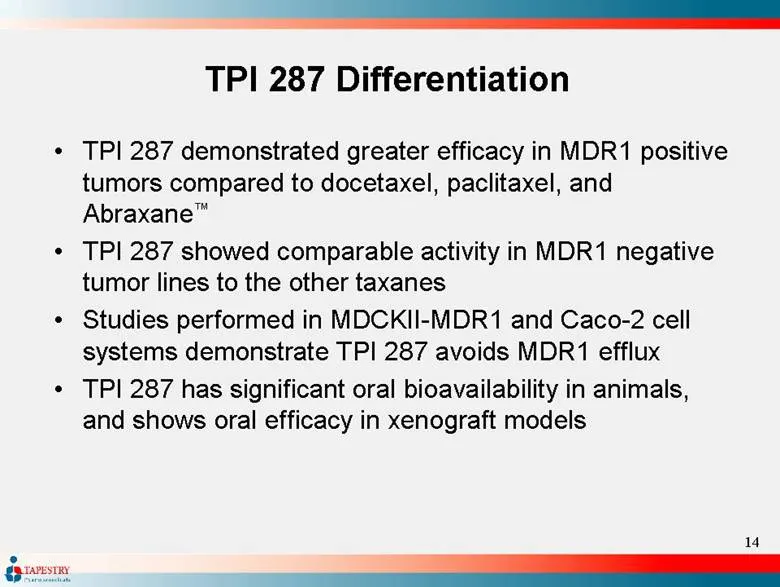
TPI 287 Differentiation TPI 287 demonstrated greater efficacy in MDR1 positive tumors compared to docetaxel, paclitaxel, and Abraxane™ TPI 287 showed comparable activity in MDR1 negative tumor lines to the other taxanes Studies performed in MDCKII-MDR1 and Caco-2 cell systems demonstrate TPI 287 avo
Slide 15: TPI 287 is more active than comparator agents in MDR1+ cell lines
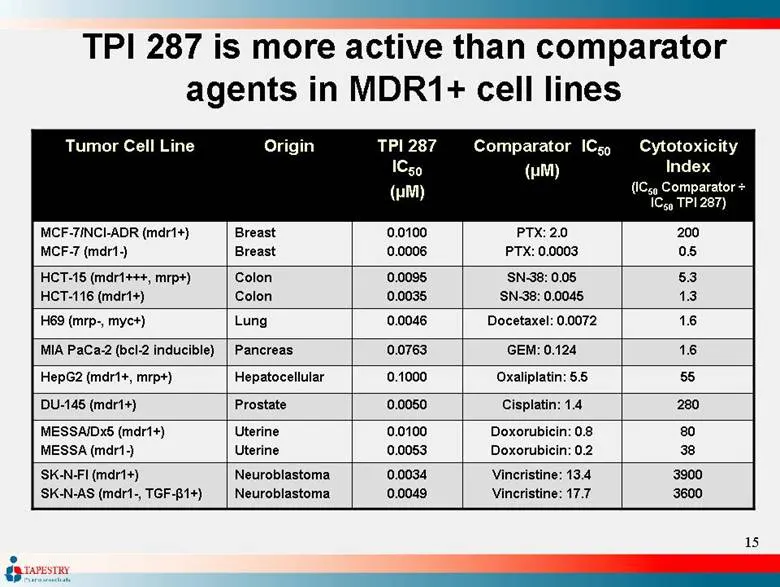
TPI 287 is more active than comparator agents in MDR1+ cell lines 1.6 Docetaxel: 0.0072 0.0046 Lung H69 (mrp-, myc+) 1.6 GEM: 0.124 0.0763 Pancreas MIA PaCa-2 (bcl-2 inducible) 3900 3600 Vincristine: 13.4 Vincristine: 17.7 0.0034 0.0049 Neuroblastoma Neuroblastoma SK-N-FI (mdr1+) SK-N-AS (mdr1-, TGF
Slide 16: TPI 287 more active than other taxanes in multidrug resistant breast cancer xenograft
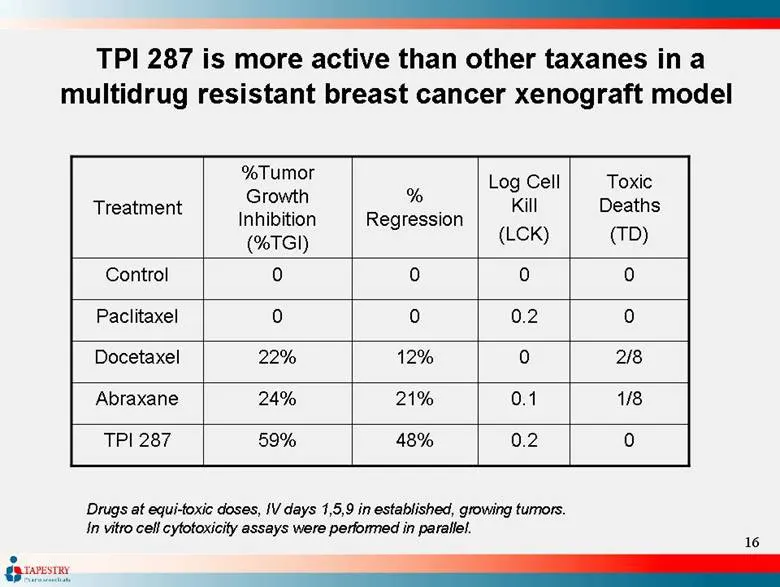
TPI 287 is more active than other taxanes in a multidrug resistant breast cancer xenograft model 0.2 0.1 0 0.2 0 Log Cell Kill (LCK) TPI 287 Abraxane Docetaxel Paclitaxel Control Treatment 48% 21% 12% 0 0 % Regression 0 59% 1/8 24% 2/8 22% 0 0 0 0 Toxic Deaths (TD) % Tumor Growth Inhibition (% TGI)
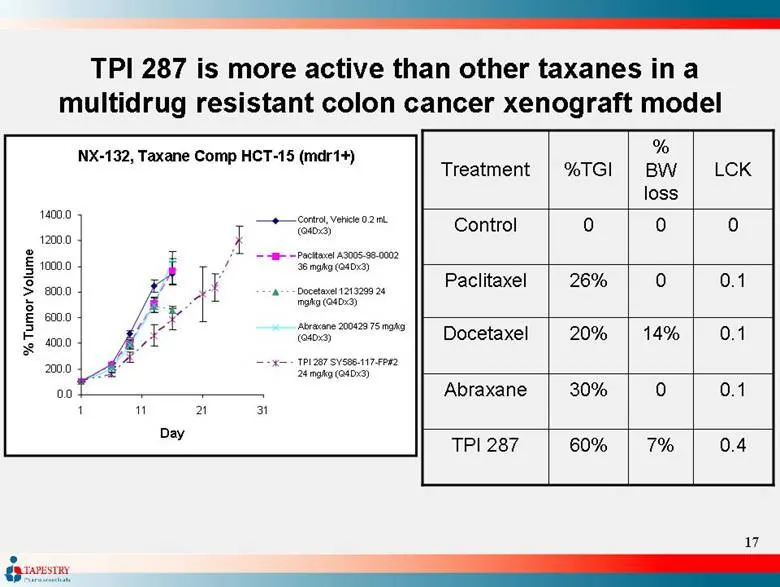
Slide 17: TPI 287 more active than other taxanes in multidrug resistant colon cancer xenograft
TPI 287 is more active than other taxanes in a multidrug resistant colon cancer xenograft model TPI 287 Abraxane Docetaxel Paclitaxel Control Treatment 0.4 7% 60% 0.1 0 30% 0.1 14% 20% 0.1 0 26% 0 0 0 LCK % BW loss %TGI NX-132, Taxane Comp HCT-15 (mdr1+) 0.0 200.0 400.0 600.0 800.0 1000.0 1200.0 140
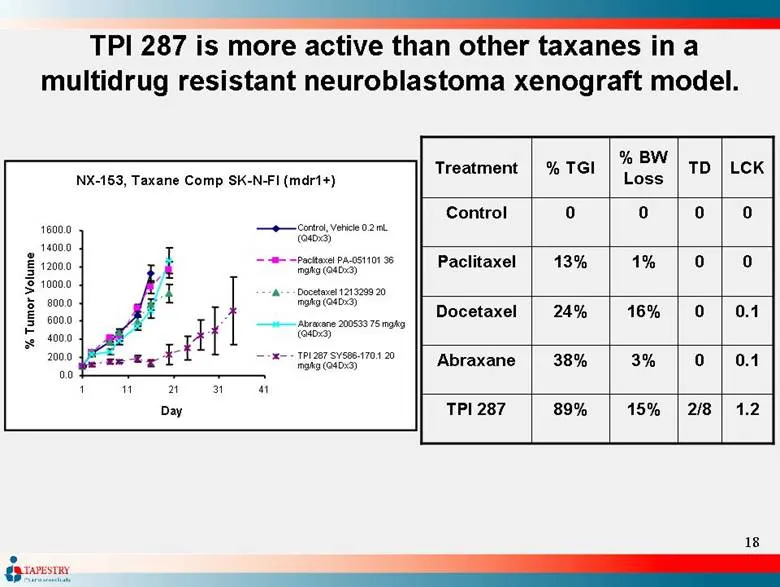
Slide 18: TPI 287 more active than other taxanes in neuroblastoma xenograft model
TPI 287 is more active than other taxanes in a multidrug resistant neuroblastoma xenograft model. TPI 287 Abraxane Docetaxel Paclitaxel Control Treatment 1.2 2/8 15% 89% 0.1 0 3% 38% 0.1 0 16% 24% 0 0 1% 13% 0 0 0 0 LCK TD % BW Loss % TGI NX-153, Taxane Comp SK-N-FI (mdr1+) 0.0 200.0 400.0 600.0 800
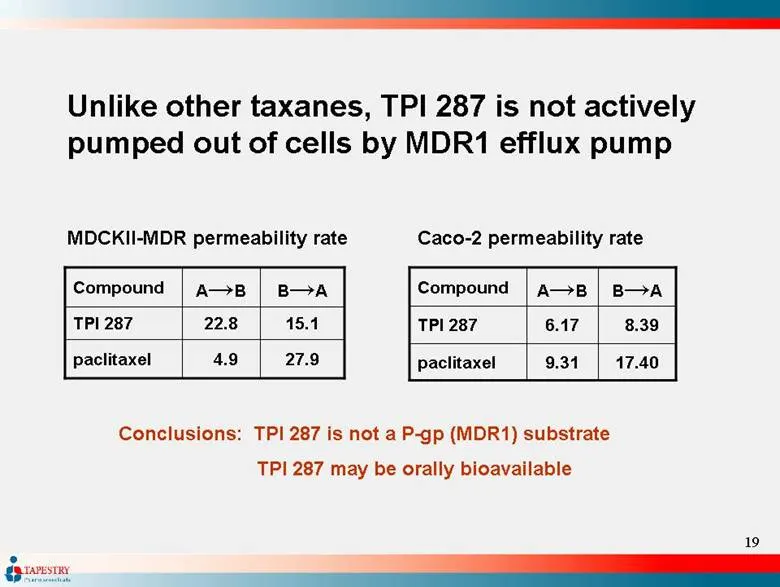
Slide 19: Unlike other taxanes, TPI 287 is not pumped out by MDR1 efflux pump
Unlike other taxanes, TPI 287 is not actively pumped out of cells by MDR1 efflux pump 17.40 9.31 paclitaxel 6.17 TPI 287 B A A B Compound 27.9 paclitaxel 15.1 22.8 TPI 287 B A A B Compound MDCKII-MDR permeability rate Caco-2 permeability rate Conclusions: TPI 287 is not a P-gp (MDR1) substrate TPI 2
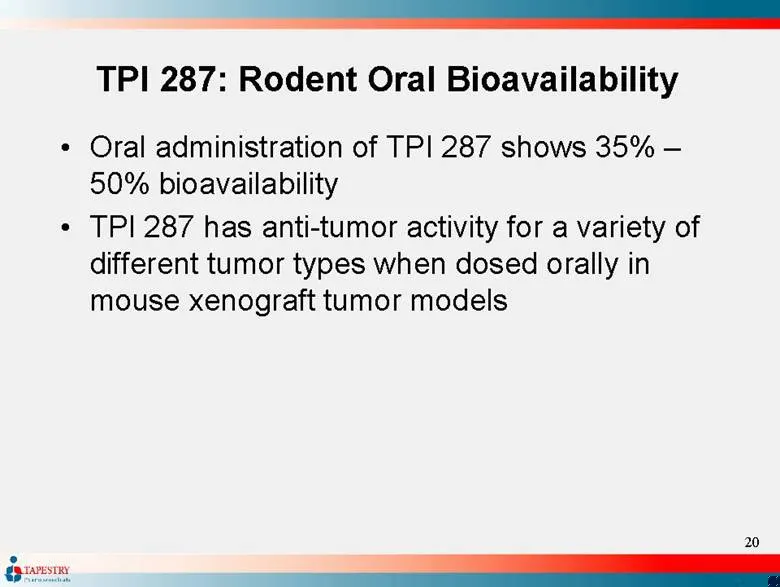
Slide 20: TPI 287: Rodent Oral Bioavailability
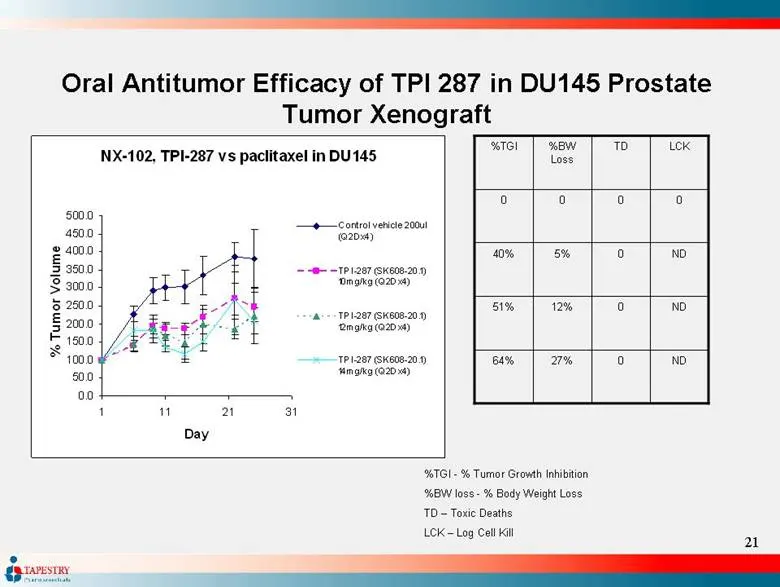
TPI 287: Rodent Oral Bioavailability Oral administration of TPI 287 shows 35% – 50% bioavailability TPI 287 has anti-tumor activity for a variety of different tumor types when dosed orally in mouse xenograft tumor models
Slide 21: Oral Antitumor Efficacy of TPI 287 in DU145 Prostate Tumor Xenograft
Oral Antitumor Efficacy of TPI 287 in DU145 Prostate Tumor Xenograft ND 0 27% 64% ND 0 12% 51% ND 0 5% 40% 0 0 0 0 LCK TD %BW Loss %TGI %TGI - % Tumor Growth Inhibition %BW loss - % Body Weight Loss TD – Toxic Deaths LCK – Log Cell Kill NX-102, TPI-287 vs paclitaxel in DU145 0.0 50.0 100.0 150.0 200
Slide 22: TPI 287: Preclinical Summary
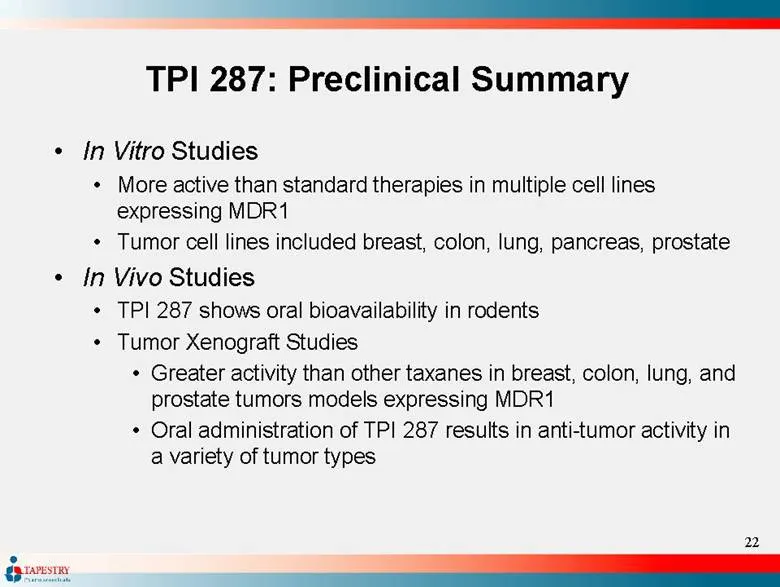
TPI 287: Preclinical Summary In Vitro Studies More active than standard therapies in multiple cell lines expressing MDR1 Tumor cell lines included breast, colon, lung, pancreas, prostate In Vivo Studies TPI 287 shows oral bioavailability in rodents Tumor Xenograft Studies Greater activity than other
Slide 23: Corporate Overview
Corporate Overview Quem a
Slide 24: Milestones
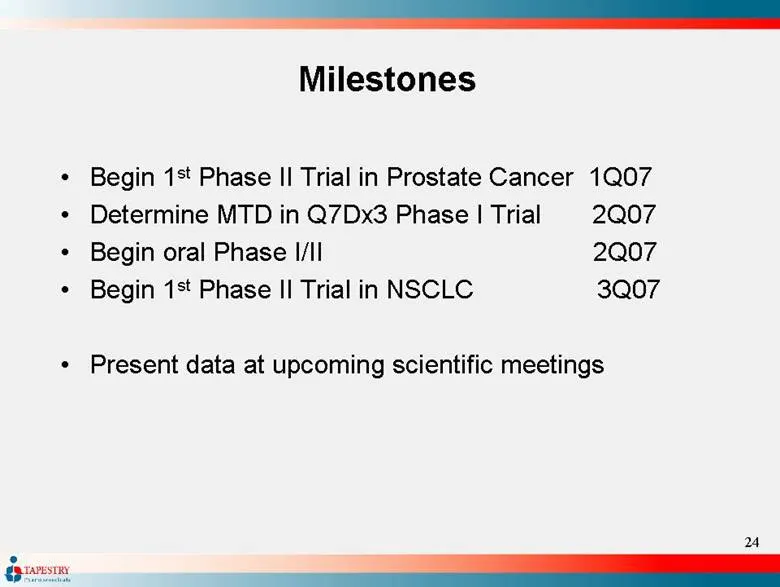
Milestones Begin 1st Phase II Trial in Prostate Cancer 1Q07 Determine MTD in Q7Dx3 Phase I Trial 2Q07 Begin oral Phase I/II 2Q07 Begin 1st Phase II Trial in NSCLC 3Q07 Present data at upcoming scientific meetings
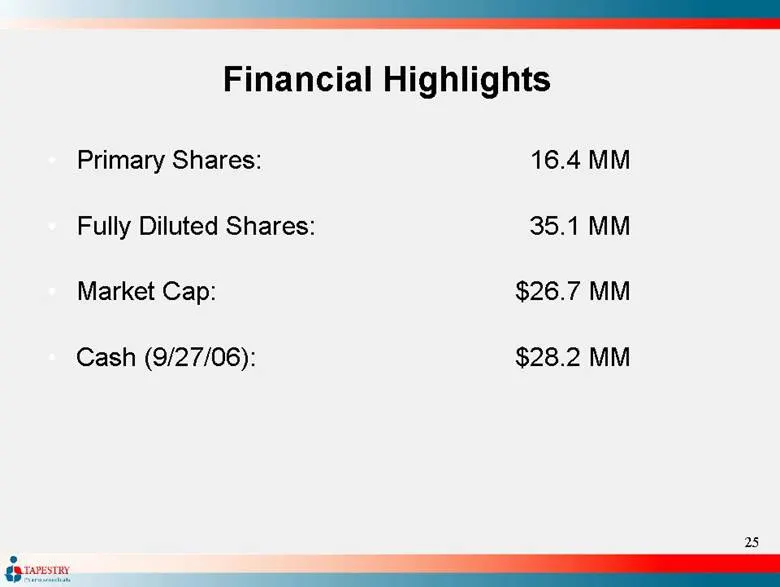
Slide 25: Financial Highlights
Financial Highlights Primary Shares: 16.4 MM Fully Diluted Shares: 35.1 MM Market Cap: $26.7 MM Cash (9/27/06): $28.2 MM
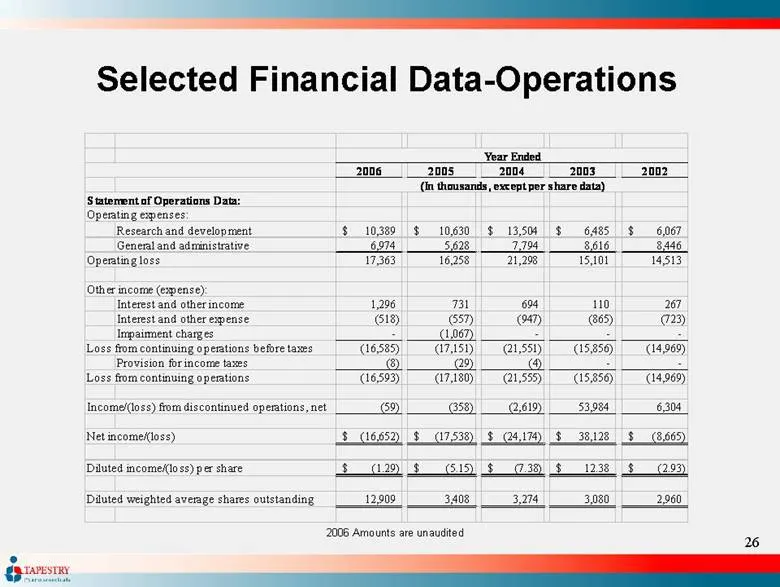
Slide 26: Selected Financial Data-Operations
Selected Financial Data-Operations 2006 Amounts are unaudited 2006 2005 2004 2003 2002 Statement of Operations Data: Operating expenses: Research and development 10,389 $ 10,630 $ 13,504 $ 6,485 $ 6,067 $ General and administrative 6,974 5,628 7,794 8,616 8,446 Operating loss 17,363 16,258 21,298 15
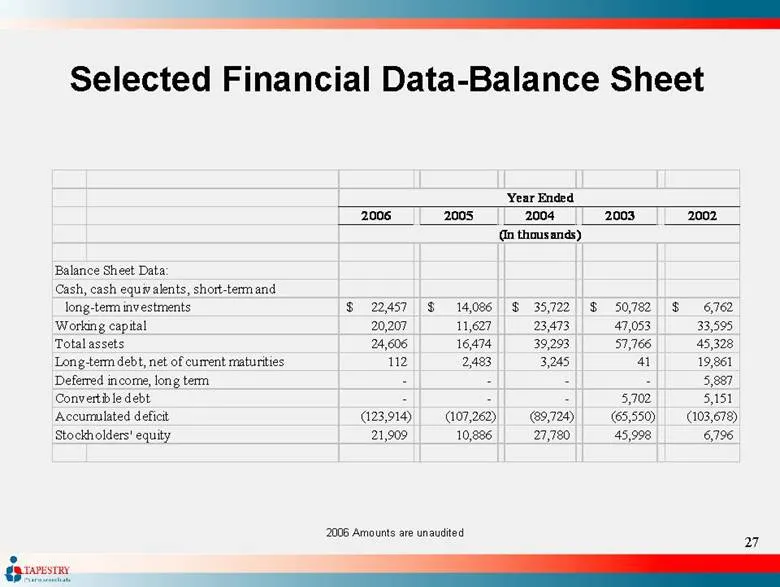
Slide 27: Selected Financial Data-Balance Sheet
Selected Financial Data-Balance Sheet 2006 Amounts are unaudited 2006 2005 2004 2003 2002 Balance Sheet Data: Cash, cash equivalents, short-term and 22,457 $ 14,086 $ 35,722 $ 50,782 $ 6,762 $ Working capital 20,207 11,627 23,473 47,053 33,595 Total assets 24,606 16,474 39,293 57,766 45,328 Long-ter
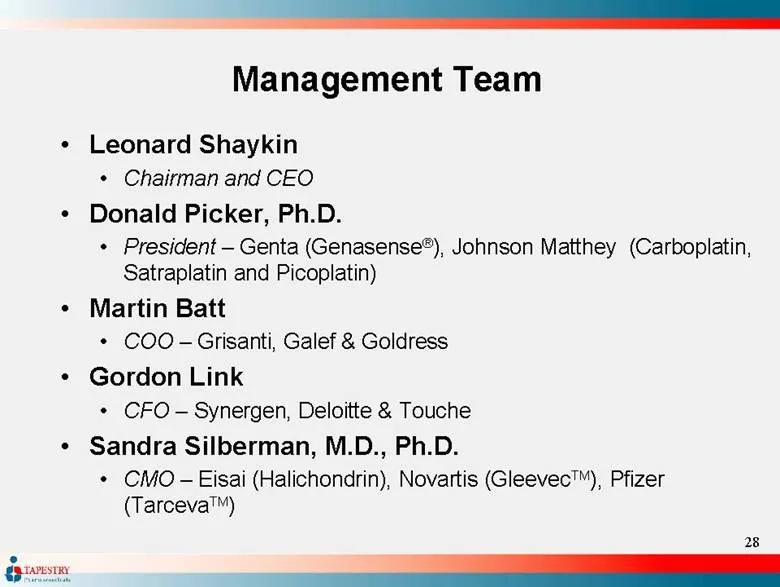
Slide 28: Management Team
Management Team Leonard Shaykin Chairman and CEO Donald Picker, Ph.D. President – Genta (Genasense®), Johnson Matthey (Carboplatin, Satraplatin and Picoplatin) Martin Batt COO – Grisanti, Galef & Goldress Gordon Link CFO – Synergen, Deloitte & Touche Sandra Silberman, M.D., Ph.D. CMO – Eisai (Halich
Slide 29: Management Team
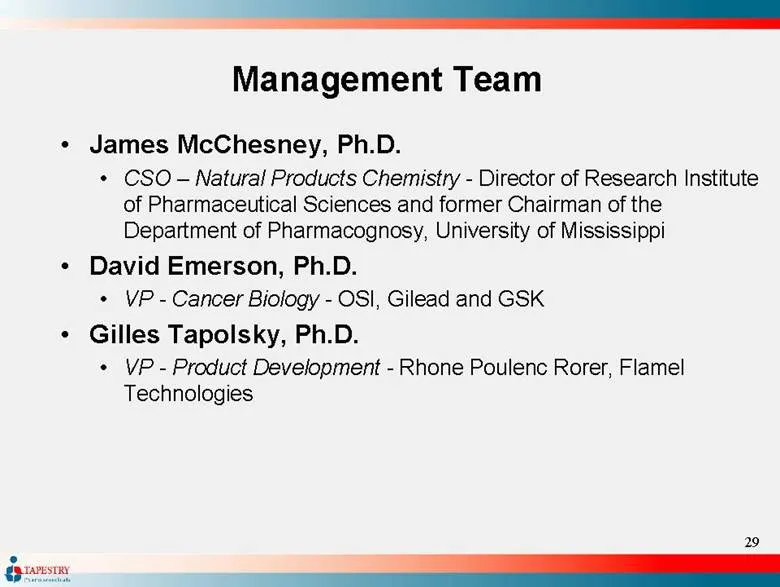
Management Team James McChesney, Ph.D. CSO – Natural Products Chemistry - Director of Research Institute of Pharmaceutical Sciences and former Chairman of the Department of Pharmacognosy, University of Mississippi David Emerson, Ph.D. VP - Cancer Biology - OSI, Gilead and GSK Gilles Tapolsky, Ph.D.
Slide 30: Board of Directors
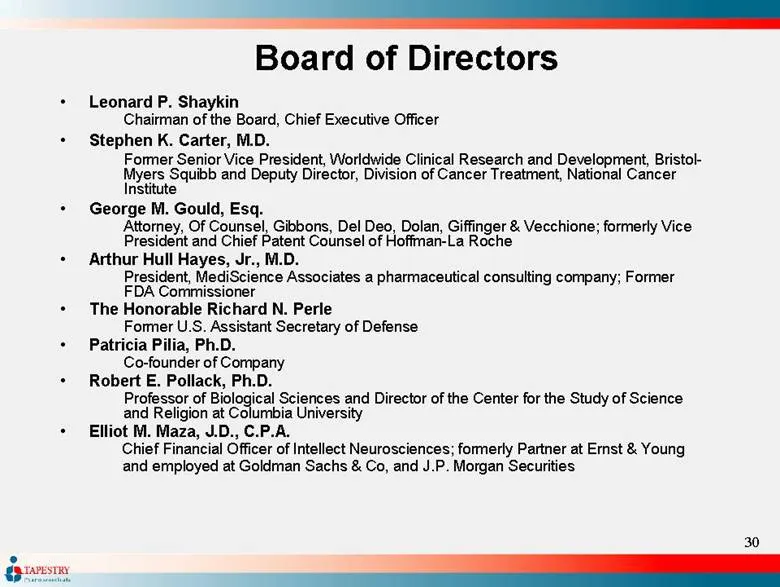
Leonard P. Shaykin Chairman of the Board, Chief Executive Officer Stephen K. Carter, M.D. Former Senior Vice President, Worldwide Clinical Research and Development, Bristol-Myers Squibb and Deputy Director, Division of Cancer Treatment, National Cancer Institute George M. Gould, Esq. Attorney, Of Co
Slide 31: Scientific Advisory Board
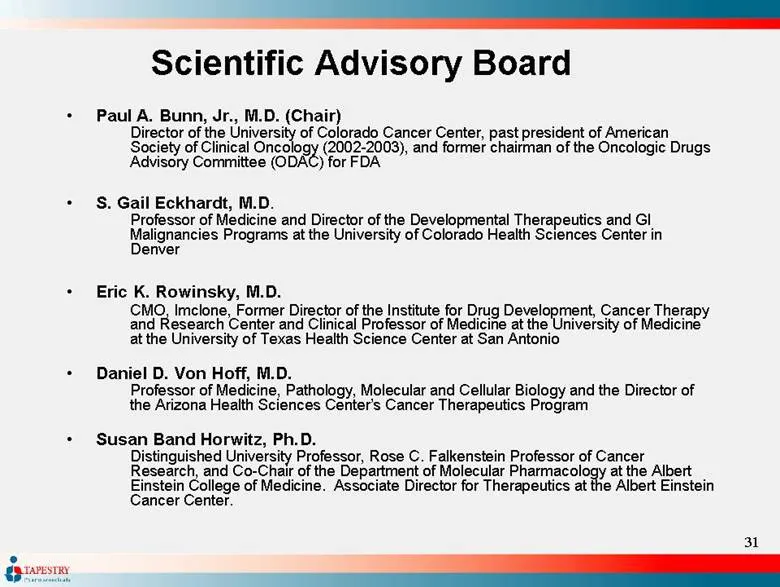
Scientific Advisory Board Paul A. Bunn, Jr., M.D. (Chair) Director of the University of Colorado Cancer Center, past president of American Society of Clinical Oncology (2002-2003), and former chairman of the Oncologic Drugs Advisory Committee (ODAC) for FDA S. Gail Eckhardt, M.D. Professor of Medici
Slide 32: Investment Rationale
Investment Rationale Proprietary next generation taxane Potential for best in class Multiple Phase II programs Experienced oncology drug development team Large commercial opportunity Strong cash position Modest burn rate
Slide 33: gy rarestey
gy rarestey Pharmaceuticals Strategies for Life™ Geom EE ne
Source: SEC EDGAR · 8-K filed Mar 5, 2007
More decks from Tapestry Pharmaceuticals Inc
 Investor Presentation (November 2007)27 slides · Nov 6, 2007
 Investor Presentation (August 2007)36 slides · Aug 21, 2007
 Corporate Update (July 2007)5 slides · Jul 17, 2007
 Technical Presentation (June 2007)6 slides · Jun 13, 2007
 Needham & Company Biotechnology and Medical Technology Conference 200733 slides · Jun 13, 2007
 IPO Roadshow (May 2007)30 slides · May 14, 2007