Tapestry Pharmaceuticals — Needham & Company Biotechnology and Medical Technology Conference 2007
33 slides from Tapestry Pharmaceuticals's conference presentation, Jun 13, 2007
Slide 1: Tapestry Pharmaceuticals, Inc. Needham Biotechnology and Medical Technology Conference
Tapestry Pharmaceuticals, Inc. Needham & Company, LLC Biotechnology and Medical Technology Conference June 13, 2007
Slide 2: Forward Looking Statements
Forward Looking Statements This presentation contains forward-looking statements. These statements relate to future events or to our future financial performance and involve known and unknown risks, uncertainties and other factors which may cause our actual results, performances or achievements to b
Slide 3: TPI 287: Proprietary Next Generation Taxane
TPI 287: Proprietary Next Generation Taxane
Slide 4: How Is TPI 287 Different than other Taxanes?
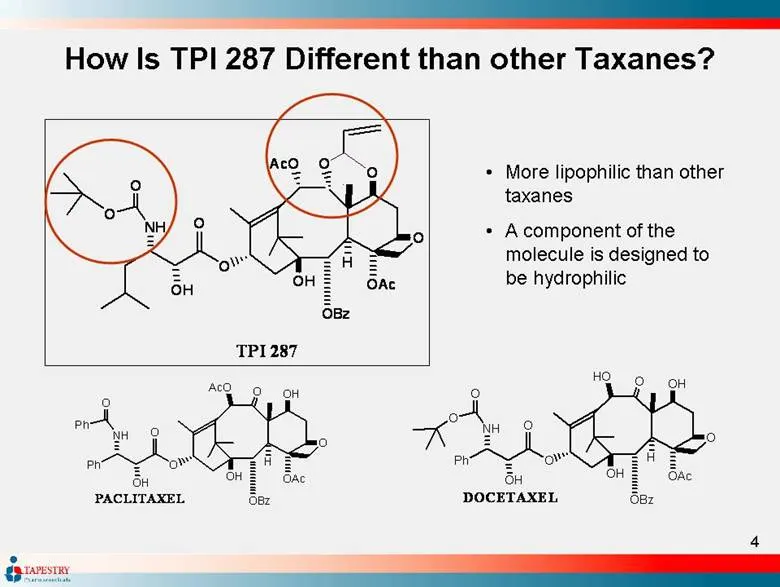
More lipophilic than other taxanes A component of the molecule is designed to be hydrophilic How Is TPI 287 Different than other Taxanes? O H O O O H A c O O B z H O A c P h O O O H N H P h O P A C L I T A X E L O H O O O H H O O B z H O A c P h O O O H N H O O D O C E T A X E L O O O H A c O O B z
Slide 5: TPI 287: Significantly Differentiated from Currently Marketed Taxanes
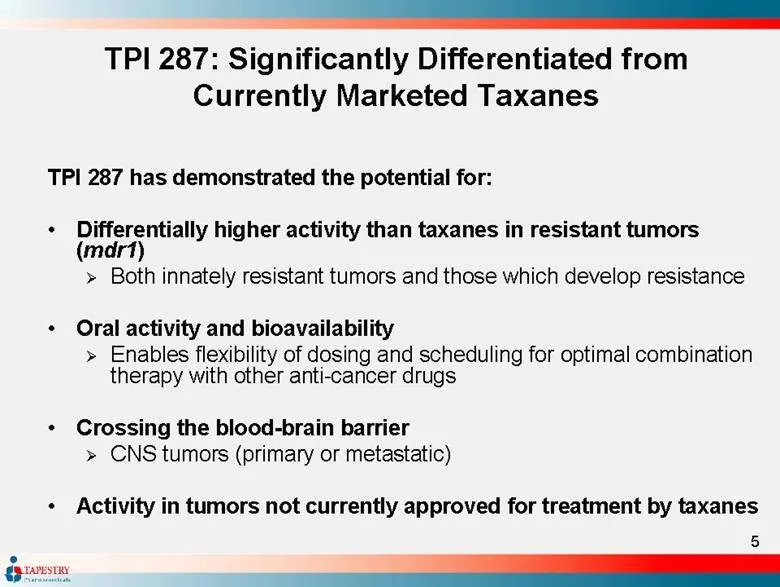
TPI 287: Significantly Differentiated from Currently Marketed Taxanes TPI 287 has demonstrated the potential for: Differentially higher activity than taxanes in resistant tumors (mdr1) Both innately resistant tumors and those which develop resistance Oral activity and bioavailability Enables flexibi
Slide 6: TPI Pre-clinical Biology Studies
TPI 287 Pre-clinical Biology Studies
Slide 7: TPI is More Active than Comparator Agents in Resistant Cell Lines
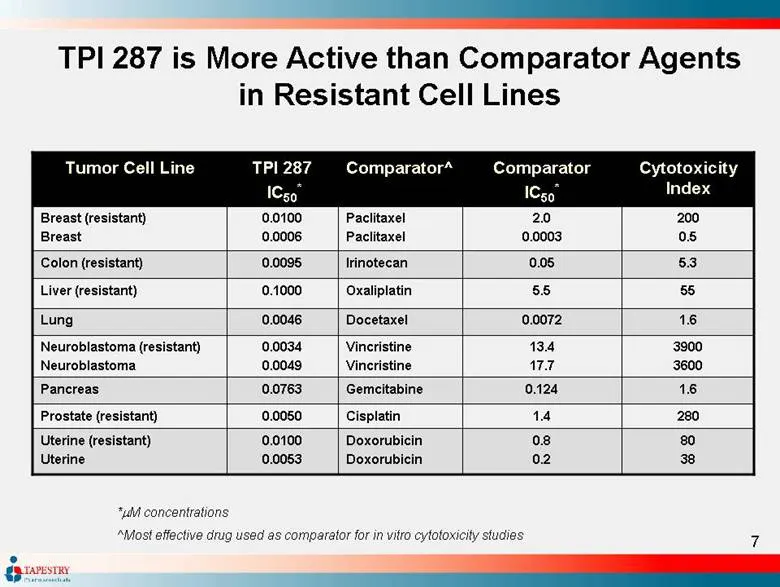
TPI 287 is More Active than Comparator Agents in Resistant Cell Lines 55 5.5 Oxaliplatin 0.1000 Liver (resistant) 1.6 0.0072 Docetaxel 0.0046 Lung 80 38 0.8 0.2 Doxorubicin Doxorubicin 0.0100 0.0053 Uterine (resistant) Uterine 1.4 0.124 13.4 17.7 0.05 2.0 0.0003 Comparator IC50* 280 1.6 3900 3600 5.
Slide 8: Unlike other Taxanes, TPI is not Actively Pumped Out of Cells by mdr1 Efflux Pump
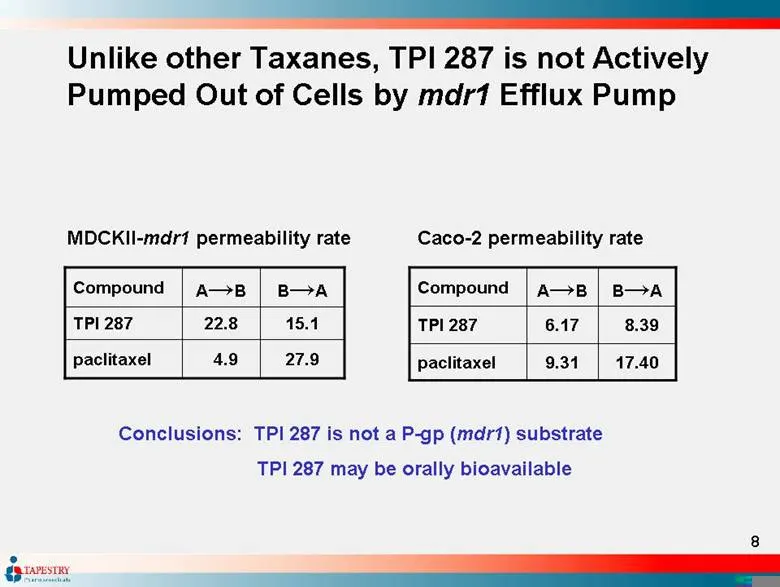
Unlike other Taxanes, TPI 287 is not Actively Pumped Out of Cells by mdr1 Efflux Pump 17.40 9.31 paclitaxel 6.17 TPI 287 B->A A->B Compound 27.9 paclitaxel 15.1 22.8 TPI 287 B->A A->B Compound MDCKII-mdr1 permeability rate Caco-2 permeability rate Conclusions: TPI 287 is not a P-gp (mdr1) substrate
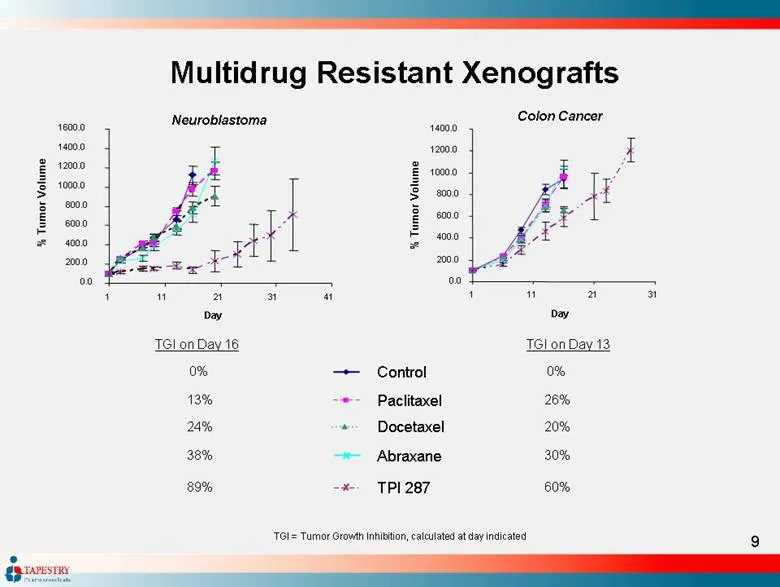
Slide 9: Multidrug Resistant Xenografts
Multidrug Resistant Xenografts 0.0 200.0 400.0 600.0 800.0 1000.0 1200.0 1400.0 1600.0 1 11 21 31 41 Day % Tumor Volume TGI = Tumor Growth Inhibition, calculated at day indicated TGI on Day 13 0% 26% 20% 30% 60% Control Paclitaxel Docetaxel Abraxane TPI 287 0.0 200.0 400.0 600.0 800.0 1000.0 1200.0
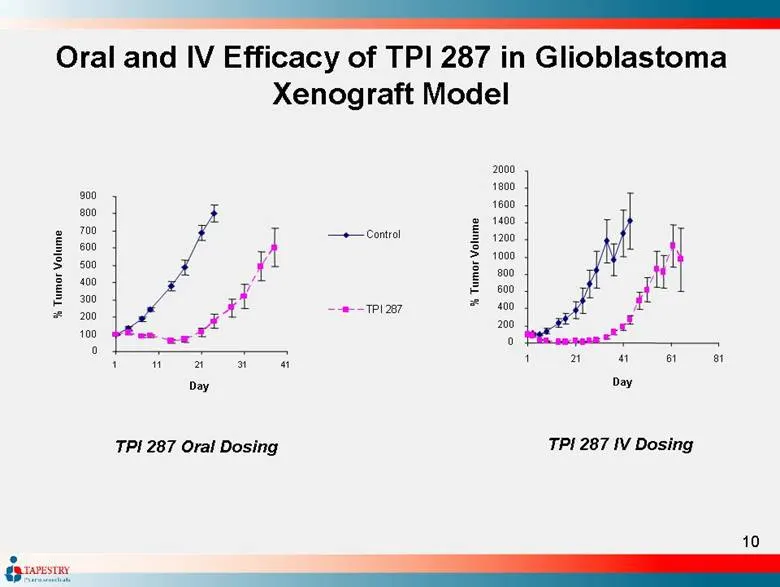
Slide 10: Oral and IV Efficacy of TPI in Glioblastoma Xenograft Model
Oral and IV Efficacy of TPI 287 in Glioblastoma Xenograft Model TPI 287 IV Dosing 0 200 400 600 800 1000 1200 1400 1600 1800 2000 1 21 41 61 81 Day % Tumor Volume TPI 287 Oral Dosing 0 100 200 300 400 500 600 700 800 900 1 11 21 31 41 Day % Tumor Volume Control TPI 287
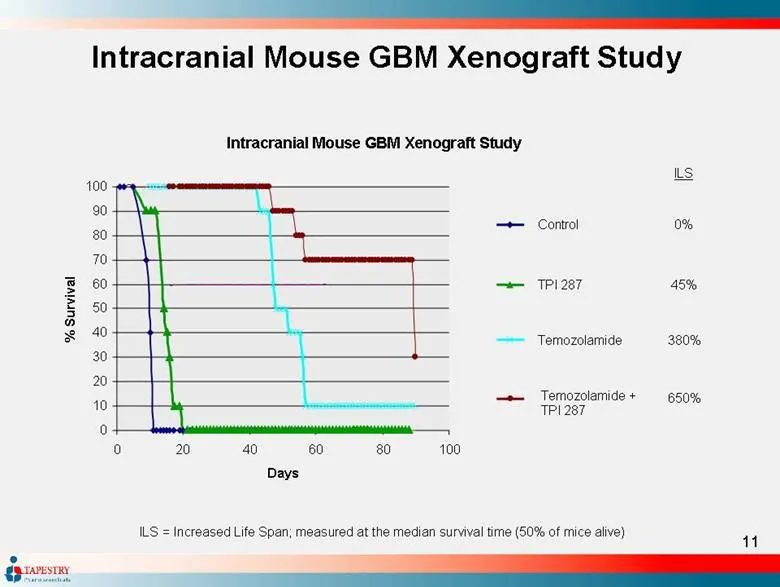
Slide 11: Intracranial Mouse GBM Xenograft Study
Intracranial Mouse GBM Xenograft Study ILS = Increased Life Span; measured at the median survival time (50% of mice alive) ILS 0% 45% 380% 650% Intracranial Mouse GBM Xenograft Study 0 10 20 30 40 50 60 70 80 90 100 0 20 40 60 80 100 Days % Survival Control TPI 287 Temozolamide Temozolamide + TPI 28
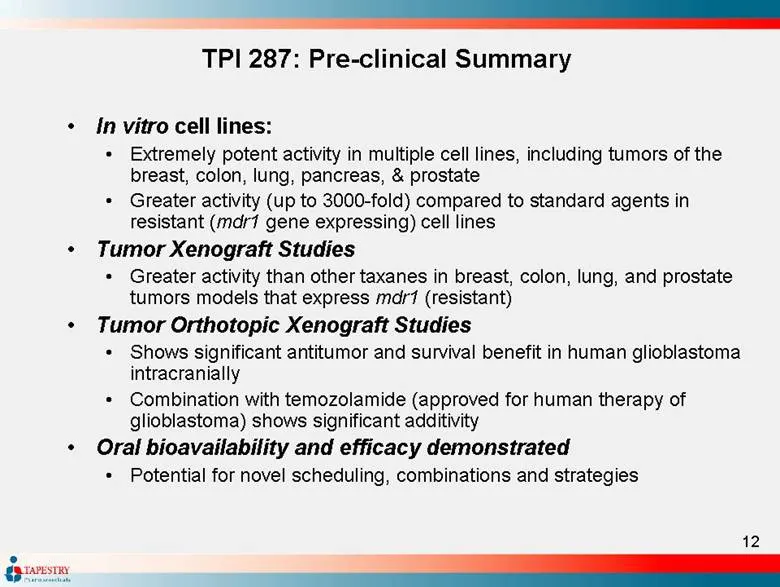
Slide 12: TPI 287: Pre-clinical Summary
TPI 287: Pre-clinical Summary In vitro cell lines: Extremely potent activity in multiple cell lines, including tumors of the breast, colon, lung, pancreas, & prostate Greater activity (up to 3000-fold) compared to standard agents in resistant (mdr1 gene expressing) cell lines Tumor Xenograft Studies
Slide 13: TPI 287: Phase 1 Clinical Trials
TPI 287: Phase 1 Clinical Trials
Slide 14: Phase 1 Clinical Trials
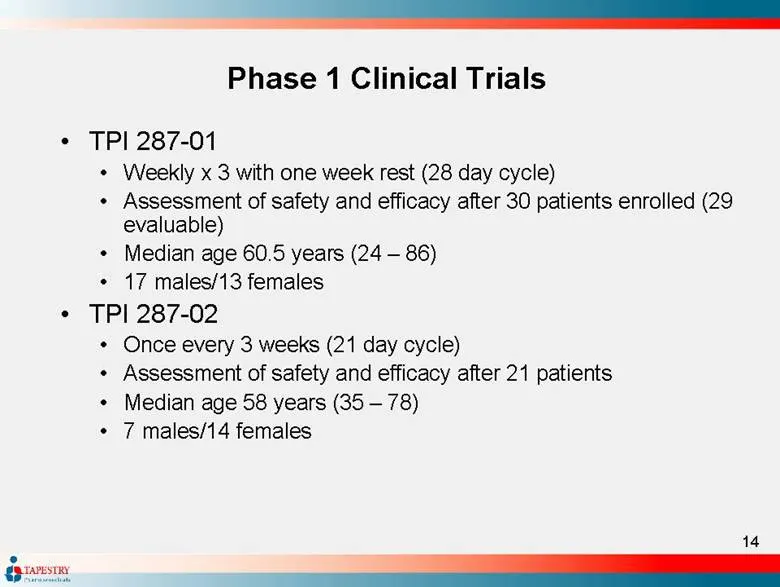
Phase 1 Clinical Trials TPI 287-01 Weekly x 3 with one week rest (28 day cycle) Assessment of safety and efficacy after 30 patients enrolled (29 evaluable) Median age 60.5 years (24 – 86) 17 males/13 females TPI 287-02 Once every 3 weeks (21 day cycle) Assessment of safety and efficacy after 21 pati
Slide 15: Summary of Safety – Weekly Dosing
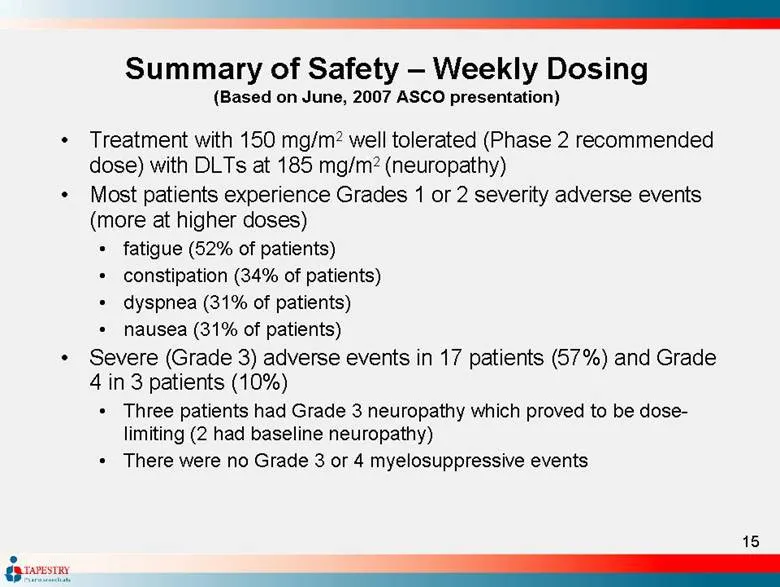
Summary of Safety – Weekly Dosing (Based on June, 2007 ASCO presentation) Treatment with 150 mg/m2 well tolerated (Phase 2 recommended dose) with DLTs at 185 mg/m2 (neuropathy) Most patients experience Grades 1 or 2 severity adverse events (more at higher doses) fatigue (52% of patients) constipatio
Slide 16: Summary of Safety – 21-Day Dosing
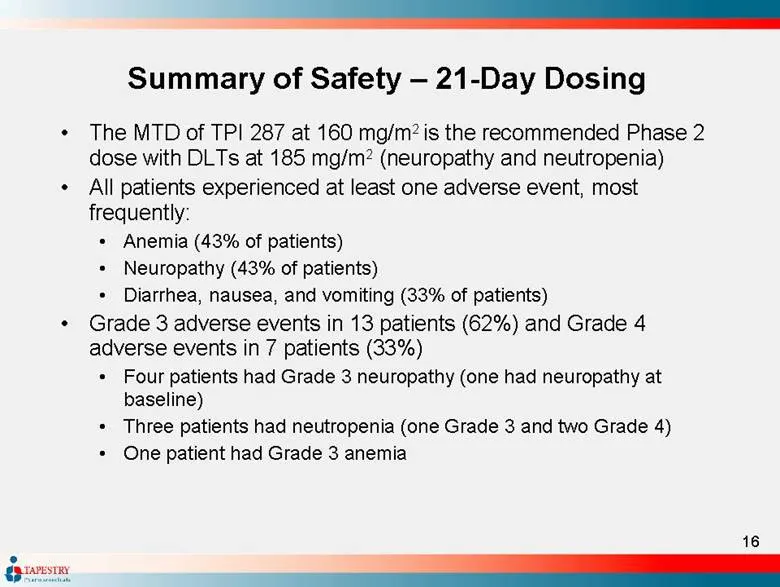
Summary of Safety – 21-Day Dosing The MTD of TPI 287 at 160 mg/m2 is the recommended Phase 2 dose with DLTs at 185 mg/m2 (neuropathy and neutropenia) All patients experienced at least one adverse event, most frequently: Anemia (43% of patients) Neuropathy (43% of patients) Diarrhea, nausea, and vomi
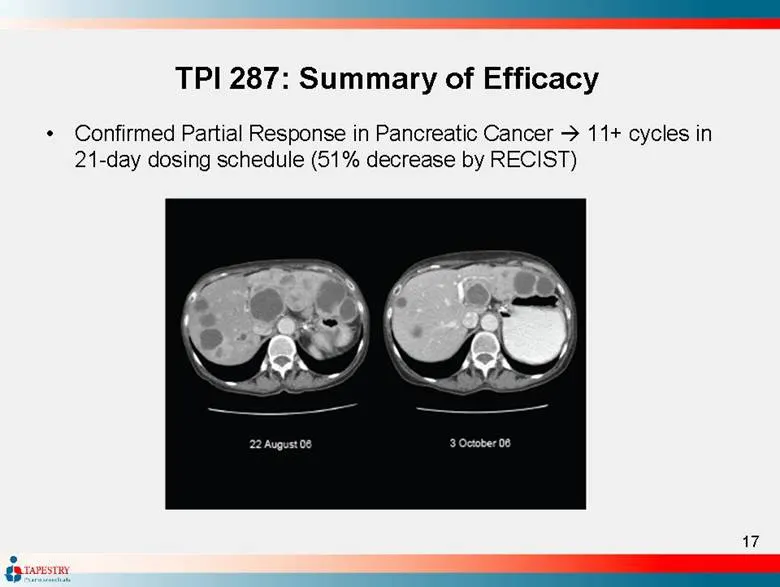
Slide 17: TPI 287: Summary of Efficacy – Pancreatic Cancer Partial Response
TPI 287: Summary of Efficacy Confirmed Partial Response in Pancreatic Cancer -> 11+ cycles in 21-day dosing schedule (51% decrease by RECIST)
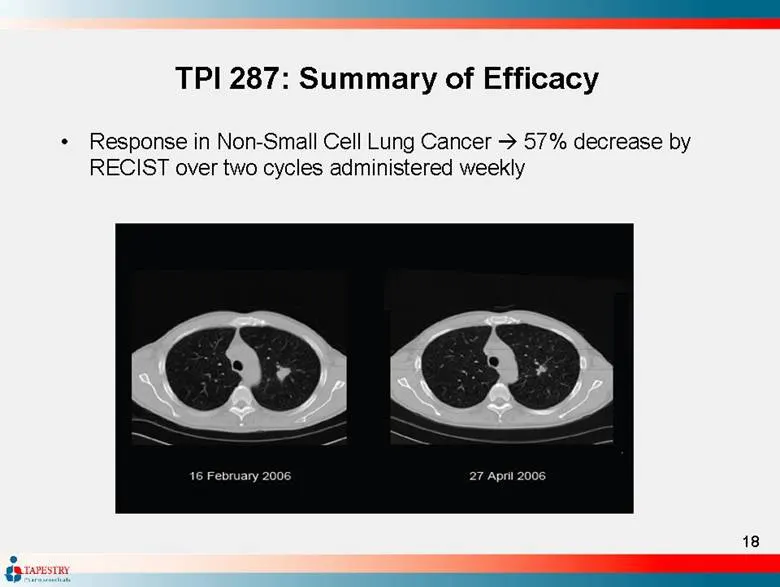
Slide 18: TPI 287: Summary of Efficacy – Non-Small Cell Lung Cancer
TPI 287: Summary of Efficacy Response in Non-Small Cell Lung Cancer -> 57% decrease by RECIST over two cycles administered weekly
Slide 19: TPI 287: Summary of Efficacy – Stable Disease
TPI 287: Summary of Efficacy Stable Disease Breast cancer Therapy over 4 previous months with progressive disease Stable disease over 7 cycles (21-day dosing) Pancreatic cancer Over 3 cycles in weekly dosing regimen 15% decrease by RECIST
Slide 20: TPI 287: Interesting Activity and Profile Data from Phase 1 Trials
TPI 287: Interesting Activity and Profile Data from Phase 1 Clinical Trials Presented at ASCO 2007 Two Phase 1 Clinical Trials Completed Weekly (3 out of 4 weeks) and once every 3 weeks Well tolerated in heavily pretreated patient population Achieved dose recommended for Phase 2 Side Effect profile
Slide 21: TPI 287: Phase 2 Clinical Trial Designs
TPI 287: Phase 2 Clinical Trial Designs
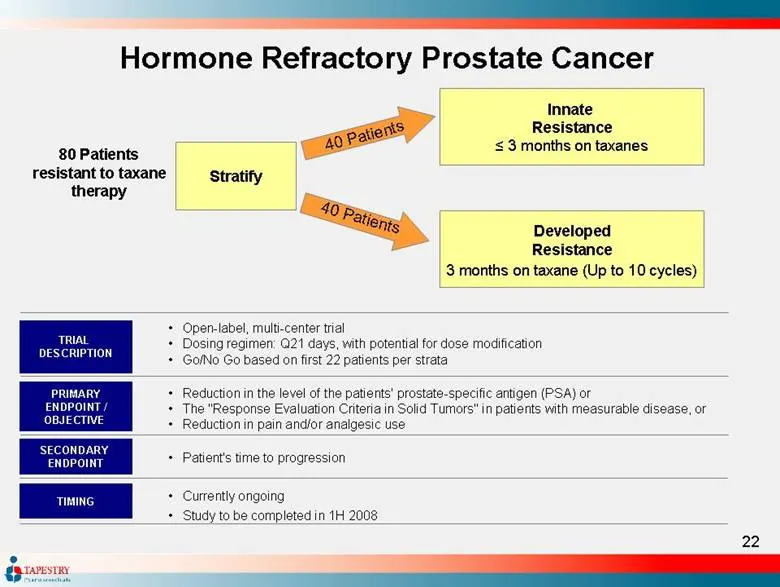
Slide 22: Hormone Refractory Prostate Cancer
Hormone Refractory Prostate Cancer 80 Patients resistant to taxane therapy Stratify 40 Patients 40 Patients Innate Resistance < 3 months on taxanes Developed Resistance 3 months on taxane (Up to 10 cycles) Open-label, multi-center trial Dosing regimen: Q21 days, with potential for dose modification
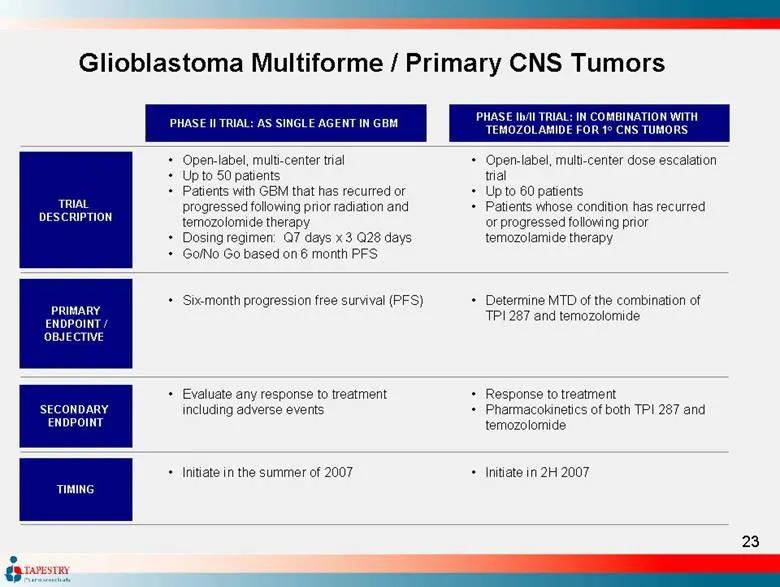
Slide 23: Glioblastoma Multiforme / Primary CNS Tumors
Glioblastoma Multiforme / Primary CNS Tumors Open-label, multi-center trial Up to 50 patients Patients with GBM that has recurred or progressed following prior radiation and temozolomide therapy Dosing regimen: Q7 days x 3 Q28 days Go/No Go based on 6 month PFS Six-month progression free survival (P
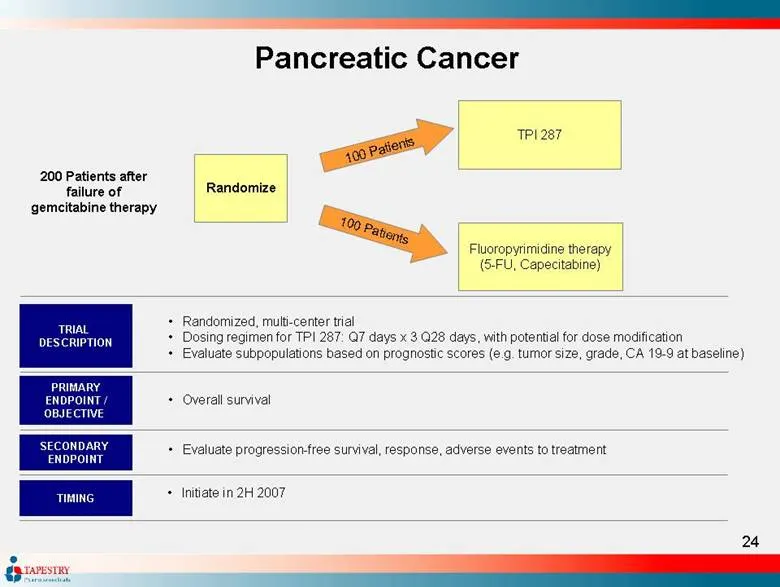
Slide 24: Pancreatic Cancer
Pancreatic Cancer 200 Patients after failure of gemcitabine therapy Randomize 100 Patients 100 Patients TPI 287 Fluoropyrimidine therapy (5-FU, Capecitabine) Randomized, multi-center trial Dosing regimen for TPI 287: Q7 days x 3 Q28 days, with potential for dose modification Evaluate subpopulations
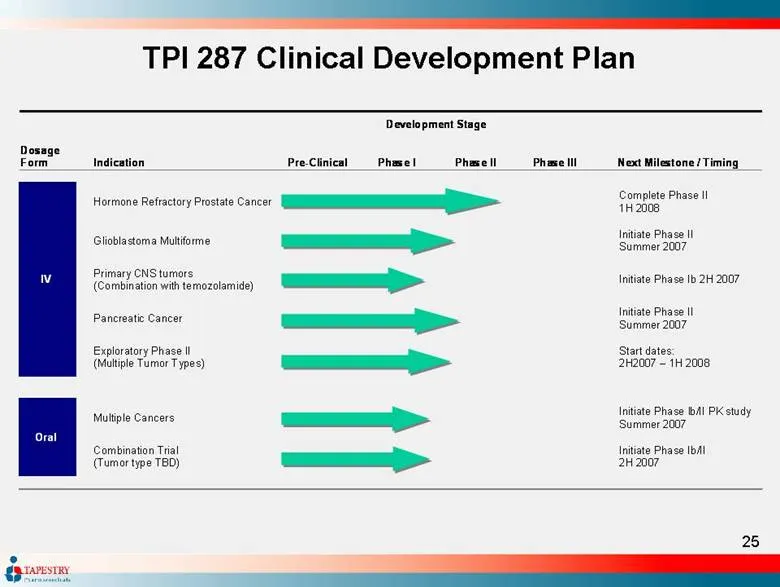
Slide 25: TPI 287 Clinical Development Plan
TPI 287 Clinical Development Plan Development Stage Dosage Form Indication Pre - Clinical Phase I Phase II Phase III Next Milestone / Timing Hormone Refractory Prostate Cancer Complet e Ph ase II 1H 20 0 8 Glioblastoma Multiforme Initiate Ph ase II Summer 2 007 Primary CNS tumors ( Combination with

Slide 26: Market and Corporate Overviews
Market and Corporate Overviews
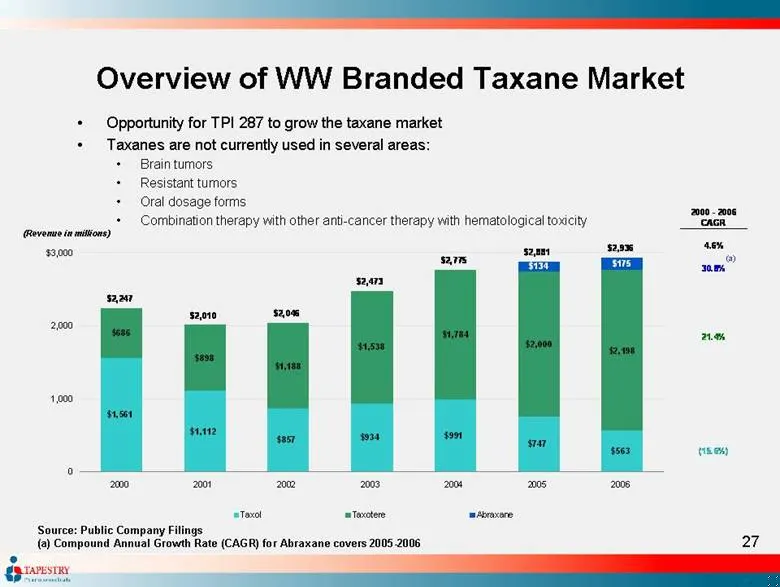
Slide 27: Overview of WW Branded Taxane Market
Overview of WW Branded Taxane Market Source: Public Company Filings (a) Compound Annual Growth Rate (CAGR) for Abraxane covers 2005-2006 (Revenue in millions) (a) Opportunity for TPI 287 to grow the taxane market Taxanes are not currently used in several areas: Brain tumors Resistant tumors Oral dos
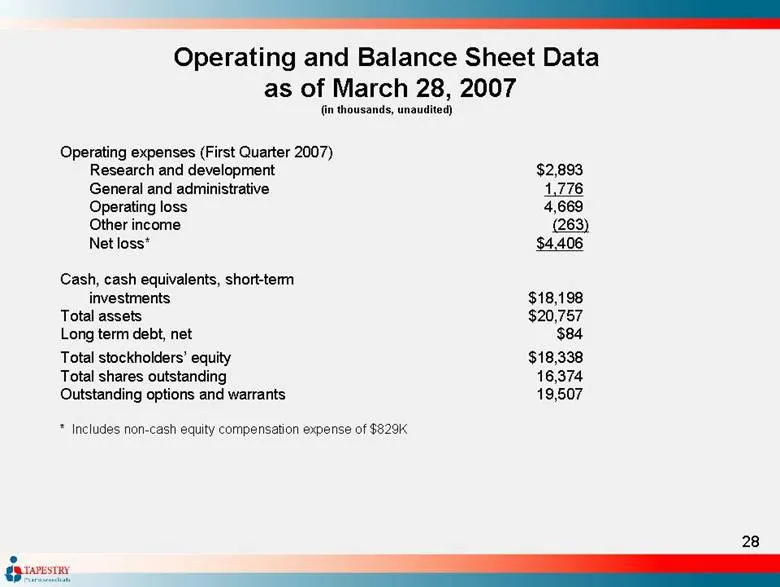
Slide 28: Operating and Balance Sheet Data as of March 28, 2007
Operating and Balance Sheet Data as of March 28, 2007 (in thousands, unaudited) Operating expenses (First Quarter 2007) Research and development $2,893 General and administrative 1,776 Operating loss 4,669 Other income (263) Net loss* $4,406 Cash, cash equivalents, short-term investments $18,198 Tot
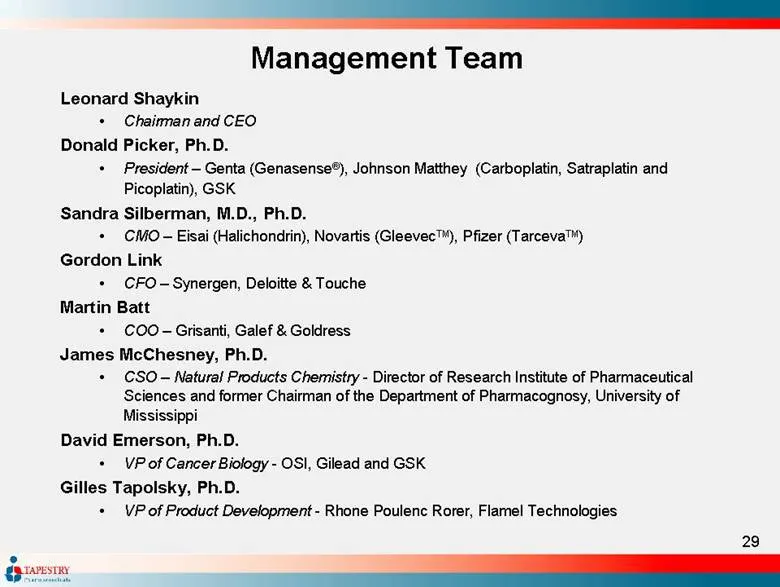
Slide 29: Management Team
Leonard Shaykin Chairman and CEO Donald Picker, Ph.D. President – Genta (Genasense®), Johnson Matthey (Carboplatin, Satraplatin and Picoplatin), GSK Sandra Silberman, M.D., Ph.D. CMO – Eisai (Halichondrin), Novartis (GleevecTM), Pfizer (TarcevaTM) Gordon Link CFO – Synergen, Deloitte & Touche Martin
Slide 30: Scientific Advisory Board
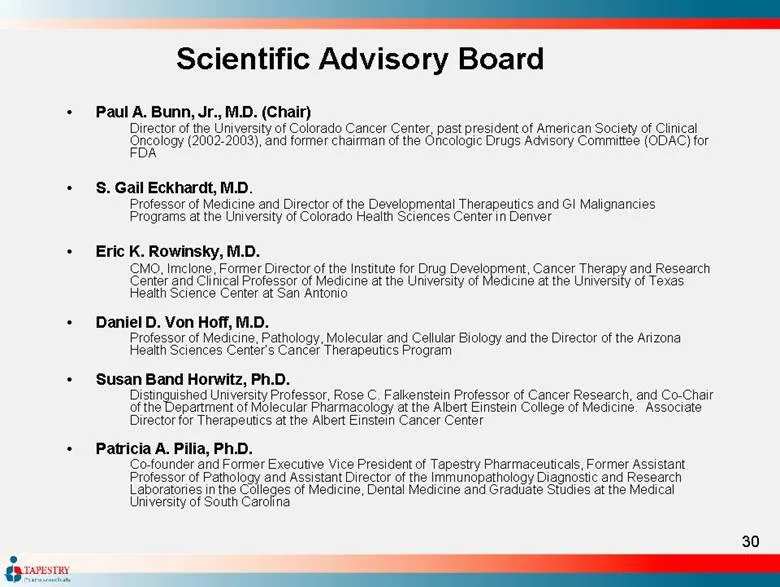
Scientific Advisory Board Paul A. Bunn, Jr., M.D. (Chair) Director of the University of Colorado Cancer Center, past president of American Society of Clinical Oncology (2002-2003), and former chairman of the Oncologic Drugs Advisory Committee (ODAC) for FDA S. Gail Eckhardt, M.D. Professor of Medici
Slide 31: Board of Directors
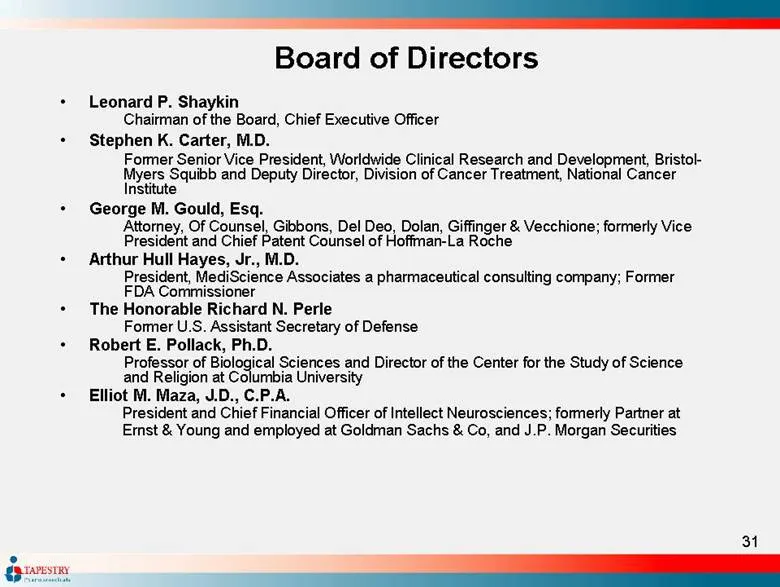
Leonard P. Shaykin Chairman of the Board, Chief Executive Officer Stephen K. Carter, M.D. Former Senior Vice President, Worldwide Clinical Research and Development, Bristol-Myers Squibb and Deputy Director, Division of Cancer Treatment, National Cancer Institute George M. Gould, Esq. Attorney, Of Co
Slide 32: Investment Rationale
Investment Rationale Proprietary next generation taxane Potential for best in class Multiple Phase II programs Experienced oncology drug development team Large commercial opportunity Strong cash position Modest burn rate
Slide 33: gy rarestey
gy rarestey Pharmaceuticals Strategies for Life Be 33 Qu EE ne
Source: SEC EDGAR · 8-K filed Jun 13, 2007
More decks from Tapestry Pharmaceuticals Inc
 Investor Presentation (November 2007)27 slides · Nov 6, 2007
 Investor Presentation (August 2007)36 slides · Aug 21, 2007
 Corporate Update (July 2007)5 slides · Jul 17, 2007
 Technical Presentation (June 2007)6 slides · Jun 13, 2007
 IPO Roadshow (May 2007)30 slides · May 14, 2007
 Investor Presentation (March 2007)33 slides · Mar 5, 2007