Tapestry Pharmaceuticals — Investor Presentation (November 2007)
27 slides from Tapestry Pharmaceuticals's investor presentation, Nov 6, 2007
Slide 1: Tapestry Pharmaceuticals, Inc. Investor Presentation
Tapestry Pharmaceuticals, Inc. Investor Presentation November 5, 2007
Slide 2: Forward Looking Statements
Forward Looking Statements Any statements in this presentation that are not historical facts are “forward-looking statements” that involve risks and uncertainties. Such forward-looking statements include the statements regarding the potential for TPI 287 in the treatment of disease, the Company’s in
Slide 3: Tapestry: Investment Thesis
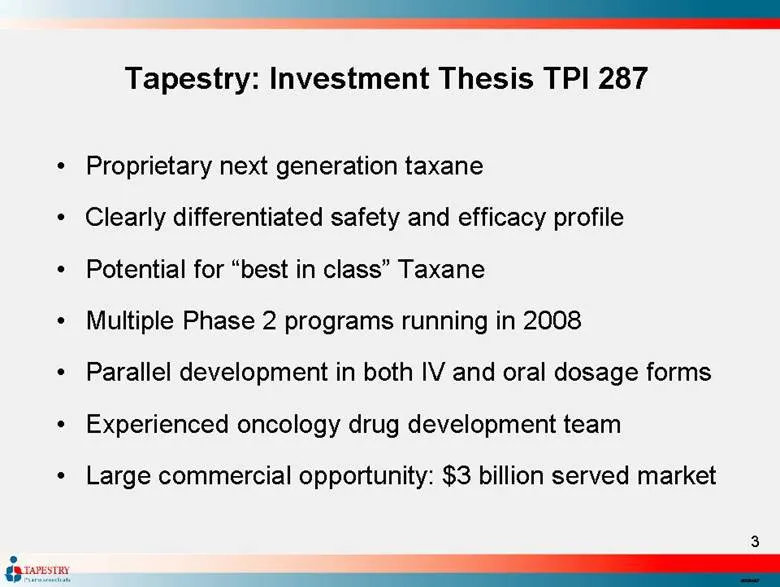
Tapestry: Investment Thesis TPI 287 Proprietary next generation taxane Clearly differentiated safety and efficacy profile Potential for “best in class” Taxane Multiple Phase 2 programs running in 2008 Parallel development in both IV and oral dosage forms Experienced oncology drug development team La
Slide 4: TPI 287: Proprietary Next Generation Taxane
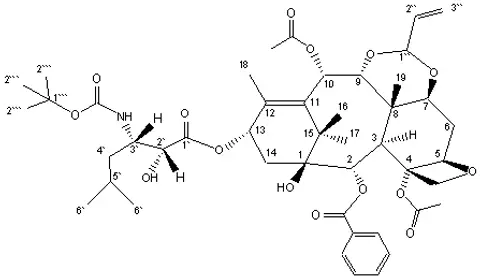
TPI 287: Proprietary Next Generation Taxane
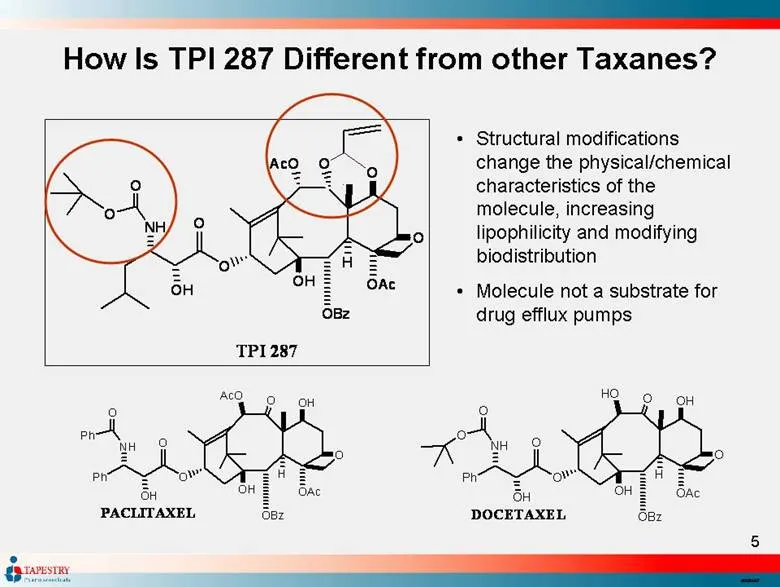
Slide 5: How Is TPI 287 Different from other Taxanes?
Structural modifications change the physical/chemical characteristics of the molecule, increasing lipophilicity and modifying biodistribution Molecule not a substrate for drug efflux pumps How Is TPI 287 Different from other Taxanes? O H O O O H A c O O B z H O A c P h O O O H N H P h O PACLITAXEL O
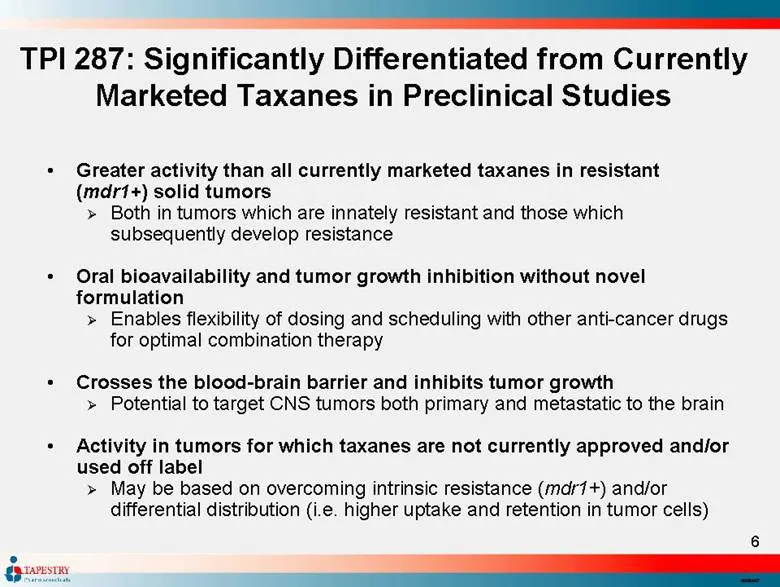
Slide 6: TPI 287: Significantly Differentiated from Currently Marketed Taxanes in Preclinical Studies
TPI 287: Significantly Differentiated from Currently Marketed Taxanes in Preclinical Studies Greater activity than all currently marketed taxanes in resistant (mdr1+) solid tumors Both in tumors which are innately resistant and those which subsequently develop resistance Oral bioavailability and tum
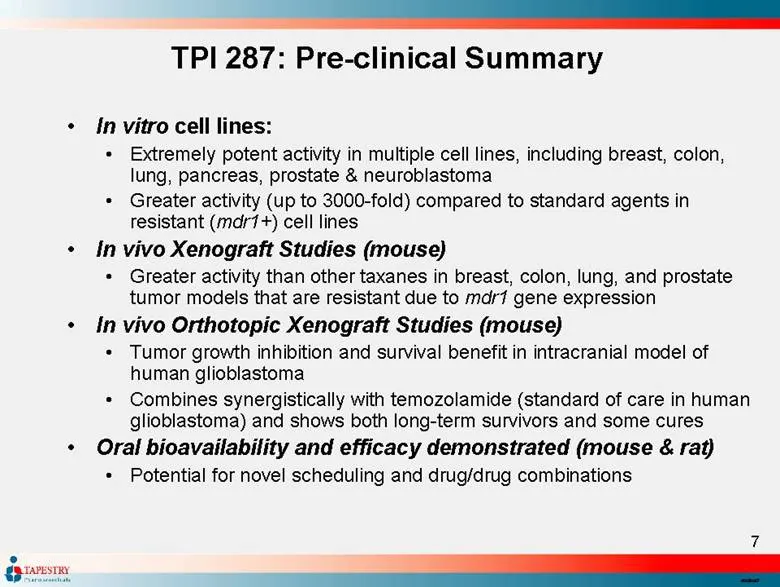
Slide 7: TPI 287: Pre-clinical Summary
TPI 287: Pre-clinical Summary In vitro cell lines: Extremely potent activity in multiple cell lines, including breast, colon, lung, pancreas, prostate & neuroblastoma Greater activity (up to 3000-fold) compared to standard agents in resistant (mdr1+) cell lines In vivo Xenograft Studies (mouse) Grea
Slide 8: TPI 287: Clinical Trial Data
TPI 287: Clinical Trial Data
Slide 9: TPI 287 Clinical Overview
TPI 287 Clinical Overview Completed Two Phase 1 Programs Two schedules explored (weekly and every 3 weeks) Preliminary data presented at ASCO 2007 Safety and efficacy demonstrated in both schedules Currently Enrolling Phase 2 Programs Strategy - to explore multiple tumor types Hormone Refractory Pro
Slide 10: Phase 1 Clinical Trials
Phase 1 Clinical Trials (Update of June, 2007 ASCO presentation) TPI 287-01 Weekly x 3 with one week rest (28 day cycle) 48 patients enrolled of which 28 patients at >125 mg/m2 (MTD) TPI 287-02 Once every 3 weeks (21 day cycle) 21 patients enrolled of which 15 patients at >160 mg/m2 (MTD) Phase 1 Ov
Slide 11: Efficacy: Pancreatic Cancer
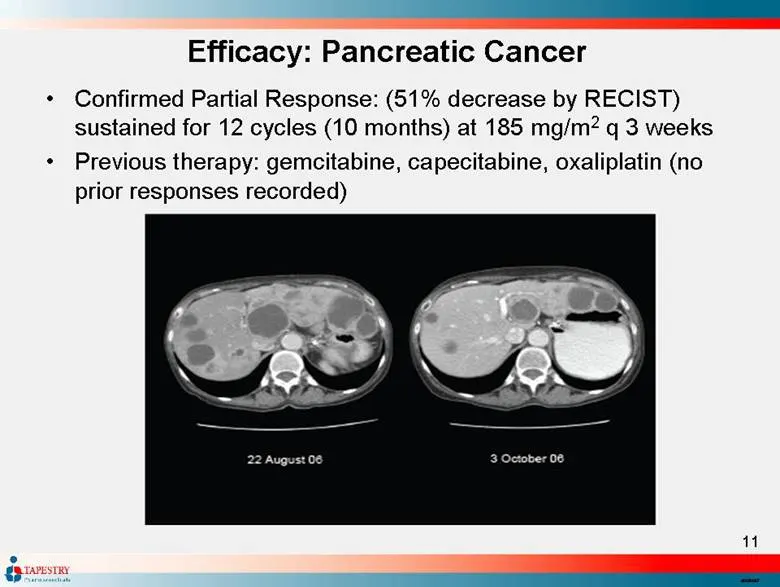
Efficacy: Pancreatic Cancer Confirmed Partial Response: (51% decrease by RECIST) sustained for 12 cycles (10 months) at 185 mg/m2 q 3 weeks Previous therapy: gemcitabine, capecitabine, oxaliplatin (no prior responses recorded)
Slide 12: Efficacy: Non-Small Cell Lung Cancer
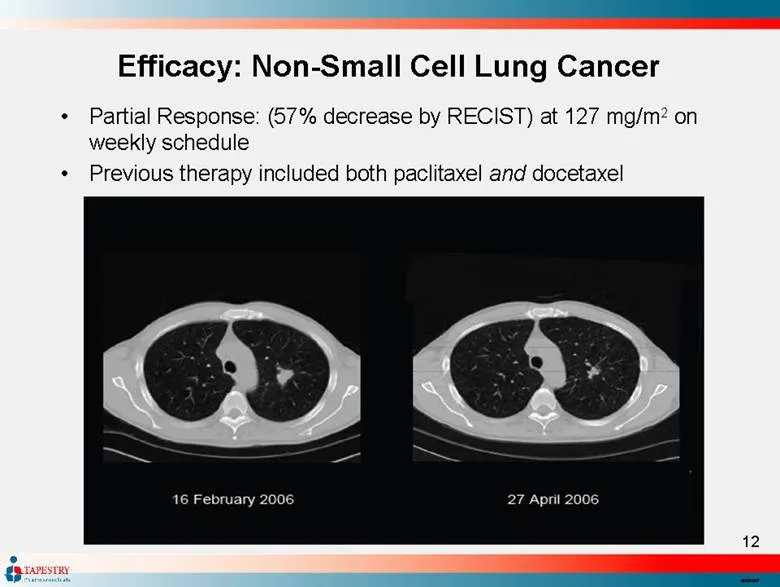
Efficacy: Non-Small Cell Lung Cancer Partial Response: (57% decrease by RECIST) at 127 mg/m2 on weekly schedule Previous therapy included both paclitaxel and docetaxel
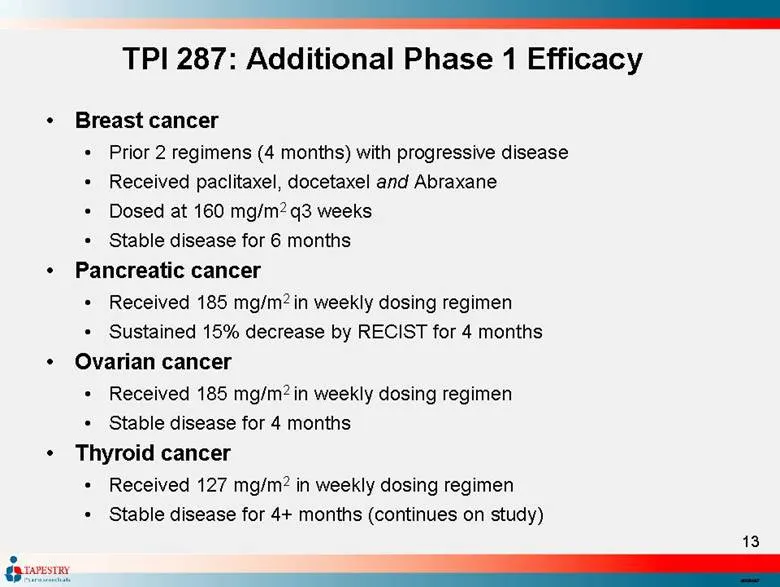
Slide 13: TPI 287: Additional Phase 1 Efficacy
TPI 287: Additional Phase 1 Efficacy Breast cancer Prior 2 regimens (4 months) with progressive disease Received paclitaxel, docetaxel and Abraxane Dosed at 160 mg/m2 q3 weeks Stable disease for 6 months Pancreatic cancer Received 185 mg/m2 in weekly dosing regimen Sustained 15% decrease by RECIST f
Slide 14: TPI 287: Phase 2 Clinical Program and Interim Results
TPI 287: Phase 2 Clinical Program and Interim Results
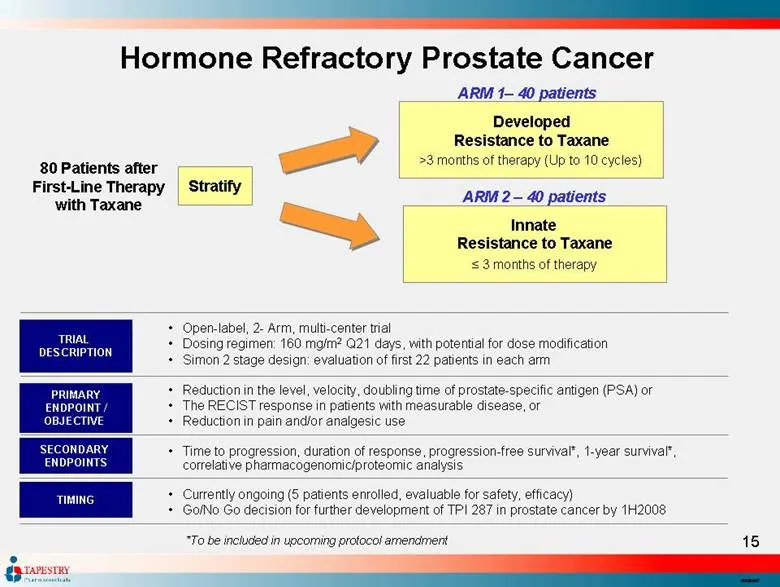
Slide 15: Hormone Refractory Prostate Cancer
Hormone Refractory Prostate Cancer 80 Patients after First-Line Therapy with Taxane Stratify Innate Resistance to Taxane < 3 months of therapy Open-label, 2- Arm, multi-center trial Dosing regimen: 160 mg/m2 Q21 days, with potential for dose modification Simon 2 stage design: evaluation of first 22
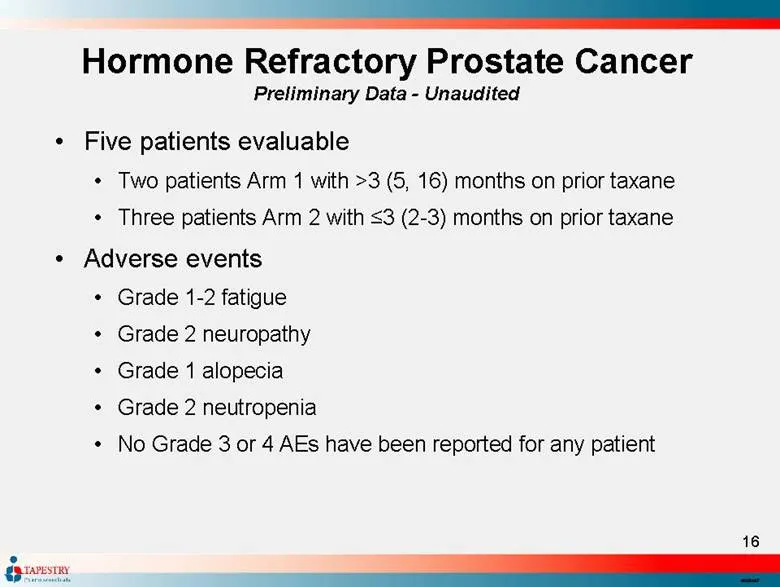
Slide 16: Hormone Refractory Prostate Cancer Preliminary Data - Unaudited
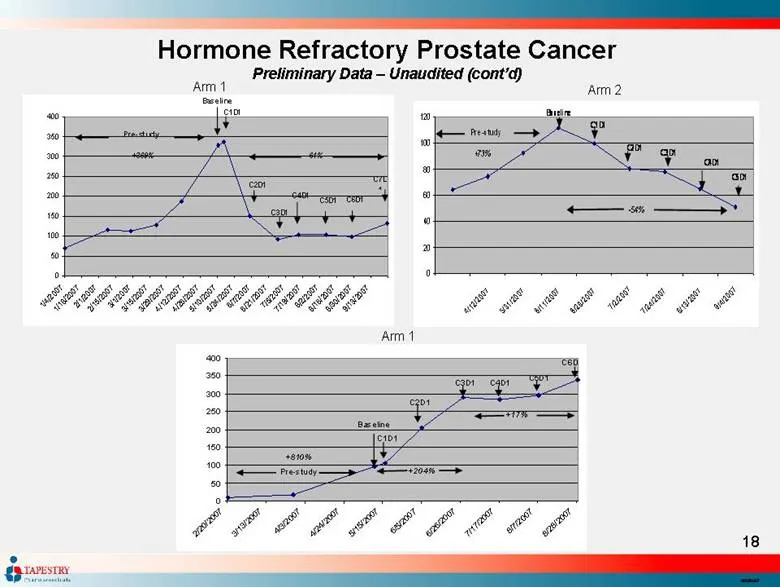
Hormone Refractory Prostate Cancer Preliminary Data - Unaudited Five patients evaluable Two patients Arm 1 with >3 (5, 16) months on prior taxane Three patients Arm 2 with <3 (2-3) months on prior taxane Adverse events Grade 1-2 fatigue Grade 2 neuropathy Grade 1 alopecia Grade 2 neutropenia No Grad
Slide 17: Hormone Refractory Prostate Cancer Preliminary Data - Efficacy
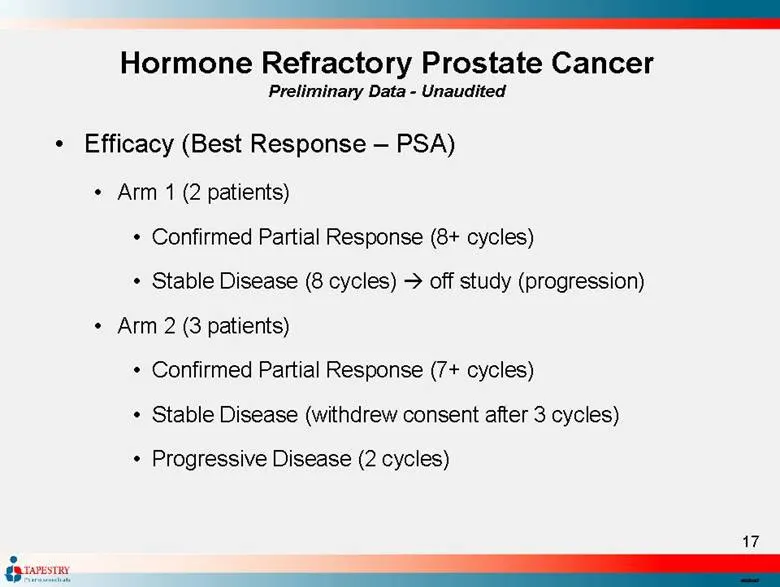
Hormone Refractory Prostate Cancer Preliminary Data - Unaudited Efficacy (Best Response – PSA) Arm 1 (2 patients) Confirmed Partial Response (8+ cycles) Stable Disease (8 cycles) off study (progression) Arm 2 (3 patients) Confirmed Partial Response (7+ cycles) Stable Disease (withdrew consent afte
Slide 18: Hormone Refractory Prostate Cancer Preliminary Data (cont'd)
Hormone Refractory Prostate Cancer Preliminary Data – Unaudited (cont’d) Arm 1 Arm 2 Arm 1 0 50 100 150 200 250 300 350 400 1/4/2007 1/18/2007 2/1/2007 2/15/2007 3/1/2007 3/15/2007 3/29/2007 4/12/2007 4/26/2007 5/10/2007 5/24/2007 6/7/2007 6/21/2007 7/5/2007 7/19/2007 8/2/2007 8/16/2007 8/30/2007 9/
Slide 19: Pancreatic Cancer Phase 2 Trial
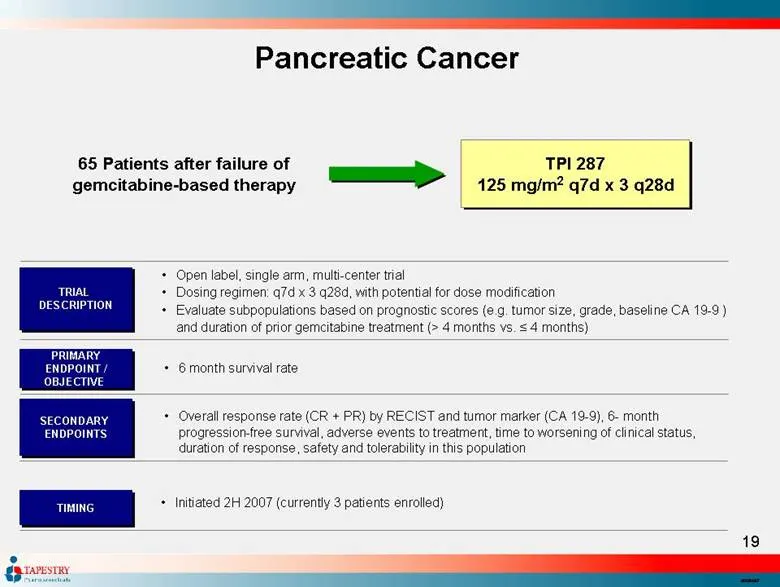
Pancreatic Cancer 65 Patients after failure of gemcitabine-based therapy TPI 287 125 mg/m2 q7d x 3 q28d Open label, single arm, multi-center trial Dosing regimen: q7d x 3 q28d, with potential for dose modification Evaluate subpopulations based on prognostic scores (e.g. tumor size, grade, baseline C
Slide 20: Glioblastoma Multiforme / Primary CNS Tumors
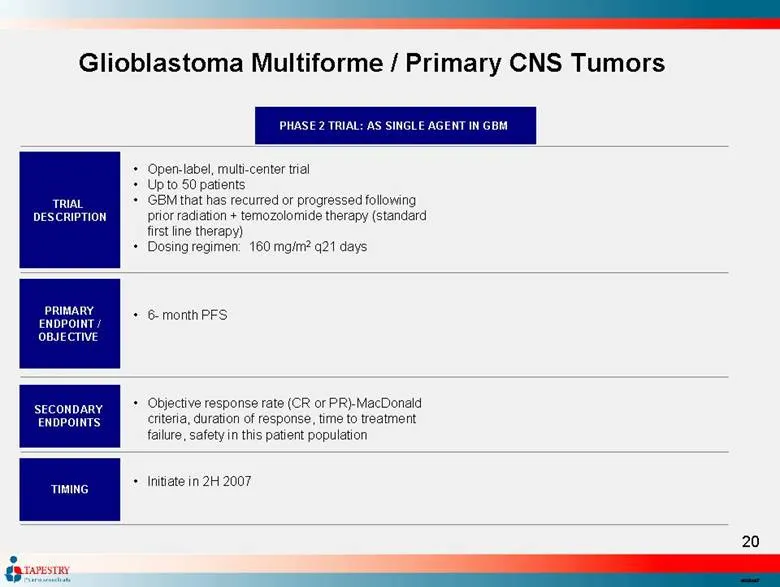
Glioblastoma Multiforme / Primary CNS Tumors Open-label, multi-center trial Up to 50 patients GBM that has recurred or progressed following prior radiation + temozolomide therapy (standard first line therapy) Dosing regimen: 160 mg/m2 q21 days 6- month PFS Objective response rate (CR or PR)-MacDonal
Slide 21: TPI 287: Oral Bioavailability
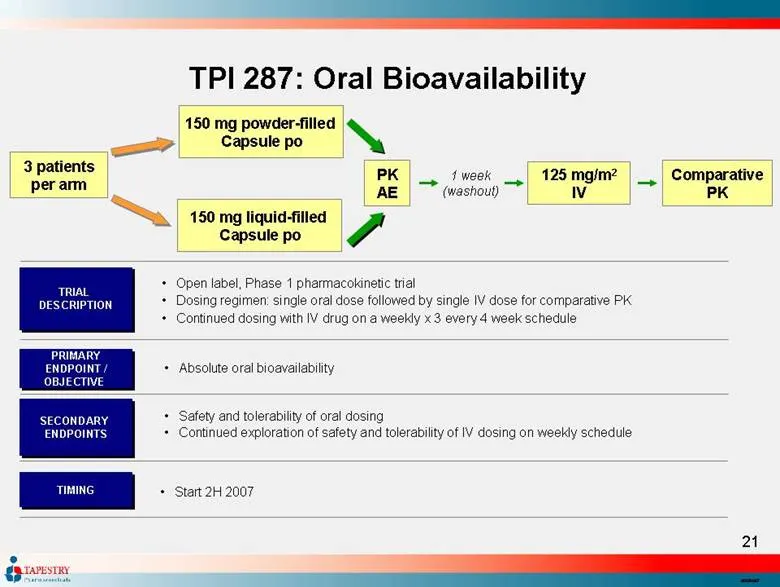
TPI 287: Oral Bioavailability Open label, Phase 1 pharmacokinetic trial Dosing regimen: single oral dose followed by single IV dose for comparative PK Continued dosing with IV drug on a weekly x 3 every 4 week schedule TRIAL DESCRIPTION PRIMARY ENDPOINT / OBJECTIVE SECONDARY ENDPOINTS Absolute oral
Slide 22: Upcoming Milestones
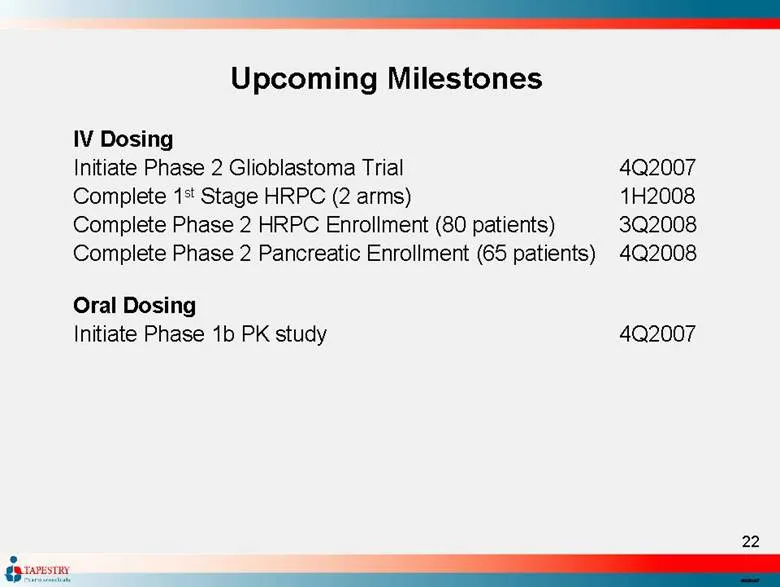
Upcoming Milestones IV Dosing Initiate Phase 2 Glioblastoma Trial 4Q2007 Complete 1st Stage HRPC (2 arms) 1H2008 Complete Phase 2 HRPC Enrollment (80 patients) 3Q2008 Complete Phase 2 Pancreatic Enrollment (65 patients) 4Q2008 Oral Dosing Initiate Phase 1b PK study 4Q2007
Slide 23: Operating and Balance Sheet Data as of September 26, 2007
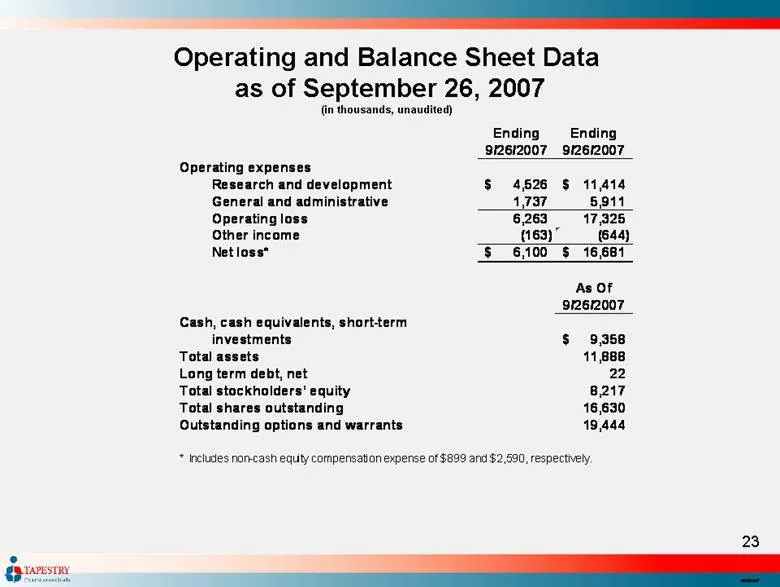
Operating and Balance Sheet Data as of September 26, 2007 (in thousands, unaudited) Ending Ending 9/26/2007 9/26/2007 Operating expenses Research and development 4,526 $ 11,414 $ General and administrative 1,737 5,911 Operating loss 6,263 17,325 Other income (163) (644) Net loss* 6,100 $ 16,681 $ As
Slide 24: Scientific Advisory Board
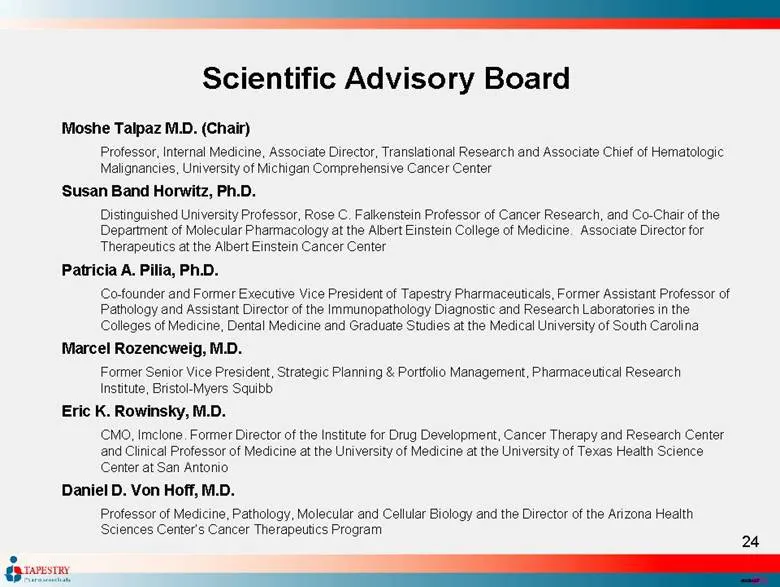
Scientific Advisory Board Moshe Talpaz M.D. (Chair) Professor, Internal Medicine, Associate Director, Translational Research and Associate Chief of Hematologic Malignancies, University of Michigan Comprehensive Cancer Center Susan Band Horwitz, Ph.D. Distinguished University Professor, Rose C. Falke
Slide 25: Board of Directors
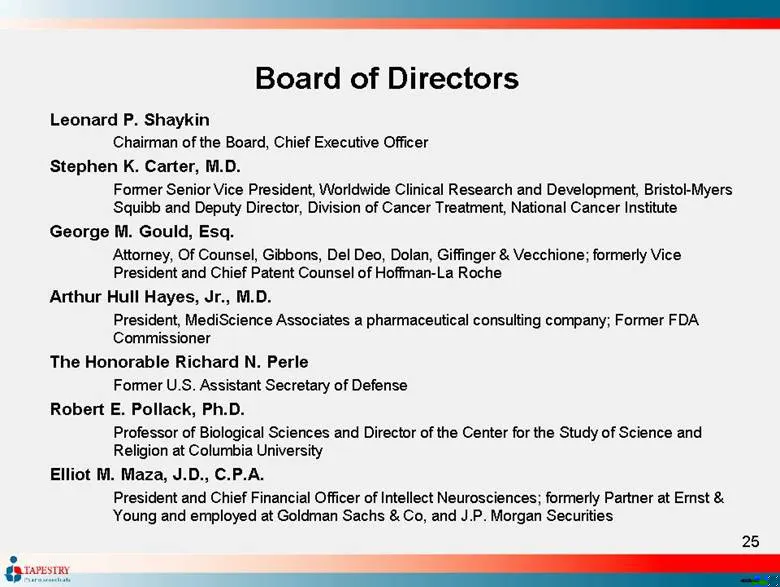
Board of Directors Leonard P. Shaykin Chairman of the Board, Chief Executive Officer Stephen K. Carter, M.D. Former Senior Vice President, Worldwide Clinical Research and Development, Bristol-Myers Squibb and Deputy Director, Division of Cancer Treatment, National Cancer Institute George M. Gould, E
Slide 26: Tapestry: Investment Thesis
Tapestry: Investment Thesis TPI 287 Proprietary next generation taxane Clearly differentiated safety and efficacy profile Potential for “best in class” Taxane Multiple Phase 2 programs running in 2008 Parallel development in both IV and oral dosage forms Experienced oncology drug development team La
Slide 27: gy rarestey
gy rarestey Pharmaceuticals Strategies for Life Be 27 Qu EE
Source: SEC EDGAR · 8-K filed Nov 6, 2007
More decks from Tapestry Pharmaceuticals Inc
 Investor Presentation (August 2007)36 slides · Aug 21, 2007
 Corporate Update (July 2007)5 slides · Jul 17, 2007
 Technical Presentation (June 2007)6 slides · Jun 13, 2007
 Needham & Company Biotechnology and Medical Technology Conference 200733 slides · Jun 13, 2007
 IPO Roadshow (May 2007)30 slides · May 14, 2007
 Investor Presentation (March 2007)33 slides · Mar 5, 2007