Tapestry Pharmaceuticals — Investor Presentation (August 2007)
36 slides from Tapestry Pharmaceuticals's investor presentation, Aug 21, 2007
Slide 1: Tapestry Pharmaceuticals, Inc. Presentation to Investors
Tapestry Pharmaceuticals, Inc. Presentation to Investors
Slide 2: Forward Looking Statements
Forward Looking Statements Any statements in this presentation that are not historical facts are “forward-looking statements” that involve risks and uncertainties. Such forward-looking statements include the statements regarding the potential for TPI 287 in the treatment of disease, the Company’s in
Slide 3: Tapestry: Advancing the Development of TPI 287
Tapestry: Advancing the Development of TPI 297 Proprietary next generation taxane Potential for best in class Multiple Phase 2 programs Experienced oncology drug development team Large commercial opportunity Strong cash position Modest burn rate
Slide 4: TPI 287: Proprietary Next Generation Taxane
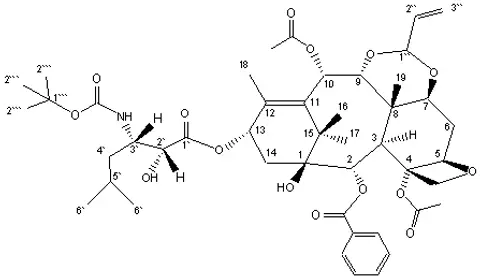
TPI 287: Proprietary Next Generation Taxane
Slide 5: How Is TPI 287 Different than other Taxanes?
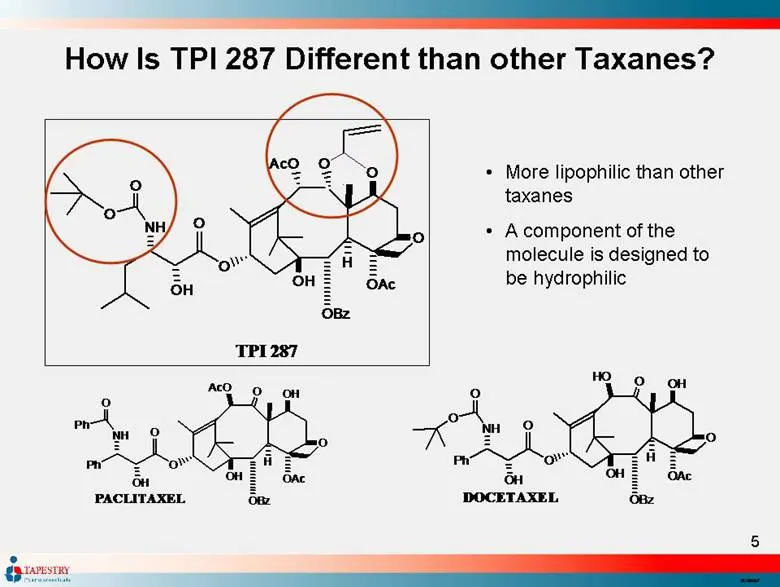
More lipophilic than other taxanes A component of the molecule is designed to be hydrophilic How Is TPI 287 Different than other Taxanes? O H O O O H A c O O B z H O A c P h O O O H N H P h O P A C L I T A X E L O H O O O H H O O B z H O A c P h O O O H N H O O D O C E T A X E L O O O H A c O O B z
Slide 6: TPI 287: Significantly Differentiated from Currently Marketed Taxanes
TPI 287: Significantly Differentiated from Currently Marketed Taxanes TPI 287 has demonstrated the potential for: Differentially higher activity than taxanes in resistant tumors (mdr1) Both innately resistant tumors and those which develop resistance Oral activity and bioavailability Enables flexibi
Slide 7: TPI 287 Pre-clinical Biology Studies
TPI 287 Pre-clinical Biology Studies
Slide 8: TPI 287 is More Active than Comparator Agents in Resistant Cell Lines
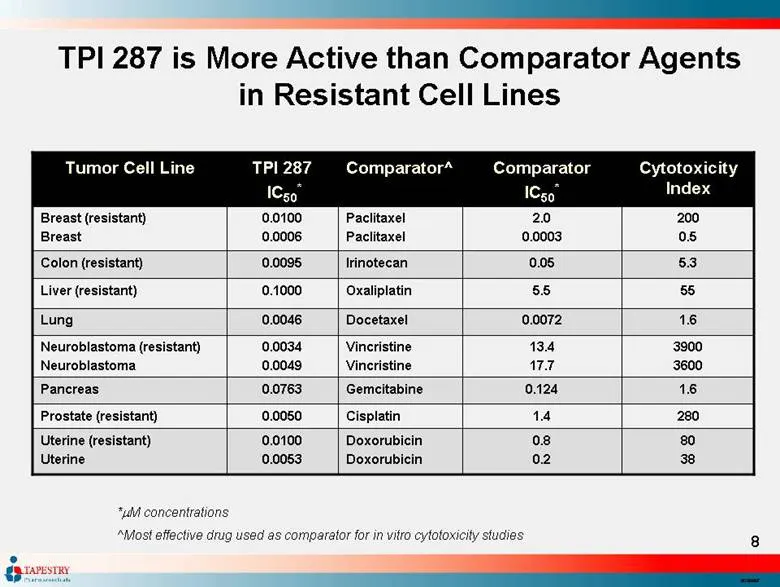
TPI 287 is More Active than Comparator Agents in Resistant Cell Lines 55 5.5 Oxaliplatin 0.1000 Liver (resistant) 1.6 0.0072 Docetaxel 0.0046 Lung 80 38 0.8 0.2 Doxorubicin Doxorubicin 0.0100 0.0053 Uterine (resistant) Uterine 1.4 0.124 13.4 17.7 0.05 2.0 0.0003 Comparator IC50* 280 1.6 3900 3600 5.
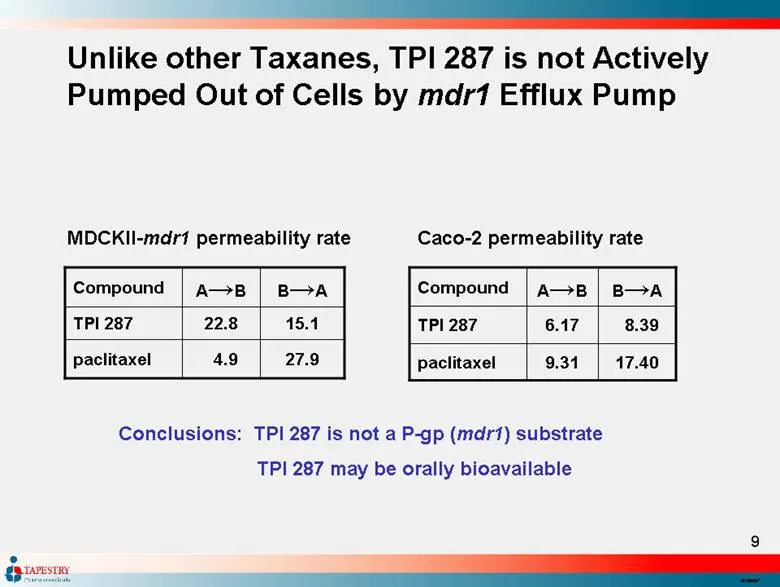
Slide 9: Unlike other Taxanes, TPI 287 is not Pumped Out by mdr1 Efflux Pump
Unlike other Taxanes, TPI 287 is not Actively Pumped Out of Cells by mdr1 Efflux Pump 17.40 9.31 paclitaxel 6.17 TPI 287 B→A A→B Compound 27.9 paclitaxel 15.1 22.8 TPI 287 B→A A→B Compound MDCKII-mdr1 permeability rate Caco-2 permeability rate Conclusions: TPI 287 is not a P-gp (mdr1) substrate TPI
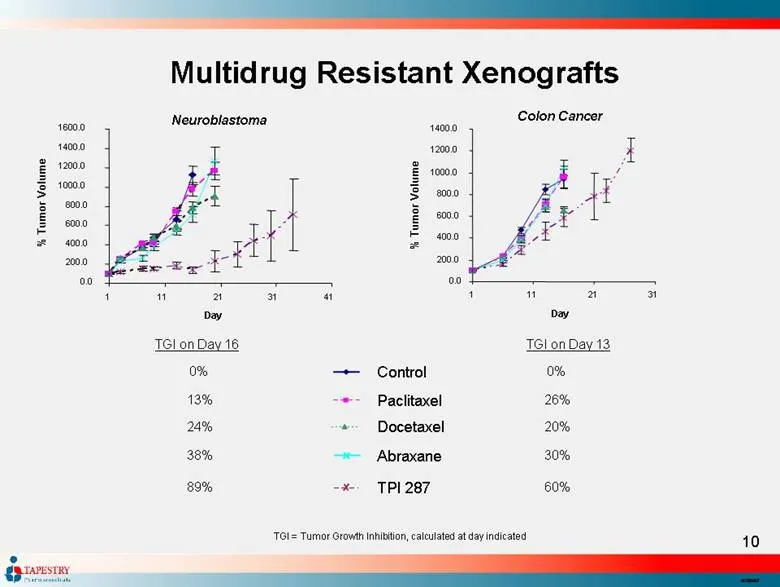
Slide 10: Multidrug Resistant Xenografts
Multidrug Resistant Xenografts 0.0 200.0 400.0 600.0 800.0 1000.0 1200.0 1400.0 1600.0 1 11 21 31 41 Day % Tumor Volume TGI = Tumor Growth Inhibition, calculated at day indicated TGI on Day 13 0% 26% 20% 30% 60% Control Paclitaxel Docetaxel Abraxane TPI 287 0.0 200.0 400.0 600.0 800.0 1000.0 1200.0
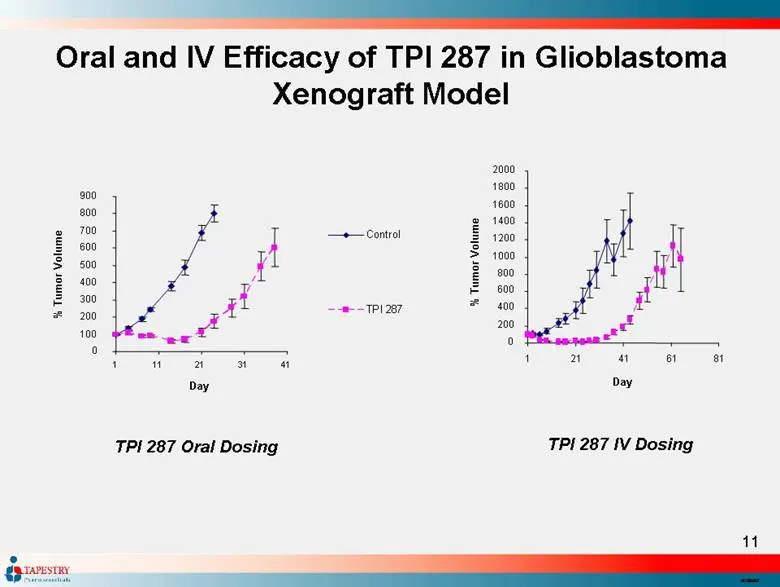
Slide 11: Oral and IV Efficacy of TPI 287 in Glioblastoma Xenograft Model
Oral and IV Efficacy of TPI 287 in Glioblastoma Xenograft Model TPI 287 IV Dosing 0 200 400 600 800 1000 1200 1400 1600 1800 2000 1 21 41 61 81 Day % Tumor Volume TPI 287 Oral Dosing 0 100 200 300 400 500 600 700 800 900 1 11 21 31 41 Day % Tumor Volume Control TPI 287
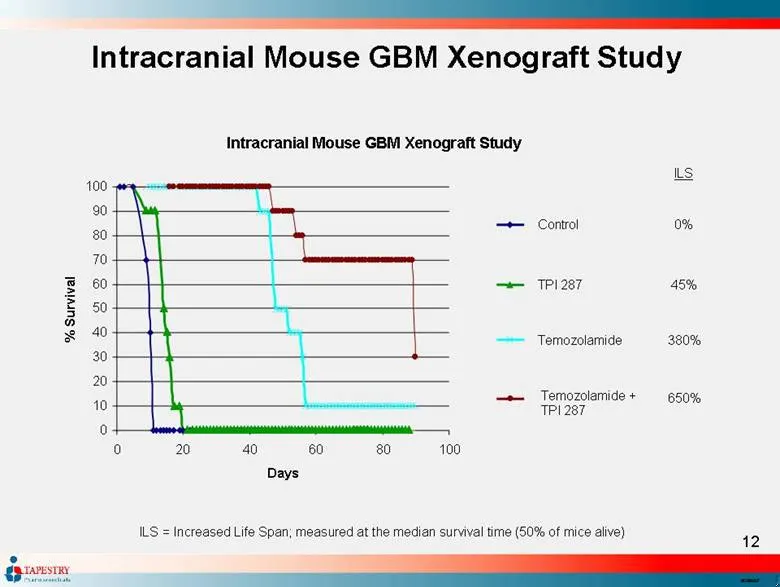
Slide 12: Intracranial Mouse GBM Xenograft Study
Intracranial Mouse GBM Xenograft Study ILS = Increased Life Span; measured at the median survival time (50% of mice alive) ILS 0% 45% 380% 650% Intracranial Mouse GBM Xenograft Study 0 10 20 30 40 50 60 70 80 90 100 0 20 40 60 80 100 Days % Survival Control TPI 287 Temozolamide Temozolamide + TPI 28
Slide 13: TPI 287: Pre-clinical Summary
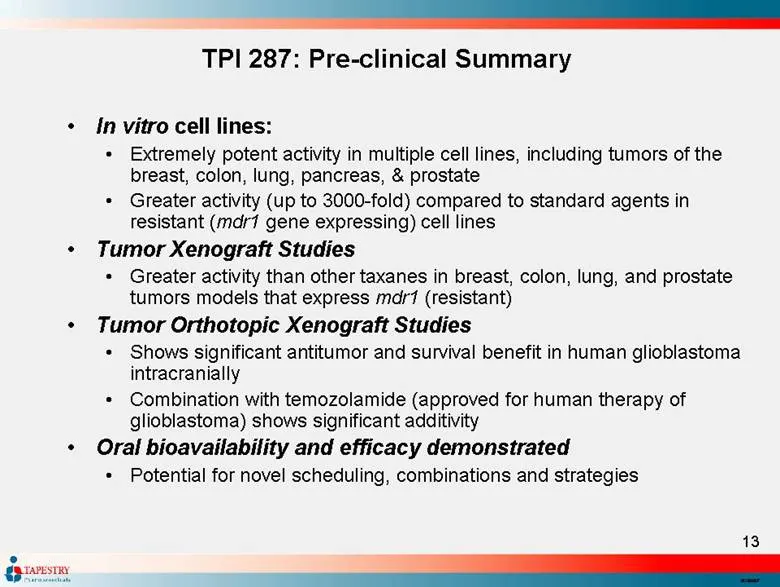
TPI 287: Pre-clinical Summary In vitro cell lines: Extremely potent activity in multiple cell lines, including tumors of the breast, colon, lung, pancreas, & prostate Greater activity (up to 3000-fold) compared to standard agents in resistant (mdr1 gene expressing) cell lines Tumor Xenograft Studies
Slide 14: TPI 287 Program Overview
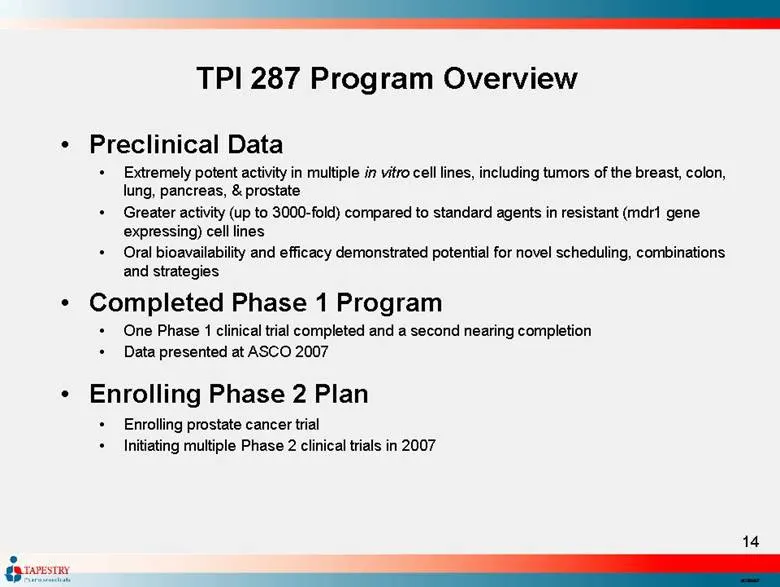
TPI 287 Program Overview Preclinical Data Extremely potent activity in multiple in vitro cell lines, including tumors of the breast, colon, lung, pancreas, & prostate Greater activity (up to 3000-fold) compared to standard agents in resistant (mdr1 gene expressing) cell lines Oral bioavailability an
Slide 15: TPI 287: Phase 1 Clinical Trials
TPI 287: Phase 1 Clinical Trials
Slide 16: Phase 1 Clinical Trials
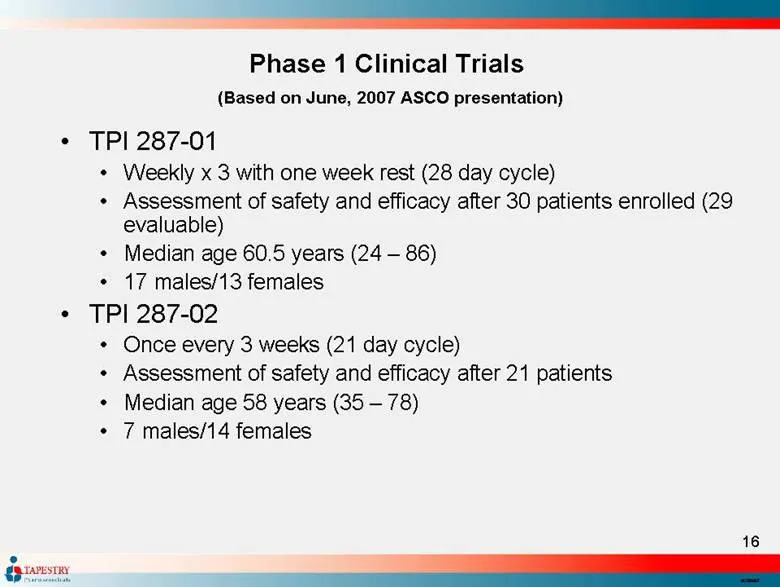
Phase 1 Clinical Trials (Based on June, 2007 ASCO presentation) TPI 287-01 Weekly x 3 with one week rest (28 day cycle) Assessment of safety and efficacy after 30 patients enrolled (29 evaluable) Median age 60.5 years (24 – 86) 17 males/13 females TPI 287-02 Once every 3 weeks (21 day cycle) Assessm
Slide 17: Summary of Safety – Weekly Dosing
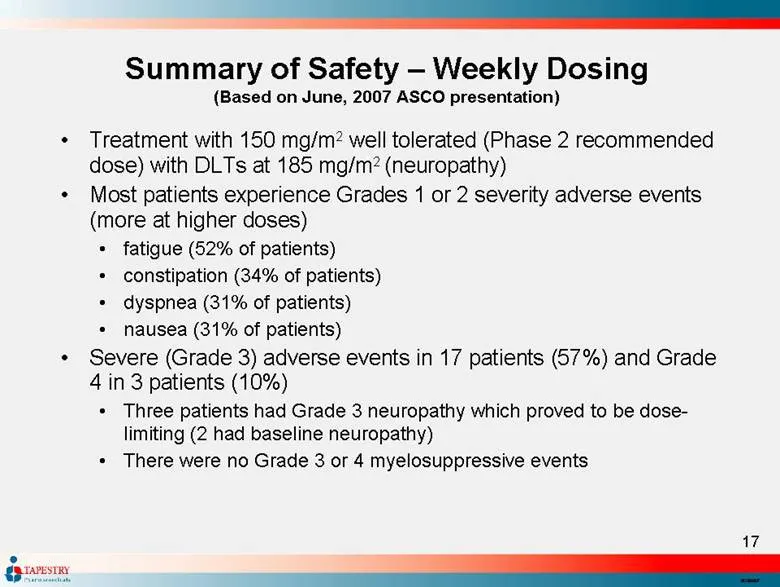
Summary of Safety – Weekly Dosing (Based on June, 2007 ASCO presentation) Treatment with 150 mg/m2 well tolerated (Phase 2 recommended dose) with DLTs at 185 mg/m2 (neuropathy) Most patients experience Grades 1 or 2 severity adverse events (more at higher doses) fatigue (52% of patients) constipatio
Slide 18: Summary of Safety – 21-Day Dosing
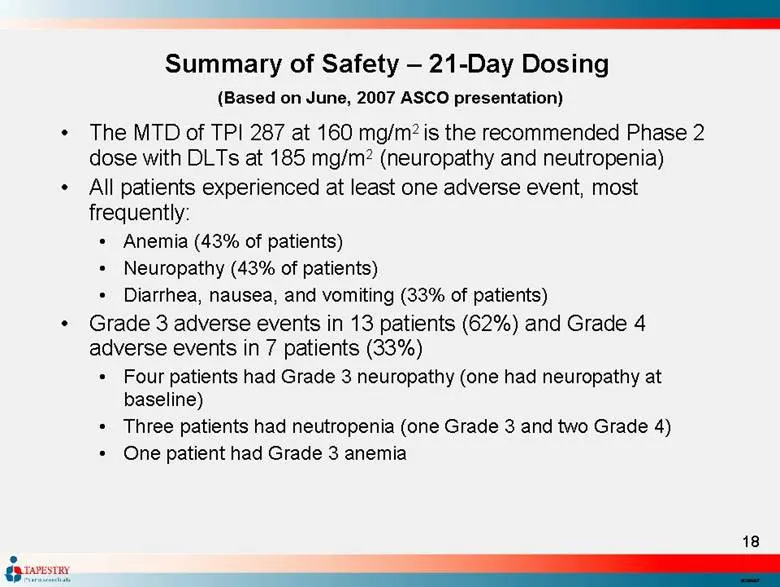
Summary of Safety – 21-Day Dosing (Based on June, 2007 ASCO presentation) The MTD of TPI 287 at 160 mg/m2 is the recommended Phase 2 dose with DLTs at 185 mg/m2 (neuropathy and neutropenia) All patients experienced at least one adverse event, most frequently: Anemia (43% of patients) Neuropathy (43%
Slide 19: TPI 287: Summary of Efficacy – Pancreatic Cancer Partial Response
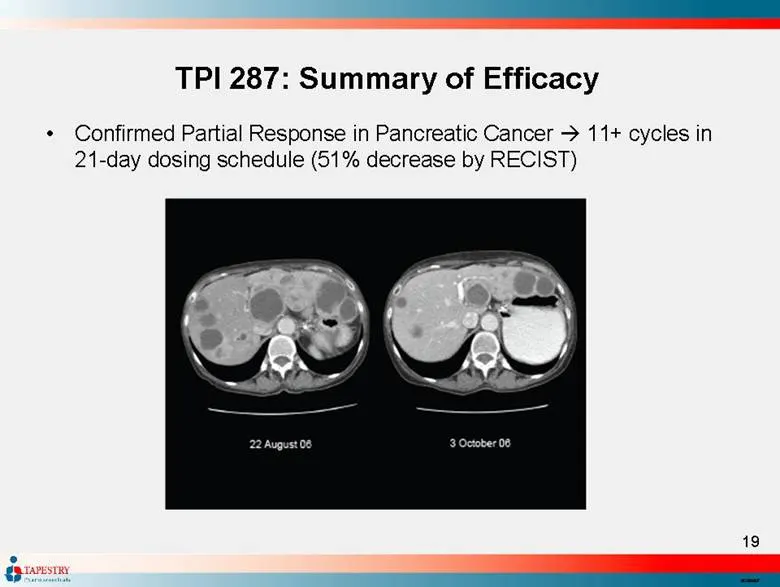
TPI 287: Summary of Efficacy Confirmed Partial Response in Pancreatic Cancer 11+ cycles in 21-day dosing schedule (51% decrease by RECIST)
Slide 20: TPI 287: Summary of Efficacy – Non-Small Cell Lung Cancer
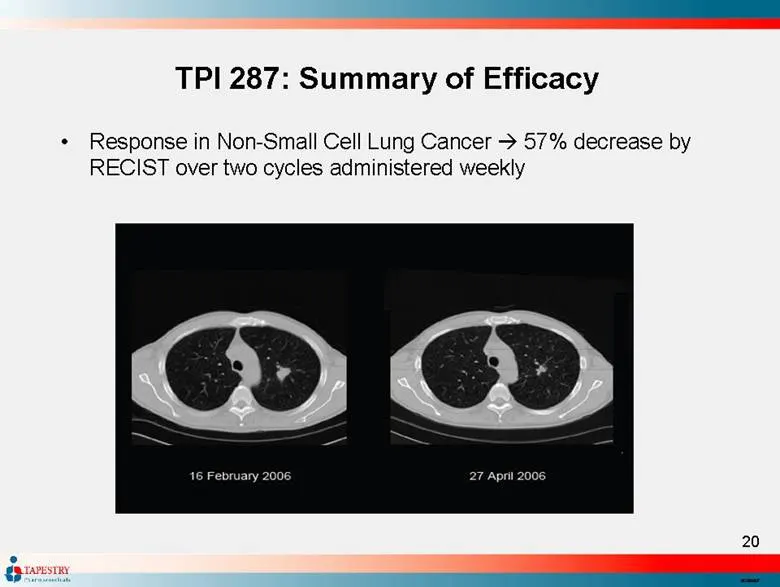
TPI 287: Summary of Efficacy Response in Non-Small Cell Lung Cancer 57% decrease by RECIST over two cycles administered weekly
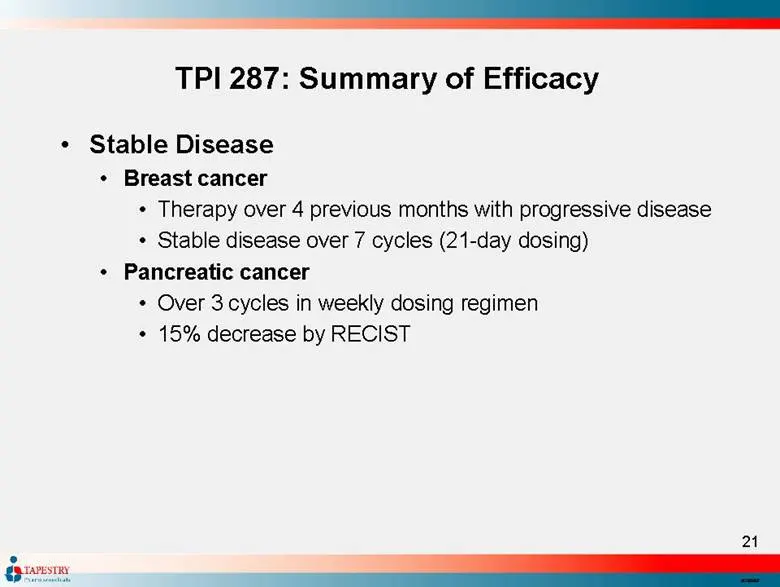
Slide 21: TPI 287: Summary of Efficacy – Stable Disease
TPI 287: Summary of Efficacy Stable Disease Breast cancer Therapy over 4 previous months with progressive disease Stable disease over 7 cycles (21-day dosing) Pancreatic cancer Over 3 cycles in weekly dosing regimen 15% decrease by RECIST
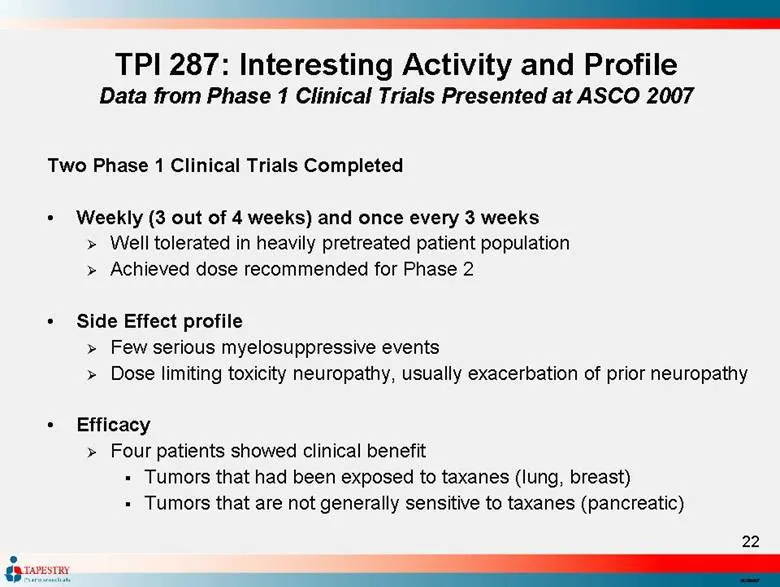
Slide 22: TPI 287: Interesting Activity and Profile Data from Phase 1 Trials
TPI 287: Interesting Activity and Profile Data from Phase 1 Clinical Trials Presented at ASCO 2007 Two Phase 1 Clinical Trials Completed Weekly (3 out of 4 weeks) and once every 3 weeks Well tolerated in heavily pretreated patient population Achieved dose recommended for Phase 2 Side Effect profile
Slide 23: TPI 287: Phase 2 Clinical Trial Designs
TPI 287: Phase 2 Clinical Trial Designs
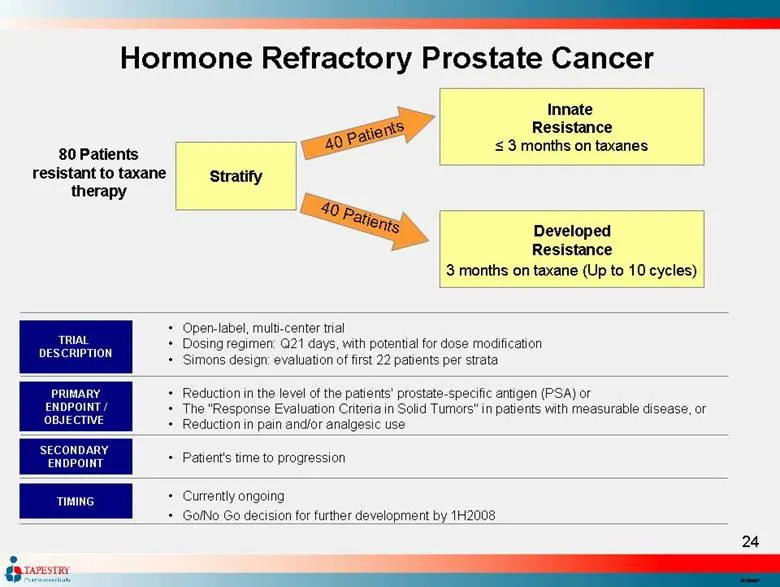
Slide 24: Hormone Refractory Prostate Cancer
Hormone Refractory Prostate Cancer 80 Patients resistant to taxane therapy Stratify 40 Patients 40 Patients Innate Resistance ≤ 3 months on taxanes Developed Resistance 3 months on taxane (Up to 10 cycles) Open-label, multi-center trial Dosing regimen: Q21 days, with potential for dose modification
Slide 25: Glioblastoma Multiforme / Primary CNS Tumors
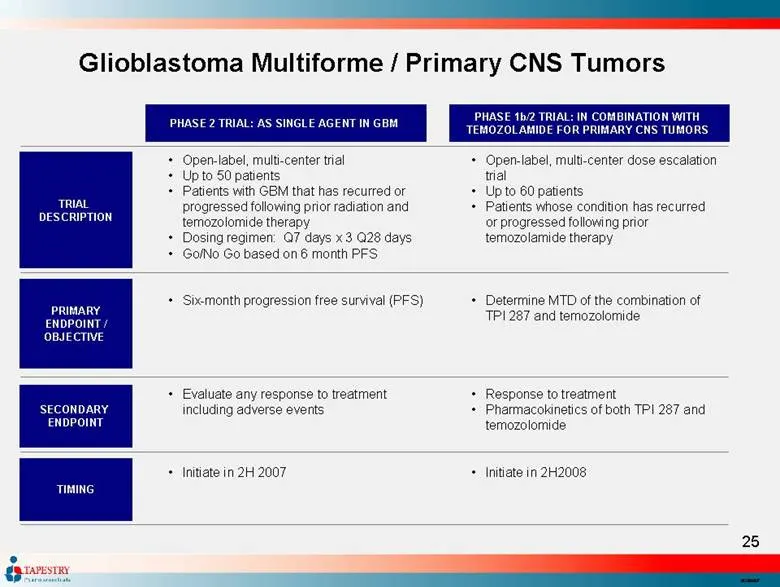
Glioblastoma Multiforme / Primary CNS Tumors Open-label, multi-center trial Up to 50 patients Patients with GBM that has recurred or progressed following prior radiation and temozolomide therapy Dosing regimen: Q7 days x 3 Q28 days Go/No Go based on 6 month PFS Six-month progression free survival (P
Slide 26: Pancreatic Cancer
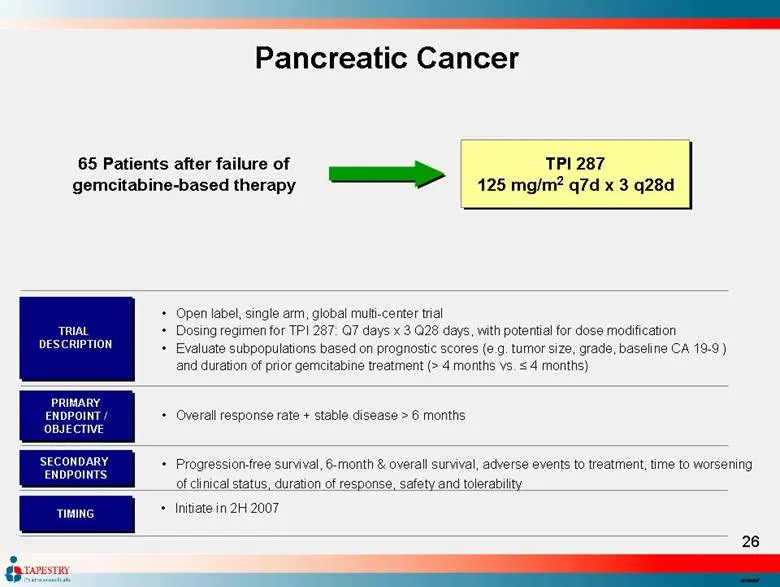
Pancreatic Cancer 65 Patients after failure of gemcitabine-based therapy TPI 287 125 mg/m2 q7d x 3 q28d Open label, single arm, global multi-center trial Dosing regimen for TPI 287: Q7 days x 3 Q28 days, with potential for dose modification Evaluate subpopulations based on prognostic scores (e.g. tu
Slide 27: TPI 287 Clinical Development Plan
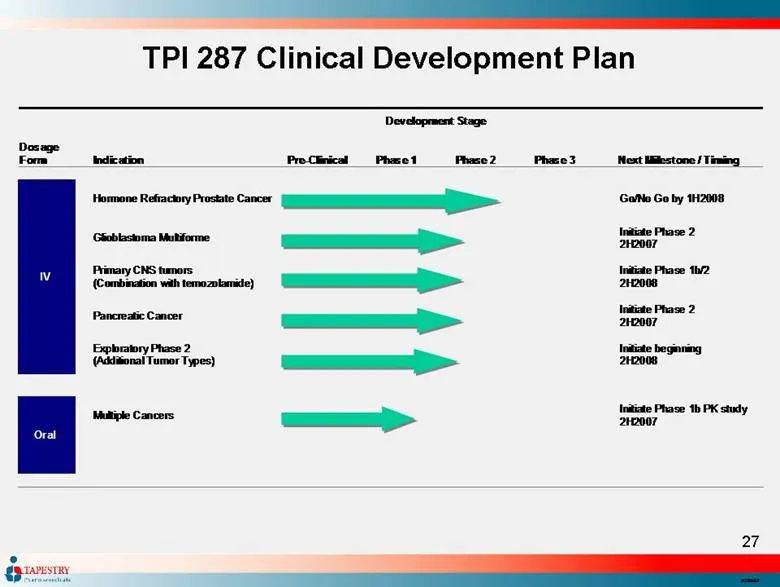
TPI 287 Clinical Development Plan Development Stage Dosage Form Indication Pre - Clinical Phase 1 Phase 2 Phase 3 Next Milestone / Timing Hormone Refractory Prostate Cancer Go/No Go by 1H 20 0 8 Glioblastoma Multiforme Initiate Ph ase 2 2H 2007 Primary C NS tumors (Combination with temozolamide) Ini

Slide 28: Market and Corporate Overviews
Market and Corporate Overviews
Slide 29: Overview of WW Branded Taxane Market
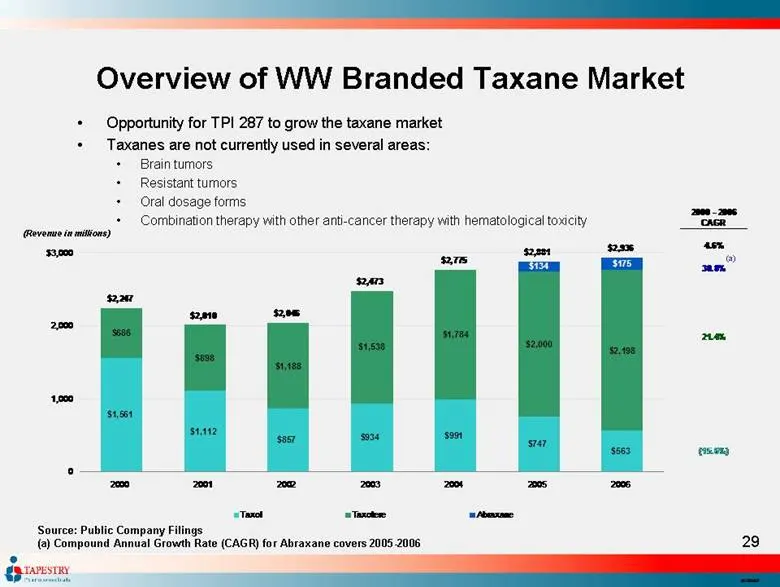
Overview of WW Branded Taxane Market Source: Public Company Filings (a) Compound Annual Growth Rate (CAGR) for Abraxane covers 2005-2006 (Revenue in millions) (a) Opportunity for TPI 287 to grow the taxane market Taxanes are not currently used in several areas: Brain tumors Resistant tumors Oral dos
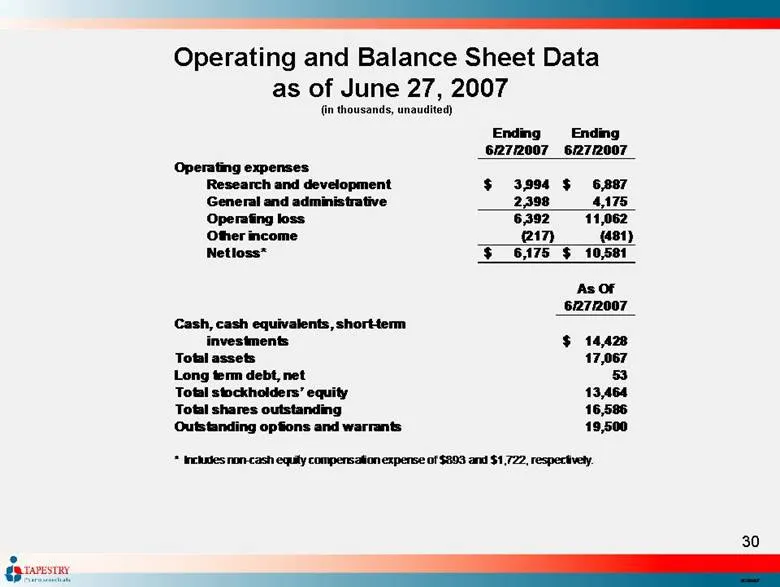
Slide 30: Operating and Balance Sheet Data as of June 27, 2007
Operating and Balance Sheet Data as of June 27, 2007 (in thousands, unaudited) Ending Ending 6/27/2007 6/27/2007 Operating expenses Research and development 3,994 $ 6,887 $ General and administrative 2,398 4,175 Operating loss 6,392 11,062 Other income (217) (481) Net loss* 6,175 $ 10,581 $ As Of 6/
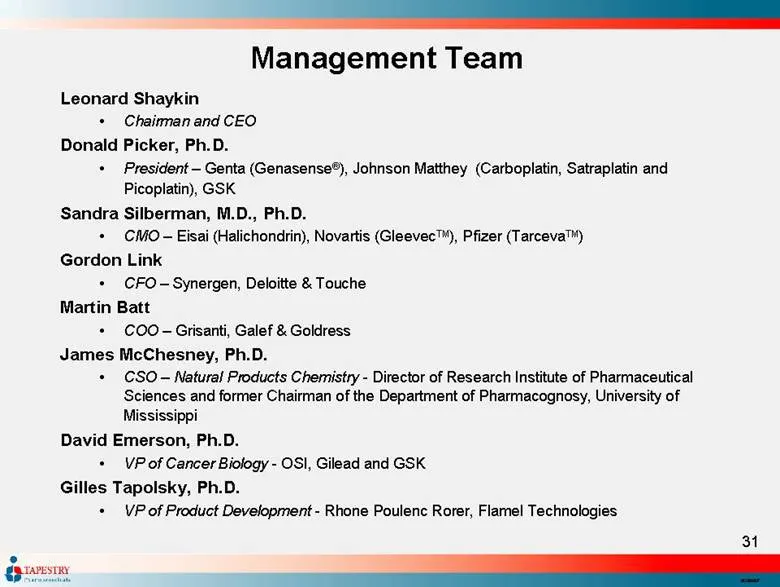
Slide 31: Management Team
Leonard Shaykin Chairman and CEO Donald Picker, Ph.D. President – Genta (Genasense®), Johnson Matthey (Carboplatin, Satraplatin and Picoplatin), GSK Sandra Silberman, M.D., Ph.D. CMO – Eisai (Halichondrin), Novartis (GleevecTM), Pfizer (TarcevaTM) Gordon Link CFO – Synergen, Deloitte & Touche Martin
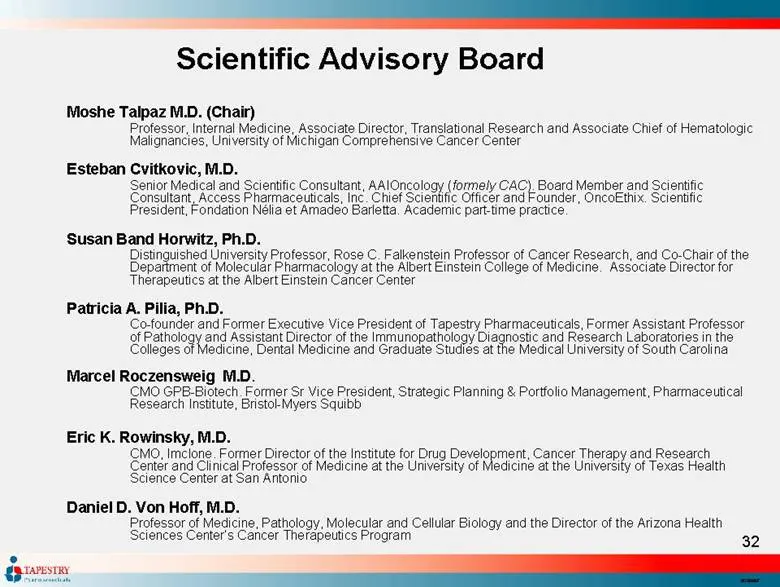
Slide 32: Scientific Advisory Board
Scientific Advisory Board Moshe Talpaz M.D. (Chair) Professor, Internal Medicine, Associate Director, Translational Research and Associate Chief of Hematologic Malignancies, University of Michigan Comprehensive Cancer Center Esteban Cvitkovic, M.D. Senior Medical and Scientific Consultant, AAIOncolo
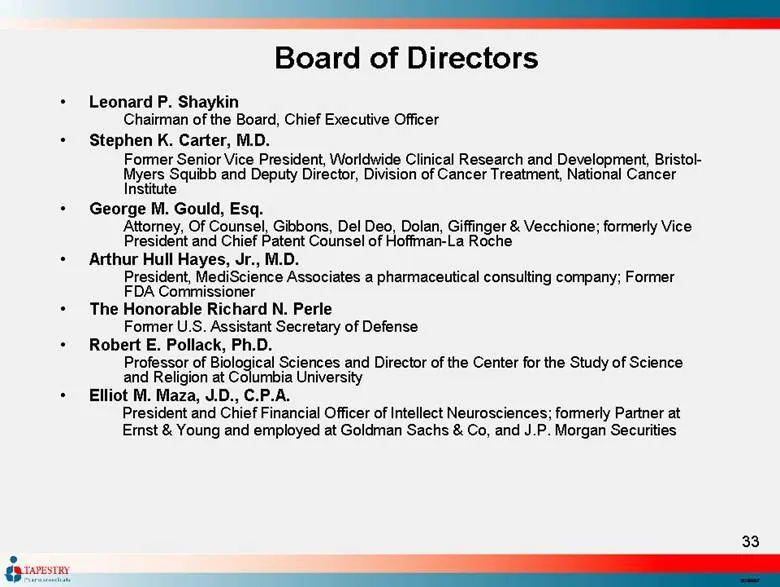
Slide 33: Board of Directors
Leonard P. Shaykin Chairman of the Board, Chief Executive Officer Stephen K. Carter, M.D. Former Senior Vice President, Worldwide Clinical Research and Development, Bristol-Myers Squibb and Deputy Director, Division of Cancer Treatment, National Cancer Institute George M. Gould, Esq. Attorney, Of Co
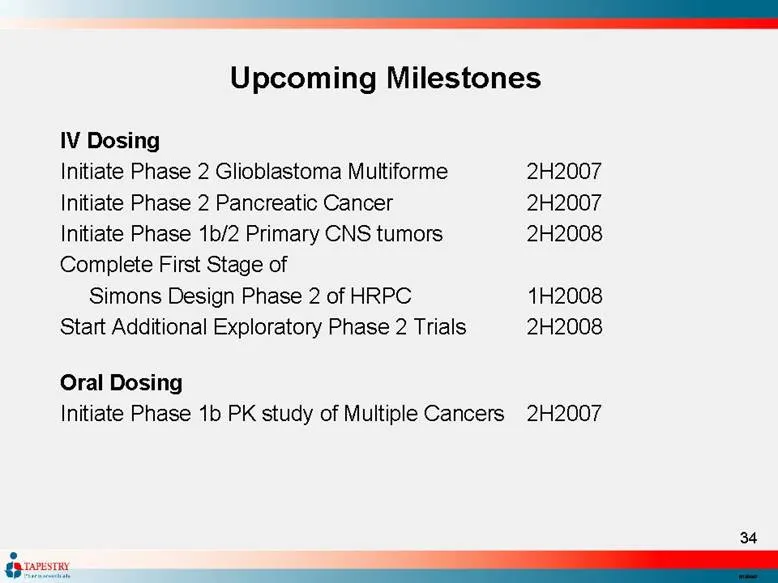
Slide 34: Upcoming Milestones
Upcoming Milestones IV Dosing Initiate Phase 2 Glioblastoma Multiforme 2H2007 Initiate Phase 2 Pancreatic Cancer 2H2007 Initiate Phase 1b/2 Primary CNS tumors 2H2008 Complete First Stage of Simons Design Phase 2 of HRPC 1H2008 Start Additional Exploratory Phase 2 Trials 2H2008 Oral Dosing Initiate P
Slide 35: Tapestry: Advancing the Development of TPI 287
Tapestry: Advancing the Development of TPI 287 Proprietary next generation taxane Potential for best in class Multiple Phase 2 programs Experienced oncology drug development team Large commercial opportunity Strong cash position Modest burn rate
Slide 36: gy rarestey
gy rarestey Pharmaceuticals Strategies for Life Be 36 Qu EE ne
Source: SEC EDGAR · 8-K filed Aug 21, 2007
More decks from Tapestry Pharmaceuticals Inc
 Investor Presentation (November 2007)27 slides · Nov 6, 2007
 Corporate Update (July 2007)5 slides · Jul 17, 2007
 Technical Presentation (June 2007)6 slides · Jun 13, 2007
 Needham & Company Biotechnology and Medical Technology Conference 200733 slides · Jun 13, 2007
 IPO Roadshow (May 2007)30 slides · May 14, 2007
 Investor Presentation (March 2007)33 slides · Mar 5, 2007