Tapestry Pharmaceuticals — Napro Biotherapeutics — Investor Presentation (February 2004)
39 slides from Tapestry Pharmaceuticals's investor presentation, Feb 27, 2004
Slide 1: Investor Presentation
Investor Presentation NAPRO BIGTHERAPEUTICS, INC.
Slide 2: Forward Looking Statements
Forward Looking Statements The statements in this presentation that are not historical facts are forward- looking statements that represent management's beliefs and assumptions as of the date of this presentation, based on currently available information. Forward-looking statements can be identified
Slide 3: Forward Looking Statements, Continued
Forward Looking Statements, Continued continuing development of any or all of the Company's development programs; the timing of when those programs will enter the clinic; the successful commercialization of the Company's platform technologies; the fact that the Company's business will require substa
Slide 4: Forward Looking Statements, Continued
Forward Looking Statements, Continued one or more of these risks materialize (or the consequences of such a development worsen), or should the underlying assumptions prove incorrect, actual results could differ materially from those forecasted or expected. The Company disclaims any intention or obli
Slide 5: For further information, please contact L. Robert Cohen
For further information, please contact L. Robert Cohen, Vice President, Investor Relations of NaPro BioTherapeutics, Inc., +1-212-218-8715. NaPro BioTHERAPEUTICS, INC @
Slide 6: A life science company
A life science company focused on the development of therapies for the treatment of cancer and hereditary disease NAPRO BIGIHERAPEUTICS, INC.
Slide 7: Focus
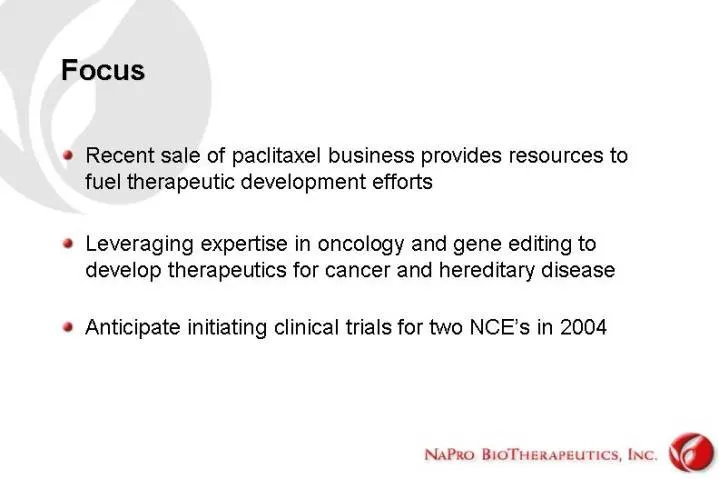
Focus @ Recent sale of paclitaxel business provides resources to fuel therapeutic development efforts @ Leveraging expertise in oncology and gene editing to develop therapeutics for cancer and hereditary disease * Anticipate initiating clinical trials for two NCE’s in 2004 NaPro BioTHERAPEUTICS, INC
Slide 8: Pre-Clinical Development Pipeline
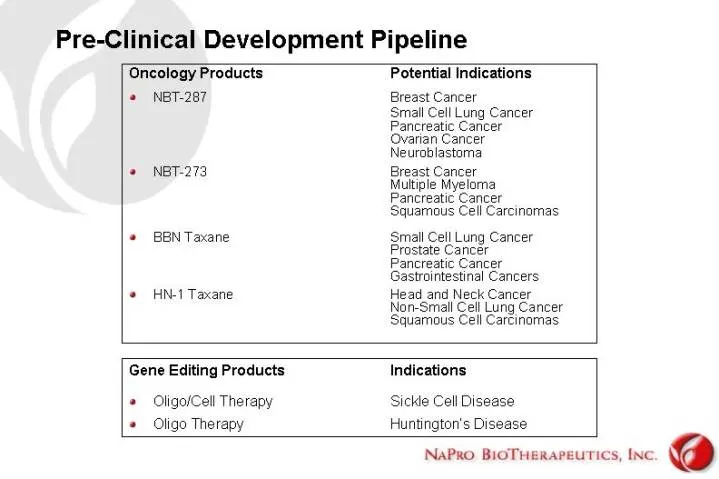
Pre-Clinical Development Pipeline ‘Oncology Products @ =NBT-287 © NBT-273 * BEN Taxane @ HN Taxane Potential Indications Breast Cancer Stall Cell Lung Cancer Pancreatic Cancer Ovarian Cancer Neurablastama Breast Cancer Multiple Myeloma Pancreatic Cancer Squamous Cell Carcinamas Small Cell Lung Cance

Slide 9: Therapeutic Development: Oncology
Therapeutic Development: Oncology NAPRO BIGIHERAPEUTICS, INC.
Slide 10: Oncology Portfolio
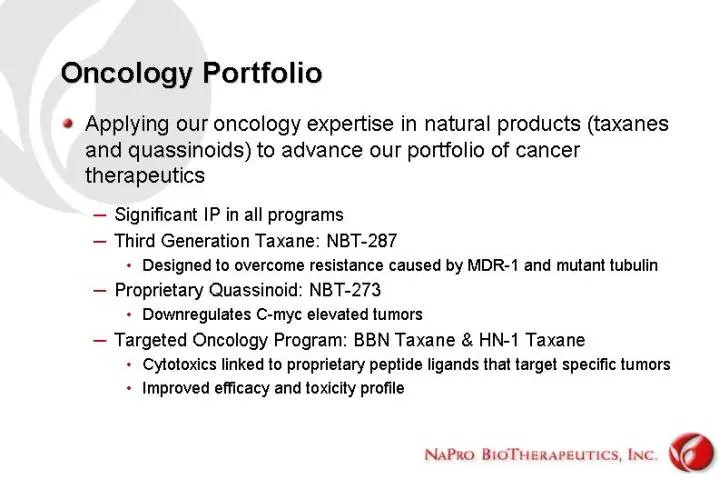
Oncology Portfolio @ Applying our oncology expertise in natural products (taxanes and quassinoids) to advance our portfolio of cancer therapeutics — Significant IP in all programs — Third Generation Taxane: NBT-287 + Designed to overcome resistance caused by MDR-1 and mutant tubulin — Proprietary Qu
Slide 11: NBT-287: A Third Generation Taxane
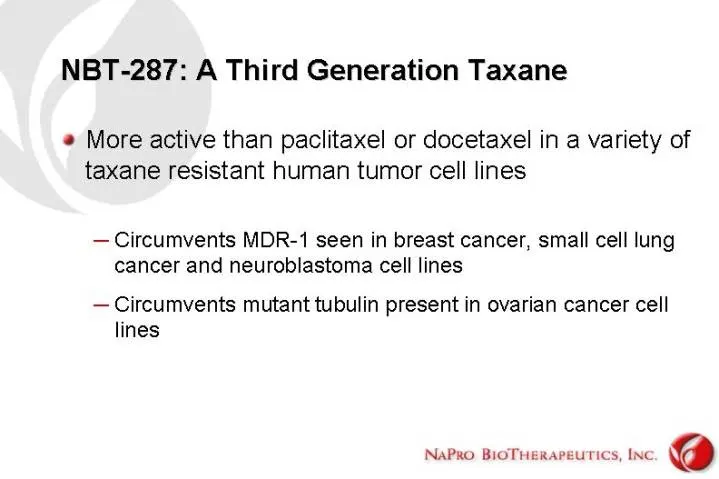
NBT-287: A Third Generation Taxane @ More active than paclitaxel or docetaxel in a variety of taxane resistant human tumor cell lines —Circumvents MDR-1 seen in breast cancer, small cell lung cancer and neuroblastoma cell lines —Circumvents mutant tubulin present in ovarian cancer cell lines NAPRO B
Slide 12: NBT-287 In Vitro Data
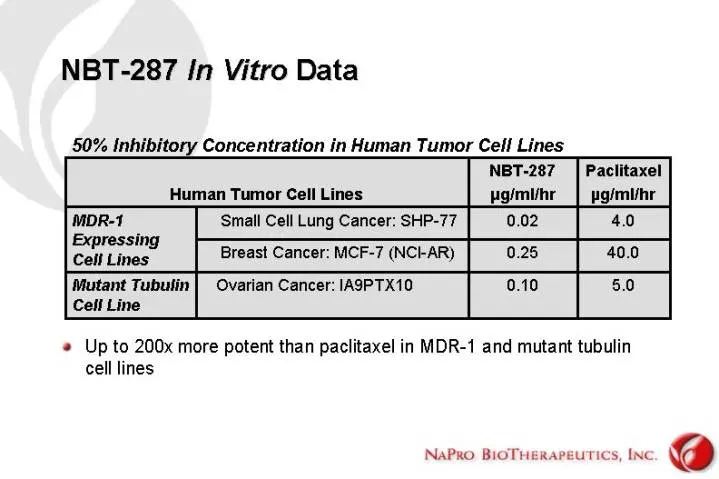
NBT-287 /n Vitro Data 50% Inhibitory Concentration in Human Tumor Cell Lines NBT-287 | Paclitaxel Human Tumor Cell Lines gimihr | _pg/mvnr MDR-4 ‘Small Cell Lung Cancer: SHP-77 0.02 4.0 en ie Breast Cancer: MCF-7 (NCLAR) 0.25 40.0 ‘Mutant Tubulin| Ovarian Cancer: |AQPTX10 0.10 5.0 Cell Line Up to 20
Slide 13: NBT-287 Clinical Opportunities
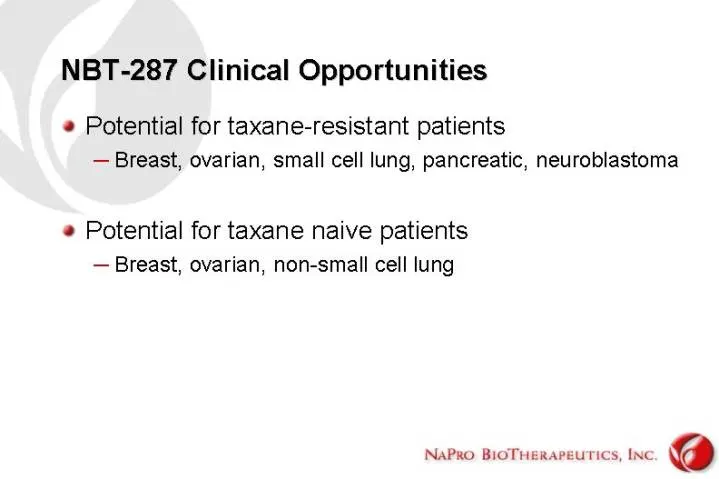
NBT-287 Clinical Opportunities @ Potential for taxane-resistant patients — Breast, ovarian, small cell lung, pancreatic, neuroblastoma @ Potential for taxane naive patients — Breast, ovarian, non-small cell lung NAPRO BIOTHERAPEUTICS, INC @
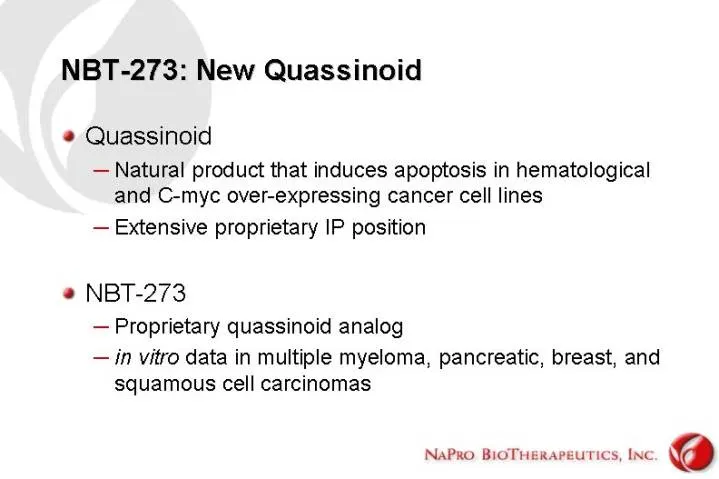
Slide 14: NBT-273: New Quassinoid
NBT-273: New Quassinoid ® Quassinoid — Natural product that induces apoptosis in hematological and C-myc over-expressing cancer cell lines — Extensive proprietary IP position @ NBT-273 — Proprietary quassinoid analog —in vitro data in multiple myeloma, pancreatic, breast, and squamous cell carcinoma
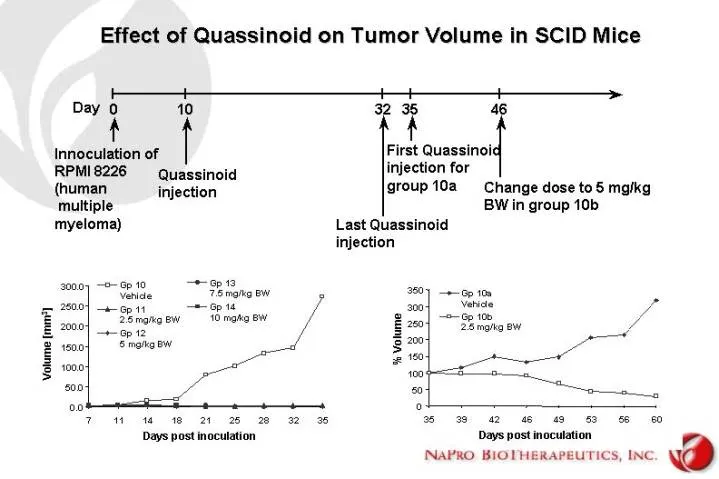
Slide 15: Effect of Quassinoid on Tumor Volume in SCID Mice
‘Volume frm] Effect of Quassinoid on Tumor Volume in SCID Mice Day 0 10 Inoculation of RPMI 8226 Quassinoid ‘4 First Quassinoit injection for group 10a Change dose to 5 mg/kg (human injection in multiple BW in group 10b myeloma) Last Quassinoid injection o-gp10 | op $00) Vane 78 mono ew 360) op 100
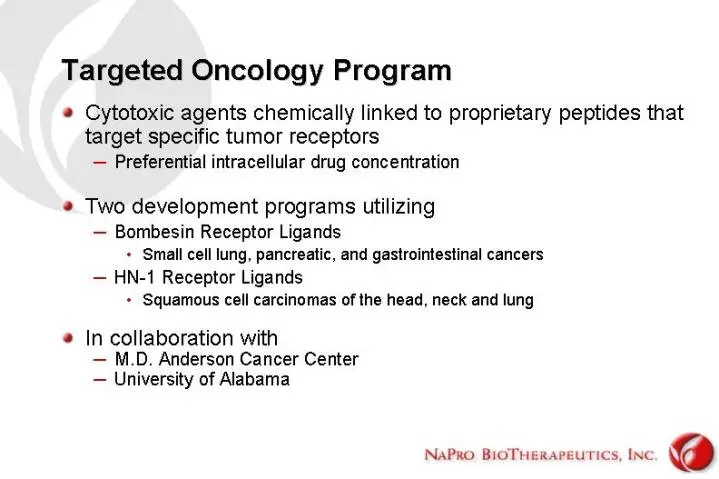
Slide 16: Targeted Oncology Program
Targeted Oncology Program ® Cytotoxic agents chemically linked to proprietary peptides that target specific tumor receptors — Preferential intracellular drug concentration @ Two development programs utilizing — Bombesin Receptor Ligands + Small cell lung, pancreatic, and gastrointestinal cancers — H
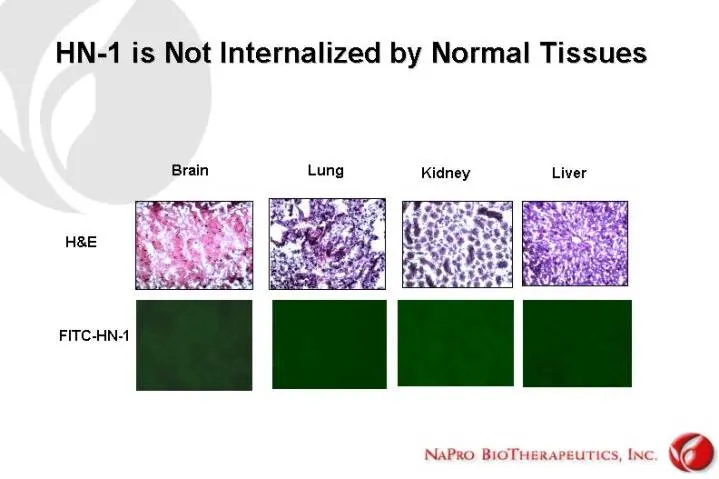
Slide 17: HN-1 is Not Internalized by Normal Tissues
HN-1 is Not Internalized by Normal Tissues Brain Lung Kidney Liver ee) KES ¥ se 4 : i F| —_ ee ie | ies a NaPro BioTHERAPEUTICS, INC @ H&E
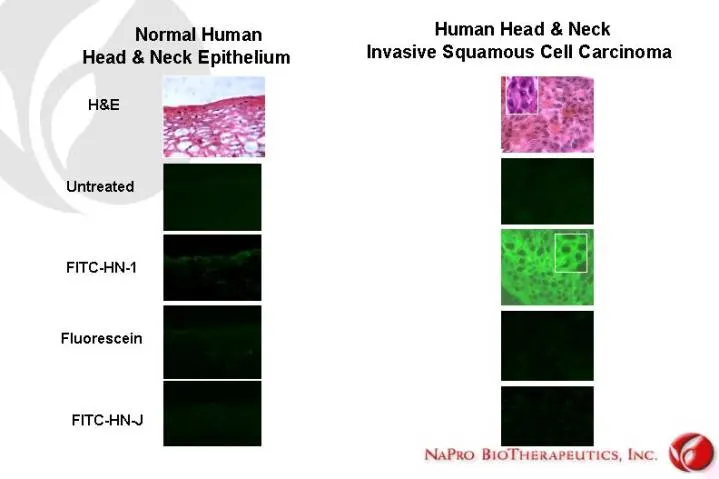
Slide 18: Normal Human Head & Neck vs Invasive Squamous Cell Carcinoma
Normal Human Human Head & Neck Head & Neck Epithelium Invasive Squamous Cell Carcinoma H&E Untreated FITC-HN-1 Fluorescein FITC-HNJ NaPro BIOTHERAPEUTICS, INC @
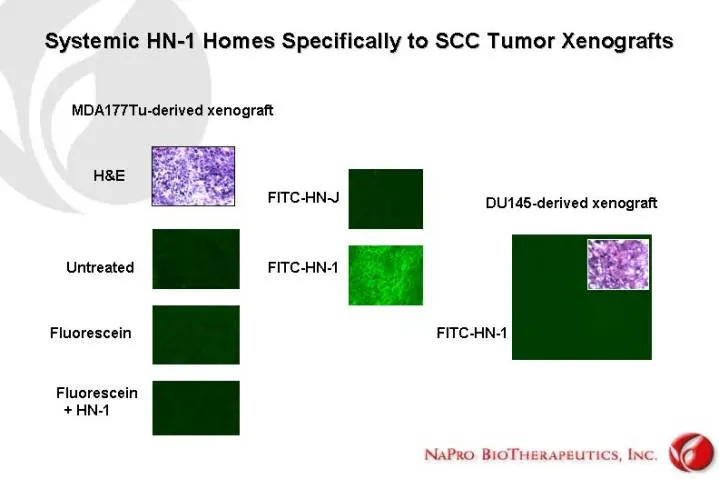
Slide 19: Systemic HN-1 Homes Specifically to SCC Tumor Xenografts
Systemic HN-1 Homes Specifically to SCC Tumor Xenografts MDA177Tu-derived xenograft H&E FITC-HN-J a bd 1DU146-derived xenograft Untreated Fluorescein FITC-HN-1 Fluorescein +HNA NAPRO BIOTHERAPEUTICS, INC @
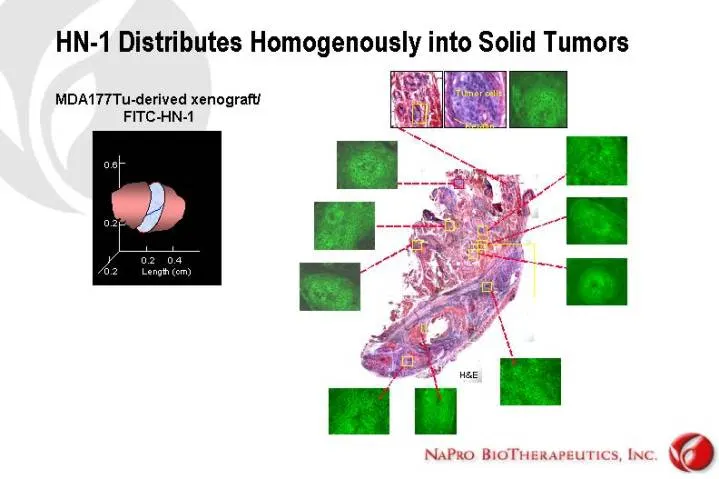
Slide 20: HN-1 Distributes Homogenously into Solid Tumors
HN-1 Distributes Homogenously into Solid Tumors MDA177Tu-derived xenograft FITC-HN-1 NaPro BiOTHERAPEUTICS, INC. @
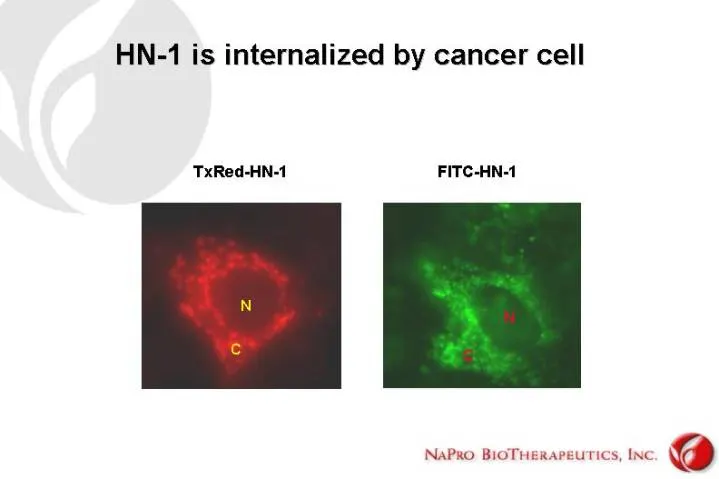
Slide 21: HN-1 is internalized by cancer cell
HN-1 is internalized by cancer cell TxRed-HN-1 FITC-HN-1 NAPRO BIOTHERAPEUTICS, INC @
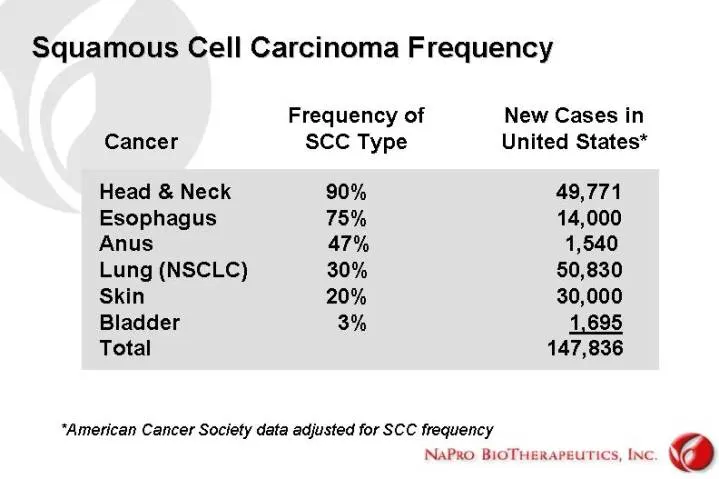
Slide 22: Squamous Cell Carcinoma Frequency
Squamous Cell Carcinoma Frequency Frequency of New Cases in Cancer SCC Type United States* Head & Neck 90% 49,771 Esophagus 75% 14,000 Anus 47% 1,540 Lung (NSCLC) 30% 50,830 Skin 20% 30,000 Bladder 3% 1,695 Total 147,836 “American Cancer Society data adjusted for SCC frequency NaPxo BiOTHERAPEUTICS,
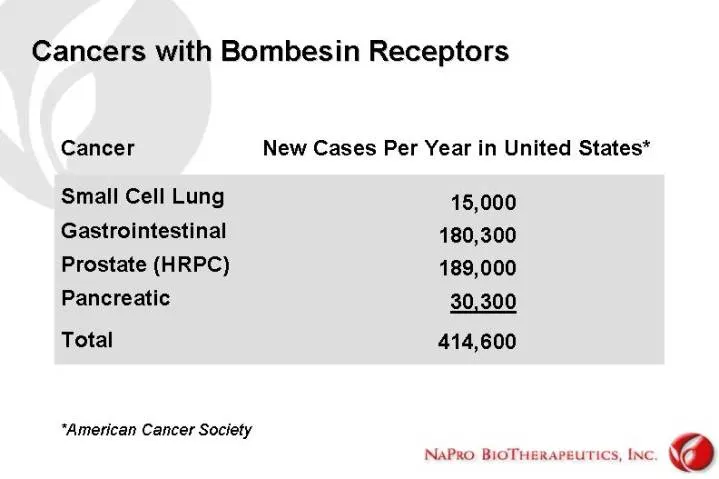
Slide 23: Cancers with Bombesin Receptors
Cancers with Bombesin Receptors Cancer New Cases Per Year in United States* Small Cell Lung 15,000 Gastrointestinal 180,300 Prostate (HRPC) 189,000 Pancreatic 30,300 Total 414,600 “American Cancer Society NaPro BiOTHERAPEUTICS, INC @
Slide 24: Therapeutic Development: Hereditary Disease
Therapeutic Development: Hereditary Disease NAPRO BIGIHERAPEUTICS, INC.
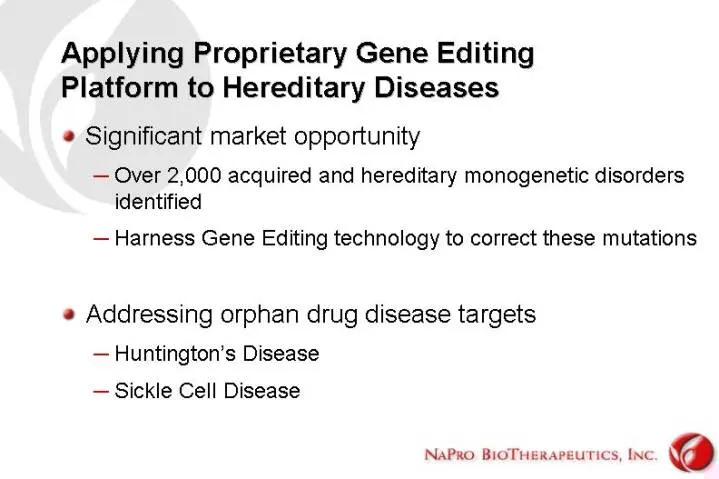
Slide 25: Applying Proprietary Gene Editing Platform to Hereditary Diseases
Applying Proprietary Gene Editing Platform to Hereditary Diseases @ Significant market opportunity — Over 2,000 acquired and hereditary monogenetic disorders identified — Harness Gene Editing technology to correct these mutations e Addressing orphan drug disease targets — Huntington’s Disease — Sick
Slide 26: Therapeutic Development: Sickle Cell Disease
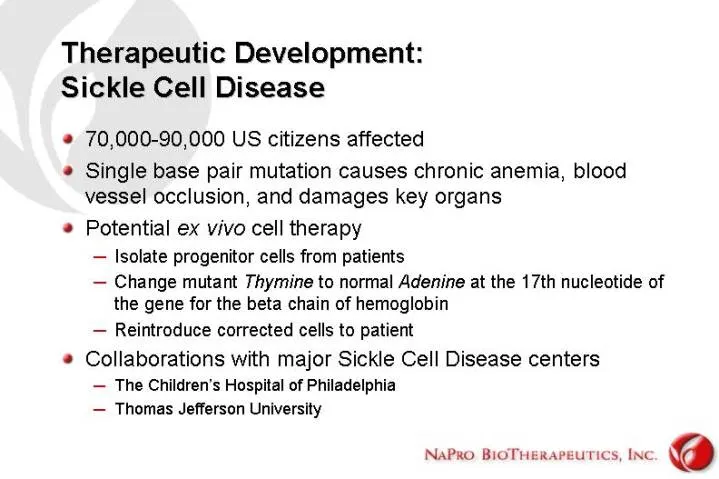
Therapeutic Development: Sickle Cell Disease . 70,000-90,000 US citizens affected Single base pair mutation causes chronic anemia, blood vessel occlusion, and damages key organs Potential ex vivo cell therapy — Isolate progenitor cells from patients — Change mutant Thymine to normal Adenine at the 1
Slide 27: Sickle Cell Autologous Treatment
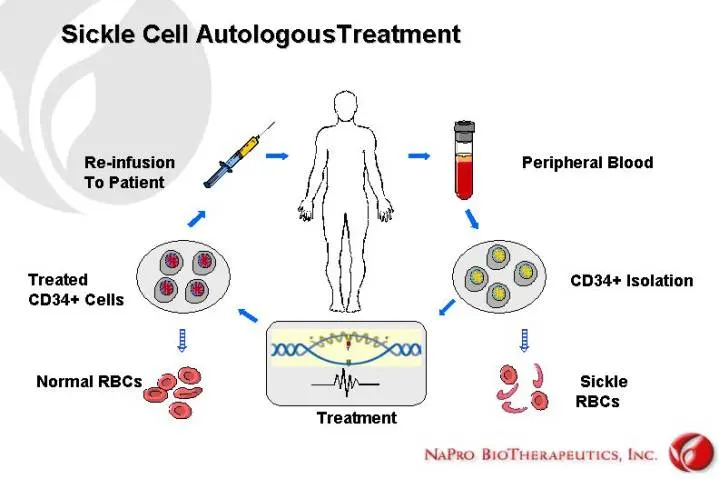
Sickle Cell AutologousTreatment peenen 0 rT \o i Ponpneratioee i 7 i Se €D34+ Isolation Aus ¢ (OO) Lesa % © : Normal RBCs $2 —Ny— @ 2 jicte Treatment NaPro BioTHERAPEUTICS, INC @
Slide 28: Therapeutic Development: Huntington's Disease
Therapeutic Development: Huntington’s Disease ® Affects ~35,000 individuals in US * Inherited, progressive degenerative neurological disorder — No treatment or cure * Single, abnormal gene on chromosome 4 leads to a defective huntingtin protein ® Proprietary oligonucleotides reduce huntingtin protei
Slide 29: NaPro's Oligo Treatment Reduces Aggregates in Huntington's Model
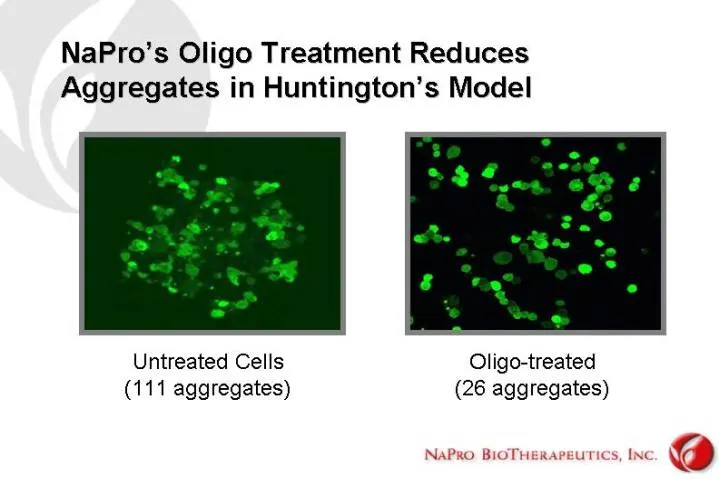
NaPro’s Oligo Treatment Reduces Aggregates in Huntington’s Model Untreated Cells Oligo-treated (111 aggregates) (26 aggregates) NaPao BiOTHERAPEUTICS, INC @
Slide 30: Gene-Editing Platform
Gene-Editing Platform NAPRO BIGIHERAPEUTICS, INC.
Slide 31: Gene Editing
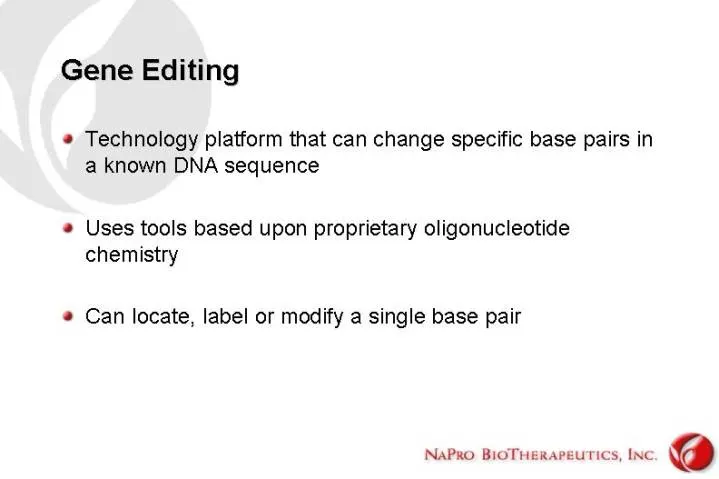
Gene Editing * Technology platform that can change specific base pairs in a known DNA sequence * Uses tools based upon proprietary oligonucleotide chemistry ® Can locate, label or modify a single base pair NaPro BioTHERAPEUTICS, INC @
Slide 32: Advantages of Gene Editing
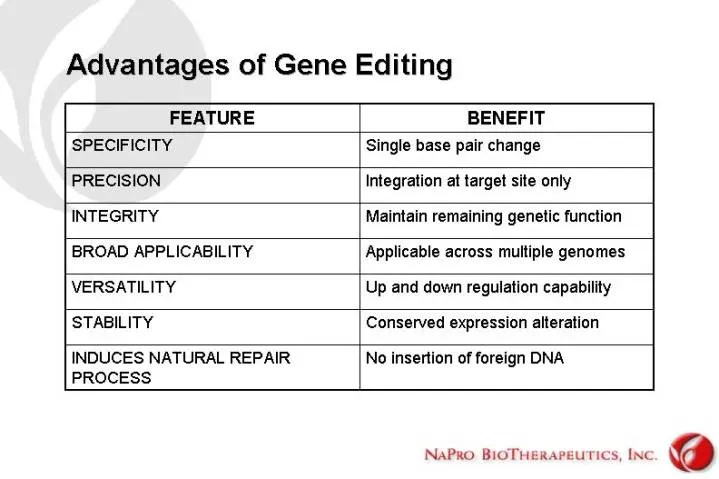
Advantages of Gene Editing FEATURE BENEFIT SPECIFICITY Single base pair change PRECISION Integration at target site only INTEGRITY Maintain remaining genetic function BROAD APPLICABILITY Applicable across multiple genomes VERSATILITY Up and down regulation capability STABILITY Conserved expression a
Slide 33: Gene Editing Model
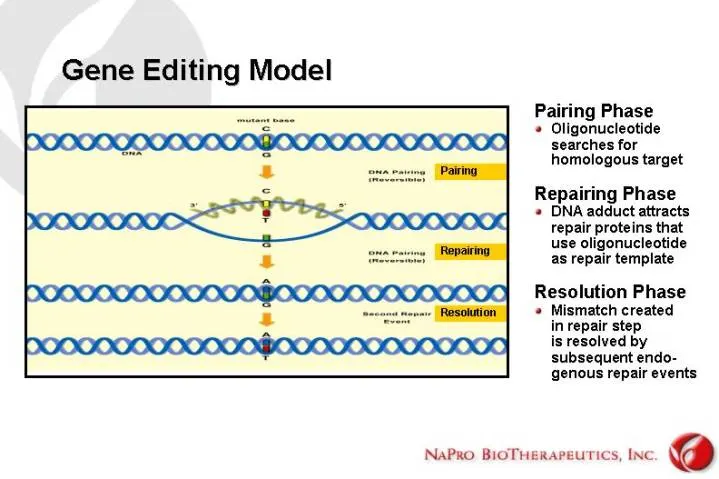
Gene Editing Model Pairing Phase * Oligonucleotide searches for homologous target Repairing Phase * DNA adduct attracts repair proteins that use oligonucleotide as repair template Resolution Phase * Mismatch created in repair step is resolved by subsequent endo- genous repair events NaPro BiOTHERAPE
Slide 34: Scientific Development Team
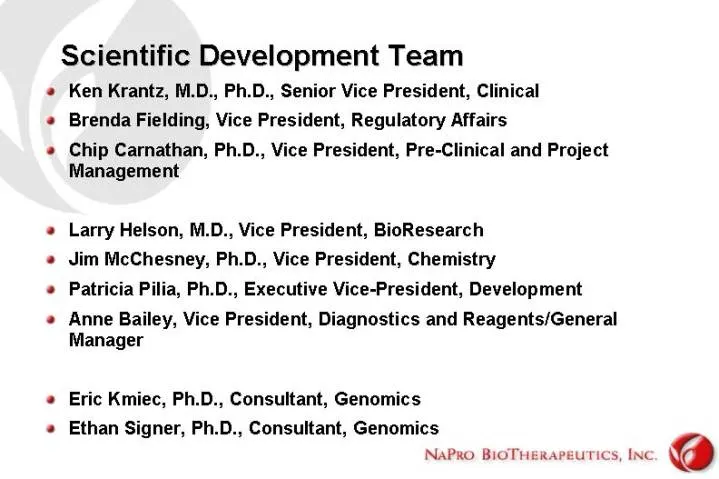
Scientific Development Team Ken Krantz, M.D., Ph.D., Senior Vice President, Clinical Brenda Fielding, Vice President, Regulatory Affairs Chip Carnathan, Ph.D., Vice President, Pre-Clinical and Project Management Larry Helson, M.D., Vice President, BioResearch Jim McChesney, Ph.D., Vice President, Ch
Slide 35: Business Team
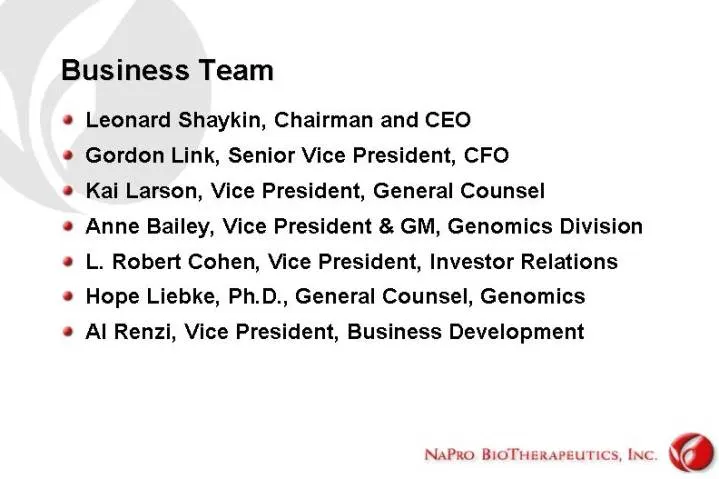
Business Team * Leonard Shaykin, Chairman and CEO ® Gordon Link, Senior Vice President, CFO Kai Larson, Vice President, General Counsel Anne Bailey, Vice President & GM, Genomics Division L. Robert Cohen, Vice President, Investor Relations @ Hope Liebke, Ph.D., General Counsel, Genomics @ Al Renzi,
Slide 36: Scientific Advisory Board
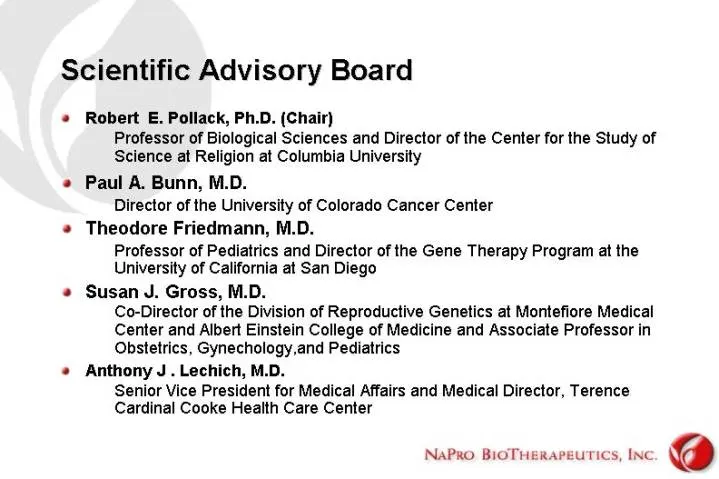
Scientific Advisory Board * Robert E. Pollack, Ph.D. (Chair) Professor of Biological Sciences and Director of the Center for the Study of Science at Religion at Columbia University Paul A. Bunn, M.D. Director of the University of Colorado Cancer Center Theodore Friedmann, M.D. Professor of Pediatric
Slide 37: Scientific Advisory Board (con't)
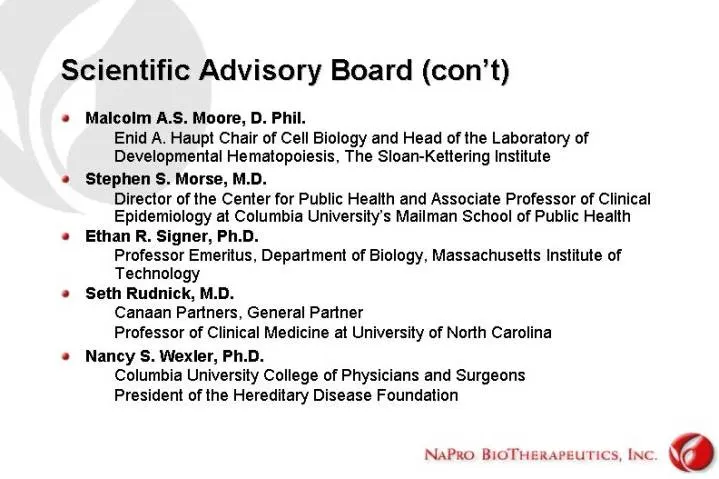
Scientific Advisory Board (con't) * Malcolm A.S. Moore, D. Phil. Enid A. Haupt Chair of Cell Biology and Head of the Laboratory of Developmental Hematopoiesis, The Sloan-Kettering Institute * Stephen S. Morse, M.D. Director of the Center for Public Health and Associate Professor of Clinical Epidemio
Slide 38: Investment Opportunity
Investment Opportunity @ Driving the development of: — Next-generation cancer therapies — Therapies for hereditary diseases — Expect to advance two programs into the clinic in 2004 ® Cash resources available to accelerate development efforts ® Significant academic and clinical collaborations * Exten
Slide 39: Searchable text section of graphics
Searchable text section of graphics shown above [ GRA PHIC] NAPRO BIOTHERAPEUTICS, INC. Investor Presentation For ward Looking Statements The statements in this presentation that are not historical facts are forward-looking statements that represent management’s beliefs and assumptions as of the dat
Source: SEC EDGAR · 8-K filed Feb 27, 2004
More decks from Tapestry Pharmaceuticals Inc
 Investor Presentation (November 2007)27 slides · Nov 6, 2007
 Investor Presentation (August 2007)36 slides · Aug 21, 2007
 Corporate Update (July 2007)5 slides · Jul 17, 2007
 Technical Presentation (June 2007)6 slides · Jun 13, 2007
 Needham & Company Biotechnology and Medical Technology Conference 200733 slides · Jun 13, 2007
 IPO Roadshow (May 2007)30 slides · May 14, 2007