Tapestry Pharmaceuticals — Napro Biotherapeutics — Technical Presentation (March 2004)
22 slides from Tapestry Pharmaceuticals's technical presentation, Mar 19, 2004

Slide 1: Gene Editing: A Next Generation Target Validation and Functional Genomics Technology
Gene Editing: A Next Generation Target Validation and Functional Genomics Technology Al Renzi, Vice President of Corporate Development March 23, 2004 NAPRO BIGIHERAPEUTICS, INC.
Slide 2: Forward Looking Statements
Forward Looking Statements ‘The statements in this presentation that are not historical facts are forward+-ooking statements that renresent managements beliefS and assumptions as of the date ofthis presentation, based on currently available information. Forward-looking statements can be identified b
Slide 3: Pre-Clinical Development Pipeline
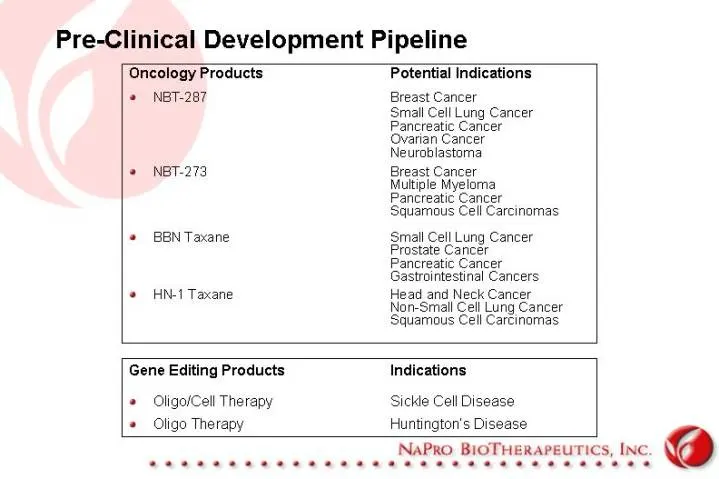
Pre-Clinical Development Pipeline ‘Oncology Products @ ~=NBT-287 @ NBT-273 * BEN Taxane @ HN Taxane Potential Indications Breast Cancer Stall Cell Lung Cancer Pancreatic Cancer Ovarian Cancer Neurablastama Breast Cancer Multiple Myeloma Pancreatic Cancer Squamous Cell Carcinomas Small Cell Lung Canc
Slide 4: Strategy
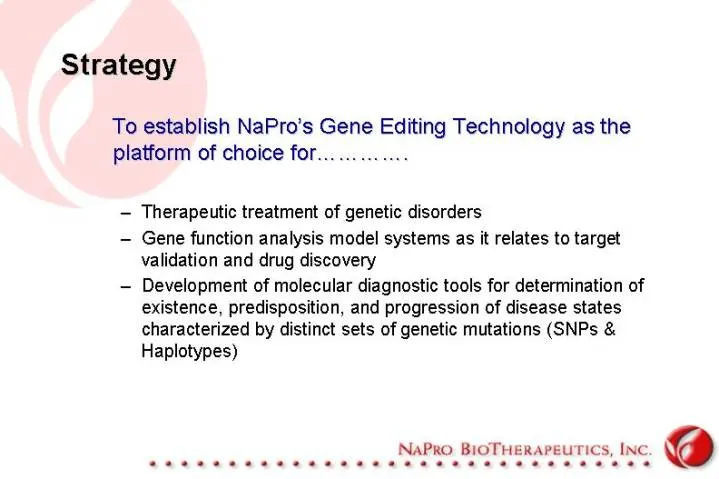
Strategy To establish NaPro’s Gene Editing Technology as the platform of choice for............. — Therapeutic treatment of genetic disorders — Gene function analysis model systems as it relates to target validation and drug discovery — Development of molecular diagnostic tools for determination of
Slide 5: Gene Editing Single Strand Oligodeoxynucleotide (ssODN)
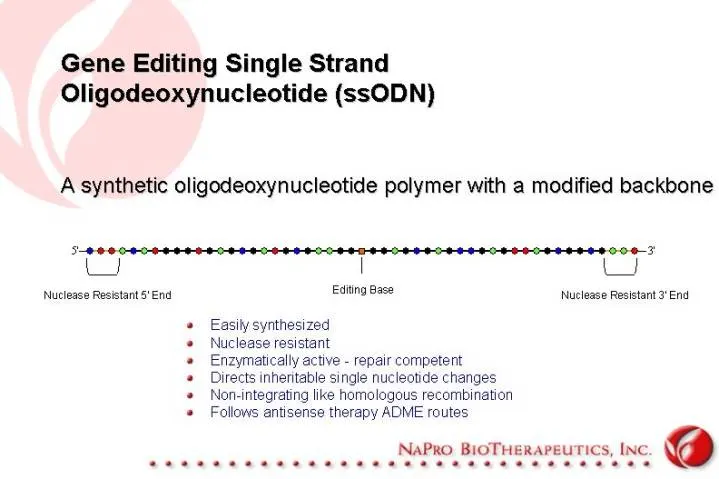
Gene Editing Single Strand Oligodeoxynucleotide (ssODN) A synthetic oligodeoxynucleotide polymer with a modified backbone ; 1 cy Nuclease Resistant §'End Fling Base: Nuclease Resistant 3" End Easily synthesized Nuclease resistant Enzymatically active - repair competent Directs inhenitable single nuc
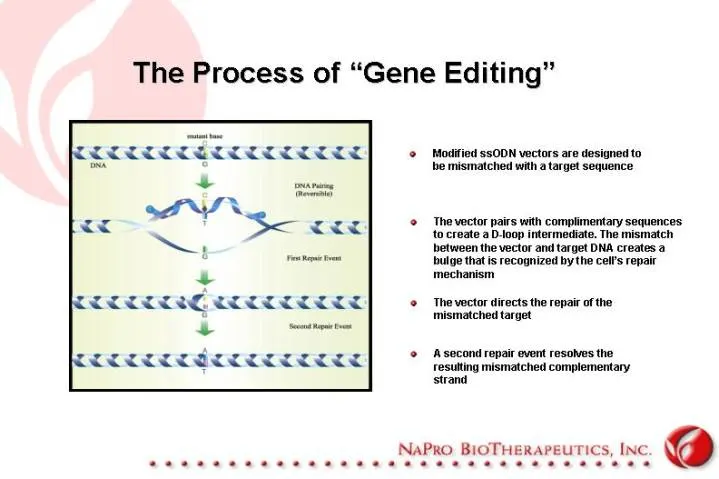
Slide 6: The Process of "Gene Editing"
The Process of “Gene Editing” Ragtecceccccd ~ marae Ss xx Ss - SSeS eCES ECC CCC CESS + sn haga pee SCS LEC CC CESS Moditied ssODN vectors are designed to bbe mismatched with a target sequence ‘The vector pairs with complimentary sequences to create a D-loop intermediate. The mismatch between the ve
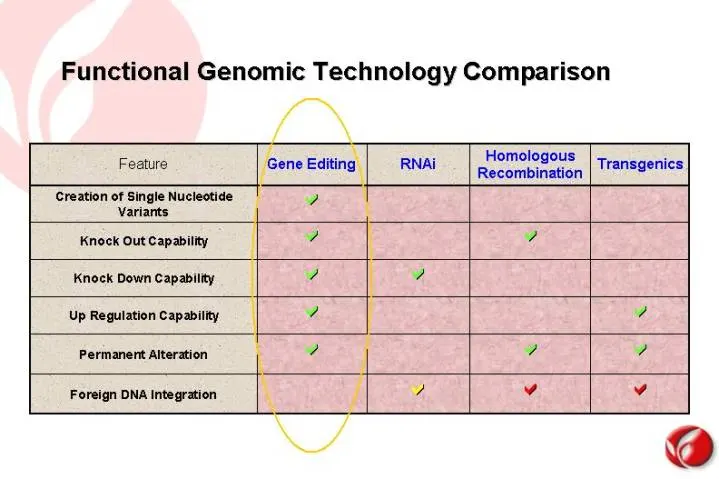
Slide 7: Functional Genomic Technology Comparison
Functional Genomic Technology Comparison ae Homologous Feature Gene Editing RNAI | pocombivation | Tansgenics Creation of Single Nucleotide > Variants Knock Out Capability we e Knock Down Capability ¥ ¥, Up Regulation Capability ¥ id Permanent Alteration ad ? ¥. 2 v Wt Foreign DNA Integration
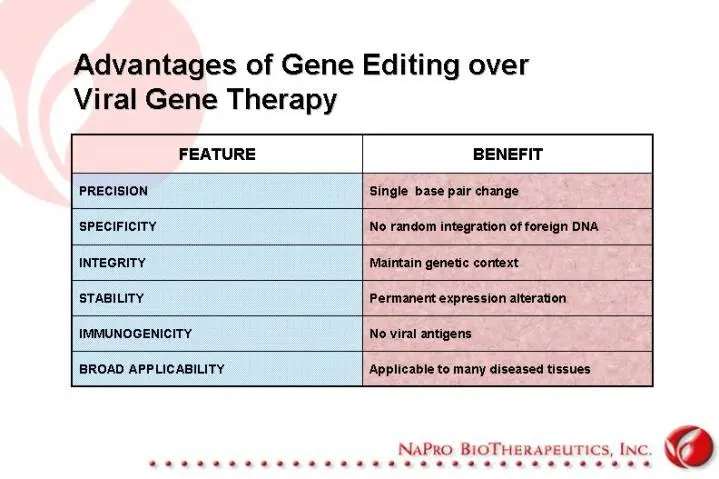
Slide 8: Advantages of Gene Editing over Viral Gene Therapy
Advantages of Gene Editing over Viral Gene Therapy FEATURE BENEFIT PRECISION Single base pair change SPECIFICITY No random integration of foreign DNA INTEGRITY Maintain genetic context STABILITY Permanent expression alteration IMMUNOGENICITY No viral antigens BROAD APPLICABILITY Applicable to many d
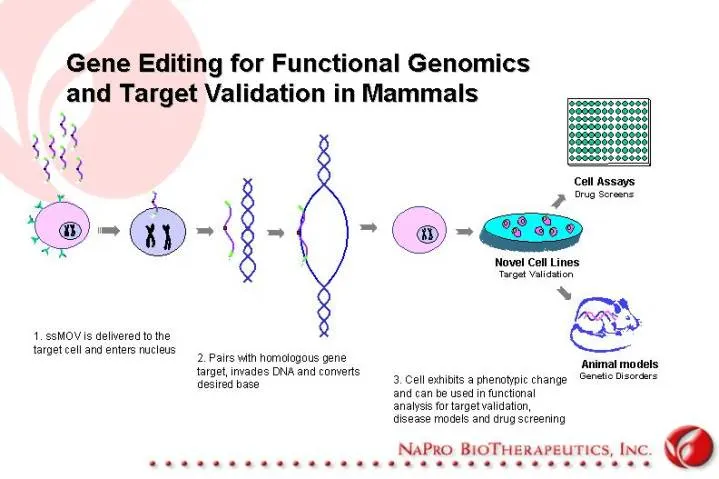
Slide 9: Gene Editing for Functional Genomics and Target Validation in Mammals
Gene Editing for Functional Genomics and Target Validation in Mammals Cell Assays, 2-@-{-(-o-a ‘Novel Coll Lines Target Validation ‘Animal models 3.Cell exhibits a phenotypic change Senete isexcers 1. ssMOVIs delivered to the target cell and ener nucleus» p- wih nomologous gene farget, invades DNA a
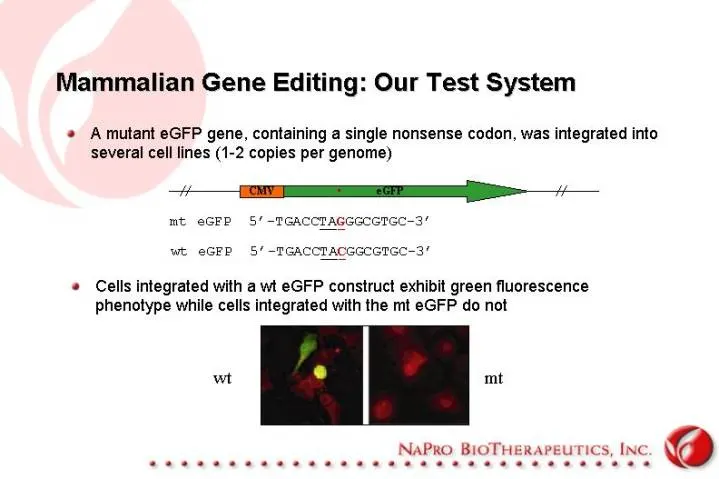
Slide 10: Mammalian Gene Editing: Our Test System
Mammalian Gene Editing: Our Test System * Amutant eGFP gene, containing a single nonsense codon, was integrated into several cell lines (1-2 copies per genome) a mt eGFP 5'-TGACCTAGGccGTGC-3’ wt eGFP 5/-TGACCTACGGCeTGC-3" * Cells integrated with a wt eGFP construct exhibit green fluorescence phenoty
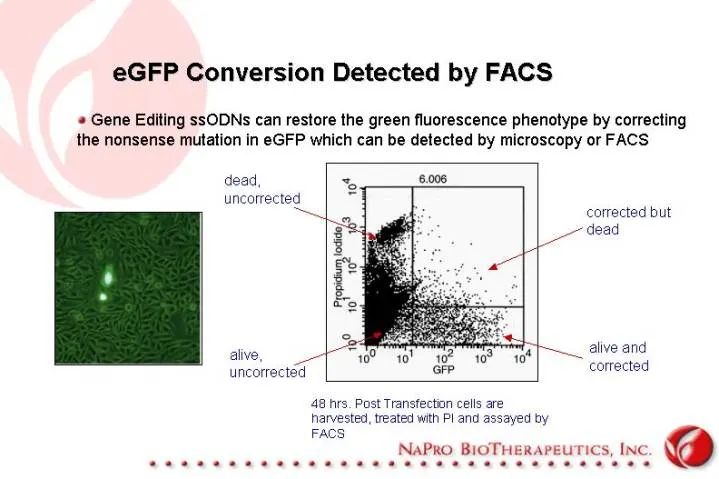
Slide 11: eGFP Conversion Detected by FACS
eGFP Conversion Detected by FACS * Gene Editing ssODNs can restore the green fluorescence phenotype by correcting the nonsense mutation in eGFP which can be detected by microscopy or FACS dead. 6.006 uncorrected corrected but = tead alive, a ee ae ak | ms ave and uncorrected GFP corrected 48 hrs. Po
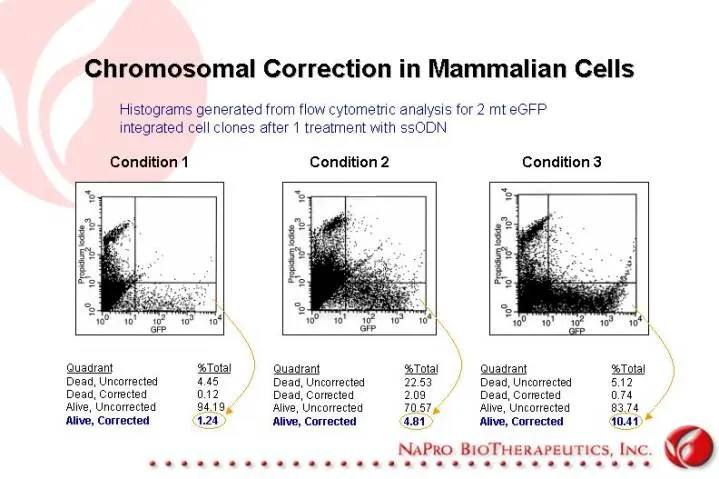
Slide 12: Chromosomal Correction in Mammalian Cells
Chromosomal Correction in Mammalian Cells Histograms generated from flow cytometric analysis for 2 mteGFP integrated cell clones after 1 treatment with ssODN Condition 2 Condition Condition 1 Quadrant Dead, Uncorrected Dead, Uncorrected 2253 / Dead, Uncorrected 512 Dead, Corrected Dead, Corrected 20
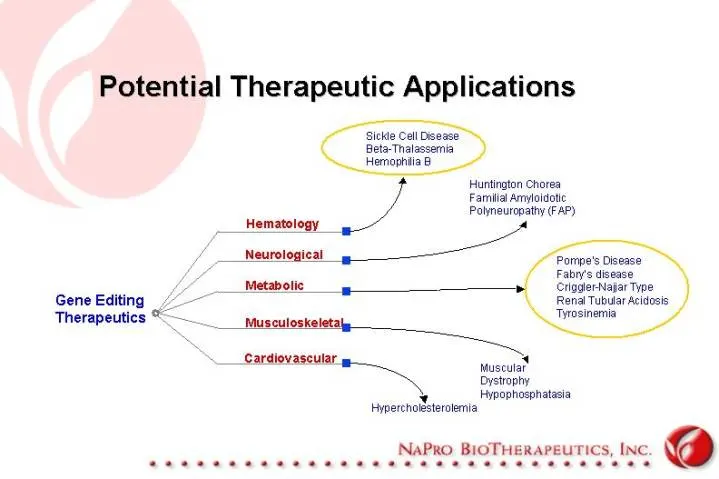
Slide 13: Potential Therapeutic Applications
Potential Therapeutic Applications Sickle Cell Disease Beta-Thalassemia Hemophilia B Huntington Chorea Familial Amloidotic Polyneuropatty (FAP) ato! ey Z a Pompe's Disease Fabry’ disease ___Metabotie ChigglerNajar Type Gene Editing < Renal Tubular Acidosis Therapeutics ‘Tyrosinemia| : Cardiovascular
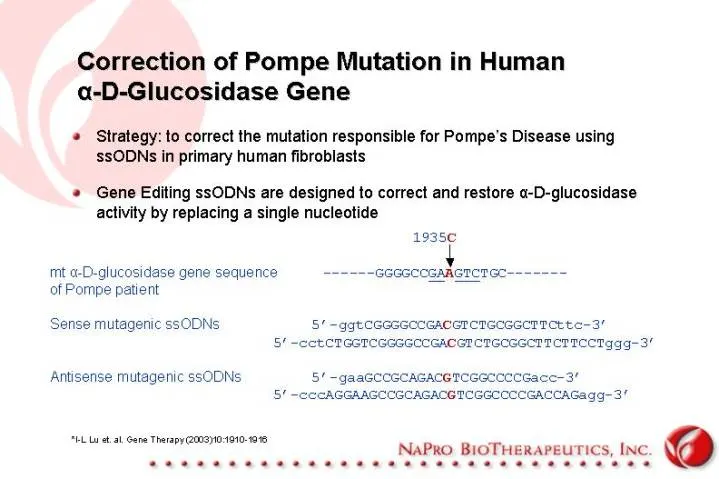
Slide 14: Correction of Pompe Mutation in Human a-D-Glucosidase Gene
Correction of Pompe Mutation in Human a-D-Glucosidase Gene * Strategy: to correct the mutation responsible for Pompe’s Disease using SSODNs in primary human fibroblasts * Gene Editing ssODNs are designed to correct and restore a-D-glucosidase activity by replacing a single nucleotide 1935¢ mt a-D-gl
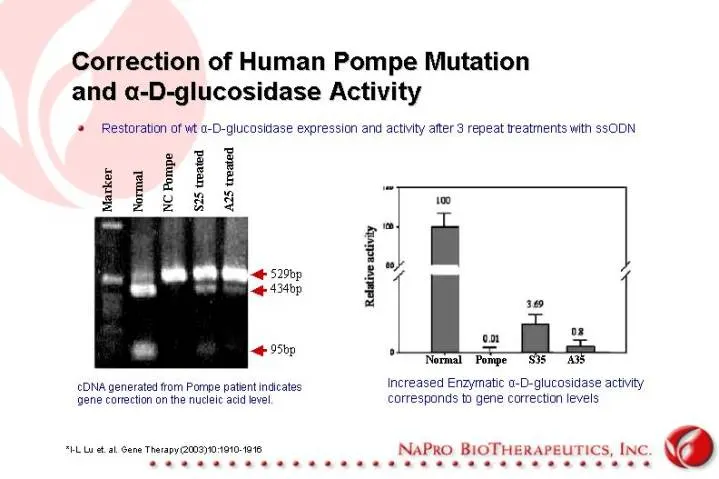
Slide 15: Correction of Human Pompe Mutation and a-D-glucosidase Activity
Correction of Human Pompe Mutation and a-D-glucosidase Activity Restoration of wt a-D-plucasisase expression and activity after 3 repeat treatments with ssODN i é 5290p 4340p -¢ 95bp cDNA generated from Pompe patent indicates Increased Enzymatic a-D-glucosidase activity ‘gene corection on the nuclei
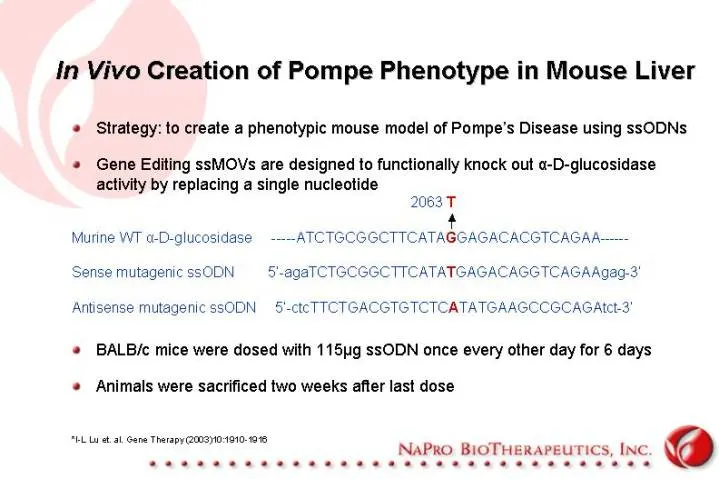
Slide 16: in Vivo Creation of Pompe Phenotype in Mouse Liver
in Vivo Creation of Pompe Phenotype in Mouse Liver * Strategy: to create a phenotypic mouse model of Pompe’s Disease using ssODNs * Gene Editing ssMOVs are designed to functionally knock out a-D-glucosidase activity by replacing a single nucleotide 2063T 4 Murine WT o-D-glucosidase TCTGCGGCTTCATAGGA
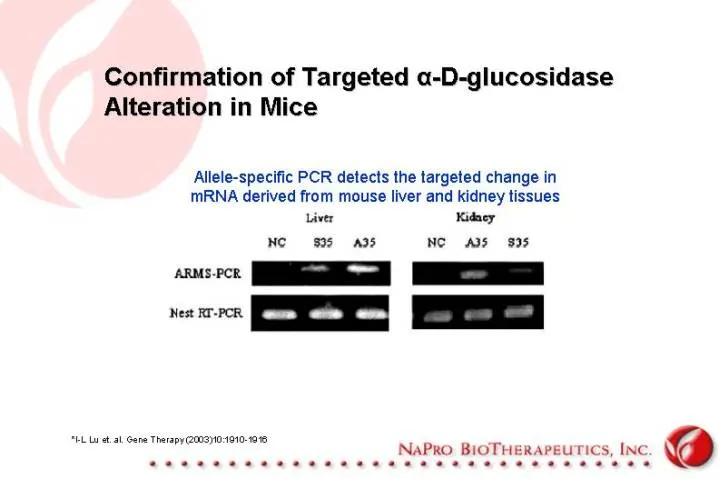
Slide 17: Confirmation of Targeted a-D-glucosidase Alteration in Mice
Confirmation of Targeted a-D-glucosidase Alteration in Mice Allele-specific PCR detects the targeted change in mRNA derived from mouse liver and kidney tissues Liver Kidney A33 NC AMS 995 TT — APRO BIOTHERAPEUTICS, INC @
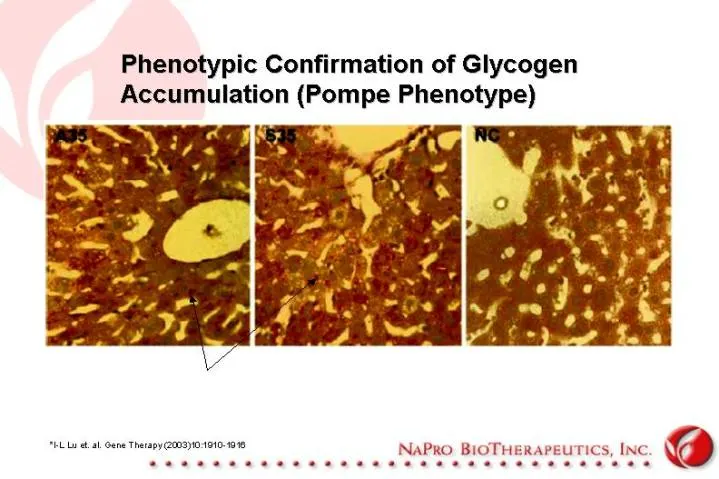
Slide 18: Phenotypic Confirmation of Glycogen Accumulation (Pompe Phenotype)
Phenotypic Confirmation of Glycogen Accumulation (Pompe Phenotype) NaPro BiOTHERAPEUTICS, INC. @
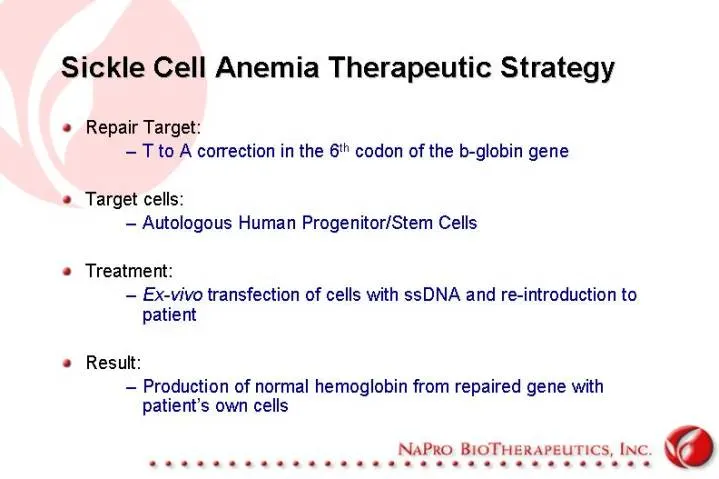
Slide 19: Sickle Cell Anemia Therapeutic Strategy
Sickle Cell Anemia Therapeutic Strategy Repair Target: -T to A correction in the 6" codon of the b-globin gene Target cells: — Autologous Human Progenitor/Stem Cells Treatment: — Ex-vivo transfection of cells with ssDNA and re-introduction to patient Result: — Production of normal hemoglobin from re
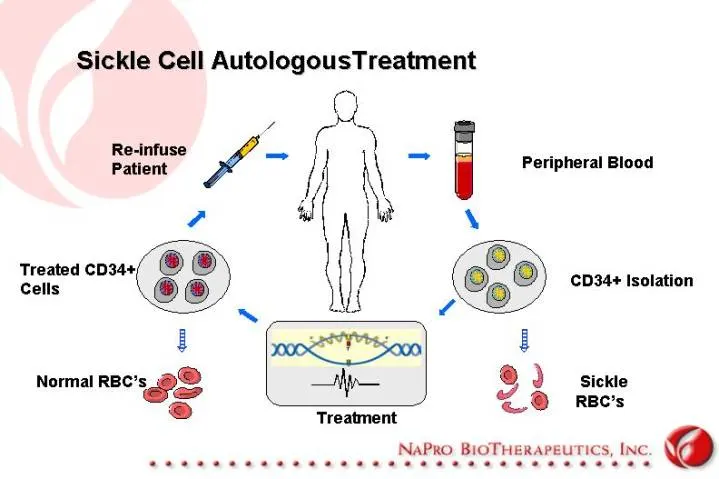
Slide 20: Sickle Cell Autologous Treatment
Sickle Cell AutologousTreatment SS / at \- 7 i Peripl on §Q) \ cD34+ Isolation * \ 2 i wae T8090 é NomalROC"@PS —Ny— @ 2 jicte Treatment = heral Blood
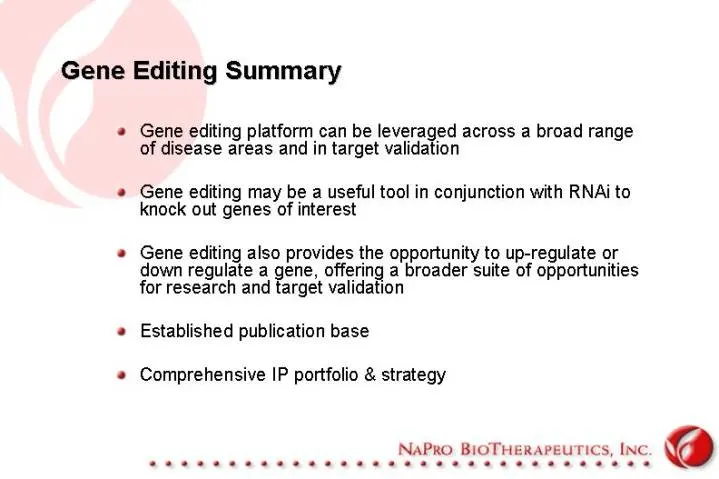
Slide 21: Gene Editing Summary
Gene Editing Summary e Gene editing platform can be leveraged across a broad range of disease areas and in target validation @ Gene editing may be a useful tool in conjunction with RNAi to knock out genes of interest * Gene editing also provides the opportunity to up-regulate or down regulate a gene

Slide 22: Searchable text section of graphics shown above
Searchable text section of graphics shown above Gen e Editing: A Next Generation Target Validation and Functional Genomics Technology Al Renzi, Vice President of Corporate Development March 23, 2004 [LOGO] For ward Looking Statements The statements in this presentation that are not historical facts
Source: SEC EDGAR · 8-K filed Mar 19, 2004
More decks from Tapestry Pharmaceuticals Inc
 Investor Presentation (November 2007)27 slides · Nov 6, 2007
 Investor Presentation (August 2007)36 slides · Aug 21, 2007
 Corporate Update (July 2007)5 slides · Jul 17, 2007
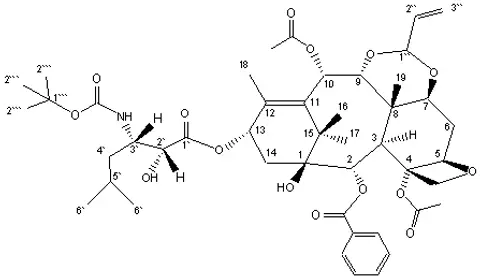 Technical Presentation (June 2007)6 slides · Jun 13, 2007
 Needham & Company Biotechnology and Medical Technology Conference 200733 slides · Jun 13, 2007
 IPO Roadshow (May 2007)30 slides · May 14, 2007