Transcript
Automated transcript · Written by software from the replay's audio. It can mishear names and figures; the replay is the record.
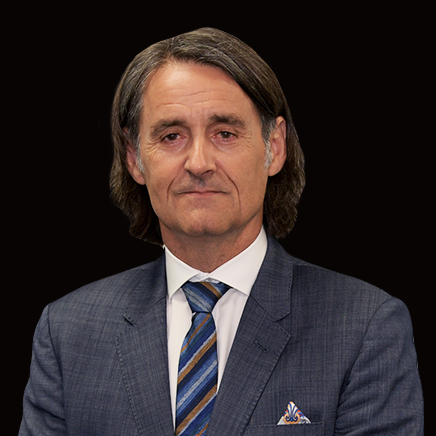
0:00 ♪ Hello everyone and welcome to this live event featuring West Gold Resources. I'm pleased to introduce the speaker for today, Wayne Brownwell, Managing Director and CEO. He'll be going through the exciting fiscal year-end results and discussing the future outlook along with some recent news. And after that, we'll be answering audience questions. As a reminder, you can submit your questions at any time in the chat.
0:31 And as always, this event is being recorded and will be available to watch within the coming day or so. So without further ado, Wayne, you can take it away. Thank you, Maxim, and welcome to everyone joining this webcast today. For those of you who are new to the West Gold story, we do webcasts and webinars for our full year results and also every quarter. I'll dive straight into this slide deck now. Slide number 5. Slide 5 is a summary of our FY20 fall financial results. And as Aussie company, we run a July to June financial year. So this financial year ended June 30.
1:17 Key takeaway from this slide is the trend is your friend. This is the third year of a turnaround in West Goulburn, which saw our revenue increase significantly, earnings and our impact. Next slide.
1:32 This is a scorecard that we run every quarter for our investors to show how we're tracking. For FY24, our guidance was revised to 220,000 to 230,000 ounces, and it was pleasing to deliver the top end of that production guidance of 227,000oz. All in sustaining costs was just over AUD$2,000 an ounce and our growth capital was above, which is actually a positive for that year based upon increased investment in some of our development projects. We see exploration at West Gold as an investment, not a cost, and achieving $25 million drilling into our mergers and assets last year was a big achievement because drilling builds mine life. Next slide.
2:20 Another pleasing part of FY24 was delivering 2 dividends to our shareholders. We revised our dividend policy in FY23 and it was very pleasing to have the business at a state whereby we could deliver 2 dividends to the shareholders. 12% of free cash flow payout from 24 was a solid effort, and the intent now is to lift that free cash flow payout now that our business is much larger. Next slide. Key to our production and performance in FY24 was really a significant improvement in our safety statistics. West Gold's operating mantra is the purpose of the business is to deliver safe and profitable answers.
3:06 Everyone in our business understands this and without safety, you can't deliver profitability. On a sustainability front, another key milestone for the company in FY24 was the construction of 82 megawatts of hybrid energy to power our mines and mills. What does that look like? That is gas-fired power stations supported by solar farms and batteries. This is really important for our business because it drives out costs and reduces the carbon emissions. Next slide. On 1 August this year, West Gold completed the transaction with TSX listed Kaura Resources. What does West Gold look like now? West Gold now is a top 5 Australian Gold producer. All our assets are in Western Australia.
3:58 We have 2 strategic footprints in 2 of Western Australia's most productive Goldfields, being the Murchison and the Southern Goldfields. Proforma combined, the business now has a Proforma production profile of plus 400,000oz of Gold. We are completely unhedged, which is somewhat unusual in the Australian context, and have a very robust balance sheet. Most importantly, with our business now, we have a workforce of 1900, which we'll talk to, and with the new business having a different scale, potential inclusions into the ASX200 and a higher GBX rating is likely. Next slide. Corporate snapshot. We have to start to think differently in West Gold now. We're now an Australian company with a market cap of $2.5Bn, $2.6Bn, and this gives us a different platform to build from.
4:55 A lot more extensive coverage of the story and certainly Corora was very well covered. West Gold had 5 analysts covering us and now the ability to distribute our story is much more enhanced.
5:12 We talk to West Gold as being a portfolio company. In the Murchison, we have 3 processing plants, 4 underground mines running, a fifth in development. With the acquisition of the Karora assets and the Southern Goldfields, we acquire another 2 processing plants, a very large underground mine being Beta Hunt, and an exciting package of exploration tenements around Higginsville. The business is a much bigger platform now, and with that platform we have grown our resource and reserve, which those numbers you're seeing there of 3.2Moz of reserve and 13Moz of resource. Key point, they're 12-months old. That was the pro forma number, putting West Gold and Corora's position together.
5:59 We're in the process now of updating our reserve and resource statement. So, shareholders and interested parties can expect to see those numbers change in the next few weeks. What are we most excited about this, with this business now? We're really excited about the growth opportunities, which I'll speak to in the upcoming slides. Day 1. Day 1 for the business was August 1st. So we are 4 weeks into the ownership of the Southern Goldfields assets, and this is what our business looks like. Within West Gold now we really speak to 2 platforms being the Murchison in the north and the Southern Goldfields being just south of Kalgoorlie. Inside those 2, effectively those 2 business units we do have key assets. Beta Hunt being the key asset in the Southern Goldfields asset pack, along with Higginsville and in the Murchison. We really speak to the 3 processing plants in the Murchison. I'll talk in more detail going forward. Next slide.
7:04 West Gold in an Australian context is a little unusual in terms of we are owner operators. I know this is a common structure in North America and Canada, but not so common in Australia. West Gold is more like a North American, Canadian Gold company, whereby we mine our ore bodies with our own equipment and our own people. Our current fleet is very large. We, with the Karora team and equipment coming into the mix, we now have over 170 pieces of heavy underground equipment. 13 diamond drill rigs is something quite unusual, where we are also, as a miner, we drill our ore bodies with our own drilling division. And our staff today is over 1,900, which gives us significant capability in delivering our mine outputs.
7:54 This slide is a really busy slide, but really speaks to the growth opportunities within West Gold. 7 operating mines as we sit here today. 4 projects, several projects in development. The key project being the Great Fingal underground mine at Kew. We've got 3 mines which are on care and maintenance, which under the right circumstances can be brought back online. But the thing that excites me most is really, well, there's 2 things. It's the Fletcher zone and Beta Hunt, a very under-drilled gold opportunity which Karora have been advancing over the last 4 or 5 years, and some of the early stage exploration opportunities in the Higginsville package. I'll talk to them going forward. Next slide.
8:40 Beta Hunt is probably, and this is maybe interesting to this audience, Beta Hunt will be very well known to Kurora shareholders as it was the key asset and key interest of the business. In an Australian context, BetaHut is not well known, which is somewhat unusual seeing that this mine has been operating for over 50 years and is within 60km of the heart of Gold mining in Western Australia, being Kalgoorlie. Because the asset's been held in a Canadian company, it's been somewhat forgotten about by Australian investors, which the challenge for myself and my team now is really to reintroduce Beta Hunt to a team, to a group of investors who for many, this asset has been invisible.
9:26 Beta Hunt is so exciting. We've been spending a lot of time there lately trying to understand where the real opportunities are here. And the strategic footprint of Beta Hunt, sitting in a gold camp, which has delivered over 20 million ounces of gold, is, gives us a platform to build from, jump forward. This slide deck you're seeing now was a slide deck which I used at one of the bigger conferences in Western Australia, the Diggers and Dealers Conference in August and this was really the first introduction or the first reintroduction of Beta Hunt to this audience with an Australian company. We really tried to step through a set of slides here showing that Beta Hunt is not a single thing, that it is actually a very large mineralised system of which Nickel and Gold are not coincident.
10:20 In an Australian context, a lot of people think the Nickel and Gold within Beta Hunt sits together. Quite incorrect. The Nickel and the Gold are separate loads and can be mined independently, And Karora was doing that. Our focus within the business now is very much on continuing to mine the Gold loads, of which Fletcher is the most exciting opportunity amongst the 3 loads which have been mined. Jump forward. We are starting now to deliver much stronger drill results from Beta Hunt into the market. This slide here is really that encapsulates the first drilling data that West Gold released to the market on Beta Hunt. And I must say, the numbers are outstanding. The Beta Hunt team have been drilling the Fletcher ore body for over a year now with a single rig. On the back of making these drill releases to the market, West Gold announced that we will mobilise 2 more of our own drill rigs to Fletcher to start to increase the exploration spend in this zone. Fletcher looks like a much larger and higher grade zone than the Western flanks and the A zone.
11:34 And again, the only way to find out how big it can be is to continue to drill. In the North, and this is probably, these names and this asset is one of our biggest mines in the Mekitharo region. Even in the Australian context, this mine is not well known, though the name is actually quite historic. West Gold has doubled the size of this mine in the last 2 years and is set now to double the production again, taking the Bluebird South Junction mine, an underground mine, to a scale of 1.2Mt per annum run rate. West Gold has drilled this asset for 2-years now, consistently with up to 5 drill rigs, typically 2 on the surface and 3 from underground. And what has that drilling investment done here? Significantly expanded this mine life from when we started 2 years to around 5 to 6 years now, and it's on track to be a 7-year mine life.
12:35 We can't draw a bad hole in this system. And what we're finding is that Bluebird South Junction is a set of stacked high-grade loads that project out from 2 historic open pits. We're continuing to drill this thing and we think 1.2 million tonnes per annum is not where this mine will stop in terms of output, but it will be a new basis to build from. We're really excited about this mine for lots of different reasons, one of which is it's within 2km of our very large processing plant. Next slide. South Junction production. Again, we're literally at the South Junction side of this mine and this mine really is a set of stacked loads. So we speak to the Bluebird load, the South Junction load, and soon to be the Polar Star load. Each one of these loads is an independent mining front, which adds additional output to this mine.
13:32 We announced production or production commenced in the South Junction side of this mine in August this year. And what it has done is opened up a whole new frontier, which in this image, you start to see the different loads that we speak to. This mine, again, is so under-drilled and the way to unlock value here is to continue to drill, expand the footprint and expand the mine life. So the last question for us is really, really specific. How big is the Bluebird South Junction system? At this stage we don't know, but we know it's bigger than 1.2Mt per annum of production. And we'll just keep drilling because we can see a much longer life in this mine and a much larger scale. This is really the last slide of the deck and as an introduction to West Gold, it gives shareholders and investors a feel for what we are. We are the newest TSX listed Gold company. So we did list on the TSX in August. So again, the WGX code exists on the ASX and the TSX.
14:38 We are a top 5 Australian Gold producer now of significant scale, which in a North American context, more than 400,000oz of production is an intermediate producer and that's what we're building from. This merger with Karora, we're really excited about because it was quite strategic. Now having 2 footprints in 2 West Australian Gold fields, in the Murchison and the Southern Goldfields gives us 5 processing plants and a multitude of underground mines. Most importantly, we've now got 3,200 square kilometres of Western Australia to explore. WA is our home And because of that, we can basically leverage a very large capital base here between the Murchison and the Southern Goldfields.
15:23 Our corporate office is in Perth. And literally, we can be in the Murchison within 1 hour or in the Southern Goldfields within 1 hour. But the bulk of our people work in our operations. So we have a very small corporate office in Perth, which really the business is in the field where our mines are. The business is strong financially. Basically, we are unhedged and we've been unhedged for 12 months now. The Australian dollar Gold price yesterday, we sold Gold yesterday at AUD$3,711. A quirk of this business too is a lot of people watch the US Gold price, which was around US$2,500 yesterday, but with the Australian currency mixed into this business, US$3,711
16:15 an ounce for Gold. It's a pretty strong number. We collected every cent of that. The growth potential in this version of West Gold is enormous. I mean, in the business in Western Australia now, it's about scale. The producers who have the processing capital are really the dominant partners in this business. And with 5 processing plants, that's a lot of capital that we have available to us to leverage. Being an owner-operator gives us the competitive advantage against many of our peers who are reliant on third parties to do their mining for them. Bottom line for us, West Gold has really started to transform in the last 3 years. And a key part of that is getting the business to a level of maturity and profitability where we can start to provide sustainable returns to our shareholders.
17:06 Maxine, that is pretty much a quick, rapid overview at 5.45 in Western Australia of where the business is at. Perfect. Thanks. And while we're on the slide, if you could maybe just provide to investors some insight into what catalysts they should be excited about in the coming weeks, months, and in the coming year or so. Again, noting that it's not official guidance, but just kind of what the plans are and maybe some upcoming catalysts? Great question, Max. Look, we are 1 month into an integration with the assets and what we can see in terms of news flow ahead and what the investors can expect is this. They can expect an update of our reserve and resource statement very shortly, Continued flow of drill results from our Bluebird South junction mine and Meka Tharra, and more importantly, more drill results from the Fletcher and Western Flanks part of Beta Hutton.
18:00 Our strategy is really clear with the Southern Goldfields assets. West Gold knows how to unlock value and to do that, it's all about drilling. Currently today in our business, we have nearly 20 drill rigs operating across all our assets. We're going to continue to invest in the drill bit and that will see significant value unlocked at Beta Hunt. And that mine moved from 1.7Mt per annum of production to 2Mt per annum of production pretty quickly. And the next target is 2.5Mt of production. We think the real production scale at Beta Hunt is much larger than 2Mt per annum and the way to unlock it is just to drill. So the news flow around drilling will be very strong in this business.
18:48 And you mentioned there's about, I believe, 18 drills on the properties. Can you just give a little bit of insight as to what the division between those is? So how many are on each? Sure. So today we have around 20 drill rigs running across the Murchison and the Southern Goldfields. I think today we have 2 on the surface and the other 18 are underground. Of the 18 that are underground today we would have 15 of those would be our own. So there are 3 third party drill rigs, which Karora have been using across their package.
19:24 So that's really a way to think about it. At the moment, if we think about it north to south, The split would be of those 20, 3 in the Southern Goldfields and 17 in the North. We're moving 2 more to the Southern Goldfields into the Beta Hunt operation very soon and another to Higginsville. So we'll go from 3 to 6 very quickly over the next quarter in the Southern Goldfields assets. Okay, thanks for that. A couple of questions here from the audience. So first of all, there's a question about the Nickel credits. Yeah, So if you could elaborate a little bit on that. Thank you for that question about Nickel. It's 1 which is not understood well in Australia, but probably well understood in North America.
20:11 Within Beta Hunt, the Nickel and the Gold are not intermingled. They are not coincident. They sit quite separately. So today we're not mining any Nickel stopes
20:22 in Beta Hunt. We're focusing on only the Gold stopes. Look, we've got a real interest in Nickel and the Nickel price is not in a great place at the moment, but we see significant value in the Nickel. So as it is today, the business is derived all its revenue from Gold. There'll be a time when we will reactivate the Nickel stipes when the market is ready for it and look at a way of monetising the nickel value within the Beta Hunt mine. Perfect. Thanks. And I've got another question here. Is a buyback eventually a possibility?
20:57 1 billion shares outstanding for our mining company in Canada is a lot, the person says. So is that in the cards there? Or is there a strategic reason behind not wanting to do that? Look, this is a great question. And another nuance of the 2 markets. I mean, in Australia, issued capital of a billion dollars for a company of our size is expected. In North America and Canada, it looks a bit different. So look, I'm very interested in getting the business to a point whereby we can consider
21:30 a share buyback. I see as the MD of this company in terms of shareholder returns, a couple of different opportunities. They are really capital allocation or capital returns through dividends or share buybacks. Both of those things are on the cards. And what we've done last year in the business has got the business to a point of being able to consistently deliver dividends. The next point will be how we deal with the capital base. So certainly to answer this question, certainly not off the cards. Perfect. They also thank you for waking up that early to talk to Kitty and share all this here. Look, look, this stuff is key to a 5.45 AM, but we just have to get used to these timeframes.
22:18 Perfect. And so another person here says, at one time he thinks that Paul actually mentioned using onsite concentrators to synthetically increase the ore grade prior to processing. Is that accurate the way that you remember it? Is it something that's still an option? Look, look, look, Paul has put together a business in the Southern Goldfields here, which is he's got huge opportunity. Look, my background is I am a metallurgist by background and I can see the opportunity at some stage to process the Nickel ore to produce concentrate, not ore sales. So yeah, It's at this moment, it's an idea and it's something which we will look at in detail, but the focus for the next 12 to 24 months is to get the scale of gold
23:10 production up out of Beta Hunt while we start to work and understand how we really monetize the nickel credits. Perfect. And can you describe a little bit what the synergies to be attained are post merger? Will technical capabilities be centralized?
23:29 What will the optimizations be? Another great question. In this merger, there was a lot made about the potential synergies. And look, Paul spoke to that very well. Paul had obviously had experience of putting businesses together in North America and could see how quickly you could drive costs out with a much larger footprint.
23:52 I see the same. I mean, in terms of the West Gold business, we have a much more detailed approach to, let me start from the beginning. Senegies works like this. Karora's top 20 suppliers and West Gold's top 20 suppliers are quite similar. We get much different unit rates from those suppliers than Karora. Put those 2 businesses together, which we've done now, the ability to get far larger discounts because of the volume that we purchase is enhanced. And that can be everything from flights for our staff, which is we are flying fly out for a lot of these operations, Grinding balls, equipment, explosives, power, water, anything that these mine sites consume with having a business now which is twice as large, gives us the ability to generate or achieve much lower unit costs.
24:46 Yes, so I think the synergy number in some sense will be quite easy to achieve. And what we will do in our corporate reporting, certainly our quarterly reports
24:54 for the shareholders, is start to show how these synergies are being delivered. We won't start to see those numbers until probably early in the new year. I mean, this next 6 months is about trying to put these 2 businesses together to a basis where we can ratchet that capital and that leverage, but we're already working on cost adjustments to the business. So key takeaway, you won't see those cost adjustments start to be materialised probably until early in the new year, which will be our quarter 3. And The technical capabilities, I'll just speak to that. We've now integrated the 2 technical teams. So the Karora technical team and ours now all sit together in Perth and we've started to send more technical people to the Southern Goldfields operations.
25:47 We've basically mobilised or appointed a very senior general manager for the Higginsville operations last week. We basically transferred one of our most experienced geologists to the Higginsville site, because we can see the Higginsville site for us now will become our new exploration base in the Southern Goldfields. And having a geologist managing the total operation means that the focus will be very much on the drill rigs. Excellent. Thanks. And we've got another question here about the operating cash flow. For example, what's the cost of production? Can you just speak a little bit more about that?
26:26 For the new business, West Gold, what we call West Gold 2.0, just the mergers and assets, Again, I spoke to a full year all in sustaining cost of US$2,100 an ounce. We believe that we'll be able to push this all in sustaining cost down because of the increased scale of the business. Shareholders will get a first look at that in our upcoming quarter 1 results, which will really be a blended quarter whereby of that quarter, West Gold only had control of the Southern assets for 2 months. So that's going to be more, that'll look very similar to the previous quarter. You won't start to see the oil and sustaining costs fall until later in the year.
27:12 Okay, perfect. Thanks. Hopefully that answers that question for you. And then in terms of another quick follow up on the share buyback, is there a difference for you between that and a share consolidation? In terms of capital management, capital allocation, the 2 levers which I'm most interested in is obviously shareholder returns, so through dividend, and share buyback is something we've been doing work on now. Share buybacks and these things, you have to understand these businesses, you are really, it's a Venn diagram. You have to find a balance of a business that generates enough cash to reinvest in itself, deliver enough surplus cash for shareholder returns. And then there's
28:02 obviously inorganic opportunities which appear on the horizon quite often. So trying to balance these 3 things, issued capital, shareholder returns and having enough free cash to generate or reinvest into the business to keep it sustainable is always the challenge. I think we got that right in Westgold and FY24. We managed to do all of those things. FY25 with a much larger business, I believe, gives us a different platform whereby certainly we can lift dividends to our shareholders. We should generate more free cash to be able to reinvest into our mines. The third piece is how do we deal with the equity base?
28:45 Excellent. Well, thank you for answering these questions. So that's all the questions that we have for today. So thank you for taking us through the updates and the Q&A session. And I also want to thank everyone who submitted questions. Today's recording will be available to watch on demand in the coming day. So feel free to look out for that. And before we wrap up, just like to pass things back over to you, Wayne, for any closing remarks. Maxim, thanks and apologies to the audience here who if I was a little bit choppy this evening, it's because I was still getting used to this forum and having to explain this story. You know, we're so excited about putting these 2 assets, all these assets back under 1 management team within Australia.
29:31 But we're really going to commit, we have committed to the TSX listing. We are live on the TSX and we will be investing time and effort into that market. So look, we won't be absentee, absentees
29:43 in the TSX. We're committed to basically maintaining the relationship with our North American and Canadian investors and really see that as an opportunity to expand the West Gold story. So thanks, Maxim. Thank you, everyone, for listening today and have a great night. Thank you, everyone, for participating. I hope you have a great rest of your day.