Transcript
Automated transcript · Written by software from the replay's audio. It can mishear names and figures; the replay is the record.
0:07 Good morning or good afternoon, everyone. Thank you so much for tuning in today. Today I'm joined by UConn Meadows CEO Rory Quinn. Rory, how are you today? Very well. Thanks for having me, Colin. So here's how today's going to work. First Rory is going to talk about the company's recent news release. Then I'm going to ask a few questions and then we're going to jump into the live audience questions. Now this event is interactive and you can ask Rory questions at any point during today's presentation. You can do so by using the little chat button in the bottom right corner of your screen. Also, if you look in the stocks widget there, you can actually book a meeting with Rory during today's event, His availability will be made there. But again, if you go to the bottom right of your screen, tap on the stocks button, click schedule meeting, and then pick any available time there.
0:55 One last bit of housekeeping before I throw it to Rory. Today's event will be recorded and available for replay on six.com and YouTube by days end. Without further ado, I'll pass it over to you, Rory, for a quick update. Thanks so much, Kyle. And thank you, everybody, for joining me today to talk a little bit about our key assets at UConn Metals. I will focus on our most recent news today at Star River, which we're very excited about. There will be time also to address questions on other assets. And I think Kyle and I might touch on our Birch and AZ assets. But yeah, important to highlight what I think is really all of the pieces that we, all of the business that we did in this season, all of the work we did and prioritized coming together to provide, I think some really compelling drill targets.
1:54 1 in particular will be the focus of our initial efforts and I'll take you through that. So just to give you a bit of a background on Star River, Star is in about 5 hours drive from Whitehorse. So from Vancouver, you can take a two-hour-ish flight to Whitehorse and drive straight to site in 5 hours. It's actually an all-weather road that bisects the property. It's plowed by the government. So in theory, at least you could drill there well into winter or through winter if you're getting compelling results, you weren't losing drill bits. So essentially, the return on investment was there. It's conceivable that you can do that. So yeah, we're currently, we're now working on our permitting there.
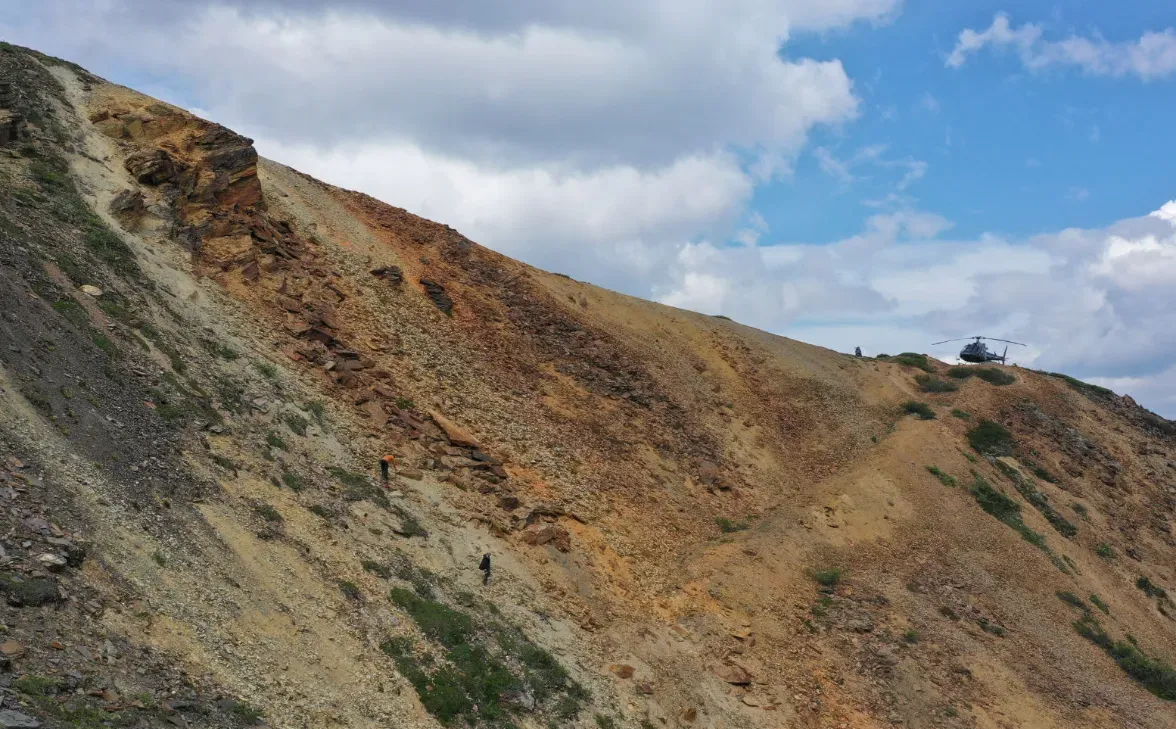
2:48 And as mentioned, once we are starting drilling, there's the potential there to continue that effort long into the winter. So what we started doing in our initial campaign at Star River was a lot of prospecting. So we knew there were some highlights that were demonstrated before by Ron and predecessors. Obviously, there was areas where it was previously mined, predominantly for gold. And so numerous showings. And we wanted to follow up that with some prospecting work. And we were very fortunate to have a strong geological team. At any one time at STAR, we had 3 geos on the ground.
3:34 And we also had 3 geophysicists. So the initial news that we had tended to be these really high-grade samples. So that was a mixture of outcrop, subcrop, and float. And I mean, I was on the ground there watching outcrop being hacked out of the ground and you could right away get a sense for the weight and that there's galena and that ended up housing some of the high grade silver that we found on the property. So early on, we were finding Galena throughout the property, hundreds of meters apart and sort of 1000g per tonne silver material.
4:24 As noted, we also found incredibly high grade, almost 11,000g per tonne Silver, so roughly 4oz per tonne Gold equivalent. And again, multiple samples, I would say one of the more common samples that we found was slightly above 1000g per tonne Silver and slightly below. So material that's quite certainly was common in the Ketse mine, which is not far away from, it's only a few kilometres away from the historic Ketse mine, only a few kilometres away from Star River, and similar type of material that was found at the mine at Keno Hill. And then subsequent to that, we also, so the 11,000 gram per ton silver material was found in the north, near an area of interest to us called Lap 10.
5:19 In the south, subsequent to that, we started finding really high-grade Gold as well. In some cases, those Gold-bearing rocks, which is highly oxidized or cinnopyrite, In lots of cases that actually overlaps the galena and occurs in the same places. With the Gold, we saw plenty of 6g per tonne through 9g per tonne type material. Released, we also found an incredibly high grade 101 gram per ton gold material. So that tended to be the news that we initially put out, and I think was eye-catching to the investment public. And then subsequent to that, while we were doing all of this geophysics work, like I said, at any one time, we had 3 geos on the ground. We also had 3 geophysicists on the ground, but that work took quite a bit of interpretation.
6:17 That's the a lot of the work is, is desk work after doing, doing that sort of on the ground work and and those studies. So I think what we what we initially showed there was some very high electromagnetic highs, readings and that was, I mean, we, we expected to, to see some, yeah, some some pretty compelling results from the electromagnetic given what we were seeing on the ground. Looking at electromagnetic work, we'd had the sense that we were going to see some highs there, but there's the chance that you could be receiving a reading that's potentially graphite or something like that. So it wouldn't be a reading of the type of material we're looking for. And then following up, we also did the gravity work. So multiple layers of geophysics and science here.
7:15 And with the gravity, you can then really get a sense of the density and right and the
7:25 density of what's in the ground as well. So as well, we had a very good sense and anyone that's had the opportunity to look and feel the rocks that we're finding on property would get a sense that they're not graphite. Doing the gravity work also, I think, helped confirm areas where we're not safe, where it's not graphite, it's highly dense material in the ground and perhaps showed other areas where electromagnetic reading was demonstrating that it could be graphite given the lows. So I'll take you through a couple of images here. So this is the initial gravity overlay on top of the electromagnetic work. So this is the road here that comes through the property, right, and so this is the north section.
8:24 It's more of a mountain on this side, so a lot of relief here with material that was part of float, there's
8:39 an extremely good chance that that came down, that gravity pulled that down the hill. And so some of the 10,000 gram a tonne silver material, we believe might've come down from up here near this lap 10 area, which is an area of substantial interest for us. So I would say in the North side, I would say lap 10 is our biggest area of interest. And in addition to our work in the South, would probably be the first area that we'll want to drill in the North. For the purposes of this, I'll focus more on the south. Here we saw 2 large parallel structures of gravity overlapping the electromagnetic and then of course a lot of this high-grade, so multiple thousand gram per tonne samples.
9:32 Here the 101 gram per tonne Gold, all occurring in roughly the same area.
9:40 This area here, F2, this received a lot of work from us. We did a lot of sampling there, a lot of boots on the ground there. The parallel structure here received somewhat less work, so that's an area that we can follow up on. I'll zoom in here a little bit. And so this here at SR3F2 is really, this is where we're going to begin our drill program at Star River. So where we have this overlap of this extreme electromagnetic high seen here and this substantial size as well. So we see this this electromagnetic high
10:26 overlapping, you can see that in that box, overlapping this substantial 800 meter long gravity high. And so we've tended to find our samples here around the edge of that, these high-grade samples of gold and silver, and this will constitute the beginning of our drill program. So we'll plan exact meterage and budget that, but initially we're talking about 15 to 20 holes to start the season. I think we'll potentially have 2 drill rigs at Star River, given its road access is quite a lot easier to bring substantial drill rigs in on sleds.
11:13 And so we'll begin here at SR3F2. SR4 is an area of substantial interest, I think, for more follow-up work. Also, I should mention this area too, SR2. This is an area, SR2 and Saddle, where we found a considerable amount of high-grade gold and silver. And we don't show an electric magnetic high a reading here but it was really on the edge of the work that we did. We essentially did 3 loops and those loops really focused on this canyon block here and SR4, F3 and the next door here where we see SR1.
12:09 SR2 was really right on the edge of it and there we see more of a vertical reading. But this area here I think will constitute an area that we'll want to follow up on as well, even though like I said it falls outside of some of the electromagnetic highs that we had. So really just I mean to wrap up and I encourage any questions from the group. But we hit this with multiple tools. We did not, to start the season at Star River, we thought it was a compelling opportunity here. We were pleasantly surprised to see the extent of the precious metals at surface here where we'd approached it initially as perhaps a base metal opportunity with some precious metal credits, it became the opposite. Clearly this is a precious metal focused, this is gonna be a precious metal asset, but with some decent base metal numbers as well.
13:16 With that Kyle, I'd encourage questions.
13:21 Excellent, Thank you for the thorough overview, Rory. We'll kick off with a few questions here. The gravity and TDEM survey show compellant overlaps at SR3 and SR4, but SR1 and SR2 show different signatures. Could you elaborate on your interpretation of these contrasting geophysical responses, particularly regarding SR1's location in the gravity low and how this affects your targeting strategy? Yeah, yeah, let me get into that a little bit. So this is, as mentioned, SR3-F2 is where we see the most powerful reading, the largest electromagnetic anomaly here, sitting on top of the 800 meter long gravity high that we see here. And so it really, more than anything, this is where all of the tools that we brought to bear overlapped, right? And so the prevalence of very high grade silver and gold over on top of a large powerful electromagnetic high and then also overlapped with this gravity anomaly. So, I think that's really what we, this whole effort was about prioritization, right? We've got, this is a target rich environment. We have many compelling targets. I took you through briefly lap 10 in the north here.
14:51 But that's what you're looking for is the most compelling area where you're going to want to invest. And so drilling is a lot more expensive than doing prospecting and the geophysics work. And so we really wanted to be responsible with shareholders' money. We wanted to layer in as much information as possible to really
15:22 put a target down of like the X marks the spot, this is where we're going to drill. We've done absolutely everything in our power to provide the most compelling drill target at SR3F2 that we could. That's really beyond anything we could have asked for to see all of the efforts that we've put in line up in 1 very obvious area to begin our program. So that is not to say that we don't hold an interest at lap 10 to the north, or as mentioned here, this SR2 area that doesn't not have the same compelling magnetic high, but we understand it's on the edge of the study area that we did.
16:10 And it's obviously F3 is going to be an area of interest, but That's what this business is, is prioritization. We're a group that has an embarrassment of riches as far as properties are concerned. And then even just on this one property, you could probably find 4 or 5 really compelling drill target areas, but this area SR3F2 Canyon area really stands out. Thank you for that. Now you mentioned the impressive 10,936 gram per tonne silver sample from the northern block. Given this was from float material, what work is planned to trace this back to the source and how does the gravity signature in the area compare to your other known high-grade showings?
16:58 In this area, as you mentioned about float and here, there is substantial relief here. It's quite hilly slash mountainous. And so we do not, yeah, the area that we found that material in 10,936 gram per ton is not where it came from. And so the area of focus that we will look at here, and I would suggest we'll see drilling in this upcoming season as well, given 2 drill rigs, is this Lap 10 area. So you can see substantial silver and gold up here. Very decent numbers, but Our GEOs were the most excited about this area in the north.
17:50 And so, yeah, the 11,000 grand per ton, I mean, these are both outliers, right? The 11,000 grand per ton almost and over 4,000 grand per ton silver occurring in the same area. But this is very much downhill from some of the areas that structurally we find very interesting, and then from a mag and gravity high. So it's part art, part science. And that is perhaps some of the, perhaps more of the art is figuring out in which direction some of this float might have been sourced from. Certainly.
18:36 So with these multiple high priority targets now identified, could you walk us through your prioritization criteria for the initial drill program? Like how are you balancing the southern block's geophysical signatures against the northern block's high-grade surface samples? Yeah, I maybe thought I had a little bit ahead of that question in my presentation. So really it is this area with this big black arrow is where we're going to, and I could have made a big X here as well, but that is where we're going to begin our work there. It's just too compelling of a place to start. And yeah, I mean, when we received the gravity high on top of everything else, it was already an area that we were going to focus a lot of our attention, but we're not going to go in there lightly as well. I think you're going to see a 15 to 20 whole program just in that area and then we'll move out from there.
19:33 Now, the proximity to the former Quetzal Mine haul road is interesting. Are there any geological similarities between the Star River mineralization style and the Quetzal deposit that might inform your exploration approach? Very similar on the Gold side. The highly oxidized and weathered Arsenopyrite, that is quite common. Interestingly, they had a mine there, there's an existing mill, albeit obviously aged at this point, but that's currently held by the government. But yeah, I would say the mineralization on the silver side reminds us a lot of Keno Hill.
20:21 And then the gold mineralization reminds us a lot of Quetzal. But Quetzal is relatively not as well known as Keno Hill. Keno Hill was produced for multiple decades at about 1,000g per tonne Silver. Ketso is more of a local story. Thank you. Given the strong results from your geophysical and sampling programs, how are you thinking about the size and scope of your initial drill program? Do you anticipate needing to raise additional capital to fully test these targets? We've put news out as it's come into us. Obviously, it takes some interpretation and so we now know where we want to start drilling and doing that in a meaningful way, right? Not poking a few holes here, but doing a meaningful drill program at SR3F2.
21:23 And regarding capital, we still have roughly almost $9 million in the bank. We only spent about $2, $2.5 million in the field this past season. So even in the Yukon that will buy you a lot of drilling. As I mentioned, we have road access at Star River which can substantially decrease the cost of drilling. But we'll flush all of that out as we go forward. As I said, at this time, we've been focused on the science. And I think this is really good science that we've put out here. And then we'll follow that up with the financial side and budgeting these meters. But we're in the fortunate position where we don't have to access the capital markets.
22:10 We raised a substantial amount of money and like I said, with $9 million left and a relatively small burn here. I think there's a lot we can do with the money that we have in the bank. How long do you expect the drill season to be in this area? Yeah, I mean, look, I think you're kind of at the mercy of the weather to some degree. I think you can feel really good about the seasonality wise, June through September, and then you can get lucky. I mean, as mentioned, I think here there's going to be the potential if we're having a good time of it, having an all-weather camp, and if your drillers are confident that they continue to get the results, that you can push this well into the winter. But historically, like if we didn't have this all-weather access road, you're looking sort of June through September as almost a layup, and then potentially May getting in there early.
23:15 So the plan here will be to build a camp again in May. We had a meaningful camp there last season. We completely tore that down, left no trace. So that was a substantial all-weather camp, right? Because even in September, it was getting far below freezing. And we had a nice heated tents for everybody. And yeah, it was quite quite a comfortable camp, but We completely tore that down, left no trace. We'll need to build that again in May, but we'll be seeking to build instead of a 12-person camp, we're working on permitting to take us to up to a 50-person camp, right? And so a class 1 permit, which we had last year, will enable you to do up to 9 holes per claim.
24:07 A class 3 permit, which we're working towards, will allow you to do essentially almost unlimited drilling that's supported by science. Thank you. Can you give us an update on Yukon Metals other assets like Birch and AZ? Yeah, yeah, absolutely. So Birch has become a very interesting asset to us. I would say after Star River, that's definitely perhaps we spent maybe 50% of our efforts at Star and yeah, I mean, 30% at Birch and then sort of 20% on the remainder. So at Birch, we really believe that we have a gold-rich copper porphyry there.
24:57 We have done some induced polarization work there and we'll work to finish interpreting that and we'll provide that detail to the market probably in January for that one. But I mean, essentially, to sort of summarize what we found there is a 1400 meter long gold and copper in soil and only up to 0.99 gram per tonne gold in soil, over 0.2% copper. And then also through a sampling program. A lot of that is overburden there rather than outcrop or sub crop, but in the prospecting work we did do and sampling work, 14 gram per tonne gold material, multiple samples of 2.4% copper.
25:49 I should say that with the anomaly that we developed there, that was also a really good science that we did there. It was, we utilized a soil sampling technique where we used a power drill to get down a metre under the surface. You're actually getting into the permafrost there. What you can have if you, particularly in areas that are hilly, You can have a lot of smearing at surface. So getting down into the permafrost gave us really good samples and high quality results. So we feel really good about that 1400 meter long gold and copper in soil anomaly. And I think we'll learn more from this induced polarization work. And so there'll be more to learn there from the geophysics for the market. But we feel strongly that we'll be drilling birch in this upcoming season as well.
26:49 At AZ, that is a relatively early, it's a big property. It actually takes 20 meters to fly over it by helicopter. But an area of particular interest for us is called Chair Mountain. It actually, I don't have a picture of it here. It's in our deck on the website if anyone wants to take a look. But there's a large area there where it's just bald on the side of the hill. And we interpret that just to be a kill zone where there's so much metal in the ground that essentially nothing will grow. And so We find that to be a pretty compelling initial drill target as well, roughly 6 kilometers away from the Alaska highway, so very well situated.
27:44 This interesting thing with Birch and AZ in particular, they sit in Klawanee First Nation territory and we've been fortunate enough to develop a good relationship with the Klawanee. In fact, The group that we've done a lot of our exploration work with is called Vision Quest, and that's a Kloane First Nation owned and operated explorer and outfitting company. And so they did this technical soil sampling work with us at Birch. They'll be our outfitter working with us at AZ. They actually built our camp and helped with all of that, facilitating the camp at Star River as well as Birch. So they've been a really important partner for us and have been very supportive of us working in their traditional territory.
28:40 Excellent. Rory, thank you so much. I promised I'll get you out of here for your next meeting. With that said, any closing remarks before we sign off here today? No, thank you. Thank you for joining me today. I think it was, like, it's some of this geophysics material, it's, yeah, I mean, it's relatively complex, And there's only so many ways to sort of summarise it in a very easy to understand fashion. But I think it really is compelling when all of these things lined up internally, we couldn't have been happier about the results that we received from the electromagnetic, the gravity on top of all these high-grade samples.
29:28 You just couldn't ask for a better drill target really. Excellent. Thank you so much for your time and thank you everyone for joining us today. The replay will be available within a couple hours here. So thank you