Automated transcript · Written by software from the replay's audio. It can mishear names and figures; the replay is the record.
2:02 Okay, so I will be making forward-looking statements. You can read this page at your leisure. It's available on our website. Just a disclaimer regarding forward-looking statements. Maybe just before I get into the specifics of our projects and what we're doing at Surge, I did wanna frame the overall kind of setting from a bit of a macro perspective, because I do think that this Copper environment or this Copper market that we're in is one of the most exciting periods in the global mining sector for a number of years. When I started my career in the space in the early to mid-2000s, we were coming into what was deemed the super cycle at that time, and that was really across a suite of commodity products and metals. And that was primarily, had a few drivers, but the big thing was urbanization and industrialization in China. It was obviously a very active time. A lot of big companies came into existence and a lot of investors made a lot of money in the sector during that period.
3:20 There's a real big thematic developing in base metals right now and Copper in particular that I just think is a setup that is really unlike anything we've seen before. So I wanted to provide a bit of color on that. This may be familiar to lots of people in the audience, but I thought I'd put a bit of my own spin on it. So I like to think of copper as the quintessential electric metal. We hear lots of things about some other more niche metals in terms of them being battery metals, but Copper, really any time you're trying to move current in any sort of system, it is the quintessential metal for that. From a more kind of market perspective, it's a very, very big market. It's the kind of main LME base metal, very deep market.
4:12 And yeah, I mean, with regards to a bunch of different trends on the demand side of things, we really see 3 things that are pushing the view on there being significant demand growth in the copper space. So the first one is really this trend of urbanization in the developing world and infrastructure investment really straight across the world. That's something that I think has continued unabated since the last cycle, if you will. I think being added to that and what's unique about this moment in time is these 2 additional things. So growth in renewable energy generation, as well as the, you know, the acceleration in electric vehicle adoption and production.
4:59 These are trends that have been in place for a while, but I do think we're in a pretty important inflection point in time with regards to both of these. So on the renewable energy side, I mean, this is this chart at the top right. I've seen this in various forms shown in a bunch of different places. I think the data primarily comes from the IEA, but it shows that we're at the very early innings of this really rapid growth in the development of wind and solar energy generation systems in the global power production mix. And we've already seen a lot of the world's most sophisticated financial institutions backing that growth trajectory. So the likes of Berkshire Hathaway, Brookfields, Macquarie, These are all firms that have significant investments and significant presence in that space.
5:55 And they're obviously believers in the merits of and kind of that that 2050 growth growth profile that's shown in that chart at the top right. So renewable power systems, they're less energy dense than the likes of a nuclear power plant or coal-fired power plant. You're generating electricity in a more diffuse manner, and you've got to connect all those pieces with wiring. And so those systems in general tend to be lots more copper dense in terms of requirements for metal in the construction and development of those types of systems. So as we see the world's deploying, you know, focusing more on those types of energy systems, we expect there to be, you know, concurrent growth in copper demand. And then same thing with electric vehicles. So the battery thematic involves a lot of different metals. But again, anytime you're moving current around a system, so in a car you're connecting batteries to drive trains and things like that, There's a lot of wiring. The motors themselves have tons of turns of copper wiring. So there's a lot of, again, increased density of the use of copper as compared to internal combustion engine vehicles. And I'd say that the electric vehicle one is really interesting in terms of where we are timing wise. I think it's been a, I think, criticized as a toy for a long time, but I think we're starting to
7:25 really see a line of sight to where the cost to the consumer of purchasing and operating electric vehicles will surpass or be in a more favorable position than ICE vehicles in the near future. And as a result, really across the board, a lot of the major incumbent OEMs earlier this year, all in series it seemed, were announcing major multi-billion dollar capital programs to retool their product offering over the next 10 to 20 years. So I think it's really, It's not so much just the climate change thematic. I think there's a real consumer preference inflection point happening in the UV space. So take it all together. The chart here in the middle left of the page is data taken from the folks at Glencore.
8:17 It's their view on the total market size. This is on the end metal market, so this includes recycled material. So roughly speaking right now, the size of the Copper market, about 30Mt, about two thirds of that comes from output from mines, so new production and the rest is recycled markets. They're predicting, and I've seen similar forecasts from others, a doubling of the size of the market over the next 30 years to about 60 million tonnes. So not a hugely impressive kegger in terms of 2.3% annual growth rates to see that doubling in 3 years. But what that means is you need an average of another 1 million tonne per annum of finished product coming onto the market each year for the next 30 years. And to give you a sense of what that means, again, a nice little nugget that's often used by people to make this point, the world's largest copper mine outputs around that amount every year. So the world needs to deliver either one of the biggest mine discoveries every year for the next 30 years or significantly more mid-sized or small-sized mines to meet the demand requirements for a number of these kind of mega trends that I've just outlined.
9:40 To move to the flip side on the supply side of things, I won't go into too much detail here, but there's a lot of commentary that's well known in the marketplace about in the major producing regions in South America in particular, there's been a secular decline in grades of those ore bodies. They're obviously depleting reserves there and not replacing or replenishing those reserves at the rate that they are extracting them. So no clear line of sight at big incumbent operations as to how they're going to keep production steady, let alone grow it. And of course, as always happens in the mining industry, we're now sitting at the kind of tail end of a lull in the copper market where there's been significant underinvestment in exploration. And so the cupboard is very bare, as it were, in terms of shovel-ready development projects or attractive exploration projects out there in the world. And again, this chart on the bottom right there is taken from Glencore and it's their internal data set in terms of the copper mine project pipeline, making the point that it sits at pre-supercycle lows. So really hard to imagine a better setup over the very long term for robust market conditions in the Copper market.
11:03 The next big pillar for us is why BC? Why focus on British Columbia as a jurisdiction to be developing a Copper project? So from our perspective, BC is a top mining jurisdiction that is well established for a future that is more focused in terms of meeting a lot of ESG criteria. So that's environmental, social and community relationships and governance for operating companies. So I mean, BC, it's well understood to be a stable jurisdiction, fiscal tax regime, of course, being located here in Canada. The environmental permitting process, it's thorough, but the path forward and how to sort of interact with that is quite clear.
11:55 The infrastructure in the province, which I'll talk to you in more detail momentarily, is absolutely world-class. You can get around the province. There's major highways really across the province as well as power infrastructure. Freshwater resources is an important part of the environmental component here. I'll point you to this map on the top right, which is a data set that is produced by McKinsey. It looks at the global water stress levels around the world. I've superimposed on that these red ovals, which look at the major Copper producing regions in the world. So, for porphyry belts out there, your choices are BC or the Northwest Cordillera, the Southwest United States, the Andean belts in South America, Central Asia, whether it's in the Balkan region or Mongolia or Southeast Asia. So you look at those regions, lots of challenging places to operate from a jurisdictional perspective.
13:02 But I think quite importantly, Chile and Peru is the major copper producing region. Over a third of global production comes from that area. And as highlighted from this dataset, one of the key challenges they're facing is the impact on water supply. So it's a very arid region. They need to solve a lot of those challenges with desalinating down at the coast and pumping water 4,000 meters up in elevation to the mine site. There's a big sort of carbon implication to doing all of that in addition to kind of impact on water usage in areas in which they operate. BC is really blessed in that regard in that there's obviously abundant freshwater throughout the province and really as highlighted here, it's in a very, very low water stress type environment.
13:53 Lastly, I would say, well, BC, I mentioned the power grid infrastructure, really about 98% of the electricity that is generated in BC today comes from sources that are considered renewable, so predominantly hydro systems. So the power production is already very green in BC to the extent that mining operations can be connected to and run off of grid power that already achieves a big leg up in terms of decarbonizing that copper supply. And then lastly, I think there's a very strong opportunity in British Columbia to partner with First Nations communities in a very equitable fashion and really use that to everyone's mutual advantage to really underscore some of the social elements of those ESG objectives.
14:46 I've included here a quote from Premier John Horgan that was made just last week actually, in relation to the issuing of an important construction permit for another project that's located quite close to where we are, the Blackwater Gold Project that's owned and operated by Artemis Gold. So just a good example of a project really at the front of the pack in terms of getting important permits granted in BC today. And I'd also point you to, you know, really across the board, whether they're operating mines or active in exploration investment, really some of the largest mining companies in the world are already, you know, have staff and have active investments in BC and talk quite openly about the jurisdiction being very high on their radar for future investments, in particular in copper.
15:44 So I'll just segue into Surge itself and what we're all about and what we're focused on. The company is focused entirely in a single area in central BC, which we call the Huckleberry District by virtue of the fact that we surround a mine and mill complex that's currently on care maintenance. That mine is owned by third party called Imperial Metals. But it is an asset that, you know, because of its construction, there was a lot of really important infrastructure that was brought into the immediate region that we surround. So, you know, there's a road right down to the site, there's grid power, and then not too far west of us on the Pacific coast are multiple, you know, ports that both currently and historically have been used for the export of copper concentrates produced at Huckleberry and other mines in the area.
16:39 I will dive into further detail on the assets, of course, but we do control Quite a significant and advanced resource space between our 2 projects today. So the 2 projects that we are advancing, they're called Utsa and Berg. They're adjacent to 1 another and flank this Huckleberry mine. The total resource space between these 2 deposits is about 834 million tonnes of porphyry Copper resources in the measured and indicated categories at grades that range between 0.41 to 0.44% Copper equivalent. These assets, these deposits, they sit on a contiguous land package that we're quite proud of how we have assembled it. And I'll speak to that in a moment about the various transactions that were undertaken to stitch together this land package. But we think it's one of the most strategically located
21:20 So I'll just talk very briefly about the land package and how we've pulled it together. So Surge for a long time has owned this blue property to the south called Utsa. And then starting late last year, we've done a few transactions to consolidate this land package, which sits around the Huckleberry Mine. So the black property that you see there to the Northwest is called Bird. Our interest there is in the form of a 70% earn-in agreement with Sentara Gold. From where we sit today, we need to spend about $8M over the next 5-years to complete that earn-in. That property came with an advanced resource at the Berg deposit proper, as well as an advanced exploration target at Burgett. You'll notice at Burgett, it may be a bit hard to see, but there's some additional kind of blue lines and shapes around there. So there was a few gaps in the claim package around the Burgett prospect.
22:17 We had to do a couple additional transactions with private vendors to patch that in and fill that in, which we've successfully done. So all told, it's about 3 transactions, a bit of direct staking to consolidate this 122,000 hectare land position that, as I said, flanks the Huckleberry mine. To give you a sense of scale from Berg down to the seal deposits is about, again, I'll just draw a line here. So from Berg down to the seal deposit, that's about 28 kilometers. In that belt, you've got 5 known porphyry deposits, including Huckleberry. The total scale of the endowment there is, you know, including what's historically been delineated and taken out of Huckleberry, well in excess of 1 billion and a half tons. So very, very sort of well proven, well endowed district, 2 additional drill confirmed occurrences at Burgett and Whiting Creek, the latter being an Imperial project.
23:22 And then, as I said at the top, huge swaths of this area have never really been fully explored or used modern geophysical techniques to explore. So we're quite excited about really all those aspects of it. In terms of cap structure, so today the market cap of the company is a bit under 60 million. We've got a very solid Treasury position of about $14.5 million. The shareholder breakdown is a fair balance between retail and high net worth individuals, as well as a growing institutional component, particularly on the back end of the financing we just did. Alteus are a big strategic supporter of the company.
24:11 They were a lead order in the last financing that we did. Then it's also a pretty well-owned company in terms of management board and close associates of insiders as well. Just to give you a sense of benchmarking, I think grades in copper-pore-free deposits can be a little confusing. It's often not as easy as looking at a Gold project where you've got a single number and you can generally get a sense for where margins will come out based on that number. But with Porphyry, you have multiple metals, you've got recoveries for each of those metals, payabilities, things of that nature. So it can get a bit confusing.
24:57 What I'm trying to show here is a lot of data on this page, but all the numbers on the left are the operating copper mines in BC and all the numbers on the right side of the page are the deposits that make up the Utza and Berg projects. So there's 3 deposits at Utza called East Seal, West Seal and Ox. They're all in close proximity to 1 another. I show the global number there for Utsa and then similarly the global number for Berg. And then at the bottom are some, I think, helpful other technical benchmarking numbers in terms of the size of the operation in the case of the operating lines. So the mill throughput, their last quoted life of mine strip ratio, as well as metallurgical recovery. So It's not quite apples to apples here because you're comparing operating lines and reserves to exploration projects, resources, things of that nature.
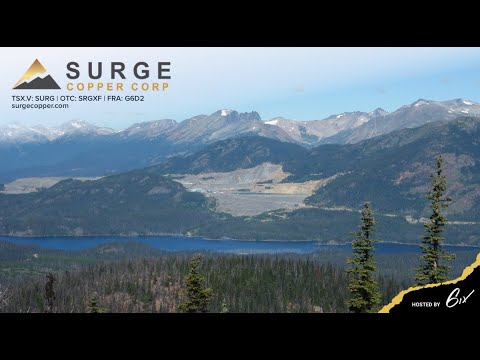
25:53 But the key takeaway, the point we're making here is that relative to what companies in B.C. Are profitably mining today, the grades that we are dealing with at our projects are a very healthy premium over the average operating reserve grade in BC. And in particular, when you look through on a recovery and expected payability basis, that ultimate NSR per tonne look through is quite solid as well. So definitely have a strong grade potential in terms of what are very clearly open pit development project opportunities in BC. Here's what it looks like in the region. You've got the Huckleberry mine here in the mid-ground, a little corner of the Utza property here in the foreground with the 3 deposits I just mentioned that comprise the Utza project. West Seal, East Seal and Ox.
26:48 West Seal is currently the, it's the big one. It's the center of gravity of that resource inventory. So about 167 million tons out of a total 224. And then in the distance, about 20km up that valley behind Huckleberry, situated just adjacent to that rusty coloured mountaintop is the Berg deposit, which I'll show you a different angle on in a moment, but That's a much larger deposit, about 610Mt at 0.41% Copper equivalent. So just on drilling and what we're actually investing in recently. I mentioned at the top that there was a 20,000m program that occurred over the winter months and we're back at it in the same area right now with a summer program.
27:40 This is all in service of updating the resources at West Seal. I'll just back up for a moment. So West seal, like all of the drill program that's taking place right now is in the area to the left side of this image around the West seal deposit and some of the intervening area between West seal and East seal. That area is what's shown here in this plan map at the right. So this is a zoomed in plan map on the West seal deposit and East seal deposit. It's a busy map of course, but the blue indicators there are collar locations for the 27 holes drilled over the winter program. This hasn't yet been updated for the holes that are currently being drilled in the summer.
28:25 We're expecting to see some results coming out of that in the coming weeks. So we'll be updating our disclosure to reflect that. But broadly speaking, the strategy of the drill program is to finish the job of drilling off the West Seal deposit, which when this project sort of got shelved and had several years of inactivity, the deposit remained open in several directions and hadn't really been drilled off. So that's what this year's program aims to do. We're tactically drilling in a number of different areas where from a pit constrained perspective, we think there's excellent potential to add tonnage to the resource envelope as well as infilling certain areas to lower the strip ratio and boost some of the higher grade areas nearer to surface.
29:15 This long section on the left side of the page, I think captures a lot of the key elements to West Seal and East Seal. They're distinct deposits, but they're close enough together to be considered a single system, particularly from a mining perspective. There are significant opportunities to wrap both of these zones together into a single continuous zone. So lots of drilling going on in between both of these deposit areas to stitch some of that together. East Seal is definitely the starter pit of the project. Really nice grades in the core of that deposit. The magenta colour you see here is north of 0.75% Copper equivalent. West Seal has lots of that material, that grade material as well. It tends to sit a bit deeper in the deposit. And so part of the active drilling going on right now is trying to trace some of that mineralization nearer to surface, as well as see what extension opportunities there are in that deeper area where a lot of that high grade material sits in a manner that can be fit into an economic pit shape.
30:22 So these are 2 sections that I think highlight some of that. So this is a section along the long axis of West Seal looking to the Northwest and then a cross section at West Seal looking to the North Northeast. I would characterize the deposit as having a 150 to 200 meter wide band of mineralization that comes right to surface. So there won't be a huge pre-strip requirement here before you get into mineralization. There is a little bit of cover here, but it's in the 3 to 5m range of glacial till cover before you get to bedrock. And then the bedrock is mineralized right from surface. That band has a strike length of about 500m to 750m right along surface and then the deposit starts to get bigger as you go down to depth.
31:15 This is not a comprehensive summary of drilling results from this year, but a couple of good images that give you a feel for the shape of the ore body and some of the tenor of the grades that we're hitting. Multiple intervals of several hundred meters with grades from 0.4% and above with lots of very impressive results in the core of the deposit with grades exceeding 0.6 to 0.7% in many cases. The company did a PEA back in 2016, which I think is an important piece of the puzzle here from how things might ultimately unfold in the future and ultimately get developed. It's important to remember that PEAs are used as, I think, a tool to determine that there's a base case of value to justify further investment.
32:09 This is no exception. And there are a few caveats and special considerations around this PEA that are worth mentioning. So because these deposits sit so close to an existing mine at Huckleberry, there is, I think, a very relevant concept about whether or not that infrastructure could be used in the future for the development of our resources. This PEA looked at that somewhat explicitly. So it based it on the assumption of a commercial arrangement with Huckleberry, whereby Mines would be developed at Utza. That material would be transported to the Huckleberry Mill and would be processed there with tailings stored at the existing tailings facilities at Huckleberry, all on a tolling basis. So there's a few important read-throughs from that. One is that the initial capital shown here is quite low because it only involves the development of mines and haulage infrastructure.
33:14 It wouldn't entail the construction of a new mill or tailings facilities associated with that. On the flip side, because it's a tolling arrangement with the owner there, the processing costs here shown at the bottom of that table are on a dollar per ton milled perspective are relatively higher than what you would typically see for an operation of this nature in B.C. So there's a kind of baked in tolling premium associated with that. But that drives very attractive Economics. So it's a quite respectable NPV, very high IRR. These are all at prices that are very conservative from today's perspective. So copper at 3 dollars, gold at 12:60, moly at 10:30, silver at 17.
34:02 So obviously those NPV and IRR numbers would be significantly higher in today's metal price environments. The other key takeaway is because of the nature of the tailings infrastructure at Huckleberry, This project concept by its very nature used a smaller subset of our overall resources. So those numbers I just walked you through are predicated on total mill feed of about 65 million tons, which is about 30% of our inventory today. And what that translates into from a sequencing perspective is the development of a mine at East Seal, followed by Ox, followed by a very small portion coming from West Seal. So this PEA, while fantastic results and while kind of doing the job of demonstrating base case value, it doesn't really do much to outline the true economic potential of West Seal, which is our biggest resource.
35:00 And so that's really what the company's current strategy is focused on, is to fill in some of those gaps in terms of what standalone project potential at our assets could prospectively look like. So how does Berg fit into that? So Berg is a project, as I mentioned, that we acquired by way of a option agreement with Sinterra Golds earlier this year or late last year. We're at the very beginning of our period of operatorship. We're actually active this week right now improving or upgrading the access road to Berg in preparation of moving some drill rigs over to this deposit area later this summer. This is, I mean, it meets a number of strategic criteria for us. It's obviously a important part of the land position puzzle in the district.
35:51 The Berg deposit itself is very attractive in its own right at 610 million tonnes at 0.4% copper equivalent. This is the type of deposit that can be a standalone flagship project for a standalone company. And we think it has a number of different development optionality angles that make it particularly attractive for what we're doing, given that we have other assets in the district as well. And of course the land package that came along with it is quite large and has a lot of very exciting and prospective exploration targets, which I'll speak to in a moment. It is obviously from a location perspective, not as sort of topographically advantageous as Utza, which sits down here in the lower lying areas, more flat rolling topography.
36:43 Berg is up in more of the mountainous area. It sits in this bowl shaped feature here, just called the glacial circ. The deposit itself is sort of in the bottom of that area. So in terms of the pit constrained resource, it's actually quite a favorable strip ratio of about 1.85. So you're not looking at taking too much of the up-facing slopes of the mountainside here. It's mostly in this valley at the bottom of that, this sort of bowl-shaped area right here. In terms of the deposit itself, so what I'm showing here is a, on the right is a plan map and then a cross section of the block model of the resource update that we put out earlier this year. And the point I want to make here is just around flexibility from a mining perspective and what that implies from a grade perspective.
37:45 So in most open pit block models, you may have a big variation in grade within that block model, but it really depends on how the grade is distributed in terms of whether you're able to mine it in only one way or in multiple different ways. And what I want to point out here, which I think is shown quite well on this cross section down here, is that a lot of the grades, so the red color here followed by yellow, It's really hosted in these vertical oriented structures. These things tend to go quite near to surface and then the grade will attenuate radially outward from that. The implication being that you have some flexibility over how you look at mining this. The resource update that we have published, 610Mt at 0.41Mt, is illustrated by this pit outline here. It's the take everything pit, but we think that there's quite a lot of potential here to focus in more on some of these high-grade zones. So shown in plan map, these high-grade pods, there's a number of them that exist throughout the deposit area.
39:02 We think that these are going to lend themselves quite a bit better to potentially more selective mining. And then what does that translate into in terms of size and grade? So this chart over here on the left is a block model cut-off grade sensitivity curve. They're a bit hard to read, but basically the dark line is the tonnage within that resource estimate. And then the lighter colored line is the applied to Copper equivalent grade at that tonnage at various different cutoffs. So what I'm circling over here on the right in that red box is at the very far end, there's about 110Mt in the current resource model at grades exceeding or at 0.6% copper equivalent, which really translates into a lot of these higher grade red zones.
39:55 And basically because of the way in which that grade is structurally hosted in the deposit, there should be a multitude of different physically realizable mining scenarios that would put you at different points along this curve. So the resource number that we have published, of course, is the capture everything, but we think the deposit has a lot of nice features that will lend itself quite well to potentially smaller tonnage, higher grade mining areas. Burgette is the main exploration target secondary to the Byrd deposit itself that came along with the BIRG property. This is 1 we're extremely excited about. And I'll sort of explain the nature of the target here on this page. So it's a, you know, the target itself is really defined by a coincident copper and soil and magnetic geophysical anomaly, which is the various colours that you see here on this image at the right. There's an interpreted fault that cuts right through the middle of the prospect.
41:00 And really most of the historical drilling that has taken place that has confirmed porphyry style mineralization, none of the grades and thicknesses are yet at that level where it's a bona fide, meaningful discovery, but most of that drilling was confined to an area on the west side of the fault. More recently on the east side, you can see more sparsely spaced copper and soil lines and anomalies there. Some really exceptional numbers, found really right along the ridge line that is coincident with the center of that mag anomaly. So this is a target that is practically drill ready, subject to getting some of the trail rehab done later this year, we do expect to be able to move some rigs here later this year and test this target in a few locations.
41:55 We think it's outstanding potential for a new porphyry discovery in the region. I was at site about 3 or 4 weeks ago. This photo was taken along that path up into the Berg and Burgett region. The first portion of this trail is being rehabbed by the folks at Canfor, Canadian forest products. So they are opening up some cut blocks in the area to the north of where we're operating. So we share access by way of this forest service road. They're actively looking after upgrading a portion of it. And then the last mile, if you will, connecting that Forest Service Road to Bourg and Burgette. We, as of today, have active operations going on to complete that job as well.
42:44 In terms of our work program, so We, as I mentioned at the top, are currently involved in the summer program at West Seal. I would frame the drilling that we're doing as falling into 3 buckets. The first is finishing off drilling the West Seal deposit with a view or an objective of updating the resources there later this year. That drill program is in its late stages that will be completed in the coming weeks. We expect to start seeing results from that summer drilling very soon here in the next couple of weeks. After that, drills will be remobilized up to Berg. So that's probably the second main bucket of activity this year. That's gonna be focused on some optimization drilling on those high grade zones that I talked about. So looking to expand some of those, improve our understanding, just overall beef up the dataset around those quite important high-grade zones there.
43:43 And then the third bucket is really the regional exploration opportunity that we see here. So, and I would characterize that in a few different categories. So again, making reference with my pen here, the top row here would be the kind of mature drill ready targets. So, Burgett is 1 that I just spoke to. The other would be undrilled IP anomalies in the vicinity of our seal deposits and ox deposits. So, much of what has been drilled out and discovered there in that UTSA region has been by way of several ground-based IP geophysical surveys. They led to the blind discovery of the sealed deposits by surge 10 plus years ago. And there are lots of remaining areas with IP anomalies that have never had the opportunity to be followed up on. So those are in many cases, drill ready, and we expect to get drills in to test those later this year. And then the next category would be the more reconnaissance stage exploration targets, which are highlighted on this map here. So across the entire district, there is a large number of precious metal occurrences, other sort of mapped anomalies, as well as some geophysical anomalies, including what we expect to come out of the airborne Z10 survey that we just completed earlier this summer, that we expect to follow up on with prospecting crews and get those
45:14 brought up into a more drill ready status later this year. Here's some photos from, as I said, I was at site a few weeks ago, so some photos from activity there. So on the very far left, you can see the helicopter towed ZTEM antenna here. Some of that road improvement I talked about. Our camp at Utza located right there and active drilling going on at West Seal. And then in terms of First Nations, so we we sort of share this area with a number of First Nations groups. The largest and the key ones that we interact with would be the Chiswata Carrier Nation, the Wet'suwet'en First Nation and the Skintai Nation. Our approach to our partners in these First Nation communities is to treat all of them equitably, keep levels of engagement and communication as a matter of priority at the very high level, the highest level rather, and of course offer these communities regular employment and contracting business opportunities.
46:22 We have a number of exploration stage agreements in place with these groups dating back several years, many of which are being reactivated and updated given our re-initiated work programs. And we continue to feel that we have good levels of dialogue with all of these groups. So I'm going to pause here at this last page and just end things with sort of a statement about Surge in a nutshell. Again, I firmly believe that we have the right team, the right assets and the right time in the copper market. This is a company that has recently been refreshed with new talent being attracted to the business. We've raised over $20 million in new equity capital over the last year.
47:11 In doing so, we've consolidated one of the most strategic land positions from a copper perspective in BC. We control a large and advanced resource base in a district with outstanding infrastructure surrounding a mine and mill complex that's currently on care and maintenance. We've got a work program that we're aggressively pursuing that's meant to move the Utza and Berg projects to the next level. And then in parallel with that, we are systematically exploring this very large land package, which we think has outstanding potential to deliver new discoveries in the district. So I'm gonna pause there and turn it back over to you, Kim. Absolutely, thank you for that Leif. I'd like to remind everyone in attendance that you can ask questions if you'd like using the Q&A panel found on the right-hand side of your screen.
48:02 But to begin with, we have had some questions, Leif, that have come in in advance of the summit. And the first one reads like this. With multiple deposits being developed, does the company have any plans of early exploration for other target areas on the project? Yeah, I think I addressed that. So the focus of the company is twofold in terms of our work programs this year. So again, we've got these advanced resources at both UTSA and Berg, And part of our work program over the next year or 2 is really focused on upgrading those resources, getting those to the next level. And then there's a bunch of engineering work going on in the background to prepare those projects for the next stage, which would be a type of project study or preliminary economic assessment.
48:51 We haven't provided to the market firm guidance yet on the timing or scope of that. There's still quite a lot of work going on in the background to round that out. But in parallel with that, as I said, there's a litany of targets in the region that we're planning to systematically test, some of which are drill ready today. We'll see some drill testing during the summer program this year, others of which need a bit more time to be brought up to that drill ready status. And then we're doing some regional geophysics to add, I think a pretty important data set to the mix that will help tie a lot of that together and potentially deliver to us new targets that are really not known about yet. And in that vein, it's I think important to note that in the Ute area in particular, there is soil cover that while not prohibitively deep is quite extensive across the area.
49:53 So deposits here are all the stuff that outcrops that you can see visually from surface are known about. The deposits at Seal were blind discoveries by Surge using IP geophysics. So there's lots of potential to make additional blind discoveries. You just got to make use of the right tools to do it and get after it. And we're doing that this year. Great. Okay. Thank you. Another question that's come in, your neighbors own the Huckleberry mine and mill nearby. How active are they with Huckleberry since they placed the mine on care and maintenance? The backdrop for Huckleberry is they placed the mine on care maintenance in the 2016 timeframe due to depressed copper prices.
50:41 They had a lot of other stuff going on in their business at that time as well, including the commissioning and development of Redcrisp, which is their sort of flagship assets today. I would say over that intervening period, there wasn't a lot of direct communication from them to the market on next steps with regard to Huckleberry. But that changed at the beginning of this year. So they have started to provide some disclosure to the market that they will be updating the life of mine plans at Huckleberry. So That's presumably going to be a piece of disclosure coming out of that company later this year that will outline what the reserves look like and some of the economic details around what would be required to restart that mine.
51:33 I can't speak for them, obviously, but that mine was put on care and maintenance in 2016 with a mine life that I believe was meant to take it to 2021. So call it 5-years of reserve life. There was some reserve replacement over those years, so I think it sits on their books today with about 35Mt and the nominal size of the mill at Huckleberry is in the call 5.5Mt to 6Mt range. It's sitting there somewhere between 5 and 7 years of reserve life. And I think the potential for what comes after that, again, I can't speak for them, but There's a pretty compelling economic narrative that I think Serge outlined in the PEA that was done in 2016.
52:24 Okay, thank you. Jacques from the audience wants to know, why is the IRR so high and why is the NPV so low? That's a great question. In all financial modelling for these types of things, IRR is a very sensitive number to capital. When you have a capital number that's suppressed, it will really juice the IRR. So I mean, you can have a project that has a short mine life, but because the capex is so low, it will have a very high IRR. There's lots of different sort of mnemonics around that interplay between NPV and IRR. I would say, as I spoke to that page in the presentation, I made a point to say that it's done by way of a toll milling agreement with that company, the owner of that asset.
53:21 I think as we often see in mining, tolling arrangements aren't necessarily the logical outcome or the way that you would naturally do things. But for a public company like Surge publishing a PEA, it's the appropriate way to make assumptions and capture the economics there. Of course, the inverse would be some sort of combining of those assets. And Instead of that depressed or suppressed CapEx, you'd have the coming together of different pieces of value there, and you'd be combining the capital components for each of those. The trade-off, of course, would be that those processing costs, which I mentioned had a total premium baked into them would of course be lower. So you'd probably expect to see the NPV to, you know, there'd be some offsetting economic aspects to that, but as the CapEx would go up, you might see the IRR come down.
54:17 Okay, thank you for that. Paul Wood also in the audience asks, lots of blue sky in those photos of the site. Any impact at all from forest fires this year? Yeah, also great question. As of today, no, I was looking at the dashboard that the province puts out on location of the current fires. At the moment, the center of activity or impact right now seems to be in the Southern portion of the province. The nearest fire to us that is, I think, demarcated on that system is about 100 kilometers to the east of us, and that's really, there's only one. So really no impact today, but it's something that we obviously monitor very closely. Our 2018 summer program was cut short due to air conditions and impacts from the fire.
55:12 So it's a thing that you have to deal with in BC and a bit of a risk this day and age, but as of where we sit today there's no immediate impact. Right, well thank you for that Leif. In the interest of time as we come close to the end of the hour I'd like to thank everyone in the audience for attending. If your questions weren't able to be asked due to time constraints, we'll be passing along your questions to the team at Search just so that they get eyes on that and they may be able to reach out to you privately. Leif, I'd like to hand it over to you, however, for some final remarks before we close things off for the day. Yeah, thanks, Cam. Yeah, look, again, appreciate everyone dialing in. We do have a sort of direct contact email on our website, info at searchcopper.com.
55:59 So as Cam alluded to, If you'd like to get in touch with myself directly or the company in general, to have a chat about anything that was discussed today or have some of your specific questions addressed, please reach out to us through those contact channels. I'd be more than happy to get in touch with you. But other than that, I'll leave you with the comment that I didn't show a lot of market positioning or comp analysis in this presentation, but I do think that we are one of the best positioned junior Copper exploration development stories with a focus on BC today. As I mentioned at the top, I think that's a corner of the market that has a very bright future and we're in the very early innings of this copper market.
56:48 So we're well funded to be pursuing our work and objectives over the next couple of years. We have a great team in place to do that and definitely excited for the future. So I appreciate everyone's participation and attention today. Thanks very much. Thank you Leif and with that I think we'll close things off for the day. I hope everyone has a good one. Cheers.