Transcript
Automated transcript · Written by software from the replay's audio. It can mishear names and figures; the replay is the record.
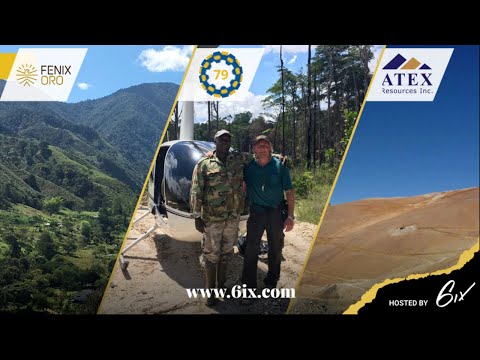
0:04 Hi, my name is Bianca Baciola. I am the COO of 6, and welcome to Part 1 of the South American Exploration Series. I'd like to start today by introducing our presenters, John North, CEO of 79 North, Carl Hansen, Chairman of Atex Resources and John Carlesso, CEO and Director of Phoenix Oro Gold Corp. To give you some context about what we're going to be doing today, We're going to start with introductions from our speakers and we'll have a panel discussion and then we're going to be going to you guys for a live Q&A. You can submit your questions in the Q&A column on the right hand side of your screen. And now without further ado, let's start with the introduction. So why don't we go around the room and in 3 minutes, can you each introduce yourself and give a bit of a primer on your company? Why don't we start with with you, John North?
0:58 OK, thanks. Yeah, so My name is John North. I'm the CEO of 79 North. I started the company in 2016 with the strategy of exploring for Gold in the Guyana Shield in South America. After having spent 10 years in West Africa, living and working in West Africa, it was a relatively easy thing for me to do because I didn't have to learn anything about the rocks, or to the extent that anybody knows anything about rocks, I didn't have to learn anything about them. And so I started the company. It's fully financed, trading on the CSE since June 16th. And we've got 1 project and are on the trail of acquiring other ones.
1:45 Very good. Oh, and we're working in CERN now. Awesome. Cool. Why don't we pass it to you, Carl? Thank you. Yeah, my name is Carl Hansen. I'm the chairman of Atex Gold. We're an exploration company focused in Chile. Chile is where we, myself and my crew, have spent most of our careers. We've been down there working on and off since, well, since Pinochet was there, since the early, late 80s. It's an area we know extraordinarily well. We've had 3, this is our third company. We've had Andina Minerals, which we sold
2:25 to Hothchilds. And then we had Atacama Pacific Gold, which we sold off to Rio2 recently, and Atex is the next company now we're working. We have a large copper gold porphyry system, which we're drilling off, will be drilling off, and I hope to have a resource estimate of that over the next couple of weeks, actually. So thank you. Great. Now over to you, John. Thanks, Bianca. Good morning, everybody. My name is John Carlos. I am CEO of Phoenix Oro Gold Corp. We are focused on discovering world class assets in Colombia. Our project is called Abria Key. It is the closest project to the Beritica project, formerly owned by Continental Gold, acquired by Position Mining in January of 2020 for about $1.4 billion.
3:16 We sit on the middle Kauka belt, which is probably one of the most prolific discovery belts on the planet in the last 10 years, responsible for about 100 million ounces of new gold discoveries, including Berytica.
3:30 It's a type of elephant country that we're pretty excited about. Many of these deposits are 10 million plus. We see uncanny similarities with Berytica in terms of the style. And when we talk about the Berytica style mineralization, it's ultra high-grade veins connected by lower grade material, which gives you something called that continental called BMZs for broad mineral zones. Very wide zones of entirely economic material that dramatically lowers your production costs. So when Beritica goes into production this year in full-scale production, it'll be the fourth lowest cash cost producer in the world. So we're pretty excited. We received our drill permit about 10 days ago. We just announced this morning that a drill has arrived on site.
4:21 So we're about to enter a really exciting phase of development. We're happy to be with you today and share that with you. Excellent. All right, folks. Well, obviously, the name of the game today is South America. So let's start with the countries that you're all operating in. Can you walk us through why your specific country is a favorable and prospective mining jurisdiction that ultimately investors should be paying attention to? And let's go in the same order because I order. Okay. Yeah. Yes. Well, as I mentioned, in my last sentence, my first go around, we're working in Suriname. So there are there are a number of countries that that have these guy and guy in the Shield rocks, which are the same as the Burmian rocks in West Africa, and they include Venezuela, which has Las Cristinas, Brices deposit, British Guyana, which has a number of deposits in it, including Aurora, probably more well-known to Canadians, Suriname, which has the Roosevelt mine of iron gold and the Marion mine of Newmont.
5:25 And then no producing mines, but favourable rocks in French Guiana on the east side of Suriname and then similar kinds of rocks in Brazil as well. So out of all those countries, I mean, I don't think it's a secret that Venezuela is a little bit hard to work in right now, politically, not geologically. Guyana has a fairly well-developed mining industry. French Guyana does not have a developed mining industry because it is essentially a European Union territory And it tends to be very bureaucratic and nobody's really sure how the EU will treat resource extraction industries like Gold. So we're left with Suriname, which is a very, very peaceful, small country, which was formerly Dutch Guiana, that has the 2 big producing mines, Roosevelt and Marion.
6:25 Canadians are very familiar with it because of IAMGOLD and Roosevelt and Cambior, who found Roosevelt.
6:33 There are no impediments to development, A very pro-mining government and a new government. Operating costs, all in sustaining costs per ounce at Roosevelt and Marion are very favourable compared to peer companies. And what I like about Suriname is it's really at the early stage of exploration and development and it means that there are still things to find. So I think it's a great country to work in and a great risk to capital geologically. Very nice. Carl, over to you. Thank you. We work mainly in Chile, although we have worked in Peru in the past. The reason we work in Chile is the way I usually say it. It's a place we're comfortable from spending our own personal money. That's the way we look at things. We don't go to countries where we wouldn't be comfortable spending our own money and spending investors' money. But Chile in general, I think everyone's well aware that it's home to the massive porphyry systems. It's the endowment of mineralization, particularly copper is second to none. It's the largest copper producer in the world.
7:47 You can still find deposits even on surface. For example, Atacama Pacific Gold, which is the last company we had, that was a gold discovery we made on surface, just walking, checking out some of the historical records that we had and just following up on them. So you can still find deposits. Obviously, that's not very common, but it's still possible. It's extraordinarily prospective from that way. From a permitting side, we really like Chile in that sense. If you find something and you follow the rules, you will get it permitted. That's not an issue. There's places obviously like there is in Canada or in the United States where you just, you know, You got to be smart about it. But if you find something, for example, we permitted on a private basis, we were the second largest iron ore miners in Chile for a while before iron ore prices collapsed.
8:41 We permitted that operation, drilled it, and permitted it in 6 months. And we were in production 6 months after that. So that's why we like Chile. We find something, there's a good chance of finding something. If we find something, we will be able to permit it. The rules for permitting are extraordinarily well-developed. There's timeframes that have to be met. They can't just extend things out forever and ever. So from that standpoint, yeah, you find something and you follow the rules, you will be able to move it forward. So we like it from that sense. We're just extraordinarily comfortable there and we've been there for a long time. So from our standpoint, we have a competitive advantage. We are a Chilean group, most of our people, except in Toronto, there's myself and a CFO, but everyone else is in Chile.
9:31 So from that standpoint, we're Chileans as such, right? And that's how we're considered. So we see a massive amount of deal flow through our offices down in Chile. So we get to look at a lot of stuff. We get guys out there. Most of our GEOs are extraordinarily experienced fellows who are retired from the majors.
9:50 So we see a lot of deal flowing, we see a lot of very interesting projects which Valoreno is one of them. Very nice. John, over to you. Yeah, thank you. Columbia, I would say, you know, is, why do we like it. We're familiar with it. I've been been interested in doing something in Columbia for 10 years now. Through a couple of cycles. It's always seemed very prospective. Part of the reason for that is the history. I think everybody has seen an episode or maybe binged a season of Narcos. So we're familiar with the sort of political history of Colombia. I think that, you know, the important point, and not to make light of it, but the important point there is that it's history. We're talking about 30, 40 years ago, but what it means is that During that period of time, very little exploration was taking place in some of the most prospective areas.
10:50 That is changing and has changed to a large extent. So I think the ability for, or prospectivity for new discoveries is high.
11:02 It's, you know, people-wise, it's a wonderful country, You know, from a security perspective, it's great. I've been going there for 10 years plus and have never, never felt at risk anywhere. It's relatively one of the more inexpensive countries in South America within which to operate. It is, and I mentioned in my intro, we are what we believe to be elephant country, sitting on a belt that has been very prolific in producing very large deposits, greater than 10 million ounces. And yeah, I think lastly, the government has had some criticism over recent years about its ability to permit projects quickly. And I think it's been a learning process because really prior to Continental, there hasn't been a large-scale world-class mind developed.
12:03 And I think that's changing. We've seen a lot of initiatives, interagency, government initiatives to increase the speed, to increase the cooperation and communication between government departments. And we've been a beneficiary of that new cooperation, having just received our permit. So we see it on all levels of government, the support that you can receive municipally at the state level, at the Ministry of Mines level, at the environmental level, at the congressional level. So we're very happy to be there. And as I said, pretty excited if you can't tell from my voice.
12:38 Definitely can tell. Well, guys, this wouldn't be a panel in 2020 if I didn't ask you about COVID-19. So, and obviously, this has impacted people in a number of different ways and to different levels of severity. So big question for the group, how has COVID-19 impacted your projects at all, if it has? Well, it's slowed us down a fair amount because the airspace and land borders with the surrounding countries, Brazil, Guyana, French Guiana are closed. And I'm the supervising scientist for all of the exploration as well as the CEO. So, it's it's slowed us down but here I am sitting in a hotel room in Amsterdam and they've established an air corridor between Amsterdam.
13:29 Netherlands being the colonial country. So, there's a air corridor established now between Amsterdam and Paramaribo, the capital of Suriname. And our people are completely free to move around in the country. They've had some strict lockdowns, but mostly on the weekends. And on Monday, September 28th, they open the airspace. So there'll be flights from other countries available. And really, it hasn't, apart from denying me the ability to kind of go back and forth, we've been able to operate just with our local people unrestricted, so it hasn't been that bad, but now it's over.
14:17 Very cool. Anyone else impacted by COVID-19?
14:21 Yes, well, I mean, Chile had, as we headed into their flu season down there, the Chileans definitely had a spike in COVID cases, and they locked down the country really hard for like 3 months. But they also got control of it. The fortunate thing in a way is that you know this occurred during the winter down there. We don't work on our big project during the winter months. So it didn't impact us from an exploration standpoint. It did impact us from the ability to go out, talk to people, because we had to go get some permits or some permissions and things like that. So that slowed us down. The government obviously is working a little slower now because they're working from home. So getting permits for things like that is a little slower as well.
15:09 People couldn't travel in the country, so we had to delay going collecting samples from CORE for networks. It's been done now. But so it slowed us down. But, you know, it's opened up now we can we can move freely. We guys are going to site shortly.
15:28 We've got all the core out, we've collected metallurgical samples to be sent up to Canada, hopefully shortly. So hopefully they've got a handle on it. And, you know, let's see how things go. Fair enough. What about you, John? Yeah, I mean, who hasn't been affected by it in some way, right? I think, you know, in looking at Columbia, it's really almost been a, you know, a tale of 2 cities or a tale of 2 half of the country, really. Bogota has been tremendously affected, Bogota being the capital and the largest city. Other parts, not so much so. We've been very fortunate in
16:11 terms of being relatively unaffected for once for a very short period of time. When it was really just breaking out, end of March, I think the country had 12 cases and literally locked down, a very different lockdown than you might experience in Canada or the United States, a real lockdown. You're not allowed to drive anywhere. You're not allowed to leave your home, that sort of thing. I suspect Chile was very similar. And after that initial period, they gradually opened up. Where we're located in Northern Antioquia, There have been relatively few cases. There was a handful at one time that had all been cleared up. So we really weren't except for the very beginning. We really weren't affected. And during that time, we were able to work on data compilation and drill planning, et cetera.
17:05 I think we were impacted on the permitting side. Much of that is run federally out of Bogota. So when the government shut down, literally people in government were not working. They don't have the ability to work remotely as the government may here or in the US. So that did slow things down. We were expecting to receive our permit around that time. They began ramping up around the July time frame and as I mentioned earlier we received it about a week ago. So, you know, from our perspective we've been pretty fortunate. We're grateful for that. We've been working very closely with the community to make sure that we can help out in any way we can and make sure that we're cooperating with protocols,
17:53 you know, when we are doing work. So at this point, fingers crossed, knock wood, it's, you know, relatively, maybe not full speed ahead, but cautiously our foot on the pedal. Very good. So in your view, what would it take for a junior minor to be successful in South America? What are the specifics that a person would need to know if they're planning to come into the jurisdiction and build a successful project there?
18:25 Well I think everybody said more or less the same thing or would say the same thing. They'd say, We like this country because you can do things in this country, legally, politically, whatever, and there's no security issues to prevent you from doing things. I think I can say that everybody on this panel has picked the rocks that they want to work on. They like those rocks for a lot of reasons, or the commodities that they're looking for and the kinds of deposits that they're looking for. So South America just has a lot of these opportunities. It's a huge place.
19:07 And there's a lot of unexplored parts of that place. So, that's why the 3 of us are there. Because we just think there's a better chance of finding things in some South American countries than there would be in like really established places like Western Australia or the Abitibi in Canada, things like that. Nothing wrong with those places, but I prefer to be in the jungle myself where I think it's more likely I could find something.
19:34 Fair enough, anything to add? No, I think John pretty much said it, it's places we're very comfortable being and we're comfortable from a security standpoint. Now there's countries in obviously South America where I won't go, I won't spend my money, I won't explore. You have to pick and choose. But the 3 of us, we pick countries we're very comfortable in and actually I've been in all of them and I'm comfortable in those countries as well. And then there's a few other countries like Peru, you know, southern Peru in particular, portions of Argentina where, yeah, it's a good place and very perspective, right?
20:15 And I think that's the key, You know, we're comfortable, all of us are comfortable being there. We think we can find stuff. And that's why we're there. Yeah, I think, you know, we've all similar themes here. Prospectivity. You know, I heartily agree with John's point about being in an area, from our perspective, that has not been picked over. I think that's lots of great mining areas in the world.
20:48 For my money I'd prefer to be somewhere that gives me that real upside where if you do your work and you're a bit fortunate, a bit lucky, You've got an opportunity to find something really, really on a world-class scale. So we look at costs, we look at security, and I think, you know, Carl mentioned earlier as well a point I would really wholeheartedly agree with, which is having a team that is basically from the country where you're operating in. So where you're operating, you are the face of that country. And I think we're fortunate to have that, too, a very strong Colombian team who know the area, not just the area that we're in, but the country, who know how to operate. You're presenting a local face, you're understanding the local issues, you're doing things in the right way.
21:42 It just makes everything easier. There's nothing worse than a gringo coming into town with making lots of noise
21:50 and making it difficult to get things done. So we're very sensitive to that. Cost-wise, we're very happy where we are. We think it's one of the lowest discovery cost places on the planet. So it's a combination of things and how that matrix kind of fits together. Yeah, we think we're very happy with what we have. Very good. We're coming up close to our Q&A period. So I just want to remind everyone who's watching, you can submit your questions in the Q&A panel on the right hand side of your screen. And we will go through them with our panelists here. But, you know, I see a question here that I would like to bring to the broader group. And it says, interested to hear the speaker's views on any misconceptions they've heard international investors have about investing in South American exploration mining.
22:45 And what do stakeholders in South American mining companies, what should they do to dispel them?
22:50 So what are the common misconceptions about the jurisdiction?
22:56 About our jurisdiction?
23:00 Really, there's no big ones. I'll let Carl and John talk about theirs, because I've been in those countries as well. But in Suriname, it's just one of the weirdest places I've ever been. There's thousands and thousands of people driving around in the bush with excavators and high pressure pumps and sluice boxes, and they're just completely free to do that. There's nobody saying no. So I don't think there's any major issues that are outstanding with respect to Suriname. No, like I said, Venezuela, Guyana, French Guiana, they're all different. They might have some other issues, but There's really nothing in Suriname.
23:48 That's why the reputation is still primed to be set there. Well, I mean, every now and then, something pops its head up, like some Hollywood movie star will show up in a helicopter and fly over the rainforest and go, oh, this is a beautiful place. And you know, that kind of people go, well, you know, I don't, I'm not sure we really need, you know, Steve Jobs' wife there. Certainly I'm making pronouncements about things like that. But apart from those little things, and there isn't, there isn't, like, I can't
24:19 think of a single person in this industry that I've met over the last 35 years of working around the world that would intentionally
24:28 do something to tarnish the reputation of mining. I can't think of a single person. There you go. That's good to hear. Carl, over to you. With respect to Chile in particular, I mean, I get questions on a regular basis. And without a question, misconceptions. Last little while revolving around permitting. It's difficult to permit in Chile. And some of that is because of Barrick's unfortunate issues with Pasco Lama, where, you know, they sort of pushed more than they should have. And that's previous, earlier Barrick, not the current crew that's in there now, which actually are top-notch guys. So I have to answer that on a regular basis. And all I can say is that in respect to that, we've never had an issue permitting Chile.
25:20 But the rule, the difference is now, I mean, before you used to be a little, you know, some companies could be a little laissez faire with the process. Now you have to, as in all countries, you have to follow the rules carefully. And that's
25:37 no matter where you are, whether it be Canada or the United States or Suriname or Colombia, I mean, you have to follow the rules. And if you do, it just homes along. It's not an issue. So I do have to answer that question on a regular basis. Now there is not, obviously water is something in Chile. We're in the Atacama Desert and people ask about that. And With respect to big operations, I mean, you're bringing that water in from the ocean nowadays. That's just the way it is. And that's fine, right? It's just a cost that you're dealing with. And smaller operations, you can still permit water. We have a water business on the side on a private basis
26:17 and we permit water for people, it can still be done. It's not an issue. Just because you have a small little operation or a small discovery doesn't mean you're not going to get it built because you can't find water. You can. These things can be done. But again, you have to follow the rules. And I think that's just, you know, wherever you are, as long as you follow the rules, you will get things done. Makes sense. Not rocket science. John. I think I'd break it into a couple of categories, you know, relatively more inexperienced investors versus experienced investors. And the inexperienced investors will look at Columbia and say, wow, it's, you know, I think, is it really dangerous? And as I mentioned earlier, I mean, that's a perception that has been around a long time.
27:05 The reality is probably about 30 years behind the times. So yeah, if you're watching that show and believing that that's what's going on today, you'll be in for a wonderful surprise if you ever were to visit Colombia and go to Medellin or go to Cartagena or you know, it's beautiful country, you know, full of lovely people. I've never felt that risk in my life and great food, highly recommended.
27:29 I would say you know, there is, you know, secondarily on the inexperienced side, people will ask about, you know, environmental issues. I don't, I'm not aware of a place in the world that doesn't have internet access and the ability to broadcast
27:57 when things are not going well or are being done improperly. So this concept that a big bag mining company is going to come into a small community and destroy it, I haven't seen one. I think if anything, we're held to higher standards than anybody, In part because we know we're going to come under somewhat intense scrutiny in scenarios like that if it were ever to develop. So We hold ourselves to a higher standard, I think, than anyone locally would. It's our objective to really demonstrate and honor that locally.
28:45 And then thirdly, I would say, for the experienced investors, the criticism has been, Columbia is a difficult place to permit or to really develop. And again, I think historically that has been a fair criticism. We see that changing in a big way. We've been a beneficiary of, and a recipient of the new model. It's a government model that is very motivated to generate employment, generate first world environmental standards being practiced in the country, generate revenue and royalty for the local communities to improve the standard of living.
29:32 So I think, you know, that is changing, all that is changing in terms of the permitting criticism. So yeah, we feel, again, pretty positive about dealing with those questions. Very good. I have some individual specific questions while we wait for Karl here to reconnect. This first one is A pre-submitted question for 79 North. John, 79 North recently completed a listing on the Frankfurt Exchange. What kind of feedback have you heard from the Germans with regards to 79 North? Yeah, that's only less than 2 weeks old. So there hasn't been a lot of time to get a lot of feedback yet.
30:23 The COVID did slow that down too. It took a little extra time to get that listing, but Because we haven't had any news since the listing, it's just too early to really say anything about that. We'll get lots of traffic, because this is a perfect story for the German-speaking world. They really, really like the Wild West stuff and Suriname is as wild as it can get. So yeah, we'll get a lot of traffic with the Frankfurt listing when we start writing press releases. Awesome. Well, I know we were talking a lot about South America, but this is the South American Exploration Series, so I would be remiss if I didn't talk about your exploration plan.
31:16 So why don't we start with you, John, and we go around the circle here. What are your two-year exploration plans at the NASA project? Well, it's not really just the project. I mean, these companies, junior companies, have 2 goals in life. They have the goal of finding something on the properties that they own and acquiring other properties to find things on because that's the strategy that works because let's face this, We kiss frogs for a living. And the more frogs we can kiss, the more chances we give our investors to get the price and liquidity that they are investing for. Good point. Carl. Yep. You can. OK. Oh, yeah, you're good. Yeah, good. So, sorry, go ahead. Your expiration plans. Expiration plans.
32:06 Yes. Well, I mean, I agree with John. This is the law of large numbers, without a question, right? The more you look at, the more you find. And that's the key. With respect to ATEX, I mean, we have a very large project now. We're working on the Valoreno project, which was drilled by Baric back in the 80s and Phelps Dodge in the 80s when they were looking for these, you know, giant high-grade, you know, El Indio-style deposits. So, they actually drilled off a nice little oxide resource, but never did anything with it because it wasn't the high grades that they expected. Well, nowadays, with the 2020s, you can deal with 0.5 gram or a gram of oxides. In fact, that's considered really good now, right? So we're working on that. We hope to have a resource estimate out very shortly.
32:56 Then we're, once that's out and heading into the exploration season down there. We usually bring drill rigs in about October, November and start drilling off the porphyry system as well because there's some major holes in the old thousand meter type stuff of good, great copper gold mineralization. So we need to get in there and get some rigs turning. That's the goal for us. Very cool. John. Yeah, thanks. As I mentioned, we're about to start drilling on our phase 1. We've gone through the preliminary part of the program from the spring to today, which involved extending soil sampling program through the entirety of the property, as well as a ground mag study that was hunting for a potential porphyry based on an outcrop that we spotted earlier on.
34:03 You know, we see more importantly our BP exploration, Stu Moeller, sees many, many similarities with the Beritica project and, you know, to give Stu, you know, his due in terms of credibility, he's the guy who discovered Berytica for Continental, so I think he's more qualified than anybody on the planet to make these comparisons. It's the same host, it's the same age, It's the same mineral and metal characteristics, the same looking structures. So we're really targeting initially these ultra high grade vein swarms that at Beritica have a depth so far of 1,200 meters. They haven't found the bottom yet. We've traced them to what appears to be about 800 meters.
34:55 Then I mentioned to Carla earlier, I saw a presentation you did a couple years ago that identified our general area as being prospective for porphyries. We found an outcrop earlier this year that, prior to doing our MAG survey, that appears to have identified a porphyry target. So in 3D, it appears from surface to about 700 meters, about a kilometer by a kilometer wide. So part of our first, at least a few of our first 20 holes will be devoted to testing that as well. So rig arrived at site yesterday and I think within a month or so we should be generating results.
35:45 Very good. Alright guys the questions are coming in hot and heavy. So we're gonna start asking some questions from the audience here. Let us start here. So this is a broader question, but it comes from Colin Chan. He says, what do you guys think about the trend in the gold price over the next few years? And what are your reasons behind it? Which is the million dollar question. So please be right. Oh, I'll let those other guys answer that. I'm not, you know, it's just, it's Because we all have the same answer for that. Yeah, yeah. It's funny. All exploration guys figure the metal prices are going up. It's just the way it is. But I mean, historically, it does go up over time. Let's just look at it clearly, right? Inflation drives all prices higher. It'll drive gold price higher.
36:33 And just general debt in the world, I think, should drive prices higher as well. Where exactly? I'm not going to predict where the price is. It's not my job. But I'm in the business because I believe in the metal prices, right? I mean, I'd say expect a lot of volatility. If recent history is any indication, no reason to think any differently. I will say, even if we kind of hang around where we are at, it's a bonus relative to earlier price forecasts. It wasn't that long ago that we were looking at 1250 and 1500. To be in the 1850 range, you know, I think is gives a lot of gravy to a lot of projects.
37:25 I think mining companies have have done a reasonable job of bringing their their cost structures and overhead into line over the last last several years. And you know, as Carl mentioned, if anything, you know, if we do see a second wave relating to COVID, the likelihood of government subsidies and, you know, these types of programs. I saw the UK yesterday initiated a new plan to support businesses. So I think if anything, these things, they're certainly not going away and there's a strong likelihood they may increase. That's whether you want to call it a Q345 or stimulus or money printing or whatever it is, it all bodes well. But I would underscore expect volatility.
38:13 Don't get shaken out by it, invest responsibly. Very cool. This next one's for Carl. How do you see the business in Chile due to the social outbreak and because of the upcoming, this is going to be testing my pronunciation skills, website, vote, the upcoming vote? Yeah, well, again, I'm not overly concerned with these items, yes. You know, with respect to, That's a good question. But again, it doesn't really concern me. You look at it this way, the social side of things, you know, in Chile, they've had this sort of socialist type of move for the, you know, 20 years. Right. But still, you've got to put it in context of South America and put it in context of the world in general. It's not really that turning that that far off of center. They're still extraordinarily center, you know, center politically.
39:16 So that side of things, we sort of just leave that be. It goes to the left, it goes to the right every few years, depending on who gets in. And you can't really worry too much about that. Yeah. And with respect to the plebiscite, Yeah, I mean, it's something that we watch, but again, it doesn't concern us a great deal. The country derives the majority of its income from mining. It's not going to push away from that. It just isn't. You know, it's like, you know, It just, I mean, most of the funds in Chile come from copper money. That's where the government gets their tax revenue from and all the rest. So it doesn't concern me a great deal, but obviously something you watch. And as I say, like everything else, you just roll with it and you follow the rules.
40:03 Exactly. Very good. This next one is another pre-submitted question for 79 North. John, are you going to Suriname anytime soon since the airspace has opened up? What news flow or progress updates can investors expect when you're back? Yes, I arrive in Suriname on Monday, September 28th. And I will go into the field immediately to work with the guys at NASA and we're establishing grids in there right now and there's a lot of high-grade surface gold occurrences that need to be mapped and tied into the various grids and stuff like that and resampled. So, yeah, assuming that they don't put me in quarantine when I arrive on Monday, and they shouldn't because I had a COVID test here this morning at the Schiphol Airport.
41:03 So, we'll have results the next few weeks. The first results from NASA. And again, the other half of the business is looking to acquire other things, which would also be good news flow. Very good. All right, this next one is for you, John Carlesso, in regards to Phoenix Oro's flagship project. This one comes from Peter Epstein. He says, John C. Said it's a lot like the nearby Bertica project. Can John describe Bertica in more detail and then explain in what ways his project is similar? The footprint is a lot smaller. Could it still host a large resource? Footprint is, hi Peter, and correctly, I mean in terms of the area, surface area, we are smaller than than Biritica.
42:02 What I think is important to understand is at Beritica, the current resource and reserve, at the time of the takeover, it was 11 million ounces. The Newmont geologists at site who were generally operating the startup, geologists and engineers, were talking about the next upgrade being closer to 20 million ounces. Zizsian has not made that announcement. I don't know that they will. But I think what is surprising for a lot of people to understand is that that resource, that 11 million ounce, possibly going to 20, million ounce deposit is because of the depth involved, this goes to, it carries to 1200 meters.
42:56 It's in a relatively small surface area. It's pretty concentrated. So In that area itself would fit in about a quarter of the size of one of our claims. I think the most important factor is the depth, the continuity of the mesothermal veins. This is at Beritica, they're down 1200 meters. We've traced ours to about 800 rather, prior to drilling. You know, I guess to describe the similarities in detail, our target is really, I'm going to stick my hand up in front of my face here. If you think of my fingers as a vein structure, these are the veins.
43:46 What makes it really interesting is this area in between is of a lower grade. So when you're drilling through this way, if it all hangs together, it can give you a very wide zone, a very economic zone of mineralization. So that's huge in terms of your mining cost. It's very expensive to selectively mine high-grade veins. Your costs drop dramatically when you can underground bulk mine a very wide zone. In some cases, that break is up to 40 meters wide. So that's the kind of target that targets that we are We are aiming for with this first drill program And time will tell hopefully soon whether we're right.
44:34 Very cool. That's awesome. This one's a bit of a broader question. It comes from Sayed. He says, are any of the companies here today exploring or interested in any royalties from the resource portfolio that you're putting together? Are you looking at royalties as a potential option on the roadmap for the company? You mean a streaming royalty? Yeah, that's what I'm getting. Well I guess everybody has their own opinion about if they like those or not, and whether or not you use them to finance. Generally speaking, I think in weaker markets, they're more attractive to people because they can sell forward their production. But in the kind of market we're in now, we're in a little bit of a correction for this month. But I don't know.
45:24 It would be too early for us to look at that. And even if we were getting good drilling results, we probably wouldn't need to consider that. Yeah, I tend to agree with John on that. It's not something that we necessarily look at. It's sort of the financing of last resort for a lot of people. And so you saw it in the 2014, 15, 16, 17, almost 18, wasn't that bad, bad period. But right now the markets are good. We would, again, it would be the last resort for us to move into selling a stream or something like that off. As part of a financing for a production, you may be required to hedge something out or whether that through a hedge or through a stream out, you really do that through a bank or through a royalty company, that's a different thing.
46:12 But no, it's not something that we would be looking at. Yeah, similarly, not a fan. You're, for an exploration company, you're, my view, my personal opinion, you're giving away your upside or much of it. So, particularly in, I would rather scale down the development and the exploration program to finance it a little more responsibly on an equity basis than rush through a tough environment just to really give so much away. Did Continental do anything like that? I don't believe so. No, I think it was more of a production hedge perhaps. But no, not in the exploration. And they had some lean years. They had like 4 or 5 really tough years where they're sitting on this beautiful gold deposit and they still didn't do that.
47:04 He just waited for the gold, you know, for the market to revive itself. For sure. As it does. This next one's from Ken Kutchling. It does touch on something we've, we've already talked about a little bit, so we can maybe amend slightly. He says, notwithstanding COVID, what is your company's work plan for the next 3 to 6 months and the spend for this? You know, I know we talked about sort of the upcoming exploration goals and whatnot, but why don't we talk about the next major milestones and the resource requirements for that? Start with me? Sure. Well, we're surrounded by big gold deposits at our Nassau project and surrounded by, you know, hundreds, maybe thousands of people mining Gold.
47:54 The next thing we need to do is just to get to the stage where we're comfortable applying the capital to do diamond drilling on our project. Our spend right now is budgeted at about US$2M for Nassau and another million or so for new acquisitions. That's our operating budget right now because we're a new company. We just started trading. And I expect that we'll probably really, really increase those budgets in the next 12 months because I can see some share price appreciation in our future and opportunities to raise more money. With respect to ATEX, we've announced previously a few weeks ago that we're working on a resource estimate for the oxides and for our porphyry deposit. We hope to have that out shortly, i.e. In the next few weeks.
48:53 And on the back of that, we're moving into the expiration season now down in the high Andes. Our goal is to move rigs in there sometime, whether it be November, December, and start doing a couple of twin holes on the oxide deposits, and then start drilling off some deep holes into the porphyry system from a dollar value, how much is the budget? We're still working on that budget right now. It hasn't been approved corporately, but something in that range is going to be in the 5 to 6 million dollar range probably somewhere in there. Yeah, thanks. I'm happy to have the opportunity to continue to remind people that we're about to start drilling, which I think is, you know, the most exciting phase for any junior really when you're about to do that.
49:56 So we're very well-funded. We went public in May. We listed in May. The appeal for the deal that we did was that it was a reverse takeover with a vehicle that had some cash and had several million dollars of unexercised in the money warrants. So I think that we have some built-in financing there that we've been taking advantage of. So we're in a good spot to fund the, you know, the majority of this first program. You know, I think If drills arrived on site yesterday, we announced this morning and I would expect in a matter of days that to begin. I'm hoping that we can get turnaround on results within kind of 4 or 6 weeks.
50:48 And then continually from there for many months to come. So lots of fun. Great. We have a question here from Renee Abreu, And it's a longer question. And so with the, hopefully their blessing, I'm going to shorten it a little bit. And it's a question about ESG and social good. And I'll simplify it to say, how do each of you leave South America better than when you found it? What do you provide to the community? Look at Canada. Look at 1 example, Sudbury. How much better was Canada by having Sudbury? How many roads, hospitals, research papers, social programs, and just overall good was done for the country with that one mining area. So any one of these things, I mean, when I worked in Mali from 2002 to 2012, when I arrived in 2002, it was, I mean, Mali, if you've ever been there, is one of those places where Some people just can't work there. They go.
51:52 It's just too tough. It's just too weird But when people started putting things into production like satiola in Western Mali with angle gold Ashanti I am gold marilla with ran gold It Those 2 deposits alone changed the whole country. Just things got done, things got built, bridges were built, roads were repaired, on and on and on and on, 2 gold deposits. So it has a huge impact. So any one of us putting a 5 million ounce to 10 million ounce deposit into production in the country would have a long-term benefit and a good effect on the country? That's a good answer.
52:42 These large deposits are long-term tax generators, right? And we're not doing massive environmental damage. This view that people have that mining is terrible and going to rip everything apart is, these days, basically incorrect. I mean, It's just not like what it was in the turn of the 19th century. And unfortunately, that teems up. You have some super fun sites in the US, which everyone likes to go take pictures of. But that does not happen. I mean, there are accidents in places and unfortunate things that happen, but they tend to be very small, confined very quickly, and very specific to the site. So, yeah, no, it's this is, you know, these mines generate income, right, for the towns and cities.
53:33 Yeah, I mean, environmentally, first rule, as far as we're concerned, you know, do no harm. You know, leave things better than you found them, you know in terms of reclamation in our in our particular case it's going to involve throwing down some soil, planting some grass. You know, we're not taking down any trees. We're not touching the water supply. Everything is contained. You know, we're talking first world environmental systems, which I would say is not always the case in some of these countries with local miners. I'm sure we've all been in places where, I won't name the country, but looking at an operation where guys were kind of had a little, basically, we're going into a shaft with a rope and a tire over a tree branch and coming out and, you know, washing this ore with something with their bare hands that turned out to be mercury that went into the stream behind the houses where they lived. I mean, and that's not necessarily meant to be a criticism. These people are doing what they need to do to live and feed their families. So I think we have a responsibility if we're coming in to a country to, again, bring the highest standards and make things better.
54:57 It's not acceptable to us to say, oh, well, just No one's looking. Those days are long gone. The world is watching. Everyone is watching. Not that that's the motivation for us, but we take that responsibility very seriously. And yeah, do no harm, leave things better. Absolutely. Leave things better. Leave things better. Absolutely, leave things better. What was that? We're right at that time where we have to say goodbye, but I wanna do one thing while we still have about a minute left. Let's go around, 1 sentence each. Why are you excited for the next few months? Why should I be excited? Well, I think I've already said that.
55:44 Surrounded by gold mines, covered by people, artisanal miners mining gold in the jungle and we have yet to drill a hole. So that's what I do for a living and that's what we're going to do. Nice. Yeah, and with respect to Atex, we have a new resource coming out, our 1st resource on the property. And we've got drill rigs coming in. And as John said, I mean, that's what we live for as geologists, right? Get the drills turning and see what we get, right? That's the exciting times for us and for the market and investors as well. Nice. Likewise, it's all about the drill, baby. So. It's about the drill.
56:29 Yeah, so, I mean, we're excited. We have pretty high expectations. We're hopeful to find the next kind of billion dollar asset just away from a few kilometers down the road from the last one. And in a very short order, we should have some results that tell us that we're right or whether it's going to take us a little longer but we feel really confident that we're on the verge of a pretty major discovery. Awesome. Well folks, thank you so so much. John North, John Carlosso, Carl Hansen, you guys are awesome. Really appreciate you taking the time today to walk through your projects and what makes South American Exploration so special. This was part 1 of a series. Stay tuned for our subsequent parts. If you have any questions for any of these folks that you didn't have a chance to ask them, I'm sure they'd be more than happy if you drop them a line, email them, and they will answer you there. Thank you so much. Have a good rest of your week and have a good weekend. Don't work too hard, guys.
57:30 Good luck, John and Carl. You