Andrew Rubin
Analyst, Morgan Stanley
Replay available
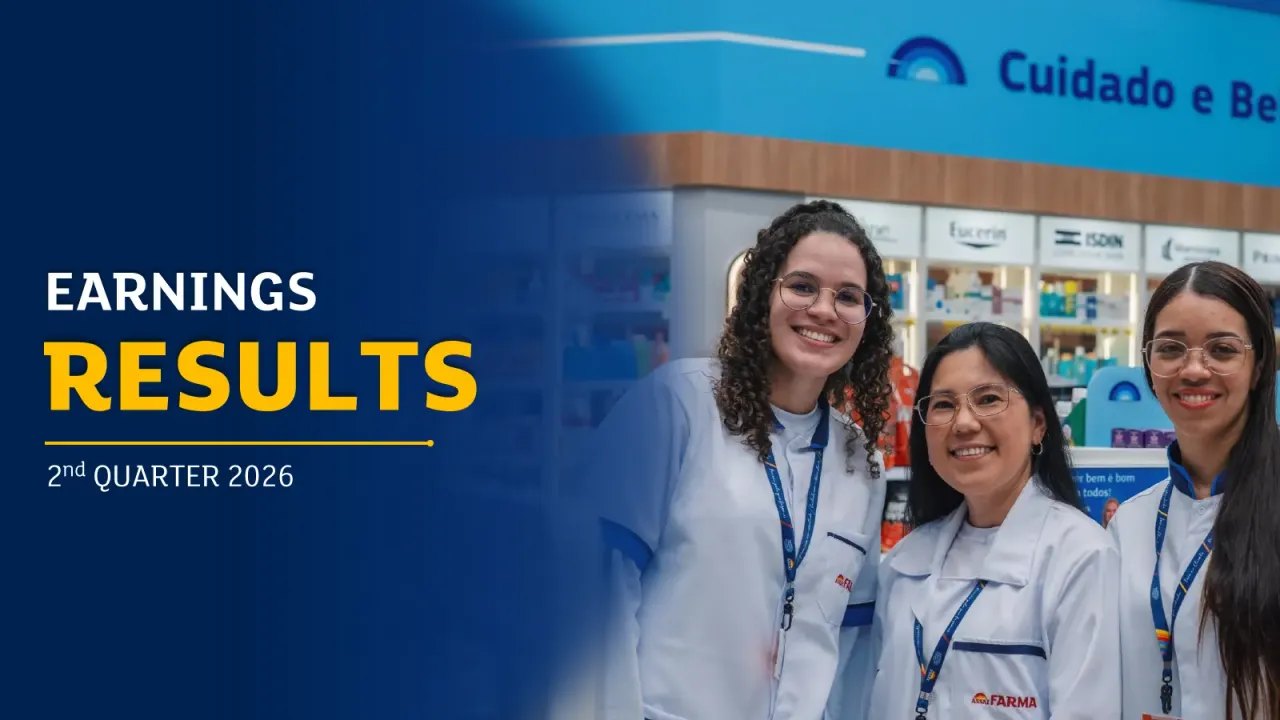
Sendas Distribuidora (B3:ASAI3) Q2 2026 earnings call, held 2026-08-07. Watch the replay and read the transcript on 6ix.
On 6ix: 6ix.com/event/sendas-distribudra-sadr-asaiy-q2-2026-earnings-call
Automated transcript · Written by software from the replay's audio. It can mishear names and figures; the replay is the record.
0:00 Good morning, everyone. Thank you for waiting, and welcome to the earnings call for the second quarter of twenty twenty six. Wanna highlight that if you need simultaneous translation, we have this feature available on our platform. In order to access, please select the interpretation button through the globe icon at the bottom part of your screen. Choose your language of preference, Portuguese or English. We would like to let you know, that this earnings call is being recorded, at the ir.asai.com.br, where you can already find the earnings release. During the presentation, all participants will have their mics off. Soon after, we'll begin the Q and A session.
0:48 To submit questions, please select the Q and A icon at the bottom part of your screen. Write your name, company, and language, enter the queue. As you're announced, a request to activate your mic will appear on the screen. Soon after, you should activate your, mic to submit all of your questions all at once. We also want to highlight that information and possible statements that could be made during the earnings call related to business perspectives, forecast and operational financial targets at ASAIY at Hagisa represent the beliefs and assumptions of the company's management as well as information that is currently available. Future statements are not a guarantee of performance.
1:34 They involve risks, uncertainties, and assumptions as they involve future events and, rely on circumstances that could or not occur. Investors should understand that general economic conditions, market conditions, and operational factors can affect the future performance of the company, leading to results that differ materially from those listed in such future statements. Now I wanna pass the floor on to Gabrielle Lielou, the Investor Relations Director. Hi. Good morning, everyone. Thanks for participating at this earnings call for the second quarter of twenty six. I'll be presenting the executives present today. We have Bill Mirukov, their CEO Rafael Sasechi, Anders Sankasili, the VP of com commercial and logistics.
2:21 Sendas Distribudra our VP of people and sustainability. Rafael Sasechi is our CFO. Now I'll pass the floor on to Palmyto for the beginning of our presentation. Thank you, Gabi. Good morning, everyone. Thank you for participating. Now here we have the numbers, on the first slide. Numbers in the, first quarter, you still have pressured consumption. So if you had the opportunity to take a look at the numbers, but execution was very consistent. In this quarter, we gained a share. We had an important expansion in our flow. We had an all time high record preserving profitability, and we were able to advance significantly in our deleveraging. So it's not a quarter with demand acceleration.
3:08 It's about to spin, resilience, and, economic evolution. So even in this economic scenario, ASAIY gained market share, expanded their customer flows, preserved margins, and led to a leverage market of 2.37. So that demonstrates that even with a pressured ticket, customers continue to search for ASAIY as a destination. And so the total base goes up 2.4, and, you can see that there is a challenging environment. However, the company gains within the cash and carry market a share of 0.3%. So an important point in the quarter is that there was an increase in the customer flow, and that happens in our same store base as well as in the total base, which would be the 3.4.
4:01 And then you can explain that movement that we've observed, which is a consumer preserving their pre frequency, but at the same time, adjusting their purchase mix and basket, searching for more cheap for cheaper products. Right? So the maintenance of the levels of debt, high, interest rates. And I think everyone's been, watching the Brazilian economy, and I see this, macroeconomic context. So this environment is not a homogeneous environment. We've already highlighted this and seen this heterogeneous movement where you have lower social classes, especially the class c, d, e public with more pressure. So when you look at the consumption dynamic, you can see a persistence in the trade down. We had opportunities to demonstrate in our investor days that we had two cards at the same, store, same taxes.
4:56 One costed 830, which is the leading English brand, and the other card costed 437. So you can see this ramp up of the migration of the brands at a moment of, commercial pressure. And so they use the trade down. And so we can see that they don't necessarily, reflect the actual customer choice. Right? So in order to consider this, they've been, had they've been having to perform trade down decisions and preserve their volumes. And so what we can observe, in the social levels that are a little lower and so you can see this frequency that there's a ongoing flow of customers without an increase in the average ticket. But despite all of this, the efforts we've performed with balancing out the margin makes a a bit of pressure in the the actual number 0.4.
6:11 But after I explain because you have an effect of the substitute the tax substitution with the removal of some products from the ST, which, the state of Sao Paulo has performed, which creates this difference between the gross sales and the net sales. But the this quality this margin continue to evolve. This was due to some initiatives we had considering the dynamics and the scenario we've seen also with the market that's not very that doesn't have much elasticity, so we must be careful with the there's a a bit more caution in the type of purchases. So the expenses have this effect of 0.20. There's a slight increase, but it's, of course, a lot lower than the actual increase in customer traffic. So when you see the expenses per customer served, it goes one, point 6% below inflation, the actual food inflation and the general inflation because expenses are really connected also to the amount of customer service and the customer traffic. So the net income recurring net income, 341,000,000, an evolution of 94% compared to the same quarter last year. It, from an accounting view, 537.
7:26 The company has been very conservative and very transparent, providing this kind of disclaimer and showing the operational performance without any tax credit impacts so that the market can really, keep up with the actual, operational evolution of the company. And then after, and such that you will cover this, you have the, operational cash generation, reduction of the net income of 1,400,000,000 in the last twelve months, reaching the leverage level of 2.37. Cash availability is also very significant and an important point we've seen, and Rafael will explain this a bit more, which is purposely reducing the risk discounted receivables. Right. Since in this deleveraging process, when you consider the availability, we end up working with this level of, anticipation that is greater than what we had to work with in previous quarters. Next page.
8:23 With this, a bit of what I've already mentioned in the previous part, it demonstrates this effect of the subs of the tax substitution. When the product subject to this tax substitution, the net sales is the same as the gross sales considering the tax state taxes. And when it leaves the tax substitution, then you have, when you look at this and we normalize this effect, you have this effect of 0.26% within gross, profit and zero twenty in expenses. So when you look at the comparison, of course, the company, of course, you can see this result considering the net sales, which is the standard of the market, but the comparison is always taking place considering expenses upon gross sales. So when we look at this important to highlight the effect, the EBITDA, considering higher pressure of expenses, has a slight, stable, impact kept in the second quarter, which is an EBITDA of about 5.6.
9:23 So within the environment with challenging consumption, we've been trying to set up this commercial strategy that's more efficient. We have a significant contribution in the margin considering the operational efficiency and maturity of the stores, especially those that came from the extra conversion period considering the last batch from the ASAIY expansion and a lot of the services added on, like a buttery, both cuts and deli. But over time, we can really, evolve in productivity, the ways we work and pricing, and that has really helped with the composition of our gross margin. And maintenance of this margin has been done, considering the maintenance of competitive advantage. So when you look at the customer flow or even the sales per square meter and especially when you consider the market share.
10:12 Then the expenses also had a slight impact with the new avenues for growth that we're gonna highlight up ahead, but it also reflects the combined scenario of the customer flow increasing and customers, still keeping up the trade down. So I'm gonna pass this on to as he highlights the points of the operational leverage. Okay. We can advance the next one. Hi. Good morning, everyone, and thank you, Balmiru, for your presentation. I'm gonna talk about our financial results, our net income, our debt level of the company, our financial results here, the we have an inverted calculation, so the lower, the better. We reduced the impact of this financial expense of 25% compared to the, same impact that affects our, net income reaching this.
11:12 And what were the main drivers of this improvement in financial results? So first, the maintenance of our EBITDA and our cash generation of the company, strategy for deleveraging, the lower level of debt. So through this strategy, the gross value drops. And we also start for the first quarter after many growth. We have this average rate of the cost of debt that starts dropping, and this dynamic should remain if there's no change in the economic policy as a, supporter or benefit for our financial results till the end of the year. Then we had a a positive impact with the tax credit updates with the SILIQ credit, adjustments. Right? And so when you look at the net income, we reached 344,000,000 of recurring net income, 93.7% growth.
12:05 And and so our accounting net income is of 557,000,000 with nonrecurring effects of tax credits. So the comparable base with 244,000,000 supported by our EBITDA and the financial results in the company, which had a significant improvement. Moving on to the next slide. We're talking about this pillar that's so important, which is the company's strategy for deleveraging. Right? So there's an important effort with the entire team to keep up with a high level of services, good sales, high margins, efficient management of expenses, and in capital allocation and our working capital and CapEx with a focus on the leveraging of the company. So the general cash, operational generation was about 3,300,000,000.
12:57 We had a CapEx plus the impact of the sales leaseback of 600,000,000 with a free cash flow generation of 2.7. Then we get into the interest of the debt and dividends of 2.3, and we have a final cash generation of 1.4. Why is it not 0.4? Because we have a normalization of the receivables. An important point is within this strategy, we're reducing, this receivables anticipation. And, over a while, I believe we won't have this effect anymore in the company's results and earnings because, for now, we have one that they already, supported in this normalization. Then, on the right side, you could see our financial leveraging.
13:45 So our financial leverage, we have a drop of 0.8 times the EBITDA reaching 2.37. You can see it's a dropping trend, and this trend is set and should remain till the end of the year. So the company is very confident that this, will continue to drop, over the next quarters. Now about the gross cash position, I just wanna reinforce this, but, of course, it's in our release. We have a cash position. It's very solid, very healthy. We can move on to the next slide, please. And we closed the quarter with 7,000,000,000 between cash, availability and also the cards we could anticipate. This is a growth of 20.9% compared to the same period last year, and the robust cash position gives us the necessary comfort that we have two years of our debt maturities, covered by this cash position. We don't need to have any short term funding, especially in a more stressing scenario.
14:48 We continue to be comfortable, but, of course, the company has to quote to monitor this market and possibly taking on other, long term credit facilities to have safety and to really support our strategic plan of deleveraging the ASAI Group. Then I'll pass the floor now to Sendas. She talks about our people and sustainability areas. Good morning, everyone. Moving on. With our commitment towards sustainability, searching for ways to generate more value for the company, we continue to operate in a strategy that is structured by three pillars, efficient operations, developing people in the communities, and ethical and transparent management.
15:36 And in this quarter, we've advanced significantly and consistently throughout this ESG agenda. And I wanna highlight that we are reusing about 47% waste, expansion of our initiatives for composting and water efficiency and also the evolution of the fourth consecutive year of the index of the of the ISE b three index as one of the only retail companies in this index. So we're also strengthening a more inclusive and diverse environment. We expanded our, representation of of black professionals and women occupying leadership positions. And we've also taken on, the goal of creating opportunities for, immigrants, refugees, elderly professionals.
16:36 And I also wanna highlight, over 5% trainees Uh-huh. In our, young trainees. Right? So that it was important for the recognition with the Bungee Youth Employability Award. With this, adding on to all of this work, we've also published the annual report for 2025 of the ASAIY Institute initiatives as a responsible for all of our social investments, and that also consolidates our earnings in the first, three years of work performed by this institute and also reinforcing our commitment to the development of communities where we are present. These were important advances that we've had in sustainability.
17:21 And I'll pass the floor back to Belmeda so we can continue with the presentation. Thank you, Sandra. And now I think we're gonna talk about our different avenues for growth. As we've seen in the numbers, the macro scenario is still pressured, and the company is not just waiting for improvements in the macro scenario. So besides this, in this quarter, we were recognized once again as the most valuable mark brand in the food retail scenario. And maybe we have one of the biggest assets in Brazilian retail, which is this growing traffic of 40,000,000 people visiting our stores every month. This comes from a relationship that is built upon trust and low prices, and our avenues for growth are all starting off with this asset. Right? Our focus is to expand our presence in customer routines without losing track or of our, food core, which is really having low prices.
18:20 It's not a switch in the model or change in the model, but an evolution of this model. So we're talking about existing customer traffic and using this or taking advantage of this for our new opportunities. And so we have, the possibility of adding into the customer shopping journey. We keep looking for ways to increase the share of wallet with initiatives that don't require a lot of CapEx investments, but that can improve also our capital allocation. And so some initiatives in each of these are different stages of evolution. We've had significant, expansion in well-being, which is supplements and vitamins. This is already present in 93 of our 300 stores. We should reach this new category in 300 stores, by the end of twenty six. We're talking about, like, creatine, pretrained workout, vitamins and supplements and whey protein.
19:17 And we're adapting to these, habit changes among our customers then. Our own private label, We have about 30 products we've already launched as product private label products, and some categories order up to over 10% there in the categories they're in. So this is an important lever for us, especially if we consider margin gains for the future and also keeping up our competitive price levels and offering to consumers the opportunity to have a quality product, a well known brand, and very relevant prices. We have new products incorporated every week practically. And this is our moment we should have a gradual expansion to the end of the year. I believe, that next year, these products will already have, more significance due to the volumes ASAIY has in big markets here in Sao Paulo.
20:12 Then for digital, we've advanced with over 200% increases within the partnerships we have. We have a 104 stores with the iFood operation and, 60,000,000 users from the mail. I'll say that also receive these inputs through, offerings, the prices helping to increase our business. So for the In N Out, we, bought 11,000, refrigerators, and we sold all of them. This is a project that is still evolving, and we wanna take advantage of the customer traffic with products that have opportunity batches, and customers can look at this and see the opportunities they have reinforcing this image of low price. So we're still waiting on the approval of the bank, central bank for the second most important phase.
21:04 So and the the pilot project for ASAIY PAY, which has operations in about 30% of these stores, has also evolved. 55% are new customers that have adhered to the product. And then then we have the electrical, fuel stations. And so most of it is in the free market. We have a cost of energy. It's about half of the residential fees that consumers pay. So our objective is that we can provide customers with the opportunity to recharge a hybrid electric vehicle at a cheaper rate than they would pay if they were to do this at home. And so we receive about 20,000,000 vehicles monthly, coming from customers that supply or fuel up, and recharge in our stores. So as soon as we finish our technical studies on feasibility, as most of our stores have leftover demand, the expectation is that customers can farm purchases. And this is a project that has been advancing a lot in many countries where we've had growing electrification and also for fuel, stations.
22:19 We've also been assessing this possibility and the chance of maybe integrating all of this system or this ecosystem for the food, shopping, drugstores, digital, and also in another routine or mission to supply these customers. And the initiative, maybe the most important that I wanna highlight was that now we opened our first after thirty years, we launched our first drugstore within the store environment, the store in store, and we were really quick with this project. It was the first sector. And we launched, four months after the, approval of the new law.
23:06 Up until then, the food sector could not have a drugstore inside the store. Would have to be in the gallery. If someone asked me what changes, I'd say, well, in the gallery, after the customer's already performed a purchase, it's really difficult for them to get into a drugstore shop for drugs, with, products already in this part. Right? So the first, unit was launched in the iconic Arigueta store where they opened the first, extra hypermarket. It's an extremely well located store with over a 180,000 people visiting, almost 200,000, and it's completely integrated. And so we already have two units under operation.
23:52 And, by the end of twenty twenty six, we should have these units. And in this period, we are expecting that 250 units potentially, would would be the potential for the mid to long term. So we already have the store. We already pay for, electricity, AC, safety, and all of this. The CapEx for the implementation should be below 400,000 reais. And so we should have a total investment at least 250 of about a 100,000,000 reais with a sales potential that's very relevant. And so this drugstore has a full assortment, which includes prescription drugs, GLP ones, controlled drugs, vitamins, and supplements, and this is all gonna be in created.
24:38 Right? So when we opened this first unit, it was not only the first drugstore, but also the first, online operation where the delivery is done by us. Then within ASAIY Pharma, customers can also buy through the app, and they'll receive the drugs at their house. And so what we've seen in the first days of our operation is that the numbers are above what we expected. You can see that for customers to be able anyway, since they have to come and shop, the possibility for them to be able to buy the drugs is also an important step. The team really helped us with this, and, I think more than just talking about this deployment or more than just us telling you how it was, I would really like to say that we actually have a little video that was made, not by us, but it does demonstrate, how this, was implemented and the Today at the Capra, we have the first drugstore inside a supermarket ever since March. This type of retail establishment.
25:44 So the translation is on the subtitles in the video. Thank you.
28:08 Now after this video, I think we can get into the q and a session. Now we're going to begin our q and a session. I would like to remind you that if you have a question, you must select the q and a icon at the bottom part of your screen. Write your name and company and the language so you can enter the queue as you're announced. A request to open up your mic will appear on the screen. Soon after, you must select your mic, open your mic to submit your questions. We'd ask you to please send all of your questions at once. We'll start off with our first question from Daniela Eiger at XP. Daniela, you may proceed. Good morning, Bill, Mito, Gabi, Sachet, and everyone. Thanks for taking my question. I have two. The first one is about the perspective forward.
28:58 It's evident that we're in a very challenging moment for consumption in the market, and you guys anticipated this and have many different initiatives to handle this. But when you look at the core business, when it comes to food, you have supplements that you guys are working on, private label. But how are you guy how do you guys see the evolution and the mix of categories as well as the trade down you guys mentioned, as well as, prices considering the food inflation dynamic and this product mix. So if you guys could help us. But, of course, you guys have a lot more details and information. Right? So we would like to know what you guys see as, trends in this.
29:46 And then the second one is, if possible, if you guys could share a little bit of what you guys consider as economics for the ASAIY Pharma stores. So when it comes to uplifting the sales, contribution, margins, nominal amounts, etcetera, because you really have a better margin in the category. And you also need to understand that you guys are maybe replacing that with something that was already there, so I think it's gonna really depend on performance among categories. But it'd be great if we were looking at more, like, in the midterm. What could this bring as evolution when it comes to growth and profitability? So thank you, Danny. This is the consumer consumption environment. We see the numbers continue to pressured.
30:34 It's really connected to low income. When we look at this, we see the, cash and carry channel as a whole. And the channel that's most impacted is what we've seen, yeah, is lower income. As I was already having this in previous quarters, look at the inflation we see, what's the actual index, which is the movement of this fixed basket. But in Brazil, we have a bigger variability. When you look at pay down of brands, that's, really unique. Right? Here, it's a ramp up. Right? So you have such a big amount of brands that allows customers to perform these adjustments. Right? So we see an increase of customer flows in our same store base and total base. But when you look at the trade down, it's still about 3%, approximately, or 2%.
31:21 So customers haven't been following the inflation. Right? So that's what is not that's not what's coming out from the customer's pocket. Right? So when while you have this high debt level, most of the income committed to the payment of interest, it's kind of what happens in our results, and we don't see consumers test space for this. So what you've mentioned is we have these different initiatives, and we're not just waiting for the macro environment to get better, but some initiatives that were mentioned intent, for example, with the private label, it should help a lot because as consumers also migrate, they can choose our product and the brand that's gonna give us a higher margin. But at this moment, we see consumers that are really pressured. So where have we most felt this? Well, in low income consumers, not high income. When we look at the research, from Nielsen, for modern retail, we see that impacting companies that service high income. And we see the impact is almost zero.
32:22 When you look at class c, d, and e, then you have a more relevant impact, and we feel this directly in this customer that buys with us, but also the customers that supply their homes with us. Right? And the impact, as I mentioned in beginning, is, and what we should see from now on is, well, July, we've already closed. Of course, we've, we already had positive same store sales, 0.50 without any calendar effects. So that demonstrates that we should have a, continuity scenario at a same store kind of adjusting by one point up or down, but that's what we've been working at. But, however, in this scenario of consumption pressure, that should remain for a while. So that's why the company's really been betting on new growth possibilities, and that represents about 5%.
33:18 And so any new initiatives is are like a new kid that's growing. Right? And so, especially, we expect higher revenue than Ra Pharma. Like, the 40,000,000 customers, we have a average of 200,000 people going through the stores. So we wanted to bring this because our feeling is that it captures exactly what the customer's sentiment is. Right? They have to come and shop. They have to come and supply themselves. So if they can, solve this in a single journey, we can also interconnect both of these to generate, cashback and the sec successively. Right? So what are the main points do we have as positive and negative?
34:07 Well, that's operational expenses that are there. So in the same way as the CapEx are is way below what we would need for street drugstore. When you look at operational expenses, you can kind of perform a similar calculation. Right? So you have the cost of personnel, electric car, rent, safety, etcetera. And all of this is, most of the ASAIY stores have available space. Be able to add a drugstore without having to, implement any major revolutions in the assortment. So within this movement, we've also been having an ongoing revision of the amount of products we've been working on in some categories. So it's really been possible to accommodate the farm operation without any major impacts. So the CapEx of drugstore is, like, one third of what than what we would invest in battery or daily, etcetera. So our view is that we have to really work on the legal changes there because that's we have an investment of about 100,000,000 with the sales potential of a store. It's like one and a half a store revenue. Right? But, of course, we don't wanna break down our expectation of revenue per store. We're still in an ambient study or phase of this project, but we see this as a huge potential.
35:21 Thank you. Excellent, Belvido. Thank you, Danny. Now our next question is from Jerome Suarez at Citi. Jerome, please. You may proceed. Hi, guys. Good morning. First question here is the cashback. Could you tell us a little bit about the strategy currently? Because one of the questions we get when we compare with our history and the drugstores and the galleries, I think here, the biggest evolution is that you have mutual interest. Right? And, both of them working well, and this cashback can be crucial to help, really lock in the the vault.
36:11 Right, cash and carry through the drugstores and everything. So I wanted to hear about the initiatives you have been considering and how you're looking at this flywheel, the drugstores, cash and carries. And then the second point is when you look at the sector data and you break down same store sales in the same quarter of We can see that volumes dropped significantly in August and September. So it seems like there's a more favorable base, especially for volumes in the sector when it comes to the third quarter. And I wanted to hear about this and if it makes sense, etcetera. Thank you. Well, as you mentioned, if you were to consider the projects that were made now and I wanna invite you guys to go and visit the store and see with your own eyes how the drugstore was implemented. It's very different than the products that we had before of, like, drugstores in the galleries or outside of the store. We could have done this before, of course, but we're never interested in this. Right? Because we think it needs to be really integrated with the customers. When they're inside the store, they can leave their cart there and go by, give them the list of drugs that they need, and the that can be separate already for them when they come out to checkout.
37:27 When they after they get their perishable goods, if they waited in the checkout, they don't wanna stop anywhere. They wanna go straight home. Right? So their relationship with the cart is very different before and after paying, right, for their shopping. So, anyways, in a store about 200,000 customers going by, if I generate cash back of about 5 yeas to spend at the drugstore, they're probably gonna do so. So they're probably gonna visit our store. Right? So in our view, we're gonna be providing an actual service to our customers just as you saw on the news article, per made by Global. Most of the customers, people that visit, food, facilities, etcetera, are the people that also need ongoing drugs for chronic conditions. So we're gonna have operational costs that can be passed along to the customer partially.
38:19 In our view, it's we were able to open up the first one four months after the change. That means the customer is really focused on this initiative, and we believe it should add a lot of value to, say, a lot of sales, a lot of margin, and no additional extra costs. I show you the CapEx numbers so you can compare that, what you see as CapEx. Maybe you can even bring in part of what this would be. Stores, for August, September last year, there's a drop in volumes. That was a period where we really felt a setback in commodity consumption, so especially that drop last year with rice, beans, and some carbs. And this consumption has still remained at low levels, and that's why we've been very careful to estimate possible recompositions because we knew where it was concentrated. So since it was, very much concentrated in carbohydrates at the time and when we look at the volumes of the other commodities now in the first and second quarter, you can see that there's some price pressure that they don't really stay. The truth is that there is a reduction in carb consumption and an increase in protein consumption. So a lot of the adjustments in layout and assortment was really to prepare for this movement, which is, something we've already seen. So when you see the food service customers as well as 16,000,000 customers in our app, we can see the recurrence of volume. And so this guy from food service, the guys from pizza stands, restaurants,
39:51 snack shops, etcetera, they've been keeping this frequency, but they do see a drop in volume. I hope to have answered. Yes. Thank you so much. Our next question, comes from, Vinicius Strano at UBS. Vinicius, you may proceed. Good morning, Gabi, Sashetchi. I wanted to explore a little bit about what you guys see as a customer sensitivity to price movements today. Right? And also get a better reading on your view in regards to the competitive scenario. Right? There was a shift in the management from your main competitor. I wanna know if you guys have any notice any differences on pricing, the commercial practices.
40:40 And, is if you guys could, talk about, the market share per region, and also the performance per region, between ASAI and the market. Okay, Vanessa. Thank you. And now going back in, per region in Brazil, I think the movement of the regions is a lot more related to the income classes than the region itself. Right? So if, like, the Northeast and Brazil, the North Of Brazil, there's low performance because it constitutes most of the population of low income. That's gonna be very visible, right, and also within each of the regions. And so you can see that in the Southeast, but when you look at this within Southeast, you'll see stores like Congonhas with a high income population have no impact. So when you look at the other part where you have the population, that's a little more pressured, and then that's connected to the debt level of the families. Right? So I need to, we reached a new rec all time high and the level of commitment, compromising the income. Right? So that's not standard.
41:47 And what we've seen in a real tough way is a consequence of a series of factors. I said I was not gonna talk about the bets anymore, but that was a significant impact in June, of course. Right? So a bunch of factors in the economy. And at this moment, that's, led to repercussions. Right? So what we see, from consumers is that they're at their limit, right, with what they can spend. And when we look at the average ticket, say, look. I can't spend, 500 reais. And then within this 500 reais, they're gonna have trade downs of products without I don't wanna mention brands here, but if you're experiencing the food sector, we've seen a significant, movement to this. Right? So what's the positive side to this?
42:32 Well, it's the best possible moment with the scenario we're in to have this private label project, a company our size, a brand as strong as ours because customers are willing to search for quality, but they have a price limit, then private label can be something that's very relevant. So we have very positive expectation. Right? And you can understand from the customers, they're really, willing to perform, brand trade downs and gaining products, especially. And so they've at the limit they're at the limit of what they can actually spend. Then you asked something else about management. Yeah. It was thanks for the answer, and it was about the competitive scenario overall and also specifically about the competitor.
43:22 K. Well, obviously, as each company has changes, but as you can see, it's the consumer environment. Right? So consumers are paying high interest rates. And as you can see, the bets and initiatives we've had are really based on keeping customers in house, gaining new customers, and increasing the share of wallet. So we don't see, like, market elasticity that can allow for major movements. Right? And so you we've seen certain changes in the commercial policy, but, at this moment, what pressures us the most is the macro scenario. So our next question comes from Irma guards at Goldman Sachs.
44:15 Irma, please. You may proceed. Hey there. Good morning. I wanted to take advantage of the last point. It's a great moment for private labels. And could you talk about the lessons learned so far? I think it's a real moments since in the past you guys, always had a bit more resistance, considering the size of the operation in the Southeast. And now as you guys launch, private label as well, but I wanted to hear how you guys consider additional categories and products and, the challenges that you guys maybe found, over time and maybe a bit of how you guys consider the brand strategy as well. Right? You have the chef brand, of course, for one part of this, private label segment, but you guys also consider segmenting, private labels.
45:19 And with this, would you guys, believe that the best path is to separate private label from the site brand with, like, a commercial name or or having some kind of umbrella brand? Well, at the moment, you have a consumer that's really willing to have a brand trade down. The ASAIY brand is the most valuable and the most well known. Any research can show you this. Of course, there are there is a risk when you associate, all of the products. So we, brought a very skillful team with a lot of knowledge, and very experienced from a quality perspective. Under Sergio as well. And so the RNNs we've included so far and maybe the project could even advance quicker if we have if we weren't looking at this.
46:15 We have a test labs and a series of initiatives to ensure that what we're gonna deliver to customers is really, yeah, valid. Right? So we have, like, the ASAIY signature, and then we have, the the name Blue as well. So there are some processes we're still adjusting and getting to the lessons learned. But some of the biggest challenges so far even because of the volumes because Brazil doesn't have that many suppliers of private labels. Right? And so our volume within the state of Sao Paulo with a 120 stores under activity is really heavy. Right? So we've, probably gonna we're probably gonna do this even with some suppliers that are already suppliers of natural brands, and that should also maybe lead to a reduction of these investments. So we see this was a major potential. Right? So now as we've seen, we have this scenario where we can have this private label scenario that's very relevant.
47:20 So the objective is not to have any increase in sales, but improving the margins and use this as pressure with our existing suppliers. So when we see customers really adhering to buying a private label, it could be that after we'll also have it at Chef. But at this moment, as we have the for speed. We'll have a lot of products, and they're gonna continue with the ASAI brand. Do you wanna add on to this in any way? No, Babida. I think that was great. And I just wanna say we're every week, we're launching new products, and I wanna highlight our concern with the quality. It's not a first price, product, but it's a quality a product with a quality that's a very similar to leading brands, and this strategy has been growing a lot. The number of items in the store with greater presence and customers basket, and we'll be able to add a lot more strength to the private label.
48:21 Great. Thank you. That's very clear. Our next question comes from Lukas Distribudra S. At Santander. Lukas, please, you may proceed. Hey. Good morning, and everyone. Thanks for this opportunity. We have two points we wanna discuss. First, the gross margin continues to demonstrate consistent evolution. And I wanted to know from your view, how much of this comes from the maturity of the stores that are opened in the last few years and how much comes from other structural initiatives like the Buttri, Delhi, bakery. And I know there's also a tax effect, but I would like to know about the operation and if there's still space for expansion from now on. Right? So another topic that you guys also mentioned is that ASAIY services is over 40,000,000 customers per month, and that's still impacting.
49:19 And the ASAIY PAY pilot project demonstrates that over half the customers are new. So how far do you consider this financial vertical as a monetization potential or opportunity? And is it more of a or is it more of a relationship tool to increase conversion, etcetera? Well, financial vertical, yeah, we're very anxious to get the release of the for this, right, for the financial services. And the PASAIY product is good, but it's really restricted to only a few of our customers. So maybe one of the biggest value levers we have is really the financial aspect and that this could really help our sales as you grant credit through private label. And then at the same time, you can also have new revenue.
50:09 And we see this as a great potential. So when they look at the installed, customer potential, and so that already operate more time with these cuss with this product in the market, really. Well, fortunately, we're, still waiting on the approvals of this project with the split from the FIC agreement we have. But maybe it's one of the products that we can have the most value at least. Right? But we didn't expect that this could take so long, but it is a product with high potential. And so we have also working on this project since we have a clear idea of the potential and market and what's the level of penetration that it could provide.
50:59 And as it's more of an internal product, you'll have moments where you're gonna be leveraging sales, and there's gonna be moments where you're gonna use this product also to extract even more value from this vertical. Right? So these are kind of just as I as I showed you about the pharma, what we're considering is to create this ecosystem that is richer, right, up ahead. So when you talk about the, like, electrical charging station and all of this within this relationship that ASAI has in this customer base. So gross margin, we have part of this. And so when you look at, the increase in margins, we would see some sections like deli and sliced cold cuts that were very polemic, but now they add a lot of margin to the business. So we're always very cautious about this. And in our products we've been working on, but especially with the private label issue, it should add a a lot of value to the brand. So the customer the company is working to have a growing margin even in a consumer environment that we already considered as a really
52:31 an environment that's very challenging. Right? So thank you, but we do have a great a great Friday. And so, yeah, please may proceed. Thank you, Sasa and other directors on our side. We have, three questions. I think the first one, and these three are follow ups of topics we'd already approached. The first one is about the dynamic, for demand. And so how much space do you guys imagine there is for trade down, and how do you imagine the continuity of these more challenging trends we have in the market? I think that's the first question. The second one is within these new initiatives, You explained that there's already about 30 new SKUs.
53:25 And what do you expect to reach when you think about 2026, 2027? What's the ambition? And maybe one last topic is, the subvention topic. Right? So we still have about 900,000,000 left as tax credits with peaceful fees, and I would like to understand this better so we can project this line and understand how much you expect to capture throughout the next quarter. Right? If it's gonna be linear, as if we had seen this in the first and second quarters of twenty twenty six. So those are my three questions on my side. Thanks, guys. Thank you, Ian. I'm gonna leave the last one here to just so you could talk about subvention and the tax credits. On demand and trade down, we've seen that this is really you can see this correlation with the debt level among families. So it's it's the 82, and we can't reach a 120% of the families.
54:21 We'd expect that as you have a drop in the interest rates at this movement with the trade down, we'll probably set back. And so or but, of course, we also had this expectation for '26 that did not, become concrete as debt levels among families became really high. And numbers talk about 26% or so of the income, and that ends up pressuring things a bit. So, that's why we have to be careful. And a lot of the new initiatives, the company has been trying to adjust quickly in this scenario. And as the macro environment gets better, I believe customers also want want to recover. We already had years that were pretty good, and a lot of the stores came from trade up. Right?
55:10 So in Brazil, maybe this is easier than in other countries. Right? So it's not a it's a ramp. Right? And then you can see how much is possible upwards or downwards. So what we believe is that in this trade down, we should still keep in the third quarter more. But then as as the debt levels drop and you have this adjustment and expectation for interest rate drops, that families would be able to stop the trade down. That's something that's really gonna depend on the macro scenario. Right? If not and here, we're a lot more connected to the macro scenario. That's what we've seen on some failures in our numbers. I'm really reflecting this macroeconomic scenario that it can service this within the Brazilian population.
55:59 So the new initiatives, do you wanna talk about this, the new brands and expectations we have? And then we can, pass this on to Szechi. Yeah. So this year, in 2026, we'll have about 250 SKUs. We've been evolving, and we already have a lot more than this in the stores. And, we believe that for the scenario in '27, we'll have double the amount of this number in SKUs that already launched, and we continue to launch in the next few years, especially in categories where you have more relevance and you can have, more penetration, or profitability way above in the category. Alright. So on our contingent assets that you are considering to the growth of taxes, the company has a series of taxes that are connected to products, and we're also considering the third phase regime as well. So and we have, the monthly use, and we're gonna consume this credit monthly as well. But I wanna remind you that this credit is, considering quick usage as we consume this and consider all of the, per phase regime that will happen till the end of the year, then we can send this credit out, very
57:29 quickly as a fiscal payment CVS when we consider the migration proposed by the government with a different tax models, then we're gonna have a automatic migration, which becomes a recoverable credit. And considering our, revenue levels and margins, we are very confident that we'll have a cycle of less than eighteen months to consume this credit as a whole. The next question comes from. And so just, I wanted to ask you to explain.
58:25 You talked about a, same store without a calendar effect. I wanted to confirm this point. And within this trend, if you could break this down. I think you talked about the trade down a lot, but the composition still between price and volume, that would be great. Get a bit of this perception about July and in greater depth. And then the second question, is on the topic of the ST credits because part of this has already been, paid, and you consider that with taxes recoverable. But when do you think you'll be able to recover this, right, throughout the next quarters so that we can already include this as a composition for this cash generation as well. So these are the two points. Thank you for that. Yeah. We did talk about July. The numbers are correct.
59:13 I mentioned that we have positive same store, zero fifty. And for volume, it's pretty been pretty much stable. You have a slight increase, especially when you look at customers coming from foodservice. So July demonstrates its continuity of the second quarter. So you can notice a stability in the average ticket, of course, for the first we're still in the first month of the quarter. It's a holiday month. Right? So it's kind of different. It may not be a good sign of the full quarter, but we do notice that in this scenario with debt, there's major concentration of purchases in the beginning of the month when you have the credit card turnover. Right? So customers are pressured. And then even, the reality between days has been a little different than what we had observed in different years, right, prior years, but July has the stability, in the same store that's positive.
1:00:11 Great. So I'm gonna get this point on tax now. Gushing, we have two credits that increase their level of the balance. Question comes from fiscal and spur phase regime. And in regards to ICMS credits for ST Sao Paulo, just a broader explanation so everyone can have the same basis of understanding. We have a relevant part of our business in city of Sao Paulo. There was a tax regime of ST for a very big group of items. And in this model, the products are taxed from their origin, right, and from with the the credit of ICMS to be generated. We were already considering this as costings when the products came in.
1:00:57 Then, the state's changing this. And up until October, there's, like, this curve every month for having a ramp up of of products, and that start moving into the normal tax regime. So when products come in, the invoice come in, you have an increase in balance and ICMS recoverable. And since this number did not exist before, it generates some impacts in our quarter. But when you look at the recurrence, this number tends to head to, practically monthly consumption. Our stock turnover is really quick, and this is done in about '35, thirty three days. Products come in, become stock, and then we consider this as a a balance re recoverable, and then we offset this in our balance sheet. So the period for the utilization is really quick.
1:01:50 Great. Excellent. Very clear, Szechenyi and Balmiro. Thank you so much for the answers. Our next question comes from Wellington Sendas at Bank of America. Wellington, please, you may proceed. Well, guys, good morning, Dominu, Ravi, Rafael. Thanks for taking your questions. We have two here on our side. I wanna understand because I think there's this point with weaker consumption, consumers being a little more cautious about this and trade down. How can we consider also the only new phenomenon and acceleration of prices inflation for food inflation. And how do you also look at this from a b to b perspective and in and out strategies?
1:02:39 And if you could also update us on the partnership you guys have with the MercadoLibri company and, how that's moving and how you're considering this integration just so we could get an update on this point. That would be really good. Thank you so much. Thank you, Wellington. And, our new effects, well, we've been, of course, looking at this, and, it should be confirmed. But what we've seen is and we can imagine the capacity to transfer prices that will happen. And so in this scenario, actually, on the you can influence commodities that sometimes already have a bit of depreciation. Right? So we could have a positive effect in regards to this. Of course, we have to be careful and that that consumers have to continue to buy this kind of product.
1:03:24 Right? But there could be a slightly positive effect. Right? So the capacity to transfer and pass along prices is something that we've been able to keep, with the level of price pass alongs. But what we can't what what we haven't been able to do is to have customers buy more volumes. So that's related to, of course, the mark the macroeconomic conditions. Right? So 35 items at the moment. We have purchased some customers in over a 600 different cities. There's an integration issue when it comes to the tax platform that's taking a little more time. It should it should advance now. Did it have numbers? We knew the integration would be a little more complex. These are two big companies integrating in a whole variety of items that are quite heavy in Brazil, so we should have bigger numbers in the third or fourth quarter.
1:04:20 Perfect. Thank you so much. Our next question is from Nicholas Lahain at JPMorgan. Nicholas, please. You may proceed. Hi, guys. Good afternoon, and thanks, Thanks, everyone, for the call and for taking your question. I wanted to talk about working capital, Do you guys see big relevant changes now? The market's maybe a little slower than what you guys would expect and if there's a perception of this. So we see the market's still pretty pressured. So I just wanted to understand if there's any significant changes in the working capital. No. The average, terms for per payment, we're not gonna, add huge volumes of stock if we have short demand in the market. So I think here, the word is stability. We could have some one off effects, like the anniversary campaign that's gonna take place now in the second semester, but nothing very relevant. Right? So changes in financial lines as, Sashat, you mentioned, is just, the discounts on receivables that the company's working on to, eliminate any levels of this as soon as possible. Right? Okay. That's very clear. Thank you.
1:05:41 Our next question comes from Guilherme Dominguez at HSBC. Guilherme, please. You may proceed. Hi, guys. Thanks for this. I have a question on self checkout that grew over 40% year over year. Could you guys quantify the productivity gains with this initiative and where you are planning to reach in the next years? And then also comparing with the mature markets or the kept players like Walmart, Target, Dollar General, they all invested in this initiative throughout the years, and then recently, they reduced this. But they started to reduce self checkouts due to their experiences with customers and concerns with shrinkage. So could you mention how the company assesses this trade off between productivity and controlled losses?
1:06:31 Well, yeah, we saw these initiatives. We've been monitoring this breakage. And, however, in this scarcity where you have a lot of big volumes in the beginning of the month, cash and carry and retail, when you have the service and observe customers that normally just consider, like, a replenishment purchase. Right? So and then self checkout is what allows for this sort of look at expenses and customer flows. There, you can see that the amount of expenses per customer below inflation. Right? So here today, we already have this level of maturity. We have new initiatives also for productivity in the operation, and we've already had a lot of customers when it comes to packaging. And so we have other, initiatives for productivity, but I think the self checkout is already a level of maturity, and that helped the expenses for customers, service really, increase below inflation.
1:07:40 Okay. Thank you, Pompiro. Great. So now we're gonna head to our last question for today. It's a question in English from Andrew Rubin at Morgan Stanley. Andrew? Hi. Thanks very much for the question. Most have already been answered, but maybe just one on new stores. I know it can take maybe a couple of years to plan the new store pipeline. So how are you thinking about the right pace of growth over the next few years? Again, I know you have the capital allocation priorities, but curious your outlook for what the market can bear in terms of new ASAIY stores. Thank you. Thank you so much, Andrew, for the question.
1:08:30 Obviously, the company is really focused on deleveraging, and we really reduced levels of investments. We had to hold on to a lot of these projects. Some of them in the land bank, we're already performing. But, of course, the focus of leverage as the interest rates were not close to the levels we expected. A few years ago, we had to perform a reduction that was significant. When we look at this after, of course, the company it's just a matter of time, right, until you can deleverage. But, of course, from the model that's gonna be expanded, it's gonna be already a different model, right, with the drugstore, the, electrical charge charging station. So we're gonna have a more complete model with the amount of stores that, can be expanded in the future. But at this moment, I think it's difficult to have, any kind of precise, assessment. It's gonna depend on the deleveraging curve, the assertiveness of the new models, and the operation of this, structure and, capital structure also in this moment to the company.
1:09:35 That's all very clear. Thank you. With this, we've ended our q and a session, and we would like to pass the floor to Belmedo for his final remarks. Thank you, Rodrigo. And, I think at the end, it's, this initiative we brought out, right, beginning. We have a challenging consumer environment. There's a macroeconomic issue that, of course, is not under our control entirely, but the company is really focused with different initiatives to improve our core and working. Our biggest facet is the customer flow monthly. You can see all of our initiatives start off with this. This is not an adaptation because we have a more challenging scenario. A lot of these new initiatives were already expected as we perform the extra acquisition, and they really place the cash and carry stores among higher income customer base. And so this evolution in the model should continue.
1:10:33 Of course, we're very convicted that 40,000,000 monthly customers at a growing pace, and our brand strength is gonna be an important platform for all of the new initiatives to really generate the necessary results up ahead. So thank you so much, everyone, for your efforts this, second quarter. Wanna thank all of our team, and I wanna thank everyone for participating in this earnings call. Thank you so much. Earnings call for the second quarter of twenty twenty six at Sai Takagista has officially ended. The investor relations department is available to answer any of your other questions. Thank you so much for participating, and have an excellent day.
Follow Sendas Distribuidora SA into a list and get an email when it puts out news.
Analyst, Morgan Stanley