Transcript
Automated transcript · Written by software from the replay's audio. It can mishear names and figures; the replay is the record.
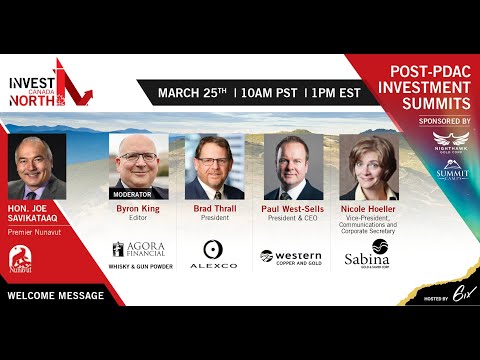
0:37 I'm Joe Savicata, the Premier of Nunavut. What a year it's been. COVID-19 is unlike anything we've ever experienced. It's meant shifting priorities, balancing urgent needs with long-term goals, and it's met economic development almost everywhere, not just in Nunavut, it's temporarily paused. But as we start to make progress in our fight against COVID-19 and see a path to the end of the pandemic, we begin to rebuild and refocus our energies to Nunavut's industry and development. The government of Nunavut works tirelessly to meet the needs of Nunavut Mute and our communities. So we all need to work together to advocate, to create the change we want to see, and to work hard and make our voices heard.
1:22 And this is where we need you. Mining and the industry are a critical piece of this puzzle. Training and jobs creation will develop our communities and instill long-term skills and opportunities for Nunavut new jobs, infrastructure, choices and opportunities. These are the outcome of a successful engagement between government and industry. Nunavut is open for business. We are committed to responsible development, and we are here to succeed and lead the way for future generations. Nunavut is resilient. Nunavut is vibrant. Nunavut is ready to take on new challenges and opportunities, and Nunavut is ready to do business and to succeed in new ventures. And as I've always said, investing in Nunavut is nation building.
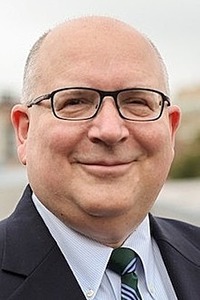
2:11 A strong Nunavut means a stronger Canada. So Here we are, ready for mining in the territory, and I'm excited. Ready to succeed and thrive in Nunavut together. So let's get to work. Well, hello, everyone. Thank you for being here. I am Byron King. I'm a newsletter writer who covers the mining and energy space with a group called Agora Financial, a publisher out of Baltimore, Maryland. So I'm back East.
2:51 I'm a geologist, among other things. I've got a Brunton compass. This is my Brunton compass. This one's a 1913 Brunton compass. I don't use that one too much. I use the more modern one. And I also have a rock hammer. I use this. And what I do is I go out in the world and I look for great ideas. And today, I'm going to bring you 3 great ideas. And we are talking about issues that concern the great north of Canada. We are really going to take an arc of geography today, a fascinating tour through geography and geology and even geological history. We're going to work in Yukon and we're going to work in Nunavut and we're going to kind of skip over Northwest Territories, but Nunavut used to be part of Northwest Territories, so it's all kind of the same. But fascinating stuff. We have 3 great companies. The first one is Alexco, which is a, you might call it a silver miner, but lead, zinc, silver.
3:45 And they are in the Yukon. High grade stuff, Really, really nice, really juiced rocks with veins. I've been there. I've picked up some of that Galena, just, oh man, workout kind of stuff. It's just great mineralogy, terrific high grade material. And we're going to look also in the Yukon at Western Copper and Gold, that Paul West sells, who's the CEO. This is a much different kind of deposit, big, huge, disseminated ore, lots of tons, lots of scope to it, big, broad system there that they're working on, gold, silver, copper, a few other odds and ends, really interesting mineralogy there. And then we're going to take a leap up to Nunavut into above the Arctic Circle. I mean, we're going to get cold, so wear your fur line swim trunks on that. We've got a company called Sabina, and we have company rep, Nicole Huller, who's going to talk to us about that one. This one's fascinating in many respects. It's pre-Cambrian, what are called banded iron formations.
4:45 This stuff was laid down at 1.8 to 3 billion years ago, Really fascinating geochemistry about it, but it banded iron formation. So you think, oh, iron, no, gold. You said there's some chemistry there. We'll get into that, but we've got 3 great companies. I'm gonna give each of our representatives a chance to, you know, give us the rundown. We're going to start with Clint Nauman of Alexco in Yukon, except if you sort of stare at your screen, you'll notice the sun seems a little lots because Clint's coming to us from New Zealand, but don't tell anybody that's where he's from. You might detect that in his accent. Clint, it's a pleasure to see you. It's been too long. Please take a few minutes and tell the listeners and viewers all about Alexco and what you're doing up in the Yukon.
5:32 Yeah, well, thanks, Byron. So, yeah, temporarily in New Zealand, I would say, having gone backwards and forwards to the Yukon, most recently. So We at Alexco own the Keno Hills Silver District, which Byron alluded to, and we're moving that district to production. We made the decision to put this district in production in last September, October. We were quote unquote a little too clever by 0.5. We thought that once the BC-Yukon border was opened up after the first wave that we had a good opportunity to start ramping up, scaling up, recruiting, and starting all of the capital and underground development works that are necessary to move this district to production.
6:32 Second wave came along, the Yukon BC border restrictions were reinstituted and it stays that way as we speak. Regardless of that, with the dedication of our employees and the help of the Yukon government, who has been very cooperative, we have been steadily moving forward towards production, having invested most of the capital on the PP&E basis, property, plant and equipment basis, before Christmas, primarily in capital works in and around the site, in the mill, et cetera, to be rewarded with the first concentrate being shipped in January.
7:16 So At the present time, we're mining from 1 deposit in the district. Our headgrades are in the 900 to 1,000g per tonne range, silver. We're shipping concentrate and we're developing 2 other major deposits that were discovered, or that we had discovered here in the last 5 or 6 years, and they will be the backbone of the operation going forward. So once in production, we'll be producing about 4Moz of silver per year. Our average head grades would be around 800 grams per tonne silver.
7:53 And the current mine plan is 7 to 8 years, although I will note that we are currently redoing our technical work since we had originally put up and are executing a mine plan that was developed in a $14, $15 silver environment. Silver is far in excess of that at the present time, so it actually changes the dynamics and the configuration of the plans for each of the mines. So that's where we're at. We have 125,130 odd people on site at present time, 20, 30 contractors, and moving steadily, though slowly forward, given that we have these very rigorous restrictions that we have to, and protocols that we have to implement with our workforce.
8:49 So yeah, looking forward to being Canada's only primary silver producer,
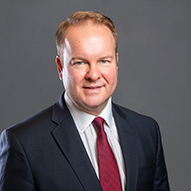
8:54 at design capacity, hopefully in the third quarter of this year. Great, thank you, Clint. You summarized it brilliantly as you always do. We could talk all day about the general quality of that deposit, but we're going to hand the ball off now to Paul Westsells, who's going to tell us what's going on with Western Copper and Gold, also in the Yukon, and not too far geologically, geographically, as crows fly from your deposit. Paul, tell us what's going on with Western, please. Sure, And thanks, Byron, for hosting this. Yeah, I mean, so I mean, Western has 1 asset at this point, which is the casino project. We've been developing it for a little over a dozen years now.
9:45 This is a large copper gold porphyry located sort of in the center of the center south of the Yukon. We're right next to Newmont's coffee project. We're sort of surrounded by the white gold assets. So it's a really exciting area. There's a lot of gold, there's a lot of development, a lot of stuff happening there. But so I mean, we've had this project for 12 years. We moved it all the way to a feasibility study in 2013. We're in a bit of permitting, sort of pressed pause on permitting, mostly because copper was down at $2. But now we're really at a point of relaunching things. And that started last year with an update of our resource. So the resource is now 21 million ounces of gold, 11 billion pounds of copper. I mean, This is a significant Copper and Gold resource.
10:41 We raised $30M at the end of last year and we launched towards an updated Feasibility Study. We hope to have an updated feasibility study around the end of this year, but you know immediately we're going to put out a PEA and that PEA should be out in Q2.
11:02 So that's sort of step 1 is to get that feasibility study updated. Then we're looking to get back into the permitting process. We think that that's going to be about 6 months after we issue that PEA and then get the project permitted. And it's obviously a very exciting time, well, I mean, for all metals, but particularly for copper, lots of excitement around the space. And so pretty happy to be sitting on all of that copper and gold up in the Yukon. Absolutely, I've been there. It's a beautiful project. You've got terrific people who helped put it together over many years and we're grateful to have excellent staff such as you have there.
11:47 Without further ado, let's transform ourselves or transport ourselves up to none of it. Nicole, you're with a group called Sabina, and I gave a little bit of it away, but you're dealing with these Precambrian rocks way, way, way up there in that post-glacial terrain. And man, it's far away, but it's worth the trip. And why don't you tell us why? It sure is, Byron. Thank you very much. And thank you very much to Invest Canada North for hosting this panel. Yes, we have been, Sabina Gold and Silver has been in the North for a long time. We acquired the back of a project, which is actually just below the Arctic Circle, but not quite up there yet. We acquired the project in 2009, And the project at the time had a 2.5 million ounce resource in all categories. And since then, you know, we've just been working away at it chipping away at it. It's an 80 km along district. It's got 5 properties on it.
12:45 Between 2 of them, George and goose. There are just over 9 million ounces to date. We've really been focused on the goose property because that's where we thought the center of gravity was for initial operations. So we've taken that project. It's got about 6.3
13:03 million ounces in all categories. We're using 3.5 of that in our latest feasibility study that we've just announced a couple of weeks ago, right when the gold price went down $300 announced. Unfortunately, timing is everything. And, advancing that project through permitting that we have got all of our authorizations, necessary authorizations and permits required. We've also got our social license. Of course, you can't have 1 without without the other advanced through feasibility study. We're now in detailed engineering, and we're also refreshing our financing package. And we're looking at a project that contemplates initially producing close to 300,000 ounces a year over a 15 year mine life. Average life of mine production is 223, but in the initial years, it's going to be around that 280 mark. So, you know, substantial relevant production.
13:55 High grade, these are 6 gram open pits. So these are the highest grade undeveloped open pits in the world. So
14:02 the challenges of working in the North are really upset when you've got grade like ours. So working towards finalizing that debt process, hopefully we'll have a market towards the end of the year that we'll be able to go out and acquire all of our project financing and make a reduction decision. That's great. We could talk all day. We're a little bit constrained on time. I'm going to ask a general question and then we'll sort of hit again. I love the geology side and all 3 of you guys have fabulous geology. We can talk about that all afternoon. But if the jurisdiction and the legalisms and the social license doesn't work, it's just interesting science. So let's go beyond the interesting science.
14:47 Clint, tell us and tell the viewers out there, tell us about the nature of your mineral claims up there, the tenements as they are sometimes called, and the nature of doing business in the Yukon. I'll just preface it by saying that you picked this up in the Keno Hill District, in what used to be an environmentally distressed area because it's a historical mining area with legacy things that go back, you know, a century or more perhaps. But you picked it up in a sense as an environmental restoration. Here you are mining silver, lead, zinc, et cetera. Tell us about your claims and working with the Yukon government and First Nation relations. Yeah, Thanks, Byron. And it's true.
15:32 Back in 2006, we acquired the Keno Hill Silver District from the government of Canada. It was essentially bankrupt at the time, and we took it through a process with Canada to wrest the title and control of
15:52 the claims. And there's a fair amount of fee land also within the district that occupies a total of more than 200 square kilometers and was the host to more than 30 underground silver mines in the past, primarily between the early 1900s and like 1980. And Yes, that's true. At the time, we were working on reclamation remediation projects in the north, and we had caught the attention of the Canadian government in doing that and some of the work that we had done. And they actually had approached us on whether or not if they decided to try and divest themselves of the liabilities that Keno Hill, would we be interested in something like that? So a process was undertaken. We were the preferred purchaser and we acquired the assets and liabilities at Keno Hill subject to an indemnification.
17:01 And the indemnification is far reaching as it goes to those historical liabilities. And we were essentially an environmental company. And as you know, we developed both the mining side from 2006 and the environmental company, you know, side by side. The environmental company did expand it throughout Canada and the US, and we sold that company last year to focus on, you know, putting Keno Hill back in production. So, you know, sanctity of title is everything. The environmental work that we've done at Keno Hill has reduced
17:36 the metal loads in the local watersheds by more than 90%. We've contributed more than $20 million to that cleanup at Keno Hill, but ultimately the final clean-up and closure of all those historic liabilities will take place over the next several years. It's a big project. It's funded by the Government of Canada. We essentially are the contractor doing the doing the work as well as contributing a small portion
18:06 And it's a great place to be in because it pulls together the government the communities the First Nations And in it and it checks all of the boxes, on the ESG side of the business. So yeah, we feel blessed and not only did we acquire this great district, but it'd been thoroughly unexplored, with a little effort now we have more than 100 million ounces of silver in the ground in all categories and it's sort of sitting on the cusp of maybe increasing that. So we'll see. So yeah, it's been a great experience. Thank you very much. You're too modest.
18:52 The environmental side of your company has done incredible work. I mean, you've done work in the US for the US EPA. You were the ones who, They picked up the phone and called you when they had that massive blowout in Colorado a couple years
19:05 ago. I remember I remember that story And I don't want to I don't want to burn up our precious moments talking about that But listeners viewers out there this company knows what they're doing environmentally paul same question, but you can give us a different take on the Yukon working there in terms of what you've done, in terms of your permitting and your relations with the First Nations. Give us a rundown on that, please. Yeah, sure. I'll start off a little bit, because I was listening to Clint. The origin story, I'm always interested in these deposits and the origin. And just to let the people, the viewers know, I mean, you know, we acquired this in 2006 from Ross Beattie. And this is another Ross Beattie copper project sort of making its way forward.
19:52 And sort of that's how we got it. But yeah, it's been, it's, you know, I mean, for those of us that have been in the North, and I think everybody here on this call has been up in the north now for, you know, decades plus, it really captures you. And it's a really exciting place to work. I mean, it's sort of a big family up there. And, you know, It's a real powerful sort of community that you have. And particularly what I found in the Yukon is that, there's, I think, depending on who's doing the counting, 40,000 people in the Yukon or something like that. I mean, it's a very small community.
20:32 The First Nations are quite woven into the fabric of that society. I mean, they're, it's not sort of like, you know, us and them, it's sort of 1 big group. And so it's been a real pleasure to work with, you know, the territorial government and the First Nation governments and getting to know them and getting them involved in our project. And I think it's, and I'm sure Clint can talk about some of the challenges that we've had with permitting and regulatory. But I mean, the government is working on it. There's a number of initiatives away that are fairly significant. And, you know, they acknowledge the timelines. It's very straightforward. It just takes way too long.
21:19 And so, you know, working on timelines and ways to make that more efficient. But yeah, it's been an absolute pleasure up there. The First Nations, you know, particularly the First Nations that we deal with, you know, The Selkirk First Nation already has the Minto mine operating. It's sort of at the end of its life. So we've got a mine that's at the beginning of its life. So they're pretty keen on seeing that move forward as well. Thank you. Nicole, a lot of the listeners, viewers out there, you know, they may have heard of Nunavut, but they're probably not familiar with it as a long-term historic mining jurisdiction. I mean, if you say Yukon, everybody says, oh yeah, Yukon, yeah. Robert Cervas, or if you say Nevada, or things like that. Yeah, people have a feel for it, but none of it is relatively new. It was carved out in 1999, I believe, as from the Northwest Territories, big, huge chunk of Canada. None of it is immense.
22:16 Speaking of population, what is it, 40,000 people? It's less than that, Byron. It's about 33,000 people in Nunavut these days. So it's literally the size of Europe. Yeah, what's it like working up there? What's your arrangement in terms of the mineral claims and working with First Nations and the government structure up there? How are they to work with? Well, none of it, as you mentioned, was formed as a result of land claim settlement. So everything is settled. There is 1 party that you have to deal with, the Inuit. They're the landowners and they are the communities around us. We are fortunate that ESG is basically built into the permitting and environmental assessment regime. So the rights and obligations of all parties are clearly defined and on the table.
23:04 It's a rigorous process. It does have federal oversight, but everybody knows
23:10 what they're coming to the table for and what they have to give at the table. So that's been really good for us. It has taken us a long time and we devoted significant amounts of money and time to community engagement. I think we've had over 350 community engagements with all, with regulatory agencies and communities over the last 5 years or so. So a significant of time and energy and input has gone into that. None of it is divided into 3 regions and ours is the Katikmiit region, which is in the West. We've had a long-term relationship with the Katikmiit Inuit Association, which is the landowner in our region. We have signed an Inuit impact and benefits agreement, which for the most part has just really formalized what we've been doing throughout the years.
23:58 We think that they understand that this is the first mine of what we hope to be a multi-generational district. So, it's been a very good, positive, positive experience.
24:13 I'm going to stick with Sabina and Nicole for, you know, sort of rather than bounce back. The, the, the, one of the issues with Nunavut is that, you know, it's way far north, as we've discussed. It's not connected to the rest of North America by a highway grid. The only way to get things there is to fly them or to bring them on a barge in the summertime. Your company, your group has done some astonishing things logistically in terms of being able to bring those things up and keep your costs under control and have what you need to do. Why don't you talk a little bit about that? Because you are more than, you're an explorer, but in a lot of respects, I've viewed you and when I wrote about your company, one of my newsletters a while back, I said I'd put you into an early stage development category in terms of what you've done logistically. Could you maybe expand on that for us, please? Absolutely. We've done significant earthworks and pre-construction development at the project over the last couple of years, actually.
25:16 You put out a feasibility study and the project quite literally is in the middle of nowhere. The silver lining to that is that the project is literally in the middle of nowhere. If this project were down south, it would be owned by major several majors and be mined out. So we are really have been lucky to accumulate this district. So one of the things is when you put out a feasibility study, and you say this is how we're going to access and supplier project. It's a paper exercise. So what we determined to do was demonstrate that it is feasible and it does work. So 2 years ago we built our port facility on Bathurst Inlet. We brought in 3 sea lifts that year and then the following year in the wintertime we built our winter ice road, 172 kilometers from the port to the site to haul all of that equipment to site.
26:07 So that's going to be our chain of logistics going forward. And so now it's not just a paper exercise. We've proven, we've demonstrated it. Building fuel tanks, We're focused on that. We started construction of fuel tanks that are port site a couple of years ago as well. We're going to need a lot of fuel for this because this is fully diesel operated. Having said that, actually, as part of our feasibility study, we have looked and what we're doing now, looking at alternative fuel supplies. So that's to come down the line. At our camp, we've obviously done a lot of development. We've developed 4 kilometers of all weather roads, connecting camps and portals were actually starting our decline exploration decline.
26:55 Portal this year. We're going to start building that out. We've also been constructing lay down areas, fuel tank storage areas. We've just done the financing actually to procure some long lead items to get on to the sea lift this year. And those include, you know, steel for our mill plant, our truck shops, our crushing facilities, the 1st and 2nd crushers, initial 250 unit camp accommodation, and our first phase of our underground fleet. So we've been moving things along very aggressively, I should say. We also extended our runway from 3000 to 4,500 feet so that we could accommodate Hercules aircraft. So we had a number of Hercules flight. Last year I think we had close to 200 flights into camp during COVID.
27:55 So we've been working very hard behind the scenes. That's a lot of Hercules. I'm going to go to Paul in a second. I have to mention, you said that if this deposit was down south, it would have been developed. If this deposit was down south, the one I compared it to geologically was the Homestake Mine in South Dakota, which ran from 1876 to 2100, 25 years and produced over 50 million ounces of gold. Not that I'm putting numbers on your charts, I'm just saying that when you get into these banded iron formations, they are a gift that keeps on giving decade after decade after decade. I mean, we can talk about that all day, but we won't because we're going to go to Paul West South. And Paul, you had a visit from no less than the Prime Minister of Canada, Mr. Trudeau, talking about your logistics a while back. Why don't you tell us what's going on in terms of how people can get to your site and how you can build a huge project that involves moving literally millions of tons of earth and things like that.
28:56 Yeah, I know. It was pretty exciting for the Yukon. I can't remember how long it had been since there had been a Prime Minister. But yeah, the prime minister came up in 2017 and announced the Gateway Project, which was 3 roads to resources at the time. It's now since changed and it's a few other things as well, But importantly, it included the road to our casino mine. And as we all know, I mean, government promises are easy to make that they're a lot more difficult to deliver on. And the thing that I'm excited about is that flash forward now, I guess, almost 4 years. And, you know, the government has agreements with the First Nations, which was part of the process. They actually have the first section of the road through the regulatory process. Even the government has to go through the regulatory process in the Yukon and has that permitted and yeah, so they plan to be breaking ground on that this year. But yeah, I mean just sort of echoing a little bit about, you know, sort of some of the, you know, very good work that Sabina has done. I mean, the Yukon is actually blessed with pretty good infrastructure. I mean, we are, I mean, I sort of, I tell people like, look, sure, there's a border between the Yukon and British Columbia, but you know, really, it's just a line on the map. I mean, there's road networks all from northern British Columbia.
30:22 Into the Yukon. And most importantly for myself and also for Clint is the port of Skagway and the port of Skagway is shipped in its heyday. You know more concentrated than we're contemplating with our large casino project through it. Lexico uses it right now. The mental mind uses it right now. So it's really, I mean, our project works, this big, these large, low grade, sort of concentrate producing projects because of that infrastructure, because of that road network, because of that investment by the federal government and the fact that we have the port of Skagway just right down there and ready to go. Great. Well, that's a great introduction to Alexco and Clint because Clint, you're working in an area that's been mined for 100 and some years. So there are roads, there are power lines, there's a whole infrastructure there. But tell us what you're doing right now. And Paul actually gave a little bit of the game away because I guess you're moving product down across the coastal range down to Skagway.
31:32 But tell us about, you've got an ore body, a mine, a mill, and you're hauling stuff. Tell us what's going on there. Yeah, my hat's off to Sabina. I mean, they've done a great job in the North. And I've been kicking around the North for a long time. And I would say that the Yukon, as Paul says, has the great advantage of a fairly good, although we always talk to the government about needing more infrastructure, but the infrastructure, in fact, is not too bad. So we are 400 plus kilometers north of Whitehorse, which is the government seat in the Yukon.
32:22 There are all weather roads all the way to site. There is a captured or stranded grid, power grid in the Yukon. It's not connected to anything else in Canada. It is an aging grid and has caused some problems from time to time. And we're on that grid. There's actually a hydroelectric plant, as you mentioned, that was built specifically to serve Keno Hill. That plant wheels power onto the grid at this point. And then the government is very active, as we speak, upgrading the grid. Good news, bad news. The bad news is that our power is currently down because they're switching over to new infrastructure feeding into our site as well as Victoria.
33:16 And they're investing in upgrading the road. So from the workforce perspective, we're a fly-in, fly-out operation. Most of our workforce is either BC or Yukon based, and our product goes out by road down to Skagway that Paul talked about then on to the ocean and down to Seattle where it's transloaded again. So we ship you know 40-50 tons you know a truck you have a truck going you know every day or so you know carrying sealed pots with concentrate, either lead concentrate or zinc concentrate. Great majority of our Silver is in the Lead concentrate as you know.
34:05 Once we hit our design stride here, those parts are going to have about 15,000g per tonne Silver in each of them, and there's about 50 tonnes on a truck. You can do the arithmetic on the value of those trucks going down the road. Yeah, so we're in a very accessible, well-supported area of the Yukon. I want to emphasize to the listeners and viewers out there that Clint was talking about. He has 2 concentrates, a lead con and a zinc con. And that's based on the mineralogy, the silver, as the term is reports to the lead. But boy, those are valuable trucks driving down the highway.
34:51 And now we're burned up a bunch of our time. We wanna, I'm gonna give a wrap up here. We're gonna do a wrap up and then we're gonna open it up to questions from our listeners and viewers who are emailing them or texting them in on the system here. So I'm going to ask each of you to just sort of give the viewers out there a quick reason why right now, just in this particular moment, why is it a good idea to invest in your company? Aside from the ordinary things, copper is doing great and gold is valuable and everybody loves gold and silver and electrify the world, solar panels need silver, all those sort of things. Paul, give us a read, give the listeners and the viewers out there a reason or an explanation of why going forward is Western Copper a really good solid place to put some money. Not only do you put it there, you'll get it back with a gain eventually.
35:55 Right. Well, although I wanted to start with it because copper and gold are doing so well. One of the things that attracts me to this project was really looking at the copper space in particular. Obviously, we've got lots of gold and that's exciting, but if you look at the copper space and you look at where the price of copper is going, and I'm not gonna get into that, because luckily there's about 10 articles a day about how good copper is right now. There's not a lot of assets, And there's not a lot of assets in, you know, let's be honest, I mean, first world jurisdictions like Canada and the US that have, you know, are economically developable.
36:44 And, you know, that's going to be proven by our PEA. And third, where we as a company have a good relationship with the government, good relationship with the First Nations. I mean, these are not controversial sort of projects and often these big, upper projects can be. We've worked very, very hard to make sure that we have that community and local support on the project. And so I look at that space and I say, you know, Western is the most compelling story in that space, in the sort of big copper gold space. And we've now got, you know, almost a switch over of the board. We're looking obviously to add to the team as we get back into permitting, you know, PEA a couple of months away, right? I mean, the timing really to get in is now just because really we've got that PEA coming out, feasibility study around the end of the year, back into permitting, lots of excitement within the company.
37:43 Yeah, Good time to invest. Good time to invest. Clint, give us a rundown of what people should expect out of Alexco over the next 3 months, 6 months, a year, and why should they run out and buy some shares right now? Yeah, thanks, Byron. You and I have talked backwards and forwards on silver, of course. So I mean, I'm reminded of the discussions that you heard around the table not too long ago when the silver to gold ratio was like 120 to 1, right? And people were talking about, well, this is the new novel. Well, guess what? Today it's 66 to 1, right back to where it should have been. So silver has been a great investment. It's volatile.
38:34 It's a small market. It has both an industrial and an investment characteristic to it. So we are a high-grade, low-capital, high-return project in the Yukon, as I mentioned, with a design, 4Moz of Silver per year. We're the only pure play Silver producer in Canada. And notably, 75% or more of our revenues are driven by silver. So, we're a pure silver play and a shrinking primary silver producer market. Even you would see 1st majestic acquiring Jarrett Canyon here and just a couple of days ago We have now moved into the gold space. So there's not many of us left I don't quite know which we're the wrong right side of the equation here We are the only you know, one of the few primary silver players now in and we're in a tier 1 jurisdiction You know where there's sanctity of title where we get to keep our assets as we go into the future.
39:43 We have a mine plan, we need to execute on that, we have great exploration, and especially in 2021, the exploration upside is such that if successful, I think it'll have a strategic effect on the way we move forward at Keno Hill. So yeah, we have demonstrated upside and we're in a great commodity. And our group is really excited about the future here. Absolutely, thank you. Nicole, you gave us a good, good solid rundown on Sabina, but you know, this is, here's another, here's another opportunity to, to bang the drum. So, so let, tell, tell the, the viewers and listeners out there, you know, why, why you think Sabina is really, you know, a good place to be for now?
40:36 Well, you know, and just listening to both Paul and Clint, I think this behooves all of us. I was just at the BMO conference, virtually at the BMO conference a couple of weeks back, and they do these polls every day. And one of the polls on 1 day was, what is the biggest concern to investors in the mining sector? Where last year, and maybe for the last, I don't know, 5 years, it would have been, you know, return on investment and getting your balance sheet sorted out and all of those kinds of things. This year, overwhelmingly, it was growth. Because, you know, these companies have spent so much time getting their houses in order. They have not been developing new resources. They've got to replenish these ounces because every year you're in business, you're going out of business by a year.
41:27 I think that's a really good niche for us to be in. Back river, advanced, large district scale, high grade, really robust economics. It's, like I said, if this was in the southern, South of the Arctic, it would be snapped up and gone. It would be mined out at this point in time. Multi-jurisdictional, and I think that's the key. This is a company maker, and we have our own internal organic growth for years to come. Well, thank you. We have burned up most of our allotted time here and we're under, we want to leave time for viewers to ask questions. And so we'll wrap it up. I'll merely sort of add to 1 quick point. It's more like restating, but in terms of investing and in terms of investing in the mining industry, mining companies, you want the highest grades you can possibly get, grade as king. Then you want size and scope in terms of lots of it, as much of high grade as you can get.
42:37 You want the project to be doable. It's great that it's high grade and big numbers, but if it's locked up in some national park, some place never going to be developed. With the 3 companies that we're talking to today, and I'm speaking to the viewers out there, please, you know, you are looking at high grade in their respective niches and what they're doing, you know, the Keno Hill system, the casino project, You know, when I say high grade, it's a high grade considering the size too, you know, I mean, and then of course the grades of gold that we're seeing up in Nunavut with Sabina, these are really sweet projects, man, you know. So I've covered all of them, I've followed them for many years. Clint, in your case, probably 12 years, 13 years now.
43:25 And so I'm going to open the floor now to people to ask questions. I thank everyone for their attention span for listening. I thank the Invest Canada North group, and I thank Nighthawk Summit Camp who helped to sponsor this and bring us all together. Clint, Paul, Nicole, I thank you for your time, and Marie and the listeners out there, I thank you for your time and your attention span. But please, if you haven't sent a question in, please do now, and we will take them as much as we can within the time we have. Thank you. ♪♪