Transcript
Automated transcript · Written by software from the replay's audio. It can mishear names and figures; the replay is the record.
0:36 Good morning and welcome to the second annual Invest Canada North Post-Prospectors and Developers Association of Canada Summit. My name is Caroline Cochrane, Premier of the Northwest Territories. The Government of the Northwest Territories, along with the governments of Nunavut and the Yukon, is pleased to be a part of this important opportunity to connect global investors with the competitive advantages and opportunities in Canada's north. This year, the Summit is focused on ESG and partnerships, the opportunities and advantages of resource development in the north, and the plans companies have for 2021. And I can tell you in the Northwest Territories, there's a lot to be excited about.
1:24 The resource sector has played a significant role in our economy for decades, creating jobs and business opportunities for residents and our 33 communities. Our current government's mandate has identified increased exploration and development of the NWT resources as a priority. Despite the impact COVID-19 has had on our residents and the economy, we remain committed to this goal. The Northwest Territories is rich in resources, and our government is hard at work to keep the sector healthy while exploring ways to create an attractive, sustainable investment climate. Mining and exploration are the biggest source of private sector jobs and income for our residents, and as we get back to business, there will be a major buyer of products and service from territorial companies.
2:22 The government in the Northwest Territories is actively addressing territorial infrastructure challenges to improve project economics. Working with the federal government, We're investing in road and energy infrastructure, like the Tulsan expansion project and slave geological province 0.25. That will help connect resource rich regions of the territory to markets help green the mining industry and lower operating costs.
2:51 The Northwest Territories offers a low-risk investment jurisdiction that is setting the bar for Indigenous partnership, 1 that contributes to improved outcomes for northern communities and meaningful opportunities for northerners. Canada's north has a lot to offer and I hope that over the course of the summit you'll be able to learn about everything we have to offer. Thank you for your interest in the North. I hope everyone enjoys the summit. Okay, well, welcome, everybody. We've got an exciting panel here today with 3 experts within the mining space from the territories.
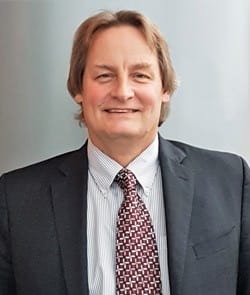
3:42 First, Peter Tolman with Klondike Gold. Peter is a professional geo, experienced mining entrepreneur and professional geologist. He has 35 plus years experience in the mining industry. Mr. Tolman has worked in Canada, Chile, Mexico, and Australia. His career has included the grassroots discovery and delineation of 3 mineral deposits, 2 of which have been mined diversely, including 1 gold, 1 anemone, and 1 zinc deposit. He is currently director of Fiora Gold Limited, which operates a Carlin-style open pit heat beach Gold mine in East Central Nevada. Mr. Tolman has either founder, director and or senior management positions with publicly listed Canadian mining companies continuously since 1995.
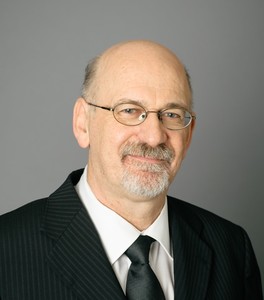
4:30 Next we have Kivan Sivahi, PNG and an executive MBA. Kivan has over 20 years of industry experience, having held various senior roles in operations, projects and corporate development. Prior to joining Nighthawk, Mr. Selye has served as the Vice President of Corporate Development and Technical Services with Mountain Province Diamonds, where he was responsible for providing operational and technical oversight for the Mountain Province's jointly owned 12,000 tons per day diamond mines in the Northwest Territories.
5:03 Mr. Selye was previously served as VP of Corporate Development and Technical Services for Kirkland Gold in 2016 to 2017, where he led the company's due diligence team behind the 2.4 billion merger with New Market Gold. He held the same position at St. Andrew Goldfields from 2013 to 2016, where he spearheaded the company's sale process, culminating in the sale of Kirkland Lake Gold in 2016. Prior to those roles, he held various operating positions with Lakeshore Gold, FNX Mining, and Vale from 2002 to 2013. He holds a Bachelor of Applied Sciences, Mineral Engineering from the University of Toronto, and an Executive MBA from the Kahlag Schulich School of Management.
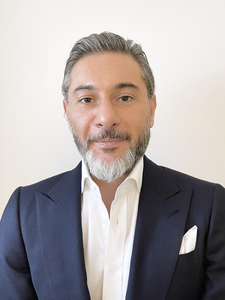
5:49 Don McDonald, President, CEO and Director of NORSINC. Mr. McDonald has over 30 years of experience in mine development, operation and financing. He has been involved in the development and or operation of over 20 mines in North and South America, and completion of multiple mine financings. He's a charter professional accountant with a bachelor's and master's degree in engineering from Oxford University. He was formerly CFO and acting CEO of KGHM International, and prior to that served as CFO of NovaGold, De Beers Canada Mining, and Dayton Mining. He is the director of the Mining Association of Canada and the NWT and Nunavut chamber of mines. So Don, perhaps we'll start with you to sort of give a basic overview of NORZINC.
6:36 Yeah, please. All right. Thanks very much for having me, Paul. NORZINC is listed on the Toronto Stock Exchange under the symbol NZC and over the counter in the US under the symbol NLRZF. Our major asset is the Prairie Creek mine, which was a silver mine originally built in the early 1980s as a Cadillac silver mine and now is being developed as a silver zinc lead mine. It has a very high grade zinc, lead and silver. The zinc equivalent is about 25% zinc, sorry, 23% zinc equivalent in the reserve And our inferred resource is running about 25, 26% zinc equivalents as well. We had a feasibility study prepared in 2017.
7:25 And then in 2020 and into this year, we are working on a plan to increase the throughput from that study by 50% and potentially through drilling increase our reserves
7:40 by 50% and then increase reserves by 50%, hoping to be able to complete that by 2022. Fantastic. Kevan, why don't you tell us a little bit about Nighthawk Gold and what you've been up to there? Sure. Thanks for having me, Paul. Nighthawk is a Canadian-based junior exploration company trading on the Toronto Stock Exchange under ticker symbol NHK. We also have a over-the-counter listing in the States under MYMZF ticker symbol. We own a very large land position in what is referred to as the Indian Lake Greenstone belt in Northwest Territories. The size of the land position is about 930 square kilometres, 60 kilometres long, 20-30 kilometres wide, over 220,000 acres of highly prospective ground.
8:31 The core asset is the Colmac Gold project, which was a site to a past producing Gold mine under the Royal Oak days. Essentially, right now it is our core asset, which hosts the majority of our current resource base that was just published a couple of weeks ago. Across all categories, we have just over 3 million ounces, that's including indicating and inferred, if I can kind of combine those 2 together. But in addition to that, there has been a lot of targets that have been identified on the big plan position that haven't really been tested. And our vision really is to aggressively over the next 2, 3 years, explore our grounds in an effort to 1, increase our resource substantially. But more importantly, our long-term vision is to work towards building Canada's next gold mining cap.
9:17 We believe that we have the size and the scale and also the targets and the assets that can actually over a long period of time deliver that vision for us and our shareholders. That's great. Good news for Northwest Territories. Thank you. Peter, let's hear a little bit about Klondike Gold. Thank you, Paul. Klondike Gold is centered in the Yukon on the Klondike Gold fields. So we trade on the TSX Venture under the symbol KG. We trade in Frankfurt. So we have a European listing under the symbol LBDP. And we're also on the USOTC
9:54 under the symbol KDKGF. The Klondike Goldfields is our only property. It's our sole focus. And we own 600 square kilometers of basically the entirety of what you would consider the Klondike Placer goldfields. We are a junior company, my preference historically, and the small group that I have with me right now, we go and make discoveries from places where there is currently nothing. So the backstory to Klondike was for 120 years, there's been 20 million ounces of gold mined from surface gravels with no considered known source until now. And what I did was take on this company 5 or 6 years ago with the objective of doing basic geoscience and mapping it for the first time. This is a matter of interest to Canadian geologists.
10:54 It had never been mapped. And discovering the sources of the Klondike. And so we've progressed. We've made multiple discoveries of orogenic Gold deposits or Gold mineralization, sorry. And we are working on our maiden resource estimate due in 2022 that will actually for the first time document that there is gold in those hills outside of Dawson. And I would note that we're on the traditional territory of the Trondek Gwich'in. That's great, Peter. Thank you for that. So I think we'll talk about a few topics here today. The first one is around environment, social governance, or the way it's known as ESG, and various partnerships. Starting out, you know, how are you incorporating ESG into your business model? And how are you leveraging it to attract investment capital? And Don, maybe we'll start with you in exploring that topic. Sure. So ESG, for those who are not familiar with it, is obviously environmental, social and corporate governance.
11:57 3 absolutely critical areas for developing minds and also very interesting and attractive for investors right now. There are a number of investors that will do a rating of the company's ESG and they will determine their investments based upon it. So on the environmental side here, you know, working and developing a project in the North, I think we're all extremely familiar with environmental concerns, environmental issues. We have a very rigorous systems of development within the territories and I believe that building a mine in the territories is one of the most, you know, the environmental conditions are some of the highest and toughest in the world. So you have to be super aware of environment and it's very important to develop a mind in our area. We're in a much better position, I think, from an environmental side than many parts of the world. On the social side, obviously, we have a lot of indigenous involvement in projects in our area, in our mine. We have 12 indigenous groups, 9 communities, representing about 28% of the communities in the Northwest Territories are in our region, the Dachau region, and it's super important that we develop the mine with a recognition of the traditional rights, traditional knowledge, the Dene knowledge that exists within the communities and have the community support. And then on the corporate governance side here, I think it's important to make sure, and this goes beyond just simply the corporate side, but at the corporate level, we have just simply looking at our board directors of
13:27 our 6 independent directors, 2 of them are women. I'm hoping that we will be able to add a third in to make it 50-50 for the women's representation on our corporate side here. But also from the side of developing the mine and making sure that we are very broad in terms of our access to local communities, to the work, that we have a very strong governance process with a series of independent roles that are taken and also that we are very aware of, as I said, integrating the communities within our
14:02 workforce. And we have a very, historically, we've had a very large percentage of local community workers at our sites. And when we develop the mine and operate the mine, the Prairie Creek mine, we anticipate doing the same for the operations as well. That's great, Don. Kivan, you've been a long-term operator in the North Northwest territories in particular. Where do you see ESG? What are you doing in your business around that? Sure. Thanks, Paul. If I could echo all the same thoughts and ideas that Don was just talking about, it would be great. But what I would add to that is, first of all, I think I'm really pleased that I'm glad that we're actually finally talking as a business community or investment community in general, we're actually talking about ESG because they're such important and vital issues for sustainability of our environment and our planet and our companies and businesses in general. So I'm really glad that we're actually talking about ESG as a metric of measuring our company's performance, as opposed to in times past, it's only been financial metrics like profits or earnings or share price appreciation or whatever you want to think of in terms of financial metrics.
15:17 So that's really good to see. For us at Nighthawk, really, it's our vision and mission statement and our core values are essentially in line with the
15:27 guiding principles of ESG. I think there's been a lot of work and research that's been done by big financial institutions that actually prove that having those principles can actually drive profitability and sustainability for our companies and businesses going forward. And you know, that's really for me the big thing at Nighthawk is how do we encode that into our DNA and think about our people, the environment that we operate in to ensure the sustainability and longevity of our business and the local communities that we operate. That's great. Thank you. Peter, a bit of a different bend on this. You mentioned Toronto-Dakotan First Nation and recognizing them for their traditional territory.
16:14 One of the things that we've experienced here in the territories is a lot of inclusion, indigenous within the supply chain. What are you doing or envisioning doing, bringing indigenous within the supply chain and including them within the business side for Klondike Gold? Well, as a preface to that, Colomna Gold is a different size company from either of the other 2. We're very, very small. We have a total of 5 permanent paid employees. And so we don't have the metrics that really apply to senior companies, nor on the financial side, do any of the funds that basically the senior professional funds mention ESG to us. Funds mention ESG to us.
17:03 And so ESG to Klondike Gold is solely driven by me as CEO. And I'm fairly certain I have been way ahead of this. So I've chosen to live in the communities that I explore in. And I know that, well, so Clondake Gold probably represents the 2,700 or so junior, very small companies that are listed on FTSX Venture, of which few actually get out into the community and I've made a habit of living amongst them. Actually, the last one was in Newfoundland and Don McDonald and Norzink now own the
17:45 deposit that I discovered there. I'm waiting for him to mine that, that'd be great. But I lived in the community for 10 years and that was in a 70 person Hamlet. I now live in Dawson and that's our base. And so how this is relevant to ESG, I mean, I know personally the concerns of the locals, whether they're First Nation or not. One of the first things I did when I moved in was said, what concerns you about where Colendate Gold is working? And the answer was, there's this massive environmental, you know, unsightly mess up there. And we went and cleaned it up, immediately won an environmental remediation award for Hard Rock for that year, from UConn. And so the behavior is, listen to the concerns of the community first, and make sure that as an ongoing basis, the community is at least informed.
18:50 There's dialogue, there's respect, and there's also inclusion. And so you asked about supply chains, basically, Well, the Toronto Gritchen operate 4 different business prongs, but they have freight, they have fuel, they have heavy equipment, and then they also have hotels. And we use all of those services every day. Yeah, that's great, Peter. It's inspiring, actually, and making Dawson City your home for now, good for you. That's my favorite city in Yukon for sure. On that note, actually, because we have so few people, I've always hired locally anyway, regardless, because that's the most efficient way to conduct the business.
19:37 And so 0.5 or more of our annual employees are First Nation and the majority are in Dawson. And so there's another COVID bit coming, I'm sure, but now that all the Dawsonites are, last year we couldn't have any of them and we could not actually contact our employees or anyone in Dawson. We were just cut off even though we lived there.
20:04 And this year I'm really looking forward to seeing everyone again. It'll be a good year. That's great. That's good. Good for you. Dawn, you mentioned you've got a number of indigenous groups that are impacted by your project. So I think this is a great question for you around that indigenous inclusion piece, particularly on that supply chain. You know, what are you doing now and what are your thoughts going forward, you know, with the plans of going into production? So we have, as I mentioned, there are 9 communities in our area. We have a socioeconomic agreement that dates back a number of years with the GNWT and those communities. We also have IBAs with 2 of the 3 closest communities, and we're working on third community right as I speak to have a benefits agreement with them.
20:55 With each of those agreements, there are requirements for us to carry out certain what we call set-aside contracts with them, important areas where they are directing the work that's necessary at the site. So it's on the business side here. We have agreements to commit to employment in the area. Various levels, there are 5 communities, the 2 communities that are close. And then there's another group, which is 5, including the regional 2, and then a total of the 12. And we have these levels of
21:28 expectations and requirements with regards to employment, and ultimately it goes into the Northwest Territories and then finally into Canada. So on the employment side it's very critical for us and on the business side we have a number of activities that we carry on with the local communities. We do try and work with joint ventures if we can, and particularly joint ventures between the communities. I think that's really important. So we have been working on several of these joint ventures with the local communities, And we also work with the Daecho First Nations, which is kind of the power group in our region. We also provide scholarships, training and so on, because our mine is planning to be in production, full production in 2025, and then construction hopefully starting next year.
22:20 So we have construction skills and we have operation skills and the mine life is 15 years right now with the current reserves we anticipated being longer. So we really want to focus not so much on the construction side, which is 2 to 3 years, but more on the long term jobs and also the long term contracts.
22:40 And similarly, on the contracting side here, the type of contracts we're doing right now, there are a few large, very discrete ones. And those ones, all of those major ones, we are working on joint ventures on. During the construction, we're anticipating doing joint ventures there on the construction activities, and then ultimately have contracts that will go forward onto the operating side here. So it's really important that we have the local communities involved and the office territories is a super sophisticated and knowledgeable area in terms of working with indigenous groups. Certainly I would say around one of the highest in the world. So I think we've got a lot of expertise in our area and Paul you're a part of that puzzle, as is the NW chamber of and another chamber of mines which has multiple parties that are involved, making sure that we're not just looking at a close proximity, but also looking at the entire NWT.
23:44 Yeah, That's a great answer, Don. And you're right, I do have obviously experience within that space. And that's what personally drew me to Northwest Territories was the sophistication and how much inclusion from the indigenous. I think there's a lot to be proud of there for sure. Absolutely. Switching gears a little bit, we've certainly heard about some of the barriers or potentially challenges of investing and operating in the North. However, there's a lot of advantages and opportunities to Northern development. You know, I'd like to hear from you, Keevan. You've got a lot of experience in this space. You've operated with a number of different operators, various sizes.
24:22 What do you think is the number 1 or 2 advantages in your mind for investing in the North? Well, the first one we just kind of talked about, and again, if I can echo Don's thoughts again I feel like I'm writing your coattail here a little bit. But look, NWTF, I can speak specifically to Northwest territories, it's got a rich mining history. I mean, look at the diamond mines, you still even today you have some of the majors globally, major producers are operating large diamond mines in their territories. Right. So Yellowknife is a mining hub. You got access to all the technical skills, resources, anything that you would need in order to start and develop and run an operation. Right. So that's number 1. That's something that sometimes people, I think most people get it, but parts of the investment community, especially for us, like, you know, looking at, you know, to attract investment in the gold space, we feel like we need to do a little bit more, We need to spend a little bit more time talking about the rich mining history in the NWT and we focus on that a little bit when we have our investor meetings.
25:23 But most importantly really is the vast area and the huge potential for mineral exploration, not just diamonds or gold, across all commodities. There's so much untested ground. And I think there are a lot of good projects that are happening right now. And simply the sheer size and the fact that it's, the area is vastly underexplored, I think are the most important things. And, you know, these, these kinds of platforms that we're like, that we're doing today, and these kinds of conversations are basically going to attract a lot of investment towards the North. We just basically keep our
25:55 foot on the gas pedal and make sure that we get the word out. That's essentially a job like myself and Don. So I think that's the number 1 advantage, really, the massive potential for mineral exploration in the NWT. Yeah, we've seen some incredible mining operations. Those diamond mines really have been a game changer in terms of the overall economic landscape. There is no doubt. Peter, what are your thoughts from the Yukon side? What do you think are the number 1, number 2 sort of advantages, investment opportunities? Why Yukon? Well, I'm going to echo the first 2 for Don and Kevin. It's just, I mean, for starters, the North in general is, I characterize it as unexplored, not tending towards underexplored.
26:49 And in Yukon specifically as an example, again, I go back to the, it was 120 odd years of mining and recovering gold, 20 million ounces of gold from within the Dawson District. And there was never a geology map until we did 1. The geology maps that existed mostly said it's undifferentiated rocks and didn't, anyway. Fundamentally, you need geology to discover
27:19 mineral deposits and there just wasn't that completed. So just on that level, it's grossly underexplored. There's great potential. The other investment thing that I really like to get across to mostly the bankers in Toronto and New York is that for Klondike and specific companies, if you're operating in these major communities, this is not a Northern story. Klondike is not. Our unit costs are some of the lowest in Canada. And to be able to have that, you know, near the Arctic Circle is an impression that basically everybody goes, wait, no, that can't be.
28:04 I'm going, well, no, look, the infrastructure is there, the highways, the roads, the power, all of that has been put in at great expense, mind you, by, you know, over time, but it exists. And this is not just a simple, very expensive, very frozen, you can't operate when in fact you can. And so I push that because that is a preconception that is false and particularly from an investment perspective that needs to be changed. Yeah, absolutely, Peter. You know, I mean, the North often is seen to be very remote and a challenging environment to operate in. But, you know, You look at a lot of jurisdictions globally. There's some pretty extreme, challenging places that you've seen some sizable development.
28:53 Again, I sort of point back to the diamond mines. That's the one I know best. But they've created a very impressive space there. Don, we've heard a little bit about what some of those advantages are. What in your mind can we be doing better to dispel the notion that the North is a challenging environment to invest in? What do we need to be doing here, do you think? Well, I think it's a multifaceted question. I think that there are things that need to be improved within the Northwest Territories, and I think that the NWT versus the Yukon, there are some real differences there. Some respects, I think, Kevin and I would love to be in the Yukon in terms of infrastructure.
29:35 So, I mean, we are not very far north of the B.C. Border, and yet the road that runs will run from out. We're going to be building a road from our mine out to the Liard Highway, but 170 kilometer road, all season road. And then it hits the Liard Highway, and that's a major access point for the Northwest Territories into the South. And that road could do with some improvements. So I think there's an importance to improving some of the infrastructure and actually frankly, supporting the infrastructure development for a number of our projects. I think that we've been spoiled somewhat with the diamond and the gold mines, because, and I come from a gold background largely, although I did work for De Beers for a short period of time. The beauty about those products is that you actually can just fly out the either the Dore or the diamonds at the end of the day. But for a base metals project, we have to actually truck out very large quantities of concentrate in our case.
30:32 A feasibility study is running something like 150,000,200,000 tons of concentrate a year has to be driven out. So we can help with that infrastructure support. But once we've got the access roads, then it is arguably plain sailing. You've got the access to get into the South and get to railheads and deliver into the world markets. So
30:57 the great thing, I think, about the territories and all of our territories is, as Cateman was mentioning, that there's a huge resource there. I mean, our deposit, the Prairie Creek mine, is the third highest grade undeveloped zinc-lead mine in the world at 20, and just ignoring the silver in it, it's at almost 17% zinc-lead. And the other 2 mines that are above us are in the DRC and in Indonesia, not the easiest places to do business. So we have this and the diamond mines were, you know, NWT was producing more than 10% of the world's diamonds in its heyday for many, many years. But we have this wealth of development assets.
31:45 It is expensive to do business in the NWT, but once you've got all of your permits and got yourself organized, it is a great place to do business, although it is somewhat costly to run anywhere in the north. If I may, I would like to also talk about the development of the mines also actually helps the local communities. In our case, all power has historically been generated by diesel. We will be generating power through LNG. And by doing that, we will be assisting the local communities who also want to put LNG in place to improve the environmental situation within the communities.
32:25 So it's not just a matter of what we take from the territories and the inputs we get from the territories, but I think the mining also adds back into the communities as well. Yeah, that's great, Don. You know, it's funny that you mentioned being envious of Peter, you know, in this position in Yukon with infrastructure. You know, if you look at historically, you know, some of that key road infrastructure was actually developed with a lot of influence from the United States. So I think there's an opportunity here from Canada to look at that national vision and how we develop those other 2 territories. I think that's coming. We're seeing a lot of Indigenous starting to put some pressure on some of that stuff, which is great. You know, we look back and cast our eyes to 2020. It wasn't the easiest year for anyone and certainly operators, mining operators in the north.
33:18 You know, if we look at COVID and restrictions for travel, et cetera, I'd like to hear from you, Kaven, in terms of your plans for 2021, as we emerge into a more vaccinated world, you know, What do you see for this year coming up? Sure. Well, 2020, as you mentioned, it was a tough year for everybody. No different for us at Nighthawk. Once the pandemic broke, we had to do all the operations and We obviously adopted and implemented certain COVID-19 protocols, but we managed to get back into camp and we got about half of our exploration campaign done, roughly 0.5. We think we have the right policies and procedures to go back in this year. Actually, this year, operationally, we have our largest exploration campaign to date by the company. We're planning on doing anywhere from 70,000 to 80,000 millimetres of drilling, which is double what the company has done in any given year prior to COVID-19.
34:15 But To answer your question, we are approaching this year again very cautiously. I understand that we're moving towards a vaccinated world, whenever that comes, in Canada anyways. I say that at the risk of being a little bit critical of our government and how this has been going on. I'm sure everybody feels that way, but look, everybody's working hard and we'll get there. But this year, I think we have no choice but to, you know, approach our operations and our plans very cautiously and making sure that, you know, COVID is still with us. Not everybody's going to be vaccinated when we actually open our camp in the next couple of weeks. So yeah, it's hoping that 2020, 2022 is going to be a year where we don't have to worry about this as much as we are right now. Yeah, that's a great response.
35:01 You know, We've got to look for brighter days ahead, for sure. Don, how about yourself? Yes, it's a very exciting year ahead of us and for next year. No question that last year COVID affected us. We were planning an ambitious underground training program on our project and clearly with the markets the way they were and the access and frankly the safety was a big concern for us. We had you know on average about 4 people on site doing water treatment and other things during the summer months. And we planned to go to 40 people for the program. And we saw some real difficulties in being safe for everybody. And we basically, together with the fact that the markets were not open because of the uncertainty of the risks of COVID on the workforces, we had to postpone that work and we're unfortunately not like an operating gold mine or an operating diamond mine which has a huge amount of infrastructure already in place operating. And so for 2021, our plan is to try and do that underground drill program. But we're still in Covid.
36:10 I mean, what's great is that the NWT is such a safe place to be, but It still has very difficult protocols. And the world is still on a financing basis in a COVID environment. So the plan is to go underground, then to start hopefully a construction of a pioneer winter road early next year with the hope of starting full construction next year. But that very much is financing related and COVID-19 related. And every week that goes by here that the territory is not open and that frankly BC and other parts of Canada are not fully open delays our plans. The other thing that we're working on is because as I mentioned we were originally historically a silver mine is the redesign which doesn't actually require us to physically be on site where we're looking to increase our throughput, as I said, by 50 percent. That will get us to a point where still production will be about 3 ounces a year.
37:10 Previously, silver represented about 15, 16 percent of our revenue with our current plans and current prices, we'll be looking at something close to 30% of silver revenue. So we won't buy a gold company, but we'll be a silver company. And that's important from a financing viewpoint, because there's no question that precious metals are still, despite the slight decline in the last few months here, are still very, very popular and very robust economically. Yeah, that's great, Don. Peter, you've got a bit of a smaller operation, but obviously still very much impacted. What are your thoughts around this? Well, I mean, to begin, 2020 was the most stressful time I've ever had, trying to manage and put together an exploration program.
38:01 And the primary requirement was, first and foremost, that there could be no possibility of transmitting COVID into the Toronto Gwich'in and Dawson. And morally or ethically, it just wasn't on. And we still, our Condit Gold managed to get in and was the first to be drilling in 2020, primarily because I made our drillers quarantine. They were coming from Whitehorse, but they had to quarantine for 14 days. It became the first and only drill crew available in the territory. And then I broke everybody into pods on a shift basis. We had a whole pile of operational procedures that meant that even if you were COVID infected, you would not have the opportunity to commit it to transfer it within the working environment. And lastly, then we just put a bubble around ourselves and we could have no contact. And for the first 3 odd months, we had no contact with Dawson on an individual basis, even though they're right around the corner.
39:12 At the end of it, oddly, the Dawson community was more of a risk of COVID infection to us than we were to them. And because nobody wore masks and anyway, that was an issue this year. It's the reverse now everyone in Dawson is is vaccinated and all those people and technicians and whatnot are going to be coming back and I'm in correspondence with them. It's great. I'm really looking forward to operating within Dawson again. And on that note, then we're going to have, we have a really important drill program and it'll be probably one of the most significant ones that the company has yet done. And that's to upgrade our areas of mineralization into a resource.
40:01 And I got to echo something that Don said about, you know, he's the third largest undeveloped lead-zinc deposit in the world. Well, the Klondike hosts that 20Moz of Gold is the largest Gold geochemical anomaly on the planet that has not had a source until now. And again, that goes back to the question of, is there potential in the North? Oh, yes, Absolutely. I'm sure you could say the same for diamonds. Yeah. Anyway, I'm really looking forward for us in 2021, and I think all of us are going to have a great year this year. That's great. That's awesome. Got to have some closing remarks as we wrap up here.
40:50 Kayvan, starting with you, sort of last thoughts, what are you most excited about your project going forward? Well, like I said before, this year is going to be the biggest program we've had to date. At Night Hawk, we're targeting 75,000 to 80,000m of drilling. A big chunk of that is going to go towards expanding our existing resource of 3Moz plus all categories. But I also mentioned this before, and that we have this huge land position that has essentially not been tested over the last year, all the years, and we identified a number of really highly prospective and good targets. We want to follow up on some of that stuff. We have a pretty good project in Colomac and we're going to start doing some scoping studies internally anyways, look at the economics of that. But I really believe, and I go back to my original point about the fact that within our land position, I believe we have the next big thing.
41:47 That's something that I'm really looking forward to this year and next year in terms of some of the targets that we've identified but haven't drilled. There will be lots of news flow over the next 2-3-months from our company. I encourage people to stay tuned. I love it. That's fantastic. Great news. Don, closing comments, remarks? As I mentioned, we have the silver focus. We were able to do a surface drill program late last year, even though we couldn't go underground, and got some really high-grade intercepts. So, you know, financing and money is a challenge, as I said, in this market. So, but we also are able to do flow-through funding. So one of the activities we're working on this year is an additional surface drill program to improve on, add some extra material into an inferred and potentially into the measure that indicated, and also identify more of these kind of high-grade areas that are down dip from our main deposit.
42:47 The areas we're trying to work on in terms of developing the project are critical to the whole territories. The economic generation from this project when in production is going to be significant at the feasibility study size. You're looking at $300, $350 million a year of net revenue. And with the expansion, we're looking at probably A0A billion dollars Canadian a year of net revenue. So a lot of money to be generated, but it's always difficult in these difficult markets right now to get the financing that's necessary to get through that. But that's my background is financing projects. So I'm always excited by a challenge. That's great, Don. Thank you. Peter, yourself, closing comments, remarks?
43:33 Well, I would say that it will be a great year. We are fully financed for our drill year and through into 2022, as it stands now, I would like to expand our scope of drilling. We have a couple of, I'll echo Kevin's comments. We have exceptional potential within the 600 square kilometers. We're gonna go take 2 of these new targets and drill test them in addition to doing the further work on the resource drilling. And at the end of it all, by the end of 2021 into 2022, I hope to present to the world the compelling idea of there is Gold in the Klondike and the bedrock.
44:19 There is considerable Gold there. We're just beginning to scratch the surface. We will have a pipeline of other areas that we can add to our burgeoning mineral resource, we hope, and start working on where's the money and do a PEA, a preliminary economic assessment, to show how profitable it could potentially be, considering that our unit costs in Yukon are some of the lowest in Canada. It's going to be a great year. That's great. That's great news. Well, thank you very much. We're very fortunate to have 3 experts from the North, from the territories. We're going to move now into some live question and answers. And we'll stick around and hopefully see some great questions out there. Thank You