Transcript
Automated transcript · Written by software from the replay's audio. It can mishear names and figures; the replay is the record.
0:11 Hi, everyone. Welcome to Chilean Metals Live Investment Summit today. Growing Junior just added Best Bet Yet, hosted by 6. I'm pleased to introduce our speaker for today, Terry Lynch, CEO of Chilean Metals. Terry will walk us through a company presentation and then we'll be taking questions live. Remember, you can submit your questions at the Q&A panel on the right-hand side of your screen at any point during the presentation. And as always, this event is being recorded and will be available on six.com to watch afterwards. Without further ado, I'll hand it over to
0:43 you, Terry. Thanks very much, Dasha. Happy New Year, everyone. Good to see everyone connected to this new digital world that we're all in. So we'll walk you through, I think, what's going to be a very exciting 2021 for Chilean. We've done some transformative acquisitions in the last quarter. I think adding that to our great Chilean assets will be, you know, truly an exciting opportunity for us, all the profit in 2021. So let's let's get to it and and go go forward. The standard disclaimer of do your own due diligence and so forth. I'll leave that for you to review. So the things we'll talk about, these are the sort of the key highlights.
1:31 I guess the first thing I'd like you to remember is we have made some major changes to Chilean metals. We've added some significant new assets in the last quarter of the year. A very interesting gold-copper project in the Golden Triangle in BC. And as you see on the top left-hand corner, a high-grade nickel-copper-cobalt PGE resource project in the James Bay area in Quebec. I think the other thing I would like you to keep in mind is that basically junior mining companies create value for shareholders when they drill. And that's when you have the option in terms of creating value. So with Chilean, we're drilling, we'll actually be reporting in about 2 weeks on some drilling we've done in Chile, and we'll talk more about that. But we plan to be drilling in every quarter of the next year. So that's going to make it an action-oriented year.
2:26 And I think as you're drilling, there's opportunities for profit, and we'll talk to you about why we think some drilling is going to be particularly effective. The third thing I'd like to say is we're in a commodity bull market. We'll go through some stats for you and help you to sort of understand why that's the case. I'm sure you've heard it from others, but we'll pound the table for you here. What that means to you as an investor, I believe, is that you'd rather be in a, you probably have heard of this, the story about the rising tide raises all boats. Well, that's what's going to happen in mining, I believe. The commodity market's rising, it's just going to raise all boats. So I think there's, you'll be able to be carried up with that. And if you get in a good one, like we think CMX is going to be, it could be spectacular. And that's what we're looking for. And then the final thing I'd like you to keep in mind is that we're trading at deep discounts to our peers.
3:14 I know as an investor myself, I like to get into those valued plays that are about to turn around and have actionable events that are going to measurably turn them. And I think that's what we're going to see in CMX. And I think you'll see that as we go through the presentation. So let's dive into it. The first acquisition that we made at the end of the year, like literally December 22nd or 23rd, was we acquired from Critical Elements, a very fine Lithium play that I'd encourage you to look at, a very interesting package in the Jamesberry area. What was compelling about this for us was that it already had a known historical resource of fairly sizable 3Mt.
4:00 As we'll see, they accomplished that resource in very little drilling. So it's super high grade from value add and we think this can become a mine over the next 12 to 18-months in terms of proving it up. It won't obviously, it'll take longer than that to develop the mine, but we think we can take it from, I would say in a deposit like this, that as you get to 10 million tons, you're pretty much certain of becoming a mine. So We're a third of the way there now. As you'll see, this is a lot of open exploration upside for development drilling. That's pretty exciting. This next slide is very instructive. As we were looking at this market, we looked at a couple of comparable companies, in that they're in the nickel deposit business.
4:57 So Palladium 1 and Talon Metals. Palladium One's about, I think, around 45, 50 million or so market cap. Talon is around 300 million. Chimeon is around 14. So it gives you a perspective. Now, what was interesting, everyone's got a different technique in how you evaluate acquisitions. This wasn't certainly the only thing we did in evaluating this acquisition, but it was a very instructive point. We looked at the technical resources. All 3 companies had a technical resource. And we looked at the amount of drilling that they had done to get that resource. And we looked at the amount of drilling that they had done to get that resource. And we looked at the in-situ value of the minerals that they had in the ground for those resources. And we used a couple of different numbers. I think We used Talon's numbers since they were the biggest company across the board. And then we use like a spot pricing as shown in the bottom right hand corner. And again, this is just instructive because institute value doesn't necessarily translate to resource value, but it is indicative.
6:01 So what we found is that if you look at the, you know, obviously, you know, Talon's at 100,000 metres plus of drilling, Palladium 1, almost 40,000 metres, Chillion around 13,000 metres. So these other parts are going to be much more aggressively worked than the NISP property. And the value found per meter drilled, any way you look at it, it looks like Chilean is at the top with that NISP deposit. It's got an incredible value per meter drilled and almost double talon, more than double talon and almost 40% better than plugging 1. So to me that indicates that's prospective, that it needs to be drilled more and that's a great position to start in. So that's one of the reasons why we think that this project alone really reshapes Trillium's valuation and we think it should be, in our view, this thing is probably worth between 40 and 300 million just on that project alone. And obviously that would be like a dollar plus per share for Trillium. So that's exciting for us.
7:07 Now we've got to go out and prove it, but this is a tremendous acquisition for us. The second acquisition that we talked to just at the top was the Golden Ivan acquisition, which is the project in the heart of the Golden Triangle. It's basically, it's just, I don't know if you're a speculator in junior mining, you're probably familiar with the Golden Triangle. It's one of the more richer mineral charged areas in the planet and it's got several existing mines, several more mines to come. And what was most interesting, just at Christmas time, again, Ascot Resources, if you look, we're in the yellow on this map, just to the right is a big gray block that's owned by Ascot Resources. So they just got funded by Eric Sprott and others to build the mine.
7:57 So there's gonna be a mine sort of on our doorstep fairly close. And that's always great if you're exploring because if you get a resource, you wanna be able to either make it into a mine or sell it to an existing miner. So that makes this place much more merchandisable. So that's fantastic. And just from the valuation perspective, the projects immediately sort of South and Northwest are in the 30 to $50 million range. Now, obviously they've had some work, created some value, but it shows you the potential of our ground. And we'll get into more detail on that as we go through the project, but those things should crystallize why these acquisitions are so impactful for CMX. I got asked this by a couple of institutional investors that we've since added to the CMX shareholder list. And they said, well, if these projects are so good, why do they sell them to you for paper? And I said, well, that's exactly why, because they could have sold for sure to other people for more cash upfront and for stock that was in theory worth more value on paper that day. But the reason why they did this, in our view, if you look at it, was they looked at CMEX and saw, hey, we had a great share structure, that they recognized that there was a lot of value in our Chilean assets, even though the market didn't see it. And we were trading at very low valuation.
9:22 So they were able to get a much bigger chunk of CMX than they would have many of these other companies. So they were taking a bit of a short-term hit, really, in terms of what they got. But their bet is they're going to make it much more in the long-term. And I think as an investor, I think that's a compelling thesis because you're not gonna be, I mean, with due respect, I hope some of you are, but I suspect you're not gonna be buying 12 million shares of CMX like Critical Elements did. And you're not going to be buying ultimately about the same for Golden Ivan in the fullness of time, like the owners of Golden Ivan had. So those guys have made major bets that this is going to transform the company and create significant value for them. And they passed up near-return cash opportunities to make those bets. That's gotta be encouraging for you as an investor.
10:10 So what's our capital structure look like? Well, right now we have 44 million in change shares outstanding. And then when we close this acquisitions with the Golden Ivan and with Critical Elements on NISQ, there'll be 60 million shares outstanding. So still a very well-structured company. And of those 60 million shares between the Lynch family, the Stern family, the Golden Ivan owners and Critical Elements, we'd have about 60% of the company. So fairly structured in terms of people with long-term view to creating value. One of the things I like and the reason why, you know, CMX was quiet for many years, as many people in the junior mining business were, it was just a very tough time.
11:01 And it hasn't been a great investment to this point. But the reason why we stuck with it was we believed ultimately there would be a turning point. And we believed in the assets that we had and we believed in our ability to transform those assets into value. So the turning point I'm going to show you in these next slides is happening now. So the commodities have turned. If you look at the charts and what does that mean to you? Like, I think as an investor, you need to look at the chart on the right hand side, the commodities to equities ratio. We're now on the bottom right hand side pretty much at the very low and yet we can see the chart is starting to turn to the left and when this turns the rip is really hard the other way so you know what we're gonna see is And if we look at 1 more slide, this is a very, another great way to look at, you know, what does this mean?
11:50 And this slide is basically the S&P over the TSXV. So again, a ratio and it's peak, it's sort of 2.6 and it's trough, it's 0.2. So I think when this thing moves, we're going to see an order of magnitude of 10 to 15 time across the board increase in valuation. So that's exciting as an investor because that's that tide floating all boats. So if you get in a good one and people start to rip in and people will start to recognize they wanna get into commodities because this is where the outsized returns are gonna be, then this whole sector could really rock and you wanna be in some boats because they are gonna go ripping and we think we're gonna be one of them.
12:41 The other thing we like structurally is, I got active, actually I guess I founded this company called Save Canadian Mining a couple of years ago and my partners were Eric Sprott and people like Sean Rosen and Keith Neumeier and others. And we've really had a great collection, great support from the junior mining industry and senior investors like Eric to try and make a change. And what we're trying to change is what we call predatory short selling. And in a nutshell, what happened some years back in 2012, in order to allow out really trading, they got rid of the tick test. So They basically no longer made your stock, before if you wanted the shortest stock, it had to be going up. Once the algorithm of the trading got in, they basically took that tick test away. And since that time, if you look at the bottom left, you'll see that the charts on the bottom left, the typically I would say TSXV stocks or mining and metal stocks tended to be at or slightly above the commodity index.
13:41 Right now, we're a third of the commodity index. So there has been a structural change. It's not been healthy for the market. And we've been fairly strong advocates of this. And we've made some, I think, fairly forceful arguments. And I think there's gonna be, according to the government, there's gonna be some serious changes to the predatory short-selling rules that will, I think, make this activity much harder to do, maybe eliminate it in the future. And that's gonna be very good for all small cap companies and mining companies in particular. So we think that's another favorable trade win for investing in mining stocks. Let's talk specifically about some of our projects. So we're going to talk to you sort of from Chile on forward to BC at the end of the day. So in Chile, we're basically in what we call Region 3, which is probably the best mining region in the country. It's sort of central Chile, just up from the coast.
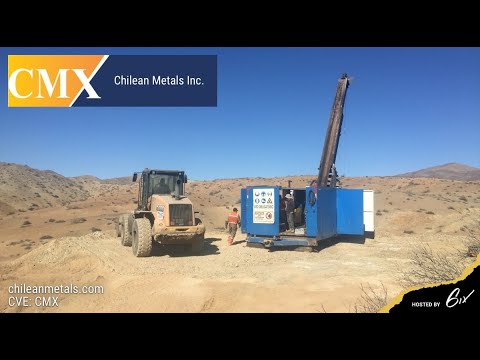
14:34 Our projects are basically about 30 to 50 kilometers outside of a town called Copiapo. So Copiapo is a fairly major town in Chile, like 150,000 people. It's got all essential services, labor, etc. So it's a mining town, so everything you want is there. And region 3 is a very prolific region. There's probably, I don't know, 9 mines within 100 kilometers of us, 3 large ones of over 500 million tons of copper and gold. So this is a very charged area. The project that we just drilled on is called TDO, Tierra de Oro, stands for land of gold, let's hope. We basically, they had done a lot of work before my time at Chilean.
15:20 And what I did was I aggregated the work they did and then we did some more geophysical work. And then I hired Windfall Geotech, which is I consider them sort of the best on the AI side of things. And AI has been used a lot in oil and gas very successfully, has just been getting more traction in mining. I think it's gonna become one of the really key tools going forward. And we had them run their full suite on our projects in TR. And they identified a number of locations for us. And we're sort of a 2 phase program using this AI. And basically we're drilling these particular features. It's basically an IP feature supported by ground cam and ground geology.
16:10 It's a fairly big structure. If the blob is there, it's 600 million tons. It's a beast. We really tried to de-risk it and not drill it, but we couldn't, so we had to drill it because if it's there, it's gonna be big and sweet. So we drilled that project
16:30 and we drilled another of the projects that was identified by the AI on our very large land package, which is about 6,000 hectares. Think of the size of the City of Toronto in terms of size. That's what we're exploring. We drilled these 2 areas in phase 1 of our TDO drilling and we all expect to report on this with assays in the next 2 weeks. You know with gold honestly you know we're interested to see what we saw but until you get the assays you never really know so we're you know we don't think any of our potentiality has been baked into the price we think at this point you're getting GDO results for free and we'll see we'll see what they are in a couple weeks but it's interesting optionality.
17:23 Now let's move on to NISQ. NISQ is basically located in James Bay. I'll just flash forward just to show you. So this is James Bay up here. And basically NISC is just right there. There's a major transformer station right there. So we're really off the road across from the power station. So very easy to develop, relatively speaking, and a pretty exciting area. A lot of geological success there, a couple of major lithium plates, and we think we've got a very interesting nickel deposit. So, this is the deposit, that little X in there, in the center of the black X, that's where the resource is.
18:09 So a very small area has produced a fairly sizable resource. And with these types of Nickel deposits, after our research, they're small clusters and they may exist in multiple spots in a given area. We think they just need a lot more drilling up there to find enough clusters to make this a mine. And if we move from 3 million tons to 10 million tons, then this will become a mine. It won't be built by 1 trillion, but it'll be built by somebody. And if that happens, then I think at 10 million, you're probably in my mind worth a couple hundred million in value. At 30 million, 40 million, you're approaching 1 billion in value. So you take that and divide it by 60 million and that gives you a prospective range of where you might be in terms of a stock. So it's pretty interesting. And I think what was exciting for us when we made the deal, obviously we could get, we obviously believed in TDO and we drilled it and spent money down there. So we're hoping for success, But drilling for gold and drilling is junior exploration drilling is a risky business.
19:22 So we saw sort of trading some of our upside for this deposit as a raising our floor in a big way. So in our view, by making this move, we've given up some of our romance and upside, but
19:35 we've locked in a pathway for it where we can create a 10-bagger return on this project alone. And we'll still have the romance of Chile and of BC, but this is gonna be good. And the other thing that's really attractive about NISQ is that it's in James Bay and it's in Quebec. So that means it qualifies for super flow through. So from a financing perspective, If the stock is like stock today with under around 35, we could easily do a 50 cent flow through. And I've had lots of interest from flow through funds and from flow through investors. We'll raise the capital we need to drill this, you know, fairly early in February, you know, and I think that there'll be tons of demand and that'll give us the resources we need to sort of check this out and to hopefully prove that this is a mine.
20:30 So let's talk about the second acquisition, gold and triangle in a bit more detail. As you can see, a very prolific area. Those are some numbers that, you know, 130 million ounces of gold, 800 million ounces of silver, you know, a couple billion pounds of copper. You know, that's just now, I mean, there's more coming. Obviously, Ascot just got financed again, just as that there's a bigger version of the map. You can see it's fairly close to us within, I don't know, 20 clicks or so, that the premier mine will be built. I think it's interesting when we looked at it, they had done some geophysics, never been drilled. So they've got some tremendously interesting porphyry targets.
21:19 So this is a copper gold country, copper gold silver. So if you look on the screen, on what you're facing the screen, what I would say on the left, sort of the southern left corner of the screen, that's where StrikePoint has made some very interesting silver discoveries and was a past-producing silver mine. It literally goes right on our property, so there's definitely going to be some value there. StrikePoint is around, I think, a $50M market cap. Just north of us is Scotty Resources. They've had some excellent results as well. They're at about 30 million in market cap. So we took this and we sort of thought, hey, we can definitely drill on these projects and see if we've found lightning in a bottle, which looks like there's as good a chance that we found it as anybody else, and why not? But The worst case scenario is we're going to be able to flip it to one of these other guys because they're going to need it as well.
22:22 I like that because I'm able to get a lot of upside, but I've got my downside protected. That's the CMX way. That's the way we're trying to approach things. We want you to have, and me, to have big upside, but not big downside. So we think we've repositioned the company in that way so that we've got a tremendous upside, but not as much downside as most junior miners do, because we think we're going to be able to parlay these things into a significant opportunity one way or the other. So the team is pretty tight. This is a small board. Greg's a very prominent financier. He used to run Haywood in Toronto and he's currently running a silver mine in Mexico.
23:08 Peter's a very experienced lawyer, been around for a long time.
23:12 He's retired now as a lawyer, but brings that acumen to the table. Alas, a very experienced businessman and a significant shareholder. Ximena runs our Chilean operations and she's a very sharp geologist. So it's a tight team. And we basically, it's like with NISK, We're partnering with Critical Elements. Critical has, I gave a look at Critical, they're a tremendous lithium player. I think they're, I own the stock, I recommend you do too. It's basically a very well-run mining company with top geological mines. They're our partner, they're gonna be our guide with James Bay. So that's interesting. So we were able to leverage that expertise because they're already up there operating. So we'll be working with them to do that. So that's another way we're trying to be, keep lean and create value. And I think that's what you'll see with us over the coming year. We're gonna get our drills in the ground and we're gonna create value.
24:08 So just to summarize, major acquisitions have been done and they totally reshape and revalue CMX. We've got some drill results happening in January on TDO, and then we expect to get drilling
24:22 in NISQ in probably Q2, maybe late Q1, but most likely Q2. And then Q2, Q3 for those guys. And then we expect to be late Q3
24:40 for gold and IVA and VC. So we think with NISK, There's great potential for expansion to the historical resource. And that as we move that towards a minable resource, this is going to really transform the value. I think nickel is going to be hot. Battery metals are hot. We got lots of palladium there. You know, That's going to be the company flagship for sure. I think we'll add tremendous value. The Golden Triangle area has become very hot with this new Ascot mine and the drilling results of our neighbors, it continues to add value and creates impetus for the space. We're going to get in there and get ready for drilling on those 3 hotspots in the fall and have a shot at the title.
25:31 Relatively speaking, we're trading $14 million in valuation. I see a very clear pathway without like, don't having to reinvent the rocket here to get to 100 million. So do the math. That would be a tremendous outcome for us as shareholders. Starting Q1, we're going to be basically having draw results pretty much every quarter going forward. And I think in a junior mining company, that's what moves the stock. So we've got a tight stock structure. We've got people with vested interests that believed in it, that are long-term players and have to create value, not a pump and dump thing that you got to really make something worthwhile for them to profit. And we believe that we're going to be able to do that. So that's pretty much the CMX story in a nutshell. So I'm going to now look to answer some questions.
26:25 And let's take it from there. Great, thank you so much for that presentation, Terry. And now we're going to move on to our live question and answer period. So I want to start with the questions that were emailed in beforehand. So the first question, Terry, is when do you expect the essay results from phase 1 drill program at TDO?
26:51 I mean with the essay labs you can never tell these days because they're not, you know, bringing things back in record time, but we've been told the week of the 20th, so you know that's that's the best information I can give. So we've been told that the week of the 20th. And so I would say certainly by the end of January, we expect to get that out. OK, wonderful. And what will the plan for TDO? What will be the plan for TDO if results are successful and what if they aren't successful?
27:22 Yeah, I mean, I mean, I mean, basically, when you're drilling, the odds are you're not gonna be successful, because if it was easy, everyone will be doing it, we'd all be billionaire gold people. So, So if it's not successful, you basically learn from your, you know, why it didn't work and maybe that adds intelligence to your next round. You know, we basically, with TDO, we had 6 sort of targets. We drilled 2 of them. So we would just move on from those 2 targets to the next 4 targets. You know, they're all mutually exclusive in terms of success or failure. So that's interesting. If we're successful, well then you'd follow it up because, you know, we're not trying to take shots for taking shots. We're trying to take shots to create a resource that we can sell.
28:11 So if we're successful, we'll definitely follow it up with with additional programs to prove a resource, hopefully. And why are you so positive on the NISQ acquisition?
28:24 I just think it was, you know, one of those little jams, they had a, you know, it sort of bounced around And Critical ended up with it in terms of an asset swap, but they'd already at that point made the discovery on their major play, their lithium mine that's going to become Canada's next lithium mine. And so it sort of languished, you know, but it had tremendous, I believe it has tremendous upside. It just not been anybody's prize to focus on. So it's going to be CMX's prize and we're excited to get to work on it. We think that, as I said, we went through that one slide where we showed it was basically delivering almost twice the value per drilling meter of peers that we looked at. And that's exciting for us. So we think there's a lot of untapped opportunity, potential there, and we're motivated to go
29:18 out there and grab it. And we think that that's realistic. And we think it's lower risk than many of these exploration plays. So we're risk averse, but we obviously have to take risk in the junior mining, but we'd like to take educated risk. And we think this is a very educated risk. Well, so when do you expect to close Golden Ivan and what are the company plans for the acquisition? So we expect to close Golden Ivan Literally, I think maybe tomorrow. So we just got TSXV approval on that. So that'll go forward. And basically,
29:59 we would think that the drilling in Golden Island would be late August. There's a bunch of work we need to do beforehand to get it ready for drilling and permitting and stuff. But we think August, September is when we get our drill bits in there. And that would be the plan is to get the Tesla's 3 areas of interest and a couple more we've identified with the new 43-101. And, you know, we're very excited about that project. Great, well, Peter Kent says, great presentation. And could you comment on the royalty asset that Chilean owns with tech? Yes, basically we sold a project to tech some years back for 3 million US and a 3% NSR.
30:47 They can buy 1% back for $3M. It's a project called Culpacary. It had a couple of hundred million tons of ore-grade copper in Mali. I expect at some point in time, sooner or not later, that will become a mine and that royalty will be, probably kick us out somewhere between 5 and $10 million a year. So it's a significant future asset. It's not currently, we've had lots of royalty companies try and buy it and steal it from us for, you know, they look at our market cap and say, well, give you 1 million dollars or something goofy. And we just said, don't let the door hit you on the way out. You know, so we're not prepared to do that. We're long term players. We know this is going to be worth a lot of money at some point in time. We're prepared to hold onto it until it's, or until somebody makes us a fair offer.
31:37 Well, Hugo is asking, who are your institutional investors? Yeah, you never know. You know, I'm always, you know, I never ask these guys for permission, so I'm never sure what to say to that, but BT Global, a very smart group there, they made an initial investment, And I think obviously they've done very well with that. And, you know, people like that. So let's leave it for that for now. We're just, because we were so small, we've got another institutional guy, but I mean, I would really want to get his permission to talk to him. I know Paul at BT Global, I think he'd be fine with it. But we've got 2.
32:22 And what was interesting, I had a US group contact me, and I hadn't literally talked to the guys in 5 years. And they said, hey, you know,
32:33 we're getting interested to get educated to get back in the game, you know. So it's just starting. It's so early days. Like just in those stock charts you saw, like commodities are just turning. So, you know, the smart guys, you know, the Paul Beaties of the world, the BT Goals that are like 1 step ahead, they're getting in now, but there's gonna be a lot more than folk because commodities are gonna be where it's gonna be at. And trust me, when they come, the turn is going to be, you know, ridiculously positive. Very exciting. David is asking, has the company taken on more projects than it can handle and move forward with at any speed? That's a very good question, David.
33:18 And that's a fair question. I think if we were trying to do everything ourselves, I would say yes, but we're fairly decentralized. So, for example, on the NISQ play, we're basically going to work with Critical, who obviously is the vendor, the group that's selling it to us, and they've got the capacity to execute our drill program. Because really, it's all about, what we need to do is we need to model that deposit up, we need to do some sophisticated like downhole EM and some interesting sort of technical Approaches to de-risk the next round of drawing and then once that's done then we need to execute the drill program So that could be done working with them as our major sort of work partner. And so that's sort of the plan.
34:06 The same thing in Golden, Ivan in BC, we've identified a work partner to basically do the geological and execute the drilling programs for us. So that is well experienced in the Golden Triangle area and that has a track record of delivering on time, on budget. So we'll activate that and do it that way. And with Chile, We've just done a drill program on time on budget. So in Chile, we're fully capable. We're well, that's where we're up and running. But what we've done approach wise is look to partner with, in both cases, these were brought to us by the vendors who obviously have significant stakes in making sure we succeed. So we feel that we've done that. We wouldn't we're not looking to add any other properties at this at this point because that would be too much. But these ones will be the you know what we need to take us to the much more promising land stock price wise.
35:03 We think. Great. Well, that actually follows up into Steve's question, which is critical elements have 7 other properties in the NISQ area. Did you consider any of the other ones and why not? You know what? In talking with JS, Critical obviously has got its flagship lithium plate that we expect shortly will get its permits and move along to becoming a developed mine. And I suspect what will happen at some point is they will, their other core properties in the area will either be spun out into it's sort of, I'll call it critical 2, or critical will just start to explore and develop those properties separately because they consider them to be very good lithium projects and they're a lithium company.
35:57 So they wanted to keep those assets either for themselves or for another version of themselves. So that wasn't on the table, this was. Okay, great. Well, so Joe is asking, what happened to the Newfoundland assets that you bought a few years ago? And hopefully no more were shared. I hear you, Joe. We don't want that either. Yeah, Nova Scotia, actually, not, no, Newfoundland. It just didn't work out for us in terms of timing and what we found. We took some shots. They were goose eggs. And that's junior mining. So we basically pulled in our horns and waited patiently for our opportunity to restructure and move forward.
36:48 And I say to people, when I first got involved with CMX, I actually did a round at what would be now 80 cents. So I gotta get the stock north of 80 cents for people that invested with Terry Lynch and CMX made money. So that's my mission, because I really want to feel good, because mostly I got friends and family in this deal. And that's why I've stuck with it, because you can't hide from your friends and family. So I've got a big stake in myself, but I've got friends and family money and it's been a tough road. We haven't been successful, but we have hung in there and I think we've made some major milestones in this last year, really positioned the company well now for success in 2021. And I think finally we've got an environment that will support the success because at the end of the day you need to be able to raise capital to execute, you know, and then you need to execute. So I think we've got some great projects. I think we're gonna be able to raise capital. I think we're going to be able to execute on the capital raise and quickly deploy it in a value creating way. And then I think we'll see the results. And then I think we'll see some happy shareholders and we'll get people on the right side of this equation.
38:03 So how many meters will you drill during 2021 in Chile? That's just a, you know, too difficult to answer. We drilled 1500 meters or so just in the last couple months. We would expect to do probably the same in phase 2 in TDO. And basically we would think that if we have success in TDO, you know, we could drill 20,000 meters because this is a huge area and you just don't know. So I would say, you know, we drill 1500 meters, we would probably see drilling at least another 1500 meters on on our phase 2 program.
38:50 But it's all success dependent. And if we had success, it could be a lot more. All right. Well, David is asking, why did Eric Sprott not invest in the last 3 million financing? You know what, you know, obviously we know Eric well and he's been like the single best investor in junior mining and he's done phenomenally, pretty much resurrected the entire industry. It would be such a small, cause he could have only ever taken like about 6 or $700,000 worth in our investment. That's way beneath what he wants to invest. And he said, Terry, go out there and get this round done yourself. If you need help at the end, I'll come in. We obviously didn't need the help.
39:35 And I think, you know, will I talk to him in this round? Sure, we'll talk to him when we're ready this round because we've done some things that I think make it much more attractive and much more sizable. But yeah, there's certainly the audiences there and you know, that the it would be just a size and interest thing to to get Gary to to look at it and then decide if it's a fit his parameters. All right. Well, so what upcoming milestone are you most looking forward to in 2021? I mean, obviously, you know, we've got the drilling that we've done in Chile, and that's around the corner in 2 weeks, so that'll be exciting.
40:21 I would say what we're most looking forward to, just as a risk investor, is I'm quite confident we'll be funded and to do a resource expansion program at NISC. And I'm most looking forward to that. I really think we can grow that resource into something that would make this a mineable asset. And if we can do that, then, well, that will permanently transform our evaluations. And I really think that that will be exciting. And I think there's some great science that we can add to get us there. And I think it's a project that just lacked some attention and passion. And I think we can bring that to the table and I think that'll be super exciting. You know, as I'm saying that, I'm thinking, and then there's Golden Triangle, you know?
41:13 So it's tough, you know, it's like you have 3 kids, you know, who do you love more? You know, I love them all, you know, but for different reasons. So, so I think that's what's exciting. Like I was talking with I had some German investors that we that we've got in this last round and and very interesting group that I met in Vancouver. They brought me some really, you know, interesting high net worth German investors and or hedge fund guys or family office guys. So long term, and these guys are, they're not traders. They're investors. And I said, you know, what was most interesting about CMX is I looked at the risk to return thing. And I said, that's what I loved about it. I think there's tremendous upside per unit of risk here. You know, is it a risky business? It's a risky business.
42:03 This is it shouldn't be your mortgage money. This is you've got a speculative basket in your assets. And you've got a piece of that in Jillian. You know, that's where you put this. But within that risk return business. This is pretty damn good. So Well, I think that's a great place to end off and so thank you so much Terry for taking us to your presentation and live Q&A Session. I want to thank everyone who submitted questions And if you didn't get a chance to get your questions answered or if you just thought of a new one, please stick around after we close the webinar. We have a short survey for you to fill out, and you'll be able to get the opportunity to leave your contact details and directly communicate with the Chilean Medals team to follow up. And if you'd like more information, you can go to Chilean Metals website at chileanmetals.com.
42:54 And so now I'll hand it back to you, Terry, for the final word. Well, listen, thanks for coming and attending. And I know you've got a lot of options out there on the investment universe. Please consider ours. We believe in it. We think you'll appreciate and enjoy the ride. And thanks for your attention. By all means, feel free to reach out and contact me directly. I think our contact details are out there and we're very, you know, straight up. We'll give you the good, the bad and the ugly, and you guys can decide how that fits. So everyone take care, be safe and have a great rest of your day. Cheers. Thank you.