Transcript
Automated transcript · Written by software from the replay's audio. It can mishear names and figures; the replay is the record.
0:04 Good morning, good afternoon, good evening, depending on where in the world you're signing in from today. I saw at least a couple of people from fun time zones like Iceland and 1 in Singapore. So thanks for joining us at very odd times of the day for you guys. I appreciate it very much. I've got me today 2 rock stars from First Mining Gold's geological team. James Maxwell, company's VP Exploration and Project Operations, and Caroline Pienaar, Director of Exploration. How are you guys doing today? Great. Thanks. Thanks for having us. Good to see you. Awesome. Here's how today's going to work. It's going to be interview style at first. I've got some questions to kind of grill them on the most recent DuParquet results. I'm pretty excited to talk exploration, but today's event is also interactive. So please do use that chat button in the bottom right of your screen to ask questions, really at any point during today's event. I'll be grouping some questions together, so if your precise question doesn't get asked, I'll hopefully still be able to hit the topic. One thing, this really is an exploration-focused event, so please do feel free to keep asking your corporate-related questions, but understand we're probably not gonna get to those today. What'll happen is I'll probably send them to Paul Morris at the First Mining Gold team and we'll be able to tackle those after. But today's conversation is really about DuParcay exploration.
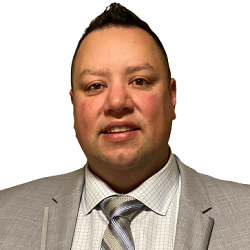
1:09 If you want to sneak in a Springpole exploration question, I'm sure we'll be able to entertain that as well. But corporate questions will probably be off the menu for today. One last piece of housekeeping, today's event is being recorded and will be available probably midday Eastern time, or mid-afternoon Eastern time. So it should pop right in your inbox. Feel free to share it. We'd actually love if you did. It'll be available both on SIX's website, but also on Six's YouTube channel, which you can access just from the main YouTube page. So let me get into the protein of today's event. But before we do, what I wanted to do is give the audience just a brief description of James and Caroline's background. So I'll throw it to both of you, starting with James. Just give us your bonafides basically and talk about your role at First Mining. Yeah, thank you, Romeo. I appreciate the introduction. And I've been working here with the management team alongside Caroline, where we've been leading the exploration department for nearing in on 4 years now at First Mining Gold. And since the beginning of that time, we've spent considerable efforts around our spring pool project. And for the last 2 and a half years now, we've been building up our efforts at the Duparcay Gold Project and located in the Apatibia region of Quebec. So with That, you know, my majority of career focus has been in Archean-age Greenstone belts in Canada, and most specifically working in Ontario, Quebec and Nunavut. And those are the major centers for Gold exploration
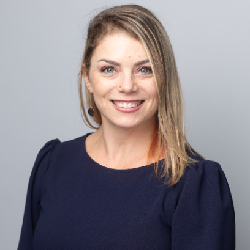
2:27 and production, you know, in this country. And you know, it is host to that environment at Duparcay. And find myself well aligned to what we're trying to achieve and what is a larger project footprint in an exploration platform that could support a future development project that has significant meaning. So certainly happy to be working here alongside Caroline. My history is well aligned to the type of projects that we're exposed to and advancing and allow Caroline to say a few words now. Thanks James. Thanks Jeremy for having us today. I'm Caroline Pienaar, Director of Exploration. I originate from South Africa. So that's where I spent most of my career, working in the Witwatersrand Gold Basin, deep level gold mining, and then transitioned into the African operations supporting over there for one of the major gold companies.
3:18 My career is being predominantly focused on both mining and exploration, and then coming to first mining 4 years ago, supporting alongside James, setting up our programs, our objectives, and making sure that we build a team that is aligned to our vision and we're making sure that we continue to deliver great results. Awesome. Now, I know I'm not a geologist. A lot of the investors in the room are not geologists. I'd love if you could just in layman's terms, summarize the most recent results of DuParcay, just so folks in the room can get a better understanding of it. Yeah, thanks, Romeo. And for us, it's really about inertia and it's ultimately about growing what is already a large footprint. And we see the district play we have at DuParcay over a 19km
4:04 strike of property position is an absolute great foundation, but also a great canvas. We've got an initial resource there that has some critical mass, has a lot of good validating points. And we see a system supporting that though, that fully hasn't been explored across that property position.
4:24 And for that reason, we are growing it. We are opening up the exploration space. And these results are a big part of that. These are shallow intercepts over broad widths with good, reasonable mining grade that benchmarks well to our current resources. So it is something that we're trying to achieve here in growing the footprint, opening the exploration space, not just in single targets, but growing multiple zones as we move eastward and downplunge across the property. Great. Thanks, James. One thing I wanted to ask is, how did you guys identify the targets for these most recent results?
5:07 Yeah, so, I mean, we could speak to a number of them. You know, within these recent results, I think it's really key to summarize that, you know, we're focused today talking about Miroir, which is a new discovery for first mining Gold, a discovery that was made late last year and further advanced through the early portions of this winter drill campaign. Additionally, some of it's come through property consolidation
5:31 with our Volentrae target, which is also combined into this new disclosure where we've had success in identifying an underexplored area where we felt there should be continuity amongst some of the existing wireframes in Gold zones. And we've had great success now pushing that down. We've been drilling on that as one of our favourite areas for about the last 2-years now. And this now is largely one of the deepest holes we've had with some of the great grades returned. Just to reference it, it was largely 3.96g per tonne over 9.3m at a vertical depth of about 330m. So still very shallow in the subsurface at Vallentrae. At Miroir, we're finding grades in that 2g to 3g threshold over 10m to 20m widths. And our putting grades in that 2g-3g threshold over 10m-20m widths.
6:21 And our initial holes into this return values of about 3.12g over 19m. And furthermore, we followed that up with the new intercepts in a whole DuPar K52 with 2.77g over 11m. And so we're really starting to build the strike out on our new discovery. We're really starting to push down on some of the other zones in the eastern side, which includes Fulentre. And we've got considerable work still to go. And I think that's the part that excites us. It's that ability to continue to not only reach out and establish new Gold zones,
6:57 but to then push on the strike and the depth of those zones. And perhaps Caroline can talk a little bit about what's special about these zones. From a geoscience perspective, we certainly believe that there are some key characteristics that are supporting us at Miroir in our success. Yeah, again, as James highlighted, a very prolific area for us that we've been working over the last few years. So it is a contact zone. You know, there are key structures coming through. You have a change in lithology, which usually creates like favorable ingredients
7:33 for mineralization and gold deposition. So for our team there's been a lot of focus on understanding the drivers on the geoscience side using a lot of the information we have available and integrating all of that to understand what are the vectors and the controls on mineralization, and then working in these areas, identifying opportunity. We did a lot of work last year in completing an Evon geophysics program, a 3D model update, and just bringing all of those data sets together and then working up these targets and then testing them with the drill bit. Yeah, and Robo, some of it's been in the challenges of the market too. I mean, we took on this project about 2 years ago. We had to get our heads around it and really do the analysis and gap analysis of the layered datasets of the geoscience.
8:21 And we went through that acquisition period, as Caroline stated, and built a foundational dataset that included the structure, the lithology, the geochemistry,
8:30 the geophysics, so all the pieces she's been speaking to. And with that, it became time to put that to work in our targeting. And so we've run a series of triage of targeting exercises both with our geologists and through some of the software packages we've used. We rank and prioritize these things for where we feel the advancement in the project needs to go. And certainly, it's one that we feel that growing the shallow subsurface footprint and pushing down on the existing zones is clearly the path to demonstrating
9:01 that this project has a lot more ounces to give. So, something we've been working on, we're continuing to advance it, but we've been really fortunate to have some time to ready for what we are in now, is certainly a much stronger Gold market, kind of 2-years down the path, having done the foundational work, we see ourselves really ready to execute. And I think that that's an important factor. Sometimes it can be hard to turn these things on and turn up the volume on them. But for us, we've really done that homework, both on the data side and then also on the team side, you know, between myself and Caroline. Caroline's in DuParcay today with our teams. You know, we've really built up a fantastic group of people, you know, that are really oriented towards, you know, what we want to drive for success for at DuParcay. Awesome. No, That's great.
9:48 One thing I know you've touched on already, but I just want to be as clear as possible for the folks in the room. How do these most recent results fit in with future drill plans for DuParcay?
9:58 Yeah. So, I mean, we've got a pretty significant program. It's actually the largest program we've achieved or proposed here at First Mining at DuParcay, again, in our 3 years of operating. So, our real push here is to continue to understand the mineralizing control components of these new zones, both in Volentre and Miroir, and then continue to push them out, both along strike and at depth. And you can see with Volentre, I think that we have continued to have significant success in pushing
10:30 that both in resolution and at depth. So we've done a number of drill holes at Vallentrae now. We've got tens and tens of intercepts of Gold mineralization, this being the deepest one at current at 330m. And again, we're going to continue to push down on that area, given we're getting nearly 5g per tonne over almost 9m in this. So we're going to keep pushing on it. These are good grades. And I think it also speaks to the continuity of mineralisation here.
10:58 These deposits that we're working on really are well aligned to a modern mine ability. They're bulk, wider zones with low variability in the grade and have absolutely exceptional continuity. And I really feel like our drill intercepts and drill programs are showing that continuity. A lot of these deposits can be nuggety, and this is not that. This is 1 where you can systematically
11:23 move through the drill process and kind of have these intercepts string together one after the other. And we're seeing that at Valencia, and we're starting to see that at Miroir. It's taken us a little bit to understand some of the controls on orientation at Miroir. And at Miroir, I mean, if you look at the nature of depth of the intercepts, I mean, we're really working in the shallow subsurface. Our initial discovery hole was at 6m down the hole at Miroir, and the latest intercepts
11:51 are still at 23m down the hole at Miroir. So we are really still very shallow subsurface at Miroir. There's lots of room to move on that one. We will see follow-up drilling through the year at Meroir. At Volentre, we will be planning a next phase of how to really start ratcheting that down. And keeping in mind, this is shallow-tiered exploration for the Abitibi. A lot of places are exploring and drilling within the Abitibi, much below a kilometre. And we're largely focused at the east end of the property in probably the initial 300m still. So, a long way to go, 3 to four-fold depth opportunities to keep pushing this down. And we'll continue to have some results coming as well from some of the core zones that will be approaching those mid-tier exploration depths from our side.
12:40 Awesome. Now, I know there's tons of great questions already in the chat. Bear with me. I got a couple more of my own just to grill you guys on geology for a bit before we get into them. But we should get to most of those questions today. So just sit tight for a second. One question I got, the press release mentions that mineralization follows D2 deformation zones along cyanide basalt contacts. Can you elaborate on
13:01 what these structural controls, like how they're influencing your drilling strategy and what it might tell us or investors about the potential size and geometry of the overall system.
13:13 You wanna take that one, Caroline? Yeah, happy to jump in here. Again, as James just alluded to, these are large systems. We've got a long continuation of the cyanide body and these contact zones coming through with these structures. So a lot of opportunity in terms of favorable conditions for the mineralization. So we use the geophysics, we use a lot of structural data, downhole mapping information to set up these targets. And then when we do the drilling, we're specifically like looking for those drivers,
13:46 where essentially on the Northern and the Southern contact. We have the changes in lithologies associated with these spectral zones that we can target.
13:56 Yeah, and these are typically structural weaknesses, right? It's a rheologic play. So when we have these, you know, strains, if you will, or stresses that occur on the rocks, and this is pretty historic, this has happened a very long time ago. But what you end up is when you induce that strain on these rheologic contrasts, which is 1 geologic unit up against another in contact, if you will.
14:20 That's really where a lot of the key deformation is coming. It's where the Gold fluids are moving through. And with that, we tend to see some of the elevated, updated grade. And what we have been keying on, I mean there's a number of different rock units that interplay here, and what we've been keying on is where the D2 deformation events come across, but interact largely with cyanide and mafic volcanic lithologies, or higher iron volcanic lithologies. So the cyanide is in contact in general with
14:51 variable volcanics, which include everything from felsic to mafic volcanic. So high iron to low iron volcanics. And then additionally, we also see sediments interplay with the cyanide as well that are interbedded, you know, within the volcanic sequence. So we've really been working with not only the D2 elements of the corridor, which are propagating off of the Dester Porcupine fault zone, but we're really focused on where those D2 corridors or structural domains
15:19 interact with what we think are the most favourable host rock units. And those to us, that is the cyanites and the higher iron volcanic units. And you know, that's what we tend to see at Miroir. That's what we've seen in our North Zone drilling from Hole 24, 24 from last year, and it's where we seem to get appreciable grade approaching that kind of 3g plus type profile. You know, and these are considered, you know, happening over considerable widths. I mean, that's the other side of it. We're getting anywhere from 5 to 10s of metres of mineralization in those settings. So it's something that we are prioritizing along with the D2 is the rock-litho host units themselves. Awesome. My next question, 2 people mentioned in the chat, 3 people mentioned over email. I had a question about it, so I thought I'd throw it to you now, which is, you know, with these positive results at Mirroir and Volentru,
16:08 at what point does First Mining Gold announce
16:12 a change from inferred to being measured and indicated? What's the timeframe look like for that? Yes, So there's a couple of steps to that, Romeo. I mean, certainly on this end of the exploration where we're currently working, it's really about shining the light and showing the path to a much more significant mineralising system. And down the road, we know that there's great, large endowed mining centres and resources that are well over 10Moz in production history and current resource setting. And we feel that this could be one of those. And for that reason, we really want
16:47 to make sure that we have done our level best on the exploration to fully appreciate how big could this mineralising system be? Keep in mind, it's largely only been currently explored in about 4km of the 19km property package. So we want to make sure that we really have found the best material. We really want to be sure that we understand the size of the footprint here.
17:13 So that's the exploration side of it. When we look at the project advancement side, we put out a PEA in September of 2023, and that PEA does have a combination of resources. So that PEA, it has approximately 3.5Moz
17:31 in the measured and indicated category, and an additional about 2, just over 2.5Moz in the inferred. And so when we work towards advancing this project potentially to a PFS stage, that's where you'd start to see some of that, what we would call upgraded confidence drilling come through. So there's kind of 2 levels of it. We'll be showing the path here and demonstrating the exploration footprint at a specific time when we feel like we've got enough kind of visibility on providing an initial resource on some of these zones, which it could be in the next year and a half that we look at doing that. Once we get to the drilling threshold of about 40,000m all told on the project, that would represent about a 10% increase in the current drill meters. You know, we'd like to probably move to do some type of resource update, you know, and that would include moving some of these exploration targets into inferred or indicated, and it certainly likely would include moving some of the inferred resources to measured and indicated. And some of this does have to work in tandem with our visibility for developing the project, which we're still continuing to look at optimizations of the PEA.
18:43 We've been looking at some of the mining opportunities. We've been looking at some of the processing opportunities, and at the same time, you know, our team's also been de-risking the environment side. So it's a, all of this has to kind of sing together, but stay tuned because it's coming, I think would be the best answer. You know, it is going to happen, it does take time, but I certainly think, you know, within a year and a half to 2 years we'll have some real meaningful
19:07 updates around the resource for this project. Awesome. I'll look forward to having you both back on that day. That'll be fun. One question I've got, and you've talked about Mirwars, that impressive near-surface grades, and Voluntary has got the continuity at depth. So my question is, how do you interpret those different grade profiles, and what does it suggest about optimal mining scenarios for each of those 2 targets?
19:32 I would say both these targets started off very shallow in nature. If you go back, I think it's figure 5 in the latest news release, you can almost see how close Valencia is to surface and where it's sitting. And it's definitely something for that open pit mining scenario because of that proximity. So as you're advancing these targets and delineating to depths, grade becomes very important in terms of understanding the underground mining scenarios. So a lot of the work that we're doing is making sure that we understand what the overall global trend
20:05 of the deposit is and what what the mineralization is and then also work on delineating you know those higher grade zones that is more favorable for different mining scenarios along there. Great, no appreciate that. I got 1 about exploration strategy here. So I know in the press release it mentions that the cyanide-mafic volcanic contact showed stronger affinity for higher-grade mineralization similar to the North Zone. My question is on strategy. How are you prioritizing
20:35 drilling resources between these high potential contact zones versus other targets? I think from our side, over the last year, as James highlighted, we've done quite a bit of work in understanding the targets and the regional as well as extension opportunities around the project. So we've got a drilling catalogue of about 100,000 metres of drilling and this year we're doing about 18,000 metres. So it takes a lot of work in prioritising where the value lies and what it means for the overall project in terms of, as James alluded to a bit earlier, what are those drivers moving us
21:10 forward in the next 1 to 2 to 3 years. So that is kind of how we advance that. Zones like the North Summer we had a lot of success on last year and we brought a second drill into the project this year to help and support advanced targets like that. They are a bit deeper than the Vallentrae and the wild targets so it takes a bit more of a dedicated resource. But yeah, there's definitely lots of opportunity and lots of favorable targets around the project that you can sort of like have a higher affinity for them or stronger affinity for higher-grade mineralization. Yeah, and to that degree, Romeo, you know, you got to keep in mind that, you know, with the considerable resource endowment that exists already on the project, it's really about finding forward mine potential feed that can add value to the front end of the project. So, it's really about finding higher-grade zones,
22:03 wider zones, near-surface zones, really focusing on where you can add forward mine life value. So a lot of that comes into our thinking. It's really about not just finding more of the same, it's about finding better stuff that can optimise the project, that can be a breakthrough in the project, that can really kind of light the project momentum. And so that's kind of what we're focused on. And I think it's what you'll see in the results that we're aiming for. We're really aiming for
22:29 what we feel is the better grade affinity of exploration targets in locations that have development synergies going forward. And we're going to continue to focus on that, at the same time balancing with all other factors in the project. But it's really about when you've got millions of ounces already, it's about finding ounces that are the best in class. And you know what, we are in a region and a property position where we can find those best in class ounces.
22:57 Awesome. I got 1 about just kind of existing infrastructure and how that affects you. Because given DuParc is really great proximity to that existing infrastructure and the Rindoranda mining district, how do those logistical advantages influence your exploration approach and future development economics? It might be useful to compare to Springpole.
23:17 Yeah, I mean, certainly from an exploration only focus to start, it really is a cost driver for us and flexibility, optionality driver for us. Being roadside, being in what is the backyard of probably some of the best diamond drilling exposure there is in Canada, I mean, certainly it's a cost-based. I mean, we see this as being ideally one of the lowest, if not the
23:44 lowest cost of exploration drilling in Canada, if not broader to the continent. Certainly, we feel that there's a lot of competitive nature, a lot of skilled expertise in the region, and we're able to harness that. We're drilling programs of considerable size and metric that allow people, you know, to give us competitive advantage, you know, in the commercial terms of the drilling. So, we see it as a very cheap place to drill. We also see it as a very, you know, good rate optionality, where in terms of, you know, our startup costs, our carrying costs, we're not in this case,
24:21 running a remote campsite, we're not supporting our own systems, we are right downtown in the municipality of DuParcay, which is a great place to work, very friendly environment, very mining aligned, a lot of the skilled labor and employed workforce in the community has some exposure to mining or mining within their family. So, very, very friendly, favourable place to work, very low cost base. And certainly, if you want to take it beyond the exploration, I mean, you can see a lot of mining synergies taking place throughout the region. There's a lot of mill capacity. There's a lot of consolidation. And we continue to explore those synergies on how best we could see an advancement in development at Duparcay. So, it is a great place to be, it's similar to real estate, it's location, location, location, and we really are happy to find ourselves in this Abitibi region of Quebec in the municipality of Duparcay.
25:18 Awesome. I got just a couple more. I know there's so many questions in the chat. So I'm just going to get through a couple more of mine, and then we'll get to all those great questions there. I saw the press release mentioned upcoming regional field campaigns for target generation. I'm just curious, And again, kind of layman's terms if you can, what specific geological signatures or geophysical anomalies are you targeting across that 5,800 hectare property and how could they complement the current drilling focus?
25:42 Thanks, Ramir. Just building on what we've kind of identified already is what are those key lithologies? Where are those key structures that we've delineated in the work programs we've been building up with the data sets over the last 3 years? So our regional mapping campaigns is going to focus on what we believe the most prospective targets are to feed into this pipeline. Most of them supporting the economic development, but also bringing along regional targets. So, you know, understand across this food property what is available, not just around the main DuPont K resource. So, again, tying it in back to favorable lithologies, favorable structures, and then just getting the information, putting it together. Great. I got one question. And this is, I know a lot of people in the room are investors. There are some geologists in the room, but a lot of our investors. And just in really basic terms, because sometimes it's hard to know from a press release, because a lot of companies frame it in the same way. How excited should investors be with these results at DeepRkA? I'll get both of you in here at some point, but start whoever you'd like.
26:48 Well, I can start.
26:50 I think from our side and not to sound biased or anything, but we as a team, we are very excited. We've got a very bold in exploration team that's been growing with us over the last couple of years and continue to focus on the geoscience, you know, driving our data collection, our interpretation and our targets and having successes and having discoveries on a project that's been around, you know, just energizes everybody.
27:16 So I think from our side, you know, it's a very exciting project to be on. It's got a lot of opportunity and we look forward to showcasing that. Yeah, no, and from my side, you know, I've been, you know, working on these deposit styles, you know, and looking at them globally for most of my career. And, you know, there is something truly, you know, very unique about when you get into a setting that can host millions and millions of ounces,
27:44 you know, and you can extrapolate and explore that further. And so these are large, golden-down systems that only are going to grow. And once you actually find those critical components of what's really characterising and supporting the mineralisation, it almost becomes iterative. It really becomes a function of inputs. And so the more drilling we put in, the more ounces we're going to get out. This isn't really just hunting and lottery style exploration that could be being done out in very underexplored terrains. This is what we would consider a fairly mature belt, but a relatively immature
28:22 opportunity. And so for that reason, we're going to see this continue to grow and we know it's going to continue to happen as we put inputs into it. So it's something that for me is very exciting to take something with such a significant resource base, you know, and really hopefully be able to double, if not look to further that going forward. And yes, it's going to take time, but realistically, it's just a matter of the inputs for us. We have to do the work to support it along the way, including the geoscience. But there's only so many of these opportunities that exist. And when you get yourself involved in 1,
28:56 it's exciting to see it through. So it takes the time it takes. But we're here to make sure that we build and push forward on what could be a very promising future in a project in the Aptitude. Awesome. I love when geos are excited. I like to ask that question. What I got just before we jump into questions from the audience, and I think you touched on it, but just in clear terms, how much more drilling are we anticipating for the rest of the year at DuParc? So we have the 18,000 meter drill program that we have outlined for this year. We're about,
29:27 as of this morning, 15 holes done. So leaving us at roughly 7,000 meters completed. So quite a bit more to go, roughly 11,000 meters still left. The main targets that we're focusing on there is of course, some of the successes we've had and talked to here, the North Zone, the Wai'agi.
29:48 We are also pushing on some of our south zone targets and then of course, regional development. So quite a bit of drilling to go and then adjusting it as the results come in, the fieldwork results come in and just making sure we continuously review our strategy and align it to where we're going. But yeah, in a nutshell, you know, we're about 11,000 meters left for the year. Great. So still a steady stream of news for the rest of the year, I imagine, from DeepRakai. Yeah, we'll be drilling forward with the 2 drills here well into the fall and from that perspective we see results are going to be coming well through the fall towards the year end and certainly excited to adjust and adapt to those results. We are expecting to obviously continue to further our understanding, further these targets and from that perspective, lots to stay tuned in for Romeo.
30:36 Okay, sounds great. Now I've got a number of questions on DuParquet and then a couple of questions on Springfield from the chat. So I'll start with the DuParquet questions. 1 from JF Robot asks, what type of drilling are you doing? RC
30:48 core or combo and why 1 over the other? Go ahead, Carolyn. Take this one. We're doing oriented core drilling on our programs. Again, we have identified structure as being an important control on mineralization, so quite a bit of that. Now, RC drilling on the project at this point, and the preference for that is, again, coming back to the quality, the data, and it being exploration. So, you want to make sure that we maximize the data coming out of the holes and we can fully integrate all of that into our data sets and into our models for vectoring.
31:24 Great. James from the chat asks, how deep did the drilling go to get 3 to 11 meters of depth?
31:35 Not sure I fully appreciate the ask it was how deep did the drilling go to to get 3 to 11 meters of depth seems to be the question we can James If you want to clarify in the chat, we might be able to get back to it, but we'll just leave it for now. John asks, this is a timeline question that's often difficult to answer, but he references that Dan most recently said DeepRK might benefit from government fast tracking. So curious, just from a geo's perspective, if you give context on a possible timeline for when DeepRK might be permitted to mine.
32:07 Yeah, I mean, that's something that I think, you know, still needs a bit of definition around, you know, the project identification itself. But, you know, we do see a stronger political will, you know, across the country in terms of moving projects forward. And so, we're obviously in conversations about our project, where it stands and what it might be tomorrow, but we do have a lot more characterization work to do. But certainly it is something that I think there is
32:34 a bit of a focus now on trying to move those timeframes in, really trying to push on projects readiness and the ability to follow through with a proper characterization and permitting of a project. But I don't think we can give a timeline today, Romeo. It is something that we're still working to characterize and identify the best project to move forward. That makes sense. A classic question in the chat, I always say it's a tough one to answer. One question, what's the drilling cost per unit length? So either in meters or feet, and is that in-house or subcontracted?
33:11 We have a subcontractor that we work with. We don't have our own drills, and we've got a great partnership with the drilling company for Oshawa. We've been working with them on the project for a couple of years and that's because of where we are located, you know, the community support and working with the First Nations. So in terms of drilling costs, you know, it's pretty affordable as James alluded to, we're in that $150 a meter range, depending if you're looking at just pure drilling costs, so yeah, pretty affordable. Great. One question, besides gold, what else do you assay for and why? We do multi-element geochemistry on the holes. So again, we use that as vectoring, identifying earlier as James again alluded to, is the iron content and those lithologies with higher affinity for the iron. So we use that to make sure that we characterize and use those vectors in terms of signatures and Vectoring further down to more perspective areas of zones where there's a higher affinity great James from the chat clarified his earlier question.
34:20 He said you found positive gold results at 3 to 11 meters of depth. So he's curious how deep did you drill to find this 300 meters, question mark. He's trying to assess whether deeper drilling might uncover additional resources. Oh, absolutely. So I mean, you know, some of these, the initial discovery of Miroir actually is an intriguing one. I mean, we were looking to push down on the Valentre zone and in doing so, you know, we further stepped back the drill in order to get a little bit further from the target to test it deeper. And that's ultimately how we walked into the Mirroir discovery. At these shallow depths, we're stepping back to drill in another zone and actually encounter parallel Gold mineralisation or sub-parallel Gold mineralisation further to the north. And so a lot of the holes in nature, you know, we're drilling typically in that, you know, 100m to 250m realm, targeting Volentre.
35:10 But now once you find Gold in the subsurface here, you know, I think the first number of holes we drilled this year were really only 100m, just targeting, moving that Miroir zone down. We do get into some optionality where we can target both Miroir and Volentroy and Igwe with some holes as we further move back on the target Sestimen setting. And that's one of the things about this deposit that's fantastic is that you really have a series of stacked zones that you get a lot of bang for your buck in your drilling because you can target multiple zones. And that's what we see in this release in hole 54, the ability to target Meroir as well as Volentre. And certainly we'll see more of that as we continue to drill. We'll see stacked zones coming through. So again, it creates an efficiency in our drilling and drill cost as well.
35:59 But most of the holes here are about a 300m depth in total. We will might start seeing some holes that go a bit deeper as we try and move this down, but we're still working really in the shallow subsurface. A lot of the holes are 150m to 250m. One question is, does First Mining have plans or potential to increase the rigs drilling at DuParcay in the near future? Yeah, I mean, you know, a lot of this is timed, you know, with available inputs. I mean, you know, you don't want to get too forward on your skis either. So it's understanding these zones, letting them speak to us, you know, gearing them for success. And, you know, as Caroline stated, we've got a fairly large drill inventory, but we're always prioritising that. It's not about just drilling that out and getting it over with. It's making sure that we drill the best metres and again, find those best-in-class returns on the drill bit. So, we want to make sure we're hitting the best grades, the best width and the best location to advance the project. So, I think our goal is to certainly continue to up the metrics.
36:58 We're certainly prepared for it. As Caroline spoke to, we've got a great team that we've built here over the last 2 and a half years. We've got a great facility. We've got great interactions with the communities. We have in hand all the permits we need on the exploration side to do the current workflow. So we are ready to do increased levels of thresholds of work, but it's got to match, you know, with the opportunity supporting resources as well, which is, you know, financial capital and obviously the project advancement stages, you know, in parallel. Well, it makes sense. One question, this is another tough one to answer, so feel free to answer however you'd like. But John asks, depending on the rigs drilling at DuParcay, how long might it be before we see that 10Moz target reach for DuParcay? Yeah, so that's 1 that's hard to speak to, But I'll tell you, every day that we're drilling on this project, every day we're advancing the geoscience is a day closer to growing the endowment significantly.
37:55 And I think you can do some extrapolations just looking at it in long section. You can do some extrapolations just looking at the drill metrics in terms of the endowment that's there today. Right now, there's again, for the resource foundation of 3.5Moz indicated and about 2.5Moz inferred, There's approximately 300,000m of drilling on that. You can do a bit of the math to see where it would get to get to that level. But ideally, we are again trying to show and demonstrate the growth opportunities here. And as we characterize and classify those, we will go back and drill those into resource in order of supporting the project footprint.
38:40 Great. Gary from the chat asks, do you place a high probability on finding higher-grade breakthrough zones? Yes, absolutely. And again, it's something that we're continuing to attack. And you saw it last year, you know, hole 2424 is one of the last holes drilled in the program last year. And certainly, where we see 5g and 6g material coming through in tens of metres, we're going back to that. We're going to see more of that coming. We really want to focus on, again, advancing that upper class of grade profile. The global perspective, certainly on the measured and indicated is about 1.55g per tonne. And a lot of our work is really geared towards 3g plus material. We really want to see that factored up. And some of that is just again for finding forward mine life balances. We want to find opportunities that best support and advance the attractiveness of the development scenario for the project.
39:37 Right. WCW Warren from the chat has a question. And based on near and recent service intercepts, how are you guys determining best options when drilling deep below these deposits? I think in terms of that question, it's coming back to what we have delineated in terms of the global trend of mineralization. And we have these higher grade secondary zones that we have like overprinting as well. So it's a combination of that. We have the key areas that we have these pockets coming through, and then it's understanding how we connect those and then further target them. So it's a little bit of, you know, data correlation, bringing it all together and then using that as a vector to make sure that you project that forward.
40:29 Appreciate that. The last DuParquet question here is not 1 that I will make you answer, but it's 1 that I wanted to highlight and you can feel free to comment on it if you'd like. As Timothy says, could it be said that DuParquet alone more than justifies the market cap of first mining? Something to think about from the chat. Only comment on it if you'd like. But I do have a question on Springpole as well. James from the chat asks, any updates on further exploration in the Birch Uchi Zone outside of Springpole? Yeah, so I mean for Springpole exploration, I mean it is something that we will be looking at this summer. We're certainly in the planning stages and we have some exploration teams that are doing some analysis and strategizing about how to get back to those zones, how to best advance them. We do expect some future updates but something we're working on very actively at current.
41:15 The field season is upcoming and so we're hoping and happy to get back to the Bergeri zones that we've been working on. Largely Challenger is really exciting for us, Bronco is really exciting for us, and believe me, the teams have done a great deal of consolidating some of the data on those over the winter period, and we'll be excited to get back at it in the short term. Awesome, well, we somehow got through all those million questions that were in the chat. I didn't think we would get to all of them, so I appreciate you guys going through this grilling. One thing I wanna ask both of you, just before we jump today, because I know we're a bit past the time that I identified. What are you most excited about for the rest of 2025 at DeepRK? Caroline, I can start with you and then we'll close with James. I think what I'm most excited about is to see how all of this work is coming together and how we drive these targets forward.
42:02 The foundation has been set. We have done the work in terms of demonstrating that there is a lot of potential on this project in terms of those extensional zones, these higher grade trains. So it's keying in on those and then celebrating the wins as a team. I think that's what I'm looking forward to. Great. James Luther, what do you most jazz about for 2021? Yeah, well, I'll adjust a bit. I mean, the trajectory is fantastic. I can't say enough about what we've done to get to where we are and have the opportunity present before us. But to tie that in with this Gold market, with such an exciting shift in the Gold market, is something that only comes along so often in this business. And through our careers, there's only so many points and times that you're going to see attention and the advancement in the Gold price and setting that we care about so much. So it's a great time to combine the 2. It's a great time to really be jazzed about exploration for sure. And I think our trend trajectory, as I said, is fantastic. But to combine that with what is an outstanding market for the commodity of interest here in the Gold space, we're very, very enthusiastic. I couldn't be more positive about our opportunity to grow and add value here. And it starts again with a strong foundation.
43:18 And we're going to continue to push on through this and take advantage. Awesome. Well, James, Caroline, thank you so much for this update. And thanks, everybody, for joining us in the chat today. A million great questions. Really, really appreciated them. And I know there's a couple of questions I didn't get to. I think I identified them already in the chat. But if you've got those corporate style questions, you can always reach out to Paul Morris at paul at first mining gold dot com. He'll get back to you very quickly with the answers you're looking for. But for everybody else, thanks so much for joining us today. I think this was a great update. And James and Caroline, have a great rest of your Friday. Thanks. Thanks, everyone. All the best, everyone.