Transcript
Automated transcript · Written by software from the replay's audio. It can mishear names and figures; the replay is the record.
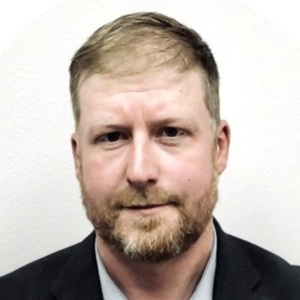
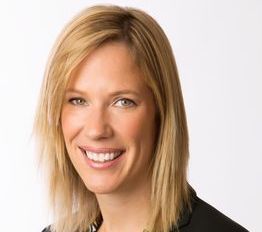
0:12 All right, well, hello and welcome everyone to the Drilling in Nevada panel hosted by 6. I'm pleased to introduce our panelists today. We have Caleb Stroop, President and CEO at Headwater Gold, Matthew Lennox-King, President and CEO at Contact Gold, Cherie Leiden, CEO of Gold Bowl, and Chad Peters, President, CEO, and Director at Ridgeline Minerals. Welcome, everyone.
0:38 Before we jump into the discussion, I want to remind everyone that you can submit your questions at any time using the Q&A panel on the right hand side of the screen and we will get to them for a live Q&A after the discussion. As always, the summit is being recorded and will be available to watch afterwards on SIX.com. So just to kick things off, it would be great if we can just start with a brief introduction from each panelist about yourselves and your company. So starting with you, Caleb. Sure. I'm Caleb Stroop. I'm president and CEO of Headwater Gold. I'm a geologist. I'm based here in Reno, Nevada. In Nevada is where I've spent the majority of my career in the precious metal exploration space, both with junior companies and major mining companies. I started Headwater about 3 years ago as a early stage precious metal exploration company focused on high-grade vein projects, predominantly in Nevada but also throughout the western U.S. We have projects in Nevada, Idaho, and Far Eastern Oregon.
1:40 The company completed a listing, completed a listing in June of this year. And since then, we've been rather busy. We've drilled 2 projects. We just completed drilling on the second one. These are the Highland and Spring Peak epithermal vein projects in Nevada. And we have plans to drill 2 more projects before the end of the year. That's all in keeping with our overall goal of being fairly active, drilling something like 3 to 5 projects every year out of a large portfolio of projects that we maintain. We like to have something like 10 projects in the portfolio at any given time. And that's really made possible because the majority of our projects are generated internally and therefore are 100% owned and either royalty free or have a very minimal royalty burden.
2:31 So that's the approach that we take. We think we've got a quality team, quality portfolio, and a great jurisdiction, obviously, and a solid exploration strategy. And we're trading on the CSE under the symbol HWG and on the OTC under HWAUF. Great, thank you so much. And Matthew. Great, thanks Dasha. Morning everybody. So Matt Lennox-King, president and CEO of Contact Gold. Like my colleagues here on the summit, we are 100% focused on the great state of Nevada. Principally, we are exploring our Green Springs project, which is a high grade oxide project really in East Central Nevada. This is in, It's in an active district. It's relatively close to Kinross's Bald Mountain mine. It's adjacent to Fiore Gold's Pan Mine and Gold Rock development project.
3:28 And we've been actively exploring there for the past 2 years. We recently wrapped up a really successful drill program at Green Springs. It saw 3 new oxide gold discoveries, which we think is pretty remarkable given we are we are working at an old mine site, but we think that's a real indication of the potential that we have to deliver ultimately some meaningful high-quality Gold deposits at Green Springs. We are based in Vancouver. We trade here in Canada on the TSX Venture Exchange and in the US on the OTCQB CGOLF. That's contact gold and I'm really looking forward to the summit today.
4:13 I'm also looking forward to the discussion. Thanks Matthew and Cherie.
4:19 Thank you Dasha. Cherie Leiden here, also based in Nevada and focused on the Great Basin. A geologist originally, first 10 years boots on ground, the second 10 years more corporate kind of role. And I co-founded Gold Bull with our chairman Craig Parry about a year ago now. Our first asset was an acquisition from Newmont called Sandman. And Sandman boasts A0A million ounce resource at the moment and where we see the real upside is really exploring beneath the top 100 metres at Sandman and really looking for the high-grade and multi-million ounce potential feeders of that project. In addition to Sandman, we've also got a couple of early stage exploration projects, high-risk, high-reward kind of plays that are drill-ready now. We hope to drill them in 0.25 4. And we're also on the hunt for additional acquisitions, whether it's buy mergers or acquisitions.
5:12 Great, thank you. And last but not least, Chad. Yeah, we're 4 geos on the panel. That's the first time I think I've ever seen that. Dasha, that's a nice word. I'm Chad Peters, CEO of Ridgeline Minerals. We are again, just like everybody else, Nevada focused exploration company where we focus primarily on carlin type deposits or at least that's how we founded the company.
5:36 In reality we've actually discovered a CRD system in our Salina project which we'll get into maybe in a bit but we have 154 square kilometers across 4 projects, core land positions adjacent to some of the biggest mines in Nevada and on trend of those mines. And I think one of the things that maybe sets us apart as a company is when I co-founded the company with my partner, Steve Nielsen, he's the owner of a drilling company. So the whole focus was putting money in the ground early, advancing these projects aggressively in the early stages and hopefully making a discovery early. We've been able to do that at our Salina project with a new CRD silver gold type polymetallic system that we're still figuring out as we go here, but it's looking pretty exciting. And then on top of that, we've drilled well over 12,000 meters in the last 18 months across all 3 of our 4 projects.
6:22 So trying to move these things forward and make discoveries. So that's Ridgeline in a nutshell. Great. Well, welcome, everyone. We have lots to discuss today, but to just start the conversation, what is it about the state of Nevada that is so attractive from an economic and business operations standpoint? And can I throw it to you, Caleb, to start?
6:42 Yeah, sure. I mean, it's no secret that Nevada's always ranked either the top global jurisdiction or among the top 3 or so. And I think the big components are, you know, there's 3 things that really go into those rankings. One is the gold endowment, you know, what are your probability of success actually finding something meaningful?
7:06 And the other big thing is the regulatory and political framework. Obviously being in the US, things are fairly stable relative to other jurisdictions in the world. And Nevada also boasts sort of like, you know, a well-established mining culture, both with respect to the local communities and workforces. And so all of that stuff fits into, you know, making it sort of the perfect place to explore. Great, thank you. Anything to add, Matt?
7:36 You know, not a lot. I think Caleb really summed it up in a nutshell. I think the other things that, you know, if you just layer on top of that a little bit would be, there's good availability in normal times of drilling contractors, assay labs, environmental services companies. It's really a one-stop shop. It's very rare that you need something as an exploration company or even a development company that you can actually find locally in Nevada, and probably even on a smaller scale, out of a town like Elko, Winnemucca, Reno. They're all really well established, and that really helps. Great. Shari, what are your thoughts?
8:18 I'll just add the livability. Most of us on this panel choose to live here and there's not many companies where the CEO is living where the projects are. So that's the real bonus that we can drive to our projects. Right. I hear the weather is nice. I haven't been. Chad? Smoky, but nice. Honestly, I don't have a whole lot to add. Actually I was listening to Craig Perry's interview just the other day actually, Sheree, and he mentioned that you know what they look at is 3 things when they look at any project, size of the prize, cost of the test, and chance of success. I think Nevada is one of the only jurisdictions worldwide where you can easily answer all 3 of those questions very quickly and efficiently. So that's why we're here. Great. All right, well, I'll throw this one to you, Chad, so we can make sure that you get a chance to speak. But how do you think the federal and local governments view mining in Nevada and have there been any major changes since the new administration took over earlier this year?
9:13 I think there was some some real concern back in 2020 or early 2020 regarding some new taxes that were being imposed or potentially being imposed. Could have been a massive blow to the industry. They were proposing almost like a 7% additional tax. So that was at the local level, not at the federal level. So I think that luckily we were able to avoid a major tax burden. There was an additional kind of tax levied on producing companies in Nevada, but it's not enough to put most minds out of production. So at the federal level, I haven't seen anything really that's changed all that much. At the state level, I think we dodged a bullet, but yeah, it's still a fairly good spot to be working. Great. Cherie?
9:57 I thought, you know, the tax that was introduced last year could have been handled better with more consultation with industry. So I was pretty disappointed regarding how that new state tax was born. Federally, I also have some concerns. We're already seeing some of the power at the local level and BLM offers being shifted to DC. And there's a couple of bills floating around that I hope are squished before they make it anywhere, because there's some anti-mining rhetoric and royalties contained within them. So I think it's something to watch. And I do hope that federally we get the support because locally in Nevada, it is a pro-mining state. And we've got a supportive governor and world-class environmental regulations.
10:46 So I'm a fan of the state. It's the federal level that I hope see the importance of mining to the economy and to being able to source critical minerals as well. Right. Absolutely. Matt, what are your thoughts?
11:01 Look, my answers are roughly in line with everybody else's and I'd even maybe take a step back to 2016. You know, that's right when contact was going public. And honestly, we didn't see much fluctuation, even through the previous administration, now under the Biden administration, just as it impacts our day-to-day, exploring first at our Pony Creek project, now at our Green Springs project, it's always, you know, our group,
11:30 We have a long history in Nevada, like the other guys on the call here. And it's always been a great place to work. Yeah, there can be some little fluctuations along the road, but it's always pretty stable. It's always supportive. And ultimately, if you're doing things right, you're gonna have success.
11:46 Great, thank you. And Caleb, any last thoughts? Yeah, obviously I agree with all of that. I think, you know, the one thing that Nevada has that is somewhat unique is we are home to some of the world's biggest mining companies running some of the world's biggest mines. So any changes would have to affect them as well and that would be very high profile and we can you know benefit from a little bit of cover from from these big companies. Okay great well I was wondering what are the factors that make a junior mining company successful in Nevada?
12:24 Can I throw this one to you, Matt? Sure thing. Yeah, absolutely. So, you know, as in any jurisdiction, I think that really the key things are who's on the team, you know, do they have good foundation, and if we're talking about exploration of Nevada geology, what the opportunities are, what the risks are, like really how do you explore because, you know, the exploration in an environment in Nevada is certainly different than in northern Canada, Turkey, West Africa, right? You're in a somewhat unique geologic environment. I do think having the experience in the state, so you know how to navigate the permitting and environmental regime. It's very well laid out, but it can also be time-consuming. And then a good understanding of how land title works, because it's very different than in Canada.
13:14 You have multiple types of mining lands from private lands to checkerboard to BLM claims to US Forest Service.
13:22 And having good support on the land front can 1, help you establish really good property position, 2, keep your land in good standing, and 3, really help with the permitting side of things. And then of course, you need, I think, you need a large consolidated land position underlain by favorable geology. And if you have all those factors, I think if there's a deposit there to be found, you'll be successful. Great, what do you think Caleb?
13:55 Yeah, I think Matt touched on it there. I think having a strong local presence is pretty important in Nevada because, you know, it's fairly straightforward to work here, but there are a lot of local intricacies that, you know, can trip people up who come from other places in the world. I think all of us here have made great efforts to build local teams and understand how things work on the ground. And in general, the geological community of Nevada is very welcoming. And there's a lot of people that are available for support. You just need to know who to reach out to and who to lean on there. Great, thank you. Shereen?
14:36 I would add access to capital. Yeah, I think there's a lot of great companies with great projects and great people that just can't find the money to advance them. So to really to have that ability and a supportive shareholder base that are willing to back the high-risk, high-reward, scientific concepts to keep the companies well-funded. Obviously, the more drill holes, the more chances of success.
14:58 Great. Anything we missed, Chad? Cherie stole my answer, so... No, I agree 100%, and it is, I think, really, actually, Nevada, it is being local is a major or at least having experience. You don't have to be local, but you need to have experience here. I was part of 8 million ounces of discovery in Canada back through 2012, moved down here and had no idea what I was doing. Like it's just a totally different world. Everything behaves differently.
15:25 And I think that, you know, we see right now probably every one of the groups, or every company on this panel will look back and kind of laugh at the projects that are being picked up by, you know, Canadian juniors, Australian juniors that have been hit 100 times, named 3 different names in the last 3 bull markets and are now being spun back out of the different companies, right? You see those and any one of us wouldn't even touch it with a 10-foot pole. And I think that's where having that local understanding of the projects and the geology really shines through. You see quality projects being run by quality company. Great, thank you. So obviously, NET Nevada is very active and busy right now. I was wondering, what are some of the challenges that come with that and again what are some of the benefits of a bull market in regards to rig availability and assay labs, services, jobs.
16:12 I want to open the floor to a more active discussion so whoever wants to take that away.
16:19 It's been a dream. We're kind of looking for a jury. Yeah. Go ahead, Sheree. Yeah, so we're looking for a jury right now. We've certainly seen quality slip with some of our drilling providers, labs, turnaround times have slipped. So I don't think that's really localized to Nevada. I'd say that's global right now. So this again comes back to being local and having those relationships with the drilling companies and the labs. And hopefully that puts us in good stead. But certainly there is a shortage of good drillers and lab turnarounds have been impacted and that's largely due to COVID really taking out some of the lower priced labor out of the workforce because they've been getting paid not to go to work, so why turn up to a job?
17:03 So I think now we're seeing a lot of those stimulus reduce. I think the labor shortage should improve. Great, thank you. Yeah, I remember, like I called, I called for a drilling contractor in March. To be clear, we have the RC covered with our contract, but we don't have a core rig with our drilling contract. So I started calling around for core rigs in March, looking for June or July start. And probably the first 5 people I called that I've known for maybe 8 years, they just laughed at me and said, I got a rig available either in October, November or 2022 and this was giving 4 months advance, 3 months advance notice.
17:38 Give it even 18 months before that, 12 months before that, you could have called and had 5 different companies competing for your bid. So it's been a dramatic change Like Cherie said, quality of work has dropped dramatically. I had 5 guys I requested for the program. I finally was able to get going. 5 drillers I'd worked with, not one of them was on my project. So new drillers, you know, production's dropped, costs have skyrocketed and across the core space especially. So yeah, it's a tough, it's a double-edged sword. We got a great market right now, but we're also struggling to do meaningful exploration on some of these deeper targets which require specific drill companies and rigs.
18:17 Yeah. Yeah, I totally agree. I think that that's the big thing is rig availability. Assay lab turnaround is slow, but it's a little bit more manageable. If you don't have a drill rig, you can't send anything to the lab. And it seems that it's a labor crunch issue for the most part. There are drill rigs sitting without crews on projects that I know of so it's a combination of increased demand and as Sheree pointed to just a lack of people willing to work in these challenging conditions.
18:48 Yeah, yeah, that's right. I think one thing that we've, and I agree with everything that you guys are saying, one thing, one area we've been a bit lucky is that at our Grain Springs project, just because of where we are, we're a bit lower elevation, our weather is, knock on wood, has been a bit better. So we've been able to drill, maybe not at the busiest times.
19:08 Last year, we ramped up late February, we drilled through the end of May, rig availability was pretty decent. So we're looking to kind of mirror that for our next program coming up here either late November, December, or maybe into January and try and take advantage of being able to drill essentially off the busy times. On the labor shortage issue, Caleb, I'm talking to an Aussie drilling company called Mitchell at the moment and they've just purchased driller-less rigs. Basically, they're remote control rigs that don't require drillers and offsiders. So it's going to be interesting to see how the industry also evolves due to these labor shortages and obviously that also comes with a bunch of safety advantages. There's no safety issues when there's only one person on the roof.
19:56 Wow, super interesting.
19:58 Okay, well I want to get more into each of your specific projects. What do you believe differentiates your project from other junior explorers as an investment opportunity? I'm going to throw to you, Sherry. So I'll focus on Sandman. So Sandman's got 500,000 ounces that's already been defined, predominantly sitting close to the surface, average grade of 0.7 grams per tonne, most of it oxide. So I'd say that that really limits our downside. We know we've got 500,000 ounces. Another massive advantage of Sandman is that we've got a plan of operation, which is a really comprehensive environmental permit that allows us to serve up to 500 acres. And in the permitting aspects, I guess what we really focus on when we look at projects for acquisition and how easy or hard is it going to be to actually advance projects to production.
20:51 So to have 500 acres that's already been comprehensively surveyed both from an environmental perspective, water perspective, cultural perspective, it's just such a massive bonus
21:01 for us. Otherwise, that permit could take years and it may not even be possible to the extent that we have inherited that permit from Newmont. So I'd say that just allows us to basically drill where we want under that plan of operation. So the 500,000 ounces backing our current market cap plus a plan of operation to allow us to really go attack and look for another sleeper style deposit under
21:26 the top 100 metres. That's where we're at right now for Goldpool. And we're hoping to get one of these rigs that's becoming available in November because we are also at relatively low elevation, we can drill 12 months a year. So as of November, we should start producing some news flow and drill results targeting these sleeper conceptual bonanzas style targets.
21:48 Great, thank you. Chad? Yeah, I'll probably start with our SELENA project. That's our active discovery that we made in 2020. That's turning into a pretty interesting, we thought we had a silver gold system and we actually started hitting more CRD type mineralization towards the end of our most recent drill program. So lots of potential. It's sitting right beside a non-pore free system. So what we're kind of targeting right now is like an Arizona mining type tailor CRD deposit. That thing started as a lower-grade silver open pit called Gramosa. They drilled beneath it and downstrike of it, and they found a world-class CRD deposit. So I think our last program, we drilled 44m of 130g per tonne silver equivalent. So it was 123g silver, 0.1g gold, which we didn't include in the silver equivalent included a percent and 0.5 lead and 0.7% zinc. So that's, you know, you look at that from a Gold-Silver perspective, that's a Gold equivalent of about 1.8 grams per ton in today's prices.
22:44 So we know We have something there and I think we're going to keep advancing that. It definitely backstops our stock. And then on top of that, we have some really core land positions against downstrike of some of the
22:53 biggest mines in Nevada. So our swift project is 75 square kilometers on trend of the pipeline line, same most rocks, same general structural trend, very little drilling. And then we're actually drilling in our Carl and Each project right now. That's directly on trend of Nevada Goldmines new North Level discoveries. So they're only about a kilometer and a half away from the edge of our project now, drilling along the same fault structures that hosts the Leeville and North Level discoveries. That project, I'll be honest, the drilling is a nightmare there. We're drilling 1000 meters down, it's expensive. It falls into every single troubling issue that was brought up earlier in this panel.
23:29 We're muscling through it and we'll hopefully have some results soon, but I think we offer some exposure to some really blue sky opportunities at those projects, as well as a nice backstop at Celina for the valuation of the company. Great, thank you. Caleb? Yeah, well, a key point for us is that We're actively working on numerous projects at any given time.
23:50 So we're drilling hopefully 4 projects this year with the idea of putting our exploration dollars in the best targets throughout the portfolio to diversify the risk, the exploration risk. Diversification is a key component of investing and we take that into the exploration world as well. It's a high risk game and to the extent that we can mitigate risk, it'll improve our probability of success in the future here. So yeah, we're drilling high impact epithermal vein targets. So if we're successful, we'll hit something high grade and that will generate some attention. And if not, we'll move on and keep the ball rolling.
24:32 Thank you, and Matt. Great, Thanks. So I'll borrow a bit of what Chad was saying earlier. Really, you know, the 4 of us and I think our respective companies, you know, we're all geologists by background. We have established teams and The projects that all of us are exploring and ours too, of course, we've all selected them. We've been rigorous, we know the state, we know the geology, we know where really those key opportunities lie.
24:56 So that led contact to 1st Pony Creek, which we still hold and that really backstops us in a way and ultimately to Greensprings. And I think really what sets us apart in many ways is that we're drilling brand new, well-oxidized, high-grade gold discoveries at surface on one of the major trends, albeit at the southern end, and that's pretty unique in today's day and age. We're not drilling 1,000-metre holes, we're drilling 150-metre holes and hitting new discoveries at multiple horizons. And I think that really speaks to the opportunity that we have. We all know that you can mine in Nevada at very low grades and make fantastic margin, whether we're at $1,500 gold, $1,800 gold.
25:47 And I think that really sets the state apart. And I think the opportunities that certainly we're exploring, but the other panelists are exploring as well, really speak to that. High quality deposits, even at decent grade, doesn't have to be high grade, turn into those really key cash generating assets for mid-size and major size companies. And that's one of the reasons Nevada is so attractive from a business point of view. Great, thank you. Yeah, I mean, you kind of segued into my last question here is what should investors be excited about in Nevada? And then we'll go into these attendee questions because I see there's a lot coming up here, but Caleb, do you wanna start? Yeah, well, I think there's a lot to be excited about.
26:34 You know, new discoveries is a simple answer and you know, potential acquisition stories. You know, we may be seeing the M&A space heating up a little bit. There was a big, you know, 500 million dollar acquisition relatively recently here by Anglo Gold in Nevada. So I think no matter what, success will be rewarded here and investors will benefit from that if any one of us is successful. There is a market for advanced opportunities in Nevada for sure among the majors and mid-tiers. Great, thanks. And Matt, I know you mentioned some things but... Yeah, absolutely. And I do think Caleb's right. I think that Nevada recently, for whatever reason and I suspect maybe it's grade related, I think a lot of the retail investing public has been focused on higher grade stories, like you'd see in Ontario with Great Bear or some of the things in Newfoundland.
27:31 And I think the M&A that Caleb is referring to, whether it's the Anglo Gold deal with Klondex, whether it's I80 Gold buying up an autoclave and some assets from Waterton, I think that shines a light on Nevada and I think as that happens, people will make the realization that there's high quality work being done, there are high quality discoveries being made and perhaps the market's perception of Nevada will catch up to the industry's perception of Nevada, which I think there's an arbitrage at the moment between the 2. Great. Thank you. Cherie? Not a lot left to say. I think Caleb and Matt did a great job and just re-emphasizing that over here, 0.3 grams a tonne Gold is currently economically feasible to extract, presuming it's oxide near the surface. So it's just unbelievable the amount of mines that are actually making significant money mining 0.3g a tonne. So that's something that the ASX hasn't caught on to. It's something that the TSX is catching on to now.
28:37 I'm also a director for Hogg Ranch, owned by Rex Minerals, and there's 2Moz of 0.45g a tonne. Now, the ASX has a perception that it's not economic. They don't see that's potentially a billion-dollar mine. So I do think there will be more education as the gold price stays pretty strong around 1800, that we can really profit from some pretty low-grade numbers in this state. Great. Thank you. Chad? Yeah, no, agreed. Like we're hitting on absolutely that the low-grade potential for all of us is there, you know, that we can find economic deposits here in Nevada. But I think that's really what something is happening too, is you're seeing a lot of companies focusing on hitting old districts that have been forgotten about Nevada, drilling deeper, drilling under old systems, under old mines, and they're having success. You look at what's happened in the Beattie, you know, Corvus area with the new, you know, with Anglo and all them picking up Corvus.
29:29 So I think there's going to be a huge push for deeper covered exploration under in known districts in Nevada as well as shallow stuff. I mean obviously if I can choose something that's outcropping its surface I'm going to drill it all day long, but I think some of the big wins in Nevada are going to come from deeper covered targets and hopefully all it takes is one big discovery from a junior I think to really put that into perspective for the market and hopefully get people excited about Nevada again. Great, well thank you all so much. I want to jump into some attendee questions because there are a bunch here. So this will be like open format, whoever wants to answer, feel free. Rinaldo is asking, what about environmental permits in Nevada? How long does it take to get a project to be fully permitted to ramp up?
30:18 It really depends on so many factors such as what the land tenure is, is it private, is it BLM, is it forestry? It depends if you have any sensitive species, any cultural sites, any sage grass priority habitat. So, it's not like a stock standard answer. I'd say the best case scenario, it takes a minimum really of on the ground surveys of 12 months. I'm not talking about early stage exploration, I'm talking the permanent project, but you need 12 months of water monitoring of biological surveys. And then once you've done all those surveys, you submit it to the agency. An EA takes minimum 6 months, an EIS takes a minimum of 12 months for the agency to really scrutinise all that data. And then you start getting to the public comments and are able to move forward. I'm presuming everything looks fine.
31:09 The Nevada Division of Environmental Protection does an amazing job. They have world-class experts with respect to environmental regulations. It's probably one of the most regulative jurisdictions on the planet. So environment comes first and companies such as ours have to bond before we disturb. So if there's a company that ever wanted to run away, went bankrupt, the government already has our bond money to reclaim and rehabilitate any surface disturbance that is done by exploration companies. Yeah. And I think like, you know, if you were to try to summarize, just put it in a nutshell, I mean, the best companies in Nevada, the Barracks and Newmonts, they can expect to be in full production in 3 to 5 years or quicker if they're really lucky. 5 to 7 is probably more the standard. And if you're talking about from discovery to 1st gold pour, you could be 10 to 15 years.
31:58 So in reality, you might see 5 years of exploration and development before you even go into the permitting stage. So it's, I mean, it's it can be daunting at times, but it's, you know, it's pretty similar to a lot of other areas, you know, in the, you know, globally as far as permitting goes. So, I mean, I permitted a mine, I re-permitted an old mine when I worked for Premier Gold Mines at the Cove deposit. That took 3 years to get the mine permit in place and really all the stuff, all the monitoring, everything was still there and it still took 3 years. And I've been gone from Premier for 3 years. They still haven't started their decline. So I think it shows that, you know, things can take a while in the state for sure. So I think a key point there, though, too, is that I'm not aware of a single truly economic gold deposit in Nevada that has not been developed for environmental or permitting reasons.
32:48 There may be headaches along the way, but there's a pathway and a mechanism to get these things into production, and that's been proven out. Yeah, I think that's a really important point, Caleb, that there's a process. It's well prescribed. It's easy to understand. And there are regular check-ins along the way so that at the end of the day when you come out at the end of the process you have a rock solid permit that's not going to be overturned down the road by lawsuits or anything else. It's, it is a very stable and secure process at the end of the day. You have a plan of operations, don't you, Matt? I know Cherie does as well. We do, yeah, we have a plan on both our projects. So Pony Creek, we did that. That took a bit longer than it typically would. Took almost 3 years.
33:34 Typically a plan of operations and just for the attendees that's your call it your more advanced robust exploration permit. You've done your environmental baseline work, you've done archaeology work, and really cleared your site for exploration. And that's really, you call it the gold standard for exploring in Nevada. So we have one at Pony Creek, and then when we acquired our Green Springs project, it came with a full plan of operations so right out of the gate we were able to be well fully permitted and a lot more aggressive with where we went with the drill out of the gate. Yeah we just submitted a plan of operations that are Selina project my only regret is we didn't do it 8 months ago. All right Tom is asking how close is anyone to a proven deposit or are they all inferred?
34:28 Yeah, so I'll jump in. So at Green Springs, I'd say we're a minimum of 12 months away from resources. And the reason is, with our new discoveries there, we've really shifted our focus from exploring what we call the old mine trend. So the old Greensprings mine was active in the late 80s to stepping out into new areas, new target areas that we've defined or compiled over the last couple of years. And as we step through those with the drill, we're making new discoveries and those are the obvious places to keep exploring and keep expanding. So at Gold Bull, at our Sandman projects, we have a defined resource of 494,000 ounces and the majority, I think 433,000 ounces is in the indicated category and about 60,000 ounces or is in the inferred category. And that's based off about 2000 drill holes. So we've got a higher level of certainty in that resource.
35:34 Yeah, we're on the lower confidence range so far, Selena. We got 36 drill holes across the deposit. We're taking a bit of a different approach. We're not so much focused on defining a resource at this stage. We've done all the internal work on our own, modelled out the system. We believe we could comfortably go out and target a 40 to 60 million ounce silver resource at outcropping its surface at Salina, but with the results we're hitting down dip with these polymetallics, I would rather prove scale, show that you have a much larger system, kind of butting up to the edge of that open pit. And so, yeah, we're taking that approach, which when we get to a resource, that'll be great. But I don't anticipate 1 anytime soon. Yeah, yeah. At Headwater, a few of our projects have drill indicated historic gold resources that we don't put much credence into. We're really looking for the high-grade feeder zones to these things.
36:28 And barring success there, maybe we'll reconsider some of the lower grade components, but that's not a focus of ours now. Great, thank you. So Wayne say, well, he totally agrees with you all on the merits of being in Nevada. He's curious to hear your thoughts and why the market has not rewarded junior exploration stocks with Nevada-based assets, especially given the year, a very robust junior market that you've had in the past year? Hi, Wayne. I'm happy to jump in again and to repeat some of what I said maybe 10 minutes ago. I think that a lot of the torque in the market is being generated by people investing in high-grade stores, whether it's the Newfoundland stuff, whether it's something like Great Bear in Ontario.
37:22 And typically, unless we're talking about some of the systems that Caleb is exploring at the moment, you don't typically see those really high, splashy grades in Nevada. You tend to see higher margin rock, as Cherie was saying, down 0.3 grams. But that material, even if you're being successful, even if you're making those discoveries, typically doesn't make good headline material for press releases. I think that has a lot to do with it. We would need to go back probably to 2015, 2016 when Gold Standard Ventures had a $900 million market cap to see junior exploration results really get torque in the market. And what they were drilling at the time was pretty exceptional. It was anywhere 2 to 4 grams over 100 plus meters.
38:17 That's exciting no matter where you are. So I think it's the nature of Nevada deposits, but that said, as we've all seen over the years, jurisdictions switch on and off as far as being in the spotlight or, you know, or torquey. That shifts all the time. Great, thank you. Unless there's anything anyone wants to add? I think it's worth mentioning too about Nevada just quickly is it is one of those places where you get companies from all over the world looking for that Nevada kind of Nevada premium as people like to call it right. So when a bull market comes in you get a lot of poorly run companies wasting shareholder dollars doing bad exploration maybe hitting those same projects that the 4 of us would never touch and putting 3 million bucks into it and finding nothing. So I think there is, Nevada has a bit of a, can have a bit of a stigma at times in the bull market where you get almost too much noise, right? There's too many companies doing too much shitty work and sorry for the language poor work I've been living at home too long here in the pandemic but I think that's part of it it's not you know but there is this issue with too many companies that are kind of diluting the space in Nevada a lot of low-grade a lot of broken stories And I think when you factor that in, like what Matt was saying, getting lost with some of the higher grade going on elsewhere in the world, it can make it sometimes tough to, I guess, educate shareholders on what you're doing and why you're doing it differently. Our Salina project, I've had to push that uphill for a year and a half now.
39:47 You know, people go, I don't understand open pit silver deposits. I go, well, up to a year and a half ago, I didn't either, but this is actually pretty exciting kind of thing. And so, yeah, it takes a lot of work to push stories in Nevada at the early stage. Great, thank you. So Greg has a question for all the panelists. He's asking how does the panel feel about the use of new and advanced deeper geophysical technologies in Nevada, both undercover and under mines? Absolutely love it. You know, Goebbels VP of exploration is a geophysicist, and that was a deliberate appointment because we feel that geophysics has a lot more discoveries to be made in this state. We've had amazing success both in Gold Bull and at Hog Ranch owned by Rex Minerals using 3D IP.
40:37 It's directly correlated to new gold hits. So 3D IP is probably our technique of choice. If we're doing IP on a budget, we'll go CSAMT. But they're 2 techniques in particular that we will be deploying on our current projects and also on our greenfields projects. We also love magnetics and gravity as ways to map out what you can't see at the surface. So absolute huge fans of geophysics and think it's been really underutilized. And I do believe that this current generation, and I think that the panel here will be using more of it and making more discoveries from geophysics. Yeah, I think that really is part of being a sort of a next generation explorer is utilizing all of the available techniques, the state of the art geophysical techniques, but also doing that in the context of solid geology and making sure you're leveraging your drill holes to the best that you can. So spending your money as wisely as possible often includes some geophysical component, absolutely.
41:43 Any other thoughts? I agree. I agree with all of it. We, like Caleb saying, we use a multidisciplinary approach. We use every tool out there that we believe is appropriate for what we're targeting. And I really think the more data sets you're using, the better. You can learn something from all of them and as Caleb says it all comes down to how do you drill the most efficiently, how to use that capital the most efficiently and geophysics is a huge part of that. Great, thank you. So much unconscious of time, I just wanted to wrap up with giving you each the opportunity to discuss any upcoming catalysts that investors can look forward to in regards to each of your companies. Starting with you, Chad. Yes, so we have both metallurgy and permitting initiatives ongoing at Celina right now. So we're hoping to have news out to the market in early Q4.
42:35 We're also drilling at Carlin East, and hopefully we're going to wrap that up in the next, I'm hoping 5 to 10 days, get everything cut and off to the lab, and we'll hopefully have news late October, early November. So should be an exciting fall. Thank you, Cherie. We have a lot of drilling scheduled in Q4 at Sandman. We'll be drilling some high priority conceptual feeder targets to test for these bonanza loads at Sandman. Drilling deeper between 200 to 400 metres. Previously, the project's been really focused on the top 100, so very excited to see whether we can find some of the roots of the mineralisation that we're seeing at surface. And we also will be drilling our Big Boards project, which is a long strike of Bald mountain mine. And that's a really early stage project that's been defined on geophysics where we're looking for essentially another bored mountain type intrusive complex.
43:26 Great. And Matt? Yeah, so we have about 10 holes left from our 2021 program that we'll be releasing in the next couple of weeks. Those will be from our Alpha Zone, which sits essentially midway between our 2 main new discoveries, being X-Ray and Tango. We've got a lot of surface work going on at site at the moment, mapping, soil sampling, rock sampling, really to refine targeting for the next phase of drilling on those new discoveries. And then we also have at least 2 large-scale new targets called Whiskey and Foxtrot that we'll be looking to drill in that Q4, Q1 window when we do get back out there with the drill. So lots going on at site. I actually just got back late last night. Things look fantastic.
44:15 Rocks looking good. It's really exciting. Awesome. And Caleb? Yeah, so as I mentioned, we just finished up drilling on our Highland and Spring Peak projects. No assay results yet, but they should be trickling in really any day now, and we'll have a stream of assays over the next 6 to 8 weeks that we'll be releasing. In addition to that, we have plans to drill 2 more projects this year, before the year end. And we'll have a couple of new project acquisition announcements relatively soon. We've continued to generate new opportunities within the portfolio and we're excited to start talking about those. Great, well That is all the time we have today.
45:01 I just want to thank you all for joining and for all your incredible insight and a great discussion. And thank you for whoever attended and asked them all these great questions. If you have more questions, feel free to reach out to each of these companies directly and you can find more information on their website. And as I said, this panel has been recorded so you can re-watch the recording up on SIX.com.