Transcript
Automated transcript · Written by software from the replay's audio. It can mishear names and figures; the replay is the record.
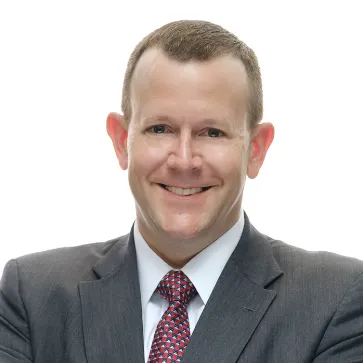
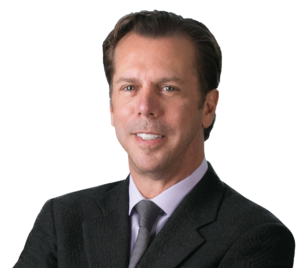
0:08 All right. Well, hello, everyone, and welcome to the webinar today. Really appreciate you taking the time to join us. We are joined today by the esteemed founder and chair of FirstMine and Gold, Keith Neumayer. Keith, thanks for joining us today to talk about DuParquet.
0:30 It's my pleasure, Dan. It's been a while since we've done this, so it's good to do it again. Yeah, no, absolutely. And apologies to a few of you who were lined up on the previous one, but we're glad to have Keith now lined up here. Listen, I think we're just going to keep this as a pretty informal discussion as we go forward.
0:54 And we'll line up questions. For those of you who have questions, be sure to submit them in the Q&A tab on the on the on the page here. And I think, Keith, maybe we just get into it. Obviously, have a bunch of the shareholders and our followers and and supporters here.
1:17 Always love to hear about your view on the gold and silver markets and where we are. It's an interesting time right now. But why don't we start with that to set the stage?
1:26 Yeah, well, definitely. I just did an interview the other day on Persmogestic and, you know, similar question came up, you know, because everyone, you know, it's such a, I look at silver as probably the most annoying metal there is on the planet. You know, it's, it's, I love silver, of course, but I love gold, too. At least gold's got some stability that silver just can't seem to find. So it's great being the chairman of a gold company and
1:55 everyone's waiting for the Powell pivot. The interest rates are going up and the economy softening and that's putting negative pressure on commodities. And of course, silver and copper are looked at as commodities. I look at gold as a currency, but it is down from its highs, as we all know. But
2:16 it's been pretty stable. It's holding levels, reasonable levels. You can't be too negative on gold. I think it's actually held up quite well over the last few months with this rising interest rate environment. But the second the Fed pivots, which we don't know when that's going to be. It could be next quarter, it could be next year. You know, who knows? But when it does happen, and we do know it's going to happen, this market is going to crash.
2:43 The major stock markets are going to crash and the economy is crashing in front of our eyes. Yet, you know, the government obviously doesn't want to admit it. You know, changing the rules on what a recession is, is pretty, pretty hilarious. Absolutely. Yeah. But anyways, yeah, like it's just it's not it's it's, you know, mining, you know, miners, you know, like Dan and myself, you know, we're used to the cyclicality and sometimes investors aren't because it does get annoying.
3:14 No, for sure. And it's tough to have your career and most of your net worth tied to something that is so cyclical, as we all know that you certainly are. Maybe just a reminder to the people here, how many shares of 1st Mining you own?
3:33 Oh, I'm in the just shy of 15 million shares. Yeah. And purchased, largely purchased in the market, including some more having been purchased in the last year, I think just after we were able to announce DuParcay. Yes, we were in blackout for a while, as you know, and I wanted to take advantage of those prices and I couldn't buy it until we put the necessary news out. But once we did, I went in immediately and bought another 340,000 shares. And I had a couple of other bids in there. And I'll buy more on weakness.
4:12 It's tough to buy any junior mining stock, but we'll get into some details as we get through this interview. But, you know, 1st mining shares are kind of caught in this Lassonde curve, which really means that people should look at what that actually is, because it's quite interesting. You know, Pierre Lassonde is a very well known mining entrepreneur based out of Quebec. He's built a number of companies, financed a number of companies from
4:43 the big royalty company, Dan, what's it called?
4:46 Franco-Nevada. Exactly. A bit of a mind fart there, but he's the founder of Franco Nevada some 30 years ago. And anyway, so he created this chart, which was now called the Lassonde curve. And It's really the permitting process and Springpole has been caught in this permitting process.
5:09 It's been moving very well. We've made huge advances over the last couple of years, but there's still a couple more years ahead of us before we actually get the permits to break ground at Springfool, which we intend on doing. And now we've got this next asset, which is just super exciting. And that's after almost 6-years of negotiations.
5:33 Yes. I think that kind of takes us back a little bit, maybe just for a bit of a reminder for everyone. You know, 1st Mining acquired CliftonStar. It was one of the last companies acquired, wasn't it, in the original stance? Predated me by 3 years, I think,
5:55 or 2.5 years anyway. But it was 2016. And you and I were talking about this a couple of days ago. Interestingly, it had these project interests. It had the Duquesne project and it had 10% in DuParcay, but that wasn't actually the original impetus for the acquisition. No, and you're right. Those are bonuses. We didn't really know a lot about
6:22 those assets. And we really bought Clifton for its cash. You know, of the original 10 companies that we identified to target, we ended up buying 6 of the 10, which was quite exciting. And built a portfolio of over 11 million ounces of gold spread over those assets. But 2 acquisitions, including this one, Clifton, I think there was about $14 million in the bank at the time we bought it. And then when we looked and we, one of the directors
6:50 who was on the board of Clifton, we brought him over to the board of 1st mining and then he educated us on really what DuParquet was. And, you know, Within months of us buying Clifton, we started negotiations with the sisters that owned DuParcay.
7:08 I've met them a couple of times, but when Dan took over a couple of years ago, he started the process again. He's been successful in getting them to the table and getting their signatures on document. And I know people in the mining sector that have told me that, you know, it's quite a surprise that, you know, we're able to pull this off because, you know, it is a quite an exciting asset. And some of the players behind the scenes weren't exactly the most difficult or weren't exactly the easiest to deal with. Well, I think, you know, it was it was we talked about at the outset when we made the acquisition,
7:46 it was complicated. Right. And this was a complicated situation. The asset was held in a few different companies and different shareholders with different interests. But fundamentally, I think the biggest part of that was all,
8:02 we had worked as partners and part owners of Beattie and Donchester and the Surface Rights for 6 years. And I think, in the end, it was a lot more about the existing owners of that business kind of entrusting us to move it forward. You got to remember this asset was more or less held in their family from the 1950s.
8:25 So, there was, as important as anything in this was, I think, we take it really seriously as an opportunity to have the trust and confidence of that group of shareholders to really help surface the value of this project, which is what they really wanted to see. And a part of that was obviously
8:46 having the backing of you and having the team that we put together, and particularly the team on the environment side, because this is an asset that has a legacy with it as a past producing mine. It was really the similarities between this and the Hard Rock project in Ontario that Steve Lines, our VP Environment and Community Relations had worked on. And most of the team that's now with us since 2020,
9:16 They had very similar situations. And it was, I think, our ability to convince the shareholders to a degree that we were going to be good stewards of the project and really had a capability to do the work that needed to happen to move it forward.
9:31 Yeah. And these shareholders are very tied to this town. They want to see this town developed over the next several years. And with this mine coming back into production over the next 5 years or so, or maybe 3 to 5 years, we'll see how long that takes, but
9:49 it's gonna be great for the community and it's gonna be a great legacy for them. And you're right, Dan, for them to give us that opportunity and put their faith in us, that's a great thing for everyone. Yeah, no, we're very thankful for that. And I think the plans are coming together. We'll talk a little bit about what the plans are as you move the project forward. But one of the things I think, as we talk about the project, And why don't I just level set a little bit here for some of the people who didn't see the initial acquisition. The project is located
10:26 between Ruan Narenda and Timmins, in the middle of the Abitibi Gold Belt, which is one of the most prolific gold districts in the world. 2 past producing mines in the Bidi mine and the Donchester mine are the core of the Duparcay project. But 1st Mining already owns 2 other projects 15 kilometers to the east, one of which, Duquesne, is a past-producing mine. So this is just such a prolific area. The BD mine was Quebec's largest gold mine in the 1930s.
10:58 And it's produced until the 1950s and had a full metallurgical processing facility on site, including a roaster. And that's, I think that's all, you know, kind of contributes to
11:16 a bit of what we see as the opportunity here, is that by finally kind of getting all of these things put together, it's a resource that is sitting today when combined with our other resources
11:28 in Quebec, is measured and indicated in excess of 3Moz, inferred of another 2Moz. So you're talking about, again, kind of like SpringPool, a globally significant resource base here. But one of the things that's been kind of lost on this resource. And maybe I'll just kind of bring up a slide or 2 here just to help demonstrate this. One of the things I think that's been lost on this resource is
12:00 The fact that it's actually, when you look at it for the size of it, this is one of the highest grade potential open pits in Canada. It's not very often you find 5Moz open pits with an M&I grade of 1.6g left in the world, anywhere.
12:22 I think it makes for a very exciting opportunity. This project is sitting today as puts us with another one of the top 20 Gold projects in Canada. If we sort of triage this by projects that aren't in construction, but are kind of advancing in the permitting stage.
12:49 This is easily one of the top 10. And we think that there's a lot of opportunity to grow this resource beyond just what's there right now through some very exciting exploration opportunities that we see here in the near term. But it's- one thing, Dan, I'll just jump in. If you go back to that slide. Yeah. I think it's not really fair because that slide shows a lot, not that one, the one with the bar slide. Oh, that one, yeah. No, not that 1. 0, that one, There we go. Yeah, this one here some of those assets, you know require much much higher gold prices You know because they're challenged by grade
13:25 You know in the case of spring pole and DuParte, you know, those are reasonable grades You know, you know and very profitable at current metal prices yet. Those other some of those other ones would not be. Yeah, no, fair enough. That's a good point. We talked about that. There's a couple of ways, I think, that we can slice and dice that going forward. But, you know, this is, again, I think it sets us up with another real cornerstone asset inside the company and one that we are going to make a real focus
13:58 of our work efforts going forward here. You know, one of the things that when you look at, again, stacking this up for what we have acquired and one of the reasons we're so excited about it, the amount of work that's been done on this project,
14:14 260,000m of drilling done between 2008 and 2014. We're basically buying this project for less than half of the replacement cost of the drilling that went into it, when you think of it from that perspective. And this is a project which, for the people who didn't follow CliftonStar in that 2008-2010-2011
14:39 timeframe, this project was going to be the next Canadian Mallardic, which is currently the largest Gold mine in Canada. And it has gone on to a fantastic multi-year production run of 500,000oz plus a year.
14:56 And very similar, Mallardic was a few past-producing mines. It was an old underground operation that they decided to look at, an open pit style, open pit opportunity to mine it. It was located right in the middle of a mining town and a proud mining town that's gone on to demonstrate what the opportunities are in the redevelopment of these projects.
15:27 Between that, all the metallurgical work that has been done on it, it really is a pretty unique opportunity that you don't ever really find in a tier 1 jurisdiction. There's also 10,000m of drilling that was done that didn't make the cutoff back in 2014.
15:48 So 1st mining, maybe you want to just address that quickly, Dan, because I think that's significant. For sure. And that's, I think for us, as part of our due diligence, we've been working on an updated resource and something that we will expect to release here in the near future. A lot of that drilling was done
16:12 prior to the cutoff for their pre-feasibility study. This project had a pre-feasibility study done on it that really only mined a small portion of the resource, interestingly.
16:23 The PFS was a 10,000t per day plant that mined through about 1.7Moz of the 4, 4.5Moz on site. It still left a lot on the table there as well. But the other interesting thing is, as we've done the diligence, and obviously we've talked about this, getting to understand this project, is there is a higher-grade core to this project. And that's something that I think when we look at DuParquet can give us a different flexibility
16:56 than Spring-Pool does. Spring-Pool has some higher grade areas in it for sure, but you kind of have to mine a certain amount before you get into the high-grade at Springpole. At DuParcay,
17:08 our first analysis shows there is a greater than 2g per tonne open pit potential with a much lower strip ratio there as a potential, call it a starter operation. So it's a lot of, I think, the next steps for us, getting to understand
17:28 how we're gonna take the project forward, how we wanna scope it, run some trade-off studies, and then coming after the initial resource, hopefully pretty quickly be able to define what the project is that we're going to take forward, both from a permitting perspective, but also from an economic study perspective.
17:50 But Keith, I think it's interesting for the folks on the webinar here, you're CEO of 1st Majestic, you've acquired, I can't count how many projects you've acquired in your career, continuing even in the last couple of years with some pretty major acquisitions.
18:10 We keep telling the shareholders that these are really strategically significant assets because there is a shortage of good projects. Talk a little bit about what it's like in 1st Majestic to try and find projects and that kind of scarcity that you find.
18:29 We spend almost full-time scouring public documents, looking at assets we just had. And of course, we had shareholders showing us assets as well. We get banks showing us assets. So we don't have a shortage of assets to look at. But yet, most of them just don't fit the criteria that I'm interested in. I learned a long time ago when I first put 1st Quantum together, and we had a similar kind of bull market back in the late 90s,
19:04 and we were being shown all these very low-grade Copper assets. We had a pretty decent core Copper asset with reasonable grades, and we were just developing it, just getting it into production.
19:19 And fortunately, we didn't get into this whole game of just buying assets that are marginable. It can be profitable at high metal price environments, but as we touched on earlier in the discussion, you know, the mining sector is extremely cyclical. So, you know, you have to as a management team, you always have to look at assets that can withstand, you know, long term trends. So we have to look, you know, 10, 20, 30 years out when we're looking at an acquisition to make sure that it can withstand
19:53 lower metal prices. And it's hard to do. And I think shareholders really don't take that into consideration. I really appreciate the efforts that management has to spend when we're looking at M&A. And, you know, in the case of 1st Majestic, you know, I remember back in, you know, 2010, 2011, you had a line up of banks at the front door showing us all kinds of stuff. And I want to get into details, but those assets, even today, are not
20:22 in production and likely they won't be in production unless we see, as I predict, triple digit silver. But you can't buy an asset that is that far out of the money just to add ounces to your portfolio. At least that's not how I believe in building businesses. I do believe in multi-asset companies and putting 1st Mining together. That's what was my focus.
20:49 We were successful in buying a number of single asset companies, creating 1st Mining. And I'm not a fan of single asset companies. That's why 1st Majestic is a multi-asset company And 1st Quantum was a multi-asset company and now 1st mining gold, of course, since its inception back in 2015, I built that to be a multi-asset company. So we're not reliant on 1 asset. And now with the Barcade, even
21:14 makes it more exciting. But none of the acquisitions that we did back in 2015, 2016 would not be economic at current metal prices. And they can sustain much lower. We used $1,200 gold when we were actually investing in these assets or developing the portfolio. And I don't think in our lifetimes we'll be seeing $12,000 gold. No, I would agree with that. And I think the timeframe is rapidly coming where we're going to see it shoot up, as we talked about before.
21:49 Good. Well, I guess the one last question I'll ask, and then we can kind of dive into some of the questions on the line here. But what are the things that have you the most excited about DuParquet?
22:05 Well, jurisdiction is key to me. Being in Mexico and investing in Mexico for 19 years now. Mexico is not what it was years and years ago.
22:19 When we put 1st mining together, we realized that not only were the assets in Canada quite a lot cheaper than a lot of places around the world, and that's why we very much focus on Canada. But one of the key reasons why we focused on Canada was land tenure and holding costs,
22:40 which are extremely reasonable. And permitting is not that bad. Sure, you've got to jump through a bunch of hoops and there's environmental issues and, you know, local indigenous issues and community issues and all those types of things. But, you know, those are prevalent around the world. So that doesn't make Canada any different than anywhere else.
23:02 But it does from a land tenure perspective and a holding cost perspective and a permitting perspective, Canada is extremely competitive. And I think Quebec and Ontario are the 2 best mining jurisdictions on the planet. And having now our second core asset in Quebec, 2 5Moz assets in 1 company. Dan and I were talking just the other day and this portfolio should be valued at $2Bn.
23:30 I checked the market cap today before our interview because I don't look at it very much because it's just so darn frustrating to me. But I looked at it today, it's $170 million Canadian, that's Canadian market cap. It's like $140 something US, which is a complete joke. And that's why I bought a bunch of stock a few weeks ago and I'll buy more. And one of these days, shareholders will wake up to the fact that this company is extremely undervalued and maybe who knows a major might come in and
24:01 throw some money at it. We can't predict those types of things, but management Dan, led by Dan, is doing exactly the right things.
24:11 It's just tough when you're going through the permitting process and it just takes time and patience. But I would suggest to investors that they be patient, but also add to their positions because I don't know of another company out there that has a portfolio like this company. And I'm super excited about it, but quite honestly, the stock sucks, which is really unfortunate, but it is what it is. And for anyone who has any questions on the line here about whether or not Keith lets me know that he thinks the stock sucks every now and then, The answer is yes, he does.
24:48 So I do remind Dan a lot about it. Yeah, no, it's it's not lost on any of us. Trust me. There's you know, I think that's one of the things that we've really been trying to focus on is that fundamental value. And that's why we're moving SpringPool forward. It's taking the risk out of these projects. It's advancing it
25:09 in a market environment and an industry environment where companies don't want to do that work. I think we built a team that has a great capability to do it and a team that I think with that capability can handle advancing more than 1 project. And particularly
25:27 with Steve Lines in Quebec and having that opportunity to leverage something that's a little bit closer to home for him as well. Now, I think we're very well set up that in that timeframe that you talked about, and I think it's, you know, in the next year or 2, as you get closer to those permitting decisions at Springpole. We're defining another project at DuParcay and kind of the broader Quebec portfolio. We see a few other moves in the rest of the portfolio, which I think gives us some real flexibility, financing flexibility going forward. I think, you know, people will, investors, the market will have to start recognizing the value. As you say, this is 12 and 500,000 ounces sitting in 1 company and all those ounces in good projects being advanced in the best jurisdictions in the world.
26:23 Yeah. And I think one thing we should talk about, Dan, is this whole rollback idea or this whole rollback issue. I'm watching these questions or comments coming up on the screen here, and a few of them are referring that. And just so investors or shareholders know, I'm dead set against rollback. In my view, unsuccessful companies roll back and successful companies split. How many times have Microsoft split? You know, how many millionaires has Microsoft made through splitting their shares? You know, first, quantum minerals, when copper took off back in, I think it was 2008, if I remember correctly, copper went from sub a buck to something like $4 or something in that range.
27:15 And 1st quantum being basically 100% copper, it went to $140 a share. And it had at the time less than 100 million shares outstanding. So it was quite thin, thinly traded stock. But the institutions had to own it because they needed exposure in copper. And 1st, Quantum split themselves. I think it was 5 to 1. It could have been 10 to 1, but I forget. I have to go back and look. But it was they they went up to something in the order of, you know, 500 million shares in that range. I haven't looked at it recently. I don't know how much stock they've got outstanding today, but I'm sure it's much more than 500 million shares. B2 Gold, I think, has over 1 billion shares outstanding. I haven't looked at their quote lately, but I know they're probably north of 10 bucks a share.
28:02 So, you know, you know, at 700 million shares, yeah, sure. It's a lot of stock. But if you're an institution that wants to buy 5% of the company, you can do it and then you're not going to affect the share price in any great way. And that's a great liquid vehicle for the big institutions who want to get into a company like 1st Mining. And, you know, I don't like thinly traded stocks. I don't like stocks that trade by appointment. And then a lot of these, you know, sub hundred million share companies are difficult to trade and institutions will stay away from them because, you know, if they buy 1 million shares, they're going to move the stock. If they sell 1 million shares, they're going to move the stock. So they're stuck into their investments and it's just not a good place to be. So they just won't simply make an investment in the first place. So, you know, we as a company, we as a management team just have to keep pushing along. And I see someone here just said Quantum was, oh that's Paul Morris, thanks Paul, a 5 to 1 split.
29:06 So it was a 5 to 1. So, you know, and that's what successful companies do. And, you know, I would love to split 1st mining now, you know, But that's another discussion altogether. There you go. We'll worry about that when we have a $10 billion market cap. Exactly. But I recall one of our shareholders a couple of years ago, no, just after you put out the PFS on SpringPool, he called and asked, so what's the value of SpringPoll at $5,000 gold? Just keep everything else the same. Just the value at $5,000 gold. And you start doing the math. It was a billion-dollar NPV at $1,600. And it's $150M for every $100 on the Gold price.
29:55 So you then multiply $150M
30:00 times, what's that in terms of how many hundreds on the Gold price does it go up to get up to 5,000? It's 3,400. So call it 34 times, you get into some pretty big numbers. And so exactly in that situation, there is every possibility that when you get these projects further toward development and de-risked, and you get some of that volatility that we talked about at the outset. When it goes in the direction that we all think it's going to go, we're not going to be talking about NPVs at $1,600 Gold anymore. And that's the leverage that these assets give the investors. So Yeah, no, I think I appreciate you knocking the share consolidation question on its head.
30:56 I often refer to your position in that when shareholders ask, which is very helpful and very clear. So we'll put that one behind us. Yeah, yeah, it's just OK, it's there has to be a reason for everything, but I just don't ever see a good reason for rolling back a stock. It just when I in my portfolio, when I see a management team put out an announcement that they're going to roll it back, I sell my stock instantly because I don't know of a single occasion that, well, there are a few occasions, I shouldn't say there are not any occasion, but in the most cases, it doesn't work out well. Did you want to cover the Cameron question? I've got a bunch of questions here that we've published. Why don't we start walking through these and I'll go down the questions and we'll both kind of chime in here.
31:50 So Williams asked, is there any time frame for a PEA and for future drilling? Which is a very good question. In terms of the PEA, that's something really, as I kind of alluded to, it's something that we're starting to scope out now because I think there's a few different ways that DuParquet can evolve. It is a huge resource, but it does have the flexibility potentially to look at a smaller, higher-grade project that then can expand into a bigger, lower-grade project. A bit like, if any of you have followed Artemis Gold and the Blackwater project, It's a bit like what they've done, although I think we have an ability potentially to start with something that would be lower capital.
32:37 So it's early stages. I think we need to do some quick scoping work there, pick a path and then drive on. It would be our goal that we'll have an economic study, be that a PEA or a PFS, because we need to remember that this is a project that has a Prefeasibility Study done on it. And a lot of that work done to Prefeasibility level, including the metallurgy work, including the environmental baseline work. So I think from that perspective, we also just kind of need to look at, do we put out a PEA or PFS? But all of that work, we're going to come, I think, to a view on over the course of the next month or 2 and drive on. So with all of the data that's here, the good news is a lot of that doesn't require much more drilling, doesn't require really much more metallurgical work or much more study. It's a bit of a desktop exercise, so it should be able to go reasonably quickly. We'll have a better sense of that, as I say, kind of in the next month or 2 after we pick the path we're going on.
33:41 And in terms of future drilling, I mean, at some point over the course of the next month or 2, it'd be good to have another session where we can talk about exploration more broadly in 1st mining. But it is a really exciting exploration opportunity at DuParcay. This project sits in the Abitibi. There's an old saying around a lot of the mines in Timmins that the real mine starts at 1,000 meters down. What's above that's nice, but the really good stuff is deep. And you just have to look at the depth of a bunch of the mines through the Abitibi to know that these are systems that have very, very deep roots. And so that, I think, presents a real opportunity, because there are significant exploration intercepts below the pit at DuParcay.
34:29 There is certainly potential for underground resource there, And I think certainly potential to extend that at depth, extend it along strike. This is a project that other than in that 2008 to 2014 timeframe, where almost all of that work was focused on infill drilling near pit resources or adding to near pit resources. There hasn't been a really comprehensive exploration view on the project other than for a few years. So it's something again that James Maxwell and our team are rolling up their sleeves on and getting very excited about. But I think it'll take us a few months to define what we think that, you know, where we can best put those drill holes and how big that program is going to be.
35:18 On to the next question, David is asking, as seen from space, there is a large tailings area from the old mine that empties into Lac du Parquet. Seems to be no containment. Is this an environmental issue that we'll need to address? And if so, what are the projected costs? It's, you know, it's a good observation, David, interestingly, those are, it is actually when you go on Google Earth, it says La Place du Parquet, which in those of you don't speak French says the Du Parquet Beach. It is those tailings have been there since the 1930s and 1940s. A part of those tailings sit on what are what will be the surface rights that we're acquiring. Part of them set off of those surface rights and are actually already the responsibility of the mines ministry in Quebec.
36:09 Which you know, I think there's been quite a bit of study done on them. Everyone believes that they will need to be cleaned up. But the interesting part about those tailings is that they have a lot of gold in them. So the PFS showed about 4 million tons of tailings, grading, I want to say, 0.9 grams with a little bit of silver. And metallurgical work showed that the gold in the tailings can be recovered. So I think it's one of the things as we talk about sort of some of the similarities with the Hard Rock project and the development plan. The plan with DuParc is integrating the remediation of the historic legacy, environmental legacy of the past producing mines with the development of a new mine. And that's exactly what's happened at Hard Rock. Had great government buy-in, great support from the permitting authorities. And it was something that, you know, Steve Lines and the team did a lot of work in framing and scoping. So we've had discussions with a number of ministries in Quebec, including the Ministry of the Environment.
37:27 And I think everyone has a very pragmatic approach here, which is really the best way to affect any of that longer-term site remediation is through development. And that, I think, provides us with more of an opportunity than it does as a liability. But I think it's something we're well equipped to handle. It's going to take a period of study to really establish a baseline. And that's really where we start on that program on the environment side is study, establish a baseline, understand what the options are, how do we scope those options into a development plan, and then move forward with the permitting from that perspective. So, yeah, no, it's a very good point, but I think that's, you know, as those of you kind of followed the ESG report that we put out this year, and obviously, as a group that's advancing environmental assessment and permitting of big projects, we're in the business of ESG. And I think this is another one of those cases that really showcases an opportunity where both your development plan and your environmental plan really align nicely. So we're excited about that.
38:45 The next question that we have here from Mr. R is, DuParquet is exciting. Would you consider putting SpringPool on the back burner and pushing ahead on DuParquet? Which is an interesting question. I think it's something that we certainly have discussed. I mean, I'll kind of give my answer to it and Keith can give his answer to it and hopefully they'll be pretty similar. I mean, I think with SpringPoll, we are in this EA process. I think we have very good momentum in going through this process, but we are at a point in the EA and almost in the feasibility study where there's a bit of work left to do, But the project's pretty well defined. We're getting comments back from other people and it's kind of the draft EA is being reviewed by a bunch of other people. That gives us a real window here for the senior team to really push hard on DuParcay because, you know, a lot of Springpole is kind of moving ahead on its own momentum now.
39:53 Yeah, but I think, you know, there's certainly opportunity for us to do both. And I think where we are with Springpole is a really important part where, you know, as we move through this part of the development curve, working and very important working with the indigenous communities in the area and very important to working with other local constituencies that, you know, you do need an environmental regulators and everyone, you do need some consistency in how you move it forward. But Keith, I don't know, what's your thought on that? Well, I think shareholders don't really see what's going on behind the scenes. You know, they, they, they, they, shareholders see the stock price and, you know, if they call the company, they might get some additional intelligence on what's actually going on.
40:40 But, you know, what's happened over the last, you know, 3, 4 or 5 years is there's been an enormous amount of advances in respect to Springpole. And also the government of Ontario is very well aware of this asset and is very supportive of this of this asset. You know, There's still a number of hoops to go through and we're still a couple of years away for sure to get there, but there's a lot of eyeballs on this asset and there's a lot of people that want to see this mine in production. It's going to create something in the order of 700 jobs in this region, which is extremely impoverished, very, very poor communities in desperate need of jobs. And this mine will do a world of good for this region of Northern Ontario.
41:28 And I really want to see this built and running, because it's going to be great for the region and great for the province of Ontario. Yeah, no, that's a great point. The 700 jobs is sort of direct at the mine jobs. When you look at the socioeconomic regional study that was done, it's like 3,400 jobs for a region. So that's roughly, you know, employment for a town the size of kind of the employed population of Sulukka, you know, or Red Lake. Like It's a very significant, it'll be one of the biggest economic drivers of activity in this region in the Northwest for a generation. And I think that provides a ton of opportunity in working with the local communities, helping communities build capacity to be able to take advantage of the development and make sure that we're bringing a real partnership approach to that.
42:28 And during the process, you've done, I don't know how many meetings you've had with the Quebec government and then discussions with the Quebec government before, you know, 1st mining signed its agreement to purchase Duparquet, but you know, the openness and the frankness of the discussions that took place were quite refreshing. You know, So, you know, we have, you know, we have 2 great assets in 2 great jurisdictions with 2 governments that are very active in the mining sector who are wanting to develop mines. You know, and, you know, there's not too many parts of the world that are like that. No, that's very true. We lose sight of it sometimes. Sometimes it takes a while to build. You have to build up those relationships, but we sometimes lose sight of that. We are in great places.
43:14 Here's The next question, a question to Keith from John Lewis. Do you feel that the mining sector will finally wake up and move when we see this next move higher in the Gold price? It's funny because even today, the big players are using $12, $1300 gold for their economic evaluations of potential acquisitions, which to me is pretty surprising. When we're doing M&A at 1st Majestic, we don't use market, but we put sensitivities in place so we can see what an asset looks like at $30 an ounce silver, What does an asset look like at $15 an ounce silver? And so on. And then we come up with some guidance on what that asset can stand.
44:13 I think that greed has definitely not stepped in. I think that the Kinross acquisition recently of Great Bear turned a lot of heads. I think it pissed off a few people because there were others looking at it as well. So I think, you know, potentially it has got some of these boards of directors off their seats a little bit and they're waking up to realize they may have to be a little bit more aggressive. You know, we'll see. Time will tell. But, you know, at 1750 Gold, 1760 Gold, you know, people are kind of relaxing. And, you know, I think that, you know, if we do see Gold break through 1850 and on its way to 2000 again, and, you know, with some of the activity going on with these majors, I think maybe some of these guys will decide to start being more aggressive.
45:06 In the case of 1st mining, I'm surprised where it's at today. Who knows what can happen over the next couple of years, But I can tell you, tell investors or shareholders that we're not gonna give up easily. If someone wants to step in and have some fun with us, okay, go for it, we're a public company, but I'm not selling my stock too cheap. Well, we are. I wanna build $3 billion companies. I build $2 billion companies as it is, so I'm not going to be able to do it for 1 billion dollars. There you go. That gives us the floor price for the auction, I guess. It's got to satisfy Keith's billion-dollar checkmark. I think those of us who've been through a few cycles here and kind of seen how the M&A market changes over a cycle.
46:02 This to me, Keith, feels a lot still like 2002, 2003. We haven't really seen a sustained push up in metals prices. It feels more like we're consolidating a floor than it does like we're on the way up. But it's when the trajectory changes that all of a sudden capital is available again, which is the other thing that this industry is still sorely lacking, are new investors coming in. But you remember those days when the flows of funds were coming in and investors had to invest somewhere and they had to buy something and there's a shortage of good companies and a shortage of good projects. And then that always manifests itself toward the end of the cycle in the real peak M&A activity.
46:52 So, you know, I think you look at kind of what the rough and it's not any one particular stock. We can all point to a few that we knew and loved in the time. But you look at what basically the TSX Venture did from 2003 or 2004 to 2011. It went from like 500 to 3,500. Like When the basic tide goes up by 7X, then companies with good assets outperform that, right? Well, it takes grade and jurisdiction, and we have both. Yeah, no, that's great. That's great. On to the next question. Mike's asking, has there been any engagement with the indigenous community regarding do park a mine development and its support expressed Mike You know, we have reached out. They got to remember we don't quite own the asset yet, so that's coming next month.
47:49 But we have reached out on the announcement just to, you know, to make sure that the communities around DuParc knew that that it was something that was important to us to establish that initial contact. So we haven't had any direct contact. We're still a little ways away from talking about development at this point, but it certainly is something that we have reached out and look forward to making connections and learning more about the communities around and establishing that dialogue early because it's very important. I think we've learned a lot of good lessons from that working at Goldland and working at Springpole and working at Cameron.
48:39 It's everywhere is a different cultural context. Everywhere there are, you know, all the communities are unique. And so just getting to understand a couple of the communities around the Abitibi, we're looking forward to it So we'll we'll find the opportunities to make those connections The next question here is from Ray which is what is the current status of the royalty package is a full spin-off into a new? Co still in the cards Listen the royalty package, you know, we're constantly getting calls on the Royalty package because it's a great package of Royalties. There are some, I think when you look at the package of Royalties that we've kind of put together as we worked on the portfolio in the last couple of years, there's not many million ounce resource projects in tier 1 jurisdictions that have had as much drilling as our Royalty packages had on it in the last 2 years. I mean, in total, let's say, at this point, probably 150,000m of drilling between Pickle Crow, what's going on at Goldland and some of the drilling that's going on at Hope Brook. So, no, I think we continue to look at what the options are for the Royalty Company.
50:00 Certainly one of those is, do we float it off? I think you'd need to have a bit more critical mass than the Royalty portfolio has right now. And the other thing is the Royalties are getting better every day because of the drilling, because of the resource expansion. And I think we're starting to see a bunch of those who are continuing to look for assets just like this. We see that as still lots of opportunity coming in the future. But Keith, the Royalty portfolio to a degree was a little bit of what you foresaw when you set up 1st Mining back in 2015-2016. Yes. And back then, before we decided to start developing these assets, the name of the company was 1st Mining Finance.
50:49 Because I didn't anticipate the success that we actually had. Even I was surprised when I was approaching these management teams or boards of directors of these companies we identified with some of the best assets, gold assets in the world that we thought, they were actually quite interested in merging with 1st Binding because of the fact they couldn't raise any money and They were about to shut their lights out. So, you know, it was very opportune on my part and it was quite successful as well. You know, that goes to the entire team. It wasn't just me, it was a whole group of people, but, you know, at the company working long hours, late at night, on weekends, you know, getting these deals done. It was a hard task to pull it off, but it was. But then, you know, once we achieved it all, you know, back in 2016, you know, the market took off, as many people probably remember, and we decided, OK, well, we should now that we have this portfolio, let's start actually developing it.
51:52 And now, even today, you know what, 6 years later, we're actually looking at being a producer. And that's really where we're trying to go. And whether we make it to be a producer or not, you know, only time will tell. I would expect that some major will come and take us out before that happens. But you know, if it doesn't, it doesn't. And you know, we'll be a gold mining company, you know, at some point, and that'll be exciting as well. Absolutely. And that kind of dovetails into the next question that's on here. Benjamin's asking how will development be financed given the low value of 1st mining shares and the partnership assets? Constant dilution does not encourage shareholders to add to their holdings. And, you know, listen, we get this question all the time, understandably, and that's, you know, developing big minds and getting to that construction decision.
52:47 That is, you know, it's an important concern and a concern I think that we all have about it. I would say that the big dilution events to come, i.e. Building a mine, we've got a few steps to go to before we get to that point. And when we get to that point, if our share price is still where it is, which it won't be, because once you get these projects to a point where they're defined with feasibility studies and you have permits to build them, those projects would typically trade at somewhere between 0.6 and 1 times their net asset value.
53:32 At Springpole, that'd be 1 billion dollars US. You know, if we're not trading there, then I think, as Keith mentioned before, I think the M&A market will solve our problem if someone can find, you know, the value that will allow Keith to check his box on his overall value of 1st mining. But no, I think we need to get it to that point. And the key question for us is, how do we stay well-financed to get it to that point? There are a number of avenues that we have to stay well financed. The balance sheet is still in strong shape. We've got at the end of the last quarter US$16M in cash. We've got the Royalty portfolio.
54:17 We've got the share portfolio that we have from the deals that we've done. We've got the partnership assets. And I think over a 2 or three-year timeframe, we just need to make the decisions about those projects. And ultimately, we need to monetize a few of those because we've said to a lot of people, we would rather probably sell those assets at the right value than sell our shares. But we've got this package of future payments and royalties and project interest that's worth $60M or $70M. And that's what it's valued at today. I think it's worth multiples of that, because I think you do have some really good projects in there that are continuing to be advanced.
55:06 But I think we need to continue to stay diligent. And one of the other things that we've talked about in the past is the potential ultimately to maybe bring in a strategic investor or a strategic partner, be that at that construction timeframe or beforehand as you approach some of those milestones. So, yeah, listen, The thing I want to leave you with is, I don't think there's any 2 people in the world more than Keith and I who are concerned about dilution for the company. We are both big shareholders. Me, not quite as big as Keith, but I'm through 5 million shares, all of which have been purchased and we're aligned with the shareholders on this point for sure.
55:58 Anything you'd want to add to that, Keith? Yeah, I think there's a misunderstanding of what dilution is, actually. Issuing shares is not necessarily dilution. Whether the transaction is accreted or not, if you raise $5 million and you blow it and you create nothing for it, that's dilution. If you spend, you raise $5M and you add 1 million ounces of reserves or resources, that's whatever that works out to, 5 bucks a share or 5 bucks an ounce or whatever, you know, that's not dilutive. That's accretive. That's money well spent and sure, their share is being issued, but that's not dilutive in any way.
56:47 You know, buying DuParcay for what, 45 million shares or something, we're paying for that? Yeah, it's about 80 million shares, but it's calling $5 a share of value. Yeah, in tronches or whatever. In total, yeah. Right, right. So, you're buying ounces in the ground for $5 an ounce. You know, that's your discovery cost. That's even less than your discovery costs. So that's a pretty darn creative transaction. Yeah, sure. There's more stock outstanding, but it's totally irrelevant. So I think people get wound up about what we're doing with our share capital and how we're spending shareholders' money or how we're issuing stock. We always have to ask ourselves, is it accretive? And we measure ourselves on a continuous basis on that topic. So I can assure shareholders that we spend a lot of time on this topic. Yeah, no, for sure. And when you look at DuParc's net of the share issuance, you're talking about 30% accretion to the ounces of gold underpinning the value of your shares.
57:58 There aren't many acquisitions that one does in one's career that gets you 30% accretive. And somebody who spent 20 years as a corporate finance advisor and 5 years as a private equity fund manager, they are hard to find. So no, we're excited about that one. I'm just conscious we're kind of down to about 1 minute left. So I think maybe we'll just take the opportunity, first of all, to say thank you to Keith for joining us and thank you to to all of the shareholders and and our engaged shareholder base are here with us today. But Keith, anything you want to say in parting words for the team here? Well, thanks Dan, for organizing this and thanks to the 6 Group for hosting this seminar. And it's great to do this again. It's been quite some time and hopefully it's useful for the shareholders and investors.
58:52 Feel free to contact the company at any time if you have additional questions and maybe we'll do this again in another 6 months or so. Absolutely. That sounds great. Thanks everyone and thanks again, Keith. At this point, we'll sign off. Thanks very much.