Transcript
Automated transcript · Written by software from the replay's audio. It can mishear names and figures; the replay is the record.
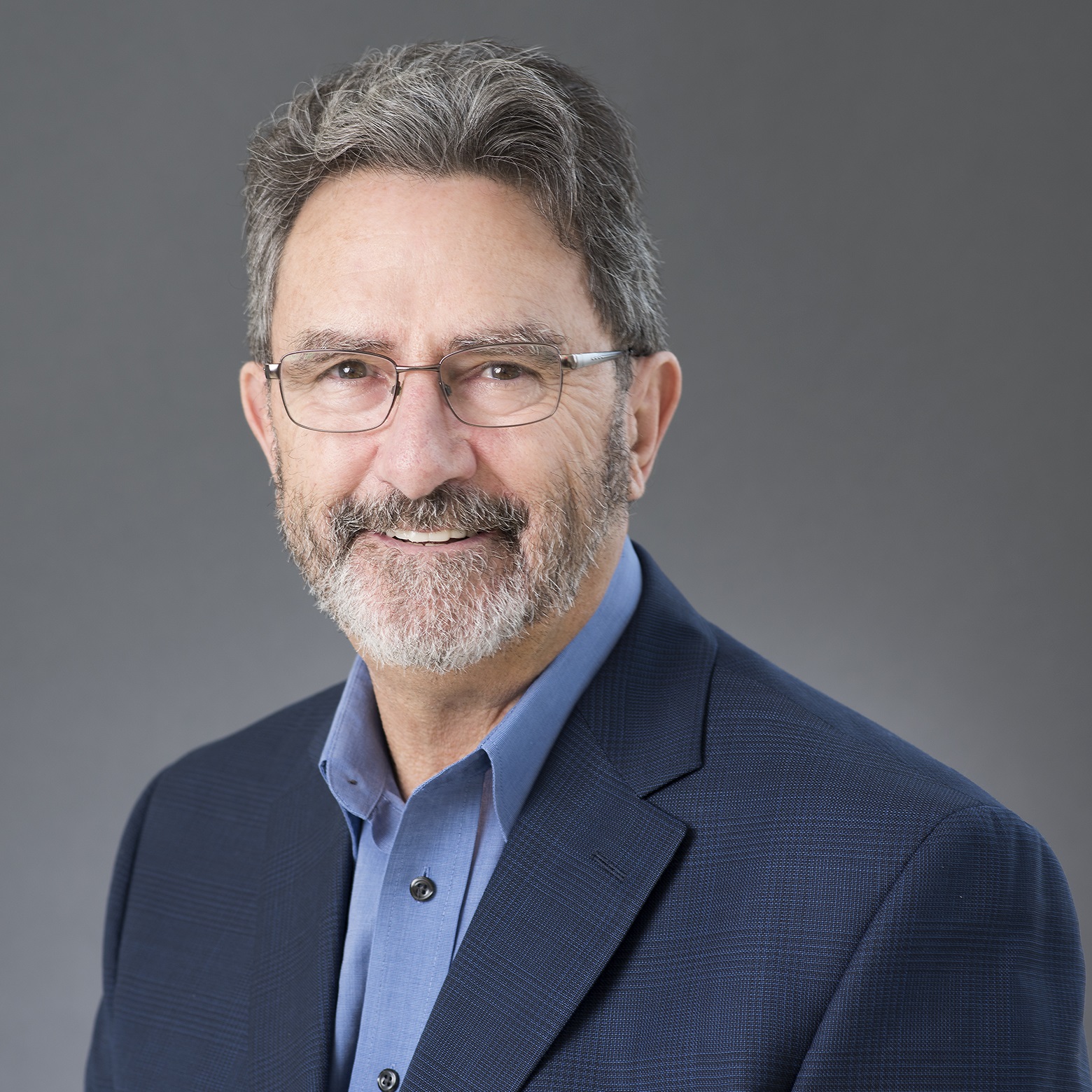
0:08 Hello, everyone, and welcome to the Advanced Goal Exploration live event hosted by 6. Pleased to introduce our speaker for today, Jim Atkinson, the CEO. He's currently down in South Carolina starting a psych tour So he'll talk about that and afterwards we'll be accepting questions as a reminder you can submit your questions in the chat at any point during the presentation as Always This summit is being recorded and will be available to watch on 6 calm afterwards without further ado I'd like to hand things over to you Jim so that we can get started
0:39 Hello, everybody as you can see I'm kind of geared up for the field here. I'm geared up in 2 ways first of all I got all the gear on I need, but second of all, I'm kind of excited about getting into the field. I'll be heading out today to the Landrum property here in South Carolina. We'll actually be doing some video recording to be able to put on the site here. You can see the project for your own self. Land Room, of course, as we all know, is one of our interesting projects here in South Carolina. The interesting thing is that the Carolinas are starting to heat up a little bit. There was a press release put out by a company called Carolina Rush a few weeks back, spectacular intersection of high-grade gold and copper over more than 60 meters.
1:33 At the same time, other press releases, a company called Lexington is busy starting drilling at one of their projects and have done some trenching at another one. You know, all in all, it's starting to get a little bit heated up and it's sort of bringing back the old days when the Carolinas were very exciting for gold and back at the turn of the 19th century in the late 18th, early 1800s, there was some work going on here. And in those days for about 30 or 40 years before, actually before the California gold rush, there was a gold rush here in the Carolinas. And they produced about a million ounces of gold a year during those years.
2:20 The whole gold rush, of course, was started by a serendipitous discovery by a young boy of a, it was actually 17 pounds, nugget in a stream on his farm and the funny story is that they didn't know it was gold or didn't suspect it was gold and actually used the boulder as a doorstop for quite a while until somebody, a jeweler, said, hey wait a second I think that's gold and said I'll buy it off you And he bought it off him for $3. But in the end, the farm actually ended up producing quite a lot of gold. They did OK. But that gold rush sparked a lot of interest in the Carolinas in those days. And of course, it was distracted somewhat by the gold rush in California and other things. So there hasn't been a lot of, let's call it, serious exploration in the Carolinas for a while, except that the Hale mine, which was first discovered back in the mid teens and started in production in 2017, has been a very successful operation.
3:28 The last October, they poured their millionth ounce of gold and they have about 5 million ounces of gold as proven and probable, and are doing some interesting exploration, making some interesting discoveries. So the whole belt is sort of starting to heat up. So we're excited about our project here, both of them. As I said, I'll be visiting Landrum today. Landrum has a small gold resource, about 65,000 to 70,000 ounces of gold, but more importantly, it has tremendous potential for expansion, not only in the known gold zone, which has now been modeled and we know kind of where it's going, but even just a long strike, you know, on the same structures in the same geology has potential.
4:21 So we'll be doing a field trip out there today, wander around a little bit, do some videos. Just a funny story about Landrum. When I came down to do the due diligence site visit at Landrum, I picked up 4 rocks and brought them back, put them in for assay, and they all had gold, including 1 which had about 117 grams. And I said to my buddy, I said either there's a lot of gold there or I'm really good at finding gold, but I think it's the first. I think there's a lot of gold there. So, we'll be taking a trip out to Landrum, doing some videoing, showing the old workings and some of the lay of the land. The other thing also, we'll be taking a trip to the Faulkner Mountain project, which is sort of partly attached to the whole Landrum project.
5:15 And the interesting thing about Faulkner Mountain is that, again, it has a very high-grade gold intersection, about 28 grams over a meter and a half. But I think more interestingly for me is that after going through some of the old data, looking at some of the old assays and drill information, it looks like there is a broad zone of anomalous gold and tellurium. And we'll talk about tellurium a little bit later. In 2 of the drill holes that were drilled back in the, I think, 2017, 2018 at Faulkner Mountain. The interesting thing about that, as far as tellurium is concerned, there's high grade tellurium anomalies in rocks at the Carolina-Rushes intersection, but also at the Landrum.
6:10 Interesting also is that within that zone of, let's call it elevated tellurium values, And tellurium is an element that's very often associated with with gold mineralization. Within that zone there is 3 meters of highly anomalous gold, which is 0.3 to 0.4 grams, but also 4 to 5 grams of silver. So it looks like within this broad anomalous zone of tellurium, there's actually a concentration of gold and silver over 3 meters. The other thing about that zone of tellurium is that it also has high-grade molybdenum. Now, molybdenum is an interesting element because it often is associated with, you know, porphyry copper type mineralization, But if you all remember, it's also very well associated with Hemlo.
7:07 Now, I don't want to suggest that we
7:09 have a Hemlo lookalike here, or maybe I do, but I think It's way too early to say that, but I think it is interesting that we have these, let's call them indicator elements associated with the mineralization at Faulkner Mountain. So I'll be going there as well, probably later today or maybe tomorrow, to get an idea of what that project looks like. So that's kind of my goal here. My main goal, I think, is to get a good video so that everybody can get an idea of what the project looks like, how it's laid out, and the kind of access that we have. I mean, there's a main road goes right through the middle of Landrove. So the access is fantastic.
7:59 And that's kind of just a brief, I don't know, Max, if you have anything else, any other kinds of questions or something else we should talk about?
8:11 Thanks, Jim, for that. Do you want to talk a little bit about the other projects as well? Just give people an update on those. Yeah, sure. The other projects we have are in Canada and Ontario. We have 3 or 4 Gold projects in Ontario. I would say that the 2 most interesting for people are the Malba project, which is in the Kirkland Lake area, and Doyle, which is in the area of Batchewana Greenstone Belt. The Batchewana Greenstone Belt is an interesting belt because although it very much resembles the other greenstone belts in the in the Archean, you know, the Abitibi, Wawa, those belts, it really has not been explored.
8:59 In fact, as we understand, the last work was actually done in the Batchewana Belt in the late 1980s, early 90s. There's been really not much done since then. So it's, for us, it's kind of interesting because it's a wide open belt in some ways. Now we have the Doyle property in the Batchewana Greenstone Belt. The Doyle property is a gold bearing zone, a property that has 4 high grade gold intersections that were drilled in the late 80s, early 90s, and really have not been followed up since. The other thing about the Doyle property is that it has been compared to Hemlo by Robert Valiant, who's one of the guys that actually discovered Hemlo. So I think he sort of knows what he's looking at. And he actually, back in the late 80s and early 90s, his company spent a significant amount of time and effort at Doyle, you know, drilling drill holes. They drilled 37 drill holes. They did IP and mag and mapping, you know, they did a lot of work there, I think, and I don't think because Robert has told me this, it's because of the resemblance to Hemlo that they saw.
10:16 Unfortunately, in the early 90s, they ran into a falling gold price. At that time, gold went down to around $400. And they had other interests, some other projects that they were working on. So, they had to abandon the Doyle property. Robert still likes it. I've talked to him about it many times and he still thinks it's a very interesting property. We plan to do some drilling there this year if we can raise the money and we'll be testing some of the areas where we know there's gold mineralization from past drilling, but also we'll test some new areas that we've kind of identified based on some work that we've done, some geophysics and LIDAR work, which shows some fairly extensive structures running through the property.
11:08 Probably these structures are related, not probably, they definitely are related to some of the known mineralization. So, it'll be worthwhile to follow these up with drilling and further work. At Malba, which is in the Kirtland Lake area, as I mentioned, we have a series of quartz veins on surface, which have visible gold and have old workings where they actually did some mining in the old days and brought up some material. The interesting thing is that the material that they mined underground is still on the site that has not been taken off. So, it's theoretically possible that we have a small resource on surface, as well as the property probably has a resource of around 25,000 to 30,000 ounces that was calculated by the workers that did the work. I think for us, 2 things are interesting at the Melbourne property. The first is that the project has never been explored away from the exposures.
12:15 So the exposure is basically an area of rock that sticks out in the middle of a swamp. That area has been explored and trenched and that's where all the veins are. But the area to the north and south, which goes underneath the swamp, has never been explored. This year, last year, sorry, we drilled some drill holes there. We managed to, you know, intersect the veins that were known. But even more importantly, I think, is we actually discovered a brand new type of mineralization. In the past, the gold mineralization has been related to quartz veins, and that's what the old timers, of course, always mined. But our drilling identified several porphyry dikes that had disseminated sulfides and anomalous gold.
13:09 None of the intersections were spectacular, but over the full width of the dikes, there was anomalous gold. This is an interesting, again, development because those dikes, at least where we intersected them, appear to be underneath the cover under the swamp, so they have never been prospected. So we think that's an interesting opportunity there, as well as of course, trying to extend the known vein systems to the North and South. Just as an aside, about 5 kilometers to the North is the former Ross mine, which mined about a million and a half ounces of gold and about a million and a half ounces of silver in a series of quartz veins in altered zones, again, striking in the same direction as Melba and perhaps on a similar type structure.
14:06 Just one thing to mention about the Ross mine, I went underground at the Ross mine
14:11 in the early 1970s and it was very interesting deposit because unlike a lot of deposits in the Archaean, it had lots of Copper and Zinc and Lead in it as well. And that's why it produced so much Silver, which is not usual for Abitibi type gold deposits to have equal amounts of gold and silver. So we're kind of interested in that whole area and we'll be doing some drilling there this summer. One of the things that I did discover, and again, going to the Prospectors and Developers Convention is always fun and interesting, but for me it's really about talking to new technology and new services. One of the things we did discover was there's a company that can actually put out access maps that allow access across the swamps and streams.
15:10 And that will help us out a lot on the Melba property because as I said, it's surrounded by swamp, but we can lay out roads. And these roads apparently are good enough that you can actually drive your pickup truck over these roads. So we're kind of excited about that. One of the only other ways to access Melba would be by helicopter.
15:34 And that can be extremely expensive. Plus, with the kind of fire season we had last year, helicopters were not even available. So we're kind of excited about the new access potential of being able to get in there across one of these, let's call them bog roads or swamp roads. So that's Melbourne Doyle. The other properties we have, you know, we have a small property close to Weststones, Michie open pit, which we'll probably be doing some work on this year. The interesting thing about that property is that it looks like it has a major structure that cuts across it, which is an extension of a structure that occurs on the neighboring property, which has been identified and actually has some mineralization associated with it.
16:30 That structure appears to cut across our property. That property is called the Paint Lake Road Joint Venture, and we have a joint venture with Frontline Gold on that one. The other property we have is a copper property called Buck Lake, and we're trying to actually
16:46 do something with that as far as getting a partner or, you know, or selling it or whatever. It's trying, you know, although it has very nice intersections and it's a very interesting copper property, It's not really, it's sort of outside of our main focus these days. So we will be doing something with that as far as getting a partner. I guess there's actually a very topical follow-up question on that, Jim. And that's and I'll expand a little bit more than than what this question entails. But do you think there's any acquisition potential with any of the projects seeing the rising gold prices and what we what is potentially a growing commodity market?
17:33 Well, I won't tell you any secrets, but we are looking at stuff. I will tell you that last year we did a compilation study in a part of South Carolina where we are. And we actually came up with 5 or 6 potential targets there, which we think might be worthy of trying to acquire. So yeah, the answer is yes, we think there's acquisition potential right in our neighborhood here in South Carolina. There's also of course, lots of other opportunities in the gold space. One of the things I think is going to start happening and it already has happened, we see Alamosa has just bought Argonaut, what we're gonna see happening is companies that are in production are going to, are always of course have to replace resources.
18:29 But I think with the junior mining space so beat down as it is. There's a lot of very inexpensive, shall we call them, opportunities out there and we will be looking at some, but also I think we would hopefully have some people looking at us as well. You know, Especially the 2 projects that we have with resources and potential. So yeah, I think there's acquisition potential for us and there's potential for us to have our projects be acquired as well. Yeah, perfect. That was actually gonna be my follow-up question about whether you'd be willing to, or whether you think any producers, majors, mid-tiers would be looking at your projects for purchase.
19:16 Yeah, I think so. I think there's a level, so far I don't see anything that we have would be of interest to say the Barracks and Newmonts because those guys need a lot of resources. That doesn't mean that, you know, our projects couldn't get to the point where it would become interesting for those guys. But at this stage of the game, I think what would be more interesting would be juniors or intermediates, let's call them, intermediates that are in production, like West Dome, which produces 100,000 ounces a year and has for a long time, but is always looking for resources. Or Alamos, for instance, which just as I said, just bought Argonaut. Their project they have in Matatchewan is running. Lots of these companies are running out of ore and I think they're starting to look a little farther down the food chain, if you want to call it that. And all the companies that have major resources, I think, are maybe they're too expensive or maybe.
20:22 But I think some of those companies are starting to say, hey, we need to take a look a little farther down the food chain, where we can invest for a moderate amount of money and get an opportunity to, you know, grow along with a junior that has some good projects. Awesome. Perfect. Thanks for that. So I think that's all for the questions that we have today. So thanks, Jim, for taking us through the updates and the Q&A. I also want to thank everyone here for joining and for submitting the question there. So today's recording will be available to watch on demand in the coming days. And also look out for the site tour videos that will be coming out. We'll be premiering them shortly afterwards.
21:10 And before we wrap up, just passing things back over to you Jim, for any closing remarks you'd like to make. No, I'm just heading out to the field. Good luck there. Looking forward to seeing the footage from there. Yeah, okay, perfect. Perfect, yeah, so thanks again, for everyone for participating, and I hope you all Have a great rest of your day.