Rick Robson
CFO at CAPITAL LIMITED
Replay available
Full Year Results hosted by Capital (LSE:CAPD) on Investor Meet Company, held 2022-03-16.
On 6ix: 6ix.com/event/capital-limited-capd-full-year-results-2
Automated transcript · Written by software from the replay's audio. It can mishear names and figures; the replay is the record.
0:01 Good morning and welcome to the CAPITAL LIMITED Full Year Results Investor Presentation. Throughout this recorded presentation, investors will be in listen only mode. Questions are encouraged and can be submitted anytime by the Q and A tab situated in the right hand corner of your screen. Simply type in your questions and press send. The company may not be in a position to answer every question it received during the meeting itself. However, the company will review all questions submitted today and publish responses where it is appropriate to do so. Before we begin, I'd like to spend the following poll.
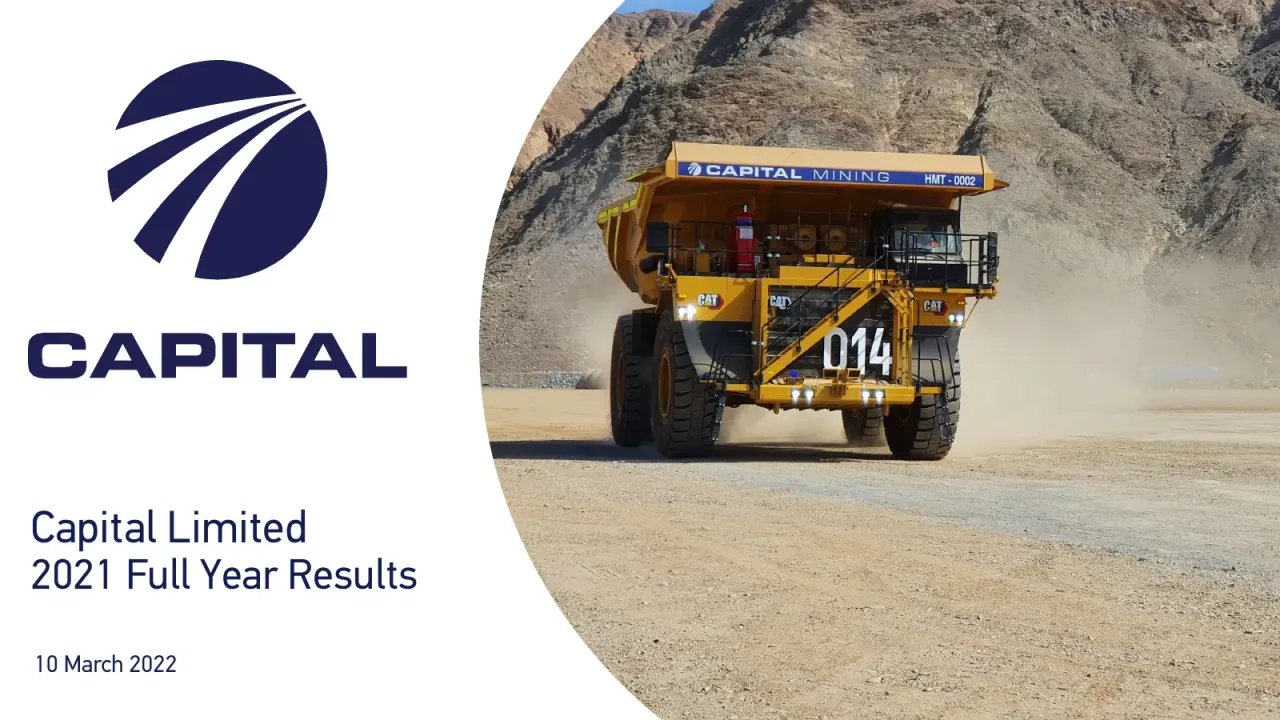
0:28 I'd now like to hand you over to Jamie Boynton, chairman. Good morning. Thank you very much. Good morning, everyone, and welcome to the CAPITAL LIMITED twenty twenty one full year results presentation. With me today, I've got a few people from from our team. Giles Everest, who's the group CFO based in London. Connor Riley, who runs our investor relations and works in the corporate development team based in London. And I've asked Stuart Thompson to join us today, and Stuart is the CEO of our labs business, MSA Labs. What I'll do is we'll we'll run through the presentation. I imagine it'll take about twenty minutes to go through the slides, and then obviously we'll, hand it over to q and a.
1:22 So to kick off, obviously, we released our results last Thursday. We had already obviously released the, revenue results back in January, and it really was an outstanding set of numbers for for the full year. Revenue of 226,800,000 was up 68% on the prior year, and noting that 2020 actually grew 18% on the year before. So we really are back in growth mode. We recorded, records across the board. Record EBITDA of 73,300,000, up a 117%. We reported a profit of 70,300,000, but for the purposes of transparency and reporting, we've divided that into the what we call the adjusted net profit of 36,600,000, which was up that's that's essentially the operating business, the operating profit of of CAPITAL.
2:25 That was up 227%, and we reported equity investment gains of 33,700,000. So we had an outstanding year with our investment portfolio as well. So look, a a really strong year's performance. Just a couple of things to bring to bear that we actually upgraded our revenue guidance twice during 2021, and we still came out slightly above the the upgraded guidance. And then as part of, the the results released last Thursday, we provided revenue guidance for the current year of 270 to $280,000,000, which is at the midpoint of 21% increase year on year. The final thing just to bring to bear is we announced an increase in the dividend, the final dividend of, 2.4¢ a share for a full year of 3.6 and that's a 64% increase year on year. So really an outstanding set of numbers.
3:23 Moving on to, really, it's an overview of of three operating businesses, specifically CAPITAL Drilling, CAPITAL Mining, and MSA Labs, and obviously our investment arm. Obviously, most people are pretty familiar with what these businesses are. So the the main point I would just reference here is that if I was making this presentation three years ago, we would have just been talking about CAPITAL DRILLING. And what we've done over the last three years is huge amount of work has gone into regionalizing our business, with the main focuses for the drilling and mining business being, West Africa, East Africa, and MENA. But then we have also grown our service offering. The laboratory business, which Stuart will talk to, has really gathered a lot of momentum and established a very solid put footprint and had an outstanding year. And the mining business, started in 2019 but really kicked off its first large scale contract in 2021, and and beat all, our expectations and and particularly the client's expectations. So it's been a really solid performance from from the mining team as well.
4:34 The table that you see on the far right, the thin blue line, that shows you the growth in our non drilling revenue and that was 9% and that's now 22% in 2021 and we're expecting that to grow further as a contributor to the overall revenue in 2022.
4:53 We always highlight our safety performance upfront. If you if I can direct your eyes to the table on the bottom left, we're in the dark blue. As you can see, it's an absolutely outstanding, performance when you look at our safety performance against our peers. We pride ourselves on our standards, whether they be a training and development of people, our asset standards, our safety standards, and this statistic makes us very proud as a management team. It's particularly significant when you consider that we added about a thousand people, so close to doubled our workforce over the year, as well as added a significant new business stream in the form of the large scale mining contract, was ramped up ahead of schedule incident free.
5:41 So again, you know, an absolutely outstanding result on the safety front. I'm just gonna spend, a few minutes on on the macro because I think these thematic the macro thematic's critical, obviously. There's a couple of points I'd bear I'd bring to bear on on this slide. And it it is really just the strength of what are the absolute lead indicators for demand in drilling labs and mining businesses in terms of the service providers. And the lead indicators are strong metal prices and strong capital markets activity. And look, we have been talking about this for quite some time and as you can see, top left gold price, I mean, it's close to all time highs, bottom left metal prices and particularly of late, a surge in metal prices, but we've got a structural shift happening right now with battery metal demand and structural shifts are not are not short term phenomena.
6:41 And that's driving the prices of, lithium, nickel, and copper, all of which we have exposure to with our with our contracts.
6:49 And then the financing market, it really opened up in the second half of twenty twenty. And as you can see, 2021 capital raising is back to decade highs. So those those factors are are huge hugely positive tailwinds with respect to the demand profile for services. And just taking that one step further, what we have as a group been talking about for some time has been the disconnect between those strong metal prices and strong capital markets activities and how is how that has flowed through to demand. So if I draw your attention to the chart on the top left, you see that exploration spending globally is still 40% below where it was a decade ago despite the metal prices and capital markets being back at those highs.
7:41 And if then if I we've a new slide to to the pack with these results and that's the chart chart on the bottom right. And that's the gold reserves of, the major gold mining companies. As you can see from the period from 2012 to the trough in 2019, gold reserves, is essentially the asset base of these companies declined by 19%. So the thematic that we again have been flagging is that there's been a disconnect. There's been a prolonged decade long trend in the industry where the mining companies have been running their assets for cash. They've been focused on capital,
8:25 capital preservation, balance sheets, dividend payments. We have however seen m and a activity and as we flag in this in this note, there's two ways if you're a mining company to grow your asset base. One is via acquisition, m and a, and the other is by expiration. So whilst m and a is featured, expiration has not. And it was very pleasing that in 2021, we finally saw this disconnect begin to, rectify itself and expiration spend globally in 2021 was up 35% on 2020. And as this thematic also develops as the cycle develops, it then flows into CAPITEX. And again, you know, the CAPITEX trend is very clear. That's the bottom left. It has gradually ticked up off the lows, but still well off previous cycle peaks.
9:16 When we talk the mining business, I'll go into a bit more detail here, but the CAPITEX pipeline which flows through to our mining activities is also firming up very nicely. I'll now delve into the individual businesses, drilling business. Look, the header says it all. The strongest demand in a decade. Top right, you can see that the period between two January 13 and January 21, there was really no change in our fleet size. We obviously did acquire new new rigs, but we decommissioned the older ones. And in the in this year just past, we've resumed growth in our fleet. But the bottom left tells the big story, and that's the utilization. And, again, it had gradually improved since the trough, but even if I go back to 2020, you're still looking at, in our case, 41% of our fleet was idle. In the case of the industry, I'd suggest that number was closer to 50%.
10:16 So you still had a lot of idle capacity. In 2021, that dynamic changed and it changed rapidly. And that is what drove us to have twice
10:27 upgrade our revenue guidance predominantly driven by the demand for drilling services. We had 79% utilization in q four, and very pleasing that a lot of the growth that we saw was really demand from existing customers. And we're obviously able to capitalize on recently established West Africa footprint as well. We are forecasting further rig growth the year ahead. We're expecting to end the year around about a 120 rigs, and the demand environment is very solid. And it's worth, you know, that supply demand dynamic that has significantly changed in the last twelve months is obviously now starting to flow through to higher productivity and higher prices with respect to drilling rates.
11:21 The mining business, we've we've discussed many times the Sukari contract. We announced it in December 2020. We started earthmoving activities in the first quarter of twenty twenty one. We reached full run rate in September. So last year was a story of ramp up, whereas 2022 will be a story of full run rate. We onboarded 400 new employees. We mobilized 17 trucks, four excavators, all the ancillary equipment. So and we did it real in in, I would have to say, pretty pretty dramatically record time and beat all the contract ramp up schedule. So the team has done an outstanding job.
12:08 It's put us on the map in terms of the last twelve months in the geographies in which we deal. This is the largest scale earthmoving contract awarded. We certainly have a tank team of very experienced and talented people, but, you know, pragmatically and frankly, as a company, we had not done this before. And having achieved this this milestone is a very significant one because it has put us on the map of being able to deliver large scale rapid ramp up of mining projects, and that's obviously opening us up to a lot more tendering opportunities. The pipeline is improving. Again, back to the contracts that have been awarded over the last twelve months. All of them have been for in again, in our geography, all of them have been for existing, operations or old mines coming back on stream such as the Marilla, and Sadiola mines in Mali.
13:05 But what we are seeing is multiple, numbers of projects in the teens that are at the DFS stage and at they're in the final stages of their definitive feasibility studies, which means they are close to their financing, which means they then go move into contract awards and the commencement of preproduction activities. So the pipeline from from h two and into 2023 is looking is increasingly encouraging,
13:34 noting again that the first the first services that will move in a in an up cycle that is only twelve months old are drilling and assaying, and then the next derivative will hit the the mining activity. Moving on to the lab business, I'll hand over to Stuart to run through MSA Labs. Thanks very much, Jamie. To understand MSA, I just wanted to take through a little bit of the history of how we got to where we are today and then, think about where we're going to in the future as well. So if you start off looking at the revenue chart on the bottom right and relate that to the map just above it to the top left, back in 2019, we had seven laboratories, of which only two of those were assay laboratories.
14:20 We had one small facility in Africa and a number of franchise operations. So a relatively small business that was very much driven by the exploration cycle in the Northern Hemisphere, but a lot of cyclicality and the business was while it had a platform there, it did not have the scale to perform well in terms of financially. Since 2019, what we've done is expanded both geographically and in segments. So geographically, you can see where we get to today where we've got 60 laboratories. A lot of that growth has been within Africa, both East And West Africa. And then today, we have a full mine site laboratory as well. So we've got a very strong baseload in terms of the revenue for the business. We've got some very strong contracts there with with Barrick along with Tasiast as well and Farfetch and Morella, which is a a recent one that we started last
15:11 year. So the business has grown quite significantly from 2019 through to 2021, and you can see that increase from $3,000,000 to $16,000,000. The increase that you can see going through from where we are today through into 2022, a material chunk of that is actually driven by CRISPOS. Now CRISPOS is a relatively new technology. It was developed. It came out of the CSIRO in Australia. It says a revolutionary change
15:40 from fire assay. If you walked into a traditional fire assay laboratory, it looks like a blacksmith's forge to you know, one for another word. If you walk into a a a Chris Hoss facility, it looks like a hospital. It's really quiet. The difference in terms of the environmental operations, that's it visually. When you actually think about what it does for the clients, the biggest change here for the clients is that getting that data faster. From the time that you take to put one of the jars on the belt in the picture, you can
16:11 see the top left hand side, the time the jar goes through the machine to you actually getting the results is five minutes. The amount of time it actually takes to prepare for this sample is much shorter because you're actually dealing with a significantly larger shot sample that you're dealing with, and then the process that's after that is much quicker as well. So in terms of time frames, the best fire assay time frames would be a day. You're now getting down to, you know, an hour practically. So a really significant change there. The unit will do 40,000 samples in a month. The scale for a 40,000 sample fire assay facility is much bigger.
16:47 There's quite a strong ESG component with this. For those of you familiar with fire assay, fire assay uses a lot of furnaces, it burns a lot of diesel or electricity in the process of smelting that material down, and then you're using lead fluxes as well. All of that is removed as well, so quite a significant change in terms of what it does for the environment and for our clients. So we're getting a lot of uptake for a lot of interest
17:13 in these units. Our first unit was installed at Barrick in in October last year, and that is absolutely performing brilliantly. The client's very happy with the process. We're asking gold, silver, and copper at that operation, and it's performing very well. The next unit that's going be up and running is being put together right now in Val D'Or, and that will be turned on by the end of this quarter. And then we're going to continue the rollout of those further six units over the rest of the year.
17:43 Over to you, Jamie. Thank you. Okay. Moving on to the fourth part of contributor to results, and that's our investment portfolio. We'll go through the returns when we hit the the financial section, but, it's been a a highly effective tool for CAPITAL. We we we really kicked off in earnest. We had been doing direct investments for many years dating back to 2015.
18:13 However, in 2019, we saw a lack of capital in the market and mispriced opportunities. We deployed that capital, and we secured, service contracts. And the contracts revenue, as you can see, has grown from investee companies has grown from 5,000,000 to 41,000,000 over the last couple of years. So highly effective BD tool. It's really formed a very strong partnering relationship with a number of our customers.
18:40 And the portfolio itself has performed very well. And and where we are, on the ground, interacting with the companies every day, and and identifying opportunities very early in their life cycle, and has proven to be a great model for both from BD and from financial returns. Sustainability, the team in London have been working tirelessly over the last twelve months with a number of external consulting groups to put a much more rigorous reporting framework around our ESG activities. A lot of the platforms, particularly with the corporate governance and social responsibility and the health and safety that I referred to earlier, those building blocks are well and truly in place at CAPITAL already.
19:26 What but what we have done in those two areas just improve the the reporting framework, and we formed a sustainability committee, late last year. And and, Cassie Bogues,
19:36 who's ex Barrick and RCF substantial, or resource capital funds. She's joined us as the chair of our sustainability committee. So, social responsibility, the the the chart on the top right shows the percentage of our employees that are actually nationals. So again, we've had a lot of, a lot of history there in training and development programs. In terms of,
20:00 our carbon footprint in the annual report, we have now, very bottom up granularly calculated our our carbon emissions, and and that's been put in the annual report. And many initiatives, have been commenced to reduce those carbon emissions, and will enhance the reporting framework around that over the over the coming periods. But initiatives including hydrogen units on some of the equipment where we're trialing in Egypt, electric underground drill rigs that you can see in the picture in the bottom right. CHRISOS has huge ESG benefits over traditional fire assay as as Stuart has flagged. So very much a focus for the company. Moving into the results, I'll hand over to you, Giles, if you could please run through.
20:46 Great. Thanks, Jamie. So, look, in terms of, this slide, Jamie's run through, the impacts on the revenue. So I think the the key takeaway from this slide is in terms of margin. And you can see there that, for '21, we delivered an EBITDA margin of just over 32%. And I think that probably surprised us on the upside as well. And when you analyze it, you know, there there were a number of factors that helped us and increased that beyond our our expectations. So some of the things were that if you look at f y nineteen and f y twenty, in terms of fleet movements, we actually mobilized about 50% of our fleet.
21:42 And in 2021, the amount of cross border mobilizations was was relatively small. So that was certainly an improvement. The other part was that we have actually invested a lot in fleet, and we've now got a a younger fleet. And the amount of repairs and maintenance we incurred in f y twenty one was lower than one would anticipate, you know, running into into some of these contracts. So for instance, the Sukari mining contract. We also in terms of the Sukari mining contract, I think we we've we've seen some digging in softer ground at the beginning of the contract, so we have seen less wear and less consumables.
22:36 So less consumption of consumables, so such things as tires and teeth on on buckets. So, you know, I think that, you know, certainly, when we look at this and we look at what reasonable margins would be when you've got, you know, strong market conditions and tailwinds, now we'd be looking at more of a an EBITDA, margin range of 25 to 30%. And when we look forward to '22, it's probably more in the the higher end of that that range.
23:13 So moving on to the next slide. So building on what Jamie was talking about in terms of the investment portfolio and the strong contribution that made to earnings. So the the portfolio effectively more than doubled in value. So we actually had investment gains of over $33,000,000. The the predominantly, those are unrealized gains. But just to give you a bit of color, you can see here in terms of the bottom left hand graph, the this has been a, you know, a well a well sort of thought through strategy.
23:58 We invested approximately $8,000,000 in 2019, and and in 2020, 2021. The cash flows have largely been neutral, and you can see there on the right hand side the the increase over rapidly over a couple of years. So moving back to the next few slides, we'll go through our give you the cash story, the CapEx story, and the balance sheet. So this slide is the is the the cash flow waterfall. You can see here that we had strong EBITDA, $73,000,000, but we also had as we had flagged, it was a heavy investment year.
24:51 So CAPITAL of more or less 61,000,000, but also increase in working capital, largely inventory at the Sukari mining project and increase in trade receivables through the increase in the volume of of of revenue. So taking stepping then into, looking at the CAPITEX. So as I said, on top left, you can see here that we've, had heavy investment years of in 2020, 2021 of about 60,000,000. As I said, Sukari mining and increasing the fleet, as Jamie said, from 94 up to a 109 during the at the end of the year.
25:42 When we look at 2022, we're guiding to a CapEx of $45,000,000. To give you some color on that 45, approximately 5 is for MSA and head office, leaving 40,000,000 for the drilling and mining divisions. And approximately 25,000,000 of that is sustaining stay in business CAPEX, and the remaining 15 is growth CAPEX. That growth CAPEX is, entirely, drilling, related. We have not built any assumptions in here in terms of winning a new mining contract either in the revenue or in the CAPEX.
26:34 And if we if we were to win one, then that would be a transaction where we'd have to revise our our our forecasts. Bottom left, you can see here that the the investment in 2021 of CAPEX and working capital was very much a first half in h one story, and you can see there that there was a strong return to operating cash flows and free free cash in the second half. So completing the the story in terms of cash and CapEx and balance sheet. So in in terms of the the year end, we ended up with a net debt position of around about $32,000,000, which is approximately 15% gearing ratio.
27:30 If, you know, if you if if you do the do the sums and take our revenue guidance, supply an EBITDA margin, and the CAPITAL and take off tech some cash tax, cash cash interest, and dividend, then it would be reasonable to assume that that net debt would would decrease and probably halve or thereabouts. So when we think about the balance sheet, you know, we in terms of funding growth, I think the leverage ratio is probably a good one to to use, and we would be comfortable going up to approximately one times EBITDA for net debt. So let's just say if EBITDA was 80,000,000, then we would be comfortable going up to a net debt position of perhaps 80,000,000, which would therefore mean that we have capacity on the balance sheet in theory to self finance through debt a Sukari like contract and not have to go to the market to raise equity.
28:42 And all of the you know, if we look at that debt, the debt number, the 62,515,000 of that is revolving a revolver working capital effectively, and the remainder, $4,547,000,000 is asset backed finance. Okay. Just rounding out then in terms of our capital allocation, capital management policy, we certainly see ourselves as being a growth company and therefore keeping a strong balance sheet and being able to fund self fund our organic growth. However, we do recognize that we do need to reward reward shareholders.
29:32 So we do have a relatively modest payout policy. So we pay up to 20% of net operating profit after tax. We declared a 2.4¢ final divvy, which totals 3.6¢ for the year, so around about a 17% payout ratio. We did also, from a capital management perspective, initiate a buyback in the beginning of January. A small 1, 2,500,000 US dollars, which I think was well received, and it's certainly something that we would look at keeping in our back pocket and use, as and when appropriate, going forward.
30:29 So with that, I'll hand back to Jamie for the outlook and guidance. Good. Thank you, Giles. Strategic priorities for the years ahead. The the statements themselves are are are a little underwhelming. They're a little bland, but the fact is we've now done a lot of the work establishing the these core business streams. So, you know, our focus very much in 2022 and beyond, particularly as this cycle gathers momentum, is is to really build on those platforms that we've created, and and expand the breadth and depth of the customer base, expand the services, and continue with the model that we're that we've been deploying. We're we remain very focused on on on choosing the right partners, both in terms of people and projects.
31:19 And we do have a demonstrable track record. I mean, of our customers, for example, we've been at the Sukari site since 2005. We've been at Gator since 2006. We've been at North Mara since 2008. We've been at Tasiat since 2010. We are looking for long my long life, mine sites with with favorable cost structures, where we can grow with the customer, and we'll continue to do that, as a key focus. Maintaining the strong balance sheet, clearly a focus for the company and, obviously, as always, delivering world class health and safety and delivering world class standards, frankly. The outlook, look, we've covered, in in in the macro section. I I can't overemphasize the the the stars are aligning with respect to all the lead indicators, and we certainly have significant tailwinds.
32:16 To the point, as I raised earlier, we we upgraded guidance revenue guidance twice last year and still came out above the top end of that guidance. So certainly a very supportive environment and that's given us confidence in in our revenue guidance this year, a 21% increase. And we're looking forward to a number of good years ahead as this cycle gathers momentum. That brings us to the conclusion of the formal presentation. So we'll now revert over to the q and a session. Thanks. Jamie, thank you very much for your presentation. Ladies and gentlemen, please do continue to submit your questions using the q and a tab situated in the top right hand corner of your screen. But just while the company take a few moments to review those questions submitted today, I'd like to remind you that recording of this presentation along with a copy of the slides and the published q and a can be accessed via your investor dashboard.
33:04 As you can see, we've received a number of questions prior and prior to and throughout today's presentation, and thank you to all the investors for submitting those. Could ask you to read out the questions and give response where it's appropriate to do so, and then I'll pick up from you guys at the end. Very good. Sorry. I lost the line there for a second and talked at the top of you. Connor, do you want to share this questioning session, or would you like me to? I don't mind. But if you like, I can I can share it? Okay. Sure. Sure. So I think, the first one is on equity investments. Question is, as I understand that CAPD have a number of equity investments in unlisted mining companies. In terms of the 2021 balance sheet, are these holdings shown at cost or based on CAPD estimates?
33:52 Yeah. So in terms of valuation of the unlisted. Yeah. They're quasi based on the our estimate of their value, but it's done with rigorous peer comparatives. The largest of those unlisted is a company called Allied. They're a they're an African producer. So therefore, we look at resources, reserves, production profiles, profitability measures, compare it against the peers. We apply an unlisted discount that goes through our investment committee, and that then goes through the audit process and the audit committee. So it's it's very, you know, fundamentally based peer analysis to to underpin the valuation.
34:41 That is done every six months. Sure. Thanks. Maybe one for for Stu here. I recently saw that Anglo Asian is using X-ray diffraction in portable machines to get live geochemical analysis of samples. I wondered if that's a competitive threat to photon assay and what MSA is doing. Yeah. So it's quite a different technology and tends to be quite a different application as well. It's more niche. The the Chrysos is a much broader application. So it's it's not a competitive threat. Thanks, Sue. Maybe one for Giles. Revenue has increased from 135,000,000 to 226,800,000.
35:28 Trade and other receivables has gone from 18.9 to 42.2. What are the reasons for the increase in these receivable days? Right. Thanks, Connor. Well, look, I think, first of all, in terms of where trade receivables finished at the the year end, I think it's perhaps more comparable not to use the the the full year revenue, but to look at the revenue for the fourth quarter as we released in our q four trading update, revenue for the fourth quarter was 66,500,000. And I think if you work it out, that takes days down sub sub 60. So it's partly that. And, also, we trade receivables at the end of twenty twenty was slightly lower than anticipated because we received some funds ahead of terms.
36:28 But in terms of I think I think the main thrust of the question is, is there an issue? And certainly not. We're we're in terms, across the board. Thanks. I think more looking forward here, maybe one for Jamie. Do you see future growth coming organically, or are you looking to m and a as part of the the move forward? The history of of CAPITAL is predominantly organically. And, actually, the only business that we've actually acquired was MSA Labs. But when as when Stuart went through his his revenues history slide, You know, when we bought it was there was negligible revenue.
37:16 What we bought was a platform and a business that had accreditation, and then Stuart stepped in and grew it from there. So our our preference is to go grow organically. We're very focused on the culture of the company, and and the culture has delivered over the years. We find that, you know, we we have success in recruiting good quality people, and, obviously, we can purchase the equipment that we need to grow. So primary focus is organic. Thanks, Jimmy. Was a couple of you on the portfolio. It's had an incredible year. Have there been any significant realizations to date? And what is the plan with this going forward? There has been realizations.
38:03 And as Giles showed in those slides, in the last two years, we've essentially the portfolio is called on head office for a total sum of $600,000, whilst the portfolio has gone up by, what, $45.50. We've been recycling capital. So there has been re realizations that have gone into back into, either new positions or alternatively into upsizing some of the core positions that we believe have got significant upside due to the quality of the ore bodies and the management teams running them. So, yes, it's been validated, via realizations, and we'll continue to do so, when we think appropriate.
38:52 Thanks. I guess a couple here on each of the divisions. Might start with MSA. You previously said that MSA Labs could be a $50,000,000 revenue business by 2024, 2025. Is that now looking a little light given 2022 is forecasting $30,000,000 of revenue and shows no sign of slowing down? It's yours, Stu. Look, it's a little bit early to say. What I'm looking for primarily with the business is the steepness of the curve as we go out of this year. We've got a number of projects. We're constructing three new facilities. We're upgrading three further. And in terms of guidance for the following year, it's going to be around the timing and the rate of adoption of these new facilities that will drive where it gets to.
39:45 You know, I'm comfortable with the $30,000,000 position. We'll talk to what it's going to look like for the following year once we get closer to the end of the year. Yeah. I mean, you're you're probably being slightly appropriately cautious with respect to guidance. Let me put it at you know, we we, as as as Stuart and his team have built this platform that is creating a much stronger base moving forward. I mean, certainly, yes, we had flagged 50. Now, you know, the thinking is is is growing beyond that. 80 is a number that we've discussed, and you can see a run rate to take it further than that. We're certainly not, you know, providing specific guidance on on further out, but this business has got momentum now. So we think our thinking has evolved, and we do think it has more potential than we probably did, you know, twelve months ago.
40:38 There's a couple of questions here that are broadly linked. Looking at the split of our business vision, 78%, 22% split of our drilling business versus our non drilling businesses. Can you talk about the different margins of each of these businesses and how they fall to the bottom line? And then I think a similar question is what correlation is there between our core and the rates you get on mining and earthmoving services? Me you take that? Yeah. Yeah. I'll take that. Okay. Okay. So the yep. The split between the the revenues and the GP. So, look, broadly speaking, the margins are not dissimilar between the three the three businesses.
41:27 I think, you know, traditionally, you'd say that mining might be might be slightly lower than than the drilling. And, you know, certainly, if you look at and maybe, Stu, you can give some more color on this as well. But in you know, when you take a look at m MSA, if you look at comparable larger businesses, then their EBITDA margins are certainly certainly in that range of that 25 to 30%. I think if you look at ASL, I think they're probably around about that 3030% range. Yeah. Unless it's significantly higher. They're they're that EBIT sort of 30% range for the geochemistry component of the business.
42:18 Brilliant. Thanks. A couple more in the divisions. Are there any plans to get more exposure to other commodities in the drilling such as I mean, the question here is helium, maybe a little specific, I guess the other commodity exposure is a question. When we we came to market back in 2010, we had about 30 to 35% of our revenue coming from copper, nickel and the balance from gold. As we expanded geographically and the base metals market weakened, again, the gold market stayed relatively robust. That portfolio moved to 95% gold. What's particularly encouraging is that we've recently announced some new contract wins or three actually. With the results last week, we announced a three year extension at Jabal Sayev, which is a copper mine in Saudi Arabia.
43:05 And then recently, we announced a drilling contract with LEO Lithium, which is part of five inch currently. That's the Gulamena lithium deposit in Mali, which is one of the largest undeveloped spodumene deposits globally. And then finally, we announced recently that we just started drilling at Kabanga Nickel in Tanzania, which coincidentally is one of the first jobs we ever had as a company way back in 2005 and not long after starting to drill at Kabanga Nickel BHP announced that they're gonna earn in by spending a $100,000,000. So the the the demand for services from what's called the battery metals is certainly increasing, we certainly expect to get a greater exposure to that moving forward. Thanks, Jimmy. And now one of mining, the question is you clearly seem keen to get another Sukari type contract.
43:59 Can you talk a little bit about the pipeline of these projects and what the competition is like on them? We certainly are keen. And I I think one of the critical points to make is that the team that have done an outstanding job, commissioning and, ramping up Sukari have have pretty much their jobs done. And we do have the capacity and bandwidth both operationally and financially to look at another opportunity. As I said, when we were talking through the the mining slide, what's particularly encouraging is the number of new development projects that, you know, at the moment, I could count on one hand new mines that have been developed in our geographies in the last couple of years. But if I look forward, I I I need more than both hands. You know, in Tanzania alone, there's three projects that are quite close to financing stage and and multiple in West Africa. So, look, the pipeline's very, very encouraging.
44:55 In terms of competition, look, it it's it's the way the way I sort of articulated, it's drilling all labs with a lag. What you're seeing in the drilling and lab businesses as activities picked up, they're very responsive businesses and they're already finding capacity constraints. Mining, these are longer lead times, longer duration contracts. What's happening at the moment in the in the competitive market is the idle equipment is going back to work, and and predominantly going back to contract or going to contracts that are for existing operations. But what that's obviously doing is taking the spare capacity out of the industry. So I think as you look h two and beyond, it will be a bit of an even playing field for for new contracts because all the contractors will have to source the equipment.
45:43 They can't just get it from their shed. And then your capability as opposed to your speed to speed of response will actually become a more significant factor. Thanks, Jimmy. Now maybe one just flipping into the company operations themselves. Question here on on COVID related. Any COVID related personnel issues? And maybe we broaden that to just the labor situation in general. I have to you know, we we've managed through COVID particularly well. In fact, we've had two of our strongest growth years through COVID. One of the we we actually got asked this question interesting right right right in our first audit during COVID, and and and my response was that mine sites are actually one of the safest destinations because everyone gets health screened before they walk in a security guard.
46:40 So very well controlled environment. And, you know, we've had no major you know, we've had hiccups here and there, but certainly nothing material in terms of supply disruption, personnel disruption. Certainly, it's added, layers of complexity to to traveling and quarantine, but I'm sure everyone on this call has felt that as well. But we've we've managed the business through this very well. Thanks, Jamie. Just a couple more. First one on MSA Labs, would you consider spitting that out given the growth rates? It would undoubtedly get a much higher rating than brokers are currently attributing. Options are on the table. Let me put it that way. We we run a capital allocation model at head office. We look at the regions and allocate capital on a returns basis and look at, capital returns, contract strengths, etcetera.
47:34 When it comes to the the the individual businesses, MSA Labs to the question as point, the the labs businesses in general trade on significantly higher multiples. So it's a possibility is what I would say, but, we're in a very rapid growth phase. We don't think we'd get the recognition of value to do that, prematurely. So certainly, whilst it sits within the broader group, with an independent management team, we'd rather see this business reach a much larger scale before that became a you know, a a topic to be tabled. Okay. And I think we'll finish all one of these number of questions. I think Giles alluded to it in the presentation. But given the share price and the market doesn't seem to be giving enough credit to the share price, does it not make sense to be aggressively increasing the buyback?
48:28 Yeah. Look. So, Connie, I as you said, I did touch on that. And, again, I'll just reiterate, we did, you know, we did a buyback. It was a small $12,500,000. Our focus is on growth and retaining a strong balance sheet and being able to internally fund organic growth. However, if the time was right, we would, I think, look at another buyback. But, again, it would be relatively small. That's great. Connor, thank you for sharing the q and a. I think you actually managed to address all those questions from investors. And, of course, the company will review all questions submitted today, and we will publish those responses on the Investor Meet company platform. Just before redirecting investors to provide you with their feedback, which I know is particularly important for the company, Jamie, could I ask you for a few closing comments?
49:25 Certainly. So, look, obviously, in conclusion, I I think the key takeaway is that the the business has done and the team have done an outstanding job over the last number of years, really positioning the business geographically and and service offering wise to to capitalize on this cycle. And one of the questions, certainly from the institutional marketing we get, is is where are we in the cycle? Look. We're firmly of the view that this is early stage. I mean, it was literally twelve months ago that the demand really started to take off. So we're approaching this cycle geographically, established, service offering established, very robust balance sheet and a team of some very highly capable people. So certainly very, very bullish and very positive on on the years ahead. So look. On that, I'll I'll I'll conclude. I just wanna thank everyone, for dialing in today. Thank you very much for the questions, and look forward to to communicating again with our with our next release. Thank you very much.
50:34 Jamie, thank you very much, and thanks to all the team for updating investors today. Could I please ask investors not to close the session as you'll now be redirected to provide your feedback in order that the management team can better understand your views and expectations. This will only take a few moments to complete, and I'm sure will be greatly valued by the company. On behalf of the management team of CAPITAL LIMITED, we'd like to thank you for attending today's presentation, and good morning to you all. Thank you.
Follow Capital Limited into a list and get an email when it puts out news.
CFO at CAPITAL LIMITED
Chairman at CAPITAL LIMITED
CFO at CAPITAL LIMITED
Corporate Development & Investor Relations at CAPITAL LIMITED
Director at CAPITAL LIMITED