Transcript
Automated transcript · Written by software from the replay's audio. It can mishear names and figures; the replay is the record.
0:11 Hi, everyone. Welcome to our live investment summit today with Oriel Resources, hosted by 6. Today, we're going to be focusing on Cameroon, preparing for maiden drilling at the Bambi Gold Project. I'm pleased to introduce our speakers today. We've got Tim Livesy, Chief Executive Officer. And we also have on the line Bob Speighton, Chief Financial Officer, and Claire Baig, VP Exploration and Business Development.
0:37 Tim's going to kick things off by walking us through a company presentation. And then we will be welcoming back all of our speakers to answer your questions live. As a reminder, you can always submit your questions at any point during the presentation using the Q&A panel on the right-hand side of your screen. Today's presentation can also be downloaded in the handouts tab if you'd like to follow along. And as always, we are recording this webinar so that you can watch it again on six.com. Now without further ado I'm going to hand it over to Tim. Thanks very much Jane. Well good afternoon or good morning to everybody. I'm just going to run through our latest summary on Cameroon. We had one on Senegal a couple of weeks ago, led by Claire Bay, and today we're going to focus on Cameroon, where we have our own exploration activities underway.
1:30 The company, for those of you who don't know Oriel or are reasonably new to Oriel, we have a management and board with pretty deep experience in the resources sector, specifically in gold in West Africa. It's one of our areas of expertise, as well as generally base metals and gold, precious metals and gold in Europe and throughout Africa. Today I've got Bob and Claire on the line with me and they may jump in at the end of the Q&A session if there's anything that needs their attention. So, Oriol, we have a real focus on Africa. We have 2 key areas based in Senegal. We have the Sinala license, which Claire talked about a few weeks ago.
2:17 And I believe that that presentation is still available as a recording for you to watch if you didn't see it. And we have a position in Cameroon where we've been operating now for, well, we're coming in about 2 and 1⁄2 years in, in the middle of our third year in Cameroon. In Senegal, we're partnered with Iron Gold, so we don't actually operate the exploration project in Senegal, Iron Gold are our operators there, and we are sort of free carried through that. Whereas in Cameroon, we are the owner operators on the licenses in Bibimi and Wapusi. So why Cameroon? Well, We got involved a few years ago. I had some experience in Cameroon from a previous company that I was with, Reservoir Minerals, and Cameroon has really been developing its focus on the mining sector in the last decade.
3:17 Prior to that, a lot of the value coming in was the extractives in Cameroon was focused on oil and gas offshore from Douala and it's got a pretty active timber industry as well as obviously tourism. But mining, in particular gold mining, has been something that they've been developing their support for with help from a World Bank sponsored program called Pre-CASM. This was kicked off around about 6 years ago. It's currently in phase 2 and Pre-CASM is about $25 million coming in from the World Bank to support Cameroon in developing their extractives industry. So they've had assistance by the Finnish Geological Survey to develop their mining laws and their licensing and permitting systems.
4:09 They have now developed a live cadastre system on the web, for example. And From the French Geological Survey, BRGM, who are world-renowned experts in West African geology and previously did a lot of work in West Africa over the last 30 or 40 years, they've come in to review and revise their prospectivity analysis in Cameroon itself. Cameroon offers, it offers an opportunity for groups like us to come in at this early stage and to pick up good land packages, good land positions in areas that have previously been overlooked. If we reference back to Senegal and Mali, for example, where we all know there's a thriving mining industry, they went through the same process as this 20 years ago with Pre-CASM style work, prospectivity style work, carried out by the BRGM, development of the mining laws, and a positive attraction to outside investment. So that's exactly what Cameron's doing now, and that's exactly why we are very interested in coming in on it. It's got a new mining code published in 2016 and it's very proactive in attracting investment into the mining sector.
5:32 Now, Cameroon's geologically, it's really well suited for Archean-style gold, orogenic gold systems. But in the center of this image, You'll see what is marked up CCSZ. This is the Central Cameroon Shear Zone. And this is a significant deep crustal structure which runs between the West African and Saharan macro megacraton and the Congo craton. And this creates a kind of a mobile belt area between these 2 big cratons. And this really deep seated structure is emplaced in that is Archean rocks near Proterozoic with a very similar sort of chemistry and setting to what we know of as the Berymium rocks over in West Africa, more typically hosting gold deposits in semi-gold marley, Burkina Faso, for example.
6:37 So the deposits that we are looking for are associated with the orogenic gold systems associated with the shear zones. And in particular, the displays off the central Cameroonian shear zone. We have 2 licences in the north, Wapusi and Bibimi, as you can see on this image, and we have a package of licences under application in the centre, closer down to the junction point between the TB shear zone and the Central Cameroonian shear zone. So we've got extensive targeting experience here.
7:23 There we go. We have, we believe, a strong first mover advantage at Bibbamy and Bupusi. These licenses have been held by our partner and prior to that by Reservoir Minerals Cameroon. Of the 140 or so known occurrences in Cameroon, Most of the ones that are currently actively being mined are over on the east of the country. Typically, alluvial gold mining carried out along the border to the east, way to the east of our target areas. What we are looking for at Bibbomene and Wapusi and in the central Cameroon area in our new target applications are the hosts of that gold, the original orogenic type systems that host the gold which we're seeing come out in those alluvial deposits further to the east.
8:21 So we've got these deep crustal structures, we've got the regional shear fabrics that are giving us the opportunity for rotational structures that are opening up and creating dilation zones for mineralization to come in. And we've got the known presence of gold mineralization. There is a history of gold mining, artisanal activity, and more recently, activity on the alluvials through Cameroon. In addition to that, Cameroon, of course, as a typical African mobile belt type system, hosts other deposits as well. We see nickel copper, we see iron ore in the south, you know, there's various other targets in Cameroon. Now, we believe the first mover advantage is really tied into our projects up at Bibbamy and Wapuzi.
9:10 Bibbamy is slightly more advanced of the 2 licenses. We've done a reasonable amount of work there on the back of the work that was done by Reservoir. Wapuzi is a little bit more delayed, we haven't done any trenching work there. But at Bibbimi, we came in originally with quite an extensive rock chip program sampling over 400 rock chip samples through the area. We followed that up with a trenching program. Those results really came in and gave us some quite spectacular grades and also helped us to define quite an extensive central mineralized trend, which we call the Bokashi zone.
9:55 Now, previously, Reservoir Minerals had identified over 20 kilometers of anomalous gold in the Bivamy license. We focused in this central Bokasi zone because we believe this is where the best opportunity is for higher grade mineralization. And on the images here, you can see on the right 2 zones of mineralization, zone 1 and zone 2, very imaginatively named, but stretching over 5 kilometers along this trend. And you can see in here combined results, rock chip sampling, which is typically in the white boxes, and then also trench sampling. The trenches are perpendicular to the main trend, and you can see some of the better results identified along that.
10:46 And we've got mineralization in both zone 1 and zone 2 and the original rock chip sampling gave us some really spectacular results, multiple ounces. Our highest intersection, 135.4g a tonne in rock chip, and our largest, our widest trench sample, 9 metres at 3.14. So we know that there is a reasonably good amount of gold in the system. We're quite comfortable with that, with the system being a gold system. But what we've been doing on the back of that is now planning the next phase, which is obviously taking what we're seeing on surface into the third dimension.
11:34 Now, what we see in these vein systems, we identified 4 different very classically identifiable vein sets, 2 of which are mineralized, 2 of which are not mineralized. That was picked up in the early mapping that our team did 2 years ago. And what we've been doing since then with the trenching work and with the structural interpretation is trying to identify areas within this Bercassi zone, this central zone, where there might be opportunities for dilation to give us a larger volume opportunities. Obviously, it's great to have high-grade gold, and it's great to be able to consistently revisit areas if you have to, resample and consistently get high-grade gold.
12:23 But the reality is that to go from an interesting gold prospect to something that potentially give you a resource and ultimately a mine, you need to look at some volume. So we've been identifying areas of structural control. And we've identified some areas where we're seeing that the main trend here is quite a sub-vertical to vertical vein sets. But we have been seeing zones of stacked veins and these are really important because these give us an indication that the structural regime has been 1 which has allowed the pressure to release and it's allowed the host rocks to open up, dilate, and for those ore-bearing, mineral-bearing fluids that are flowing through these structures, for them to drop out their minerals out of solution and create deposits.
13:19 And on the back of that we initially planned a program of 20 diamond holes in this area and initially targeting obviously the best grades and those stacked vein systems. Now there's a couple of images here just to give you an idea. The image on the left is what you typically see from surface is these quartz veins sticking out of the ground. We've got a dip and a plunge to them. We'll be defining the plunge of intersection between these veins. That's where you're going to get the most volume of gold. We'll be working on that with our angle drilling to prove up the verticality of the system and to identify that shear fabric and to really try and get that third dimension.
14:09 But what we're seeing on the right-hand image here are these sub-horizontal stacked vein systems. And you can see, if you compare the 2 images, that the image on the right is obviously going to give you a lot more possibility for bulk tonnage of gold mineralisation. This is really what we're looking to define with our initial drill program. We know we've got the right host rocks, we know we've got mineralized systems, we know these deep tapping structures are carrying gold, we see ample evidence of that in our rock chip sample programs to date. So we're very enthusiastic to being continuously finding more and more of these stacked-plane systems.
14:57 And to that extent, we've identified recently 2 new areas along strike from zone 1 and zone 2, effectively to the southwest along strike of both zones. So still within that central Bokasi zone, but ultimately extending from just over 5 kilometers to now just over 8 kilometers, the trend on surface.
15:21 The recent sampling programme that was done just last month came back with a number of results in excess of a gram. We took just under 50 samples. And 6 of those came back in excess of 1 gram a ton gold. And the better results, 11.68 grams a ton and 22.38 grams a ton. Now, the key thing for these is not just necessarily the grade, but also the fact that these are coming from system, vein systems that indicate the possibility of stack veins in those lower west and lower east areas. So we've extended the target zone, We've confirmed that the gold mineralization continues. And we're seeing, interestingly, in both lower west and lower east, a higher prevalence of these subhorizontal stacked vein systems.
16:21 And it's perhaps not unsurprising, because what we're doing here is, as we come down along the trend here, we're starting to get close to the boundary of a granitic intrusive. And it could be, and it's quite often the case, where this type of system, the granitic intrusives, creates a structural regime change. And this is where you have the opportunity for those systems to open up and give you more volume. So we're very enthused by that.
16:58 We have a couple of areas, the West prospects, in the image on the left-hand side of the screen here, and the East prospects in the image on the left-hand side of the screen here, and the east prospects in the image on the right-hand side. In the west, this is effectively an extension of zone 1. We've seen vein sets up to 1.2 metres wide. In the lower east, we've seen much more continuous veining with wider sets of small vein systems. But most importantly, in the east, we're also seeing Gold mineralisation in the Mafic host rocks. Now this is again really important from a volume point of view. I'll repeat, it's great to find Gold in the vein systems and we can identify them, we predict where we're going to find it and we sample it and we find it and the grades are good, you know 20 grams plus in a lot of cases.
17:55 However, we need volume and to identify disseminated mineralization going out into these mafic holst rocks and associated with the veins, these stack vein systems, means we've identified an area where we could have potential for volumetric increase in the gold quantity. Obviously, these these are going to be included into, these areas are gonna be included into our upcoming drilling program. We have had a slight delay, COVID related impact on the shipping, couple of weeks delay to the shipping, but we are still expecting the drilling equipment to be out in country this month.
18:39 And we're still on track for the program starting in January. So Capital Drilling have mobilized a rig out And we took that initial sort of 17 to 20 holes we initially planned. We now have 28 holes collared, rather, pegged with the collars identified. And the idea is that in the majority of these cases, we're drilling multiple holes in a scissor fashion across these systems to try to identify volume at depth. The image on the left here just gives you a schematic of that. We have an area above trench BT005 where we had several intersections of mineralised vein swarms in the trench and we've been able to predict the vertical dip and plunge and The idea is to chase that down with 2 holes drilling from east to west, 1 hole drilling from west to east and to be able to tie that together
19:42 to give us a third dimension on that. It's a very typical, orogenic Gold drilling program. Because we're diamond drilling, we'll also be able to get a lot of structural information, which will be very valuable from that work. So, Bimimi, a Maiden drill program, we've never drilled here before, nobody's ever drilled here before, but we have identified high-grade gold, we've tied the gold into specific vein systems, we've identified mineralisation in the mafic host rocks, disseminated mineralisation, we've identified stack vein systems, giving us the opportunity for volume, and we've extended the initial Bukasi zone core from 5km to over 8km now, with zone 1 and zone 2, lower west and lower east. So we're very excited about this obviously, and we're very, very keen to get those drills, get the drill holes in.
20:41 And you can be assured that we'll be giving you feedback on those as soon as we get results coming out. So Bibimi, you know, we're happy with that. That's all on track. Wapuzi is just north of Bibimi. It's about 20 kilometers. The license is about 20 kilometers north of Bibimi. And again, we have Gold mineralization identified. I mentioned before that Bibimi was slightly more advanced in exploration. Here at Wapusi, we did a more extensive soil sampling program and we have identified 13 kilometers of anomalous gold in soils.
21:19 Importantly, again, in the southern end here we see the at the end of the southwest end of the longer trend, we see 2 parallel trends of mineralisation, 2.8 kilometres and 2.2 kilometres long. And Again, this is an area where we have consistent Gold and this is coming up against another of these granitic intrusives. So structurally, it's giving us a great location for the deposition of Gold and volumetric increase in Gold. We've got some fantastic results from the soils. We've done a little bit of rock chip work, but the pause, the couple of week delay in the arrival of the drill rig is allowing us to get in here and to carry out a small trenching program.
22:07 So we're going to put 2 pilot trenches in this southern area where the best surface intersections from soils have been. And subject to the results of those trenches and subject to the availability of the rig at the end of the of the Bibbamy program, we would like to think we can get in here and perhaps drop a couple of holes into the Wapuzi license as well.
22:35 It should time-wise, we should have plenty of time within the season to do that and Bibbimi is fully funded. We did a raise in September So we have money in the bank to complete funding for the Bipimi program and for this early program at Wapusi. So we're very comfortable here that Wapusi could give us very similar results to Bipimi ultimately and not surprising It's part of the same shear system, it's the same host rocks, and it's just 20 kilometers along strike. So it would not be a surprise if we had a very similar system here at Wapusie. So those are the 2 sort of active licenses that we've been working on for the last couple of years and we're now in a position to drill test.
23:22 In central Cameroon we have a contiguous land package of 8 licenses under application. Now this is one of the big positives of Cameroon right now is the ability to come in and based on some good geological interpretation and thinking, generative work we did back in the summer of 2019, we identified a number of areas in Cameroon that were just ripe for gold potential. And we ranked them, and the rank 1 and 2 areas came up as this block in central Cameroon. The licenses were open, the ground was open, so we've been able to put the applications in.
24:07 The applications are just pending final signature and the delivery of what they call the arete for us to be allowed to carry on or to start work there. This area is structurally, it's part of that same splay from Bibermean-Wapuzi.
24:27 It's a splay off the central Cameron shear zone that's carrying gold all the way along it, the Cholire-Bano shear zone. And again, it's this focus on a deep crustal structure with Archean-type rocks, mafix present, and the existence of gold anomalism. There's artisanal activity, historical artisanal activity in this area if you look at the maps from the 1970s. So we know that this is an area of interest. And we are outside of any areas of forest reserve. This is when we put the applications in, this is open ground and very accessible in the center of Cameroon. So we're very eager to get moving on this.
25:18 But you know this is one of the advantages of being a first mover in a place like Cameroon is the opportunity to spot target areas like this and to be able to put those applications in. This is where we're basically we're southwest on trend for Bivermere-Wapoosie, so obviously much earlier stage work here. We'll continue the drill program at Bivermere and we'll develop that up into Wapoosie.
25:45 The idea here is that we'll start off by doing a very simple stream sediment program. Here we have these black dots are just identification of stream sediment locations that we would like to sample to be able to cover each one of these licenses by the first pass of exploration geology, stream sediment sampling to follow up, try and identify gold mineralization and then follow it back upstream to find out the origin. So this is around about 1,300 stream sediment samples planned. We would like to be able to get in here this dry season, subject to the delivery of the aditates. And the idea is to, what we're trying to do here is build a pipeline off within the projects in Cameroon, where we have obviously Bipimi is the most advanced at the moment with drill targeting and drill testing.
26:41 Wapuzi is slightly behind that. And then obviously, the central license package right at the beginning of the exploration process. Now, the ability to get a license package as large as this is unusual, you wouldn't be able to pick up something like this in the more active areas of Western Africa at the moment because the ground's just taken. So this is part of this advantage, you know, we've committed a lot of money into Cameroon, a lot of time, a lot of effort. The team's been there for nearly 3 years now and the advantage comes in being able to identify and license these kind of areas. So we're very enthusiastic about that central package and we look forward to following up on work on that.
27:27 I met with the Minister while I was in Cameroon last month
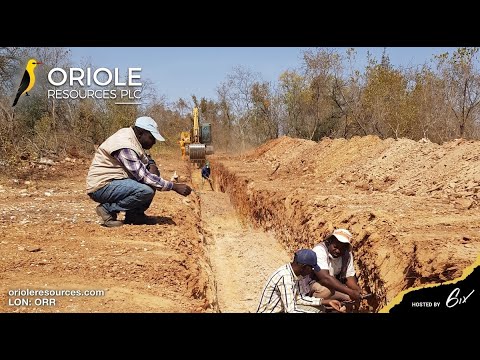
27:31 and we updated him on our programs at Bibimi and Wapuzi and also on this central packet, which is just waiting for final approval. So expected news flow over the next 6 months. Well, obviously Bibimi, the drill equipment is on route. We already have the local management team for capital drilling already in country. There's a picture of them here in the top image, the 2 gentlemen on the left, Envy and France, they're already on site. They're looking at all the ancillary support equipment and training of local people, local teams, upskilling them to support the drilling program. And this couple of weeks delay in the arrival of the equipment actually allows us allows them the ability to get really settled in and be ready to hit the ground running when the rig arrives.
28:29 At Wapuzi as I mentioned we'll do a couple of trenches pilot trenches across those prospective areas in the south. And we will obviously follow up on that with some drilling if the target's warranted. And the central licenses, we can immediately trigger some desktop remote sensing work once the licenses are granted. Obviously, we're not going to spend any money on them until the final RRTs are in our hands. But as soon as that's done, it's very simple. There's a lot of data available, satellite data, type data, remote sensing data available in the public domain. So we'll do some initial targeting with that, and then we'll get teams on the ground with stream sediment sampling and identifying follow-up targets for the end of this dry season or perhaps the beginning of the next one. And the the image on the the bottom here is Rowan Laxton, the High Commissioner for the UK, with Abdul Mboji, our West African manager, up at the Bimini site.
29:35 Just, he popped up for a visit last week, sorry, last month, the end of last month, as part of his trip up to that area under the British High Commission. So, quite a lot happening.
29:48 Critically, we have reached our 51% ownership. This is a bit of a mean what boozy a part of an earning deal. We've reached that 51% point. And at the completion of the drilling program, the expenditure commitment, we will have reached the 90% ownership on those projects. So we are very keen to be sharing this with you and we hope that you'll see some interesting results, hopefully some very positive results come out of the program over the next 6 months. And if we fast forward to our plans for next summer, we hope to be planning a much bigger program based on positive results coming out of this maiden drill program. As I mentioned, the program, this presentation, as Jane mentioned, this presentation will go live on a, sorry, will be recorded after this live session and be available for you to watch again.
30:47 And I'll just hand back now to Jane, and I believe we are gonna go into a bit of a Q&A session. Well, thank you very much for the presentation, Tim. As a reminder to everyone in the audience, we do have Bob and Claire on the line as well to answer any of your questions. Feel free to submit your questions in the Q&A tab and direct it to them. We did have quite a few questions coming through the live audience as well as through our e-mail channel, so let's hop to it. I have a couple of questions here, all of them asking about the new exploration licenses in Cameroon. When will we know the results to our application? Very good question, and I'm afraid 1 that I can't answer. The application has been quite a while in coming.
31:33 The application went in September last year. And they're logged on the system, they're on the Cadastre system, taxes have been paid. We believe approvals have gone all the way through to the right up to the presidential level and it's come back and now sits with the ministry. So it's final approval stage with the ministry. They could literally happen any day. As I mentioned, I met with the minister when I was out last month and we've had no indication that there's any issues. Nobody's flagged any problems with our applications, taxes have been paid, so it's just a matter of time. It is frustrating that they are delayed but this is a new system for Cameroon. It's a new licensing system, the capacity system is new.
32:21 So they're getting their heads around it. And also, I hate to use the old COVID pandemic, but it has had an impact on all of the administrative matters not only here in the UK but also in all the you know other parts of the world as well and Cameroon is not isolated from that. So we would hope to see some results early in the new year. When I met with the Minister, he was very enthused about the programme at Bivimi and Wakusi, and again, we seem to be one of the few companies that are really active in Cameroon. So all indications are that those licences will be approved very soon and we'll be letting you know by RNS as soon as we have that final approval.
33:08 Great, thank you very much, Tim. Can you also talk a little bit more about how your meetings went in Cameroon and what you think is the strength of your relationships and reputations on a scale of 1 to 10? I think our reputation is very very good. You know the ministry were very vocal on what they considered to be speculators. They're not very keen on speculation. They're also, they are very keen on people who will come in and will invest in the licenses, will progress them, will do work and also they were very enthusiastic about the programs that we have in place for training and development, skills development in the local communities.
33:57 You know we are employing, We have 1 Senegalese geologist who's running the program here. Everybody else is local. All of our support supplies, the camp infrastructure that's being built, the logistics, transport, all of that is localized investment. Capital drilling, who have a fantastic reputation in Africa in investing in the local communities and training the local people, developing skills, developing safety culture. Capital drilling are, again, they have 2 people that are coming in as experts and everybody else would be locally sourced and trained up. So The ministry was very, very pleased to hear that.
34:47 And it really reflects what the ministry is trying to do. They're trying to develop a mining industry. And the first step of that is developing the exploration industry, opening the door to small companies like us to come in, identify good areas, de-risk those projects for the larger groups to then come in after us and ultimately develop the mining sector. So the meetings were very good, obviously met with the Minister and a couple of other people in the government there. And yeah, our local partner is very well connected. He gives a lot of support to the BRGM programme, the Pre-CASM programme. The logistics support for that is also provided by our partner who has a geological services.
35:38 So we are, I would like to think that we are well respected and our investment and our skills are appreciated by the ministry. Certainly that's the impression I got leaving the meeting this time around. That's great, so you have a strong relationship. So to that end, David would like to know, do you already have additional meetings set up and plans to go back to Cameroon in a new year again? Yeah, well, obviously I'm very keen to get back out there once the drill program has started to move. There's no point in a bunch of us going out there and sitting around whilst they're drilling the first hole.
36:25 Abdul Mboji, our West African manager, is an extremely capable geologist. So once we have 2 or 3 holes in the ground, and once we're starting to see results coming out, then the plan would be to go out and have a visit to follow up on that, see how the program's going. And also, it would give us an opportunity, allow us an opportunity to perhaps host the Minister. He was extremely keen to come up and see the programme, so we would look to try to plan something around that as well. So at the moment I'm guessing probably sometime in February for that. The programme kicking off in January. The drilling, the holes are quite short, they'll be quite quick to complete, but we do need to have 2 or 3 of them down before it's worthwhile us going out and collectively bringing the rest of our geological technical team skills out there to sit and go through the call with Abdul and the team on site.
37:23 So yes we'll be going out again, I'll be going out again as soon as possible. Great thank you very much team. Switching gears a little bit, the next question's for Claire. Michael asks, are there any past or present artisanal workings at BBMI, what is the new central application? There are some artisanal workings at BBMI. They've been identified from a long time back and in the central license application there's also evidence of historical evidence of artisanal workings. Typically, so unlike a lot of West Africa, we don't have a big lateritic cover developed here. So if you have a vein system with associated gold, it sticks out of the ground. It's not covered by a blanket of lateritic cover. So it makes exploration easier.
38:23 It also makes it easier for the artisans to identify that. But it is hard rock geology. And The reality is that it's much easier for the artisans to go to the east of the country where you have the opportunity to do alluvial gold mining in the rivers. It's simply a matter of scooping up the gravels and panning the fines for nugget gold. So what we've noticed is that that's really taken the focus of the artisanal activity in the gold mining sector. But yes, there is evidence of artisanal work, but typically the workings are quite small. They don't go down very deep, you know, pits of perhaps 3 to 5 meters in places, but certainly not the very extensive artisanal type systems that you will be used to seeing on images from West Africa where you can have you know 2,000 people working an area and putting stopes down a couple hundred meters.
39:29 You know it's very very light touch in central Cameroon and in the northern targets. It's all really, all the artisanal work's really focused on the rivers in the east. Claire is there anything you'd like to add? No that was that was perfect, I was going to discuss the lack of lateritic cover and the separate profile as well. All right. Our next question I believe is for Bob. Nathan asks, The company has recently raised £2 million at a low share price to drill in Cameroon. Moving forward, how much more money is needed in Cameroon to deliver upside? And do you feel that the introduction of a well-heeled JV partner would ultimately benefit shareholders and avoid more equity dilution in the future?
40:20 Yeah, thanks, Jane. That's a great question that we consider frequently at the board. I mean, the question to dilute at the company level or to dilute at the project level. And the answer is always, you know, try and keep engaged with those big groups that Nathan talks about, who could potentially come in as a strategic JV partner. Try and keep engaged with those guys and see what sort of deals are available from them. So as Tim mentioned, our large Cameroonian land package would be attractive to one of those guys as a potential regional scale play. We would like to think we would do some work on it first. You know, it gives us some chance to add more value to it before entering into a deal.
41:11 But in terms of diluting it, the region at the project level or the company level, it very much depends on what deal is available at that regional level. So we would tend to look at that first before deciding whether it was more appropriate to raise money at the topcoat. You know, these things are always a bit of a balancing act. And, you know, looking at a few, a number of questions, there's, you know, there's a range of views among shareholders about how we should do that. Great, thank you very much, Bob. Talking about maximizing shareholder value, Keaton would like to know what's Oriel's long-term strategy of maximizing shareholder value on Sonala?
41:58 I'll take that one. So Sonala has a number of targets on it. The most advanced, the area that was most advanced by our team was the Faray area in the north, which is where I am Golder drilling right now. They're just completing an air core program, 10,000 meters air core program, and they'll be doing some RC and diamond in the new year. So there's a number of targets within the license. It's a very large footprint license, over 470 square kilometers. So there's multiple opportunities for discovery, both in the south, the possibility to add satellite feed to the Balto area, the Balto Mine Development Project of IAMGOLD, and in the north, somewhere like Faraway, potentially a standalone deposit.
42:49 How do we get the value out of that? Well, at the moment, I am Golder earning in to a maximum 70% position. So we ultimately will end up as the minority partner. And at the point of them reaching that 70%, they obviously have a strategic decision to make whether they want to continue with any of the work, any of the targets they've identified. And if not, then we have the opportunity to take those on. We've seen significant value enhancement to a lot of the licenses around Sonala and Senegal. A lot of the junior companies have had massive increases in share price based on intersections that are very, very similar to what we see at Farae already that we drilled 5 years ago.
43:44 So We see a value add there, an as yet untapped value add just from what we've already got in the ground. Ultimately, if any of these projects go to a mining stage, we have the opportunity to either contribute and be a partner in that, or we have the opportunity to sell our stake in it and effectively take the money, the uplift we can get from Sonala and utilize that elsewhere in the company. It really depends on where we are with Cameroon, where we are with potential other ventures at that point. But our stated goal, our stated focus when the new management team and board came in sort of 3 years ago now, was to get back to increasing value by early stage exploration and development of resources, rather than more advanced projects. It's not that we're not looking at more advanced projects, although we wouldn't consider them, but that was our short-term goal, based on the fact that it's typically much cheaper to get in at that level and to add value at that level. Soon as you start getting towards development projects, they're more expensive to earn in on or to buy.
45:00 And typically there's a lot more risk associated with it when you start permitting and developing construction development. So yeah, I think the typical junior model at the moment, project generation, identifying new areas, new frontiers like Cameroon, exploration success, development of resources, and then let's see where we get to with our discussion with potential partners and project sales or ultimately value enhancement within the company. Great, thanks Tim. Great, thanks Tim. And, you asked, obviously we talked about good government relations that are existing in Cameroon, but can you also touch on social acceptance with the local people in the area to allow mining operations in the future?
45:55 Well, I mean, obviously, I can only speak for the for the north where we've been active now for 2.5 years, but previous to our engagement at Bimimi and Wapuzi Reservoir Minerals where I was the COO, operated on those licenses. So we have had exposure in that area, I've had exposure in that area for 5 or 6 years now. The local communities are very supportive. For them it's an opportunity, it's quite an undeveloped area of Cameroon, apart from essential basic subsistence farming, there's not a lot of activity in the area. So the possibility of employment and support opportunities to our project team and our project, there's a wealth generation factor there.
46:51 Also, skills development. Mining is a very simple process and it requires, if you look at a mining life cycle, apart from a couple of very, very specialized roles, a lot of the basic requirements are very transferable skills, Drivers, mechanics, electricians, boilermakers, carpenters, surveyors. There's a lot of basic skills. I would say the majority, probably 80% or 90% of employees in a typical mining operation are people with existing skills that are transferable from construction, civil engineering, you know, basic industries.
47:44 And, you know, this is, I'm just going into my 31st year of working in exploration and mining. And most, you know, that started in Africa in 1989 and predominantly it's been African and Middle Eastern focused. It's no different in Cameroon to any of the other places I've worked. People want opportunity. They want the opportunity to work. They want the opportunity to learn, to enhance their own skills and to provide opportunities for their kids, their families, their in-laws. And I think we, you know, that's what mining provides, exploration mining provides in all of these remote areas. Bibimi and Wapusi is no different, Oriole is no different. We do, We have approached this with a real focus on developing the community spirit and developing the links with the community. It is, the acceptance by the community is a critical piece in any work where you're going into somebody's backyard to dig a hole.
48:48 I'm sure it's just exactly the same in Canada, it's exactly the same in the UK. You know, you have to build that relationship and educate people to what you're doing to really get them on board. Great, thank you. Our next question is from David. David asks, we haven't had any update on the non-core assets realisation and sales in particular Turkey, can we expect a company update on these anytime soon? Yeah, I'll take that if you want Tim. Yeah, I mean it's a good question. We've been working through the non-car assets, we stated this about a year ago and quickly moved to a potential multi-royalty portfolio style deal where we would dispose of the basket of Turkish royalties and in the end the rights of first refusal that our Turkish partners all possessed.
49:49 Now it kind of made that deal go away, 2 people exercised their rights of first refusal and the main asset, the Muradiyah copper gold porphyry system, was in our view very attractively priced at that time, it didn't meet the buyer's requirement for a kind of portfolio deal. They wanted to not put all their eggs in 1 basket on 1 non-producing asset. So once that deal went away, the whole process took quite a while. And during that time, Lodos, the operational partner, have been moving towards EIA approval on Rodeo, which is quite a significant value step. Should they get EIA approval, then they're sort of a big step towards becoming a producing mine.
50:45 And of course, that's a big step up in the value of our royalty. You know, the value of our royalty is the projected cash flow times the risk of it never happening. So once they get EIA, the risk of it never happening drops significantly. Big step in value. So what looked like a good and attractive deal 10 months ago, I don't think we would countenance at this particular moment in time, given the progress we know that has been made. I mean, they haven't got EIA approval, but they are working towards it very diligently, and we believe ultimately will be successful. So we continue to look at ways of realizing money out of the non-core assets but there are moments in that journey where you're best off pausing and waiting for that value step to occur.
51:35 And certainly I think on Muradaya that is the case. Obviously that's not the only non-core asset and we continue to talk to parties about potential other disposals or other realizations. Obviously we've got 2 court cases pending in Turkey to realize up to $1.4 million. And that is something we push along all the time, but we are, you know, at the mercy of the Turkish legal system, which was moving slowly before COVID and seems to COVID has not improved it, shall we say. But, you know, we're pushing ahead on that sort of stuff. And then we've had a number of, you know, tentative offers around some of the other assets in the portfolio. But our view of these is, you know, quite often, I think people assume 2020 because of all the economic problems.
52:36 People assume it's a buyer's market, and so, therefore, you get some offers which are, quite frankly, derisory for the quality of the asset that we've got. And if it's an offer that we don't believe would enhance the value of the company by providing money for drilling, for example, then we would turn that offer down. And there's been a few of those sort of opportunistic buyers market type offers. And we'll continue to look at realizing the assets, but we've got our own views of the value of them and our views of different ways of realizing that value so it's it's a program that hasn't gone away but you but we can only announce things as they happen.
53:23 And at the moment, there's no pending deals on that. So, I don't know what to talk about. If I could just add to that, what is giving us the ability and the willingness to pause on some of these deals and wait for that value add to come through is the fact that our Turkish team have consistently been self-generating revenue. So we're not carrying an overhead for the small team that we have that's managing a lot of those assets for us. They've actually been financially cash positive, or Bob can correct my non-accounting terms, but they're not costing us anything.
54:09 So if the opportunity is there to hang on for another couple of months and realize more value, And whilst waiting for that, it's not costing as anything in GNA, then the obvious thing to do is wait. And in addition to that, you know, we do continue to chase after other revenue streams, not least of which, you know, the ongoing HMRC Research and Development Tax Credits, which is an annual thing. The more work we do, the more opportunity we have to recover Research and Development Tax Credits. So, whilst 2020 will probably be quite a quiet year for that, there'll be some revenue to come back from that, obviously the programs that we're putting in now give us the opportunity to a bigger claim in the next financial year. So there's a lot of activity going on And as Bob says, although 2020 has been a bit chaotic for a lot of industries and a lot of businesses, the reality is that we are still in a very, very strong position here.
55:13 We're not really suffering from that, other than the ability to physically travel as frequently as we would like to, to some of these places. You know, apart from that, we're continuing to maintain a very low overhead cost for the company, greatly reduced on previous teams. And yeah, we're continuing to look at every opportunity, but the idea is to maximise the value, not just to dispatch these projects off to the first bidder. We wanna make sure we're getting a realistic value for it to return that money back and keep preventers or reduce the amount of future dilution from future raises. Thanks Tim and Bob. Our next question is about drills.
56:03 Why are drill arrival times expended yet again? And has Oriel considered buying and manning its own drills and crew? Few companies have done this and experienced great improvements in cost, responsiveness and quality. What are your thoughts on that? So the delays that we've had have been related directly to shipping times. If you miss a shipping window and the ship sails, there isn't another one in port waiting to go 12 hours later on the next tide. So a slight delay can have a knock-on effect because the next boat might be 7 days away before you can load up. That's unfortunate. It's out of our control. It's out of capital's control.
56:49 So it's just one of those things. And people have noted that it's been worse in the last 6 months, most likely because of COVID. But that's just doing business in remote areas. That's the deal you have. The idea of owner operating rigs, well, first of all, it wouldn't be any faster because we'd still need to bring a rig into Cameroon. There's no equipment in Cameroon suitable to do the work we need to do, so it wouldn't speed things up. In my experience, and I've run a lot of drill programs, and at one stage my role, I was a senior director in Barrick Gold, and I set up and managed Barrick Gold's global drill support and technical team. We were running about 99 exploration drill rigs around the world every single month and 29 operating mines.
57:46 We looked at every opportunity to maximise value from drilling concerns and the reality is that the best opportunity you have is to find a good, respectable, reliable contractor and to leave the expert work of drilling to them. The idea of purchasing your own rigs, manning them, and operating them is fraught with many, many issues. And I could talk about it for the next 2 hours. But in summary, for us at our stage, it would be a lot of capital commitment into equipment that we would be using in the short term. A little bit like an airplane, A drill rig makes you money when it's turning.
58:35 An aeroplane makes you money when it's in the sky. It doesn't make you any money when it's sitting on the ground, similarly with a drill rig. So we are very fortunate that we have a great relationship with Capital Drilling. They're very willing to effectively put a rig out of circulation. You know, they could be drilling, the rig that they're sending over to us has come out of Mali. That could be drilling 24 7 and could have been doing that for the last couple of months. And they committed to providing that rig to us. They've given us very good rates. They've given us very good terms on the mobilization. So for us, it's the most cost effective way to do it. And we share the risk with capital drilling or rather they chose to share the risk with us, which I think is a reflection on their faith in the management team at Aurea.
59:25 Well thank you very much Tim, Bob and Claire for your time with us today. Unfortunately I do believe that brings us to the end of our time together. I recognize that we weren't able to get to everyone's questions here that you've submitted in the chat room. So please stick around, leave your details with us so that we can reach out to you. There's a survey at the end of this webinar that you can fill out. And then the Aureal Resource team will be able to, and happy to follow up with you directly. If you would like more information, remember that our presentation can be downloaded in the handouts tab right here in the room. And of course, you can visit the team's website at www.aurealresources.com. Now, Tim, I'd like to hand it back to you for the final word.
1:00:12 Thanks very much, Jane, for hosting us again. Excellent job from 6. And yeah, just thanks everybody for dialing in. This is available, it will be available as a recording so you can go back and rewatch it if there's anything that sticks in your mind. Sign up, subscribe on our website for our news releases. And there is also an info, a way to send questions through to the management team through the website, info.oreo. So please use those, we'll answer whatever we can and you know, best wishes for the holiday season and let's all hope that 2021 is an improvement on 2020. All right, thanks everyone. Until next time, bye now. Thank you. Bye. Bye. Bye.