Transcript
Automated transcript · Written by software from the replay's audio. It can mishear names and figures; the replay is the record.
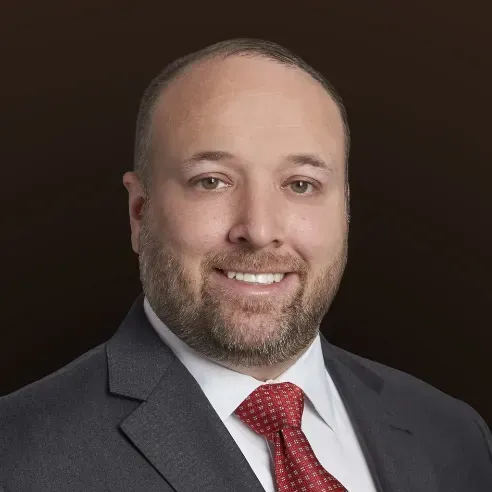
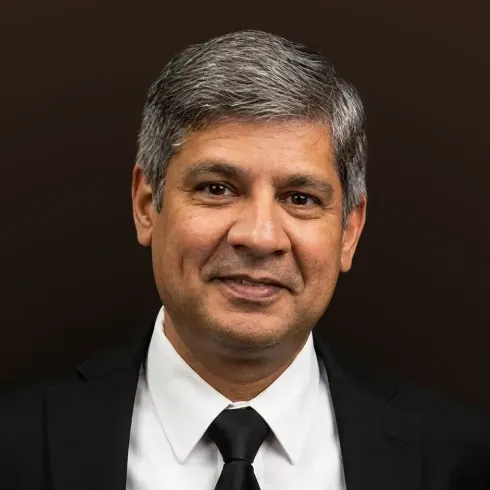
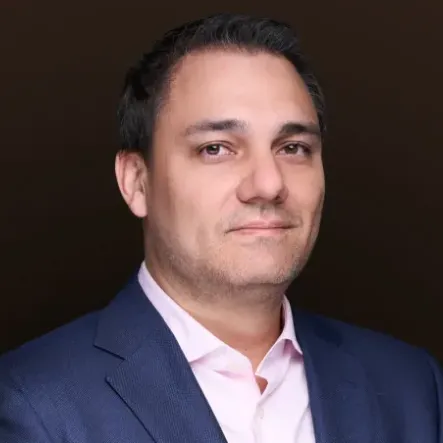
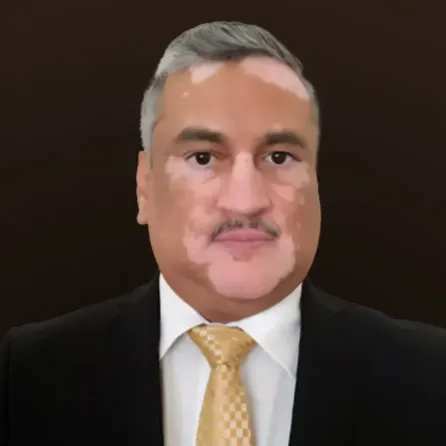
0:03 Hello again, gentlemen. Great to be reconnecting. For those watching, I had the pleasure of meeting all 4 of you in person for the first time at PDAC this year. And I have to say, it got me thinking, Jean-Paul, was that actually the first time all 4 of you were in the same room together? Because given what you've built, a team spread across multiple countries and time zones, that moment at PDAC would have been remarkable. What was that like? Yeah, so as you're probably aware, Raj joined our team earlier in January. So that was his first official group meeting with everybody. I did have the opportunity to meet Raj several times through the interview process. He's also based in Ontario like me, so we got to meet even in person.
0:49 But that, I believe was the first time Raj had actually met Alberto and Justin in person other than our weekly meetings that we have. That's right. Let's get into it. I wanna ask a couple of questions to each of you to help people understand the team behind Chesapeake. I'm going to start with you, Alberto, because you've been here the longest, and I'll be honest, I've never had the pleasure of interviewing you before. We finally met at PDAC, like I said, but for those watching who didn't know your story, how long have you been at Chesapeake and what kept you here? Yeah, with Chesapeake, I have now 24 years. I started before with Francisco gold. So when Francisco was sold in 2002 to Glamis Gold, I was not part of the business. So I kept with Chesapeake to fund Chesapeake.
1:42 We found Chesapeake in that year and I'm still here. So 24 years with Chesapeake, over 25 years in the field is no small thing. The remote locations, the uncertainty, the long timelines. What still gets you out of bed excited about work? We started with a good timing of discoveries with Francisco Gold, saw the opportunity to continue doing discoveries through Chesapeake with a new company in other countries was very good. So that was part of this thing and big challenges. The small companies, junior companies is big challenges and I like the big challenges. And Justin, you've been the person most intimately involved with Chesapeake's heat bleach oxidation technology since 2017.
2:32 You've essentially watched it grow up. What was the moment you went from this might work to this is actually going to work? Oh, wow. Yeah, since the beginning, I kind of knew what it could mean for the industry and that it was a pretty exciting thing to be involved with. And, you know, there were a lot of this might work moments along the way, you know, the first time I saw the ore go from that gray color on the ground to the bright red. And the first time I started tracking the recovery curves that were just so different than what was expected from the ore bodies. But I'd say it wasn't until I was with Chesapeake where I really had that, like kind of that certainty feeling that, man, you know, this thing's going to be huge and I'm all in. And it's just, you know, we had time over the years to refine the flow sheet, to get such a large number of tests in to narrow down the best conditions.
3:27 And just all kind of, there's an epiphany day, 1 day it all came together and said, man, this is, you know, we're getting the processing parameters right, the costs look reasonable, the recoveries are improved, you know, everything looks great. So
3:41 it must have been maybe sometime middle of last year. And beyond Metathase, many people don't know that this technology has the potential for applications across a massive global market of refractory ores. Do you think the market truly understands what that's worth? And why do you think it's being undervalued? Yeah, I think probably only a small part of the market really understand it. You know, there's people out there with all different types of relation to the mining industry and backgrounds. And for me, a person who spent a lot of years trying to develop projects. We designed so many autoclave systems and roasters that were doomed to never be permitted or funded. And the few that were, it was like this big miracle to move one of these projects forward. But heap leaches, we're a dime a dozen. We help design and actually commission a ton of different plants as a consultant.
4:36 And I helped, you know, operate a heap not too long ago. So the idea that we could take a refractory ore and move that property into the space of actually building it into something that's going to produce for a reasonable timeline and a reasonable capital cost. I don't think that many people understand it yet, or I think that I'd be hearing from a lot more of them. But I know that there are enough out there that do because
5:04 I get a lot of inbound when I go to the conferences and I try and talk to people about it, they already have background on what we're doing to kind of understand. So there's a conversation in the background about it all, but the market in general does not really understand the value yet. And Rajesh, as Jean-Paul said in his introduction, you are the newest addition to the team. What was it about Chesapeake that drew you in and what made this the right move at this point in your career? Yeah, so yes, you know, I'm new to Chesapeake but definitely not new to the mining industry. So, you know, I have a career that spans almost 25 years and that too, you know, across different stages in mining, you know, I've been involved with exploration, development, operations and on the corporate side of the business.
5:56 So I think this was a pretty intentional move for me, you know, starting at a pre-production stage, you know, it allows me to become a strategic partner to the team and advancing the asset. That's just the operation side of business. But when I met with John Paul, you know, back in, you know, last quarter, almost last quarter of 2025, you know, I met with him, you know, and, you know, he spoke to me about, you know, the Metatis deposit, and he spoke to me about the technology that the company had acquired and the efforts that the company had taken to patent the technology. So that captured my interest. Like, back of my mind, I'm thinking, this is going to be more like a royalty company, you know.
6:48 And, you know, I'm not being following, you know, the royalty companies very closely, but, you know, I've seen the growth, you know, the value creation over time, you know, and, you know, that started, you know, that prompted me to think about, you know, the Chesapeake's potential, you know, like think about it as, you know, a combination of a large deposit and on the other side, proprietary technology. So it is something that builds a foundation for long-term value. So that is something, you know, which really prompted me to take that decision. Timing wise, you know, I think it couldn't be better. You know, this is just, you know, the building phase of the company, you know. So, you know, back in my earlier days, you know, I started with Cambior and, you know, Cambior was just starting up their mining operations in Suriname.
7:43 So, here I'm kind of returning to that better mindset, you know, instead of, you know, like, you know, like, it's not a place where, you know, things are in place, you know, it's, you know, you have to start building things. So I think, you know, I see this, you know, as a high impact, you know, opportunity where I can, you know, use my experience, I can leverage my experience, my expertise, and create more value for the company. Why don't you touch on your experience? Can you elaborate on your background and how you believe it will help the company grow? Yeah, so my background, you know, originally I'm a chartered accountant from India, you know, and then, you know, back in 1997, I moved to Suriname, South America.
8:30 I worked for a local group, you know, and then, you know, for about 6 years. And then, you know, Cambier, this was a Canadian mining company. It doesn't exist anymore. You know, a lot of people in mining still know about Cambier, you know. So they started their mining operations in Suriname. And they were looking for someone to lead their finance team. And I started with them. So the project was Rosebell. Rosebell was a very classic, low grade, high volume, multi-bed, CIP kind of operation. Gold prices were hovering around $300 per ounce back then. But as Cambio started its operation, gold prices started their upward trajectory.
9:21 This improved the economics of the business, but at the same time, it allowed Cambier to scale up their operation. They started with 8,000 tons per day operation, and then slowly grew up to 11,000 and 13,000 tons per day. So, you know, this gave me an early exposure to commodity prices and how this could impact the operations, how it could impact the financial decisions, the operational decisions of the company. So, and then while I was with Cambior, I started studying for the CPA examination. I did my CPA exam from the California Board of Accountancy. Well, actually the company encouraged me to do that, you know, to enhance my career.
10:16 In 2007, Pine Gold Corporation, which was another Canadian mining company, acquired Cambior. So, this gave me the opportunity to be part of a larger organization.
10:34 With Iron Gold in 2011, I moved to Toronto. And since then, I've been involved with different mining companies. I've worked with Alamos Gold. I've worked with Richemont Gold Mines. And then my last job was with Sierra Metals. You know, Sierra Metals was a Canadian mining company with polymetallic operations in Mexico and Peru. This is where I encountered the most complex and demanding things. Sierra Metals struggled with liquidity. They had issues like going concern, impairment, sale of assets.
11:20 So, these were situations which were not easy, but it adds to your experience. I always, now I can joke about it, These are things that you can add to your resume. So, what I would say here is, education gives you certain principles and frameworks and then experience gives you the opportunity to apply them in real life, imperfect situations. So, with this kind of diverse experience and working across different jurisdictions, different cultures, different business environments. This whole experience has added a new dimension to my career.
12:14 And I'm just hoping that with all these learnings, I can apply my experience, my knowledge, whatever I've learned over all these years to Chesapeake. Great, thank you for being so thorough in sharing. John Paul, since you took the helm, a lot has changed, including welcoming 2 people on this call today. How intentional has that process been and what were you looking for as you shaped this team around you? Yeah, no, definitely. So the changes actually began even before I had started with Chesapeake. So it started back in the day when Randy Reifel had the realization that the pathway forward for Matates required a change of thinking.
13:00 The merger with Auderley was that first step of bringing this license of this technology into the company. That then followed with the work that was being done on Matates, looking at the potential of the technology to unlock Matates, take the refractory ore that we had, oxidize it, and then create a product that can be run on a heap leach environment to recover gold and silver. When I took over, we were already in the initial stages of acquiring the underlying license, as well as acquiring the patent portfolio and technology from Highcroft. And so that pathway was already advancing. I was the one leading it behind the scenes. But once we finally brought that in house, our growth and our future of the company has been embedded in this technology and moving this technology forward because the only way to advance Mitates in an economic and financially savvy way would be to have the technology alongside it.
14:06 Opening it up then to the third-party test work and the global market was also even thought of in the first days when we were looking at the merger with Auderley and having everything owned in-house really started that process. But the minute we finally closed that, we had a wonderful opportunity with Justin. Justin was coming off of his last role. We were well aware of his experience and knowledge in the technology. Randy Buffington, the chair of our technical committee, obviously one of the inventors of the technology. He's been friends with Justin, knew Justin, knew that that opportunity to bring Justin in-house was available to us. And we were very thankful to bring Justin in. We really needed to increase the capacity on the technology side.
14:57 And it was it was a no-brainer. And having Justin over this past year has really shown that you have the right people with the right knowledge and the right skillset can really advance a portion of your portfolio. Raj was more serendipitous, I would say. We knew that a transition was coming with Navin and we were looking for a replacement because Navin was being pulled off to another opportunity. And Rajesh, you know, his resume fell on my table and it was very obvious that he had both experience with smaller companies, mid-size and larger companies. He had a wealth of experience in Latin America, all things that would be beneficial to the advancement of Chesapeake, both on the Metate side, Lucy as well.
15:49 But then when we start looking at a larger platform for our technology, knowledge in other jurisdictions that have gold, refractory gold is also a huge benefit to us. And so, we actively work towards getting Raj to join our team. And even in these initial 3 months, 4 months that we've been together, we've seen a lot of the benefits of his knowledge and skill set to move things forward. Alberto, I've been very lucky. You know, I'm a geologist too. And I guess one of the best things is when you have a geologist that you trust that works with you. He has 25 plus years of experience in the industry. When we do work at Lucy or additional work at Matates, he brings a program to me and I just do a sanity check of it, but I don't have to get my fingers into things because he has it fully controlled from the top down.
16:47 And he has a wonderful team that has been developed over the decades of really good, strong technical guys, geologists, and even people in the administration group down in Mexico to on the financial side, just providing us all the support so we could focus on the ambitions for the company and where we want to take it. That's great. Being the CEO running a company like this pulls you in 100 different directions. How do you think about allocating your time and energy, Jean-Paul, and what does being a good leader actually look like to you in practice? Yeah, so I guess, you know, a lot of it goes back to even when I was a very young child, when it comes to leadership, you know, I did to make an effort to put myself in positions, even when it comes to scouting, it was one of the first things I ever did, you know, got me the love of nature, getting outdoors, enjoying rocks, and even then, you know, taking early steps for leadership roles in that environment.
17:52 Later in university, obviously being involved in the students associations and through my MBA, being the president of the MBA association, I really learned very young that the best thing to do as a leader is to 1, put the right people around you. Each of those individuals have to have their own leadership skills. And it's really my job not to direct and command and focus of what they should be doing, but to give them the freedom to move their project or their aspirations in the direction that they want to, and just make sure that everything continues to align and move forward to our goals. And that's been something I've been very fortunate at Chesapeake is we have a team here that are each, you know, highly skilled, highly knowledgeable in the areas of exertise.
18:43 And, you know, we regularly meet for meetings on a weekly basis. And we discuss the challenges that we have and where we're going forward. And that includes the allocation of our capital. And those discussions, you know, it's an open environment where all ideas are put on the table and we come to a solution that helps us to advance both each of our initiatives, but also the company going forward. And that was really the way that I've always wanted to run a company. And I feel that Chesapeake has really benefited over the last almost 2 and a half years now of my leadership. And so I'm looking forward to a lot of the stuff that we're doing behind the scenes and a lot of the work that Alberto, Justin and Raj are doing because there's a lot more exciting things to come for Chesapeake and for our shareholders.
19:33 Well, that's a great way to end it. Let's touch on that. I want to get everyone's opinion because you all have different areas of expertise. So to each of you, starting with Alberto, as we look ahead, whether it's a milestone, a result, a decision, or just something you've been quietly working toward, what's the one thing in the near term that excites you the most and why should people watching be paying attention? Okay, there are 2 things. First is to continue the exploration at Lucy. We have a second program of drilling coming. When, we don't know yet very well, but we need to discover and expand Lucy's current and try to have a good deposit there. And the second is Metathesis. We need to follow up all the things of Metathesis with the team.
20:24 Justin is pushing on the metallurgical side, but we have permitting coming and lots of stuff, communities and that kind of thing. So that's going to be to have everything coming and have everybody busy on the coming months and years. Yeah. Thank you. And Rajesh, what excites you the most in the short to near term? Well, I would say, you know, what keeps me excited still is the same reason why I joined GSP, you know, the technology, you know. So, you know, my colleagues here, you know, have been much longer with the company than me, but they keep indicating how quickly we are moving towards a potential inflection point.
21:13 I've accompanied John Paul to a lot of presentations and investor events. And it becomes more and more evident and clear to me that we are closer than ever to a broader acceptance and adoption of the technology. We are already in the process of testing samples from other companies and engaging in ongoing discussions with other potential partners, you know. If you've seen the presentation from, from Joe Paul, you know, you would see, you know, like there are, you know, multiple projects, you know, which are struggling with, you know, recoveries on refractory loads. So, the market is there. We just, what we need is 1 company to accept it and validate the technology at scale.
22:02 That one success could become a real catalyst for us. You know, it could open doors to the wider industry, to all the companies that are facing the same challenges. So I think that is what still keeps me excited. It's a compelling moment. On one hand, we are progressing slowly and steadily on Metatars project. And then we continue to work on the technology. So I think, you know, this is where, you know, people should be paying attention. No, that's great. And Justin, from the metallurgical point of view, what should people be excited about and what are you excited about in the near term? Yeah, I think the whole industry is energized right now, kind of the environment going on. And I think that, you know, I'm most excited to talk about some of the results of the work we have ongoing.
23:01 So, you know, we're very near, you know, we're basically, because the whole industry is energized, we're waiting on assays. All the assay labs are a little bit longer delayed than we first projected, but they're close and we'll be able to talk about Matates, the results and what it means for our future, our partners that Rajesh mentioned, and what their results hopefully mean for our future partnerships. And I think that that's going to be a really exciting thing for me. I'll have a lot of people that are kind of in conversation with us now about future partnerships that will have new context for that discussion and you know I think everything we want to do in terms of technology will become our goals will be a little bit closer and a lot more exciting in the coming quarter.
23:48 And Jean-Paul the guy that is pounding the table probably the most about why people should be excited about Chesapeake, what gets you excited about the near term? Yeah, I think I'll bring it back to Matates. And I think, You know, Matates is where this all began. This is the reason why we picked up the technology in the first place was to unlock Matates. And the work that's going to be coming out here in the next few weeks will highlight, you know, what kind of recoveries are achievable for Matates on a larger scale, because the large scale diameter columns are moving towards completion. I think that is a very key part of it, as well as the work that, you know, myself and the team are doing to advance Metates, as well as the recovery of San Vicente 3. All of those will come together to a head and we're looking to continue to move Metates forward for the betterment of our shareholders as well as Chesapeake. And so Metates, as a reminder, is still one of the largest Gold and Silver deposits globally.
24:51 That's a meaningful impact on the global scale and especially an impact and an opportunity for Mexico and the Mexican people. And I think there's a great partnership there and a future pathway to continue to move Metates forward to construction development right through to production. And so that's kind of where we're continuing to focus with all the efforts that we're making. Gentlemen, thank you so much for your time. I think more companies should be doing this, sharing the people behind the company that makes everything work, but really appreciate your time, great conversation. And thanks for introducing yourself if the audience hasn't met you on camera before.