Transcript
Automated transcript · Written by software from the replay's audio. It can mishear names and figures; the replay is the record.
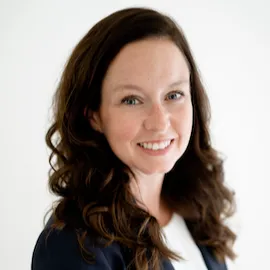
0:04 Well, I will say good morning or good evening, depending on where in the world you're logging in from today. I know a bit of an international audience, so it's good to see folks from all over. Pleased to be joined today by Angus Gold's President and CEO, Brienne Bae. Brienne, how are you this morning? I'm good. I'm good. Thanks for having me. Awesome. So here's how today's going to work for the folks in the room. I got a number of questions for Brienne ranging from her background and work experience through to Angus gold and the golden sky project. So a bit of a grilling today, Brienne, I hope you're okay with that. Yeah, no for sure. Once I'm through, I'm happy to take any audience questions that come in. If there's anything you'd like to ask Brienne today, there's a chat button on the bottom right-hand of your screen. Feel free to ask anything. If we don't get to it today, I will make sure the Angus team still gets the full transcript. Do feel free to write in the chat. Hopefully we'll get to it today. It really just depends on time. Last piece of housekeeping, today's event is also being recorded and will be available for replay. I'll probably have it actually in the early afternoon Eastern time.
0:56 It'll come right into your inbox. And from there, you can feel free to share it around. It'll be both on six.com, but also on our YouTube channel. But Brienne, I'll get into the protein of today. I'll start with a personal question, if you don't mind. I'm curious, where'd you grow up? I grew up in London, Ontario, so southwestern Ontario. London, fun. Yeah, I know you went to the University of Calgary as I understand it for your undergrad. And I'm curious, I always like to ask this question, what drew you to geology during those studies and what aspect fascinated you the most? I know some people I talked to say they were born thinking about rocks, they were playing with rocks when they were a kid. Sometimes the magic happened in university. So curious which it was for you. Yeah, so to be honest, I went to Calgary for like varsity sports. So like I didn't really pick a school based on the programs at the time.
1:48 I did start in like a pre-med streamed program. I thought I wanted to get into sports medicine. I knew I liked science. But yeah I didn't really love my courses in my first year.
2:00 So it was actually my mom who was kind of like, well, do you like the school? Do you like the team you're on? Yes, yes. Okay, well, why don't you just take a bunch of classes and see what sticks, see what you really love. And So I was kind of going through the course calendar. I had taken this Earth and Space Science class in high school, like in grade 12, and I really liked it. And the geology sounded really similar in the description. I was like, okay, I'll try this. I think the first year class they take you out to like Kananaskis, so the foothills of the Rockies. And I was like, this is incredible. I didn't even really understand job prospects at the time, to be honest. I just was like, I can do this science for 5 years. So Yeah, I kind of at that point, like started switching all my electives to make sure I could transfer into the program full time for my third year.
2:54 And yeah, that's kind of how I ended up in it a little bit by accident. So I know that's as good a reason as any. I went to Carlton because I thought the debate seniors were cute. So there's a bunch of reasons, right? Yeah. I'm curious, how is going straight from your master's at Lakehead to working at Probe? I always like to know how academic geology is different from the field. Like once you're really in it for a private company, what's that energy like compared to academia? Yeah. So going from lakehead to probe. Yeah. So at the time I remember there were graduate students and grads from the geology program in Thunder Bay, going to Australia, BC, South America. And I was like, okay, I got this job in Chapleau, Ontario. Where is that?
3:39 So I Googled it and was like, okay, I'll give this a go. Such a fantastic experience though. Like when I got there, the town and the locals that worked in the Corshack were so friendly. And I kind of tried to make it my own. Like I played on a ball hockey team in town and everything. The local guys in the Corshack, super friendly, helped me like start talking French again, which was really convenient, because with probe after leaving Borden, I spent like 5, 6 years in Val d'Or. But I think really the biggest change was like the pace. So all of a sudden, you're working 12 hour days, 28 day rotations, there's drill core coming out of these drills, like left, right, and center, and you're just trying to keep up. I think it was good because it set a tone in my career for understanding the pace at which a project can operate.
4:32 And I think that I've kind of kept that with me through all the projects I've worked on. And then, yeah, we just had a really solid crew of geos there. So you kind of build this camaraderie. We're in the core shack, like with serious radio on trying to keep ourselves sane, chewing through this core that just like keeps coming at us. And yeah, it was a great experience. I think the other thing was it kind of helped me understand that I'm pretty happy to settle in Northwestern Ontario, like put down roots here. It's great spot for an exploration geologist to be. Like my husband's an exploration geologist too. So like now I live 5, 6 hours from site so I can be down there and back. Like, you know, even if I just wanna go spend 24 hours on the project.
5:19 So yeah, it's just a great place to be. And you're exploring in the shadows of headframes up here. So I'm happy to have kind of had that success and that experience at Borden and kind of, yeah, bring it forward, I guess, into my life as well. Oh, that's great. And actually, I did want to talk about Borden pretty much right up next. So, I know your early career there did coincide, as
5:42 you just kind of alluded to, with some pretty significant discoveries. Curious, how did those kind of, we'll call them your formative experiences in your career, shape your exploration philosophy? Yeah, so I think the exploration philosophy at Borden was like, it was very systematic and surgical. Like, you know, it was this low grade deposit initially that had been found and the plan was to kind of systematically define it, but also try to assess the exploration potential of the large land package that they had put together. So really it's the same thing that's going on right now for us at Golden sky. And yeah, as we were drilling the deposit, again, systematically moving eastwards there, you know, we hit this high grade zone in hole 256. And that was a game changer for the project too.
6:31 But I think, you know, early in my career, like, maybe I didn't understand the full extent of what was going on but I do you know remember yeah okay we've hit this incredible hole we all pulled it back out.
6:45 We're all like assessing why it's different from the the other zone, why you know there's all of a sudden these incredible assays, what's going on, how can we change the drill program to kind of target this now. So yeah and then on the daily like I find myself you know remembering okay you know hole 256 we're not at Hole 256 at Angus yet. So we just need to keep drilling this broad, low-grade kind of situation that we have at the Golden Sky. And I think, yeah, it's only a matter of time before maybe we hit our 256. So yeah, I just, I think it keeps me motivated and positive because you never know what's out there. And as long as you're testing good targets and good ideas, I think, yeah, that it's going to happen. You know? Yeah. That's an exciting North Star to get to 256.
7:35 I like it, I think that's fun. Yeah. Now I am curious, just to talk about your career broadly, I know many talented geologists choose different paths in the resource industry. Some will shoot to, some feel very strong about industrial metals, for example. What drew you to gold exploration over other potential geological pursuits?
7:53 Yeah, so I think initially it was the first job I got, so that'll do it. But the success that kind of was on that project, that board in, yeah, it just hooks you, right? And then gold is gold. Like it's just so exciting and elusive it's hard to find but those moments where you get to see you know visible gold and core are ultra yeah they're like they're kind of magical Like when we're drilling our new Dorset West zone, and yeah, we just have this higher frequency of visible gold than anywhere else on the project. And honestly, most other projects that I've been on. So we're seeing it at an increased frequency in the core shack. And it's really exciting. Like The whole crew gets excited, all the geos run over and they're like got their hand lenses out and like, oh yeah, that's it. That's for sure it. So it's yeah, it kind of hooks you.
8:42 That's I think a big part of people underrate because the people have a million reasons for why they like gold. It is just looks cool. That is like, yeah, like, you know, I'm like, Oh, check it out. Yeah. And you want to see it in the sun again. You're like, you definitely do the shine. Yeah.
8:58 Now I am curious just to jump back to Probe for a second. I know the team won the 2013 Prospectors Award. I'm curious, just something I came up in research, what technical approaches or methodologies contributed to that success? What do you think was the genesis of that award? Yeah. So I think, so David Palmer, he's the president and CEO, or he was of Probe Mines, current president and CEO of Probe Gold, and then he's also conveniently a director of Angus. I think, yeah, when you look at his kind of methodologies or approaches, He's just really systematic in how he likes to design exploration programs.
9:37 He really likes to start big picture, so we'll do, you know, like a high definition airborne mag survey, typically on the entirety of the project. And then if possible, we'll do a property scale geochemical survey. And then, you also have prospecting and mapping that you try and kind of coincide with that. And then, yeah, you look at everything and kind of decide the areas that are your favorite, and then he'll move to ground geophysics. And then at that point, once you've completed your ground geophysical work, you've got drill targets generated that have, you know, a number of reasons as to why they're a good drill target. So I think it's just that, you know, systematic approach that he brings to the table
10:23 that made Borden a success. And then the other thing is like, he's not afraid to try new techniques. So early on, like in my career, we were exposed to a lot of exploration techniques. If he thinks it could unlock a new target and it doesn't sound like a crazy out there technique, he'll give it a go as an orientation survey on the project and see how it performs. I think that trying something new also ultimately led to the success of the project, right? Like from the get-go, Borden is situated on the edge of the Kapuskasing structural zone. So it's not your traditional greenstone belt gold territory. But he saw this project that had kind of been overlooked in terms of geologic setting.
11:12 It's along a highway, there's road access, there's gold grab samples at surface. Like those are all reasons you want to have a project at the get-go. So I think, yeah, like, just, you know, from the genesis, there was that kind of thinking outside the box aspect. And then, yeah, you know, in the vein of conversation of thinking outside the box, or, you know, Dave was also the one that kind of saw this potential on the Angus land package, right?
11:42 And he's on the board, so we kind of always continue to talk strategy and discuss targets that we like best. You know, for me, he's like he's been a consistent sounding board for I think I've worked for him now for for almost 14 years. So it's, you know, that's like a mentorship that has stayed consistent in how I kind of go about things. So awesome. No, that's good to hear. Zooming into where you're working now, I'm curious, just regionally speaking, what do you think makes Wawa so prospective for gold mineralization generally?
12:14 Yeah, Wawa, it's a Funny area. So again, kind of going back to that capuscasing structural zone, the Wawa greenstone belts are thought to potentially be the Western extensions of the Abitibi greenstone belts, but they have that capuscasing uplift in the center that kind of transects them. So technically, they don't have the Abitibi name attached to them. And I think maybe, you know, that's one of the reasons they've remained so underexplored for so many years. But I think the potential still remains in the camp. And yeah, if it is the western extension of the Abitibi, it obviously just makes it so prospective. Like the Abitibi is a world renowned Greenstone belt for gold. So we're just, you know, we're in the right geological setting.
13:07 And then, yeah, like the North Shore of Superior has a little more topography, I think, than people realize, especially in comparison to Lake Timmins, kind of Kirkland Lake Val d'Or, that stretch. So I think yeah I feel like maybe it deterred prospectors back in the early days too and it's just kind of sat untouched in comparison to those other like gold camps. But yeah you know now we've got these these successful mines going, the Eagle River Mine, Alamosa's Island Gold Mine. Eagle River Mine literally brings a road right through the center of our project, So we're very fortunate in that regard. And yeah, I just again, I don't think it's been thought of as that traditional gold camp. But I really do think that's changing. So that's, it's great for us, you know? No, absolutely. And when you were looking at golden sky, initially, What geological indicators suggested the potential to you?
14:05 Yeah, so and I kind of touch on it every time I give the presentation, but there's a number of gold-bearing shear zones on the project that are very underexplored. And we've, we just recognize that they haven't seen, you know, any recent work, any systematic exploration work, which is what we like to bring to the table. There's this huge banded iron formation on the project. That's typically a great host rock for large gold deposits. And there was this grab sample collected at surface that had run 14 grams per ton gold and no drilling had really been done.
14:39 And then yeah, you had this historic resource at Dorset where we thought, okay, I really think that it's been left in a situation where we could reinterpret some things and just breathe some new life into this. And then, yeah, again, like, we're adjacent to this operating mine with its mill. And so just all those ingredients kind of went into, you know, okay, this project's got great potential right off the hop. And we like doing grassroots exploration. Like it's what the team's good at. So I think, yeah, all these things were just like sparking and buzzing and it was like, okay, this is an exciting project. And it's in Ontario. And access is relatively easy by road.
15:23 So again, just kind of like that board and thing, like, hey, we're just off the highway. Like this is nice, so. Yeah, It's handy, convenient for sure. Speaking of Ontario, I'm actually gonna jump into the chat for 1 second, because somebody asked, I think an interesting question. I don't think they're from Ontario, is my guess, or Canada. But they asked, an Ontario election will impact projects. So I'll let you speak to it, but not a ton of changes electorally in Ontario, but I'll let you go for it. No, I think the outcome this morning was that we basically have a very similar government to last week kind of thing. So I don't anticipate any changes. Yeah, however you felt about Ontario last week, you should probably feel about the same this week, which is probably pretty good for mining. But back to Golden Sky, so the extension of the Dorset Gold Zone from 750 meters to 2 kilometers, that represents obviously pretty substantial growth. So I'm curious how, in your view, this changes the assessment of the deposit's economic potential.
16:16 Yeah, so I think that strike extension has been a huge technical success for us. Like I'm really proud of it. You know, the deposits exposed its surface. We've drilled it off depending on the part of the strike length that you're on to 250 meters true depth. You know, At the grades we're seeing like hovering around the 2 gram per ton point. And then again, the fact that it's literally along the haul road that goes to the mill, which is only about 7 or 8 kilometres to the north of Dorset. I think growing that strike length is just a huge factor for making this deposit more economic. And then, you know, I just like to remind people here, we don't have to define 2 million ounces at Dorset because
17:05 all the infrastructure is already in place. So for it to be economic it just doesn't have to be you know that size. So I think we're like well on our way to having defined something that is economic. That being said, we're having success right now with our step outs. So I think we are really excited to see how big this thing can still get. And yeah, it's completely open, east and west, and at depth. And we've been looking a lot at that depth piece lately. I think there's a lot of work to be done still in that direction. If you compare it to Island again and the Eagle River mines, those things continue
17:50 at depth and we just haven't drilled that deep. So I, yeah, I think it's a great deposit personally and I love working on it. Awesome. I do wanna talk about recent high-grade intercepts at Dorset West. So as I understand, it was 16.2 grams a ton, gold over 2.0 meters. So I'm curious, what structural or lithological controls appear to be concentrating mineralization there? Yeah, so lately, we're looking a lot at the orch shoot concept. So trying to collect a set of stretching lineation data that this is something that we need to do to push our understanding of the geology and the geometry at depth further. Those stretching factors and the ore chutes and the plunge of them, it's really a factor in all deposits in the area.
18:44 Really most gold deposits in shear zones to be honest, but it is a factor, you know, at Eagle River, at Island, Red Pines, Jubilee, sheer there, you know, they touch on the stretching lineations and the orchutes a lot as well. So just the district as a whole, that's a common theme. So then for us, yeah, the work becomes trying to define these ore chutes and try and hit the best grades, while still continuing to grow kind of the low grade continuous envelope of gold mineralization that we have along that entirety of the 2 kilometers.
19:22 Awesome. I know you've got 15,000 meters planned for 2025. Is that right? Yeah, approximately. Awesome. Close enough. What technical criteria drive these targeting decisions across the various zones? It's quite a big area. Yeah, so I think like when you look at GoldSky, it's a bunch of projects basically wrapped into one, right? And so we try and definitely balance our meterage allocation responsibly. And the goals I think are basically to try to balance between our 2 more advanced areas. So the Banded Iron Formation Gold Zone and the Dorset Gold Zone, you know, testing new hypotheses in these regions, growing them, as I've mentioned. But then also, we don't want to overlook new exploration targets, because a new discovery, again, could really be a catalyst for us, too.
20:12 And so whether it's hitting a parallel zone at the Banded Iron Formation or a new intersection at our Feather River exploration area. So yeah, it's trying to kind of balance a bit of both goals, but definitely I would say the majority of the meterage obviously goes to our 2 more advanced targets at this point. So yeah. Well, it makes sense. One question I'm always curious about this is your proximity to Westim's operations give to me some interesting geological context. I'm curious how the structural controls at Eagle River inform your exploration model at Golden Sky? Right. So yeah, we've kind of touched on it a little bit already, but having a gold deposit in a shear zone, you typically have this stretching piece to it, right?
20:58 So For us, it's been, yeah, looking at the orchid geometry at Eagle River and at Island. Both Dorset and the Bifgold zones are in shear zones. Initially, we actually thought the Banded Iron Formation zone was just being controlled by like a planar feature, like a lithological contact. So we weren't looking at that horseshoe geometry aspect. But then it was fieldwork and identifying a shear zone that we were like, OK, now we need to start looking at these plunge features and trying to figure out their directions and their orientations. So yeah, I think, you know, again, you know, you're proximal to Eagle River, you could use, definitely use the plunge and trend of the horseshoes there as an analog for us, but we're in different share zones. So you shouldn't presume anything. And that's why we're working towards collecting our own data sets. So yeah.
21:58 Awesome. No, that's very helpful. And I appreciate the extra context. Now, I do want to get into markets really briefly. Obviously, it is not the greatest junior mining markets, but the good news is your treasury position, the Angus has enabled pretty significant work this year. So, what I'd love to know is how do you balance exploration with preserve, What's your personal viewpoint on balancing exploration with preserving capital, given that the market is uglier than you'd expect for gold prices? Right. Yeah, so, I mean, we we plan our budget and our programs well in advance. There's a lot of discussion on the regular, I think, with the board and kind of like, okay, how are things going? How are results looking? Do we continue in this direction? Do we switch in terms of our exploration targeting?
22:46 But yeah, we just try and, you know, ensure that we have sufficient liquidity for exploration and other initiatives. And we also just try and monitor the access we have to liquidity. Awesome. There's one question I'd love to jump to the chat for. Dave Kranzer asks, thanks for joining us, Dave. He says he's been invested in recommending Angus since 2020. He'd love to know what the timeline looks like, assuming there's enough information to put out an MRE next year to an economic study. Right, yeah. So I think, yeah, we're definitely working towards, it would be a big milestone for us. You know, we've started some of the internal work for sure. But yeah, I'm in some regards, Yeah, the project was a grassroots project, right? So the BIF, this is the first time it's been drilled.
23:35 There's definitely a lot of work that needs to be done to get to that first resource estimate, I guess. But yeah, I think our goal is sometime in 2026. We haven't really stipulated when yet, and we're hoping that the drilling we're doing this year is successful and can be incorporated into any initial estimate. Awesome, I appreciate that. That's helpful context. And just generally actually kind of zooming out, but in the same area. What technical milestones represent the biggest de-risking of Gold in Sky over the next, let's say, year, year and a half? Yeah, I mean, I guess, like, yeah, a resource estimate would be the biggest milestone that people would like to see. So, Yeah. Nope, fair enough. We'll just point towards that. Makes sense. One question that came in over email, and they're curious what the style of gold mineralization is in BIF.
24:26 Structural quartz veining or some other type? Yeah, it does. So as I mentioned, it does seem to be structurally controlled more than we thought initially. There's increased quartz veining in the zone. You get a decreased content of magnetite with an increase in pyrritite in the zone. And then, Yeah, basically it's the shearing that we're identifying now as our zone. So awesome. No, very helpful. Now there's 1 that's a bit of a crystal ball question, sometimes impossible to answer, but I'll throw it to you anyway from Wesley in the chat. He asks, is the plan to build a mine at Golden Sky or is it to sell to a major? I mean, yeah, I think Angus, as a crew, we love exploration. So I think the general outcome would be to maybe pass it along to a group that has the specialties to do that.
25:20 So yeah. Awesome. And as we come close to the end of the half hour, I always like to end back in your personal life, if you don't mind. It's a Saturday night in July. Let's assume for a second you don't have any work to do. I know that might be a total fiction, but let's assume you don't have any work to do. I know that might be a total fiction, but let's assume you don't have any work to do. Where are people most likely to find you? Yeah, summer. I think we got like 9 inches of snow last night. We're imagining. Yeah, I for sure would probably just be sitting outside or around like a little campfire with my husband and my kids. Like we enjoy the outdoors, roasted marshmallows, and yeah, just enjoying the evening, I think. So I like, yeah, spending time with the family. Sounds like a great night. And just before we jump off, I'd love to let the investors in the audience know, what are you most excited about at Angus this year upcoming?
26:10 Oh, I'm most excited about Dorset West. I just, yeah, when I was at site last week, the core coming out is looking good. I'm very hopeful for just, yeah, the results coming out of there. I'd love to see that thing build and build and build westwards, closer to the hall road, conveniently for everyone. Awesome. Well, that's exciting to hear. And stay tuned, everybody in the room. So thanks so much everybody for joining. Those who jumped in the chat, if you think of the perfect question to ask right after the event, which I often do, please do send it in. I'll make sure that the Angus team gets it. But Brian, thank you so much. This was fun. Yeah. Thanks for your time. I appreciate it.