Transcript
Automated transcript · Written by software from the replay's audio. It can mishear names and figures; the replay is the record.
0:07 Good morning, good afternoon, or good evening, depending on where in the world you're signing in from. It's quite an international audience today, so thanks so much everyone for taking the time to join us. I'm very happy today to feature Paul Weibel, the newly appointed CEO of 5E Advanced Materials for our market update. Good evening, Paul. How are you? I'm good. Pleasure to be here. Awesome. So our format for today's event, Paul's going to walk us through a brief presentation, followed by a few short questions from me, and then we're going to throw it over to the audience for questions. In the bottom right of your screen, you'll see a chat button.
0:38 Feel free to open it up. I'll put a message in as soon as Paul starts presenting. Please enter your questions at any time during the event, and we'll get to them as soon as the presentation component has ended. If for whatever reason we don't get to your question today and it's possible because we're always limited by time, I'll be sure to have the 5E Advanced Materials team get back to you as soon as possible. But you're not here to hear from me, so I'll throw it to Paul to begin our presentation today. Thanks, Romeo. Appreciate the time.
1:07 As the introduction alluded, Paul Weibel, Chief Executive Officer of 5E Advanced Materials. Just want to use this as an opportunity to introduce myself. I've gotten to know many of our shareholders as well as our stakeholders, covering analysts over the last 3 years. I joined the company in May of 2021,
1:30 Came in as the CFO and have been with the company for 3 years currently do reside in Southern, California and You just want to kind of share why I joined 5e and I really joined 5e as you know when you really start to peel back the layers of the onion on the commercial prospects, you can draw a lot of analogies to where the boron market, which is kind of very much opaque and unknown, was to the lithium market 15 years ago. It's an oligopoly structure. There's 2 major global suppliers control about 85% of supply of which 65% is offshore, not in the US.
2:17 And from a commercial perspective, boron very much was kind of your traditional glass ceramics, not a kind of in vogue commodity. And through many future facing applications, such as wind turbine blades and fiberglass, ferroboron and permanent magnets, and then compounded with defense applications and the trends we're seeing to kind of shore up America's supply chains, defense became critical for Boron. And so you have an oligopoly structure and ultimately a really sound, strong, kind of exponentially grow poolside demand thematic, and that's something I wanted to be a part of.
3:04 And so, you know, that's what got me excited. That's why I joined the company. And much of that kind of initial theory I've seen play through over the last 3 years. And also to get a project bill at the commercial scale up and running in Southern California, having those permits in place was something I wanted to be a part of. And so, you know, there's good historical data that showed that the deposit was leachable. It's a culminate deposit, calcium-based, technically very fundamentally sound. And that's why I joined the company. And it's been a fun ride watching it grow today. You know, so I think with, that's a little bit about me. With my appointment, there was a couple other organizational change Is that I just want to kind of highlight here I think first I want to thank susan for her time her dedication and her effort ultimately She got EPA across the line and we got, you know, under her leadership, we had first production.
4:06 We also are making a couple other organizational changes where Josh Maum, who was an interim chief accounting officer, third party consultant is going to come in and now assume my role as interim chief financial officer. Josh, over the details of the company, will handle all internal finance and accounting functions and ultimately, you know, knows the business inside and out and comes out of oil and gas. We recently hired Rod McLean, has over 30 years of EPC construction and engineering experience, is a true mind builder and ultimately will oversee our fell to engineering program. You know, the fell 3 detail design and ultimately the commercial build of our phase 1.
4:57 Bonnie Bailey is still here. Ultimately, has the Newberry site locked down as plant manager, overseeing all the day-to-day operations at our facility. And then JT Sarzecki's role will go from chief marketing officer to Chief Strategy Officer, whereby he will oversee our commercial efforts as we look to the qualification phase, our government affairs and ultimately investor relations. And then on the board level, we made 2 new appointments. One is Barry Dick, and the other is Bryn Jones. But Bryn's an industrial chemist with over 20 years experience, has in-situ solution mining experience out of the uranium space.
5:47 And Barry has over 25 years of investment and banking experience and both were looking forward to their governance and guidance as newly appointed board members and then after We have 2 directors rolling off as well. Stefan Selig's 6 month term will be ending here on Tuesday and acknowledging Stephen Hunt for his 7 years of service will be rolling off the board at the end of June. And both Stefan and Steven were a pleasure to work with and we appreciate their efforts here and wish them the best of luck. What I want to do next is just kind of recap some of the critical milestones that we've seen over the last couple of months.
6:35 Obviously, for a long time, there was, where does EPA stand? What's the status of the permit? And ultimately, right before the US Thanksgiving holiday, we got our EPA approval across the line. And at that point in time, team kind of huddled up and said, okay, we really need to put a good 3 to 6 month timeline out in the marketplace. And we need to set an expectation of what we're going to do on a go-forward basis. Ultimately, we knew that the well field was done. We know historically those wells take 30 to 60 days to condition. And so knowing that and having that in mind, we commenced mining operations on New Year's Day. A team got up, they didn't watch a mummer's parade, they were at site and they were commencing operations.
7:35 We knew that ultimately during that 30-day period, we could take some of that initial PLS, we could send that to a lab, run that PLS on the bench, and basically just double check, make sure we can get to commercial product. Coleman Heights is a superior resource. And in turn, we hit that check mark. Product looked great. And so while we were also doing that, we had a small amount of incremental CapEx to complete. That came in right on budget, kind of as expected. And during that time, ultimately, those wells continued to condition. And then that really kind of led to the completion right at the end of March.
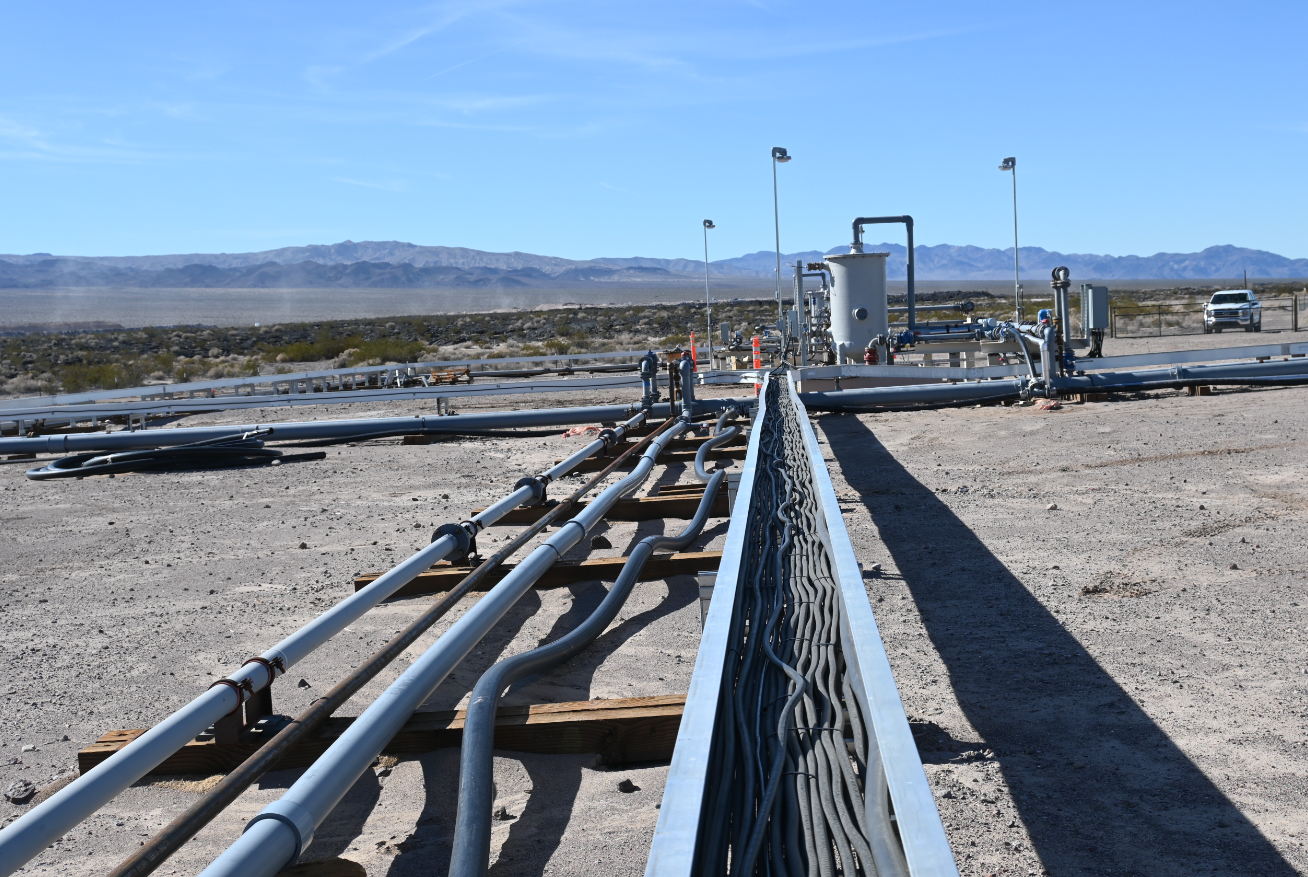
8:24 And the back end of the plant, which is really where we produce our boric acid and we'll make our gypsum, that started up April 1. And so knowing that was the milestone, that was the roadmap that we were gonna outline, we then says, okay, once we're operating, what are we gonna do? And so first is let's produce boric acid, right? And we just, we got to get that PLS to the crystallizer. We need to get it on the belt filter and ultimately the dryer and out the other side. And we, we got to measure, Hey, what, what does that quality look like? What's the particle size? What's the moisture content? And ultimately what's that impurity profile look like? Because while boric acid is a commodity, what its uses are, are very specialty chemical nature, specialty chem in nature, right? They're going into specialty glass, they're going into high-end products.
9:20 Knowing our customer specifications is a critical aspect in ensuring we're going to be successful as we go through the customer qualification process. Once we had boric acid, the focus and what we've been working on today has been let's get that on spec and meeting our customer standards And then once we do that, we got to run the rates, right? And so, you know where we are today is we are very, very close to that on-spec product. And so once we have our on-spec product, we start customer qualification and we run to rates. And so that can kind of lead me to the next slide where we kind of, let's talk about what this next 30 day plan is. What's the 60 to 90 day plan and then 6 to 12 month plan. And so I think first is we're gonna send product to customers and it's going to be KG samples out the gate.
10:22 And then true tonnage is going to get put on a boat at the Port of LA. And it's going to get shipped to our customers for our future customer for real-time production. You know, what we've done today is we've had conversations with our future customers quality group. We have a full lab on site in Newberry Springs. We understand the procedures that those KG samples are gonna be going through to look at the impurity profile, to look at the moisture content. And we've now replicated those procedures on our process. So we're kind of gonna use a test to take a test before we take the real test And just be practical and thoughtful About that process.
11:09 So that's that's 30 days that that's the goal that's going to happen in the 60 to 90 day process, listen, we've engaged 4, they're going to be our EPC through fail to we're going to continue to moving, moving down that which is really, ultimately, first, first prize is commercial production of 90,000 times. And so while we do that, we're kind of, we continue to get lots of really good data. And we're going to, we're going to go through an optimization exercise. And we have our technical report summary, which has our economics. But we want to optimize that. We want to make it better. And so we can break that down, this optimization exercise, which is a 2 to 3 month exercise into 4 pillars, right? And in all those pillars, the foundation of those pillars is an economic analysis, right?
12:04 How can we get our cash costs down? The first pillar is mine plan, right? Today we have 4 wells. We are, those wells are deposits, it's about between 1300 and 1500 feet below ground surface. So those 4 wells, they're coming in contact with 800 feet of ore body, 200 times 4. From there, you know, the name of the game is how can we increase solution coming into contact with that deposit? And so the mind plan really is taking pages out of the playbook of oil and gas. 1 horizontal well can run for thousands of feet.
12:52 So if you think about it, what's in our model is a lot of wells and It's real cost on the sustaining CapEx side. So we need to get and design a mind plan that isn't vertical. Yes, you're gonna have to go vertical to a point, but then you're gonna dovetail and you're gonna probably look at a toe to boot, whereby your heel to boot, where your heel is deeper, and you get the benefit of gravity, and ultimately running the strike of the ore body to optimize contact. So That's kind of pillar 1. Pillar 2 is what's the optimal crystallization process? So today, all of our results align with the historical data.
13:42 We're going downhole at 140 degrees. We're coming up fully saturated in solution after 24 to 48 hours of consistently 5.5 to 6% head grade.
13:59 What the process entails is after we pull that solution above ground, we're going to our crystallizer. We use an evaporative crystallization process whereby we will boil the water, evaporate it off, and that in turn increases our concentration of boric acid in solution to about 30%. From there, it runs over our belt filter, washes, filters out any impurities, goes to our dryer, and ultimately our bagger. We know the chemistry math equation tells us that we cannot increase any concentrations. The resource is phenomenal. Those results are very, very good.
14:42 Can we take a look at actually potentially transferring the concentration effort from an evaporative above ground to potentially downhole, i.e. Can we inject hotter solution to create a more robust aqueous chemical reaction downhole to in turn increase concentrations up to 20-25% downhole whereby we potentially modify our crystallization method to a chilled crystallization,
15:11 right? And then thinking about that, how does that impact our OPEX and our CAPEX? Because for example, the CAPEX right now, our crystallizer is hastelloy. Hastelloy is a long lead item and it's expensive. It has high nickel. So ultimately, if you do that reaction down whole, you will potentially neutralize your acid, thus in turn potentially changing your crystallization to chilled, which could improve your OPEX while also simultaneously reducing your CAPEX. Pillar 3 is really kind of is the cousin of pillar 2, which is what's the power and what's the utility that we're going to look at to really create the optimal OPEX profile.
16:01 So, listen, one of the reasons I also joined from an infrastructure perspective, 5E is in a really good spot. We sit right along major transmission lines to SoCal Edison. There is not 1, not 2, but 3 major transmission, natural gas transmission lines, of which one goes right through our EIS, EIR boundary.
16:24 And then the third aspect of that power is we sit in high desert, right in California. There's not a cloud in the sky. Most days it's 365 days of sun. Can we look at ultimately
16:39 paired renewable power with either a gas or electric, where 1, we're reducing carbon footprint, and 2, we have a free source of energy. So what we wanna do is based on whether it's evaporative crystallization or chilled crystallization, what's the best way to be thinking about the power mix, right, And what is the best economic outcome? And factoring long lead items and timing for all that, that kind of gives us the best outcome. And then the fourth pillar is ultimately, hey, what's our byproduct mix? Today, we're going to produce lithium and a gypsum byproduct.
17:20 We like the lithium, but I think there's better value-added byproducts that we could potentially be looking at, and we will look at with our deleterious elements and our calcite, right? For example, calcium carbonate is a by-product that hasn't been considered that we're gonna take a hard look at. Also, we have magnesium as an element that it's not a lot of a ton of quantities But is there
17:50 is there a process that can be deployed on the byproduct side that really actually? Creatively Boosts MPV and gives us a you know better economics and reduces our cash costs for the long haul. This is the next 2 to 3 months, what we're looking at as we kind of take the steps to progress the fell to. And then ultimately that 6 month timeline is definitely fell to, right? You know, fell to will result in a capital estimate that's plus or minus 25%. It also gets an OPEX estimate that's plus or minus 15%. And this goes on while we're further progressing our customer qualification process.
18:37 I think at this time, we also will continue looking at transitioning the qualification process to off-takes. We want to ultimately look at the debt piece on the back of that fell to. And so,
18:57 you know, how can we be getting better byproducts, getting a really solid, fundamentally sound fell to program, and then kind of opportunistically looking to, as you know, we're not all products not gonna go to customer qualification. Hey, is there anything that could be sold in excess into the market as a credit to our operating costs? And so that's kind of like where we look from that 6 to 9 month time. And then there's obviously ongoing efforts, vigilantly pursuing non-dilutive sources of government funding. From our funding strategy, it has not changed. We have our liquidity disclosures are robust, they're well known, And ultimately, where we stand today is, I personally believe the business is undervalued, right? Where our stock's trading close to book value. I don't think it should be trading close to book value.
19:57 And so from a financing perspective,
19:59 we're going to, we have good applications in on through the DOD and there's a DOE loan grant application we've applied to and you know we continue to progress them and work them and so you know we're very mindful and very thoughtful about dilution. And I think in the interim, like we'll do bite-sized chunks. And that's kind of what you saw more recently with the $6 million in additional notes.
20:31 I think timing was, like We had kind of agreed to terms and then one of our analysts upgraded us to a buy and stock rip, but the deal was kind of already done. So timing wasn't all the best, but those are things you can't always predict. And, you know, we appreciated the buy upgrade because that kind of mirrors our sentiments of where the company should be going.
20:57 And so I think that hasn't changed and we continue to just be opportunistic and be vigilant about you know the pursuit of the government applications we have in train. Awesome I appreciate that very much Paul. I got a couple questions my own just based on the presentation But there's 1 I wanted to tackle just from the audience. It's a combination of a comment from NJW Walter and Rader from the chat. They're both expressing
21:24 just interest and the interest concern at the number of executive and board level changes. Looking for you to speak on it, just an explanation and whether or not this is a now a steady executive team that's likely going to hold on. Well, I've been here for 3 years, and so I don't plan on going anywhere, but I realize that now in this seat, it can be a hot seat. And so ultimately share price performance, execution on the ground is going to be a function of my longevity here, right? And so I think, you know, JT has been here for almost, it'll be 2 years shortly. I think when you go through a going public process and a migrating, you're gonna build a team. There's a lot of unknowns, we redomiciled.
22:13 And so with that, not everyone's always gonna stick around. And there's been a lot of good contributions and good team members that have come on and added value to 5E and ultimately that's going to change kind of over time but I think with myself,
22:28 I moved my family here from Pennsylvania on the East Coast and I'm now a West Coaster. I'm not going anywhere and I'm really pleased with the team we have. Lonnie has been here almost 2 years. Rod is a new hire, but Rod is a function out of where we're going in the future.
22:45 I think I know we've got a great team and there's good things to come. Awesome. Now, if you don't mind, I'm just going to get into a couple of questions of my own, and I promise folks in the chat, I'll get to your question right after. But please do keep those questions coming. We're going to get to as many as we can today. So what I had just based on your presentation is I'd love if you could expand on or just give me and the audience a bit more information about 5E's process for customer qualification. Yeah, so it's exciting. I think, so What we'll do is here, we're talking kg samples. We already have our first SuperSAC, but that's not the first to go out the door. The first to go out the door will be kg samples. And that once they're shipped out to said customer, It's about a 30 to 45 day process where they'll take those KG samples and they're gonna run their tests on a bench and in the lab.
23:41 Once we clear that hurdle, we're talking a hundred tons of product, right?
23:46 And so that's what we're kind of those, the super sex products, they're being kind of earmarked for that 100 ton shipment. And so that's, and then you're talking, listen, it's got to go on a boat, it's got to go overseas. And it's got to run through a live manufacturing environment. And that can take probably 60 days. So you're talking about
24:13 till you clear and you're officially approved as a vendor, it's probably late summer. Then while we do that, after we get through the lab aspect, we're going to start talking take or pay off takes.
24:28 Yeah, great. Just jumping in, There's a question from the audience that just fits really perfectly. So I'll ask that as well. Adrian Palmer asks, when do the customer calls start? That's that 30 day timeline. Like from here, we're close. We are very close to commercial on spec product. It is and it is exciting. We're starting to start teeing up some videos. Like you see the as you look at the belt filter when you're on the platform, it's coming out in solution and it's it's going out and it's getting kind of pushed down pneumatically down the filter and it's big like it's like 30 feet long like every bit of 10 feet wide and It's getting washed and as it washes it vacuums and as the vacuum hits you see like a white layer of I mean You don't see snow in California in Southern California very often for being mistaken for snow and it looks awesome And it's like wow, that is really impressive That started at 1500 feet below ground, came up, went through a chemical plant, was evaporated, solution boiled off, and now we're filtering out the impurities and what's left is boric acid.
25:39 Awesome. One more question from me. I know there's significant anticipated relationships with various branches of the U.S. Government upcoming. Curious if you could just expand on the company's plan for for Gov Affairs. Yeah, so I think when you look at at like the U.S. Government is is like miles wide and millions of miles deep, right? But I think when it comes to this, whether it's the trend of decarbonization or shoring up America's supply chain, you got 2 major departments, right? You have the Department of Energy, and then you have the Department of Defense. Each department, as well as the Department of Interior, have their own list of critical materials or critical minerals.
26:26 We think Boron has a place on the critical minerals list. It's an oligopoly. Supply is kind of where it's coming from, is, we think is a risk the government should be, US government needs to be very mindful of. But if you really, like if you look who has boron high up on their list is defense Boron well kind of not always well known being the fifth element is pervasive across defense applications, whether it's coatings, munitions, armor, semiconductors, boron touches, many of the defense applications and DoD gets it.
27:15 So when we think about our government affairs, we're really honing in on the defense side. Also, the defense bill gets passed on an annual basis, and it gets passed with bipartisan support. So I think being on that list, knowing that the DoD gets it, that's where we are pursuing. I think we haven't ruled out the DoE. I think from where we stand today, it's an easier path to go down the DoD route. Great, thanks. Andrew Sherrick asks from the chat, how long do you expect the resource base to last? He offers 30 years as a potential. Yeah, so what in our technical report summary, we have a 30-year mine life and that is in all 3 phases. It starts at 90,000, phase 2 is an incremental 180 and phase 3 would be another incremental 180.
28:20 I think we're going to be really thoughtful about that. We see market demands there. So we'll continue to increase production and make selective scale investments accordingly. But I think, you know, it's a lot of boron at 450,000 tons. I think you'd at that point have a downstream business. You'd be looking at value added specialties which could command really great margins. And that's a 30 year mine life with that. So I think if you just do 90, it's way longer. If you would do 270, it's somewhere in the middle. Great. Thanks. One question for me, I think it relates to your 60-90 plan. I'm curious what you're personally most excited about in the back half of this year for 5U Advanced Materials and your new role.
29:12 I think a lot of it's the customer qualification process, right, As we let the market know there's there's a new source of boron coming online, our phones are ringing, right? So, so with really good, well known global brands that household names, right, so that we, you know, are our fortune 100 companies, right? Because the borough markets tight, what is produced in the oligopoly is consumed, right? And so there's customers that have called out this that says, hey, we were previously getting product from Russia, we can't get that anymore. Or we were getting product from this from this country, and that can't happen. So you're seeing our phones ring, So we will continue to evolve that customer qualification process. And I think a lot of what like over 3 years, I was excited 3 years ago, and like, and, you know, I'm even more excited today, because we're producing.
30:16 And so it's, it's, it's seeing that business evolve, and whether it's on the government affairs, seeing our team evolved. I was, there was, you know, I was, there was 8 of us here 3 years ago and now we're 60 people. We have, you know, 24 7 operation of the facility. We're starting to look at what are the KPIs, how much did we produce last night? And so that's exciting. And that's something that I'm just thrilled to be a part of. And also it's seeing our team just grow and everyone having that entrepreneurial mentality to want to grow a business to be a global producer. Awesome. Thanks. Action packed back out for the year for sure.
31:02 There's a number of questions about funding in the chat. 1 that I think would be interesting to point towards is, what's the backup plan if you don't get government funding? Listen, I think we, so, We have the grant applications in. We have a submission in with DPW Title III. We have a US, a DOE loan application in for, to help us on the lithium side. And then we continue to look at royalty structures as well. We own 6 parcels of, we own the real property in California. So royalties are something we continue to assess. We also put a, we have our S3 shelf and we put an ATM facility up as well. And so I think, you know, use the con note as a, You know, the lenders came in, did a small amount of additional notes, $6 million.
32:06 Not saying they'll always be there, but I think there's, we continue to progress the business, move it forward, have those positive catalysts. And I think we're going to be really thoughtful about what we do because like I said I think the business is undervalued today that's my personal opinion and I think we're trading a book we're not trade there's no intrinsic value there and there should be right and so and I think it's going to be a focus on you know really establishing credibility like our words are bond in the US now like what we say we need to do, and we need to follow through on that. And that's the culture, and that's what we're gonna do. Awesome. Well, I know we're a bit over time. There's a couple of questions we didn't get to. I'll make sure the team gets back to you as soon as possible.
32:54 But everyone who joined us, thanks so much. Appreciate the questions and attendance. And Paul, great to chat with you. Thanks so much for the presentation. Thanks, Romeo, appreciate the time. Awesome, have a great day or evening, everyone. Cheers. ♪♪