Container Corporation of India Limited · NSE:CONCOR
Container Corporation of India — Technical Presentation (March 2015)
67 slides from Container Corporation of India's technical presentation, Mar 26, 2015
Slide 1: Container Corporation of India Ltd. Engineering Matters
Container Corporation of India Ltd. Engineering Matters By: Shri A.K. Poddar, Chief Vigilance Officer
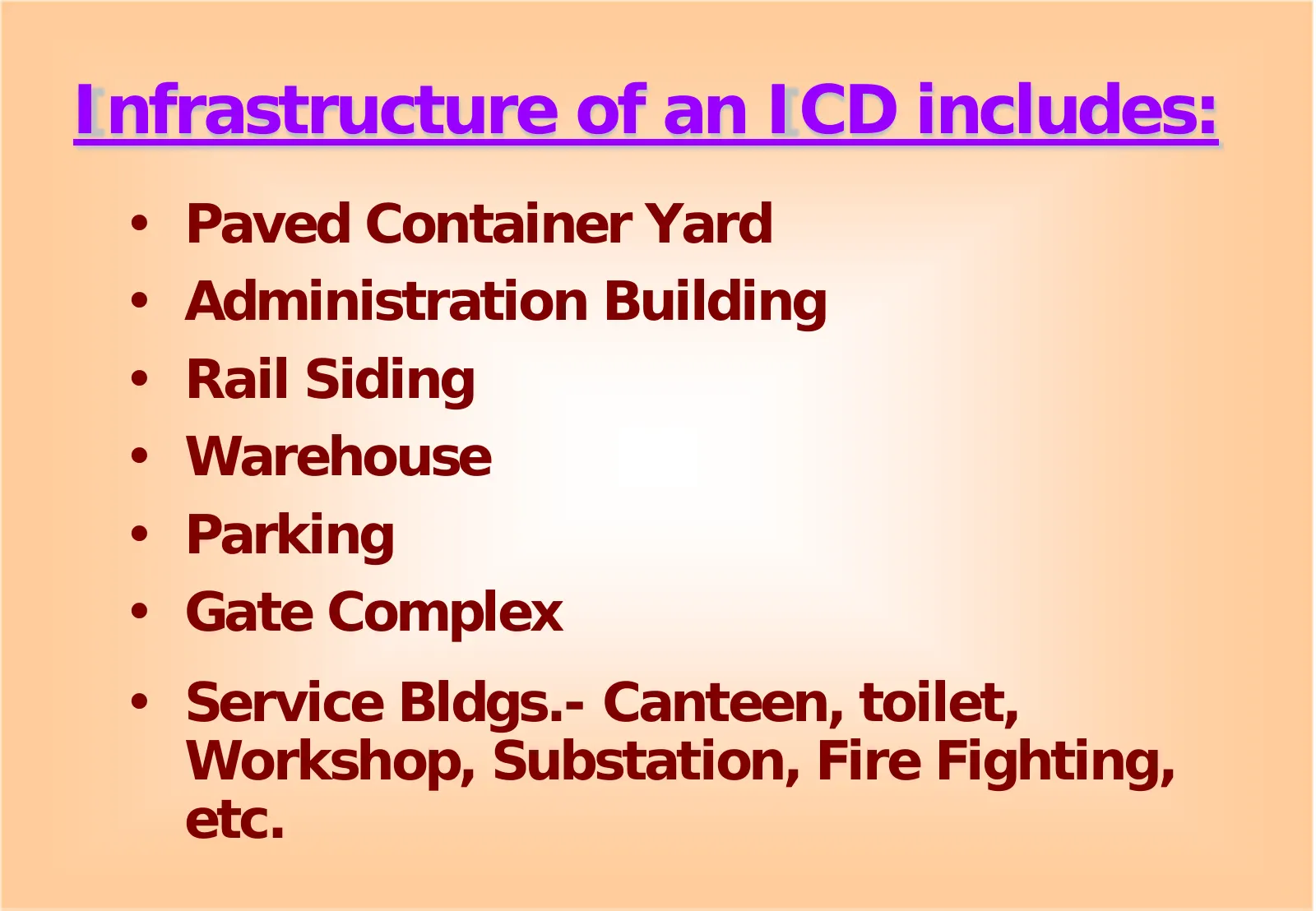
Slide 2: Infrastructure of an ICD includes
Infrastructure of an ICD includes: • Paved Container Yard • Administration Building • Rail Siding • Warehouse • Parking • Gate Complex • Service Bldgs.- Canteen, toilet, Workshop, Substation, Fire Fighting, etc.
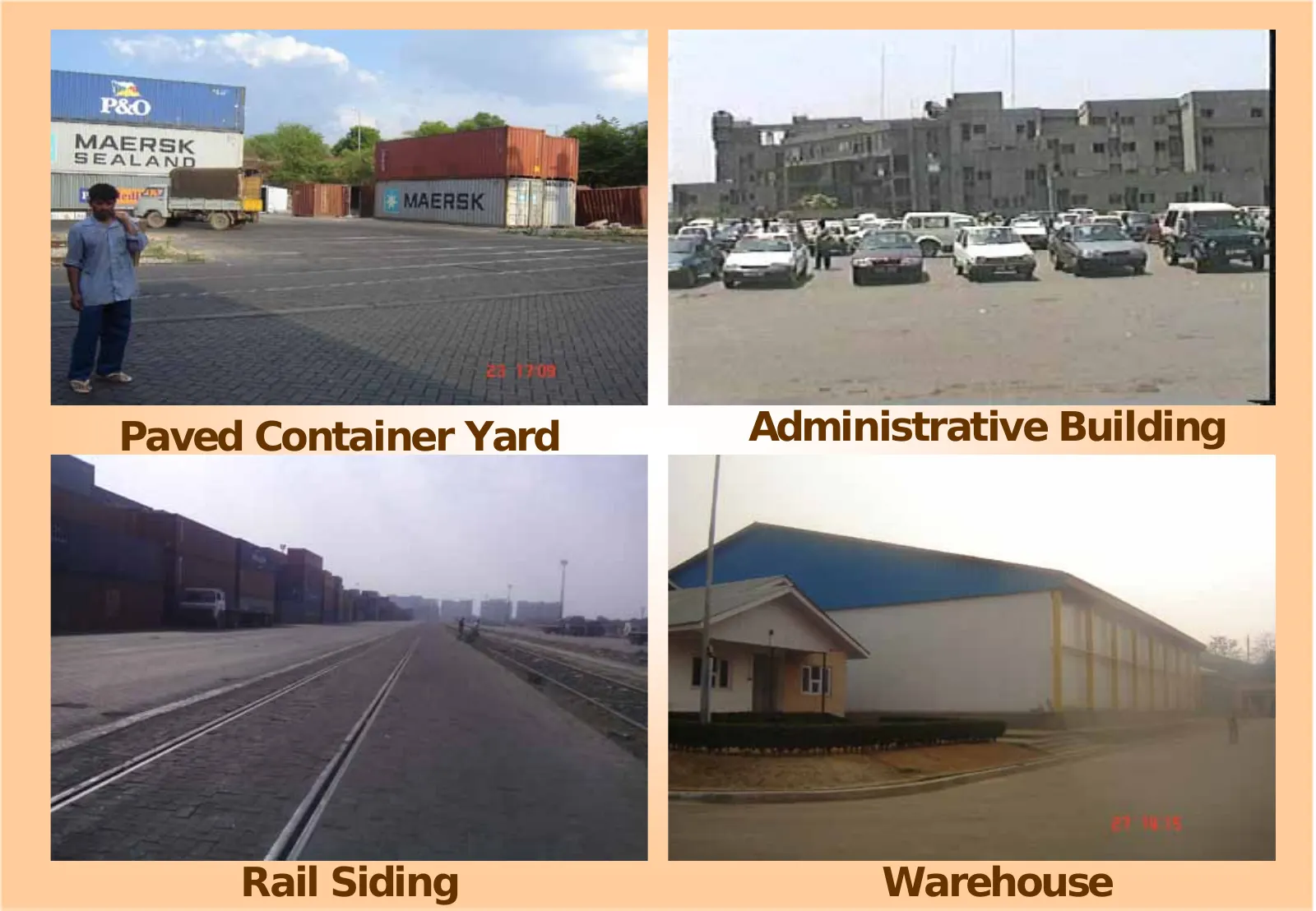
Slide 3: Paved Container Yard, Administrative Building, Rail Siding, Warehouse
Paved Container Yard Administrative Building Rail Siding Warehouse
Slide 4
Slide 5: Types of Paved Container Yard
Types of P aved Container Yard 1. C.C. Block P avem ent 2. CC P avem ent 3. Bitum inous P avem ent 4. P avem ent Quality Concrete (P QC) P avem ent
Slide 6: CC Block Pavement
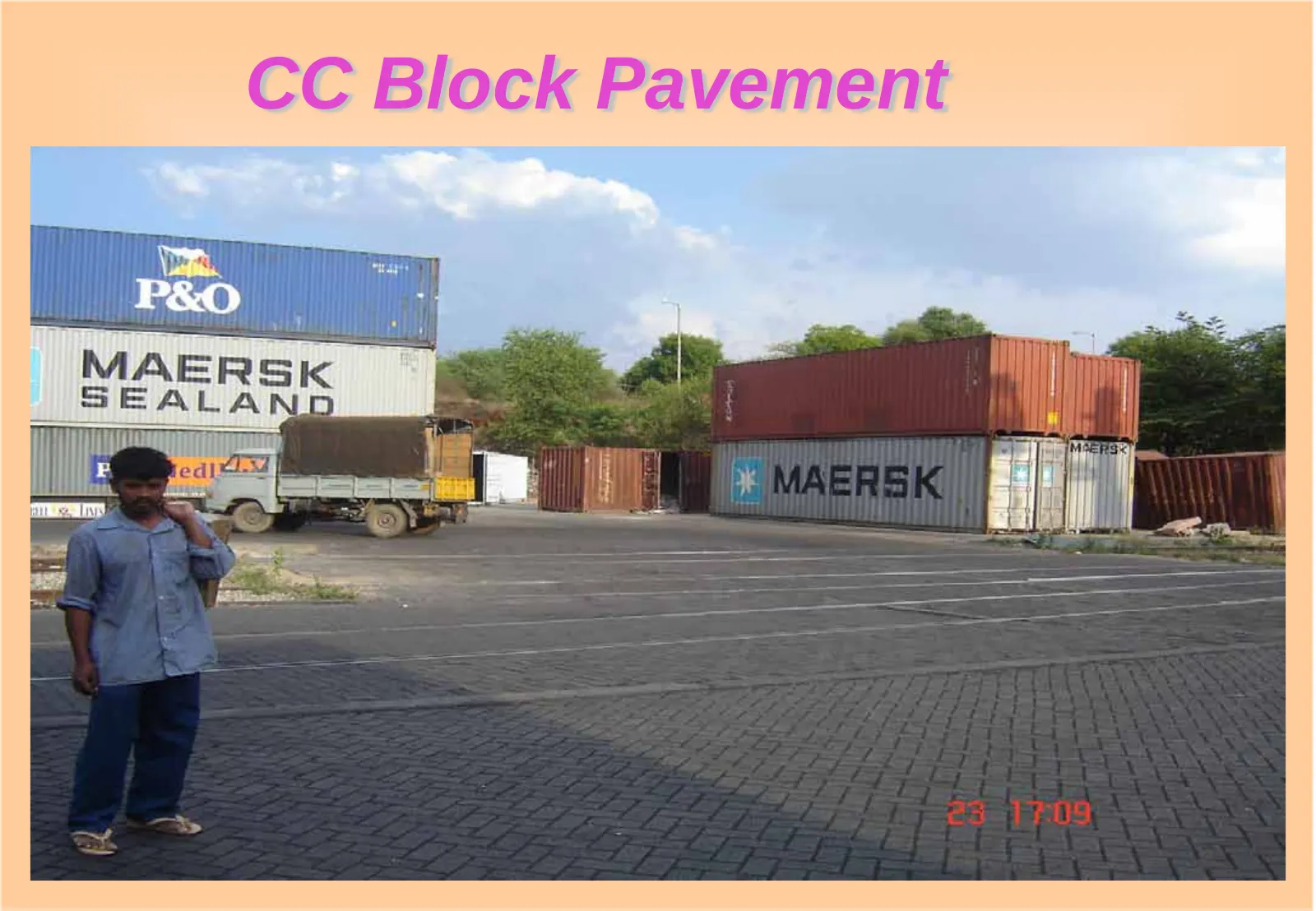
CC Block Pavement
Slide 7: Section of CC Block Pavement (Earlier System)
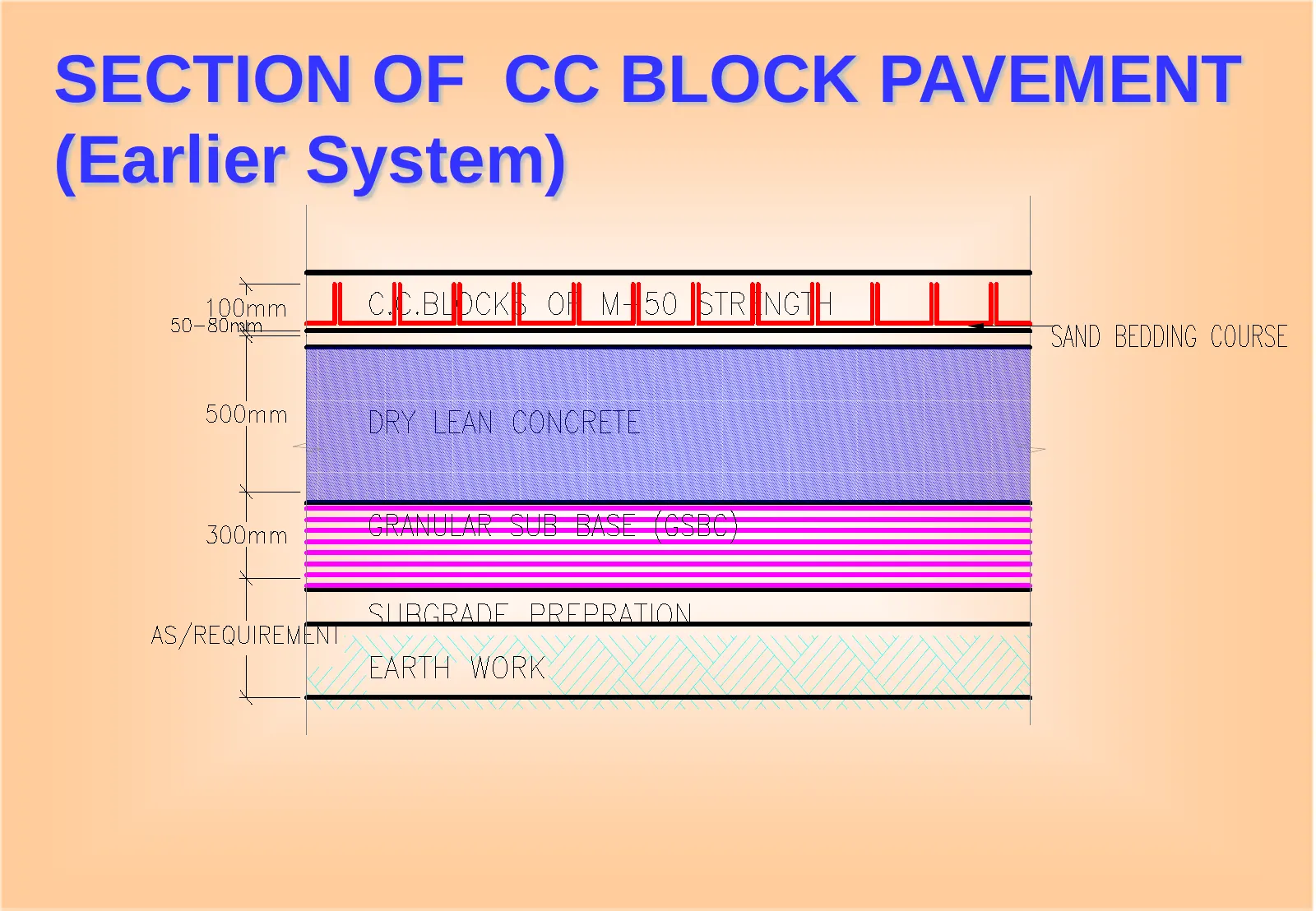
SECTION OF CC BLOCK PAVEMENT (Earlier System)
Slide 8: Recent System
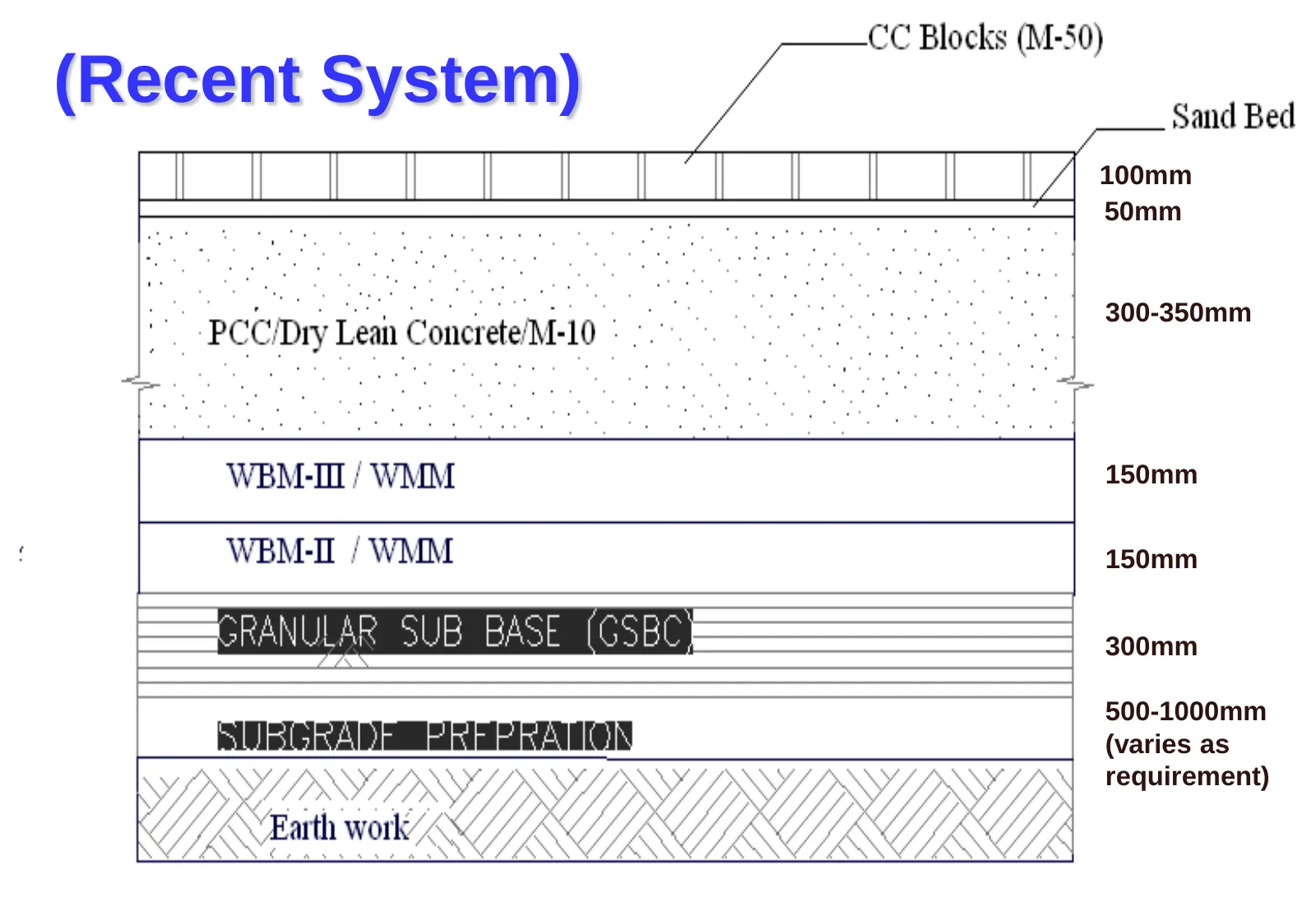
(Recent System) 100mm 50mm 300-350mm 150mm 150mm 300mm 500-1000mm (varies as requirement)
Slide 9: What is M-50 Grade CC Block
What is M-50 Grade CC Block § M-50 Grade CC Block is a block made up of cement, sand & aggregates mixture using paver block manufacturing machine. M-50 specifies the grade of the concrete mix wherein ‘M’ denotes mix & ’50’ denotes the strength of the concrete i.e. 50 KN/mm2. § The strength of the bl
Slide 10: What is M-50 Grade CC Block
What is M-50 Grade CC Block § Different grades of concrete mix are utilized for different purposes based upon their strength e.g. M-20 to M-30 grades CC blocks are sufficient for footpath works and M-50 grade CC blocks are used for heavy duty vehicles.
Slide 11: Bituminous Pavement
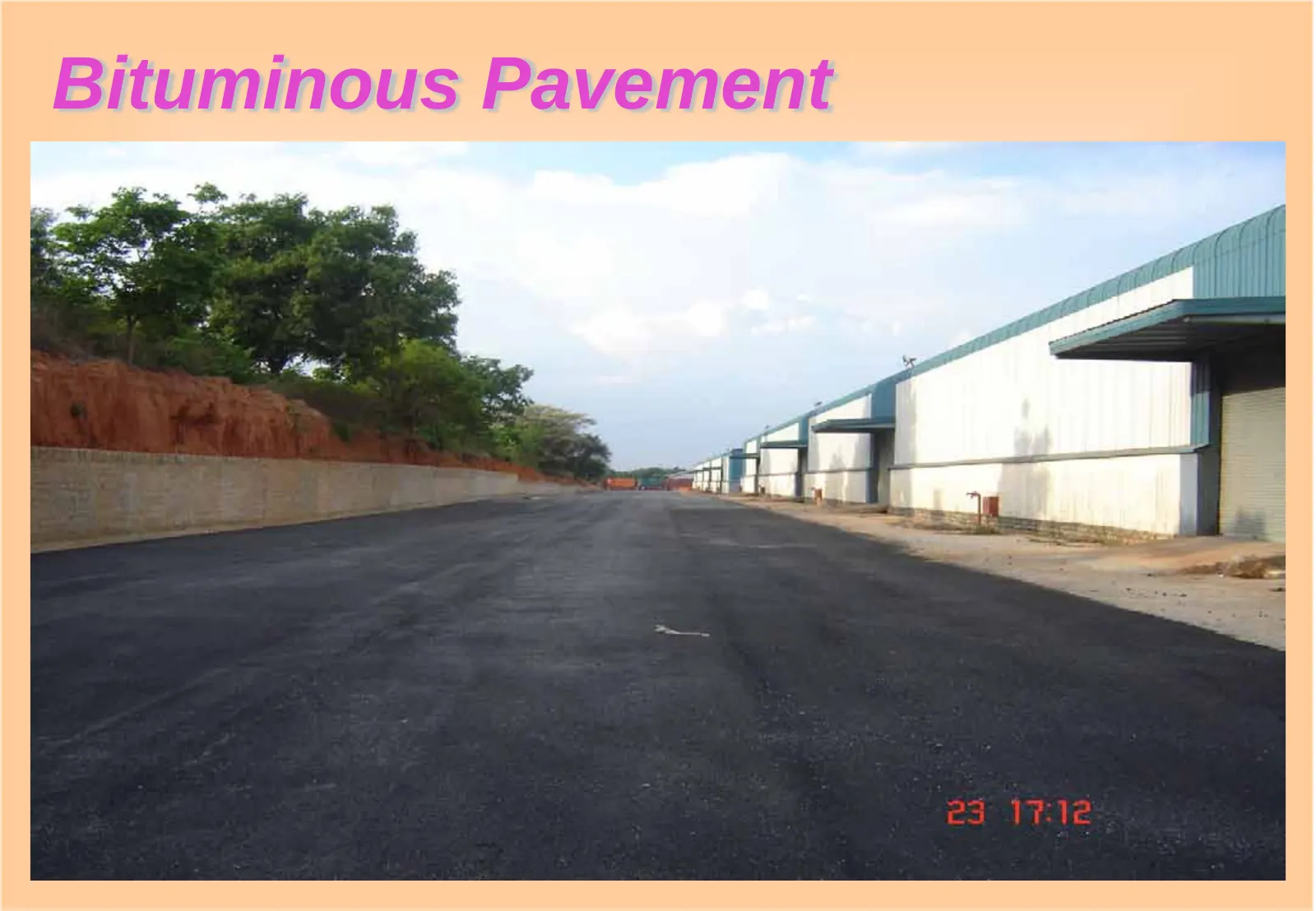
Bituminous Pavement
Slide 12: Bituminous Pavement
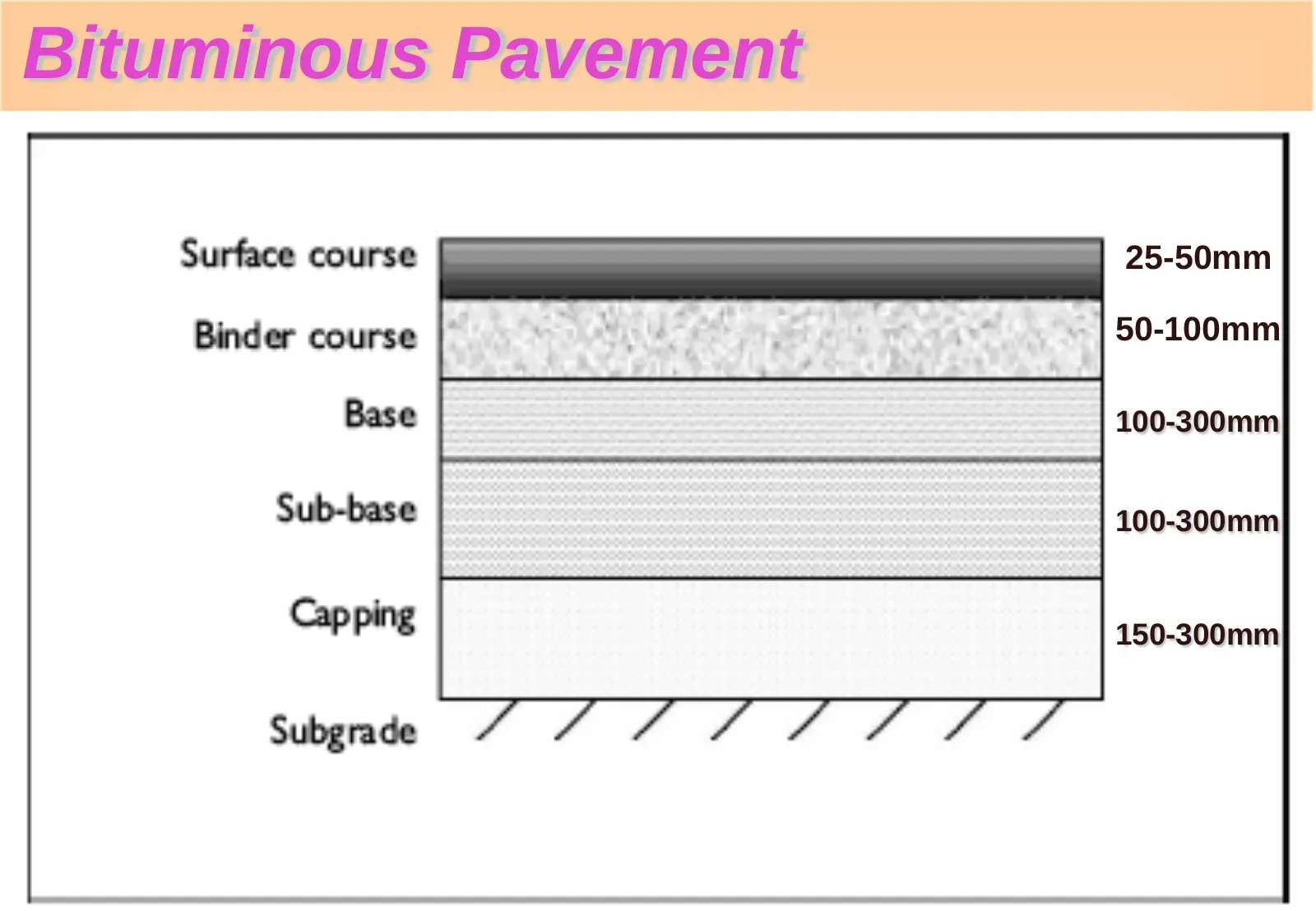
Bituminous Pavement 25-50mm 50-100mm 100-300mm 100-300mm 150-300mm
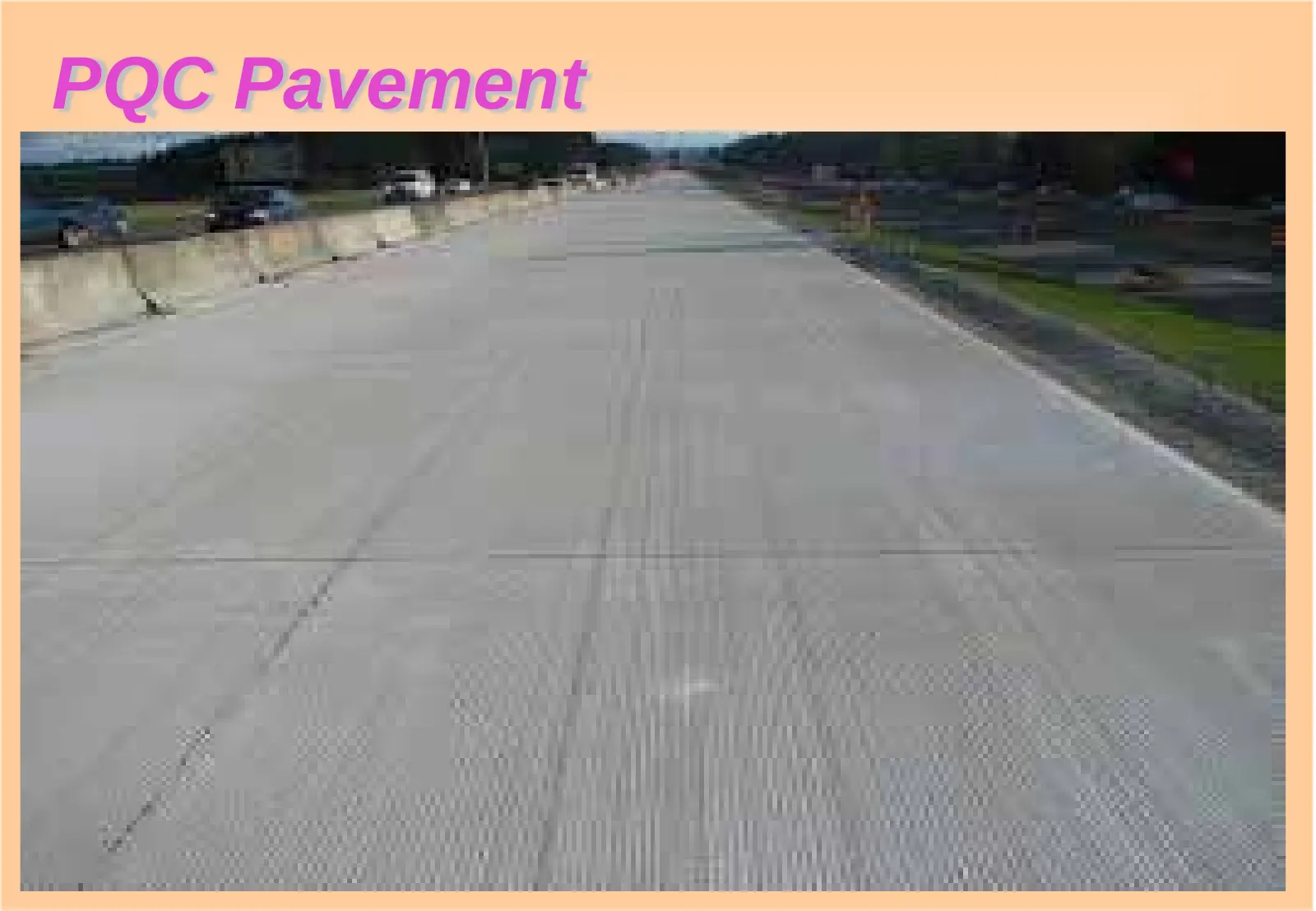
Slide 13: PQC Pavement
PQC Pavement
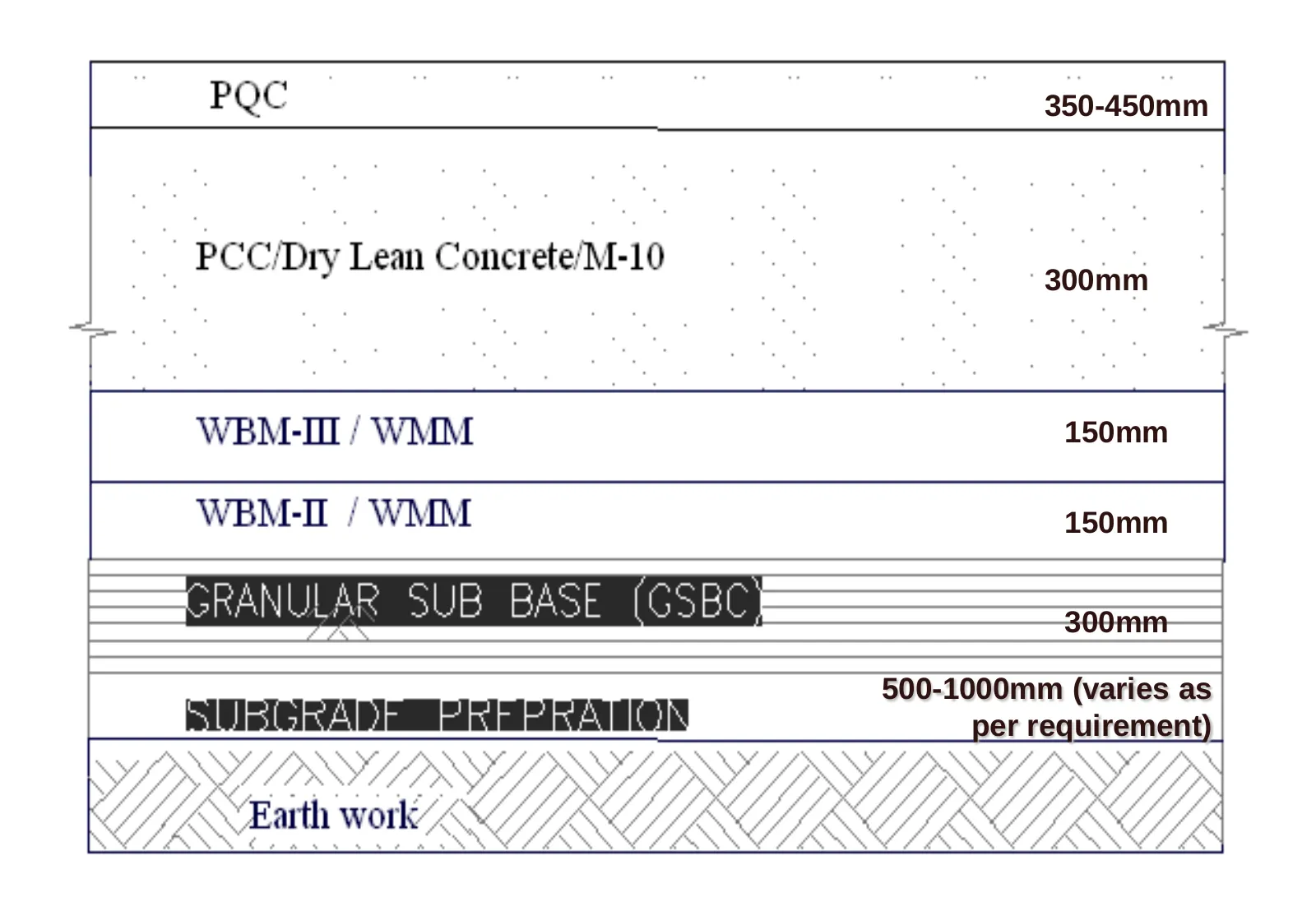
Slide 14: PQC Pavement section
350-450mm 300mm 150mm 150mm 300mm 500-1000mm (varies as per requirement)
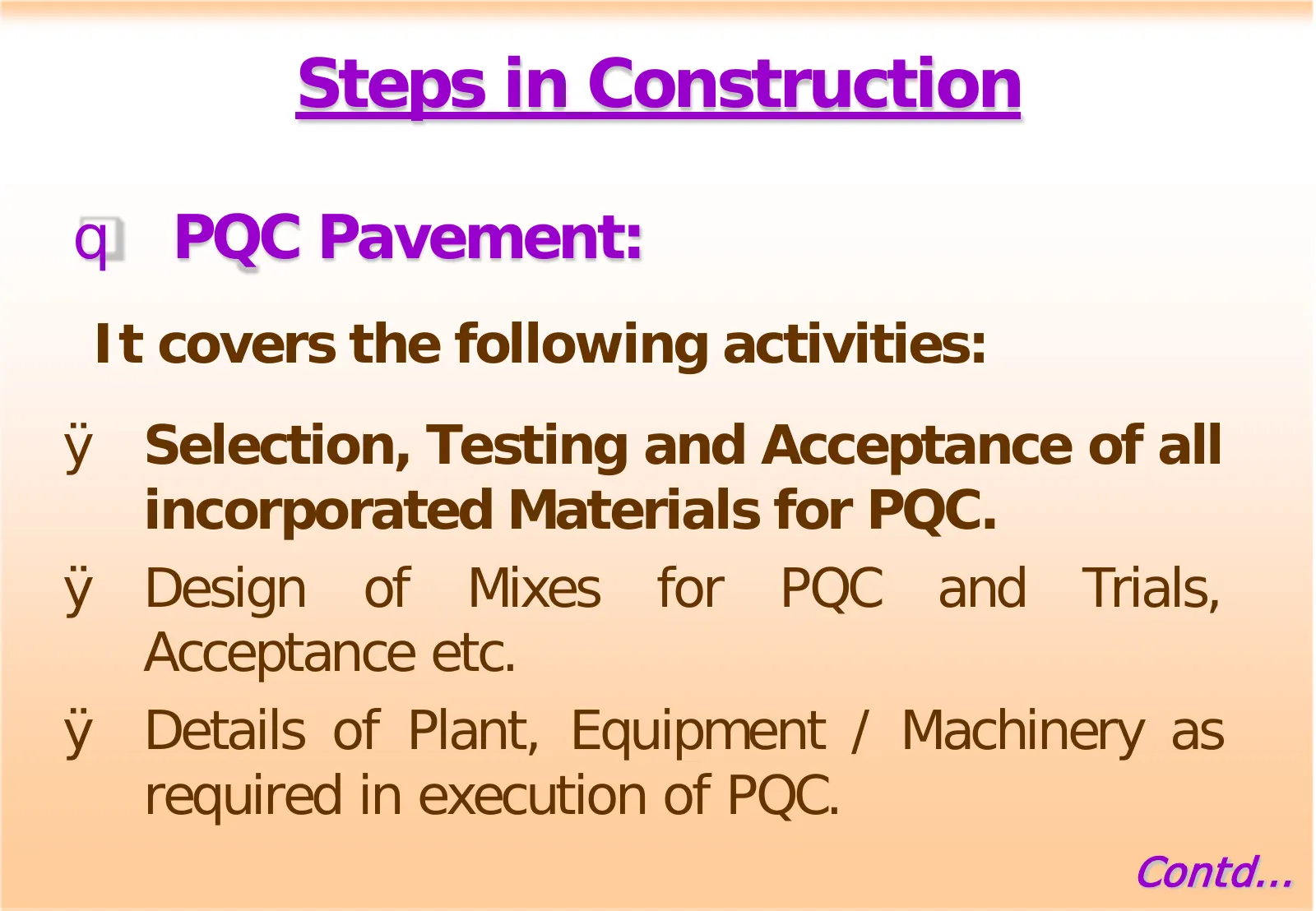
Slide 15: Steps in Construction: PQC Pavement
Steps in Construction q PQC Pavement: It covers the following activities: Ø Selection, Testing and Acceptance of all incorporated Materials for PQC. Ø Design of Mixes for PQC and Trials, Acceptance etc. Ø Details of Plant, Equipment / Machinery as required in execution of PQC. Contd…
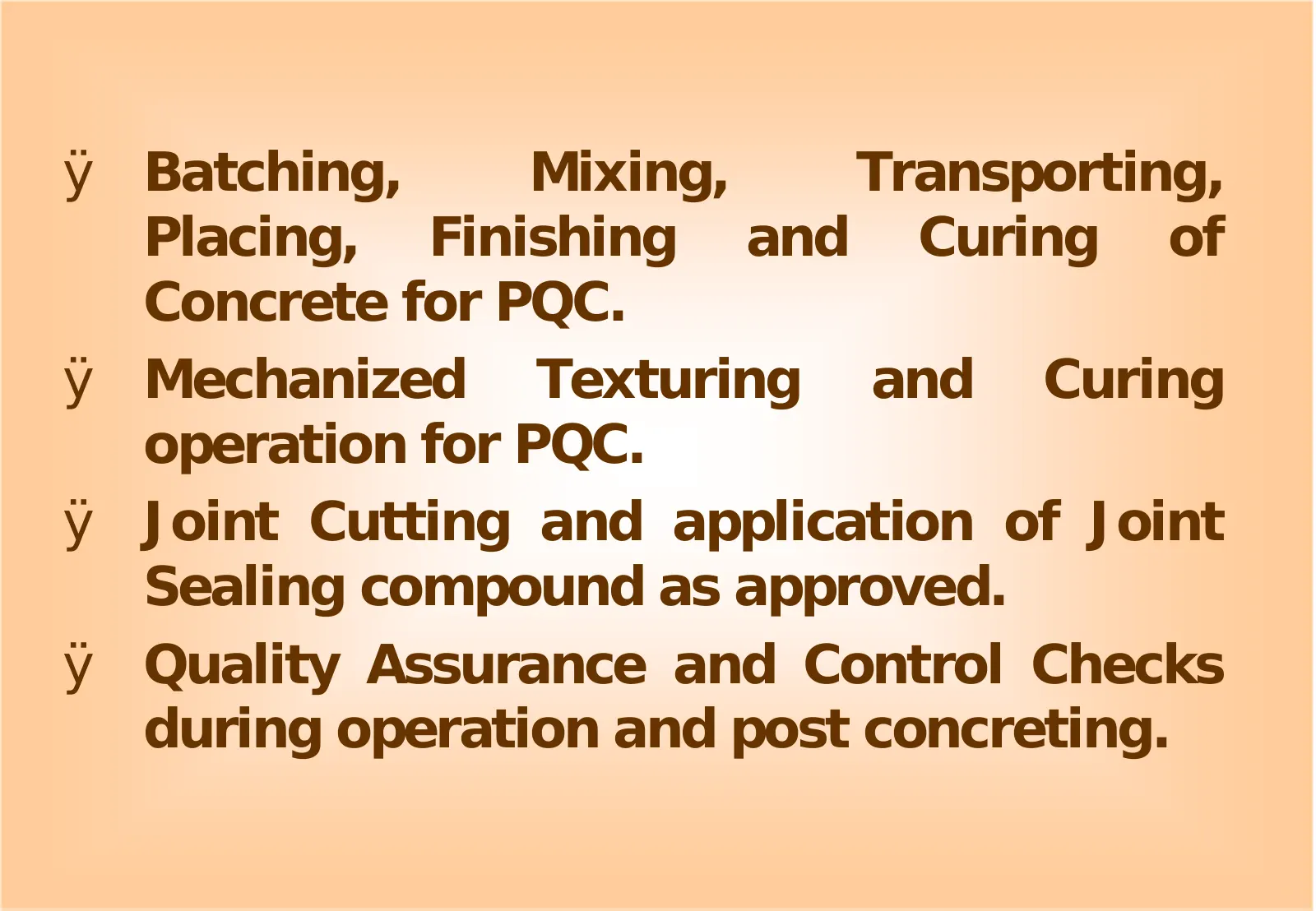
Slide 16: Batching, mixing, placing, texturing and quality checks
Ø Batching, Mixing, Transporting, Placing, Finishing and Curing of Concrete for PQC. Ø Mechanized Texturing and Curing operation for PQC. Ø Joint Cutting and application of Joint Sealing compound as approved. Ø Quality Assurance and Control Checks during operation and post concreting.
Slide 17: What is Rain Water Harvesting?
What is Rain Water Harvesting? § Rain water Harvesting is the accumulating and storing of water for reuse. § The principle of collecting and using precipitation from a catchment surface. Contd…
Slide 18: Why Rain Water Harvesting?
Why Rain Water Harvesting ? § Surface water is inadequate to meet our demand and we have to depend on ground water. § To arrest ground water decline and augment ground water table. § To conserve surface water runoff during monsoon. § To reduce soil erosion. § Due to rapid urbanization, infiltration
Slide 19: Rain water harvesting techniques
Rain water harvesting techniques: ü Roof top rain water harvesting. ü Surface runoff harvesting. Contd…
Slide 20: Elements of Roof Top Rain Water Harvesting
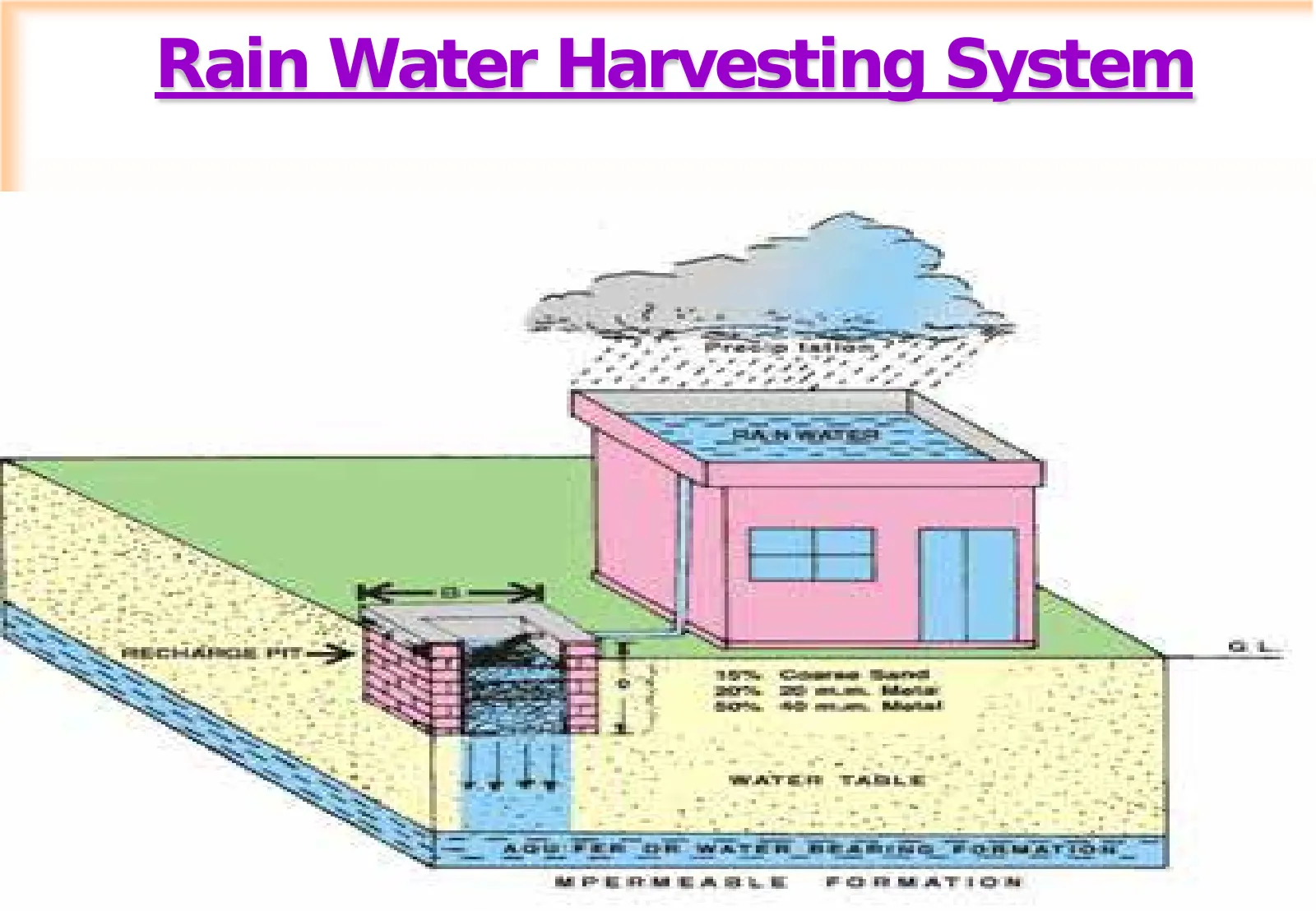
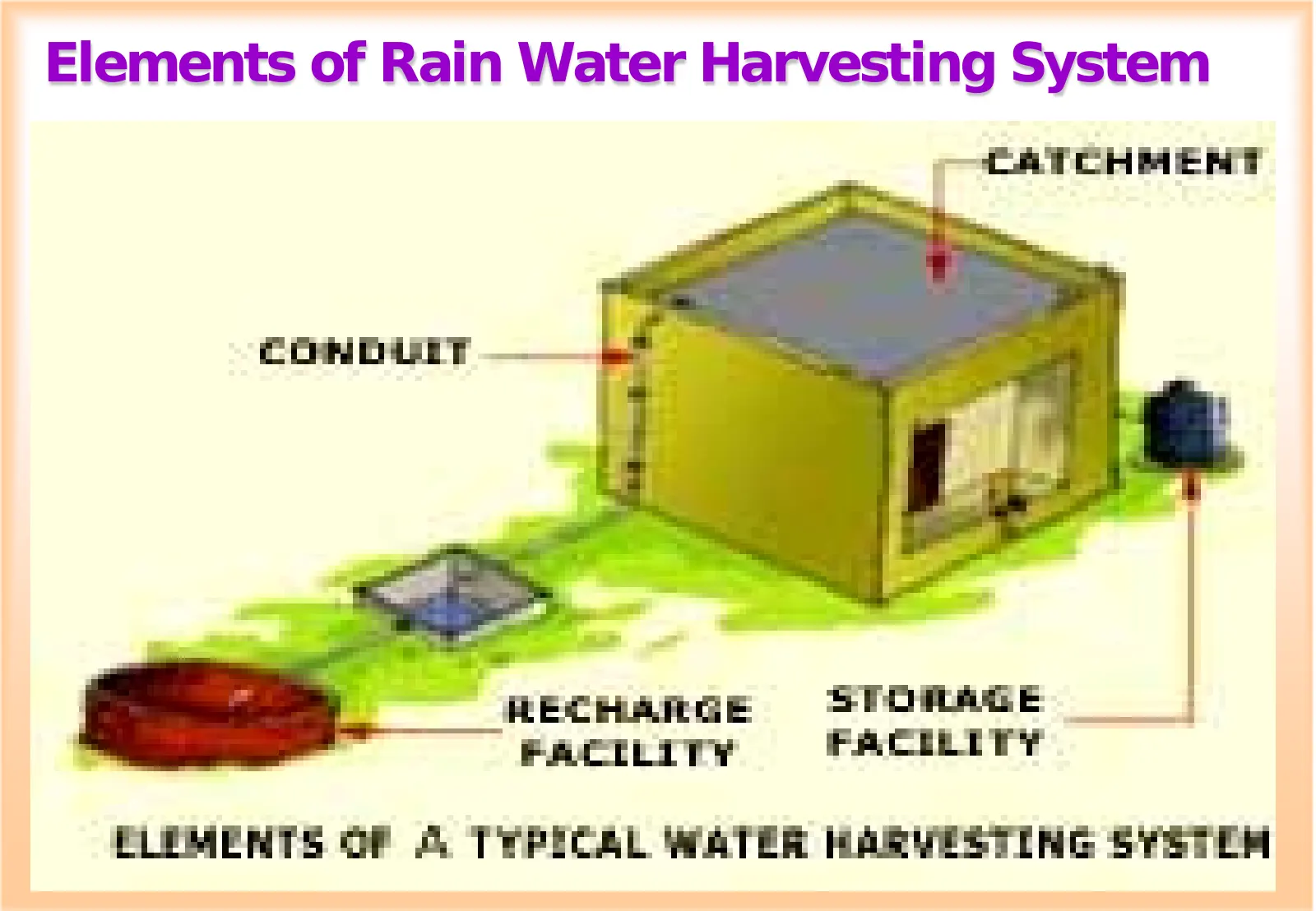
Elements of Roof Top Rain Water Harvesting Contd… § Catchments: The roof of the house/building is used as the catchment for collecting rain water. The style construction and material of the roof effect its suitability as a catchment, roofs made of corrugated iron sheet, asbestos sheet, Tiles or Conc
Slide 21: Elements of Roof Top Rain Water Harvesting
Elements of Roof Top Rain Water Harvesting § Filters: The filter unit is a container or chamber filled with filter media such as coarse sand, charcoal, coconut fiber, pebbles & gravels to remove the debris & dirt from water that enters the tank. The filter unit is placed over the storage tank or sep
Slide 22: Operation and Maintenance
Operation and Maintenance: Contd… § Proper operation and maintenance of rainwater harvesting systems helps to protect water quality in several ways. Regular inspection and cleaning of catchment, gutters, filters and tanks reduce the likelihood of contamination. Water from other sources should not be
Slide 23: Rain Water Harvesting System
Rain Water Harvesting System
Slide 24: Elements of Rain Water Harvesting System
Elements of Rain Water Harvesting System
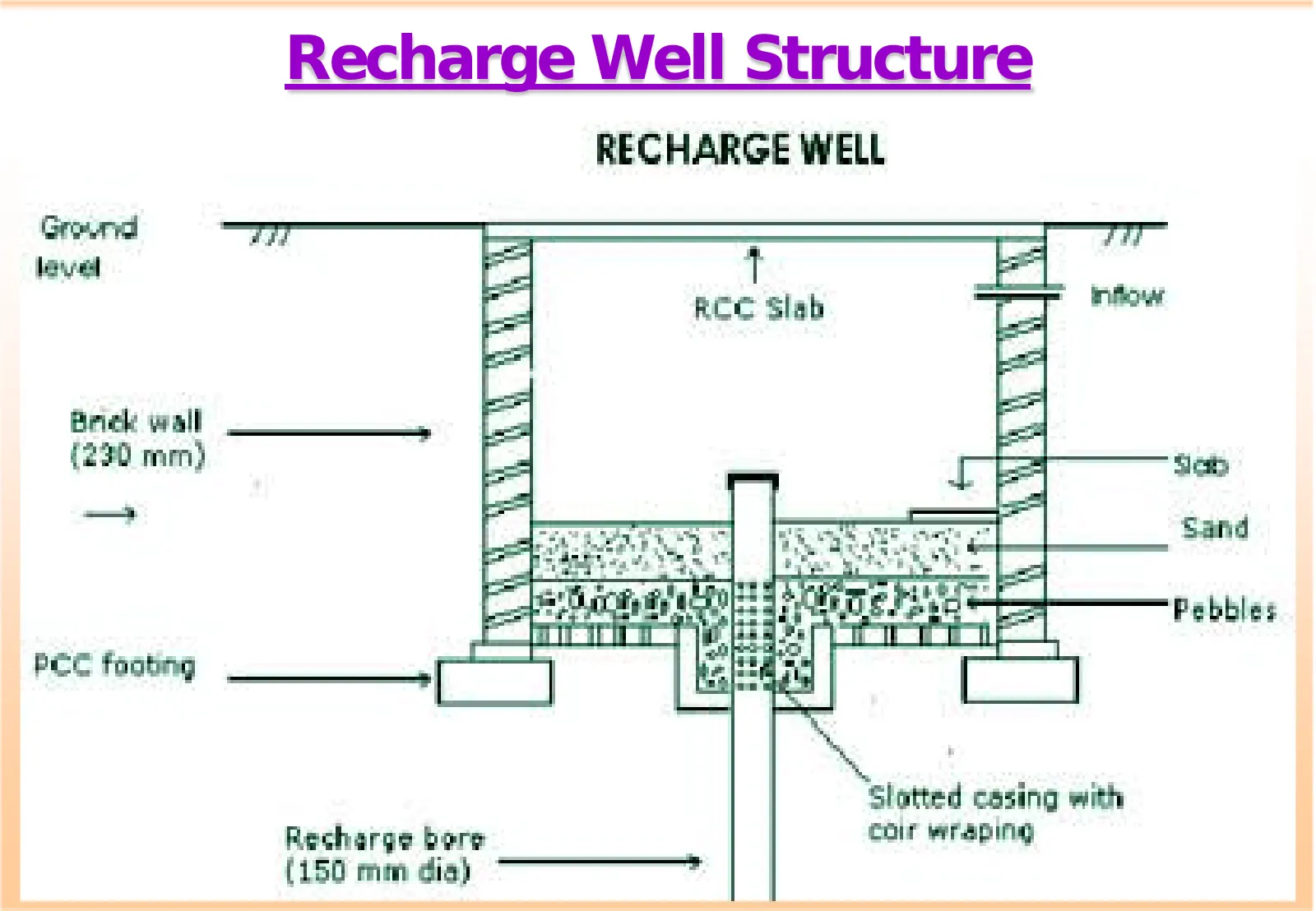
Slide 25: Recharge Well Structure
Recharge Well Structure RECHARGE WELL WY AM WA LY Slotted casing with coir wrApiriD Recharge bore (150 mm dia) “>
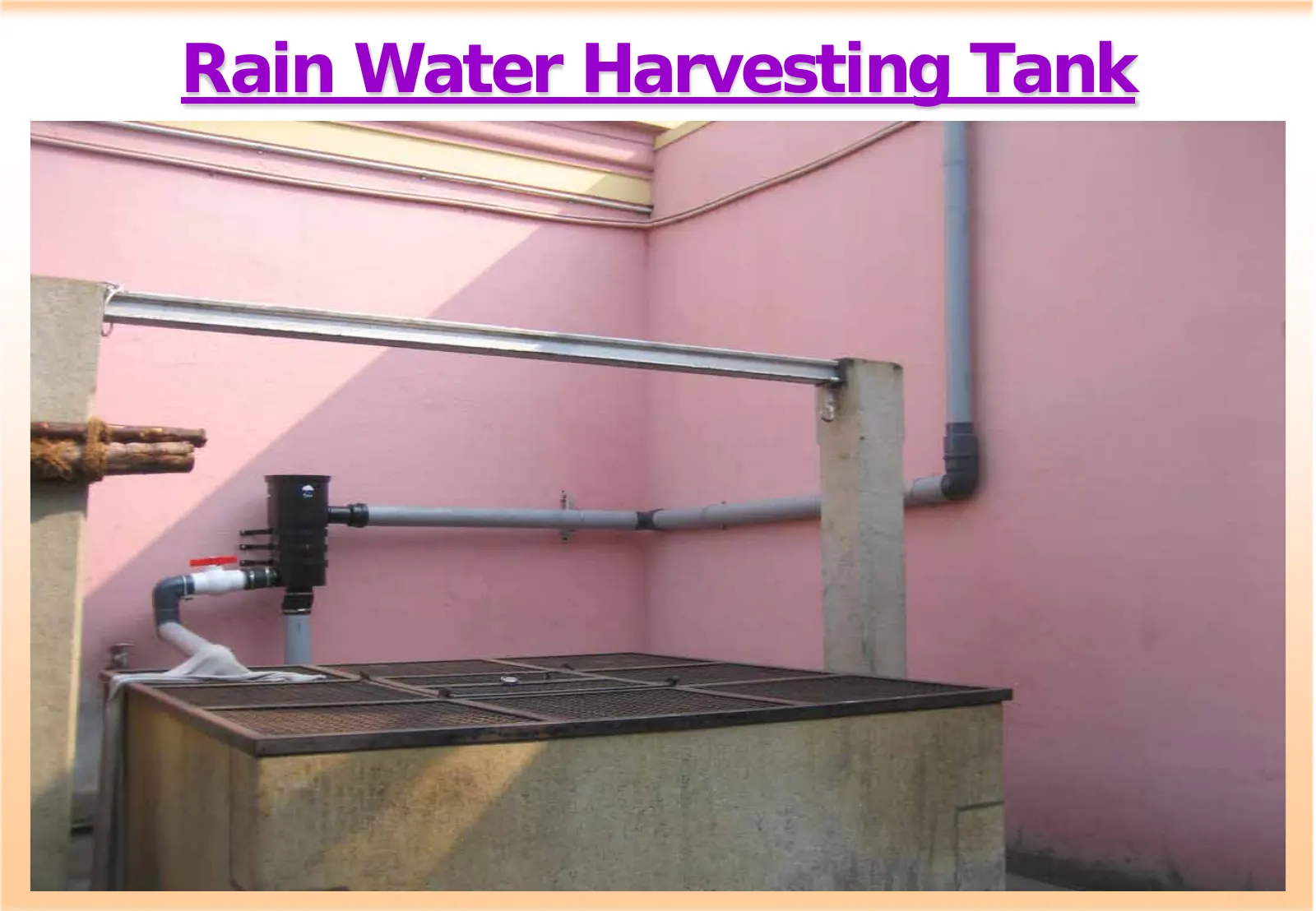
Slide 26: Rain Water Harvesting Tank
Rain Water Harvesting Tank os
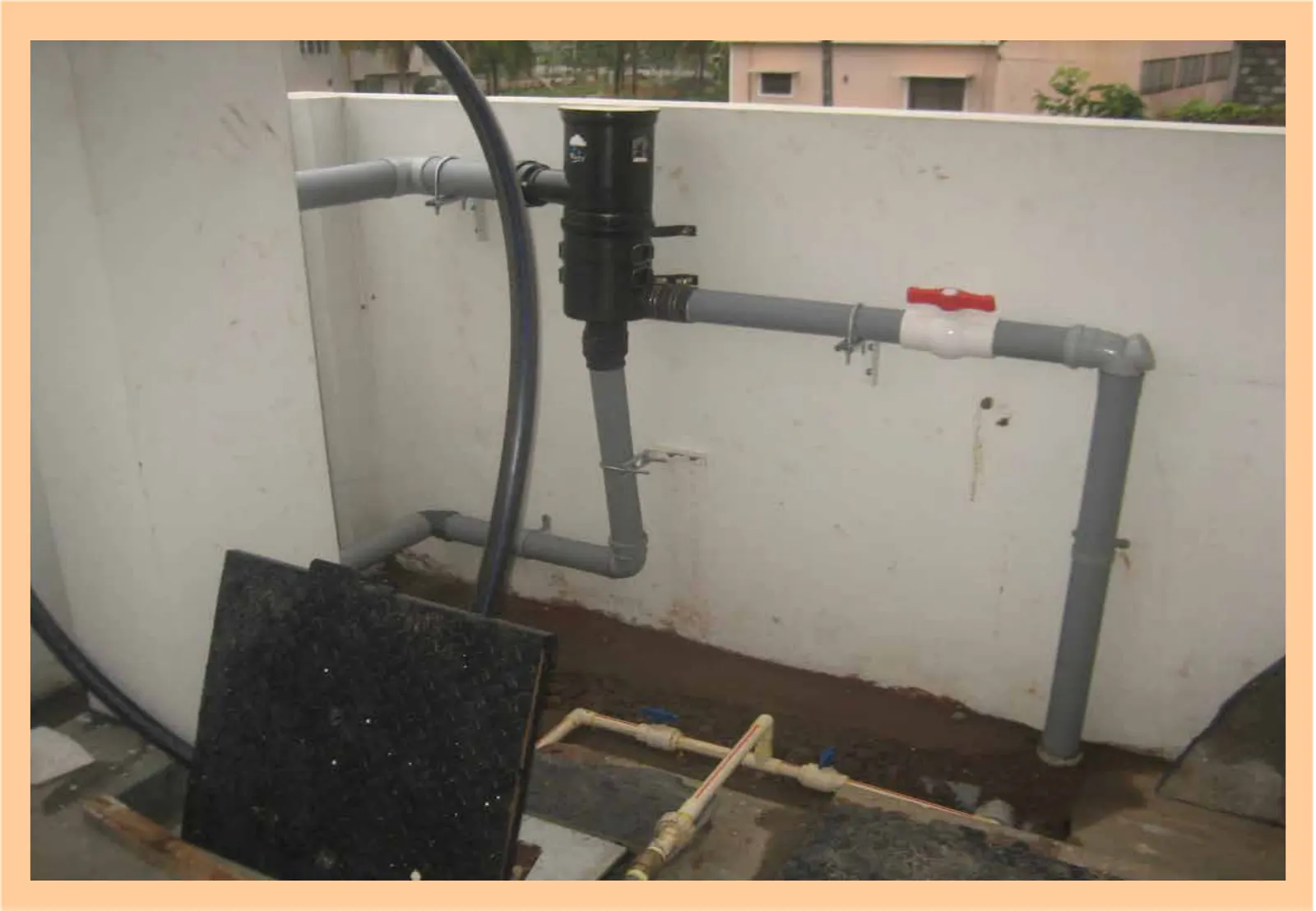
Slide 27
Slide 28: Shortcomings/deficiencies noticed during various inspections in Engineering Works
Shortcomings/deficiencies noticed during various inspections in Engineering Works
Slide 29: Common Shortcomings noticed during inspections
Common Shortcomings/deficiencies noticed during various inspections at various terminals 1. Pavement- Improper laying, shallow depressions, potholes, broken blocks, cracks, improper slope etc. 2. Boundary Wall- improper painting, deflected walls, seepage along walls etc. 3. Drainage- Blocked with ga
Slide 30: Common Shortcomings: Curing
Common Shortcomings/deficiencies noticed during various inspections at various terminals 4. Curing - Ø Insufficient curing, improper methods etc. Contd…
Slide 31: What is Curing??
What is Curing?? Curing is the process of controlling the rate and extent of moisture loss from concrete during cement hydration. Curing may be defined as the process of maintaining satisfactory moisture and temperature conditions for freshly placed concrete for some specified time for proper harden
Slide 32: Curing methods
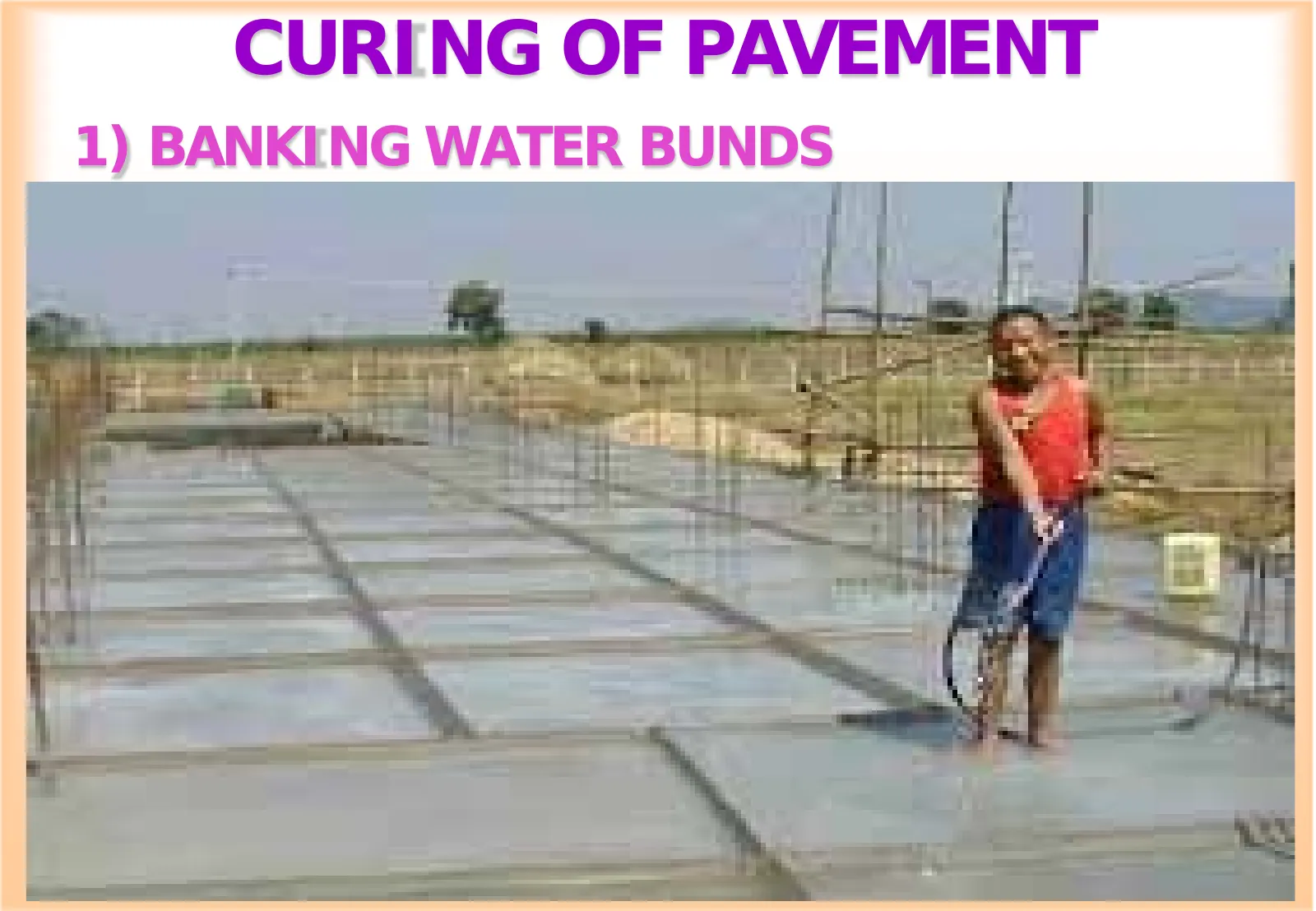
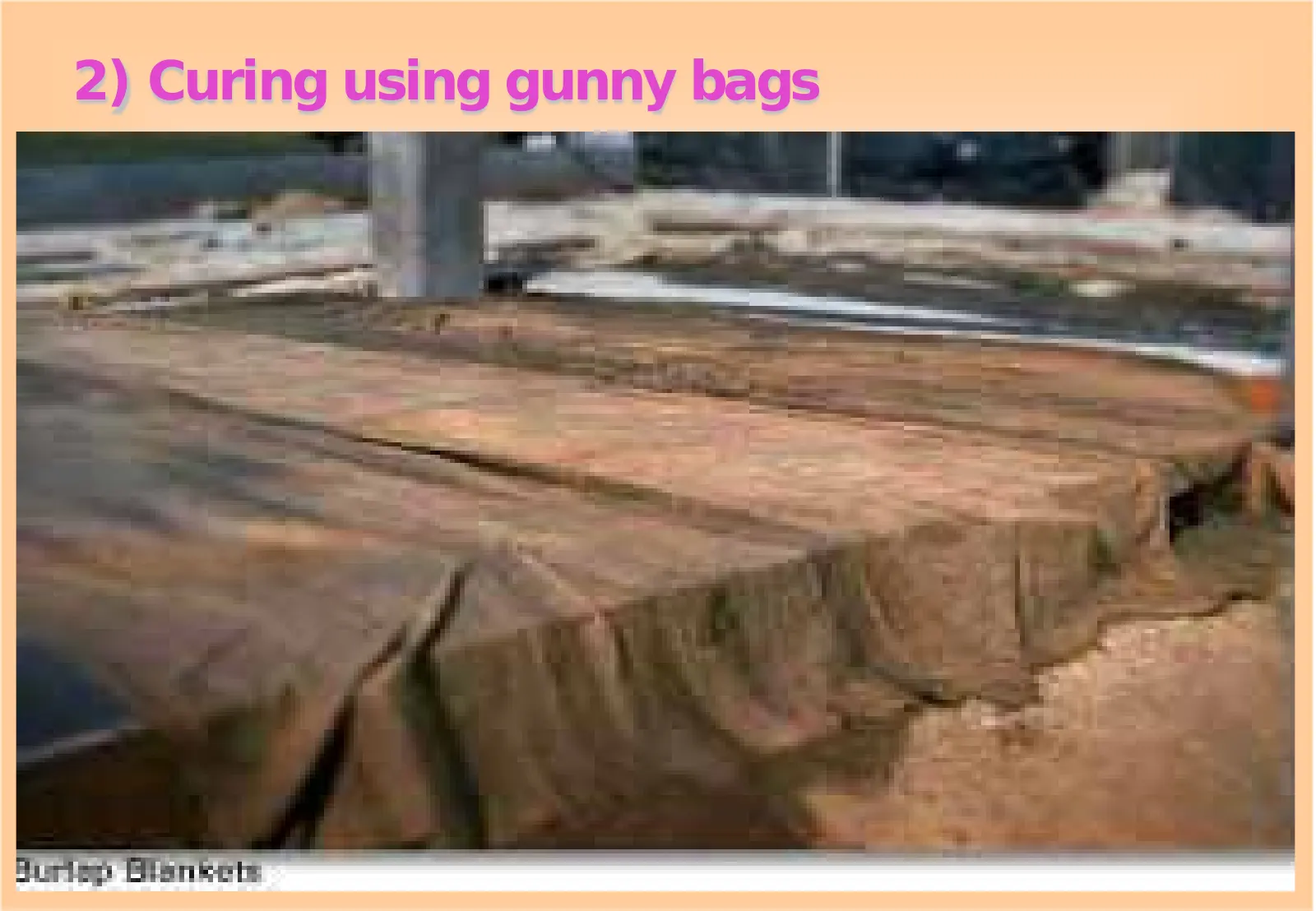
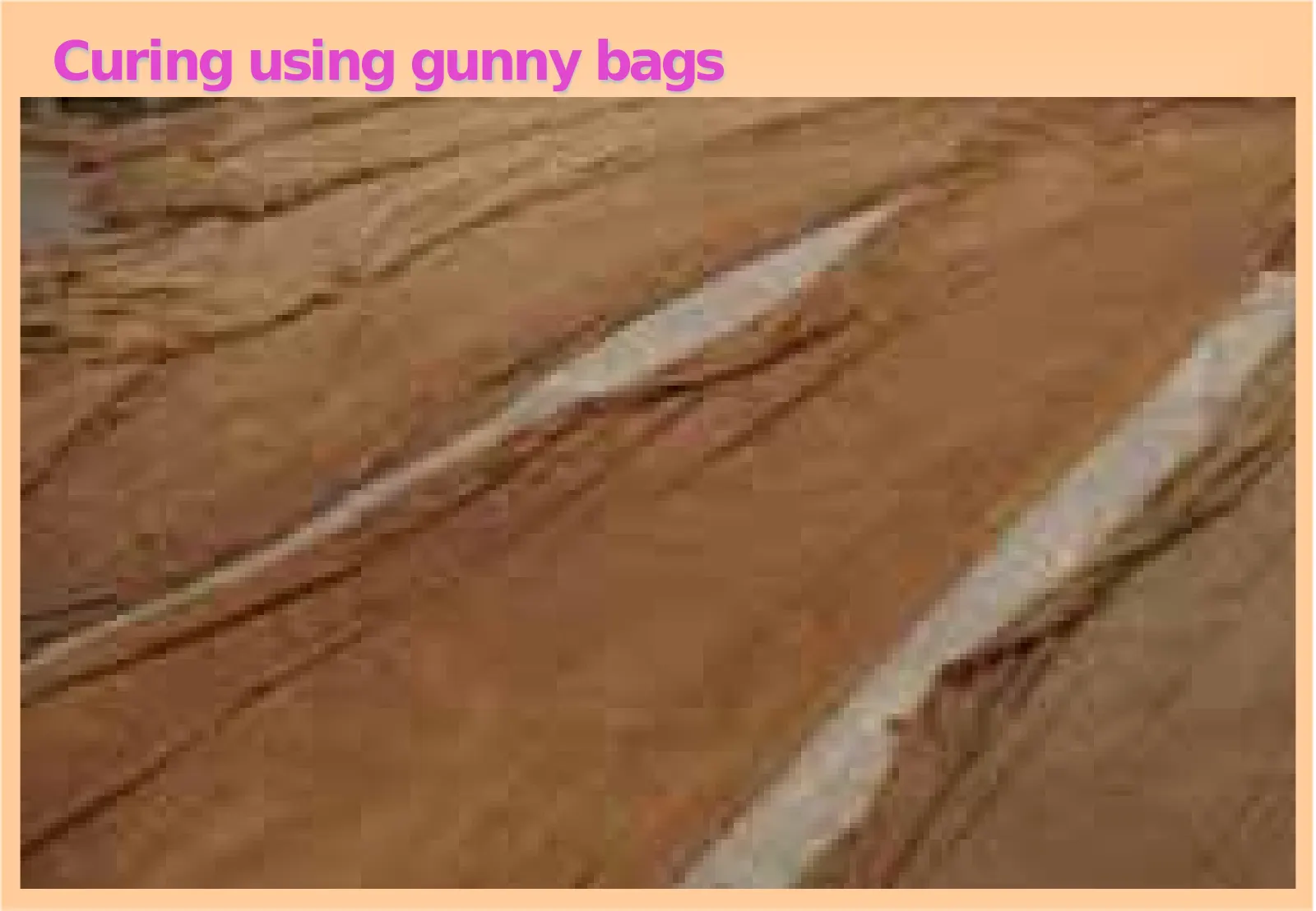
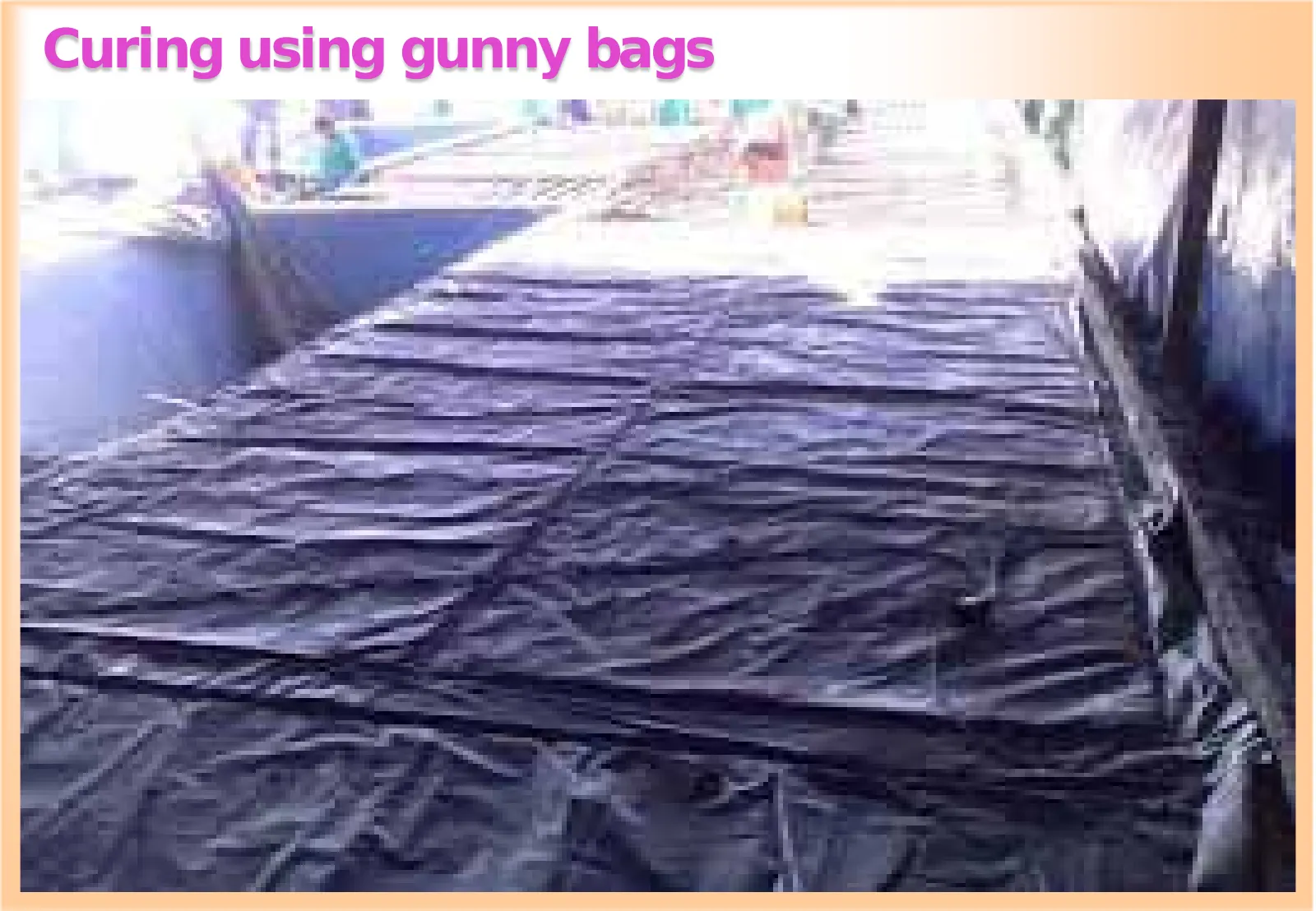
(a) Spraying of water (b) Covering the surface with wet gunny bags, straw etc. (C) Ponding (d) Steam curing and Contd…
Slide 33: Curing of Pavement: Banking Water Bunds
CURING OF PAVEMENT 1) BANKING WATER BUNDS

Slide 34: Curing by using sprinklers
Curing by using sprinklers
Slide 35: Curing using gunny bags
2) Curing using gunny bags
Slide 36: Curing using gunny bags
Curing using gunny bags
Slide 37: Curing using gunny bags
Curing using gunny bags
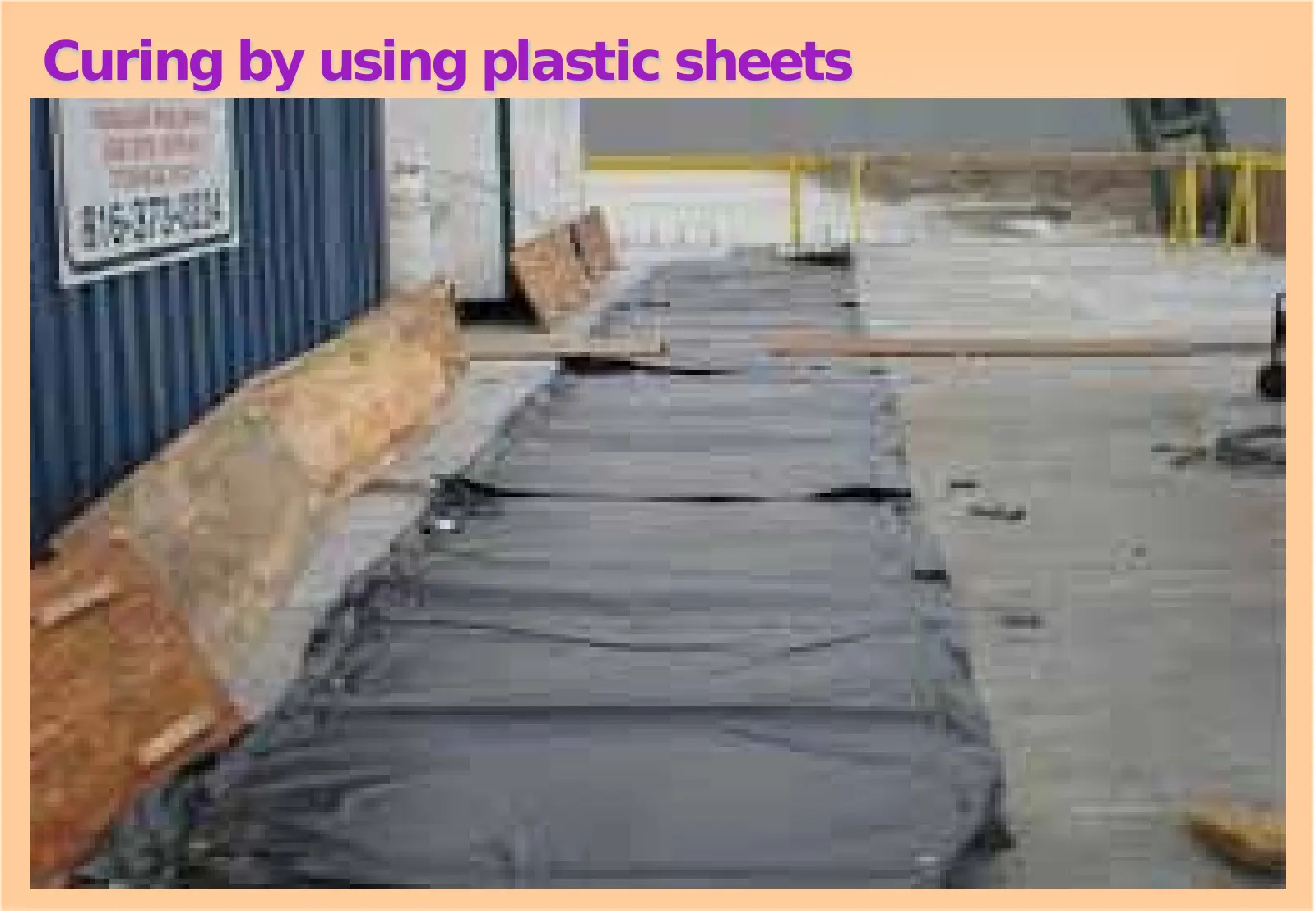
Slide 38: Curing by using plastic sheets
Curing by using plastic sheets
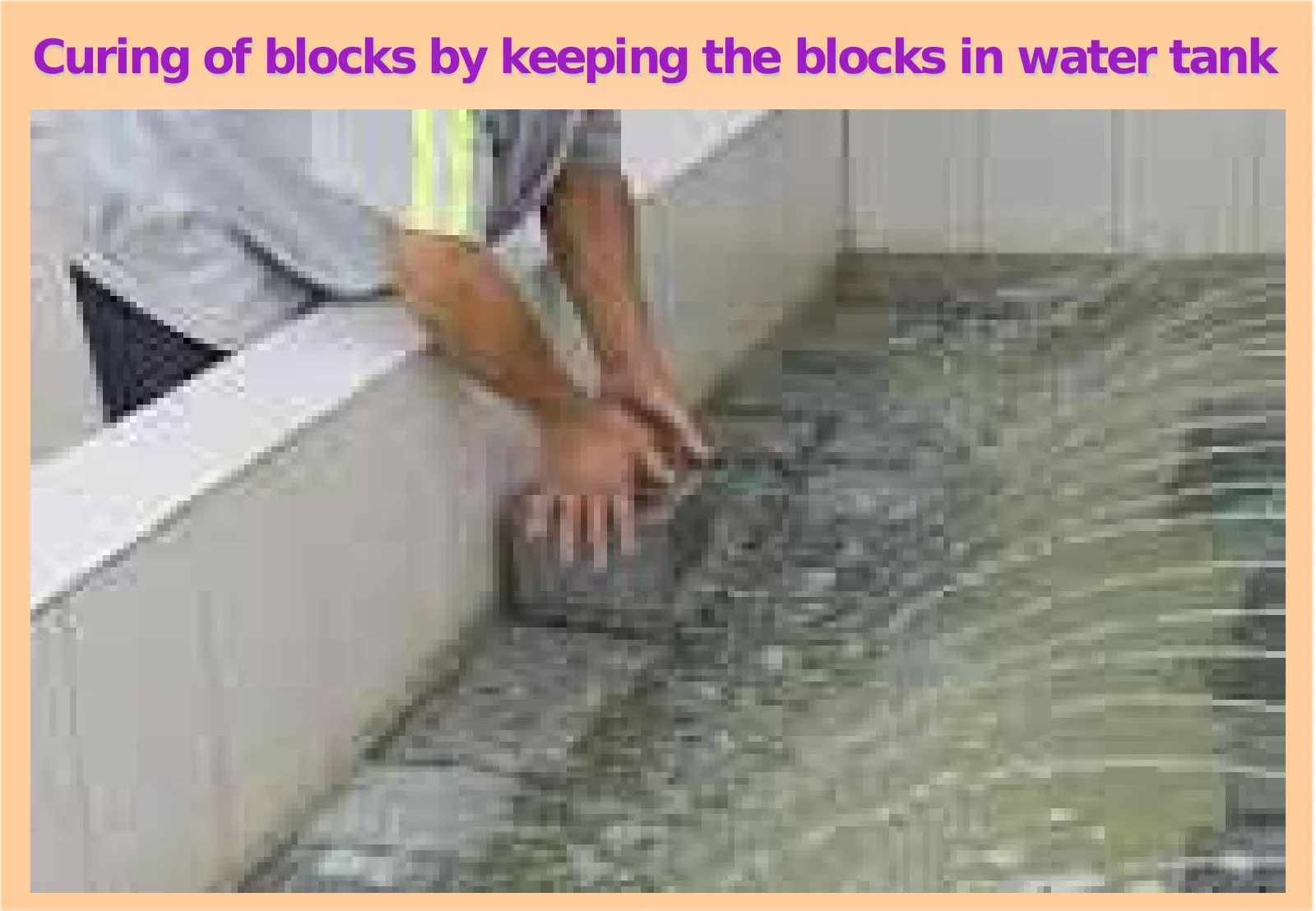
Slide 39: Curing of blocks in water tank
Curing of blocks by keeping the blocks in water tank
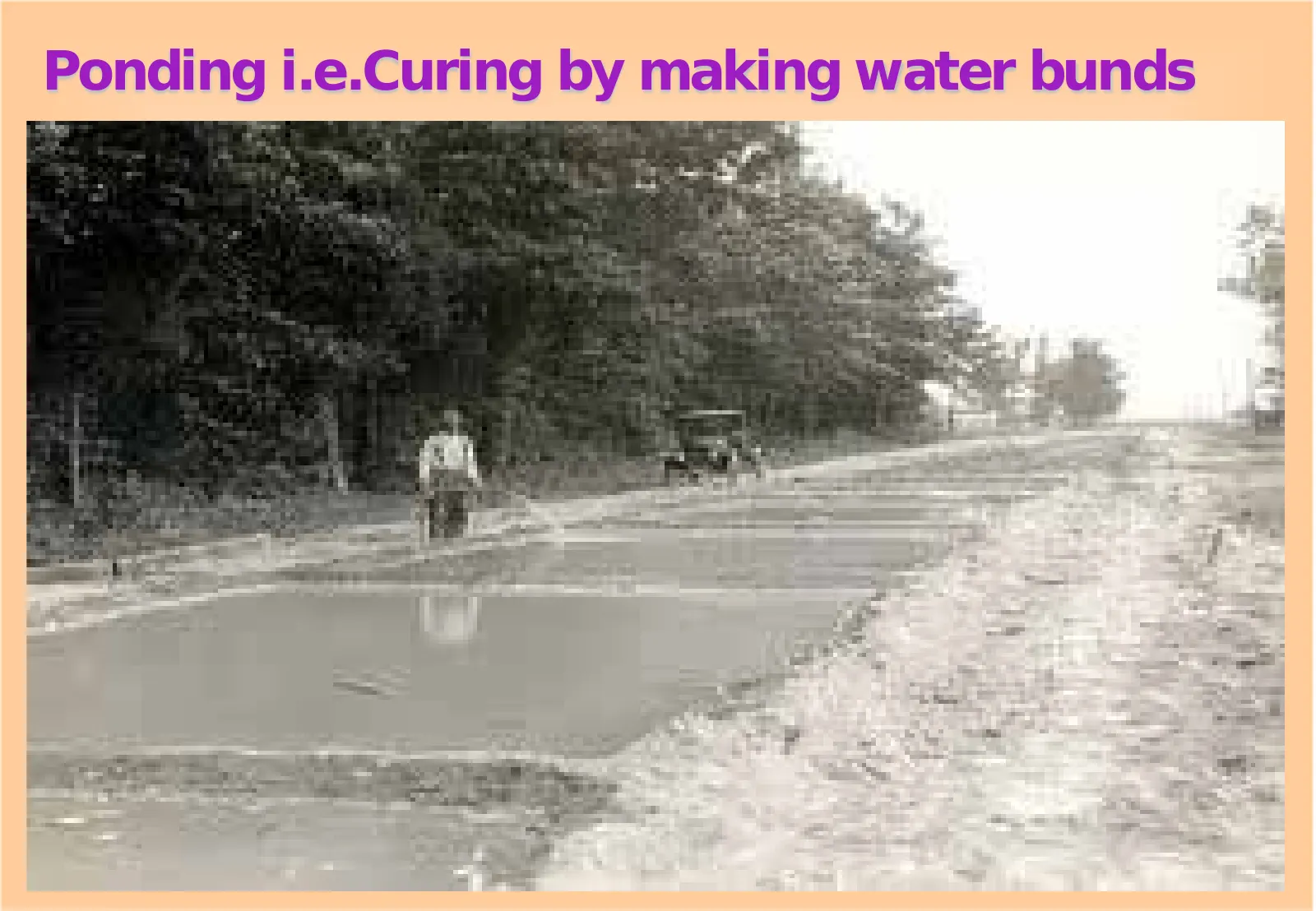
Slide 40: Ponding i.e. curing by making water bunds
Ponding i.e.Curing by making water bunds
Slide 41: Improper curing leads to early degradation of the structure
Improper curing leads to early degradation of the structure and reduces the effective life of the structure.
Slide 42: Defects due to improper curing: cracks
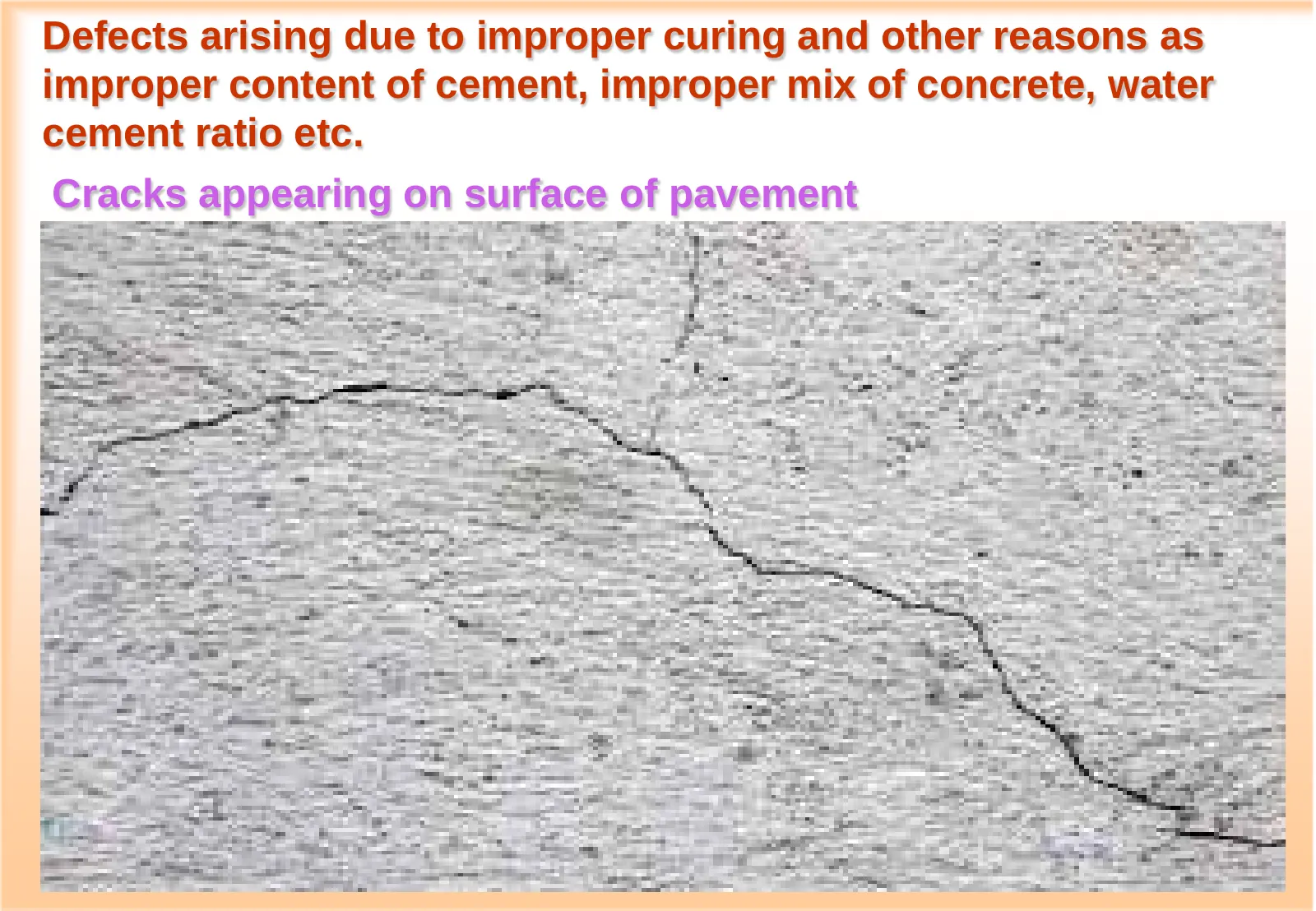
Defects arising due to improper curing and other reasons as improper content of cement, improper mix of concrete, water cement ratio etc. Cracks appearing on surface of pavement
Slide 43: Defects due to improper curing: honeycombing
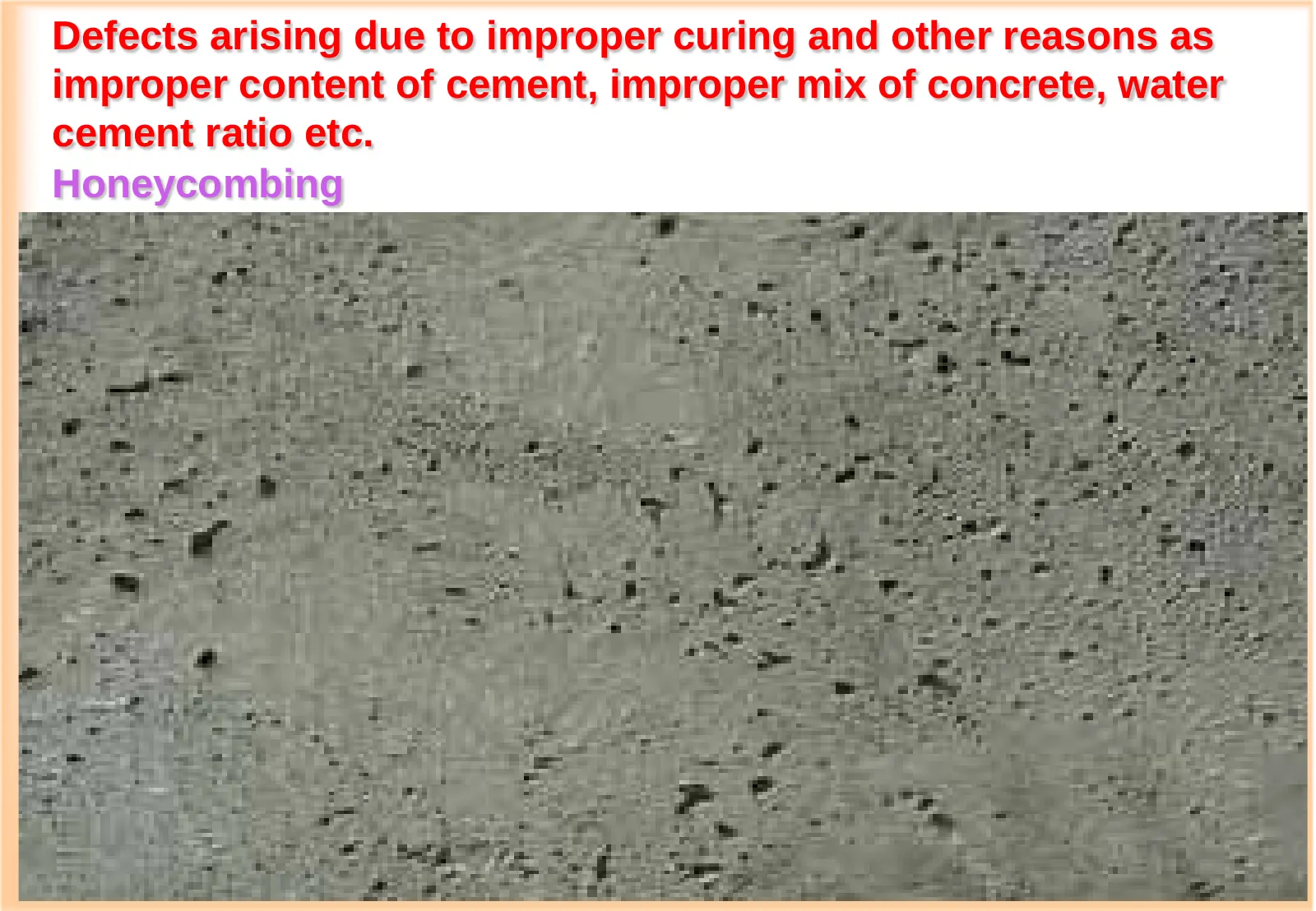
Defects arising due to improper curing and other reasons as improper content of cement, improper mix of concrete, water cement ratio etc. Honeycombing
Slide 44: Cracks lead to complete deterioration of structure
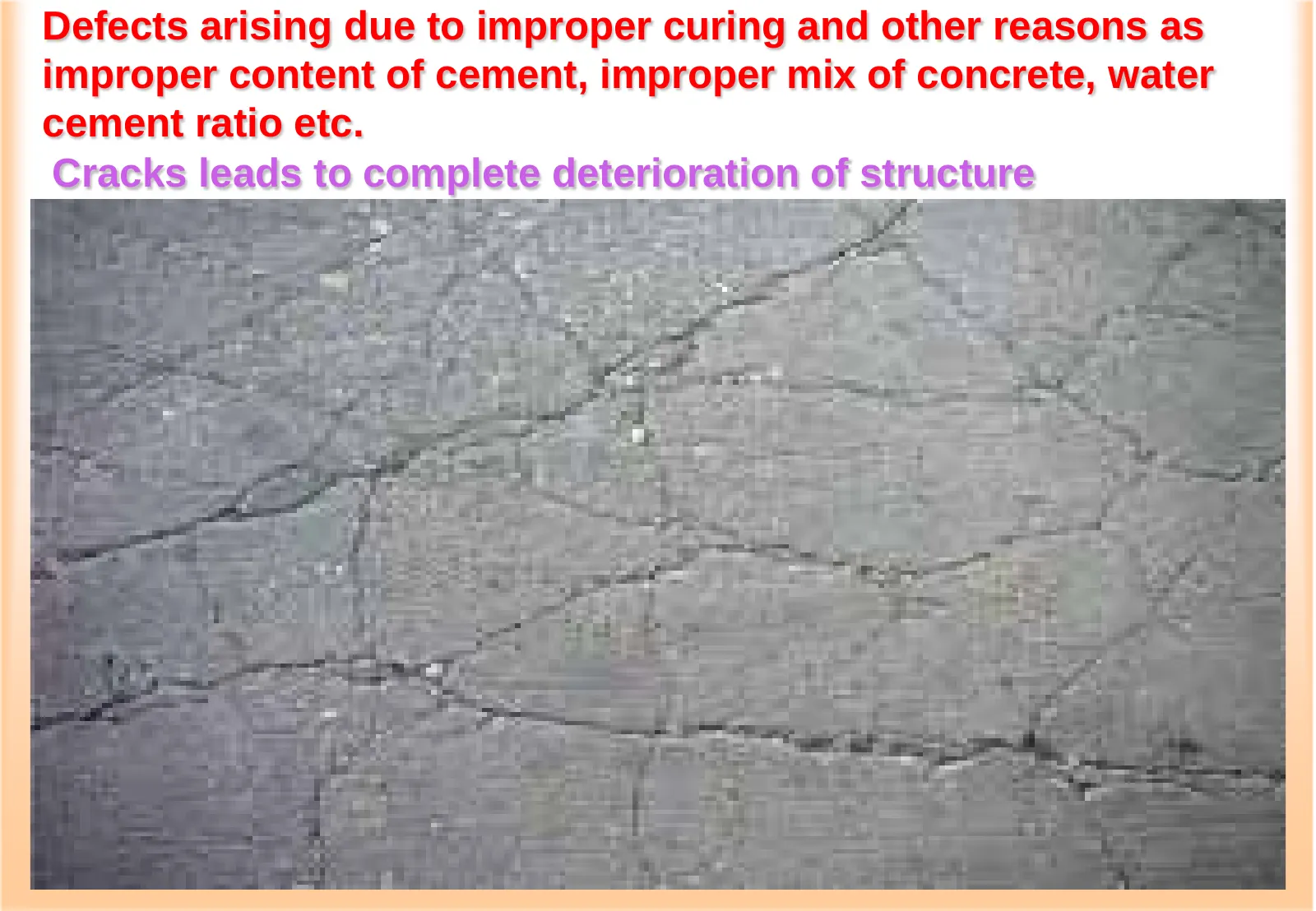
Defects arising due to improper curing and other reasons as improper content of cement, improper mix of concrete, water cement ratio etc. Cracks leads to complete deterioration of structure
Slide 45: Common Shortcomings: Mandatory Testing
Common Shortcomings/deficiencies noticed during various inspections at various terminals 5. Mandatory Testing - Ø Less number of tests conducted than required. List of M andatory Tests to be conducted Contd…
Slide 46: Common Shortcomings: System improvements not followed
Common Shortcomings/deficiencies noticed during various inspections at various terminals Ø System Improvement has been issued w.r.t. selection of laboratory for outside testing. The same has been found not followed at a number of sites. The follow ing system im provem ents had been issued by Enginee
Slide 47: Common Shortcomings: Cement Storage
Common Shortcomings/deficiencies noticed during various inspections at various terminals 6. Cement Storage - Ø Improper storage of cement observed. Contd…
Slide 48: Common Shortcomings: Registers
Common Shortcomings/deficiencies noticed during various inspections at various terminals 7. Registers- Register like Site Order Book, Hindrance Register etc. not filled properly. List of Registers to be m aintained at site is given below :- Contd…
Slide 49: Common Shortcomings: Improper maintenance of CONCOR assets
Common Shortcomings/deficiencies noticed during various inspections at various terminals 8. Improper maintenance of CONCOR assets. a) Rain Water Harvesting system not maintained properly. b) Maintenance of Admin Building not done properly. c) Warehouse. d) Lightening System not maintained properly.
Slide 50: Deficiencies Observed during inspections in execution of works
Deficiencies Observed during various inspections in execution of works
Slide 51: Work not done as per Specifications: M-50 grade CC Block Work
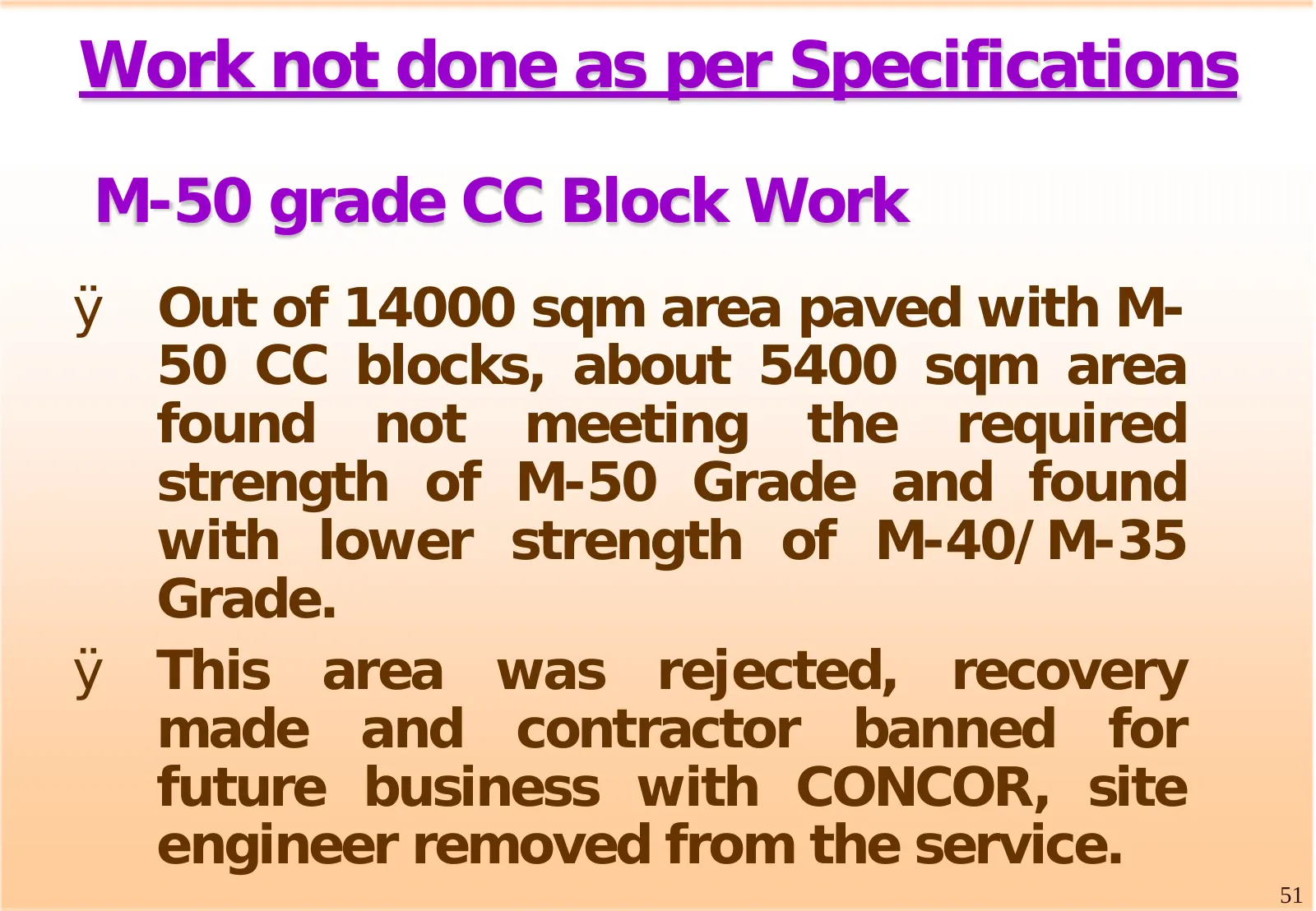
Work not done as per Specifications M-50 grade CC Block Work Ø Out of 14000 sqm area paved with M- 50 CC blocks, about 5400 sqm area found not meeting the required strength of M-50 Grade and found with lower strength of M-40/M-35 Grade. Ø This area was rejected, recovery made and contractor banned f
Slide 52: Work not done as per Specifications
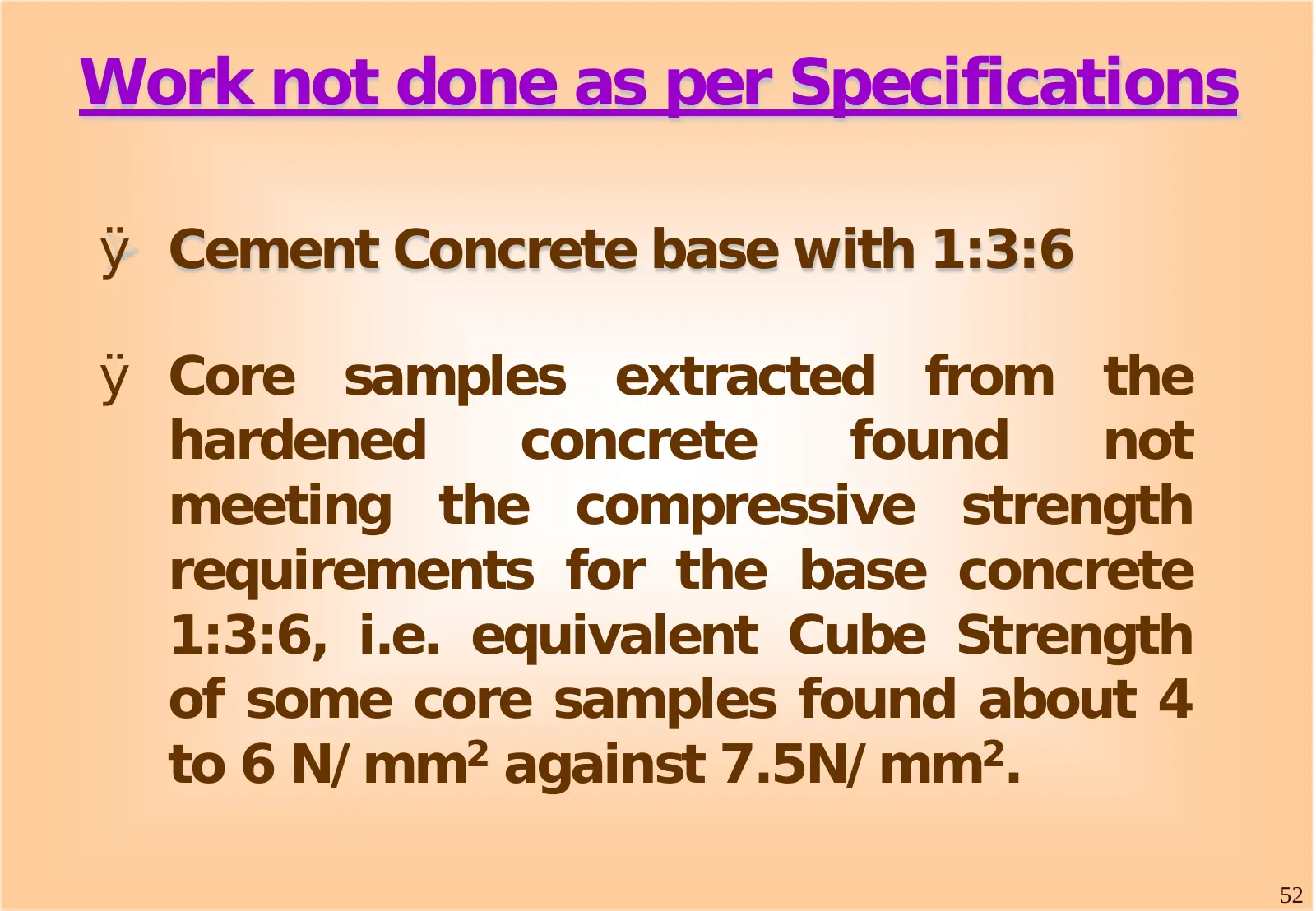
Work not done as per Specifications Ø Cement Concrete base with 1:3:6 Ø Core samples extracted from the hardened concrete found not meeting the compressive strength requirements for the base concrete 1:3:6, i.e. equivalent Cube Strength of some core samples found about 4 to 6 N/mm2 against 7.5N/mm2.
Slide 53: Thickness of base concrete 1:3:6 not maintained
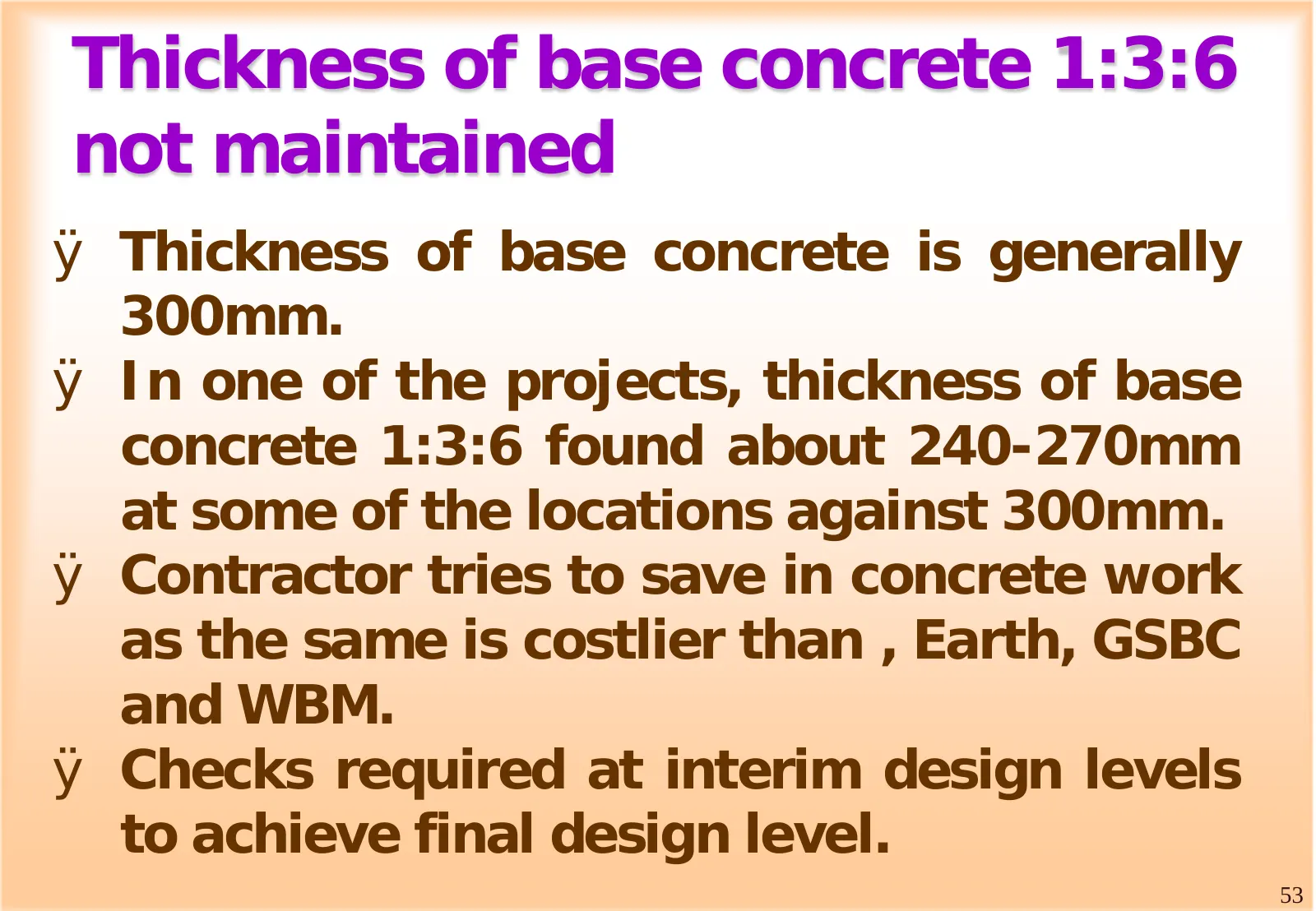
Thickness of base concrete 1:3:6 not maintained Ø Thickness of base concrete is generally 300mm. Ø In one of the projects, thickness of base concrete 1:3:6 found about 240-270mm at some of the locations against 300mm. Ø Contractor tries to save in concrete work as the same is costlier than , Earth,
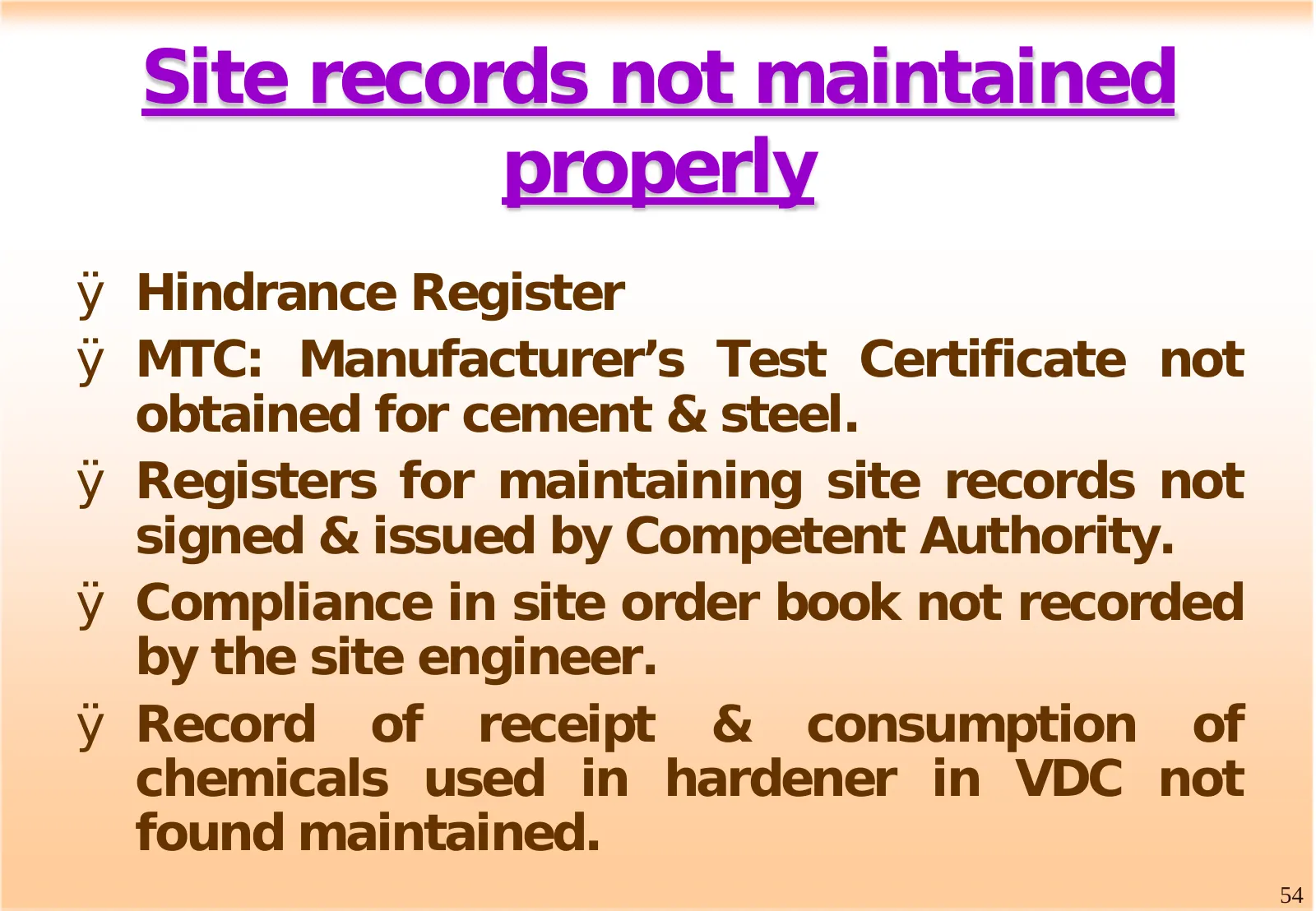
Slide 54: Site records not maintained properly
Site records not maintained properly Ø Hindrance Register Ø MTC: Manufacturer’s Test Certificate not obtained for cement & steel. Ø Registers for maintaining site records not signed & issued by Competent Authority. Ø Compliance in site order book not recorded by the site engineer. Ø Record of receip
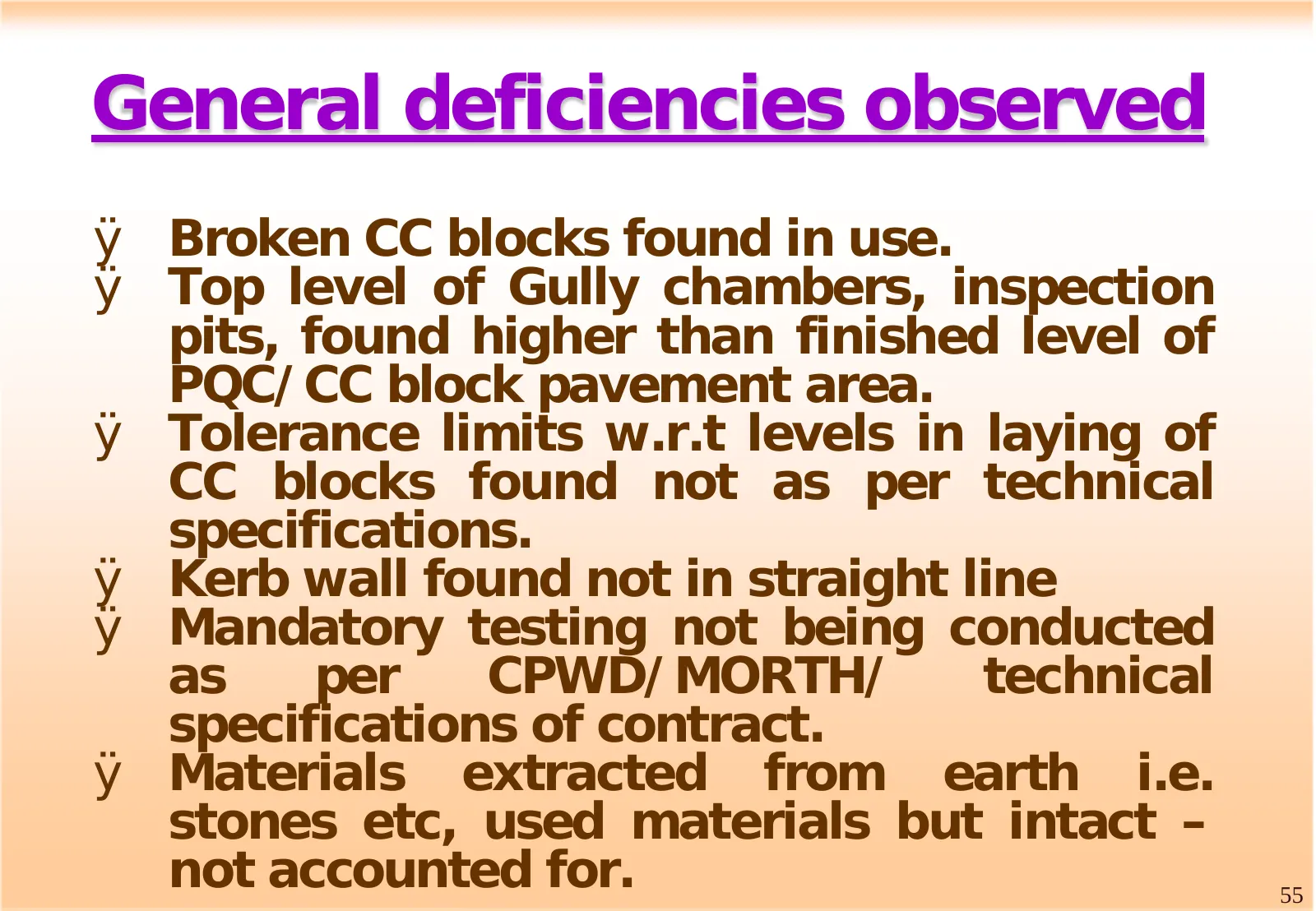
Slide 55: General deficiencies observed
General deficiencies observed Ø Broken CC blocks found in use. Ø Top level of Gully chambers, inspection pits, found higher than finished level of PQC/CC block pavement area. Ø Tolerance limits w.r.t levels in laying of CC blocks found not as per technical specifications. Ø Kerb wall found not in st
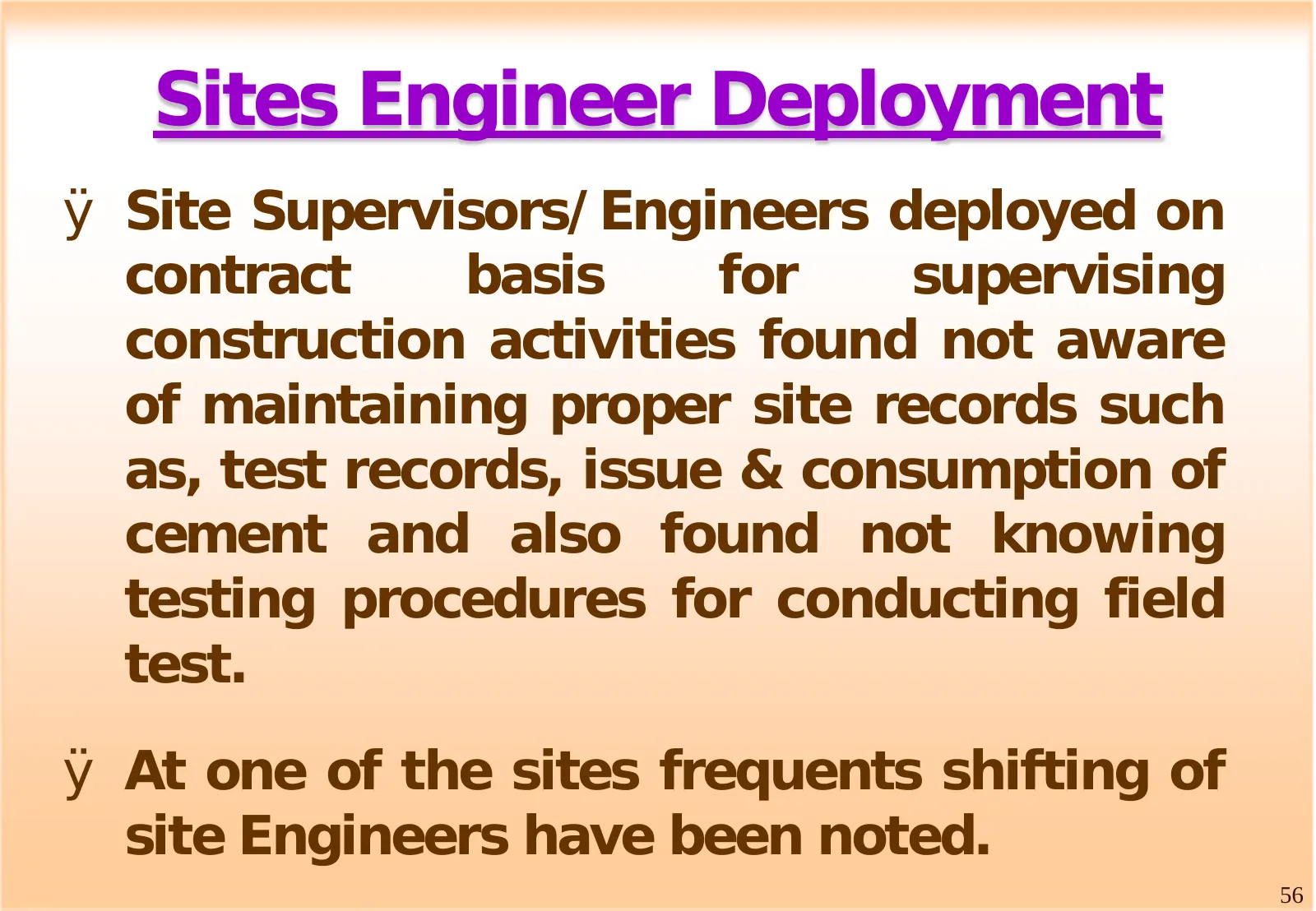
Slide 56: Sites Engineer Deployment
Sites Engineer Deployment Ø Site Supervisors/Engineers deployed on contract basis for supervising construction activities found not aware of maintaining proper site records such as, test records, issue & consumption of cement and also found not knowing testing procedures for conducting field test. Ø
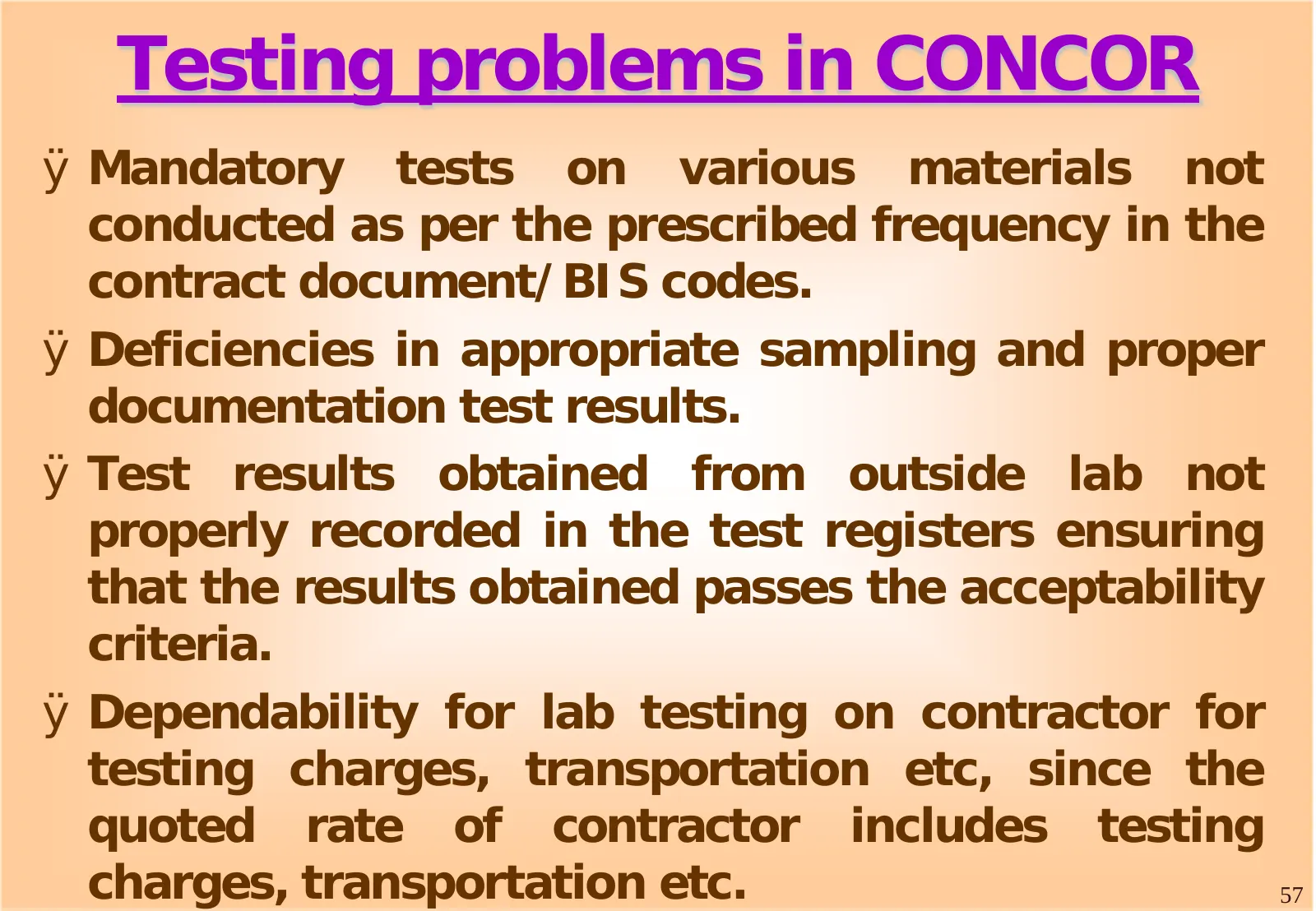
Slide 57: Testing problems in CONCOR
Testing problems in CONCOR Ø Mandatory tests on various materials not conducted as per the prescribed frequency in the contract document/BIS codes. Ø Deficiencies in appropriate sampling and proper documentation test results. Ø Test results obtained from outside lab not properly recorded in the test
Slide 58: Monitoring of Testing
Monitoring of Testing Ø Checkpoints: (i) Name of the test (ii) Stages at which tests are required to be carried out . (iii) No. of samples and frequency of testing. (iv) Reference of IS codes or any other specification. (v) Quantity of sample material required per each test.
Slide 59: Duties and Responsibilities of Terminal Managers
Duties and Responsibilities of Terminal Managers with regards to Civil & Electrical Works: Contd… 1) All proposals of existing terminals are initiated by region and forwarded to GGM/SP. As such, regional heads should ensure association of terminal managers, if considered necessary by them.
Slide 60: Duties and Responsibilities of Terminal Managers
Duties and Responsibilities of Terminal Managers with regards to Civil & Electrical Works: Contd… 2) A copy of the agreement is made available to the Regional Heads wherein the scope of the work is given. Terminal Manager should see that the work is broadly in accordance with the plans. The copy of
Slide 61: Duties and Responsibilities of Terminal Managers
Duties and Responsibilities of Terminal Managers with regards to Civil & Electrical Works: Contd… 3) A joint survey of Contractor, Project Management Consultant, Project Executives and Terminal Manager will be held to earmark the phase-wise handing over of site for starting of works in time bound ma
Slide 62: Duties and Responsibilities of Terminal Managers
Duties and Responsibilities of Terminal Managers with regards to Civil & Electrical Works: Contd… Planning of handing over of site and taking over should be decided in joint survey conducted presence of contractor, consultant, Project-in-charge and Terminal Manager, bar chart submitted by contractor
Slide 63: Duties and Responsibilities of Terminal Managers
Duties and Responsibilities of Terminal Managers with regards to Civil & Electrical Works: Contd… 4) TM shall issue or facilitate issue of Form-V which is mandatory requirement for obtaining labour license by the contractor. Delay in issue of form-v resulting in delayed starting of works shall be re
Slide 64: Duties and Responsibilities of Terminal Managers
Duties and Responsibilities of Terminal Managers with regards to Civil & Electrical Works: Contd… 6)TM should check that there is no major water stagnation on the surface. In case, any major water stagnation is observed, the same should be recorded in the site engineer’s register and brought to the
Slide 65: Duties and Responsibilities of Terminal Managers
Duties and Responsibilities of Terminal Managers with regards to Civil & Electrical Works: Contd… 7) During the annual maintenance contract, repair & maintenance works which is under the control of regional heads, TM shall check presence of helper/assistant along with electrician while undertaking e
Slide 66: Duties and Responsibilities of Terminal Managers
Duties and Responsibilities of Terminal Managers with regards to Civil & Electrical Works: Contd… 8) It needs to be ensured that proper curing in ongoing construction is done. When curing is required in the repairs in the existing terminal where there is TM, the TM should see that it is done in prop
Slide 67: THANK YOU
Container Corporation of India Ltd. THANK YOU
Source: Internet Archive copy of concorindia.com
More decks from Container Corporation of India Limited
 Investor Presentation (August 2025)59 slides · Aug 25, 2025
 Investor Presentation (June 2024)44 slides · Jun 4, 2024
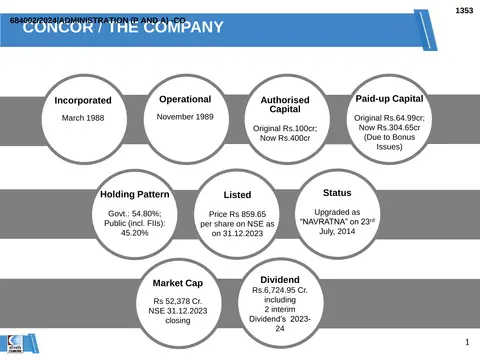 Investor Presentation (January 2024)36 slides · January 2024
 Non-Deal Roadshow (October 2022)35 slides · Oct 19, 2022
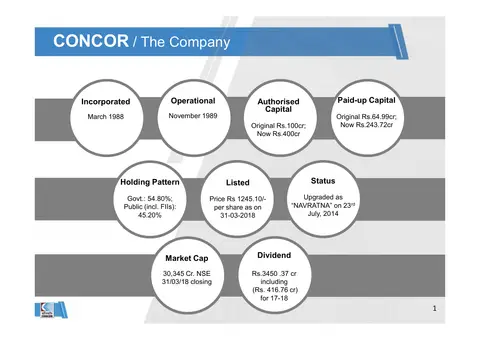 Investor Presentation (July 2018)18 slides · July 2018
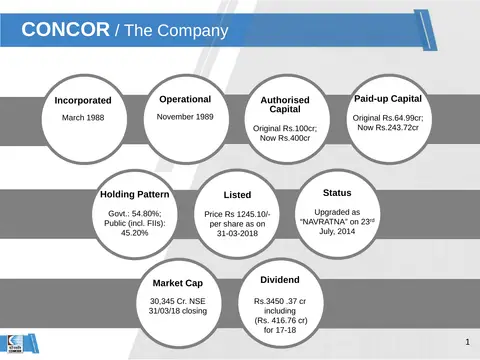 Investor Presentation (2018)21 slides · 2018