Corbus Pharmaceuticals Holdings, Inc. · NASDAQ:CRBP
Corbus Pharmaceuticals — Technical Presentation (March 2017)
90 slides from Corbus Pharmaceuticals's technical presentation, Mar 13, 2017

Slide 1
Slide 2: Forward-Looking Statements
FORWARD-LOOKING STATEMENTS This presentation contains certain forward-looking statements, including those relating to the Company’s product development, clinical trials, clinical and regulatory timelines, market opportunity, competitive position, possible or assumed future results of operations, bus

Slide 3
Slide 4: Agenda
AGENDA Introduction ¢ Yuval Cohen, Ph.D. — Chief Executive Officer Anabasum: Background, MOA and Updates * Barbara White, M.D. — Chief Medical Officer Systemic Sclerosis Phase 2 Study: Gene Expression Patterns * Michael L. Whitfield, Ph.D. — Professor, Department of Molecular and Systems Biology, Di
Slide 5: Anabasum: Background, MOA and Updates
Anabasum: Background, MOA and Updates Barbara White M.D. Chief Medical Officer CORBUS
Slide 6: Anabasum
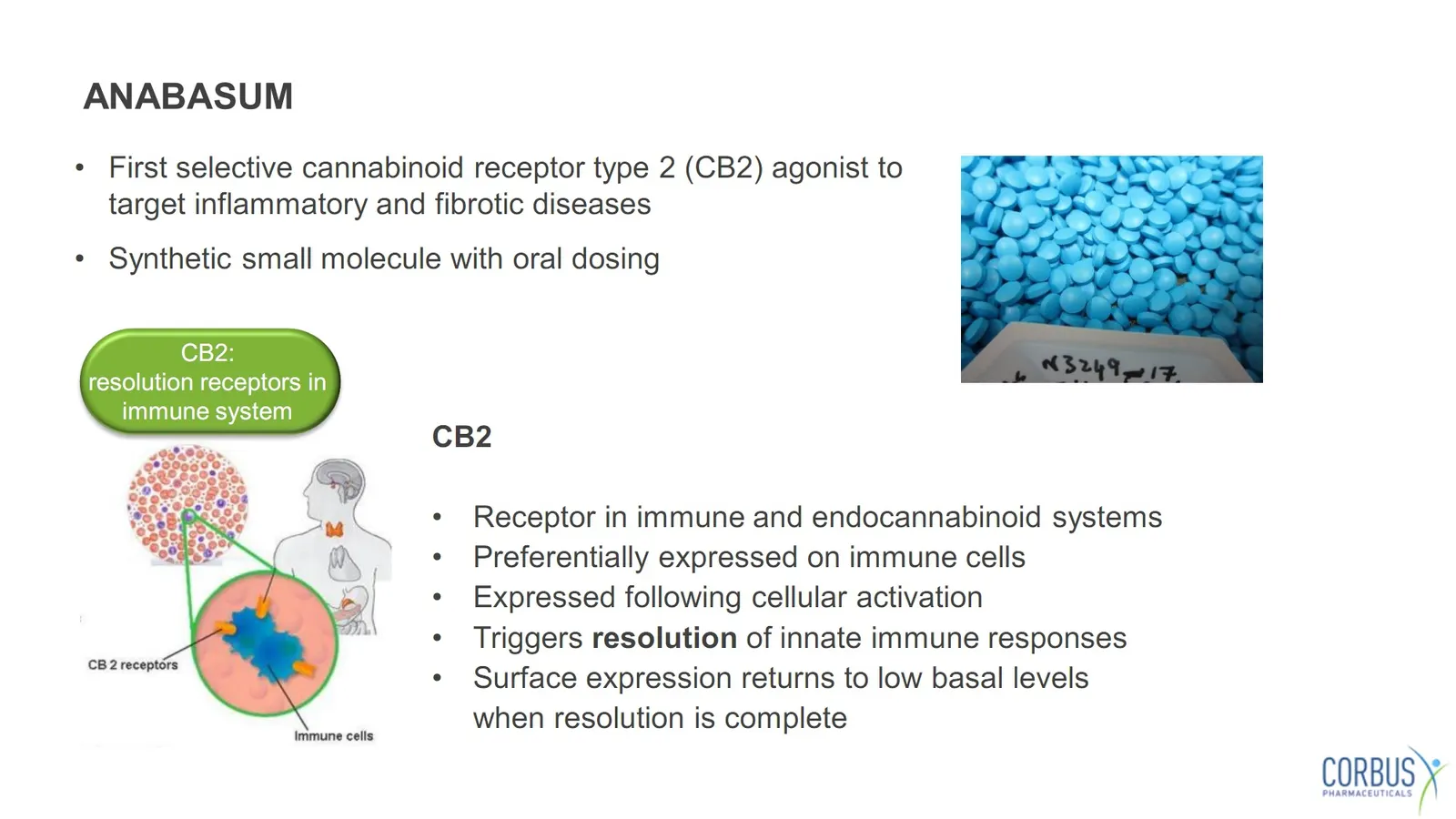
ANABASUM e First selective cannabinoid receptor type 2 (CB2) agonist to target inflammatory and fibrotic diseases e Synthetic small molecule with oral dosing CB2: resolution receptors in immune system CB2 os * Receptor in immune and endocannabinoid systems * Preferentially expressed on immune cells
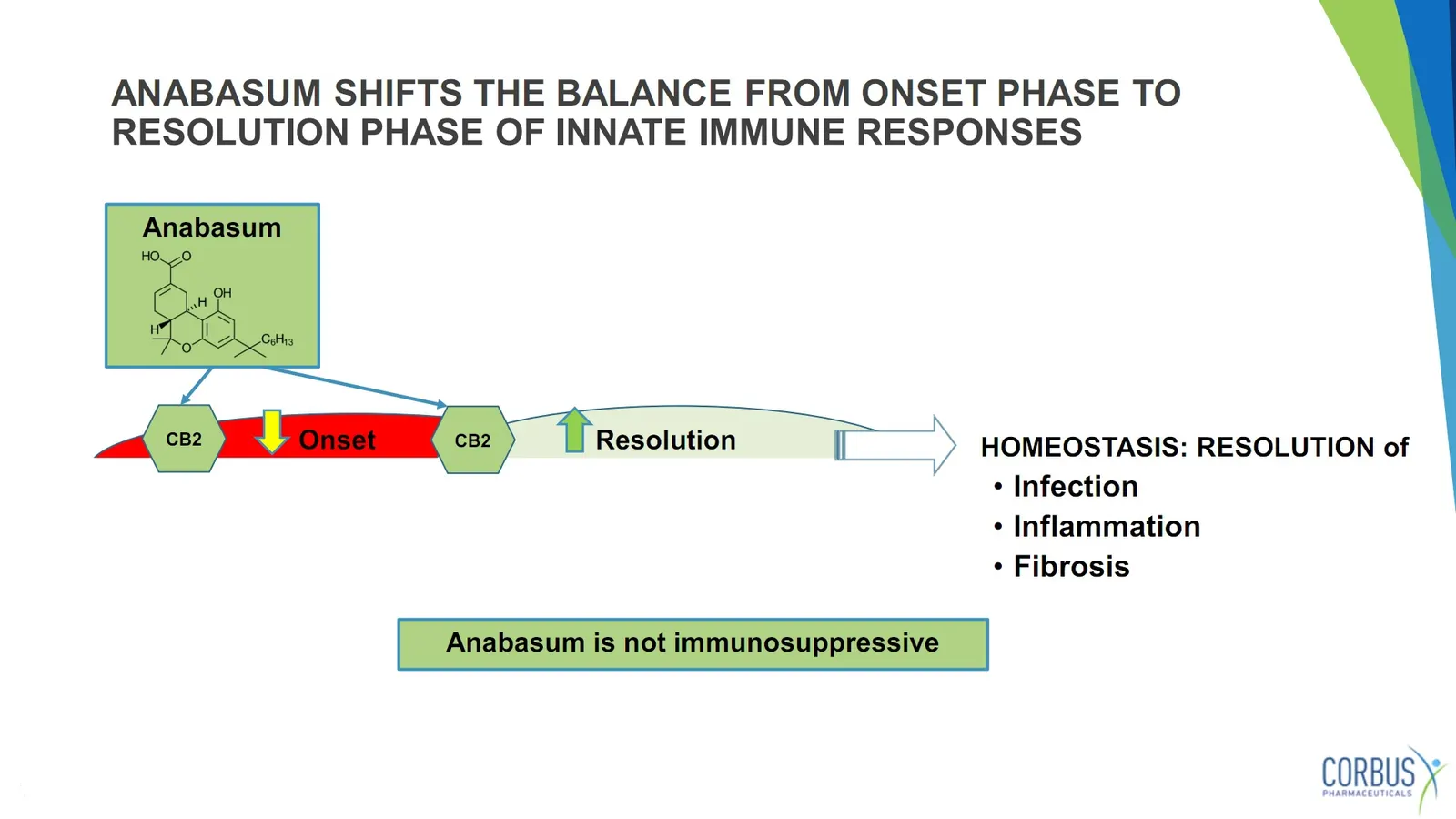
Slide 7: Anabasum Shifts the Balance from Onset Phase to Resolution Phase
ANABASUM SHIFTS THE BALANCE FROM ONSET PHASE TO RESOLUTION PHASE OF INNATE IMMUNE RESPONSES Resolution HOMEOSTASIS: RESOLUTION of * Infection * Inflammation ¢ Fibrosis CORBUS PHARMACEUTICALS.
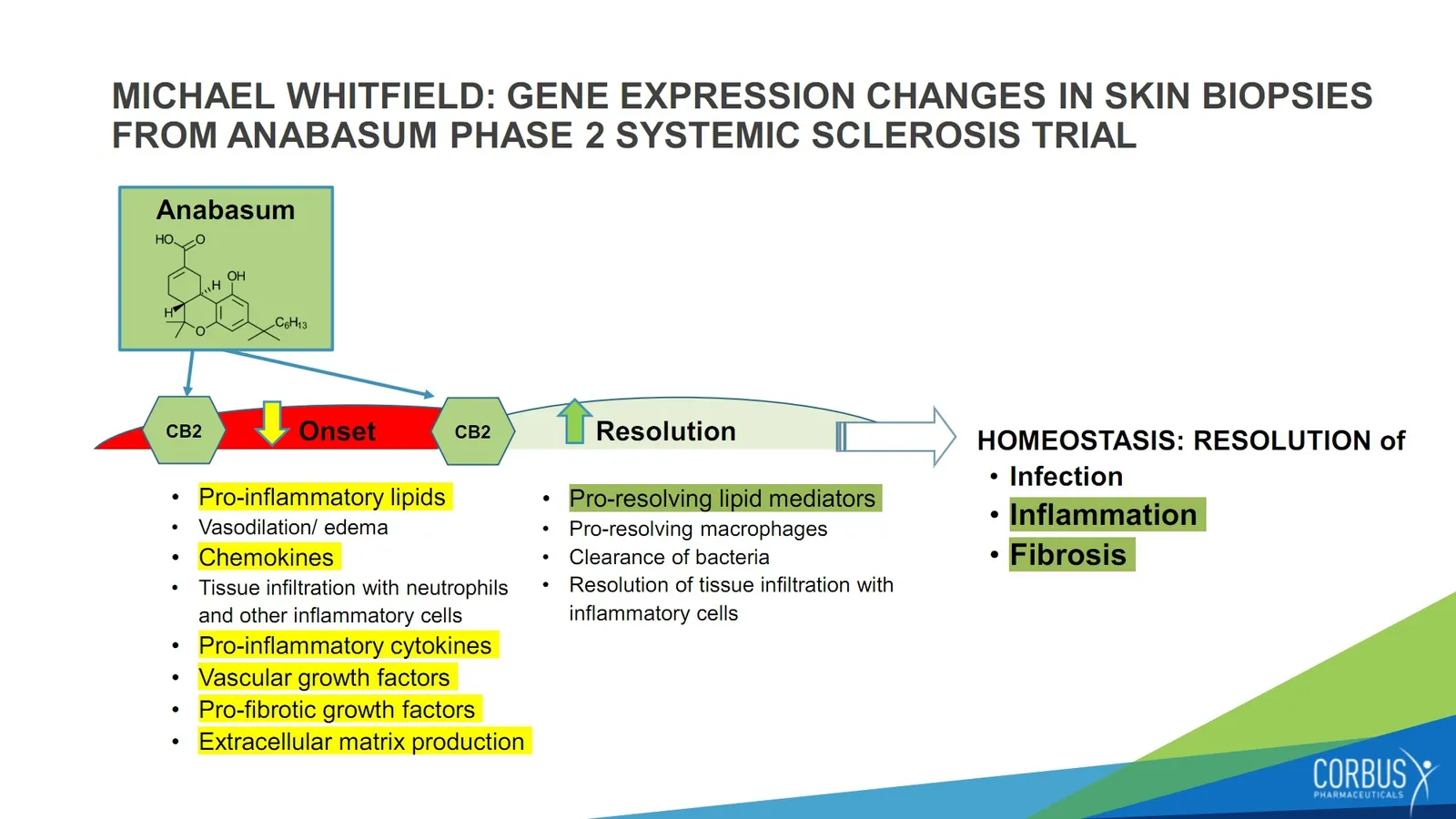
Slide 8: Michael Whitfield: Gene Expression Changes in Skin Biopsies
MICHAEL WHITFIELD: GENE EXPRESSION CHANGES IN SKIN BIOPSIES FROM ANABASUM PHASE 2 SYSTEMIC SCLEROSIS TRIAL Resolution HOMEOSTASIS: RESOLUTION of + Infection . + Pro-resolving lipid mediators + Vasodilation/ edema + Pro-resolving macrophages ° Inflammation: . Chemokines" * Clearance of bacteria ° Fib
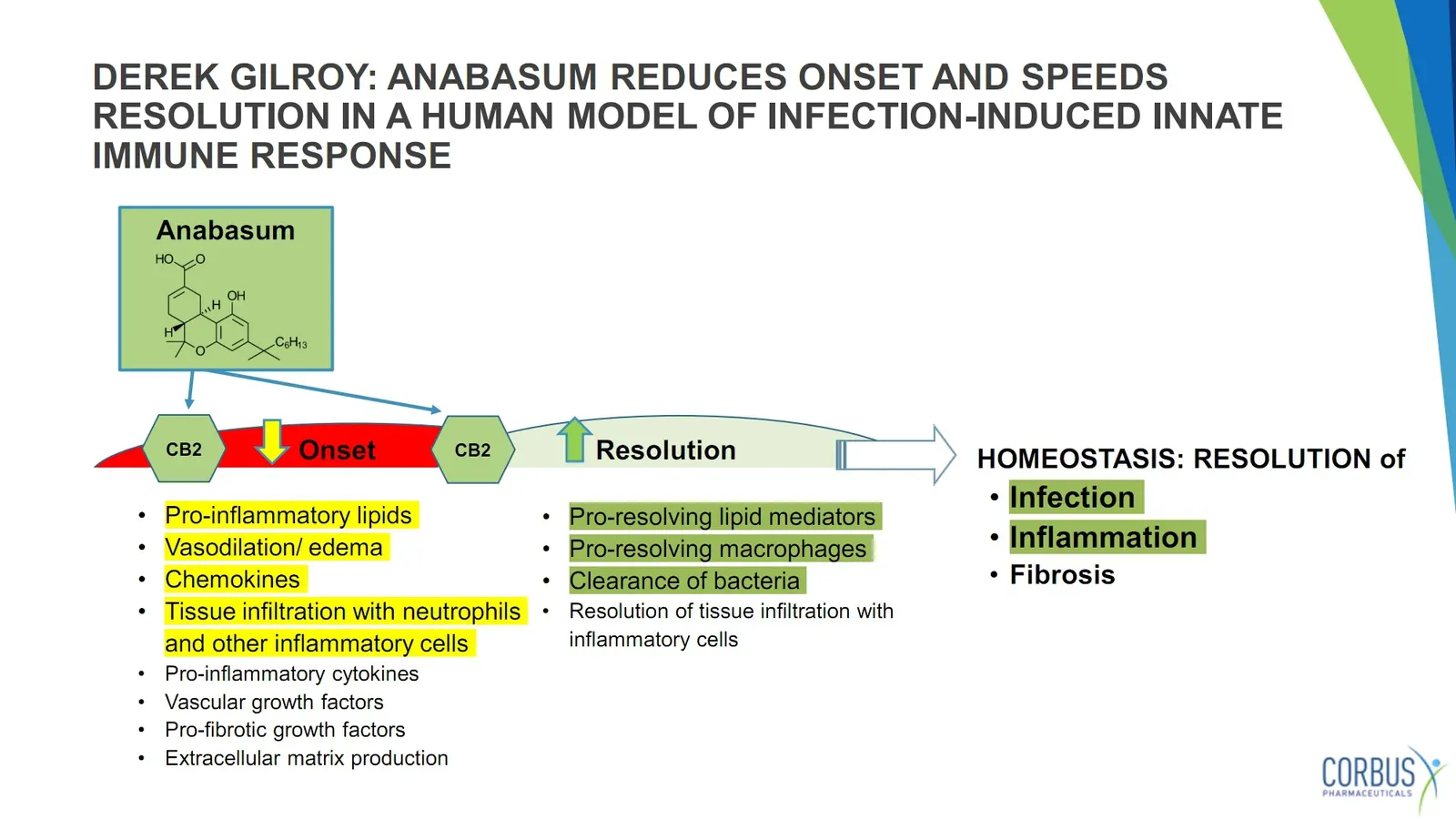
Slide 9: Derek Gilroy: Anabasum Reduces Onset and Speeds Resolution
DEREK GILROY: ANABASUM REDUCES ONSET AND SPEEDS RESOLUTION IN A HUMAN MODEL OF INFECTION-INDUCED INNATE IMMUNE RESPONSE wa co MENON cos iP Resolution =f) HOMEOSTASIS: RESOLUTION of Vasodilation/ edema | ; Pro-resolving macrophages * Inflammation * Chemokines * Clearance of bacteria * Fibrosis . Tiss
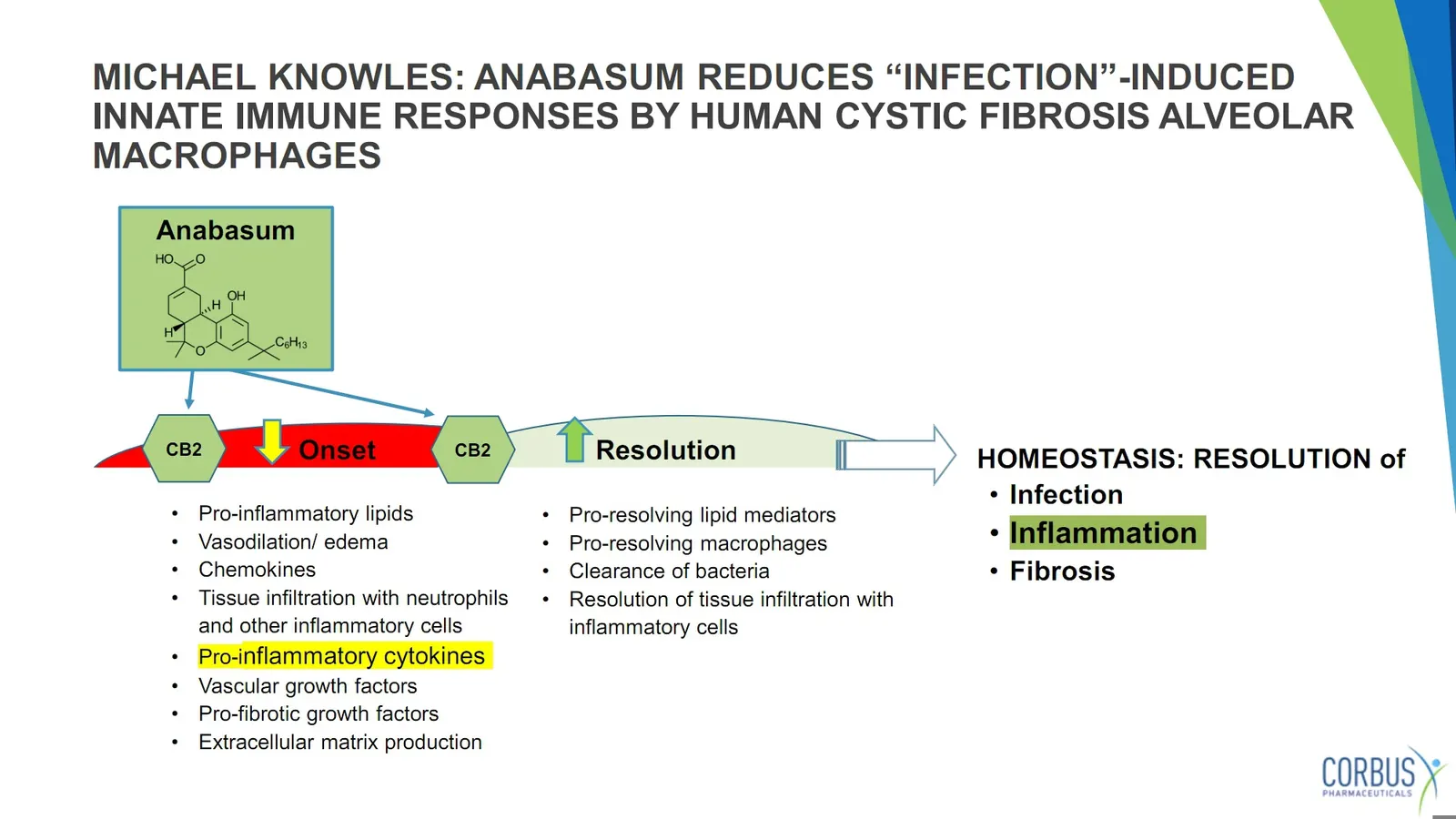
Slide 10: Michael Knowles: Anabasum Reduces Infection-Induced Innate Immune Responses
MICHAEL KNOWLES: ANABASUM REDUCES “INFECTION”-INDUCED INNATE IMMUNE RESPONSES BY HUMAN CYSTIC FIBROSIS ALVEOLAR MACROPHAGES Pes OO HOMEOSTASIS: RESOLUTION of * Infection + Pro-inflammatory lipids + Pro-resolving lipid mediators + Vasodilation/ edema + Pro-resolving macrophages ° Inflammation: * Chem
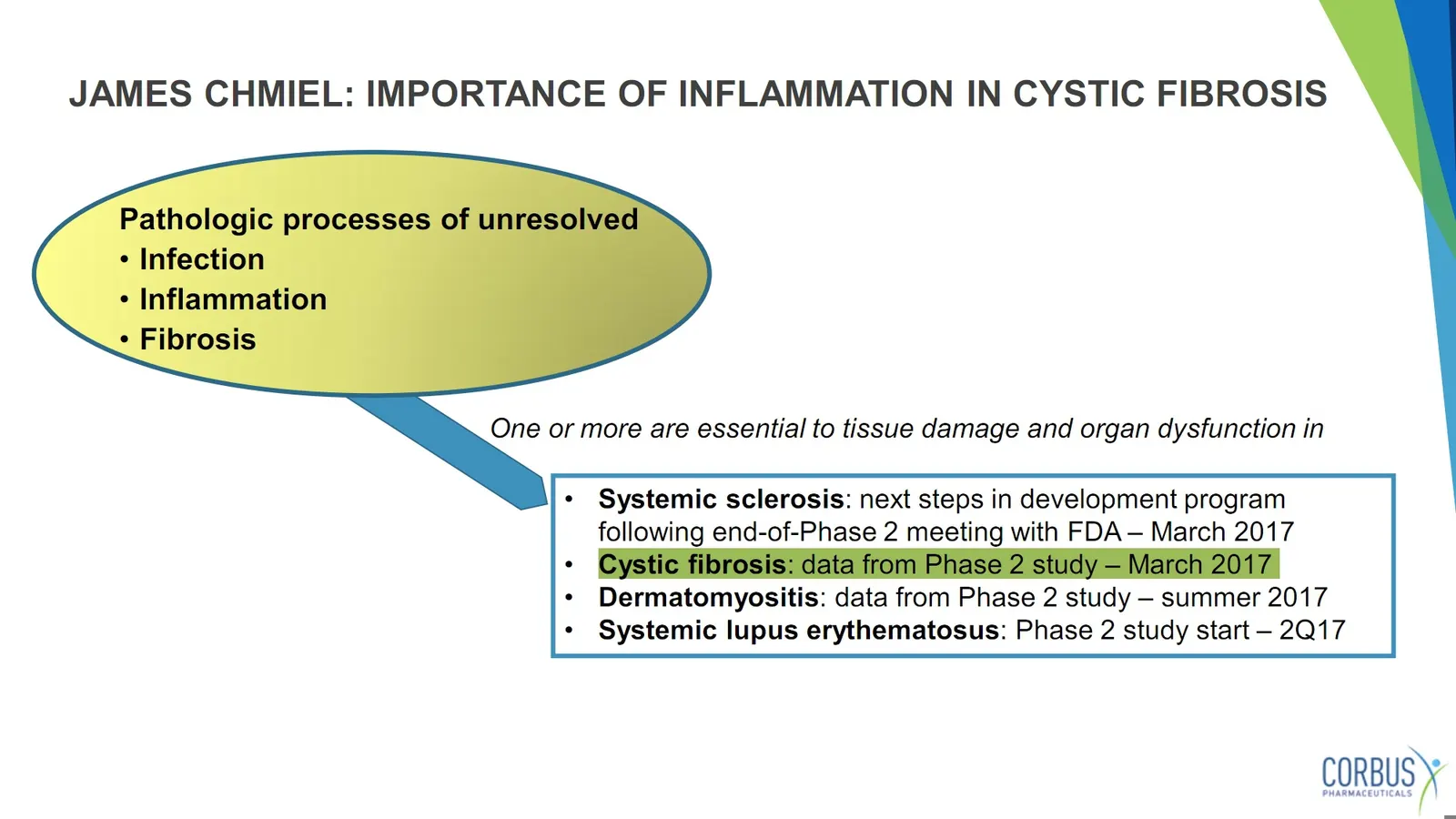
Slide 11: James Chmiel: Importance of Inflammation in Cystic Fibrosis
JAMES CHMIEL: IMPORTANCE OF INFLAMMATION IN CYSTIC FIBROSIS One or more are essential to tissue damage and organ dysfunction in + Systemic sclerosis: next steps in development program following end-of-Phase 2 meeting with FDA— March 2017 * Cystic fibrosis: data from Phase 2 study — March 2017, + Der
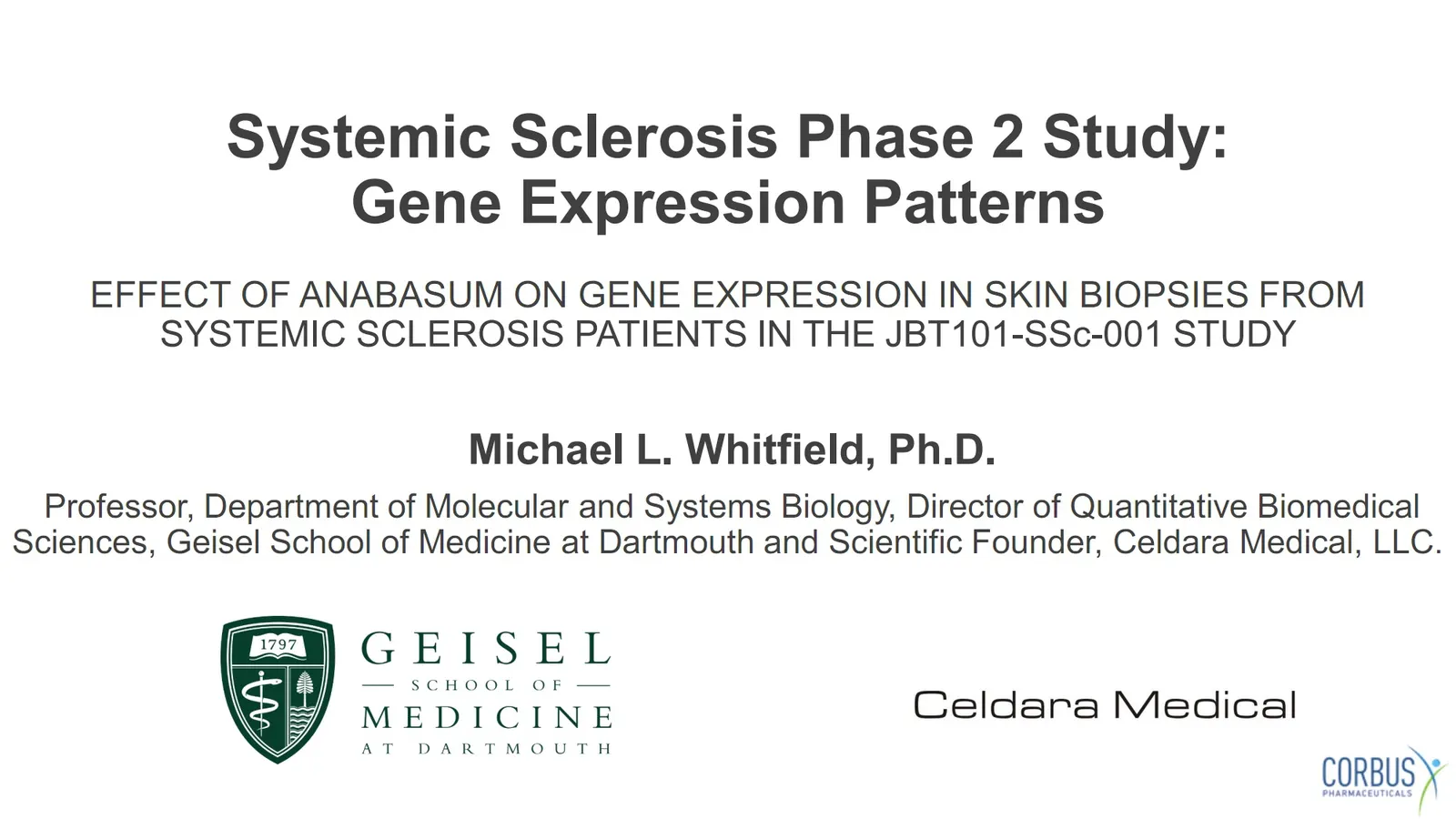
Slide 12: Systemic Sclerosis Phase 2 Study: Gene Expression Patterns
Systemic Sclerosis Phase 2 Study: Gene Expression Patterns EFFECT OF ANABASUM ON GENE EXPRESSION IN SKIN BIOPSIES FROM SYSTEMIC SCLEROSIS PATIENTS IN THE JBT101-SSc-001 STUDY Michael L. Whitfield, Ph.D. Professor, Department of Molecular and Systems Biology, Director of Quantitative Biomedical Scien
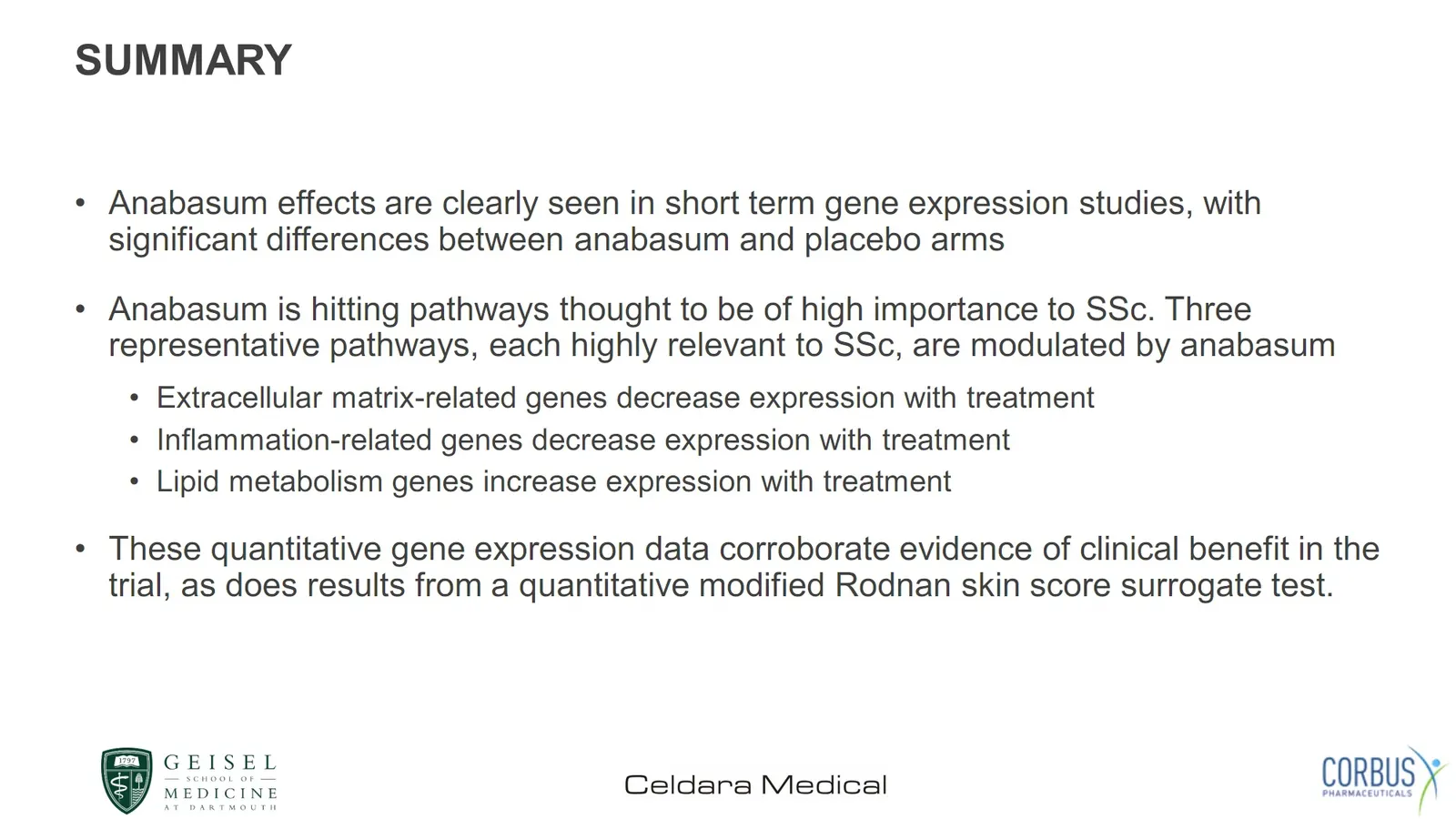
Slide 13: Summary
SUMMARY ¢ Anabasum effects are clearly seen in short term gene expression studies, with significant differences between anabasum and placebo arms ¢ Anabasum is hitting pathways thought to be of high importance to SSc. Three representative pathways, each highly relevant to SSc, are modulated by anaba
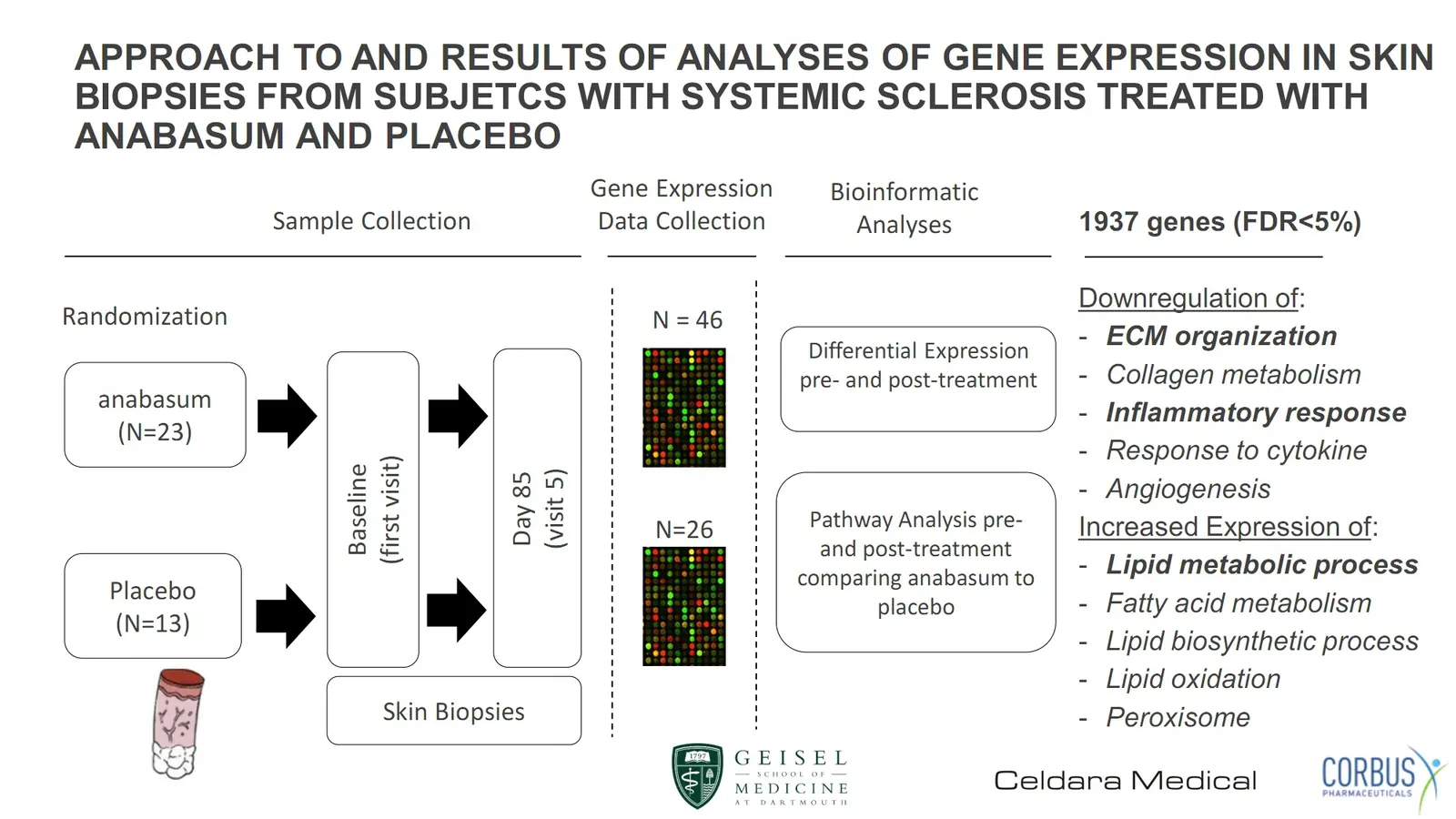
Slide 14: Approach to and Results of Analyses of Gene Expression in Skin Biopsies
APPROACH TO AND RESULTS OF ANALYSES OF GENE EXPRESSION IN SKIN BIOPSIES FROM SUBJETCS WITH SYSTEMIC SCLEROSIS TREATED WITH ANABASUM AND PLACEBO Gene Expression Bioinformatic Sample Collection Data Collection Analyses 1937 genes (FDR<5%) — Downregulation of: Randomization N=46 Differential Expression
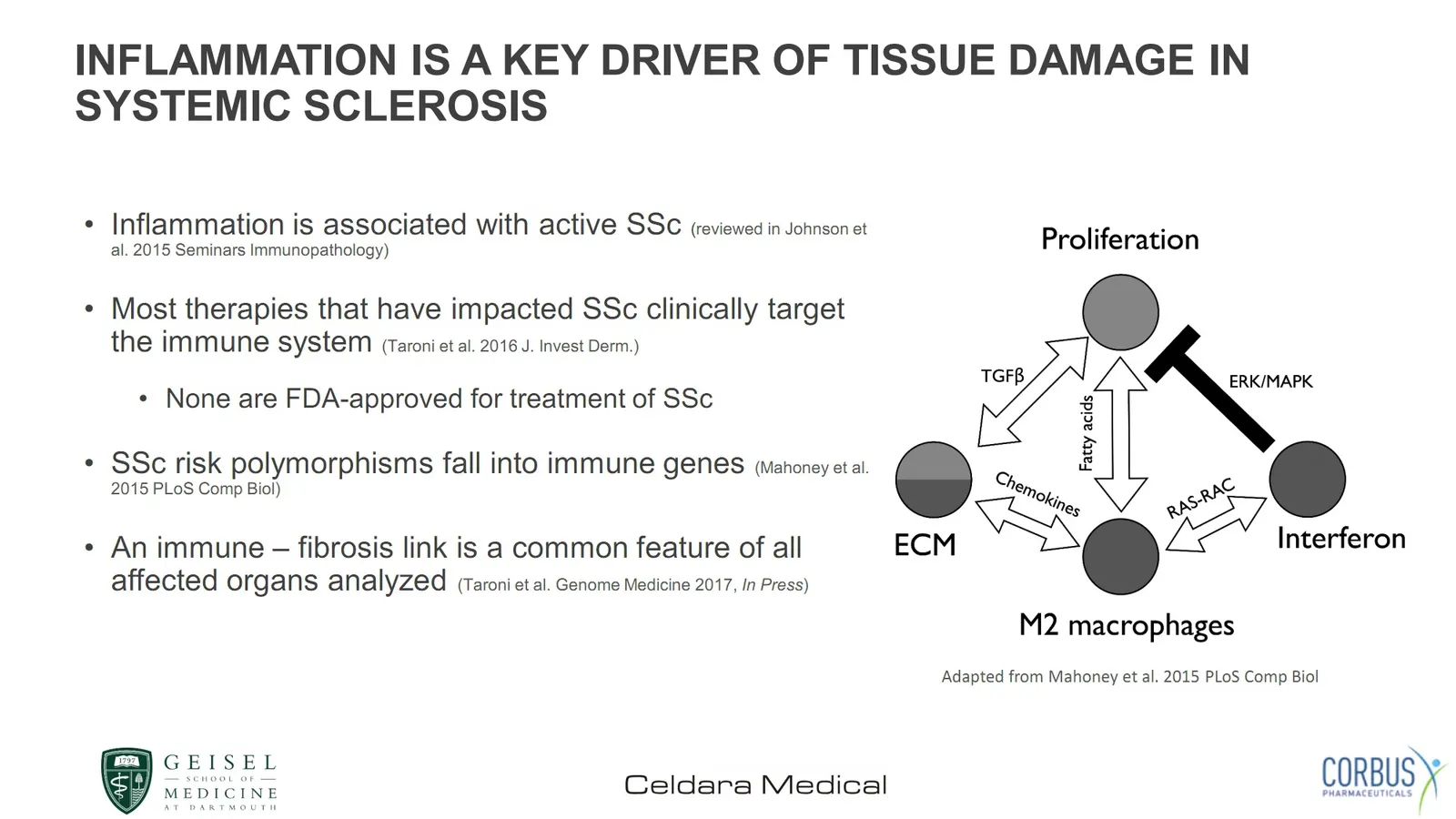
Slide 15: Inflammation Is a Key Driver of Tissue Damage in Systemic Sclerosis
INFLAMMATION IS A KEY DRIVER OF TISSUE DAMAGE IN SYSTEMIC SCLEROSIS Inflammation is associated with active SSC (reviewed in Johnson et al. 2015 Seminars Immunopathology) Proliferation ERK/MAPK ot Pets Interferon M2 eo ¢ Most therapies that have impacted SSc clinically target the immune system ¢raron
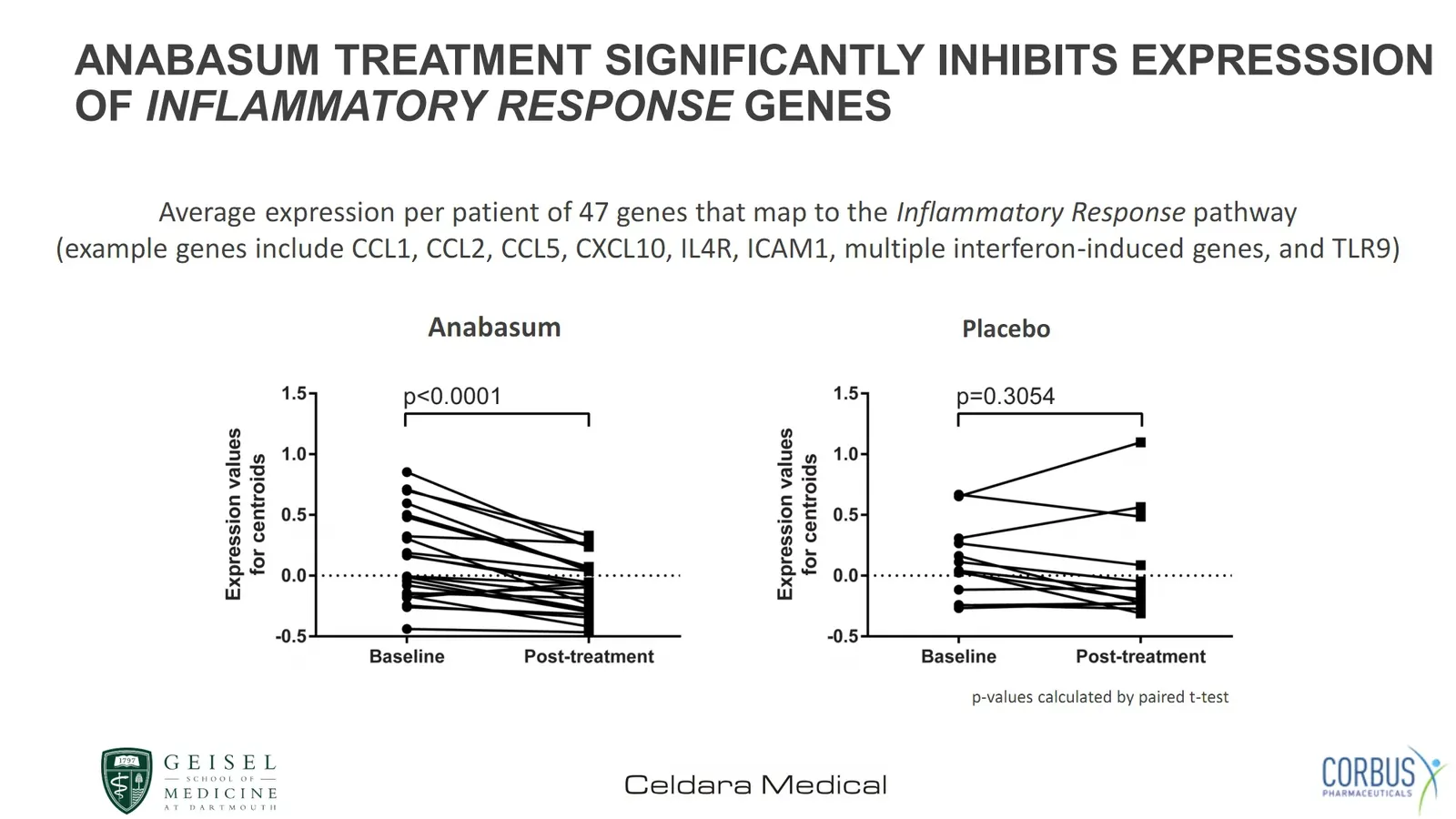
Slide 16: Anabasum Significantly Inhibits Expression of Inflammatory Response Genes
ANABASUM TREATMENT SIGNIFICANTLY INHIBITS EXPRESSSION OF INFLAMMATORY RESPONSE GENES Average expression per patient of 47 genes that map to the /nflammatory Response pathway (example genes include CCL1, CCL2, CCL5, CXCL10, IL4R, ICAM1, multiple interferon-induced genes, and TLR9) Anabasum Placebo 15
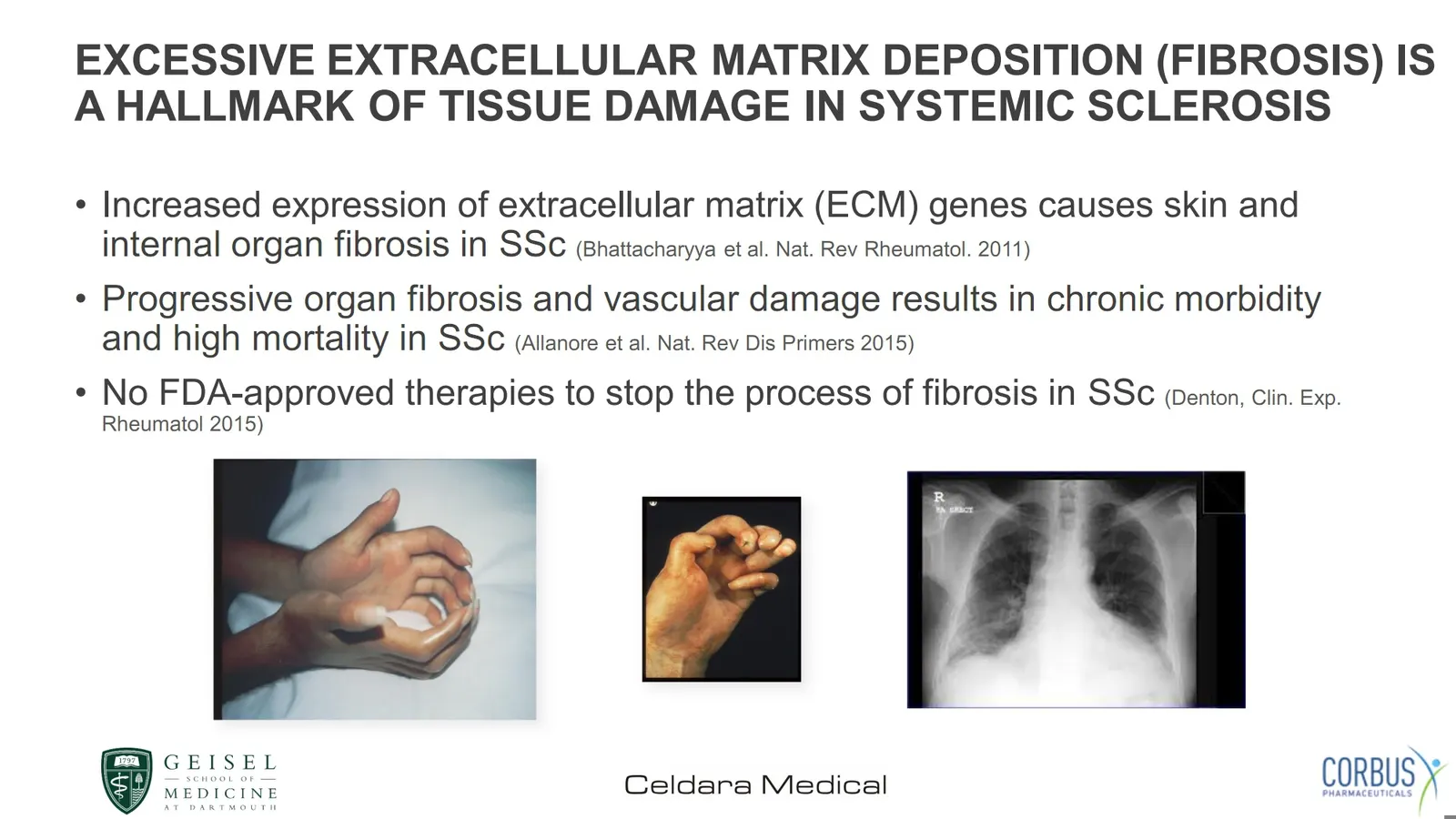
Slide 17: Excessive Extracellular Matrix Deposition (Fibrosis) Is a Hallmark
EXCESSIVE EXTRACELLULAR MATRIX DEPOSITION (FIBROSIS) IS A HALLMARK OF TISSUE DAMAGE IN SYSTEMIC SCLEROSIS ¢ Increased expression of extracellular matrix (ECM) genes causes skin and internal organ fibrosis in SSC (Bhattacharyya et al. Nat. Rev Rheumatol. 2011) ¢ Progressive organ fibrosis and vascula
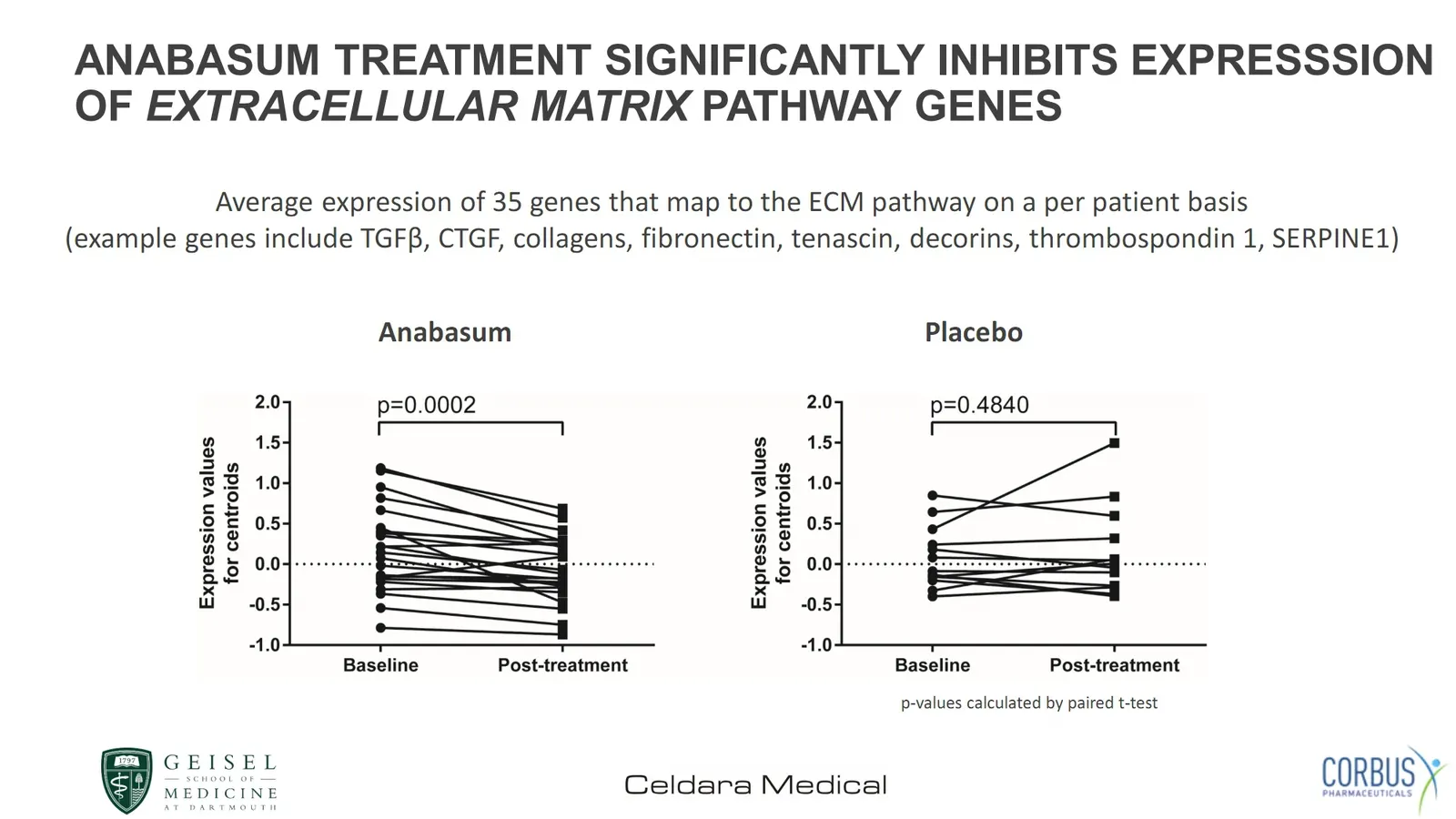
Slide 18: Anabasum Significantly Inhibits Expression of ECM Pathway Genes
ANABASUM TREATMENT SIGNIFICANTLY INHIBITS EXPRESSSION OF EXTRACELLULAR MATRIX PATHWAY GENES Average expression of 35 genes that map to the ECM pathway on a per patient basis (example genes include TGFB, CTGF, collagens, fibronectin, tenascin, decorins, thrombospondin 1, SERPINE1) Anabasum Placebo 2.
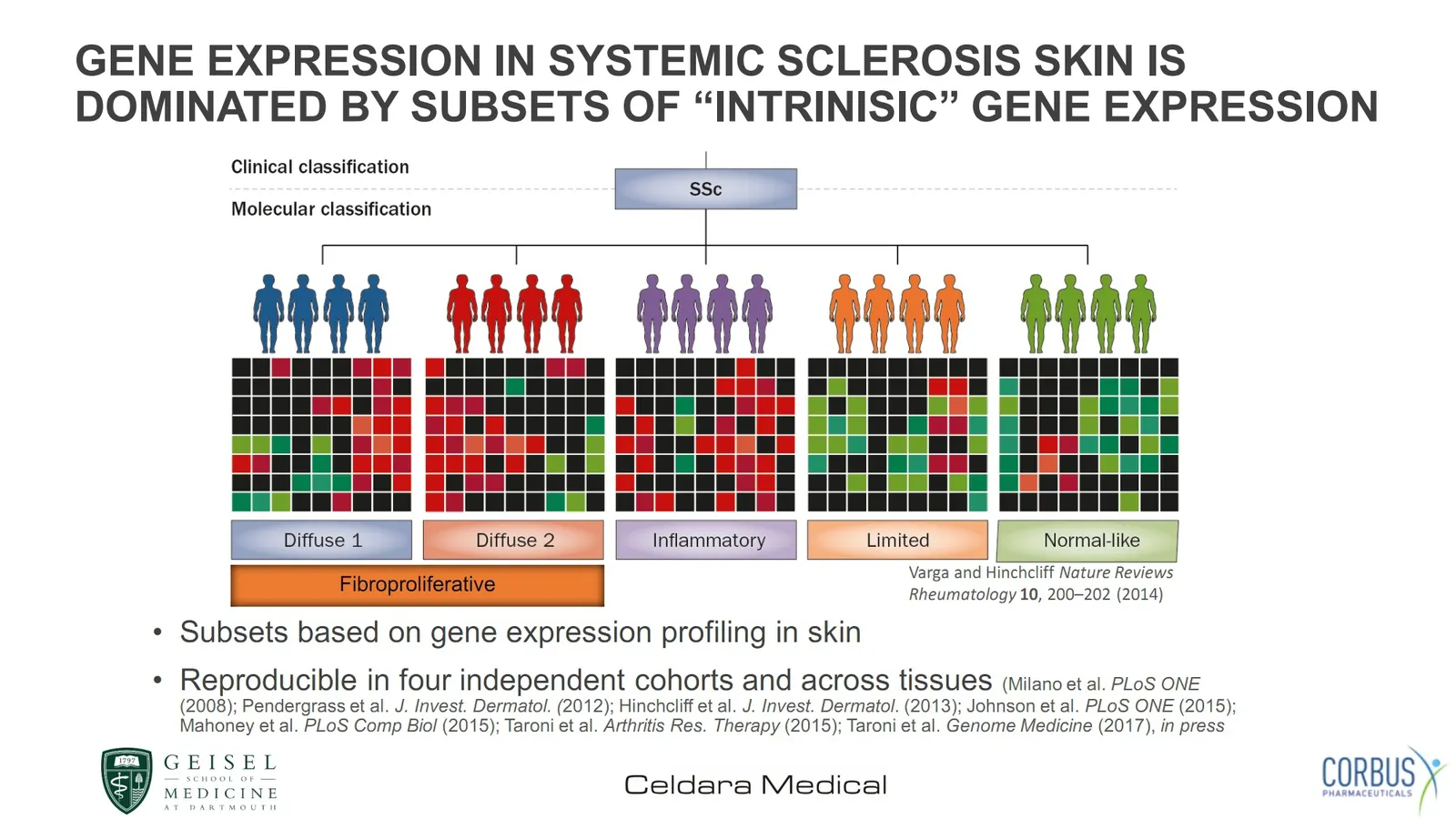
Slide 19: Gene Expression in Systemic Sclerosis Skin Is Dominated by Intrinsic Subsets
GENE EXPRESSION IN SYSTEMIC SCLEROSIS SKIN IS DOMINATED BY SUBSETS OF “INTRINISIC” GENE EXPRESSION Clinical classification SSc Molecular classification Hood HOD GHEE OHOd OH09 | EI | * Subsets based on gene expression profiling in skin Varga and Hinchcliff Nature Reviews Rheumatology 10, 200-202 (20
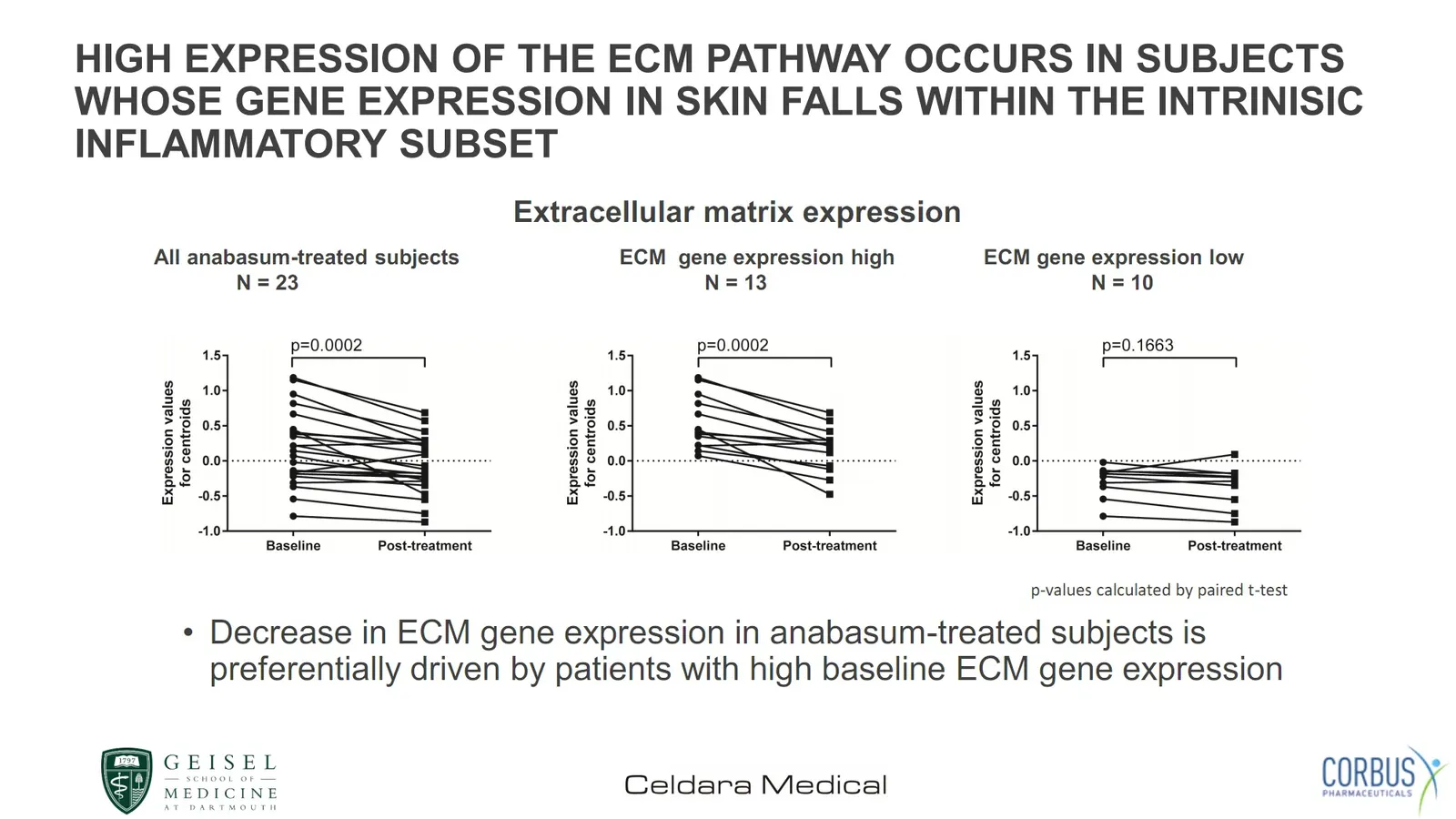
Slide 20: High ECM Pathway Expression Occurs in Intrinsic Inflammatory Subset
HIGH EXPRESSION OF THE ECM PATHWAY OCCURS IN SUBJECTS WHOSE GENE EXPRESSION IN SKIN FALLS WITHIN THE INTRINISIC INFLAMMATORY SUBSET Extracellular matrix expression All anabasum-treated subjects ECM gene expression high ECM gene expression low N= 23 N=13 N=10 15: 1.5: 1.5: peO6es 3 10 8 10 8 10 32 32
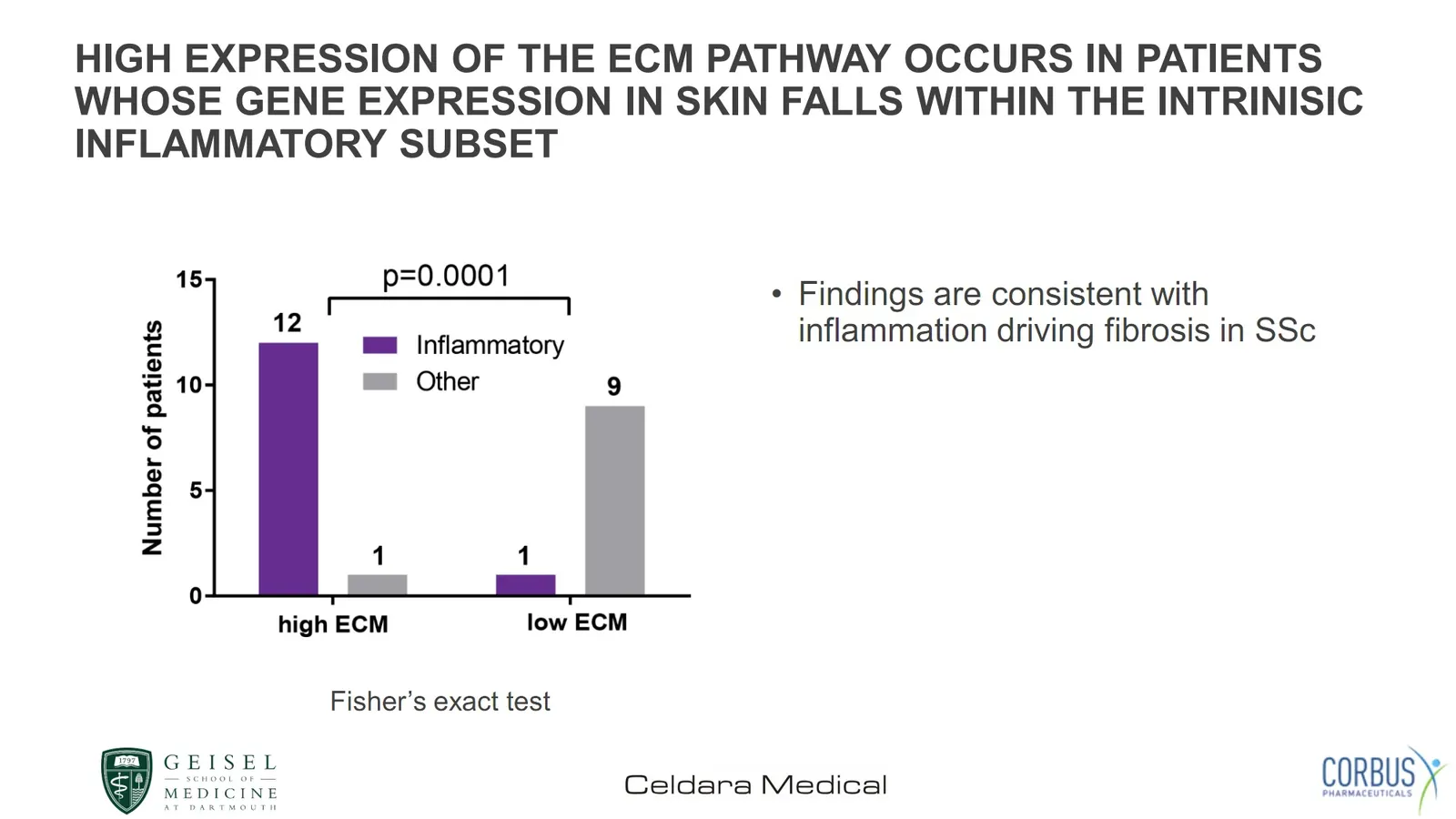
Slide 21: High ECM Pathway Expression Occurs in Patients in Inflammatory Subset
HIGH EXPRESSION OF THE ECM PATHWAY OCCURS IN PATIENTS WHOSE GENE EXPRESSION IN SKIN FALLS WITHIN THE INTRINISIC INFLAMMATORY SUBSET = a —_—_—_—— ¢ Findings are consistent with inflammation driving fibrosis in SSc 12 ma Inflammatory m= Other 9 = Oo Number of patients a high ECM low ECM Fisher’s exact
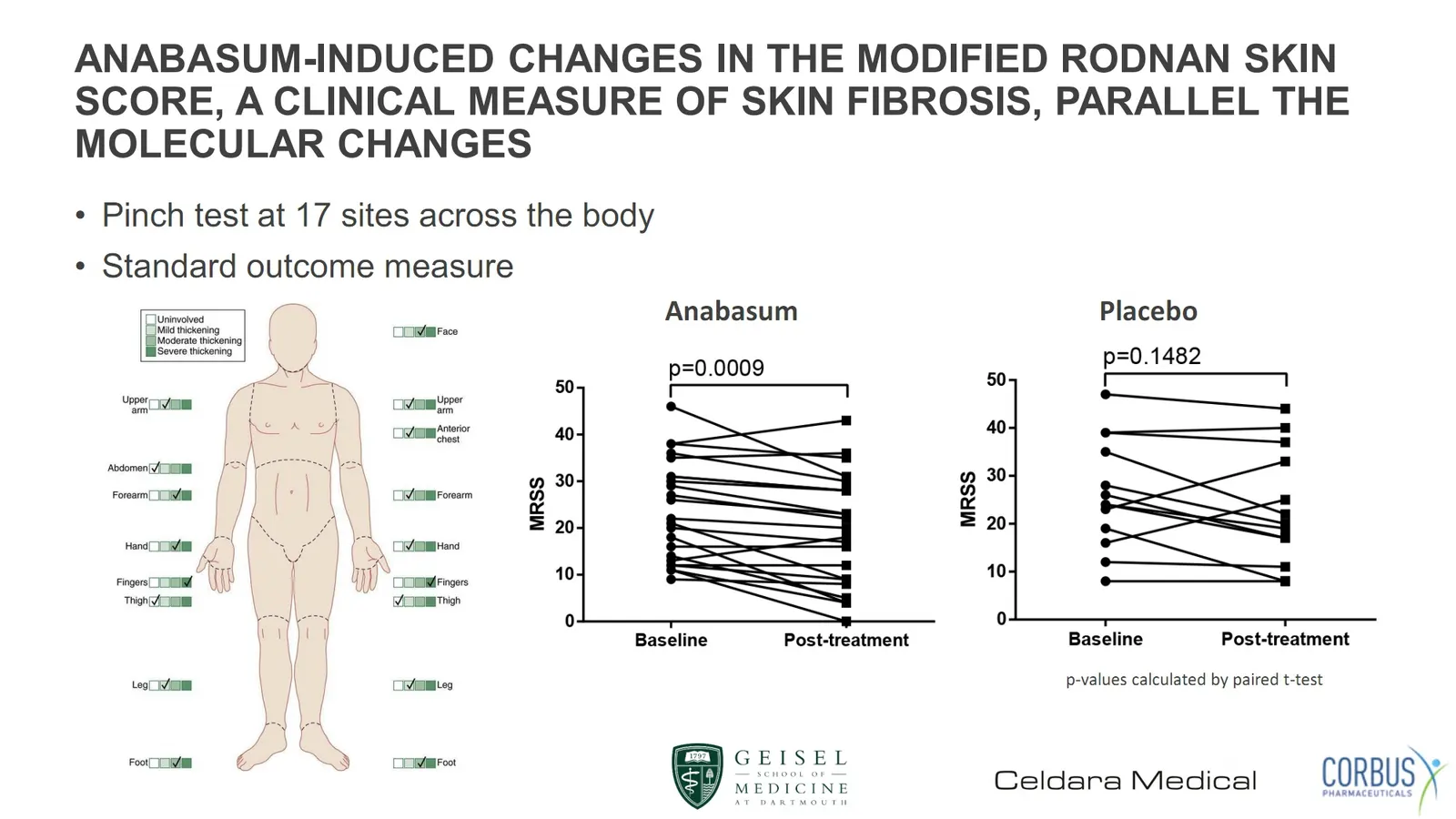
Slide 22: Anabasum-Induced Changes in Modified Rodnan Skin Score
ANABASUM-INDUCED CHANGES IN THE MODIFIED RODNAN SKIN SCORE, A CLINICAL MEASURE OF SKIN FIBROSIS, PARALLEL THE MOLECULAR CHANGES ¢ Pinch test at 17 sites across the body * Standard outcome measure Anabasum Placebo = p=0.1482 wo, pre.0008 5 aie —__, 40 40 ——_5 H 30 an 30 2 z = 20 = 20 10 10 0 0 Baseli
Slide 23: Scleroderma Disease Severity Score (SDSS)
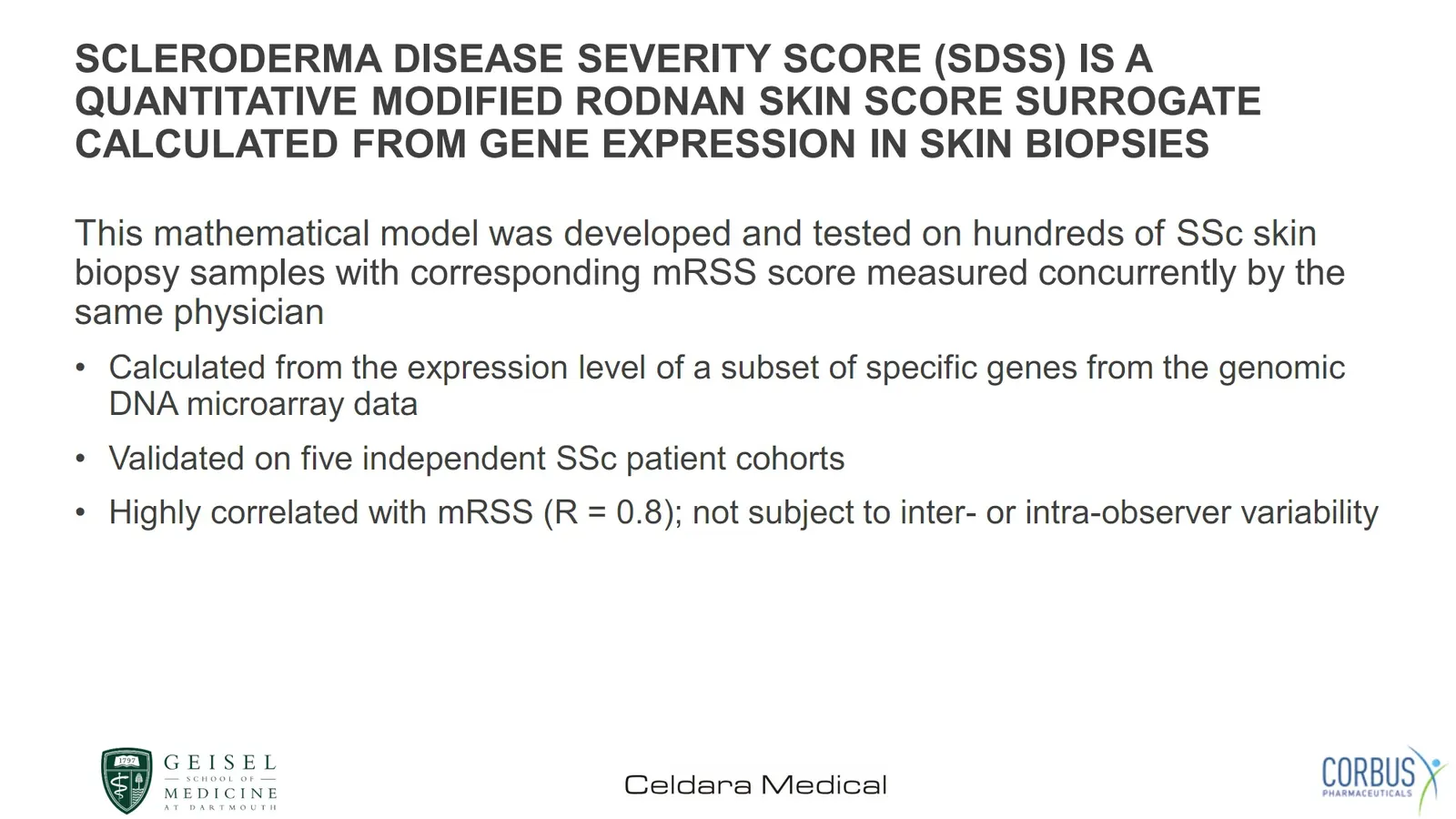
SCLERODERMA DISEASE SEVERITY SCORE (SDSS) ISA QUANTITATIVE MODIFIED RODNAN SKIN SCORE SURROGATE CALCULATED FROM GENE EXPRESSION IN SKIN BIOPSIES This mathematical model was developed and tested on hundreds of SSc skin biopsy samples with corresponding mRSS score measured concurrently by the same phy
Slide 24: Anabasum Significantly Decreases Scleroderma Disease Severity Score
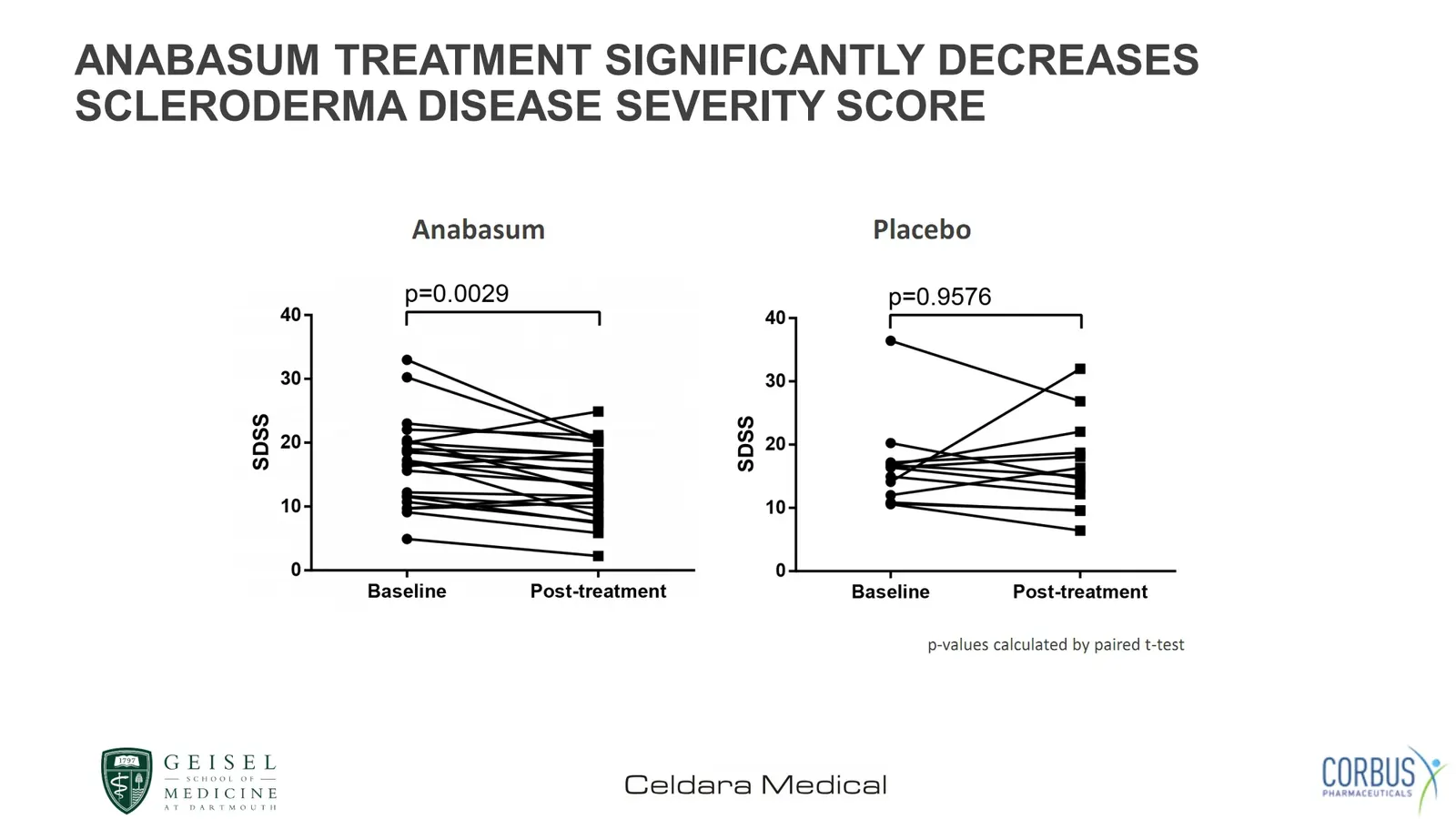
ANABASUM TREATMENT SIGNIFICANTLY DECREASES SCLERODERMA DISEASE SEVERITY SCORE Anabasum Placebo p=0.0029 p=0.9576 40 Fermecnnnennnnnninl 40 foi 30 30 & 20 8 20 10 10 - a ee P Baseline Post-treatment Baseline Post-treatment p-values calculated by paired t-test (i) GEISEL . D MEDIC INE Celdara Medical
Slide 25: Anabasum's Mechanism of Action Includes Class Switch of Lipid Mediators
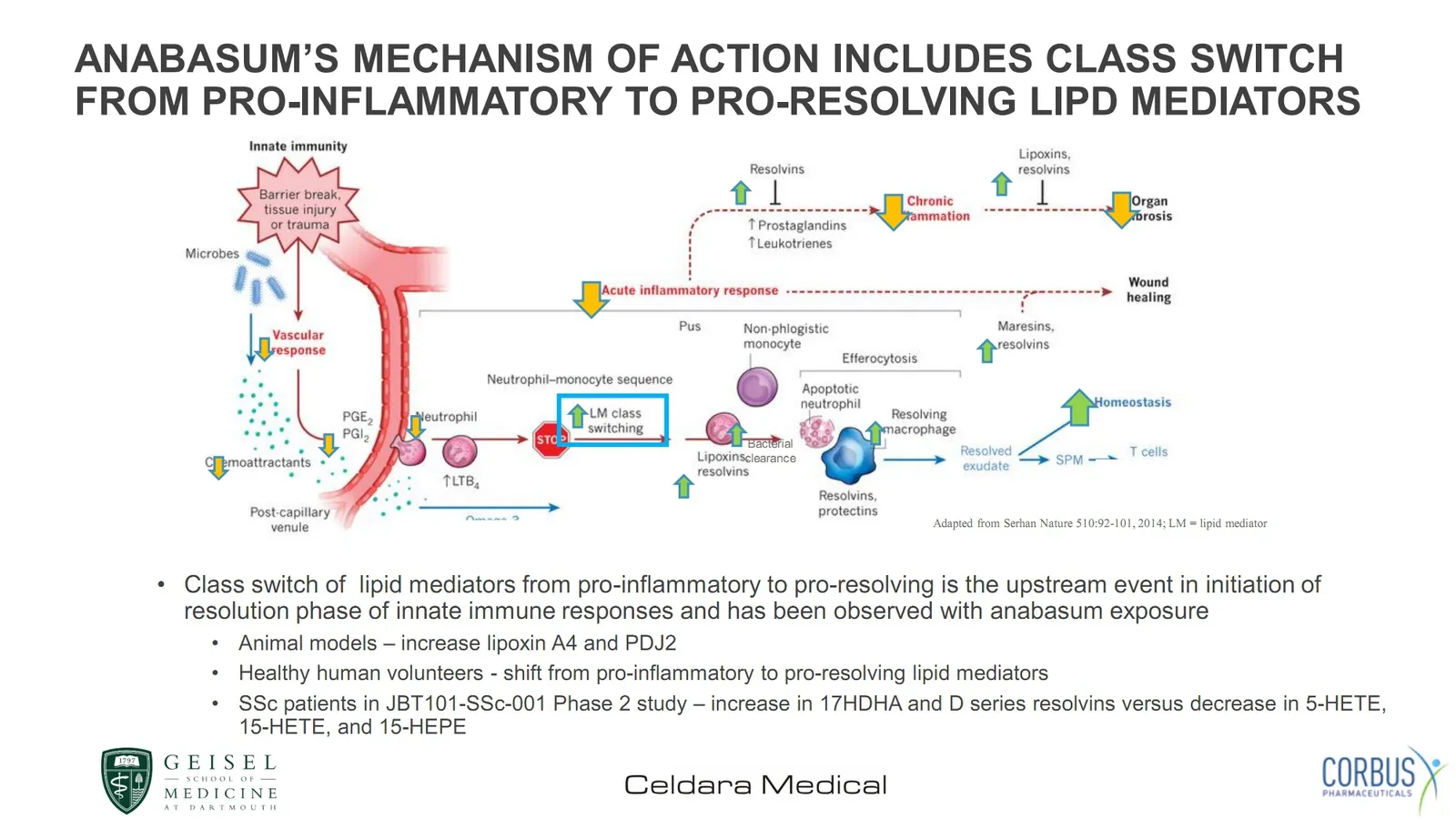
ANABASUM’S MECHANISM OF ACTION INCLUDES CLASS SWITCH FROM PRO-INFLAMMATORY TO PRO-RESOLVING LIPD MEDIATORS Innate immunity Lipoxins, Resolvins t resolvins te ies t e L beancaaracraiiey Bre et —— Qe. ‘or trauma e 1 Prostaglandins — = Microbes ty H TLeukotrienes I q ute tities a ee ee > Wound Le — eet
Slide 26: Anabasum Significantly Increases Lipid Metabolism Pathway Genes
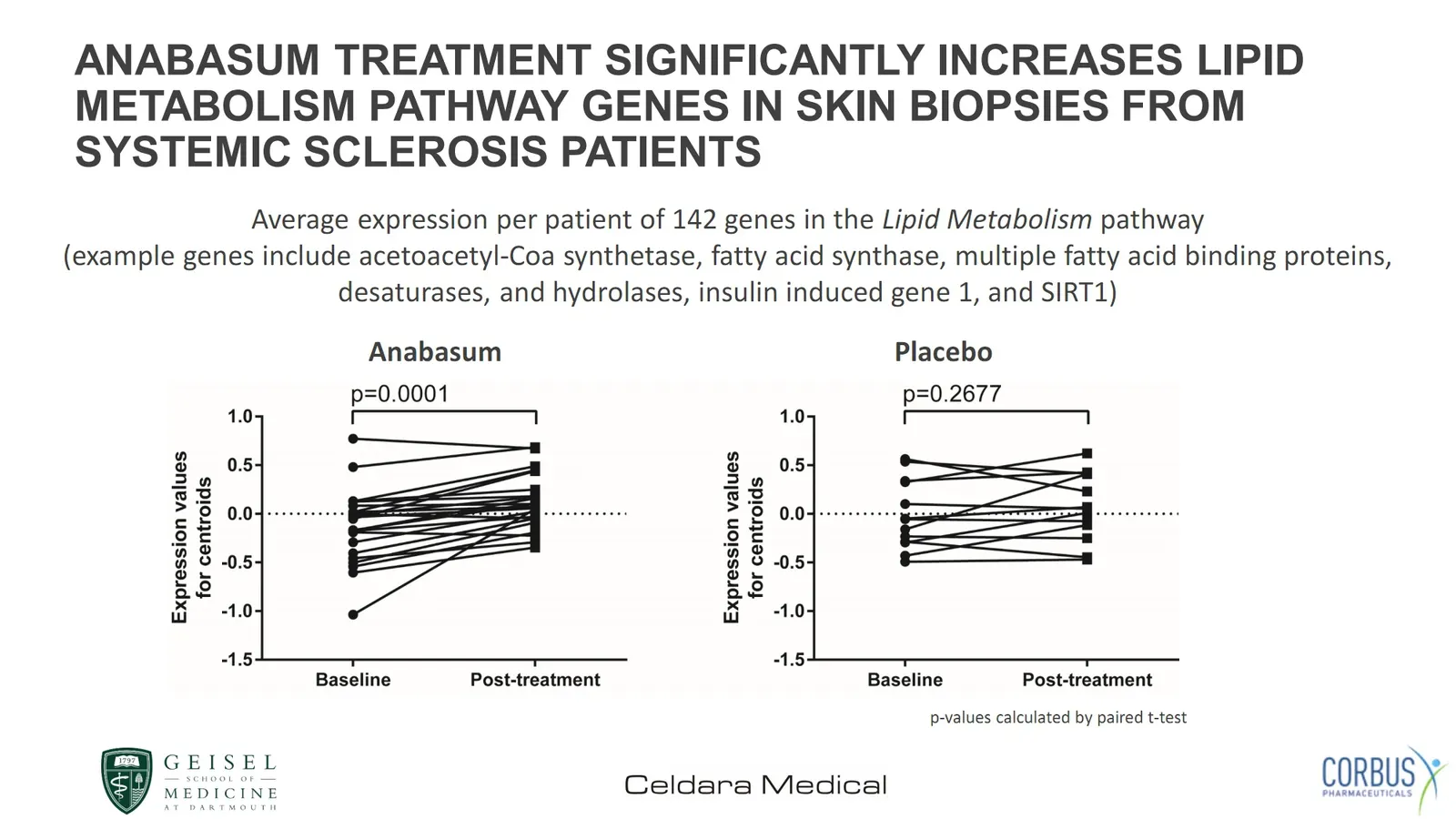
ANABASUM TREATMENT SIGNIFICANTLY INCREASES LIPID METABOLISM PATHWAY GENES IN SKIN BIOPSIES FROM SYSTEMIC SCLEROSIS PATIENTS Average expression per patient of 142 genes in the Lipid Metabolism pathway (example genes include acetoacetyl-Coa synthetase, fatty acid synthase, multiple fatty acid binding
Slide 27: Conclusions
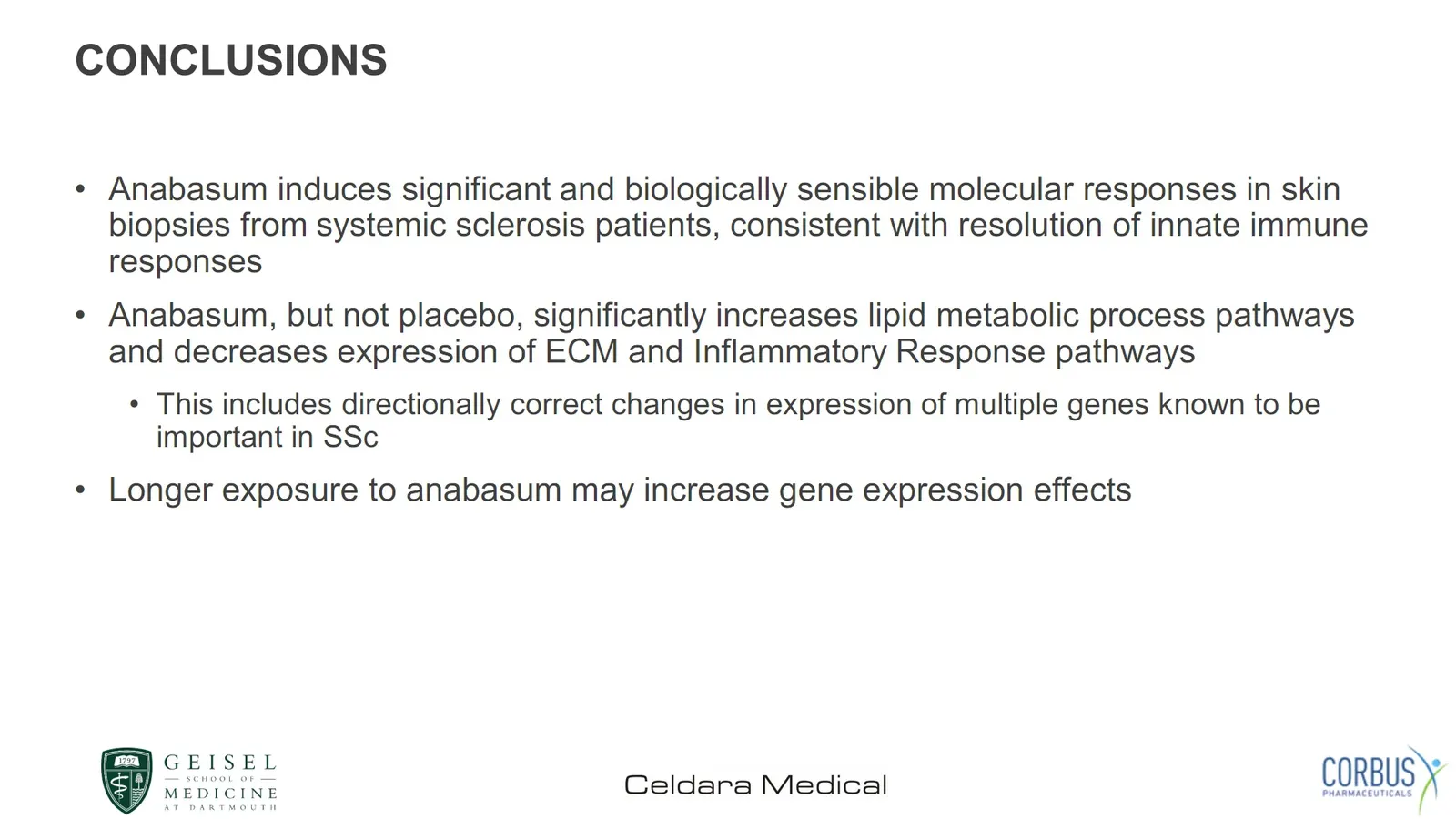
CONCLUSIONS « Anabasum induces significant and biologically sensible molecular responses in skin biopsies from systemic sclerosis patients, consistent with resolution of innate immune responses ¢ Anabasum, but not placebo, significantly increases lipid metabolic process pathways and decreases expres
Slide 28: Acknowledgments
ACKNOWLEDGMENTS ¢ Celdara Medical, LLC ¢ Yolanda Nesbeth, PhD « Jake Reder, PhD (CEO) ¢ Geisel School of Medicine at Dartmouth ¢ Michael L. Whitfield, PhD ¢ Viktor Martyanov, PhD * Guoshuai Cai, PhD ¢ Tammara Wood, MS Celdara Medical CORBUS
Slide 29: Q&A
Q&A CORBUS
Slide 30: Human Blister Model: MOA in a Clinical Model of Inflammation/Resolution
Human Blister Model: MOA in a Clinical Model of Inflammation/Resolution Derek Gilroy, Ph.D. Head, Centre for Clinical Pharmacology and Professor of Immunology at Queen Mary College, University College London, and expert in resolution of inflammation Oy Queen Mary University of London CORBUS
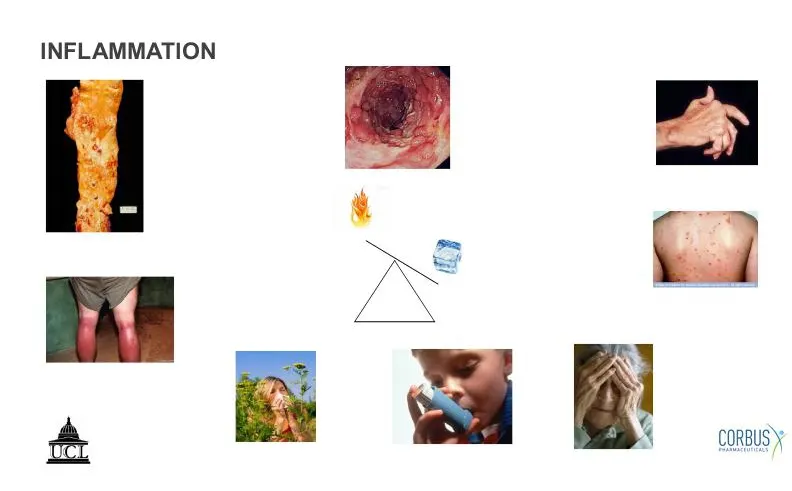
Slide 31: Inflammation
INFLAMMATION coRBus)y
Slide 32: Treatments for Chronic Inflammatory Diseases
TREATMENTS FOR CHRONIC INFLAMMATORY DISEASES NSAIDs Steroids DMARDs Biologics Problem While they alleviate symptoms.... Side effects Do not cure underlying disease can ung CORBUS
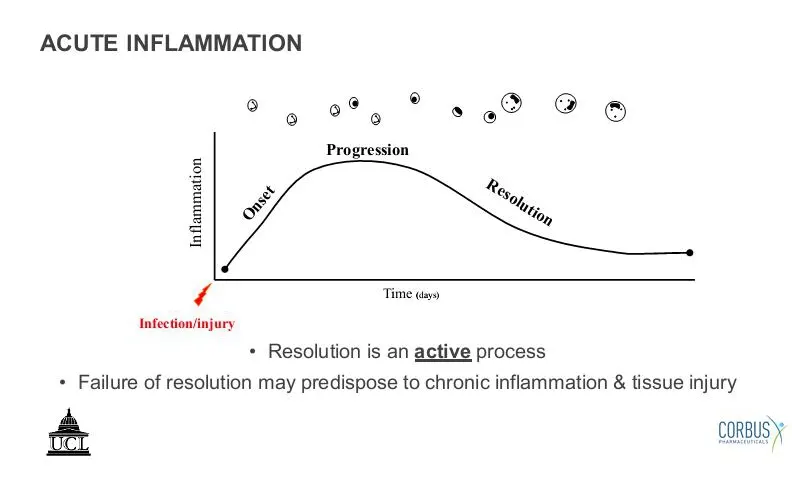
Slide 33: Acute Inflammation
ACUTE INFLAMMATION @ , 08, ®& 5.8 De ie) fo) Progression Inflammation ra Time (ey Infection/injury + Resolution is an active process + Failure of resolution may predispose to chronic inflammation & tissue injury an coneus)y
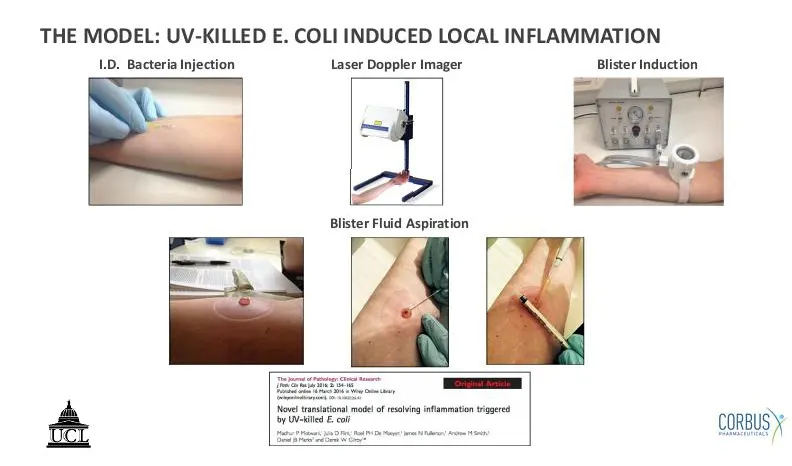
Slide 34: The Model: UV-Killed E. coli Induced Local Inflammation
THE MODEL: UV-KILLED E. COLI INDUCED LOCAL INFLAMMATION LD. Bacteria Injection Laser Doppler Imager Blister Induction Blister Fluid Aspiration CORBUS)Y
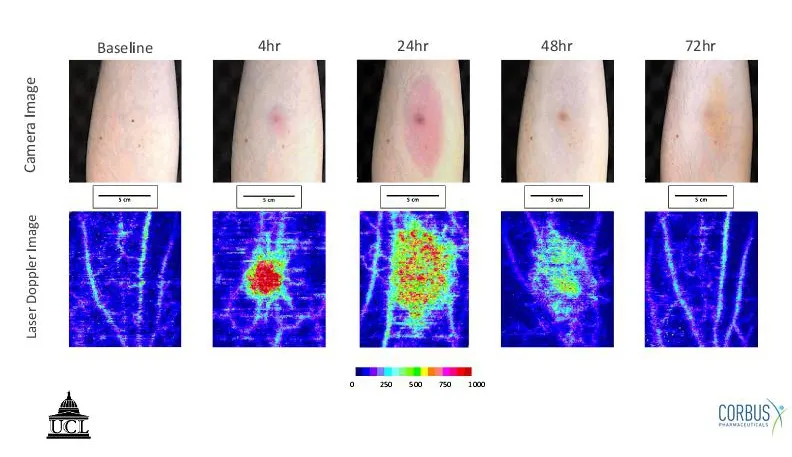
Slide 35: Camera Image / Laser Doppler Image
Camera Image Laser Doppler Image Baseline 4hr CORBUS)y
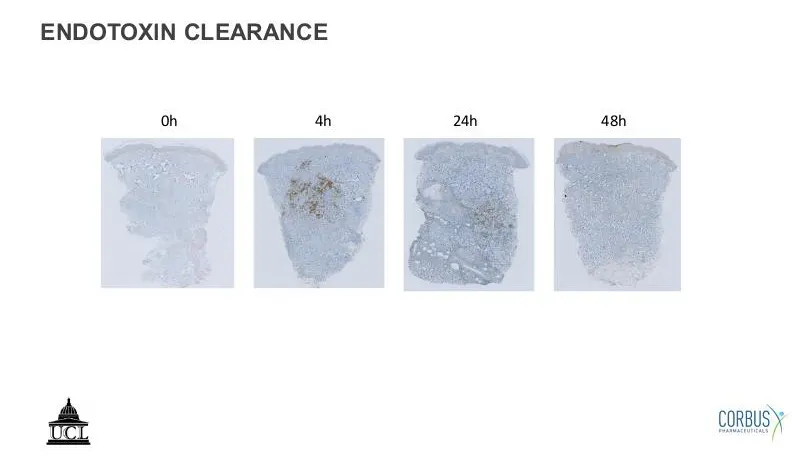
Slide 36: Endotoxin Clearance
ENDOTOXIN CLEARANCE
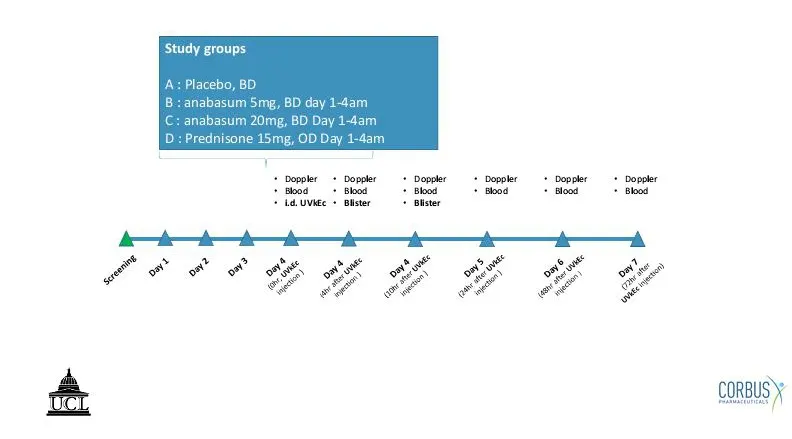
Slide 37: Study Groups
Study groups day 1-4am c n 20mg, BD Day 1-4am D : Prednisone 15mg, OD Day 1-4am. SP KK ME oe ot te ty, ° POU SE IF CoRBUS)y
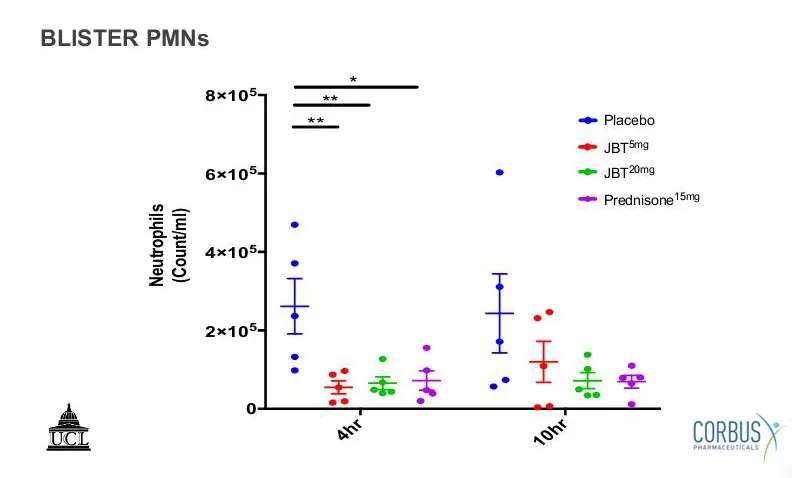
Slide 38: Blister PMNs
BLISTER PMNs Neutrophils (Count/ml) > Placebo > sprang > JBT%9 = Prednisone'5"9 CORBUS
Slide 39: Cytokines/Chemokines
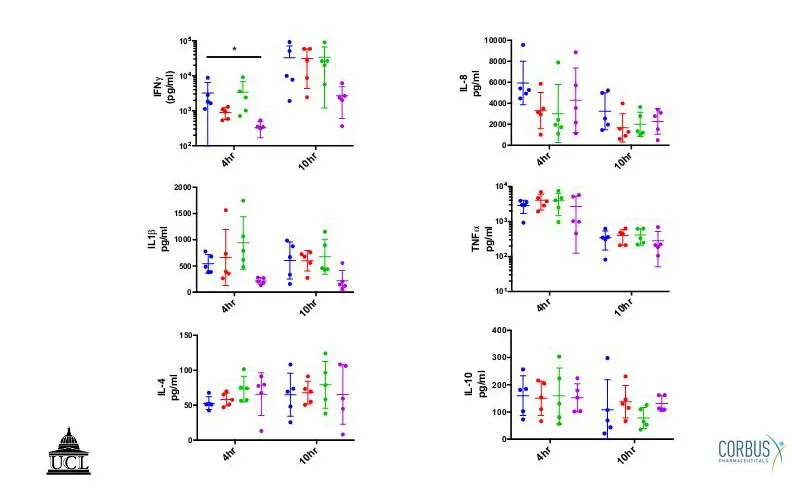
CYTOKINES/CHEMOKINES CORBUS)
Slide 40: coRBus)y
coRBus)y
Slide 41: Lipids
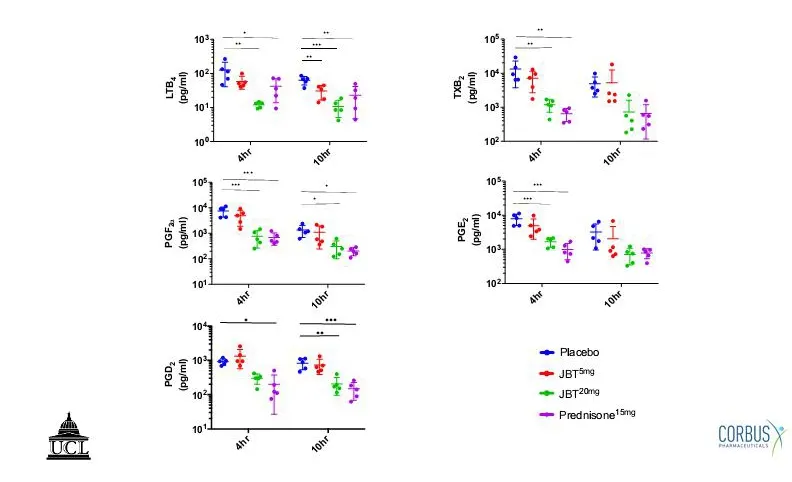
LIPIDS CORBUS)Y
Slide 42: eae ty 7B
<a. ie 7 = eae ty 7B CORBUS)Y
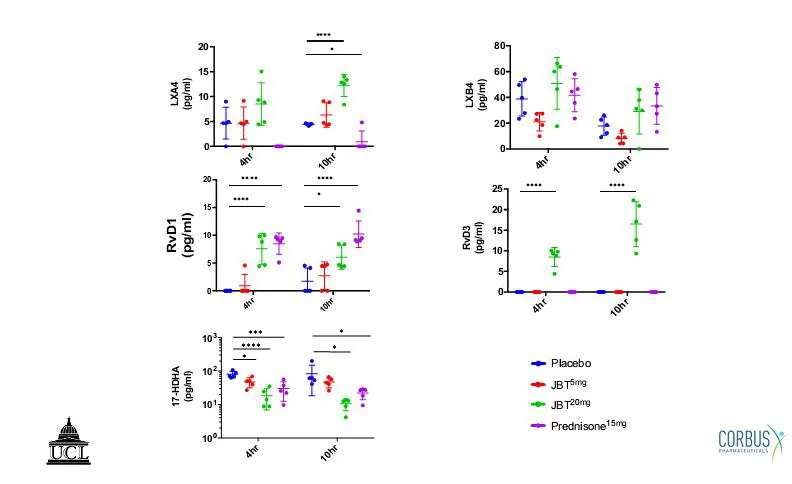
Slide 43: CORBUS)Y
CORBUS)Y
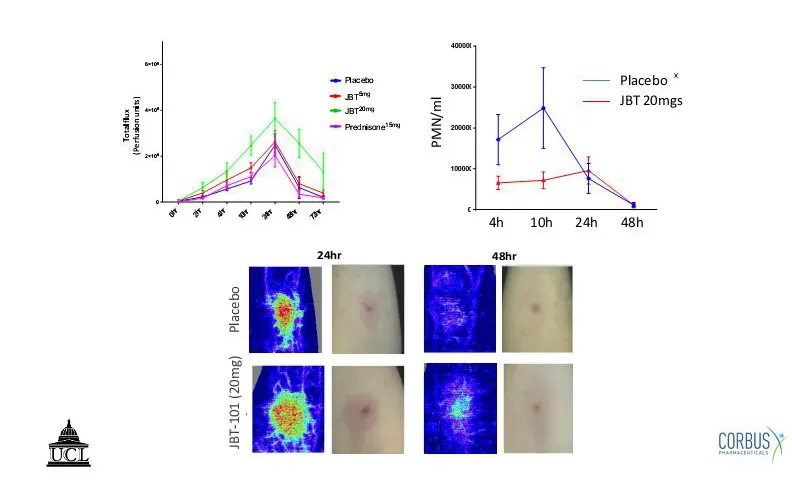
Slide 44: (erhsnanis)
(erhsnanis) Placebo J — 8 & Es — Placebo * —— 18T 20mgs 2ah 48h.
Slide 45: Mechanism
MECHANISM CORBUS)Y
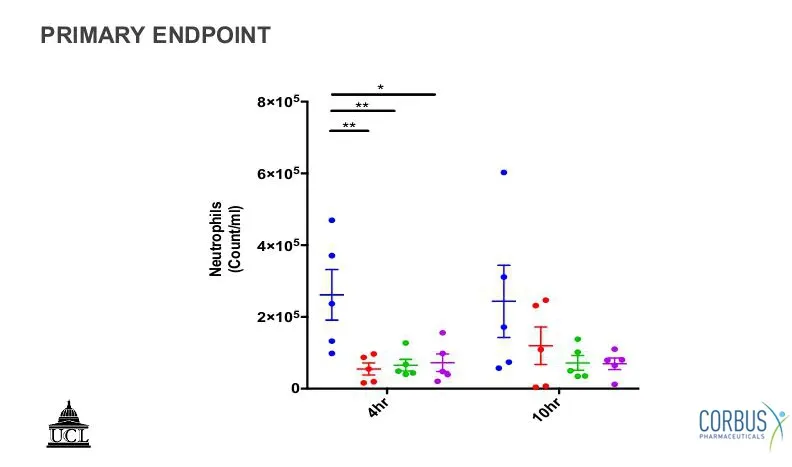
Slide 46: Primary Endpoint
PRIMARY ENDPOINT 8x10⁵ 6x10⁵ be Neutrophils (Countim)) & cs CORBUS)y
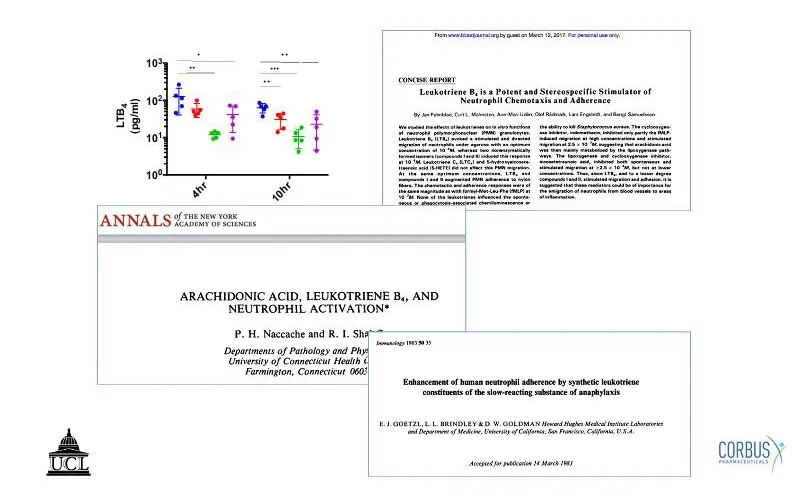
Slide 47: Arachidonic Acid, Leukotriene B4, and Neutrophil Activation
|ANNALS + : Lankan of von ARACHIDONIC ACID, LEUKOTRIENE B,, AND NEUTROPHIL ACTIVATION® PH, Naccache and R. I. Sha Departments of Pathology ond Pays" ‘Univer of Comectict Heath Farmington. Connecticut 060 ‘Etancenet of haan neato dberence ys oteene Comte ewan aden of an CORBUS)Y
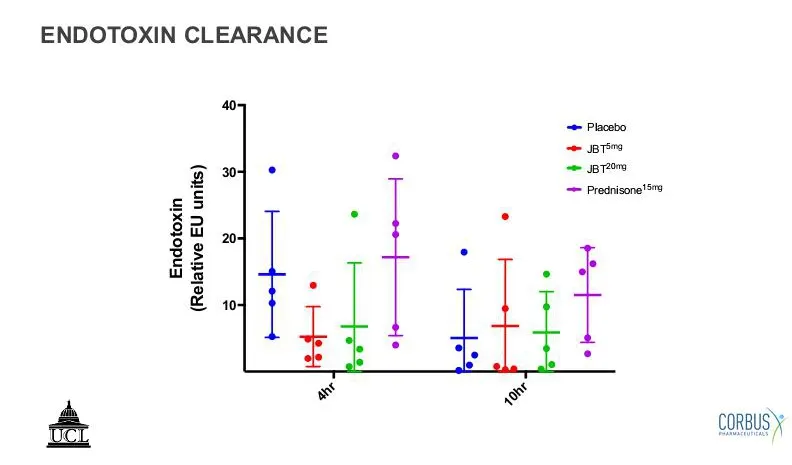
Slide 48: Endotoxin Clearance
ENDOTOXIN CLEARANCE 40: > Placebo = ~ ere 304° = eres = Prednisone'#"s Endotoxin (Relative EU units) 8 S an coneus)y
Slide 49: Q&A
Q&A CORBUS
Slide 50: CF: Biochemistry of Inflammation and Ex-Vivo Lung Macrophage Data
CF: Biochemistry of Inflammation and Ex-Vivo Lung Macrophage Data Michael Knowles, M.D. Professor of Pulmonary and Critical Care Medicine at University of North Carolina Chapel Hill and member of the Company's Scientific Advisory Board, and expert in inflammation in CF -—_N THE UNIVERSITY | of NORTH
Slide 51: Inflammation in Cystic Fibrosis (CF) Lung Disease
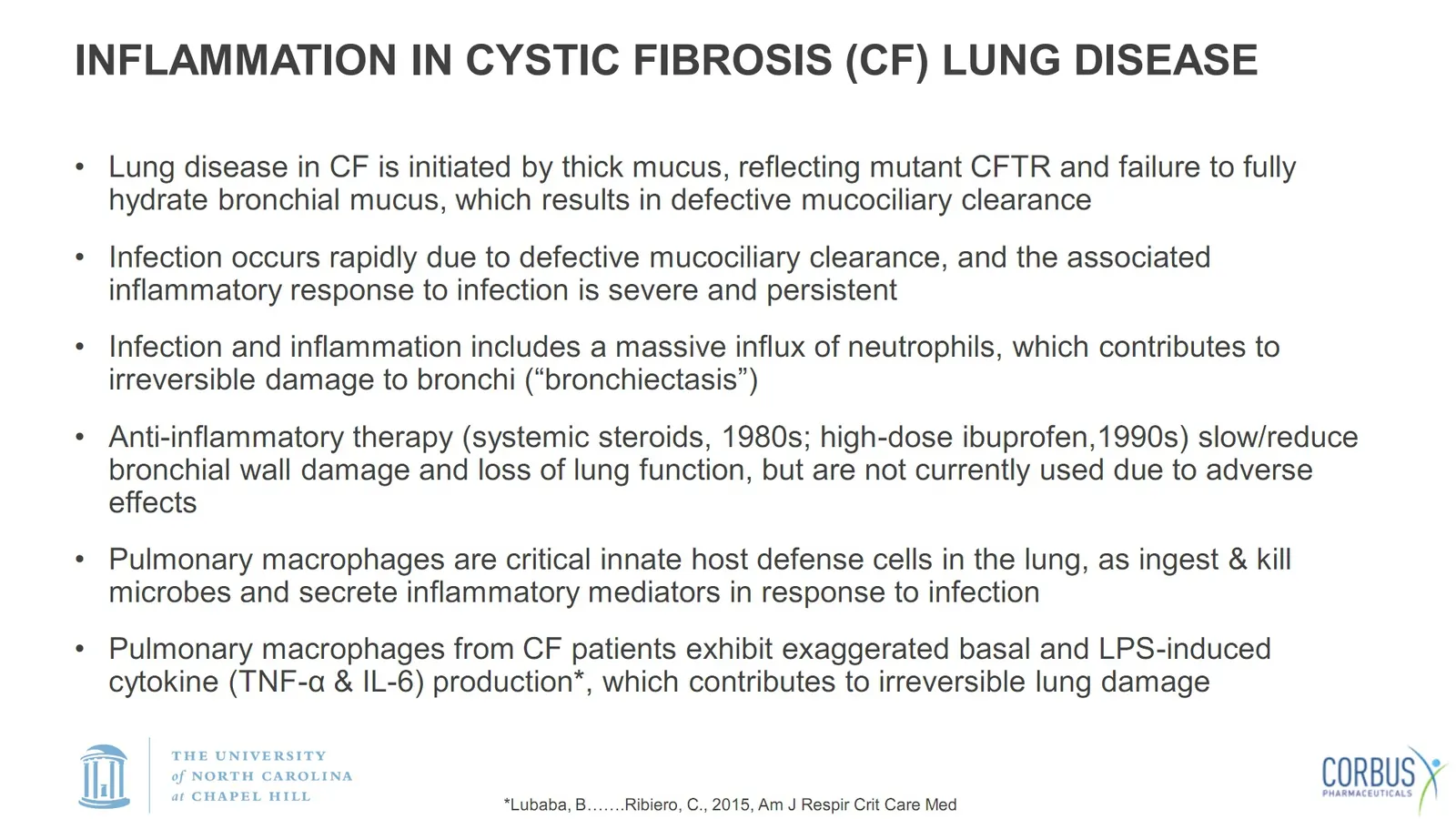
INFLAMMATION IN CYSTIC FIBROSIS (CF) LUNG DISEASE = _N THE UNIVERSITY ll I] of NORTH CAROLINA SM |e cuaren wit Lung disease in CF is initiated by thick mucus, reflecting mutant CFTR and failure to fully hydrate bronchial mucus, which results in defective mucociliary clearance Infection occurs rapidl
Slide 52: Effect of Anabasum on Cytokine Production by CF Pulmonary Macrophages
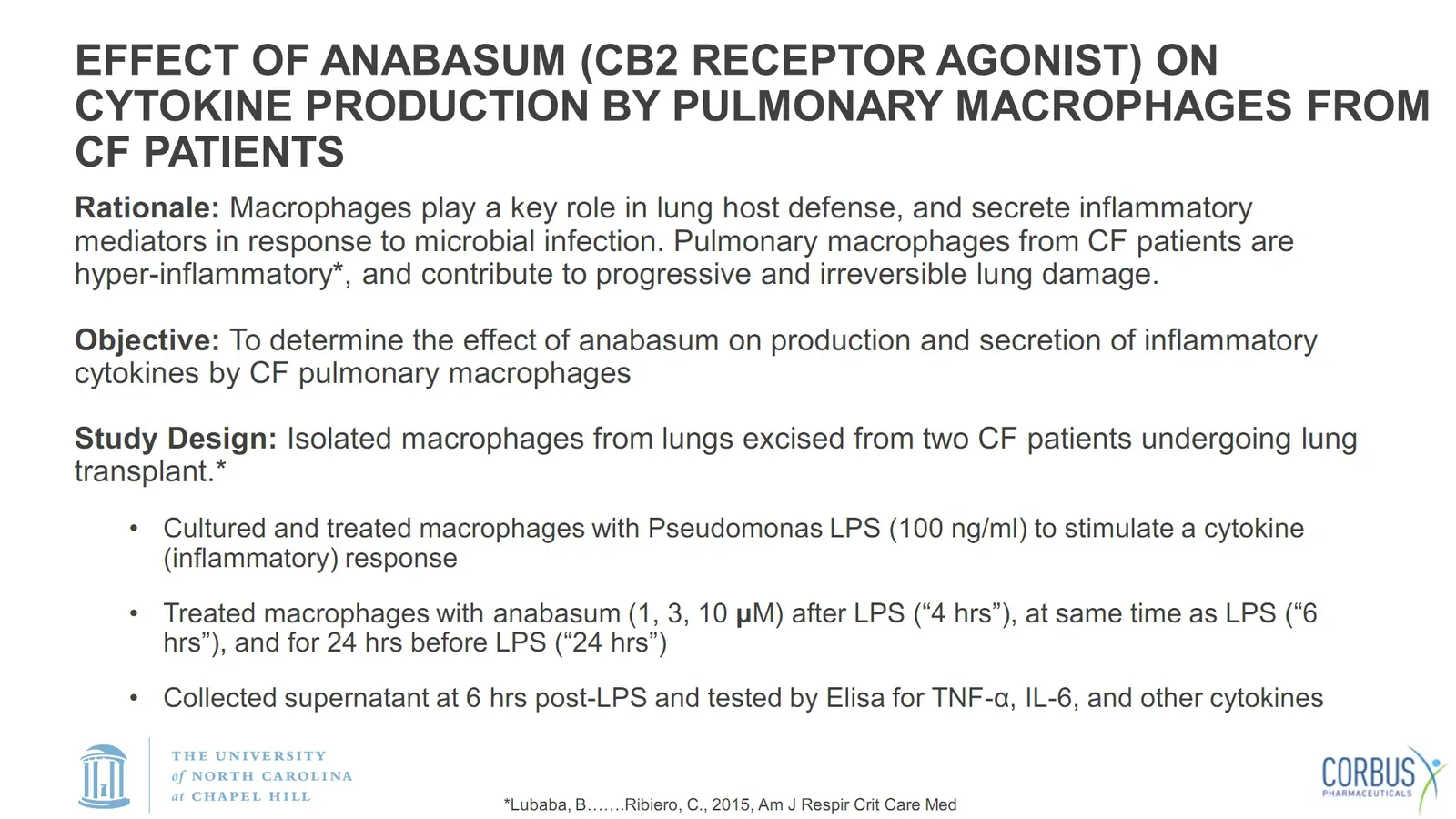
EFFECT OF ANABASUM (CB2 RECEPTOR AGONIST) ON CYTOKINE PRODUCTION BY PULMONARY MACROPHAGES FROM CF PATIENTS Rationale: Macrophages play a key role in lung host defense, and secrete inflammatory mediators in response to microbial infection. Pulmonary macrophages from CF patients are hyper-inflammatory
Slide 53: Effect of Anabasum on TNF-a Production by LPS-Treated CF Macrophages
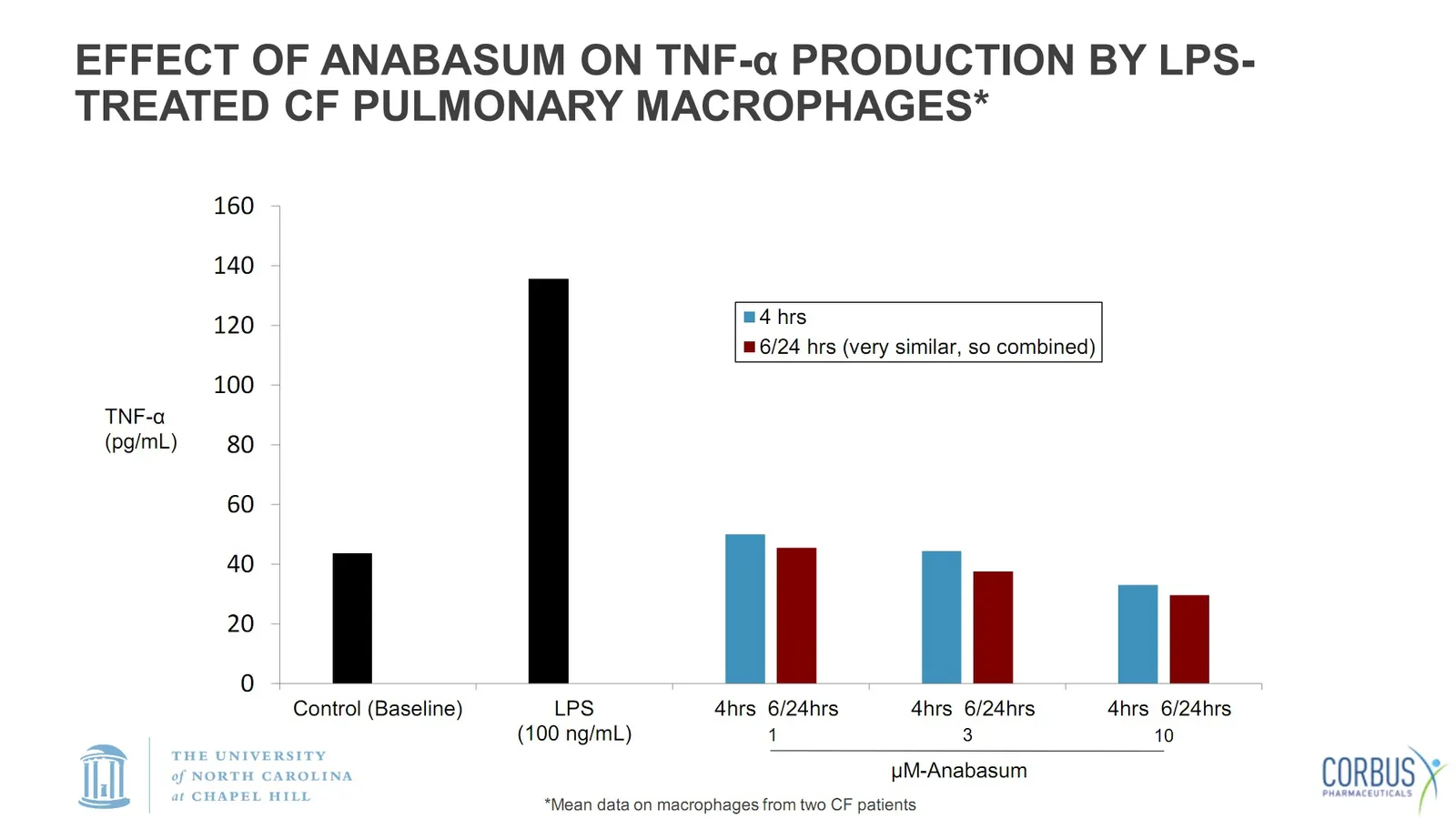
EFFECT OF ANABASUM ON TNF-a PRODUCTION BY LPS- TREATED CF PULMONARY MACROPHAGES* 160 140 120 m4hrs ™ 6/24 hrs (very similar, so combined) 100 TNF-a (pgimL) 80 60 40 ° i l i 0 Control (Baseline) LPS 4hrs —_ 4hrs = 4hrs 6/24hrs (100 ng/mL) 10 = _N THE UNIVERSITY At | es a cORBUS Se | CHAPEL HILL *Mean
Slide 54: Effect of Anabasum on IL-6 Production by LPS-Treated CF Macrophages
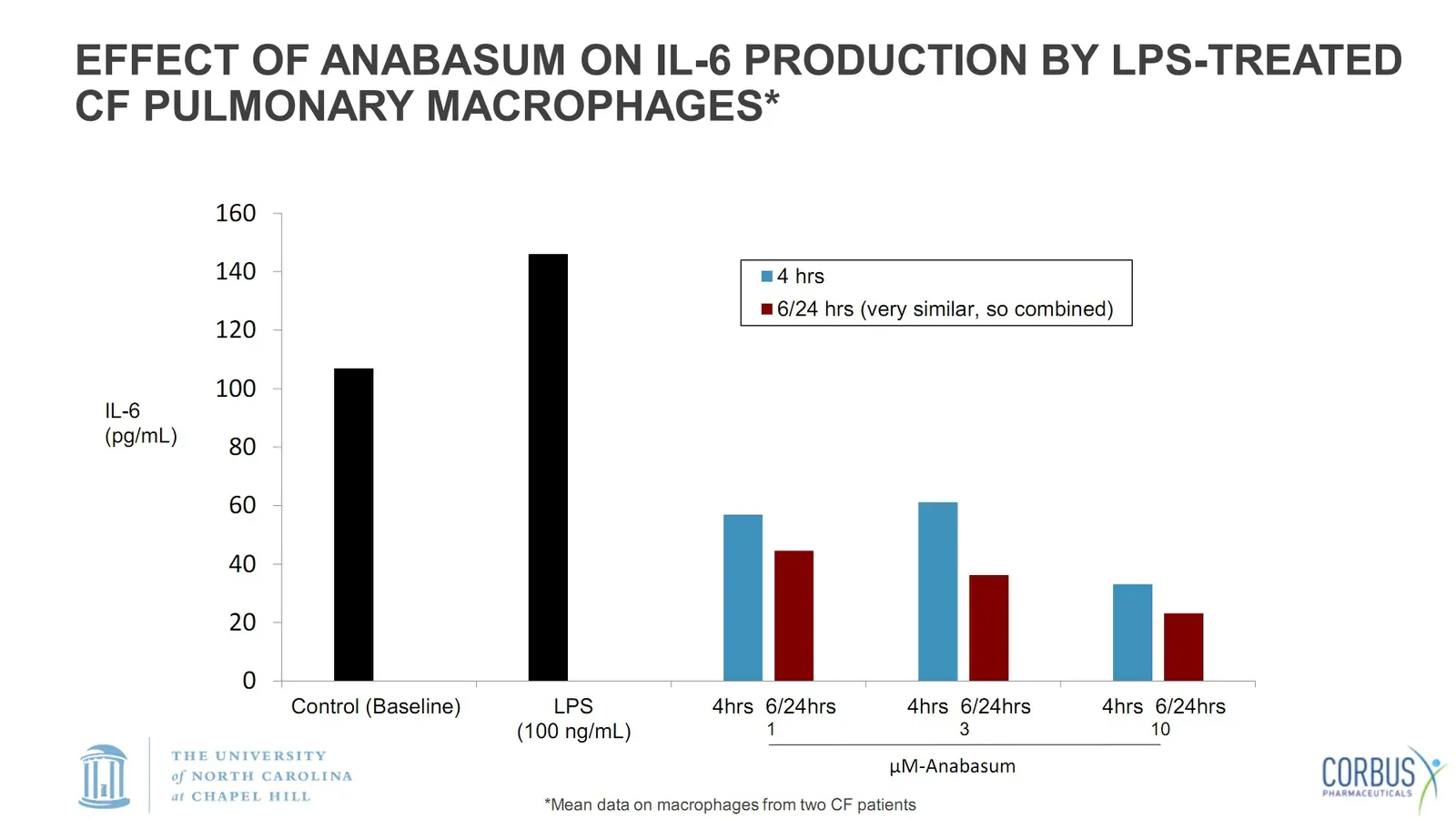
EFFECT OF ANABASUM ON IL-6 PRODUCTION BY LPS-TREATED CF PULMONARY MACROPHAGES* 160 140 m4 hrs 6/24 hrs (very similar, so combined) 120 100 IL-6 (pg/mL) gg 60 40 ° i | | ie) Control (Baseline) LPS 4hrs Biren 4hrs pies 4hrs eae (100 ng/mL) p—_N THE UNIVERSITY Fl | ersowzi canons uM-Anabasum CORBUS Y M
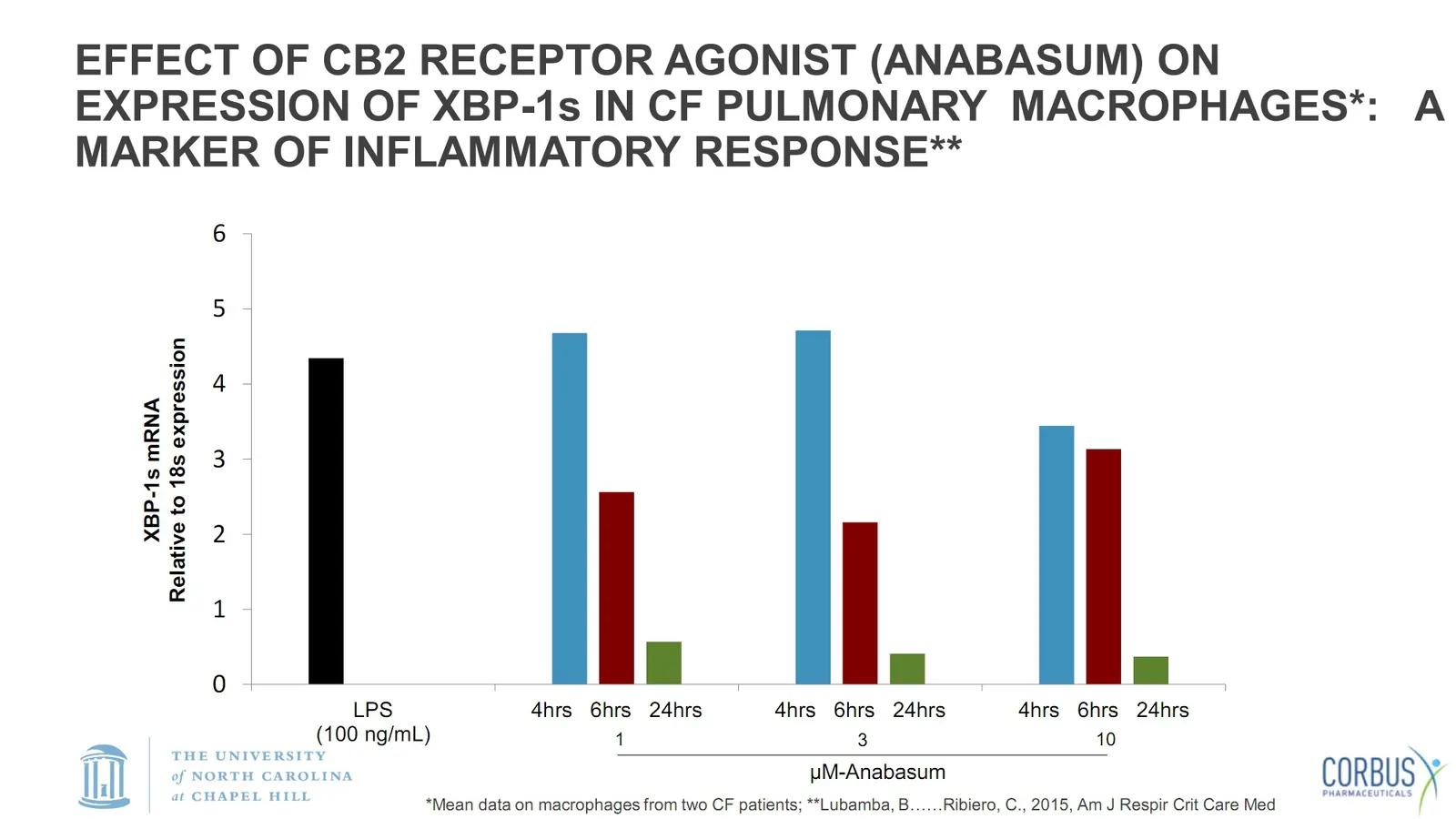
Slide 55: Effect of Anabasum on Expression of XBP-1s in CF Macrophages
EFFECT OF CB2 RECEPTOR AGONIST (ANABASUM) ON EXPRESSION OF XBP-1s INCF PULMONARY MACROPHAGES*: A MARKER OF INFLAMMATORY RESPONSE** 6 5 4 iJ a] wo <i * za ran 08 3 vo a, 2 oO x$ 2 & gz a 0) LPS 4hrs 7 24hrs 4hrs = 24hrs 4hrs a 24hrs ~~ 00 ng/mL) a T ill of HM-Anabasum CORBUS = |“ *Mean data on macrop
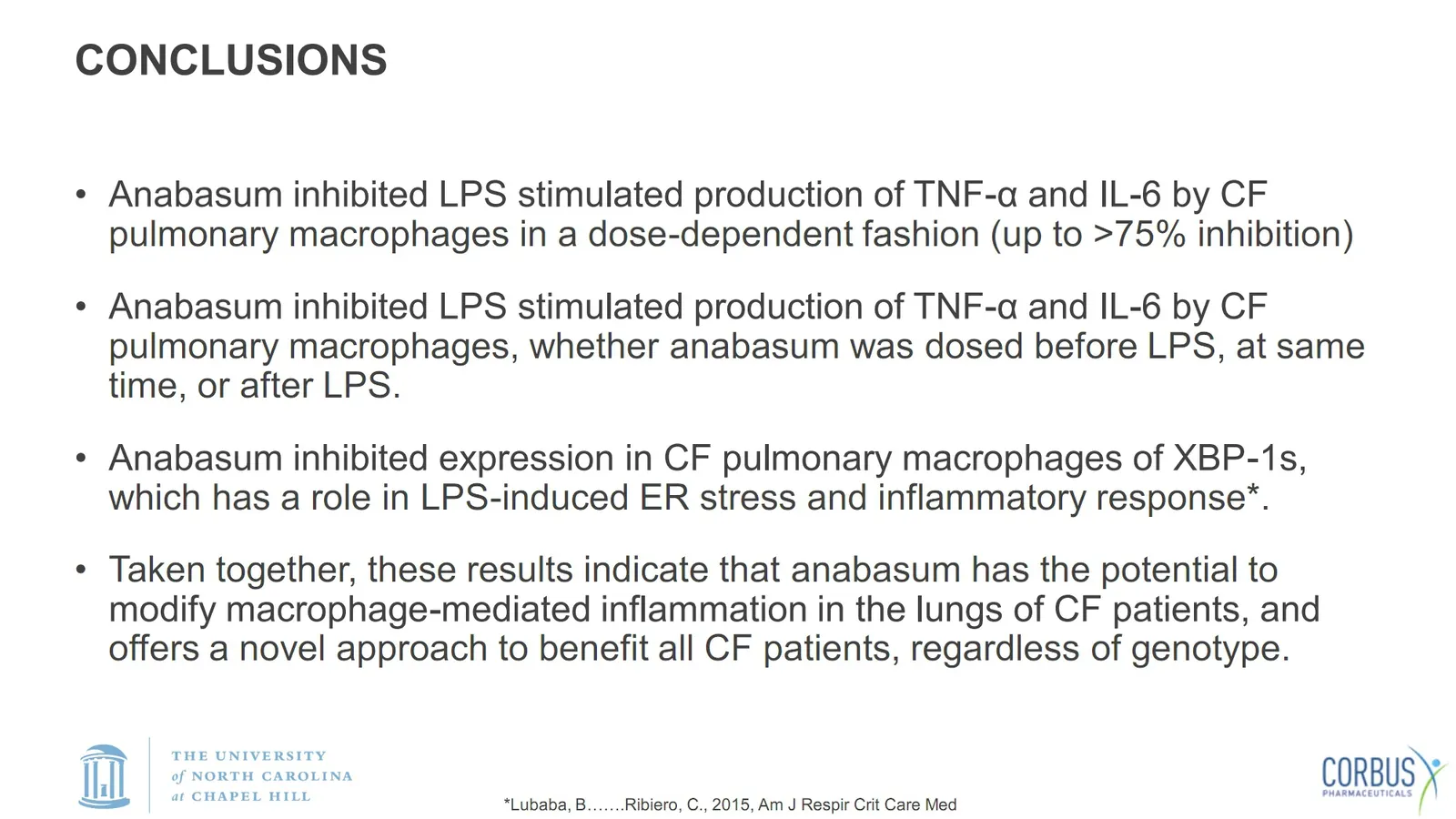
Slide 56: Conclusions
CONCLUSIONS e Anabasum inhibited LPS stimulated production of TNF-a and IL-6 by CF pulmonary macrophages in a dose-dependent fashion (up to >75% inhibition) e Anabasum inhibited LPS stimulated production of TNF-a and IL-6 by CF pulmonary macrophages, whether anabasum was dosed before LPS, at same ti
Slide 57: Q&A
Q&A CORBUS
Slide 58: CF Phase 2 Study: Role of Inflammation, Protocol, Study Design and Outlook
CF Phase 2 Study: Role of Inflammation, Protocol, Study Design and Outlook James Chmiel, M.D., M.P.H. Professor of Pediatrics, Case Western Reserve University, Associate Director of the LeRoy W. Matthews Cystic Fibrosis Center at University Hospitals Rainbow Babies and Children's Hospital in Clevela
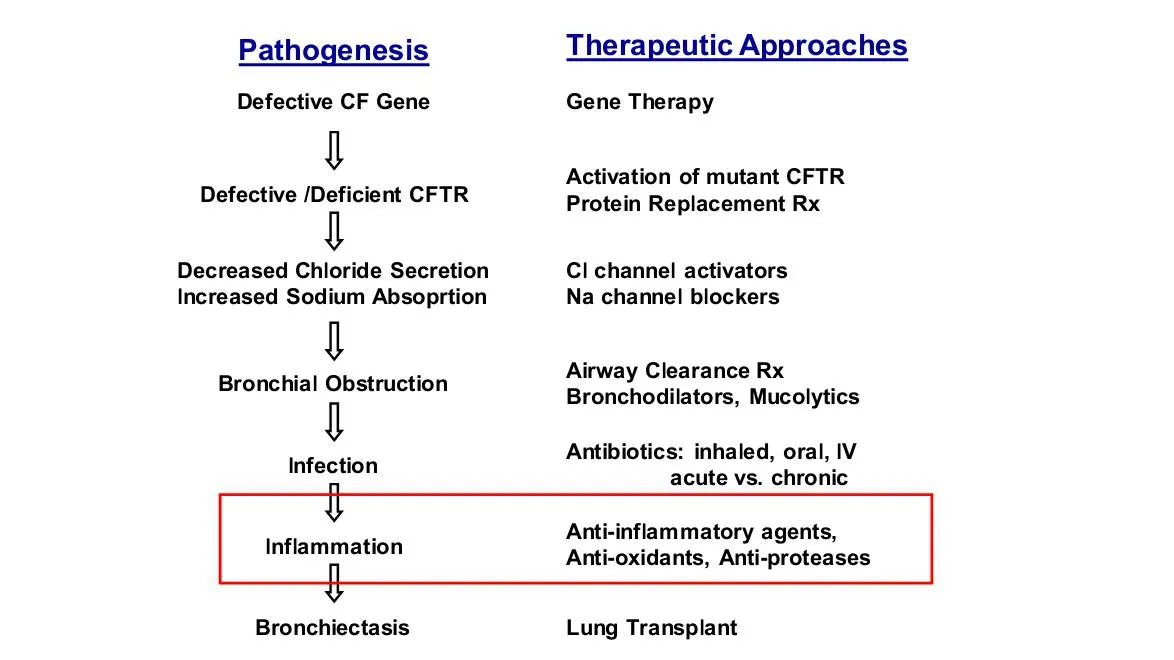
Slide 59: Pathogenesis
Pathogenesis Defective CF Gene J Defective /Deficient CFTR I Decreased Chloride Secretion Increased Sodium Absoprtion I Bronchial Obstruction q Infection Bronchiectasis Therapeutic Approaches Gene Therapy Activation of mutant CFTR Protein Replacement Rx Cl channel activators Na channel blockers Airw
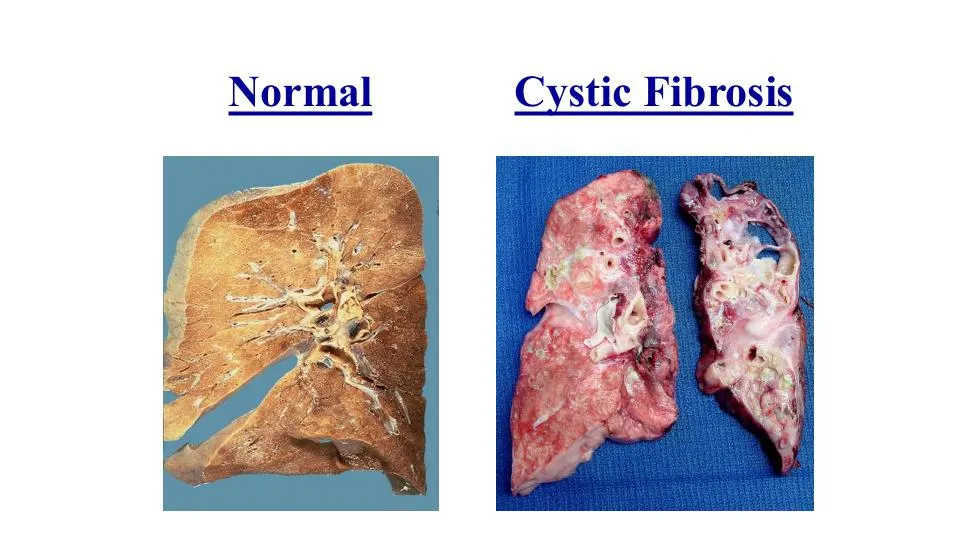
Slide 60
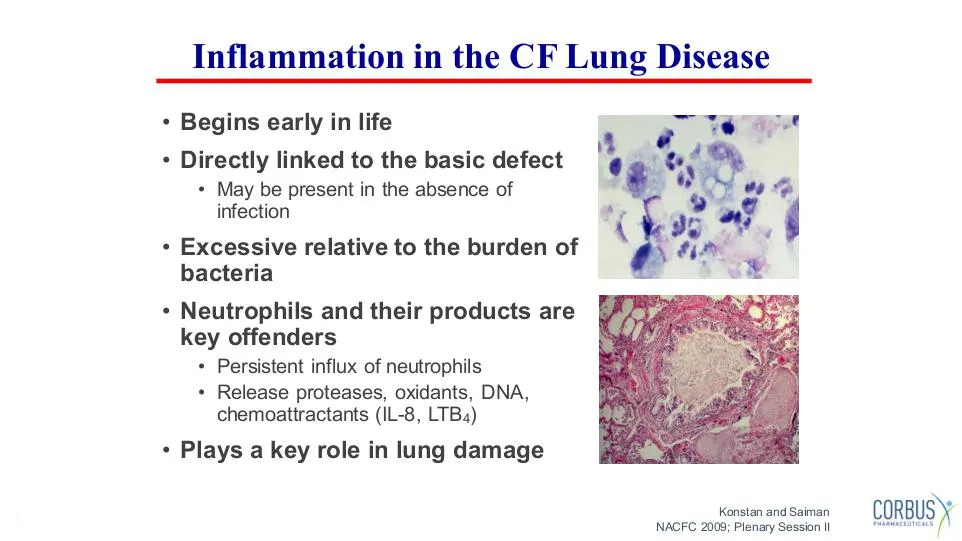
Slide 61: Inflammation in the CF Lung Disease
Inflammation in the CF Lung Disease * Begins early in life + Directly linked to the basic defect + May be present in the absence of infection + Excessive relative to the burden of bacteria + Neutrophils and their products are key offenders + Persistent influx of neutrophils + Release proteases, oxid
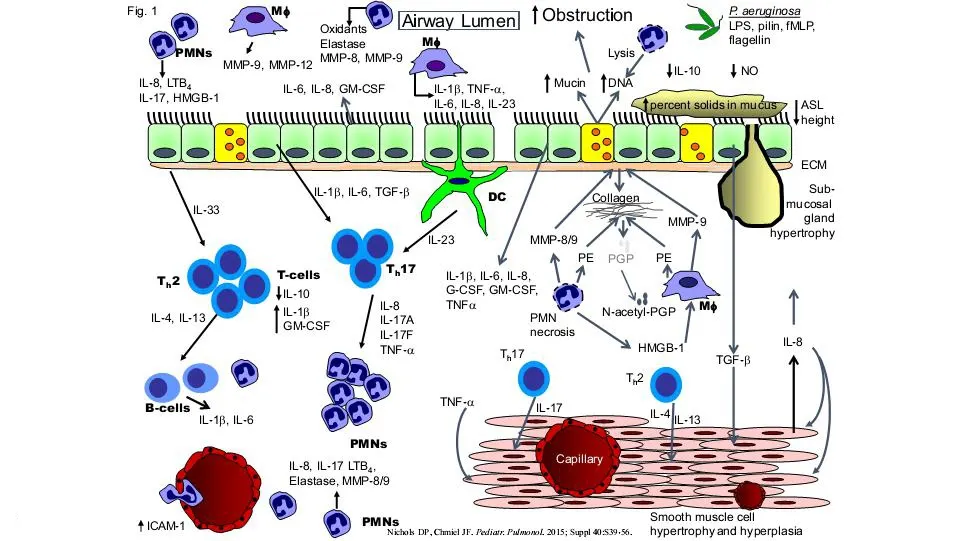
Slide 62: Fig. ® rN ond (Airway Lumen| t Obstruction
Fig. 1 ® rN ond (Airway Lumen| t Obstruction , a wn 1 wNe-9, mp-t2 MMP-8. MIMP-9 yew ue isles trnecn fork P_ aeruginosa LPS, pilin, fMLP, flagellin 12 Le iLtp IL, 13 iLt7a SMCSE IL-A7F TNF-a PMNs IL-8, IL-7 LTB, Elastase, MMP-8/9 © bom Nithobs DP, Chil JF. Padiatr: Palmonl. 2015; Suppl 053956. ‘Smoo
Slide 63: Anti-Inflammatory Trials in CF
Anti-Inflammatory Trials in CF CORBUS)y
Slide 64: Anti-inflammatory Approaches
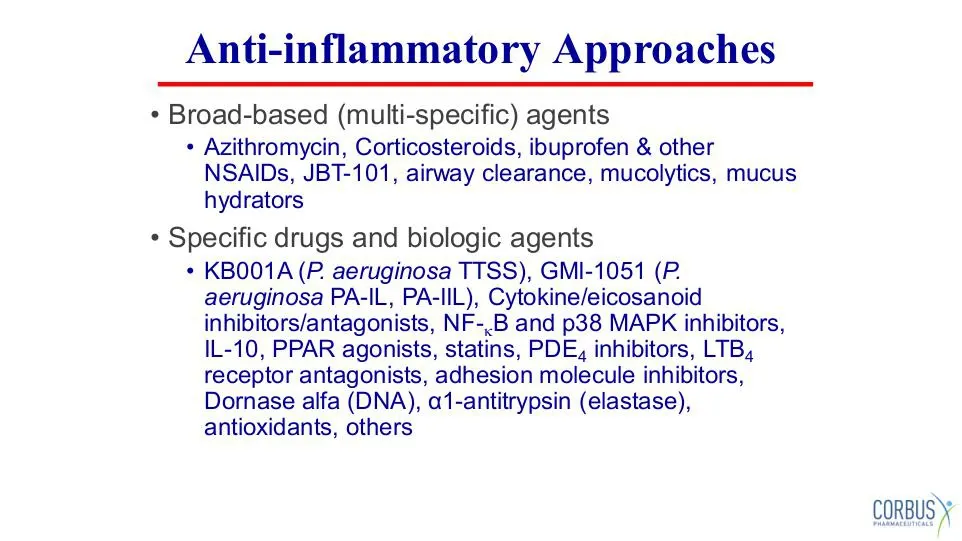
Anti-inflammatory Approaches * Broad-based (multi-specific) agents + Azithromycin, Corticosteroids, ibuprofen & other NSAIDs, JBT-101, airway clearance, mucolytics, mucus hydrators * Specific drugs and biologic agents * KBO01A (P. aeruginosa TTSS), GMI-1051 (P. aeruginosa PA-IL, PA-IIL), Cytokine/ei
Slide 65: Are Anti-inflammatory Drugs Still Necessary?
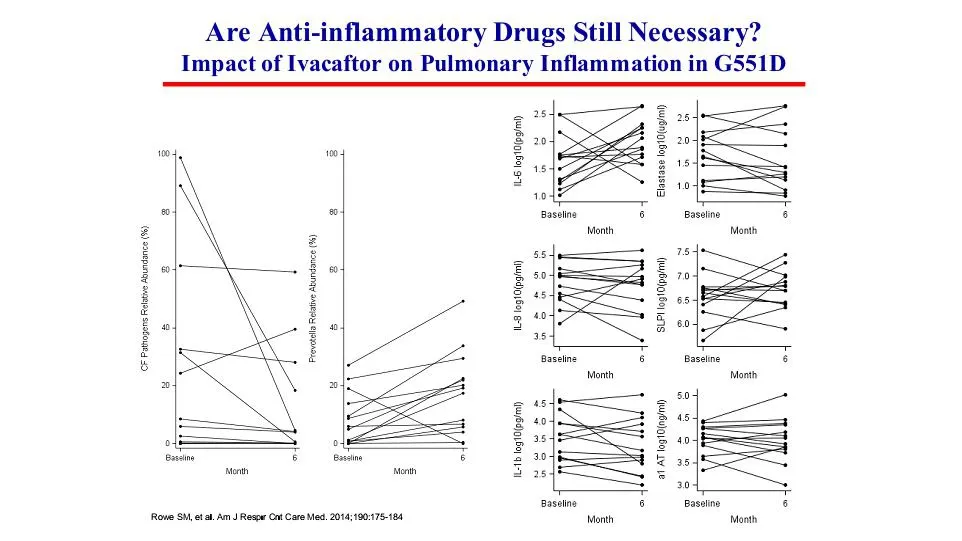
Are Anti-inflammatory Drugs Still Necessary? Impact of Ivacaftor on Pulmonary Inflammation in G551D (ce Patogons elt Ay i i é i ; I Rowe Si eta Am J Resp Ont Care Med, 2014: 190:175.184 =e & es 2 : ° ° \s 1s B10 10 é baste = postin H Mont Monts 1 0 *s 5 eo baste 3 bastine T Month Went 50 ofp——— ¢ 40
Slide 66: Proof of Concept: Oral Corticosteroids
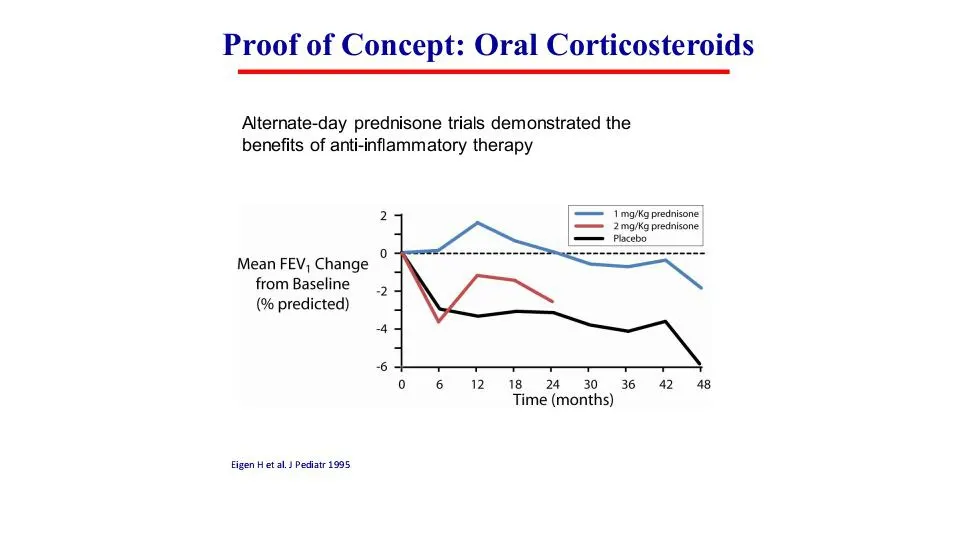
Proof of Concept: Oral Corticosteroids Alternate-day prednisone trials demonstrated the benefits of anti-inflammatory therapy 1 mg/kg prednisone 2mgika predaisone. Mean FEV, Change ° from Baseline (% predicted) 0 6 12 18 24 30 36 42 48 Time (months) Figen Het al Pediatr 1995
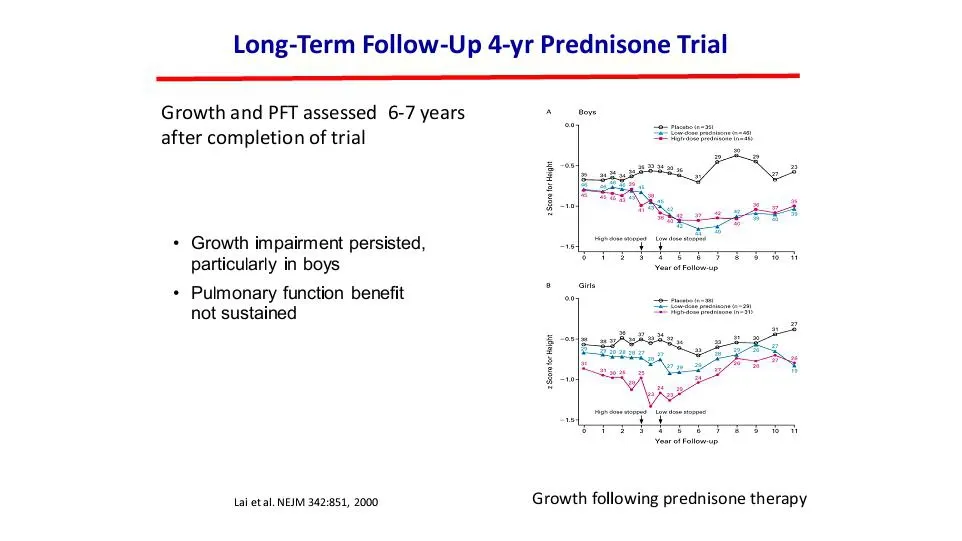
Slide 67: Long-Term Follow-Up 4-yr Prednisone Trial
Long-Term Follow-Up 4-yr Prednisone Trial ee Growth and PFT assessed 6-7 years A tow after completion of trial * Growth impairment persisted, particularly in boys + Pulmonary function benefit not sustained Lat etal. NEJM 3423851, 2000 Growth following prednisone therapy
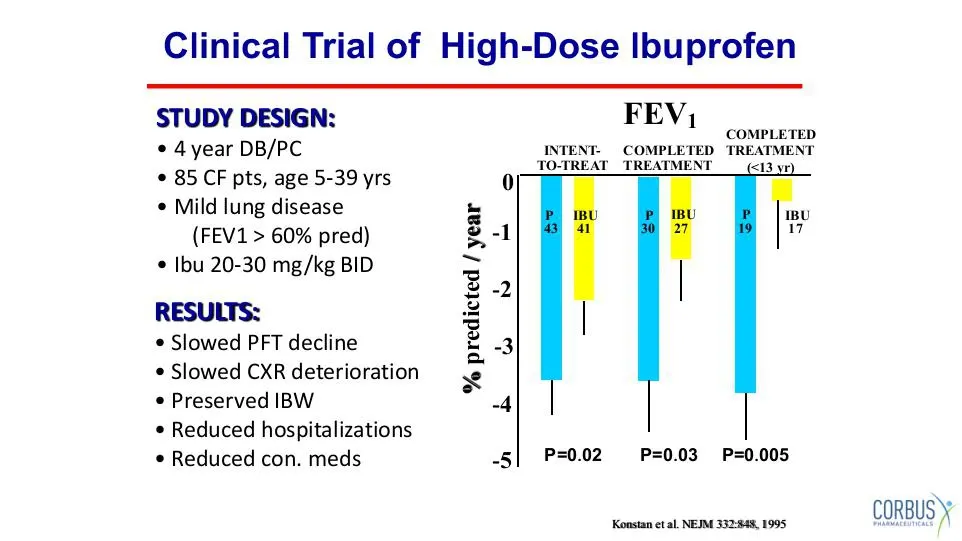
Slide 68: Clinical Trial of High-Dose Ibuprofen
Clinical Trial of High-Dose Ibuprofen STUDY DESIGN: © 4year DB/PC * 85 CF pts, age 5-39 yrs © Mild lung disease (FEV1 > 60% pred) © Ibu 20-30 mg/kg BID RESULTS: © Slowed PFT decline * Slowed CXR deterioration Preserved IBW © Reduced hospitalizations ¢ Reduced con. meds FEV; COMPLETED TREATMENT % pre
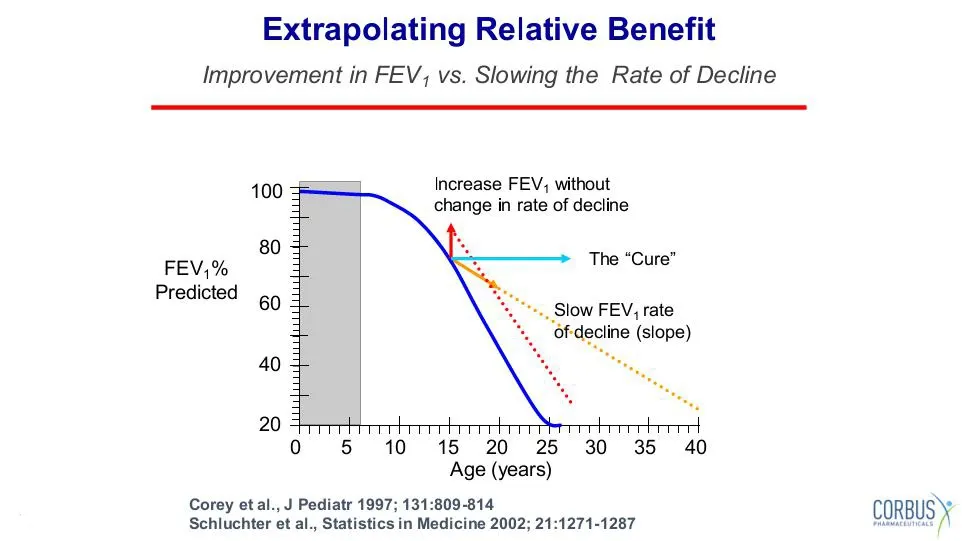
Slide 69: Extrapolating Relative Benefit
Extrapolating Relative Benefit Improvement in FEV; vs. Slowing the Rate of Decline 100 80 FEV,% Predicted 60 40 20 Corey etal., Increase FEV, without change in rate of decline The “Cure” Slow FEV, rate -decline (slope) 15 20 25 30 35 40 Age (years) J Pediatr 1997; 131:809-814 Schluchter et al., Stat
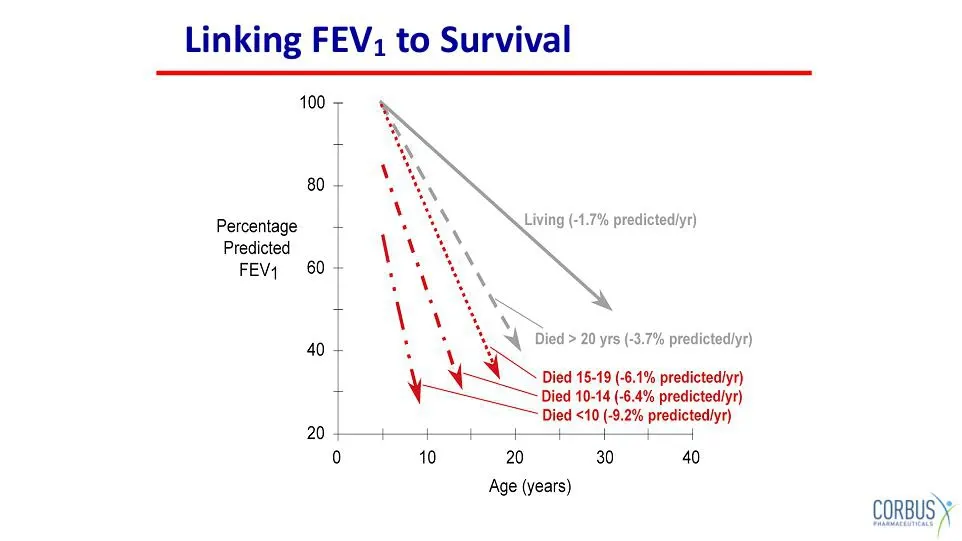
Slide 70: Linking FEV1 to Survival
Linking FEV; to Survival 100 + 80 - Percentage Living (-1.7% predictediyr) Predicted FEV, 60+ . N ‘Died > 20 yrs (-3.7% predictedlyr) 40 + _— we \ NS Died 15-19 (-6.1% predicted/yr) y Died 10-14 (-6.4% predicted/yr) Died <10 (-9.2% predicted/yr) 20 + + 1 ) 10 20 30 40 Age (years)
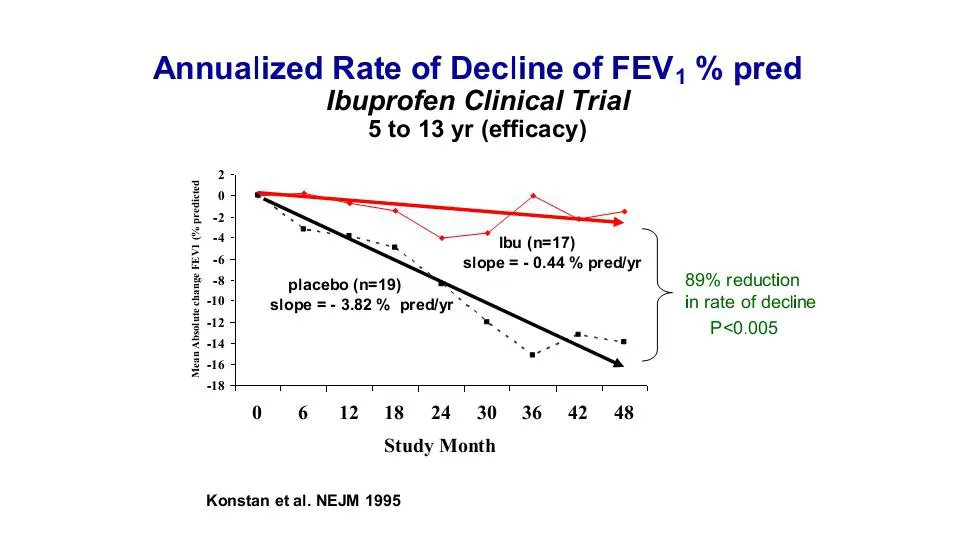
Slide 71: Annualized Rate of Decline of FEV1 % pred
Annualized Rate of Decline of FEV, % pred Ibuprofen Clinical Trial 5 to 13 yr (efficacy) Ibu (n=17) slope = - 0.44 % predlyr 89% reduction in rate of decline P<0.005 placebo (n=19) . slope = - 3.82% predlyr "~~ ¢ i 0 6 12 18 24 30 36 42 48 Study Month Konstan et al. NEJM 1995
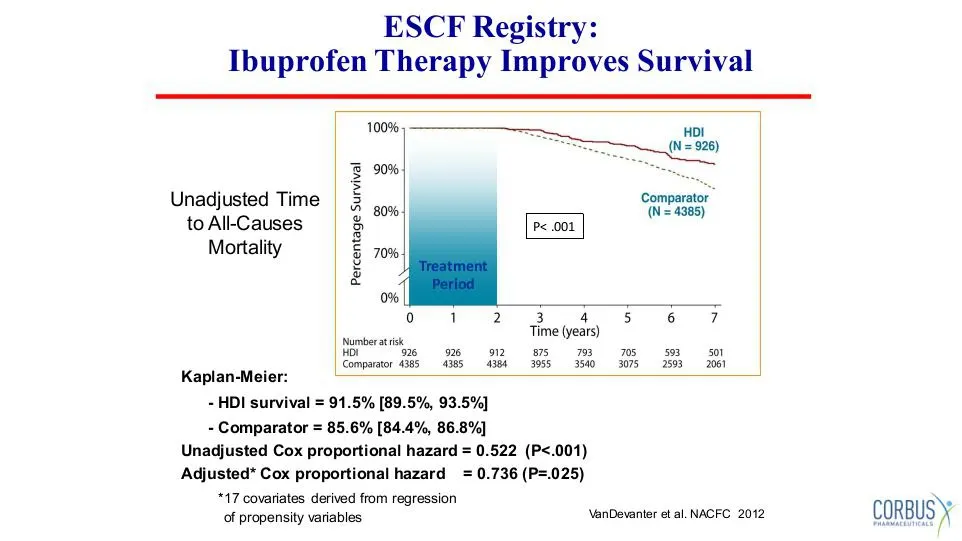
Slide 72: ESCF Registry: Ibuprofen Therapy Improves Survival
ESCF Registry: Ibuprofen Therapy Improves Survival Unadjusted Time | 3 to All-Causes $ Mortality € é 30 4 ‘Number at risk Time (years) i a a a i a | - Compartor 385 4085 BE 3955350 37S 2593 Kaplan-Meier: - HDI survival = 91.5% [89.5%, 93.5%] - Comparator = 85.6% [84.4%, 86.8%] Unadjusted Cox proport
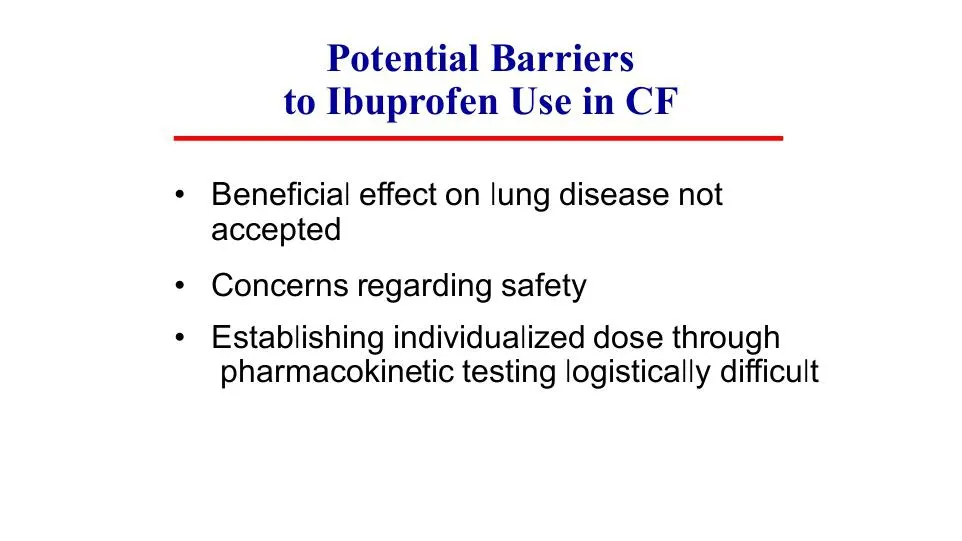
Slide 73: Potential Barriers to Ibuprofen Use in CF
Potential Barriers to Ibuprofen Use in CF * Beneficial effect on lung disease not accepted * Concerns regarding safety * Establishing individualized dose through pharmacokinetic testing logistically difficult
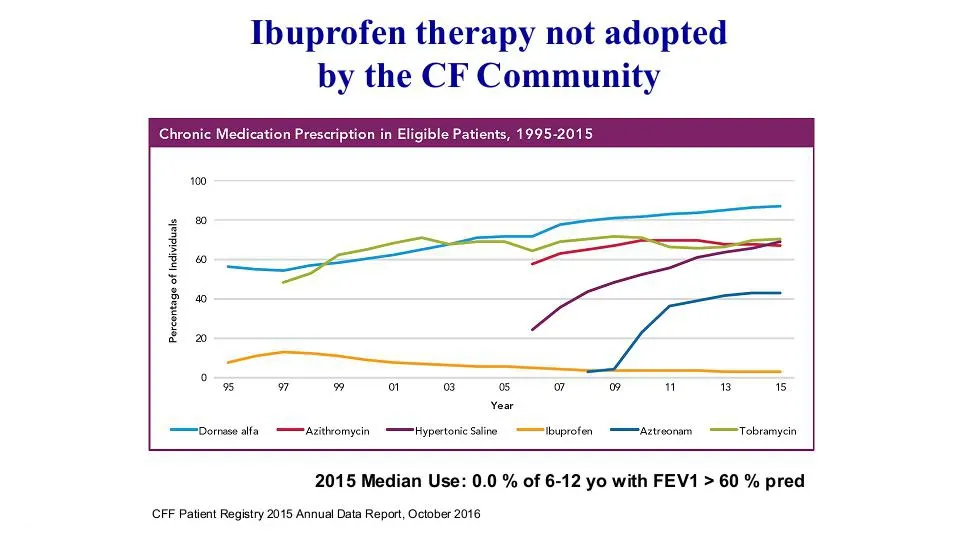
Slide 74: Ibuprofen Therapy Not Adopted by the CF Community
Ibuprofen therapy not adopted by the CF Community Chronic Medication Prescription in Eligible Patients, 1995-2015 2 3 ; co a 9 a oe 5 o o " 8 158 Year ——Dornase alfa Azithromycin Hypertonic Saline Ibuprofen ——Aztreonam ——Tobramycin 2015 Median Use: 0.0 % of 6-12 yo with FEV1 > 60 % pred CFF Patient
Slide 75
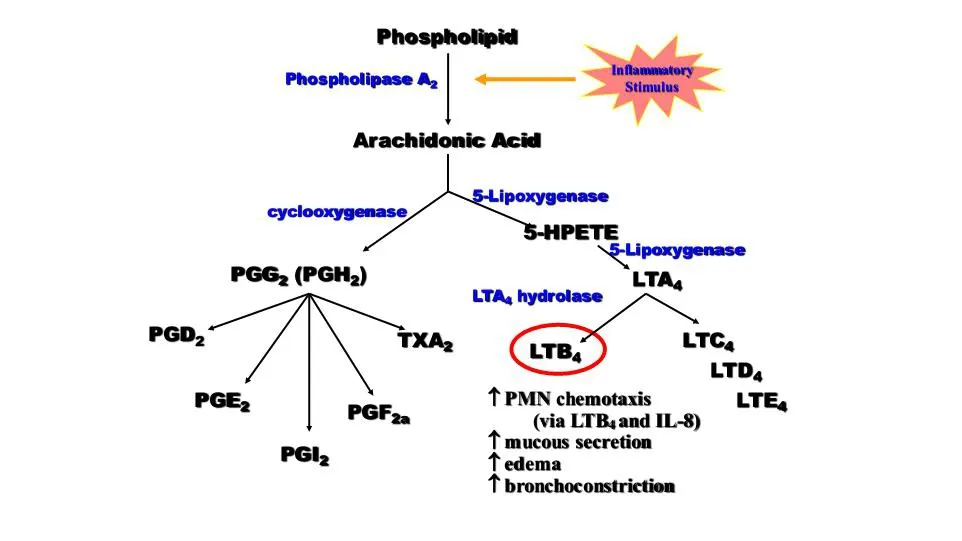
Slide 76: Arachidonic Acid
Arachidonic Acid ipoxygenase PETE NgUpoxygenase PGG, (PGH,) uma, ace LTAS PGD, TXA, Cary Gre) Ty, PGE, + PMN chemotaxis LTE, PGF. (via LTB,and IL-8) mucous secretion PGI, Tedema 7 bronchoconstriction
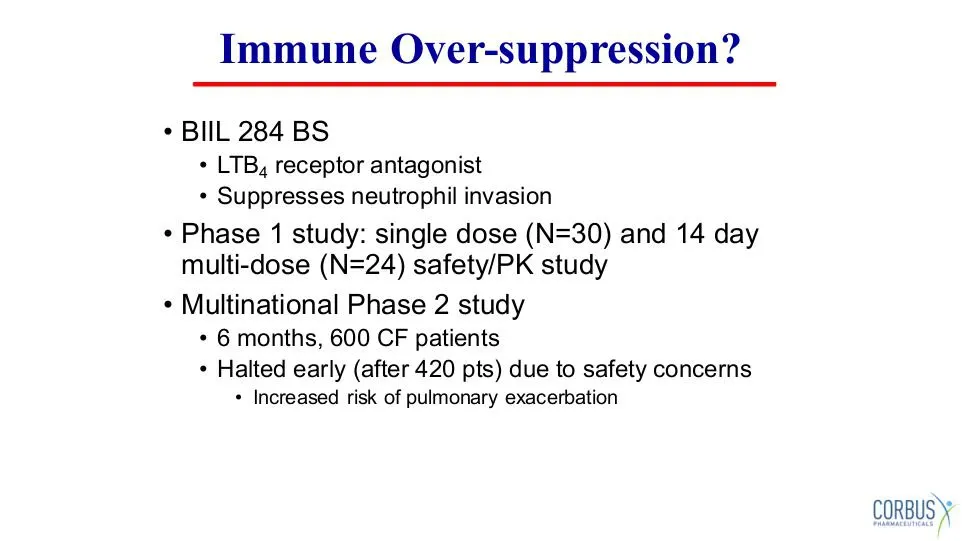
Slide 77: Immune Over-suppression?
Immune Over-suppression? * BIIL 284 BS + LTB, receptor antagonist + Suppresses neutrophil invasion « Phase 1 study: single dose (N=30) and 14 day multi-dose (N=24) safety/PK study + Multinational Phase 2 study * 6 months, 600 CF patients + Halted early (after 420 pts) due to safety concerns * Increa
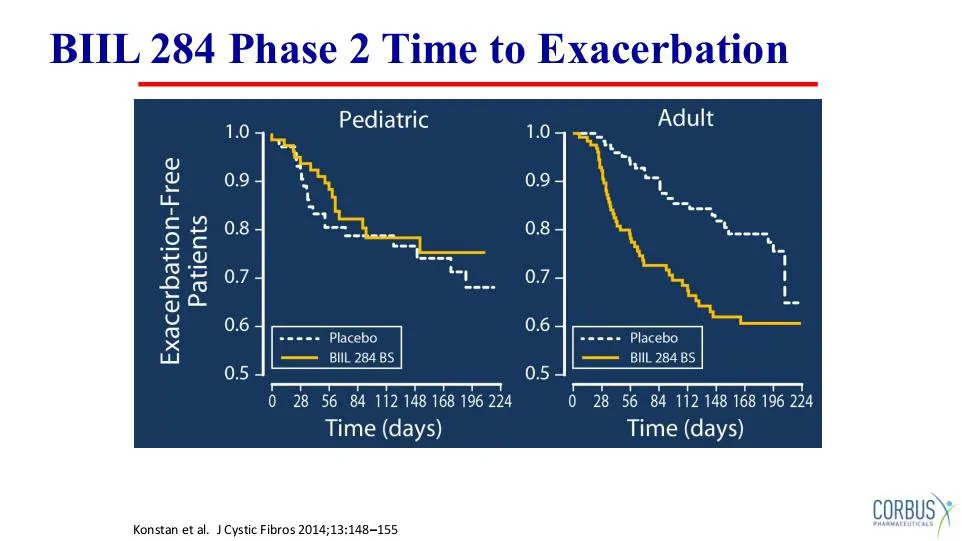
Slide 78: BIIL Phase 2 Time to Exacerbation
BIIL 284 Phase 2 Time to Exacerbation Pediatric 0 28 56 84 112 148 168 196 224 0 28 56 84 112 148 168 196 224 Time (days) Time (days) CORBUS ¥ Konstan et al. J Cystic Fibros 2014;13:148-155
Slide 79: Was BIIL too Suppressive?
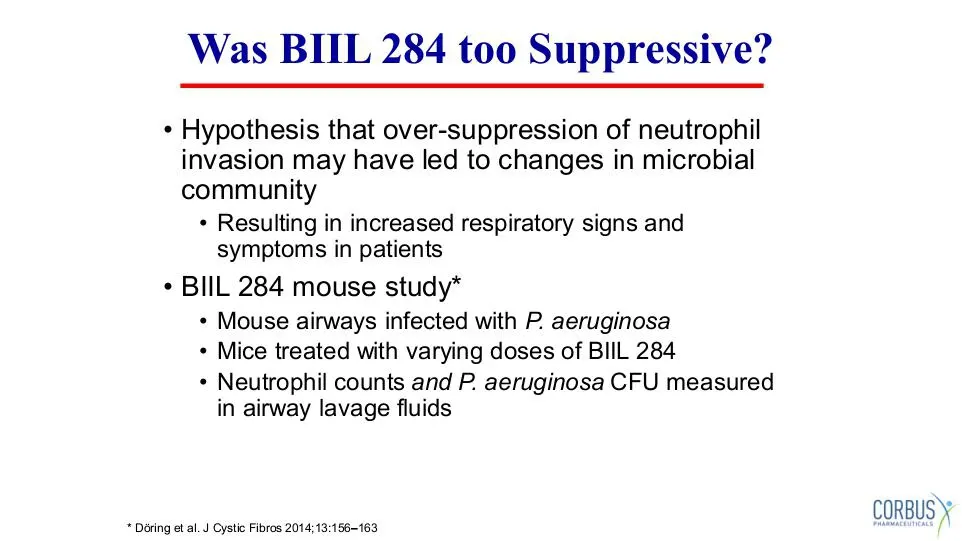
Was BIIL 284 too Suppressive? * Hypothesis that over-suppression of neutrophil invasion may have led to changes in microbial community + Resulting in increased respiratory signs and symptoms in patients * BIIL 284 mouse study* + Mouse airways infected with P. aeruginosa + Mice treated with varying d
Slide 80: CF Inflammation: A Nuanced Target
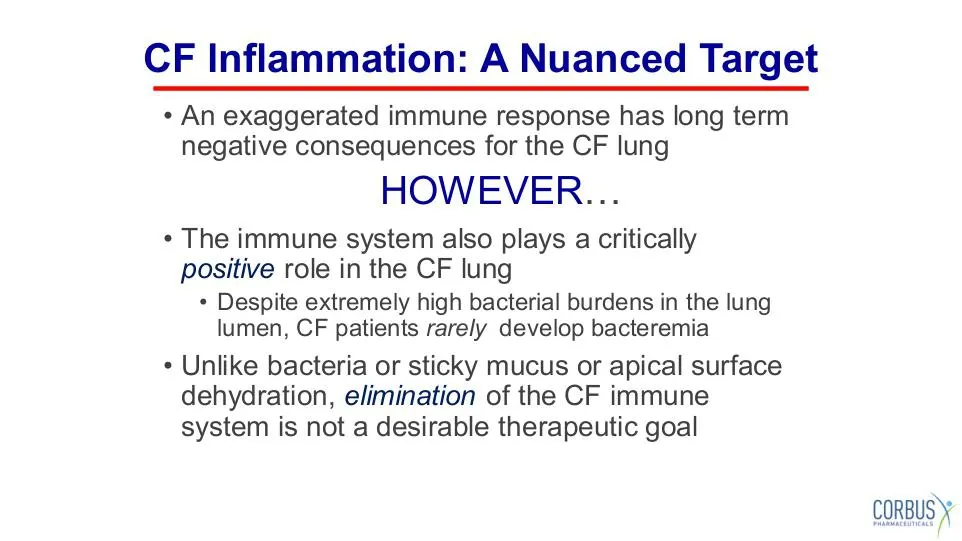
CF Inflammation: A Nuanced Target « An exaggerated immune response has long term negative consequences for the CF lung HOWEVER... * The immune system also plays a critically positive role in the CF lung + Despite extremely high bacterial burdens in the lung lumen, CF patients rarely develop bacterem
Slide 81
Slide 82
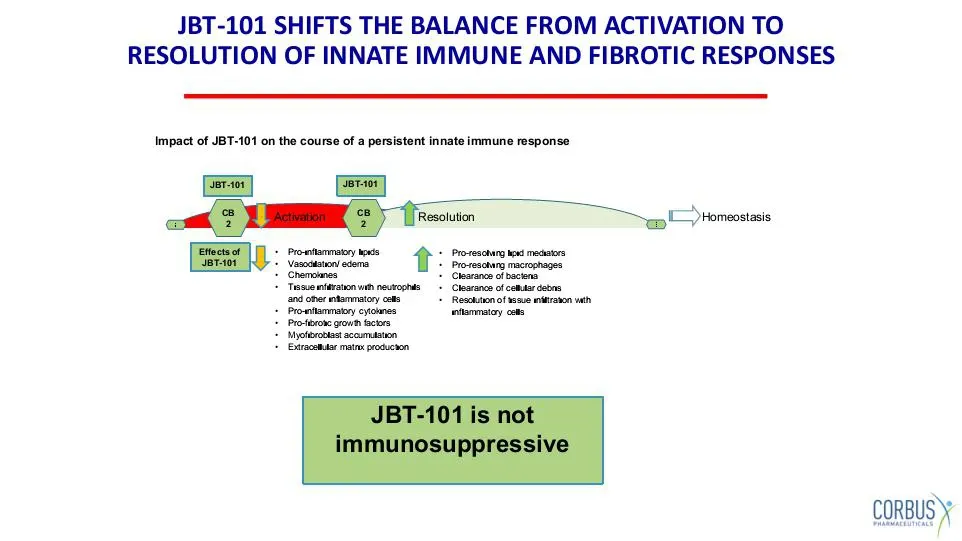
Slide 83
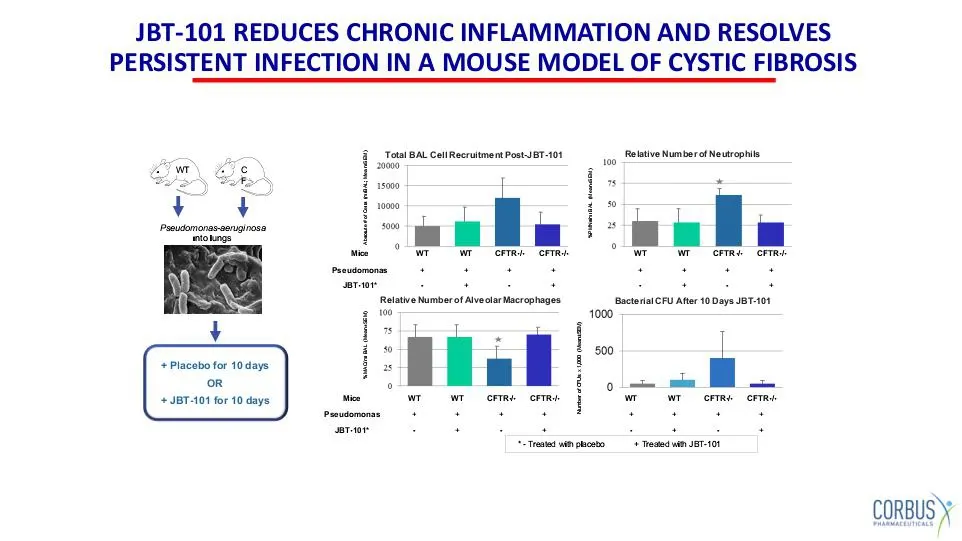
Slide 84
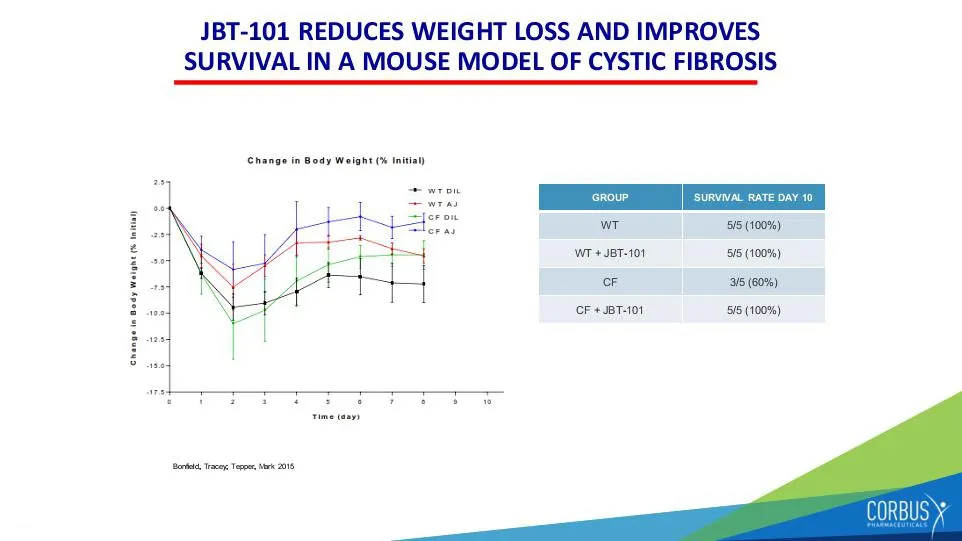
Slide 85
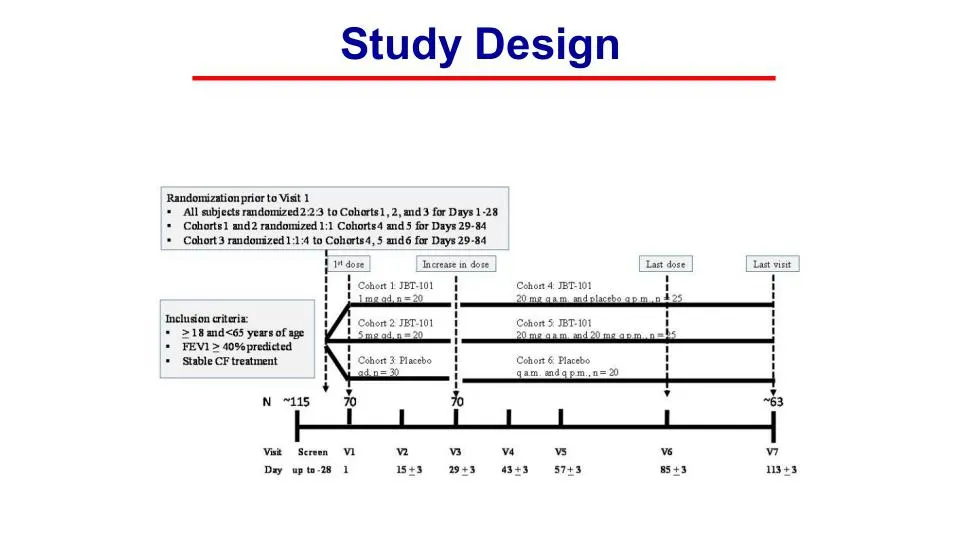
Slide 86
Slide 87
Slide 88
Slide 89
Slide 90
Source: SEC EDGAR · 8-K filed Mar 13, 2017
More decks from Corbus Pharmaceuticals Holdings, Inc.
 Investor Presentation (November 2026)55 slides · Nov 16, 2026
 Investor Presentation (October 2026)62 slides · Oct 15, 2026
 Investor Presentation (September 2026)58 slides · Sep 14, 2026
 Investor Presentation (May 2026)58 slides · May 26, 2026
 Investor Presentation (March 2026)63 slides · Mar 9, 2026
 Investor Presentation (February 2026)61 slides · Feb 25, 2026