Corbus Pharmaceuticals Holdings, Inc. · NASDAQ:CRBP
Corbus Pharmaceuticals — Investor Presentation (November 2026)
55 slides from Corbus Pharmaceuticals's investor presentation, Nov 16, 2026

Slide 1: Connecting Innovation to Purpose Corporate Presentation
Connecting Innovation to Purpose Corporate Presentation November 16, 2026 Exhibit 99.2
Slide 2: Forward-looking statements
This presentation contains certain forward-looking statements within the meaning of Section 27A of the Securities Act of 1933 and Section 21E of the Securities Exchange Act of 1934 and Private Securities Litigation Reform Act of 1995, as amended, including those relating to the Company’s trial resul
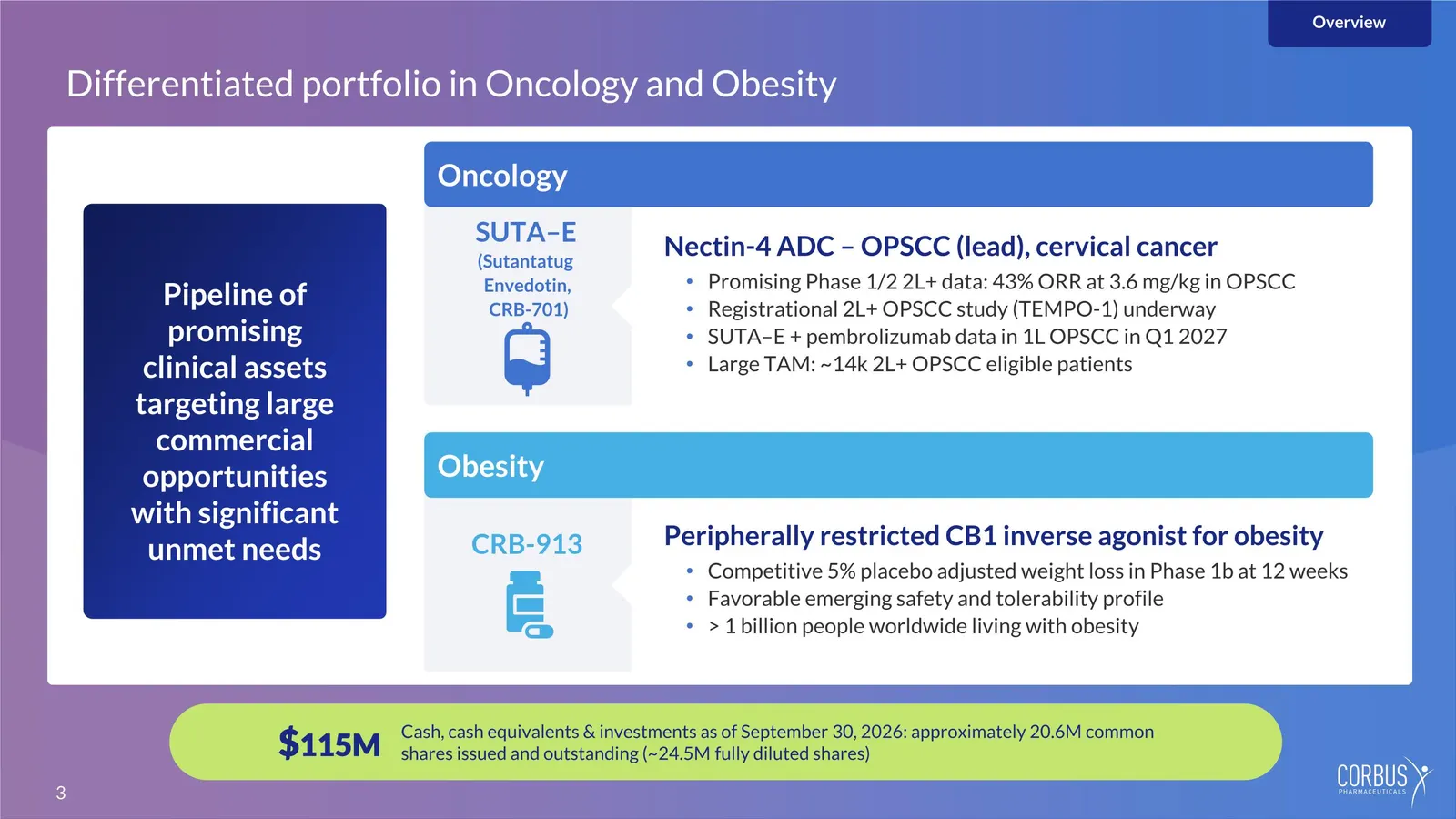
Slide 3: Differentiated portfolio in Oncology and Obesity Overview
Peripherally restricted CB1 inverse agonist for obesity Competitive 5% placebo adjusted weight loss in Phase 1b at 12 weeks Favorable emerging safety and tolerability profile > 1 billion people worldwide living with obesity OBESITY Differentiated portfolio in Oncology and Obesity Overview Oncology O
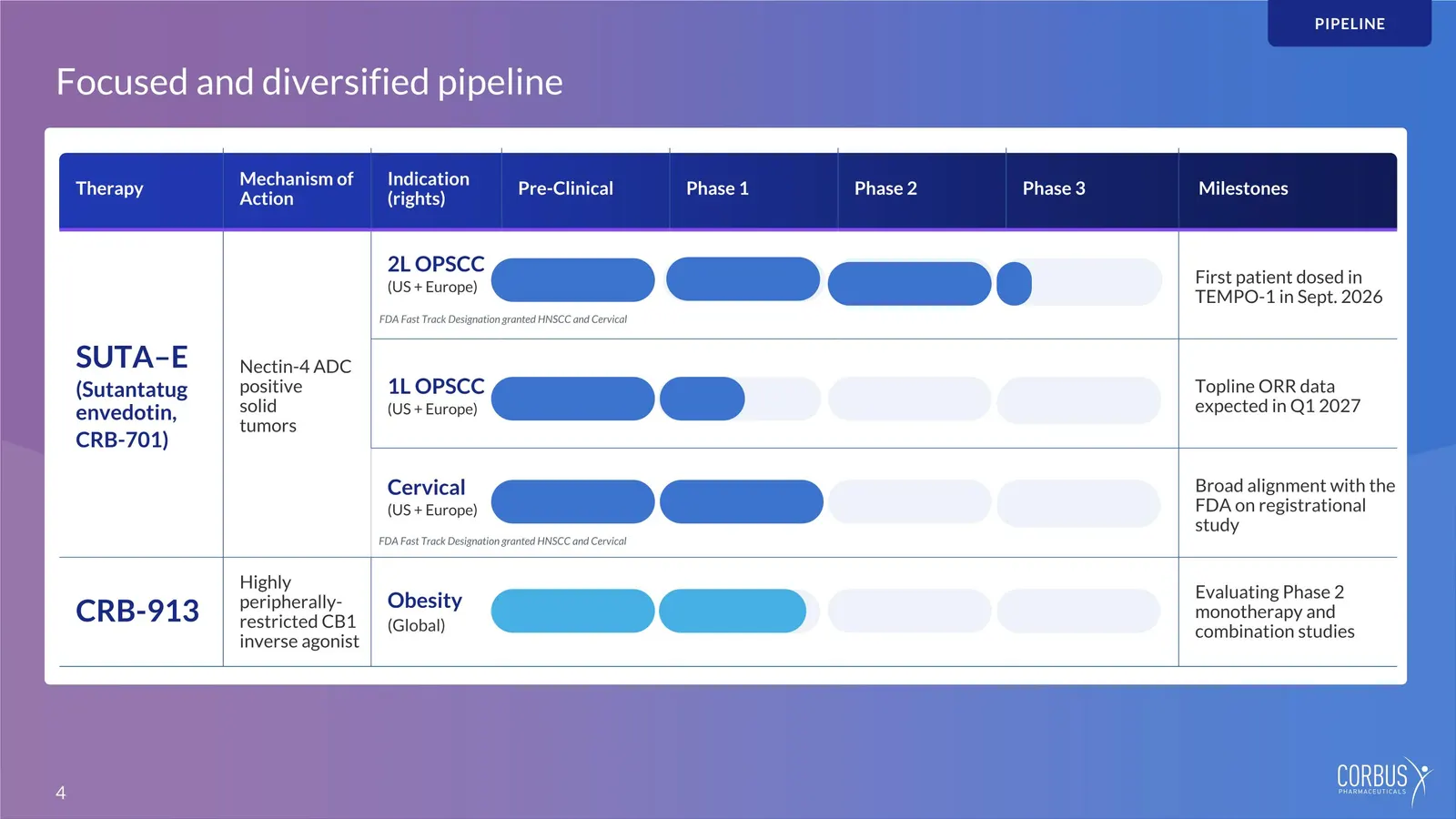
Slide 4: Focused and diversified pipeline
Focused and diversified pipeline Therapy Mechanism of Action Indication (rights) Pre-Clinical Phase 1 Phase 2 Phase 3 Milestones SUTA–E (Sutantatug envedotin, CRB-701) Nectin-4 ADC positive solid tumors 2L OPSCC (US + Europe) First patient dosed in TEMPO-1 in Sept. 2026 1L OPSCC (US + Europe) Toplin

Slide 5: Next-Generation Nectin-4 ADC targeting OPSCC and cervical cancer SUTA-E
Next-Generation Nectin-4 ADC targeting oropharyngeal (OPSCC) and cervical cancer SUTA-E
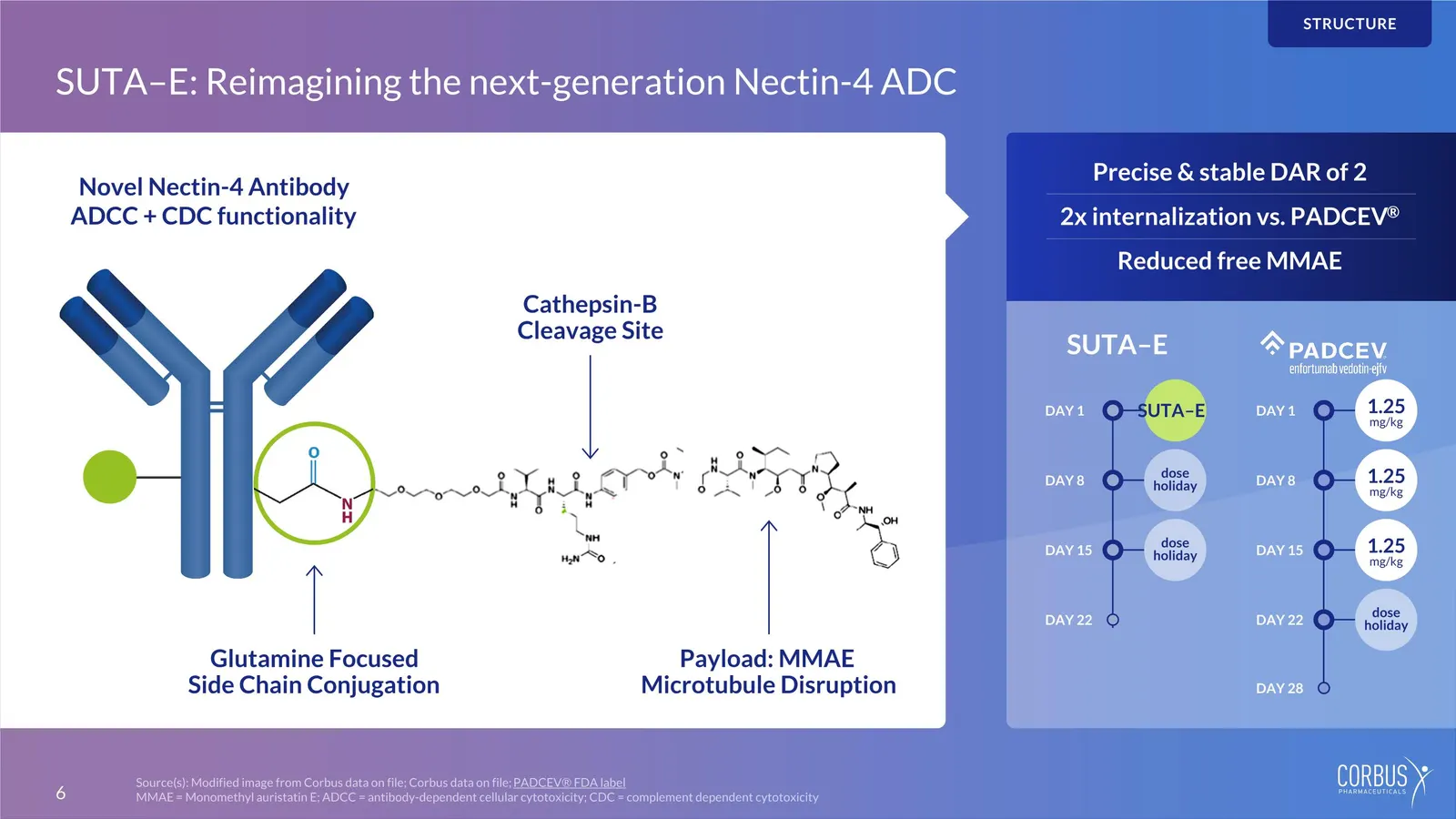
Slide 6: SUTA–E: Reimagining the next-generation Nectin-4 ADC
SUTA–E DAY 1 1.25 mg/kg DAY 8 1.25 mg/kg DAY 15 1.25 mg/kg DAY 22 dose holiday DAY 28 DAY 1 DAY 8 dose holiday DAY 15 dose holiday DAY 22 SUTA–E: Reimagining the next-generation Nectin-4 ADC Source(s): Modified image from Corbus data on file; Corbus data on file; PADCEV® FDA label MMAE = Monomethyl
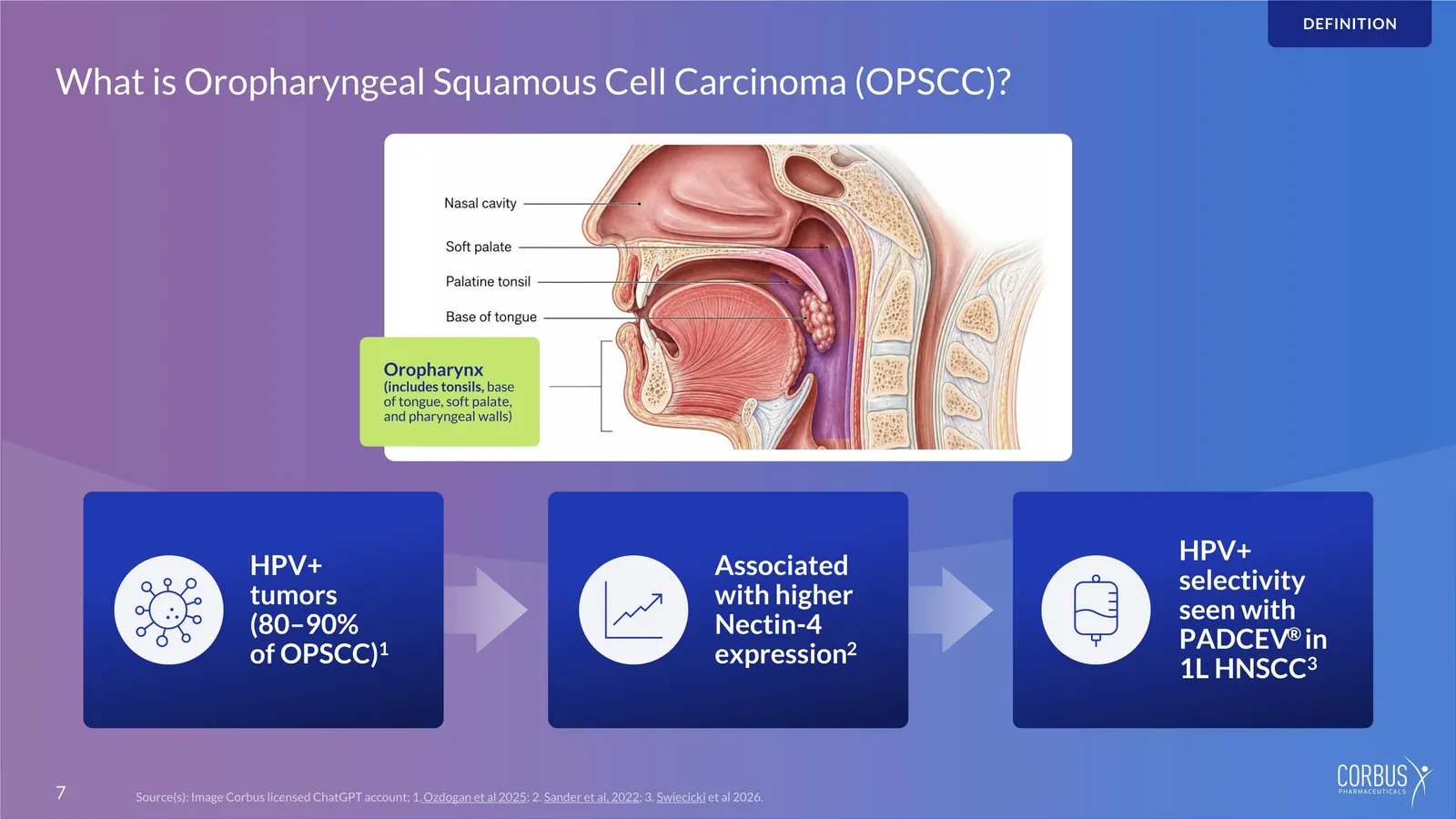
Slide 7: What is Oropharyngeal Squamous Cell Carcinoma (OPSCC)?
Associated with higher Nectin-4 expression2 HPV+ selectivity seen with PADCEV® in 1L HNSCC3 HPV+ tumors (80–90% of OPSCC)1 What is Oropharyngeal Squamous Cell Carcinoma (OPSCC)? Source(s): Image Corbus licensed ChatGPT account; 1. Ozdogan et al 2025; 2. Sander et al, 2022; 3. Swiecicki et al 2026. D
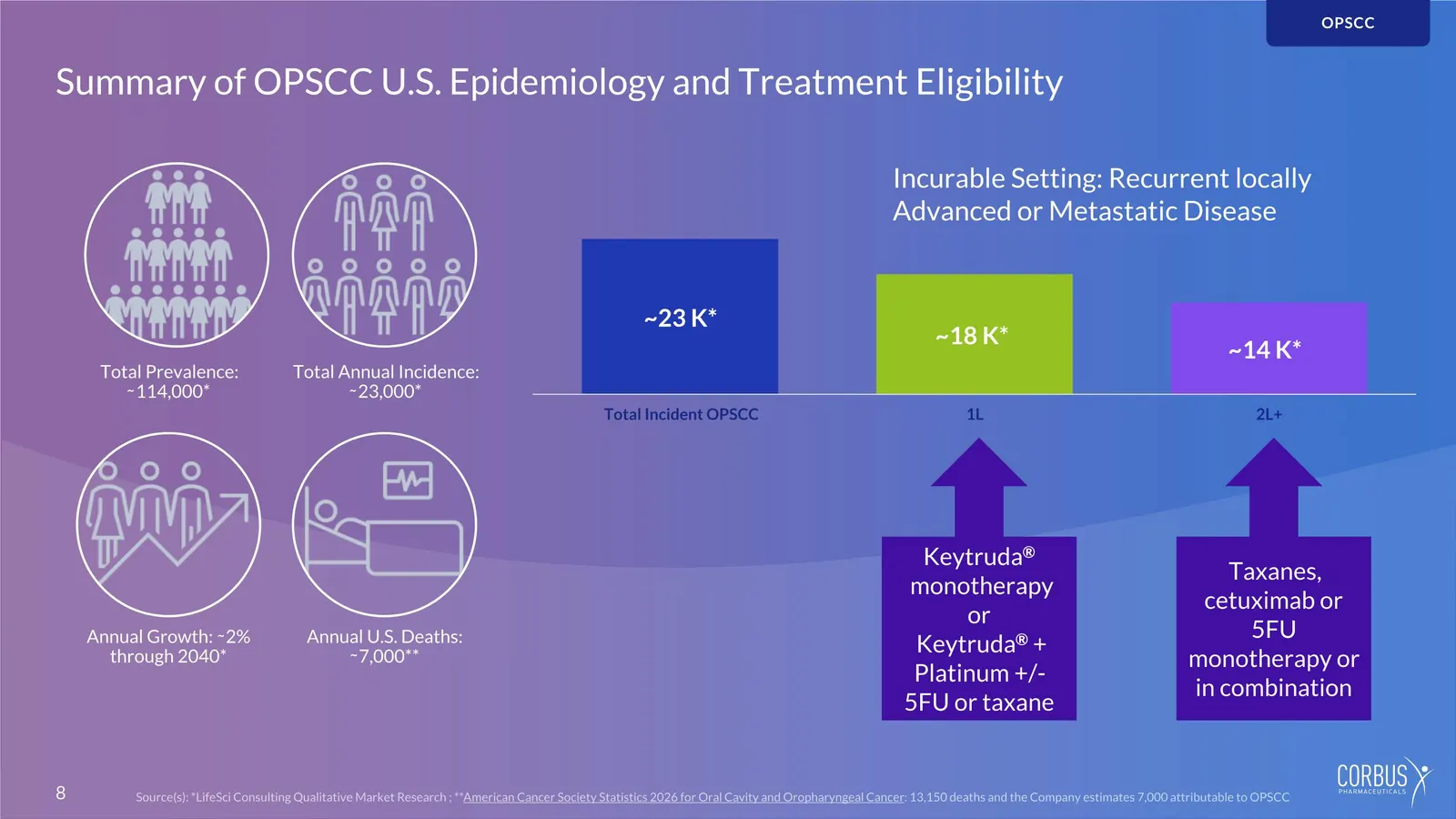
Slide 8: Summary of OPSCC U.S. Epidemiology and Treatment Eligibility
Summary of OPSCC U.S. Epidemiology and Treatment Eligibility Source(s): *LifeSci Consulting Qualitative Market Research ; **American Cancer Society Statistics 2026 for Oral Cavity and Oropharyngeal Cancer: 13,150 deaths and the Company estimates 7,000 attributable to OPSCC Total Prevalence: ∼114,000
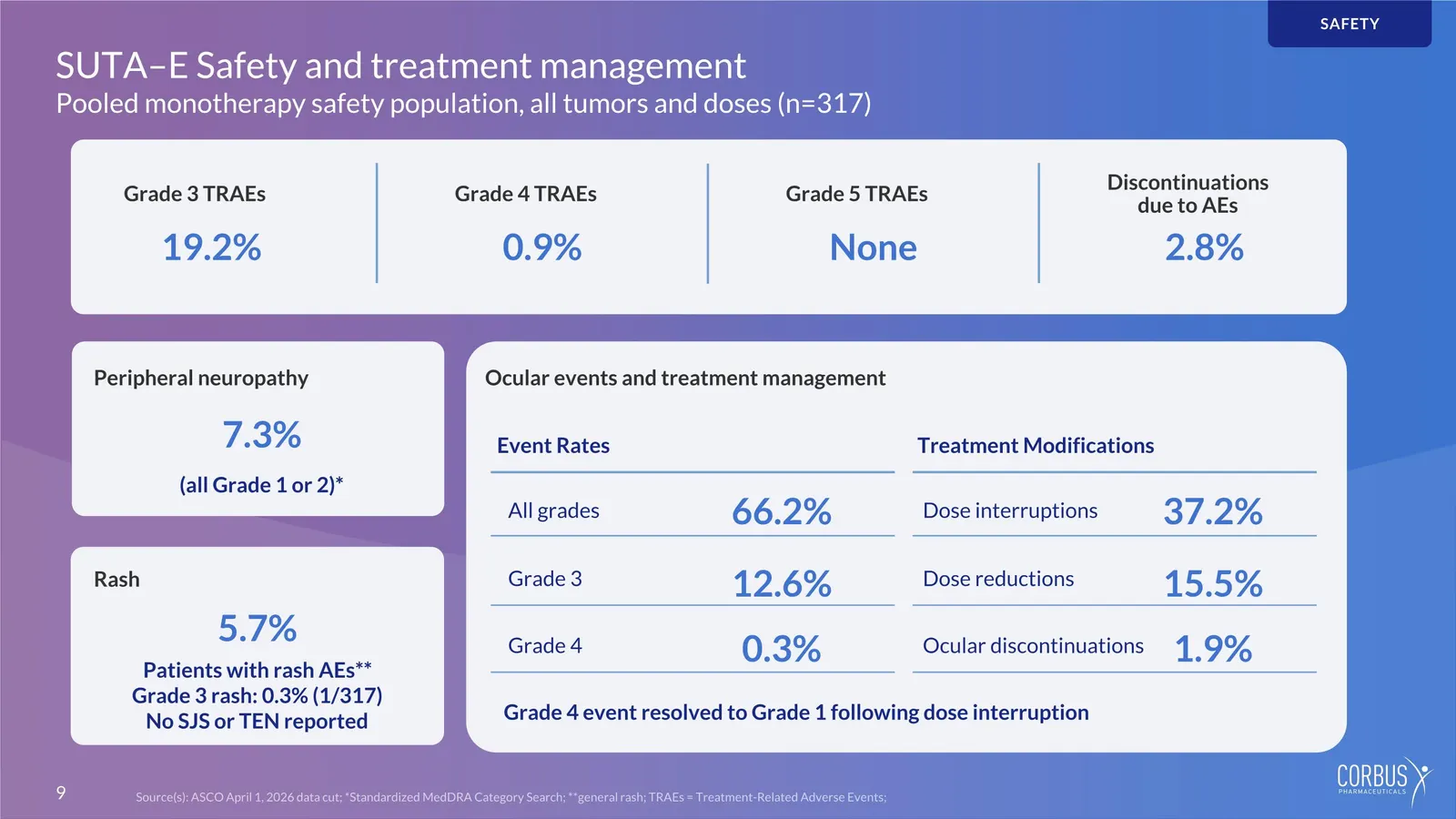
Slide 9: SUTA–E Safety and treatment management
Peripheral neuropathy SUTA–E Safety and treatment management Pooled monotherapy safety population, all tumors and doses (n=317) Source(s): ASCO April 1, 2026 data cut; *Standardized MedDRA Category Search; **general rash; TRAEs = Treatment-Related Adverse Events; Grade 3 TRAEs 19.2% SAFETY Grade 4 T
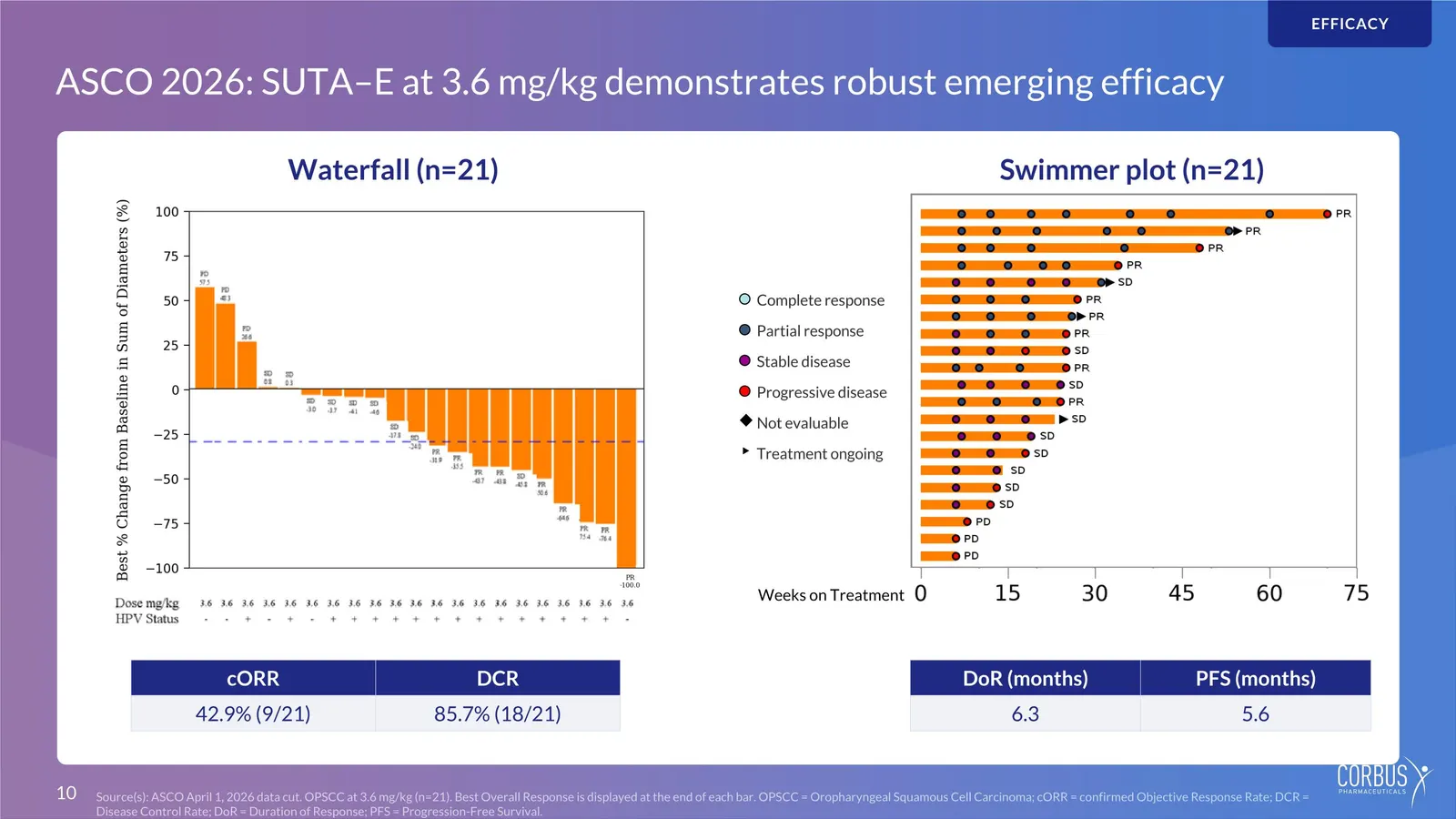
Slide 10: ASCO 2026: SUTA–E at 3.6 mg/kg demonstrates robust emerging efficacy
ASCO 2026: SUTA–E at 3.6 mg/kg demonstrates robust emerging efficacy Source(s): ASCO April 1, 2026 data cut. OPSCC at 3.6 mg/kg (n=21). Best Overall Response is displayed at the end of each bar. OPSCC = Oropharyngeal Squamous Cell Carcinoma; cORR = confirmed Objective Response Rate; DCR = Disease Co
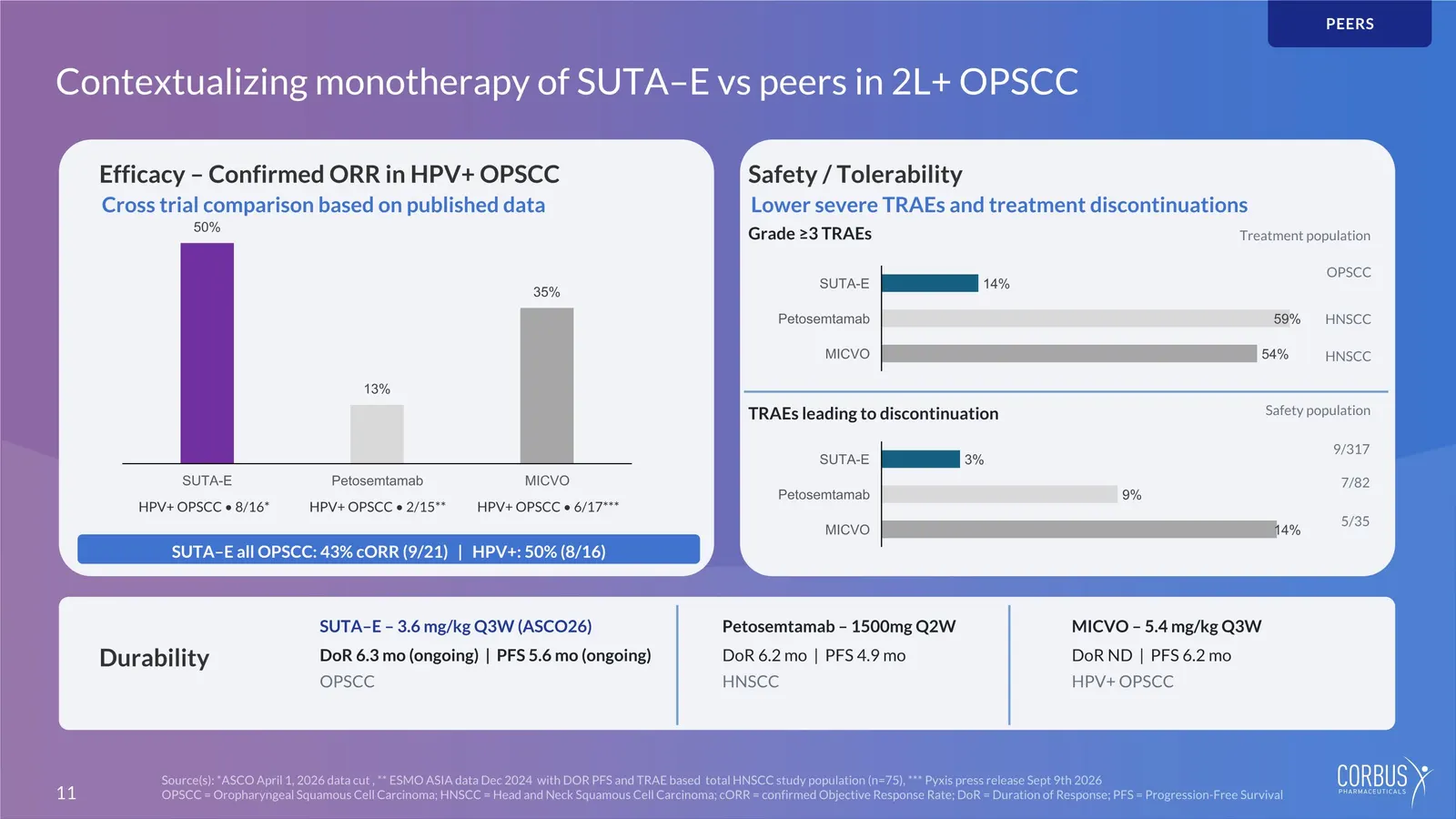
Slide 11: Contextualizing monotherapy of SUTA–E vs peers in 2L+ OPSCC
Contextualizing monotherapy of SUTA–E vs peers in 2L+ OPSCC Source(s): *ASCO April 1, 2026 data cut , ** ESMO ASIA data Dec 2024 with DOR PFS and TRAE based total HNSCC study population (n=75), *** Pyxis press release Sept 9th 2026 OPSCC = Oropharyngeal Squamous Cell Carcinoma; HNSCC = Head and Neck
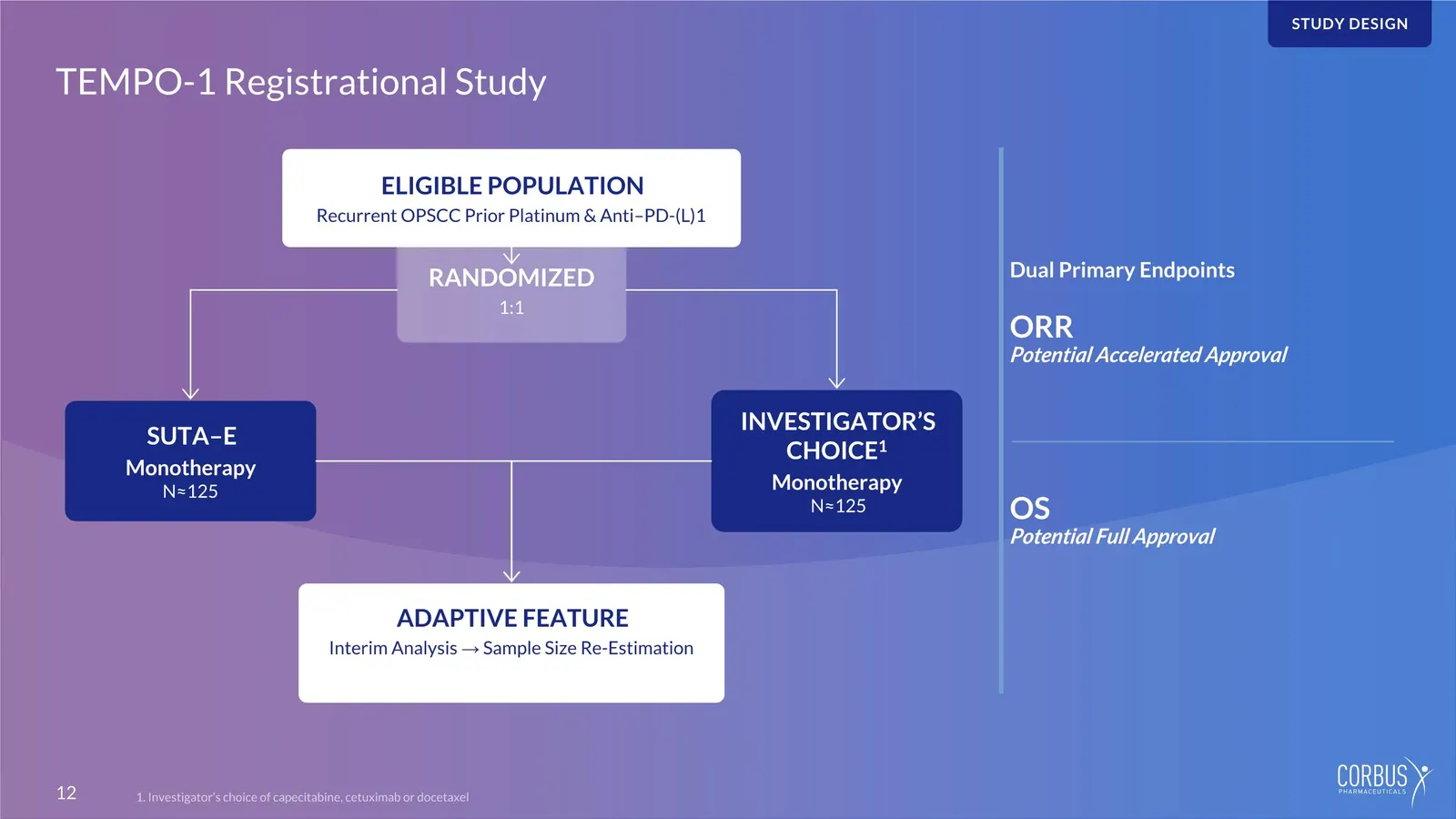
Slide 12: TEMPO-1 Registrational Study
TEMPO-1 Registrational Study 1. Investigator’s choice of capecitabine, cetuximab or docetaxel STUDY DESIGN ELIGIBLE POPULATION Recurrent OPSCC Prior Platinum & Anti–PD-(L)1 RANDOMIZED 1:1 SUTA–E Monotherapy N≈125 INVESTIGATOR’S CHOICE1 Monotherapy N≈125 ADAPTIVE FEATURE Interim Analysis → Sample Siz
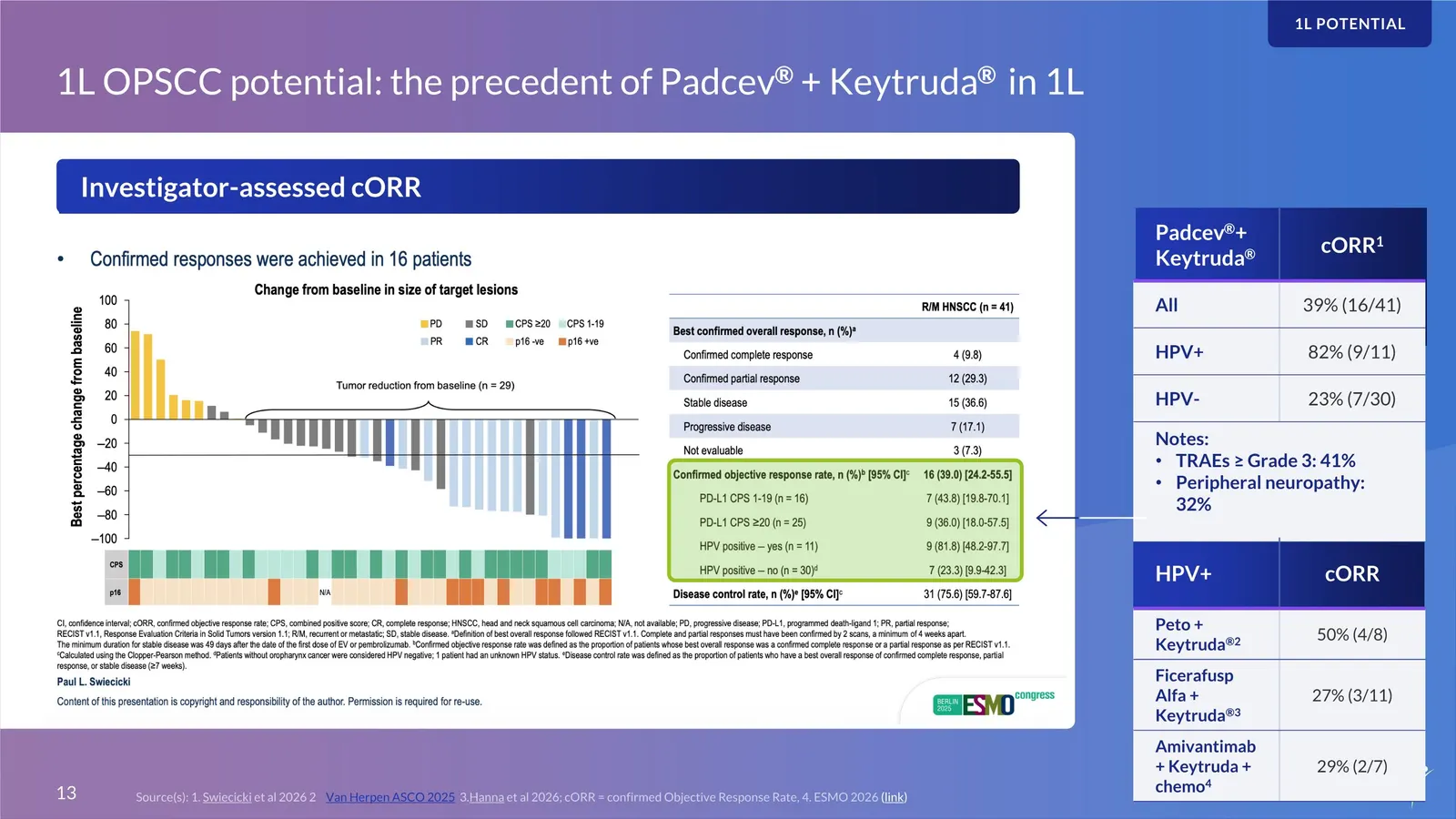
Slide 13: 1L OPSCC potential: the precedent of Padcev + Keytruda
Padcev®+ Keytruda® cORR1 All 39% (16/41) HPV+ 82% (9/11) HPV- 23% (7/30) Notes: TRAEs ≥ Grade 3: 41% Peripheral neuropathy: 32% 1L OPSCC potential: the precedent of Padcev® + Keytruda® in 1L Source(s): 1. Swiecicki et al 2026 2 Van Herpen ASCO 2025 3.Hanna et al 2026; cORR = confirmed Objective Resp
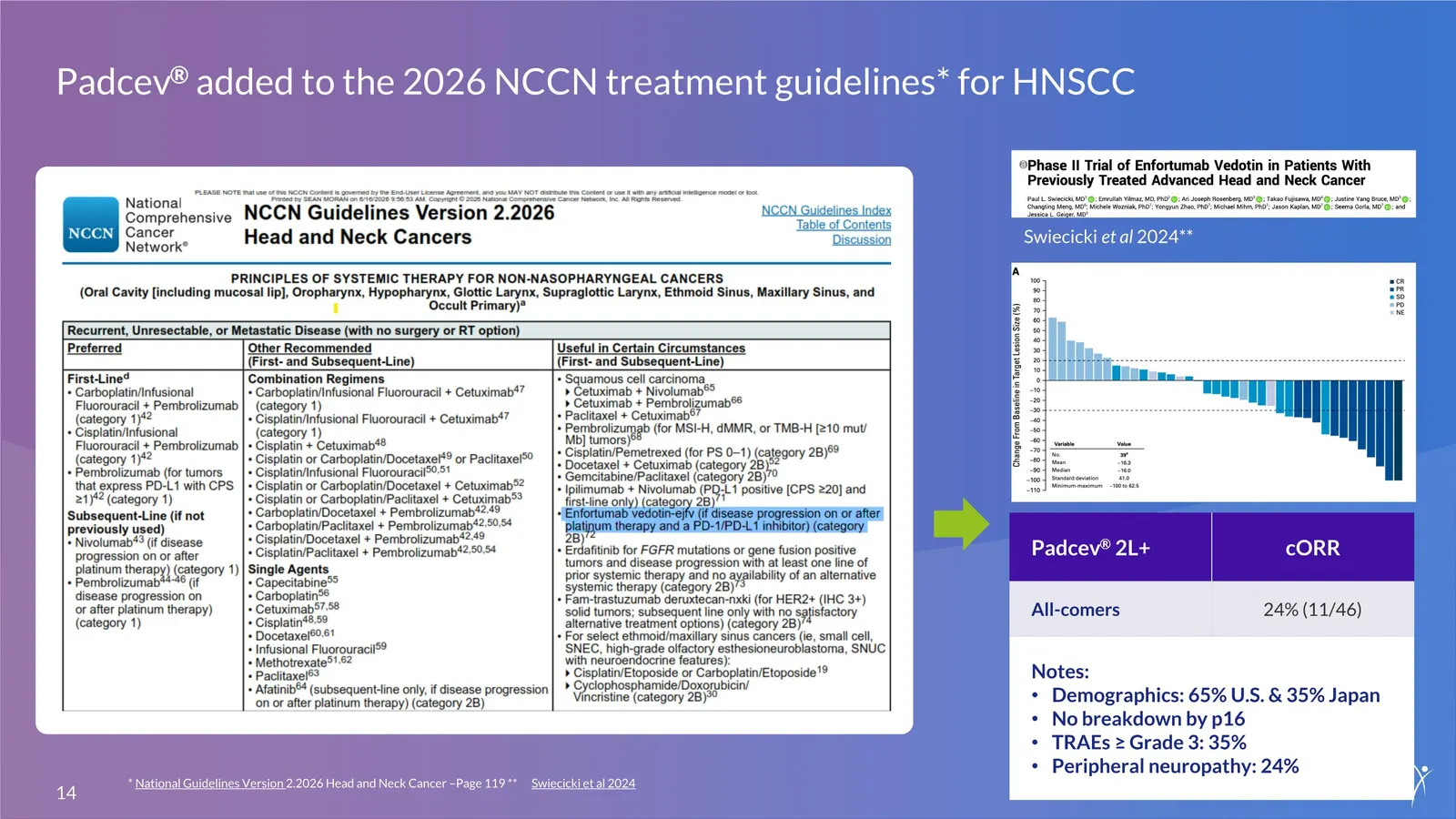
Slide 14: Padcev added to the 2026 NCCN treatment guidelines for HNSCC
Padcev® added to the 2026 NCCN treatment guidelines* for HNSCC * National Guidelines Version 2.2026 Head and Neck Cancer –Page 119 ** Swiecicki et al 2024 Swiecicki et al 2024** Padcev® 2L+ cORR All-comers 24% (11/46) Notes: Demographics: 65% U.S. & 35% Japan No breakdown by p16 TRAEs ≥ Grade 3: 35%
Slide 15: CRB-913 Daily oral small molecule targeting obesity
CRB-913 Daily oral small molecule targeting obesity
Slide 16: CB1 targets pathways involved in food intake and metabolic regulation
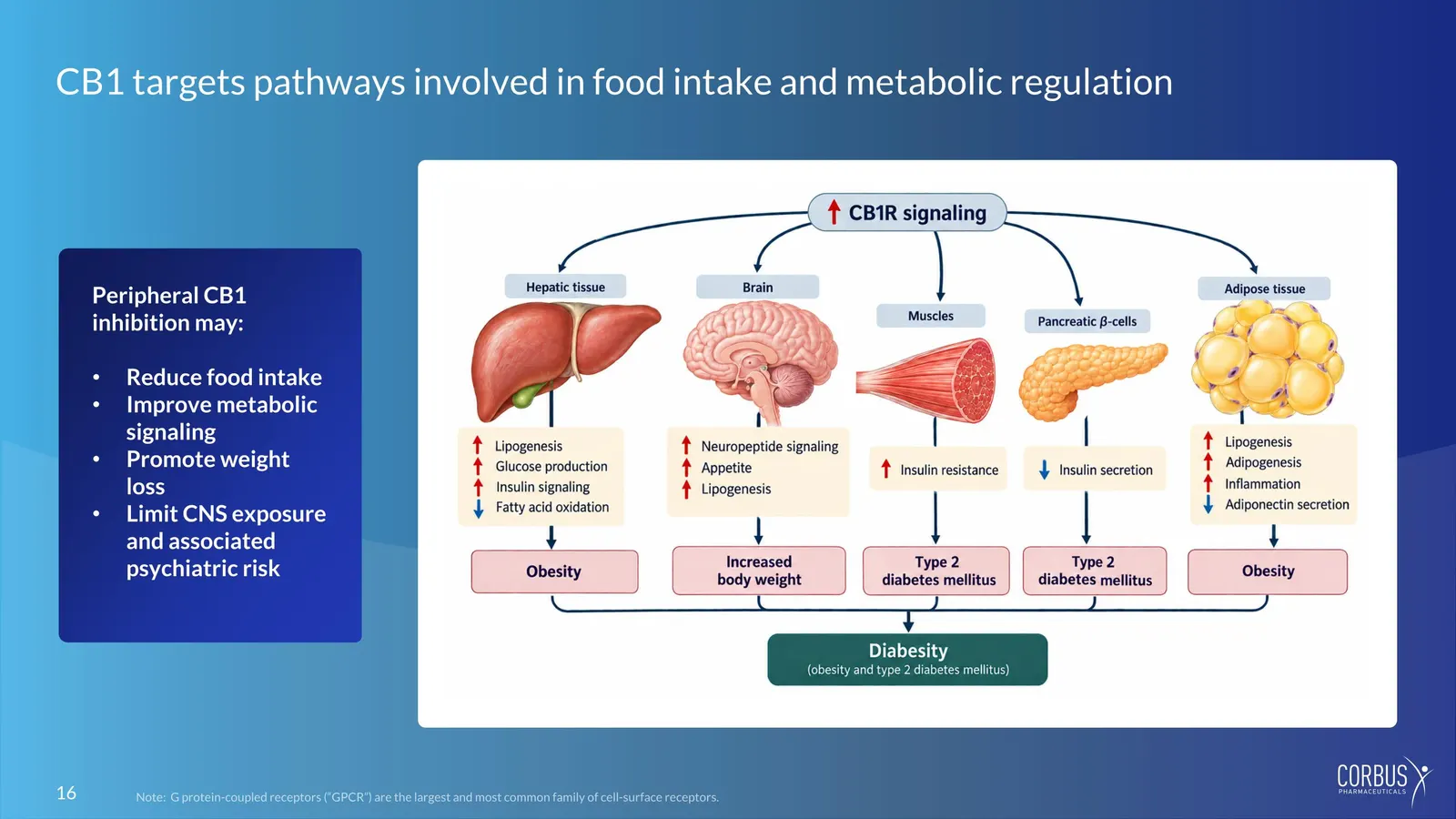
CB1 targets pathways involved in food intake and metabolic regulation Note: G protein-coupled receptors (“GPCR”) are the largest and most common family of cell-surface receptors. Peripheral CB1 inhibition may: Reduce food intake Improve metabolic signaling Promote weight loss Limit CNS exposure and
Slide 17: CRB-913 high peripheral exposure with substantially lower brain exposure
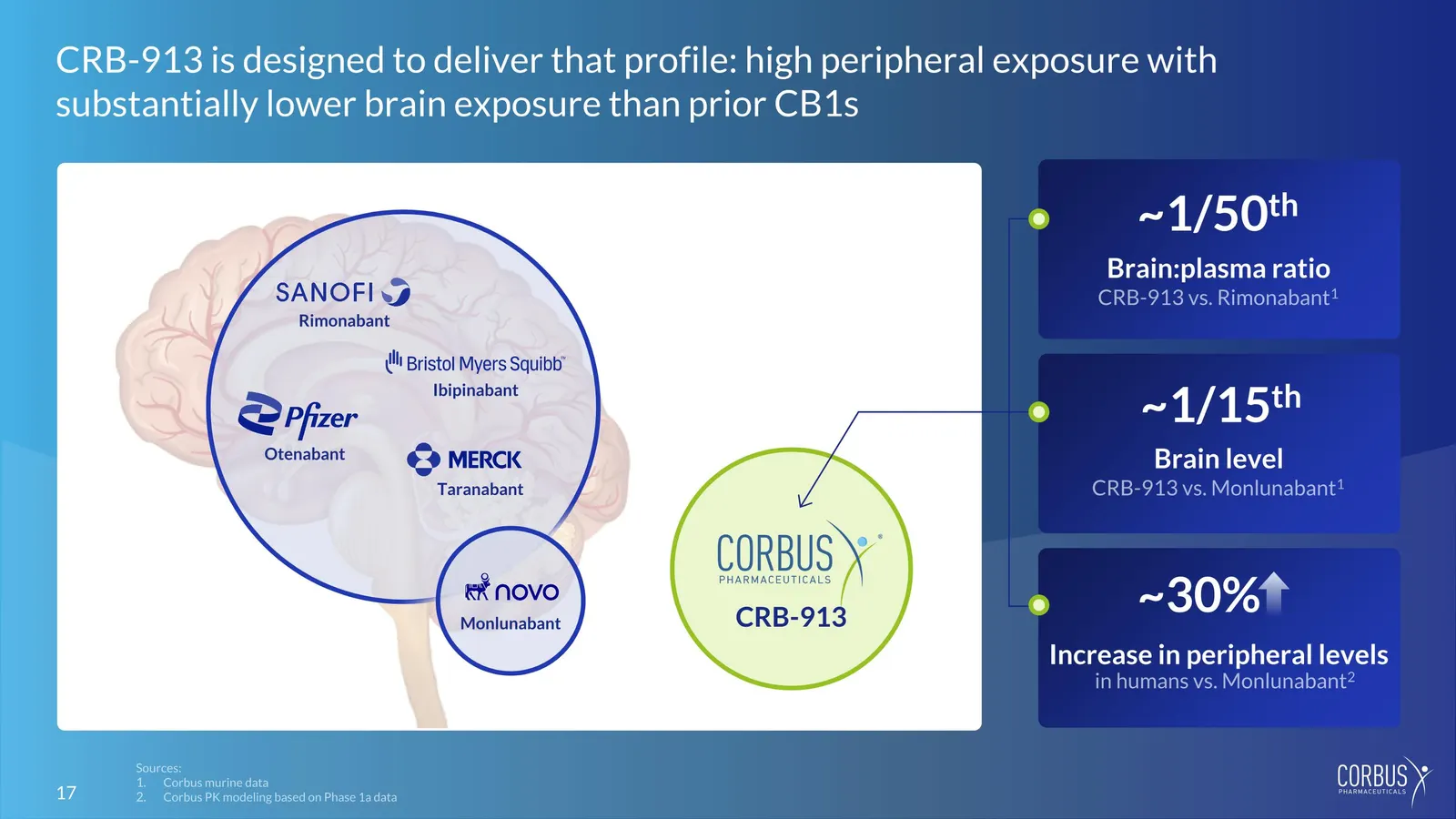
CRB-913 is designed to deliver that profile: high peripheral exposure with substantially lower brain exposure than prior CB1s Sources: Corbus murine data Corbus PK modeling based on Phase 1a data CRB-913 ~1/50th Brain:plasma ratio CRB-913 vs. Rimonabant1 ~1/15th Brain level CRB-913 vs. Monlunabant1
Slide 18: 12-week Phase 1b randomized placebo-controlled study in adults with obesity
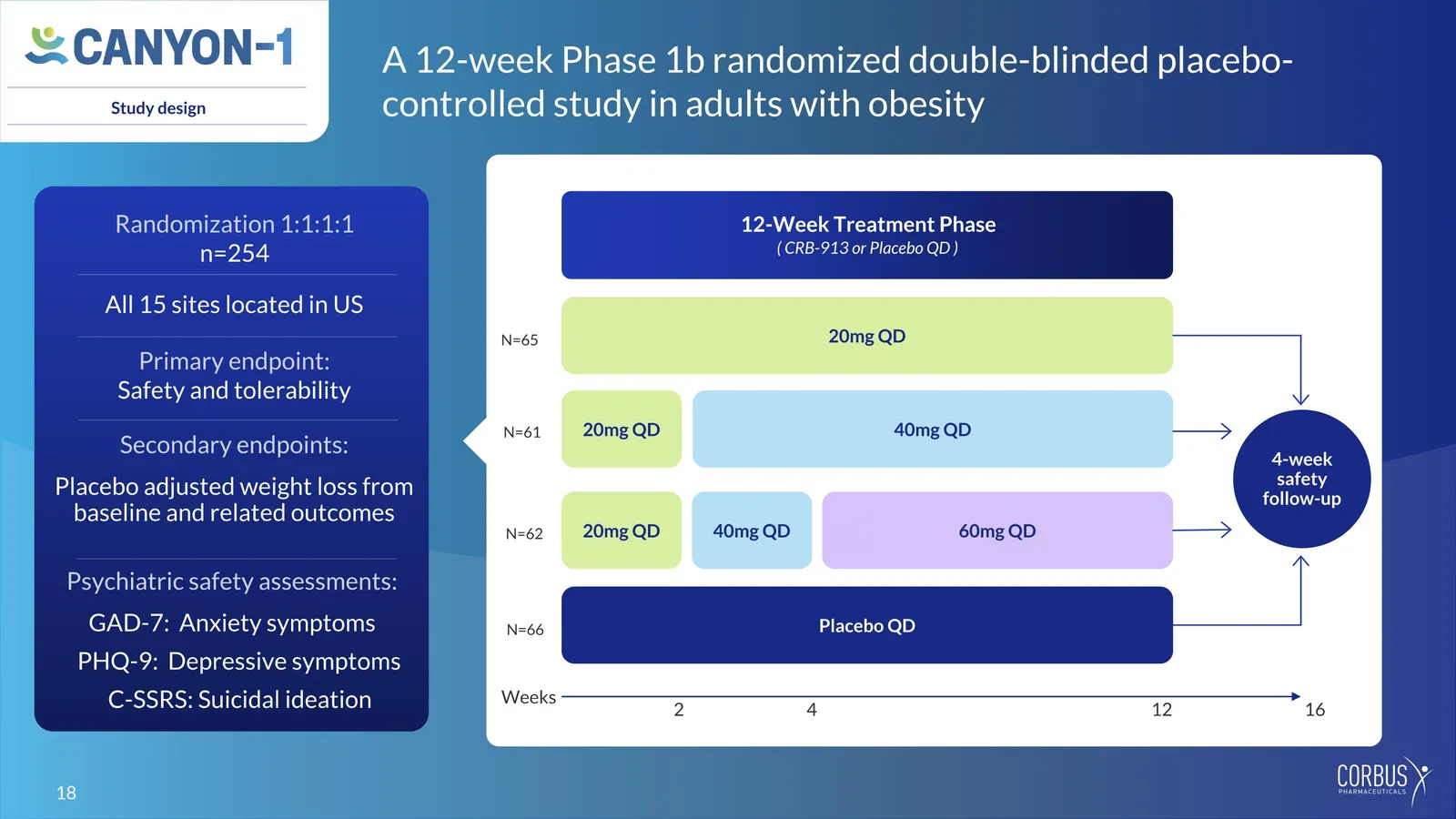
A 12-week Phase 1b randomized double-blinded placebo-controlled study in adults with obesity Study design All 15 sites located in US Randomization 1:1:1:1 n=254 Placebo QD 12-Week Treatment Phase ( CRB-913 or Placebo QD ) 20mg QD 20mg QD 40mg QD 20mg QD 40mg QD 60mg QD 4-week safety follow-up Weeks
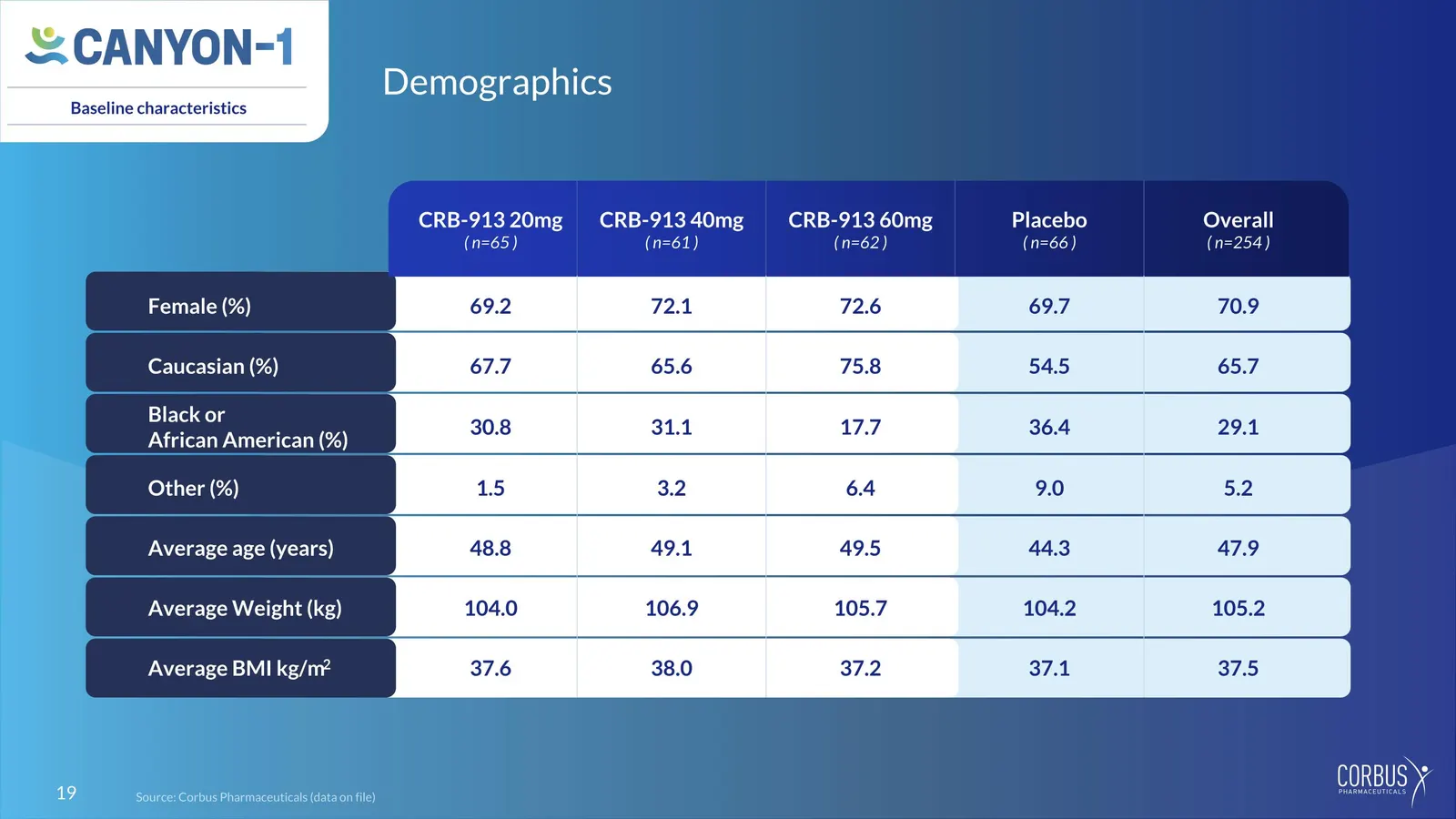
Slide 19: Demographics
Demographics Source: Corbus Pharmaceuticals (data on file) Baseline characteristics CRB-913 20mg ( n=65 ) CRB-913 40mg ( n=61 ) CRB-913 60mg ( n=62 ) Placebo ( n=66 ) Overall ( n=254 ) Female (%) 69.2 72.1 72.6 69.7 70.9 Caucasian (%) 67.7 65.6 75.8 54.5 65.7 Black or African American (%) 30.8 31.1
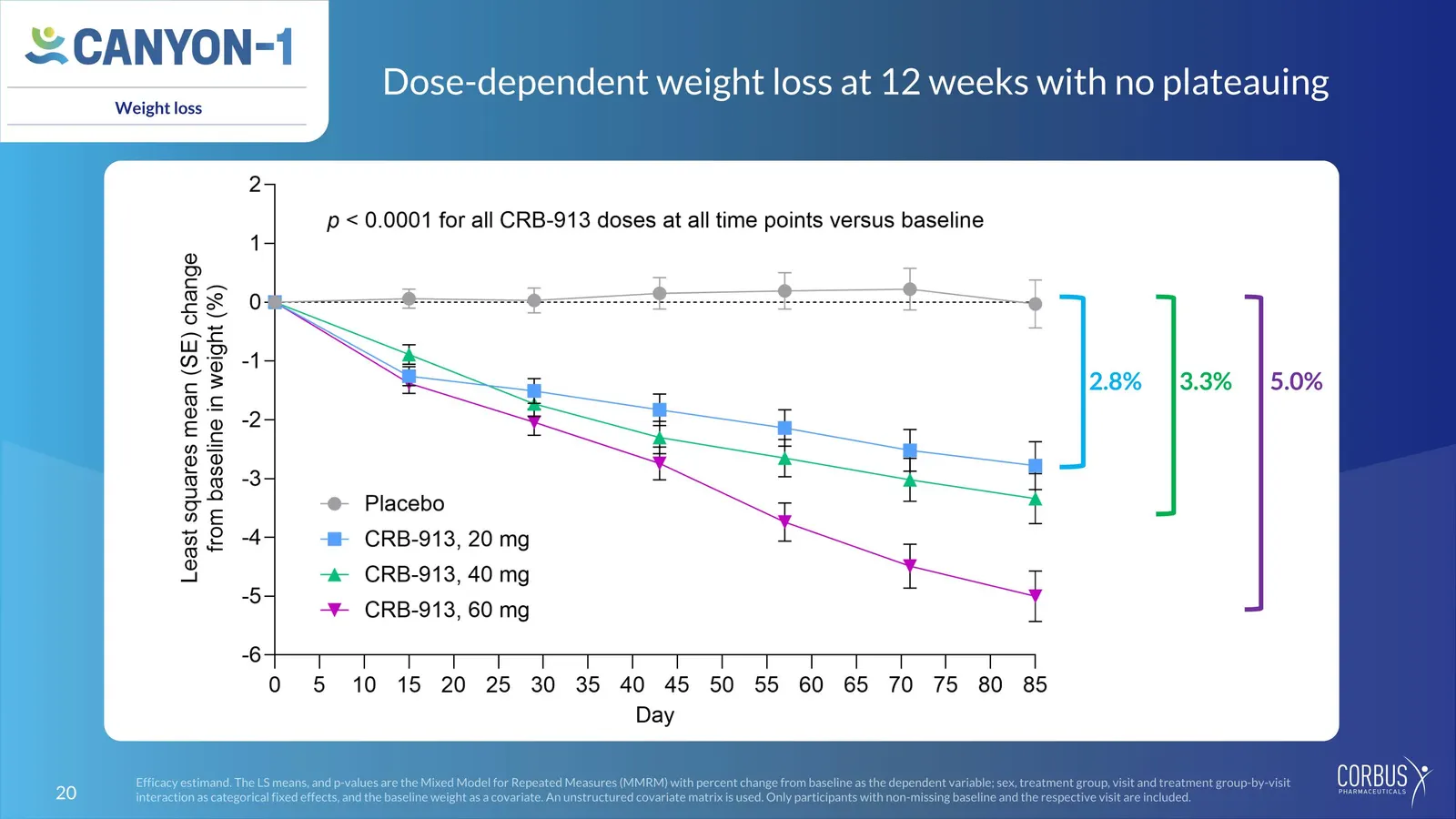
Slide 20: Dose-dependent weight loss with no plateauing
Dose-dependent weight loss at 12 weeks with no plateauing Efficacy estimand. The LS means, and p-values are the Mixed Model for Repeated Measures (MMRM) with percent change from baseline as the dependent variable; sex, treatment group, visit and treatment group-by-visit interaction as categorical fi
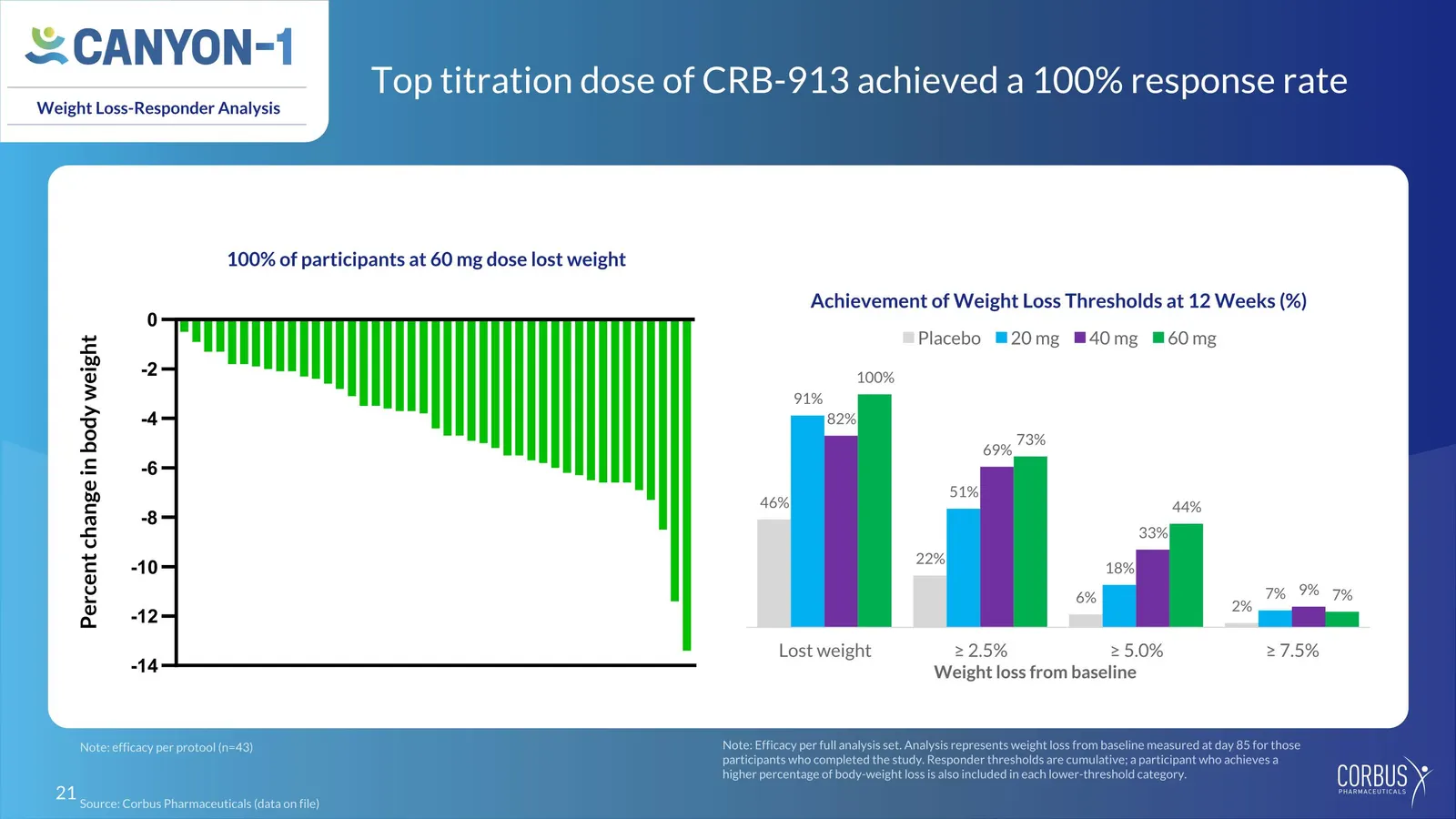
Slide 21: Top titration dose of CRB-913 achieved a 100% response rate
Top titration dose of CRB-913 achieved a 100% response rate Note: Efficacy per full analysis set. Analysis represents weight loss from baseline measured at day 85 for those participants who completed the study. Responder thresholds are cumulative; a participant who achieves a higher percentage of bo
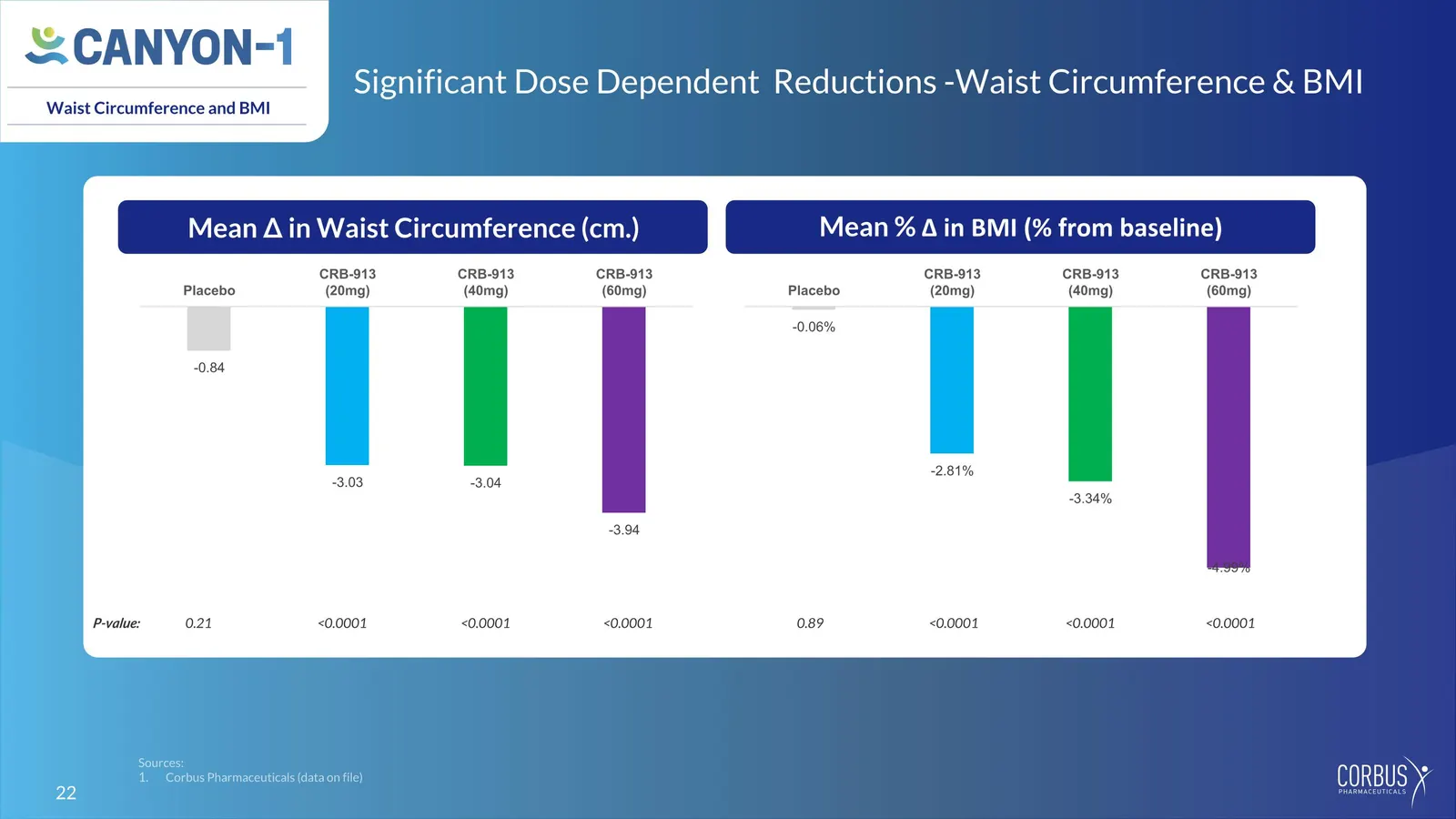
Slide 22: Significant Dose Dependent Reductions - Waist Circumference & BMI
Significant Dose Dependent Reductions -Waist Circumference & BMI Sources: Corbus Pharmaceuticals (data on file) Waist Circumference and BMI Mean ∆ in Waist Circumference (cm.) Mean % ∆ in BMI (% from baseline) P-value: 0.21 <0.0001 <0.0001 <0.0001 0.89 <0.0001 <0.0001 <0.0001
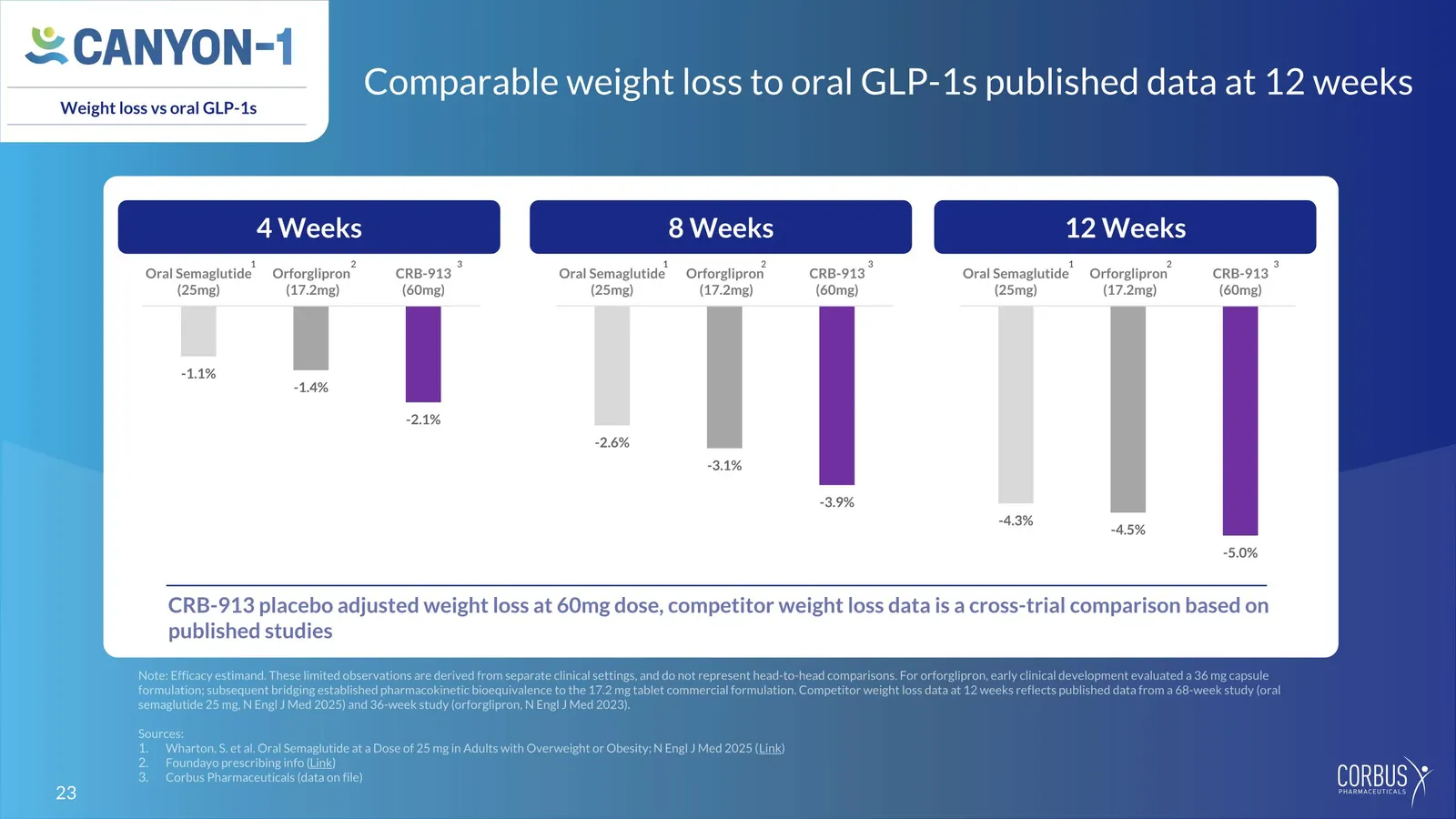
Slide 23: Comparable weight loss to oral GLP-1s published data
Comparable weight loss to oral GLP-1s published data at 12 weeks Note: Efficacy estimand. These limited observations are derived from separate clinical settings, and do not represent head-to-head comparisons. For orforglipron, early clinical development evaluated a 36 mg capsule formulation; subsequ
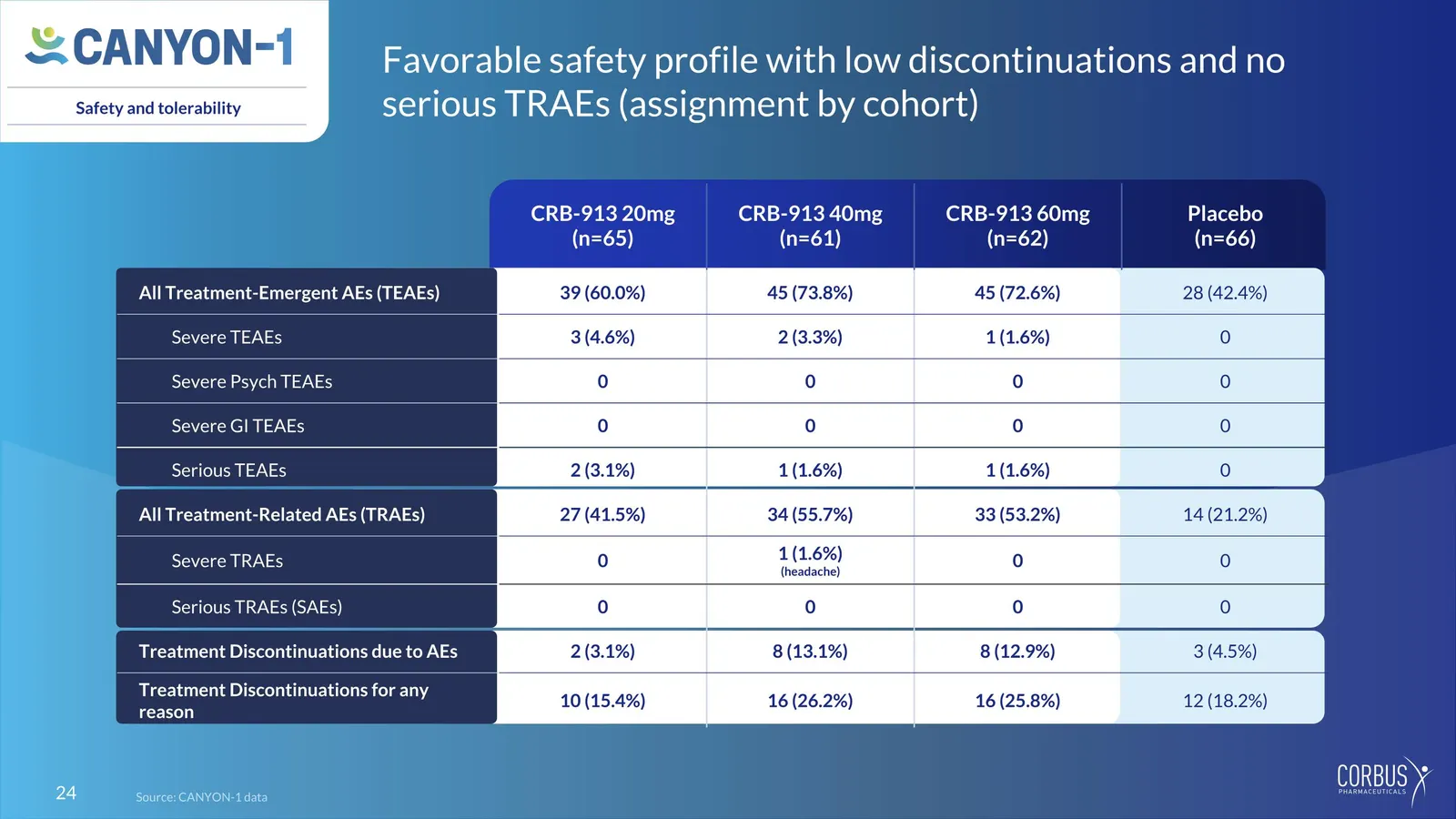
Slide 24: Safety and tolerability: treatment-emergent adverse events
CRB-913 20mg (n=65) CRB-913 40mg (n=61) CRB-913 60mg (n=62) Placebo (n=66) All Treatment-Emergent AEs (TEAEs) 39 (60.0%) 45 (73.8%) 45 (72.6%) 28 (42.4%) Severe TEAEs 3 (4.6%) 2 (3.3%) 1 (1.6%) 0 Severe Psych TEAEs 0 0 0 0 Severe GI TEAEs 0 0 0 0 Serious TEAEs 2 (3.1%) 1 (1.6%) 1 (1.6%) 0 All Treatm
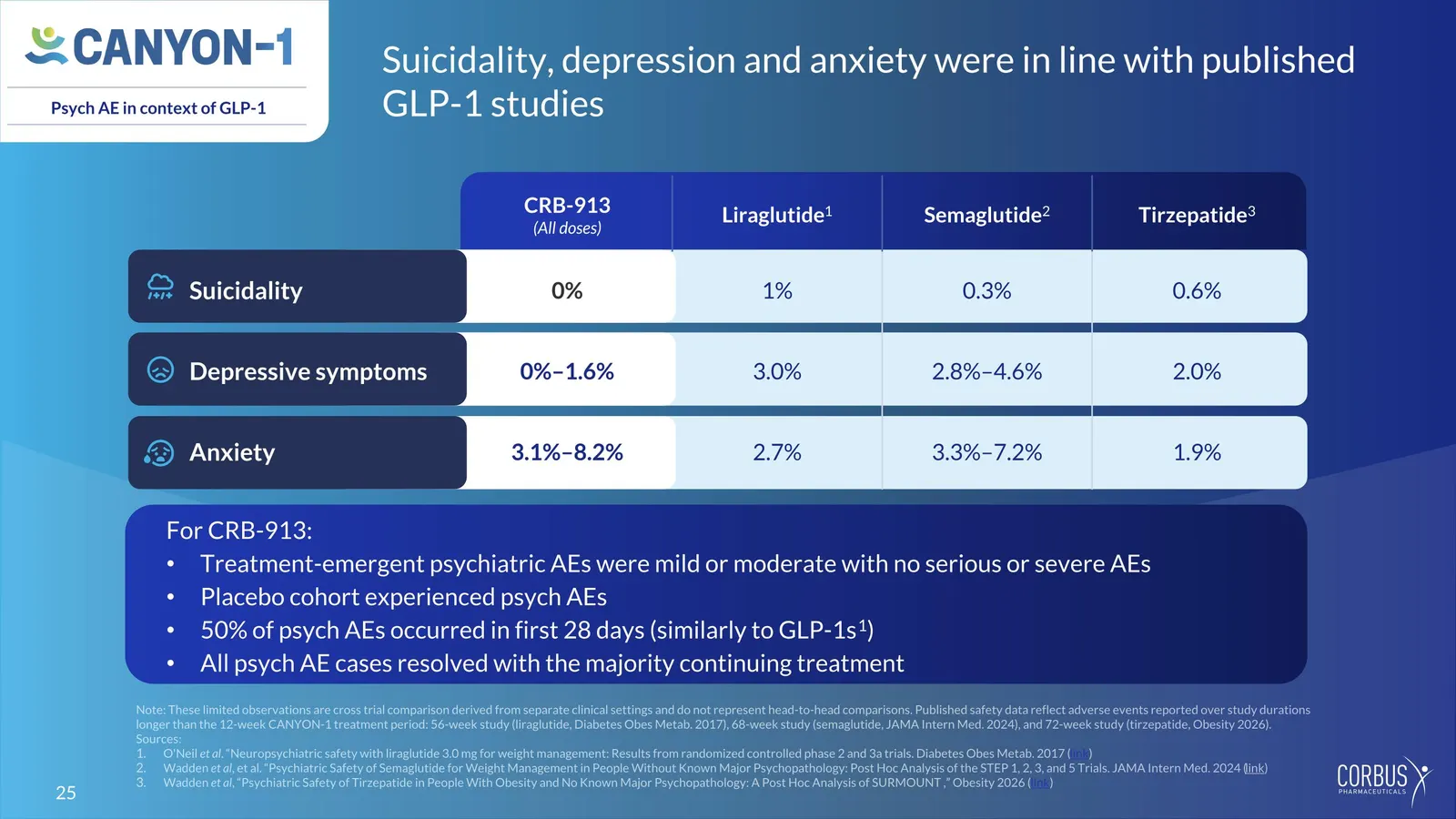
Slide 25: Suicidality, depression and anxiety in line with published GLP-1 studies
Suicidality, depression and anxiety were in line with published GLP-1 studies Note: These limited observations are cross trial comparison derived from separate clinical settings and do not represent head-to-head comparisons. Published safety data reflect adverse events reported over study durations
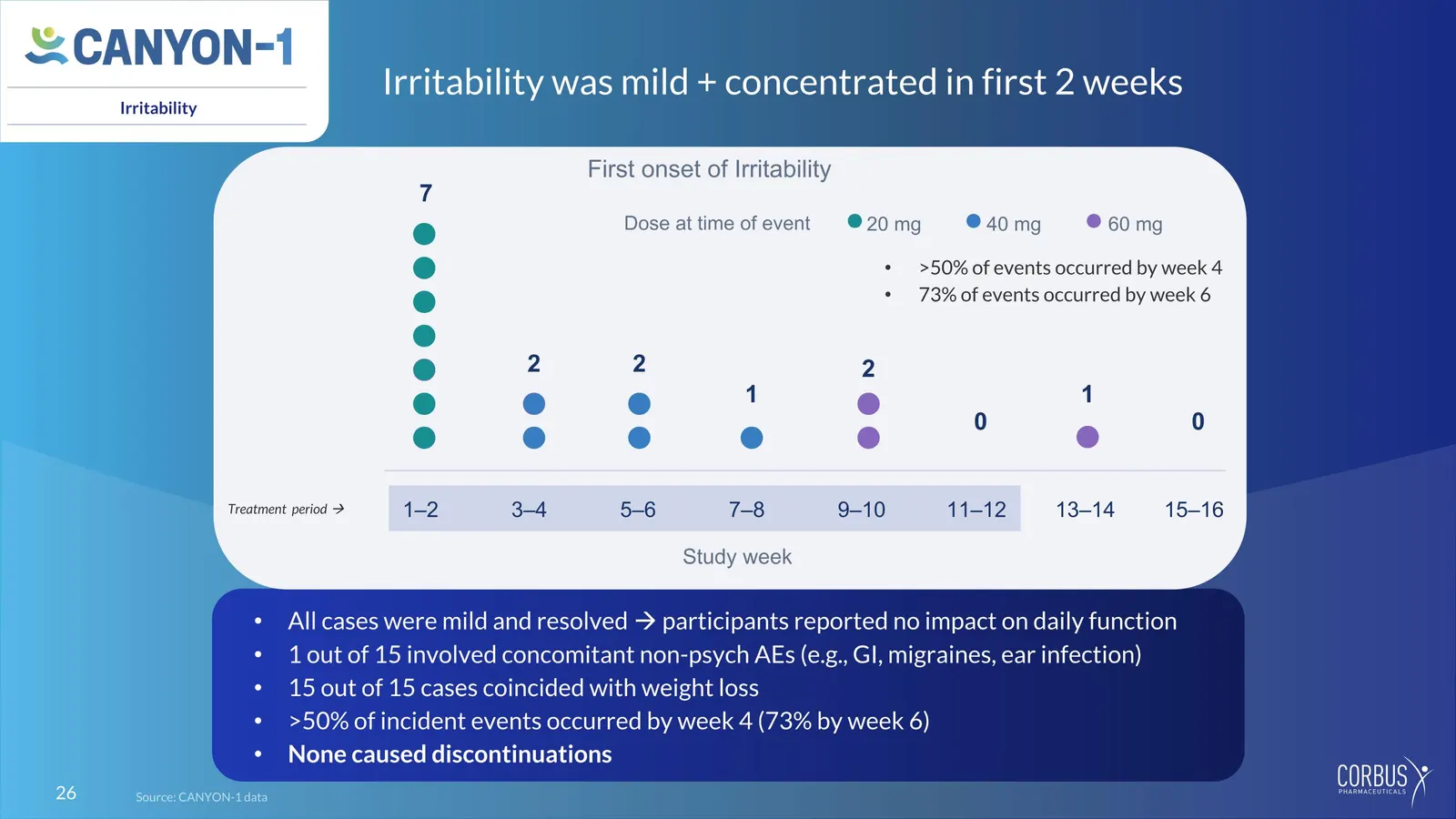
Slide 26: Irritability mild and concentrated in first 2 weeks
Source: CANYON-1 data Irritability All cases were mild and resolved participants reported no impact on daily function 1 out of 15 involved concomitant non-psych AEs (e.g., GI, migraines, ear infection) 15 out of 15 cases coincided with weight loss >50% of incident events occurred by week 4 (73% by
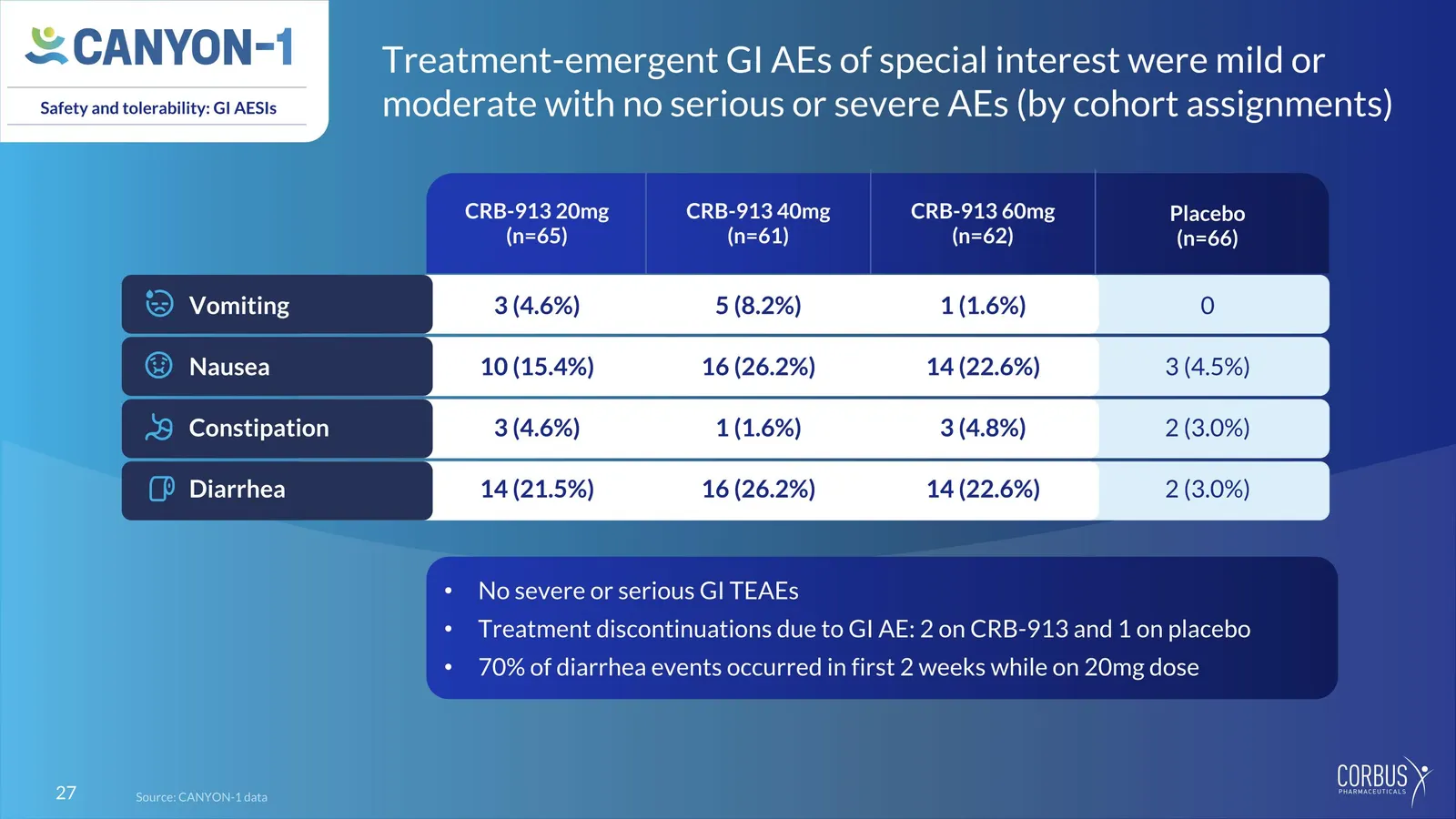
Slide 27: Treatment-emergent GI AEs of special interest
CRB-913 20mg (n=65) CRB-913 40mg (n=61) CRB-913 60mg (n=62) Placebo (n=66) Vomiting 3 (4.6%) 5 (8.2%) 1 (1.6%) 0 Nausea 10 (15.4%) 16 (26.2%) 14 (22.6%) 3 (4.5%) Constipation 3 (4.6%) 1 (1.6%) 3 (4.8%) 2 (3.0%) Diarrhea 14 (21.5%) 16 (26.2%) 14 (22.6%) 2 (3.0%) Treatment-emergent GI AEs of special i
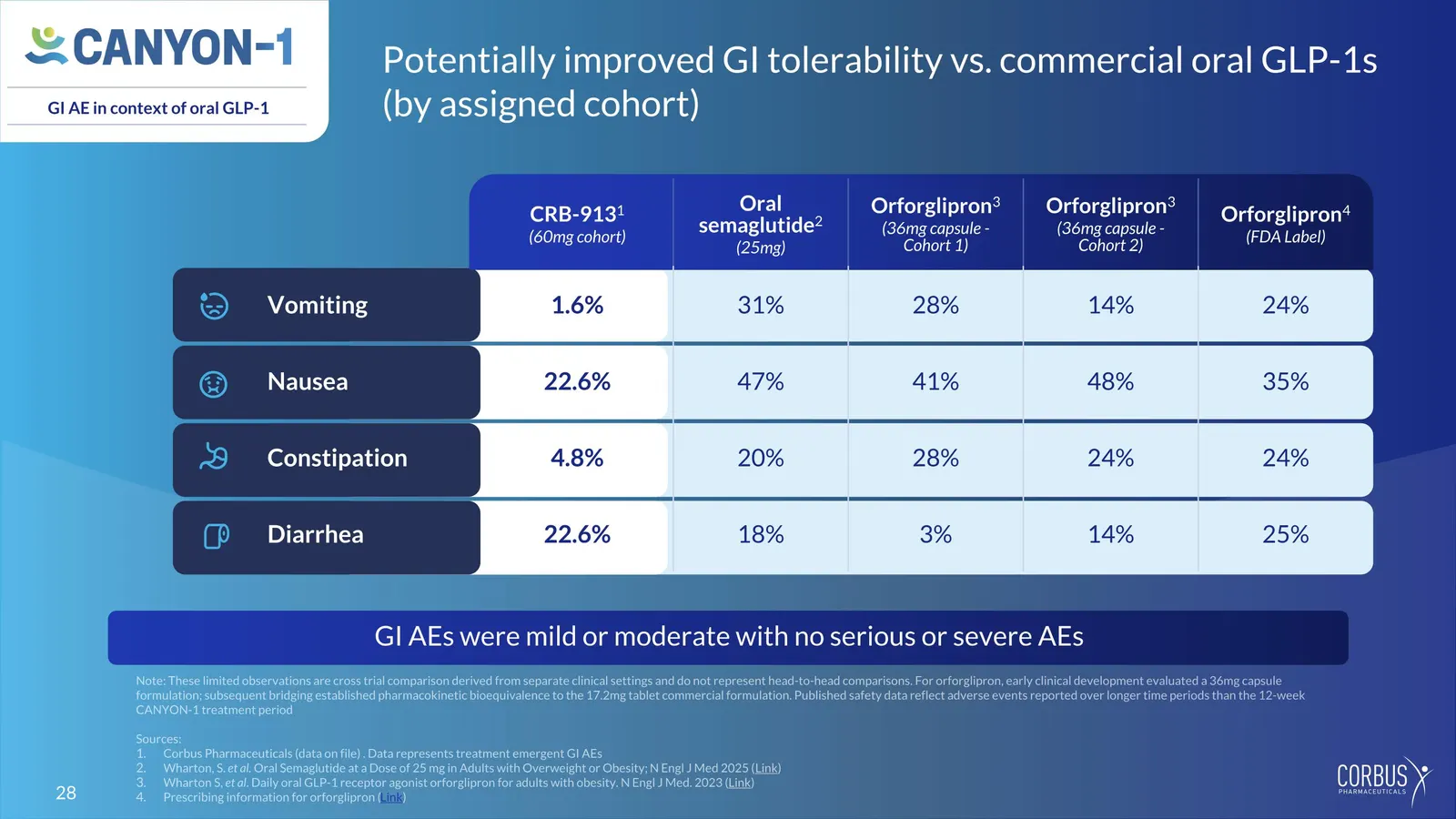
Slide 28: Potentially improved GI tolerability vs. commercial oral GLP-1s
CRB-9131 (60mg cohort) Oral semaglutide2 (25mg) Orforglipron3 (36mg capsule - Cohort 1) Orforglipron3 (36mg capsule - Cohort 2) Orforglipron4 (FDA Label) Vomiting 1.6% 31% 28% 14% 24% Nausea 22.6% 47% 41% 48% 35% Constipation 4.8% 20% 28% 24% 24% Diarrhea 22.6% 18% 3% 14% 25% Potentially improved GI
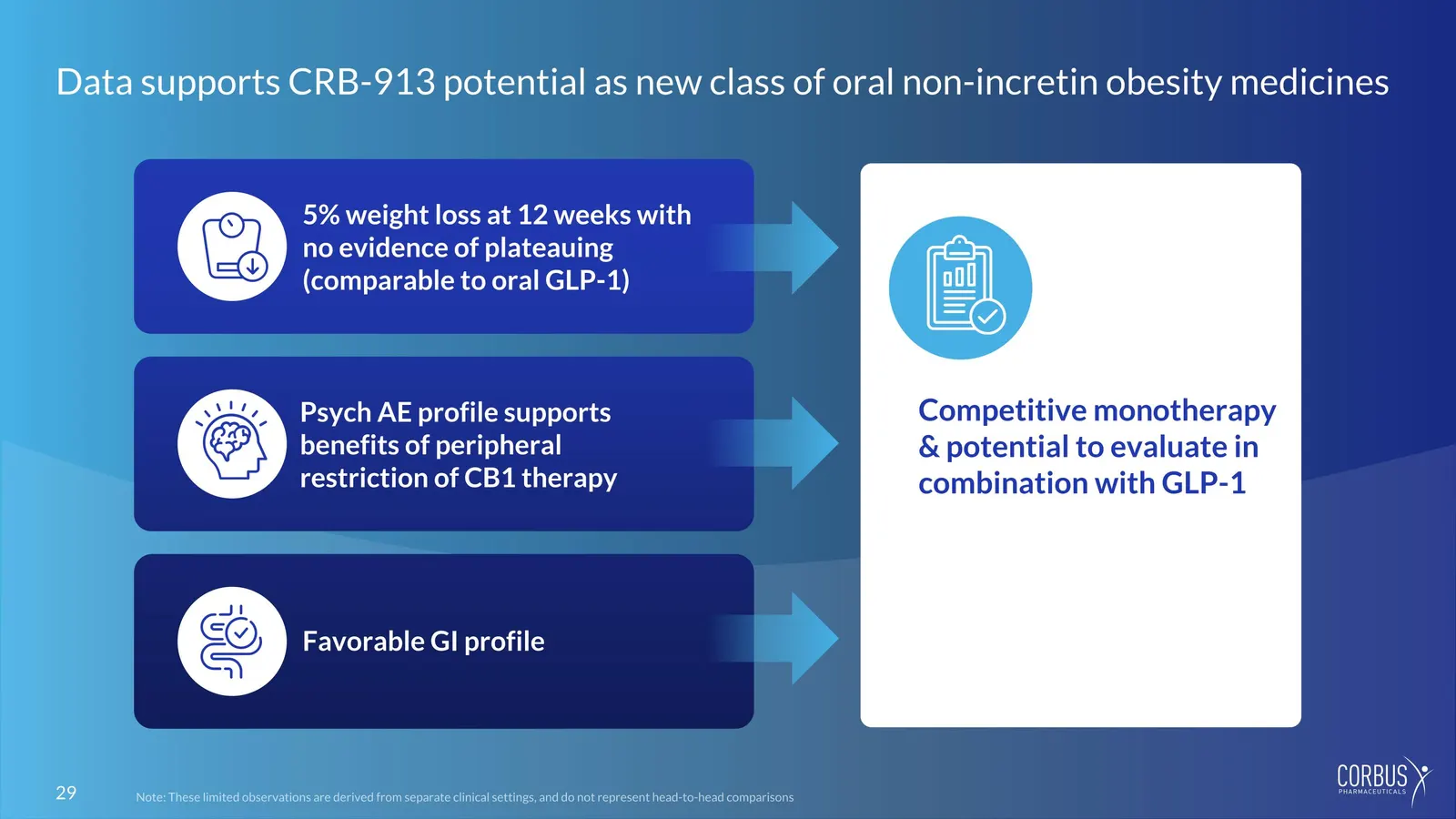
Slide 29: Data supports CRB-913 potential as new class of oral non-incretin obesity medicines
Data supports CRB-913 potential as new class of oral non-incretin obesity medicines Note: These limited observations are derived from separate clinical settings, and do not represent head-to-head comparisons Competitive monotherapy & potential to evaluate in combination with GLP-1 Psych AE profile s
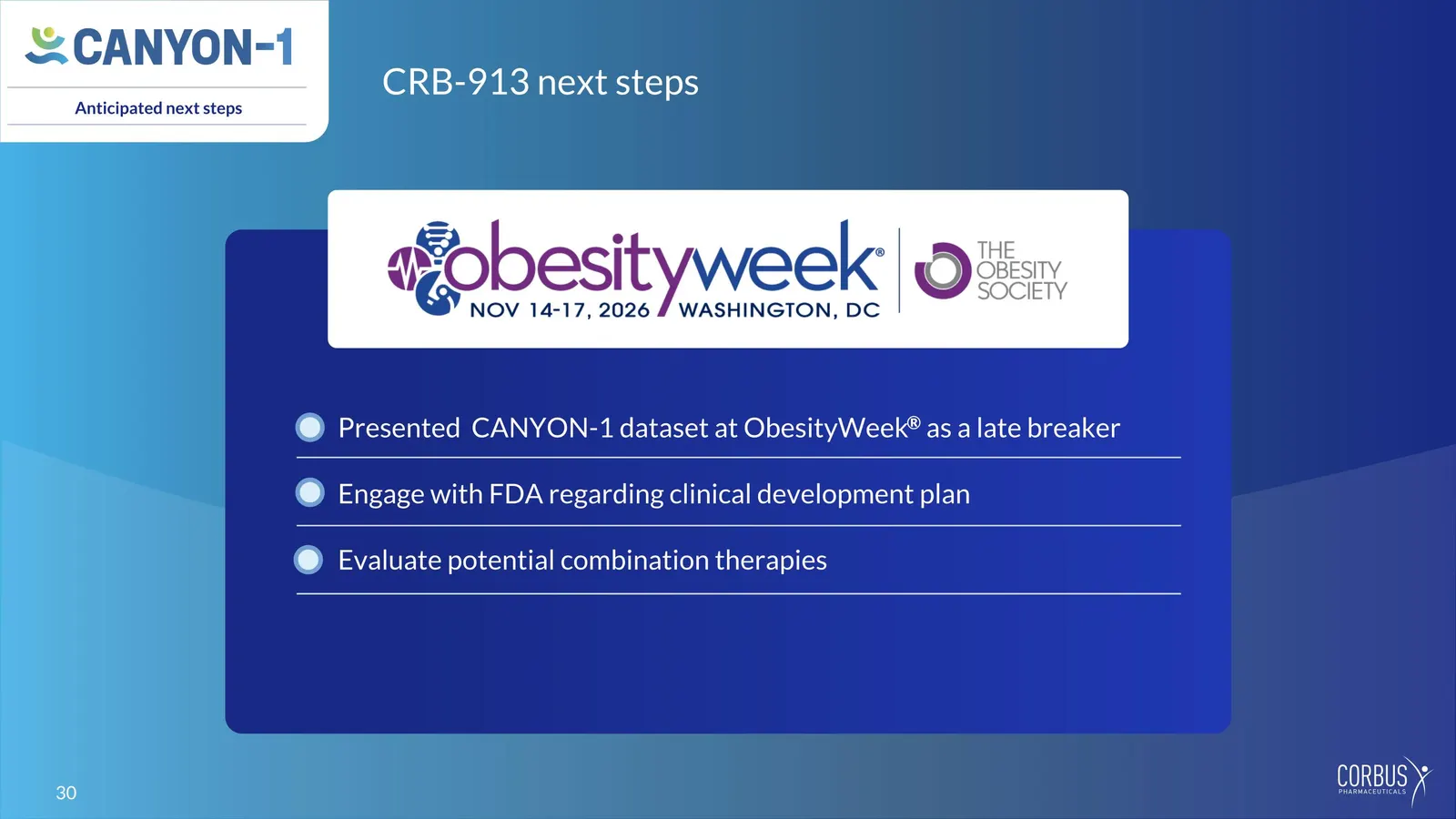
Slide 30: CRB-913 next steps
CRB-913 next steps Anticipated next steps Presented CANYON-1 dataset at ObesityWeek® as a late breaker Engage with FDA regarding clinical development plan Evaluate potential combination therapies
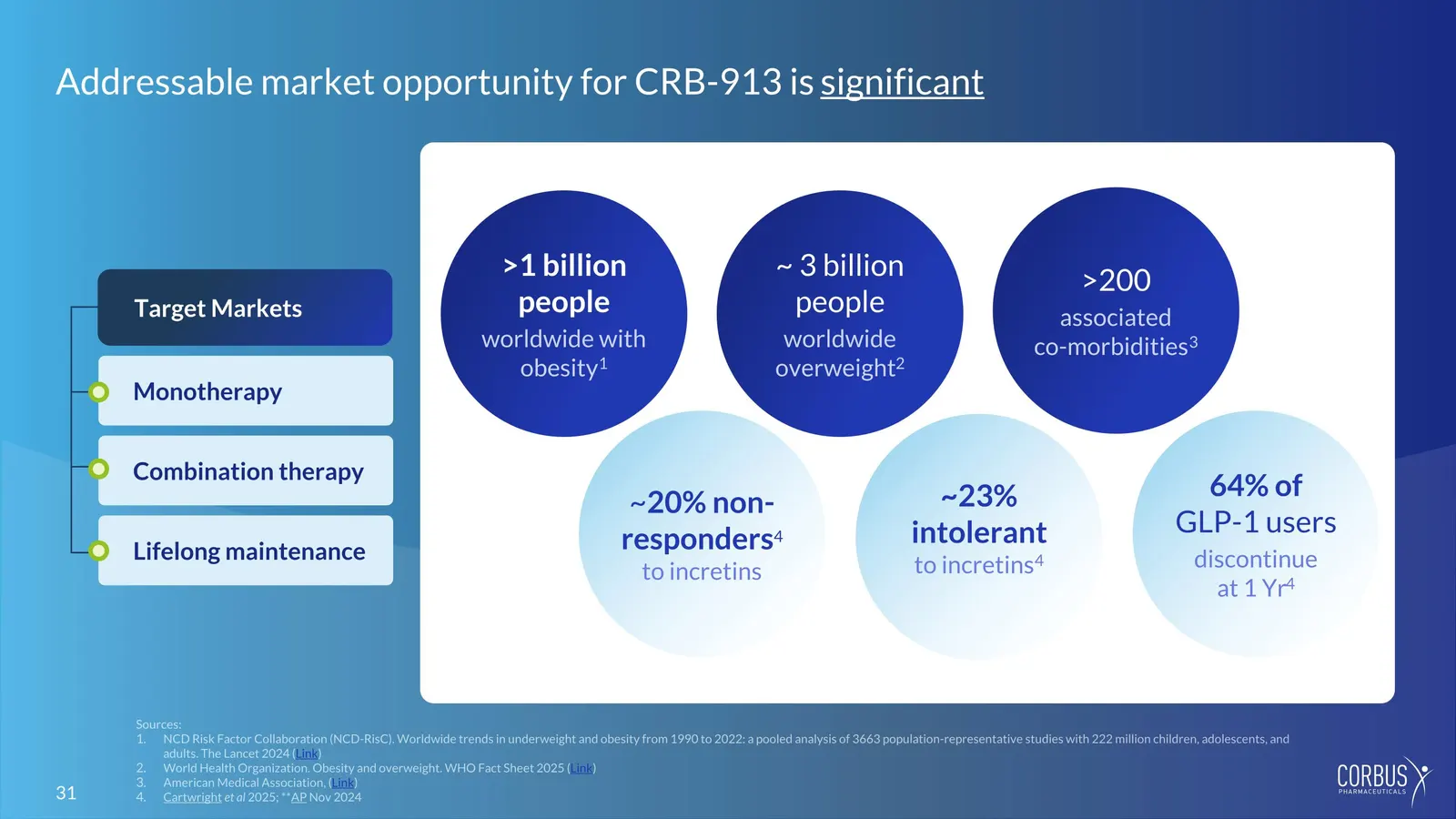
Slide 31: Addressable market opportunity for CRB-913 is significant
Addressable market opportunity for CRB-913 is significant Sources: NCD Risk Factor Collaboration (NCD-RisC). Worldwide trends in underweight and obesity from 1990 to 2022: a pooled analysis of 3663 population-representative studies with 222 million children, adolescents, and adults. The Lancet 2024

Slide 32: Appendix
CORBUS PHARMACEUTICALS Appendix
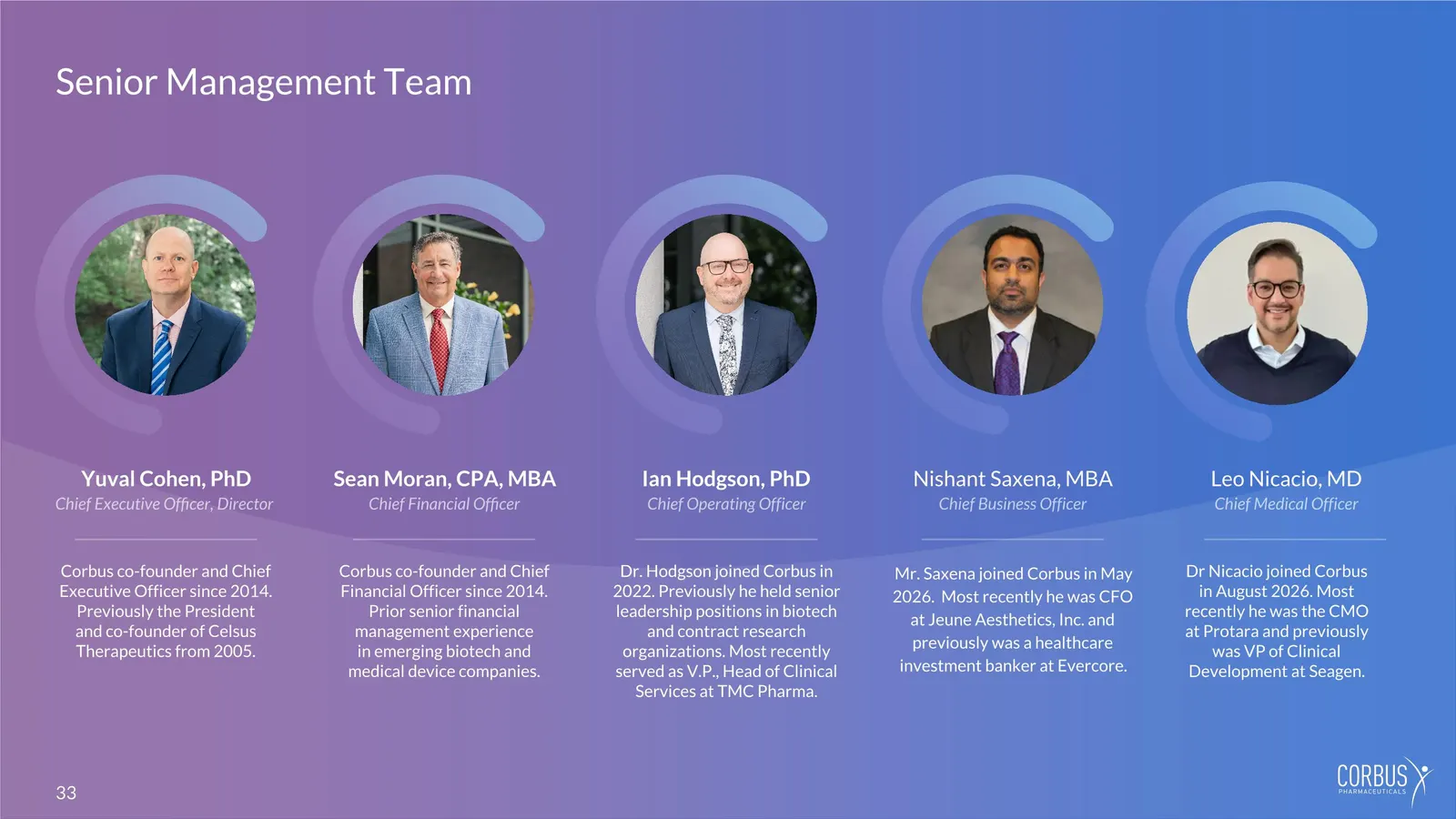
Slide 33: Senior Management Team
Senior Management Team Yuval Cohen, PhD Chief Executive Officer, Director Corbus co-founder and Chief Executive Officer since 2014. Previously the President and co-founder of Celsus Therapeutics from 2005. Sean Moran, CPA, MBA Chief Financial Officer Corbus co-founder and Chief Financial Officer since
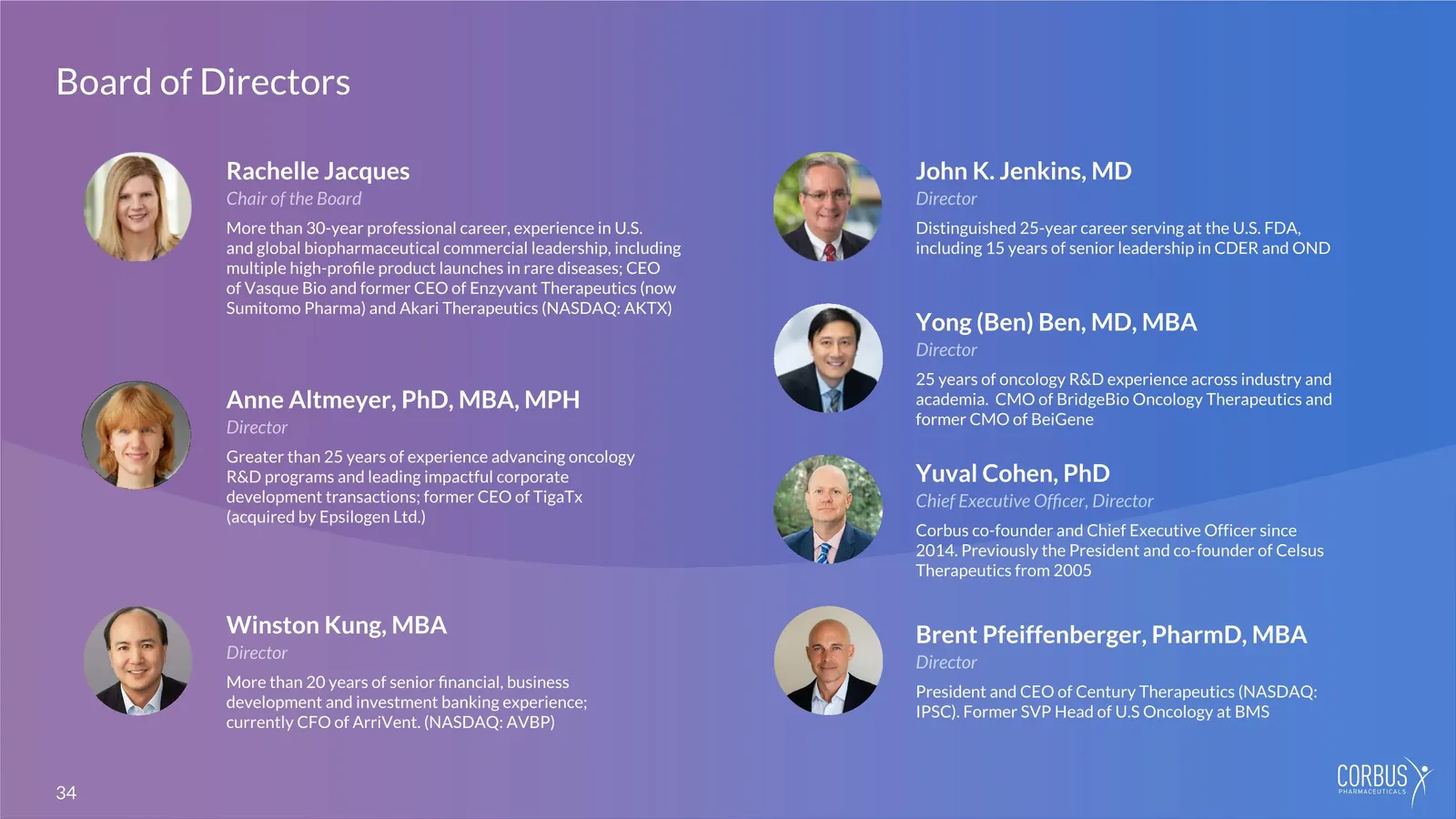
Slide 34: Board of Directors
Board of Directors Winston Kung, MBA Director More than 20 years of senior financial, business development and investment banking experience; currently CFO of ArriVent. (NASDAQ: AVBP) Yuval Cohen, PhD Chief Executive Officer, Director Corbus co-founder and Chief Executive Officer since 2014. Previousl

Slide 35: Supplemental Information: OPSCC
Supplemental Information: OPSCC
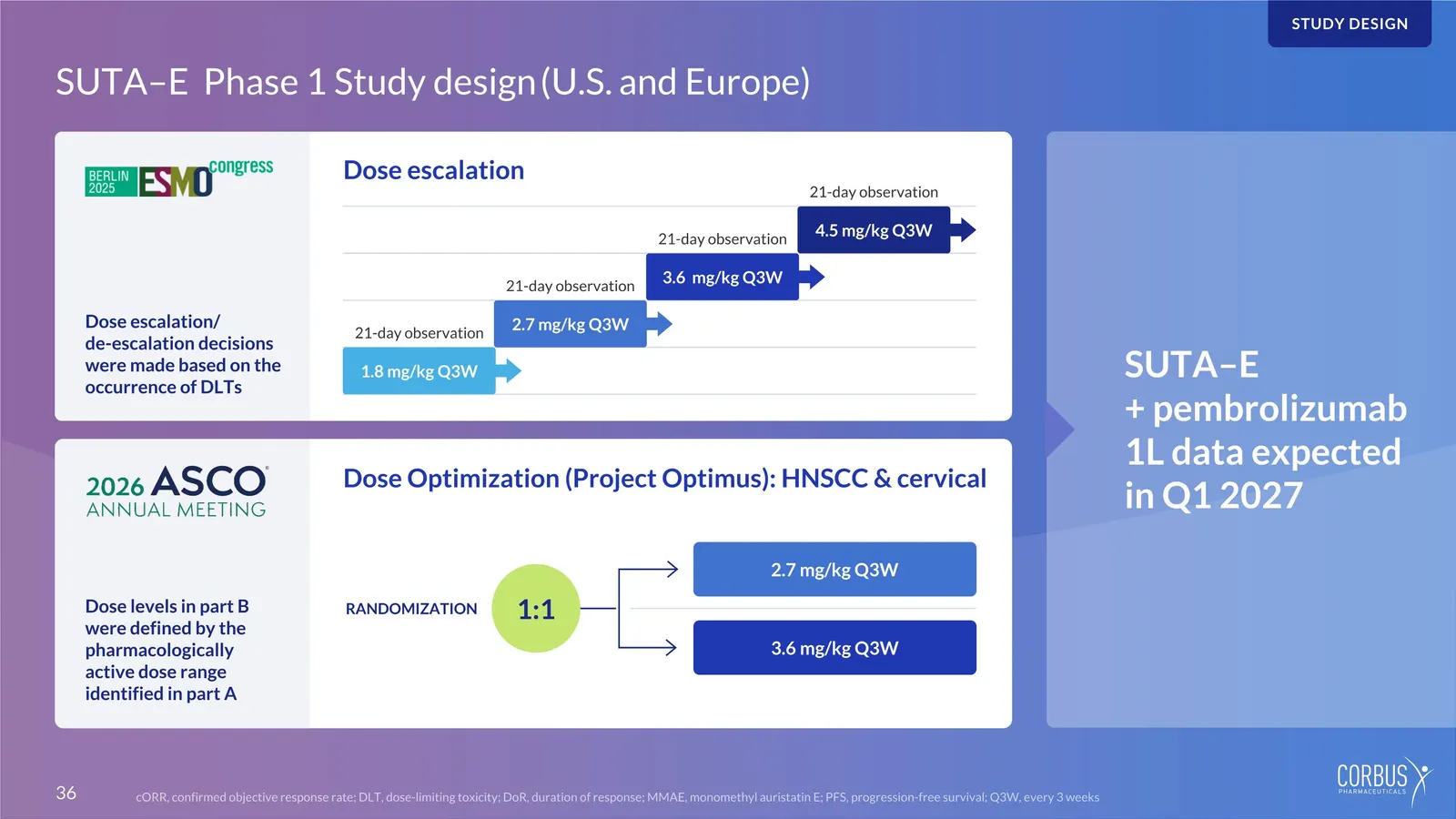
Slide 36: SUTA–E Phase 1/2 Study design
SUTA–E Phase 1 Study design (U.S. and Europe) cORR, confirmed objective response rate; DLT, dose-limiting toxicity; DoR, duration of response; MMAE, monomethyl auristatin E; PFS, progression-free survival; Q3W, every 3 weeks Dose Optimization (Project Optimus): HNSCC & cervical Dose escalation Dose
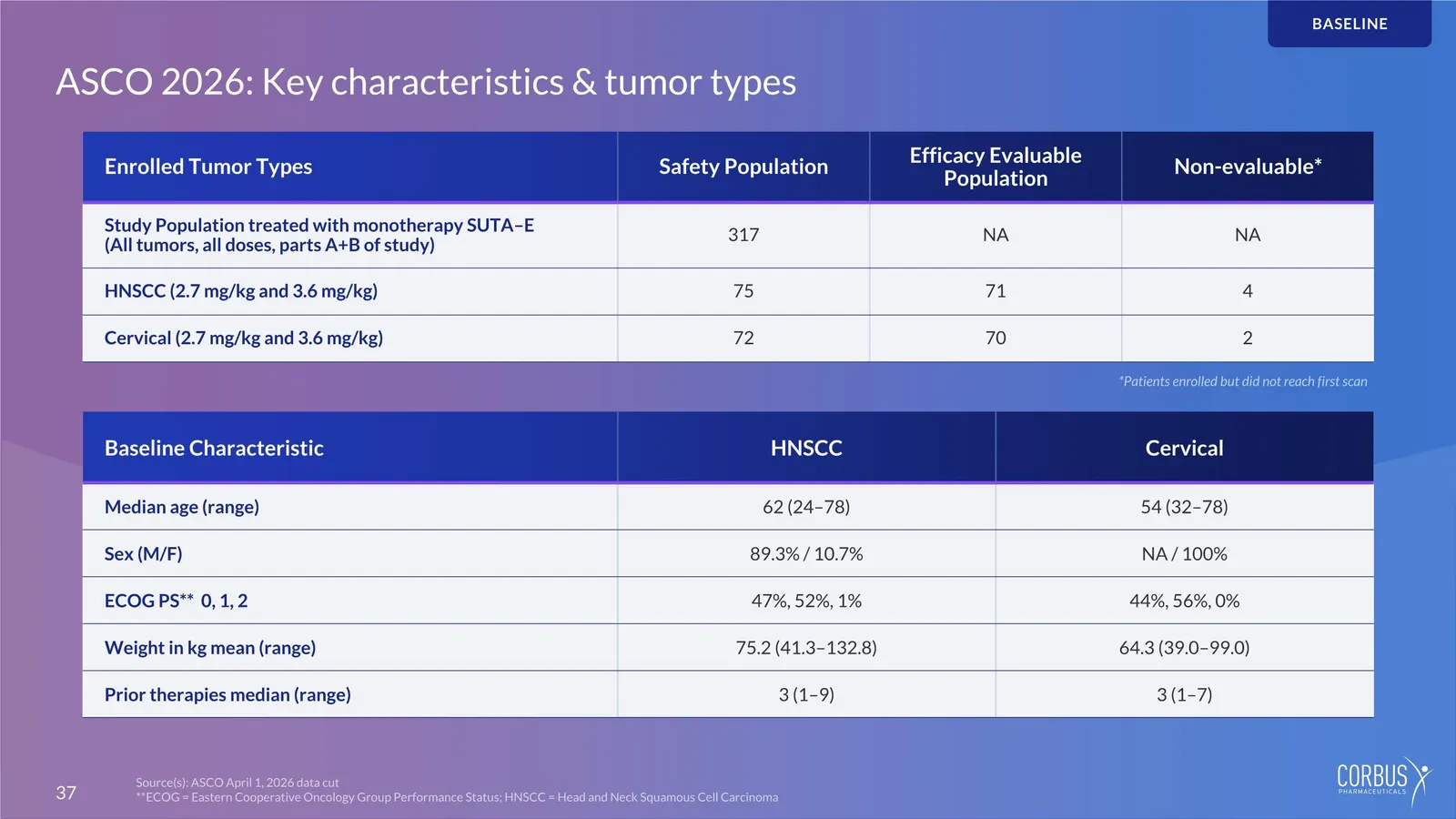
Slide 37: ASCO 2026: Key characteristics & tumor types
Baseline Characteristic HNSCC Cervical Median age (range) 62 (24–78) 54 (32–78) Sex (M/F) 89.3% / 10.7% NA / 100% ECOG PS** 0, 1, 2 47%, 52%, 1% 44%, 56%, 0% Weight in kg mean (range) 75.2 (41.3–132.8) 64.3 (39.0–99.0) Prior therapies median (range) 3 (1–9) 3 (1–7) Enrolled Tumor Types Safety Popula
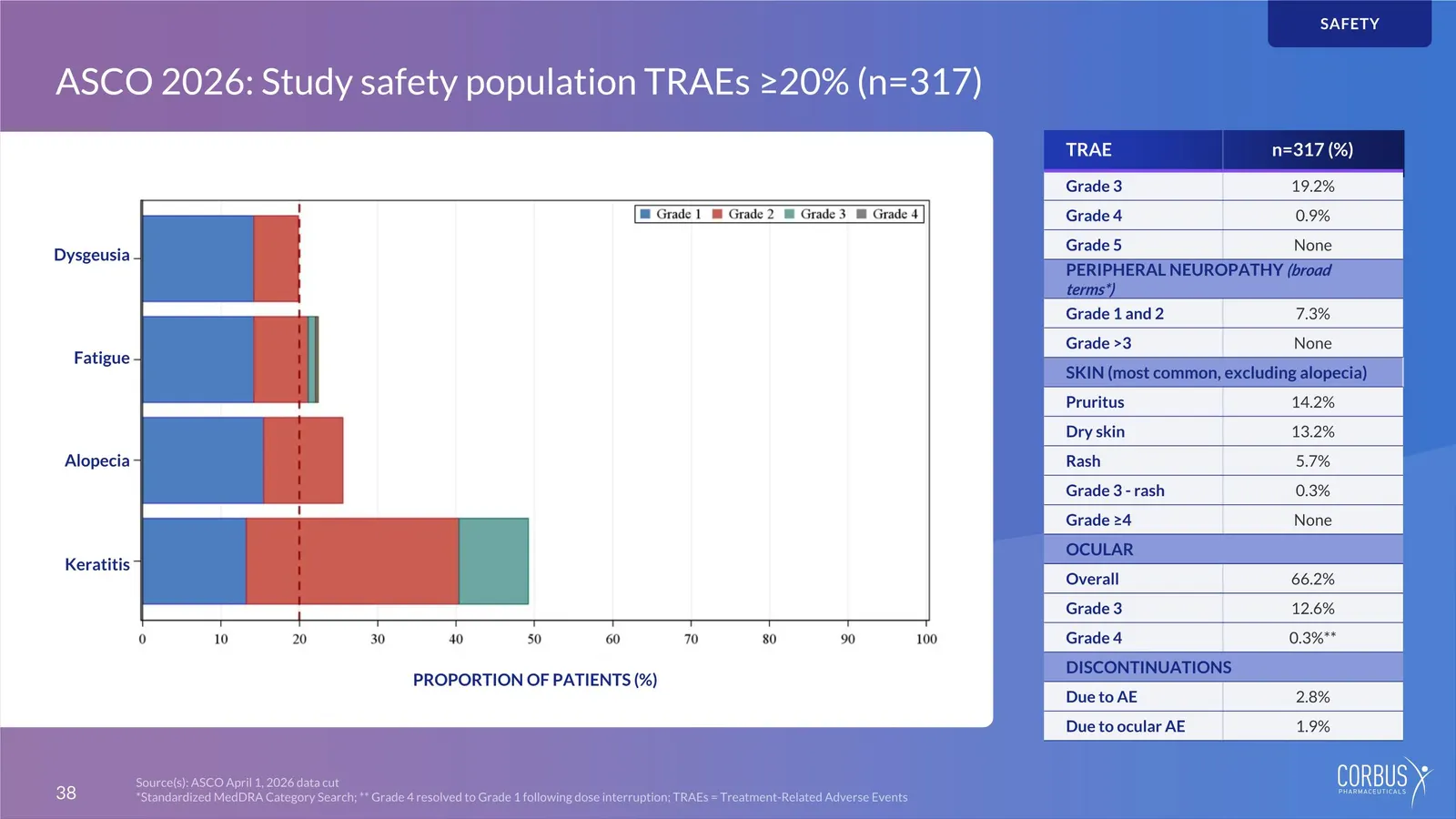
Slide 38: ASCO 2026: Study safety population TRAEs
TRAE n=317 (%) Grade 3 19.2% Grade 4 0.9% Grade 5 None PERIPHERAL NEUROPATHY (broad terms*) Grade 1 and 2 7.3% Grade >3 None SKIN (most common, excluding alopecia) Pruritus 14.2% Dry skin 13.2% Rash 5.7% Grade 3 - rash 0.3% Grade ≥4 None OCULAR Overall 66.2% Grade 3 12.6% Grade 4 0.3%** DISCONTINUAT
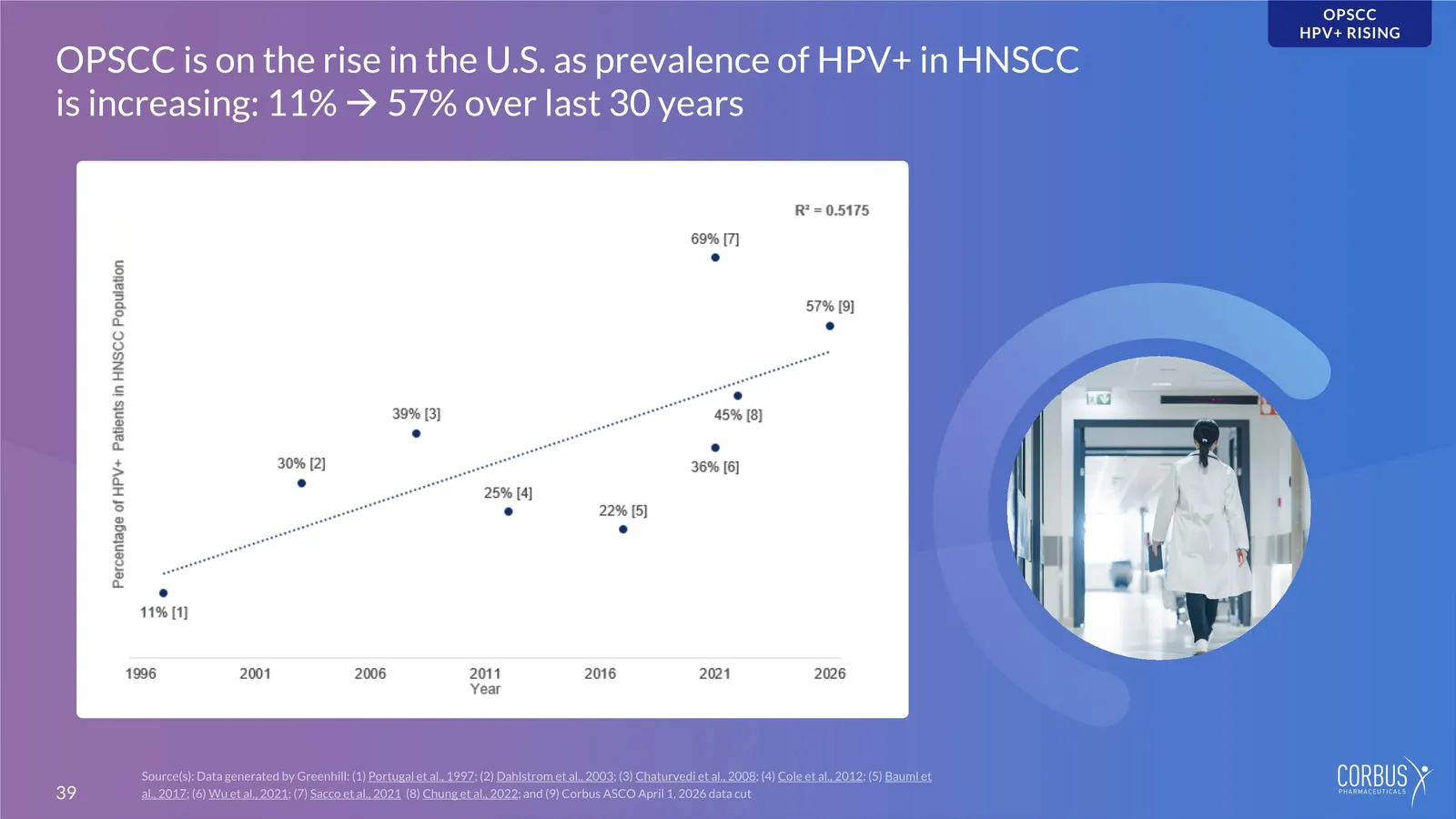
Slide 39: OPSCC is on the rise in the U.S.
OPSCC is on the rise in the U.S. as prevalence of HPV+ in HNSCC is increasing: 11% 57% over last 30 years Source(s): Data generated by Greenhill: (1) Portugal et al., 1997; (2) Dahlstrom et al., 2003; (3) Chaturvedi et al., 2008; (4) Cole et al., 2012; (5) Bauml et al., 2017; (6) Wu et al., 2021;
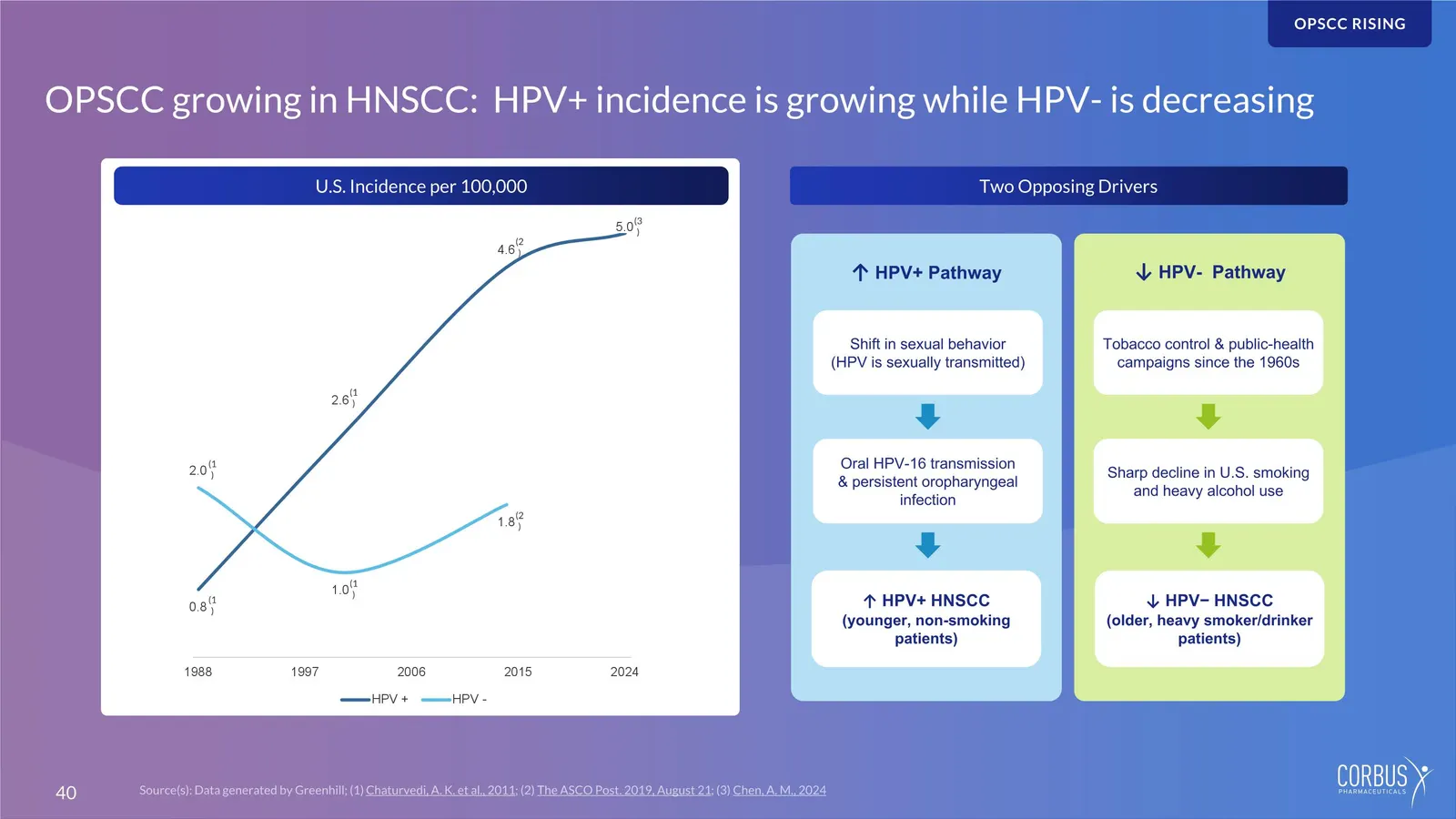
Slide 40: OPSCC growing in HNSCC: HPV+ incidence growing while HPV- decreasing
↑ HPV+ Pathway ↓ HPV- Pathway Two Opposing Drivers ↑ HPV+ HNSCC (younger, non-smoking patients) ↓ HPV− HNSCC (older, heavy smoker/drinker patients) OPSCC growing in HNSCC: HPV+ incidence is growing while HPV- is decreasing Source(s): Data generated by Greenhill; (1) Chaturvedi, A. K. et al., 2011; (
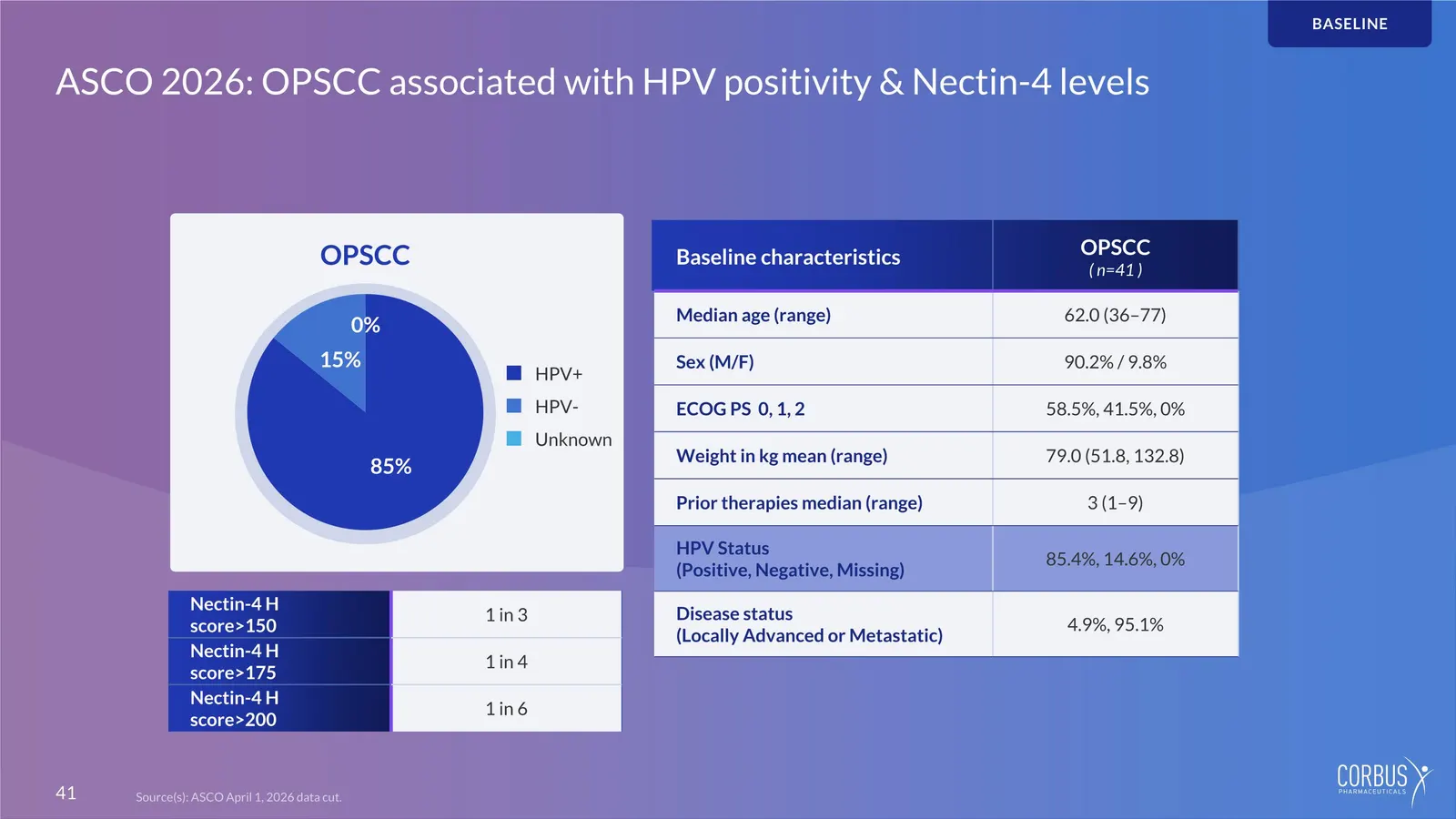
Slide 41: ASCO 2026: OPSCC associated with HPV positivity & Nectin-4 levels
Nectin-4 H score>150 1 in 3 Nectin-4 H score>175 1 in 4 Nectin-4 H score>200 1 in 6 ASCO 2026: OPSCC associated with HPV positivity & Nectin-4 levels Source(s): ASCO April 1, 2026 data cut. BASELINE HPV+ HPV- Unknown Baseline characteristics OPSCC ( n=41 ) Median age (range) 62.0 (36–77) Sex (M/F) 9
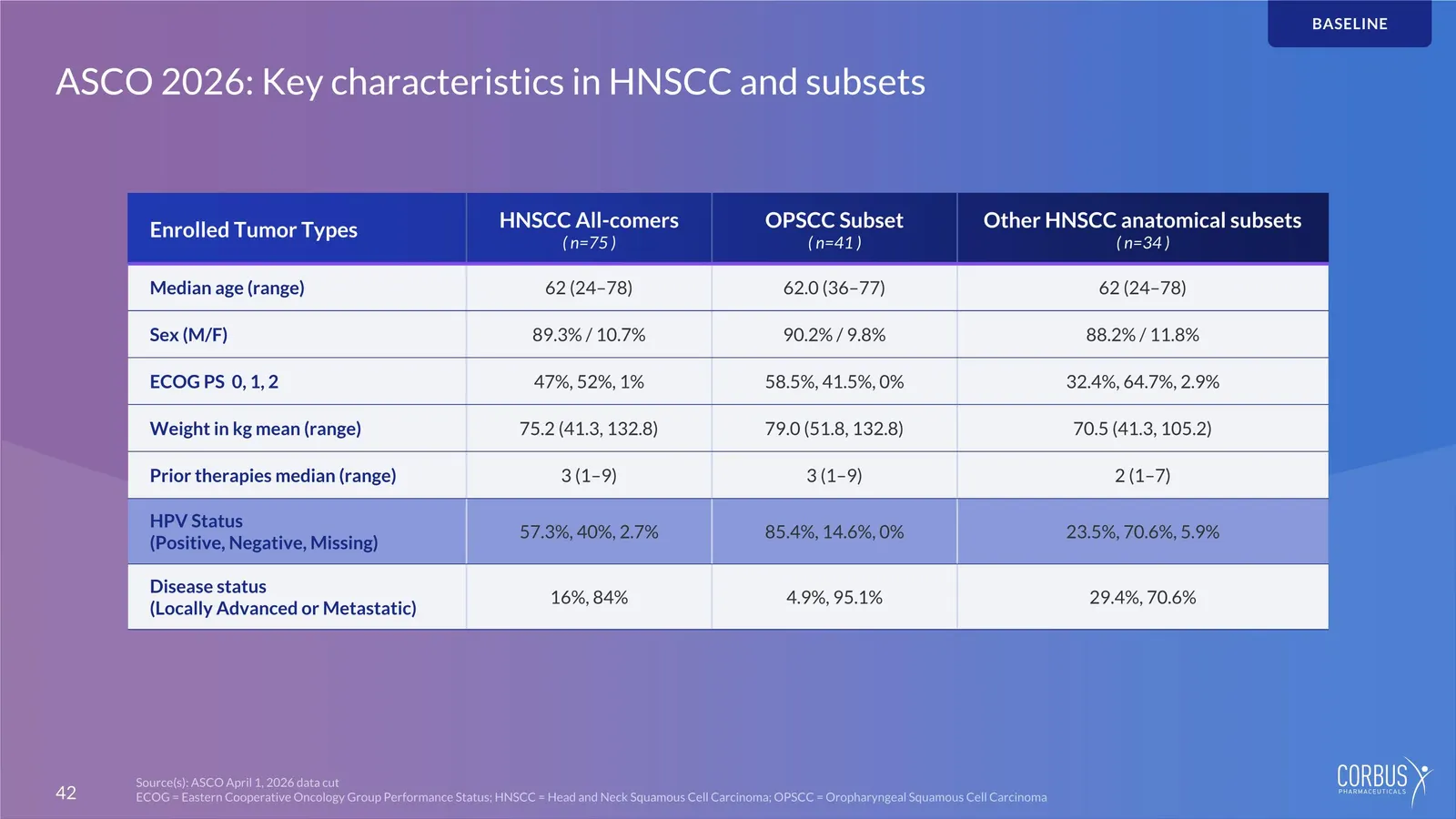
Slide 42: ASCO 2026: Key characteristics in HNSCC and subsets
Enrolled Tumor Types HNSCC All-comers ( n=75 ) OPSCC Subset ( n=41 ) Other HNSCC anatomical subsets ( n=34 ) Median age (range) 62 (24–78) 62.0 (36–77) 62 (24–78) Sex (M/F) 89.3% / 10.7% 90.2% / 9.8% 88.2% / 11.8% ECOG PS 0, 1, 2 47%, 52%, 1% 58.5%, 41.5%, 0% 32.4%, 64.7%, 2.9% Weight in kg mean (ra

Slide 43: Supplemental Information: Cervical Cancer
Supplemental Information: Cervical Cancer Acute unmet need in 2L in poorly addressed market
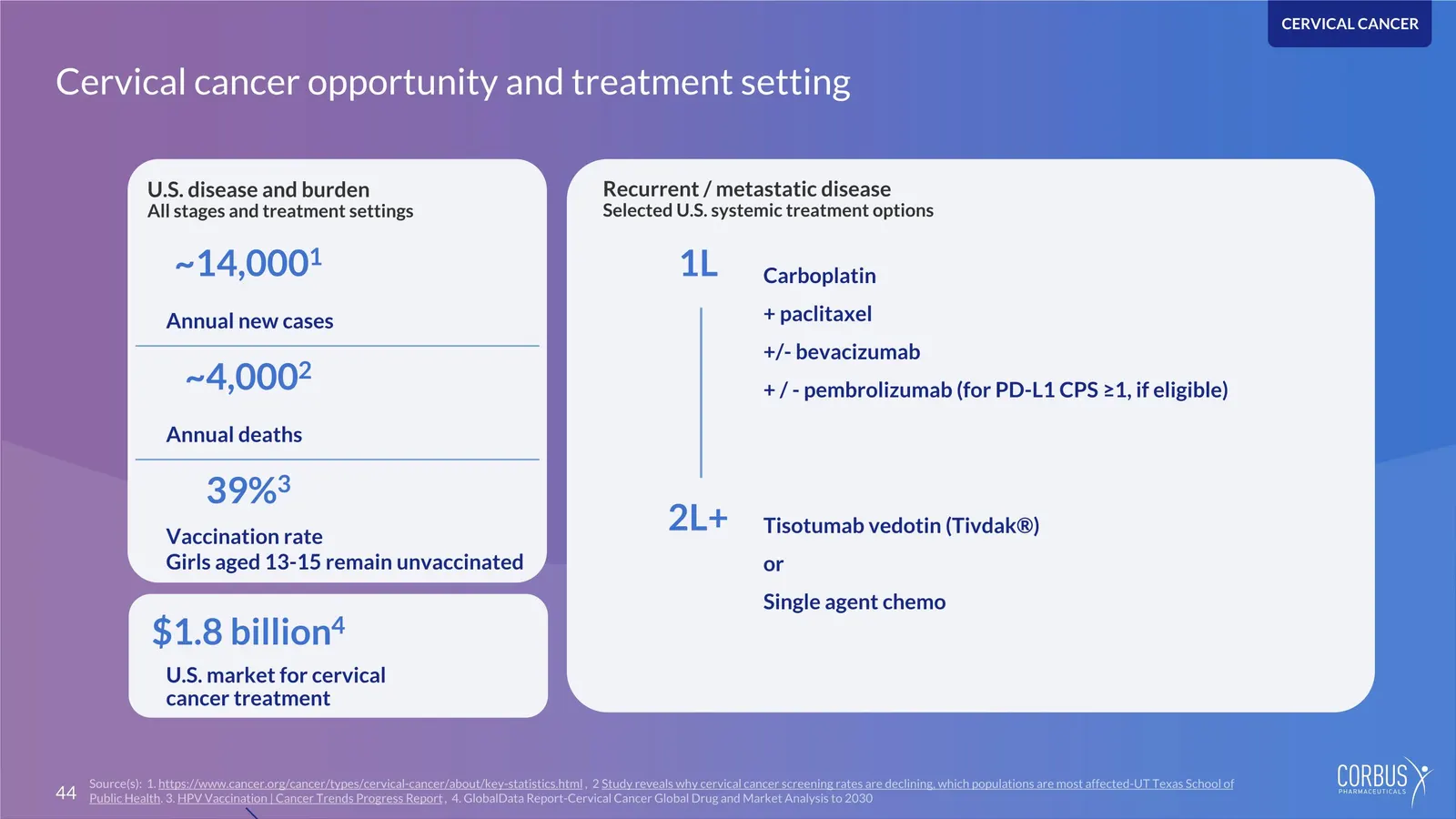
Slide 44: Cervical cancer opportunity and treatment setting
Cervical cancer opportunity and treatment setting Source(s): 1. https://www.cancer.org/cancer/types/cervical-cancer/about/key-statistics.html , 2 Study reveals why cervical cancer screening rates are declining, which populations are most affected-UT Texas School of Public Health. 3. HPV Vaccination
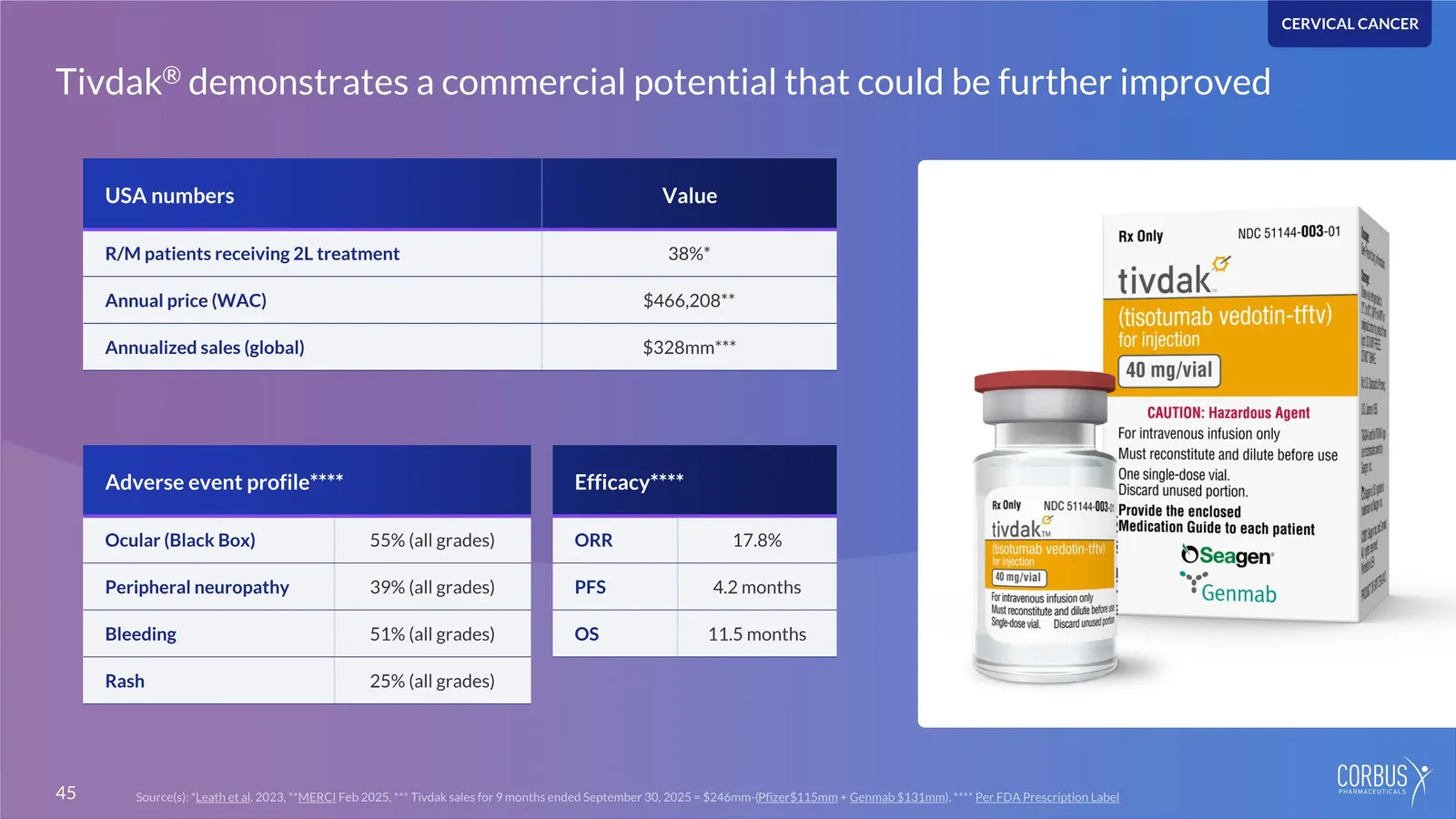
Slide 45: Tivdak demonstrates commercial potential that could be further improved
Efficacy**** ORR 17.8% PFS 4.2 months OS 11.5 months Adverse event profile**** Ocular (Black Box) 55% (all grades) Peripheral neuropathy 39% (all grades) Bleeding 51% (all grades) Rash 25% (all grades) USA numbers Value R/M patients receiving 2L treatment 38%* Annual price (WAC) $466,208** Annualize
Slide 46: ASCO 2026: Key characteristics & tumor types (cervical)
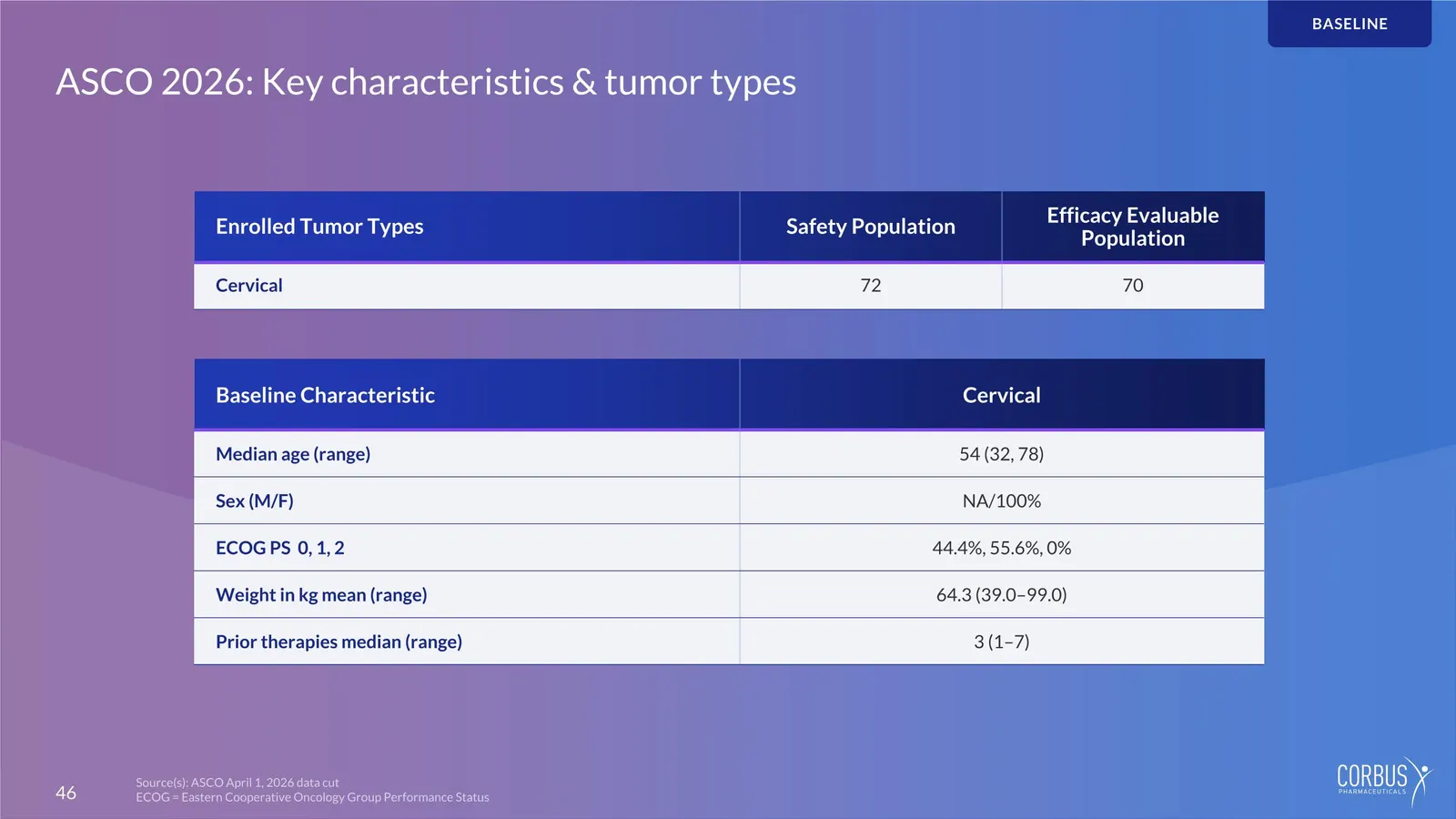
Enrolled Tumor Types Safety Population Efficacy Evaluable Population Cervical 72 70 Baseline Characteristic Cervical Median age (range) 54 (32, 78) Sex (M/F) NA/100% ECOG PS 0, 1, 2 44.4%, 55.6%, 0% Weight in kg mean (range) 64.3 (39.0–99.0) Prior therapies median (range) 3 (1–7) ASCO 2026: Key char
Slide 47: SUTA-E ASCO 2026: Waterfall plot
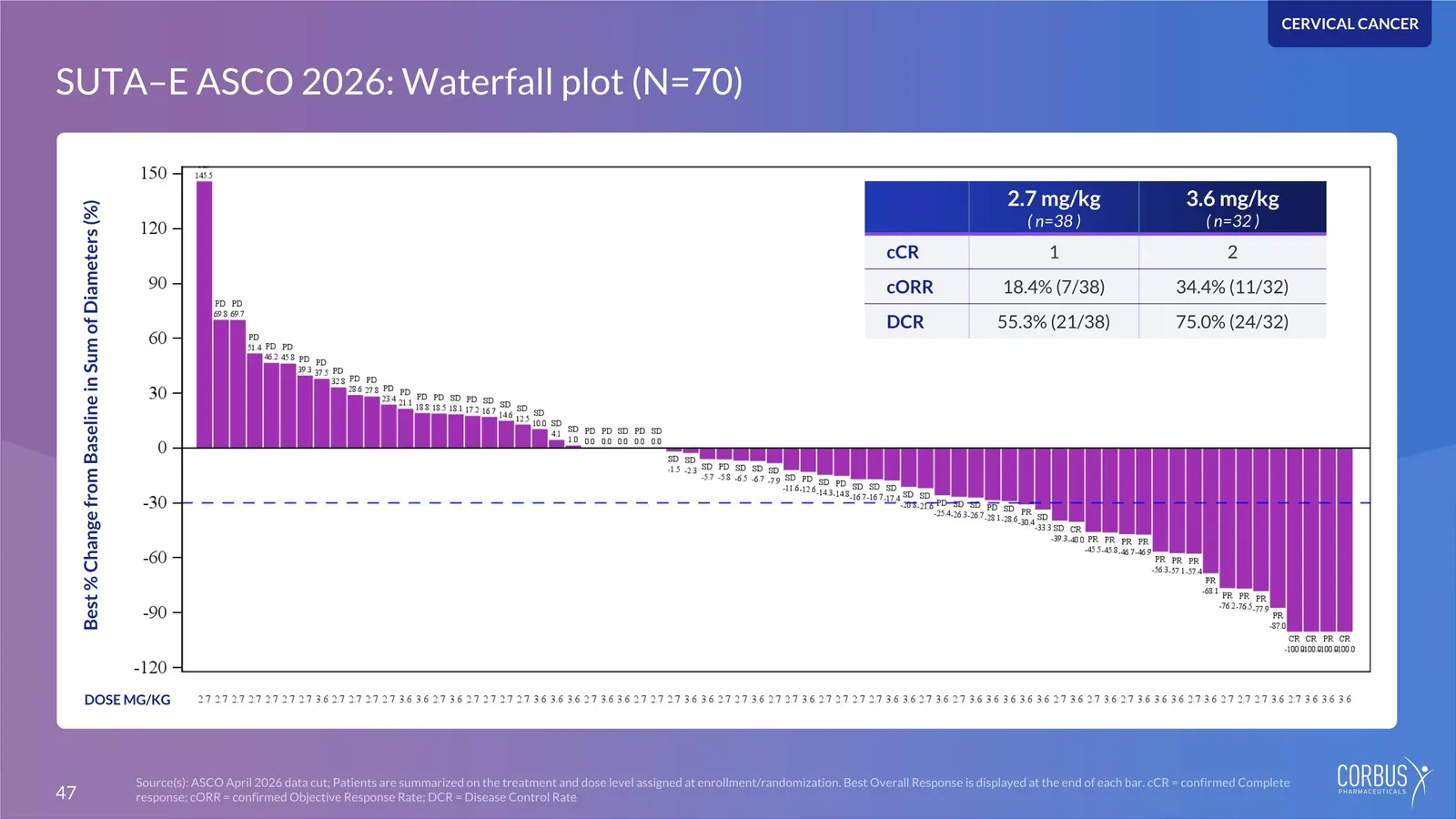
SUTA–E ASCO 2026: Waterfall plot (N=70) Source(s): ASCO April 2026 data cut; Patients are summarized on the treatment and dose level assigned at enrollment/randomization. Best Overall Response is displayed at the end of each bar. cCR = confirmed Complete response; cORR = confirmed Objective Response
Slide 48: SUTA-E ASCO 2026: Swimmer plots
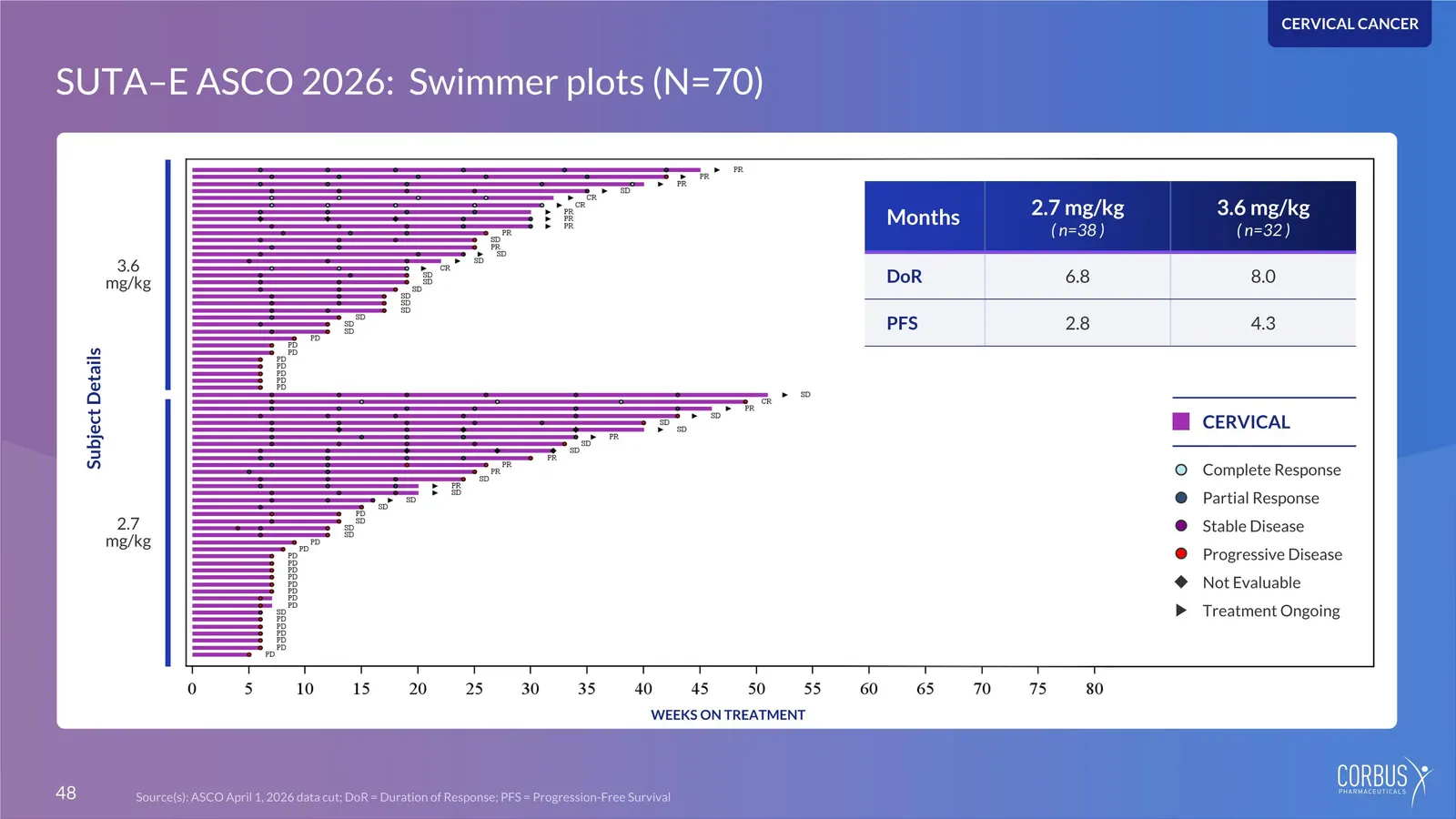
Subject Details WEEKS ON TREATMENT 3.6 mg/kg 2.7 mg/kg SUTA–E ASCO 2026: Swimmer plots (N=70) Source(s): ASCO April 1, 2026 data cut; DoR = Duration of Response; PFS = Progression-Free Survival Months 2.7 mg/kg ( n=38 ) 3.6 mg/kg ( n=32 ) DoR 6.8 8.0 PFS 2.8 4.3 CERVICAL Complete Response Partial Re
Slide 49: SUTA–E potential to differentiate from current standard of care in 2L
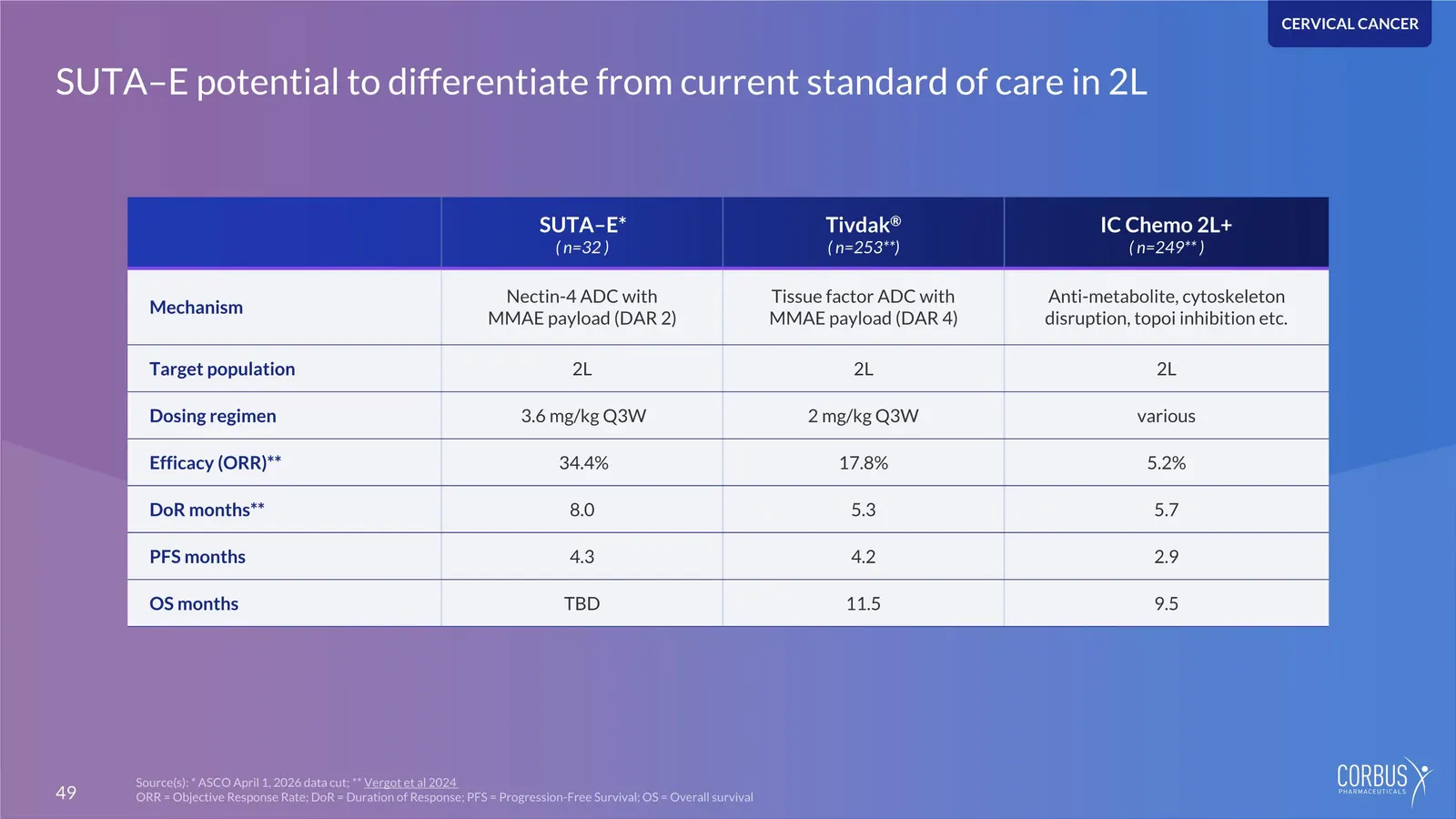
SUTA–E* ( n=32 ) Tivdak® ( n=253**) IC Chemo 2L+ ( n=249** ) Mechanism Nectin-4 ADC with MMAE payload (DAR 2) Tissue factor ADC with MMAE payload (DAR 4) Anti-metabolite, cytoskeleton disruption, topoi inhibition etc. Target population 2L 2L 2L Dosing regimen 3.6 mg/kg Q3W 2 mg/kg Q3W various Effica

Slide 50: Supplemental Information: CRB-913
Supplemental Information: CRB-913
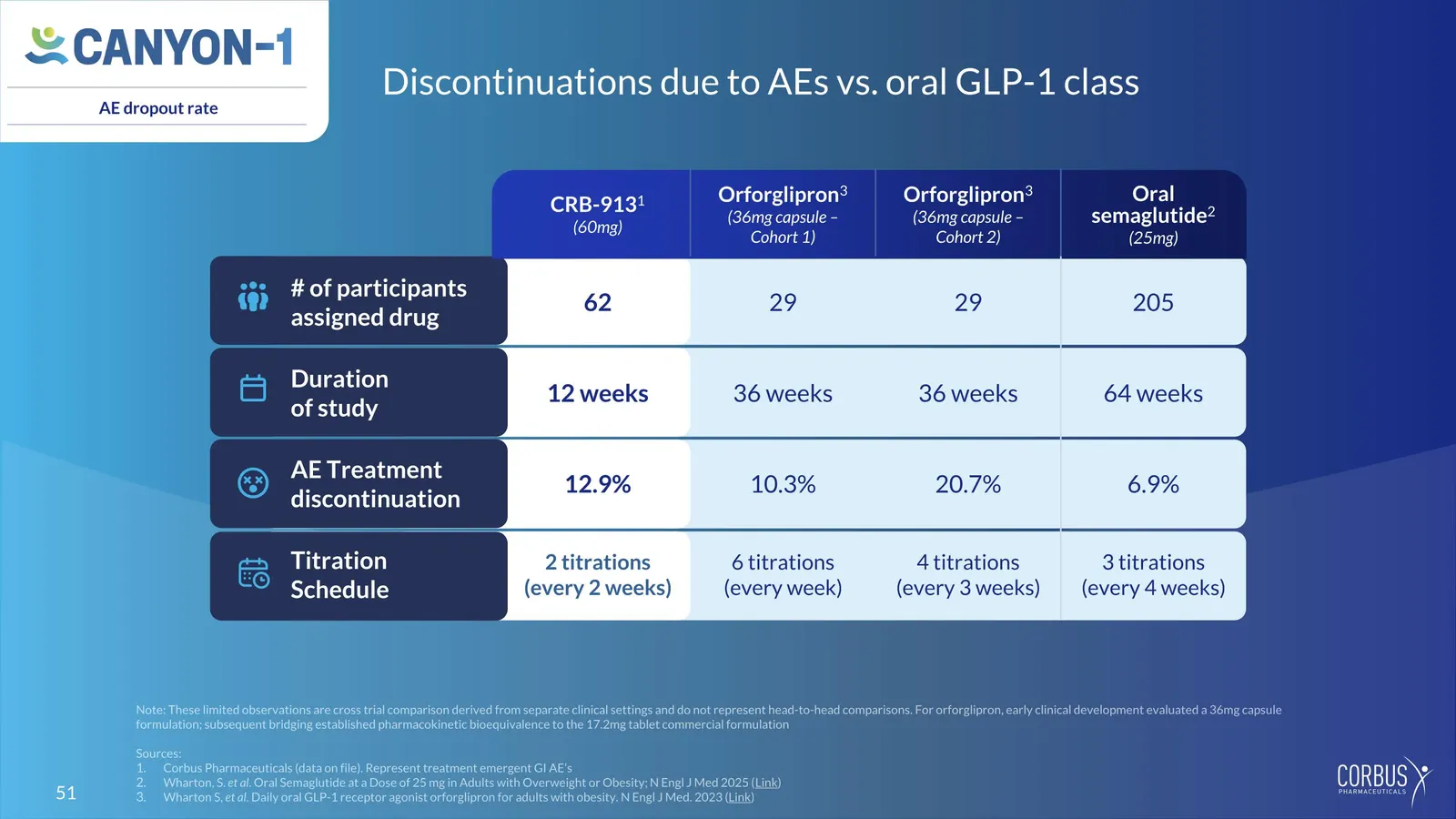
Slide 51: Discontinuations due to AEs vs. oral GLP-1 class
Discontinuations due to AEs vs. oral GLP-1 class Note: These limited observations are cross trial comparison derived from separate clinical settings and do not represent head-to-head comparisons. For orforglipron, early clinical development evaluated a 36mg capsule formulation; subsequent bridging e
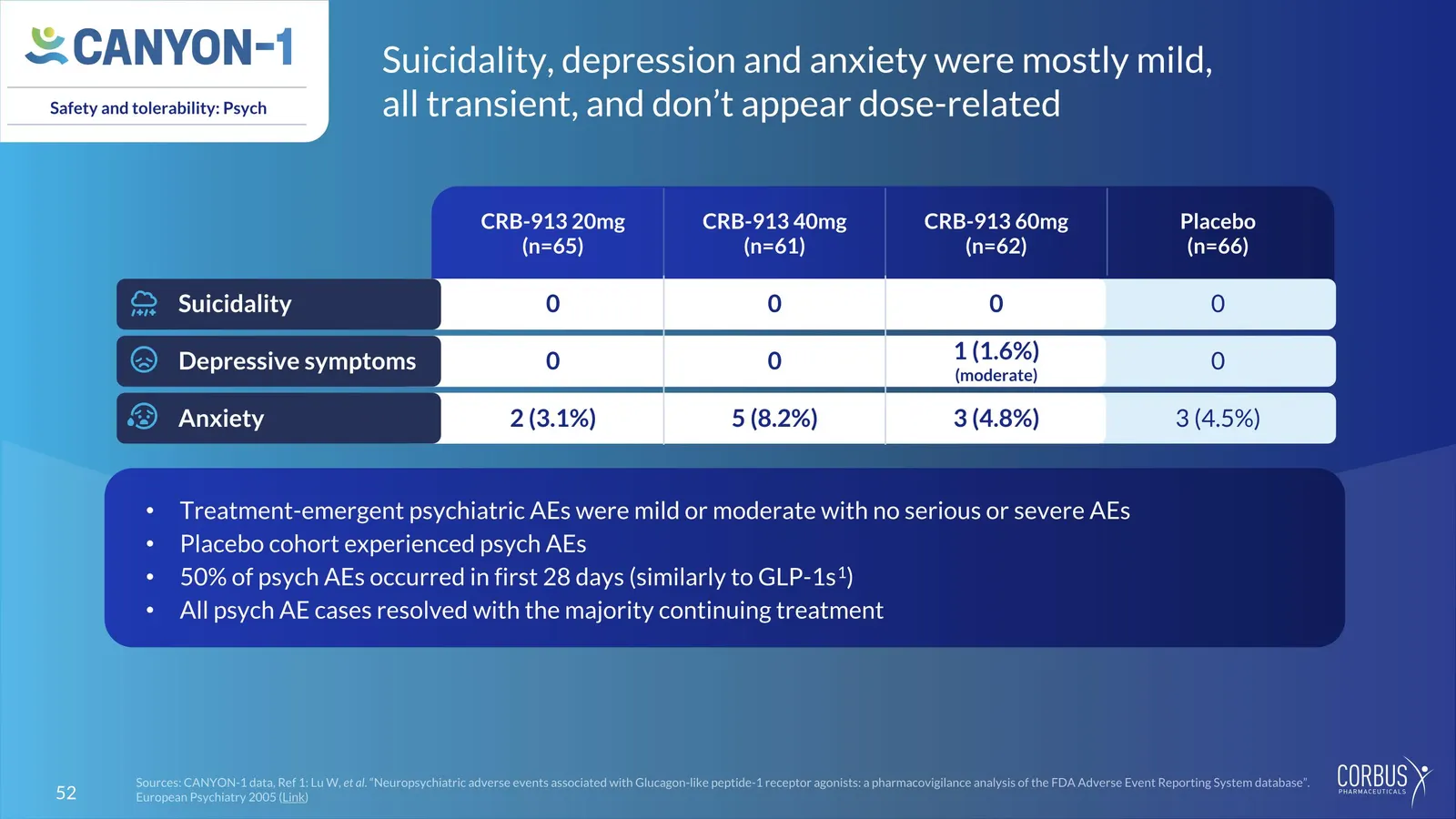
Slide 52: Suicidality, depression and anxiety mostly mild and transient
Suicidality, depression and anxiety were mostly mild, all transient, and don’t appear dose-related Sources: CANYON-1 data, Ref 1: Lu W, et al. “Neuropsychiatric adverse events associated with Glucagon-like peptide-1 receptor agonists: a pharmacovigilance analysis of the FDA Adverse Event Reporting S
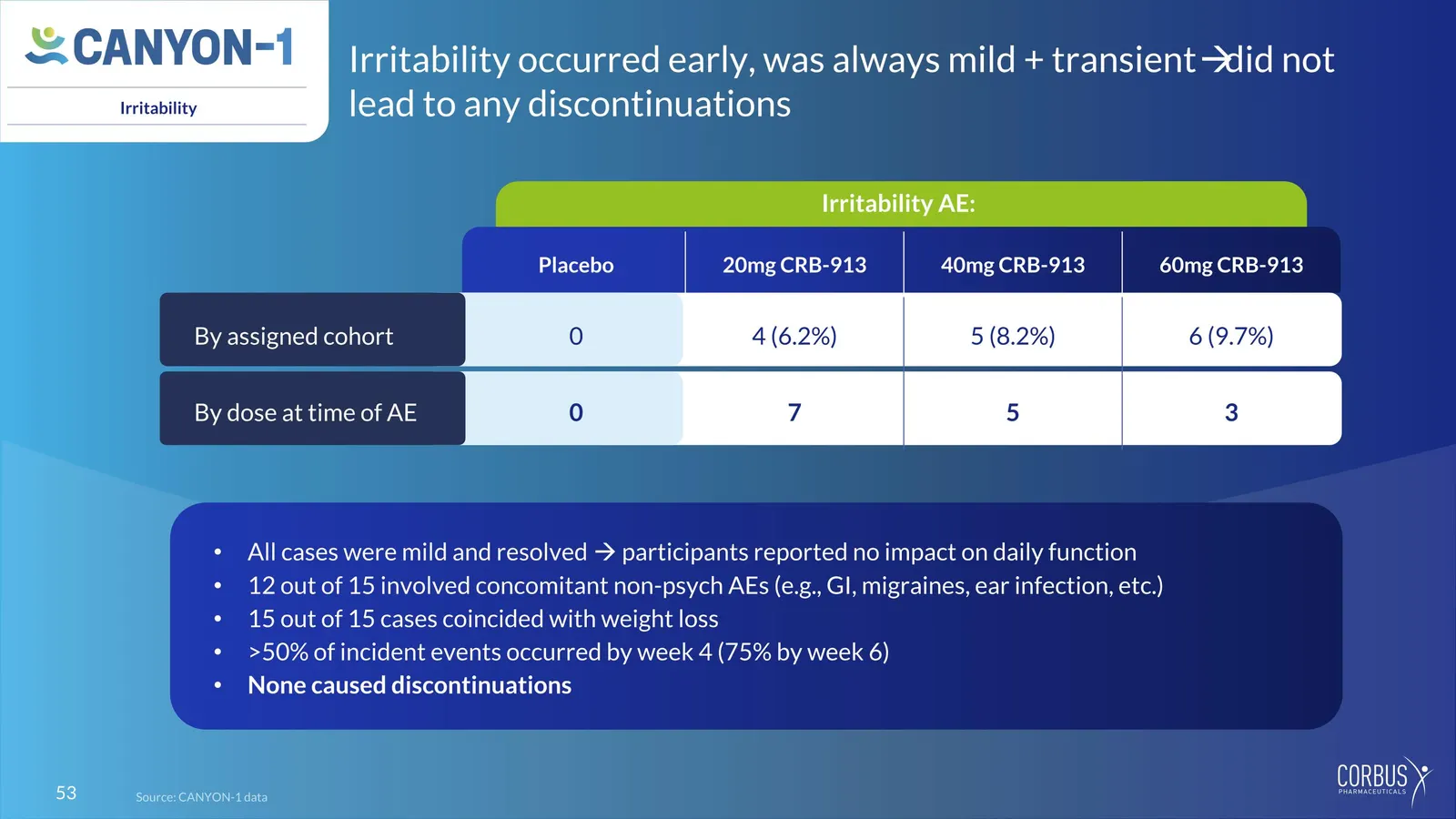
Slide 53: Irritability AE
Irritability AE: Irritability occurred early, was always mild + transient did not lead to any discontinuations Source: CANYON-1 data Irritability Placebo 20mg CRB-913 40mg CRB-913 60mg CRB-913 By assigned cohort 0 4 (6.2%) 5 (8.2%) 6 (9.7%) By dose at time of AE 0 7 5 3 All cases were mild and res
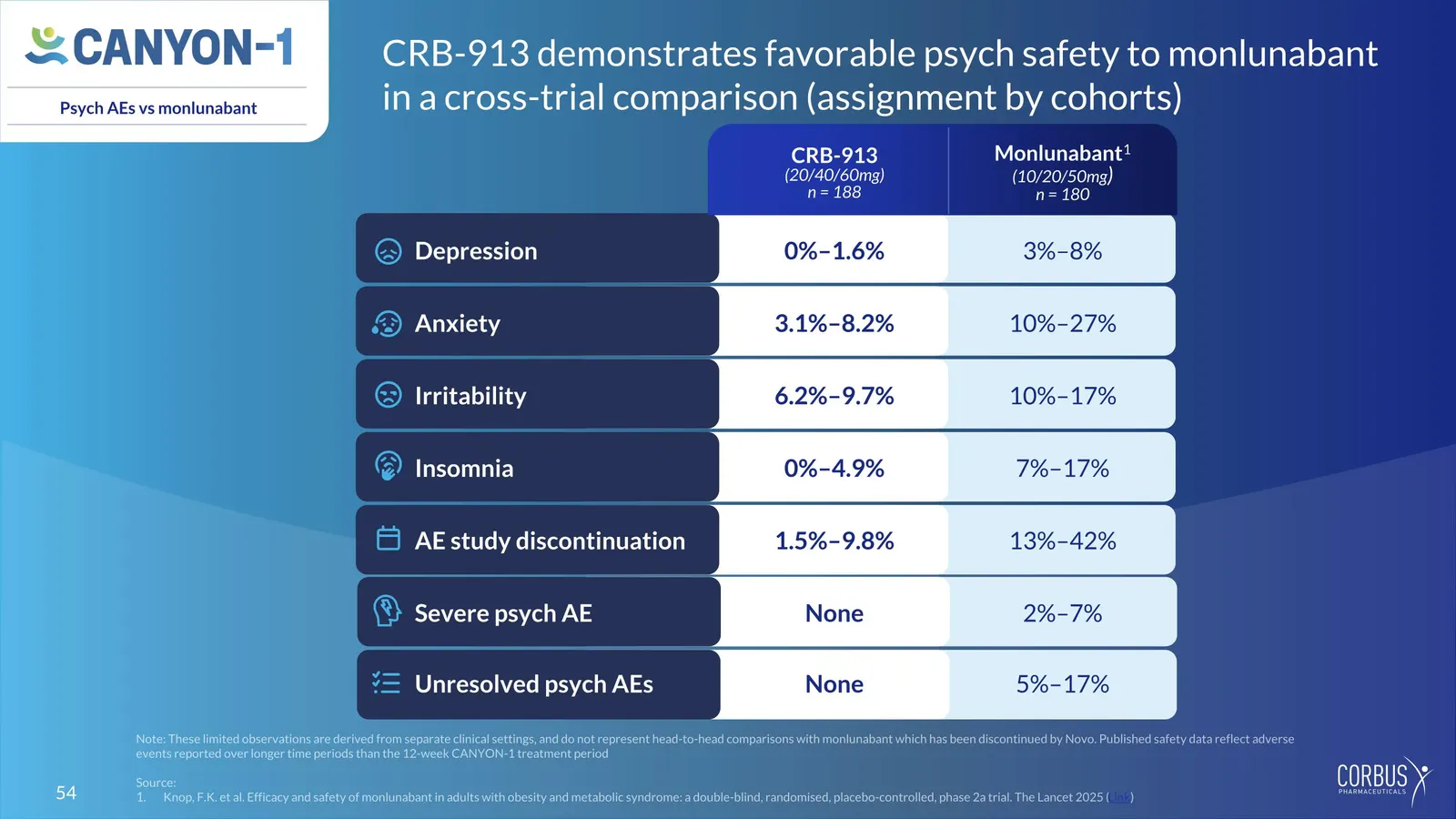
Slide 54: Psych AEs vs monlunabant
CRB-913 (20/40/60mg) n = 188 Monlunabant1 (10/20/50mg) n = 180 Depression 0%–1.6% 3%–8% Anxiety 3.1%–8.2% 10%–27% Irritability 6.2%–9.7% 10%–17% Insomnia 0%–4.9% 7%–17% AE study discontinuation 1.5%–9.8% 13%–42% Severe psych AE None 2%–7% Unresolved psych AEs None 5%–17% CRB-913 demonstrates favorab
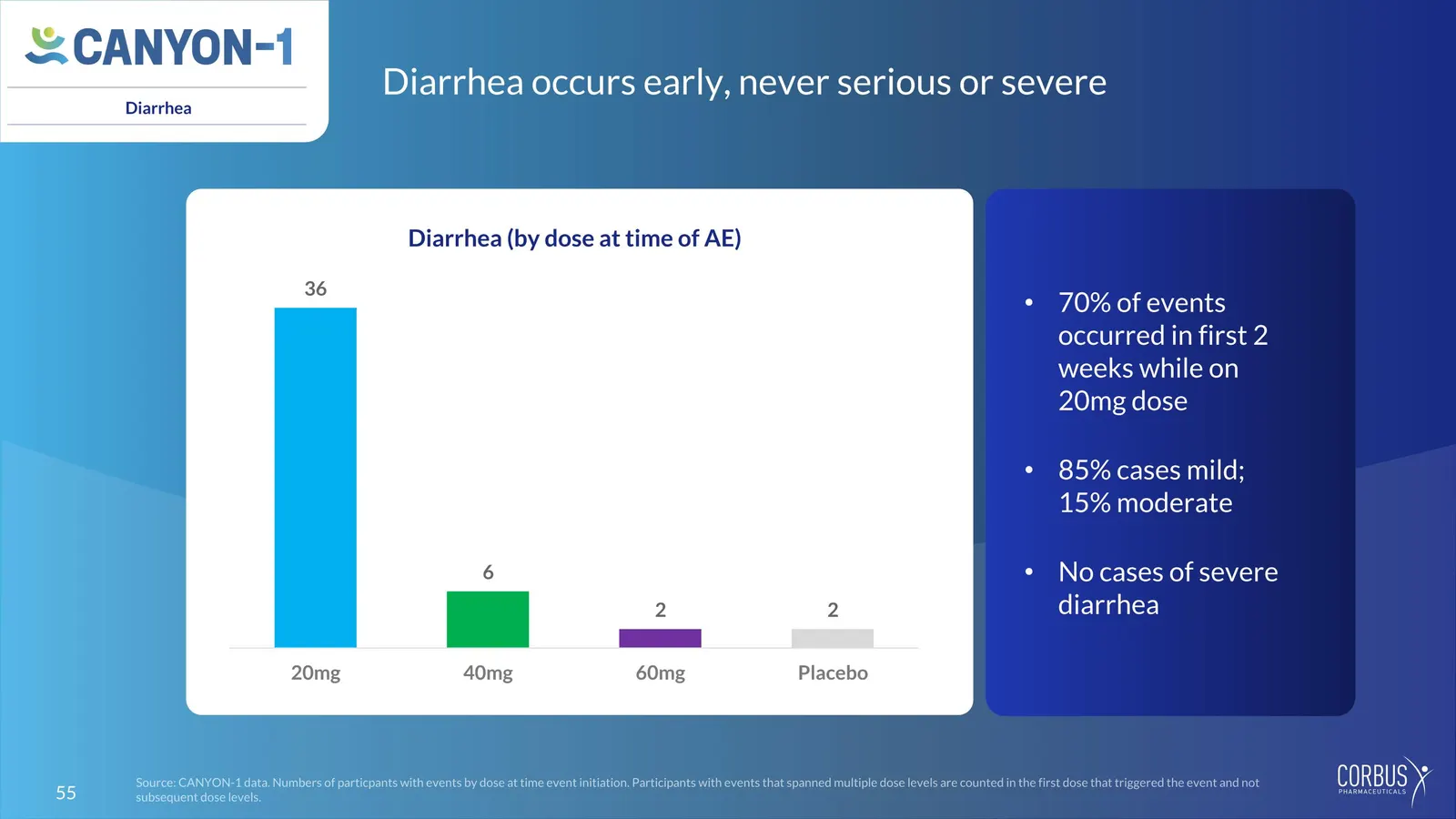
Slide 55: Diarrhea occurs early, never serious or severe
Diarrhea occurs early, never serious or severe Source: CANYON-1 data. Numbers of particpants with events by dose at time event initiation. Participants with events that spanned multiple dose levels are counted in the first dose that triggered the event and not subsequent dose levels. Diarrhea 70% of
Source: SEC EDGAR · 8-K filed Nov 16, 2026
More decks from Corbus Pharmaceuticals Holdings, Inc.
 Investor Presentation (October 2026)62 slides · Oct 15, 2026
 Investor Presentation (September 2026)58 slides · Sep 14, 2026
 Investor Presentation (May 2026)58 slides · May 26, 2026
 Investor Presentation (March 2026)63 slides · Mar 9, 2026
 Investor Presentation (February 2026)61 slides · Feb 25, 2026
 Investor Presentation (January 2026)59 slides · Jan 12, 2026