CARsgen Therapeutics Holdings Ltd. · HKEX:2171
CARsgen Therapeutics — Investor Presentation (November 2026)
59 slides from CARsgen Therapeutics's investor presentation, November 2026
Slide 1: CARsgen Therapeutics
CARsgen Therapeutics (HKEX: 02171) November 2026 Making Cancer Curable
Slide 2: Disclaimer
Disclaimer THIS DOCUMENT IS FOR INFORMATIONAL PURPOSES ONLY AND IS NOT INTENDED TO BE, AND SHALL NOT BE CONSTRUED AS, AN OFFER, INDUCEMENT, INVITATION, SOLICITATION, COMMITMENT OR ADVERTISEMENT WITH RESPECT TO THE PURCHASE, SUBSCRIPTION OR SALE OF ANY SECURITY AND NO PART OF IT SHALL FORM THE BASIS
Slide 3: CARsgen Develops Differentiated Cell Therapies to Make Cancer and Other Diseases Curable
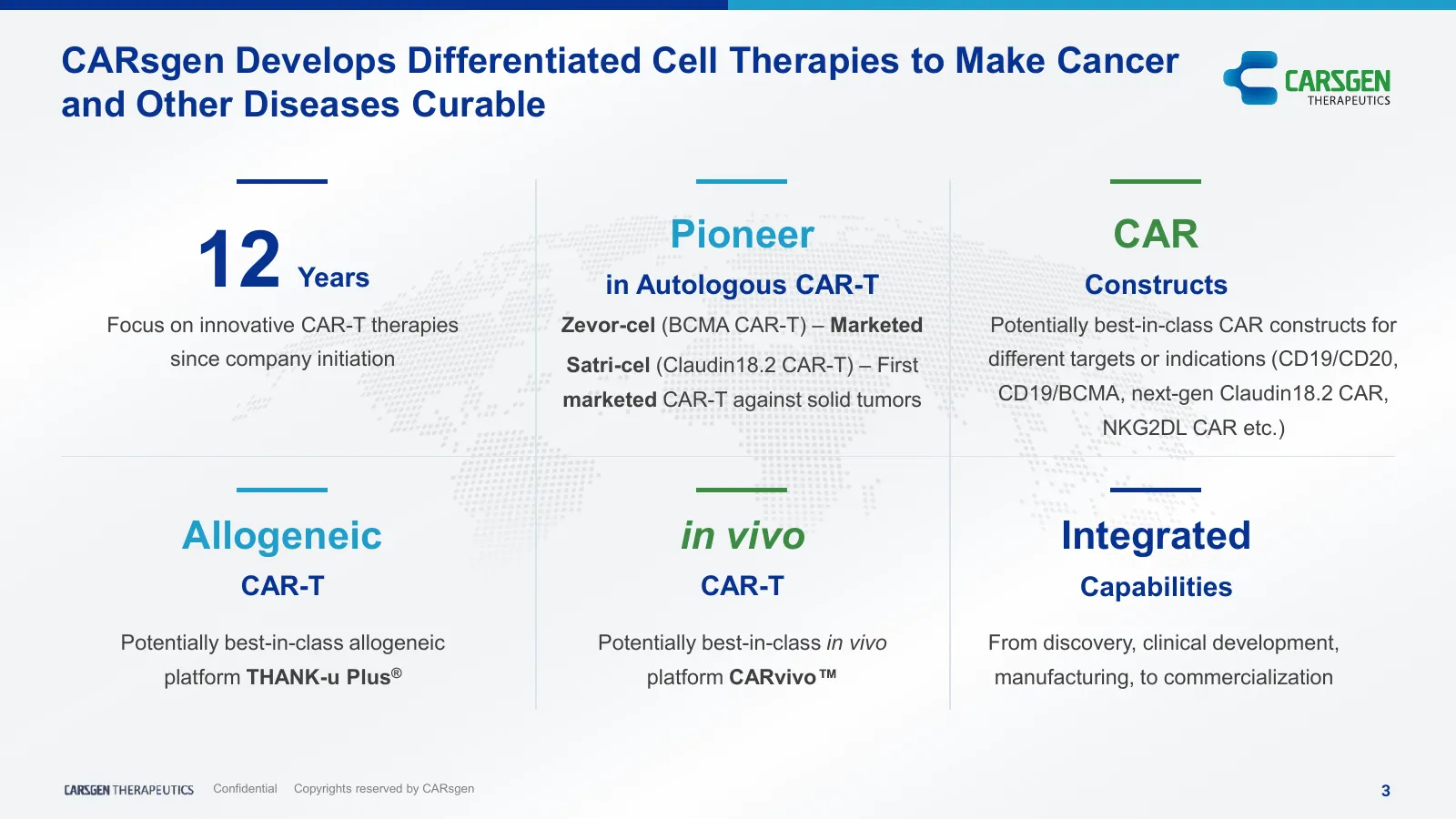
CARsgen Develops Differentiated Cell Therapies to Make Cancer and Other Diseases Curable Pioneer CAR 12 Years in Autologous CAR-T Constructs Focus on innovative CAR-T therapies Zevor-cel (BCMA CAR-T) – Marketed Potentially best-in-class CAR constructs for since company initiation Satri-cel (Claudin1
Slide 4: Experienced Senior Management Team
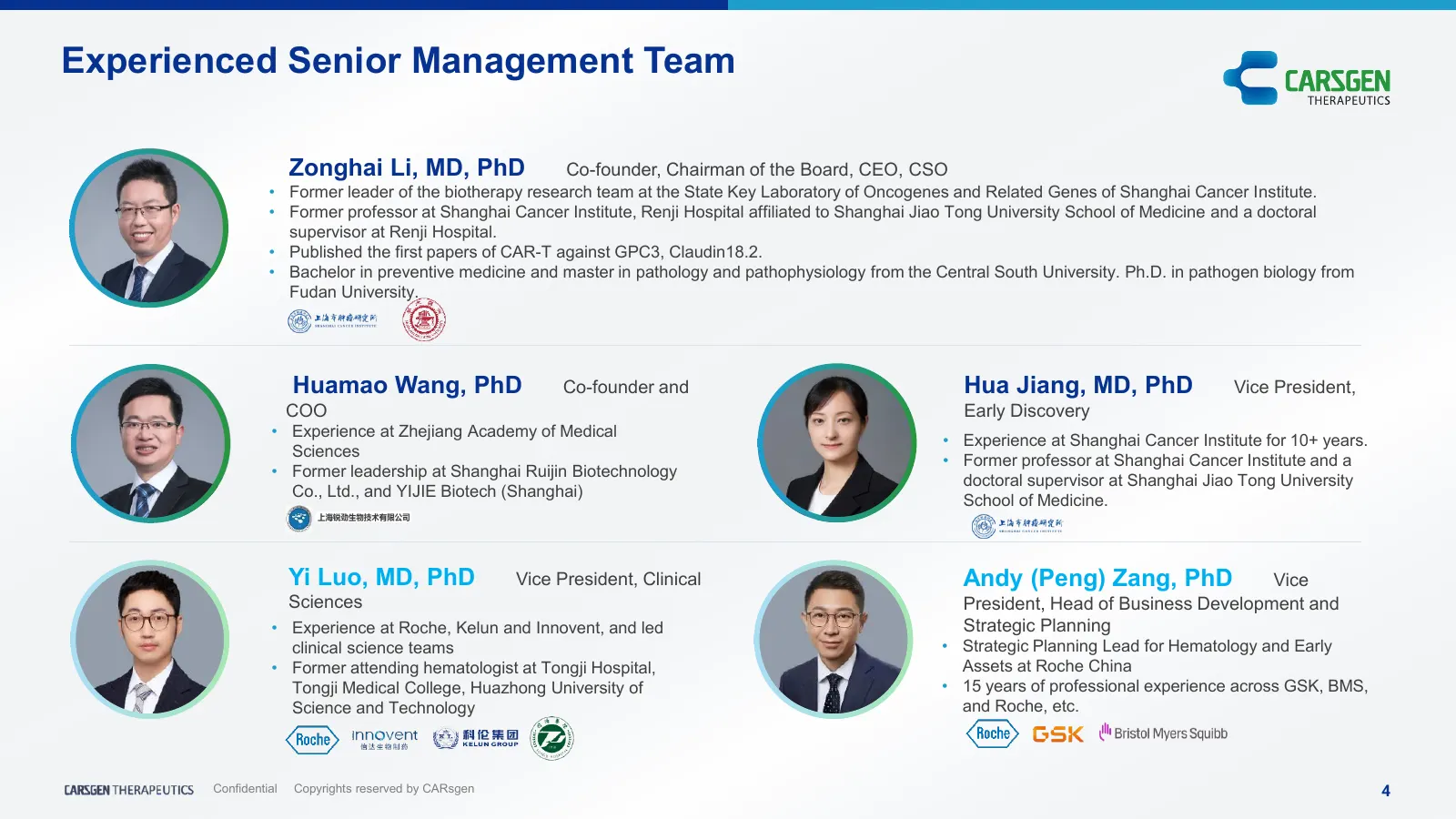
Experienced Senior Management Team Zonghai Li, MD, PhD Co-founder, Chairman of the Board, CEO, CSO • Former leader of the biotherapy research team at the State Key Laboratory of Oncogenes and Related Genes of Shanghai Cancer Institute. • Former professor at Shanghai Cancer Institute, Renji Hospital
Slide 5: Global Reach with Integrated R&D and Manufacturing Capabilities
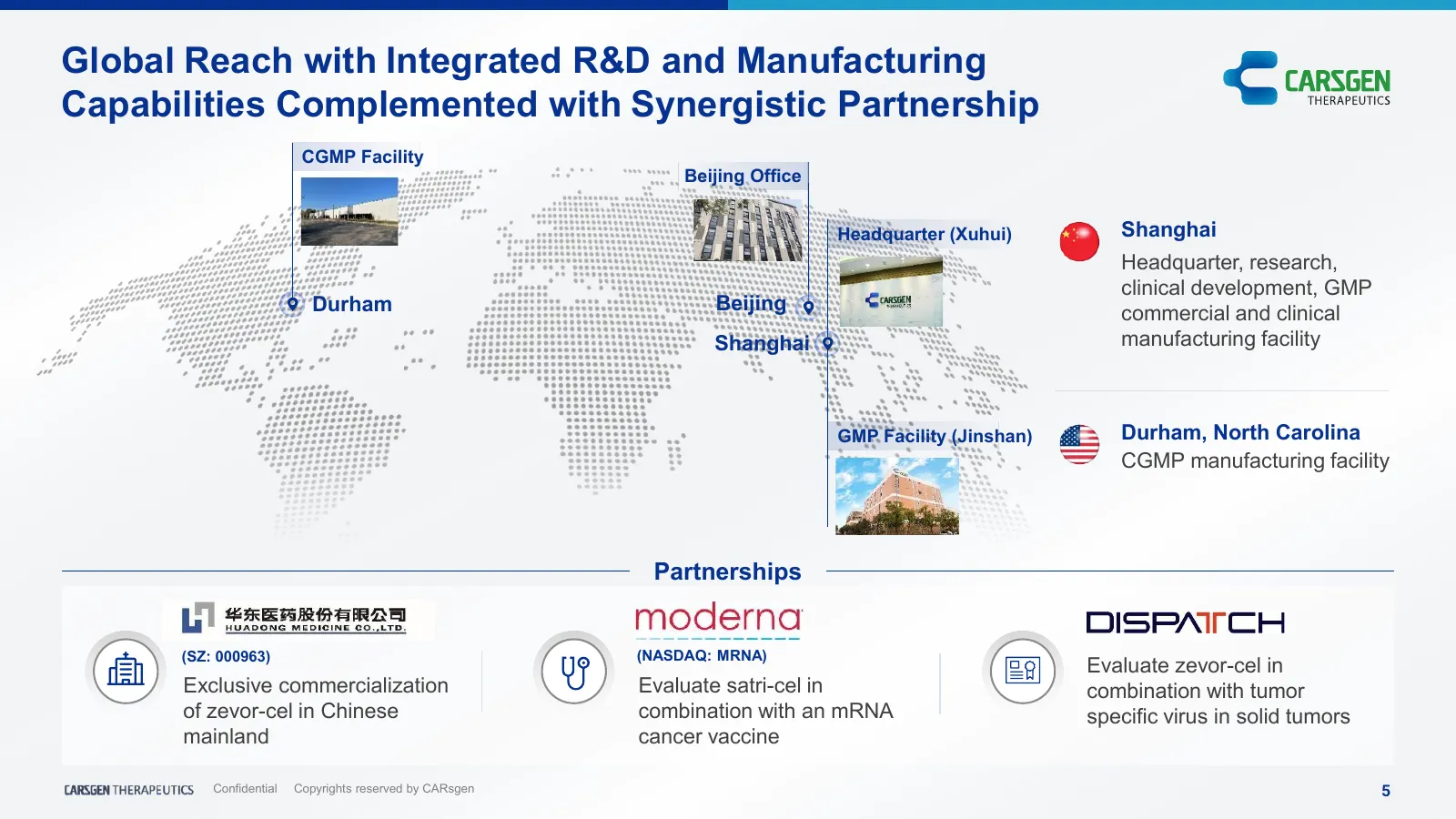
Global Reach with Integrated R&D and Manufacturing Capabilities Complemented with Synergistic Partnership CGMP Facility Beijing Office Headquarter (Xuhui) Shanghai Headquarter, research, clinical development, GMP Durham Beijing commercial and clinical Shanghai manufacturing facility GMP Facility (Ji
Slide 6: CARsgen Pioneered the Development of CAR-T Against Solid Tumors
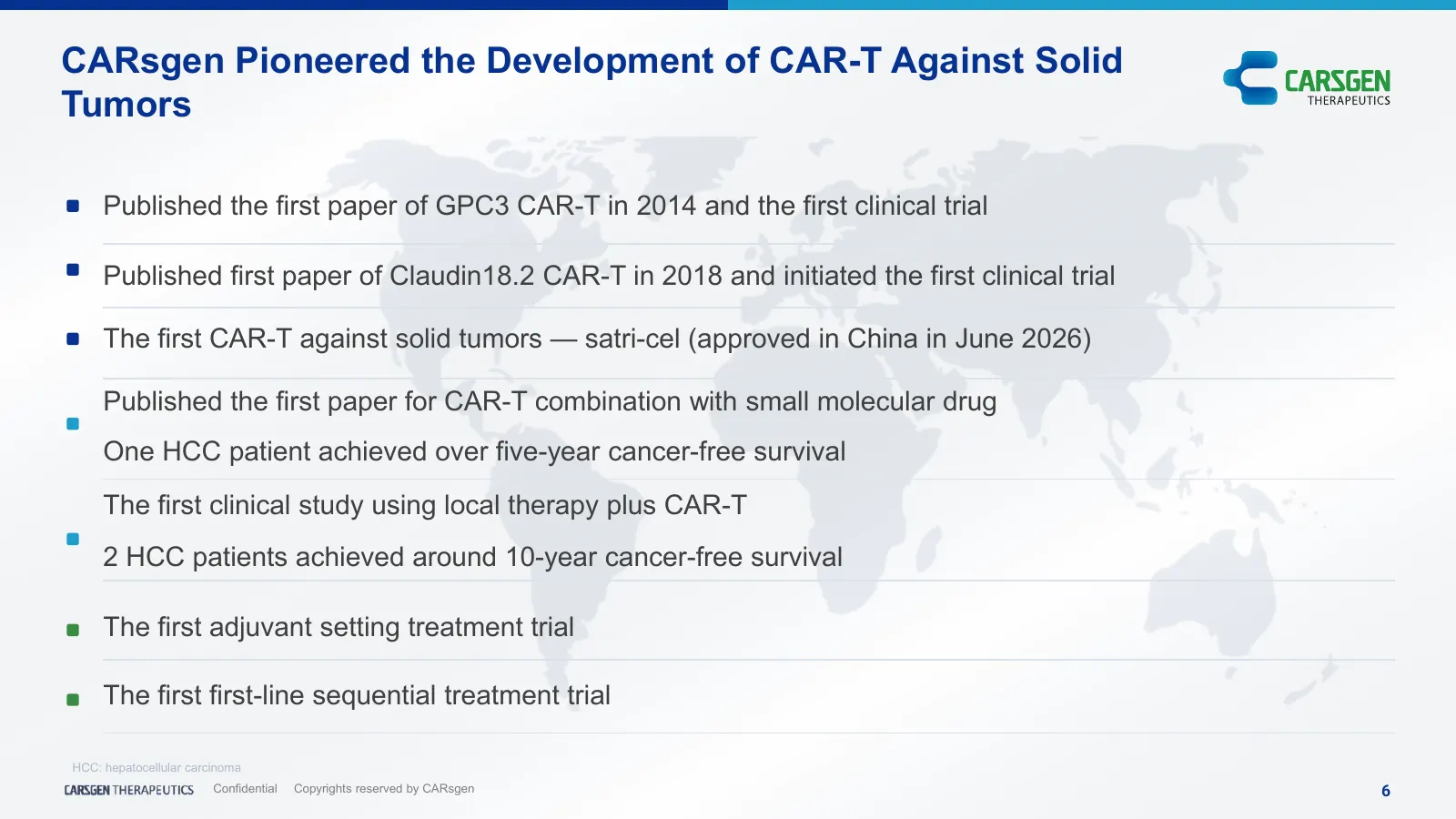
CARsgen Pioneered the Development of CAR-T Against Solid Tumors Published the first paper of GPC3 CAR-T in 2014 and the first clinical trial Published first paper of Claudin18.2 CAR-T in 2018 and initiated the first clinical trial The first CAR-T against solid tumors — satri-cel (approved in China i
Slide 7: CAR-T in Combination with Local Therapy Against HCC
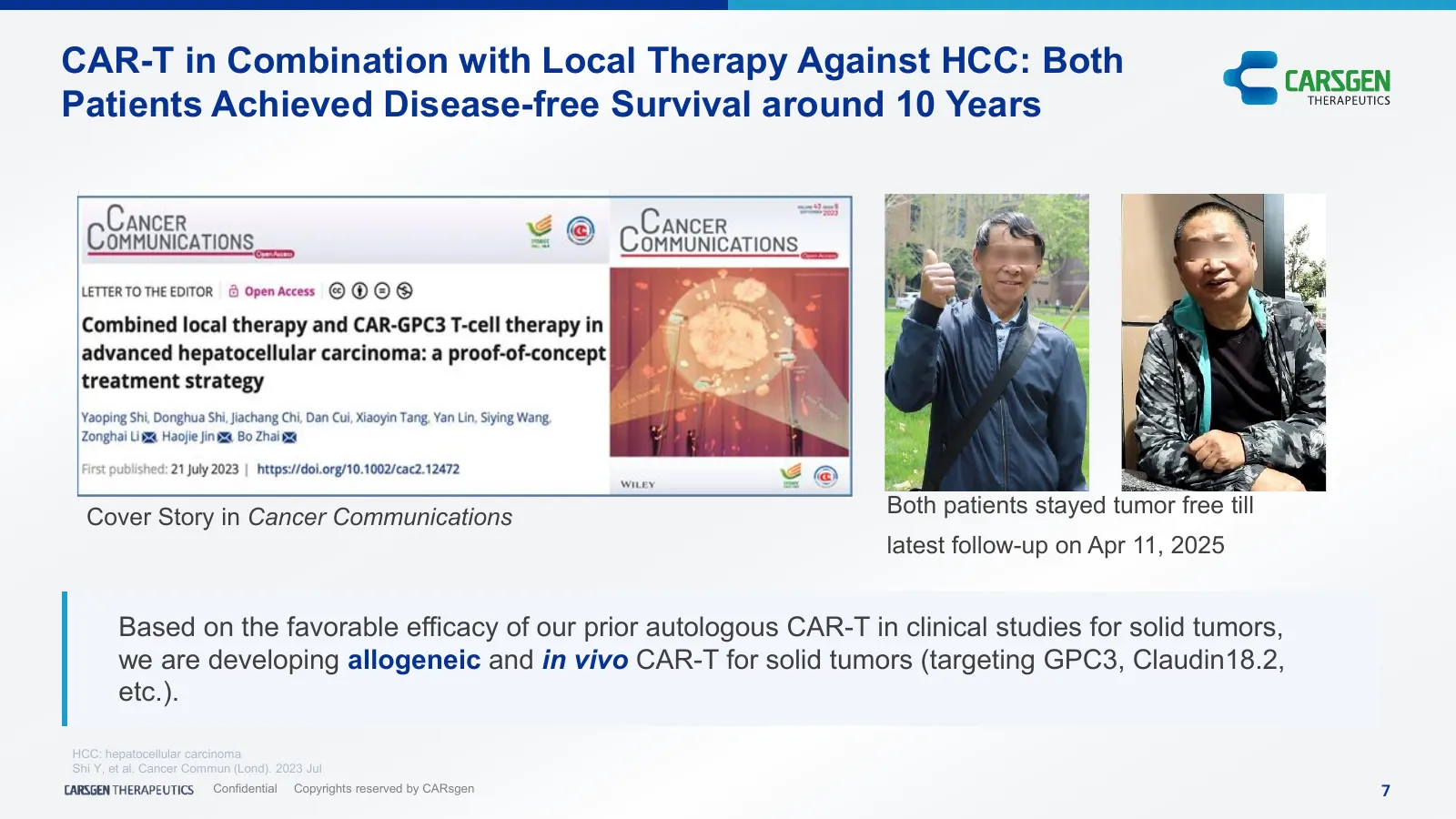
CAR-T in Combination with Local Therapy Against HCC: Both Patients Achieved Disease-free Survival around 10 Years Both patients stayed tumor free till Cover Story in Cancer Communications latest follow-up on Apr 11, 2025 Based on the favorable efficacy of our prior autologous CAR-T in clinical studi
Slide 8: Advancing a Competitive Pipeline with Global Rights
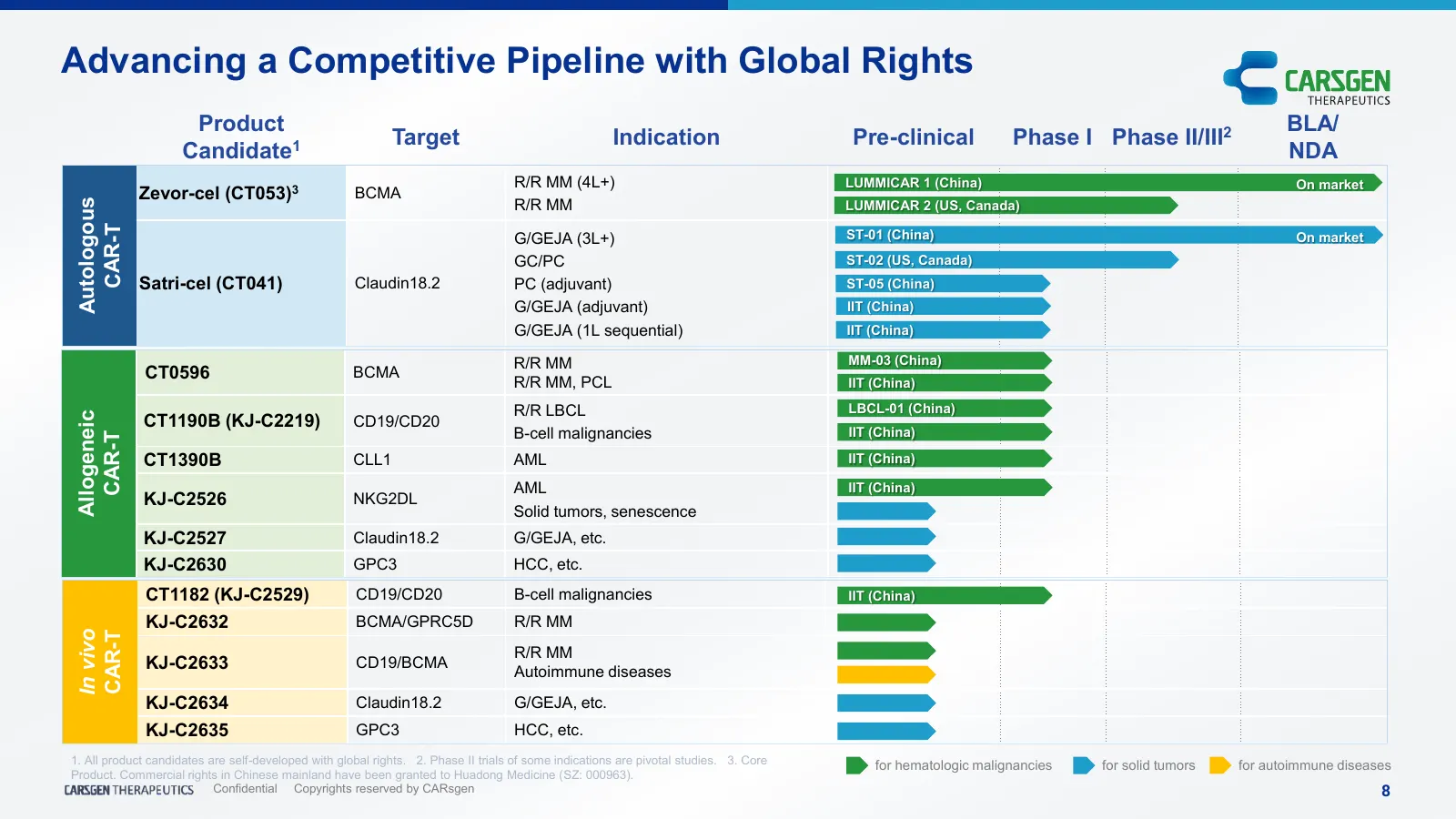
Advancing a Competitive Pipeline with Global Rights Product BLA/ Target Indication Pre-clinical Phase I Phase II/III2 Candidate1 NDA R/R MM (4L+) LUMMICAR 1 (China) On market Zevor-cel (CT053)3 BCMA R/R MM Autologous LUMMICAR 2 (US, Canada) CAR-T G/GEJA (3L+) ST-01 (China) On market GC/PC ST-02 (US,
Slide 9: Autologous CAR-T: Marketed Products in Solid Tumor & Hematologic Malignancies
Autologous CAR-T: Marketed Products in Solid Tumor & Hematologic Malignancies
Slide 10: Significant Unmet Medical Needs for Gastric and Pancreatic Cancers
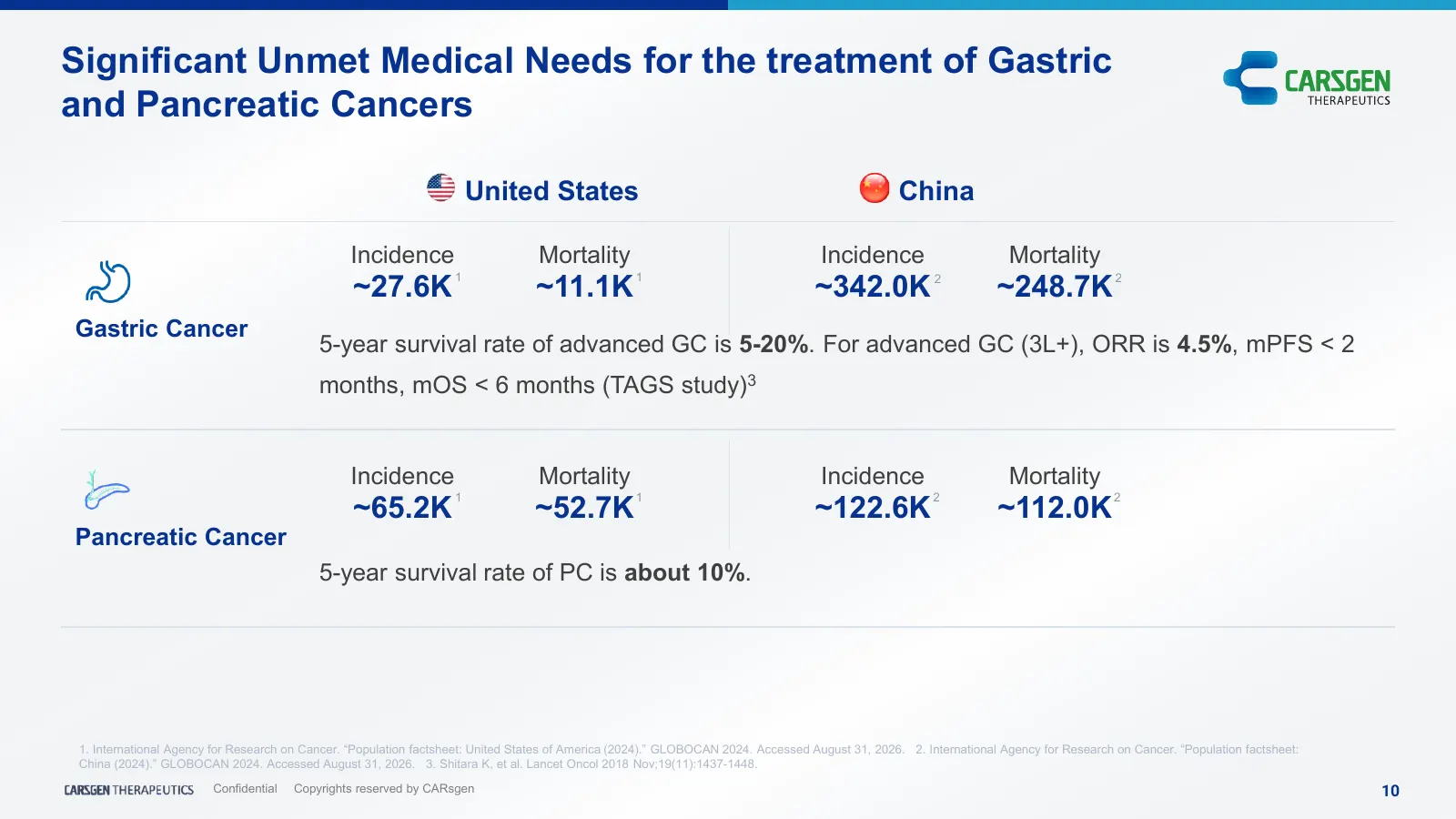
Significant Unmet Medical Needs for the treatment of Gastric and Pancreatic Cancers United States China Incidence Mortality Incidence Mortality ~27.6K ~11.1K ~342.0K ~248.7K 2 1 1 2 Gastric Cancer 5-year survival rate of advanced GC is 5-20%. For advanced GC (3L+), ORR is 4.5%, mPFS < 2 months, mOS
Slide 11: CARsgen Proprietary Claudin18.2 IHC Test
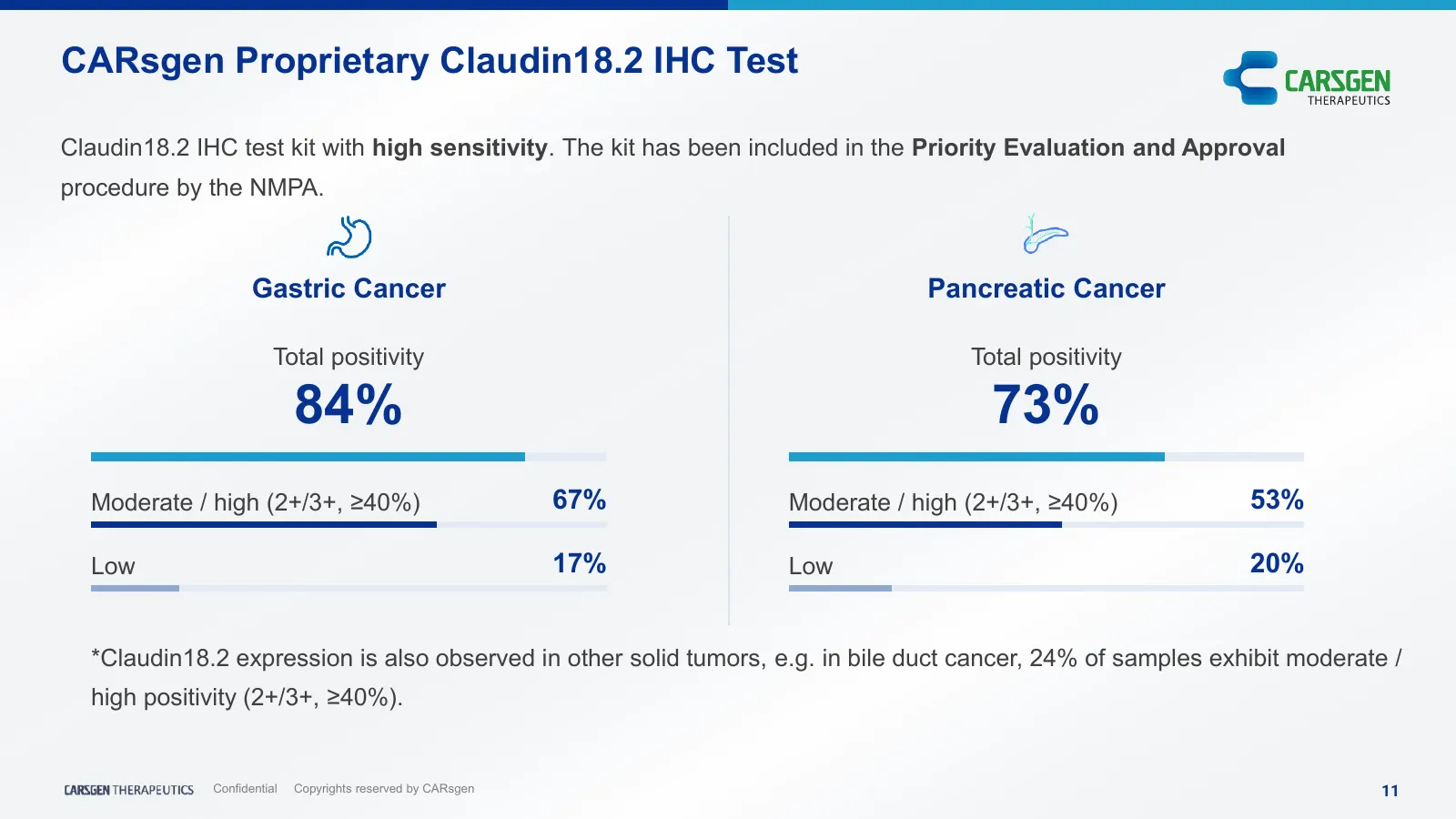
CARsgen Proprietary Claudin18.2 IHC Test Claudin18.2 IHC test kit with high sensitivity. The kit has been included in the Priority Evaluation and Approval procedure by the NMPA. Gastric Cancer Pancreatic Cancer Total positivity Total positivity 84% 73% Moderate / high (2+/3+, ≥40%) 67% Moderate / hi
Slide 12: Satri-cel (CT041): Global First-in-Class CAR-T for Claudin18.2-Positive Solid Tumors
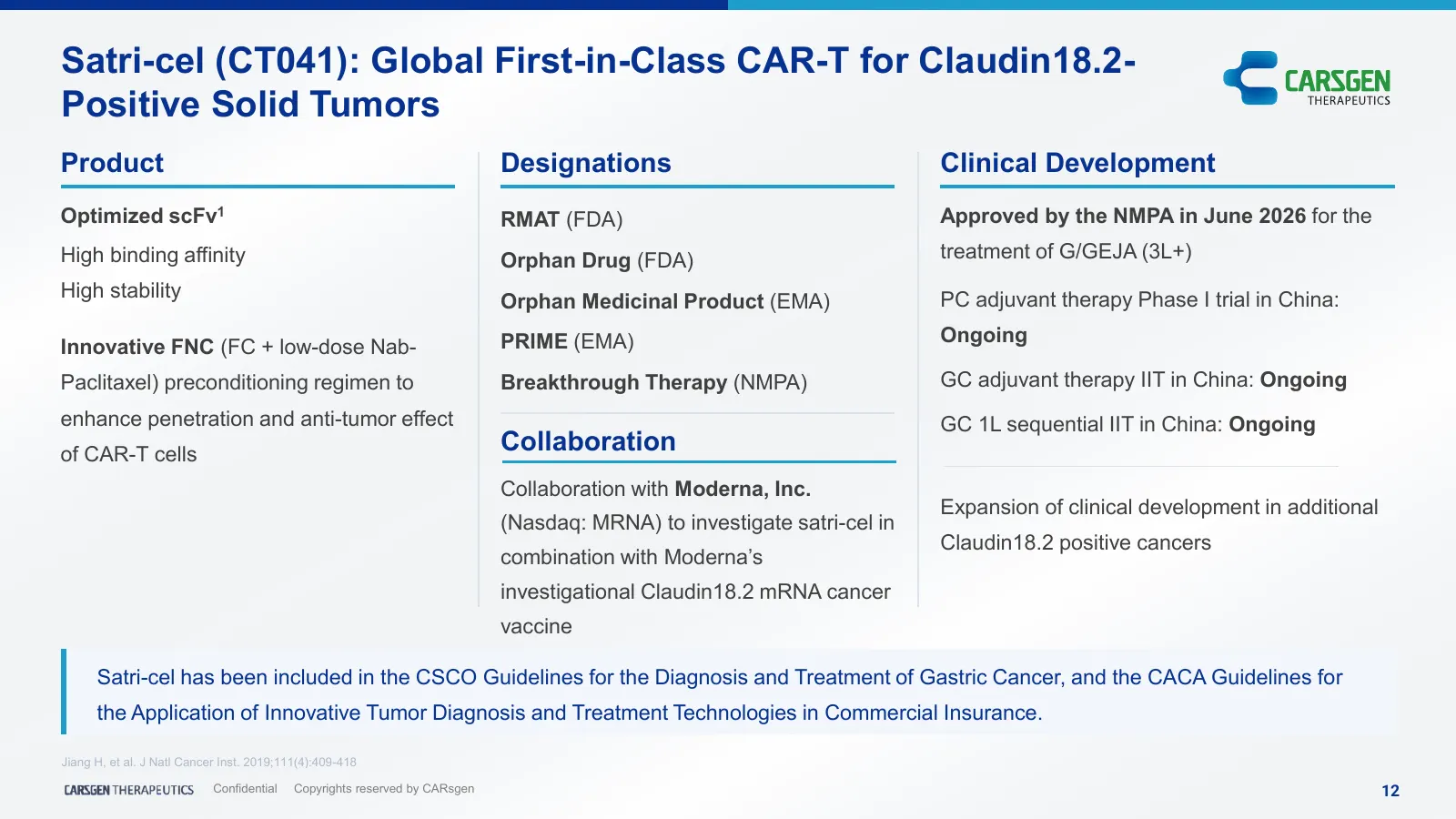
Satri-cel (CT041): Global First-in-Class CAR-T for Claudin18.2- Positive Solid Tumors Product Designations Clinical Development Optimized scFv1 RMAT (FDA) Approved by the NMPA in June 2026 for the High binding affinity Orphan Drug (FDA) treatment of G/GEJA (3L+) High stability PC adjuvant therapy Ph
Slide 13: Satri-cel Confirmatory Phase II trial
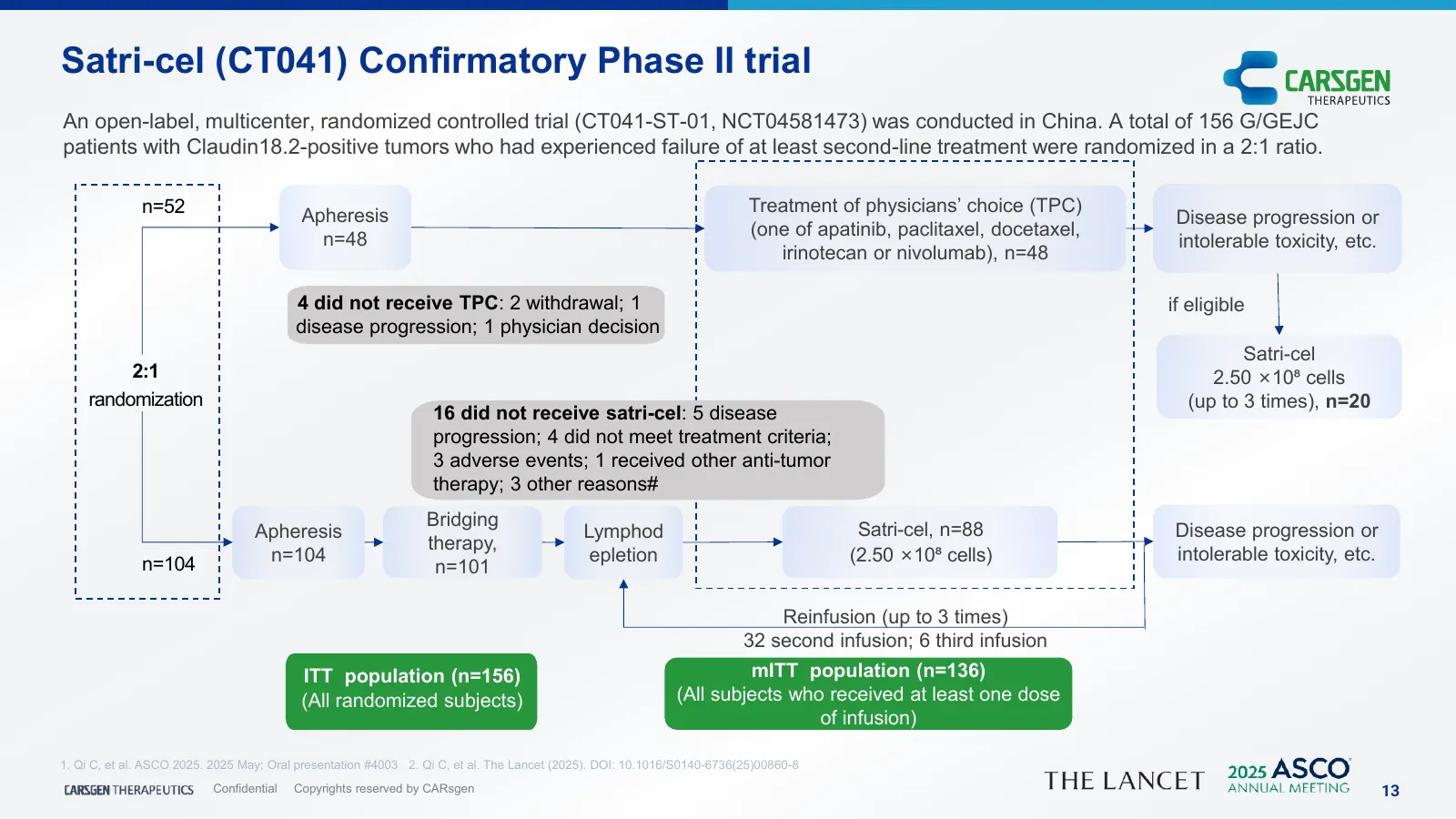
Satri-cel (CT041) Confirmatory Phase II trial An open-label, multicenter, randomized controlled trial (CT041-ST-01, NCT04581473) was conducted in China. A total of 156 G/GEJC patients with Claudin18.2-positive tumors who had experienced failure of at least second-line treatment were randomized in a
Slide 14: Satri-cel Confirmatory Phase II trial - Baseline & Safety
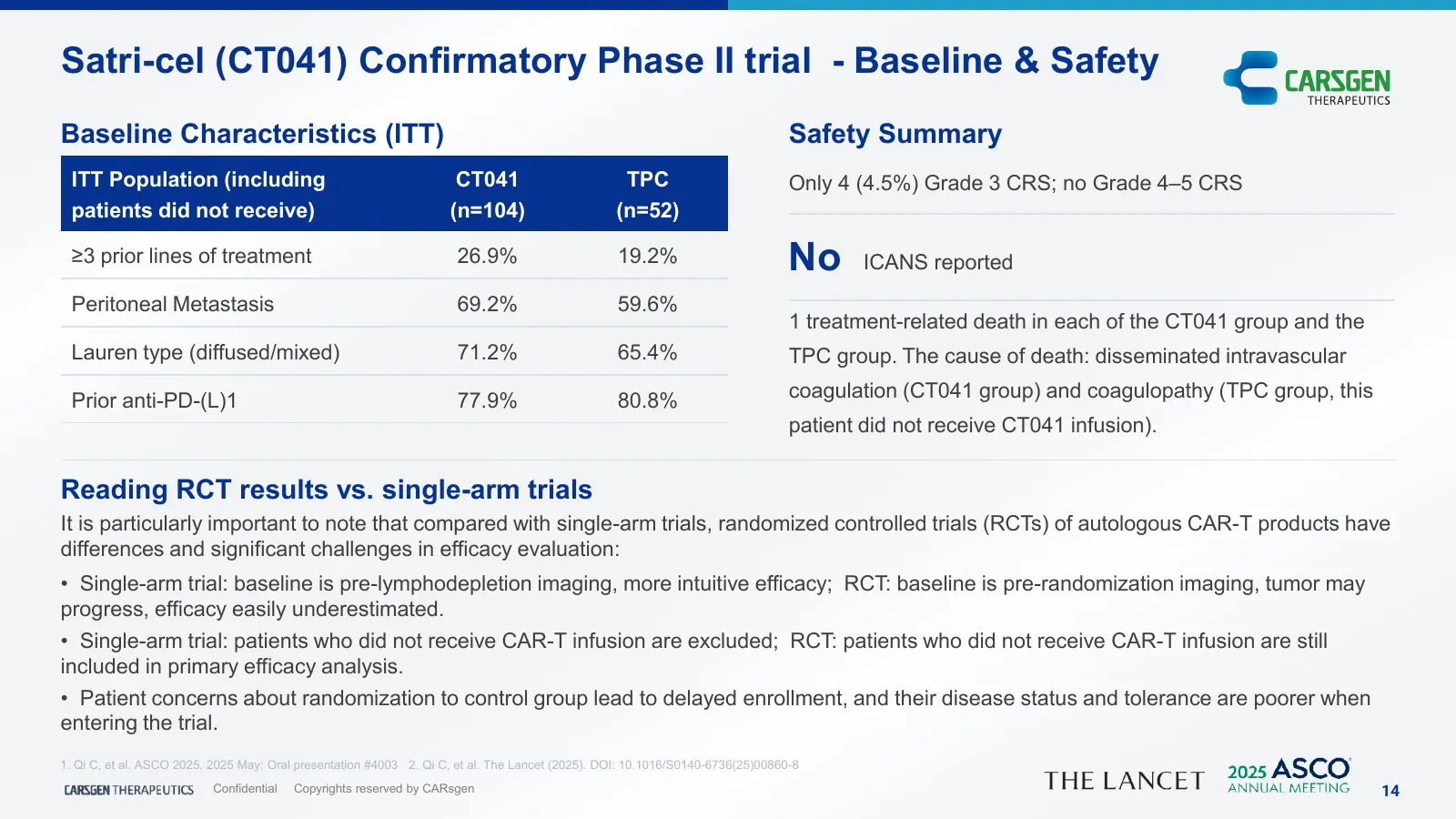
Satri-cel (CT041) Confirmatory Phase II trial - Baseline & Safety Baseline Characteristics (ITT) Safety Summary ITT Population (including CT041 TPC Only 4 (4.5%) Grade 3 CRS; no Grade 4–5 CRS patients did not receive) (n=104) (n=52) ≥3 prior lines of treatment 26.9% 19.2% No ICANS reported Peritonea
Slide 15: Satri-cel Prolonged mPFS and mOS for Gastric or GEJ Cancer
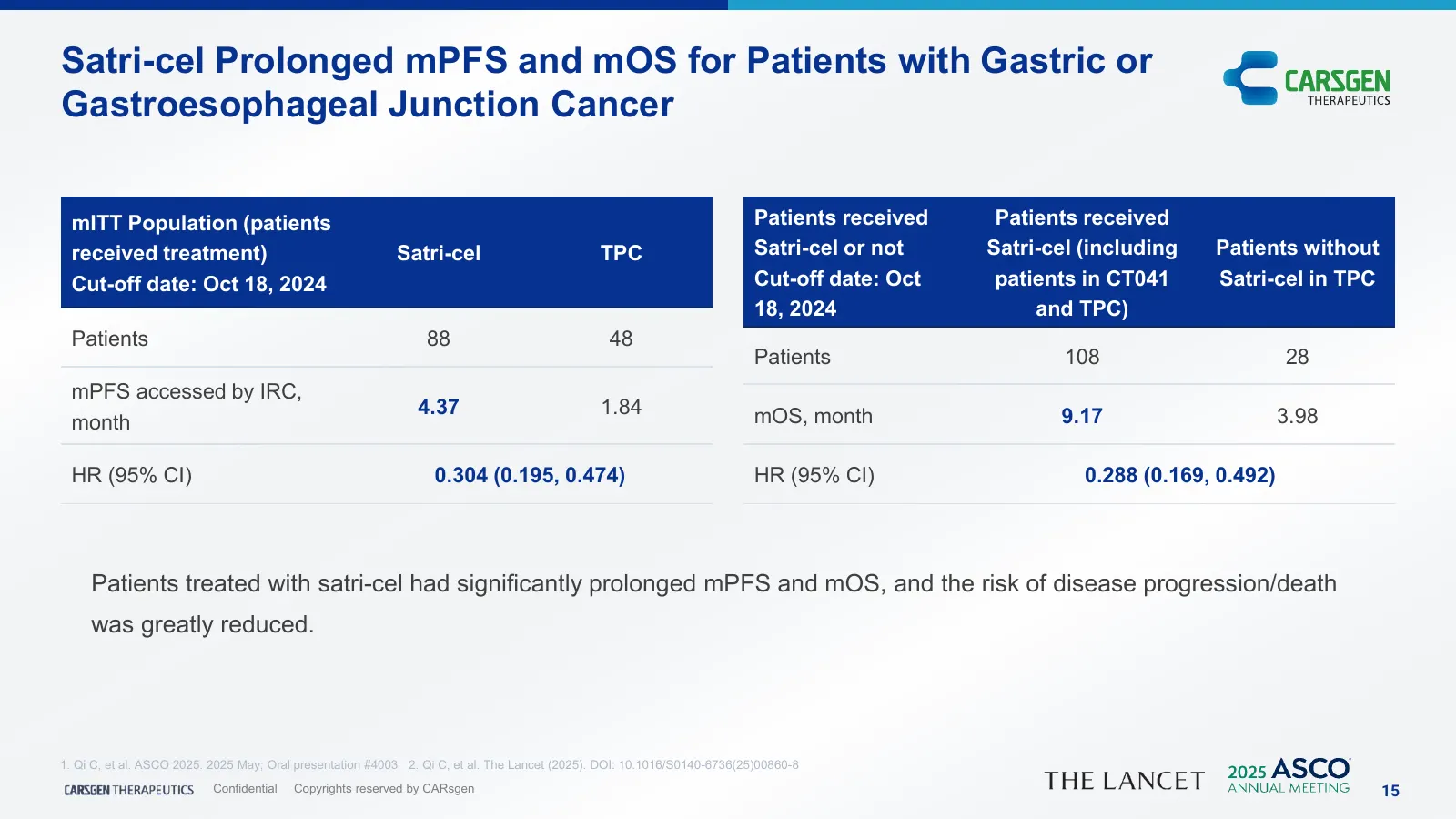
Satri-cel Prolonged mPFS and mOS for Patients with Gastric or Gastroesophageal Junction Cancer mITT Population (patients Patients received Patients received received treatment) Satri-cel TPC Satri-cel or not Satri-cel (including Patients without Cut-off date: Oct 18, 2024 Cut-off date: Oct patients
Slide 16: Satri-cel: Consistent Clinical Responses across Three Single Arm Studies
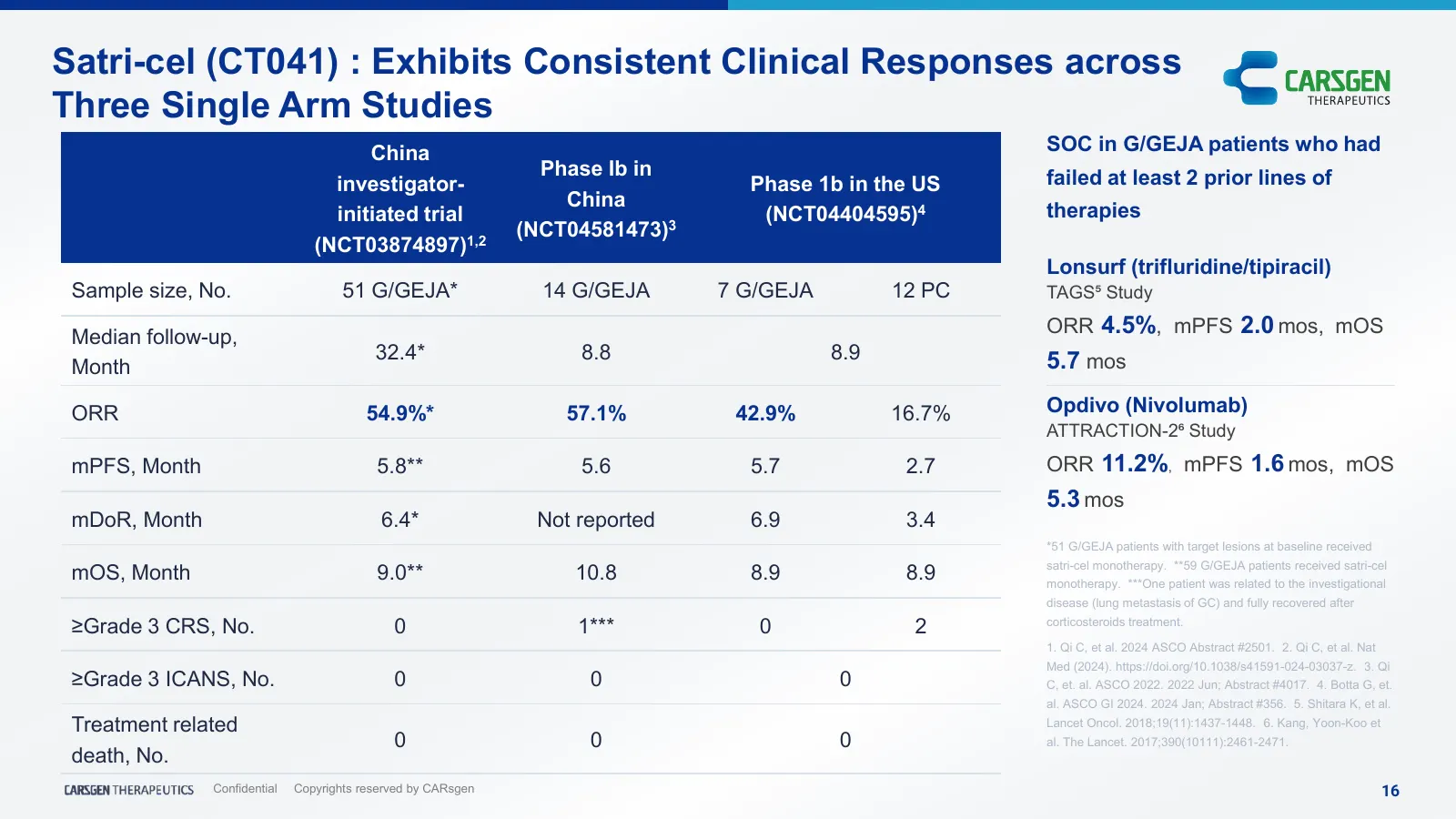
Satri-cel (CT041) : Exhibits Consistent Clinical Responses across Three Single Arm Studies China SOC in G/GEJA patients who had Phase Ib in failed at least 2 prior lines of investigator- Phase 1b in the US China initiated trial (NCT04404595)4 therapies (NCT04581473)3 (NCT03874897)1,2 Lonsurf (triflu
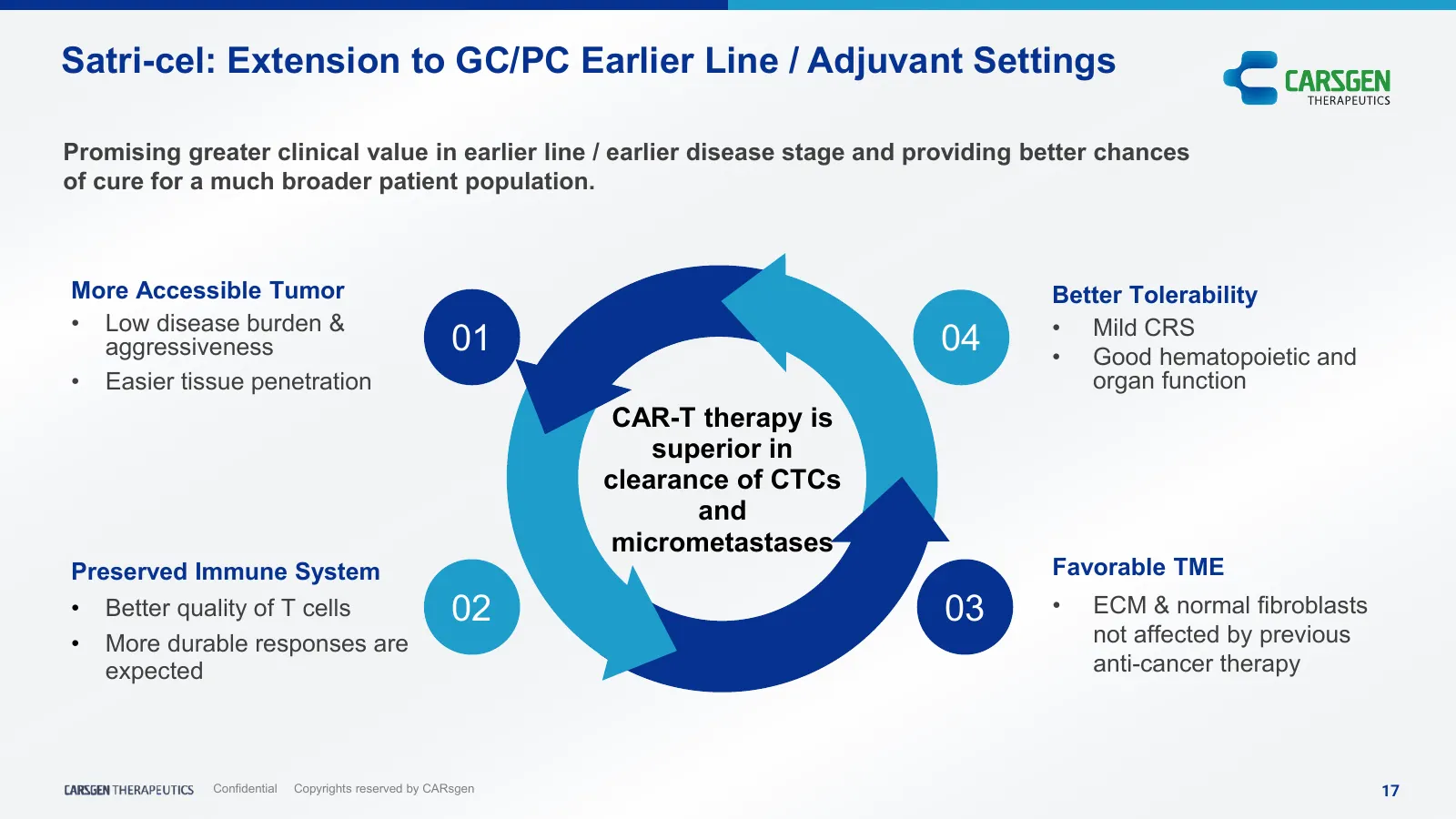
Slide 17: Satri-cel: Extension to GC/PC Earlier Line / Adjuvant Settings
Satri-cel: Extension to GC/PC Earlier Line / Adjuvant Settings Promising greater clinical value in earlier line / earlier disease stage and providing better chances of cure for a much broader patient population. More Accessible Tumor Better Tolerability • Low disease burden & • Mild CRS aggressivene
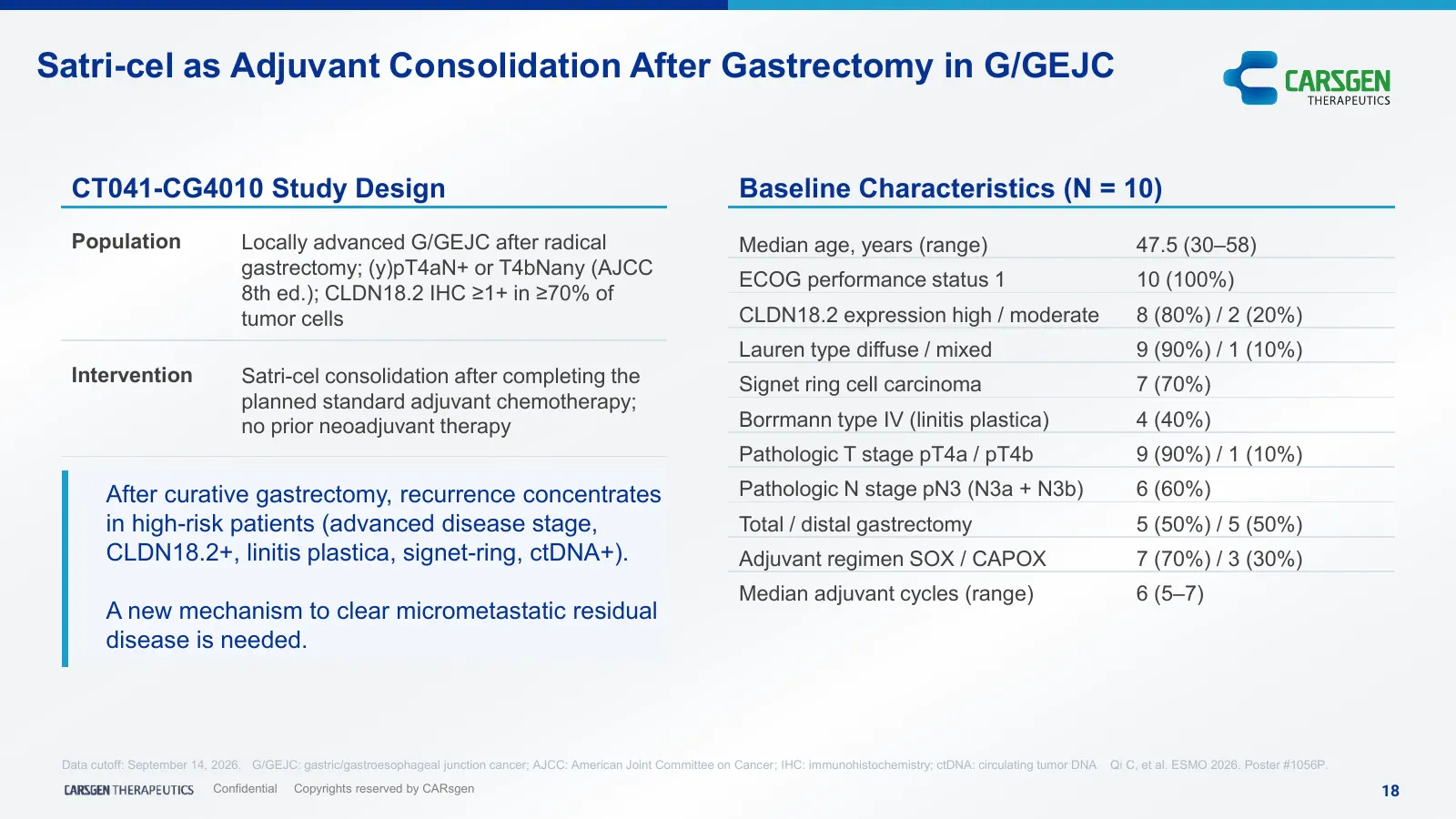
Slide 18: Satri-cel as Adjuvant Consolidation After Gastrectomy in G/GEJC
Satri-cel as Adjuvant Consolidation After Gastrectomy in G/GEJC CT041-CG4010 Study Design Baseline Characteristics (N = 10) Population Locally advanced G/GEJC after radical Median age, years (range) 47.5 (30–58) gastrectomy; (y)pT4aN+ or T4bNany (AJCC ECOG performance status 1 10 (100%) 8th ed.); CL
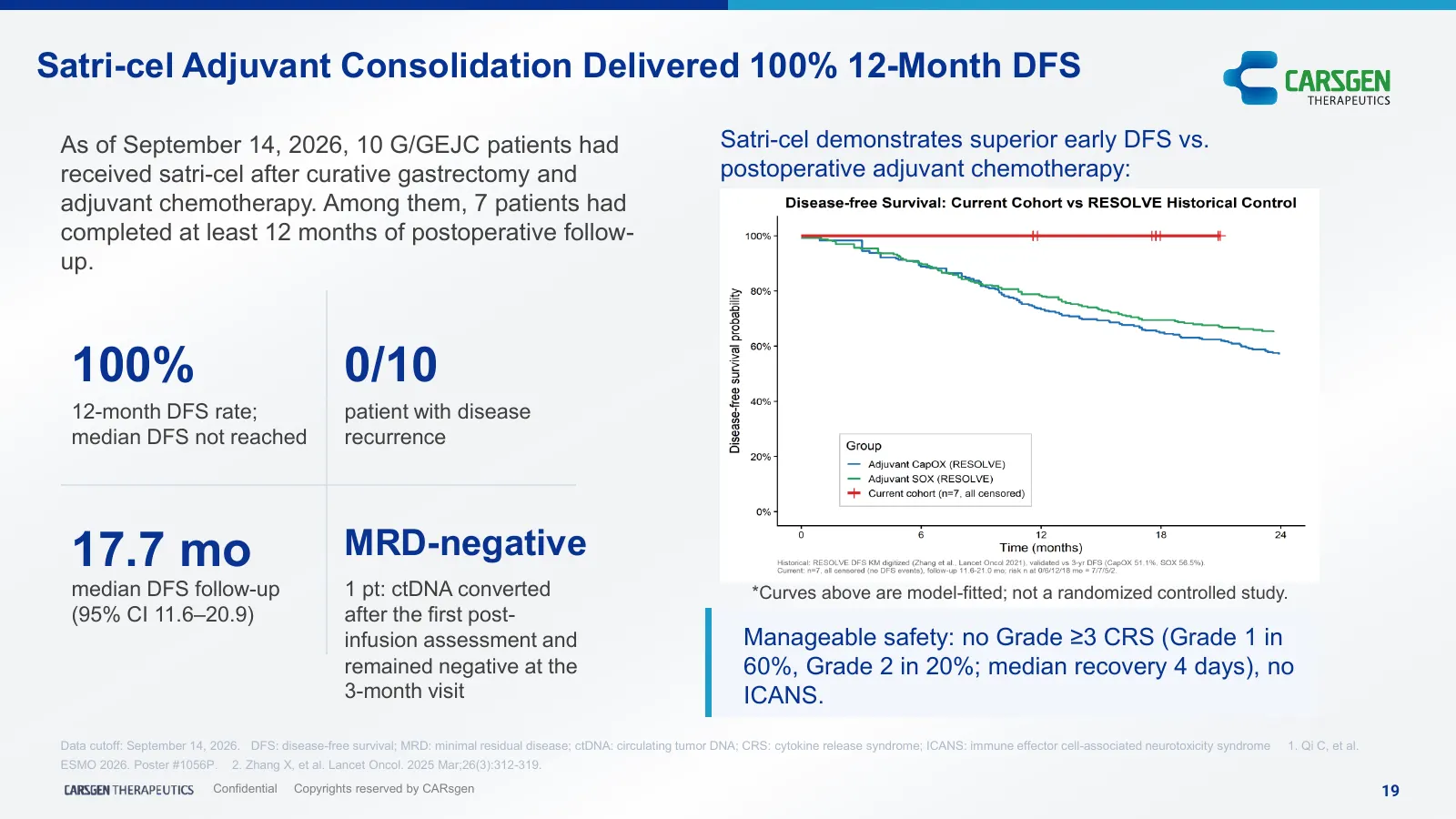
Slide 19: Satri-cel Adjuvant Consolidation Delivered 100% 12-Month DFS
Satri-cel Adjuvant Consolidation Delivered 100% 12-Month DFS As of September 14, 2026, 10 G/GEJC patients had Satri-cel demonstrates superior early DFS vs. received satri-cel after curative gastrectomy and postoperative adjuvant chemotherapy: adjuvant chemotherapy. Among them, 7 patients had complet
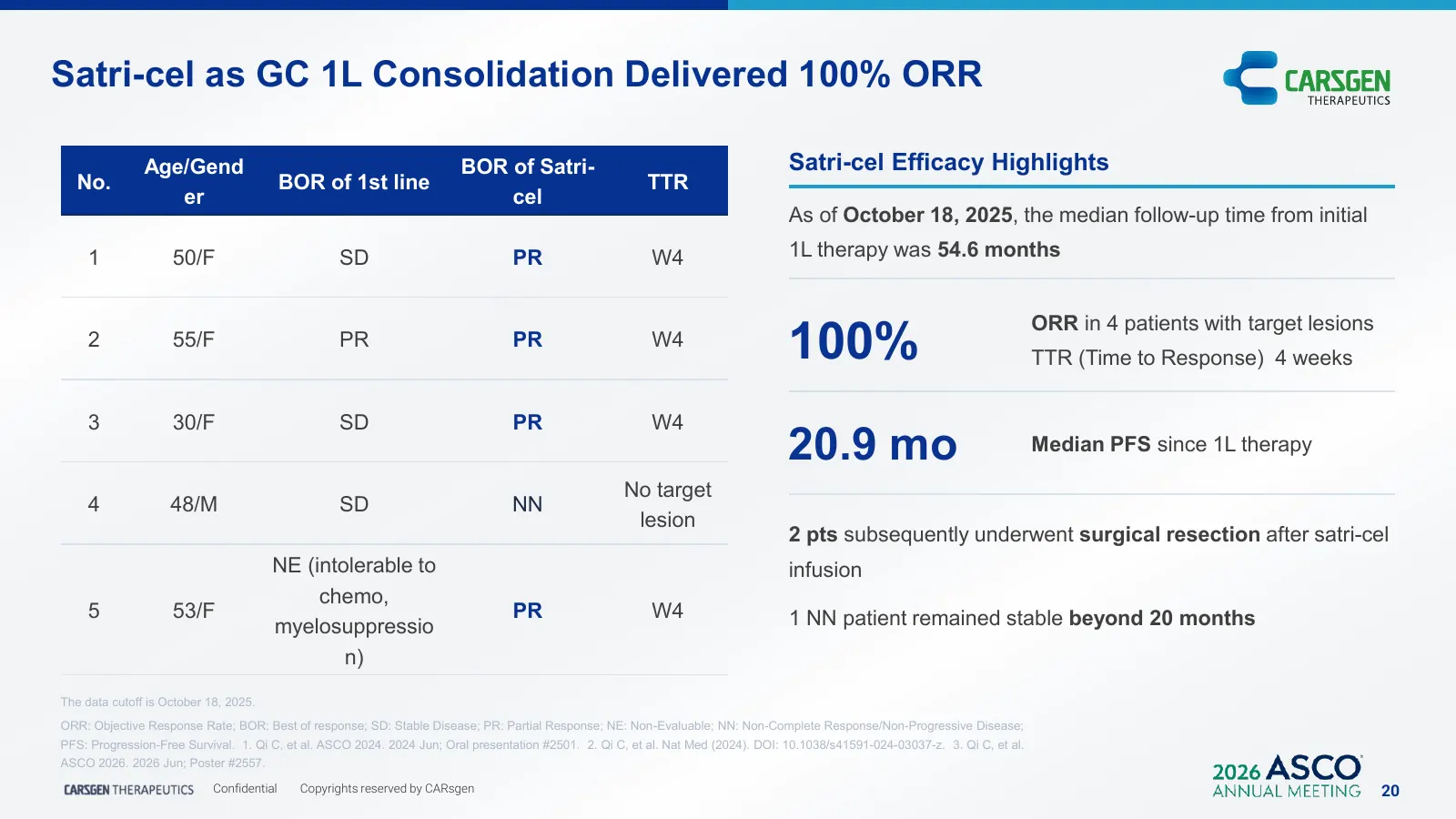
Slide 20: Satri-cel as GC 1L Consolidation Delivered 100% ORR
Satri-cel as GC 1L Consolidation Delivered 100% ORR Age/Gend BOR of Satri- Satri-cel Efficacy Highlights No. BOR of 1st line TTR er cel As of October 18, 2025, the median follow-up time from initial 1 50/F SD PR W4 1L therapy was 54.6 months ORR in 4 patients with target lesions 2 55/F PR PR W4 100%
Slide 21: Two GC Patients Underwent Surgical Resection, and Remain in Long-term Survival
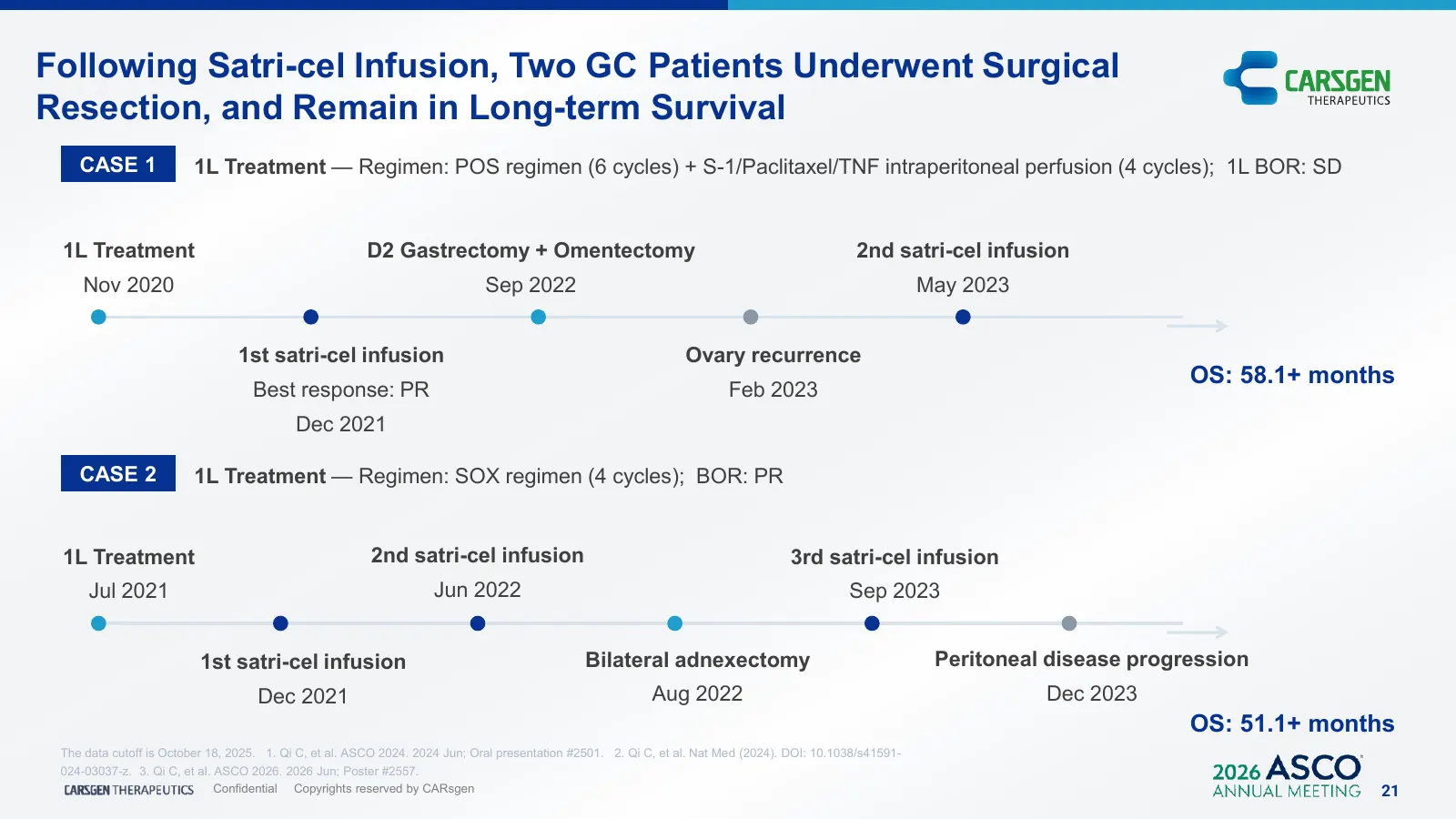
Following Satri-cel Infusion, Two GC Patients Underwent Surgical Resection, and Remain in Long-term Survival CASE 1 1L Treatment — Regimen: POS regimen (6 cycles) + S-1/Paclitaxel/TNF intraperitoneal perfusion (4 cycles); 1L BOR: SD 1L Treatment D2 Gastrectomy + Omentectomy 2nd satri-cel infusion No
Slide 22: Satri-cel in Adjuvant Therapy for Pancreatic Cancer Leads to Decline in CA19-9
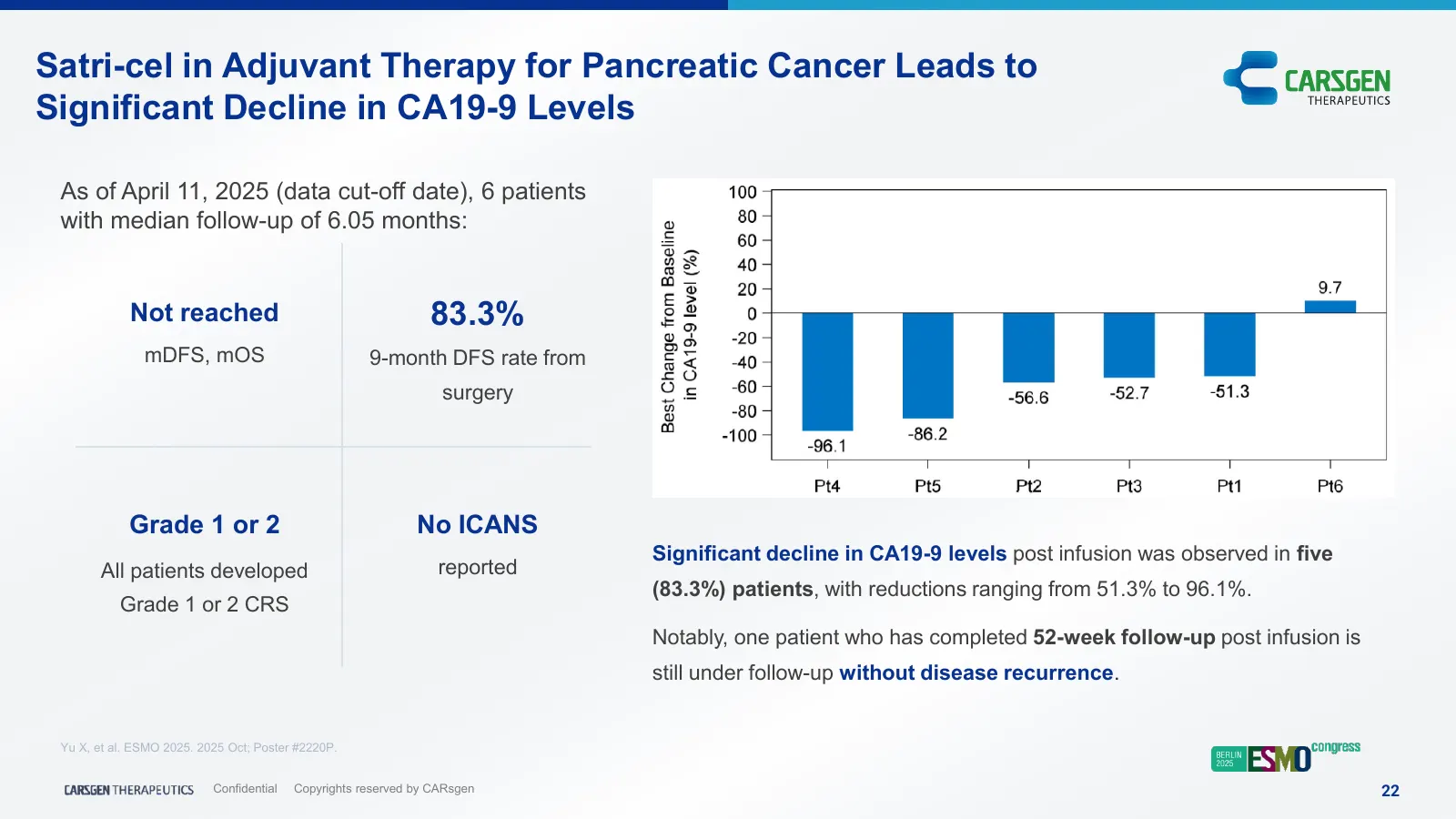
Satri-cel in Adjuvant Therapy for Pancreatic Cancer Leads to Significant Decline in CA19-9 Levels As of April 11, 2025 (data cut-off date), 6 patients with median follow-up of 6.05 months: Not reached 83.3% mDFS, mOS 9-month DFS rate from surgery Grade 1 or 2 No ICANS Significant decline in CA19-9 l
Slide 23: Next-Gen CAR-T Development: Tackling Key Challenges in Solid Tumors
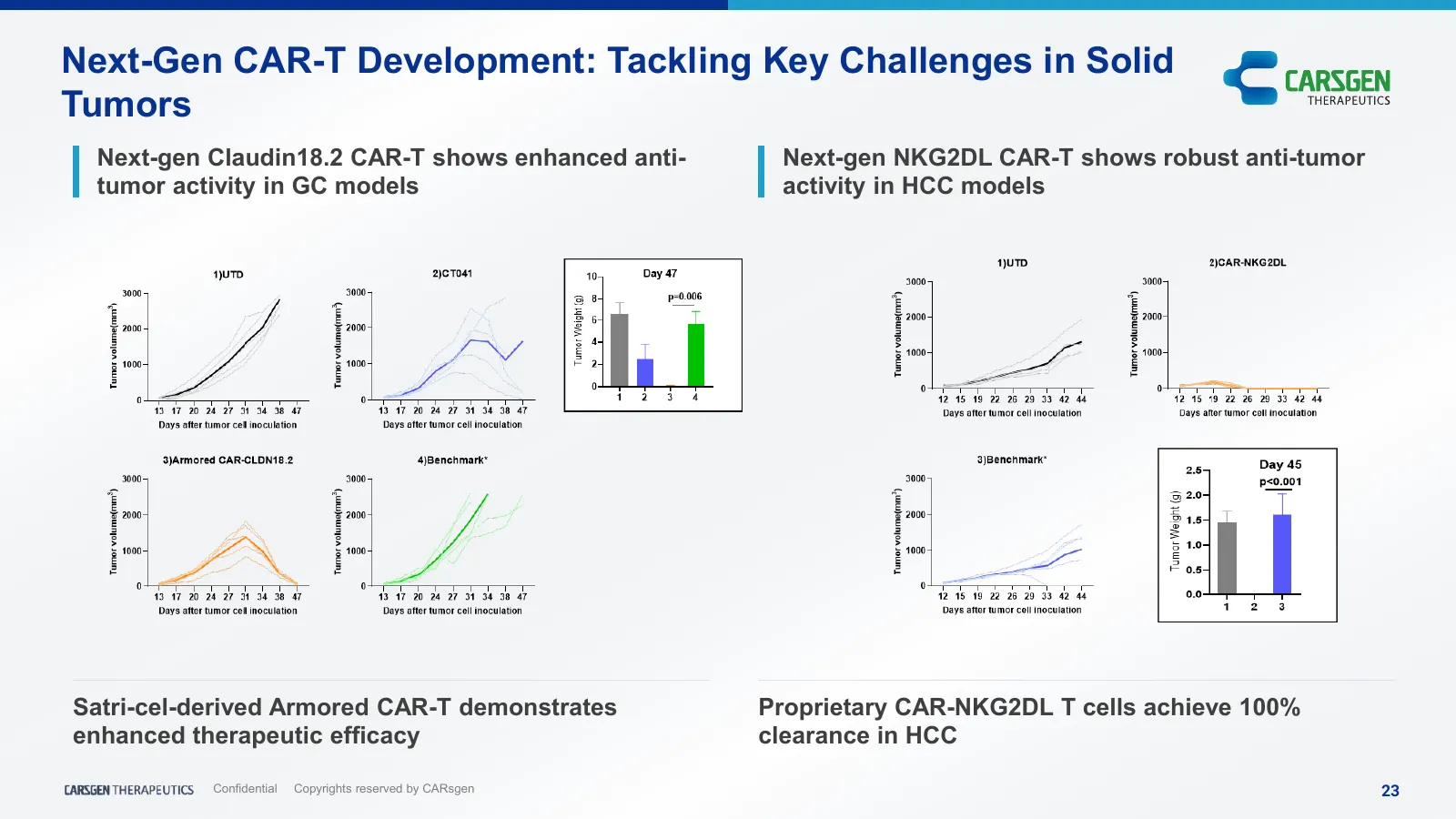
Next-Gen CAR-T Development: Tackling Key Challenges in Solid Tumors Next-gen Claudin18.2 CAR-T shows enhanced anti- Next-gen NKG2DL CAR-T shows robust anti-tumor tumor activity in GC models activity in HCC models Satri-cel-derived Armored CAR-T demonstrates Proprietary CAR-NKG2DL T cells achieve 100
Slide 24: Zevor-cel: Fully-human BCMA CAR-T for R/R MM
Zevor-cel: Fully-human BCMA CAR-T for R/R MM
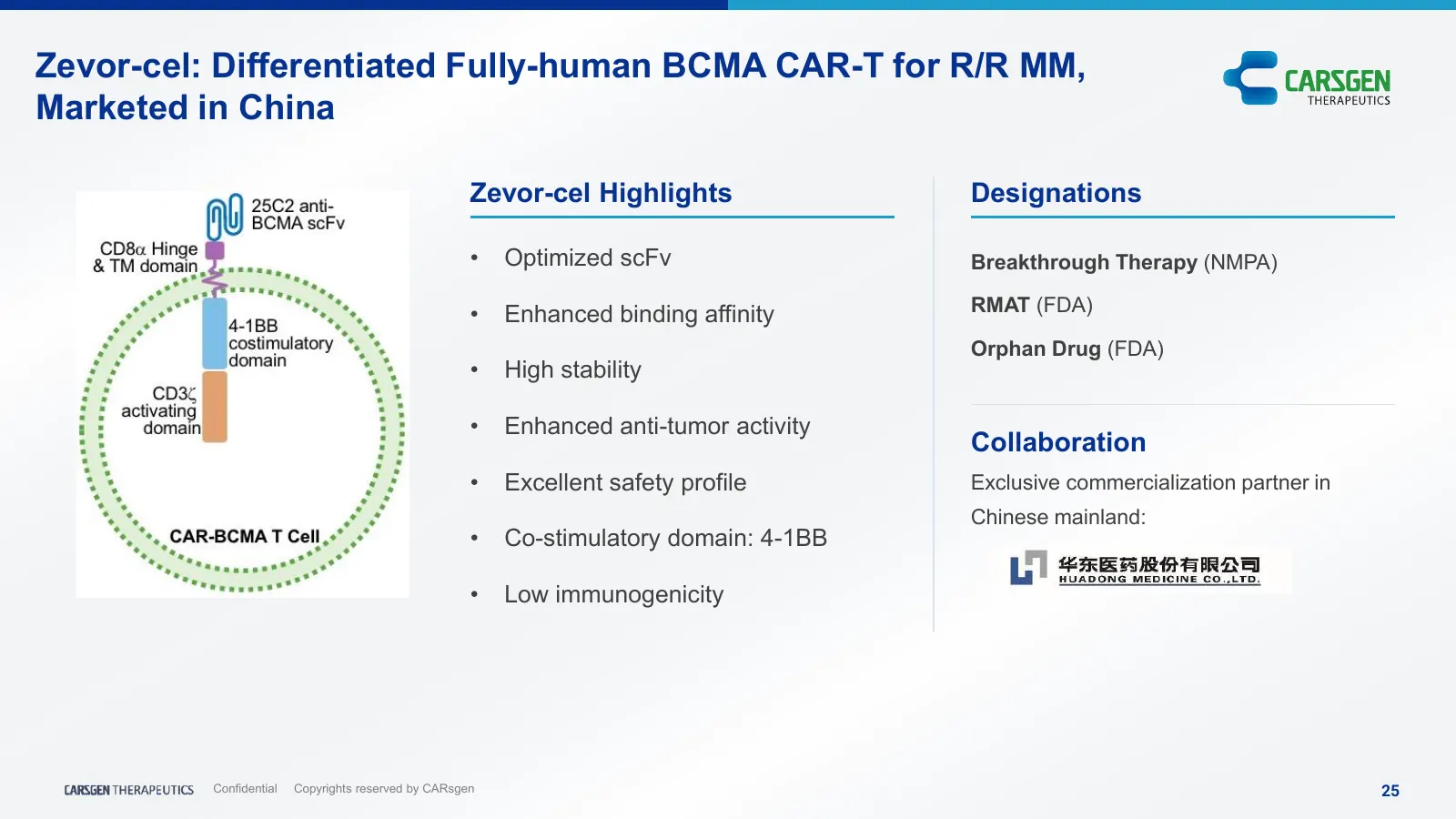
Slide 25: Zevor-cel: Differentiated Fully-human BCMA CAR-T, Marketed in China
Zevor-cel: Differentiated Fully-human BCMA CAR-T for R/R MM, Marketed in China Zevor-cel Highlights Designations • Optimized scFv Breakthrough Therapy (NMPA) • Enhanced binding affinity RMAT (FDA) Orphan Drug (FDA) • High stability • Enhanced anti-tumor activity Collaboration • Excellent safety prof
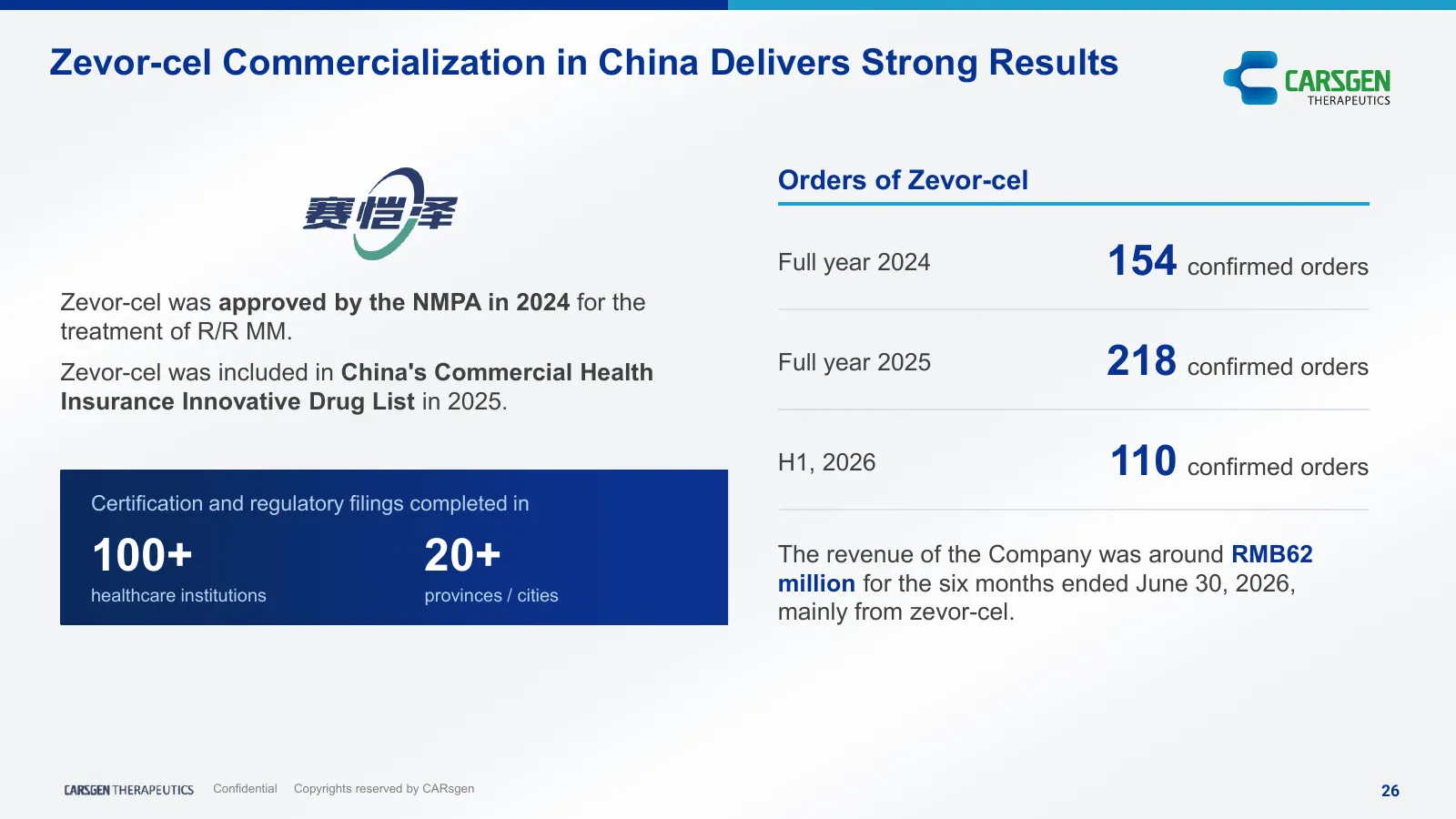
Slide 26: Zevor-cel Commercialization in China Delivers Strong Results
Zevor-cel Commercialization in China Delivers Strong Results Orders of Zevor-cel Full year 2024 154 confirmed orders Zevor-cel was approved by the NMPA in 2024 for the treatment of R/R MM. Zevor-cel was included in China's Commercial Health Full year 2025 218 confirmed orders Insurance Innovative Dr
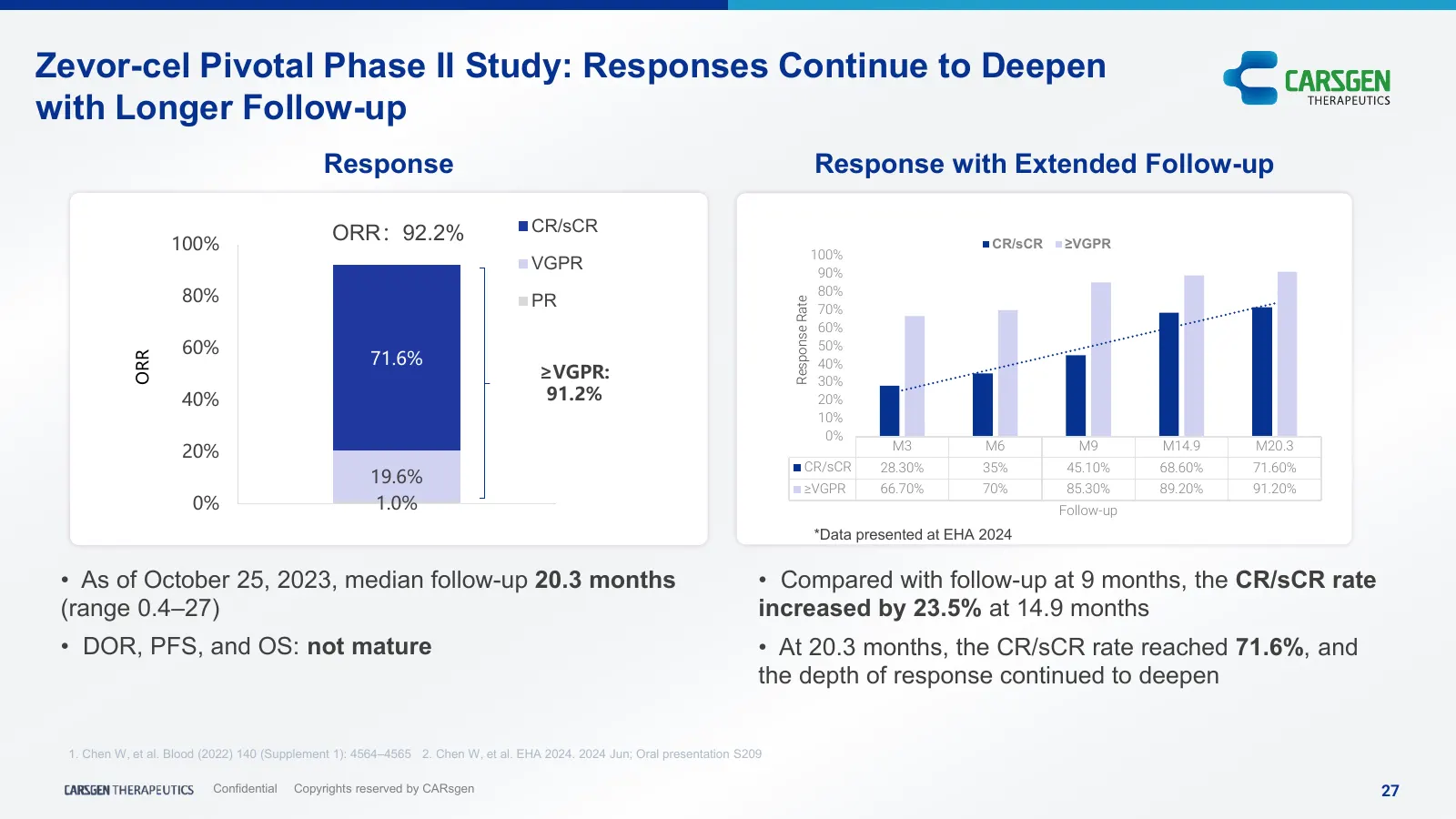
Slide 27: Zevor-cel Pivotal Phase II Study: Responses Continue to Deepen
Zevor-cel Pivotal Phase II Study: Responses Continue to Deepen with Longer Follow-up Response Response with Extended Follow-up ORR:92.2% CR/sCR 100% CR/sCR ≥VGPR 100% VGPR 90% 80% PR 80% Response Rate 70% 60% 60% 50% 71.6% ORR 40% ≥VGPR: 30% 40% 91.2% 20% 10% 0% 20% M3 M6 M9 M14.9 M20.3 CR/sCR 28.30
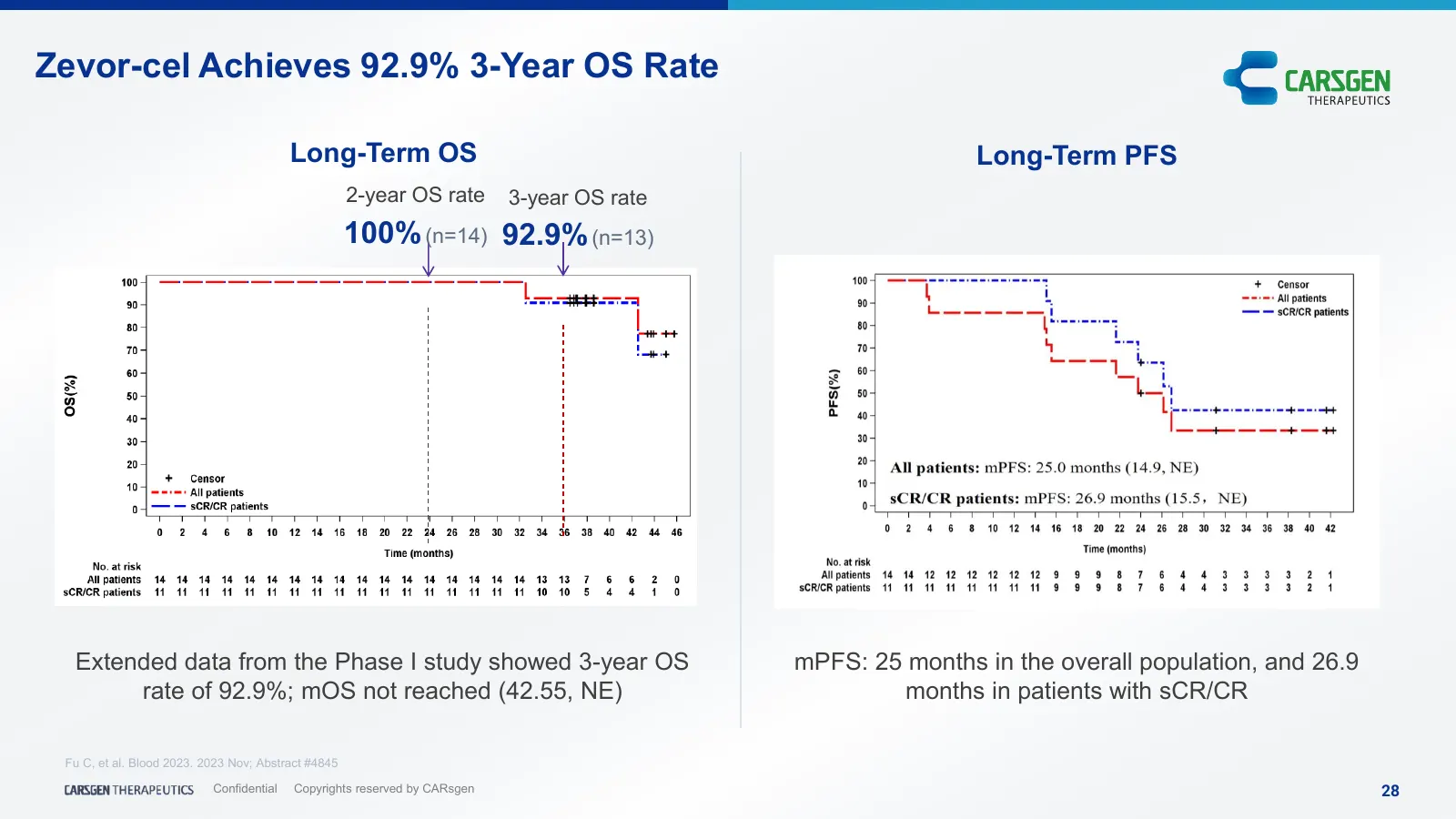
Slide 28: Zevor-cel Achieves 92.9% 3-Year OS Rate
Zevor-cel Achieves 92.9% 3-Year OS Rate Long-Term OS Long-Term PFS 2-year OS rate 3-year OS rate 100% (n=14) 92.9% (n=13) Extended data from the Phase I study showed 3-year OS mPFS: 25 months in the overall population, and 26.9 rate of 92.9%; mOS not reached (42.55, NE) months in patients with sCR/C
Slide 29: THANK-u Plus: Potential Best-in-Class Allogeneic CAR-T Platform
THANK-u Plus®: Potential Best-in- Class Allogeneic CAR-T Platform
Slide 30: THANK-u Plus: Innovative Allogeneic CAR-T Platform
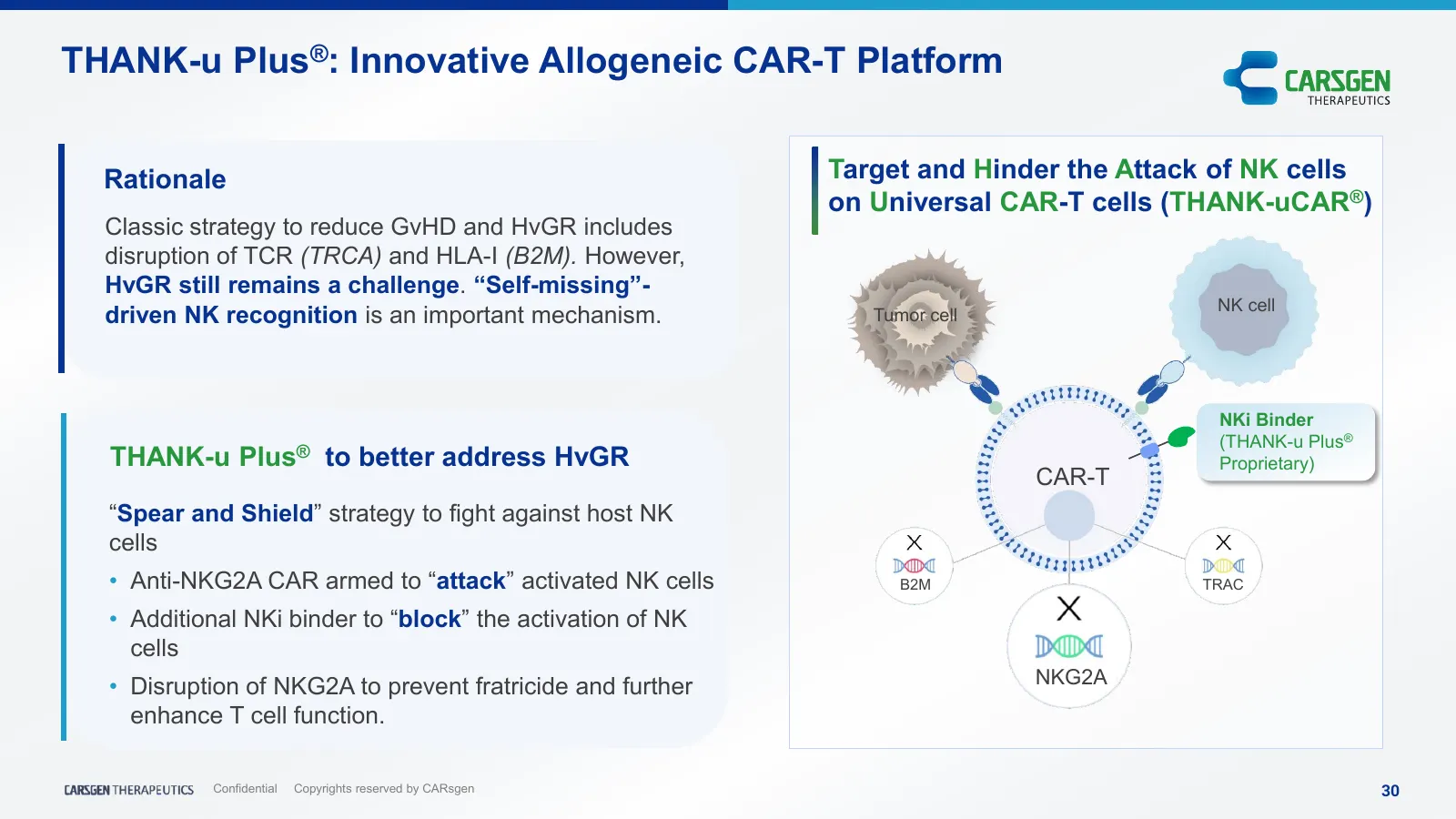
THANK-u Plus®: Innovative Allogeneic CAR-T Platform Rationale Target and Hinder the Attack of NK cells on Universal CAR-T cells (THANK-uCAR®) Classic strategy to reduce GvHD and HvGR includes disruption of TCR (TRCA) and HLA-I (B2M). However, HvGR still remains a challenge. “Self-missing”- NK cell d
Slide 31: CT0596: Allogeneic BCMA-Targeted CAR-T
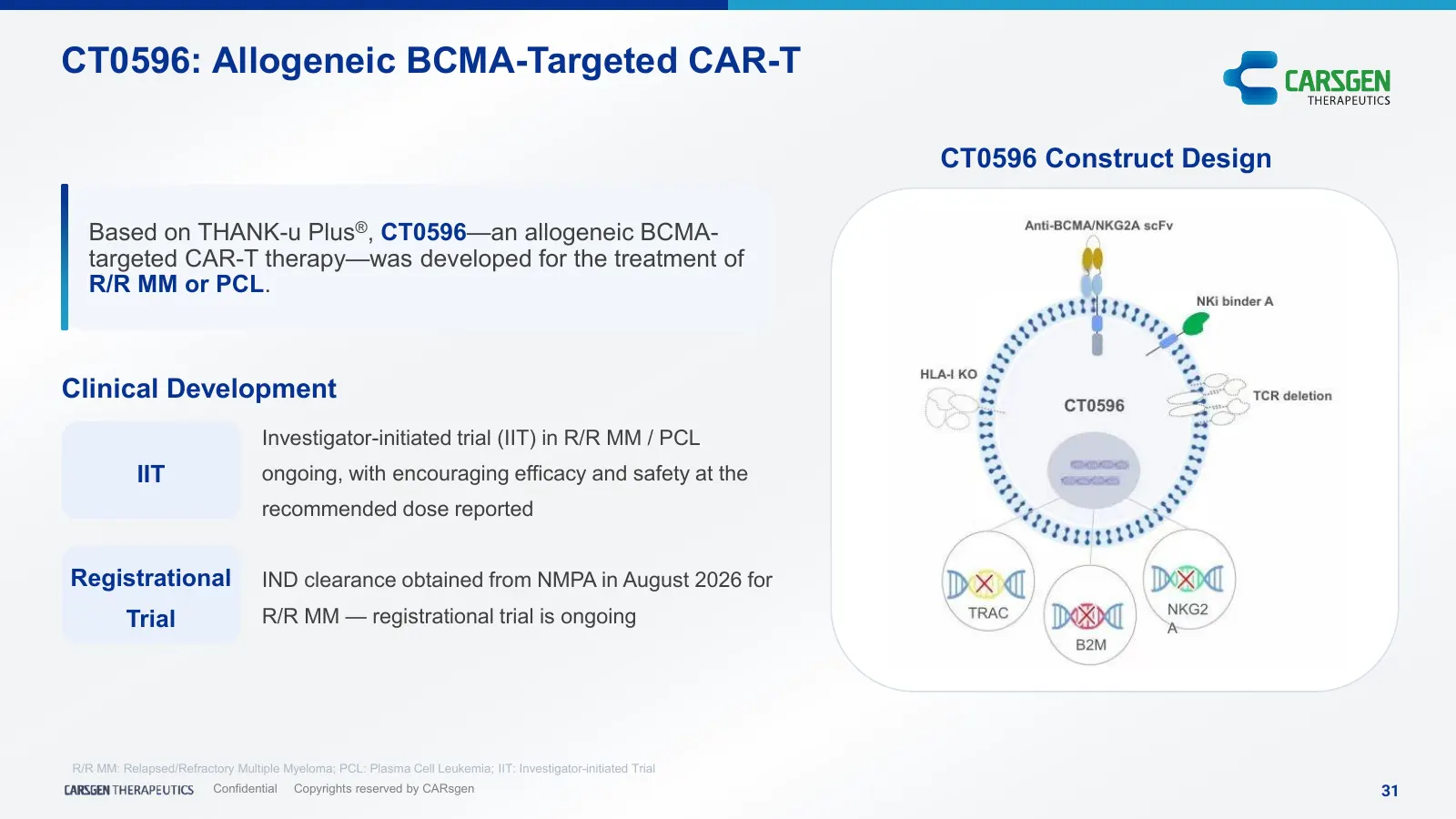
CT0596: Allogeneic BCMA-Targeted CAR-T CT0596 Construct Design Based on THANK-u Plus®, CT0596—an allogeneic BCMA- targeted CAR-T therapy—was developed for the treatment of R/R MM or PCL. Clinical Development Investigator-initiated trial (IIT) in R/R MM / PCL IIT ongoing, with encouraging efficacy an
Slide 32: Benchmark in R/R MM: Allogeneic CAR-T Cells
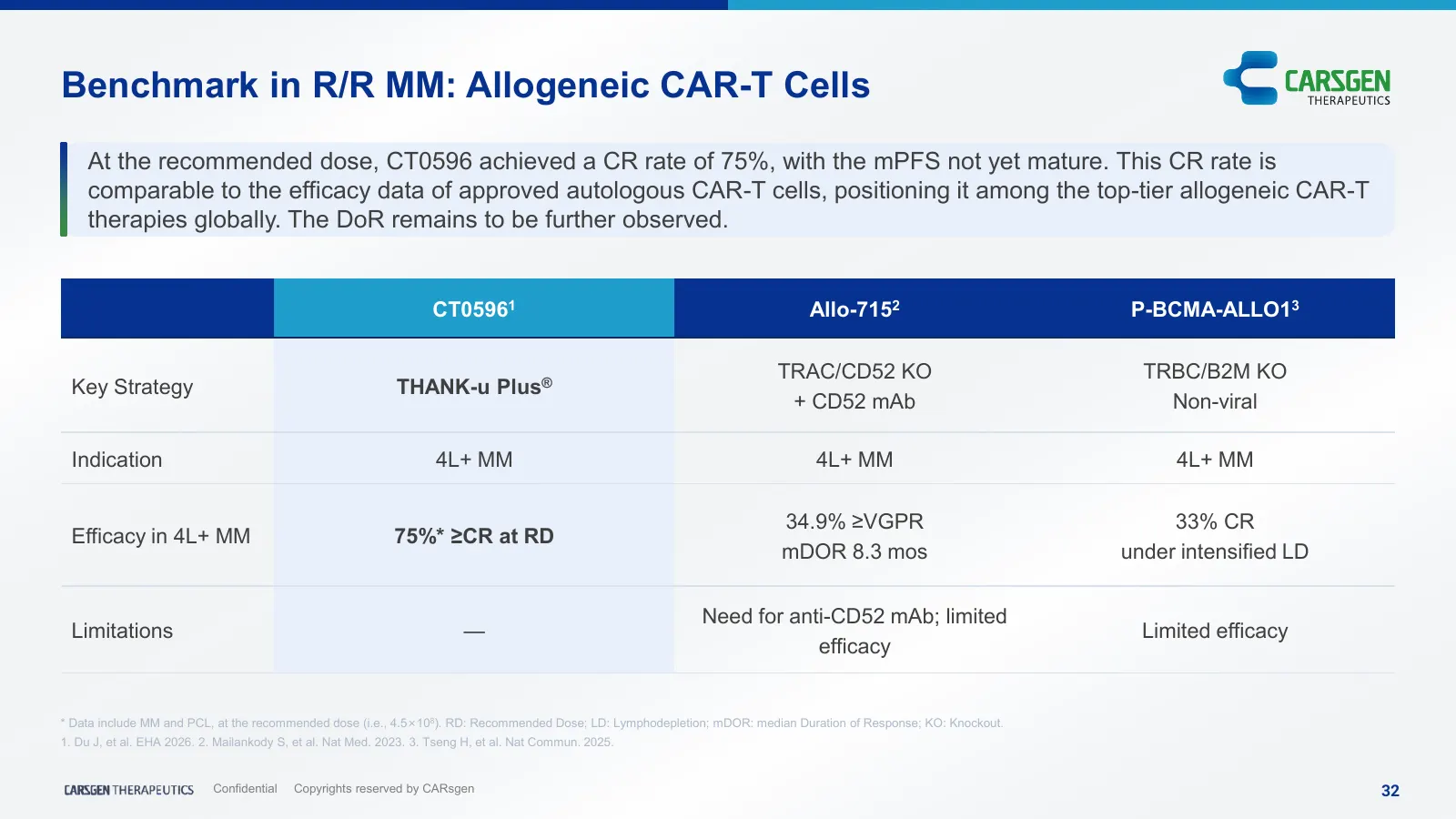
Benchmark in R/R MM: Allogeneic CAR-T Cells At the recommended dose, CT0596 achieved a CR rate of 75%, with the mPFS not yet mature. This CR rate is comparable to the efficacy data of approved autologous CAR-T cells, positioning it among the top-tier allogeneic CAR-T therapies globally. The DoR rema
Slide 33: CT0596: Patient Baseline Characteristics
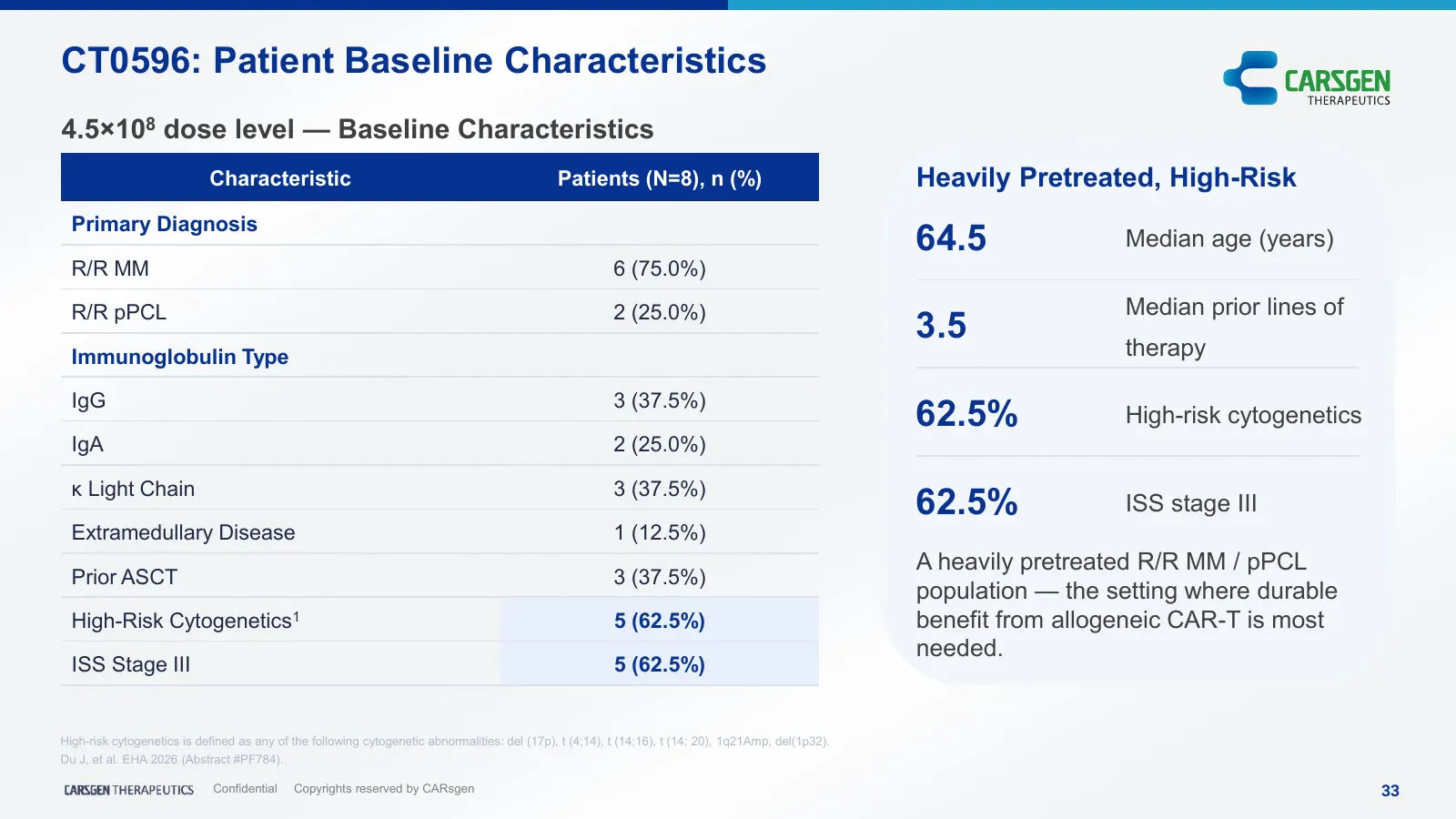
CT0596: Patient Baseline Characteristics 4.5×10⁸ dose level — Baseline Characteristics Characteristic Patients (N=8), n (%) Heavily Pretreated, High-Risk Primary Diagnosis 64.5 Median age (years) R/R MM 6 (75.0%) R/R pPCL 2 (25.0%) Median prior lines of 3.5 therapy Immunoglobulin Type IgG 3 (37.5%)
Slide 34: CT0596: Manageable Safety
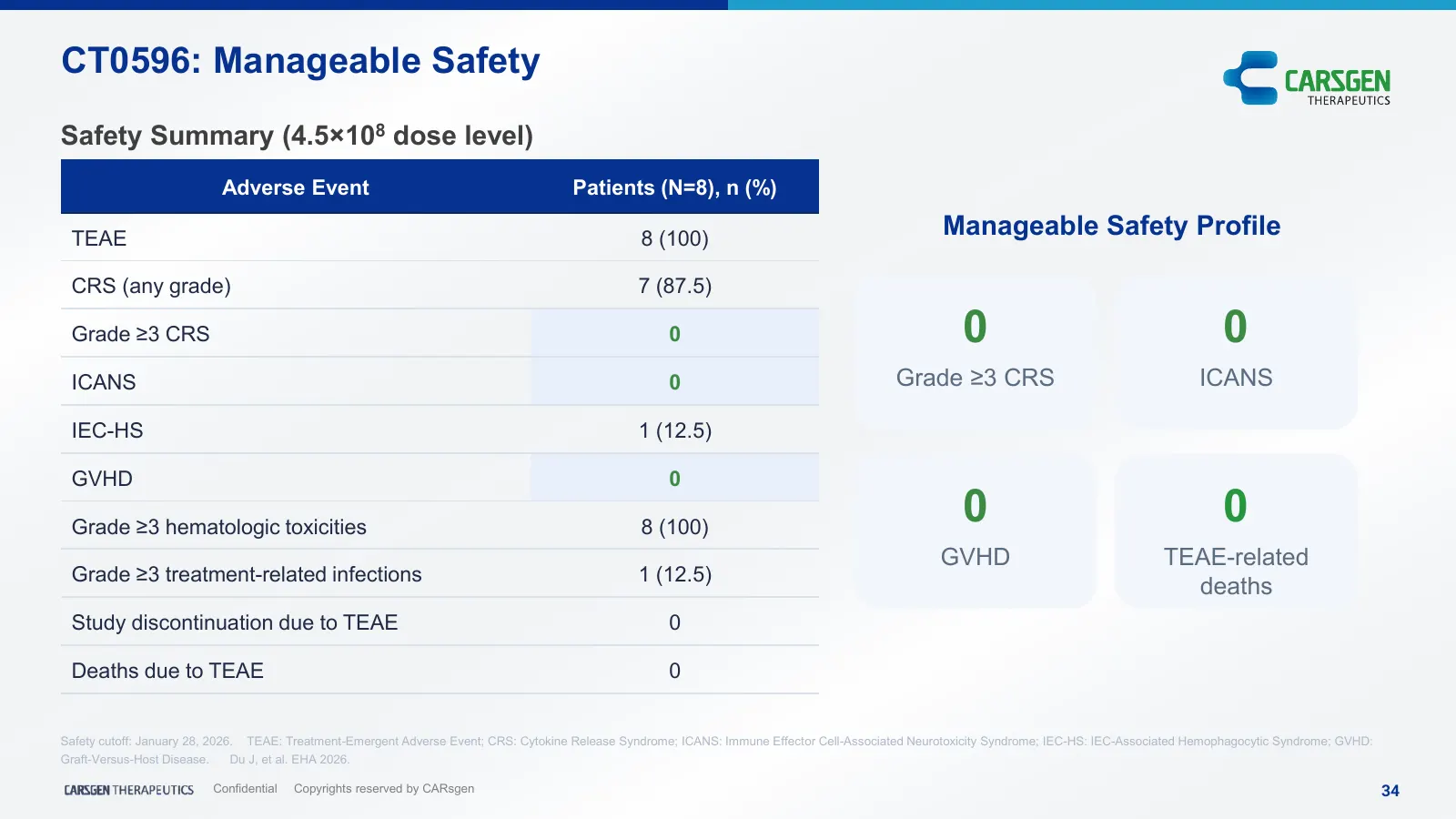
CT0596: Manageable Safety Safety Summary (4.5×10⁸ dose level) Adverse Event Patients (N=8), n (%) TEAE 8 (100) Manageable Safety Profile CRS (any grade) 7 (87.5) Grade ≥3 CRS 0 0 0 ICANS 0 Grade ≥3 CRS ICANS IEC-HS 1 (12.5) GVHD 0 Grade ≥3 hematologic toxicities 8 (100) 0 0 GVHD TEAE-related Grade ≥
Slide 35: CT0596: Deep and Durable Responses
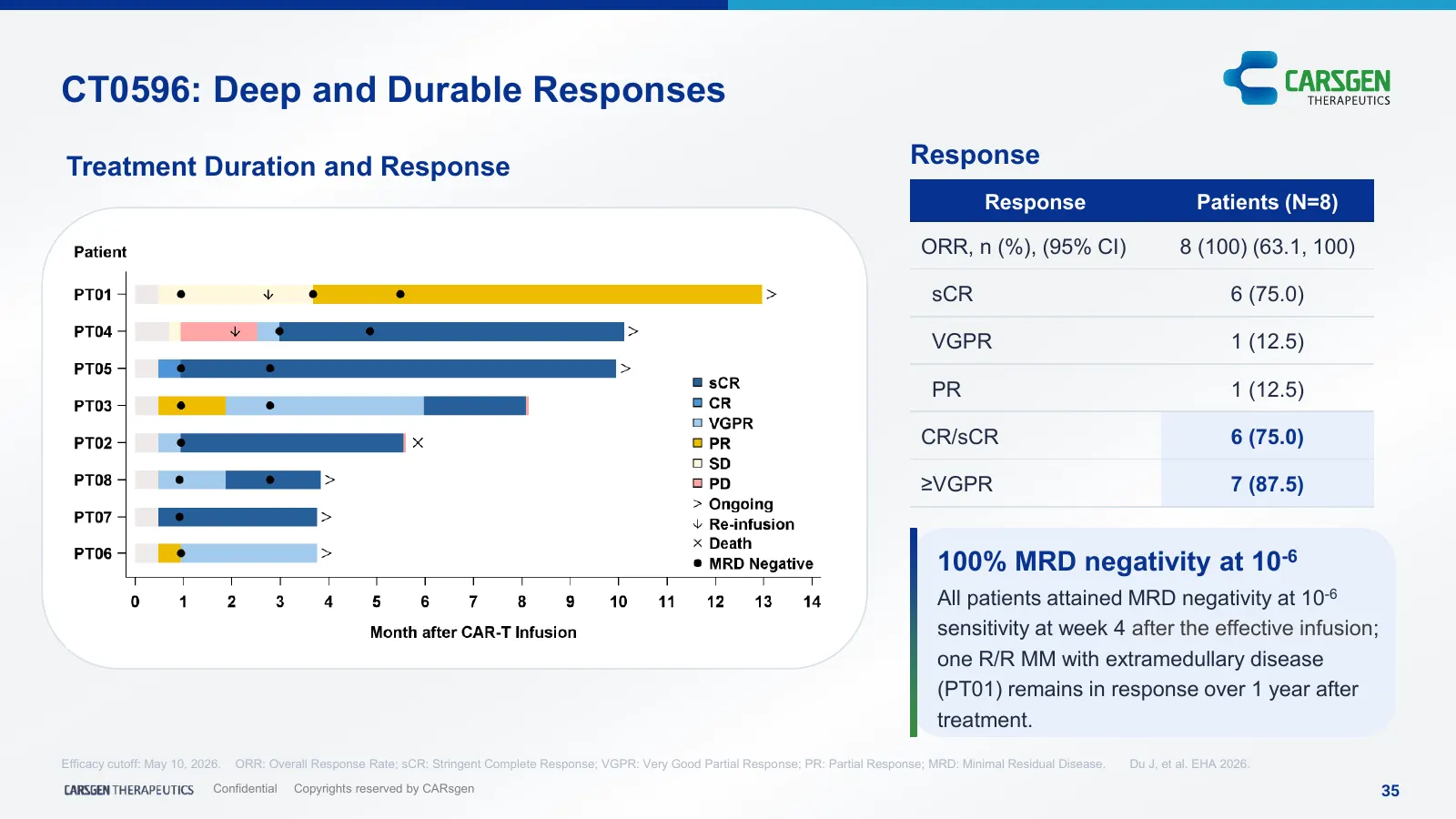
CT0596: Deep and Durable Responses Treatment Duration and Response Response Response Patients (N=8) ORR, n (%), (95% CI) 8 (100) (63.1, 100) sCR 6 (75.0) VGPR 1 (12.5) PR 1 (12.5) CR/sCR 6 (75.0) ≥VGPR 7 (87.5) 100% MRD negativity at 10-6 All patients attained MRD negativity at 10-6 sensitivity at w
Slide 36: CT0596: Robust and Persistent Expansion
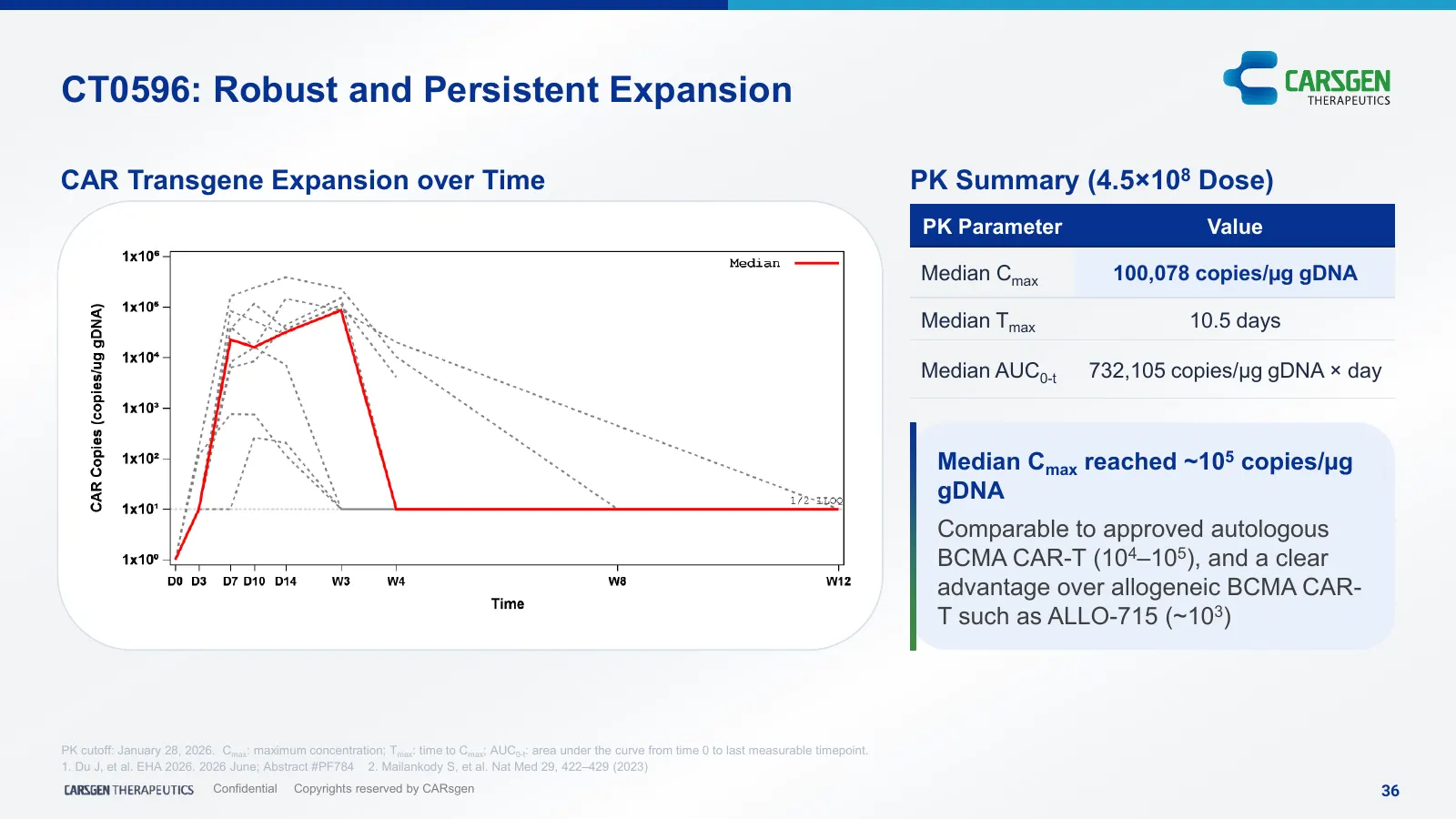
CT0596: Robust and Persistent Expansion CAR Transgene Expansion over Time PK Summary (4.5×10⁸ Dose) PK Parameter Value Median Cmax 100,078 copies/µg gDNA Median Tmax 10.5 days Median AUC0-t 732,105 copies/µg gDNA × day Median Cmax reached ~105 copies/µg gDNA Comparable to approved autologous BCMA CA
Slide 37: CT1190B: An Allogeneic CD19/CD20-Targeting CAR-T Cell Therapy
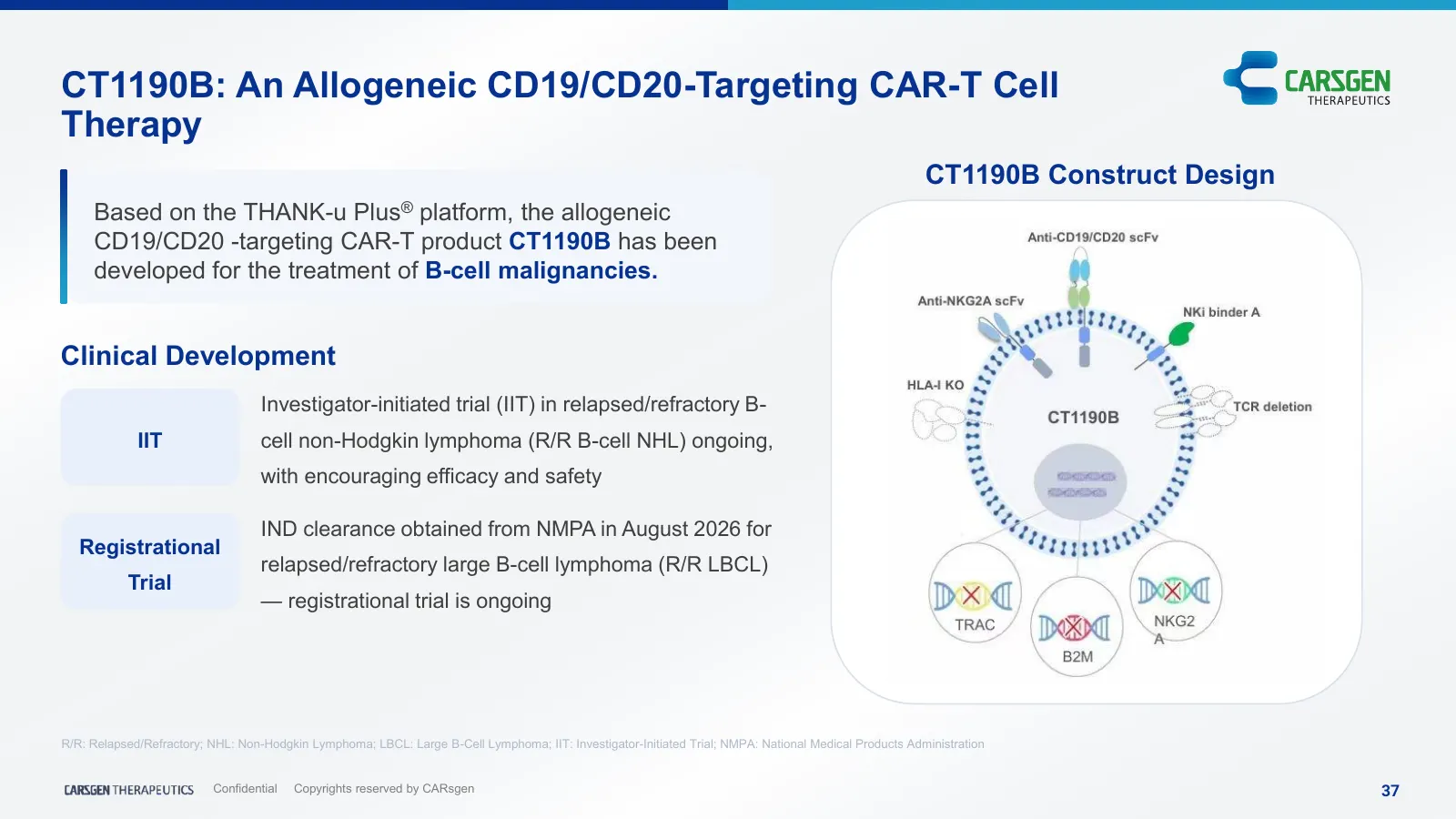
CT1190B: An Allogeneic CD19/CD20-Targeting CAR-T Cell Therapy CT1190B Construct Design Based on the THANK-u Plus® platform, the allogeneic CD19/CD20 -targeting CAR-T product CT1190B has been developed for the treatment of B-cell malignancies. Clinical Development Investigator-initiated trial (IIT) i
Slide 38: Benchmark in LBCL: Approved Autologous CAR-T Cells
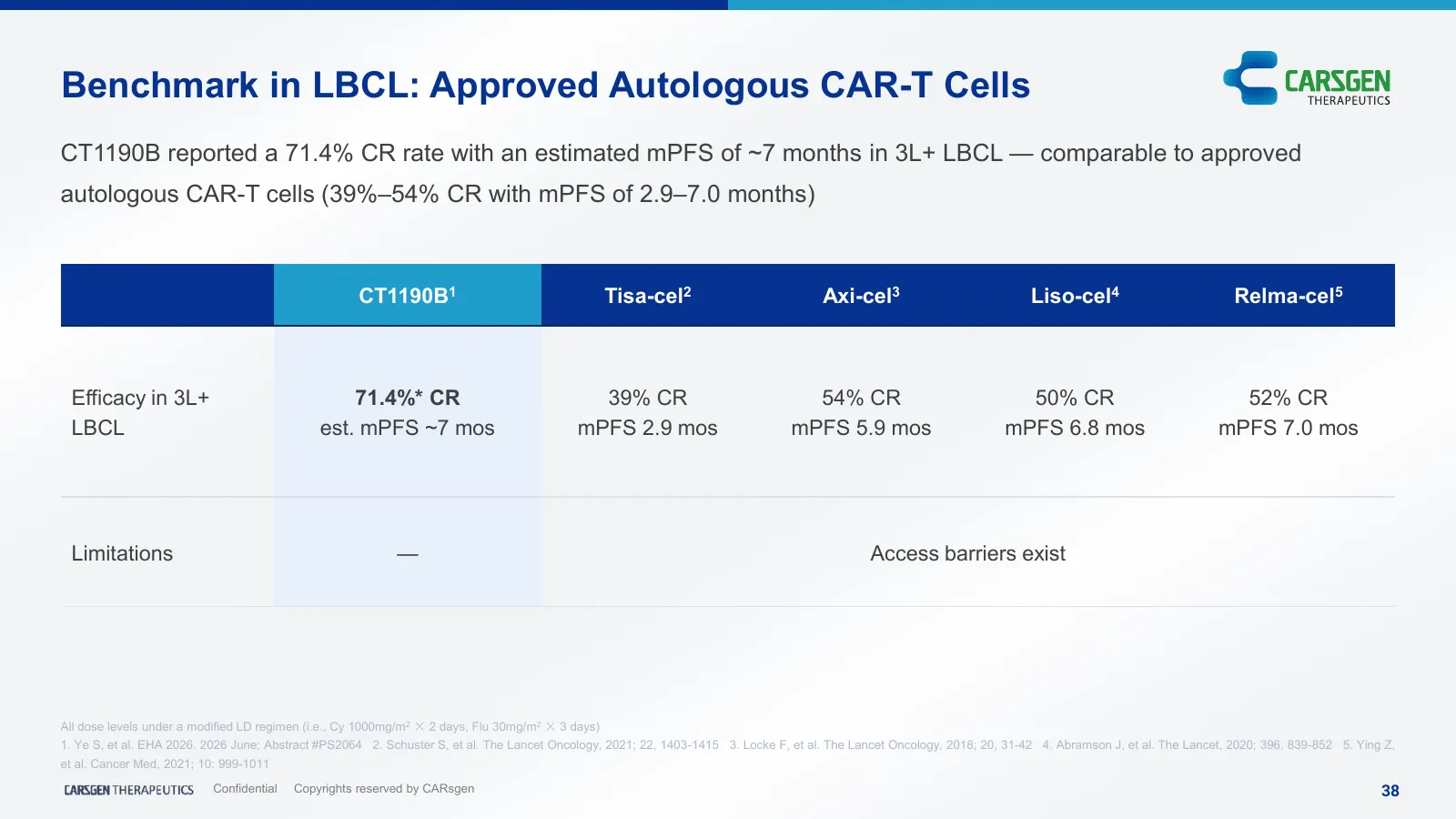
Benchmark in LBCL: Approved Autologous CAR-T Cells CT1190B reported a 71.4% CR rate with an estimated mPFS of ~7 months in 3L+ LBCL — comparable to approved autologous CAR-T cells (39%–54% CR with mPFS of 2.9–7.0 months) CT1190B1 Tisa-cel2 Axi-cel3 Liso-cel4 Relma-cel5 Efficacy in 3L+ 71.4%* CR 39%
Slide 39: Benchmark in LBCL: Allogeneic CAR-T Cells
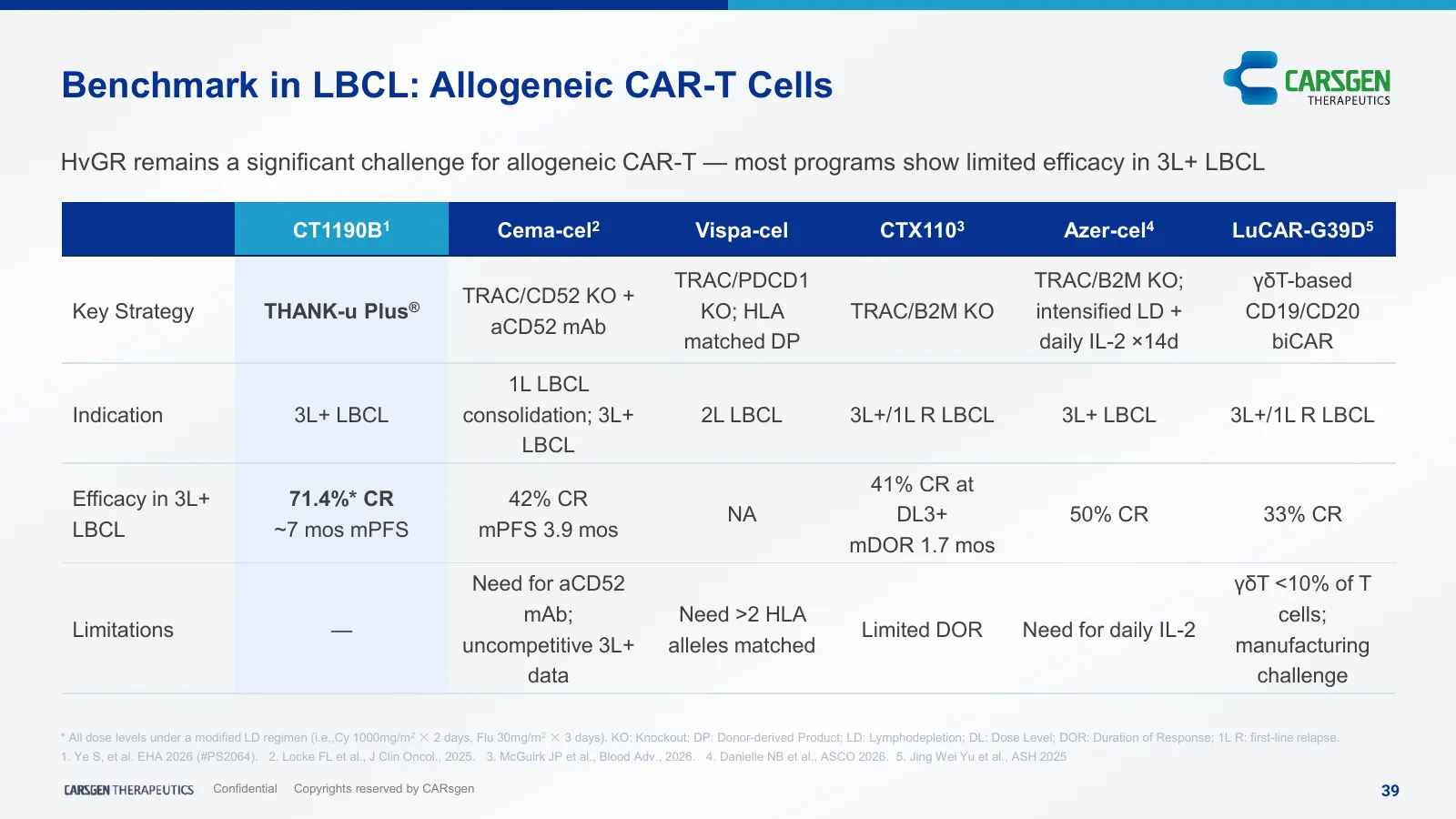
Benchmark in LBCL: Allogeneic CAR-T Cells HvGR remains a significant challenge for allogeneic CAR-T — most programs show limited efficacy in 3L+ LBCL CT1190B1 Cema-cel2 Vispa-cel CTX1103 Azer-cel4 LuCAR-G39D5 TRAC/PDCD1 TRAC/B2M KO; γδT-based TRAC/CD52 KO + Key Strategy THANK-u Plus® KO; HLA TRAC/B2
Slide 40: CT1190B: Patient Baseline Characteristics
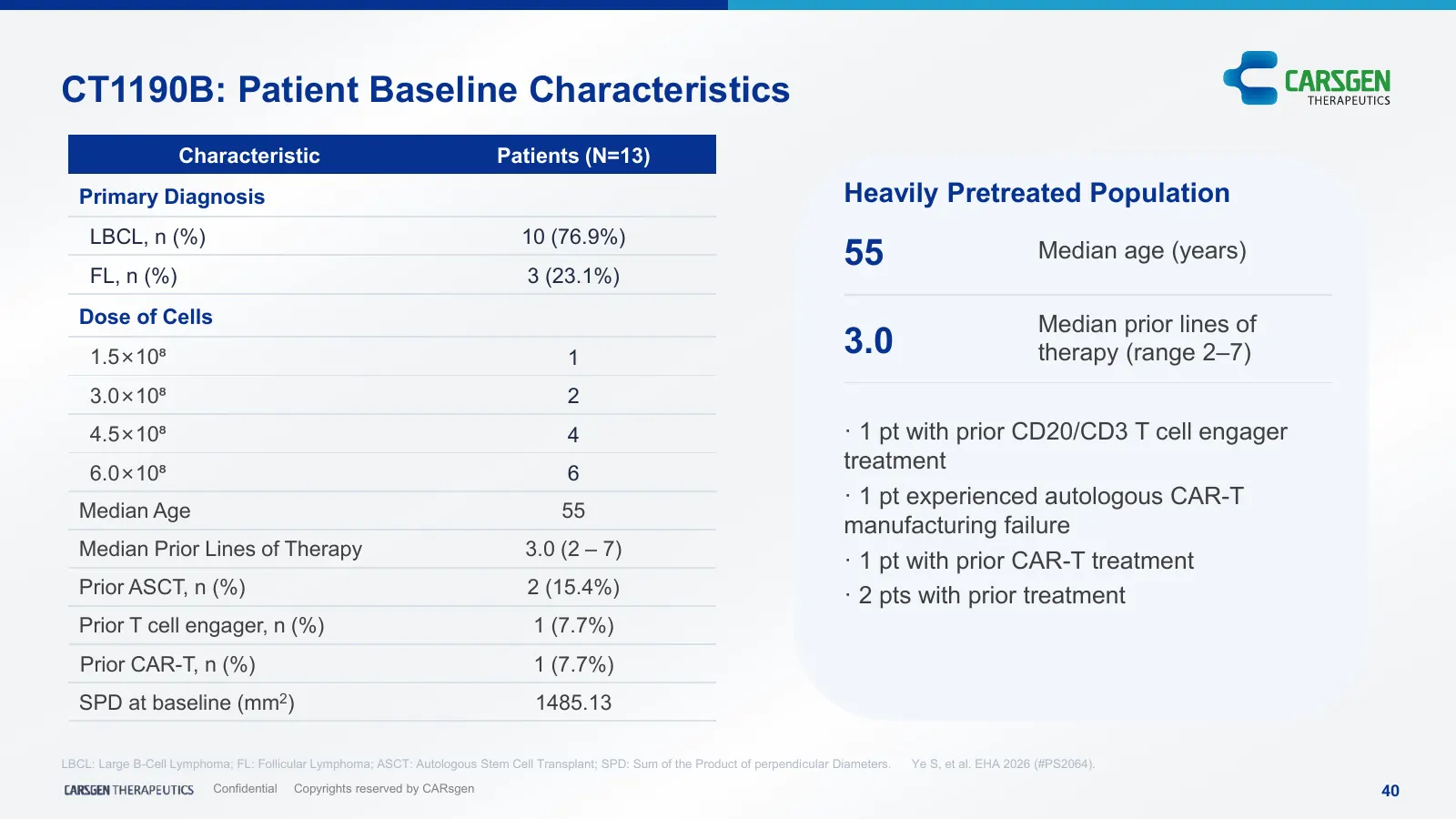
CT1190B: Patient Baseline Characteristics Characteristic Patients (N=13) Primary Diagnosis Heavily Pretreated Population LBCL, n (%) 10 (76.9%) FL, n (%) 3 (23.1%) 55 Median age (years) Dose of Cells Median prior lines of 1.5×10⁸ 1 3.0 therapy (range 2–7) 3.0×10⁸ 2 4.5×10⁸ 4 ·1 pt with prior CD20/CD
Slide 41: CT1190B: Manageable Safety
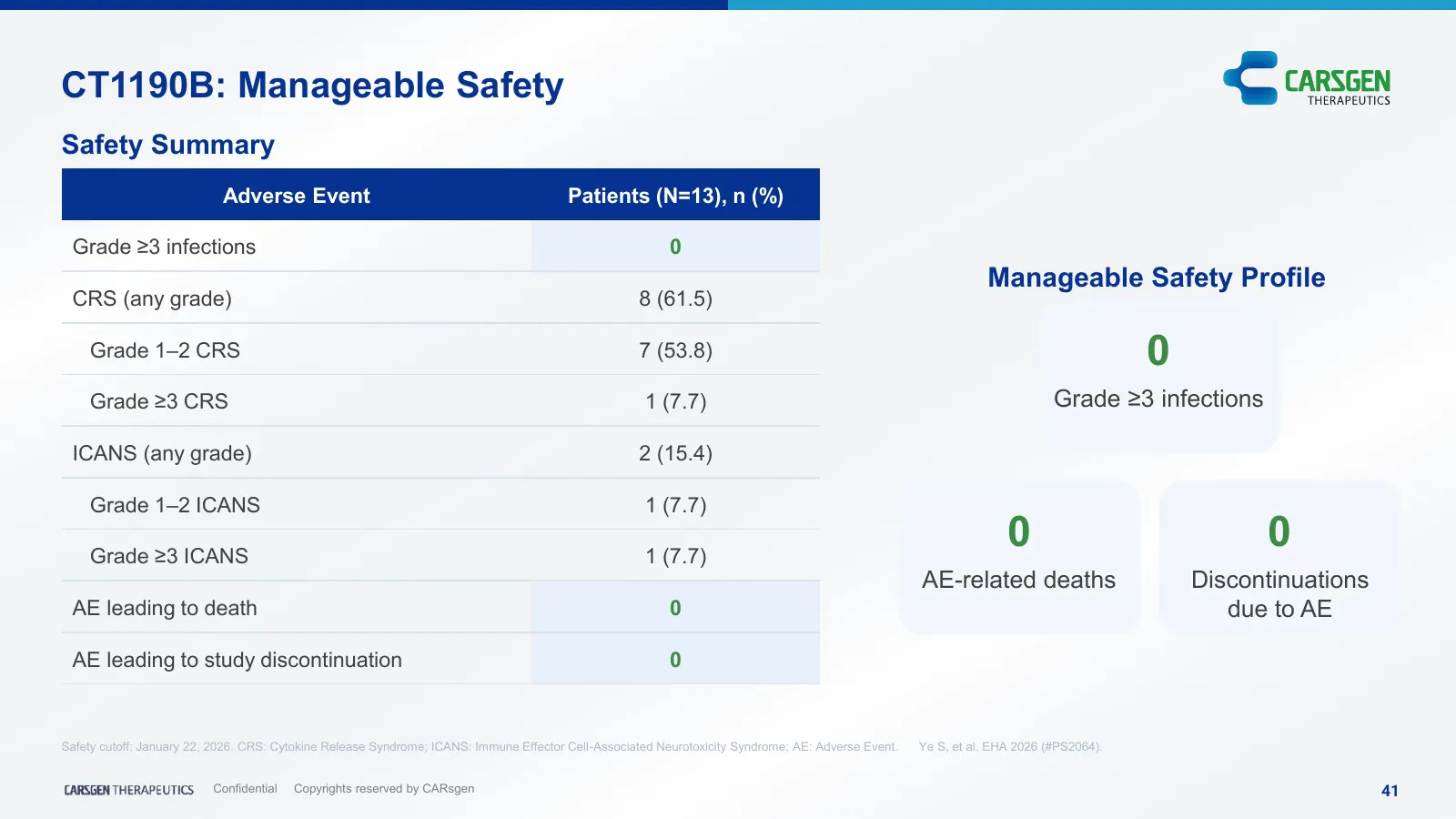
CT1190B: Manageable Safety Safety Summary Adverse Event Patients (N=13), n (%) Grade ≥3 infections 0 Manageable Safety Profile CRS (any grade) 8 (61.5) Grade 1–2 CRS 7 (53.8) 0 Grade ≥3 CRS 1 (7.7) Grade ≥3 infections ICANS (any grade) 2 (15.4) Grade 1–2 ICANS 1 (7.7) Grade ≥3 ICANS 1 (7.7) 0 0 AE-r
Slide 42: CT1190B: Durable Efficacy
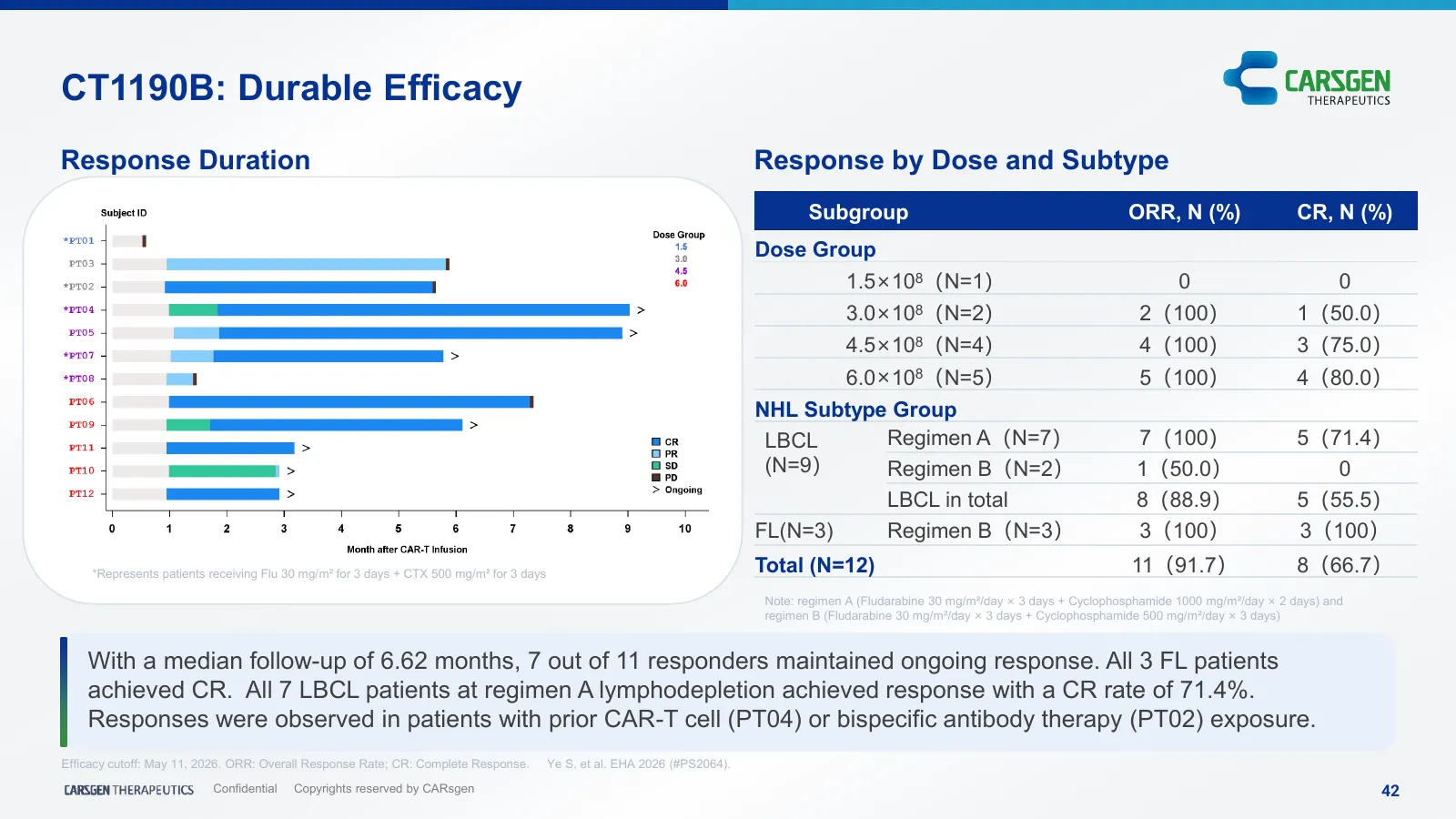
CT1190B: Durable Efficacy Response Duration Response by Dose and Subtype Subgroup ORR, N (%) CR, N (%) Dose Group 1.5×10⁸(N=1) 0 0 3.0×10⁸(N=2) 2(100) 1(50.0) 4.5×10⁸(N=4) 4(100) 3(75.0) 6.0×10⁸(N=5) 5(100) 4(80.0) NHL Subtype Group LBCL Regimen A(N=7) 7(100) 5(71.4) (N=9) Regimen B(N=2) 1(50.0) 0 L
Slide 43: CT1190B: Robust Expansion across Medium or Higher Doses
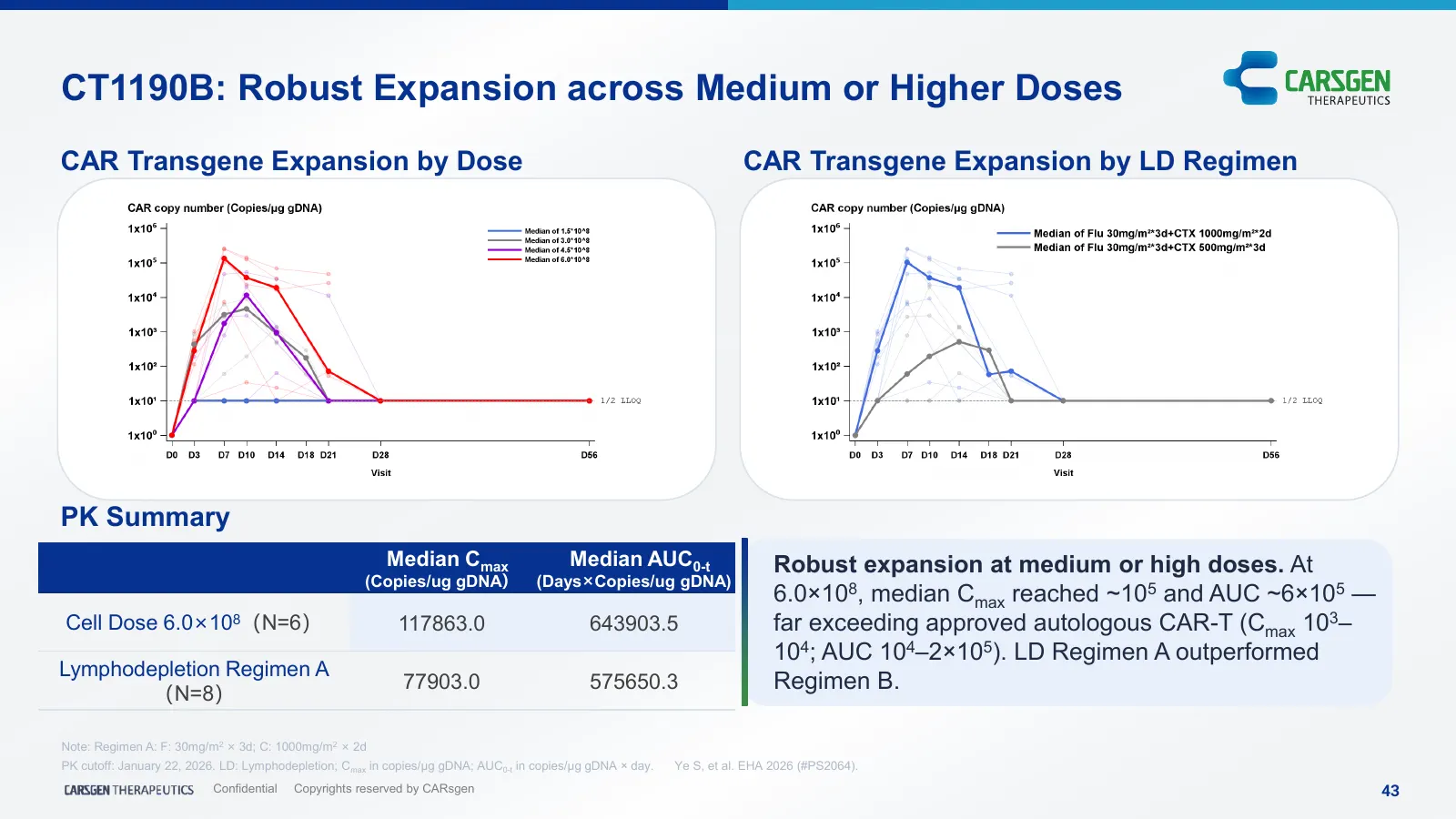
CT1190B: Robust Expansion across Medium or Higher Doses CAR Transgene Expansion by Dose CAR Transgene Expansion by LD Regimen PK Summary Median Cmax Median AUC0-t Robust expansion at medium or high doses. At (Copies/ug gDNA) (Days×Copies/ug gDNA) 6.0×10⁸, median Cmax reached ~105 and AUC ~6×10⁵ — Ce
Slide 44: CARvivo: Potential Best-in-Class Lentiviral Vector in vivo CAR-T Platform
CARvivo : Potential Best-in-Class Lentiviral Vector in vivo CAR-T Platform
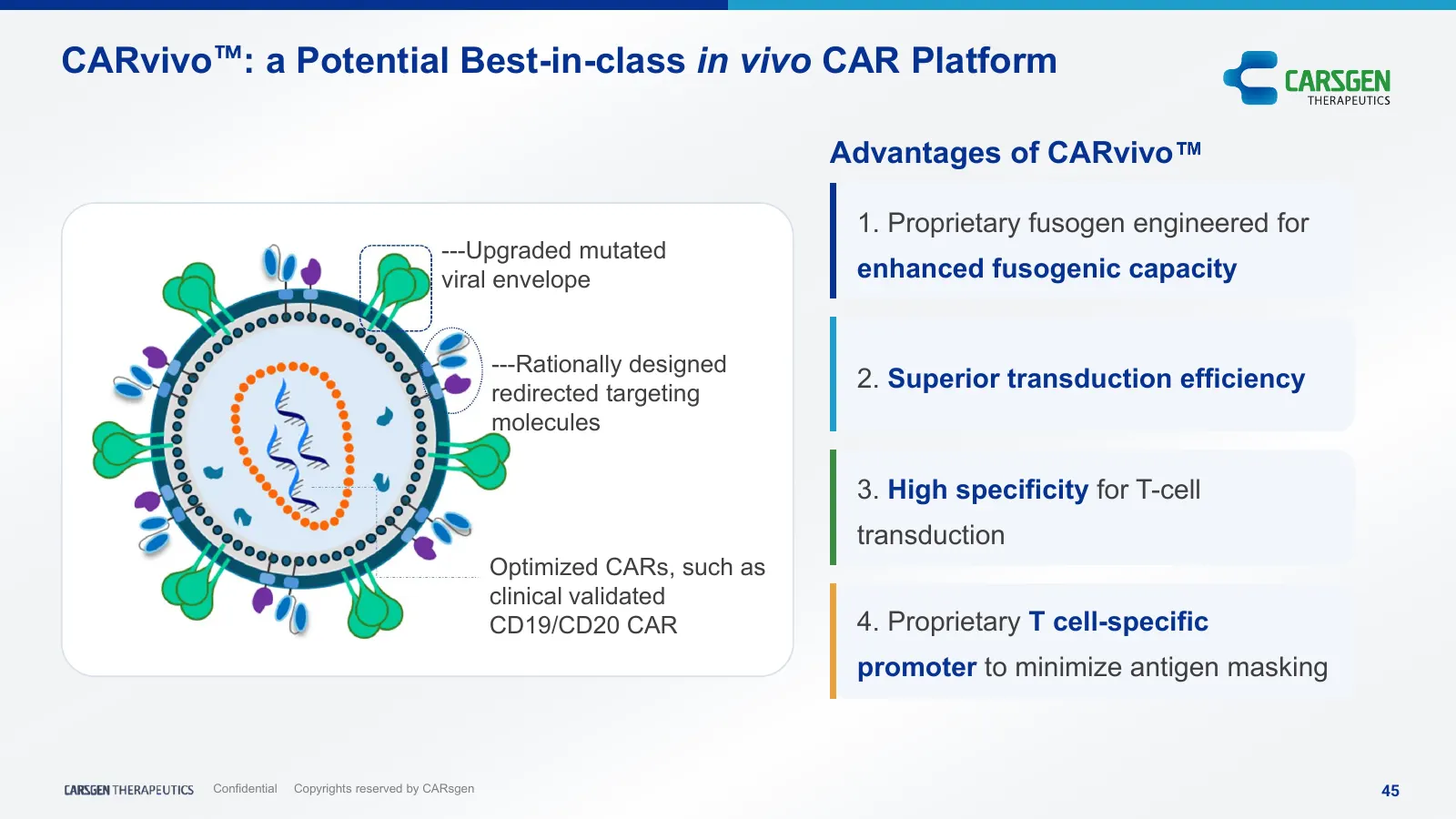
Slide 45: CARvivo: a Potential Best-in-class in vivo CAR Platform
CARvivo : a Potential Best-in-class in vivo CAR Platform Advantages of CARvivo 1. Proprietary fusogen engineered for ---Upgraded mutated viral envelope enhanced fusogenic capacity ---Rationally designed redirected targeting 2. Superior transduction efficiency molecules 3. High specificity for T-cell
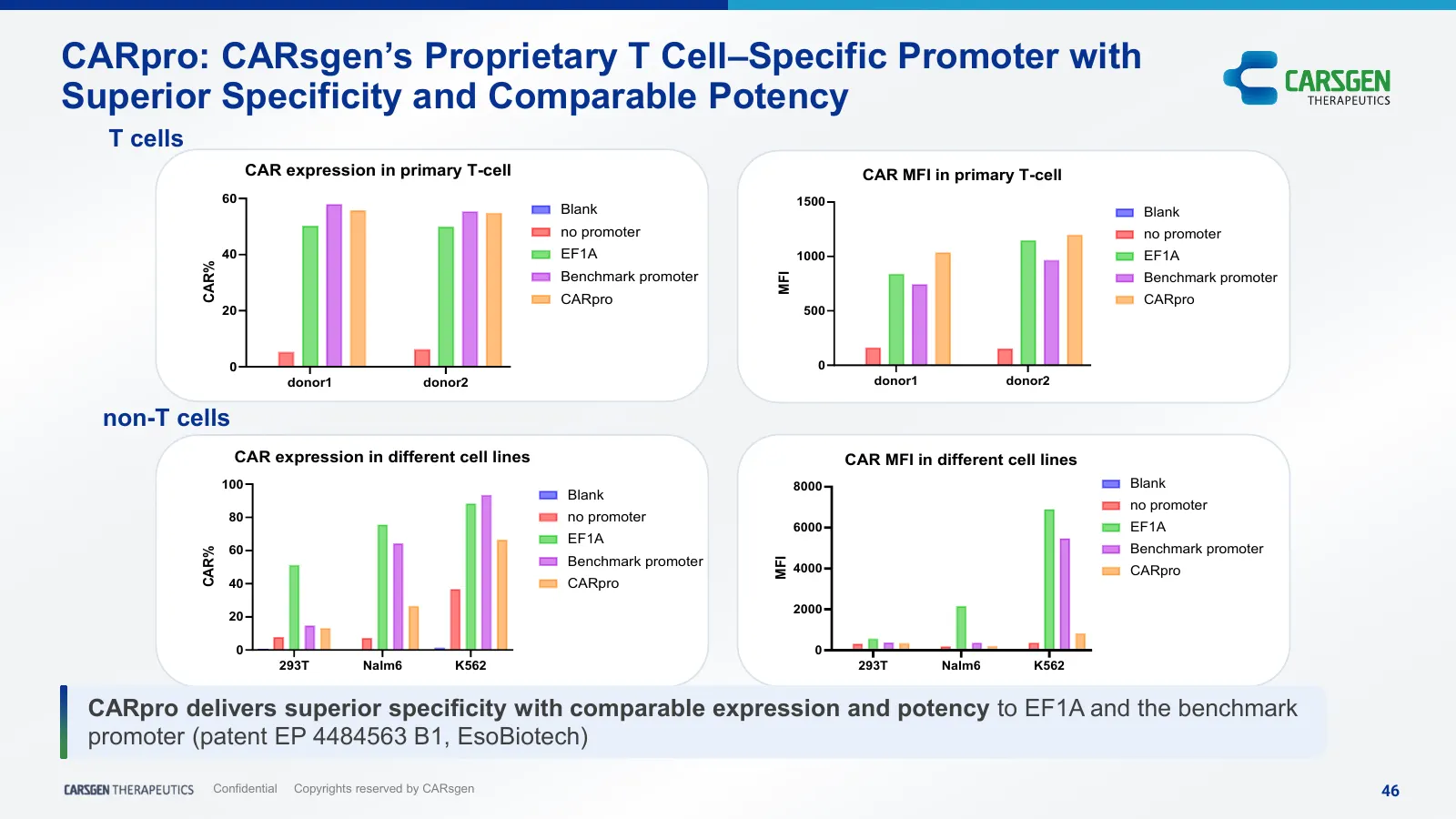
Slide 46: CARpro: Proprietary T Cell-Specific Promoter with Superior Specificity
CARpro: CARsgen’s Proprietary T Cell–Specific Promoter with Superior Specificity and Comparable Potency T cells CAR expression in primary T-cell CAR MFI in primary T-cell 60 1500 Blank Blank no promoter no promoter 40 EF1A 1000 EF1A CAR% Benchmark promoter Benchmark promoter MFI CARpro CARpro 20 500
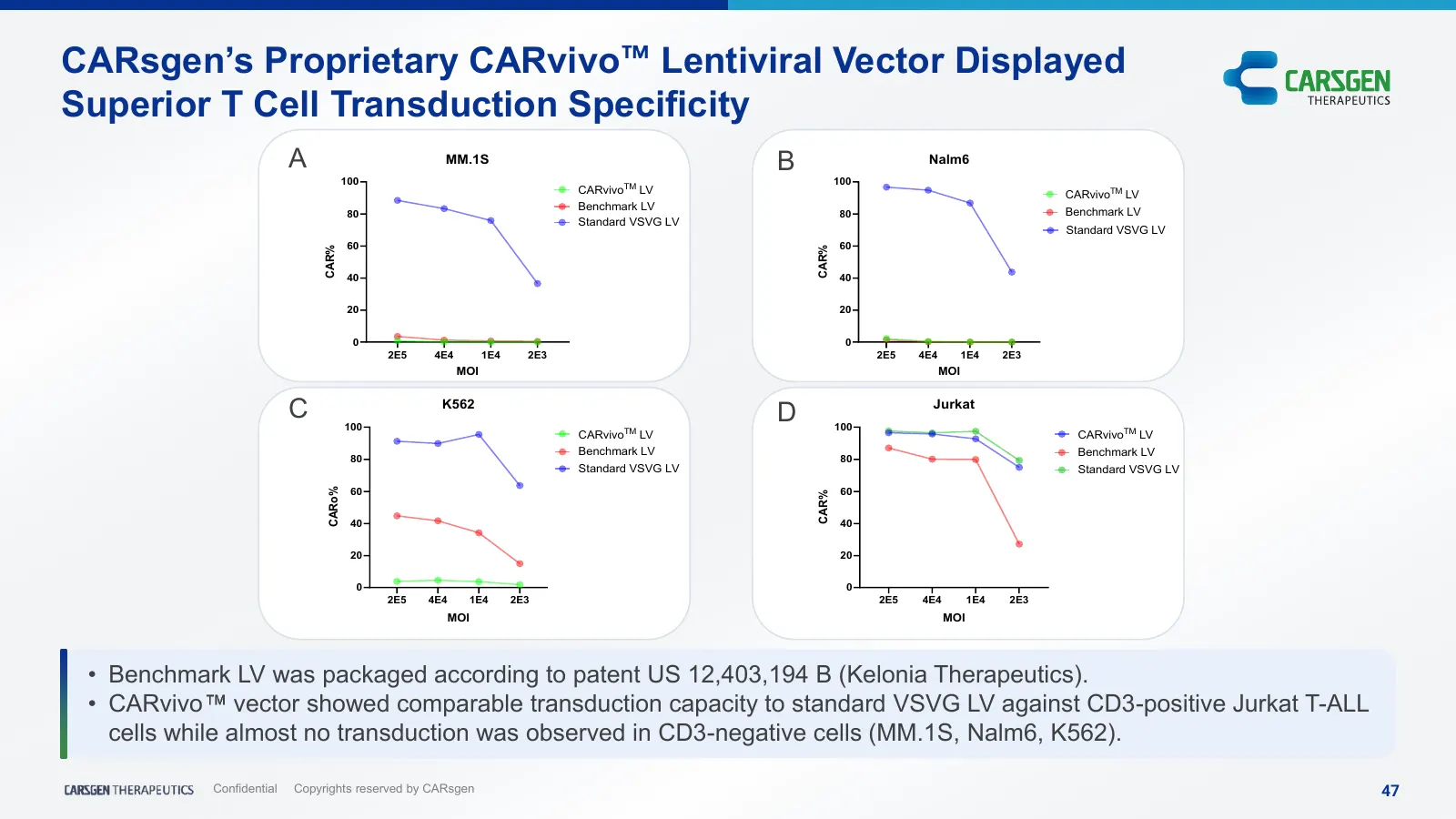
Slide 47: CARvivo Lentiviral Vector Displayed Superior T Cell Transduction Specificity
CARsgen’s Proprietary CARvivo Lentiviral Vector Displayed Superior T Cell Transduction Specificity A MM.1S B Nalm6 100 100 CARvivoTM LV CARvivoTM LV Benchmark LV 80 80 Benchmark LV Standard VSVG LV Standard VSVG LV 60 60 CAR% CAR% 40 40 20 20 0 0 2E5 4E4 1E4 2E3 2E5 4E4 1E4 2E3 MOI MOI C 100 K562 D
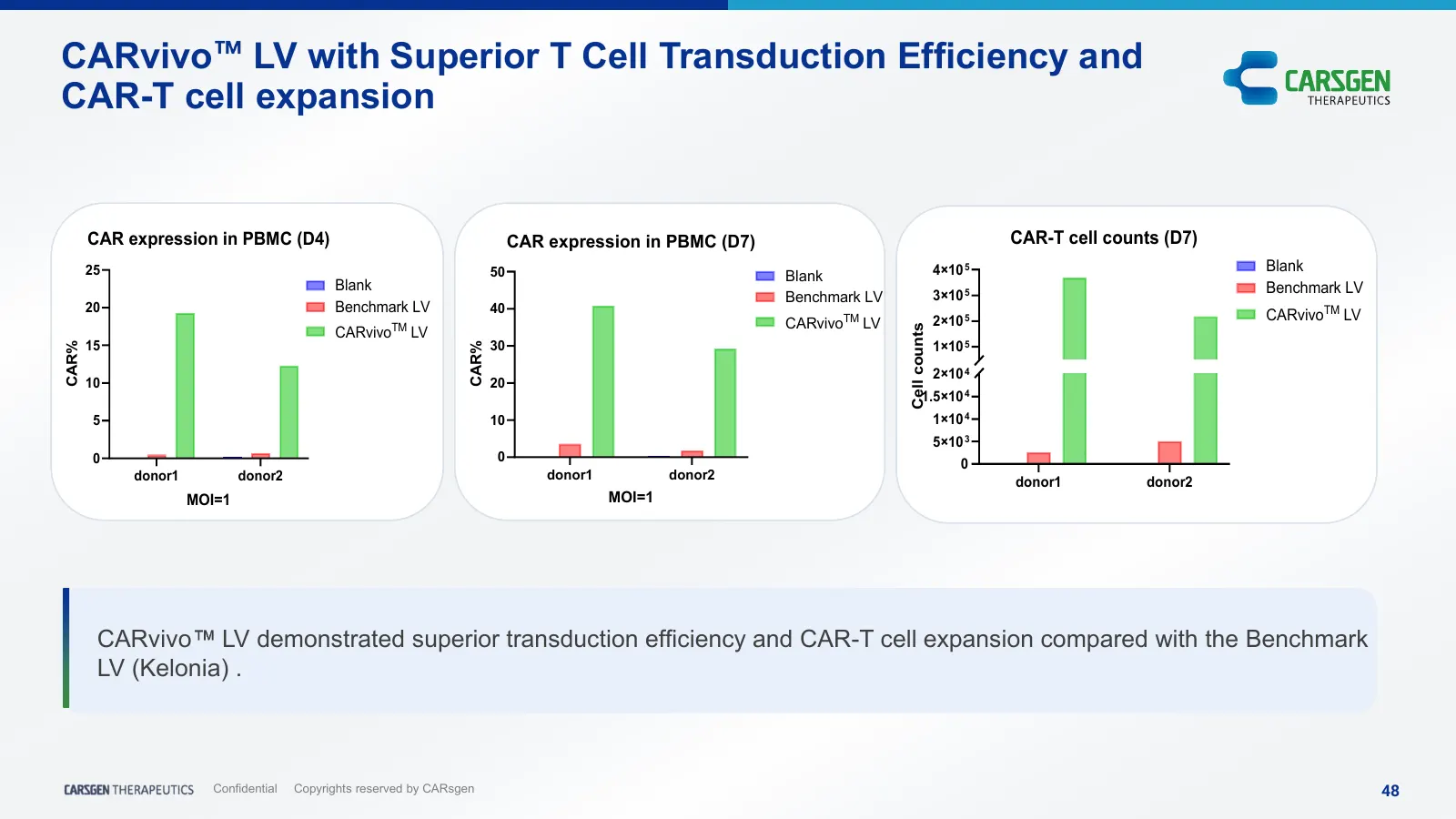
Slide 48: CARvivo LV with Superior T Cell Transduction Efficiency and Expansion
CARvivo LV with Superior T Cell Transduction Efficiency and CAR-T cell expansion CAR expression in PBMC (D4) CAR expression in PBMC (D7) CAR-T cell counts (D7) 25 50 4×10 5 Blank Blank Blank Benchmark LV Benchmark LV 3×10 5 20 Benchmark LV 40 CARvivoTM LV 2×10 5 CARvivoTM LV TM Cell counts CARvivo L
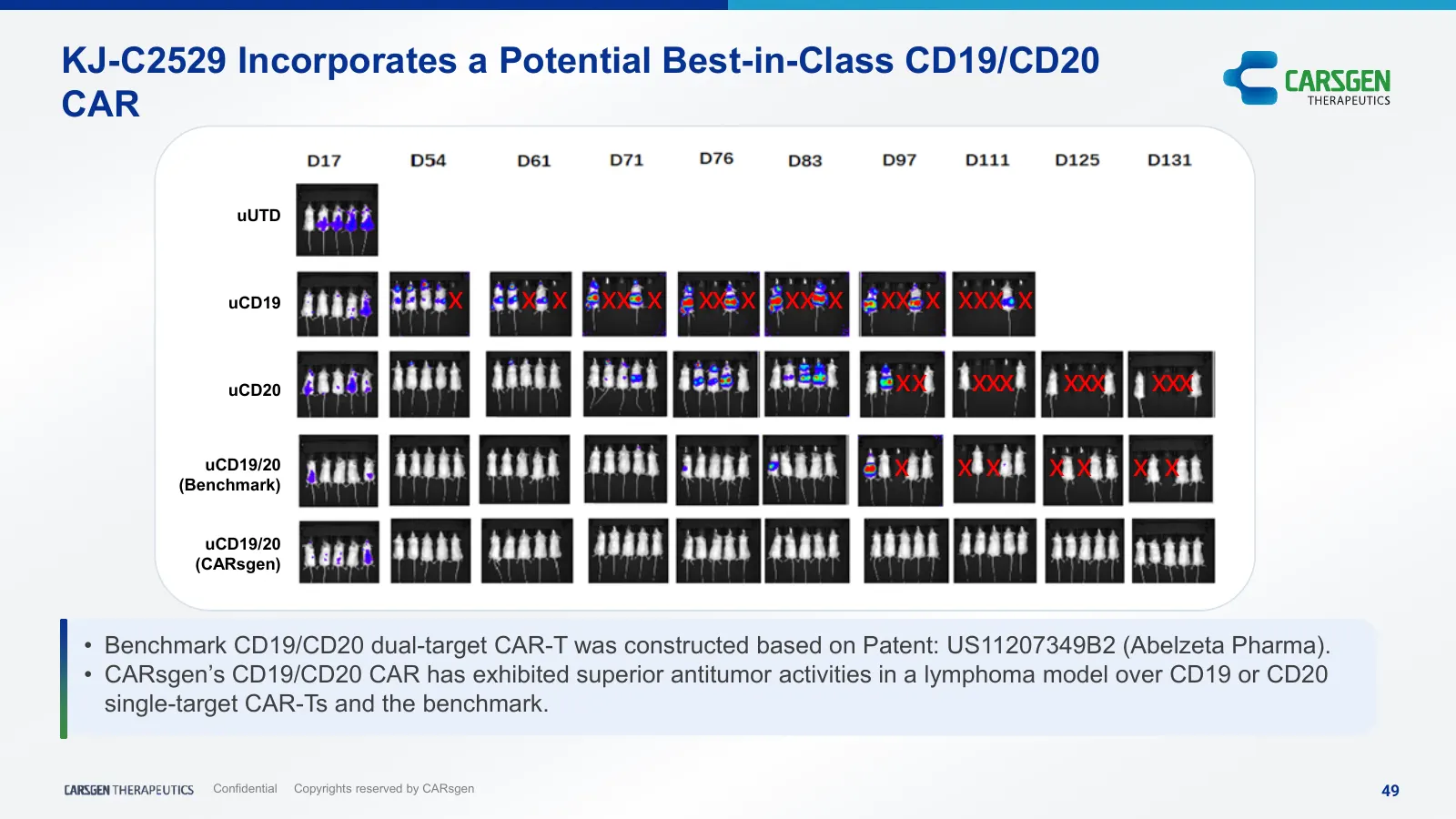
Slide 49: KJ-C2529 Incorporates a Potential Best-in-Class CD19/CD20 CAR
KJ-C2529 Incorporates a Potential Best-in-Class CD19/CD20 CAR uUTD uCD19 x x x xx x xx x xx x xx x xxx x uCD20 xx xxx xxx xxx uCD19/20 (Benchmark) x x x xx x x uCD19/20 (CARsgen) • Benchmark CD19/CD20 dual-target CAR-T was constructed based on Patent: US11207349B2 (Abelzeta Pharma). • CARsgen’s CD19
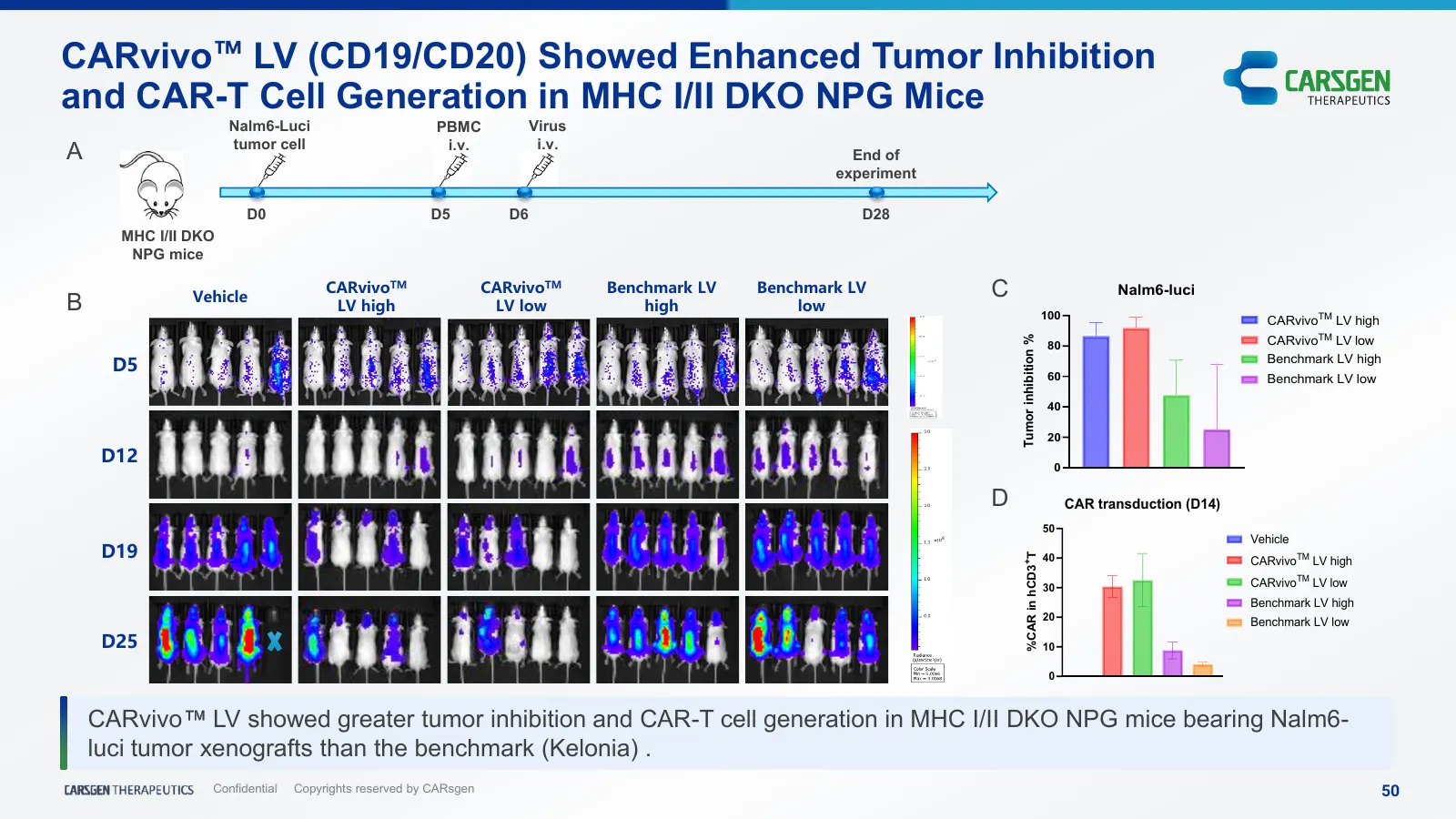
Slide 50: CARvivo LV (CD19/CD20) Showed Enhanced Tumor Inhibition in Mice
CARvivo LV (CD19/CD20) Showed Enhanced Tumor Inhibition and CAR-T Cell Generation in MHC I/II DKO NPG Mice Nalm6-Luci PBMC Virus tumor cell i.v. i.v. A End of experiment D0 D5 D6 D28 MHC I/II DKO NPG mice Vehicle CARvivoTM CARvivoTM Benchmark LV Benchmark LV C Nalm6-luci B LV high LV low high low 10
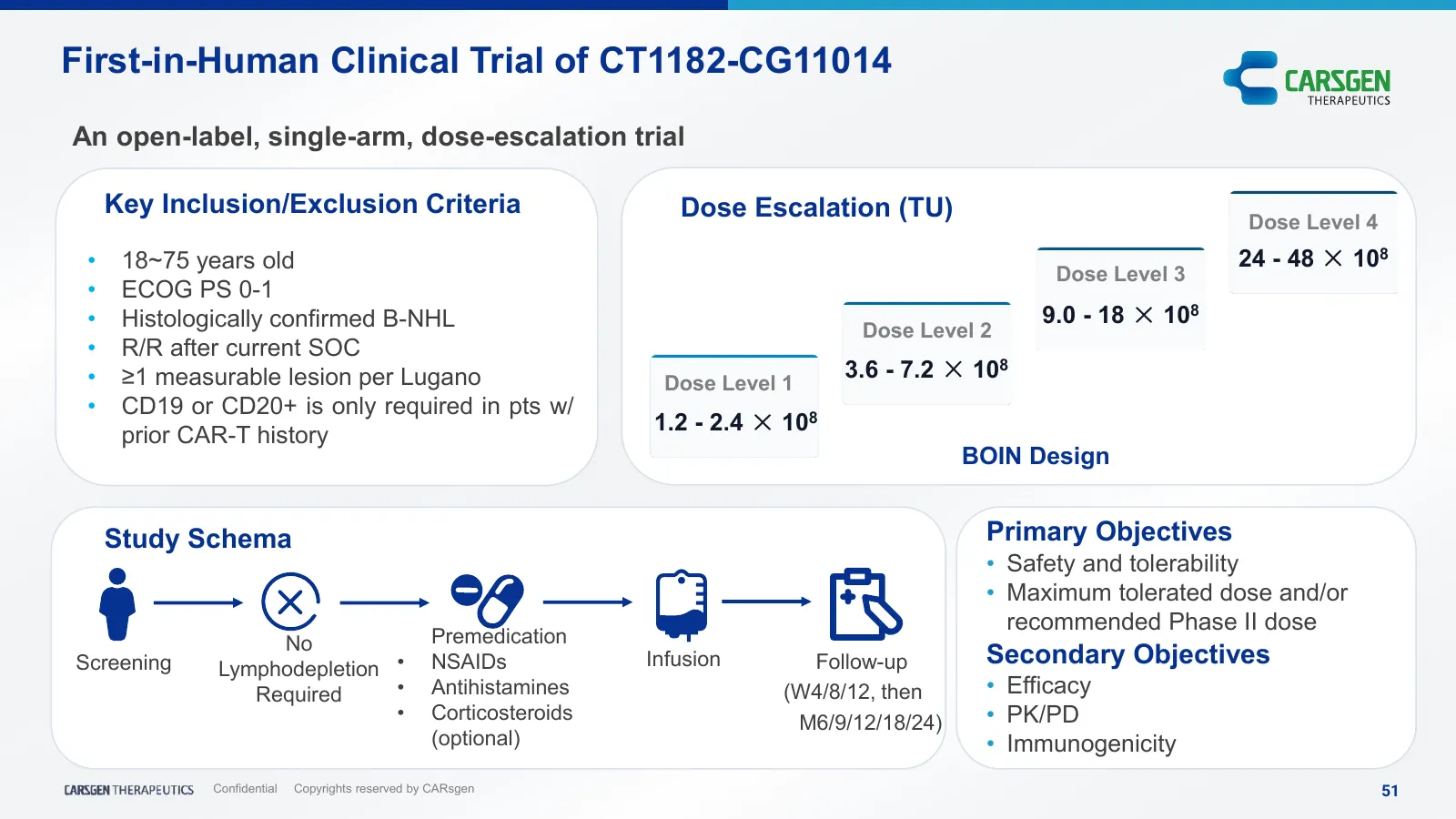
Slide 51: First-in-Human Clinical Trial of CT1182-CG11014
First-in-Human Clinical Trial of CT1182-CG11014 An open-label, single-arm, dose-escalation trial Key Inclusion/Exclusion Criteria Dose Escalation (TU) Dose Level 4 • 18~75 years old 24 - 48 × 108 Dose Level 3 • ECOG PS 0-1 • Histologically confirmed B-NHL 9.0 - 18 × 108 Dose Level 2 • R/R after curr
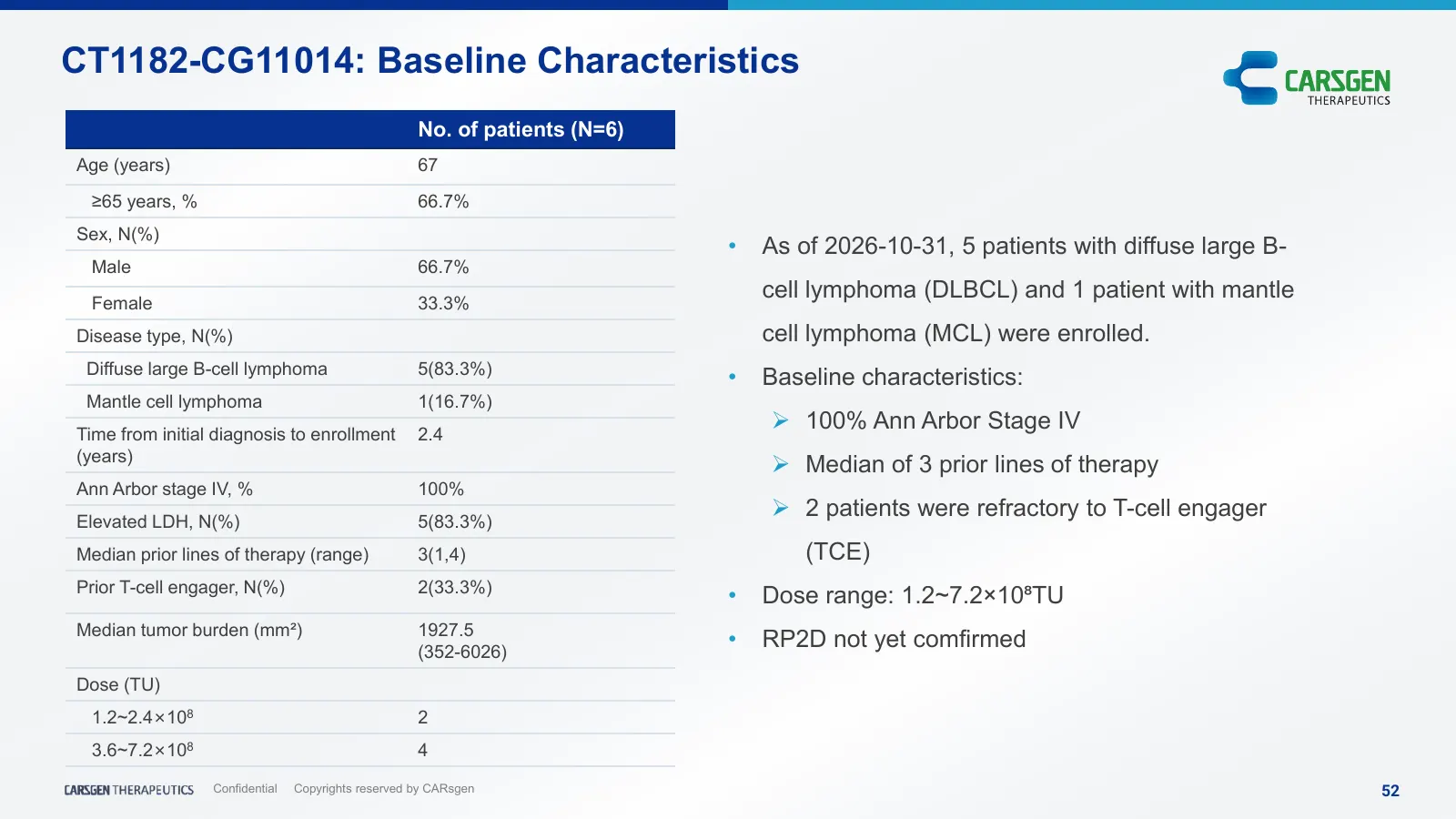
Slide 52: CT1182-CG11014: Baseline Characteristics
CT1182-CG11014: Baseline Characteristics No. of patients (N=6) Age (years) 67 ≥65 years, % 66.7% Sex, N(%) • As of 2026-10-31, 5 patients with diffuse large B- Male 66.7% Female 33.3% cell lymphoma (DLBCL) and 1 patient with mantle Disease type, N(%) cell lymphoma (MCL) were enrolled. Diffuse large
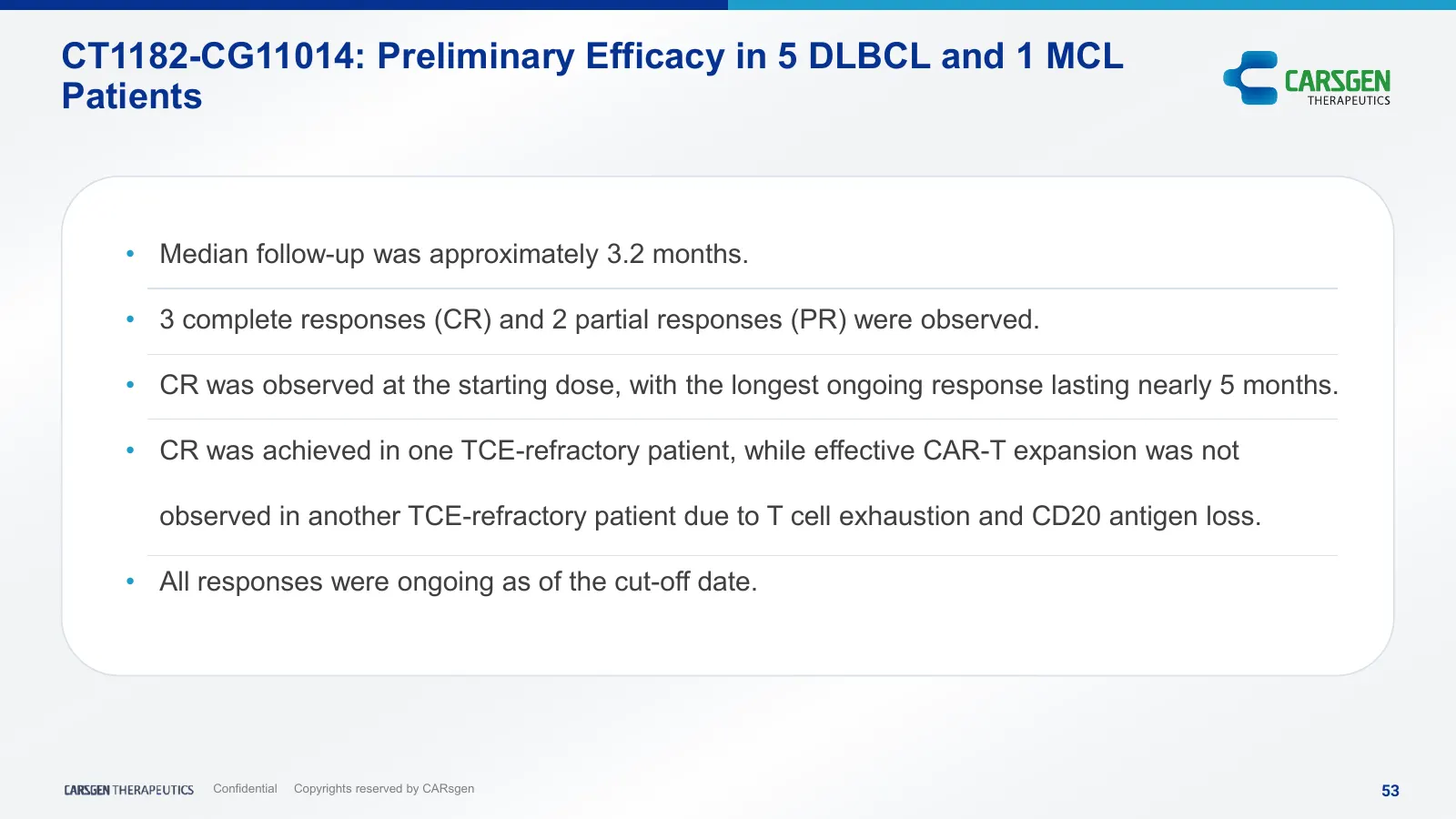
Slide 53: CT1182-CG11014: Preliminary Efficacy in DLBCL and MCL Patients
CT1182-CG11014: Preliminary Efficacy in 5 DLBCL and 1 MCL Patients • Median follow-up was approximately 3.2 months. • 3 complete responses (CR) and 2 partial responses (PR) were observed. • CR was observed at the starting dose, with the longest ongoing response lasting nearly 5 months. • CR was achi
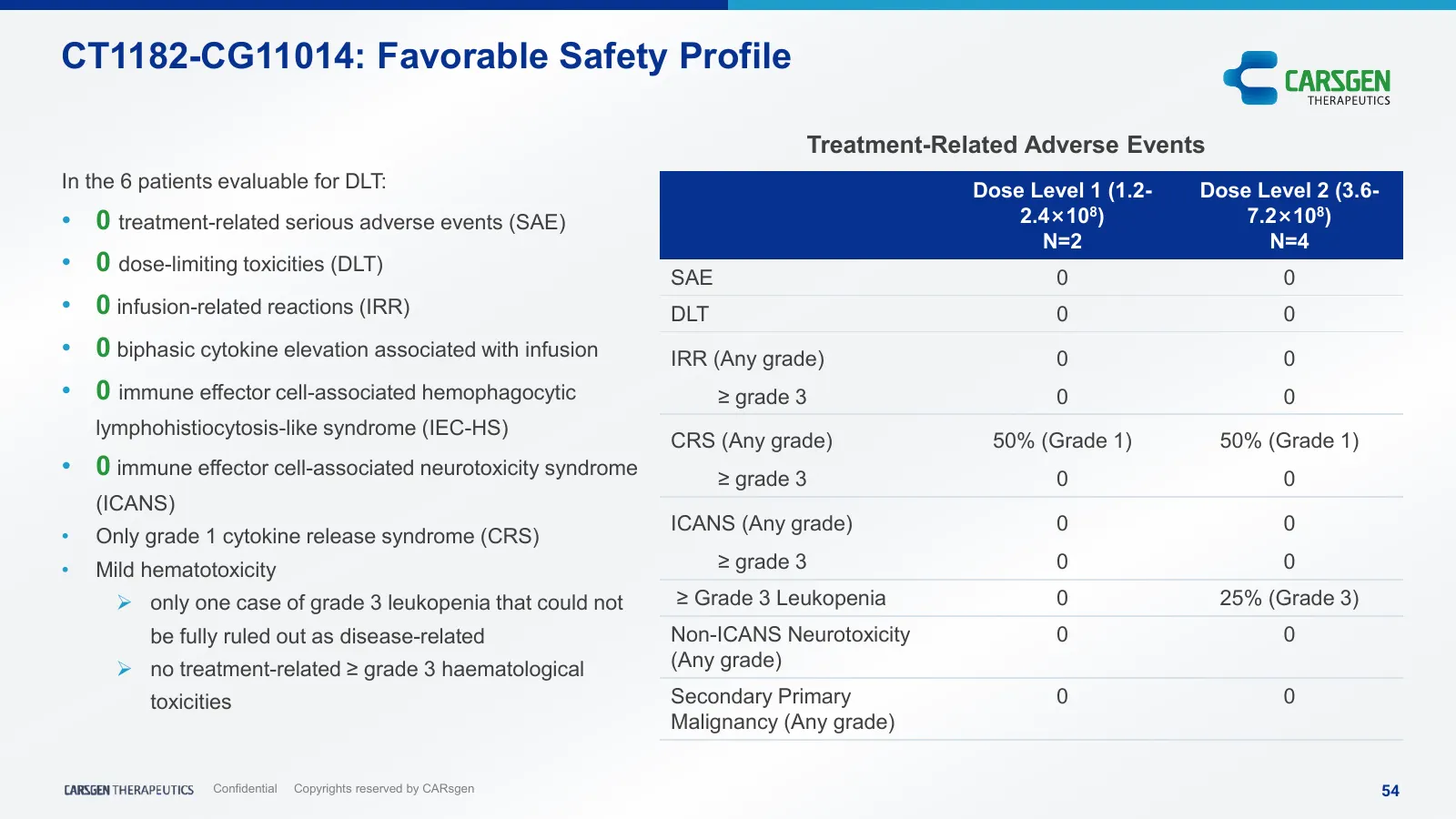
Slide 54: CT1182-CG11014: Favorable Safety Profile
CT1182-CG11014: Favorable Safety Profile Treatment-Related Adverse Events In the 6 patients evaluable for DLT: Dose Level 1 (1.2- Dose Level 2 (3.6- • 0 treatment-related serious adverse events (SAE) 2.4×10⁸) 7.2×10⁸) N=2 N=4 • 0 dose-limiting toxicities (DLT) SAE 0 0 • 0 infusion-related reactions
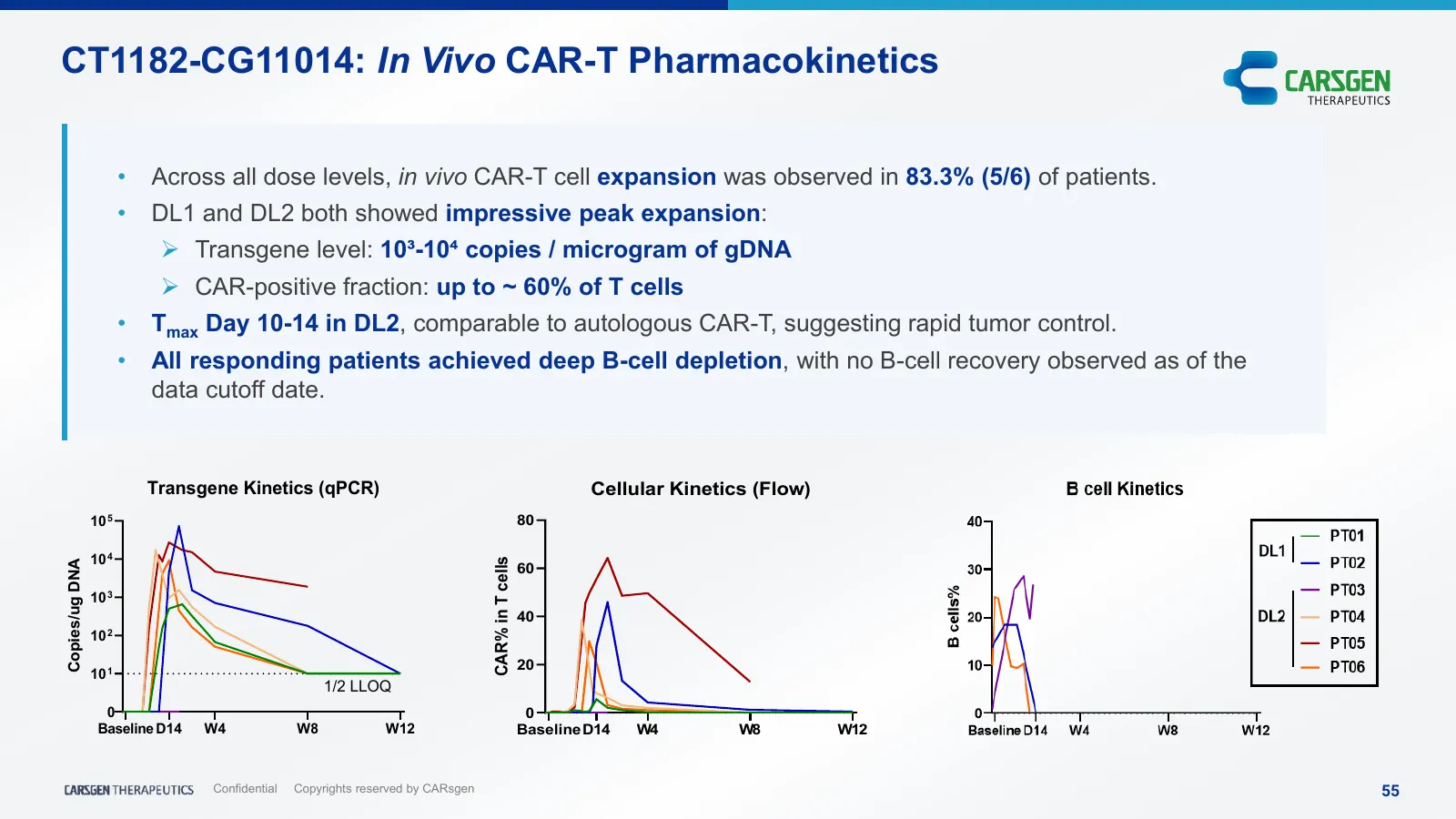
Slide 55: CT1182-CG11014: In Vivo CAR-T Pharmacokinetics
CT1182-CG11014: In Vivo CAR-T Pharmacokinetics • Across all dose levels, in vivo CAR-T cell expansion was observed in 83.3% (5/6) of patients. • DL1 and DL2 both showed impressive peak expansion: ➢ Transgene level: 10³-10⁴ copies / microgram of gDNA ➢ CAR-positive fraction: up to ~ 60% of T cells •
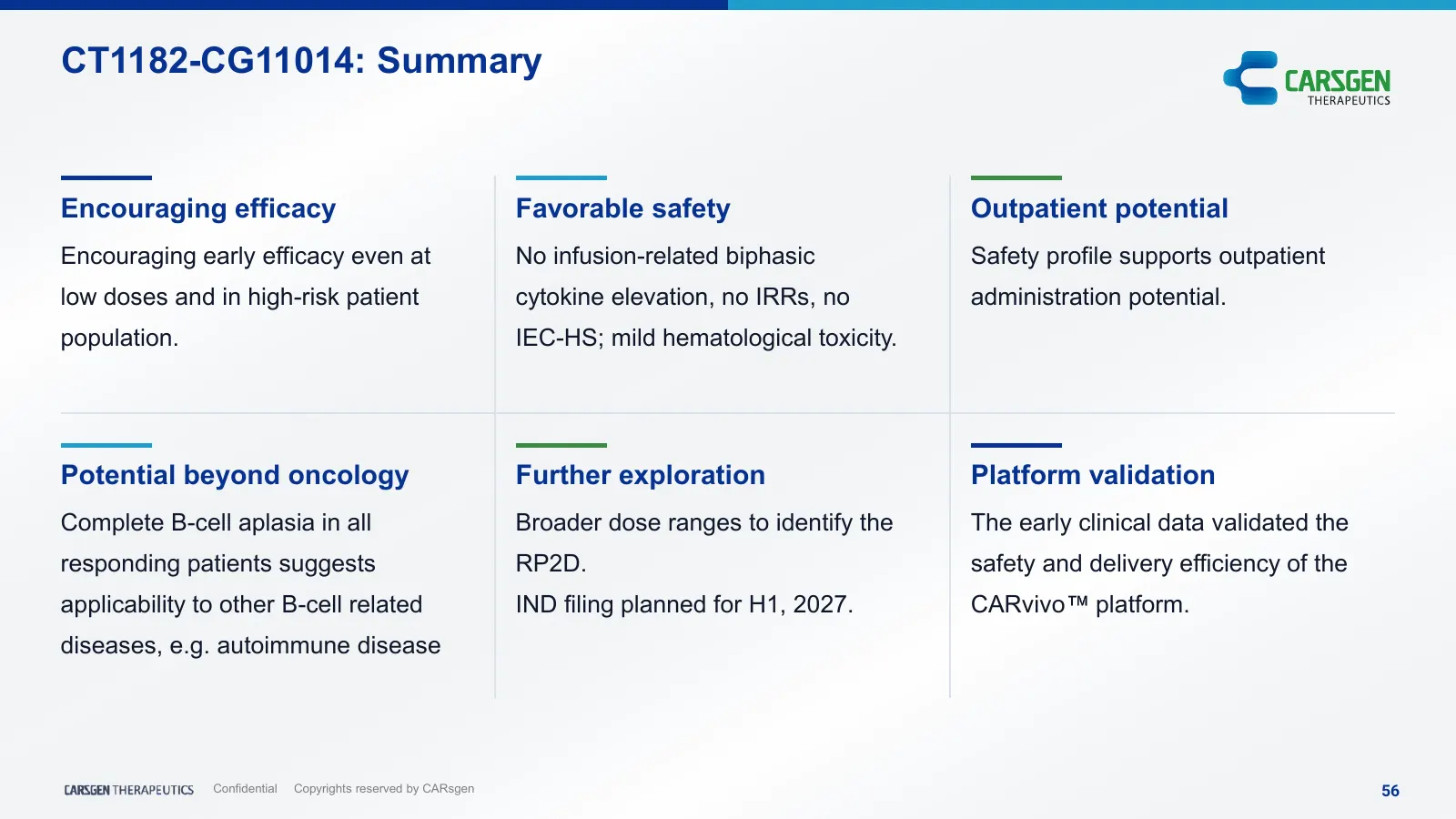
Slide 56: CT1182-CG11014: Summary
CT1182-CG11014: Summary Encouraging efficacy Favorable safety Outpatient potential Encouraging early efficacy even at No infusion-related biphasic Safety profile supports outpatient low doses and in high-risk patient cytokine elevation, no IRRs, no administration potential. population. IEC-HS; mild
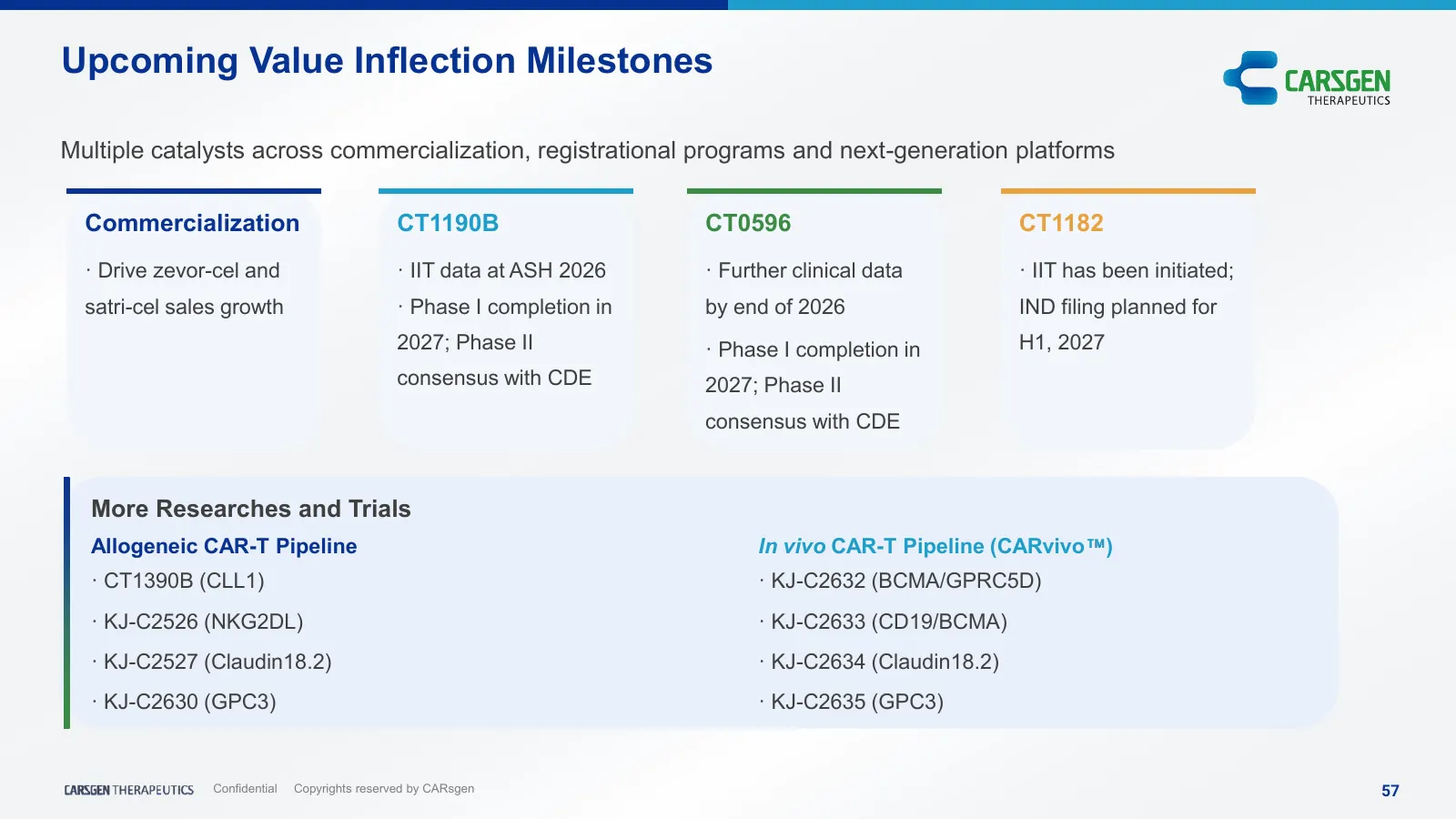
Slide 57: Upcoming Value Inflection Milestones
Upcoming Value Inflection Milestones Multiple catalysts across commercialization, registrational programs and next-generation platforms Commercialization CT1190B CT0596 CT1182 ·Drive zevor-cel and ·IIT data at ASH 2026 ·Further clinical data ·IIT has been initiated; satri-cel sales growth ·Phase I c
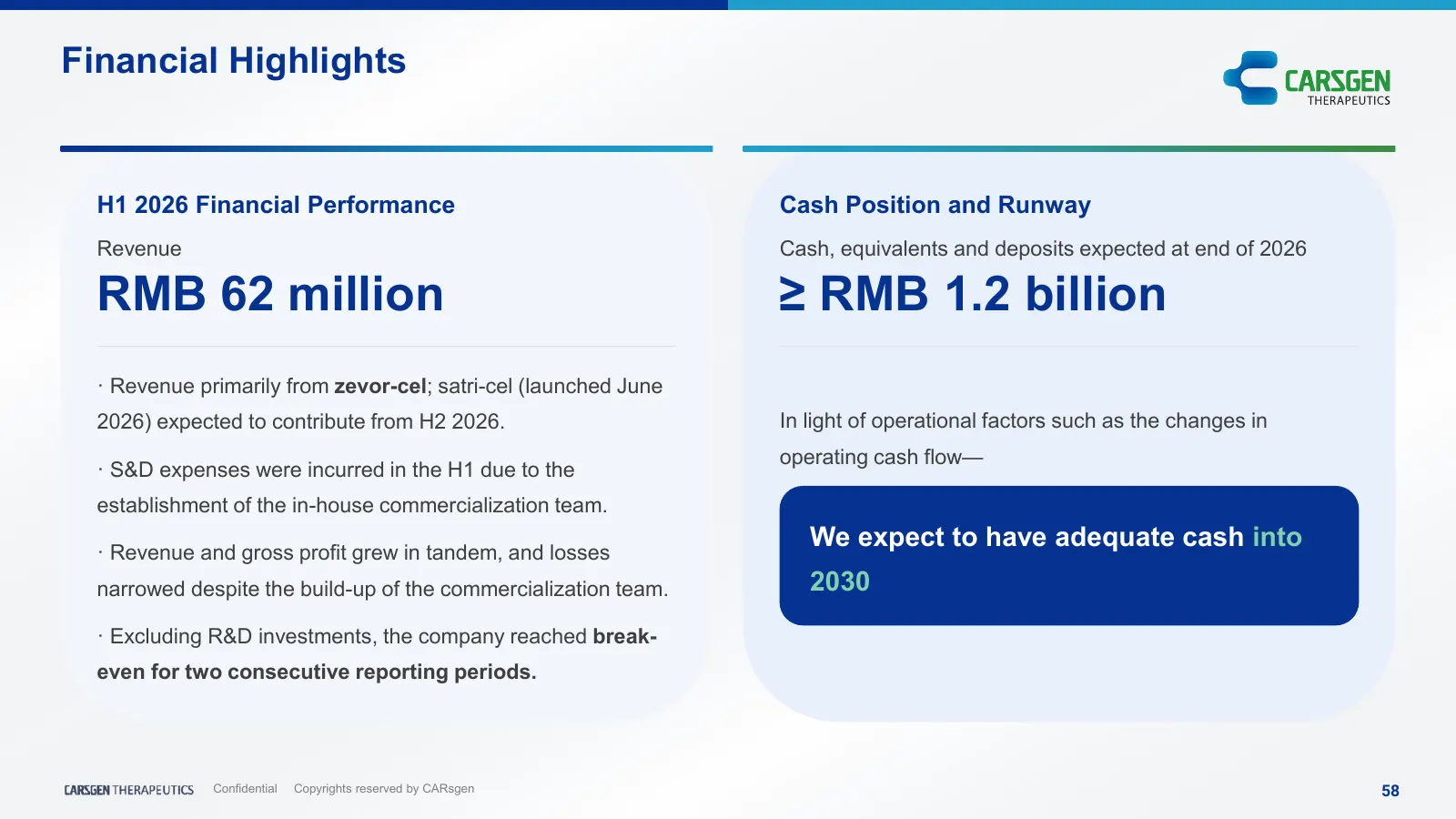
Slide 58: Financial Highlights
Financial Highlights H1 2026 Financial Performance Cash Position and Runway Revenue Cash, equivalents and deposits expected at end of 2026 RMB 62 million ≥ RMB 1.2 billion ·Revenue primarily from zevor-cel; satri-cel (launched June 2026) expected to contribute from H2 2026. In light of operational f

Slide 59: Making Cancer Curable
Making Cancer Curable oS cARSGEN
Source: company website
More decks from CARsgen Therapeutics Holdings Ltd.
 Investor Presentation (October 2026)56 slides · October 2026
 Investor Presentation (October 2026)54 slides · October 2026
 Investor Presentation (February 2026)60 slides · February 2026
 Investor Day (November 2025)79 slides · Nov 19, 2025
 Investor Presentation (October 2025)57 slides · October 2025
 Investor Presentation (July 2025)54 slides · July 2025