Rockwool A/S Class A · OMXCOP:ROCK_A
Rockwool A/S Class A — Investor Presentation (October 2009)
24 slides from Rockwool A/S Class A's investor presentation, Oct 10, 2009
Slide 1: From Kyoto to Copenhagen – From Energy Waste to Clean Energy use in Buildings
From Kyoto to Copenhagen – From Energy Waste to Clean Energy use in Buildings Cutting down energy consumption in buildings Towards a factor 4 policy for buildings 10 October 2009 Copenhagen International Energy Agency IEA Jens Laustsen Policy Analyst for Efficiency in Buildings © OECD/IEA, 2009
Slide 2: Key messages
Key messages Energy efficiency is a critical part of a sustainable energy future Buildings energy use can be reduced dramatically alone with existing solutions A reduction to ¼ of BAU in 2050 is rational and economic reasonable (Factor 4) IEA 25 recommendations provide direction – high empha
Slide 3: Energy efficiency – critical part of sustainable energy future
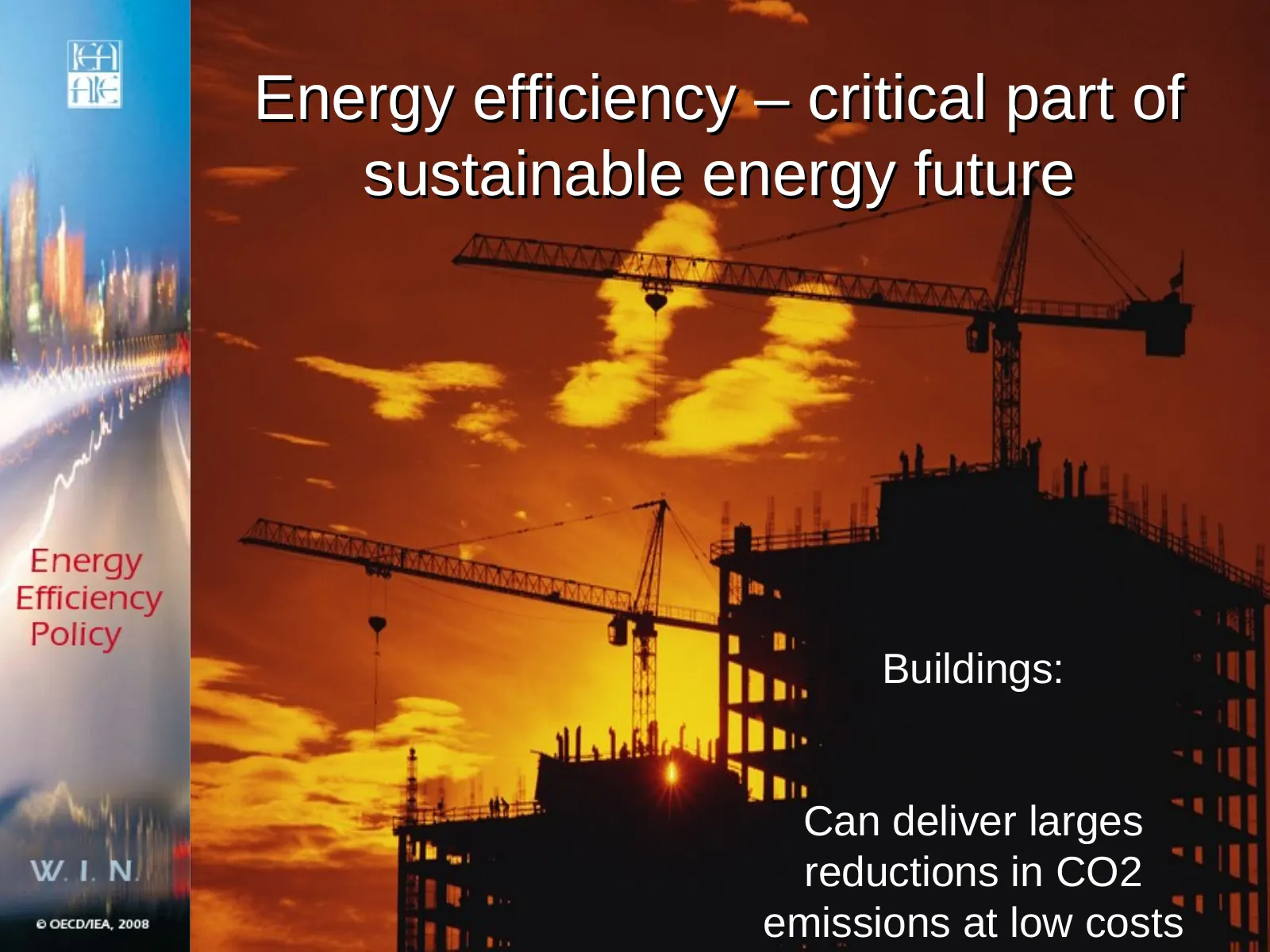
Energy efficiency – critical part of sustainable energy future Buildings: Can deliver larges reductions in CO2 emissions at low costs
Slide 4: Reductions in energy-related CO2 emissions in the climate-policy scenarios
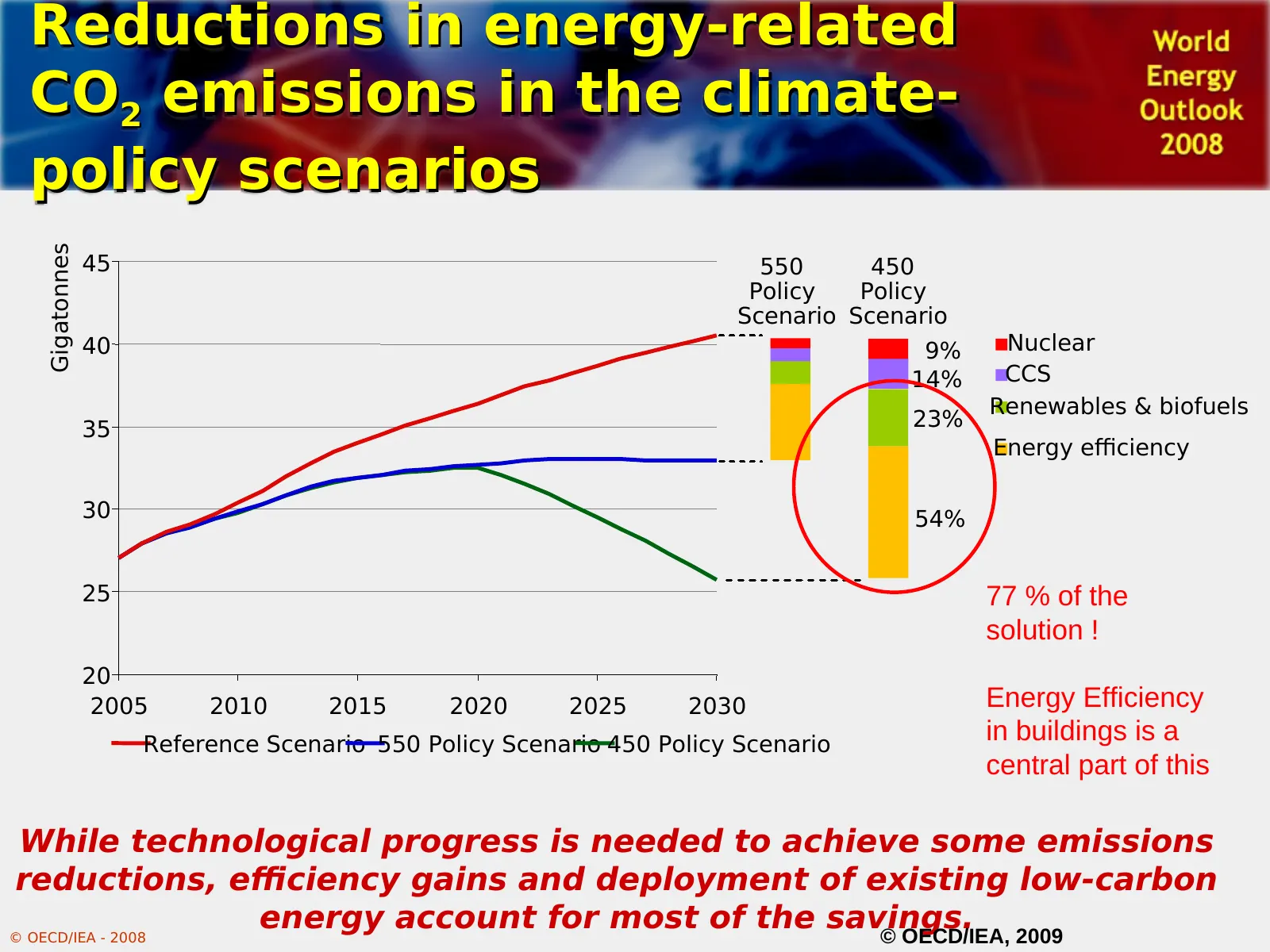
Reductions in energy-related CO2 emissions in the climate- policy scenarios Gigatonnes 45 550 450 Policy Policy Scenario Scenario 40 9% Nuclear 14% CCS Renewables & biofuels 35 23% Energy efficiency 30 54% 25 77 % of the solution ! 20 2005 2010 2015 2020 2025 2030 Energy Efficiency Reference Scenari
Slide 5: Energy efficiency in buildings is climate change abatement at low costs
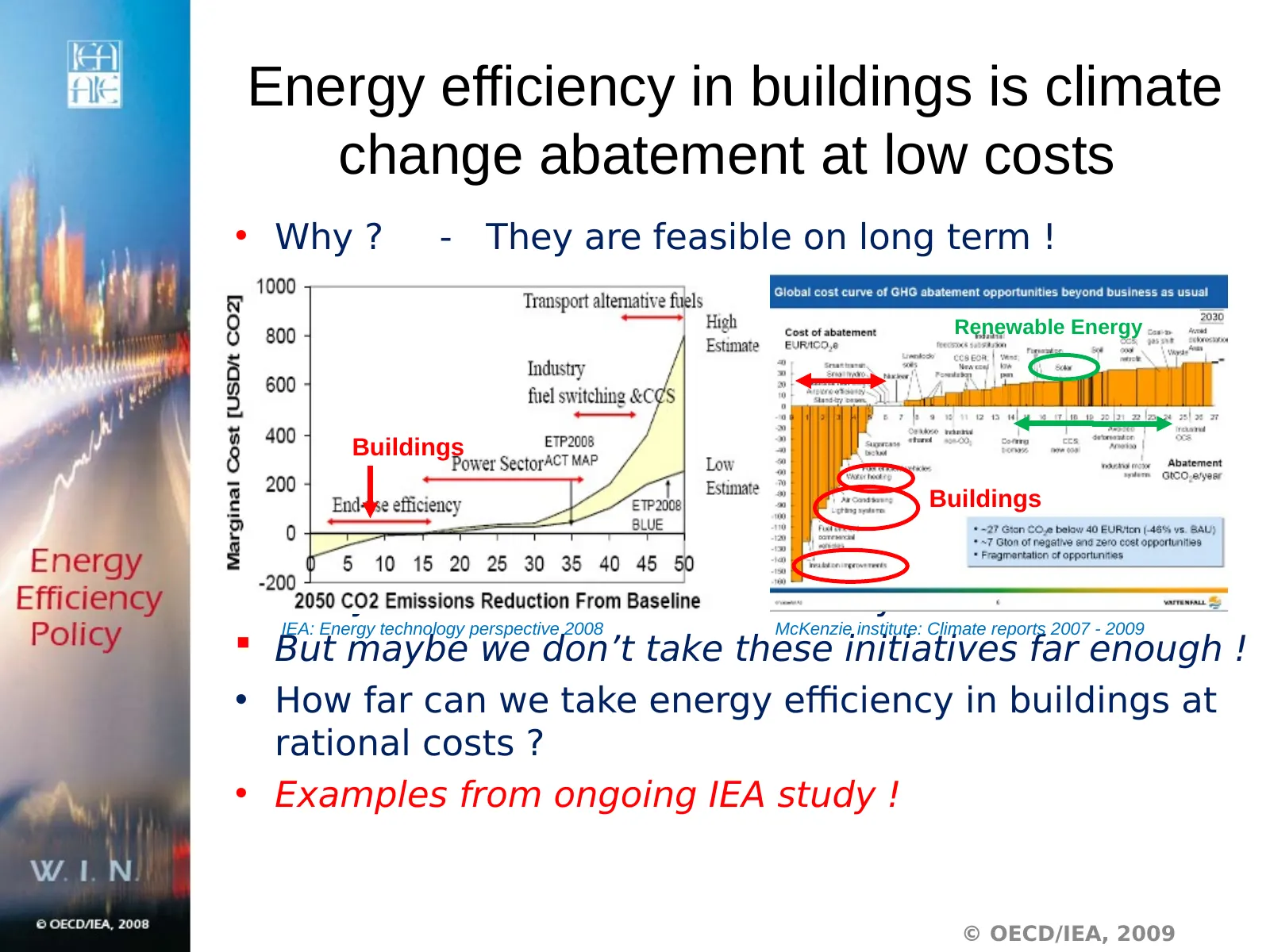
Energy efficiency in buildings is climate change abatement at low costs • Why ? - They are feasible on long term ! Renewable Energy Buildings Buildings Many recent studies shows exactly the same trends ! IEA: Energy technology perspective 2008 McKenzie institute: Climate reports 2007 - 2009 But
Slide 6: Energy use in Buildings
Energy use in Buildings From Waste of Energy to Clean Energy
Slide 7: Blocks of Flats
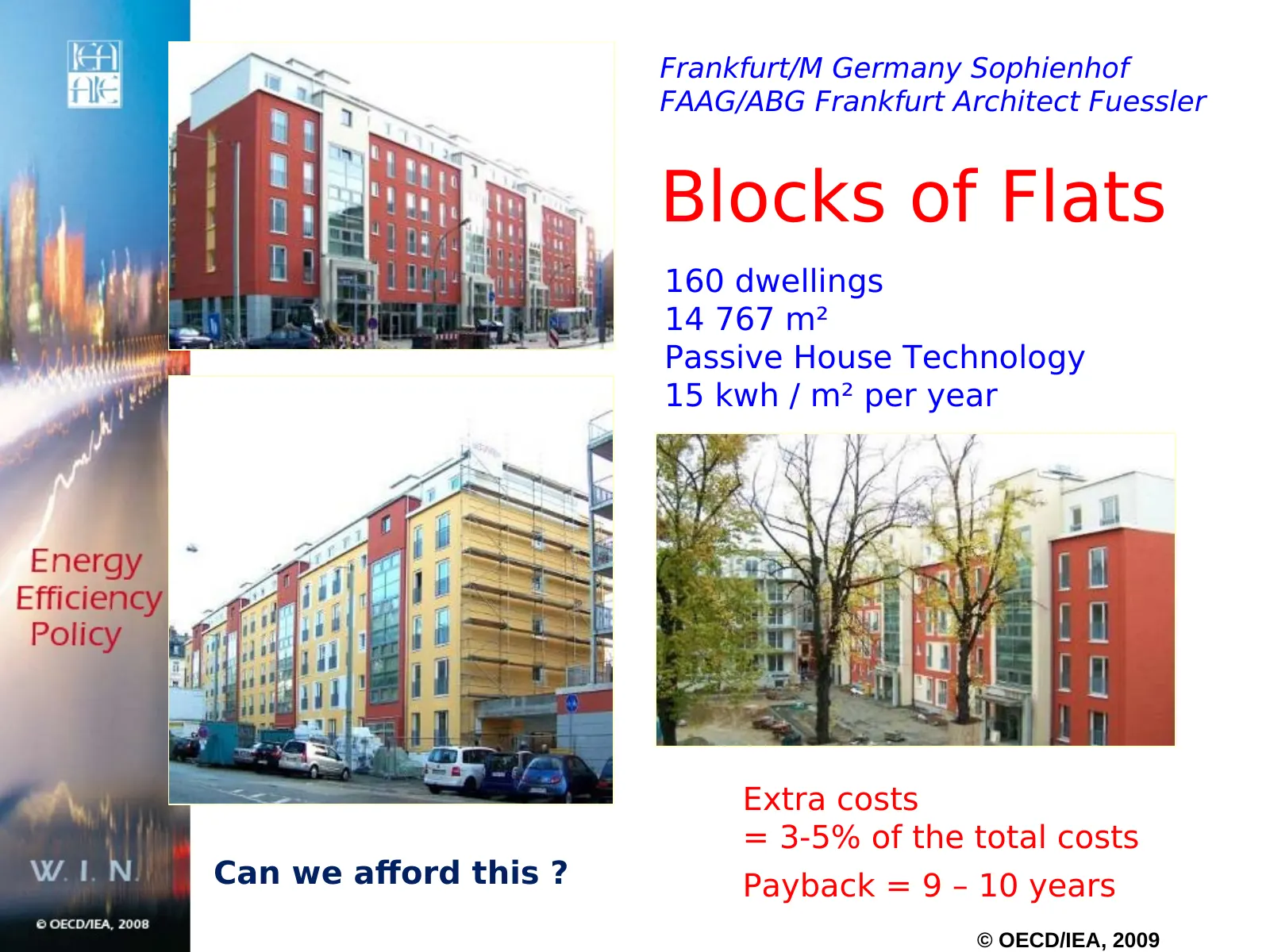
Frankfurt/M Germany Sophienhof FAAG/ABG Frankfurt Architect Fuessler Blocks of Flats 160 dwellings 14 767 m² Passive House Technology 15 kwh / m² per year Extra costs = 3-5% of the total costs Can we afford this ? Payback = 9 – 10 years © OECD/IEA, 2009
Slide 8: Zero Carbon / Zero Energy
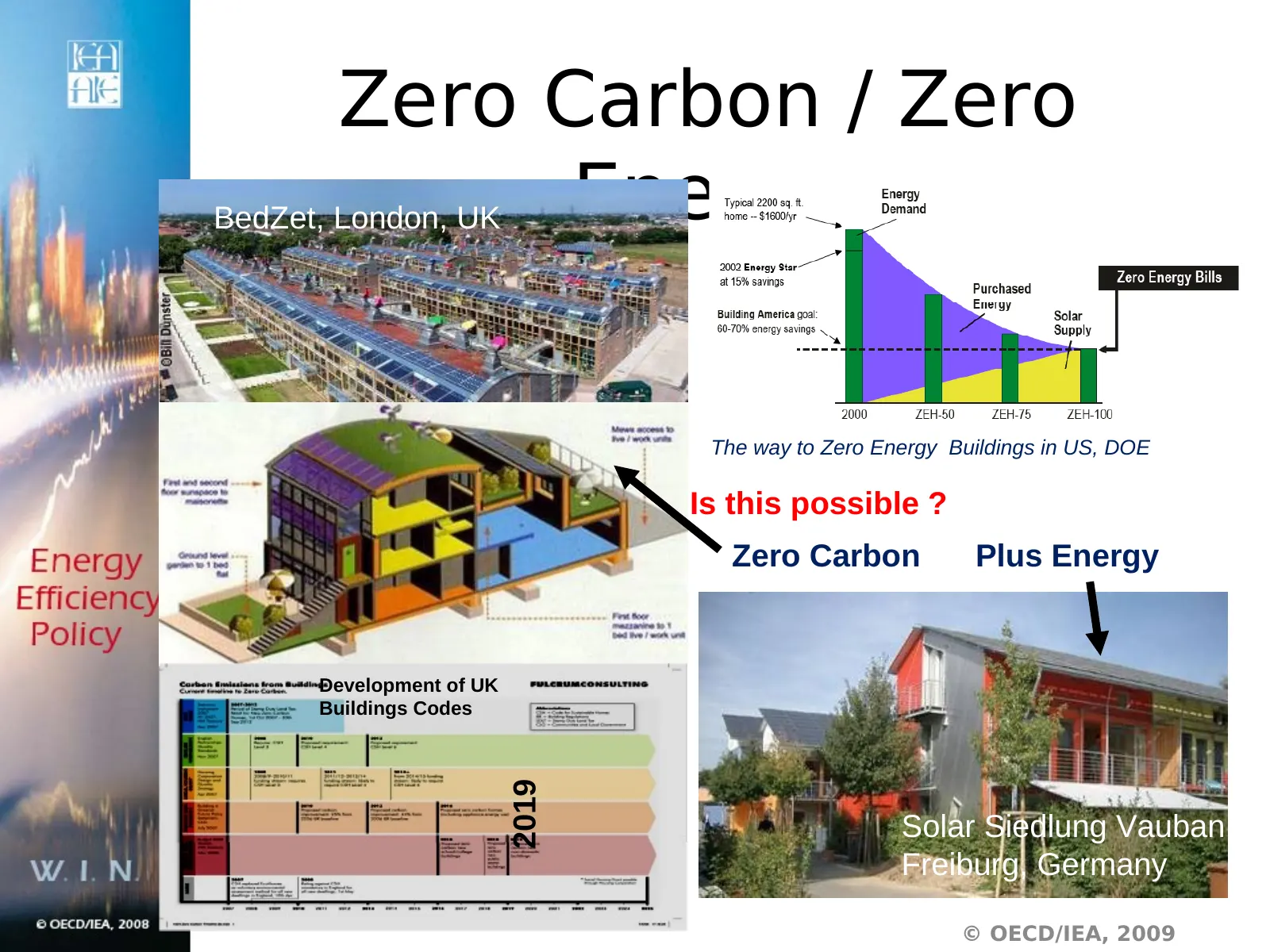
Zero Carbon / Zero BedZet, London, UK Energy The way to Zero Energy Buildings in US, DOE Is this possible ? Zero Carbon Plus Energy Development of UK Buildings Codes 2019 Solar Siedlung Vauban Freiburg, Germany © OECD/IEA, 2009
Slide 9: Building Codes Towards Zero
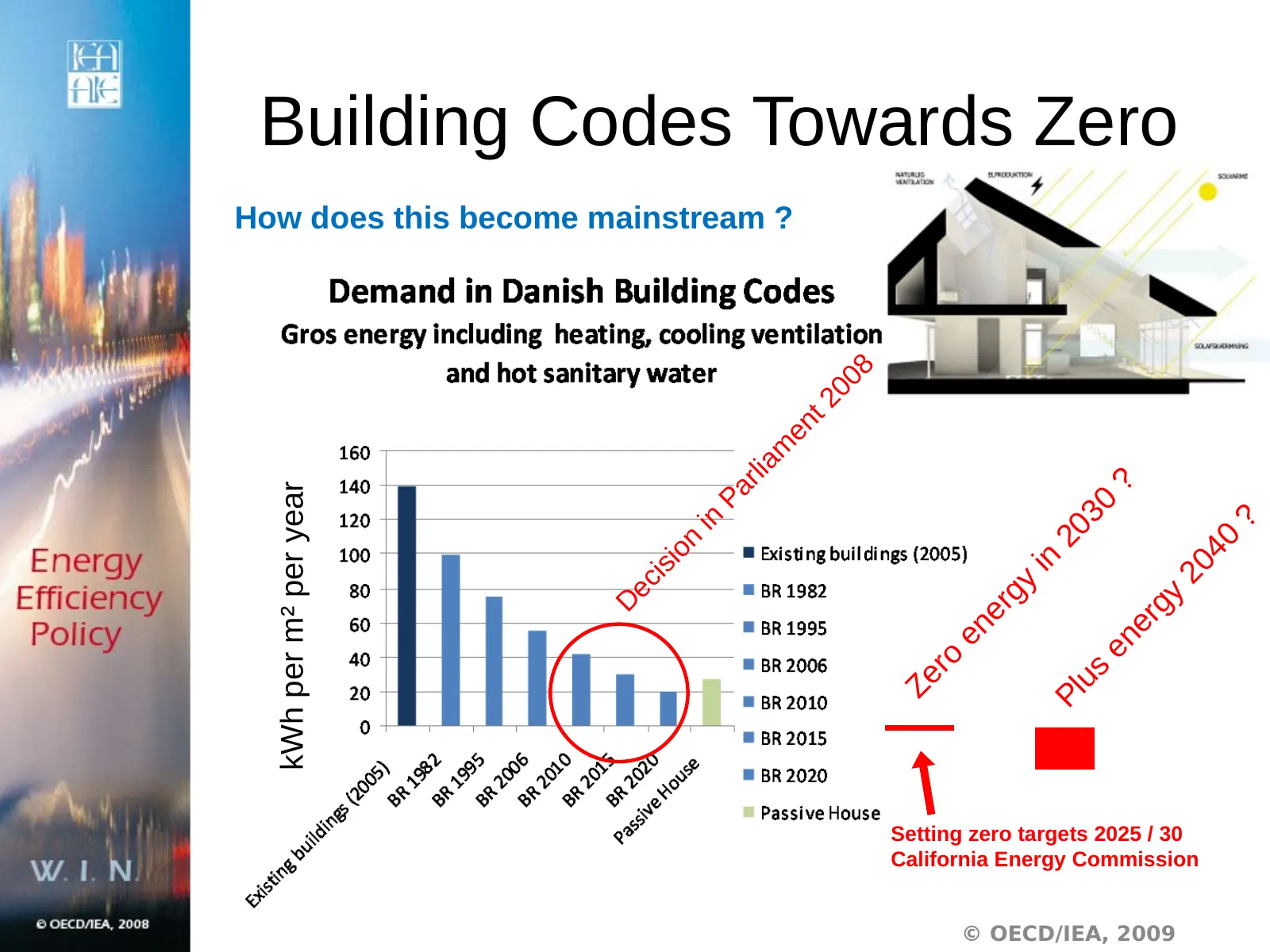
Building Codes Towards Zero How does this become mainstream ? 08 t 20 en am rli ? kWh per m² per year Pa 30 in ? 20 40 n io in 20 is ec gy gy D er er en en o us r Ze Pl Setting zero targets 2025 / 30 California Energy Commission © OECD/IEA, 2009
Slide 10: Factor 10
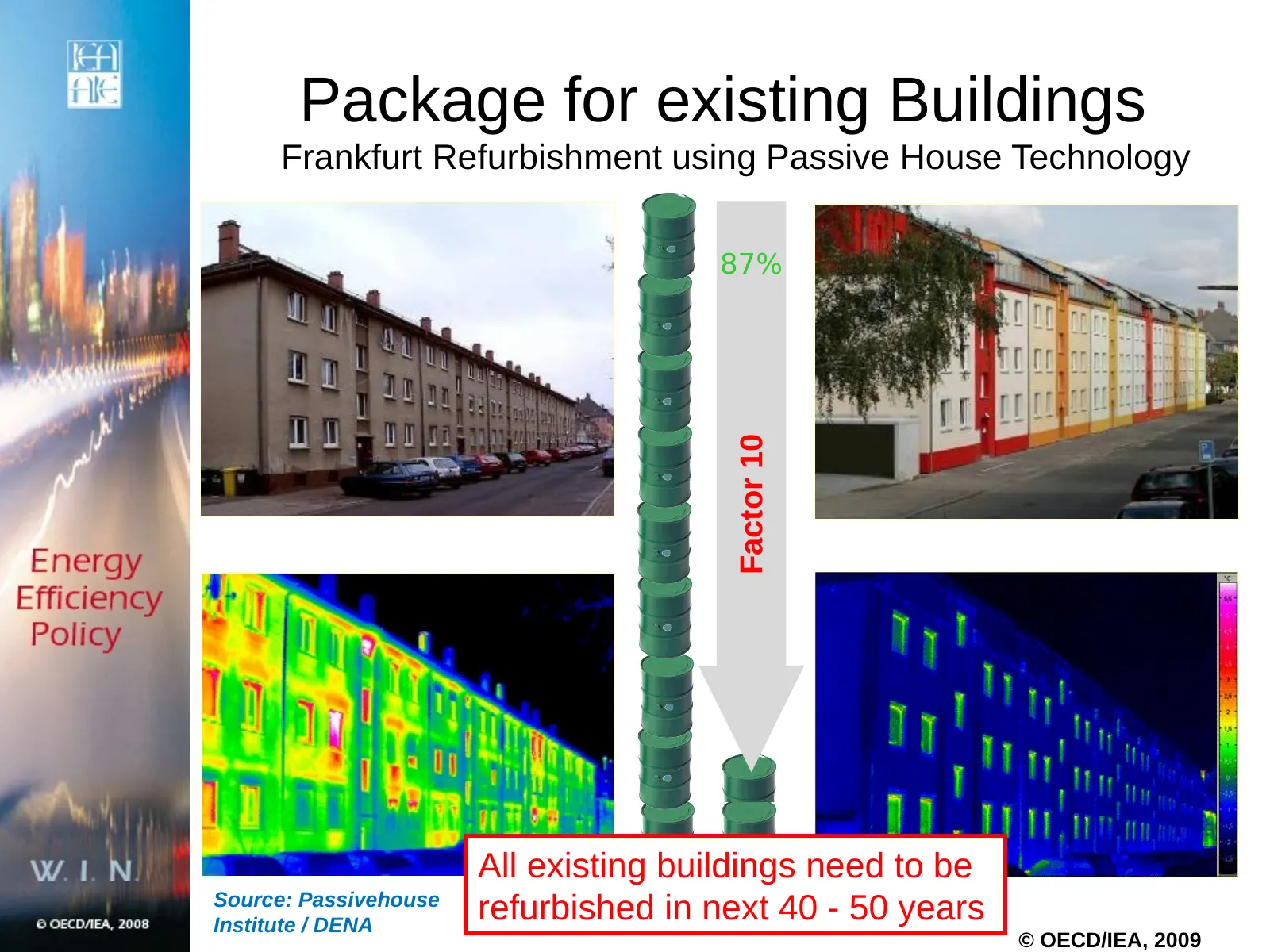
Package for existing Buildings Frankfurt Refurbishment using Passive House Technology 87% Factor 10 All existing buildings need to be Source: Passivehouse Institute / DENA refurbished in next 40 - 50 years © OECD/IEA, 2009
Slide 11: Better than new !
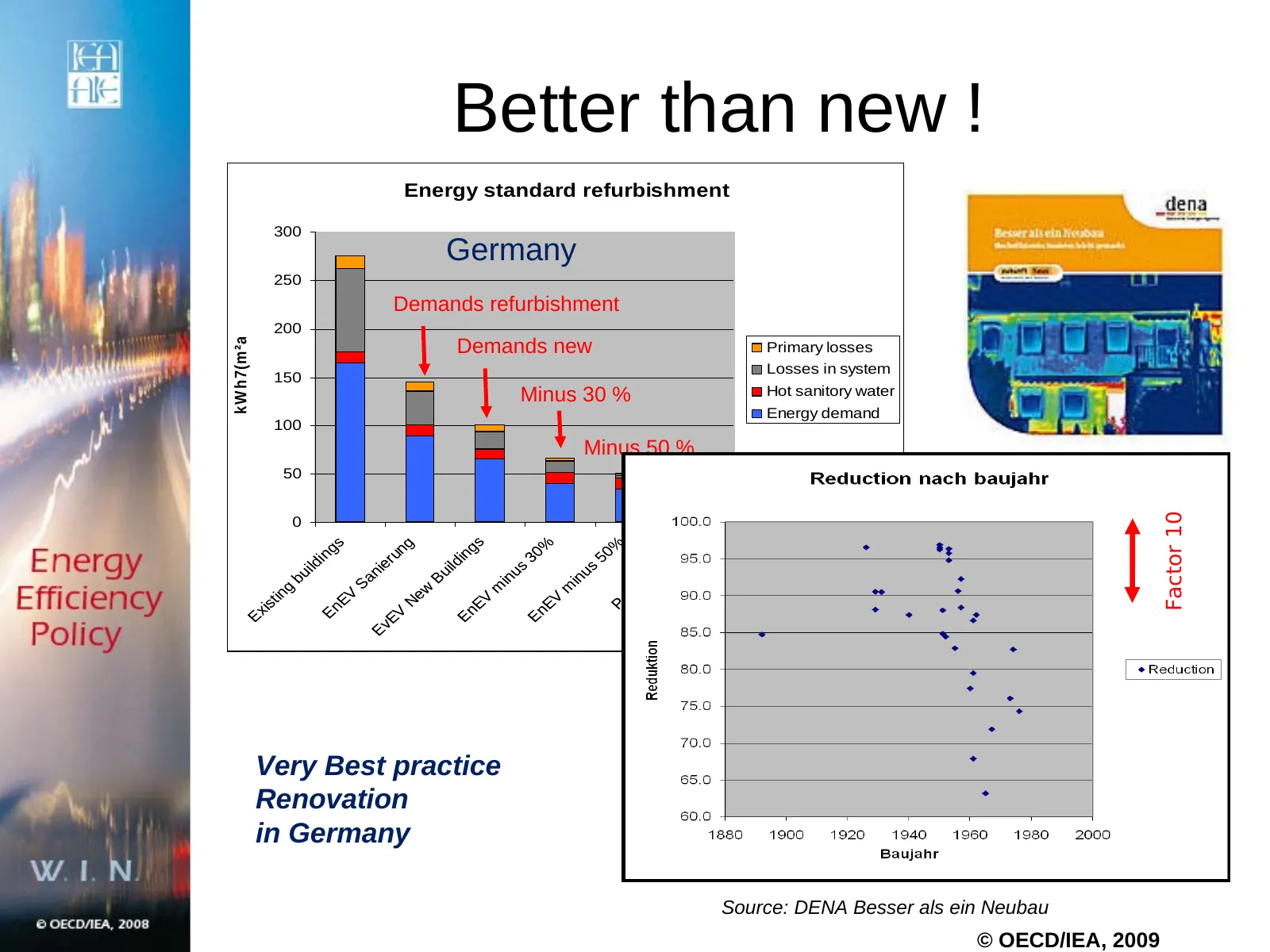
Better than new ! Energy standard refurbishment 300 Germany 250 Demands refurbishment 200 kW h7(m²a) Demands new Primary losses Losses in system 150 Minus 30 % Hot sanitory water Energy demand 100 Minus 50 % 50 Factor 10 0 Very Best practice Renovation in Germany Source: DENA Besser als ein Neubau ©
Slide 12: Better than new !
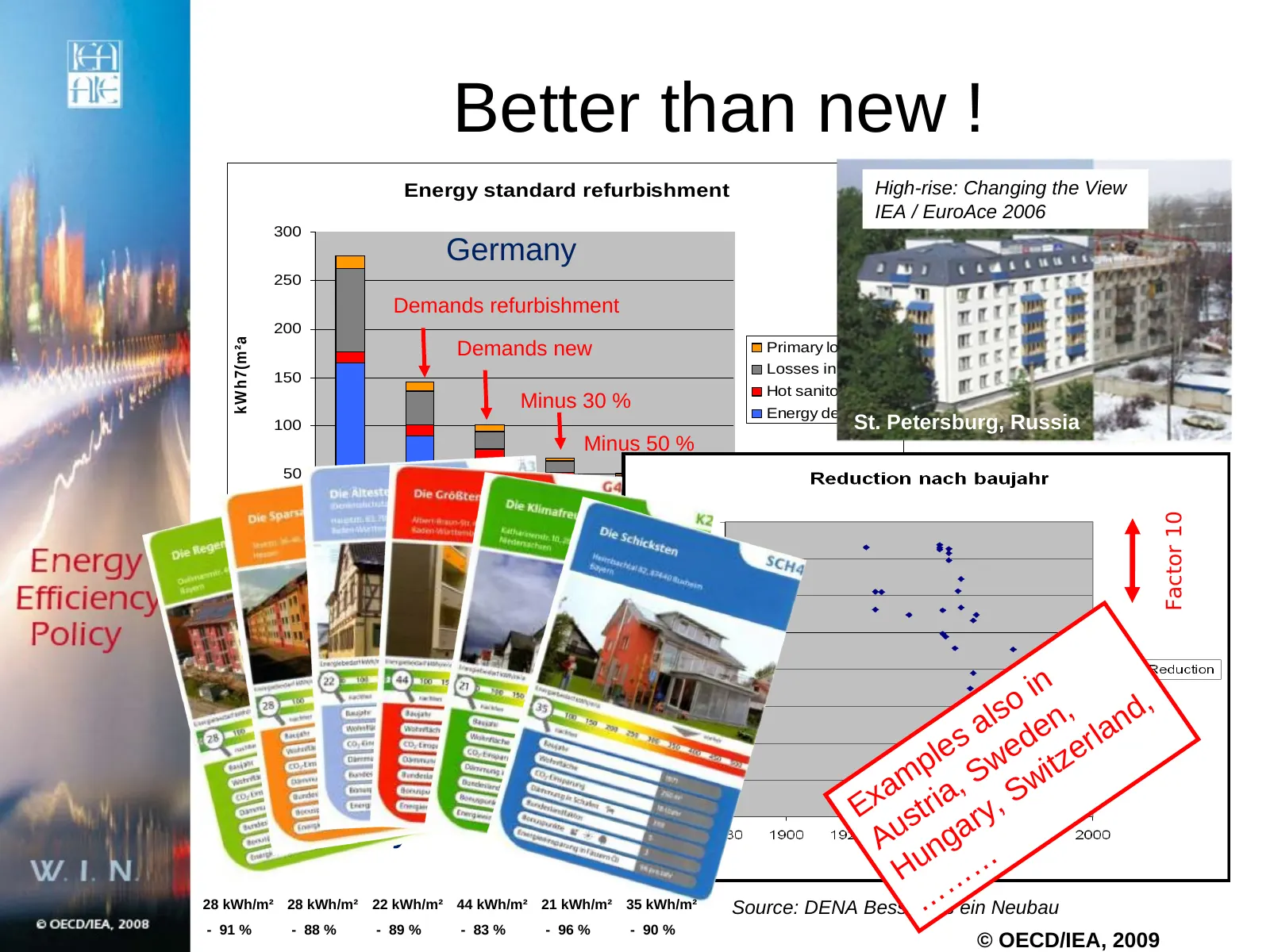
Better than new ! Energy standard refurbishment High-rise: Changing the View IEA / EuroAce 2006 300 Germany Very Best practice 250 Demands refurbishment 200 Renovation kW h7(m²a) Demands new Primary losses in Germany Losses in system 150 Hot sanitory water Factor 10 Minus 30 % Energy demand 100 St.
Slide 13: Demands for products
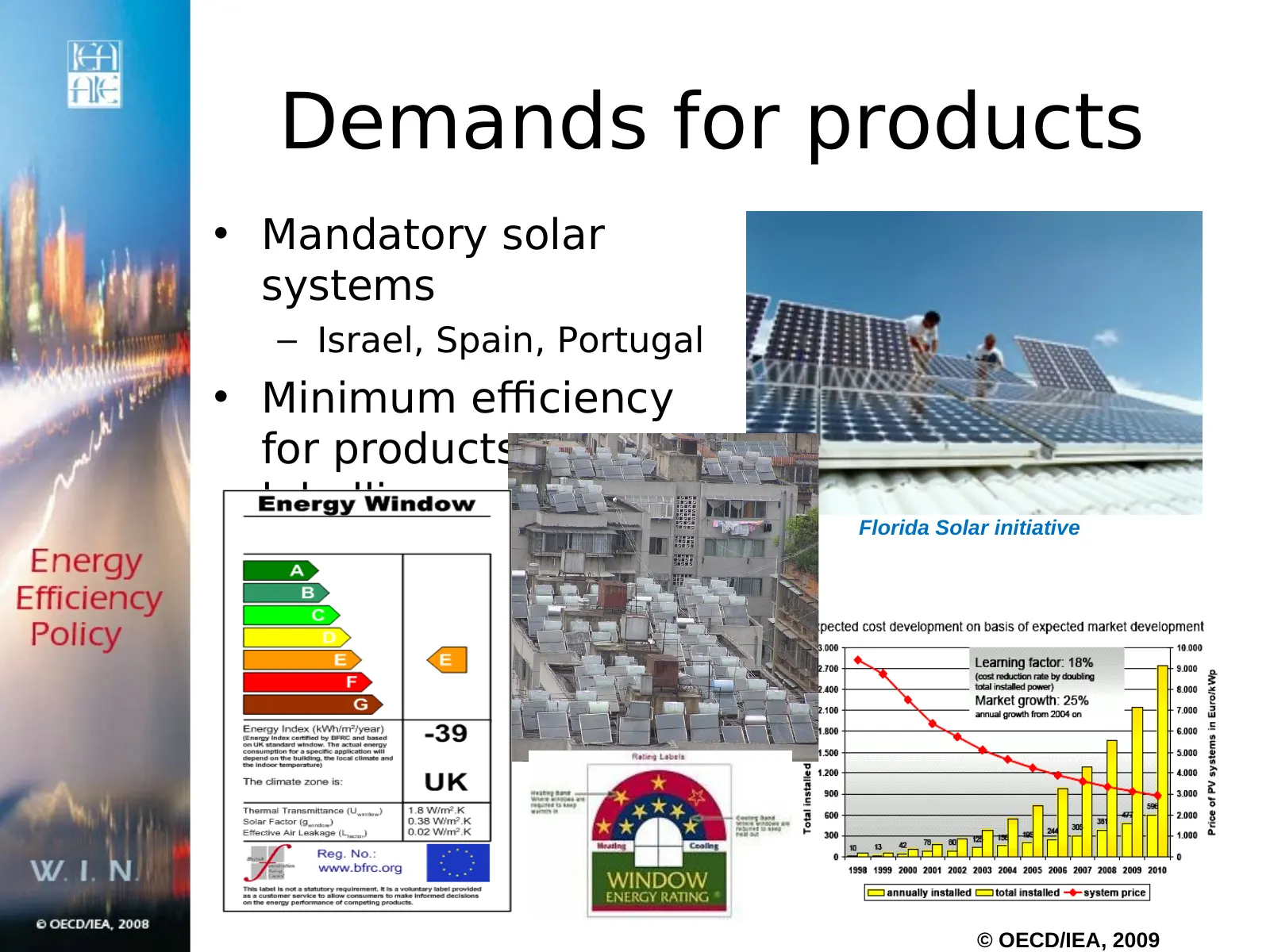
Demands for products • Mandatory solar systems – Israel, Spain, Portugal • Minimum efficiency for products - labelling Florida Solar initiative © OECD/IEA, 2009
Slide 14: Cut Energy Waste
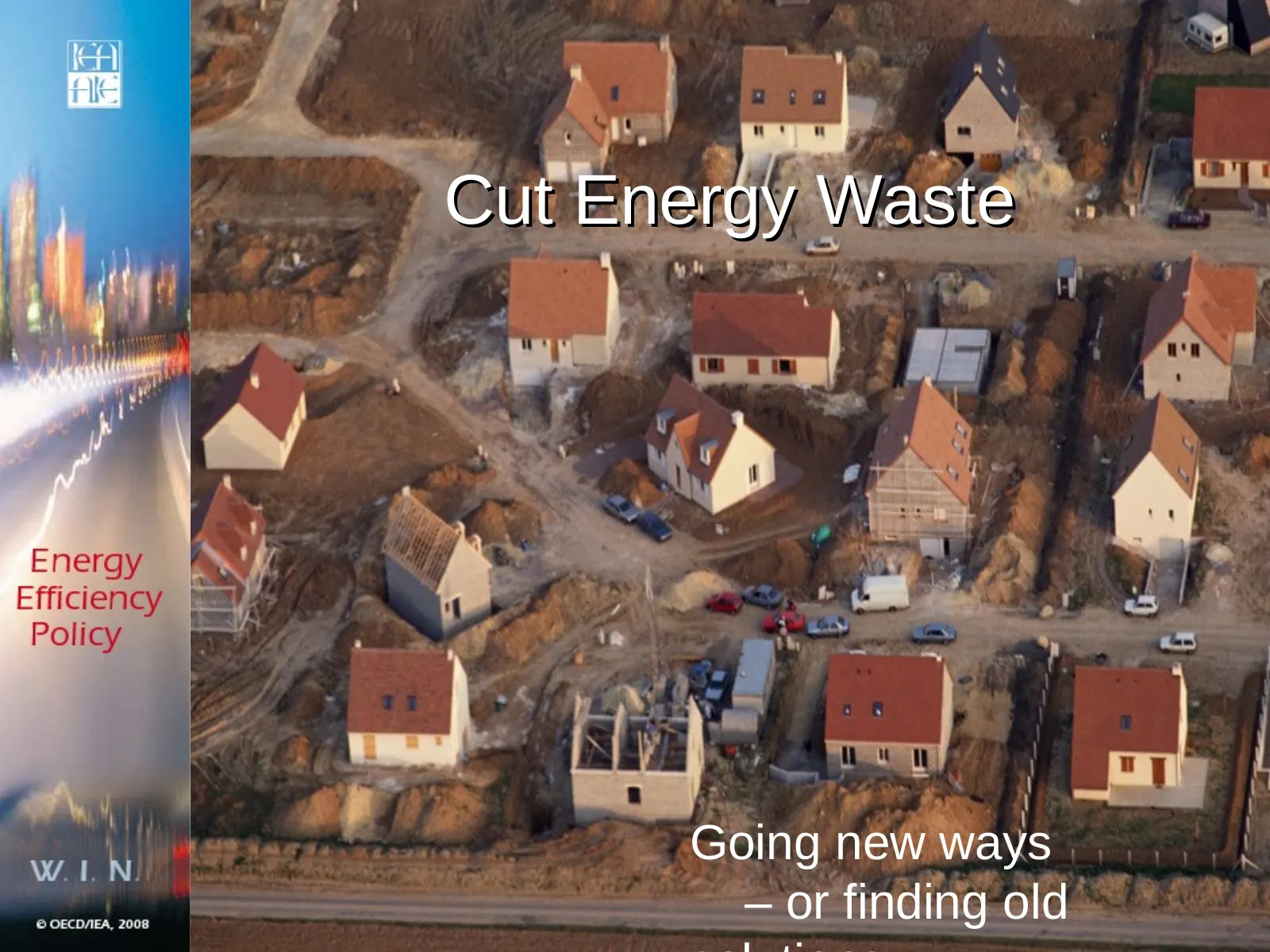
Cut Energy Waste Going new ways – or finding old
Slide 15: Cut energy waste in buildings !
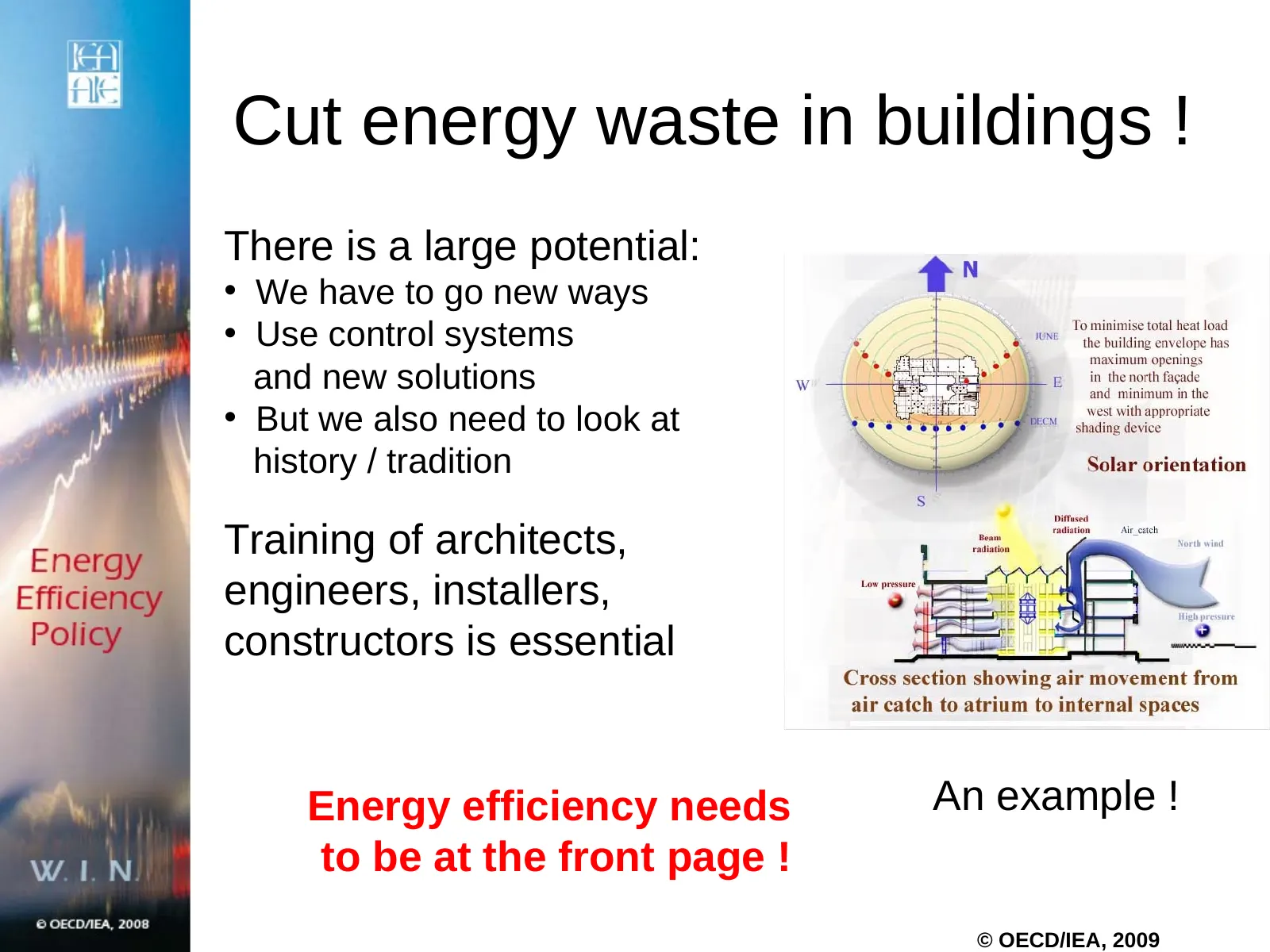
Cut energy waste in buildings ! There is a large potential: • We have to go new ways • Use control systems and new solutions • But we also need to look at history / tradition Training of architects, engineers, installers, constructors is essential Energy efficiency needs An example ! to be at the fr
Slide 16: Generic Architecture
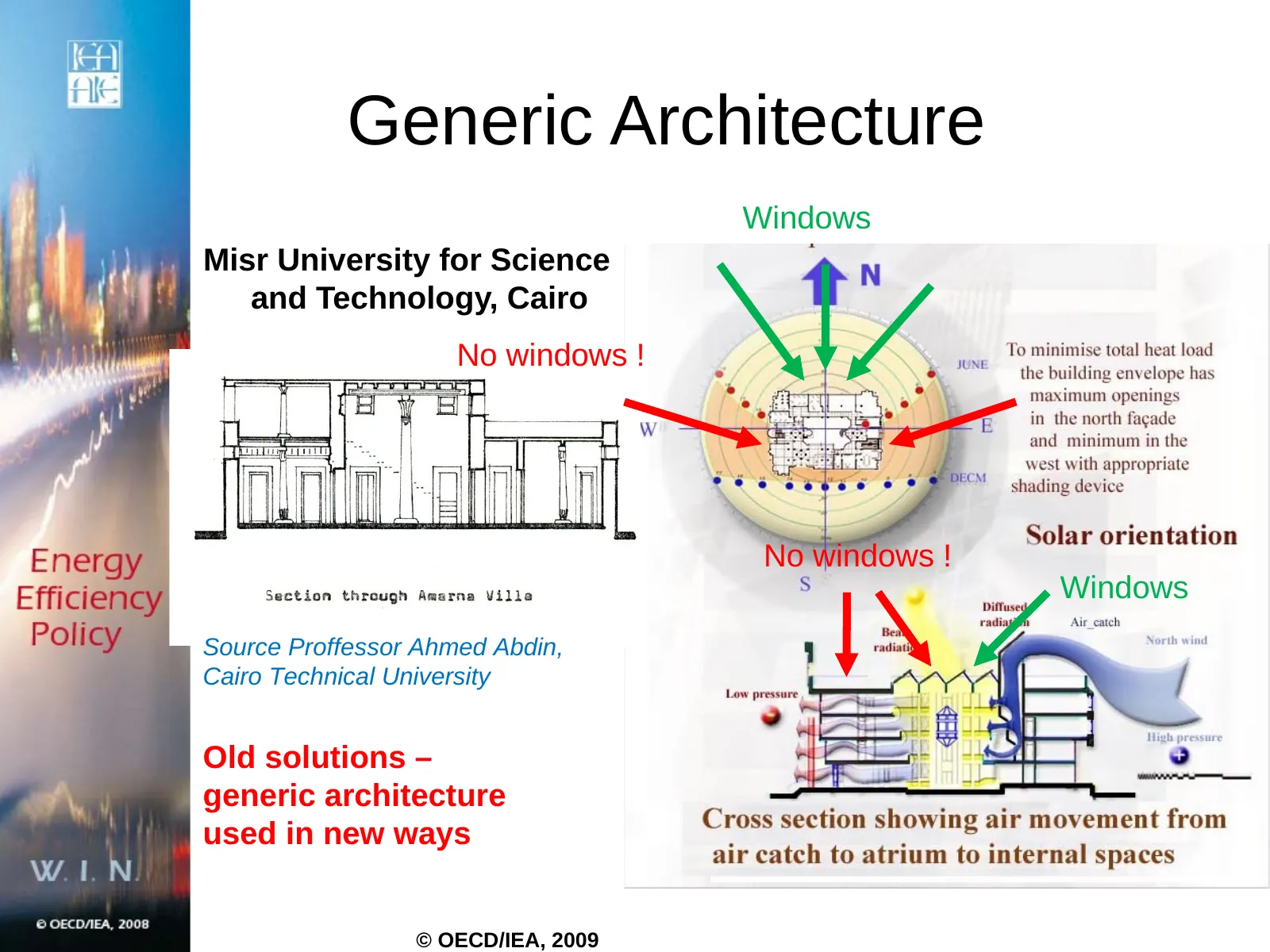
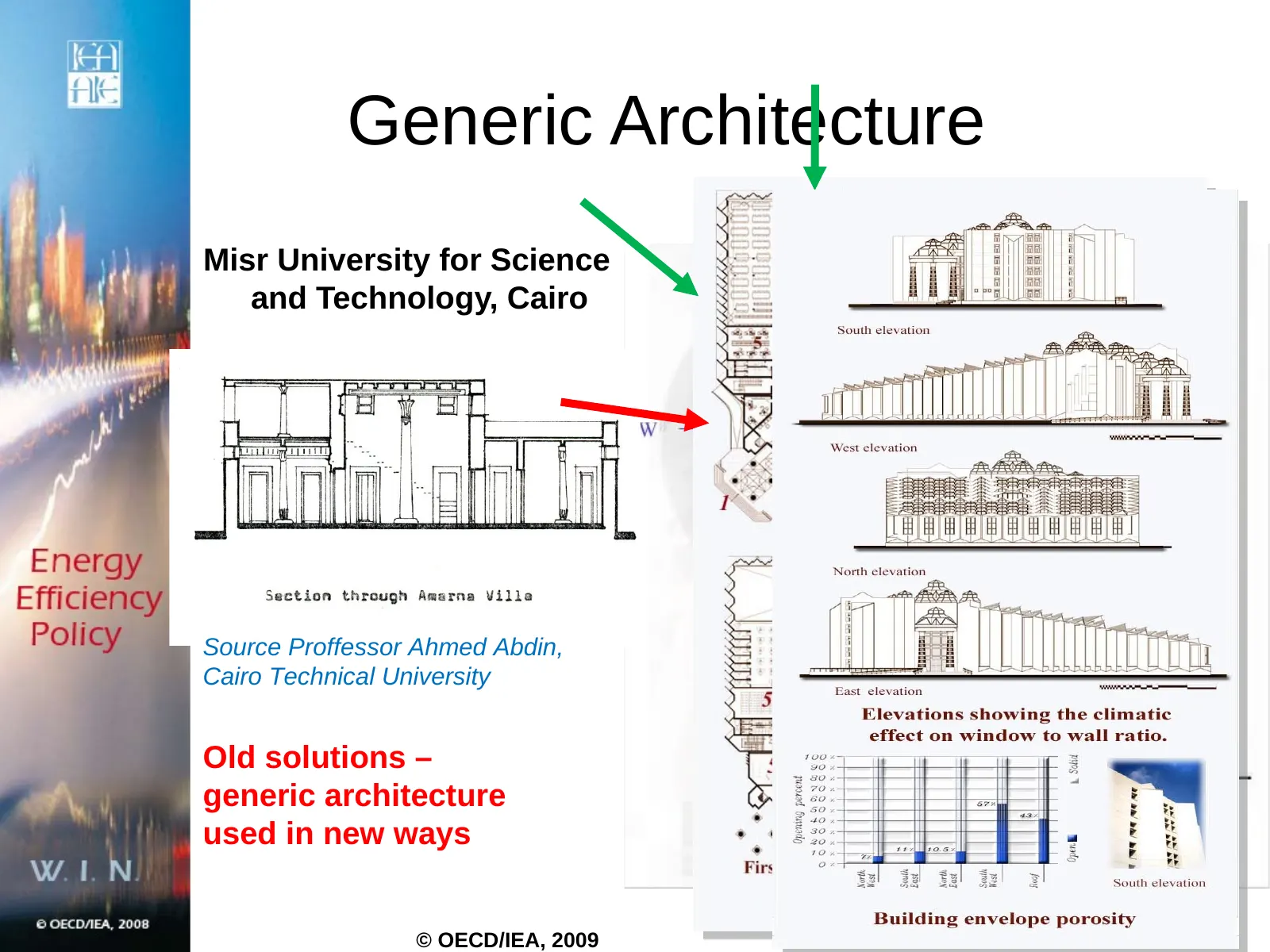
Generic Architecture Windows Misr University for Science and Technology, Cairo No windows ! No windows ! Windows Source Proffessor Ahmed Abdin, Cairo Technical University Old solutions – generic architecture used in new ways © OECD/IEA, 2009
Slide 17: Generic Architecture
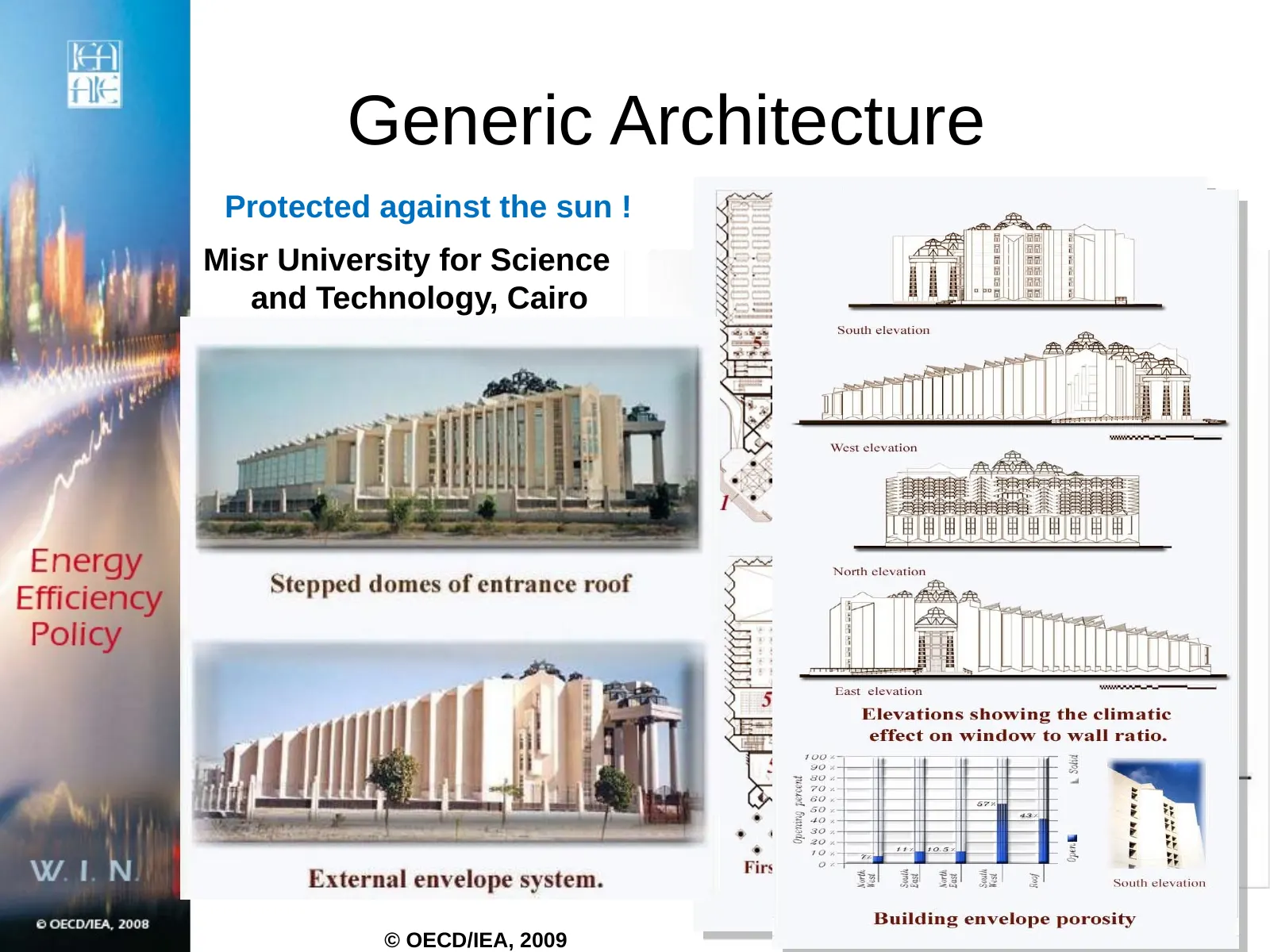
Generic Architecture Misr University for Science and Technology, Cairo Source Proffessor Ahmed Abdin, Cairo Technical University Old solutions – generic architecture used in new ways © OECD/IEA, 2009
Slide 18: Generic Architecture
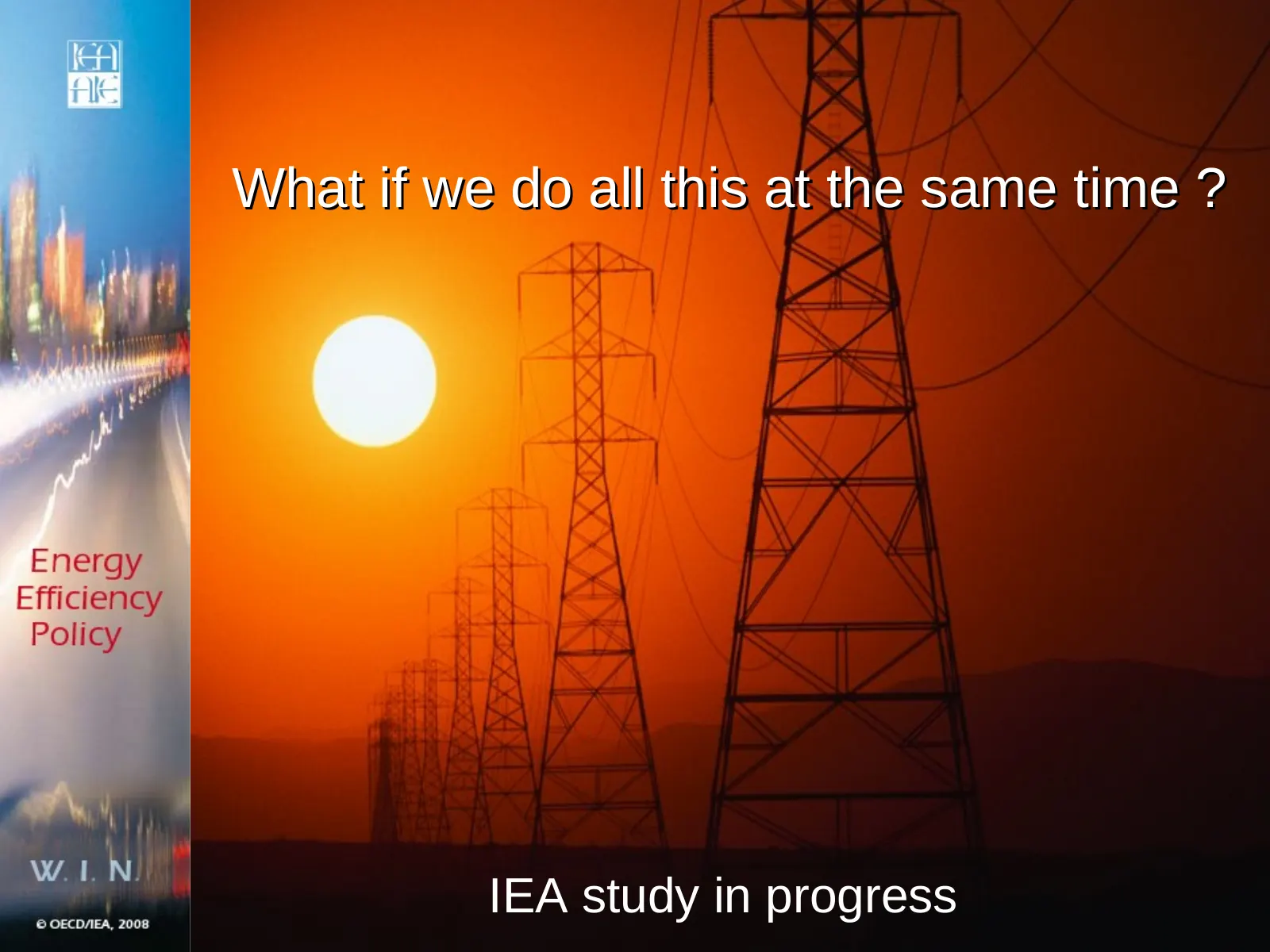
Generic Architecture Protected against the sun ! Misr University for Science and Technology, Cairo Source Proffessor Ahmed Abdin, Cairo Technical University Old solutions – generic architecture used in new ways But using sunlight ! © OECD/IEA, 2009
Slide 19: What if we do all this at the same time ?
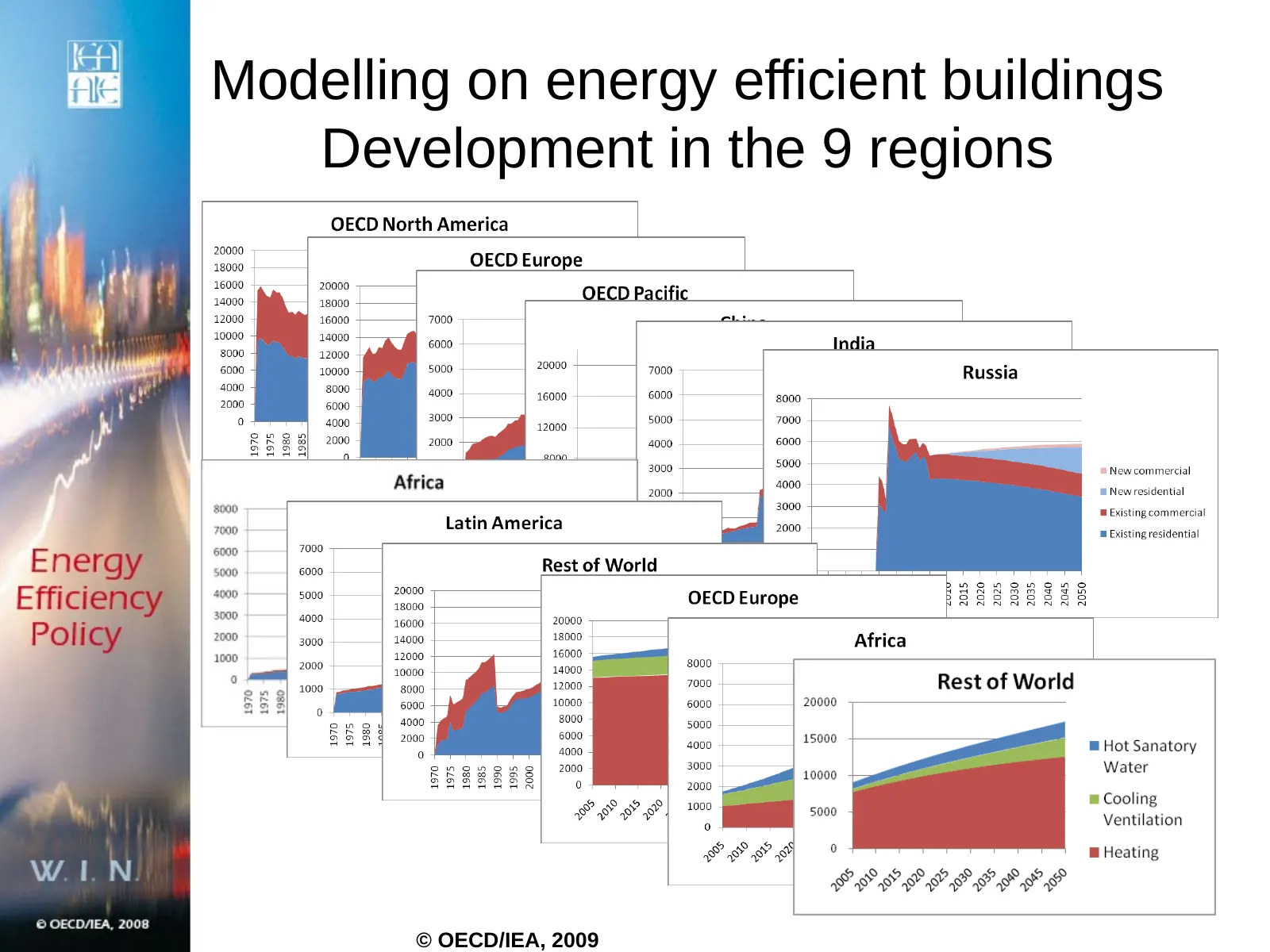
What if we do all this at the same time ? IEA study in progress
Slide 20: Modelling on energy efficient buildings
Modelling on energy efficient buildings Development in the 9 regions © OECD/IEA, 2009
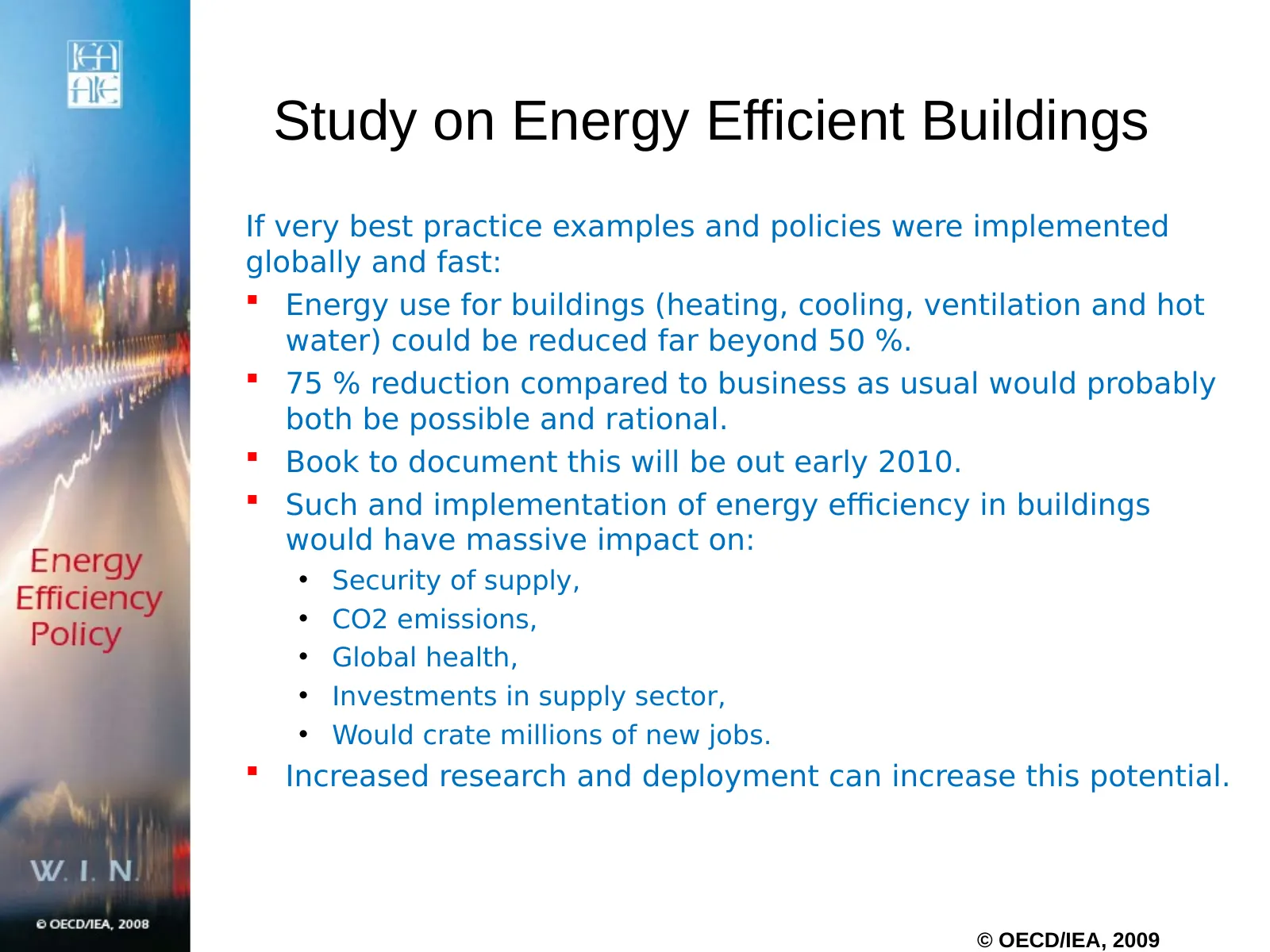
Slide 21: Study on Energy Efficient Buildings
Study on Energy Efficient Buildings If very best practice examples and policies were implemented globally and fast: Energy use for buildings (heating, cooling, ventilation and hot water) could be reduced far beyond 50 %. 75 % reduction compared to business as usual would probably both be possibl
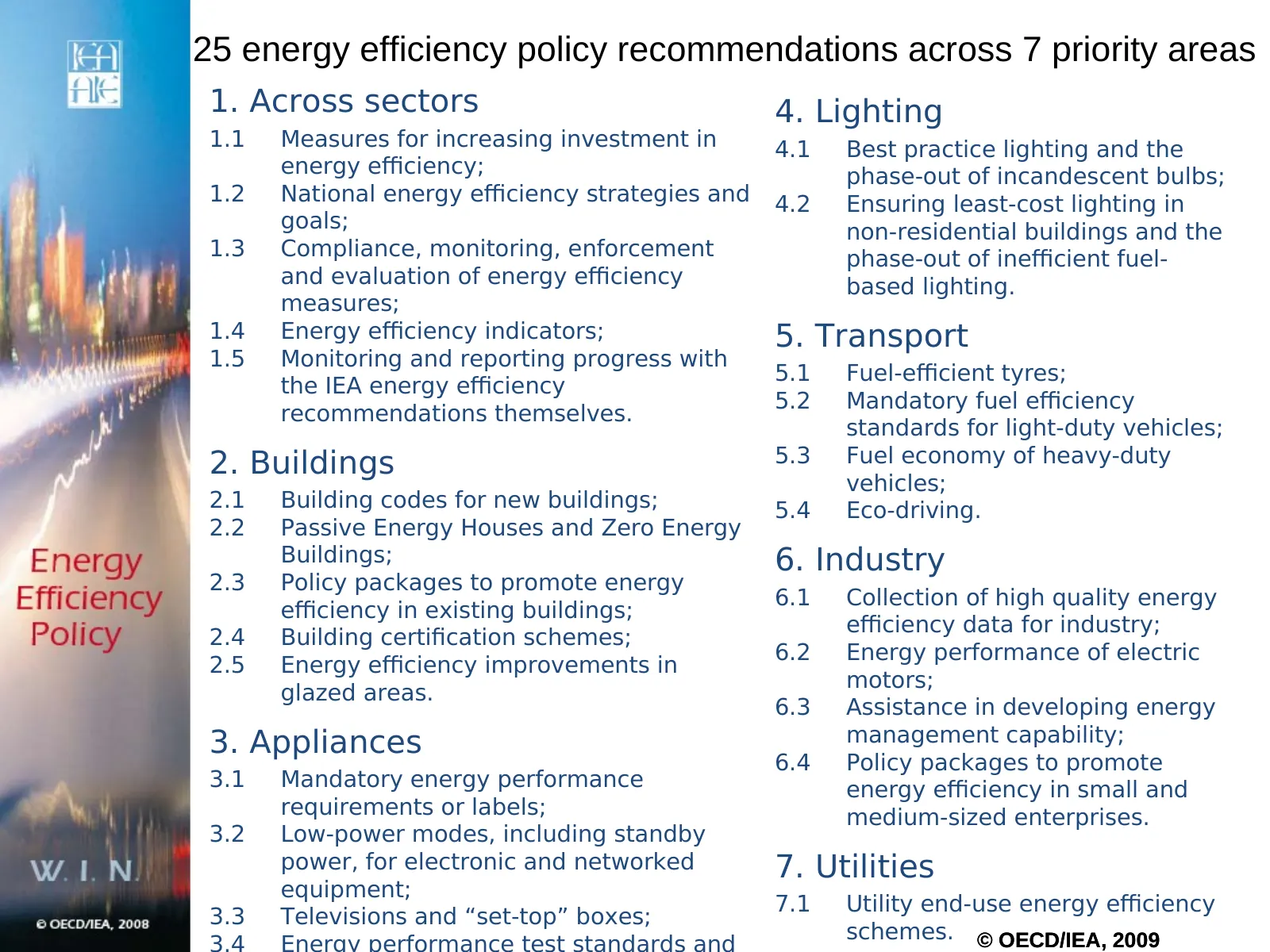
Slide 22: 25 energy efficiency policy recommendations across 7 priority areas
25 energy efficiency policy recommendations across 7 priority areas 1. Across sectors 4. Lighting 1.1 Measures for increasing investment in 4.1 Best practice lighting and the energy efficiency; phase-out of incandescent bulbs; 1.2 National energy efficiency strategies and 4.2 Ensuring least-cost lig
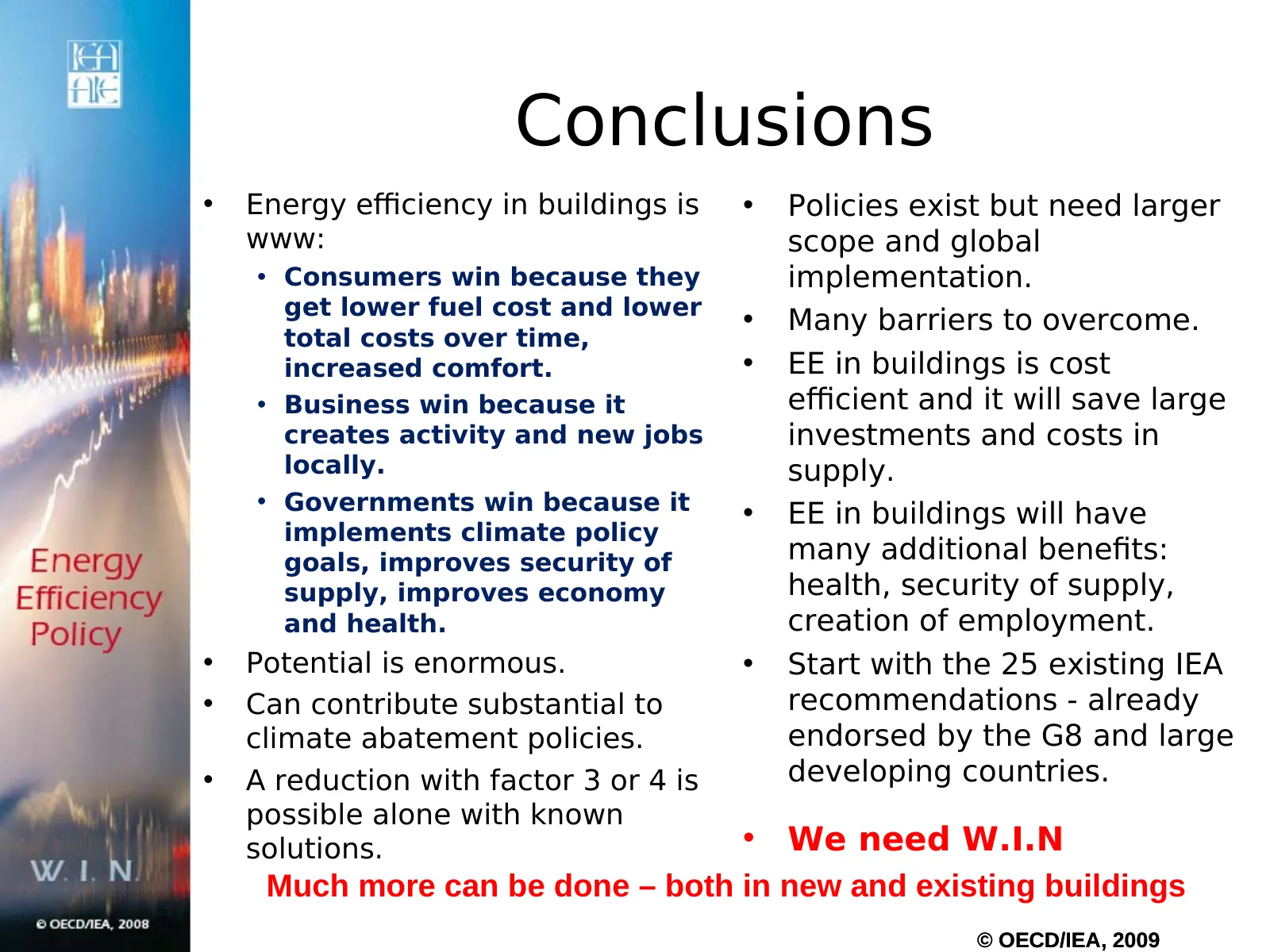
Slide 23: Conclusions
Conclusions • Energy efficiency in buildings is • Policies exist but need larger www: scope and global • Consumers win because they implementation. get lower fuel cost and lower • Many barriers to overcome. total costs over time, increased comfort. • EE in buildings is cost • Business win because it
Slide 24: Thank you
Thank you For more information buildings and recommendations: www.iea.org www.iea.org/G8/2008/G8_EE_recommendations.pdf Contact: Jens.Laustsen@iea.org Efficiencyinfo@iea.org
Source: Internet Archive copy of rockwool.com
More decks from Rockwool A/S Class A
 Q2 2026 Earnings Presentation19 slides · Aug 20, 2026
 Q1 2026 Earnings Presentation15 slides · May 20, 2026
 Shareholder Meeting (2026)10 slides · Apr 15, 2026
 Shareholder Meeting (April 2026)46 slides · Apr 15, 2026
 Q4 2025 Earnings Presentation19 slides · Feb 5, 2026
 Q2 2025 Earnings Presentation17 slides · Aug 21, 2025