Huron Consulting Group Inc. · NASDAQ:HURN
Huron Consulting — Research Shared Services Webinar (November 2015)
28 slides from Huron Consulting's conference presentation, Nov 19, 2015

Slide 1: Research Shared Services: A Case Study in Implementation
Research Shared Services: A Case Study in Implementation November 19th, 2015 YOUR MISSION | OUR SOLUTIONS © Huron Consulting Group Inc. All Rights Reserved. Huron is a management consulting firm and not a CPA firm, and does not provide attest services, audits, or other engagements in accordance with

Slide 2: Our Presenters
Our Presenters Jenna Lee Director P 312.823.8381 jlee@huronconsultinggroup.com Jenna has served in interim leadership positions and as a business advisor to universities and academic medical centers across the country. Jenna focuses on research administration transformation and her areas of expertis
Slide 3: Agenda
Agenda • Overview • Thomas Jefferson University – The Research Shared Service Opportunity • Making the Business Case • High-Level Steps for Implementation • Lessons Learned • Q&A 3
Slide 4: Poll Question
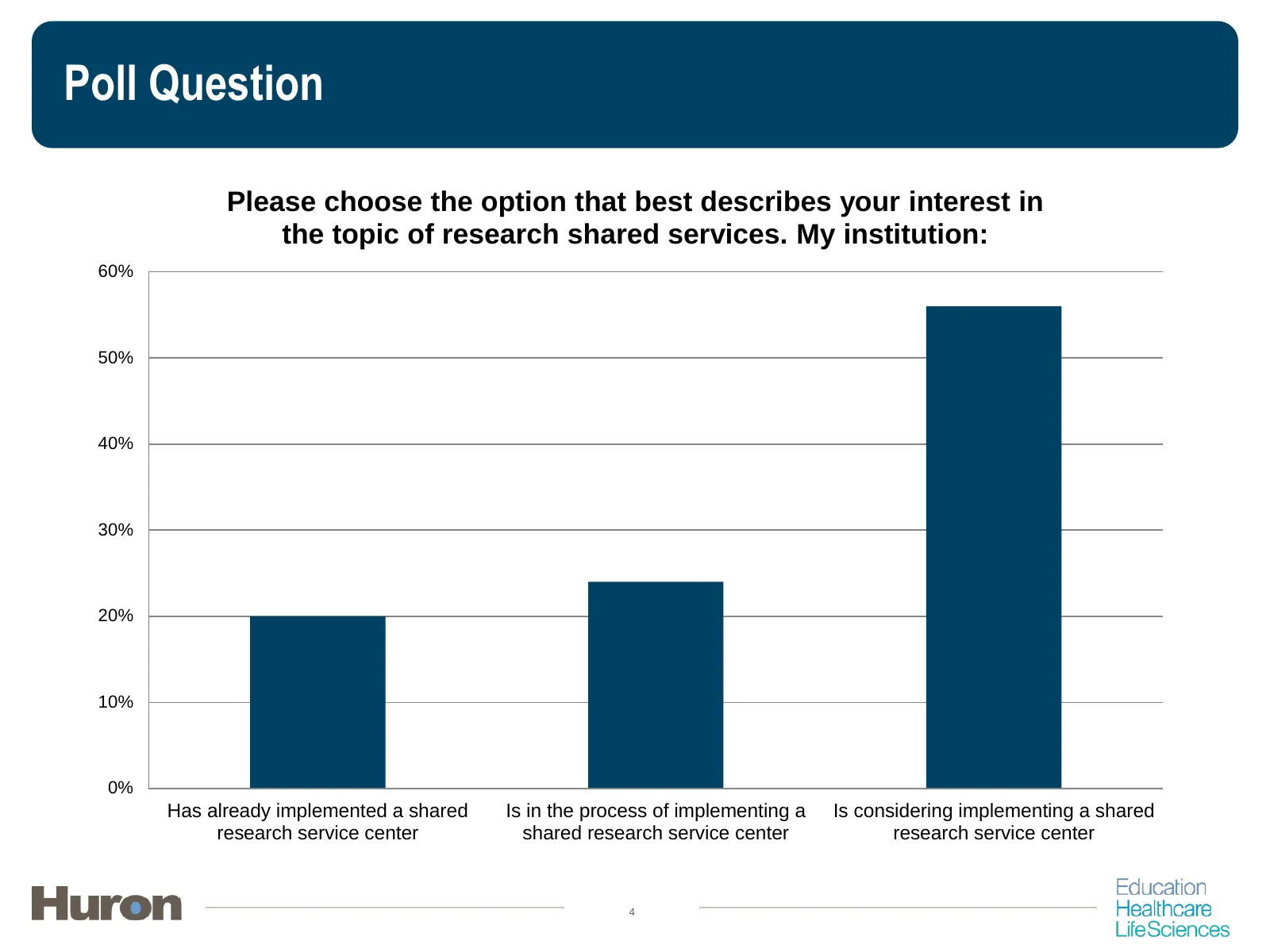
Poll Question Please choose the option that best describes your interest in the topic of research shared services. My institution: 60% 50% 40% 30% 20% 10% 0% Has already implemented a shared Is in the process of implementing a Is considering implementing a shared research service center shared resea

Slide 5: Overview
Overview
Slide 6: Overview: Key Components of Research Shared Services
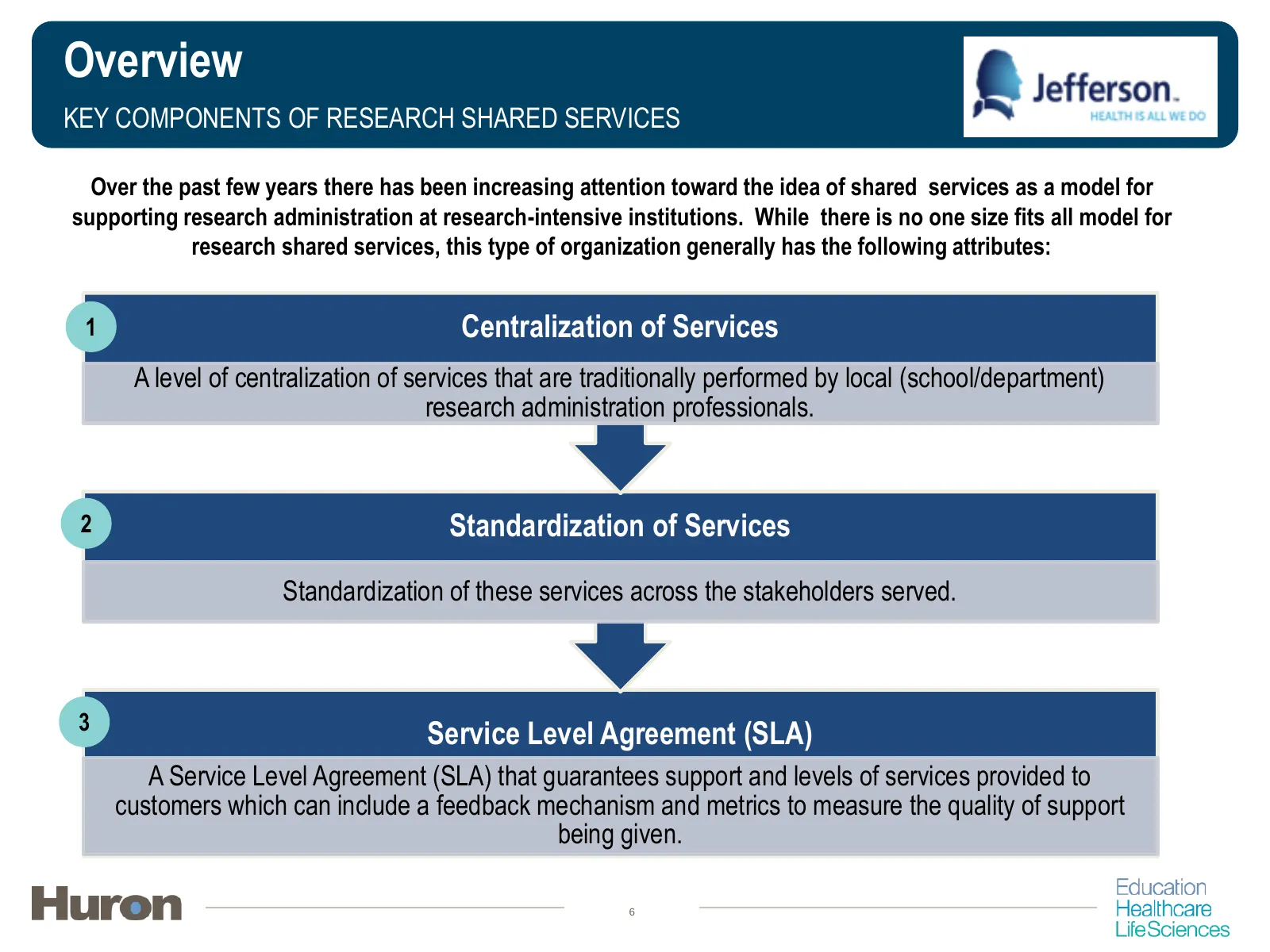
Overview KEY COMPONENTS OF RESEARCH SHARED SERVICES Over the past few years there has been increasing attention toward the idea of shared services as a model for supporting research administration at research-intensive institutions. While there is no one size fits all model for research shared servi
Slide 7: Overview: Differentiation from Central and Unit-Based Services
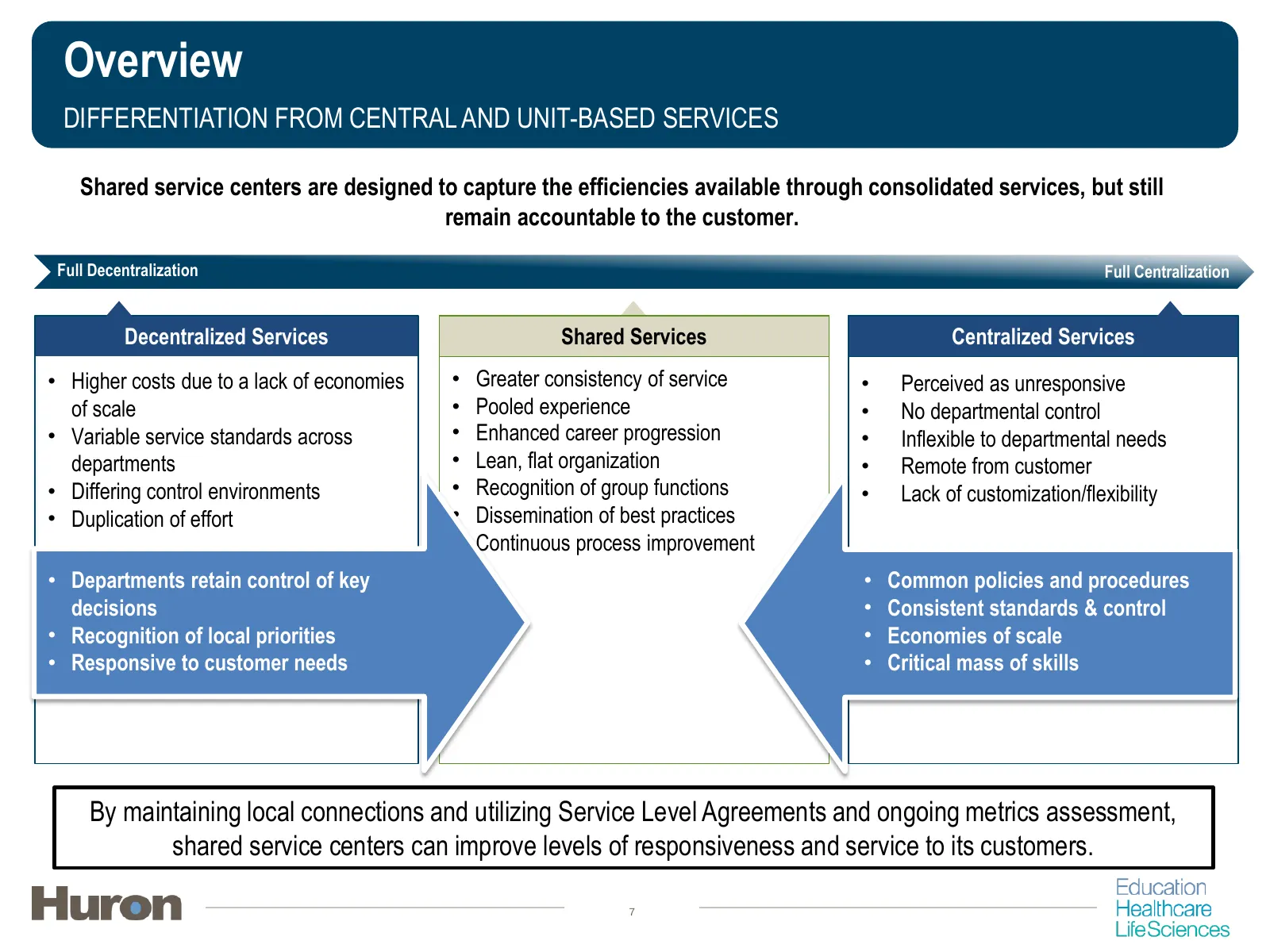
Overview DIFFERENTIATION FROM CENTRAL AND UNIT-BASED SERVICES Shared service centers are designed to capture the efficiencies available through consolidated services, but still remain accountable to the customer. Full Decentralization Full Centralization Decentralized Services Shared Services Centra
Slide 8: Overview: Research Administration Roles in a Shared Service Center
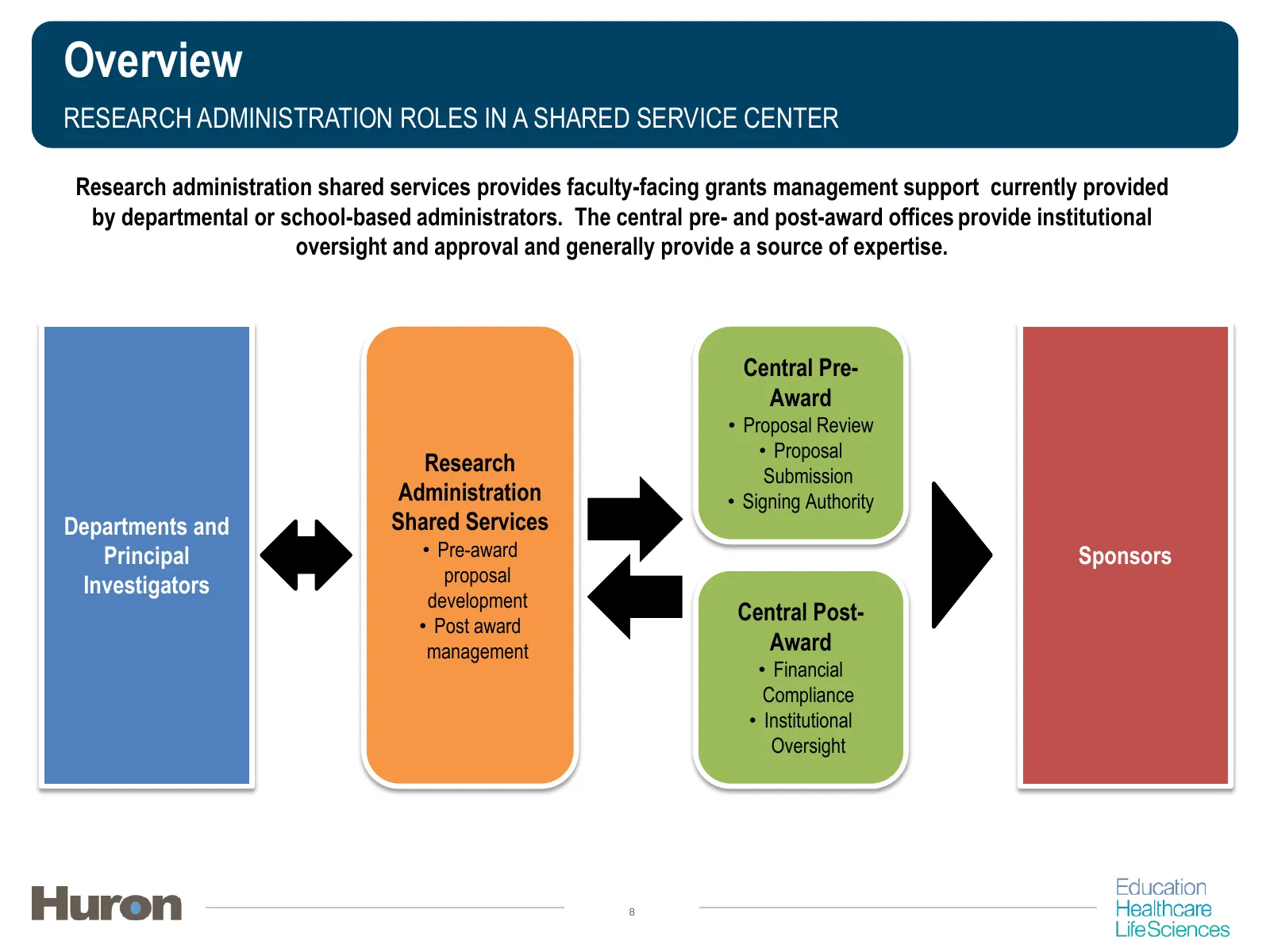
Overview RESEARCH ADMINISTRATION ROLES IN A SHARED SERVICE CENTER Research administration shared services provides faculty-facing grants management support currently provided by departmental or school-based administrators. The central pre- and post-award offices provide institutional oversight and a
Slide 9: Overview: Illustrative Models
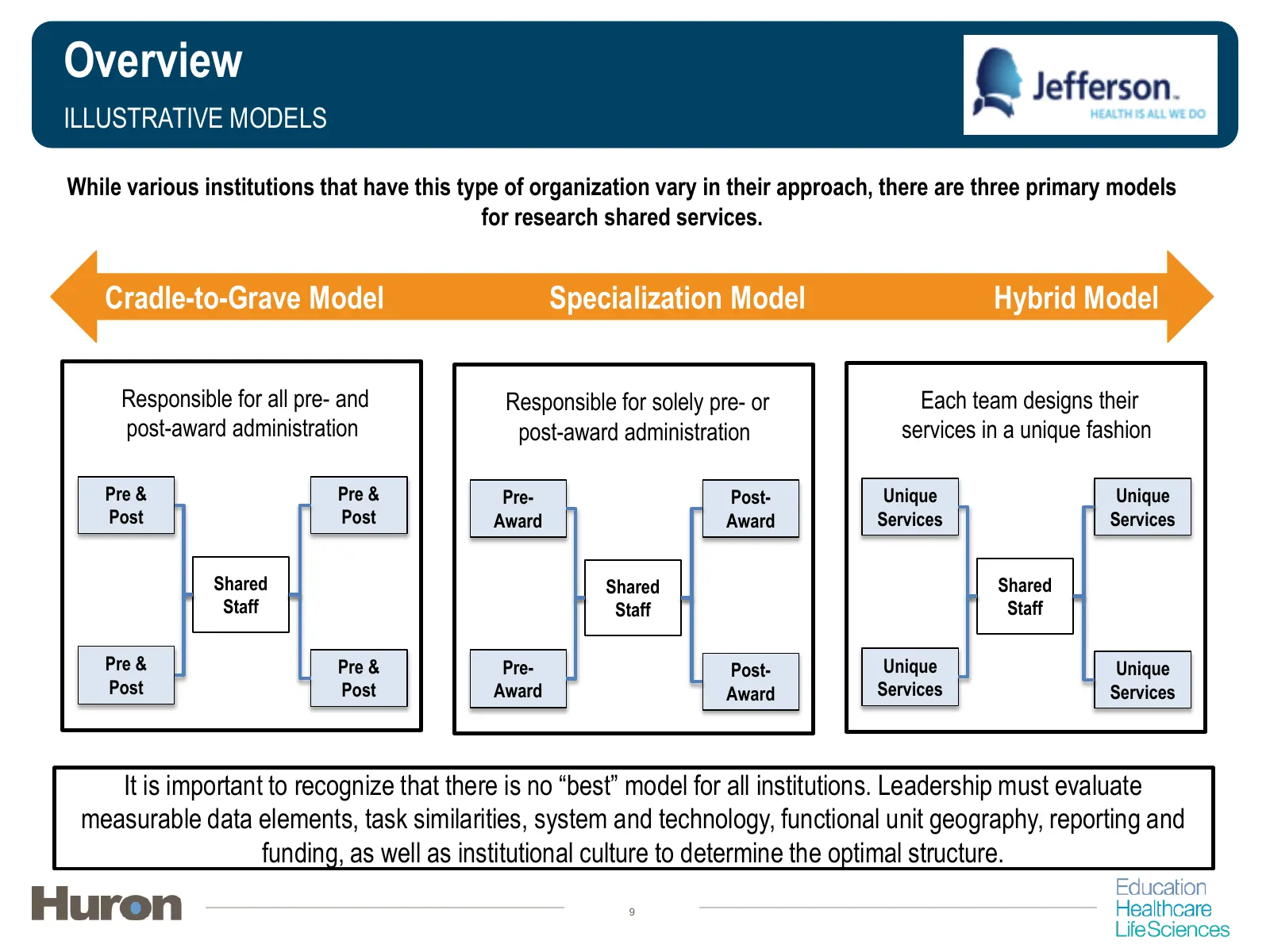
Overview ILLUSTRATIVE MODELS While various institutions that have this type of organization vary in their approach, there are three primary models for research shared services. Cradle-to-Grave Model Specialization Model Hybrid Model Responsible for all pre- and Responsible for solely pre- or Each te

Slide 10: Thomas Jefferson University – The Research Shared Service Opportunity
Thomas Jefferson University – The Research Shared Service Opportunity
Slide 11: Thomas Jefferson University Overview
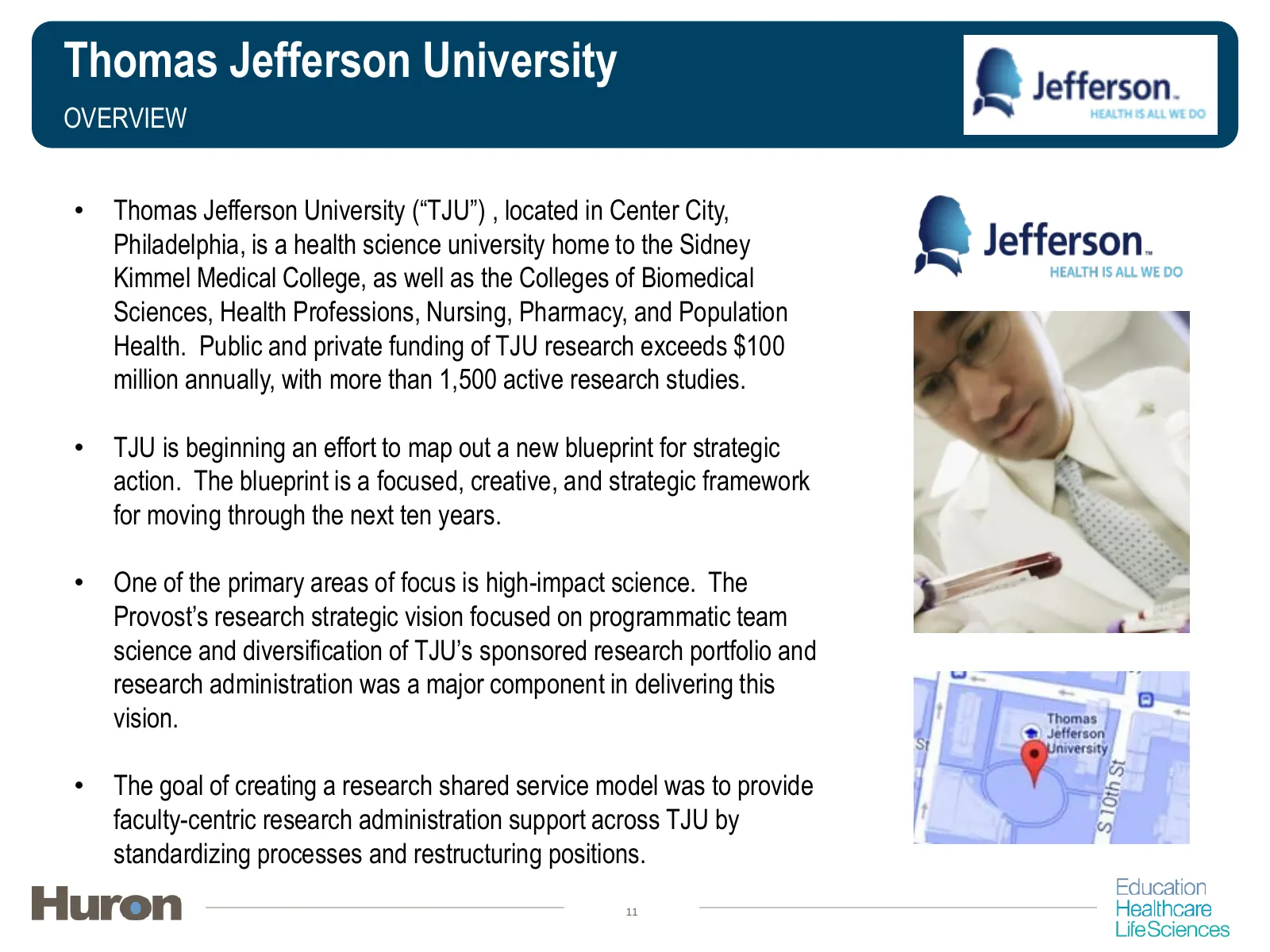
Thomas Jefferson University OVERVIEW • Thomas Jefferson University (“TJU”) , located in Center City, Philadelphia, is a health science university home to the Sidney Kimmel Medical College, as well as the Colleges of Biomedical Sciences, Health Professions, Nursing, Pharmacy, and Population Health. P
Slide 12: Thomas Jefferson University: The Opportunity
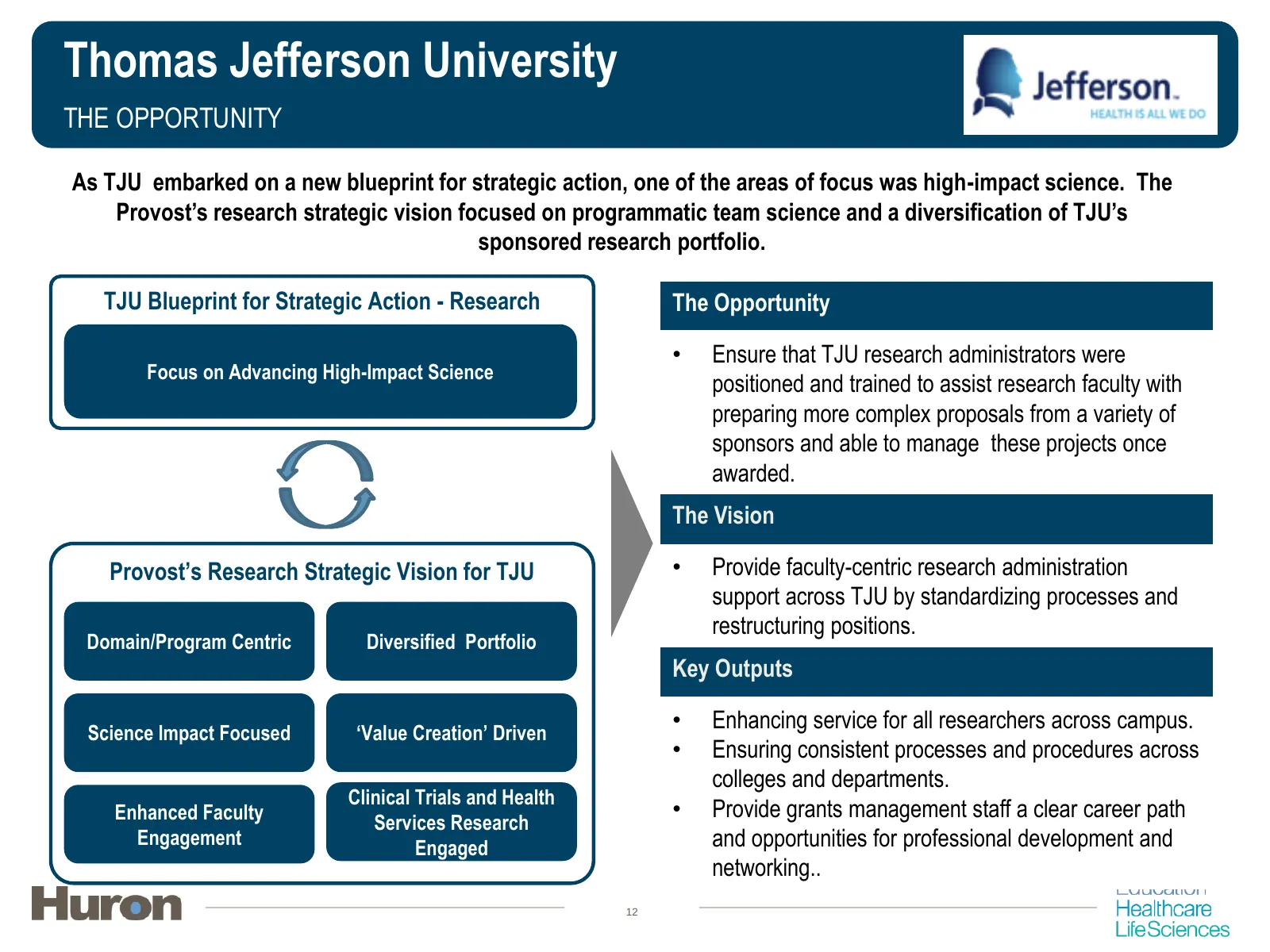
Thomas Jefferson University THE OPPORTUNITY As TJU embarked on a new blueprint for strategic action, one of the areas of focus was high-impact science. The Provost’s research strategic vision focused on programmatic team science and a diversification of TJU’s sponsored research portfolio. TJU Bluepr

Slide 13: Making the Business Case
Making the Business Case
Slide 14: Benefits Beyond Cost Savings
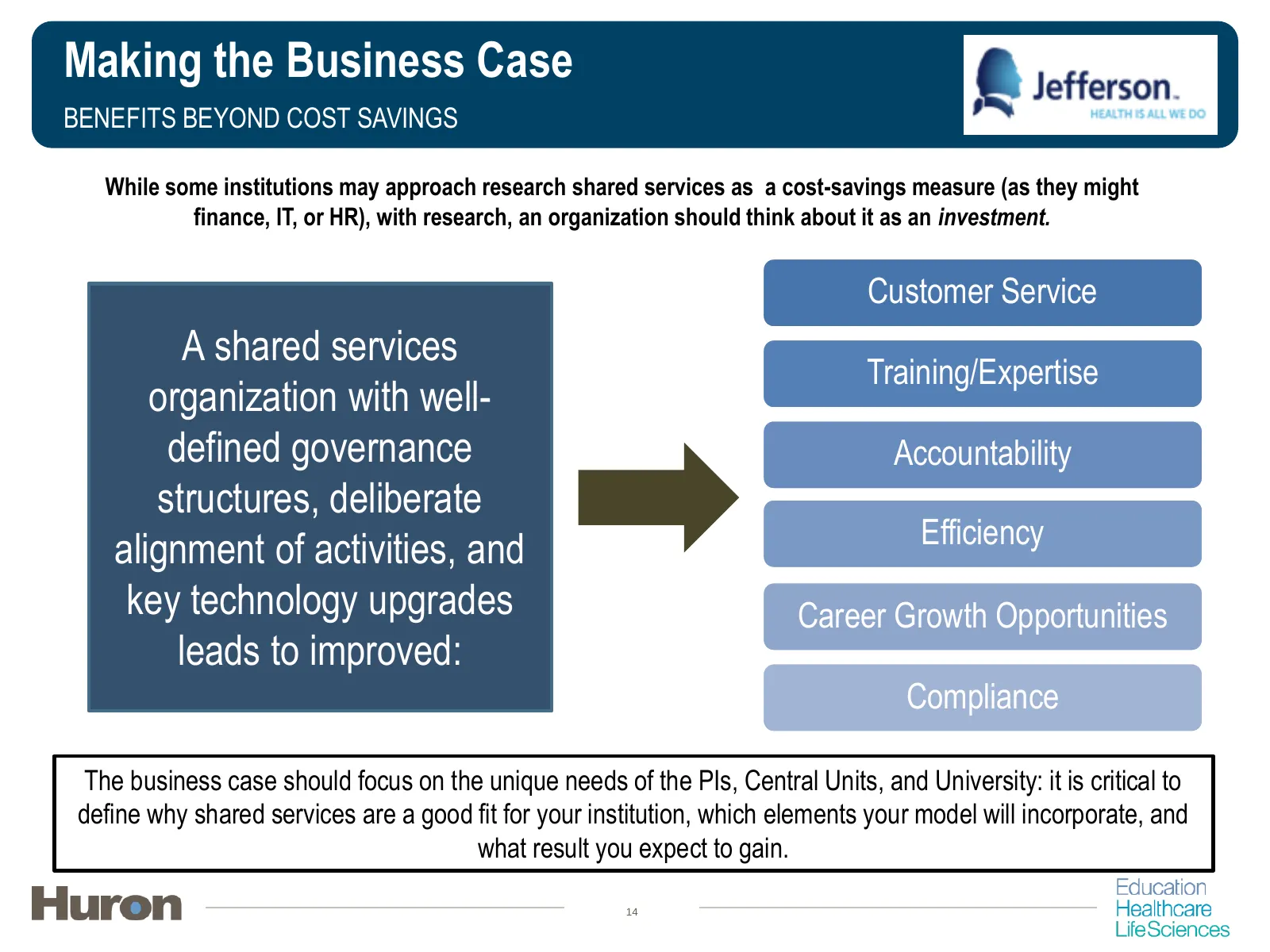
Making the Business Case BENEFITS BEYOND COST SAVINGS While some institutions may approach research shared services as a cost-savings measure (as they might finance, IT, or HR), with research, an organization should think about it as an investment. Customer Service A shared services Training/Experti
Slide 15: High-Level Steps for Implementation
High-Level Steps for Implementation
Slide 16: Implementation Overview: Common Challenges
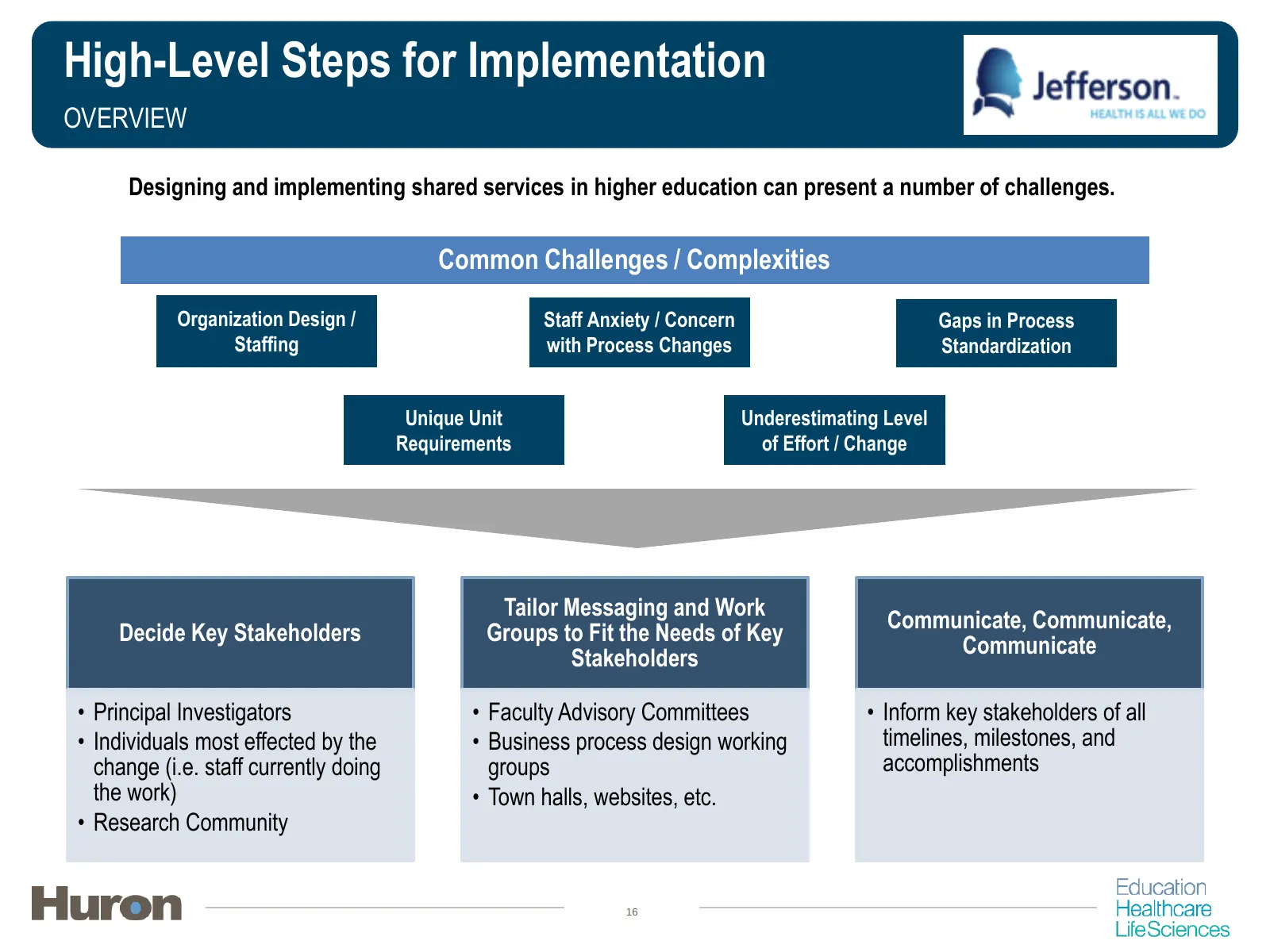
High-Level Steps for Implementation OVERVIEW Designing and implementing shared services in higher education can present a number of challenges. Common Challenges / Complexities Organization Design / Staff Anxiety / Concern Gaps in Process Staffing with Process Changes Standardization Unique Unit Und
Slide 17: Review Core IT and Human Resource Components
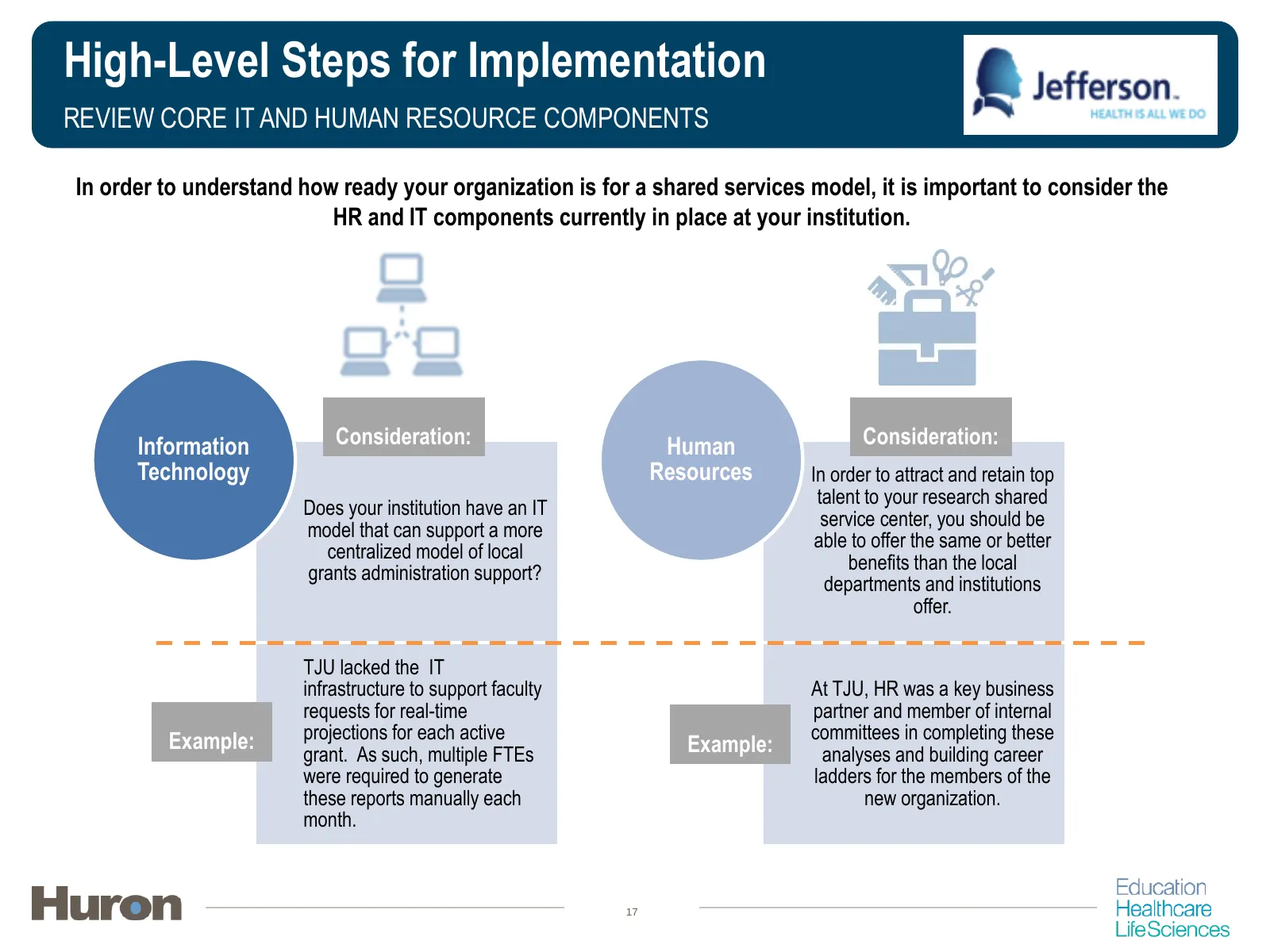
High-Level Steps for Implementation REVIEW CORE IT AND HUMAN RESOURCE COMPONENTS In order to understand how ready your organization is for a shared services model, it is important to consider the HR and IT components currently in place at your institution. Information Consideration: Human Considerat
Slide 18: Decide on a Model
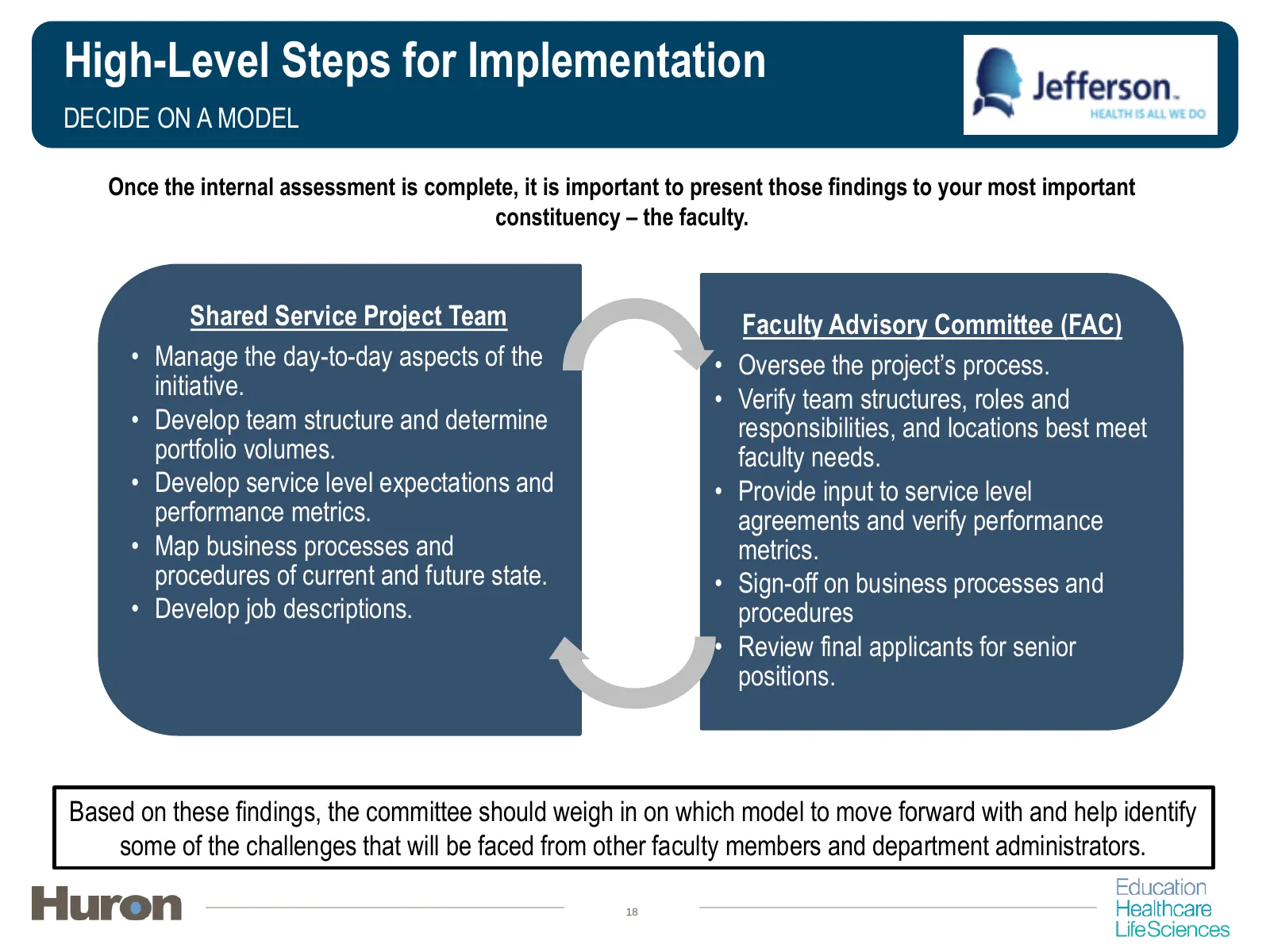
High-Level Steps for Implementation DECIDE ON A MODEL Once the internal assessment is complete, it is important to present those findings to your most important constituency – the faculty. Shared Service Project Team Faculty Advisory Committee (FAC) • Manage the day-to-day aspects of the • Oversee t
Slide 19: Recruit the Leader/Director
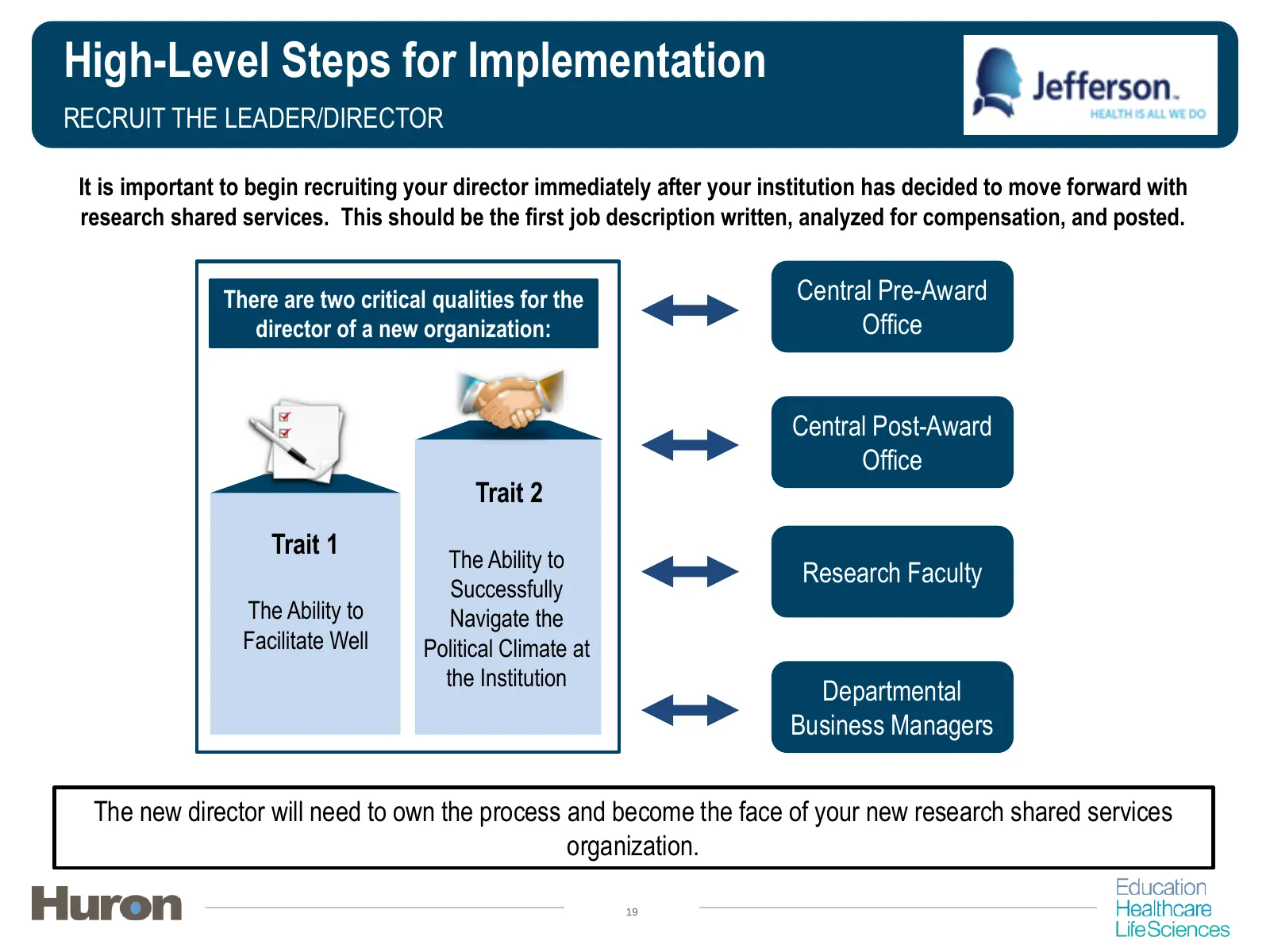
High-Level Steps for Implementation RECRUIT THE LEADER/DIRECTOR It is important to begin recruiting your director immediately after your institution has decided to move forward with research shared services. This should be the first job description written, analyzed for compensation, and posted. The
Slide 20: Develop Messaging and Performance Measurements
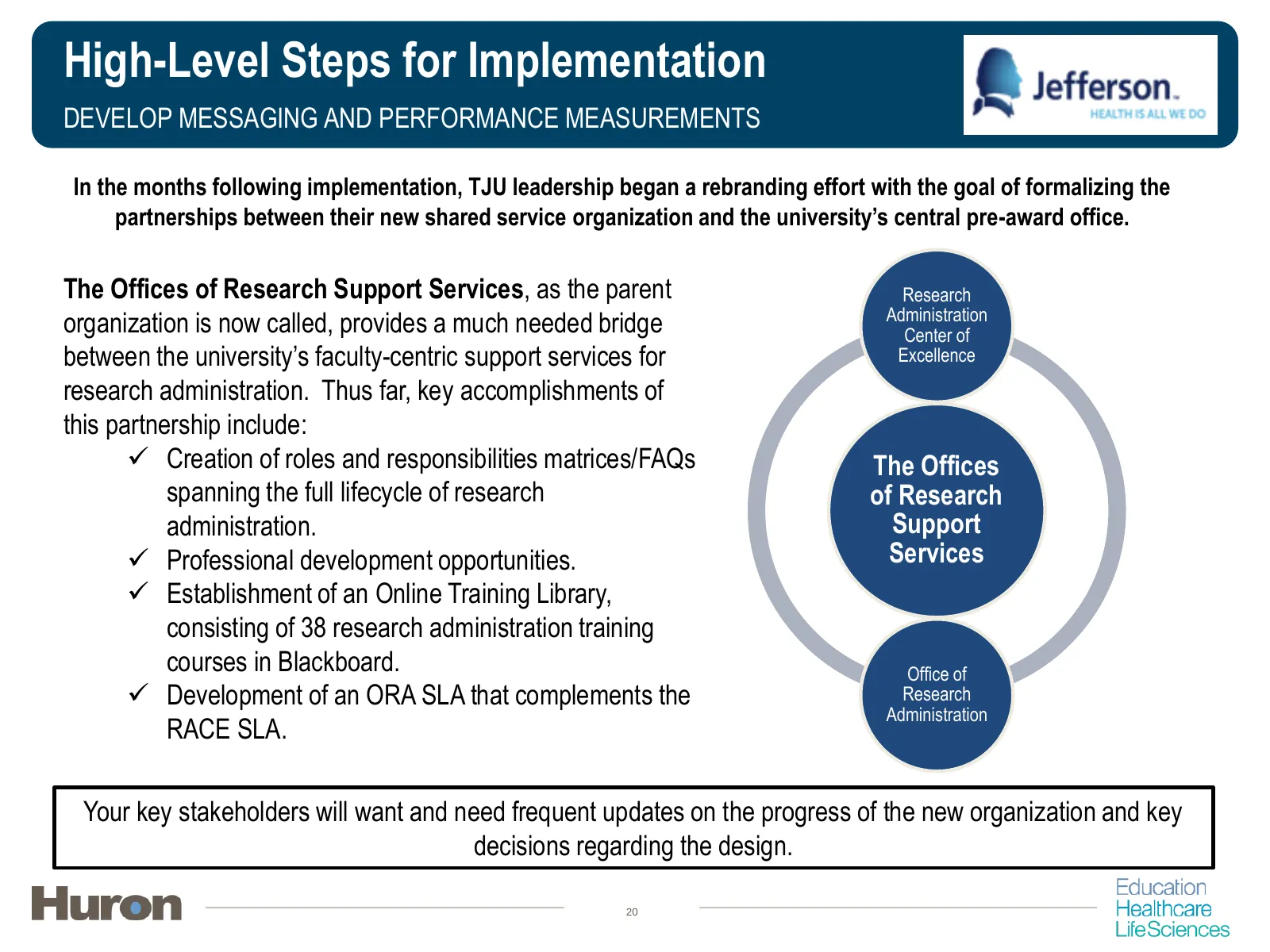
High-Level Steps for Implementation DEVELOP MESSAGING AND PERFORMANCE MEASUREMENTS In the months following implementation, TJU leadership began a rebranding effort with the goal of formalizing the partnerships between their new shared service organization and the university’s central pre-award offic
Slide 21: Develop Messaging and Performance Measurements
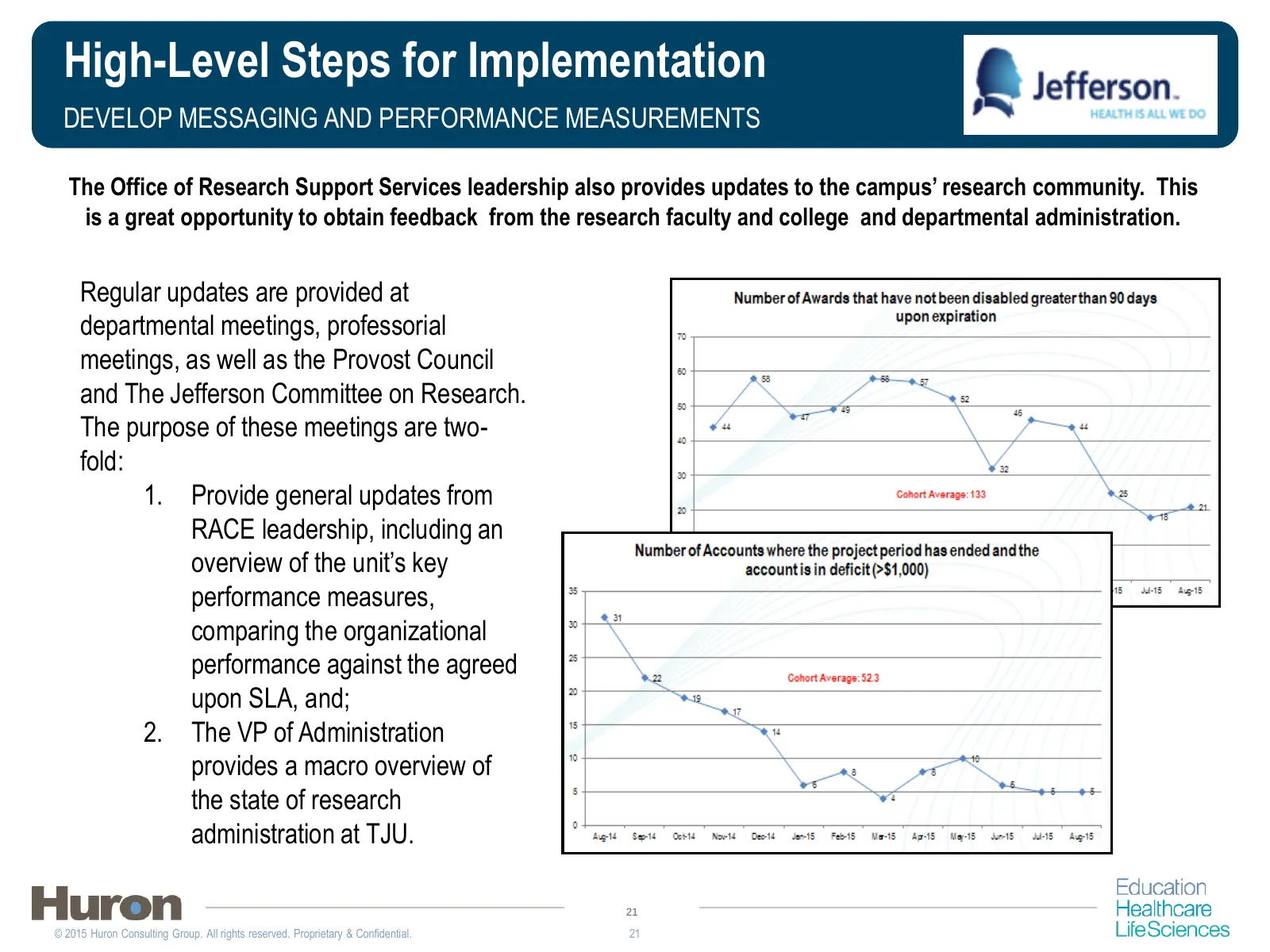
High-Level Steps for Implementation DEVELOP MESSAGING AND PERFORMANCE MEASUREMENTS The Office of Research Support Services leadership also provides updates to the campus’ research community. This is a great opportunity to obtain feedback from the research faculty and college and departmental adminis
Slide 22: Develop Messaging and Performance Measurements
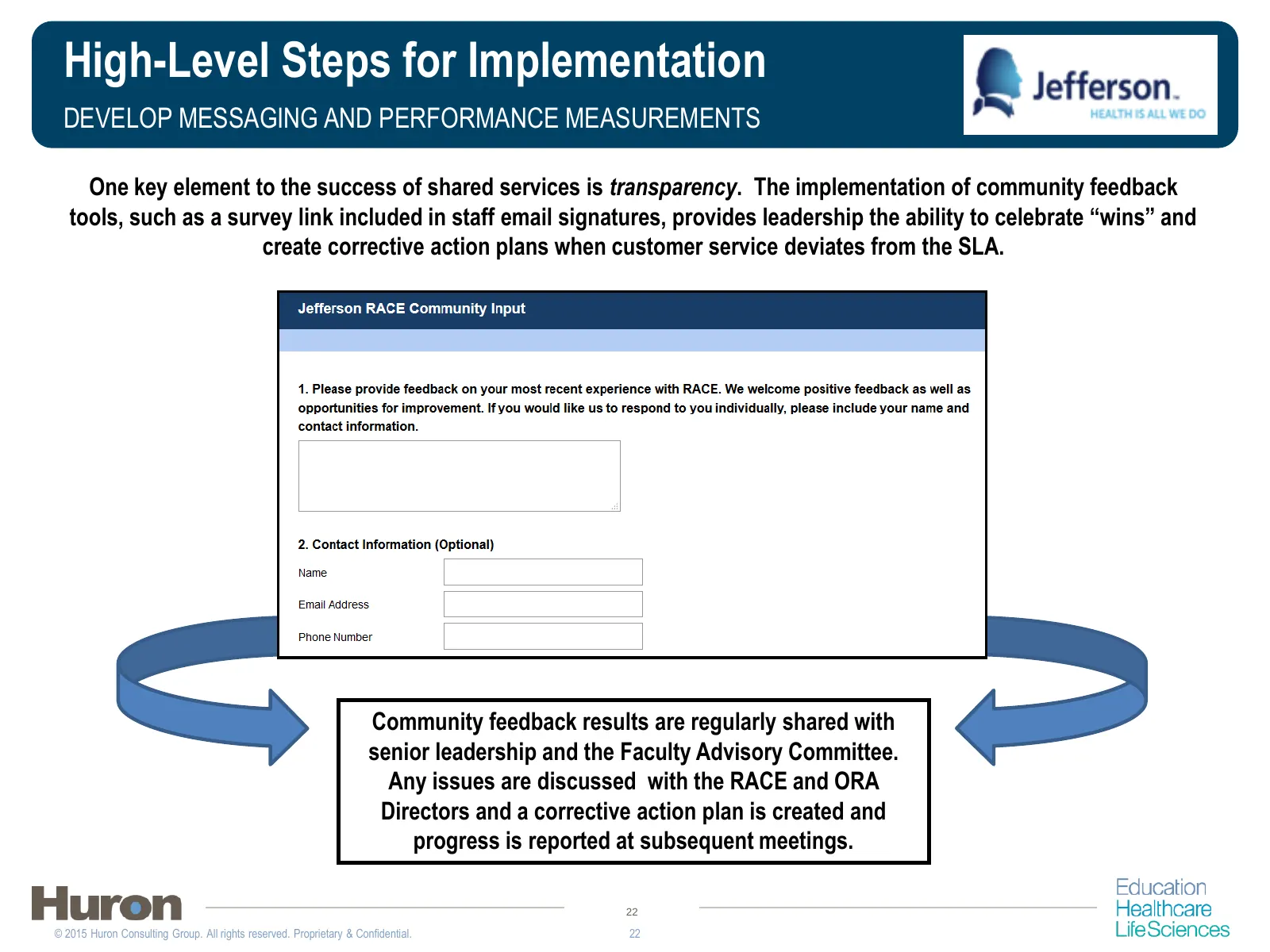
High-Level Steps for Implementation DEVELOP MESSAGING AND PERFORMANCE MEASUREMENTS One key element to the success of shared services is transparency. The implementation of community feedback tools, such as a survey link included in staff email signatures, provides leadership the ability to celebrate
Slide 23: Finalize Timeline
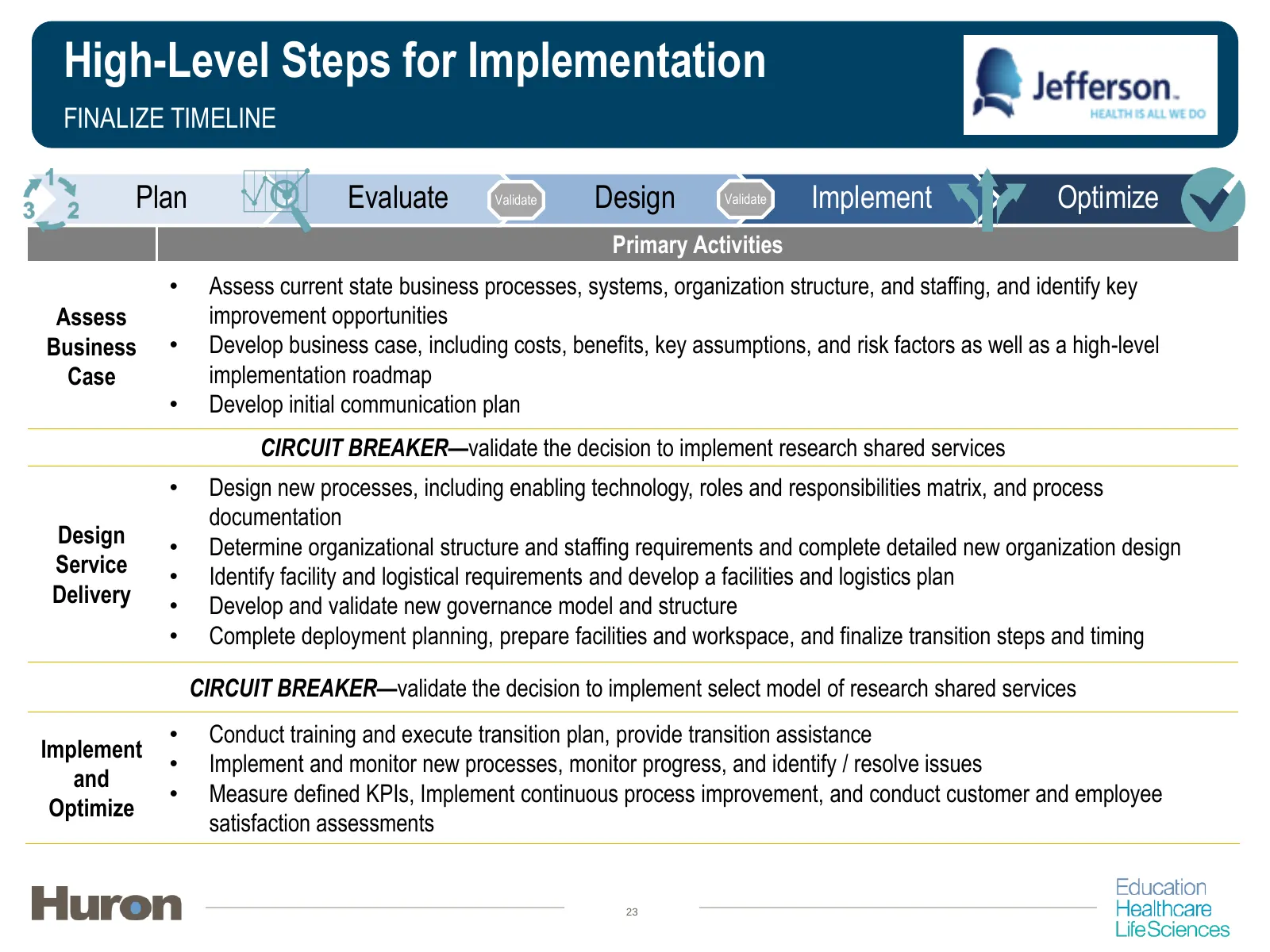
High-Level Steps for Implementation FINALIZE TIMELINE Plan Evaluate Validate Design Validate Implement Optimize Primary Activities • Assess current state business processes, systems, organization structure, and staffing, and identify key Assess improvement opportunities Business • Develop business c

Slide 24: Lessons Learned
Lessons Learned
Slide 25: Lessons Learned
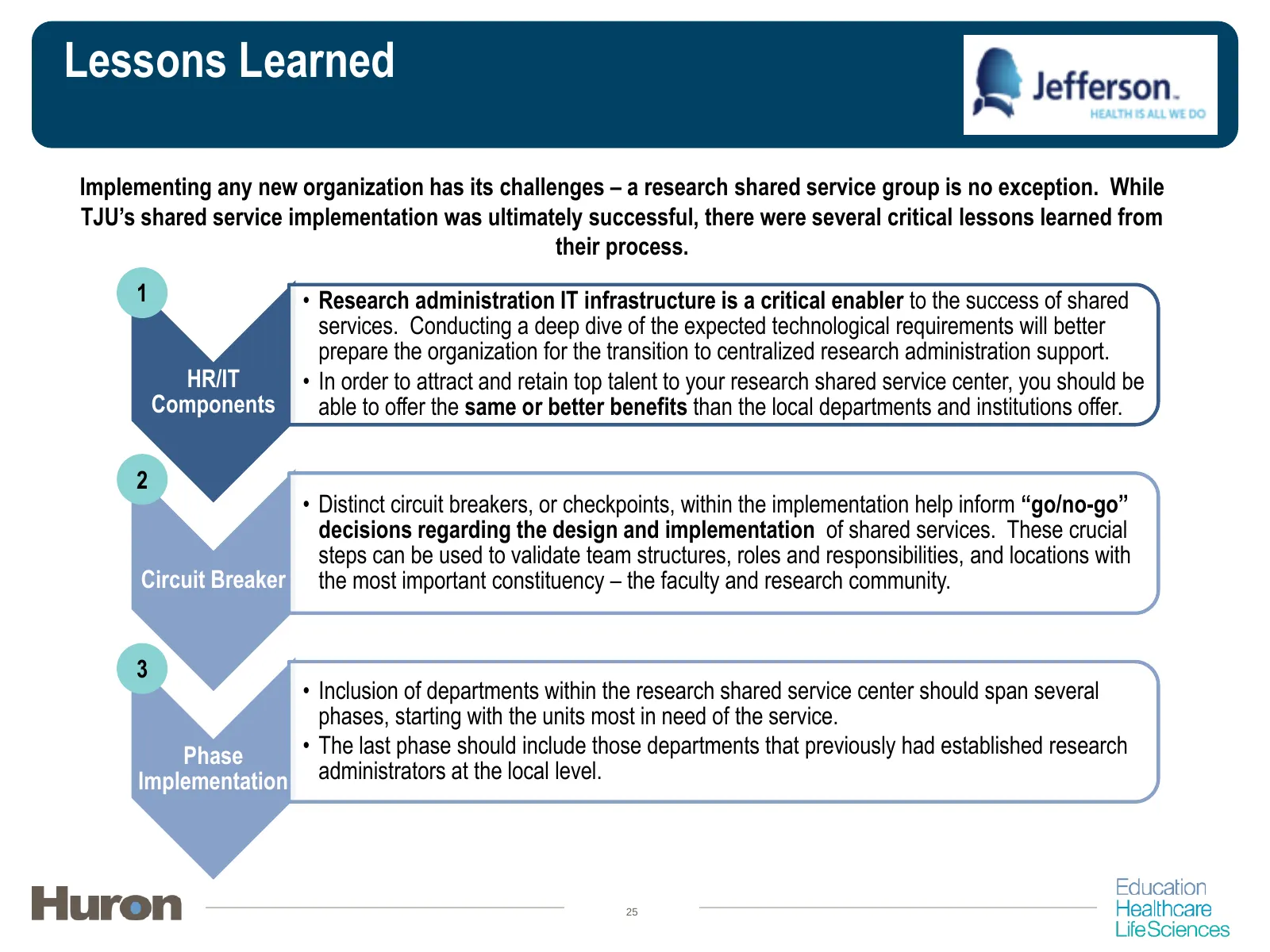
Lessons Learned Implementing any new organization has its challenges – a research shared service group is no exception. While TJU’s shared service implementation was ultimately successful, there were several critical lessons learned from their process. 1 • Research administration IT infrastructure i
Slide 26: Lessons Learned: What Worked Well?
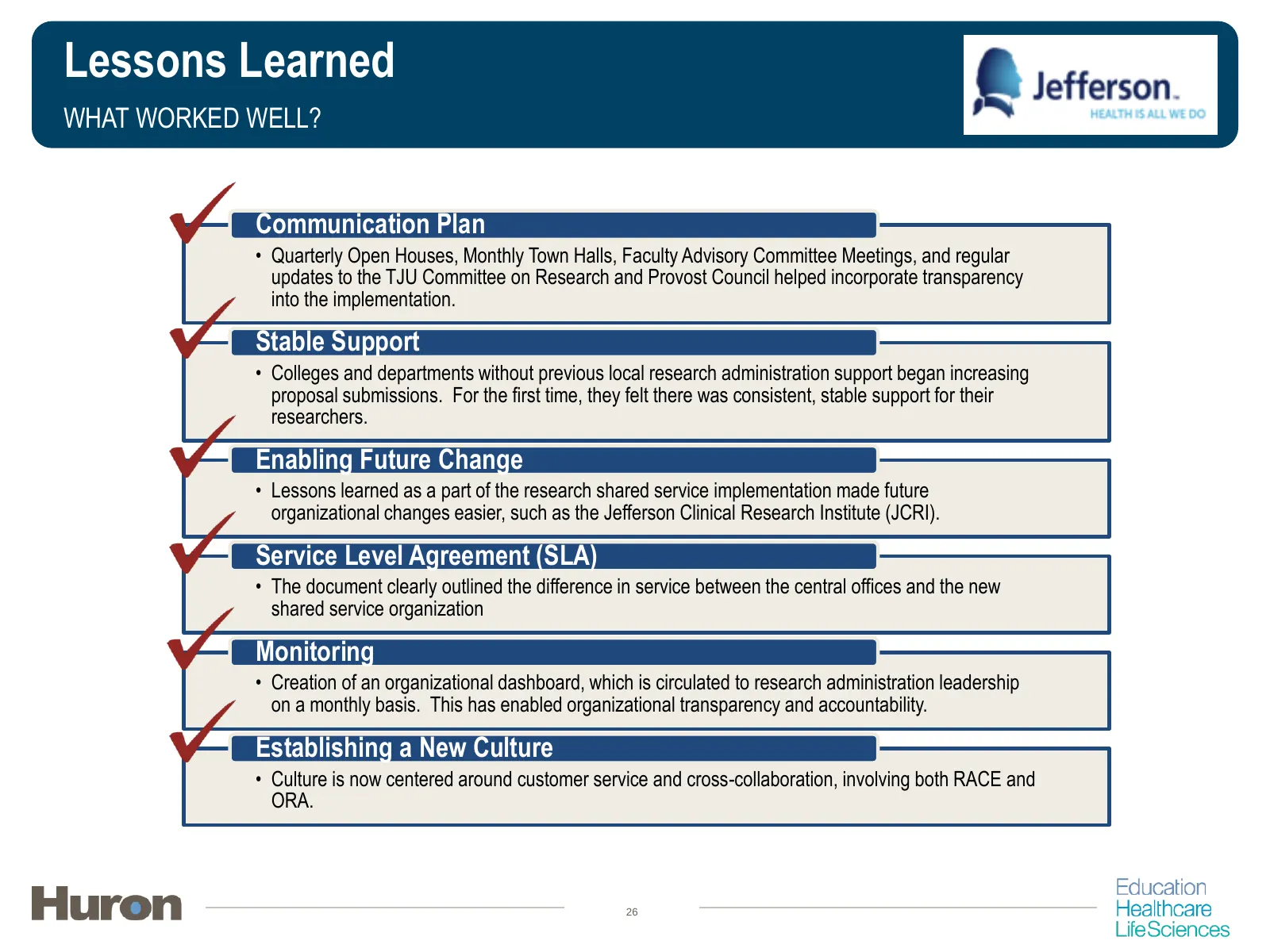
Lessons Learned WHAT WORKED WELL? Communication Plan • Quarterly Open Houses, Monthly Town Halls, Faculty Advisory Committee Meetings, and regular updates to the TJU Committee on Research and Provost Council helped incorporate transparency into the implementation. Stable Support • Colleges and depar

Slide 27: Q&A
Q&A
Slide 28: Clients include:
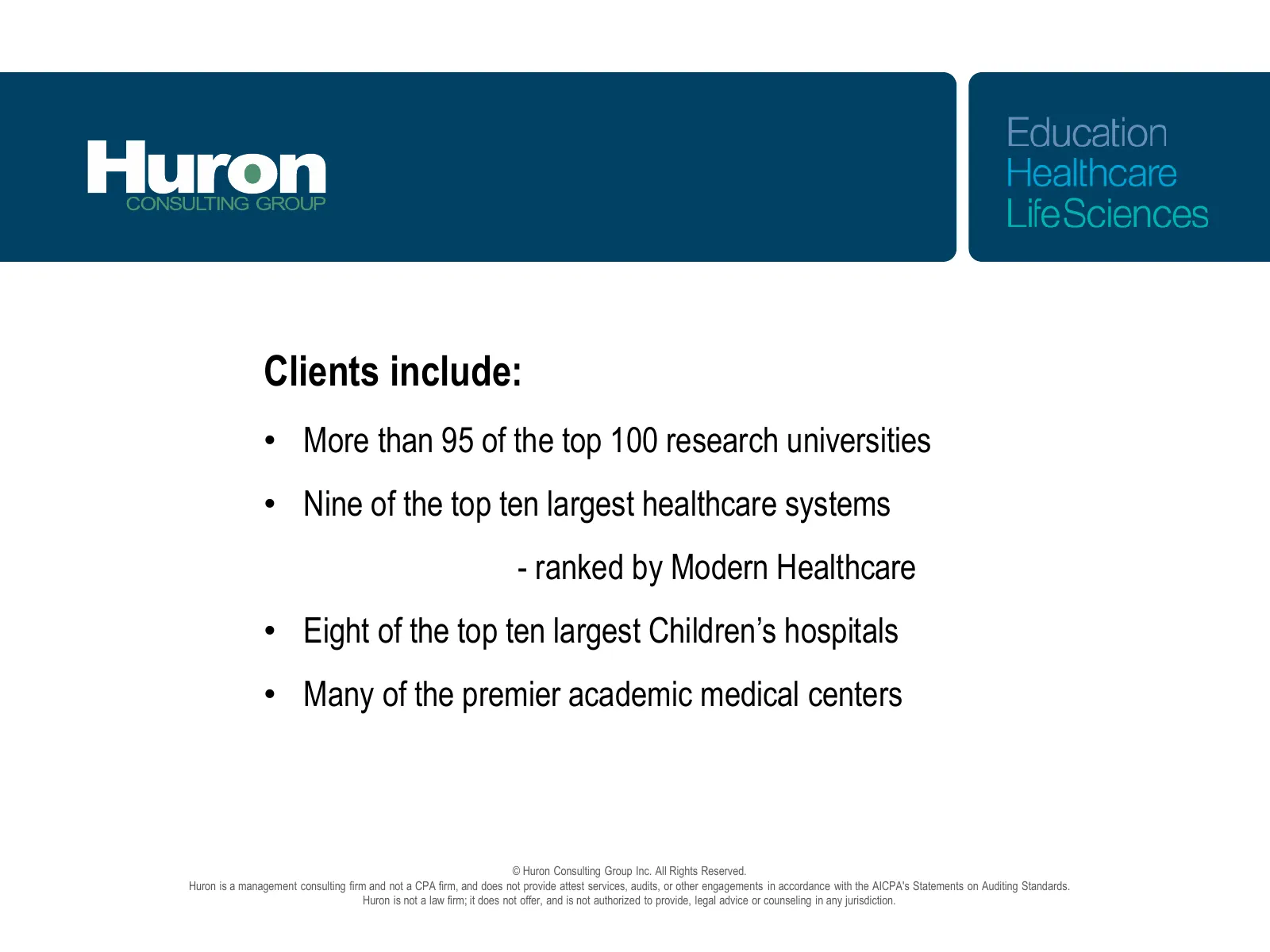
Clients include: • More than 95 of the top 100 research universities • Nine of the top ten largest healthcare systems - ranked by Modern Healthcare • Eight of the top ten largest Children’s hospitals • Many of the premier academic medical centers © Huron Consulting Group Inc. All Rights Reserved. Hu
Source: Internet Archive copy of huronconsultinggroup.com
More decks from Huron Consulting Group Inc.
 Investor Presentation (July 2026)49 slides · July 2026
 Investor Presentation (March 2026)49 slides · March 2026
 Q4 2025 Earnings Presentation12 slides · Feb 24, 2026
 Investor Presentation (July 2025)44 slides · July 2025
 Shareholder Meeting (March 2025)13 slides · Mar 28, 2025
 Investor Day (March 2025)77 slides · Mar 25, 2025