Canterbury Resources Ltd. · ASX:CBY
Canterbury Resources — Technical Presentation (2016)
45 slides from Canterbury Resources's technical presentation, 2016
Slide 1: Application of Petrology & Geology to the Interpretation of Geophysical Data, Ekuti Range
Application of Petrology & Geology to the Interpretation of Geophysical Data in Defining Economic Porphyry-Related Cu-Au Mineralisation Along the Ekuti Range, Morobe Province, PNG Anthony Coote Mike Erceg
Slide 2: Agenda
• Project Introduction • Petrologic Data • Petrologic Data & Geophysics • Conclusions
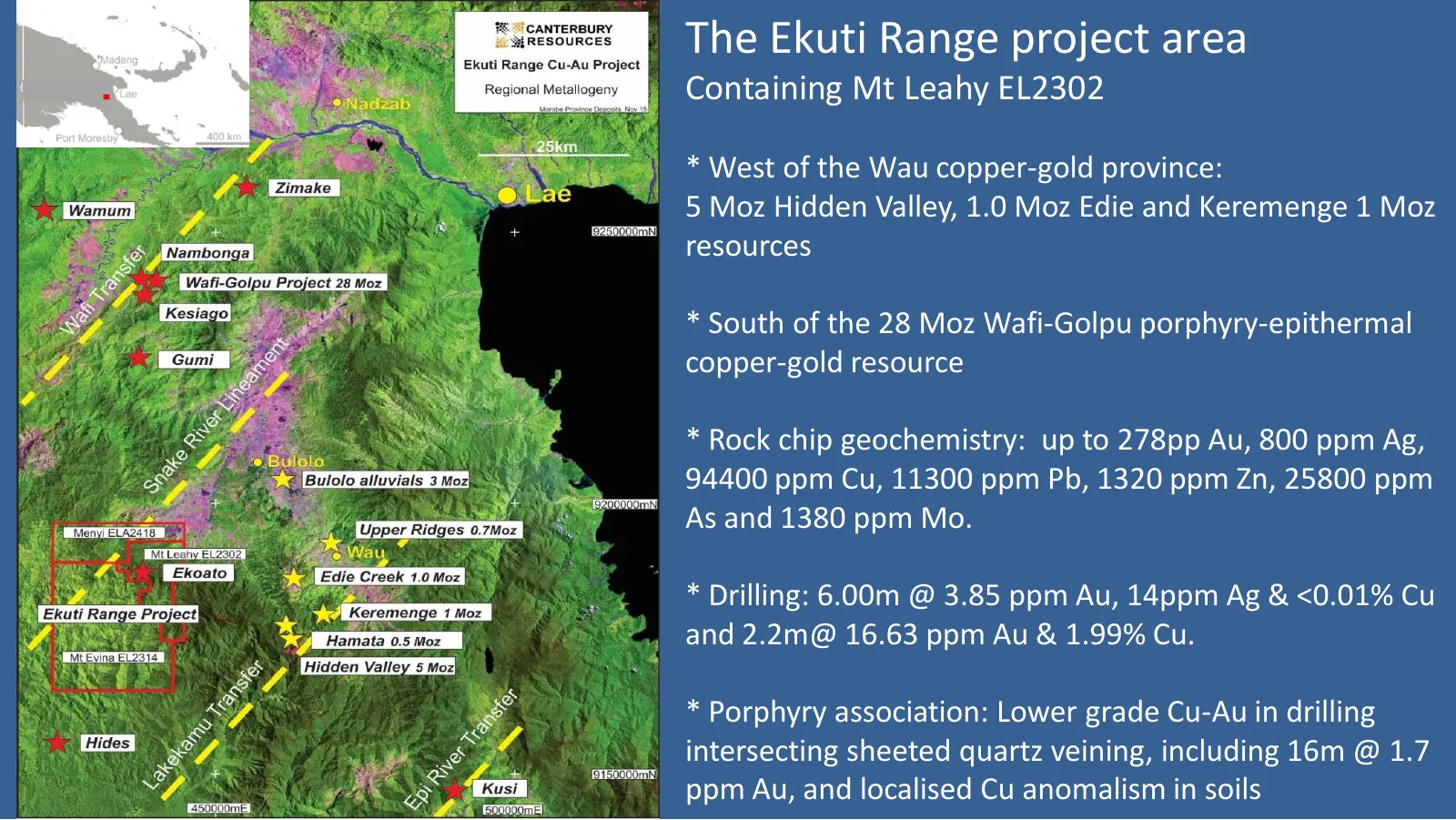
Slide 3: The Ekuti Range project area
The Ekuti Range project area Containing Mt Leahy EL2302 * West of the Wau copper-gold province: 5 Moz Hidden Valley, 1.0 Moz Edie and Keremenge 1 Moz resources * South of the 28 Moz Wafi-Golpu porphyry-epithermal copper-gold resource * Rock chip geochemistry: up to 278pp Au, 800 ppm Ag, 94400 ppm Cu
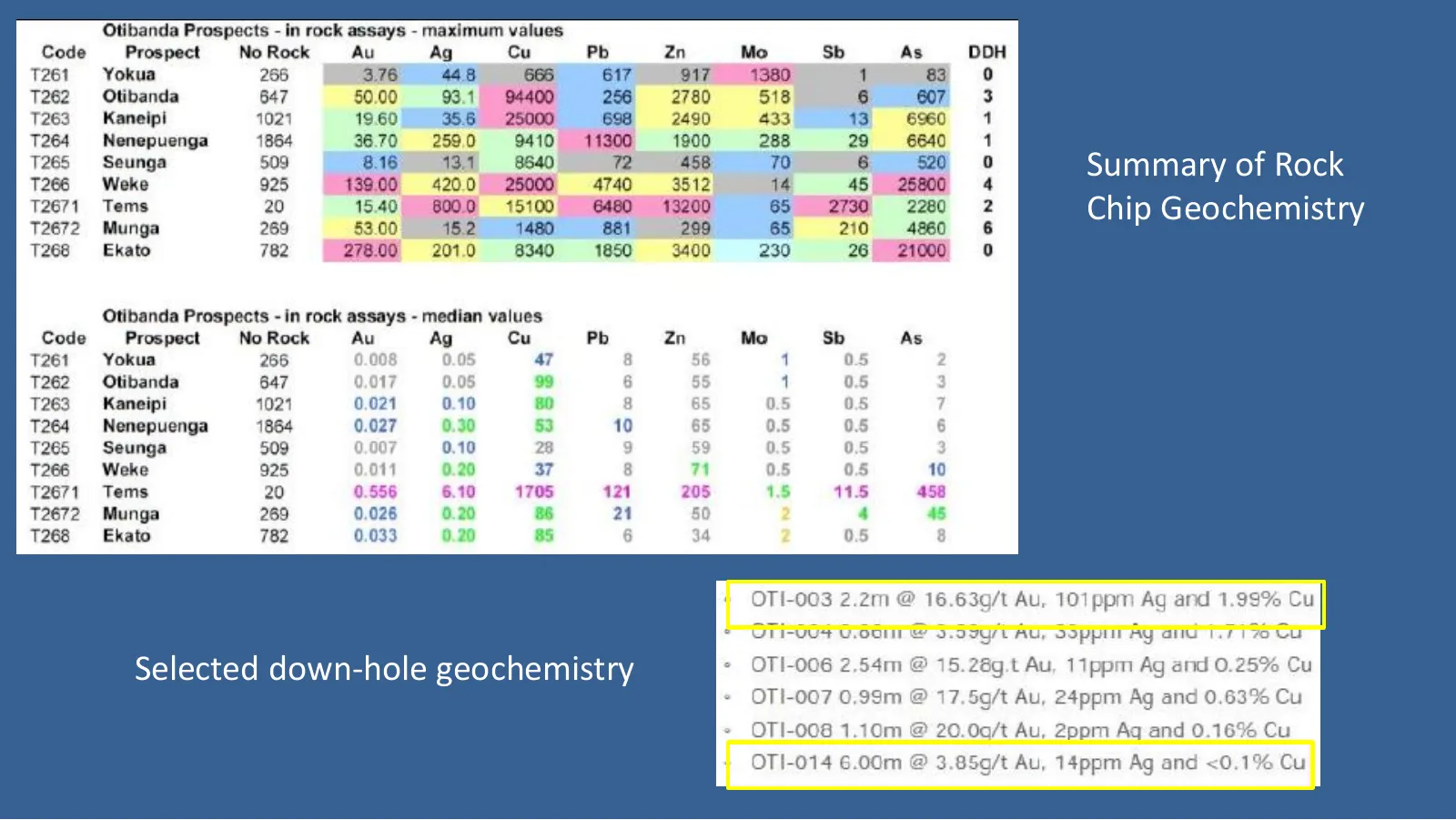
Slide 4: Summary of Rock Chip Geochemistry
Summary of Rock Chip Geochemistry Selected down-hole geochemistry
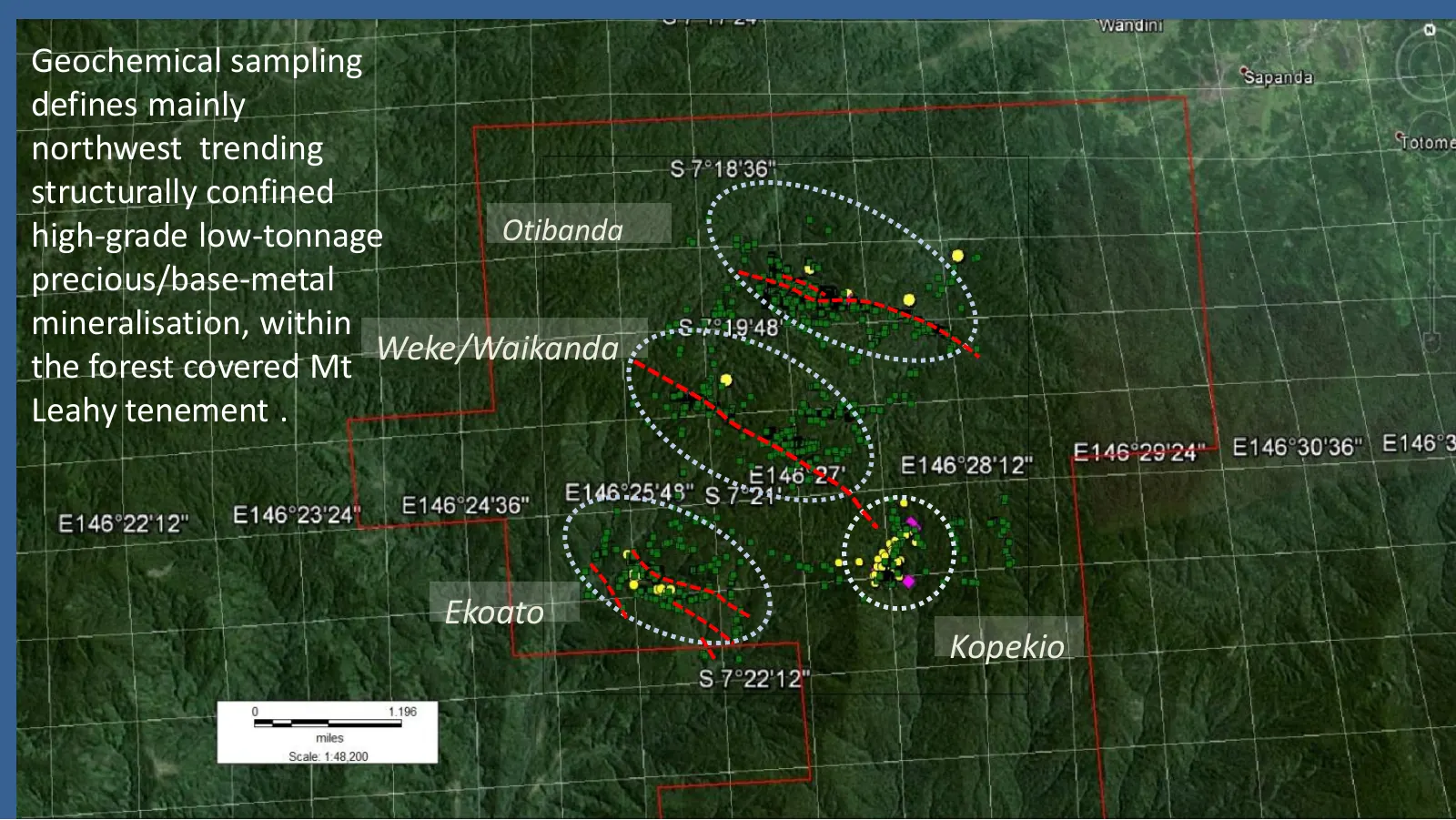
Slide 5: Geochemical sampling defines northwest trending structurally confined mineralisation
Geochemical sampling defines mainly northwest trending structurally confined high-grade low-tonnage Otibanda precious/base-metal mineralisation, within Weke/Waikanda the forest covered Mt Leahy tenement . Ekoato Kopekio
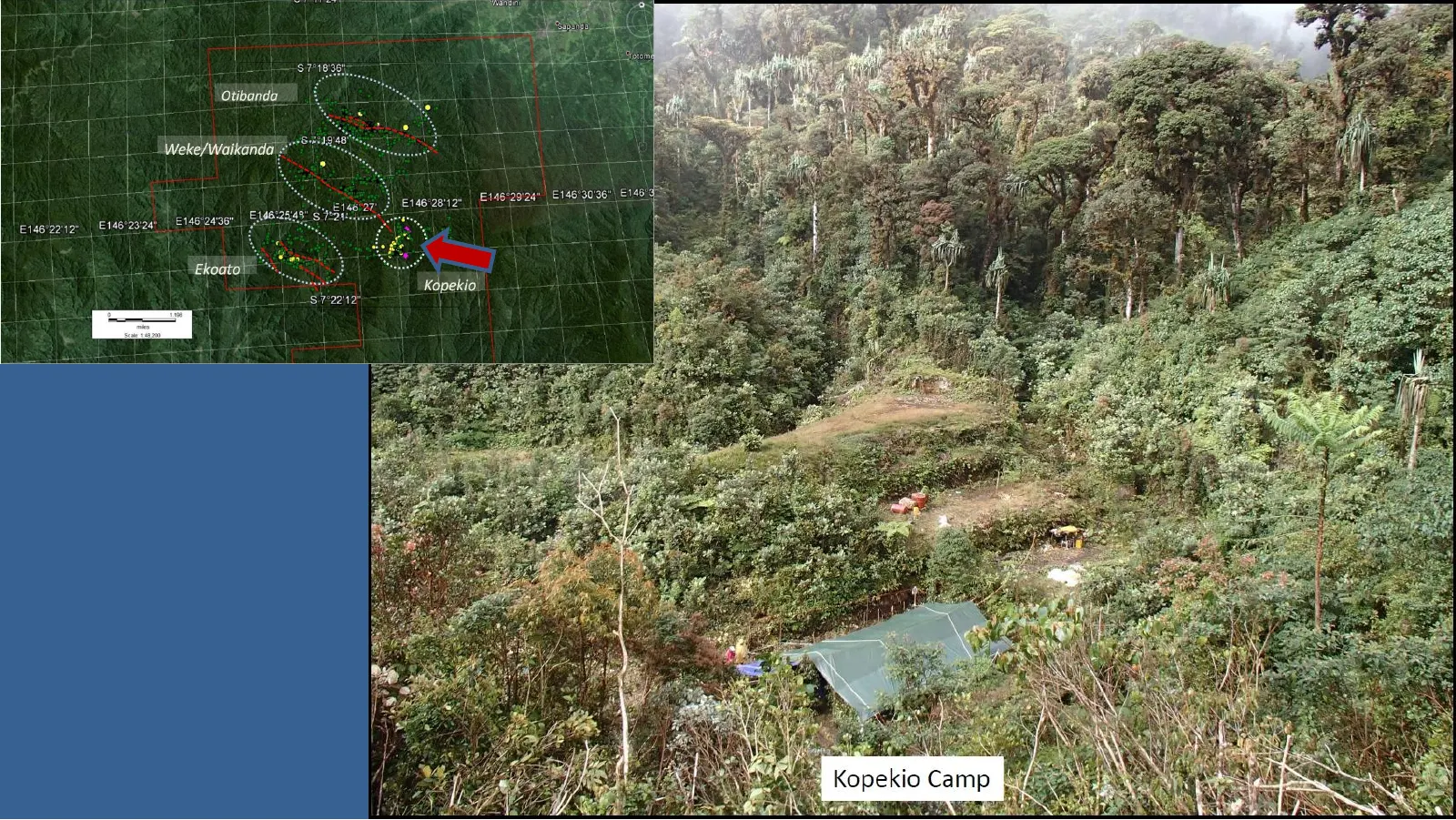
Slide 6: E1ap-212" £148°23:24"
| E146-203 E1ap-212" £148°23:24"
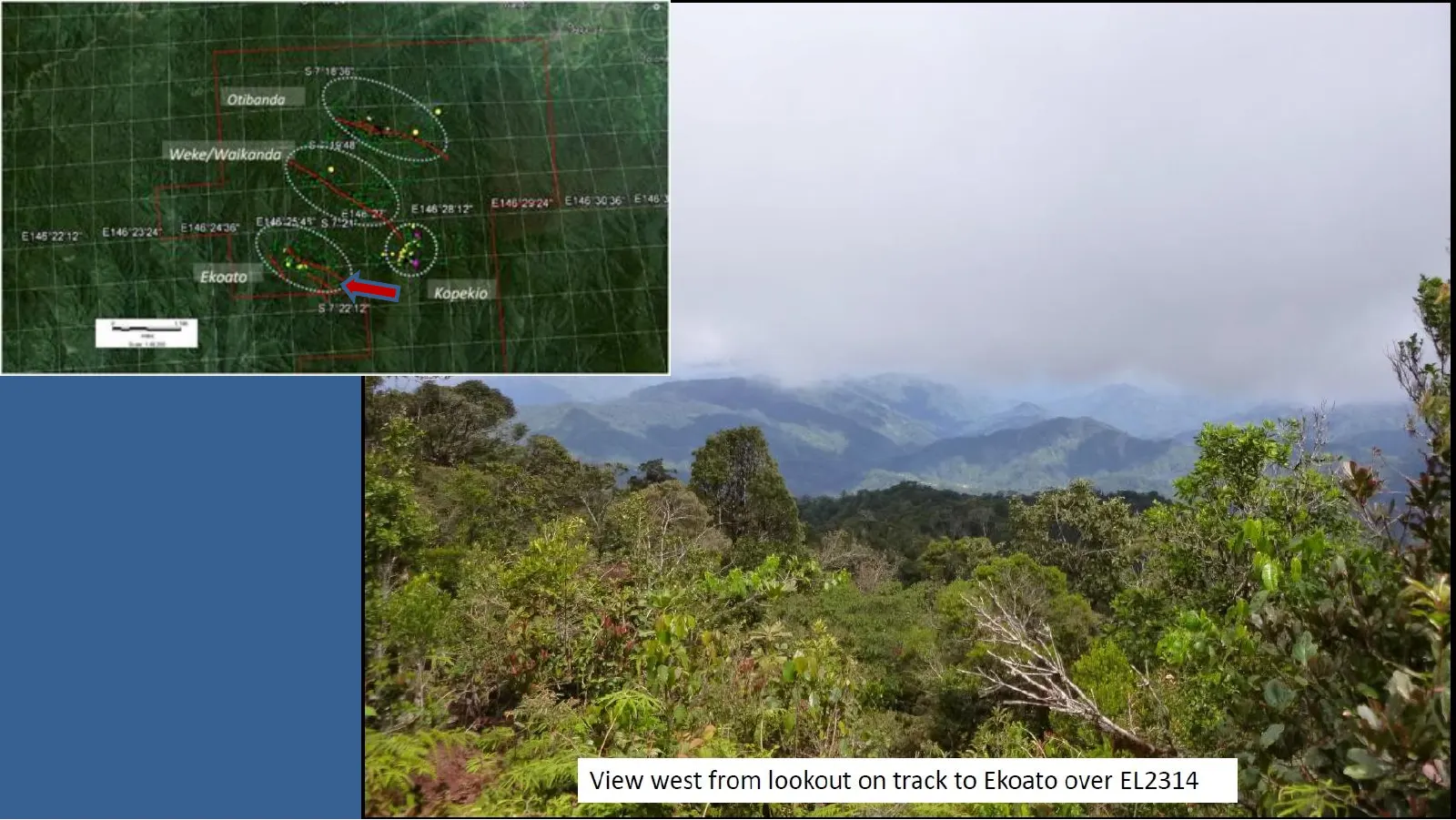
Slide 7: Otibanda
Otibanda Kopekio aS © oe ut ont
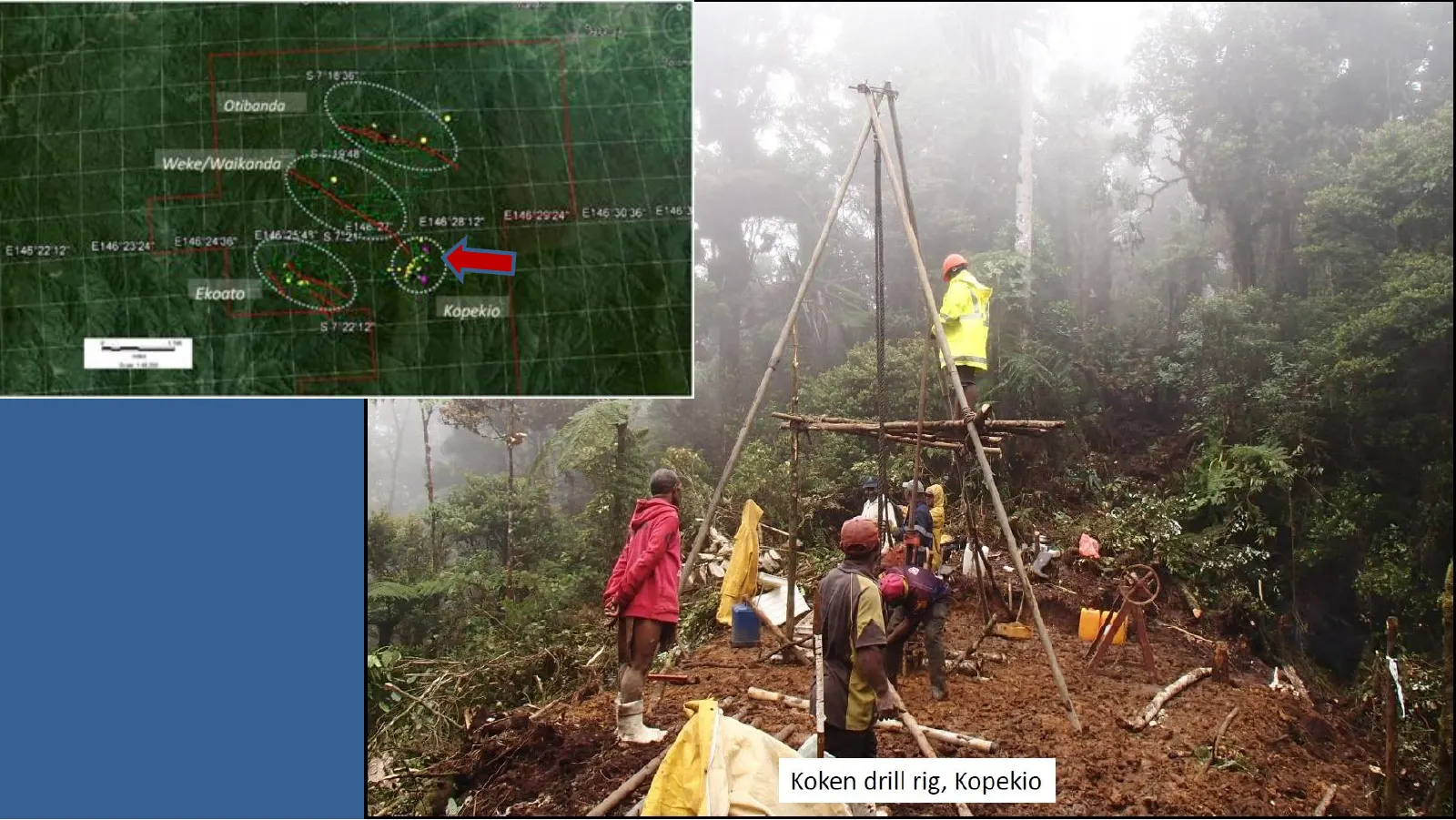
Slide 8: Koken drill rig, Kopekio
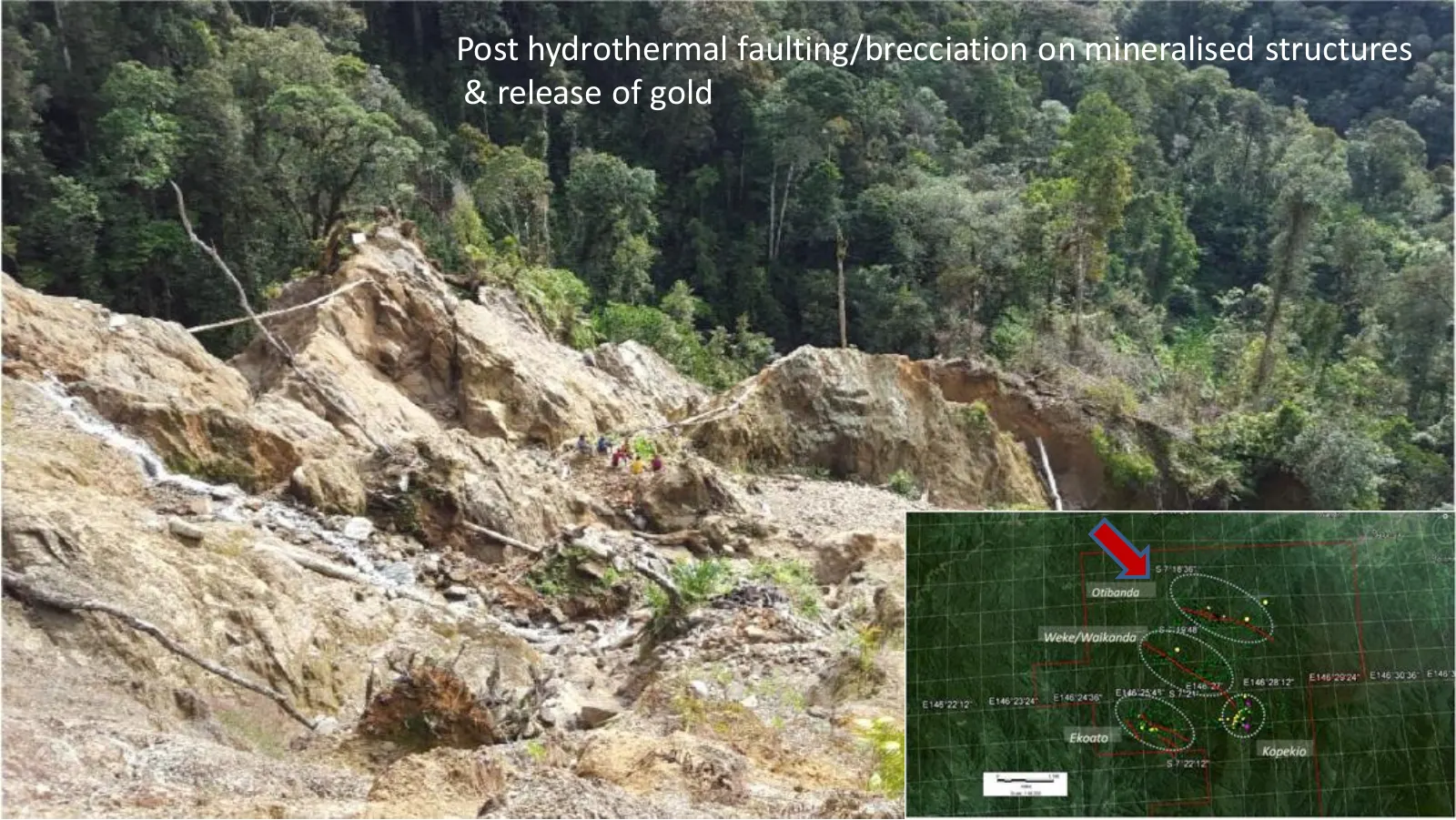
Slide 9: Post hydrothermal faulting/brecciation on mineralised structures & release of gold
Post hydrothermal faulting/brecciation on mineralised structures & release of gold
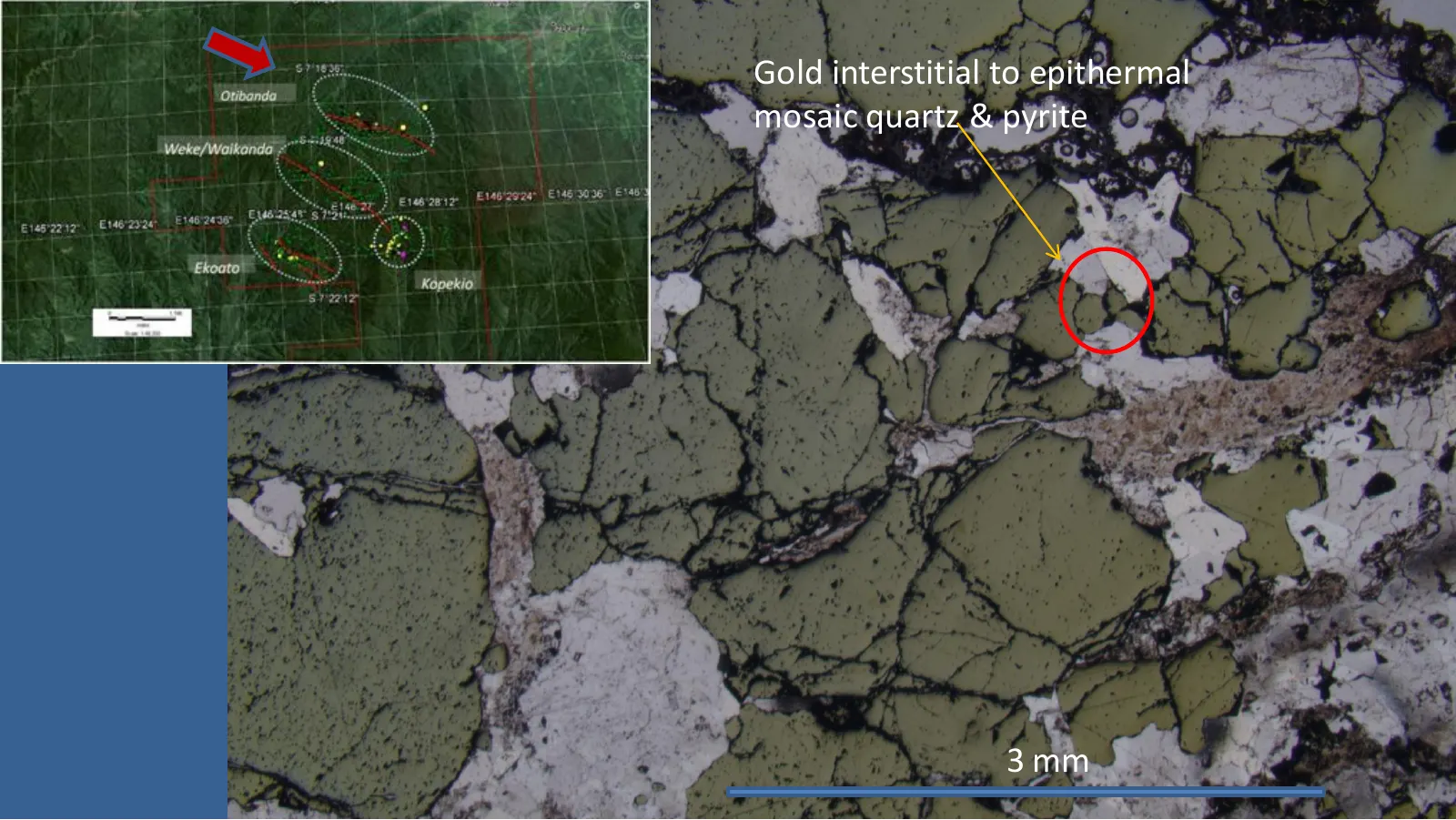
Slide 10: Gold interstitial to epithermal mosaic quartz & pyrite
Gold interstitial to epithermal mosaic quartz & pyrite 3 mm
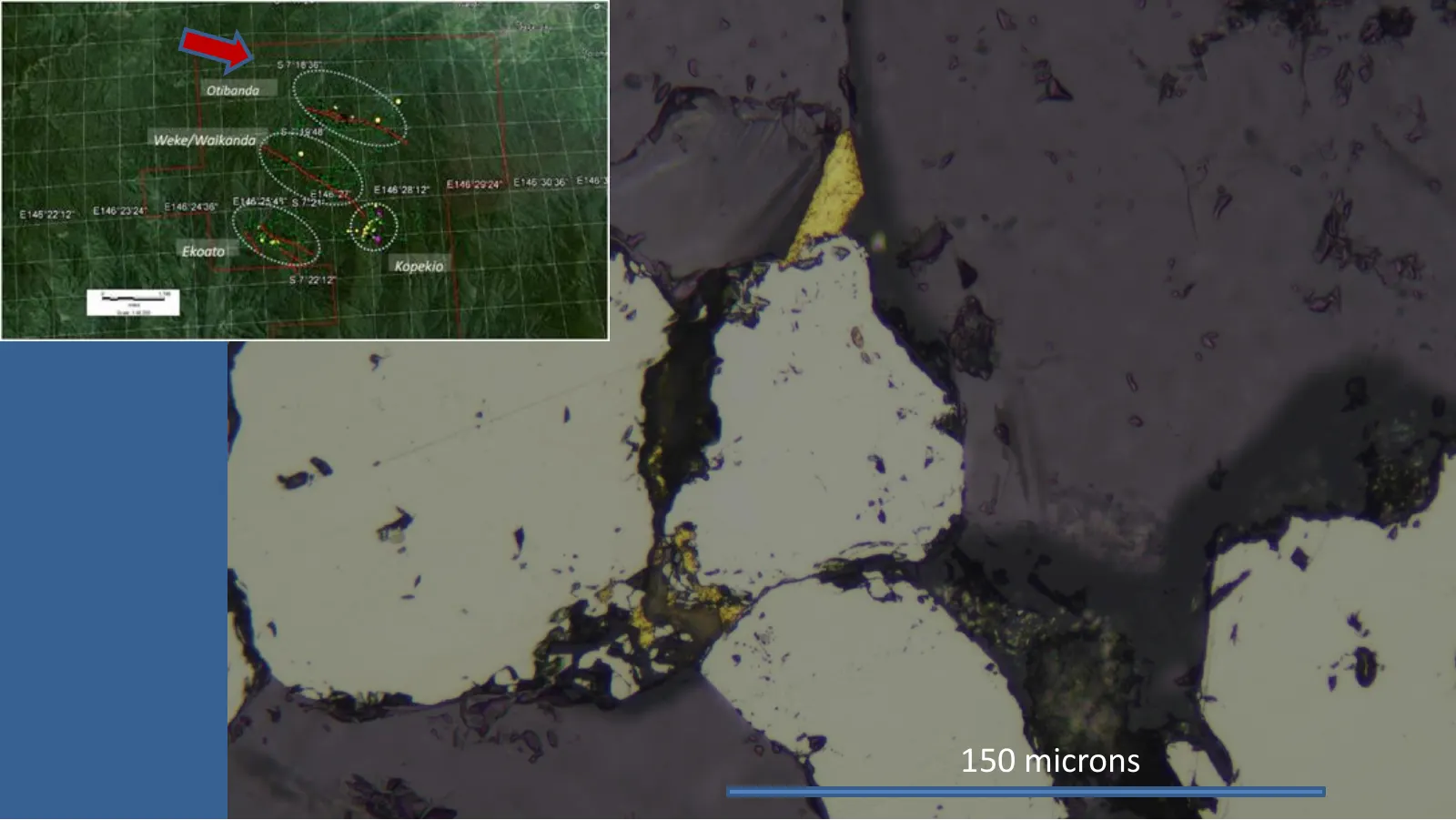
Slide 11: 150 microns
ctepaeie. EMe'z2e
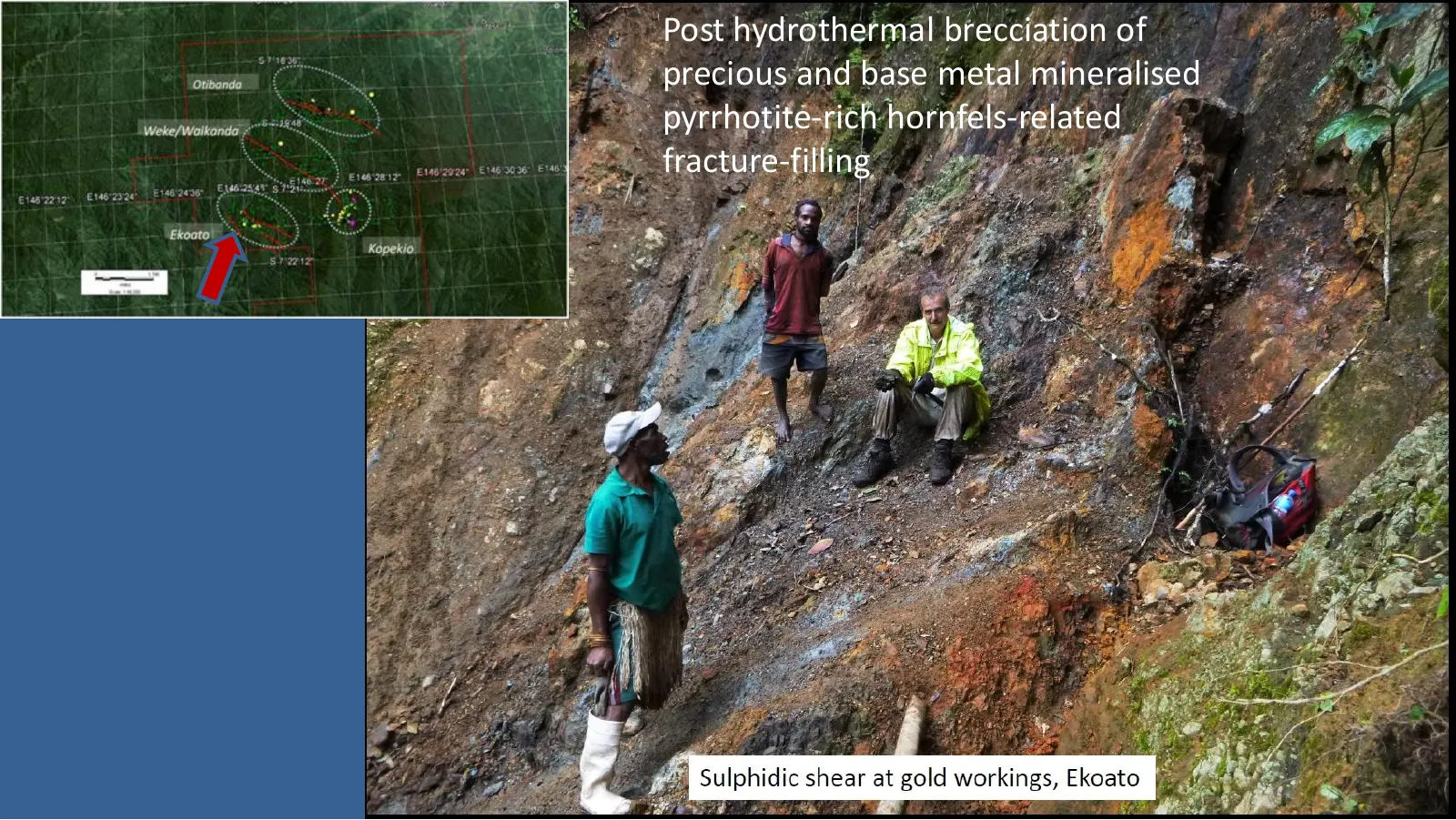
Slide 12: Post hydrothermal brecciation of mineralised pyrrhotite-rich hornfels-related fracture-filling
Post hydrothermal brecciation of precious and base metal mineralised pyrrhotite-rich hornfels-related fracture-filling
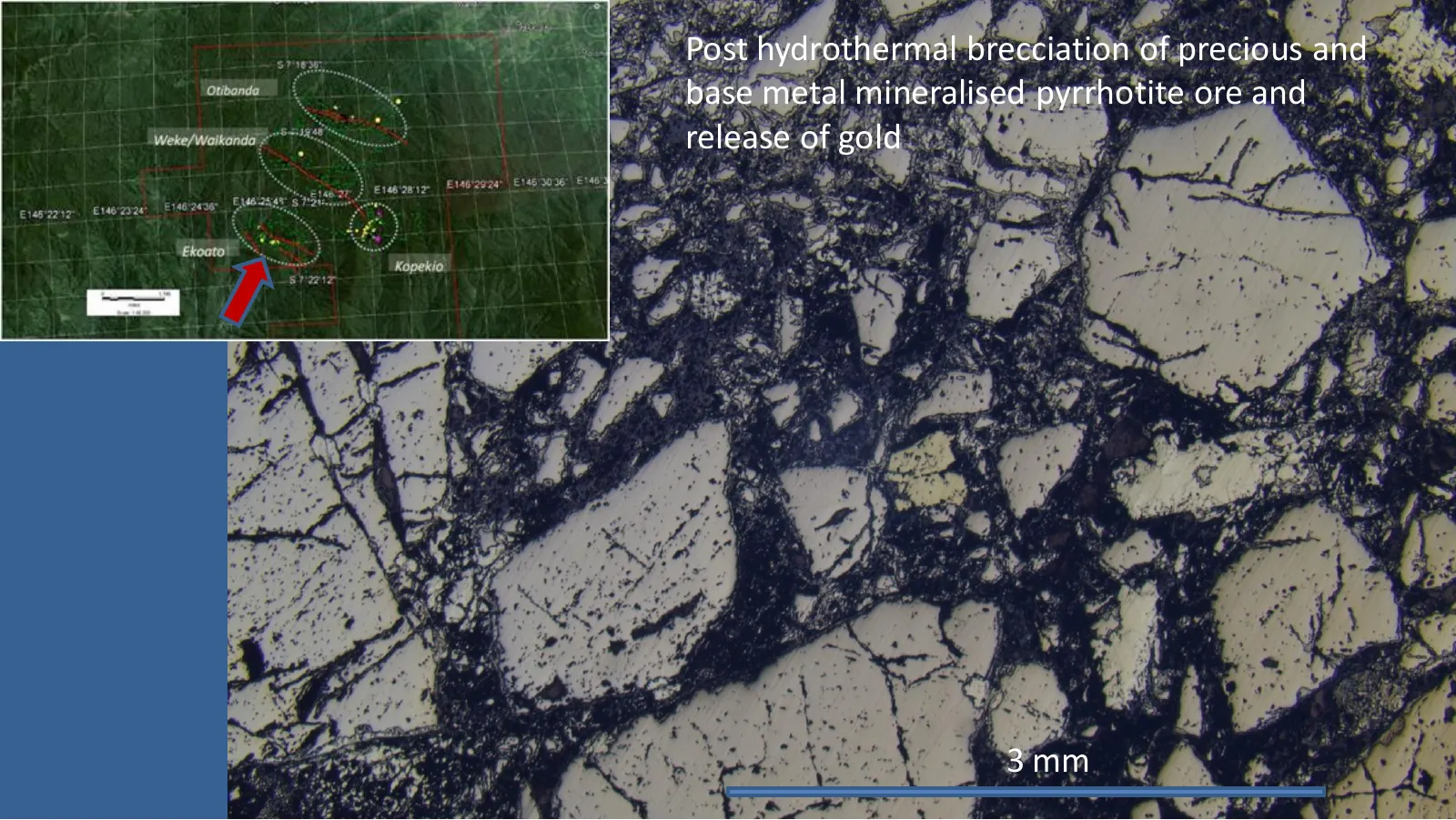
Slide 13: Post hydrothermal brecciation of pyrrhotite ore and release of gold
Post hydrothermal brecciation of precious and base metal mineralised pyrrhotite ore and release of gold 3 mm
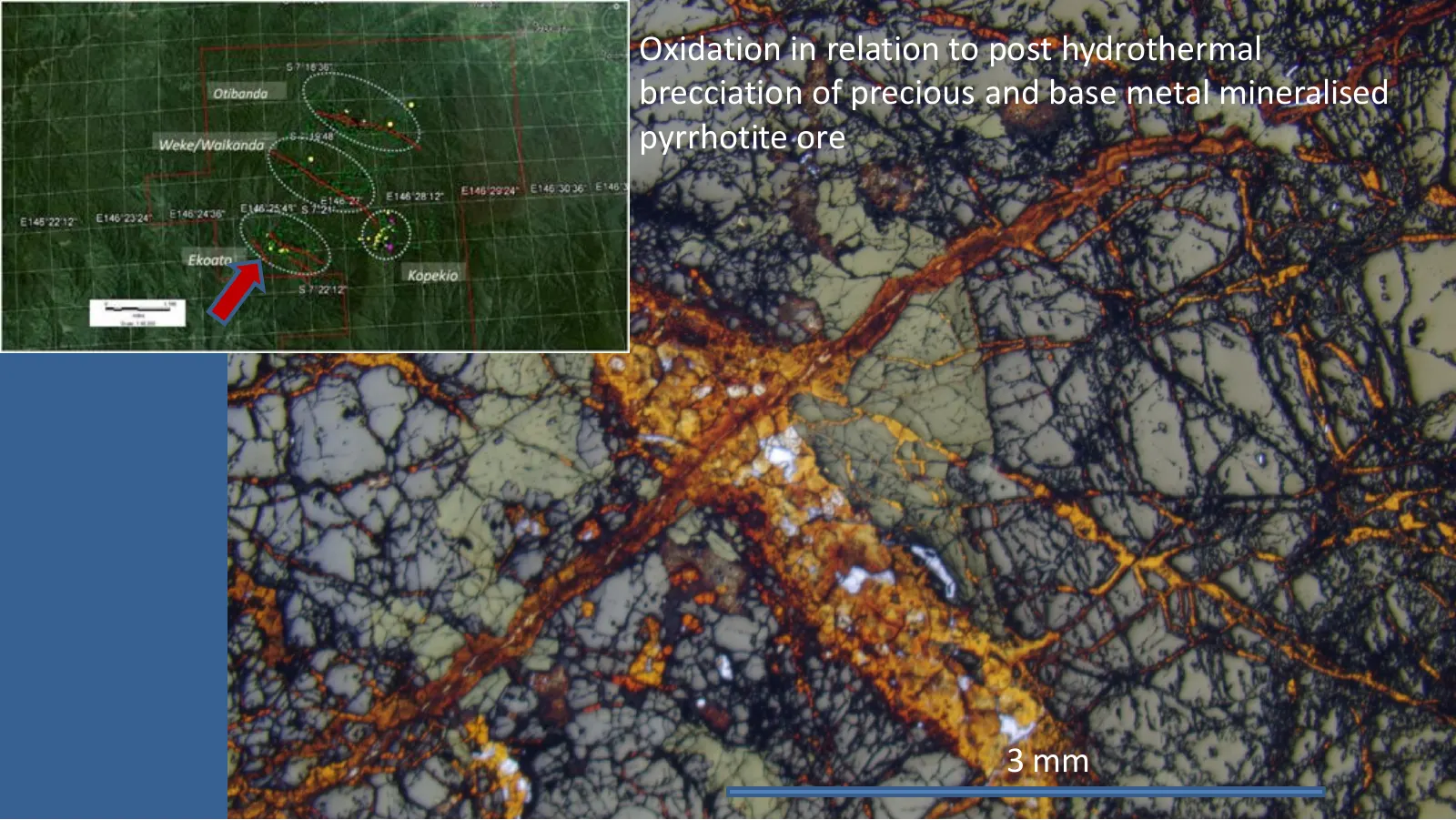
Slide 14: Oxidation in relation to post hydrothermal brecciation of pyrrhotite ore
Oxidation in relation to post hydrothermal brecciation of precious and base metal mineralised pyrrhotite ore 3 mm
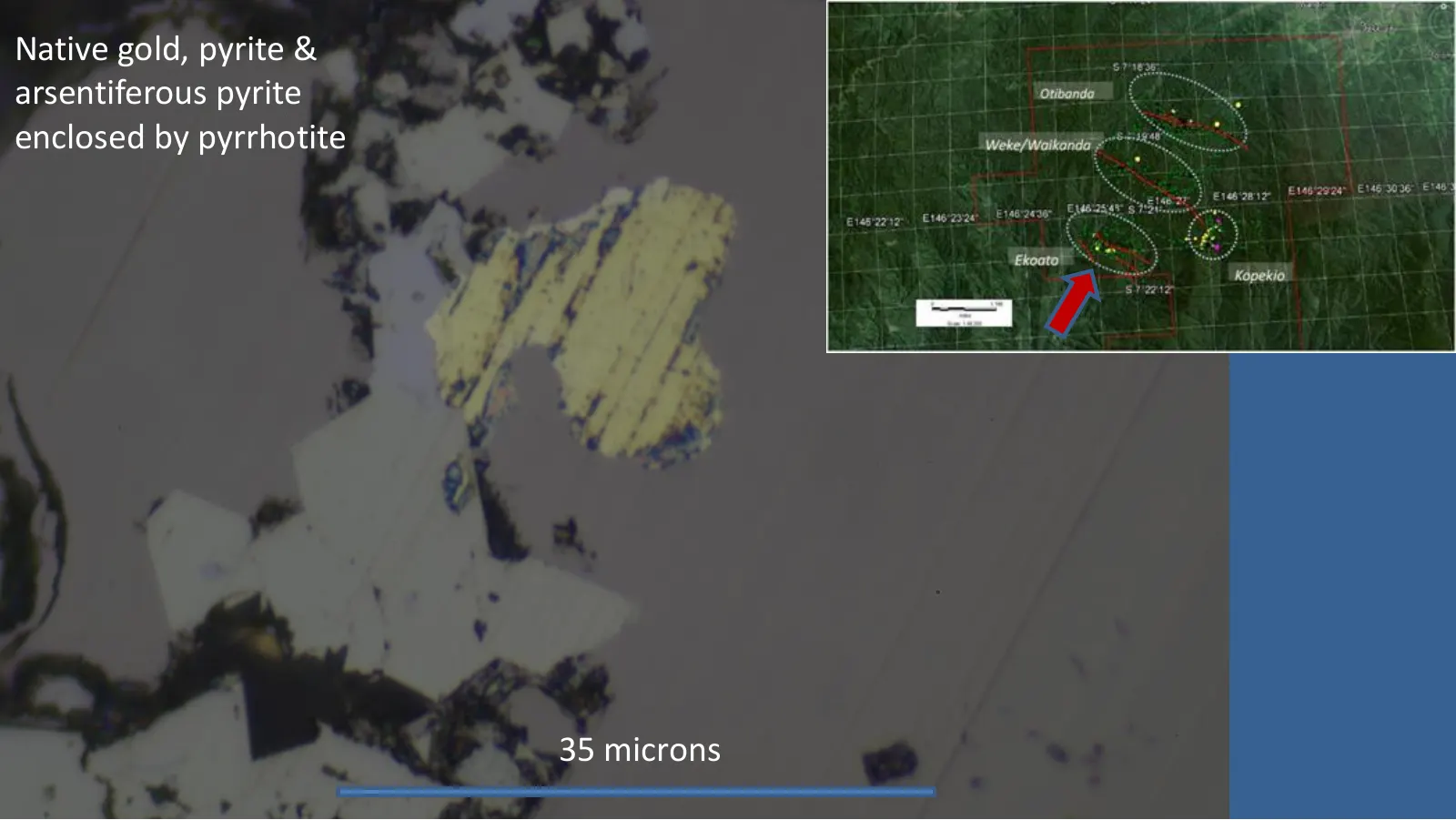
Slide 15: Native gold, pyrite & arsenian pyrite enclosed by pyrrhotite
Native gold, pyrite & arsentiferous pyrite enclosed by pyrrhotite 35 microns
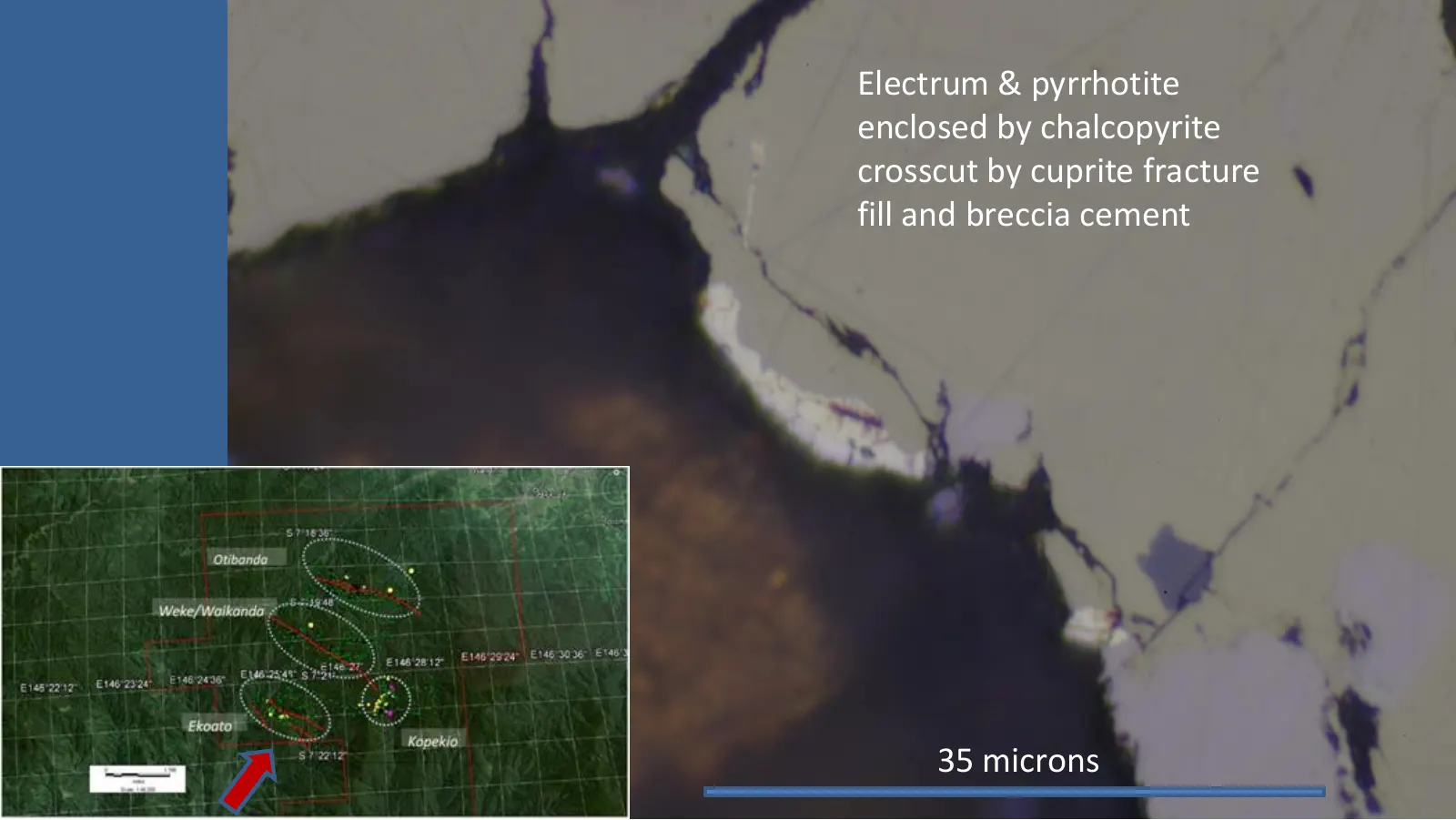
Slide 16: Electrum & pyrrhotite enclosed by chalcopyrite crosscut by cuprite fracture fill
Electrum & pyrrhotite enclosed by chalcopyrite crosscut by cuprite fracture fill and breccia cement 35 microns
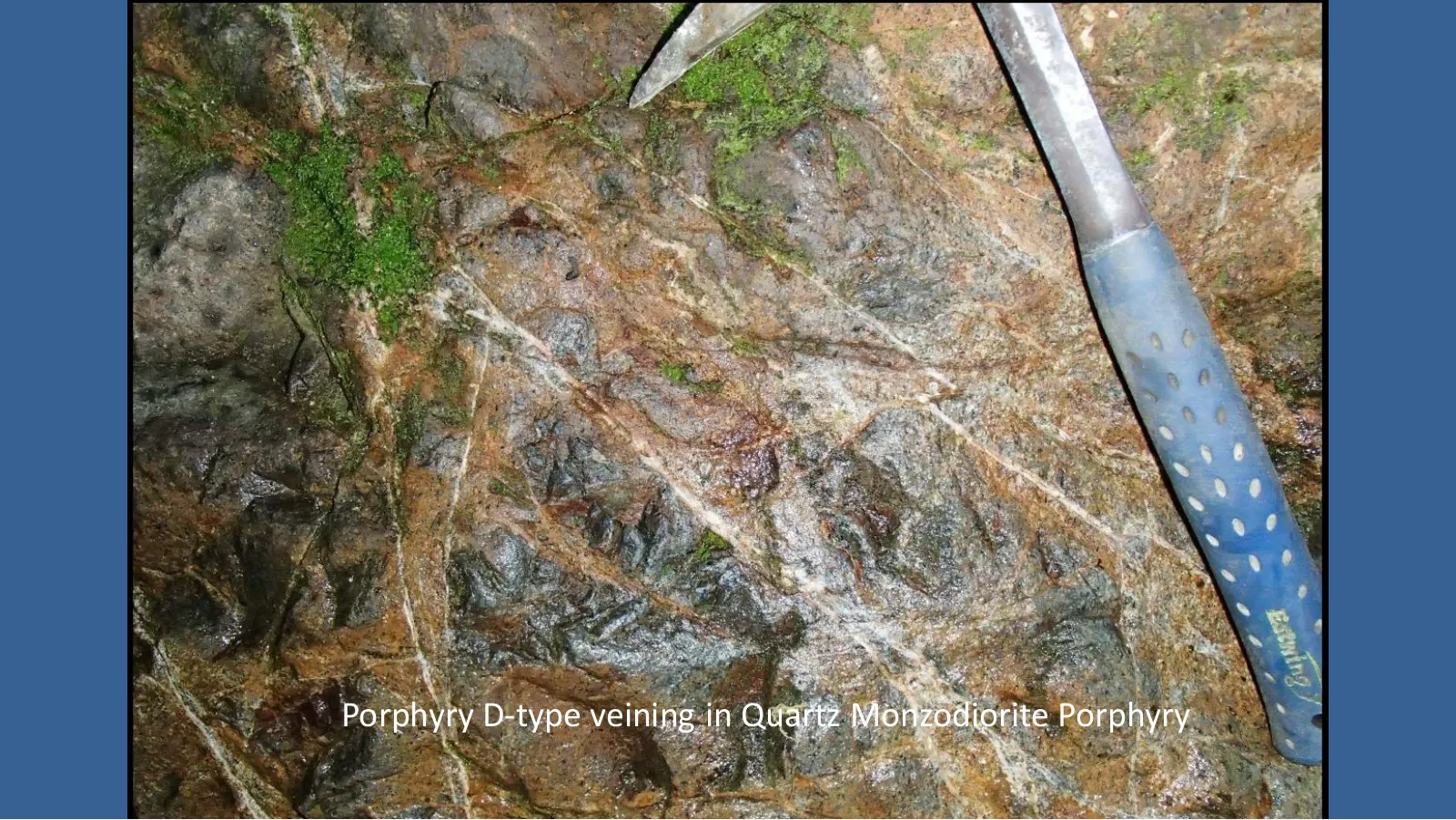
Slide 17: Porphyry D-type veining in Quartz Monzodiorite Porphyry
Porphyry D-type veining in Quartz Monzodiorite Porphyry
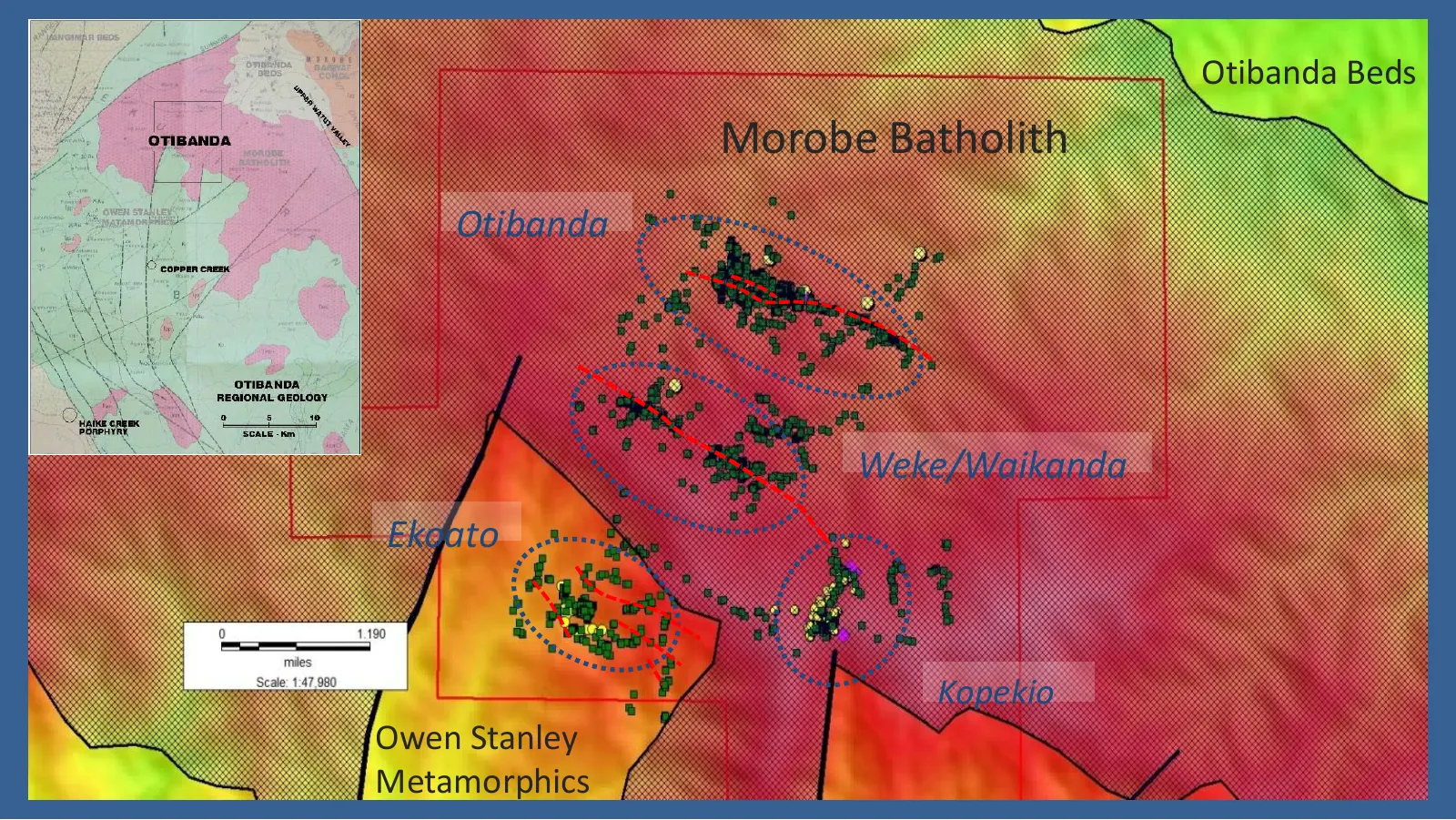
Slide 18: Morobe Batholith and Otibanda Beds
Otibanda Beds Morobe Batholith Otibanda Weke/Waikanda Ekoato Kopekio Owen Stanley Metamorphics
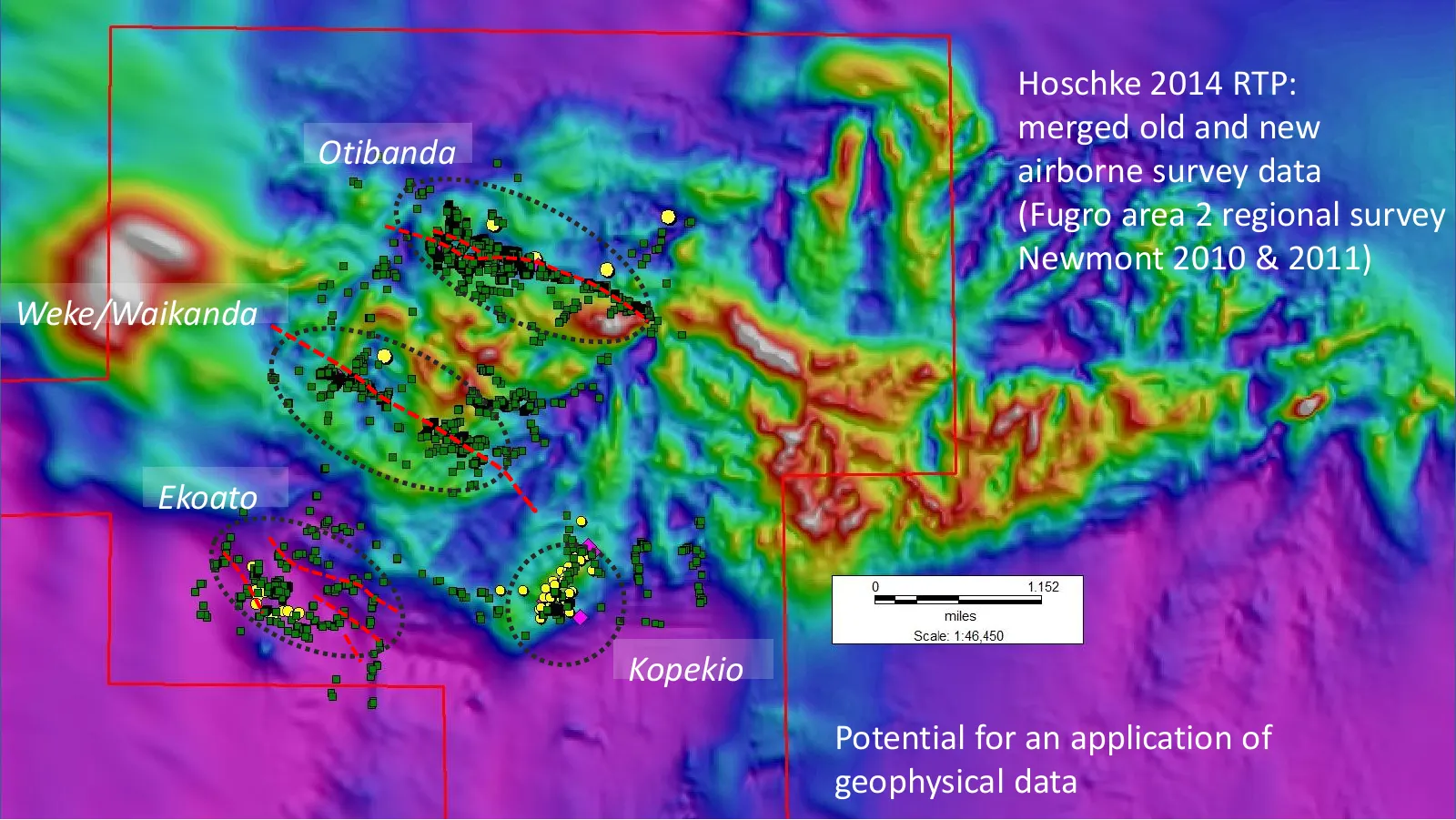
Slide 19: Hoschke 2014 RTP: merged old and new airborne survey data
Hoschke 2014 RTP: merged old and new Otibanda airborne survey data (Fugro area 2 regional survey Newmont 2010 & 2011) Weke/Waikanda Ekoato Kopekio Potential for an application of geophysical data
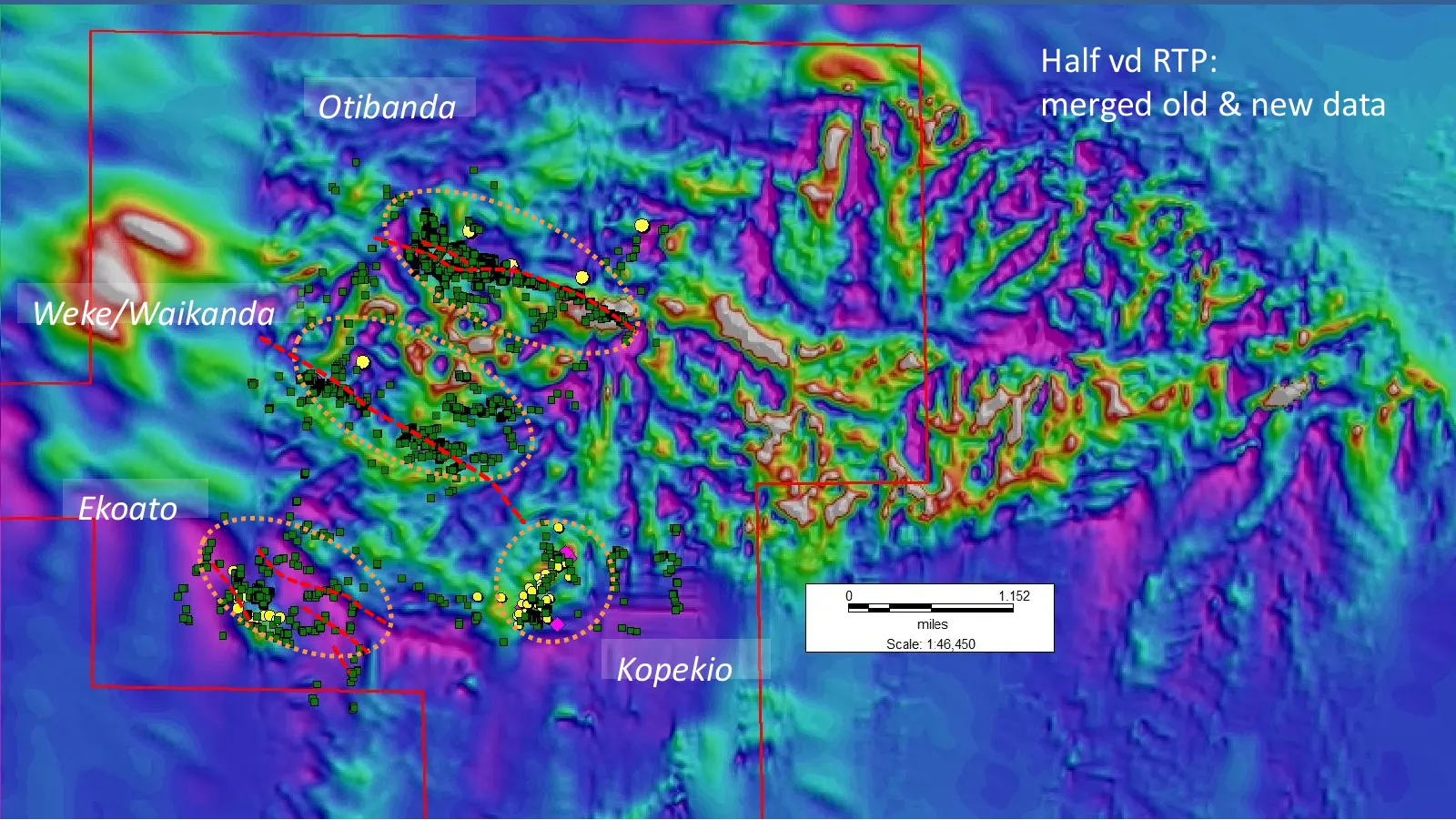
Slide 20: Half vd RTP: merged old & new data
Half vd RTP: Otibanda merged old & new data Weke/Waikanda Ekoato Kopekio
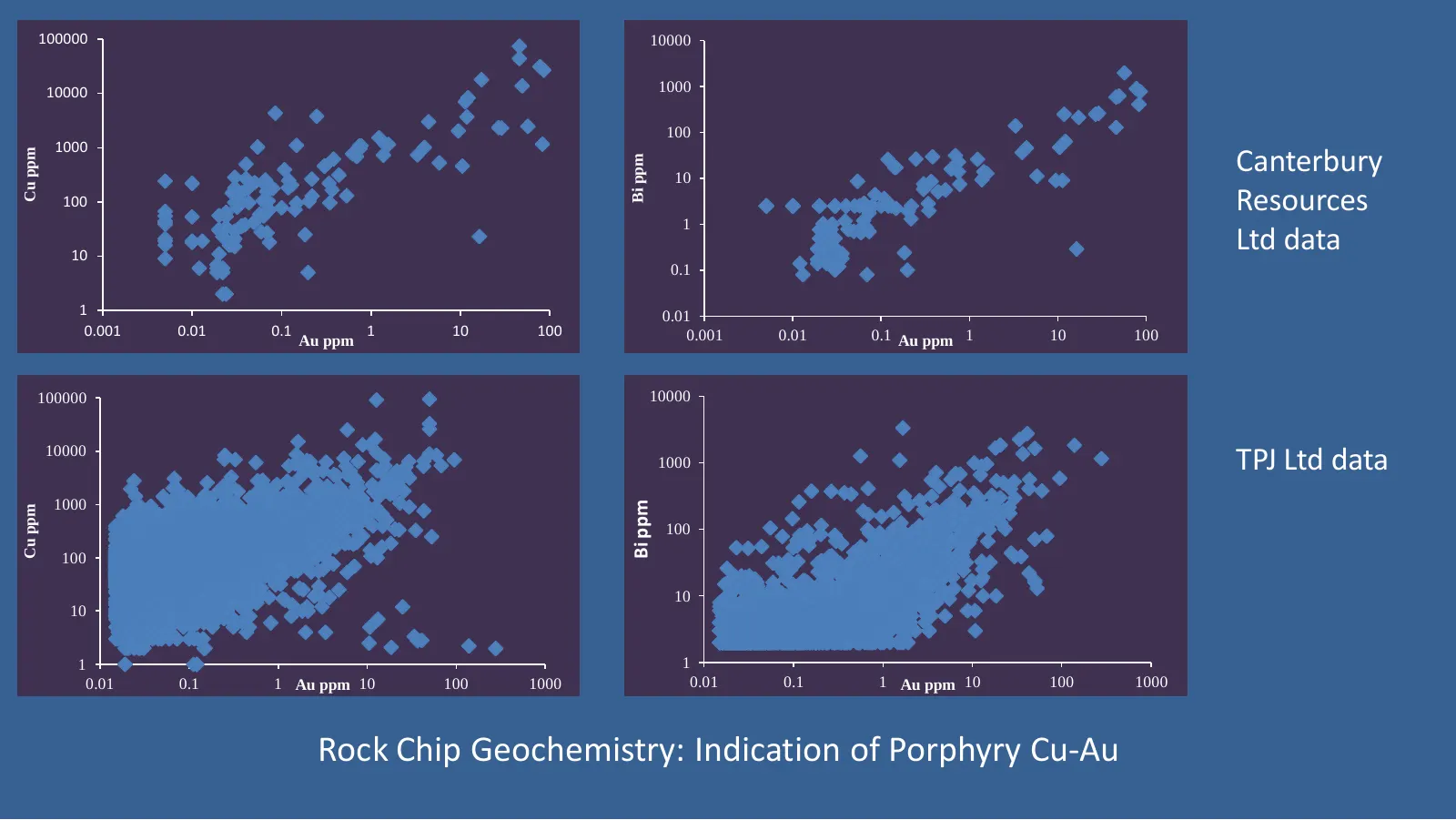
Slide 21: Rock Chip Geochemistry: Indication of Porphyry Cu-Au
100000 10000 10000 1000 100 1000 Cu ppm Canterbury Bi ppm 10 100 Resources 1 10 Ltd data 0.1 1 0.01 0.001 0.01 0.1 1 10 100 0.001 0.01 0.1 Au ppm 1 10 100 Au ppm 100000 10000 10000 1000 TPJ Ltd data 1000 Bi ppm Cu ppm 100 100 10 10 1 1 0.01 0.1 1 Au ppm 10 100 1000 0.01 0.1 1 Au ppm 10 100 1000 Rock

Slide 22: Petrologic Data
Petrologic Data
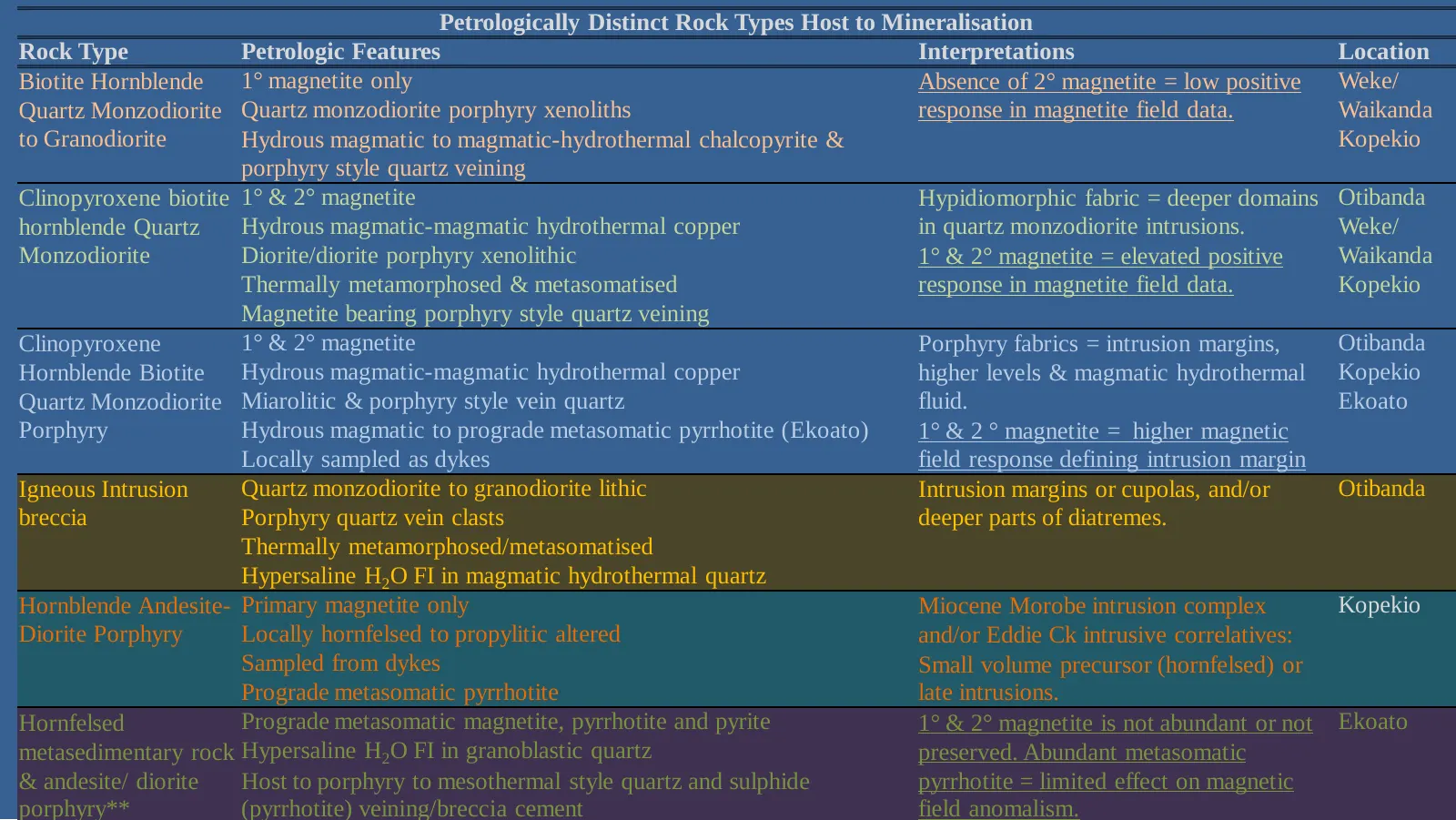
Slide 23: Petrologically Distinct Rock Types Host to Mineralisation
Petrologically Distinct Rock Types Host to Mineralisation Rock Type Petrologic Features Interpretations Location Biotite Hornblende 1° magnetite only Absence of 2° magnetite = low positive Weke/ Quartz Monzodiorite Quartz monzodiorite porphyry xenoliths response in magnetite field data. Waikanda to
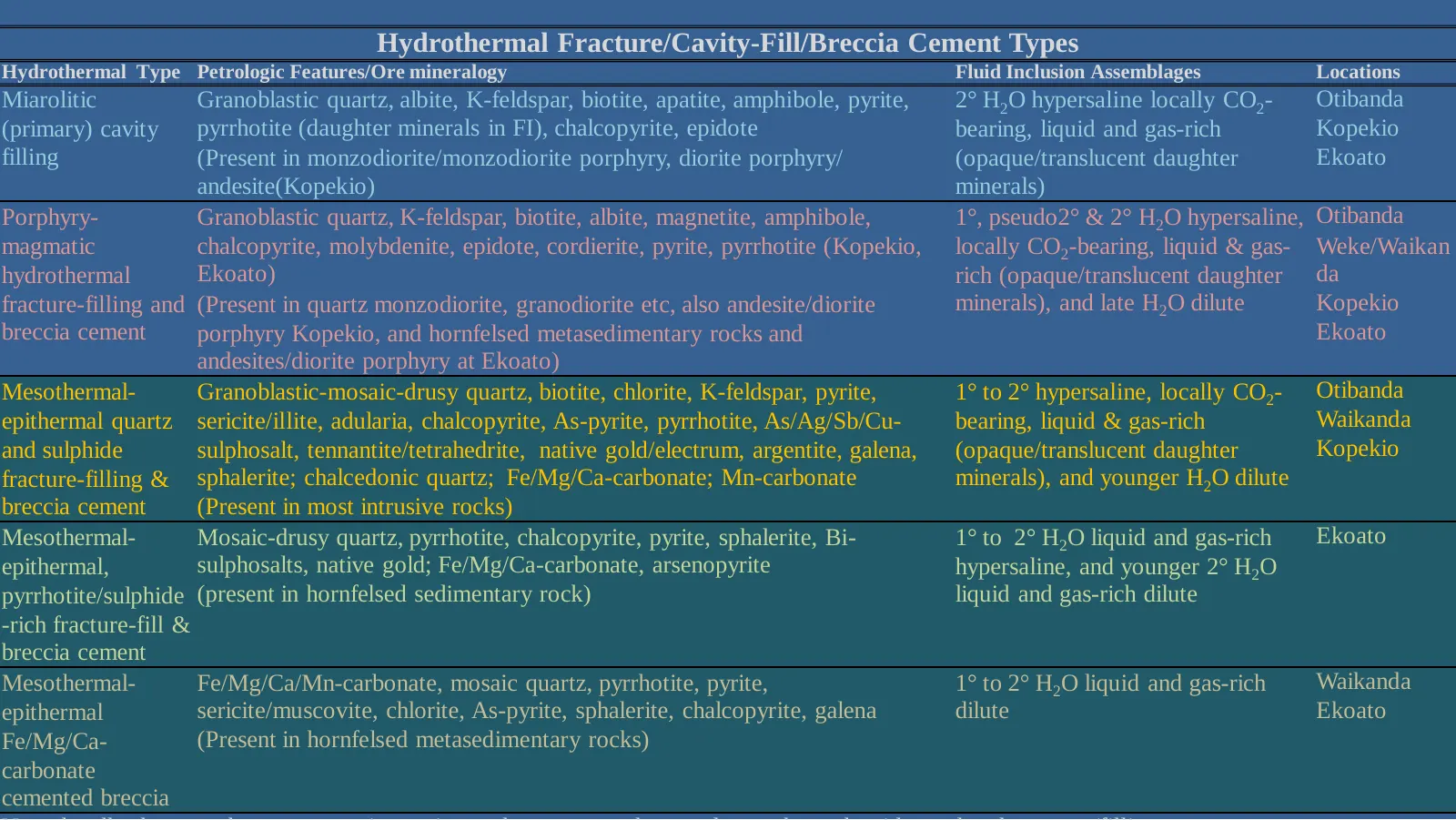
Slide 24: Hydrothermal Fracture/Cavity-Fill/Breccia Cement Types
Hydrothermal Fracture/Cavity-Fill/Breccia Cement Types Hydrothermal Type Petrologic Features/Ore mineralogy Fluid Inclusion Assemblages Locations Miarolitic Granoblastic quartz, albite, K-feldspar, biotite, apatite, amphibole, pyrite, 2° H2O hypersaline locally CO2- Otibanda (primary) cavity pyrrhot
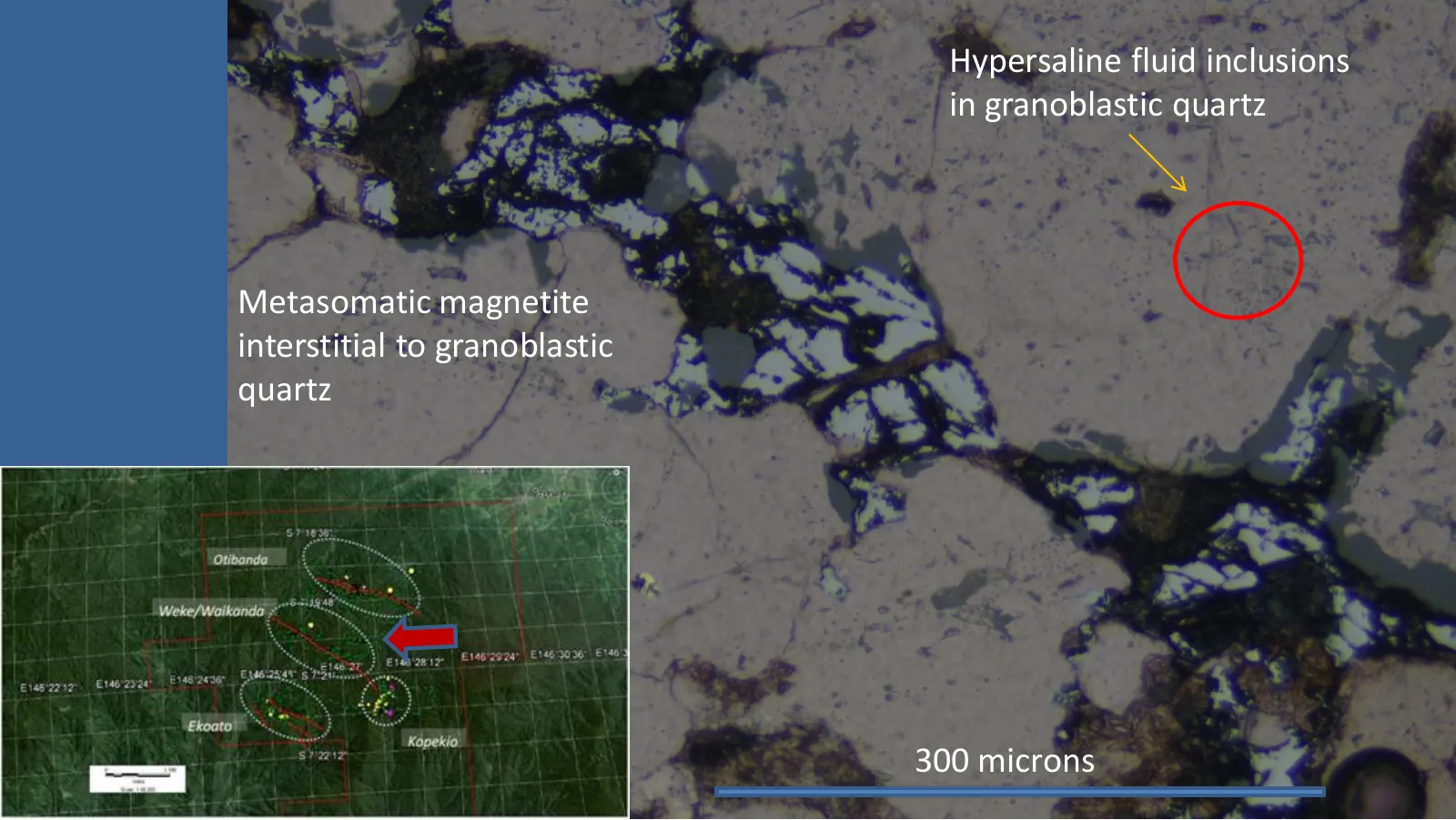
Slide 25: Hypersaline fluid inclusions in granoblastic quartz
Hypersaline fluid inclusions in granoblastic quartz Metasomatic magnetite interstitial to granoblastic quartz 300 microns
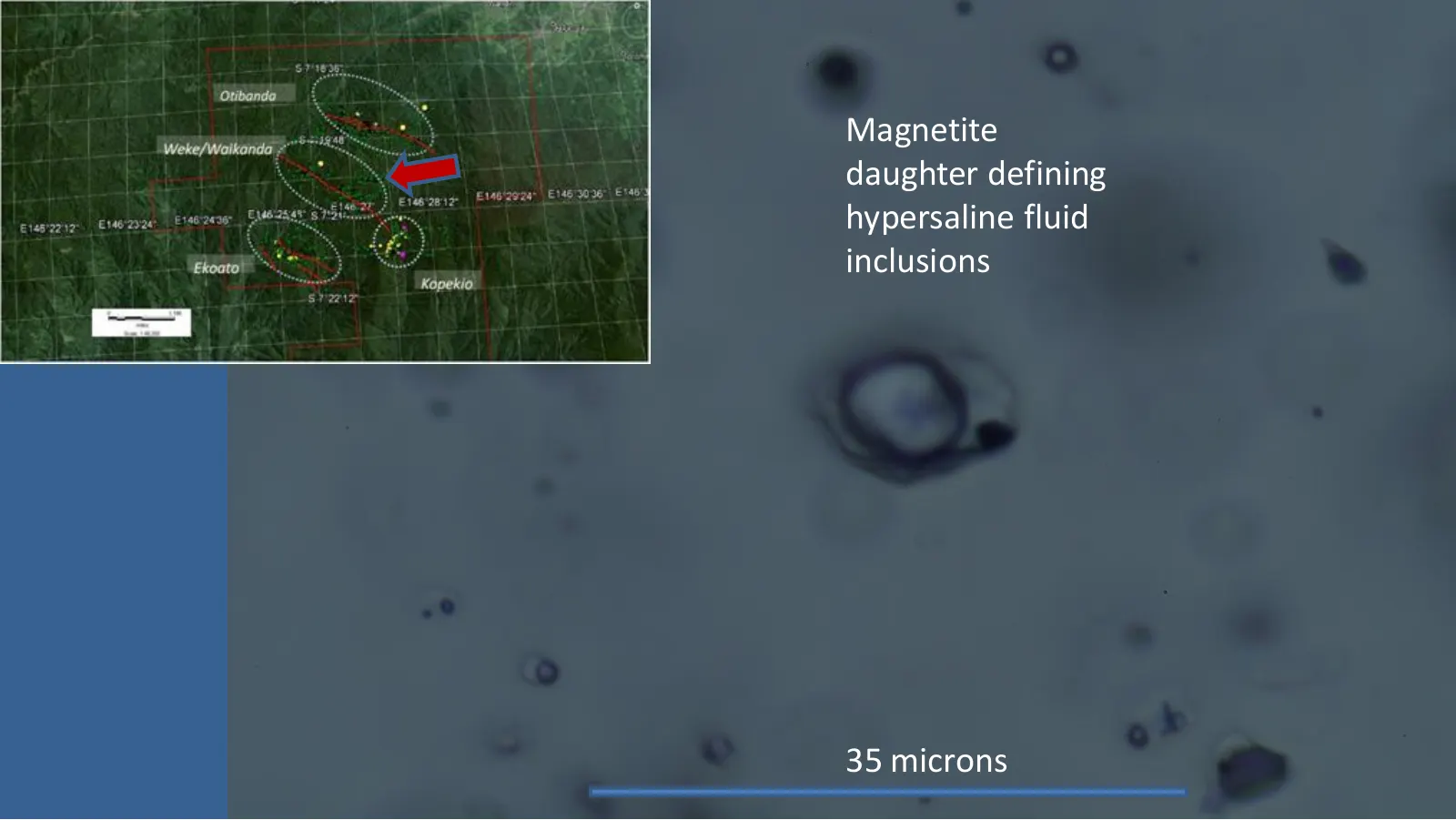
Slide 26: Magnetite daughter defining hypersaline fluid inclusions
Magnetite daughter defining hypersaline fluid inclusions 35 microns
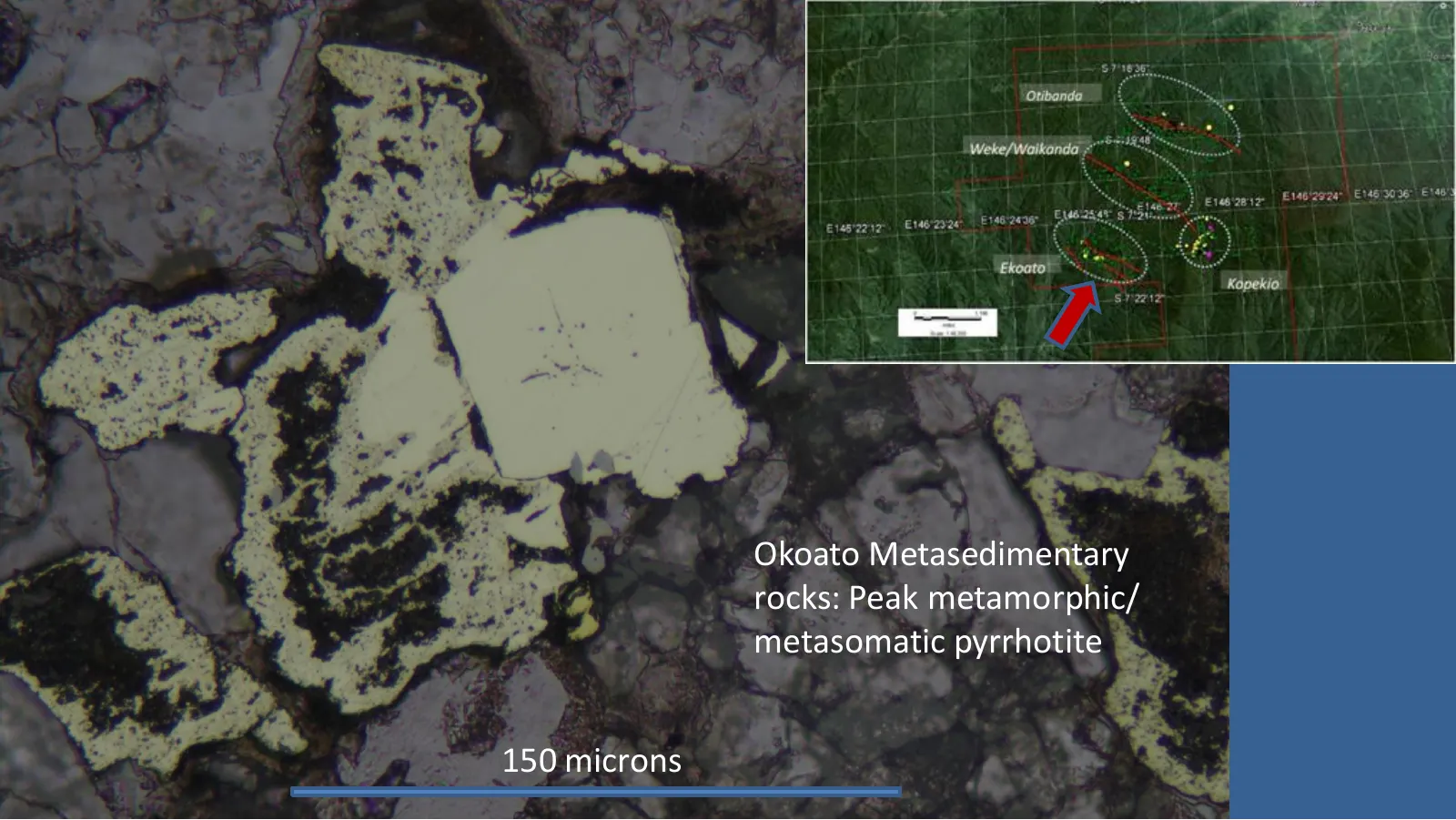
Slide 27: Ekoato Metasedimentary rocks: Peak metamorphic/metasomatic pyrrhotite
Okoato Metasedimentary rocks: Peak metamorphic/ metasomatic pyrrhotite 150 microns
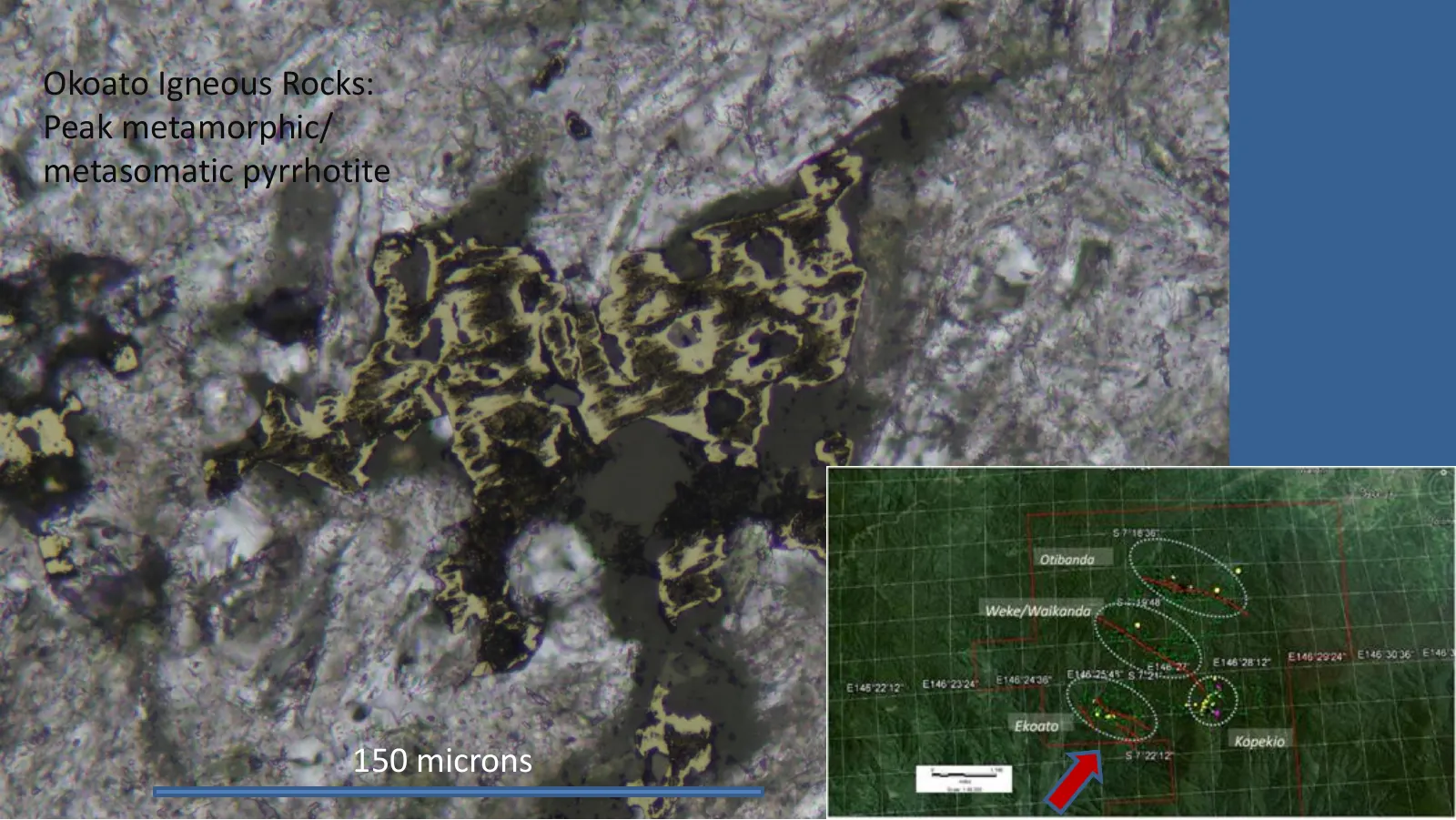
Slide 28: Ekoato Igneous Rocks: Peak metamorphic/metasomatic pyrrhotite
Okoato Igneous Rocks: Peak metamorphic/ metasomatic pyrrhotite 150 microns
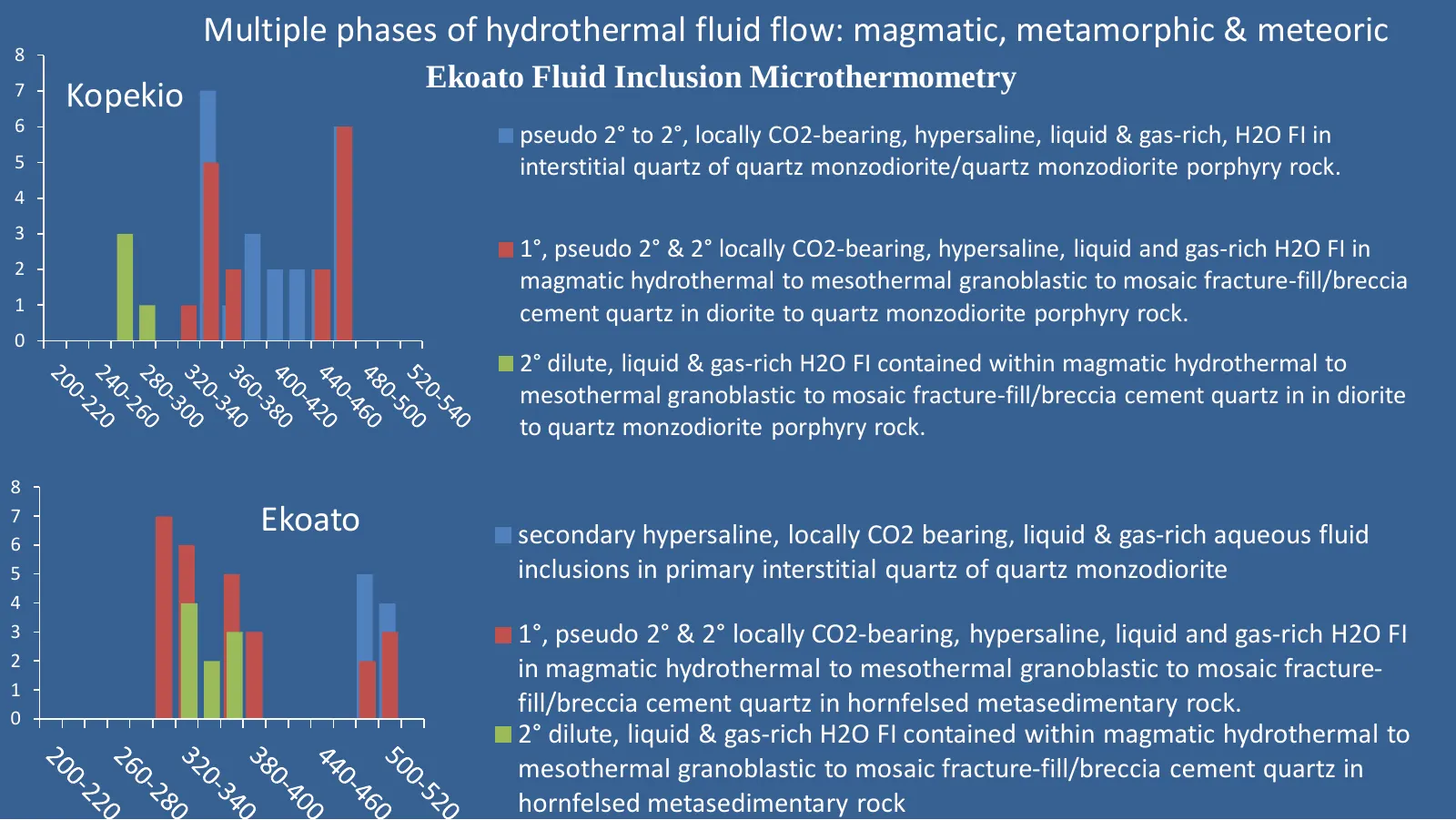
Slide 29: Multiple phases of hydrothermal fluid flow: magmatic, metamorphic & meteoric
Multiple phases of hydrothermal fluid flow: magmatic, metamorphic & meteoric 8 Ekoato Fluid Inclusion Microthermometry 7 Kopekio 6 pseudo 2° to 2°, locally CO2-bearing, hypersaline, liquid & gas-rich, H2O FI in 5 interstitial quartz of quartz monzodiorite/quartz monzodiorite porphyry rock. 4 3 1°, p
Slide 30: Petrologic Data Summary
Petrologic Data Summary • Petrologically distinct rock types: intrusions, hornfels, breccias • Magnetite more abundant in relation to thermal metamorphic-related metasomatism (defining intrusion margins) • Finer grained intrusions to south (Kopekio & Ekoato) • Prograde metasomatic pyrrhotite in horn
Slide 31: Petrology Data Summary Cont.
Petrology Data Summary Cont. • Porphyry/magmatic hydrothermal style copper & gold in causative granodiorite, quartz monzodiorite and andesite/ diorite porphyry & in hornfelsed sedimentary rocks • FI petrographic evidence for magmatic hydrothermal fluid contributions to structurally localised mesothe
Slide 32: Petrology Data Summary Cont.
Petrology Data Summary Cont. • Tectonic related retrograde hydrothermal overprinting of prograde metasomatic/hydrothermal alteration and mineralisation
Slide 33: Application of Petrology to Geophysics
Application of Petrology to Geophysics
Slide 34: Petrologic/Petrophysic Features & Geophysical Data: Otibanda-Weke/Waikanda
Petrologic/Petrophysic Features & Geophysical Data/Representations: Otibanda-Weke/Waikanda Intrusion Centre • Circular features defining multiple sub intrusions within large intrusion framework, dislocated along predominant NW trending structures • Intrusion margins defined by concentrations of ther
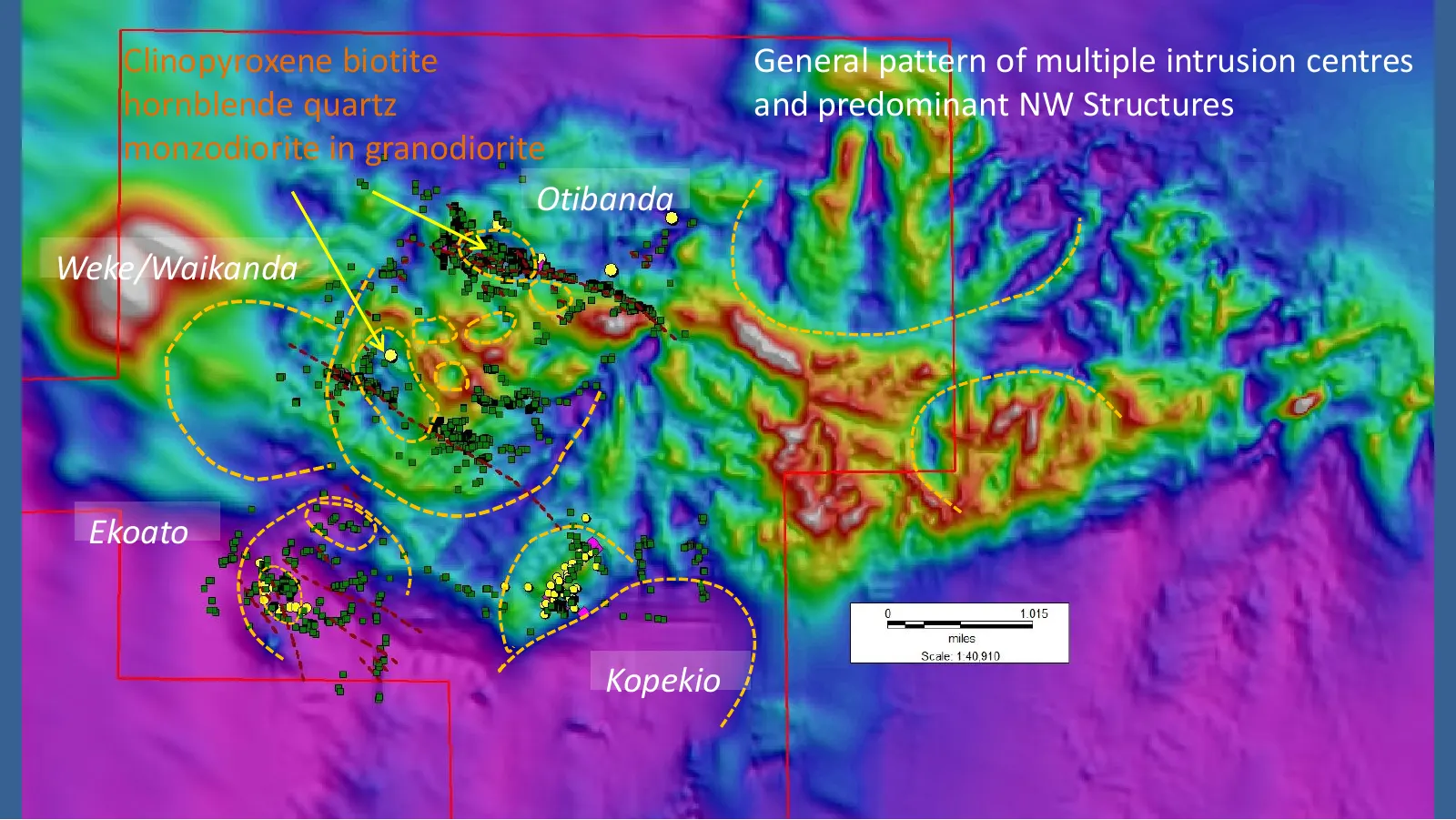
Slide 35: Clinopyroxene biotite hornblende quartz monzodiorite in granodiorite
Clinopyroxene biotite General pattern of multiple intrusion centres hornblende quartz and predominant NW Structures monzodiorite in granodiorite Otibanda Weke/Waikanda Ekoato Kopekio
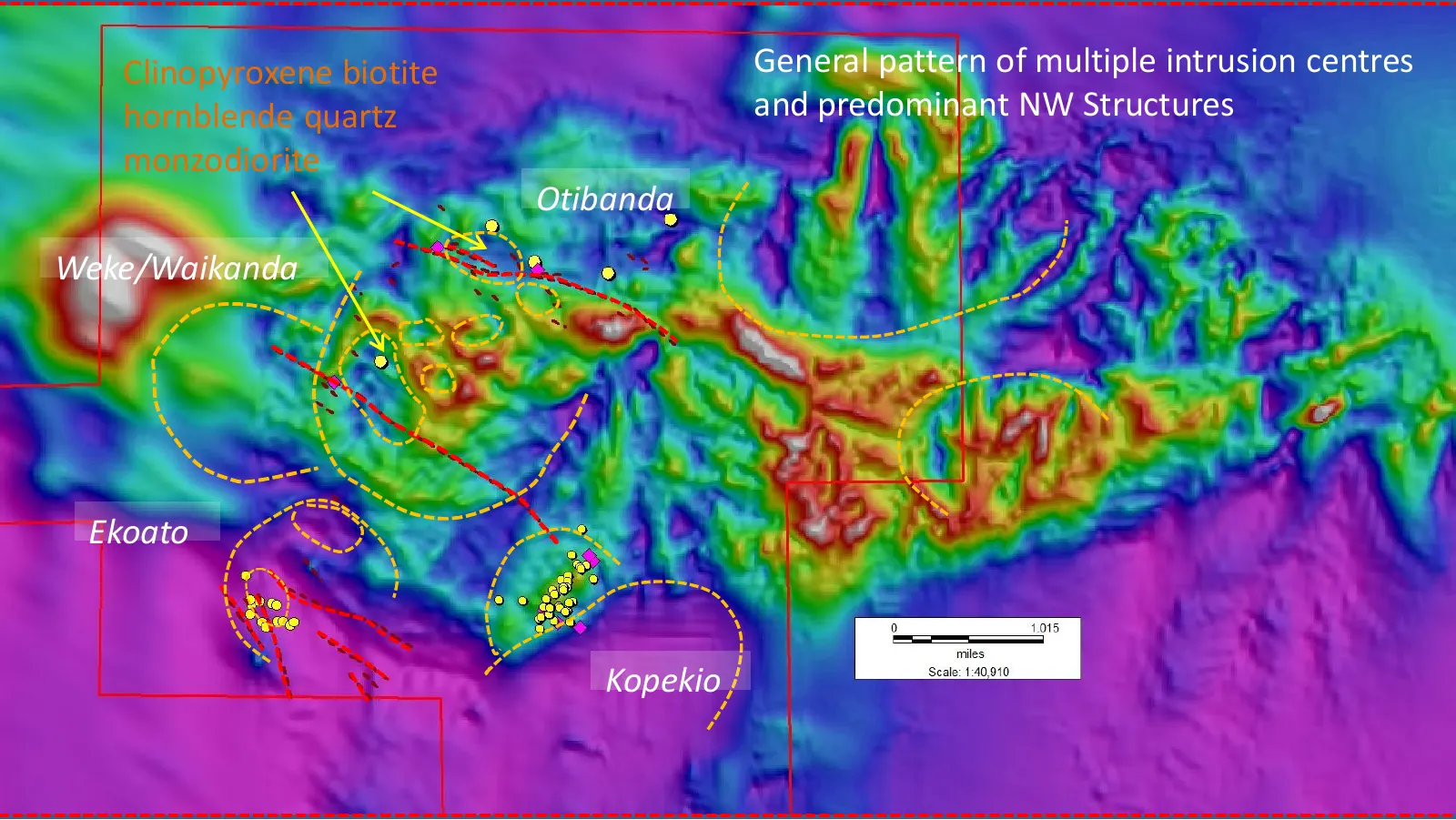
Slide 36: General pattern of multiple intrusion centres and predominant NW structures
Clinopyroxene biotite General pattern of multiple intrusion centres hornblende quartz and predominant NW Structures monzodiorite Otibanda Weke/Waikanda Ekoato Kopekio
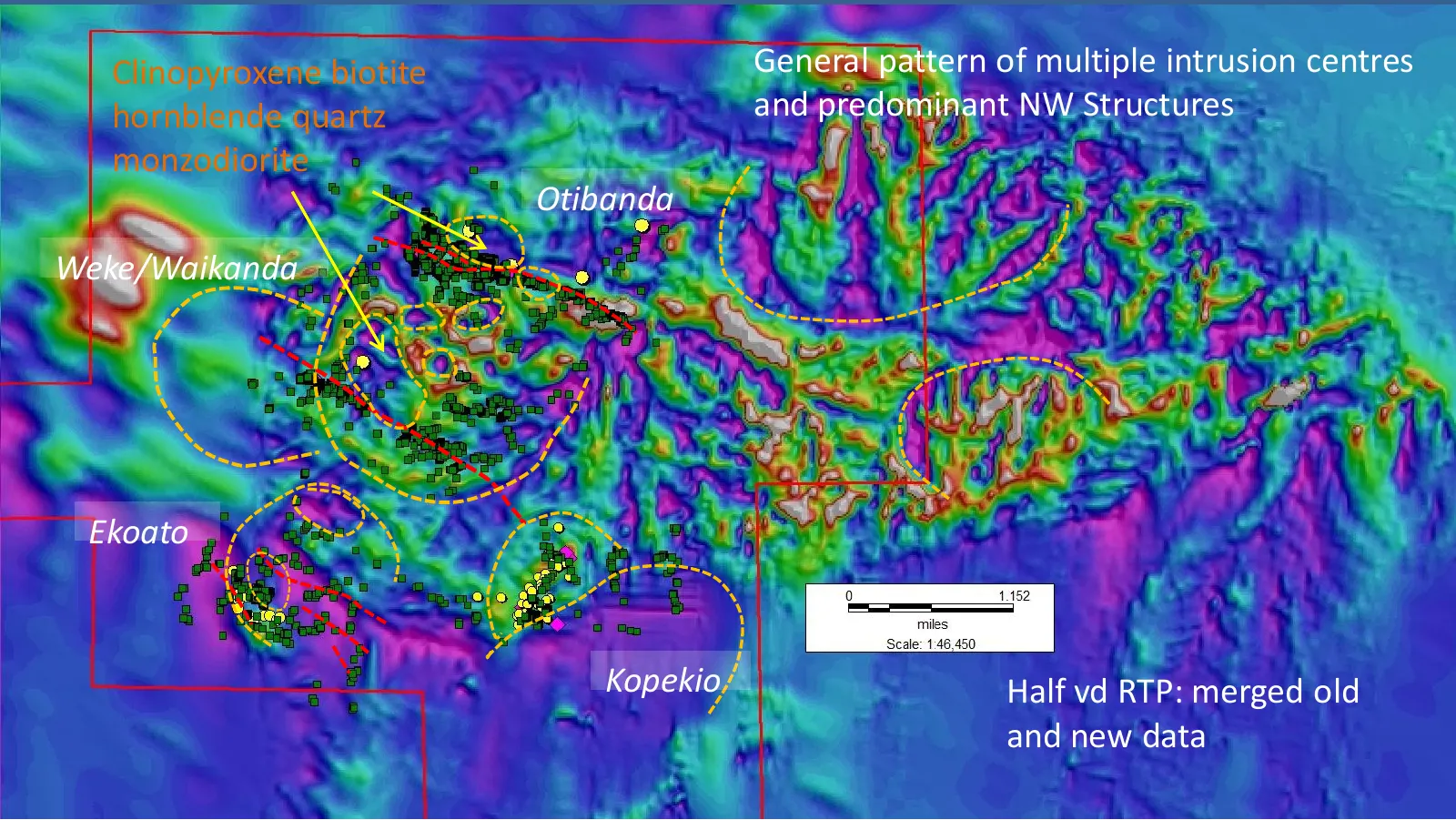
Slide 37: General pattern of multiple intrusion centres and predominant NW structures
Clinopyroxene biotite General pattern of multiple intrusion centres hornblende quartz and predominant NW Structures monzodiorite Otibanda Weke/Waikanda Ekoato Kopekio Half vd RTP: merged old and new data
Slide 38: Petrologic/Petrophysic Features & Geophysical Data: Kopekio Intrusion Centre
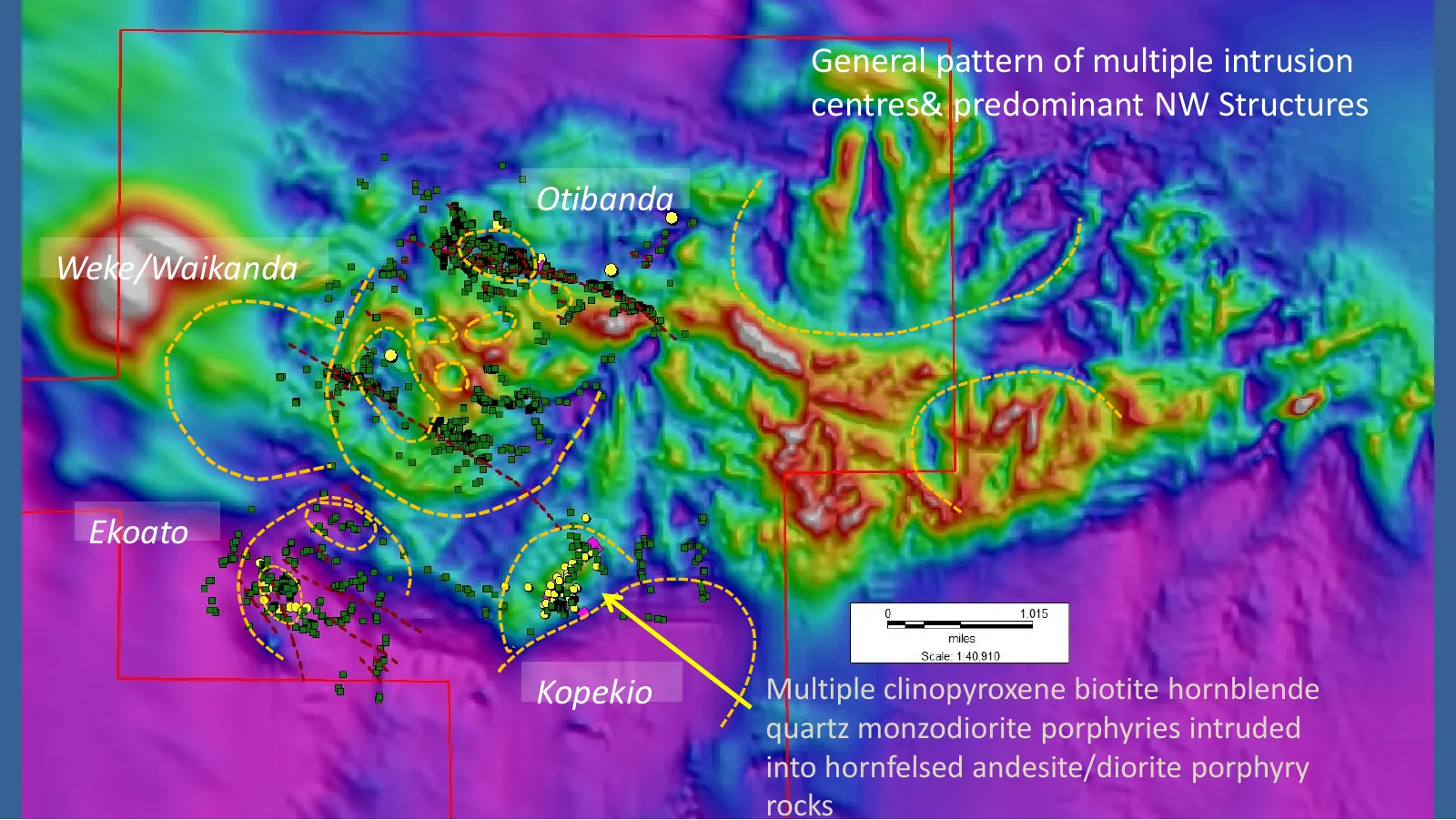
Petrologic/Petrophysic Features & Geophysical Data/Representations: Kopekio Intrusion Centre • Relatively small intrusion centre of limited variation in magnetic field response, truncated by intrusion or structure to SE • Possible multiple intrusion centre: clinopyroxene biotite hornblende quartz mo
Slide 39: General pattern of multiple intrusion centres and predominant NW structures
General pattern of multiple intrusion centres& predominant NW Structures Otibanda Weke/Waikanda Ekoato Kopekio Multiple clinopyroxene biotite hornblende quartz monzodiorite porphyries intruded into hornfelsed andesite/diorite porphyry rocks
Slide 40: Petrologic/Petrophysic Features & Geophysical Data: Ekoato
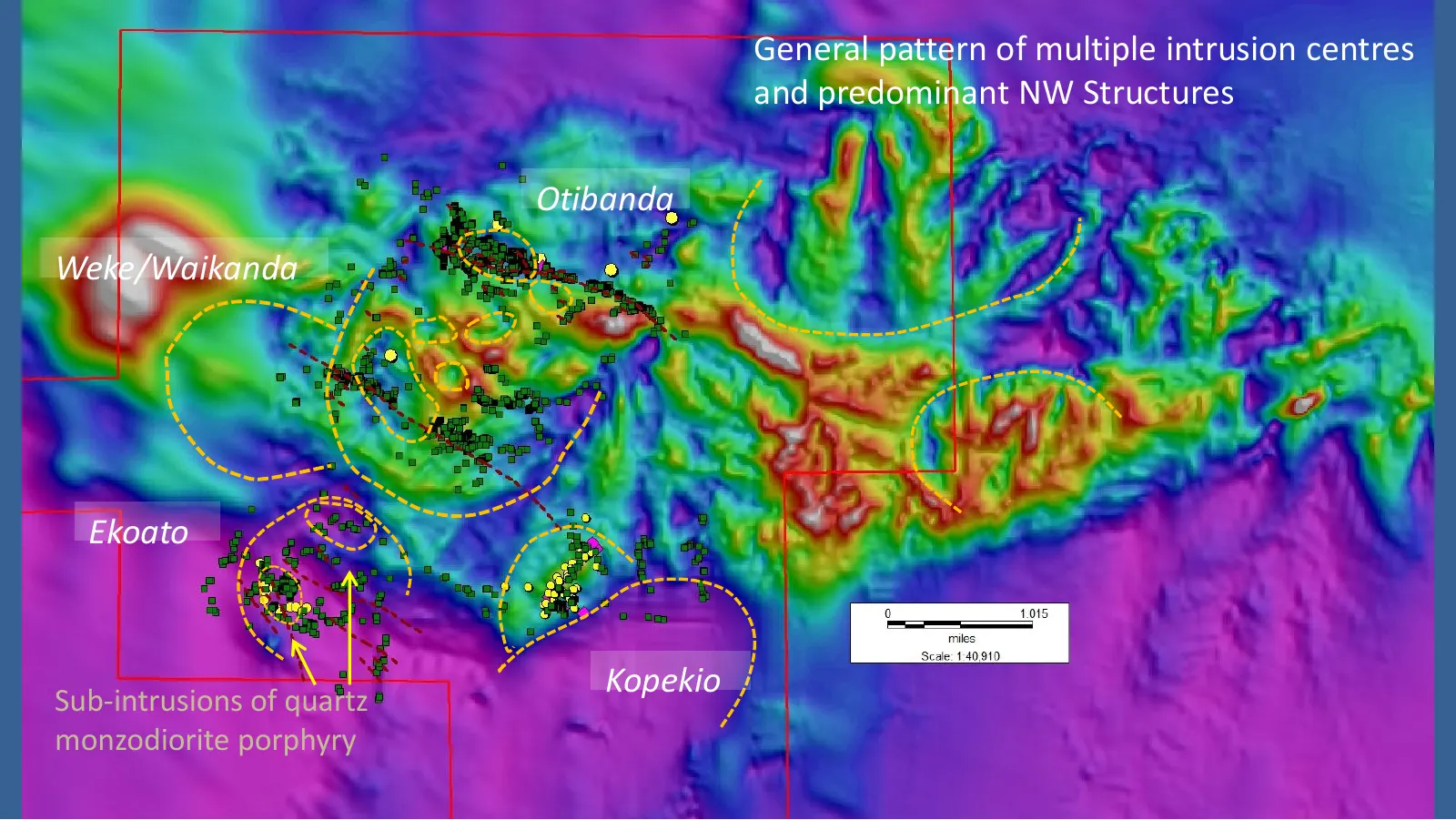
Petrologic/Petrophysic Features & Geophysical Data/Representations: Ekoato • Intrusion centre (semi circular feature) dislocated along multiple NW trending structures • Sub-intrusions of quartz monzodiorite porphyry (outcrop/drilling) • Overall subdued magnetic field response: variation in magnetic
Slide 41: General pattern of multiple intrusion centres and predominant NW structures
General pattern of multiple intrusion centres and predominant NW Structures Otibanda Weke/Waikanda Ekoato Kopekio Sub-intrusions of quartz monzodiorite porphyry
Slide 42: Conclusions
Conclusions • Petrologic data resolvable as petrophysical variations interpreted in terms of geologic framework & hydrothermal processes resulting in mineralisation • Structurally controlled/confined precious and base metal mineralisation and less well defined disseminated copper-(gold) mineralisati
Slide 43: Conclusions cont.
Conclusions cont. • Petrophysical features of prograde potassic metasomatised and thermally metamorphosed/metasomatised igneous rocks are resolvable in terms of the distribution and concentration of primary and metasomatic magnetite. • Petrophysical features of thermally metamorphosed/metasomatised
Slide 44: Conclusions Cont.
Conclusions Cont. • Petrologic and petrophysical data defines a relatively deeply eroded causative composite intrusion centre at Otibanda and Weke/Waikanda. • Mineralisation in the Kopekio and Ekoato zones is in paragenetic association with relatively smaller composite intrusion centres, more shallo
Slide 45: Acknowledgements, Thank You
Acknowledgements • Canterbury Resources Ltd Thank You
Source: Internet Archive copy of canterburyresources.com.au
More decks from Canterbury Resources Ltd.
 Shareholder Meeting (November 2026)18 slides · Nov 17, 2026
 Investor Presentation (August 2026)18 slides · Aug 11, 2026
 Investor Presentation (May 2026)19 slides · May 20, 2026
 Shareholder Meeting (November 2025)20 slides · Nov 21, 2025
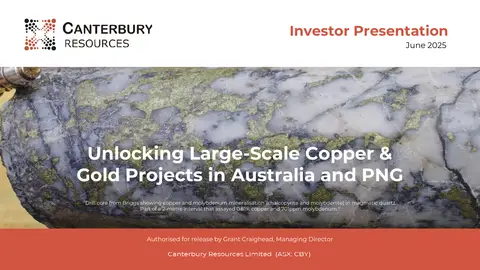 Investor Presentation (June 2025)20 slides · June 2025
 Shareholder Meeting (November 2024)16 slides · Nov 21, 2024