ScanSource, Inc. · NASDAQ:SCSC
ScanSource — Technical Presentation (July 2004)
25 slides from ScanSource's technical presentation, July 2004

Slide 1: Intel
YY 7 ~~ Intel VS
Slide 2: Understanding RFID in a Wireless Environment
Understanding RFID in a Wireless Environment - an overview of RFID tags, standards, protocols, RFID readers, interference issues, tag and reader performance issues and site surveys John Bartos & Charles McLean July 2004
Slide 3: An Overview....
An Overview....
Slide 4: What is RFID?
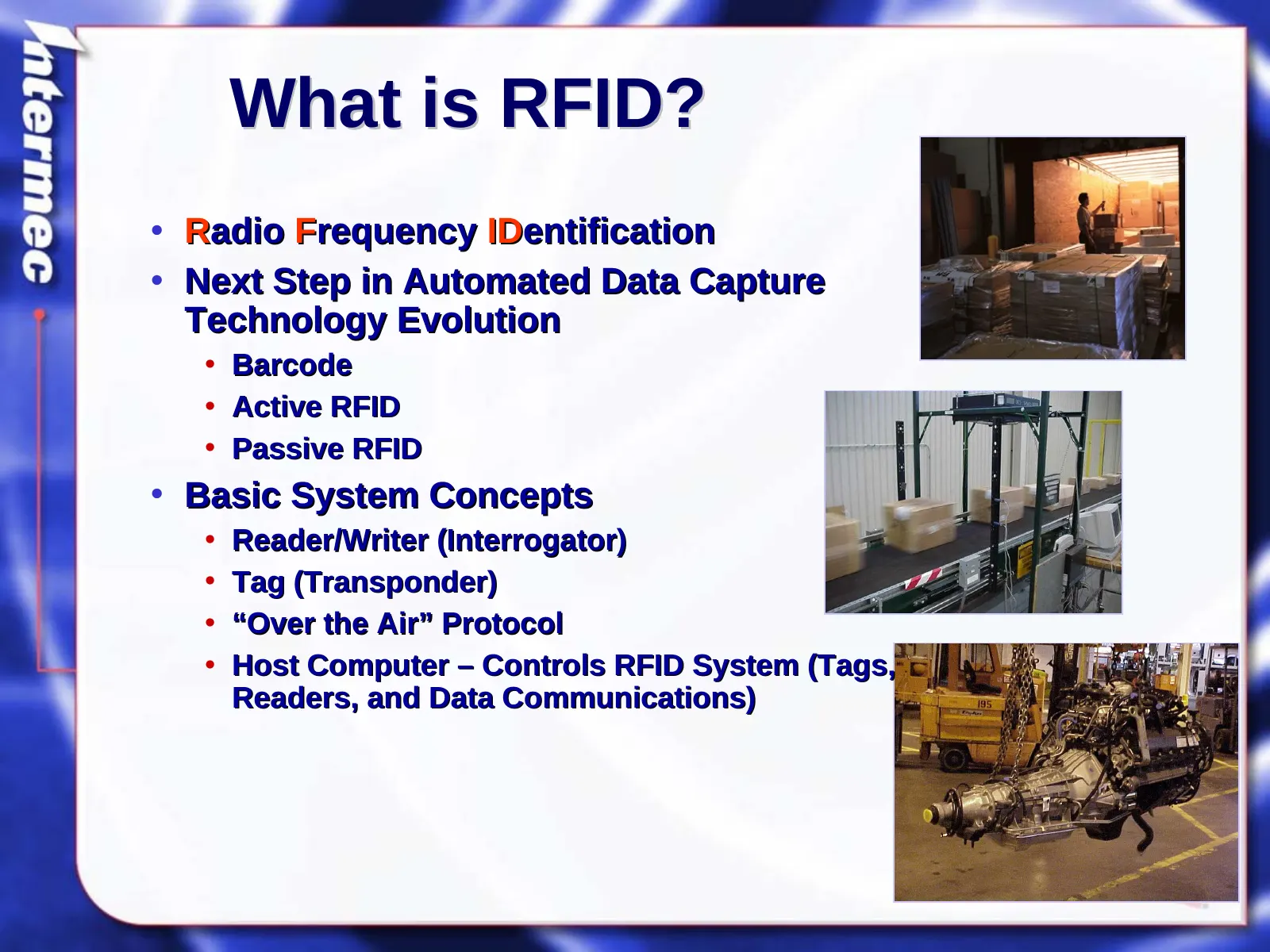
What is RFID? • Radio Frequency IDentification • Next Step in Automated Data Capture Technology Evolution • Barcode • Active RFID • Passive RFID • Basic System Concepts • Reader/Writer (Interrogator) • Tag (Transponder) • “Over the Air” Protocol • Host Computer – Controls RFID System (Tags, Readers,
Slide 5: How RFID Works
How RFID Works Asset contains an RF tag/label instead of (or most likely in conjunction with) a bar code label Interrogator “scans” the tag for information using RFID. The differences: a) Interrogator may read any field or memory location b) May select a group of tags based on field values
Slide 6: Tag Overview
Tag Overview
Slide 7: Not All Tags Are The Same
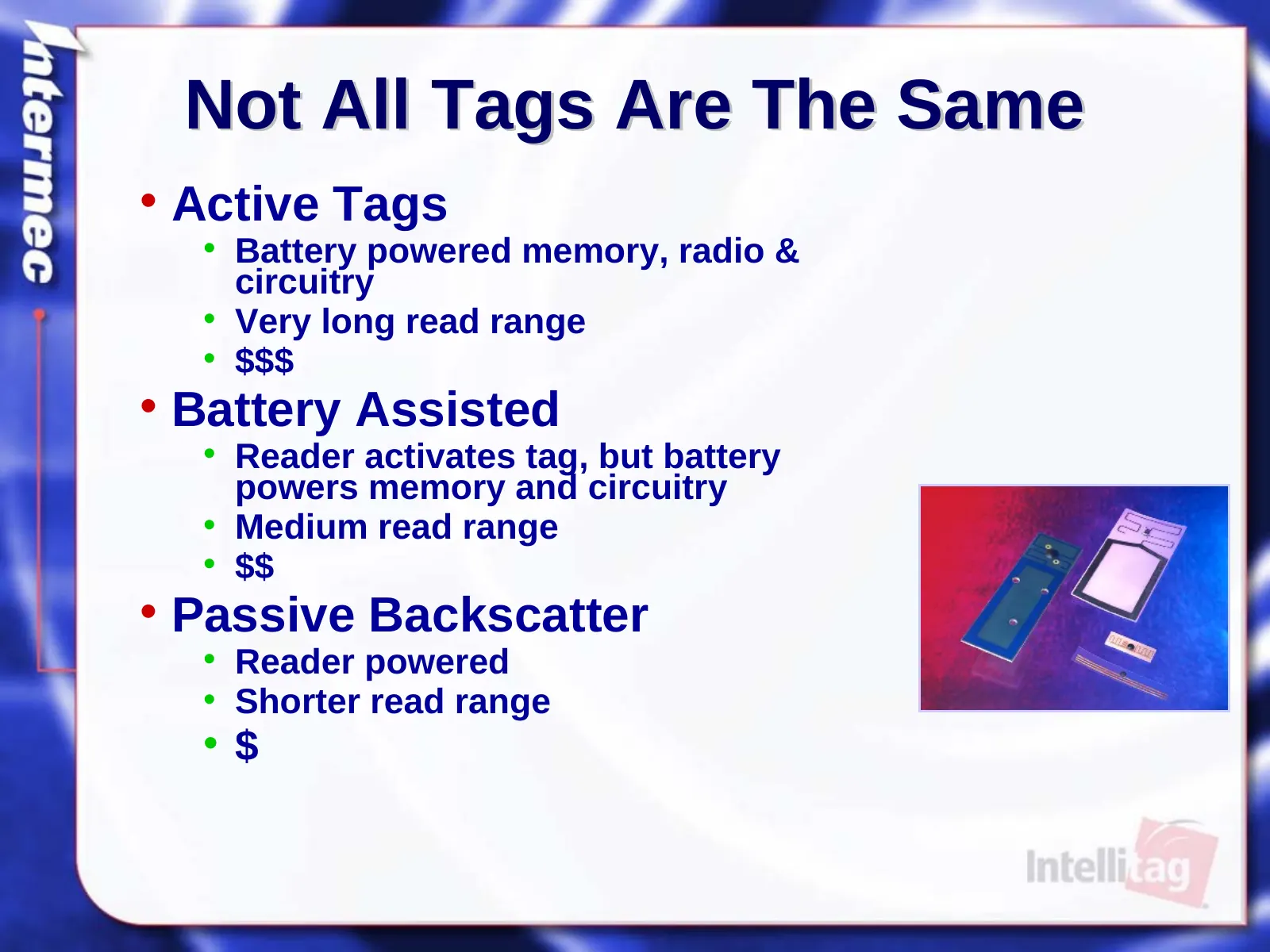
Not All Tags Are The Same • Active Tags • Battery powered memory, radio & circuitry • Very long read range • $$$ • Battery Assisted • Reader activates tag, but battery powers memory and circuitry • Medium read range • $$ • Passive Backscatter • Reader powered • Shorter read range •$
Slide 8: Standards and protocols
Standards and protocols • Emerging standard : EPCglobal™ UHF Generation 2
Slide 9: EPCglobal UHF Generation 2
EPCglobal UHF Generation 2 • Air interface/protocol specification is on schedule for chips, tags, labels, and readers to begin shipping before the end of 2004! • First silicon chips will be available this summer • “Class” and memory size independent of protocol
Slide 10: UHF Passive Backscatter – best overall technology for Supply Chain
UHF Passive Backscatter – best overall technology for Supply Chain • Low Cost • Good Read Range • Good Read Rate • Existing & evolving standards drive multiple competing sources
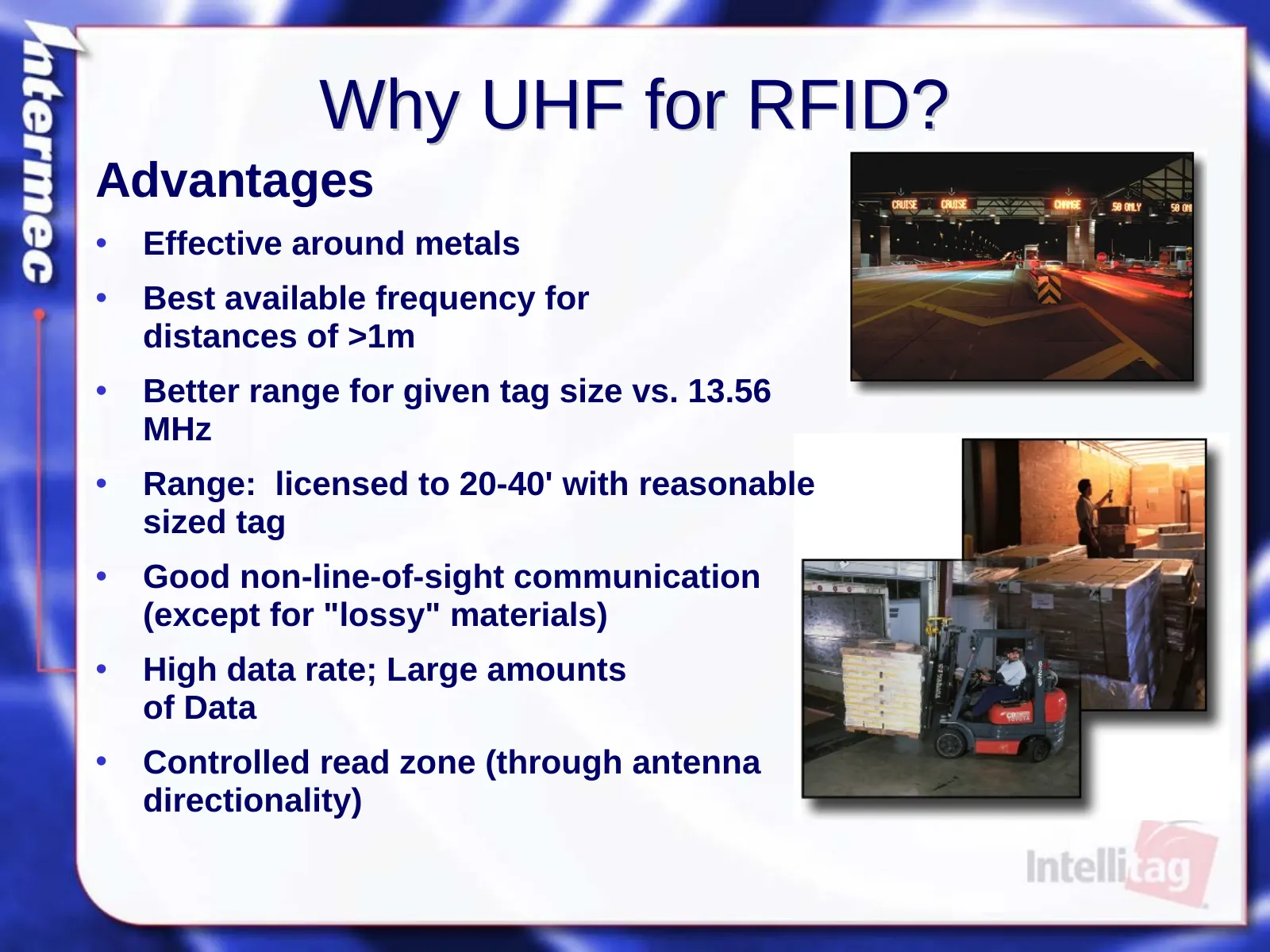
Slide 11: Why UHF for RFID?
Why UHF for RFID? Advantages • Effective around metals • Best available frequency for distances of >1m • Better range for given tag size vs. 13.56 MHz • Range: licensed to 20-40' with reasonable sized tag • Good non-line-of-sight communication (except for "lossy" materials) • High data rate; Large a
Slide 12: Why UHF for RFID?
Why UHF for RFID? Disadvantages • Does not penetrate water/tissue • Variable worldwide regulatory requirements • Radio Region 1 Europe - 869 MHz, 250 KHz Bandwidth, 0.5W ERP, 10% Duty Cycle • Radio Region 2 – Americas – (902-928 MHz, 4W EIRP, 100% Duty Cycle • Radio Region 3 – Asia – Emerging Standa
Slide 13: RFID regulatory differences by region of the world
RFID regulatory differences by region of the world • Usage of channels • Primary service (site license) • Secondary service • Cannot interfere with primary service • Cannot claim protection of interference from primary service • Can claim protection of interference from other secondary users • Indus
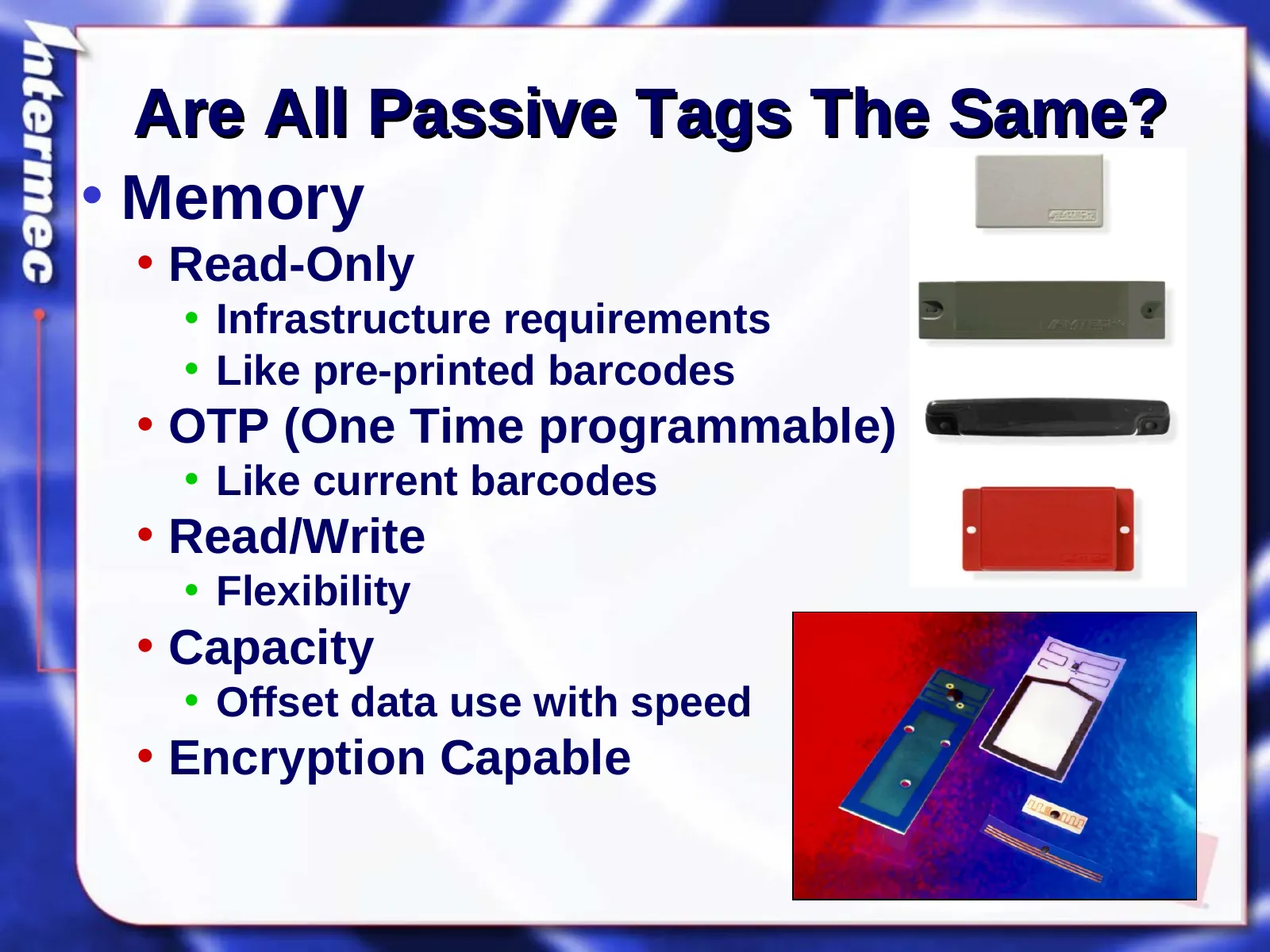
Slide 14: Are All Passive Tags The Same?
Are All Passive Tags The Same? • Memory • Read-Only • Infrastructure requirements • Like pre-printed barcodes • OTP (One Time programmable) • Like current barcodes • Read/Write • Flexibility • Capacity • Offset data use with speed • Encryption Capable
Slide 15: Why Write?
Why Write? • Adaptability / Flexibility • Adjust to changing numbering schemes • Product Velocity • Reduce lookups • Data Persistence • Loss Prevention • Set sales bit • Extended Usability • Security
Slide 16: Write Performance Considerations
Write Performance Considerations • Read vs. Identify Speed • Database Speed and Availability versus local decision-making • Determine how many tags must be read and written over how much time • Choose tag memory type to suit need
Slide 17: Tag Selection Considerations
Tag Selection Considerations • Frequency & antenna shape • Materials and Mounting Surface • Range • Size • Housing • Size • Environment • Memory • Application driven
Slide 18: Site, reader, and system performance
Site, reader, and system performance
Slide 19: Site Analysis
Site Analysis • Analyze the site • Where are readers needed • What’s the read range, tag orientation & speed • What peripheral devices will be required • What are the physical environment constraints (heat or cold, water, metal) • Analyze the processes • What will be tagged and where • What will be
Slide 20: Site Analysis
Site Analysis • Spectrum Analysis • Reader and tag mounting requirements • Power and network connections • Network interface requirements • System Engineering and Design • Hardware list • Power and network connection instructions • Tag attachment instructions • Tests to confirm interference reductio
Slide 21: What if RFID and legacy WLAN interfere with each other?
What if RFID and legacy WLAN interfere with each other? • Inform your survey team of the make and model “legacy” UHF band network ahead of time • It will be discovered by a competent site survey • First, adjust locations and orientation of antennas, then test • Then, adjust time and/or frequency all
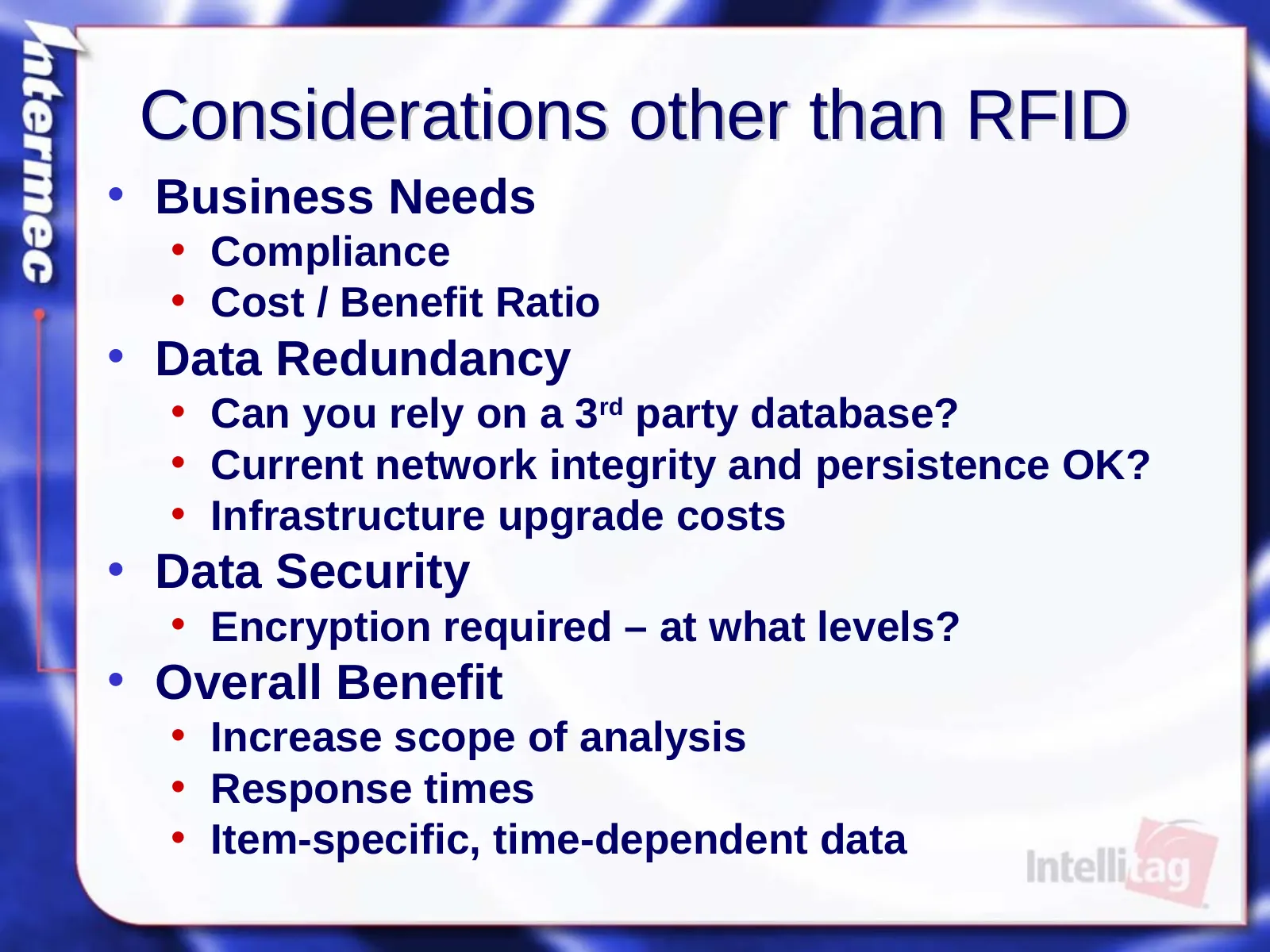
Slide 22: Considerations other than RFID
Considerations other than RFID • Business Needs • Compliance • Cost / Benefit Ratio • Data Redundancy • Can you rely on a 3rd party database? • Current network integrity and persistence OK? • Infrastructure upgrade costs • Data Security • Encryption required – at what levels? • Overall Benefit • Inc
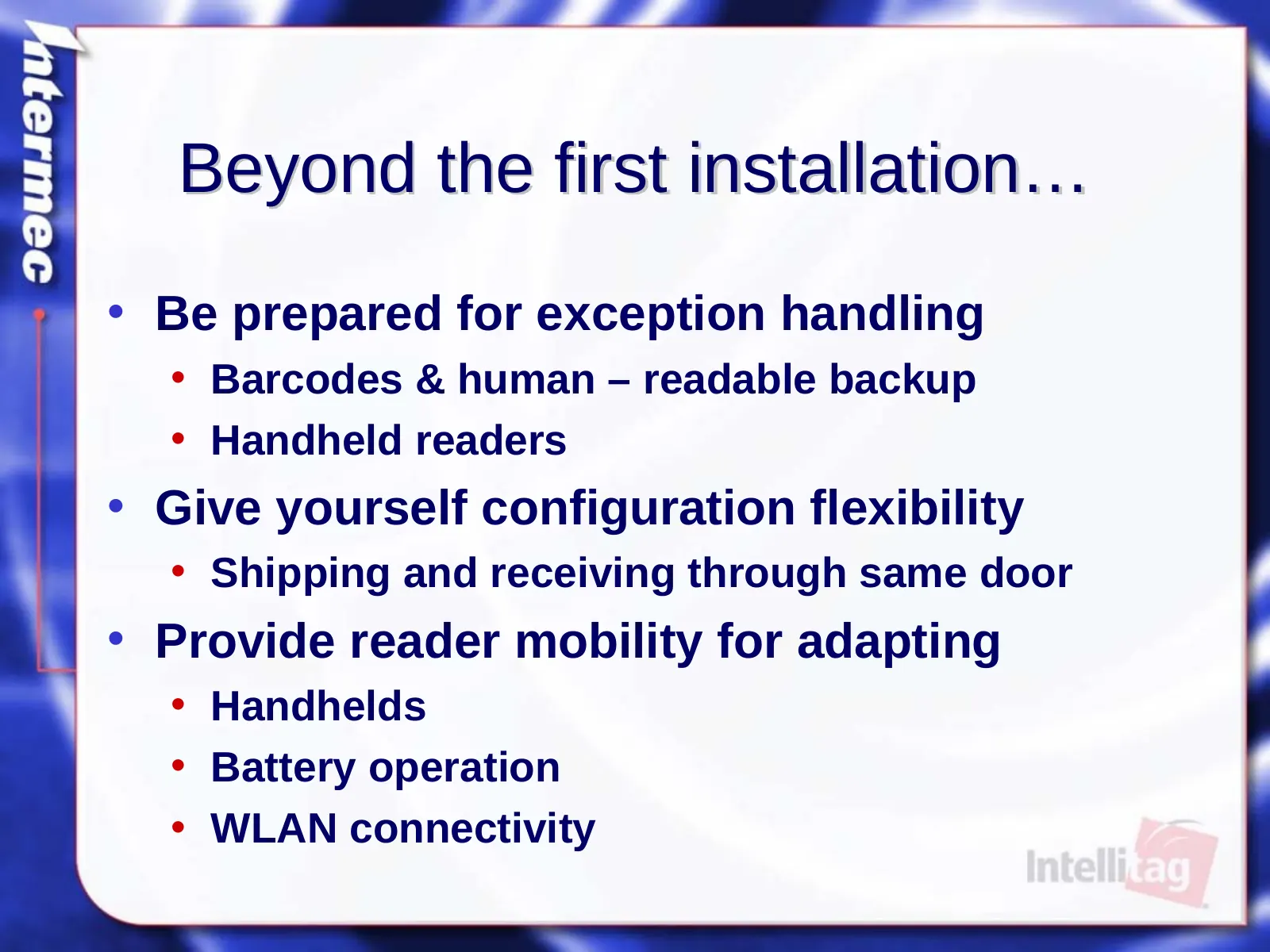
Slide 23: Beyond the first installation…
Beyond the first installation… • Be prepared for exception handling • Barcodes & human – readable backup • Handheld readers • Give yourself configuration flexibility • Shipping and receiving through same door • Provide reader mobility for adapting • Handhelds • Battery operation • WLAN connectivity
Slide 24: Thank You! Questions?
Thank You! Questions?

Slide 25: Intel
YY 7 ~~ Intel VS
Source: Internet Archive copy of scansource.com
More decks from ScanSource, Inc.
 Investor Presentation (November 2026)33 slides · November 2026
 Investor Presentation (August 2026)34 slides · August 2026
 Investor Presentation (May 2026)37 slides · May 2026
 Investor Presentation (February 2026)36 slides · February 2026
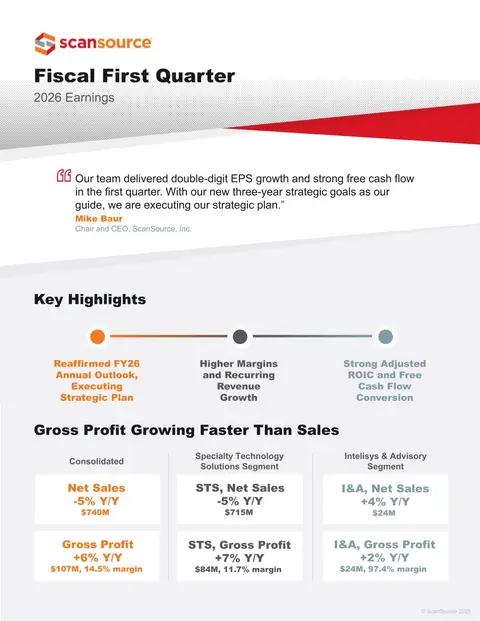 Q1 FY2026 Earnings Presentation16 slides · Nov 6, 2025
 Investor Presentation (November 2025)36 slides · November 2025