Helix BioPharma Corp. · TSX:HBP
Helix BioPharma — 9th International Conference of Contemporary Oncology 2017
27 slides from Helix BioPharma's conference presentation, Mar 24, 2017
Slide 1: Phase I/II dose escalation study of L-DOS47 in non-squamous NSCLC
LDOS002 Phase I/II dose escalation study of immunoconjugate L-DOS47 as a monotherapy in non-squamous non-small cell lung cancer patients CLINICAL SESSION 8. PRECISION/PERSONALIZATION OF TARGETED THERAPY (KWO17-00034-2017-01) March 24th, 2017
Slide 2: Summary
Summary • L-DOS47 is safe and well tolerated at doses up to 13.55µg/kg. • At doses between 5.76 to 13.55µg/kg, 53% of patients in the response evaluable population were progression free greater than 16 weeks. • L-DOS47 may be effective an treatment of CEACAM6 expressing tumors in combination with ot
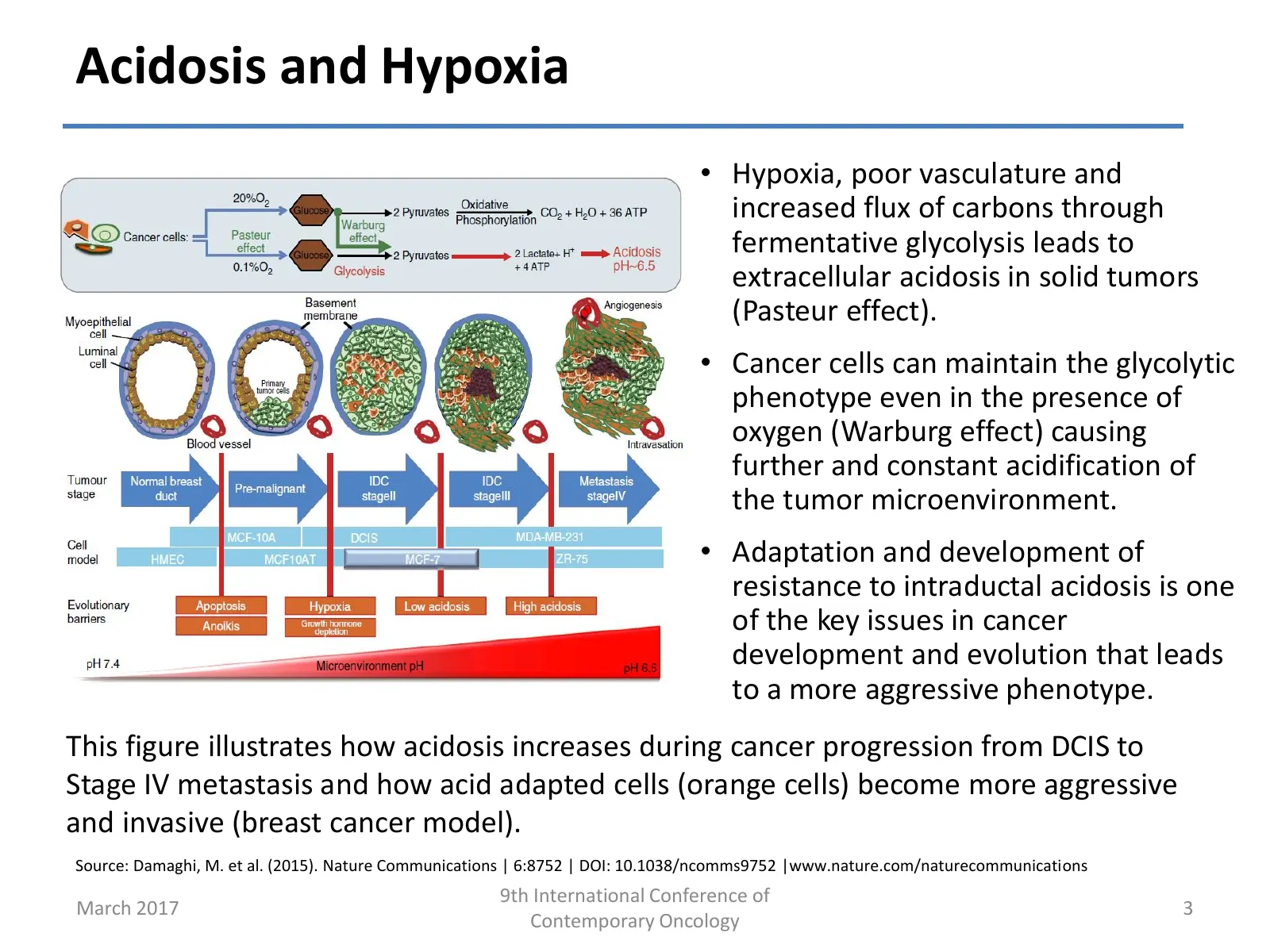
Slide 3: Acidosis and Hypoxia
Acidosis and Hypoxia • Hypoxia, poor vasculature and increased flux of carbons through fermentative glycolysis leads to extracellular acidosis in solid tumors (Pasteur effect). • Cancer cells can maintain the glycolytic phenotype even in the presence of oxygen (Warburg effect) causing further and co
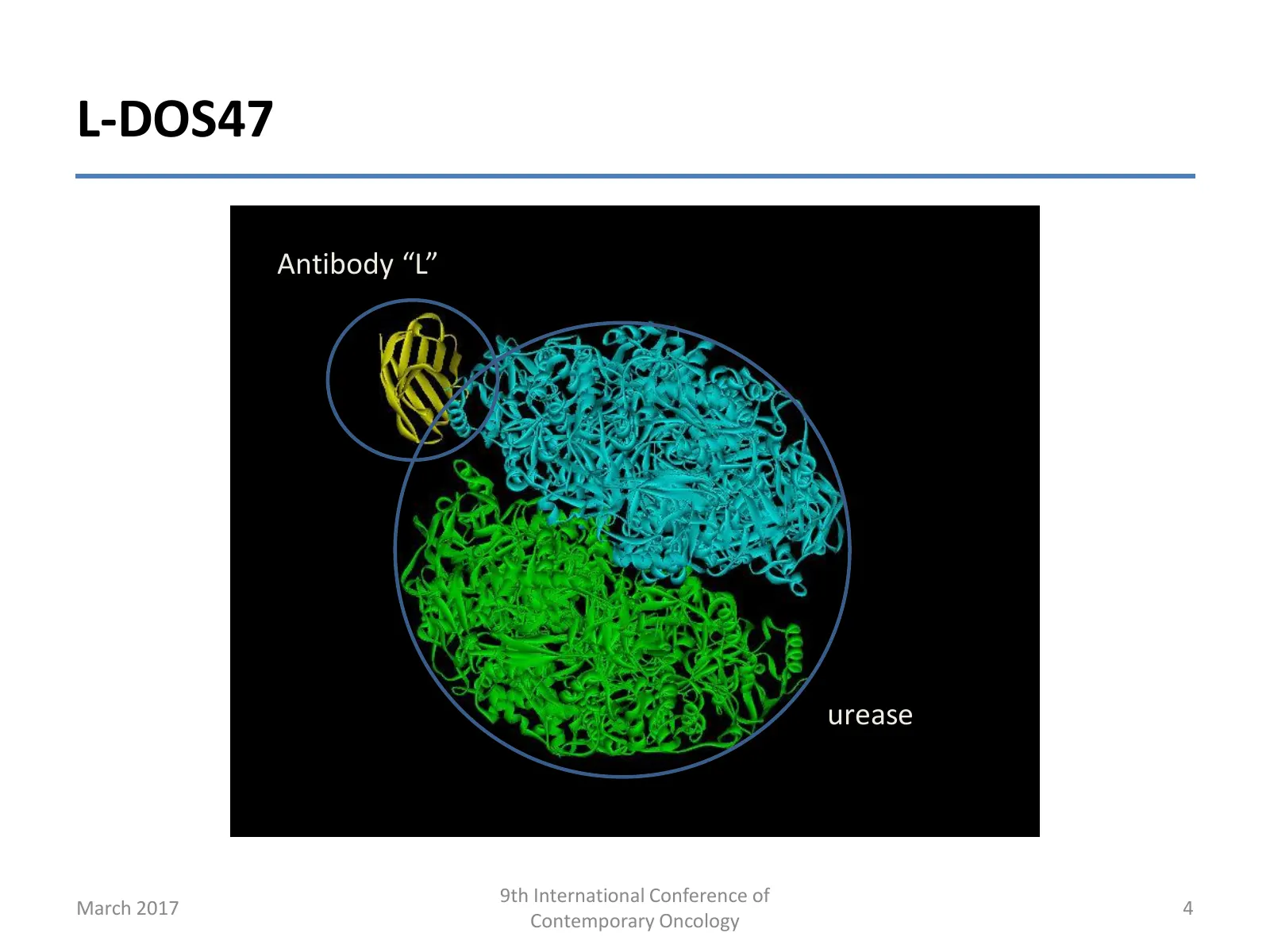
Slide 4: L-DOS47
L-DOS47 Antibody “L” urease 9th International Conference of March 2017 4 Contemporary Oncology
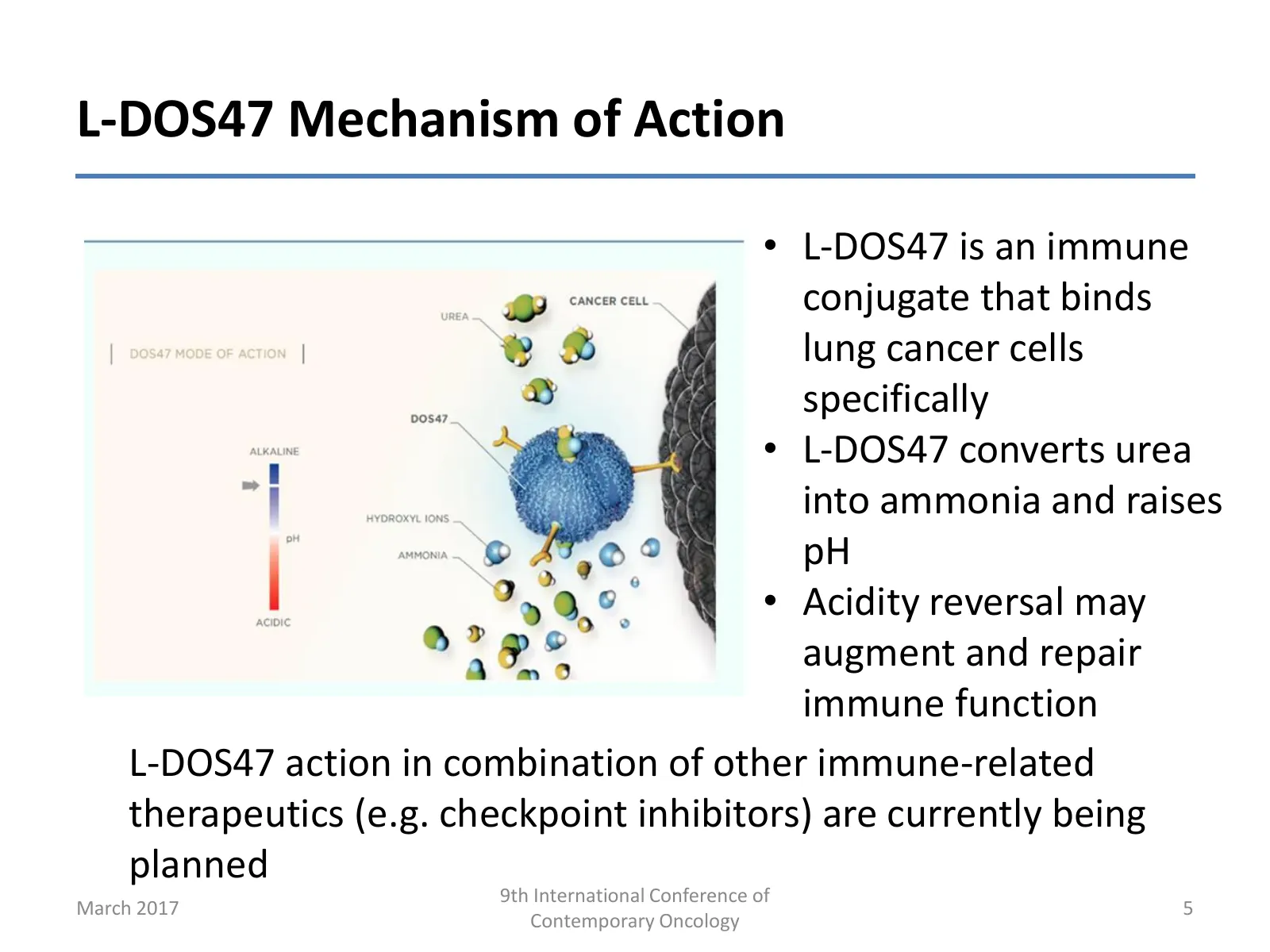
Slide 5: L-DOS47 Mechanism of Action
L-DOS47 Mechanism of Action • L-DOS47 is an immune conjugate that binds lung cancer cells specifically • L-DOS47 converts urea into ammonia and raises pH • Acidity reversal may augment and repair immune function L-DOS47 action in combination of other immune-related therapeutics (e.g. checkpoint inhi
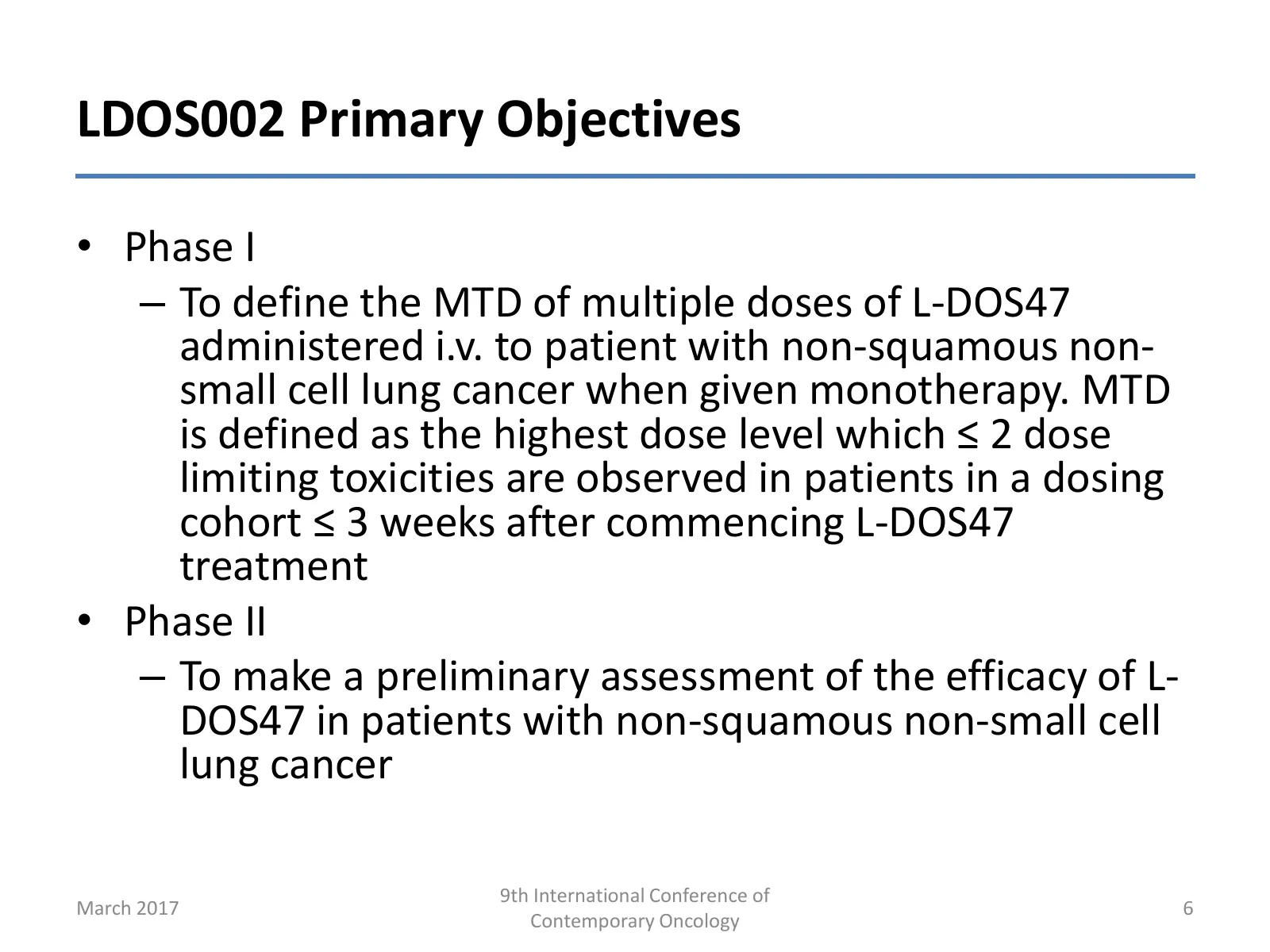
Slide 6: LDOS002 Primary Objectives
LDOS002 Primary Objectives • Phase I – To define the MTD of multiple doses of L-DOS47 administered i.v. to patient with non-squamous non- small cell lung cancer when given monotherapy. MTD is defined as the highest dose level which ≤ 2 dose limiting toxicities are observed in patients in a dosing co
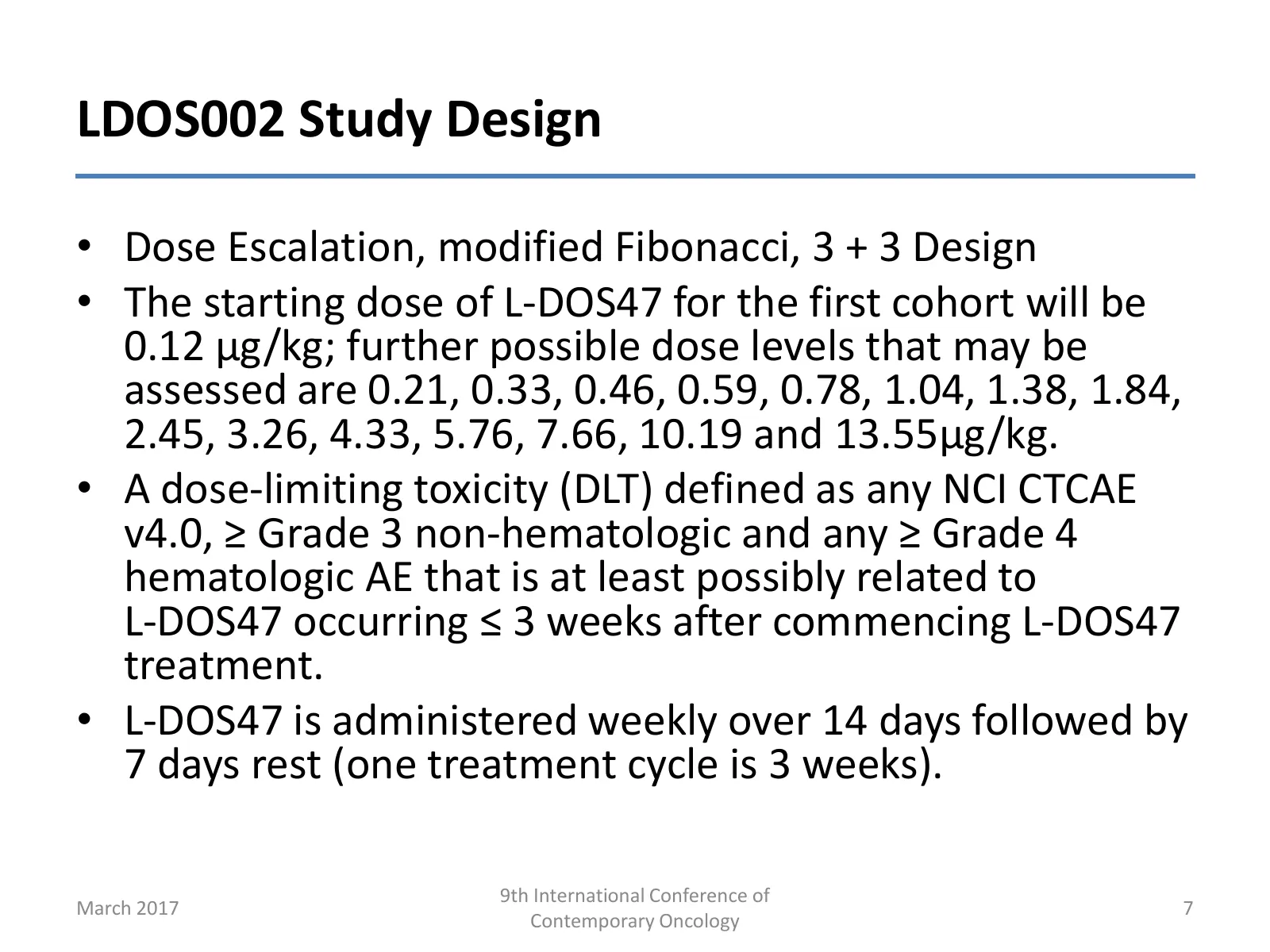
Slide 7: LDOS002 Study Design
LDOS002 Study Design • Dose Escalation, modified Fibonacci, 3 + 3 Design • The starting dose of L-DOS47 for the first cohort will be 0.12 μg/kg; further possible dose levels that may be assessed are 0.21, 0.33, 0.46, 0.59, 0.78, 1.04, 1.38, 1.84, 2.45, 3.26, 4.33, 5.76, 7.66, 10.19 and 13.55μg/kg. •
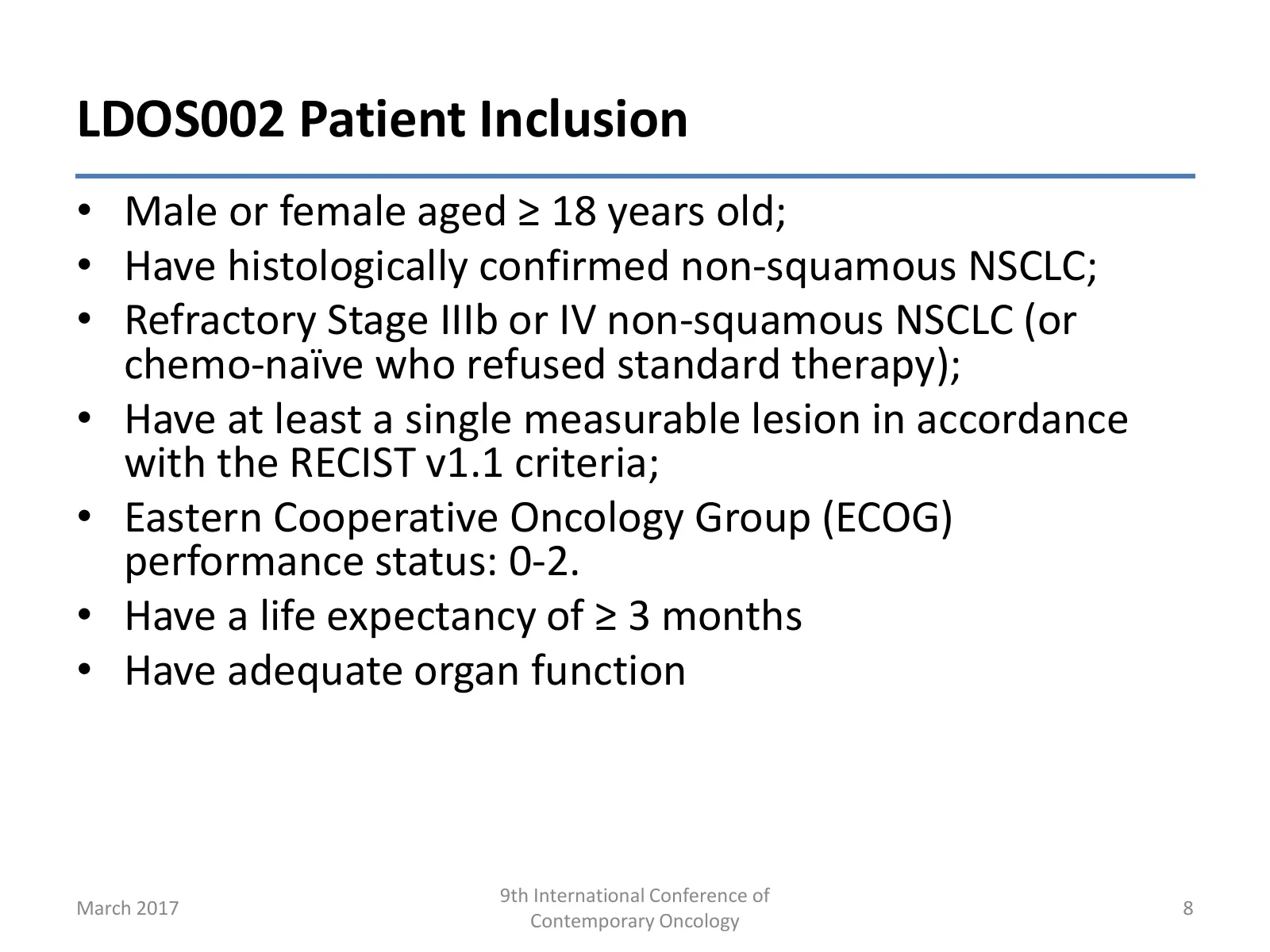
Slide 8: LDOS002 Patient Inclusion
LDOS002 Patient Inclusion • Male or female aged ≥ 18 years old; • Have histologically confirmed non-squamous NSCLC; • Refractory Stage IIIb or IV non-squamous NSCLC (or chemo-naïve who refused standard therapy); • Have at least a single measurable lesion in accordance with the RECIST v1.1 criteria;
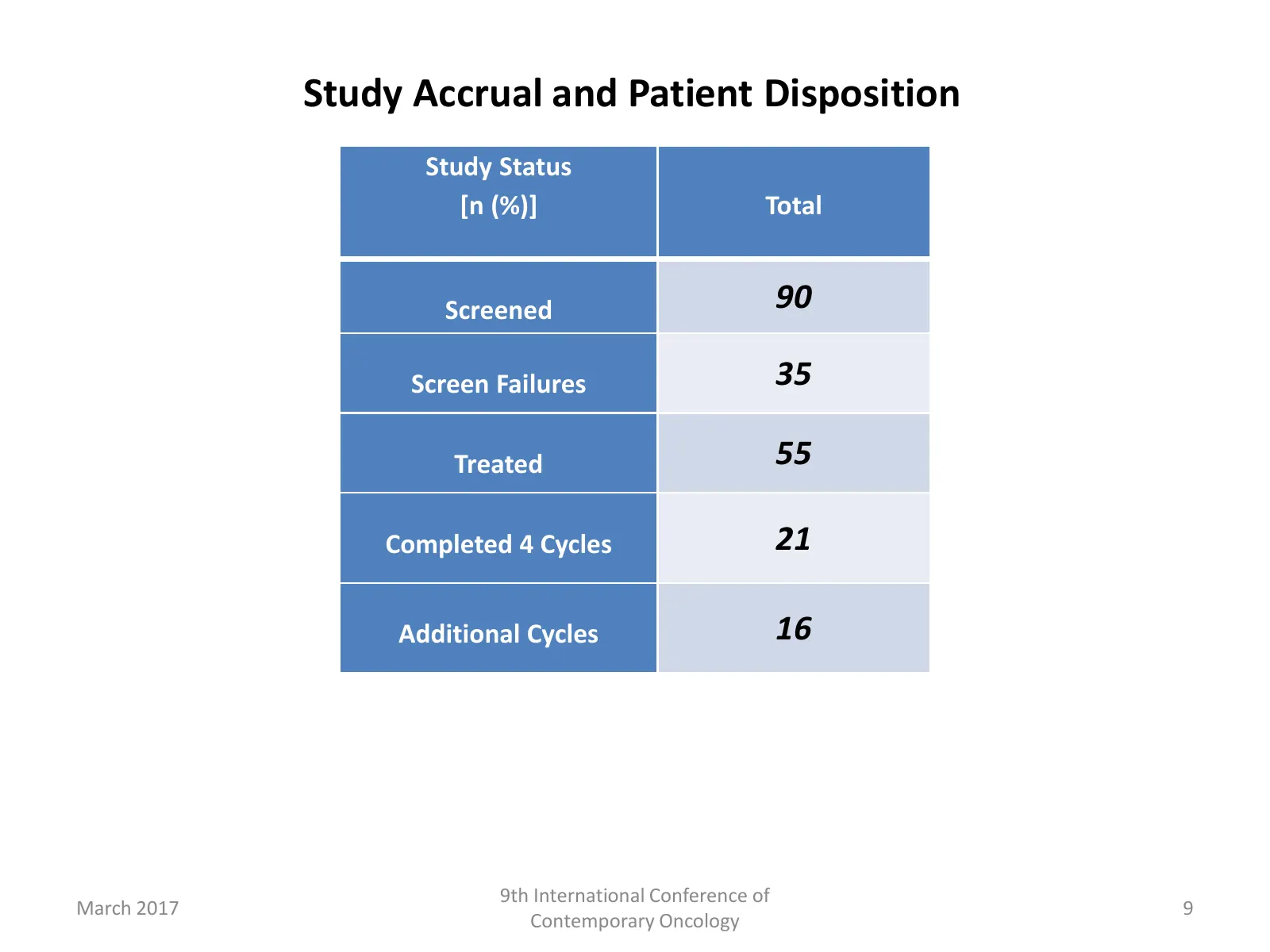
Slide 9: Study Accrual and Patient Disposition
Study Accrual and Patient Disposition Study Status [n (%)] Total Screened 90 Screen Failures 35 Treated 55 Completed 4 Cycles 21 Additional Cycles 16 9th International Conference of March 2017 9 Contemporary Oncology
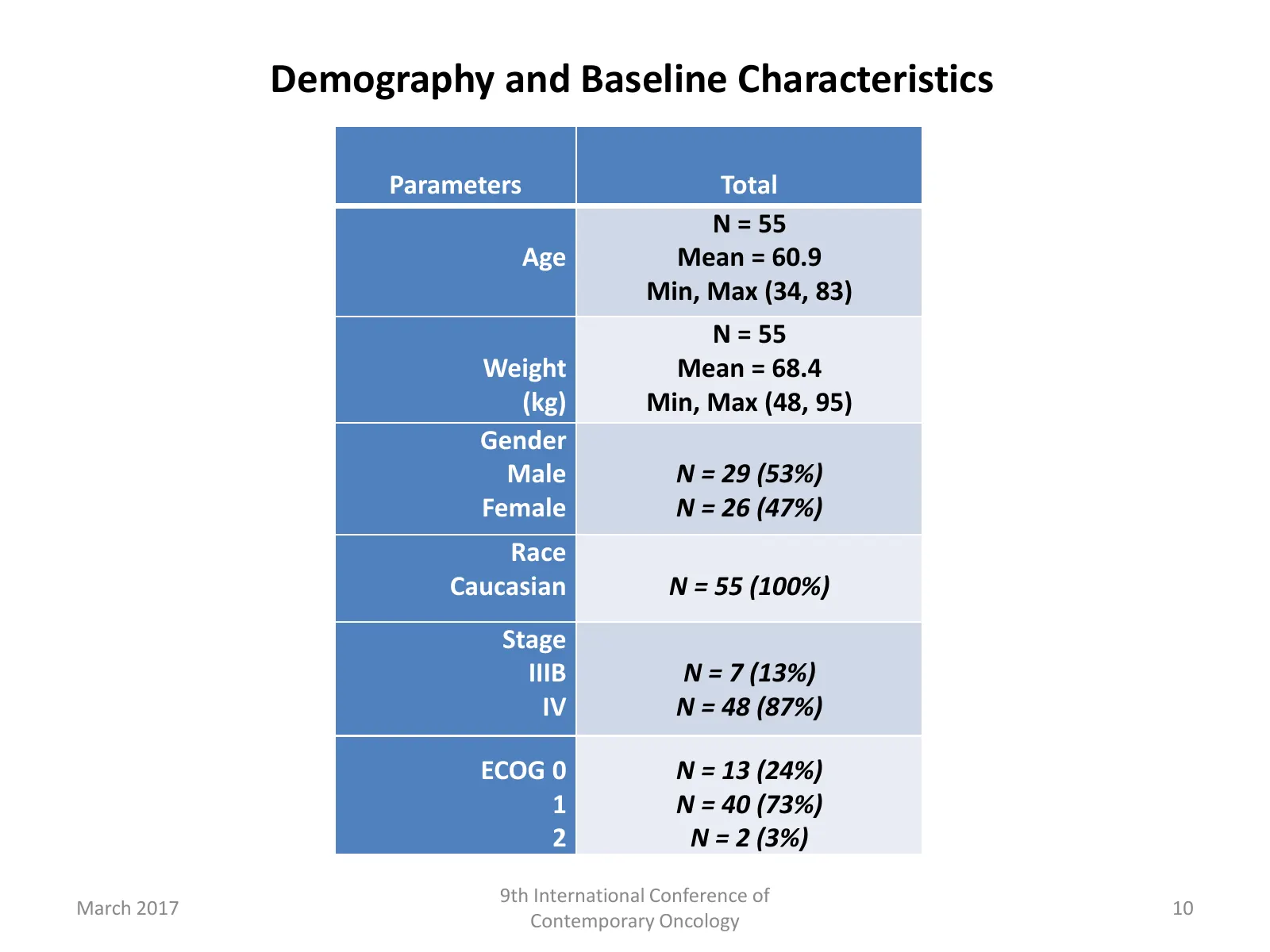
Slide 10: Demography and Baseline Characteristics
Demography and Baseline Characteristics Parameters Total N = 55 Age Mean = 60.9 Min, Max (34, 83) N = 55 Weight Mean = 68.4 (kg) Min, Max (48, 95) Gender Male N = 29 (53%) Female N = 26 (47%) Race Caucasian N = 55 (100%) Stage IIIB N = 7 (13%) IV N = 48 (87%) ECOG 0 N = 13 (24%) 1 N = 40 (73%) 2 N =
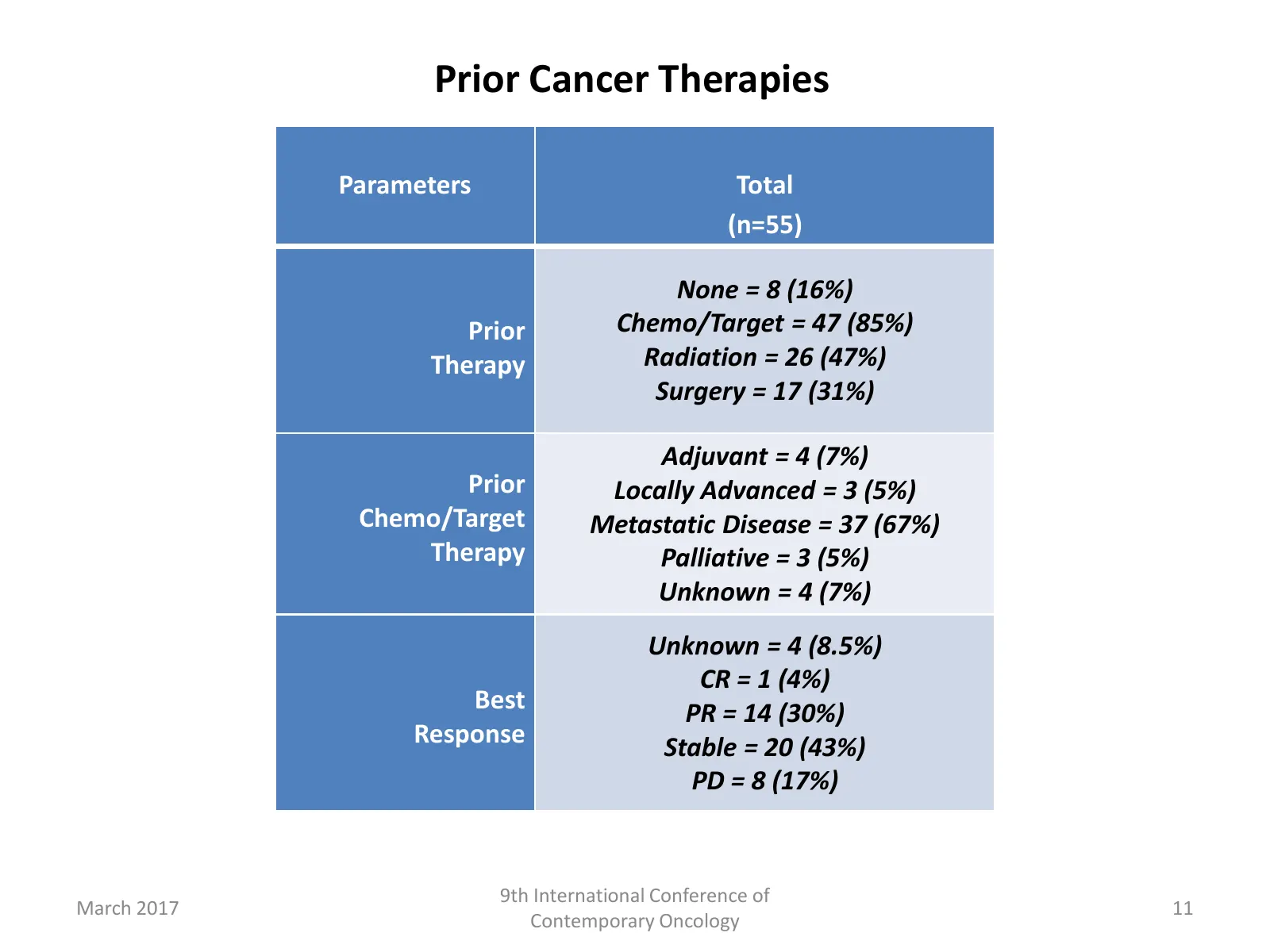
Slide 11: Prior Cancer Therapies
Prior Cancer Therapies Parameters Total (n=55) None = 8 (16%) Prior Chemo/Target = 47 (85%) Therapy Radiation = 26 (47%) Surgery = 17 (31%) Adjuvant = 4 (7%) Prior Locally Advanced = 3 (5%) Chemo/Target Metastatic Disease = 37 (67%) Therapy Palliative = 3 (5%) Unknown = 4 (7%) Unknown = 4 (8.5%) CR
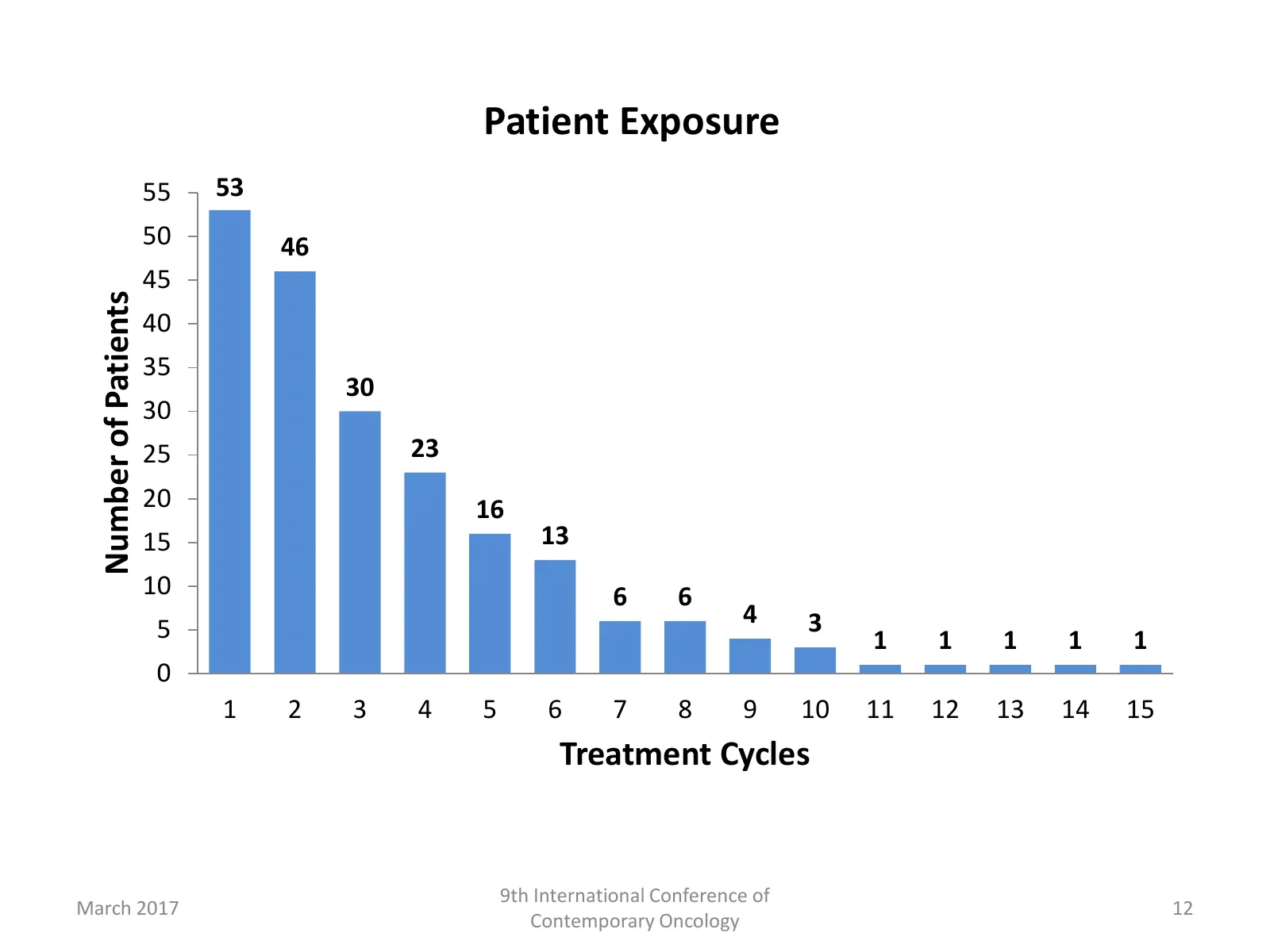
Slide 12: Patient Exposure
Patient Exposure 55 53 50 46 45 Number of Patients 40 35 30 30 25 23 20 16 15 13 10 6 6 4 3 5 1 1 1 1 1 0 1 2 3 4 5 6 7 8 9 10 11 12 13 14 15 Treatment Cycles 9th International Conference of March 2017 12 Contemporary Oncology
Slide 13: Number of Patients Retreated, Dose Delay and Dose Modification
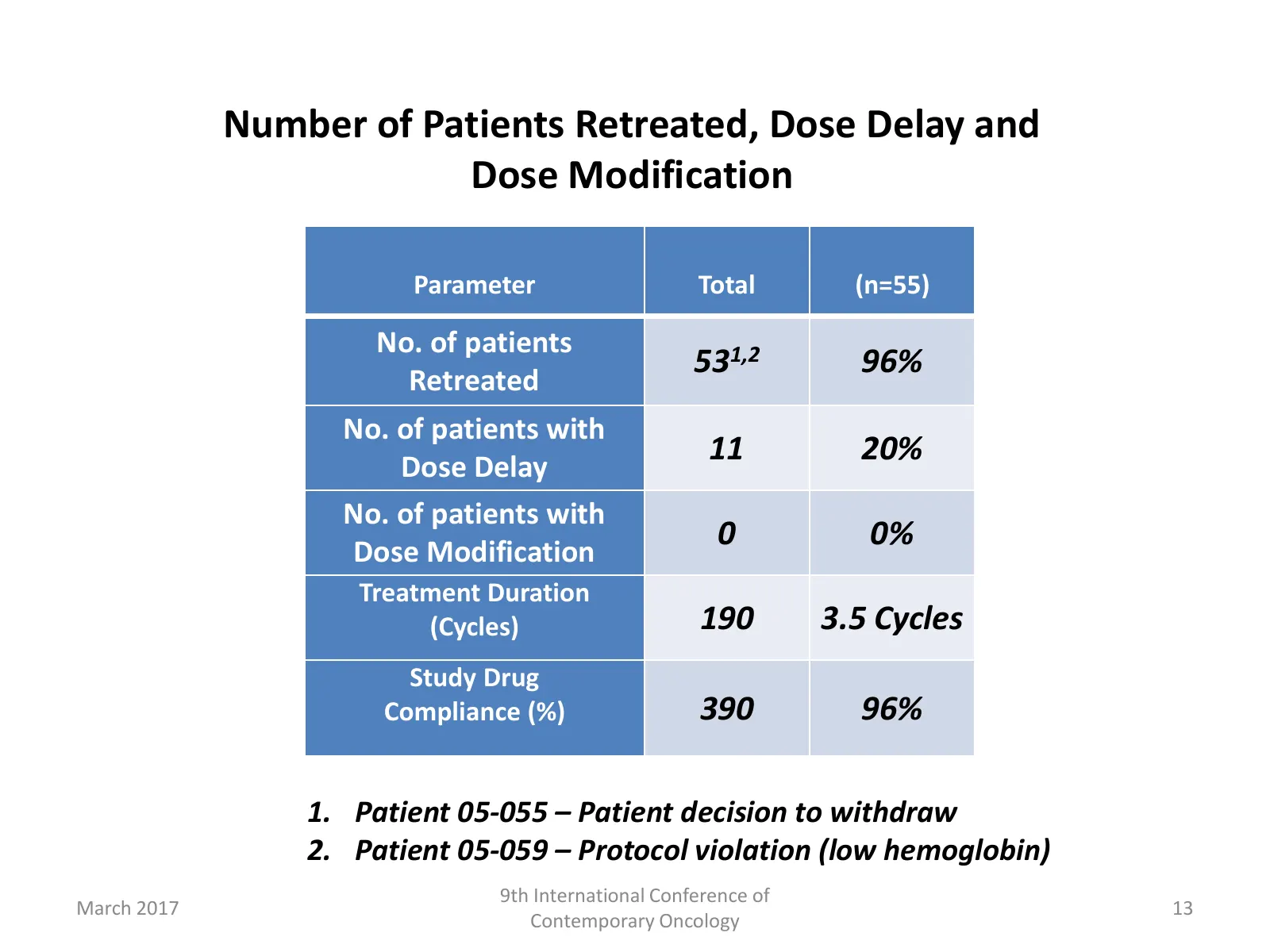
Number of Patients Retreated, Dose Delay and Dose Modification Parameter Total (n=55) No. of patients 531,2 96% Retreated No. of patients with 11 20% Dose Delay No. of patients with 0 0% Dose Modification Treatment Duration (Cycles) 190 3.5 Cycles Study Drug Compliance (%) 390 96% 1. Patient 05-055
Slide 14: Patients with Treatment Emergent AEs ≥ 5%
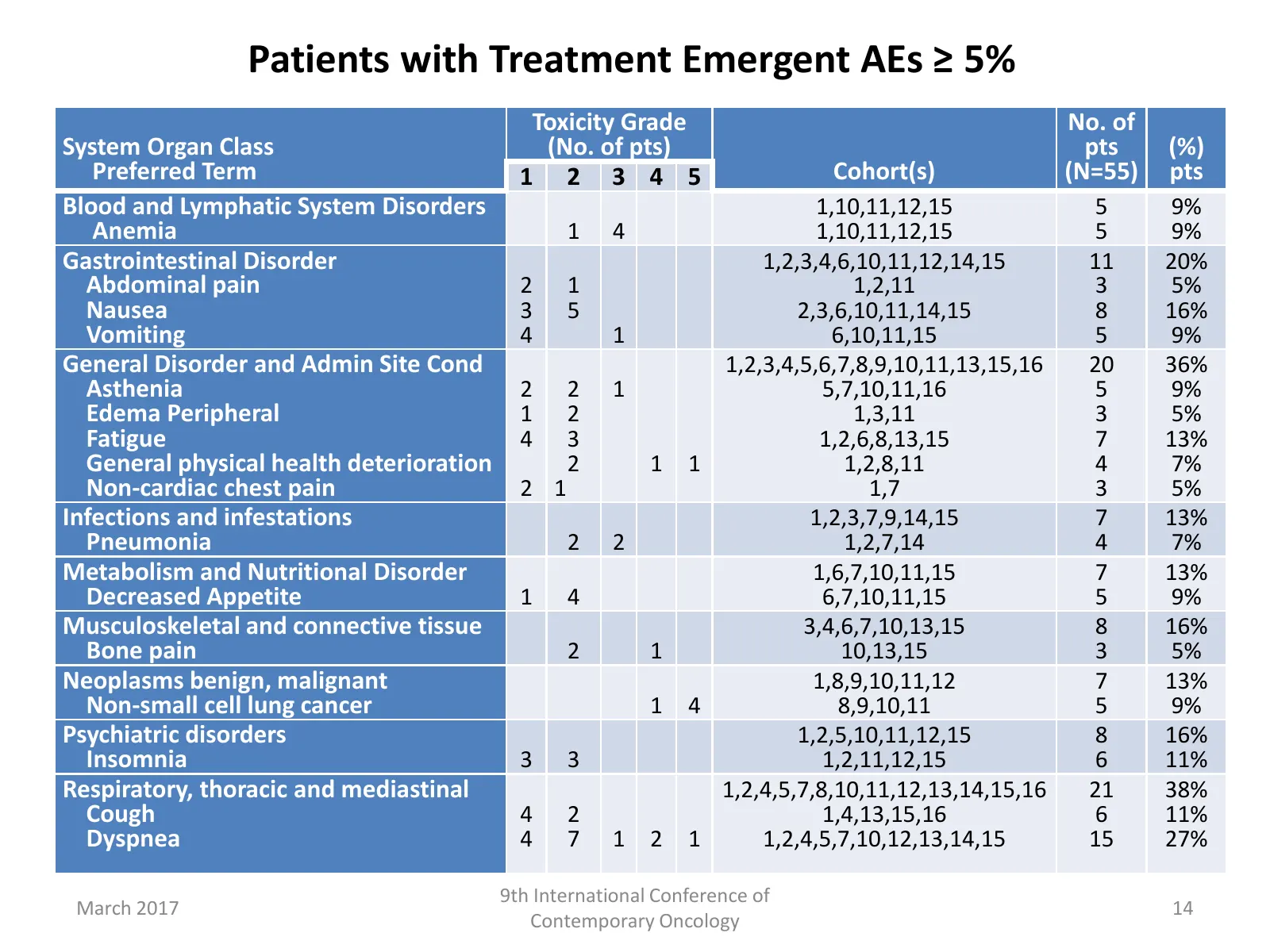
Patients with Treatment Emergent AEs ≥ 5% Toxicity Grade No. of System Organ Class (No. of pts) pts (%) Preferred Term 1 2 3 4 5 Cohort(s) (N=55) pts Blood and Lymphatic System Disorders 1,10,11,12,15 5 9% Anemia 1 4 1,10,11,12,15 5 9% Gastrointestinal Disorder 1,2,3,4,6,10,11,12,14,15 11 20% Abdomi
Slide 15: Patients with Treatment Emergent Serious Adverse Events
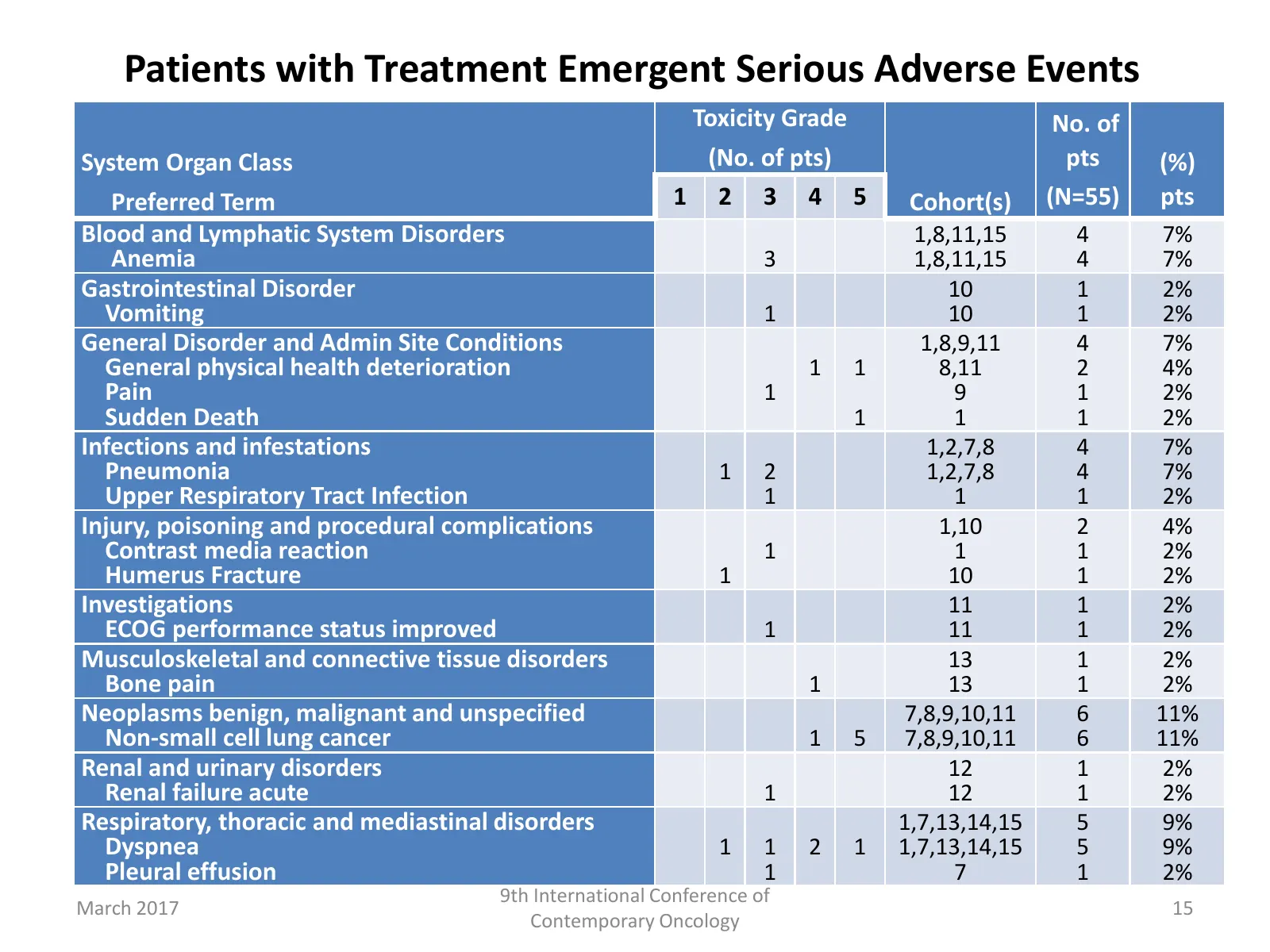
Patients with Treatment Emergent Serious Adverse Events Toxicity Grade No. of System Organ Class (No. of pts) pts (%) Preferred Term 1 2 3 4 5 Cohort(s) (N=55) pts Blood and Lymphatic System Disorders 1,8,11,15 4 7% Anemia 3 1,8,11,15 4 7% Gastrointestinal Disorder 10 1 2% Vomiting 1 10 1 2% General
Slide 16: Concentration Time Curves
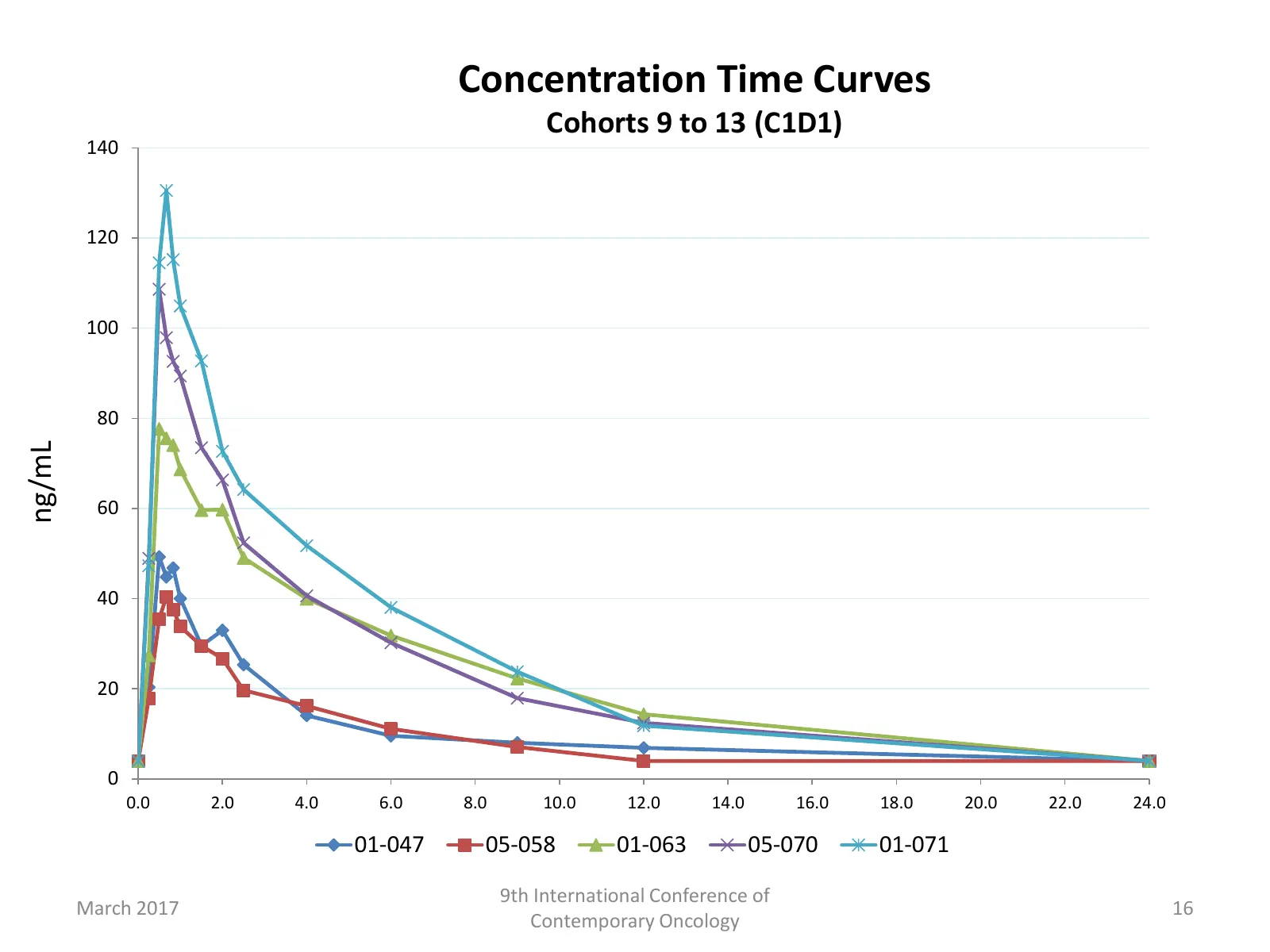
Concentration Time Curves Cohorts 9 to 13 (C1D1) 140 120 100 80 ng/mL 60 40 20 0 0.0 2.0 4.0 6.0 8.0 10.0 12.0 14.0 16.0 18.0 20.0 22.0 24.0 01-047 05-058 01-063 05-070 01-071 9th International Conference of March 2017 16 Contemporary Oncology
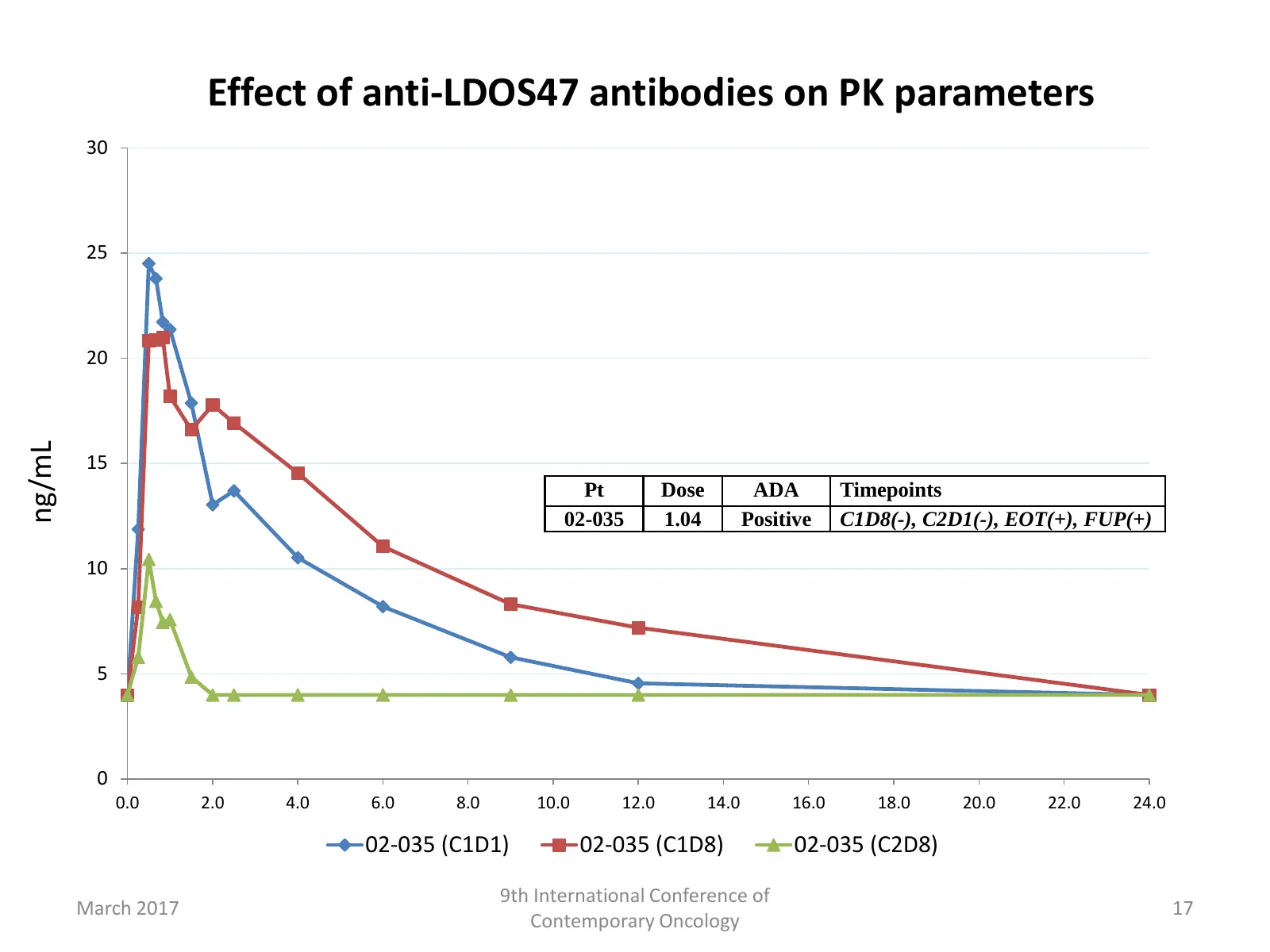
Slide 17: Effect of anti-LDOS47 antibodies on PK parameters
Effect of anti-LDOS47 antibodies on PK parameters 30 25 20 ng/mL 15 Pt Dose ADA Timepoints 02-035 1.04 Positive C1D8(-), C2D1(-), EOT(+), FUP(+) 10 5 0 0.0 2.0 4.0 6.0 8.0 10.0 12.0 14.0 16.0 18.0 20.0 22.0 24.0 02-035 (C1D1) 02-035 (C1D8) 02-035 (C2D8) 9th International Conference of March 2017 17
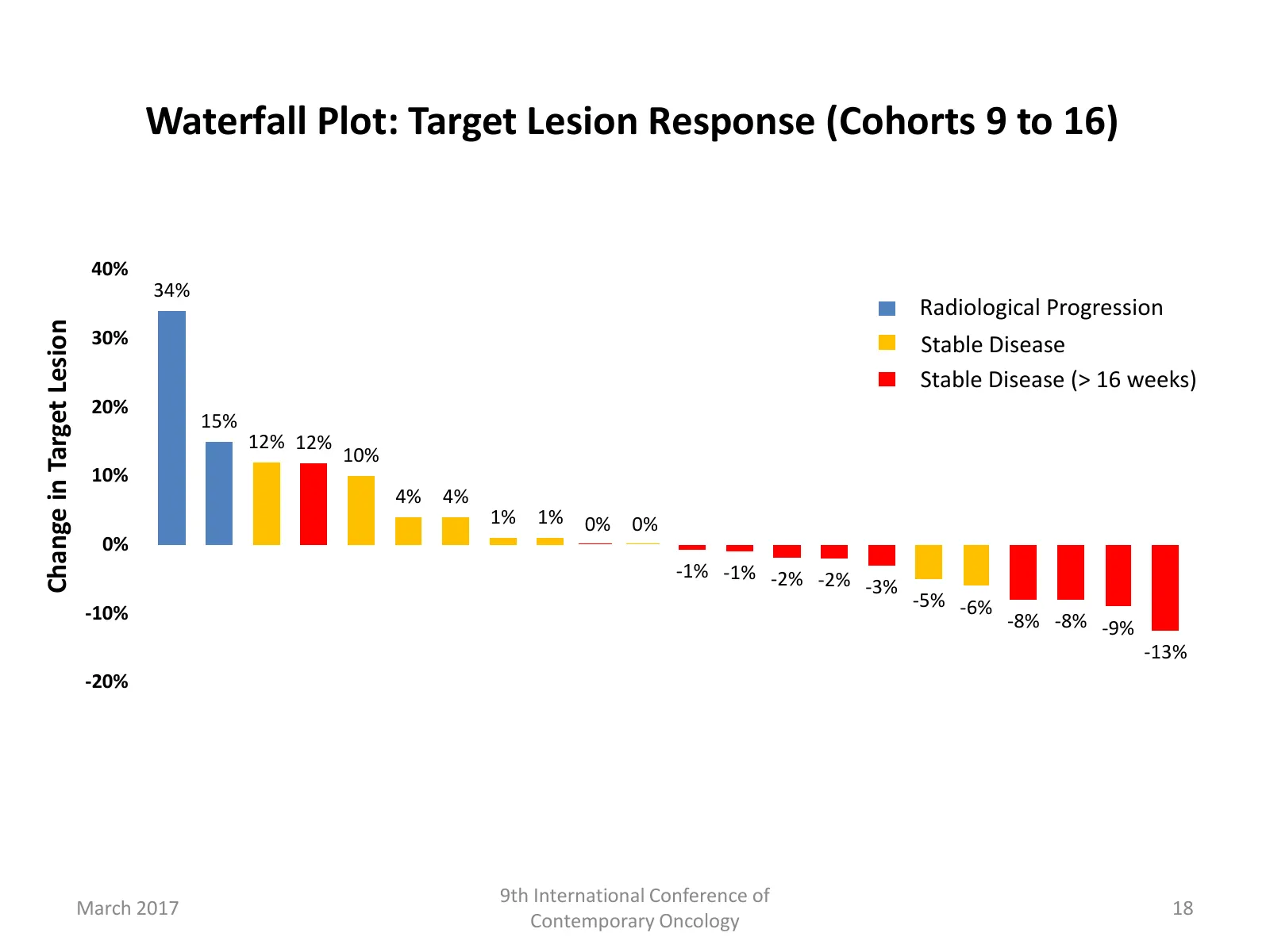
Slide 18: Waterfall Plot: Target Lesion Response
Waterfall Plot: Target Lesion Response (Cohorts 9 to 16) 40% 34% Radiological Progression Change in Target Lesion 30% Stable Disease Stable Disease (> 16 weeks) 20% 15% 12% 12% 10% 10% 4% 4% 1% 1% 0% 0% 0% -1% -1% -2% -2% -3% -5% -6% -10% -8% -8% -9% -13% -20% 9th International Conference of March 2
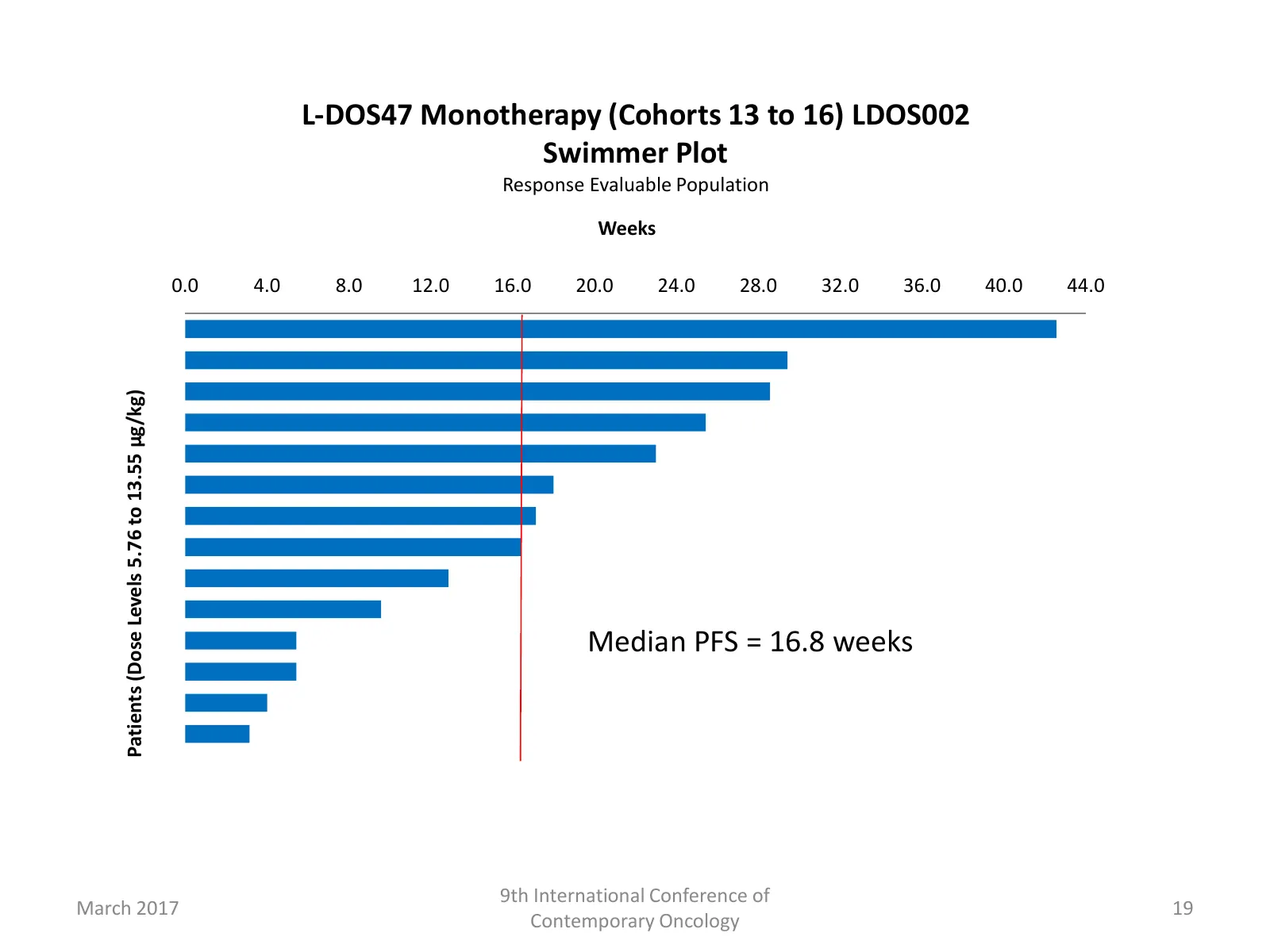
Slide 19: Swimmer Plot
L-DOS47 Monotherapy (Cohorts 13 to 16) LDOS002 Swimmer Plot Response Evaluable Population Weeks 0.0 4.0 8.0 12.0 16.0 20.0 24.0 28.0 32.0 36.0 40.0 44.0 Patients (Dose Levels 5.76 to 13.55 µg/kg) Median PFS = 16.8 weeks 9th International Conference of March 2017 19 Contemporary Oncology
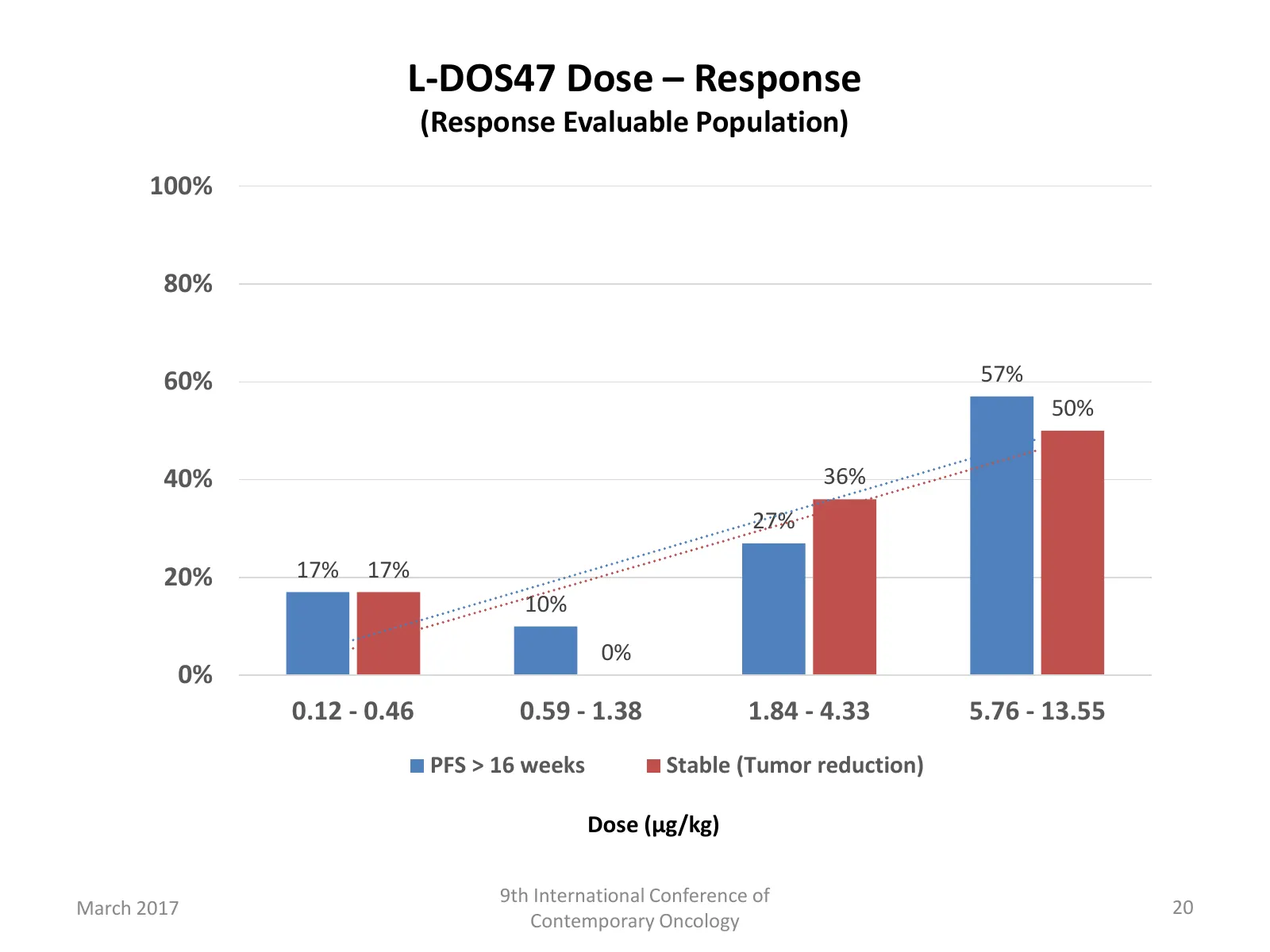
Slide 20: L-DOS47 Dose – Response
L-DOS47 Dose – Response (Response Evaluable Population) 100% 80% 60% 57% 50% 40% 36% 27% 20% 17% 17% 10% 0% 0% 0.12 - 0.46 0.59 - 1.38 1.84 - 4.33 5.76 - 13.55 PFS > 16 weeks Stable (Tumor reduction) Dose (µg/kg) 9th International Conference of March 2017 20 Contemporary Oncology
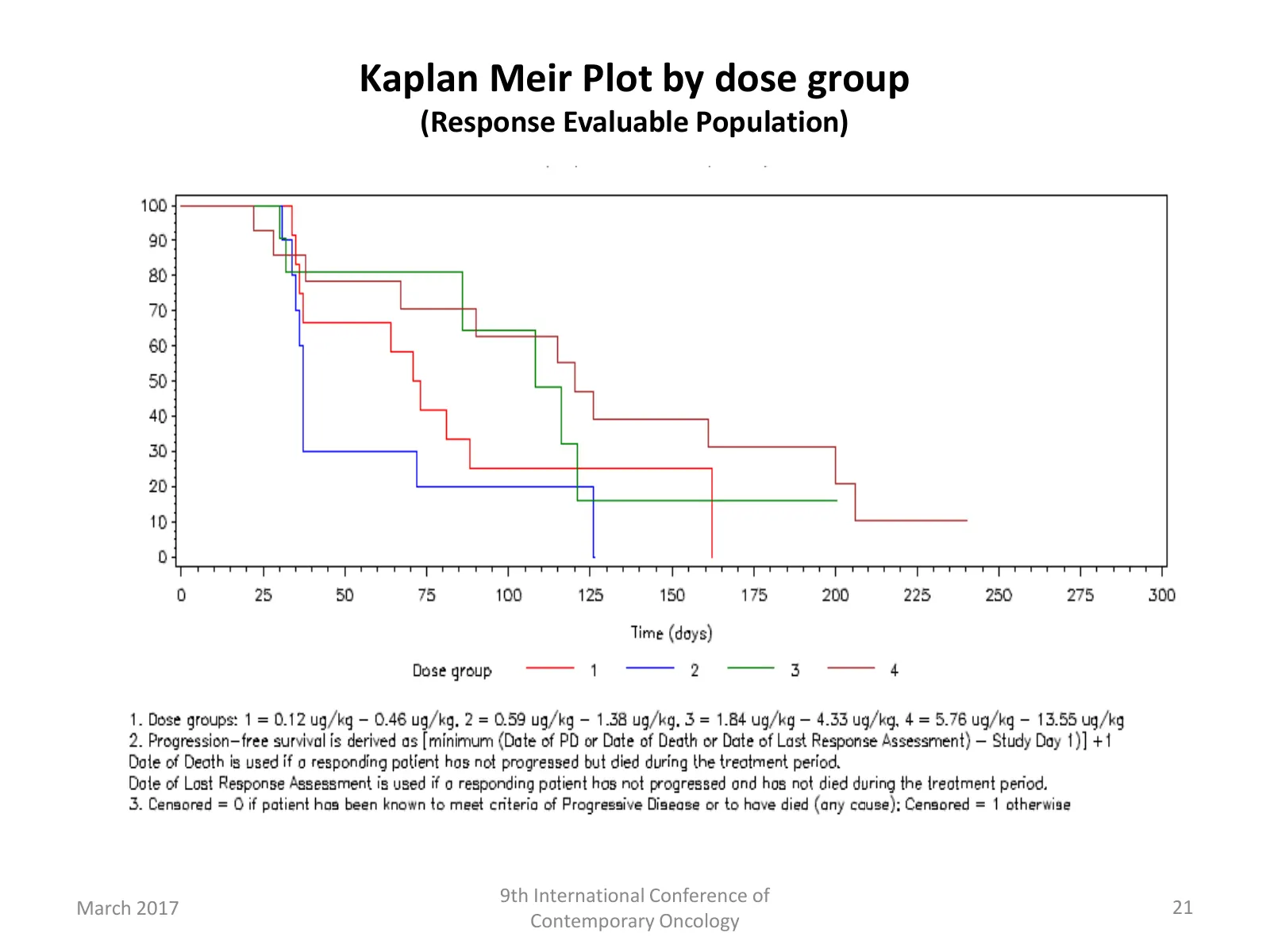
Slide 21: Kaplan Meir Plot by dose group
Kaplan Meir Plot by dose group (Response Evaluable Population) 9th International Conference of March 2017 21 Contemporary Oncology
Slide 22: Safety Evaluation
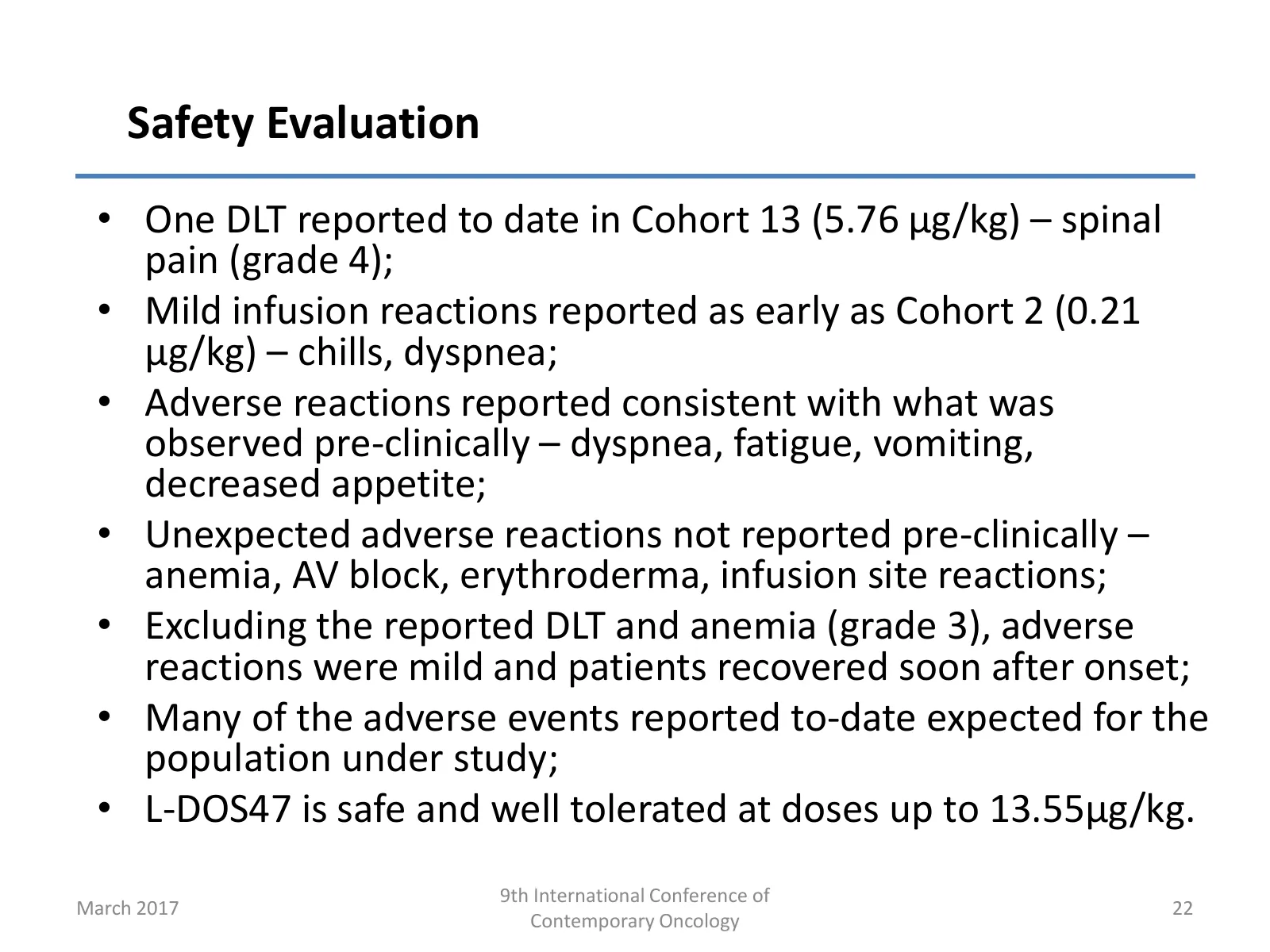
Safety Evaluation • One DLT reported to date in Cohort 13 (5.76 µg/kg) – spinal pain (grade 4); • Mild infusion reactions reported as early as Cohort 2 (0.21 µg/kg) – chills, dyspnea; • Adverse reactions reported consistent with what was observed pre-clinically – dyspnea, fatigue, vomiting, decrease
Slide 23: Efficacy Evaluation
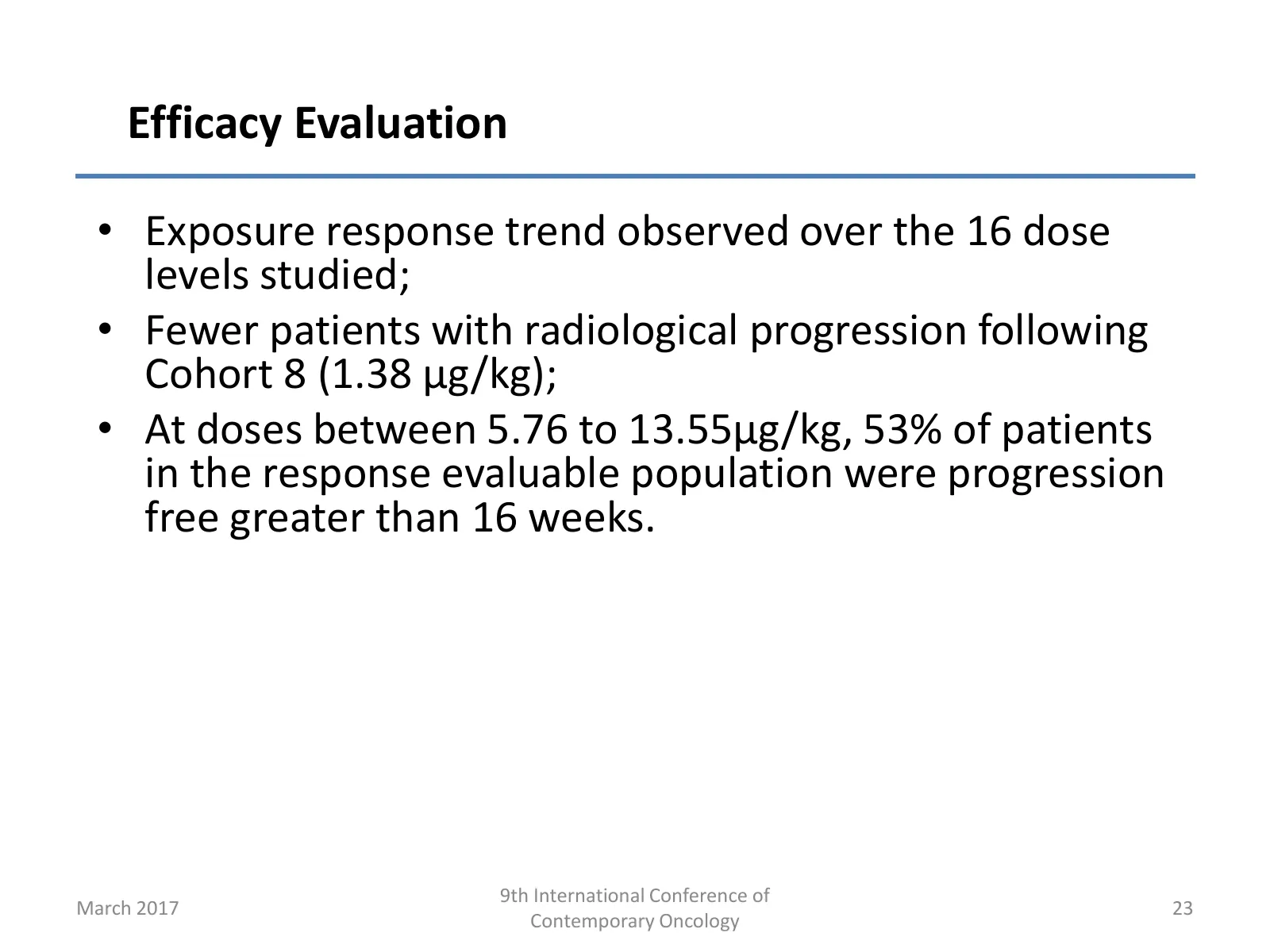
Efficacy Evaluation • Exposure response trend observed over the 16 dose levels studied; • Fewer patients with radiological progression following Cohort 8 (1.38 µg/kg); • At doses between 5.76 to 13.55µg/kg, 53% of patients in the response evaluable population were progression free greater than 16 we
Slide 24: Conclusion
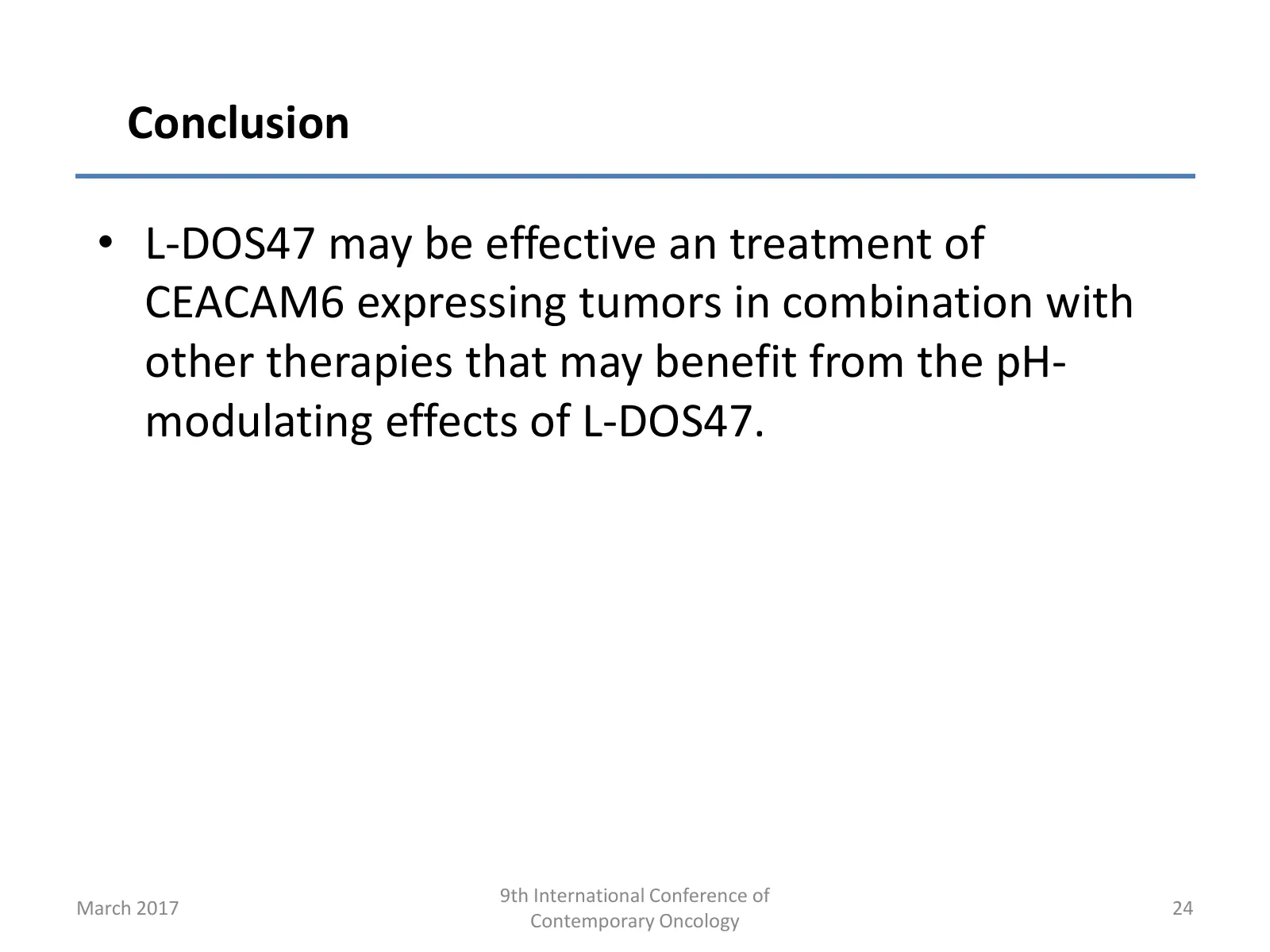
Conclusion • L-DOS47 may be effective an treatment of CEACAM6 expressing tumors in combination with other therapies that may benefit from the pH- modulating effects of L-DOS47. 9th International Conference of March 2017 24 Contemporary Oncology
Slide 25: Phase II Study Design
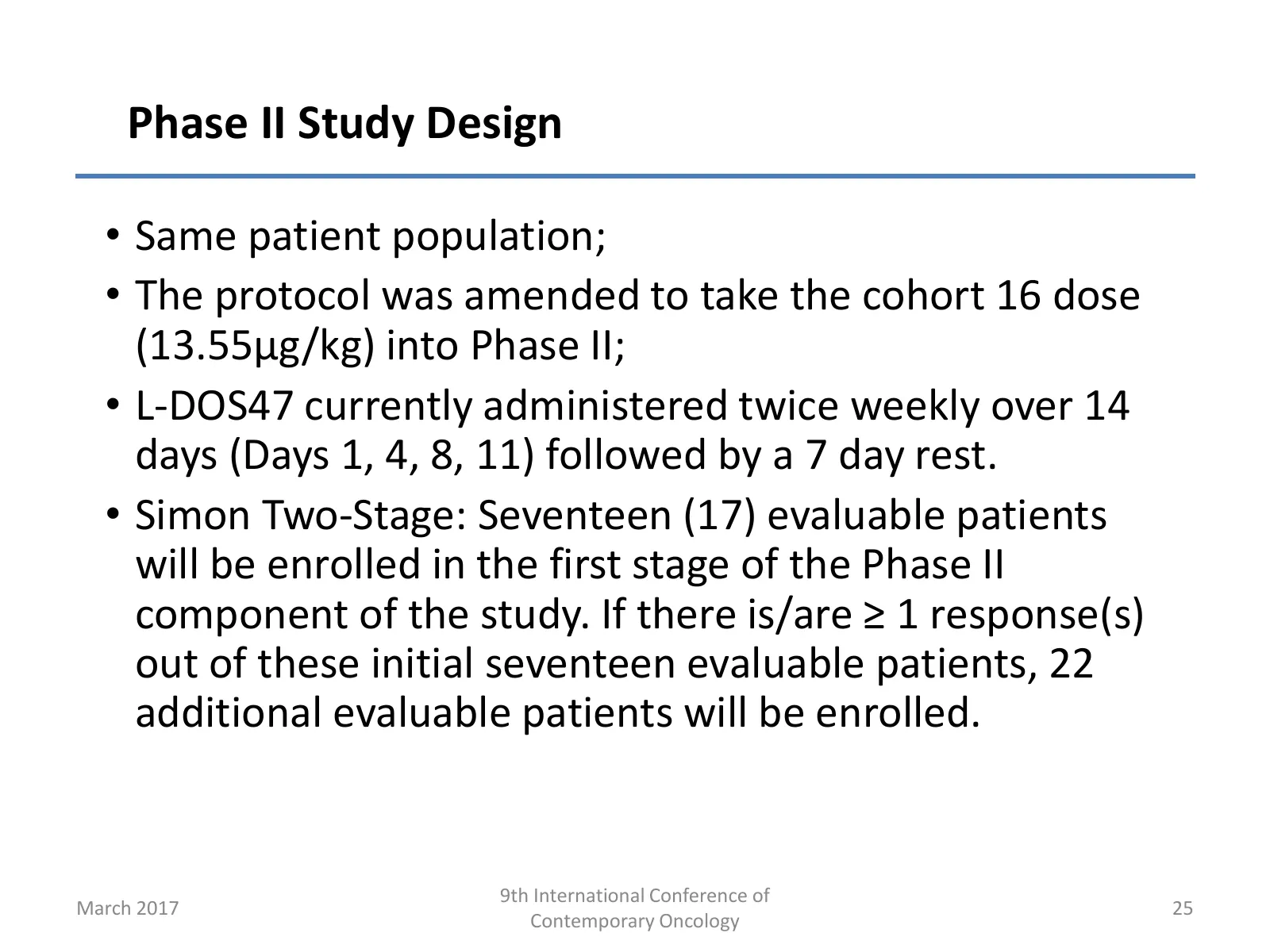
Phase II Study Design • Same patient population; • The protocol was amended to take the cohort 16 dose (13.55µg/kg) into Phase II; • L-DOS47 currently administered twice weekly over 14 days (Days 1, 4, 8, 11) followed by a 7 day rest. • Simon Two-Stage: Seventeen (17) evaluable patients will be enro
Slide 26: Acknowledgments – Investigative Sites
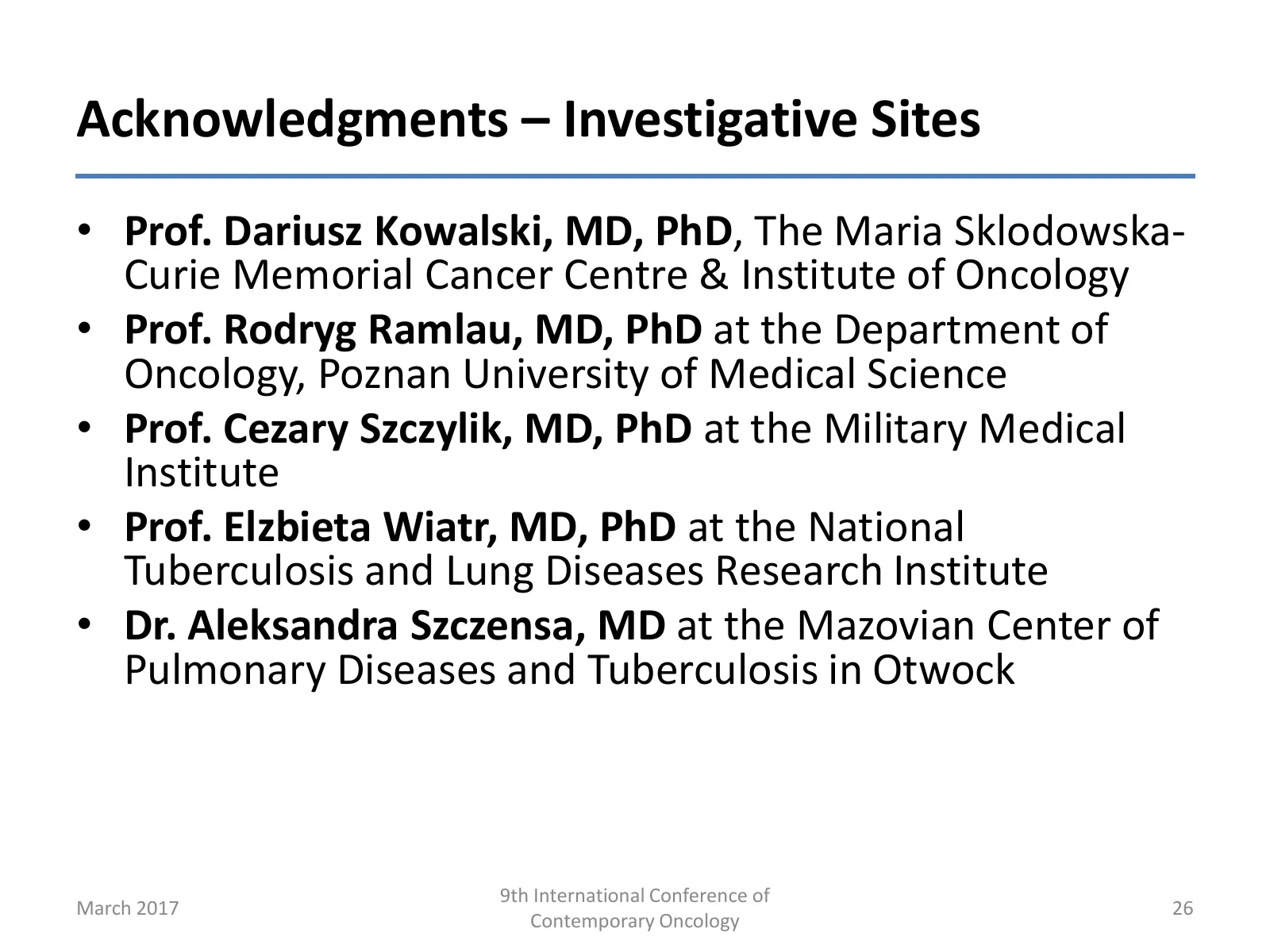
Acknowledgments – Investigative Sites • Prof. Dariusz Kowalski, MD, PhD, The Maria Sklodowska- Curie Memorial Cancer Centre & Institute of Oncology • Prof. Rodryg Ramlau, MD, PhD at the Department of Oncology, Poznan University of Medical Science • Prof. Cezary Szczylik, MD, PhD at the Military Medi
Slide 27: Acknowledgments – Study Sponsor
Acknowledgments – Study Sponsor • Helix BioPharma Corp. 9th International Conference of March 2017 27 Contemporary Oncology
Source: Internet Archive copy of helixbiopharma.com
More decks from Helix BioPharma Corp.
 Investor Presentation (October 2026)34 slides · October 2026
 Investor Presentation (August 2026)34 slides · August 2026
 Investor Presentation (May 2026)34 slides · May 2026
 Investor Presentation (April 2026)33 slides · April 2026
 16th World ADC London 202625 slides · Feb 24, 2026
 Investor Presentation (January 2026)34 slides · January 2026