Daiichi Sankyo Company, Limited · TSE:4568
Daiichi Sankyo — ESMO 2024
39 slides from Daiichi Sankyo's conference presentation, 2024
Slide 1: ESMO 2024 Presentation Materials
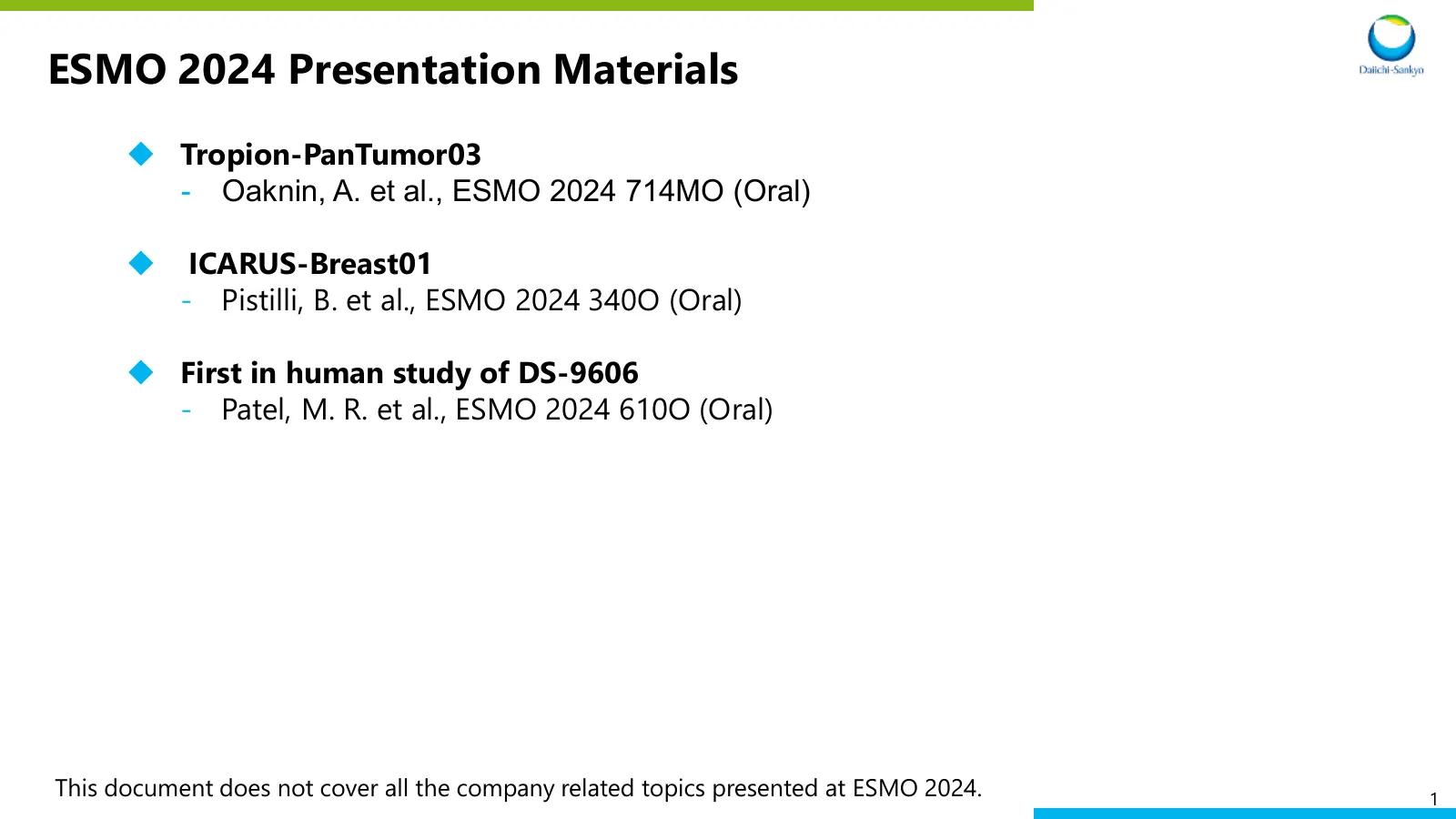
ESMO 2024 Presentation Materials Tropion-PanTumor03 - Oaknin, A. et al., ESMO 2024 714MO (Oral) ICARUS-Breast01 - Pistilli, B. et al., ESMO 2024 340O (Oral) First in human study of DS-9606 - Patel, M. R. et al., ESMO 2024 610O (Oral) This document does not cover all the company related topics
Slide 2: Dato-DXd in Ovarian or Endometrial Cancer: TROPION-PanTumor03
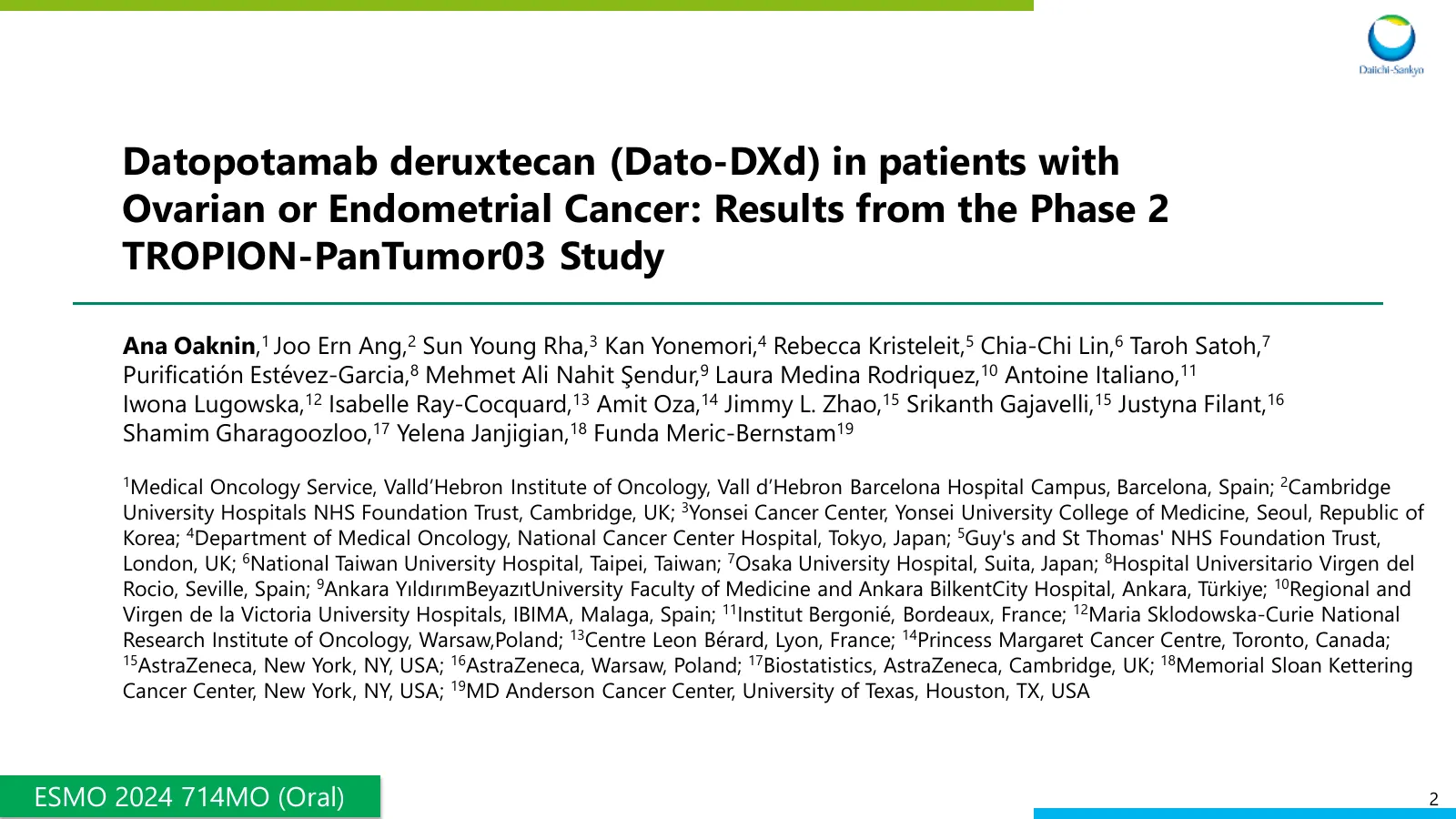
Datopotamab deruxtecan (Dato-DXd) in patients with Ovarian or Endometrial Cancer: Results from the Phase 2 TROPION-PanTumor03 Study Ana Oaknin,1 Joo Ern Ang,2 Sun Young Rha,3 Kan Yonemori,4 Rebecca Kristeleit,5 Chia-Chi Lin,6 Taroh Satoh,7 Purificatión Estévez-Garcia,8 Mehmet Ali Nahit Şendur,9 Laur
Slide 3: Background
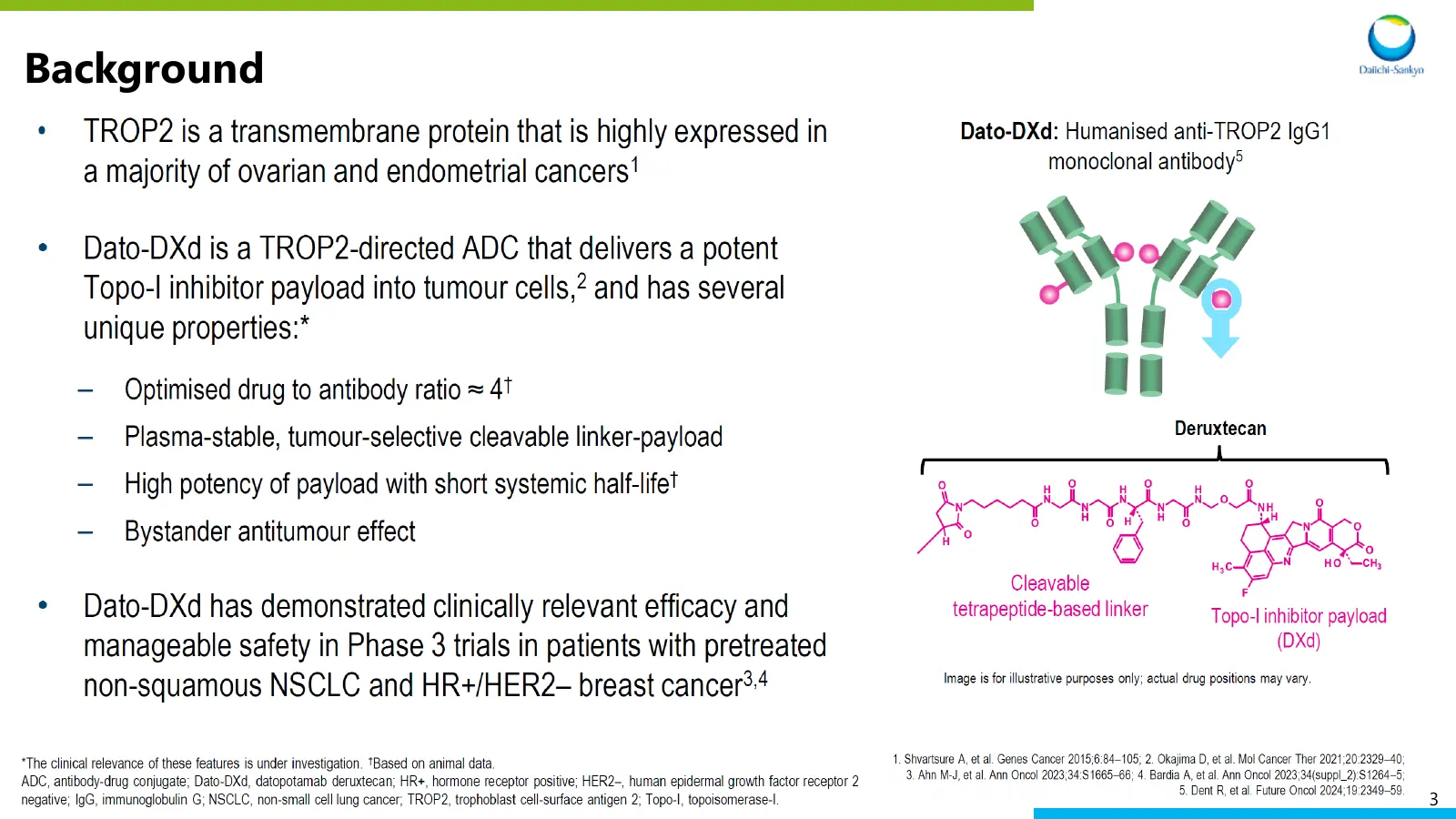
Background * TROP2 is a transmembrane protein that is highly expressed in a majority of ovarian and endometrial cancers‘ ¢ Dato-DXd is a TROP2-directed ADC that delivers a potent Topo-| inhibitor payload into tumour cells,2 and has several unique properties:* — Optimised drug to antibody ratio = 4t
Slide 4: TROPION-PanTumor03 Study Design
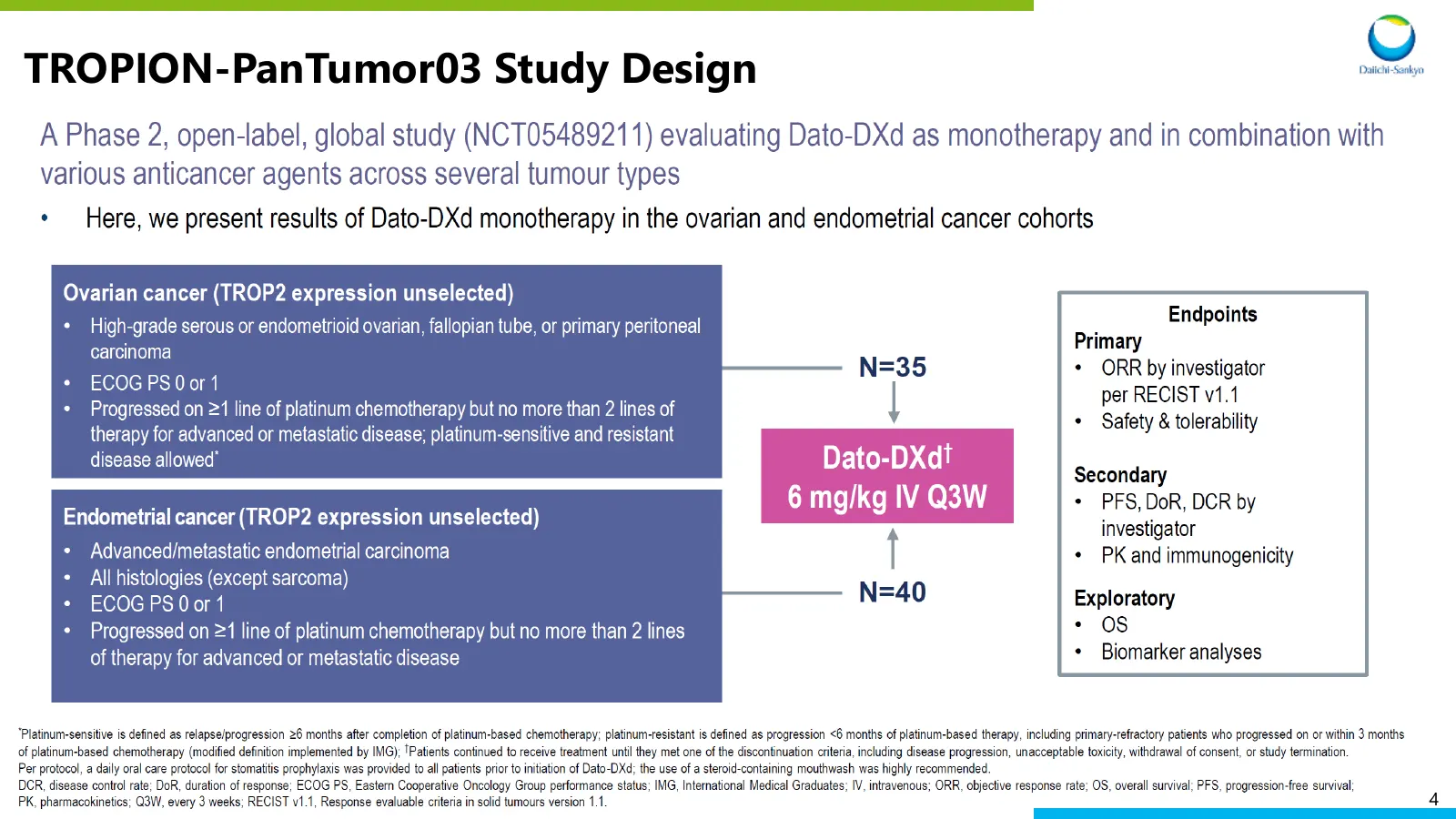
TROPION-PanTumor03 Study Design 4
Slide 5: Baseline Characteristics and Demographics
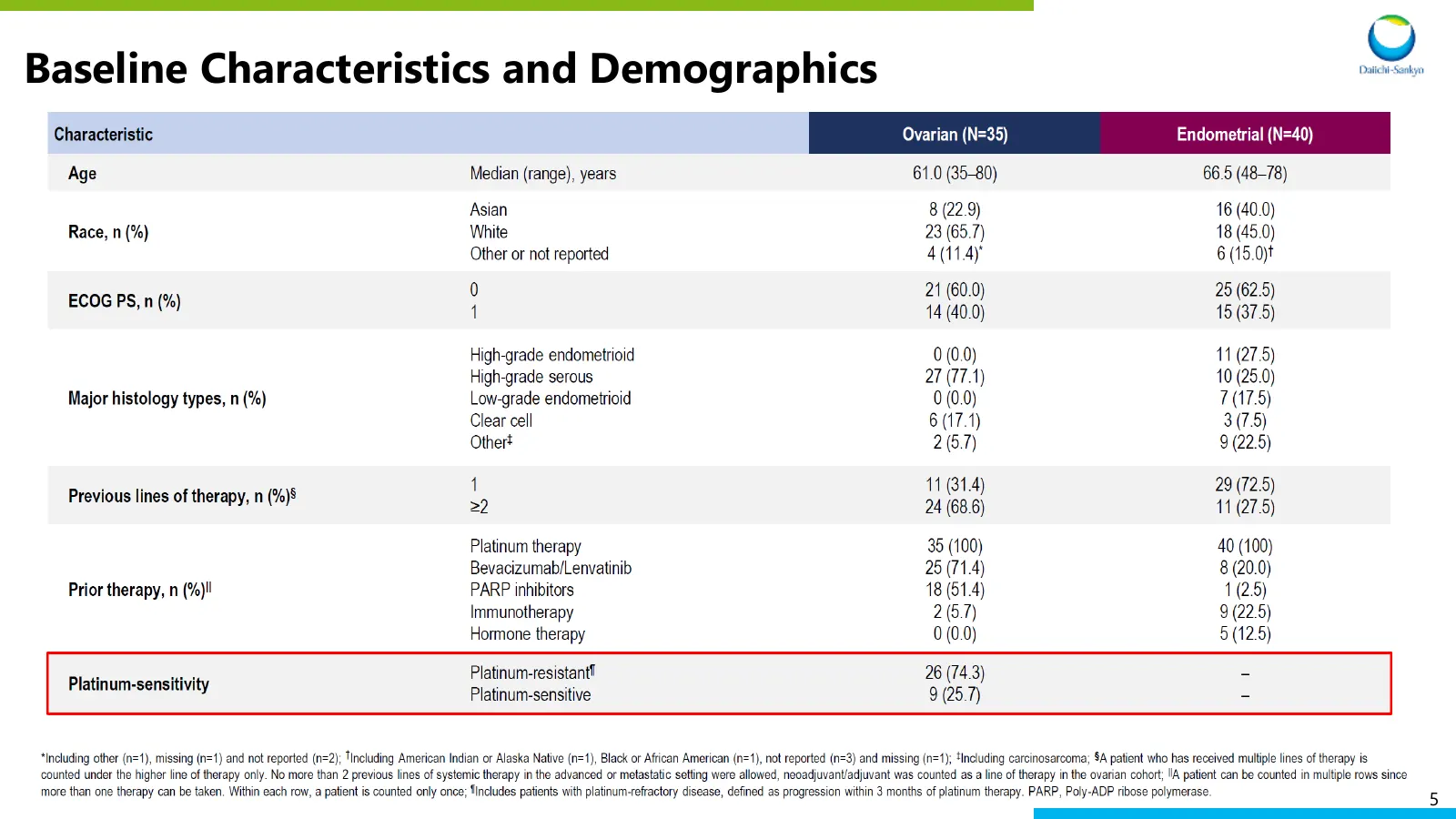
Baseline Characteristics and Demographics 5
Slide 6: Efficacy in Ovarian Cancer
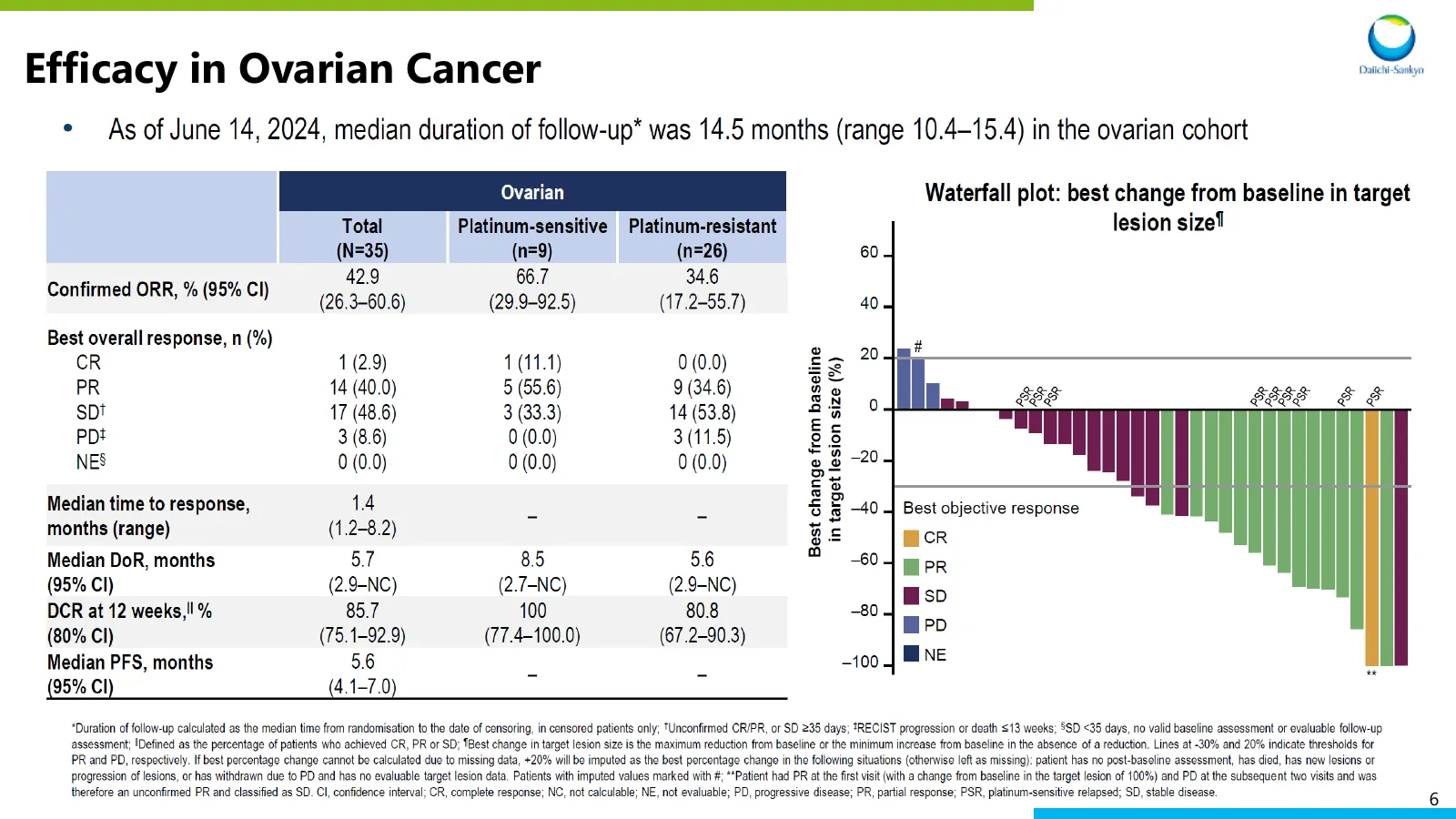
Efficacy in Ovarian Cancer a U Dalichi-Sonkyn ° As of June 14, 2024, median duration of follow-up* was 14.5 months (range 10.4-15.4) in the ovarian cohort Ovarian Total Platinum-sensitive Platinum-resistant (N=35) (n=9) (n=26) 42.9 66.7 34.6 Confirmed ORR, % (95% Cl) (96 3 60.6) (29.9-925) (172-557)
Slide 7: Efficacy in Endometrial Cancer
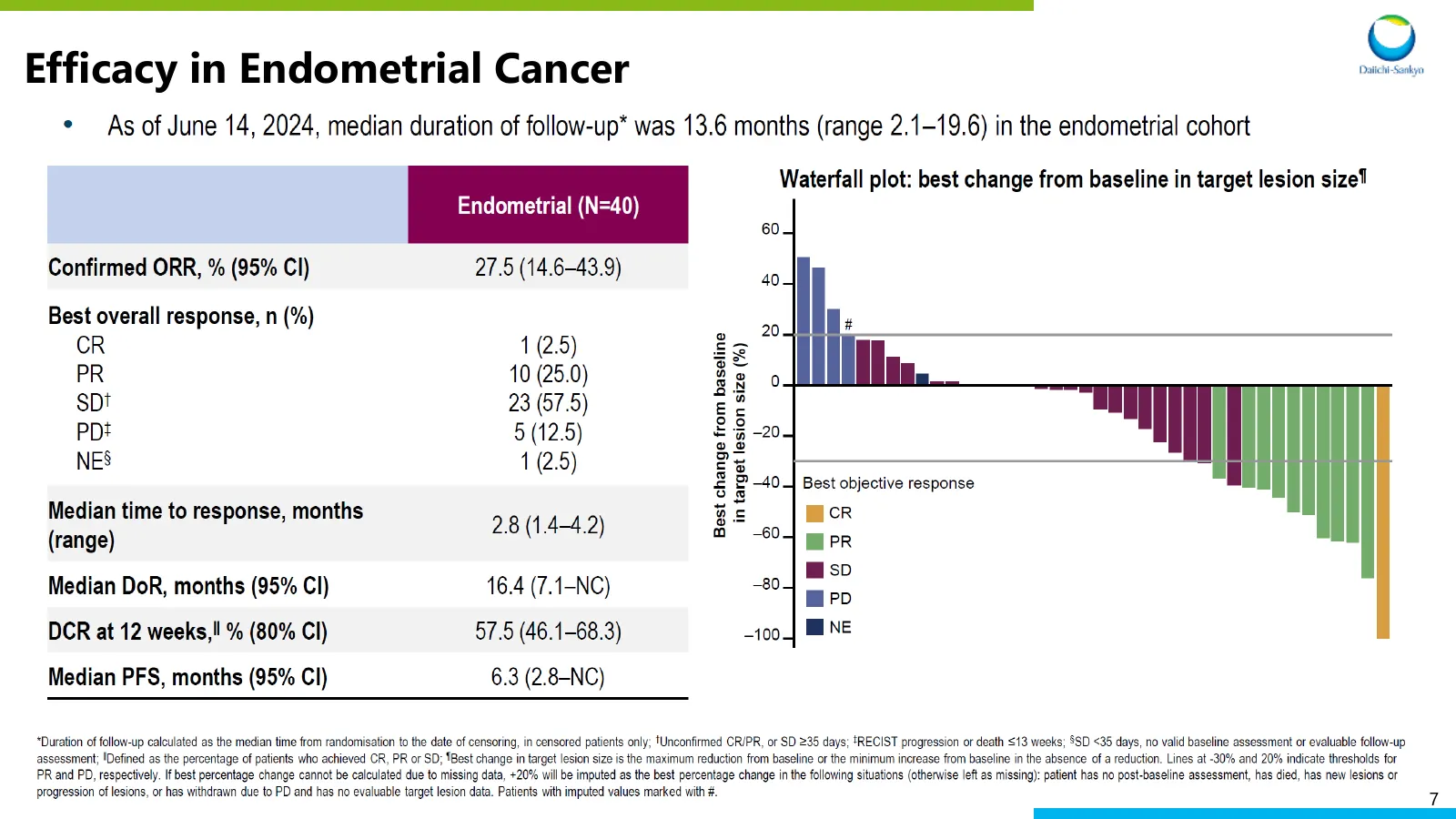
Efficacy in Endometrial Cancer 7
Slide 8: Exposure and Safety
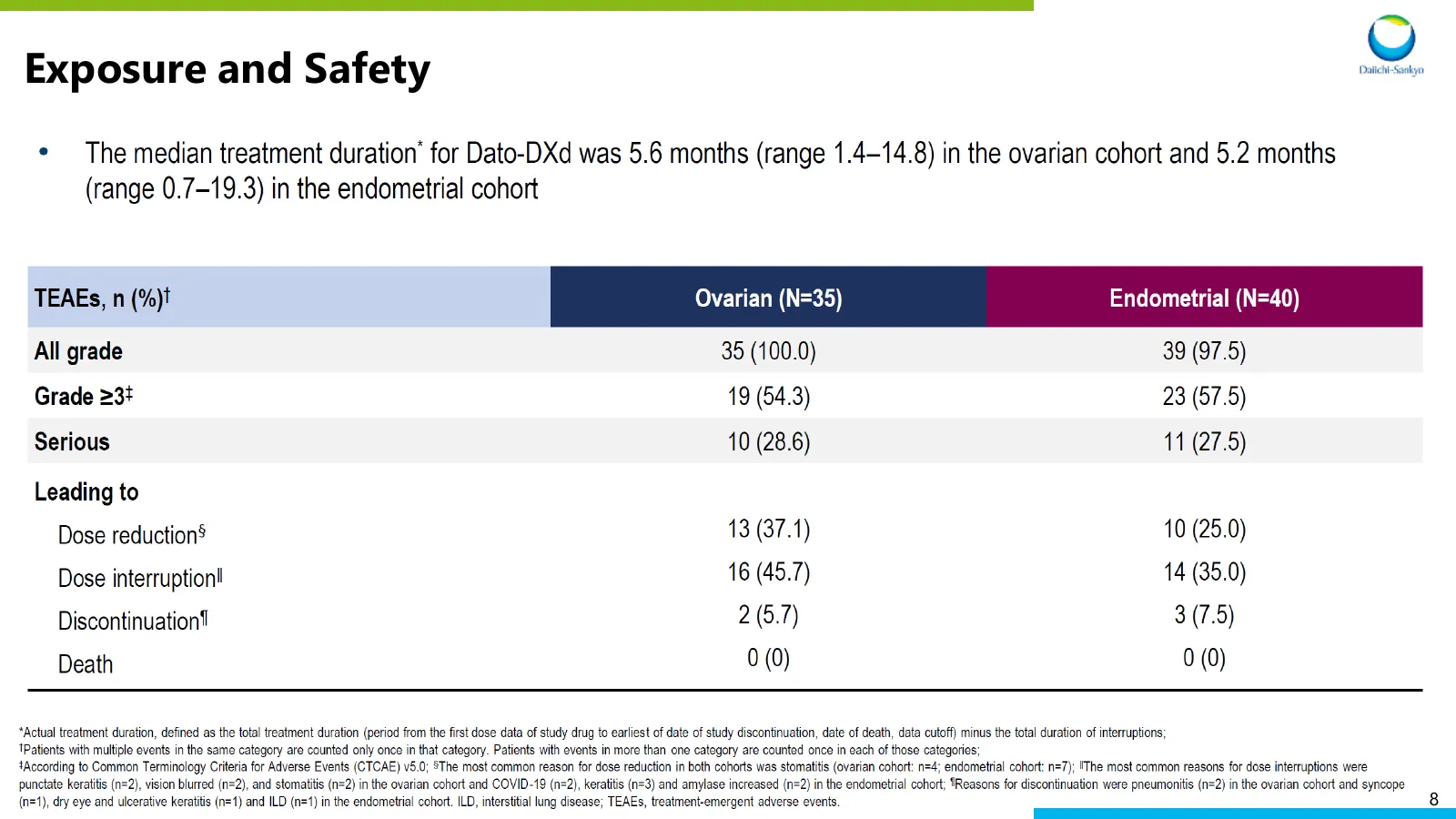
a Exposure and Safety 4 * The median treatment duration’ for Dato-DXd was 5.6 months (range 1.4-14.8) in the ovarian cohort and 5.2 months (range 0.7-19.3) in the endometrial cohort TEAEs, n (%)t Ovarian (N=35) Endometrial (N=40) All grade 35 (100.0) 39 (97.5) Grade 23+ 19 (54.3) 23 (67.5) Serious 1
Slide 9: Most Frequent TEAEs
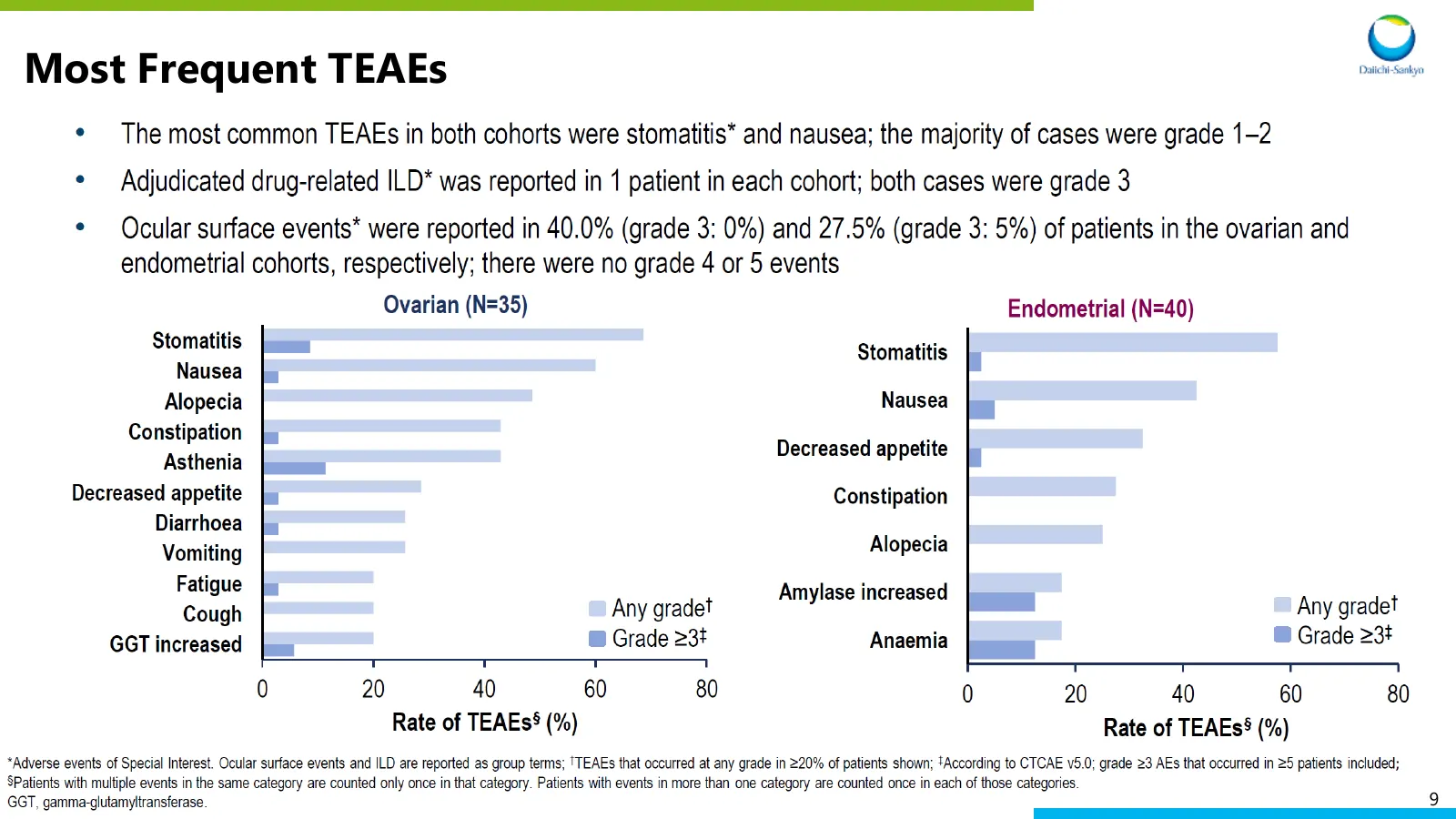
Most Frequent TEAEs ¢ The most common TEAESs in both cohorts were stomatitis* and nausea; the majority of cases were grade 1-2 ¢ Adjudicated drug-related ILD* was reported in 1 patient in each cohort; both cases were grade 3 * Ocular surface events* were reported in 40.0% (grade 3: 0%) and 27.5% (gr
Slide 10: Conclusions
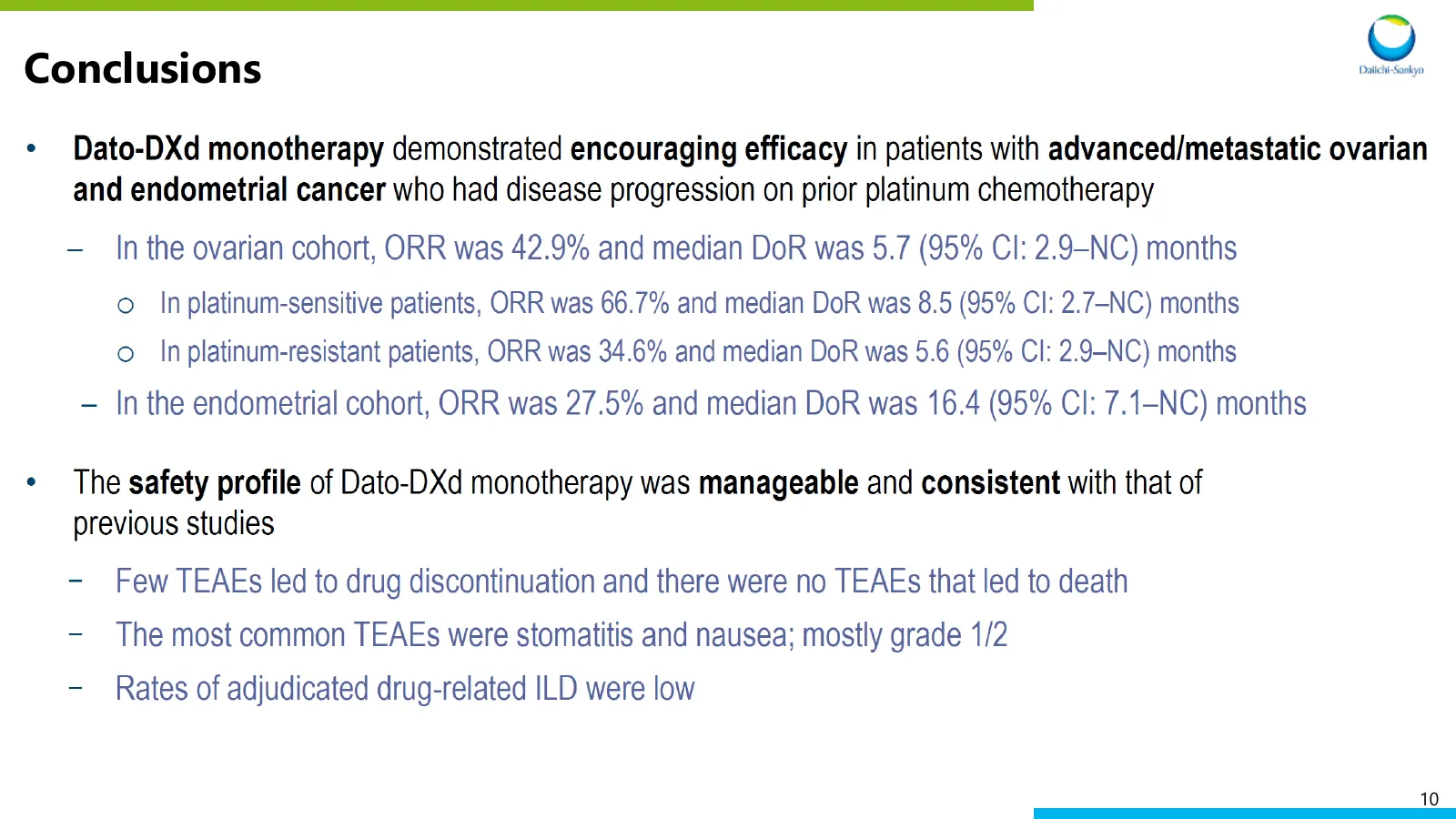
— U Conclusions ww, ¢ Dato-DXd monotherapy demonstrated encouraging efficacy in patients with advanced/metastatic ovarian and endometrial cancer who had disease progression on prior platinum chemotherapy — Inthe ovarian cohort, ORR was 42.9% and median DoR was 5.7 (95% Cl: 2.9-NC) months o Inplatinu
Slide 11: Efficacy, safety and biomarker analysis of ICARUS-BREAST01
Efficacy, safety and biomarker analysis of ICARUS-BREAST01: a phase 2 Study of Patritumab Deruxtecan (HER3-DXd) in patients with HR+/HER2 advanced breast cancer B. Pistilli1,15, L. Pierotti2, M. Lacroix-Triki3, C. Vicier4, J.S. Frenel5, V. D'Hondt6, F. Dalenc7, T. Bachelot8, A. Ducoulombier9, M.A Be
Slide 12: Background
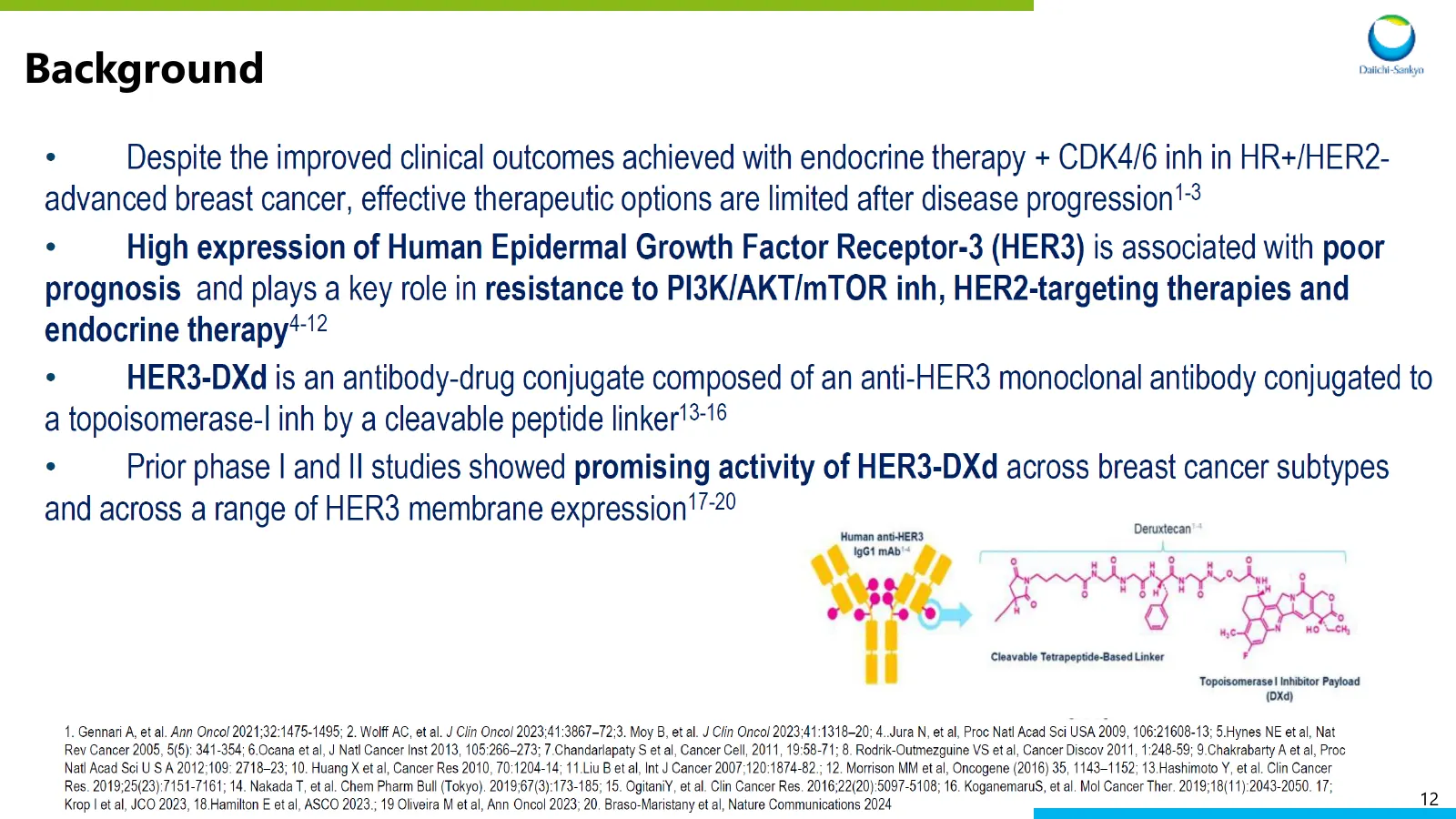
Background we, . Despite the improved clinical outcomes achieved with endocrine therapy + CDK4/6 inh in HR+/HER2- advanced breast cancer, effective therapeutic options are limited after disease progression'* . High expression of Human Epidermal Growth Factor Receptor-3 (HER3) is associated with poor
Slide 13: Background
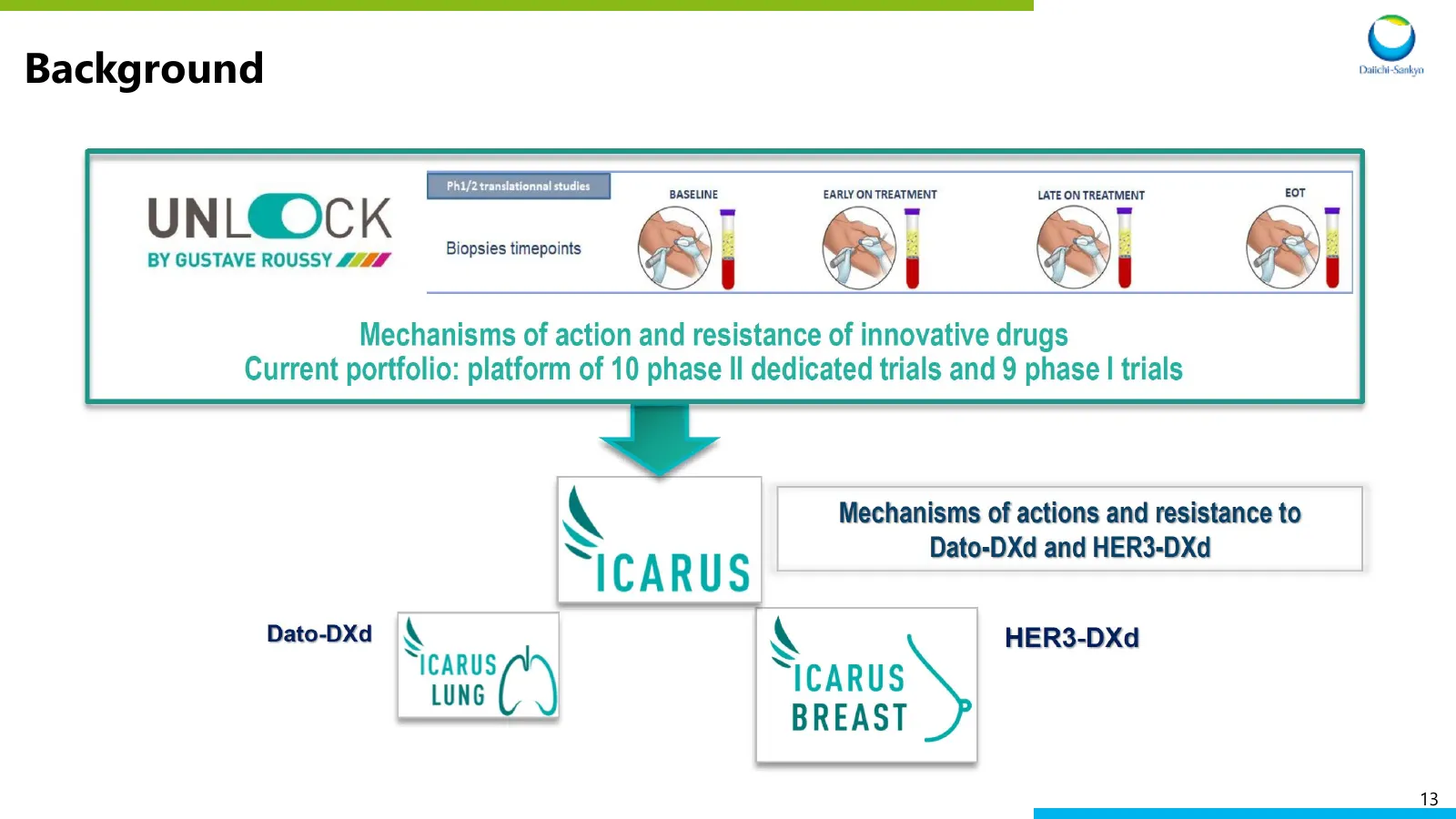
Background Phi/2translationnal studies ste UNL@OCK Loa BY GUSTAVE ROUSSY 4447 EARLY ON TREATMENT LATE ON TREATMENT | %i i Mechanisms of action and resistance of innovative drugs Current portfolio: platform of 10 phase II dedicated trials and 9 phase | trials N ICARUS Dato-DXd_ | “ICARUS LUNG Datei -
Slide 14: ICARUS BREAST01: Study Design
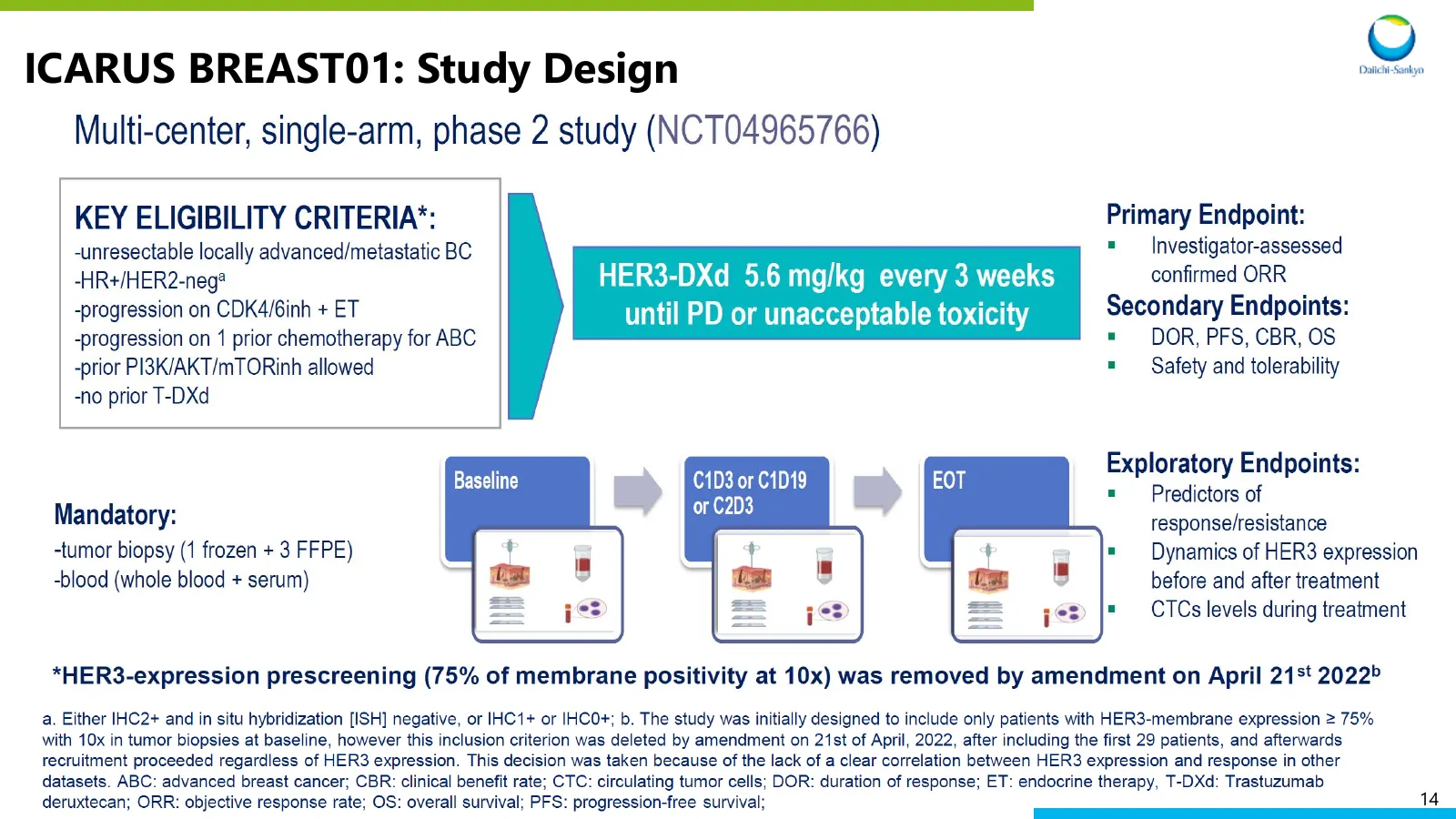
ICARUS BREAST01: Study Design 14
Slide 15: Statistical considerations and methods
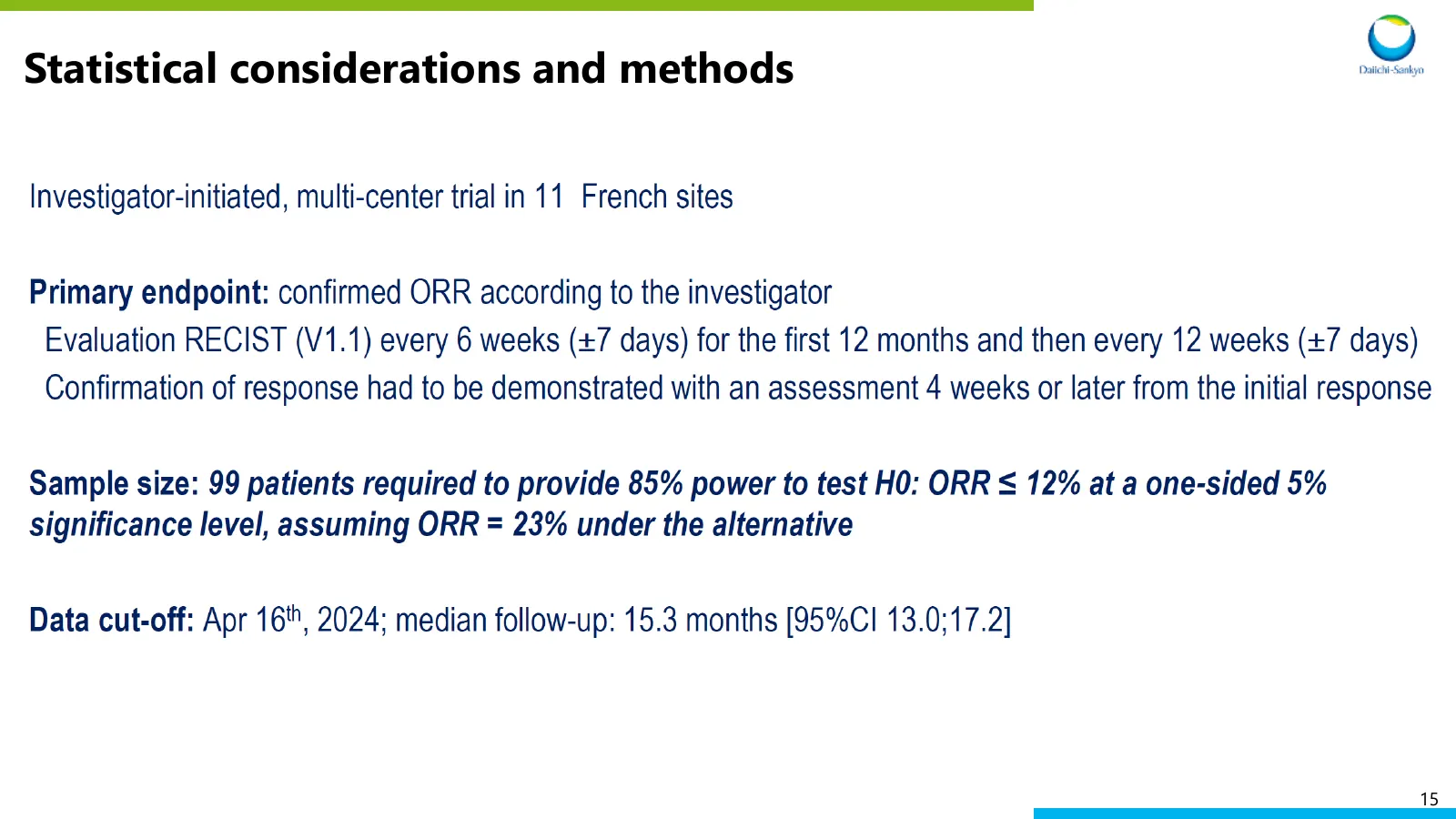
Statistical considerations and methods 15
Slide 16: Demographics and baseline characteristics
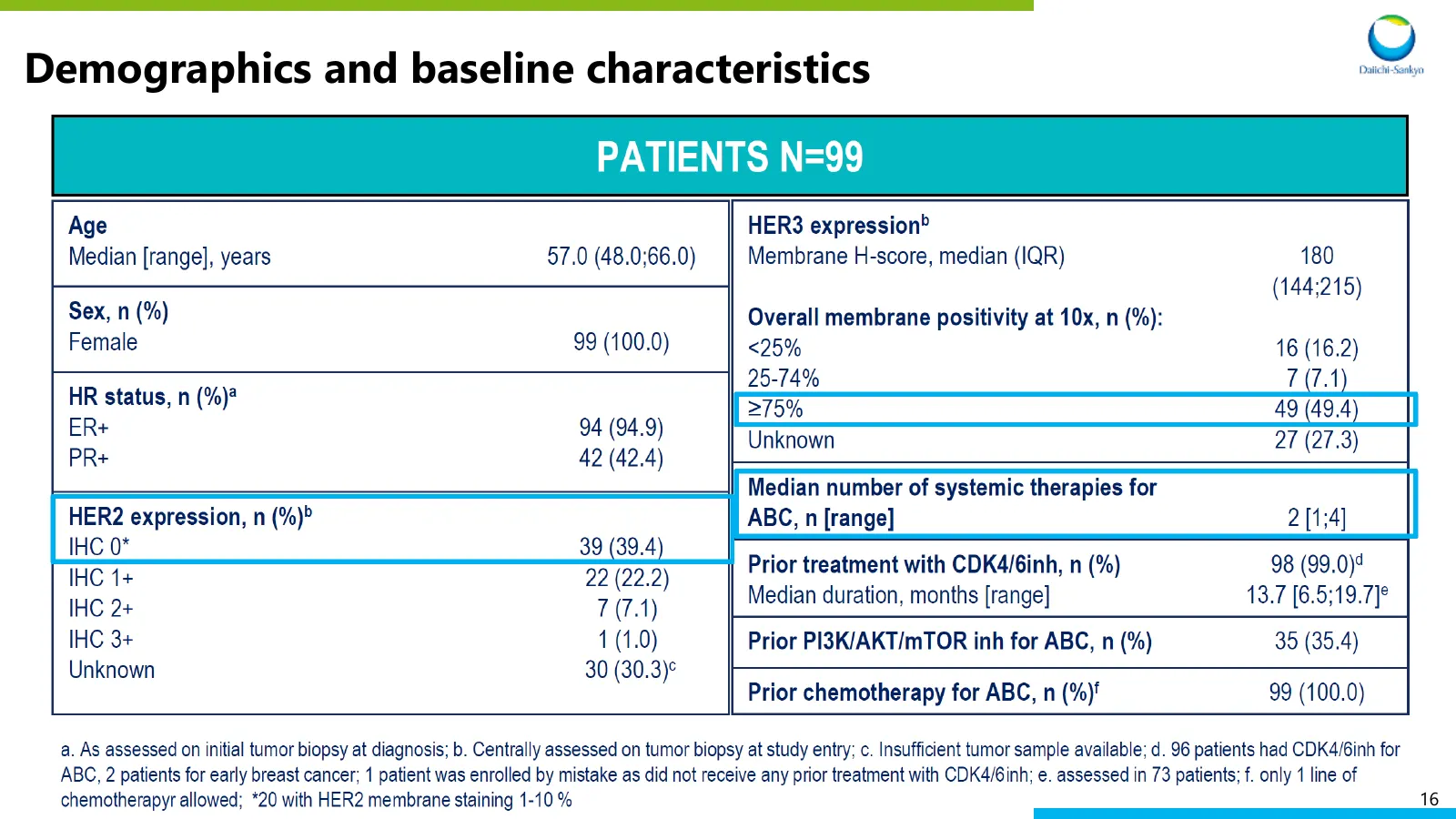
Demographics and baseline characteristics 16
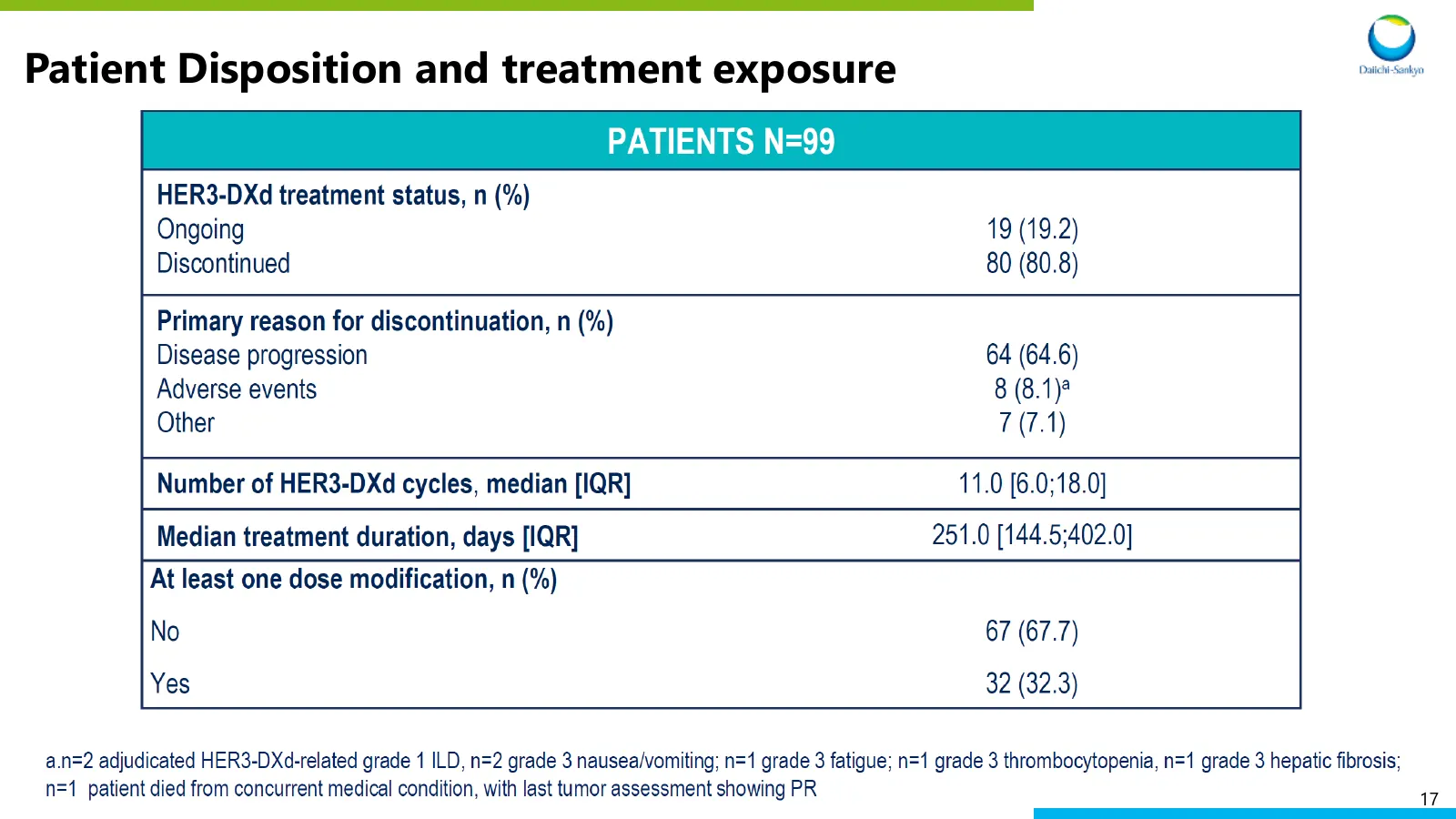
Slide 17: Patient Disposition and treatment exposure
Patient Disposition and treatment exposure 17
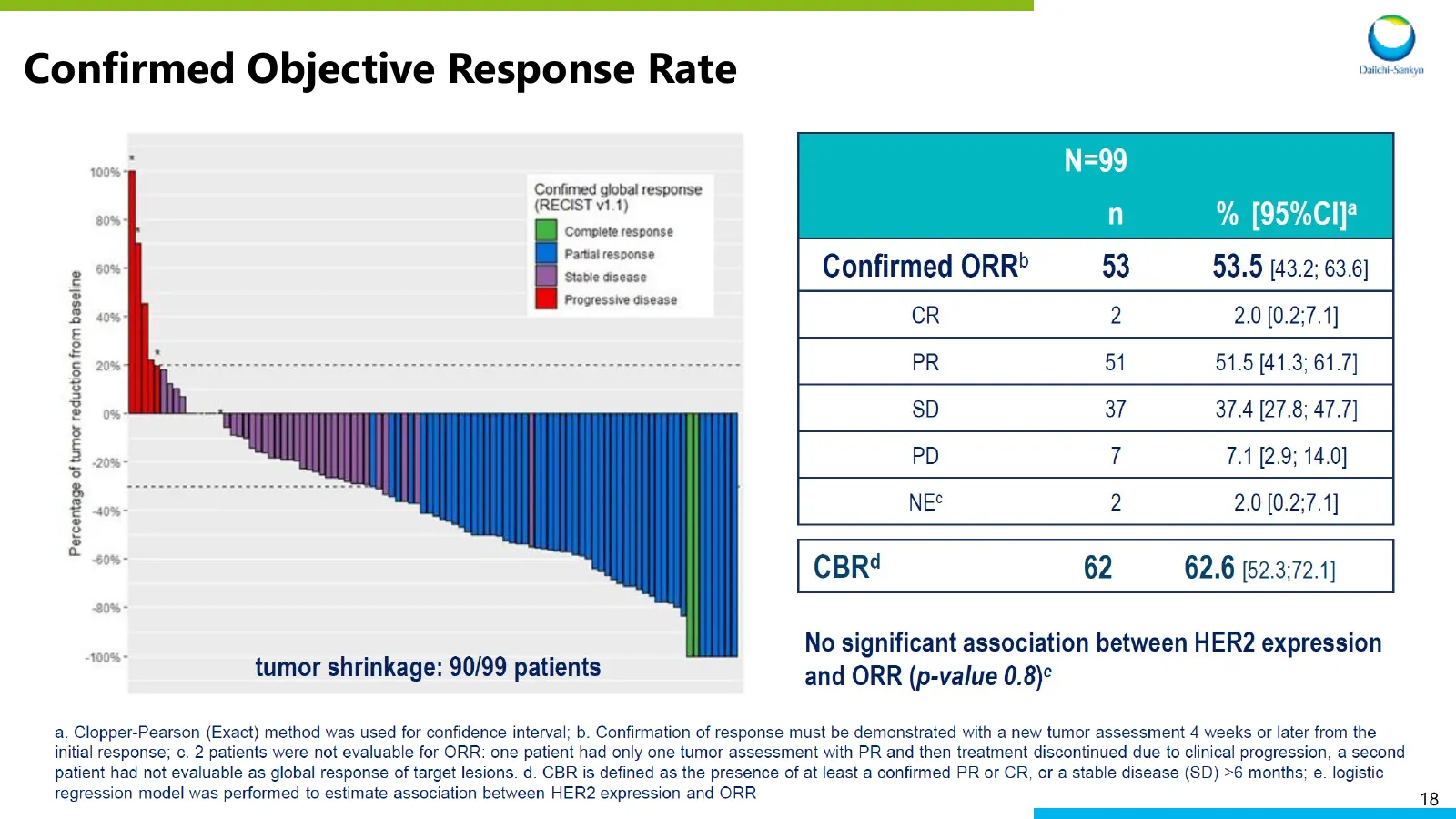
Slide 18: Confirmed Objective Response Rate
Confirmed Objective Response Rate 18
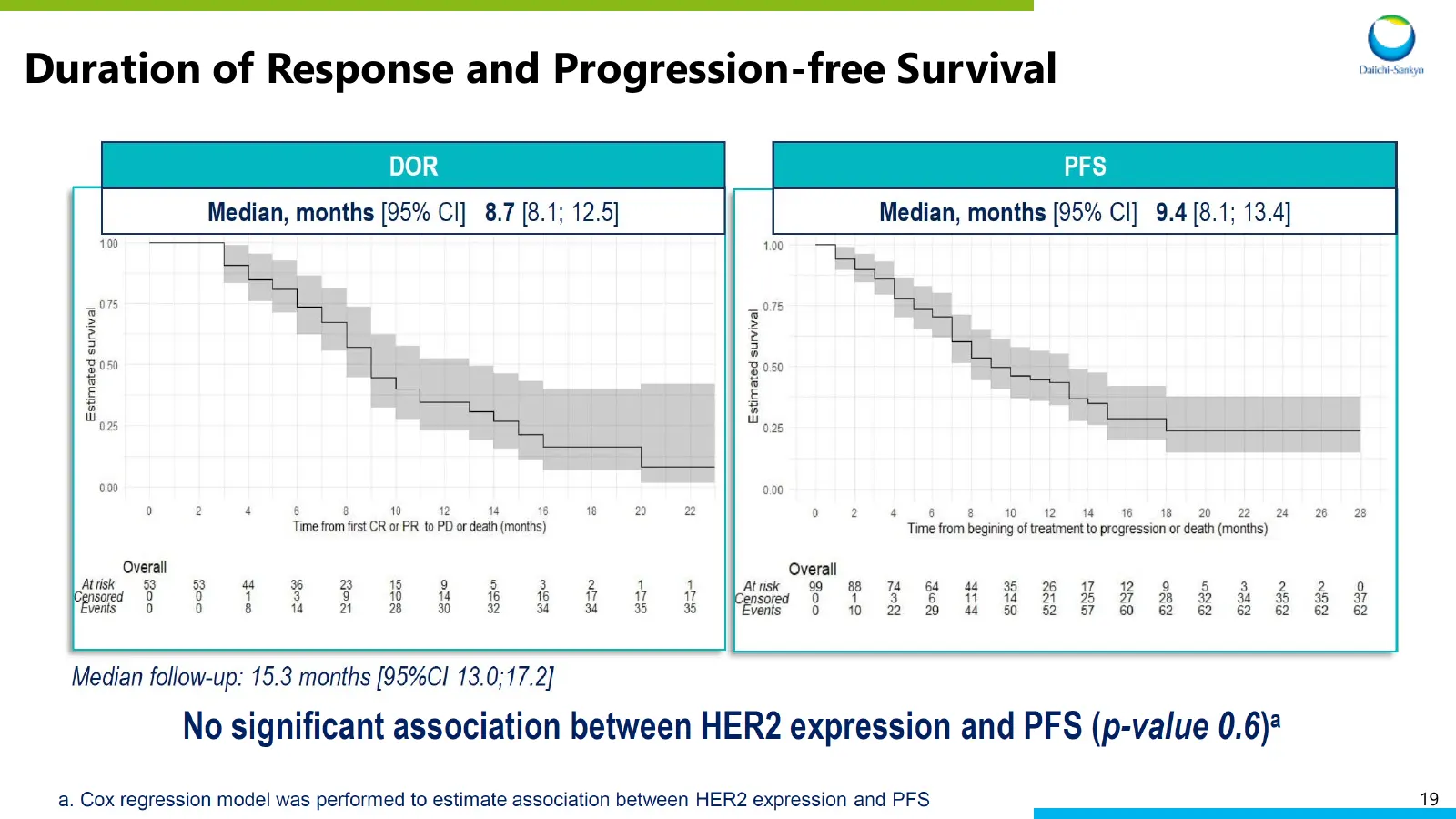
Slide 19: Duration of Response and Progression-free Survival
Duration of Response and Progression-free Survival 19
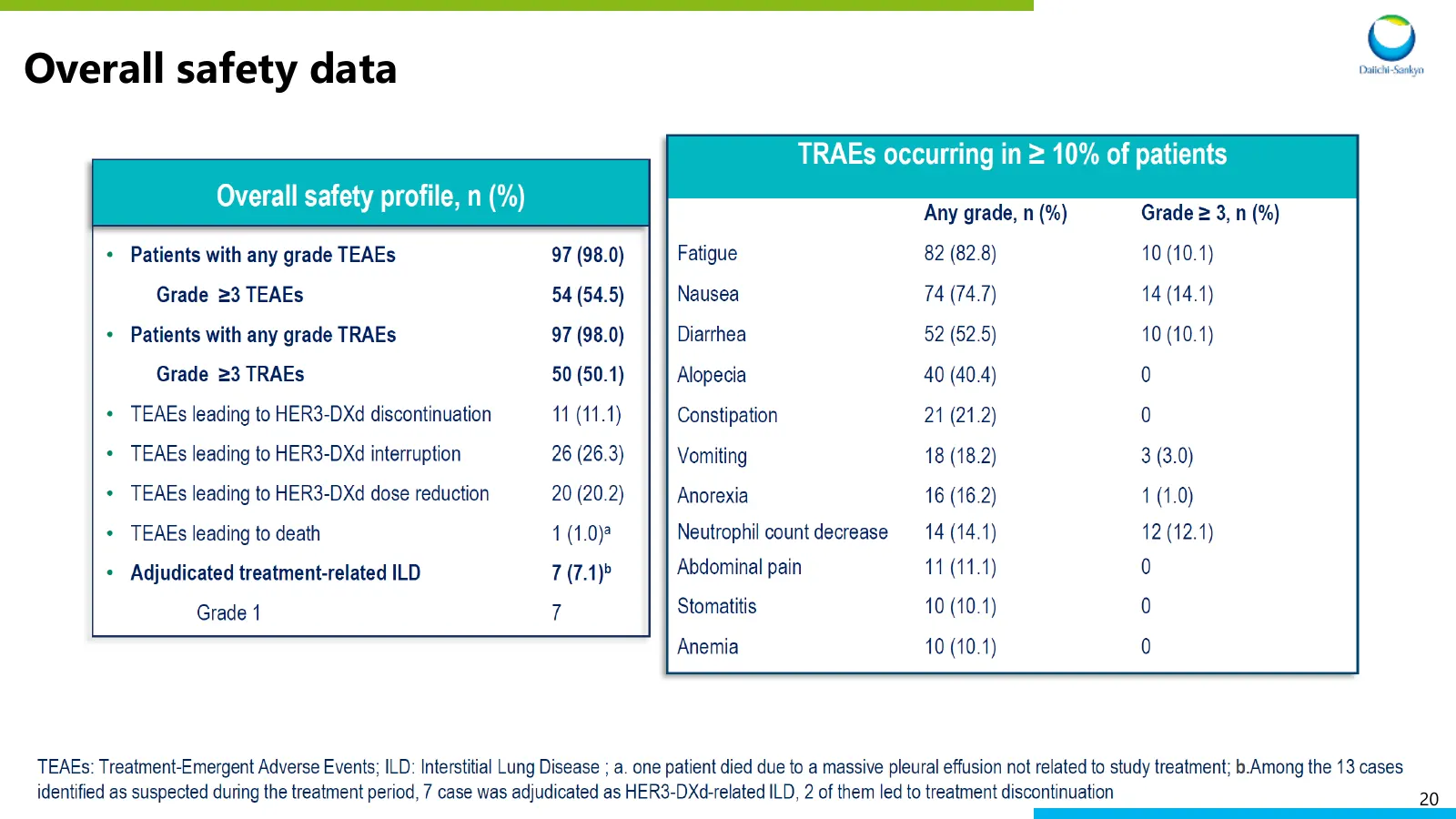
Slide 20: Overall safety data
Overall safety data Overall safety profile, n (%) . Patients with any grade TEAEs Grade 23 TEAEs + Patients with any grade TRAEs Grade 23 TRAEs * TEAEs leading to HER3-DXd discontinuation * TEAEs leading to HER3-DXqd interruption + TEAEs leading to HER3-DXd dose reduction + TEAEs leading to death +
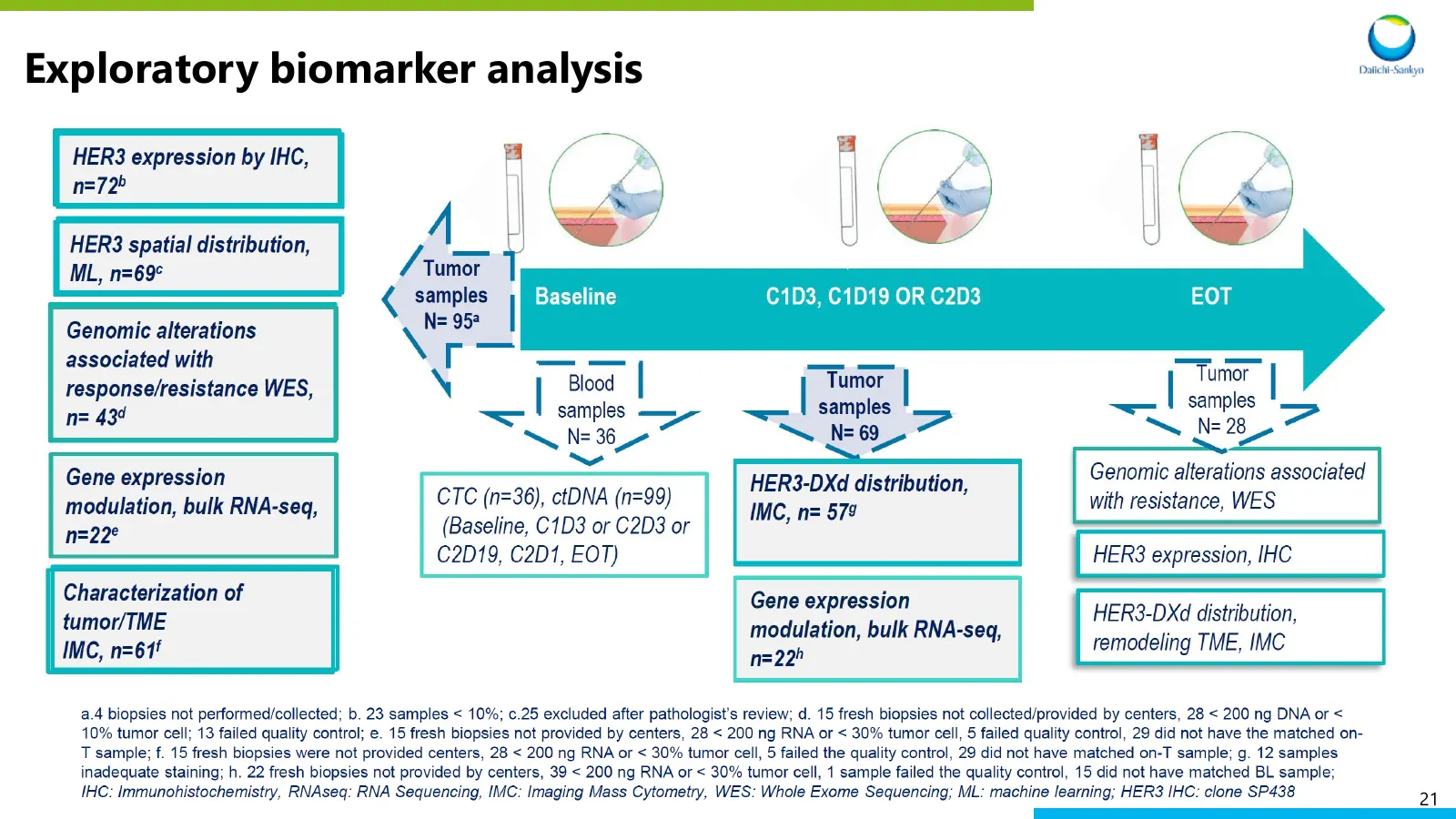
Slide 21: Exploratory biomarker analysis
Exploratory biomarker analysis 21
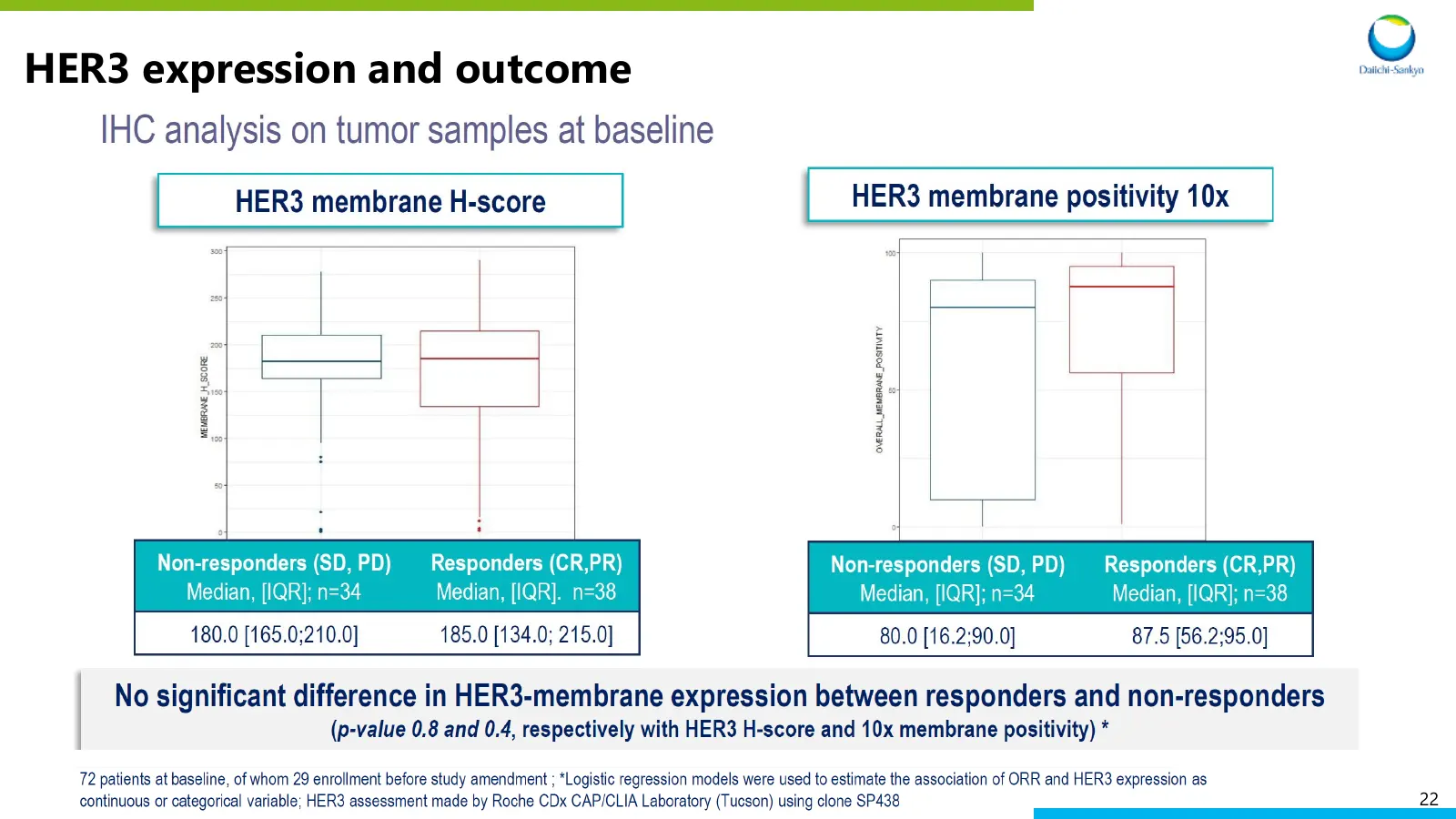
Slide 22: HER3 expression and outcome
HER3 expression and outcome 22
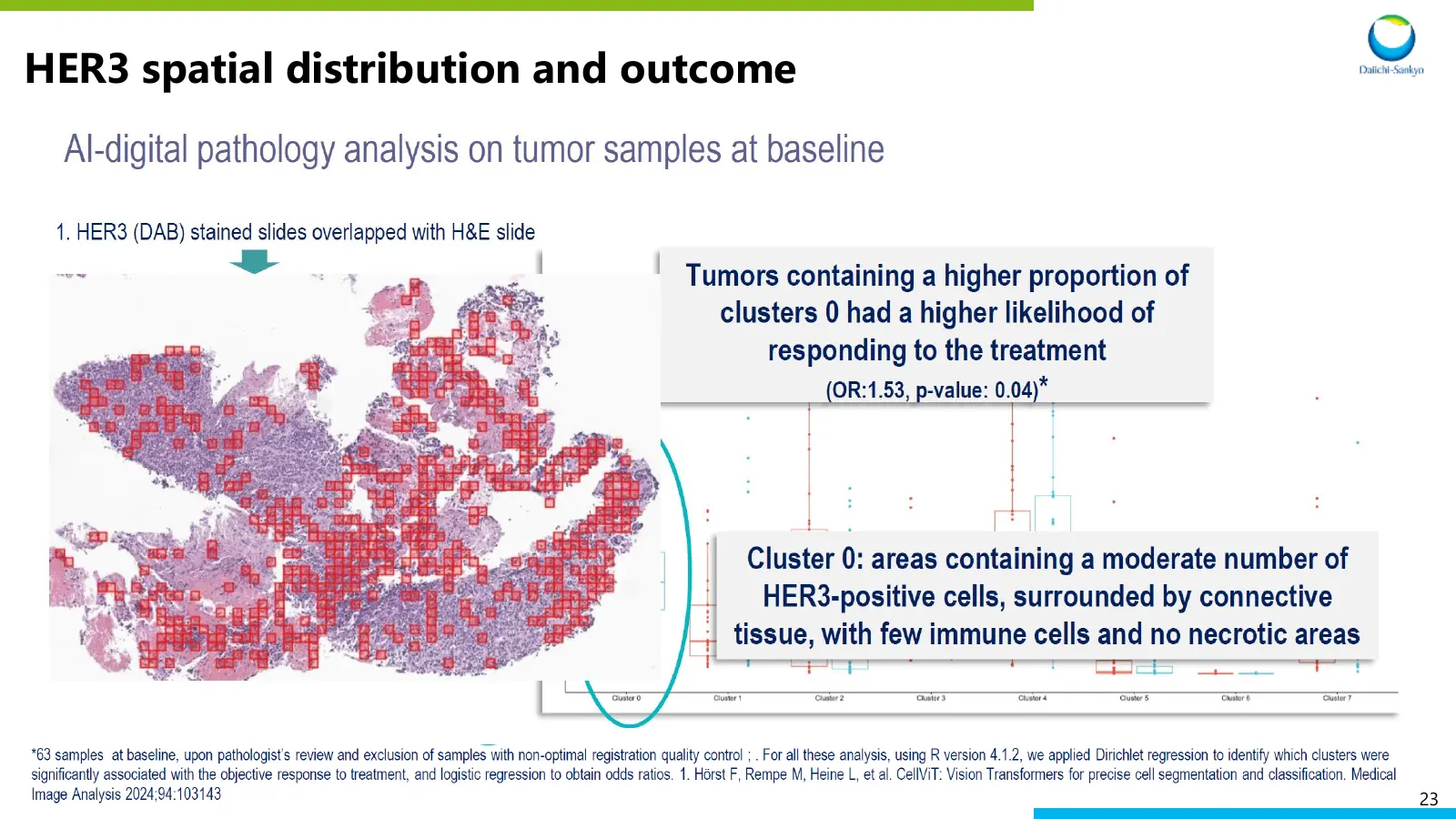
Slide 23: HER3 spatial distribution and outcome
HER3 spatial distribution and outcome 23
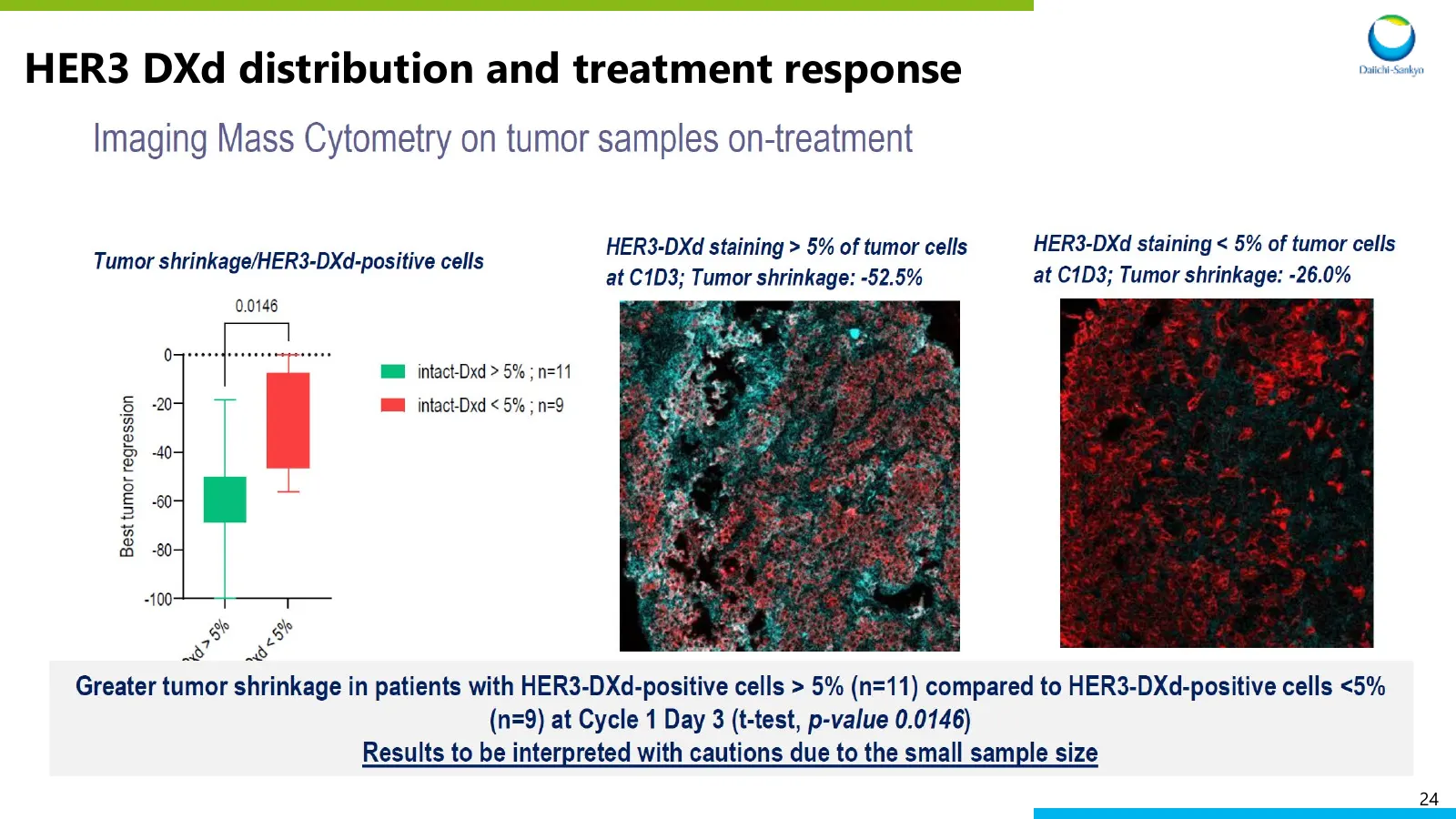
Slide 24: HER3 DXd distribution and treatment response
HER3 DXd distribution and treatment response 24
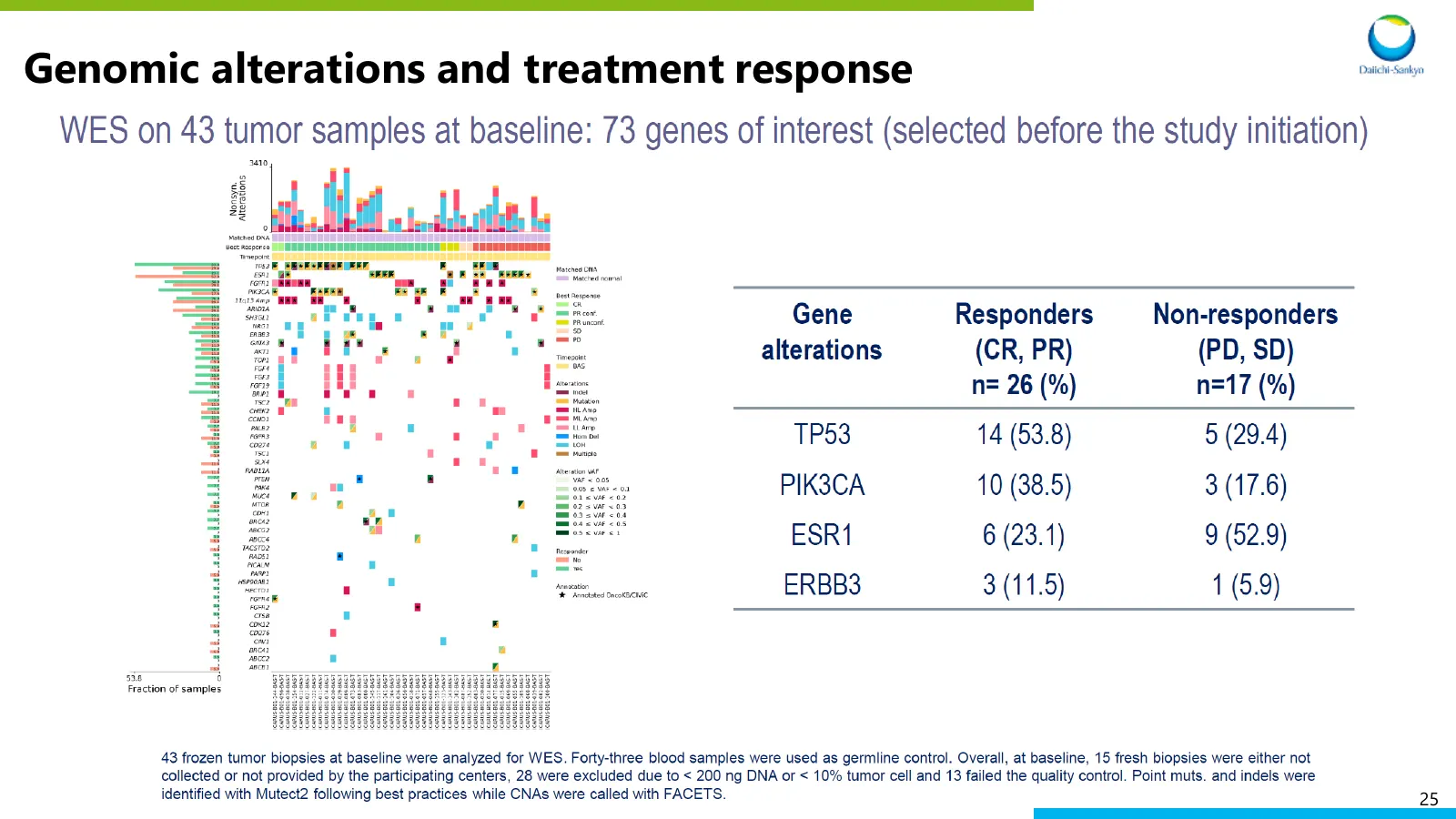
Slide 25: Genomic alterations and treatment response
Genomic alterations and treatment response 25
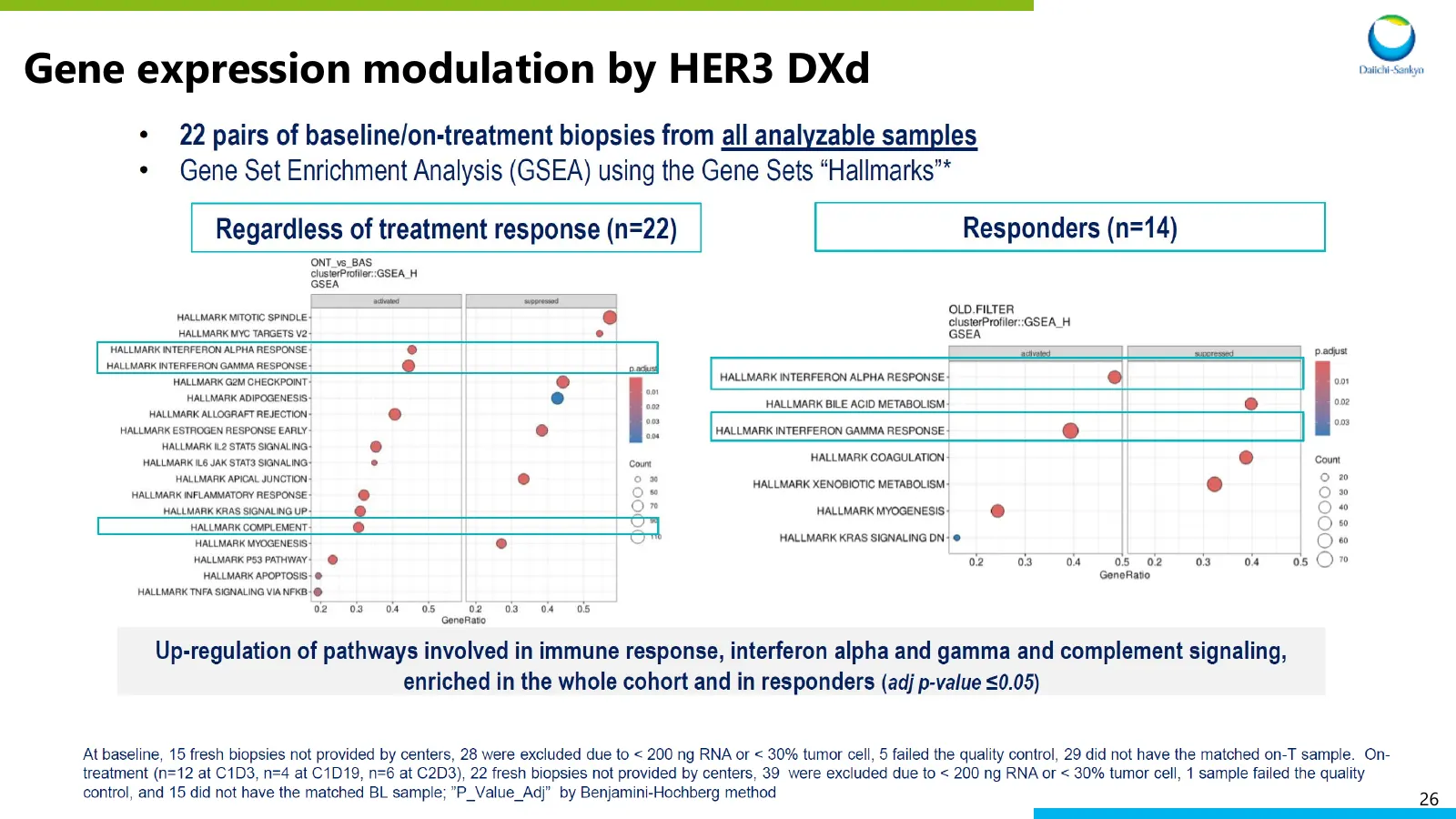
Slide 26: Gene expression modulation by HER3 DXd
Gene expression modulation by HER3 DXd 26
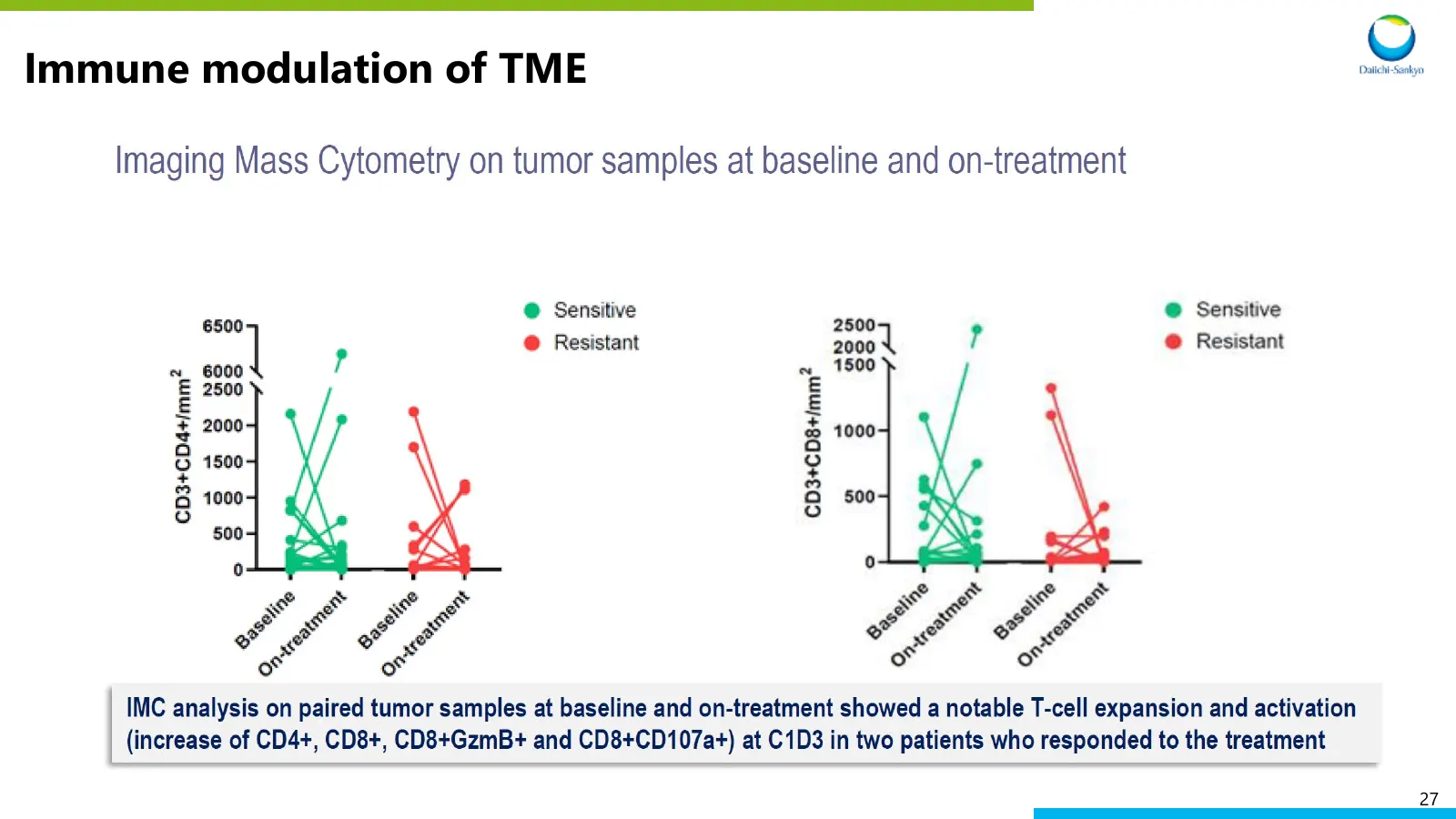
Slide 27: Immune modulation of TME
— U Immune modulation of TME Pe Imaging Mass Cytometry on tumor samples at baseline and on-treatment _— @ Sensitive — @ Sensitive @ Resistant 2000 ? @ Resistant ~_ 6000 ig % 1500 Ee 0 E 250 E = 2000 & 1000 a ra] © 1500 ° > + 8 1000 8 500 Fs} S 500 0 0 & S & ~ ee + se Se oS oF SE SS oS SS oe ee a - s
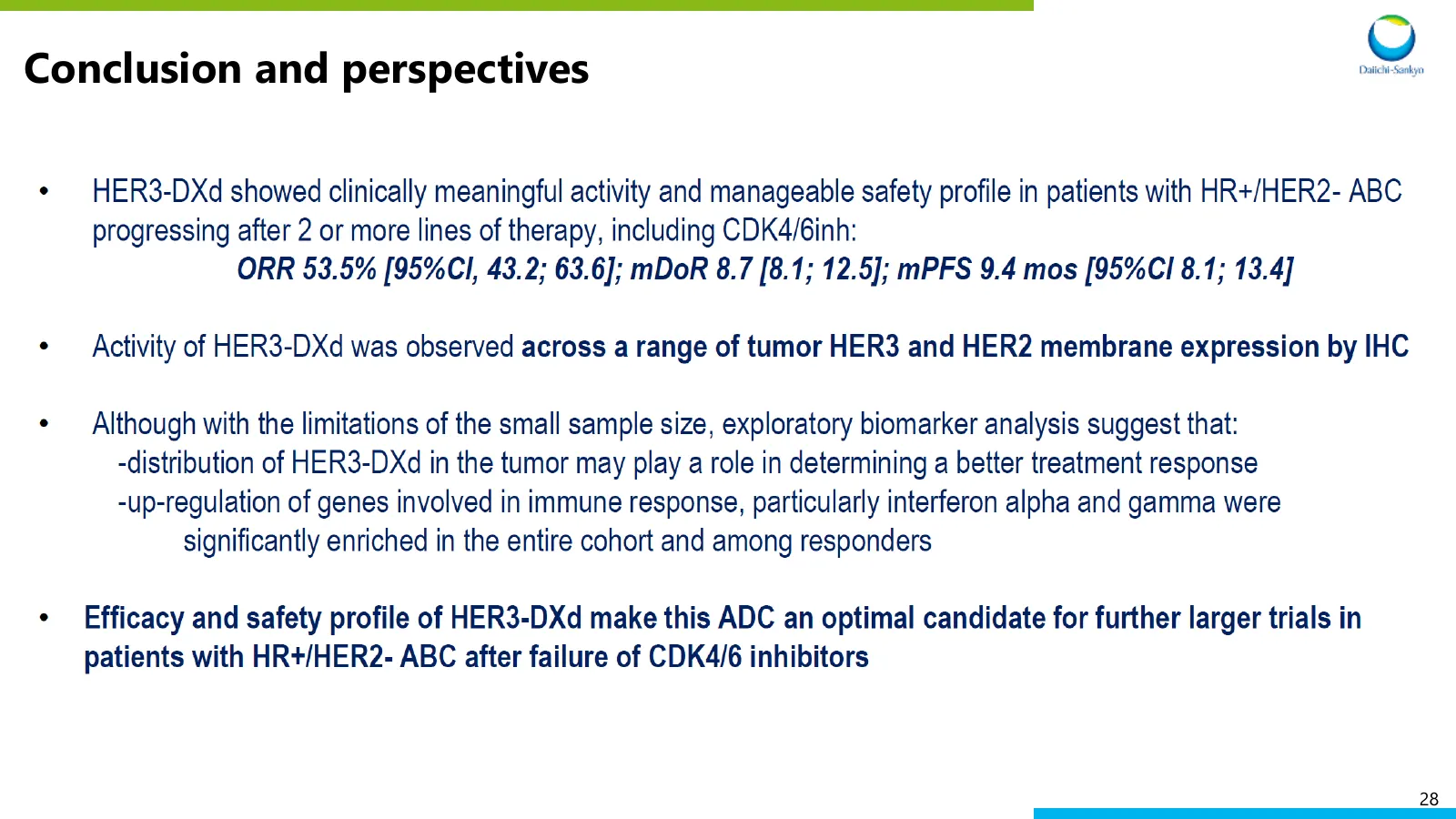
Slide 28: Conclusion and perspectives
Conclusion and perspectives 28
Slide 29: Preliminary results from a Phase 1 first-in-human study of DS-9606
Preliminary results from a Phase 1, first-in-human study of DS-9606, a Claudin 6 (CLDN6)-directed antibody–drug conjugate, in patients with tumor types known to express CLDN6 Manish R. Patel,1,2 Erika Hamilton,2 Sarina A. Piha-Paul,3 Jason Henry,4 Udai Banerji,5 Mohammed Najeeb Al Hallak,6 Hiroyuki
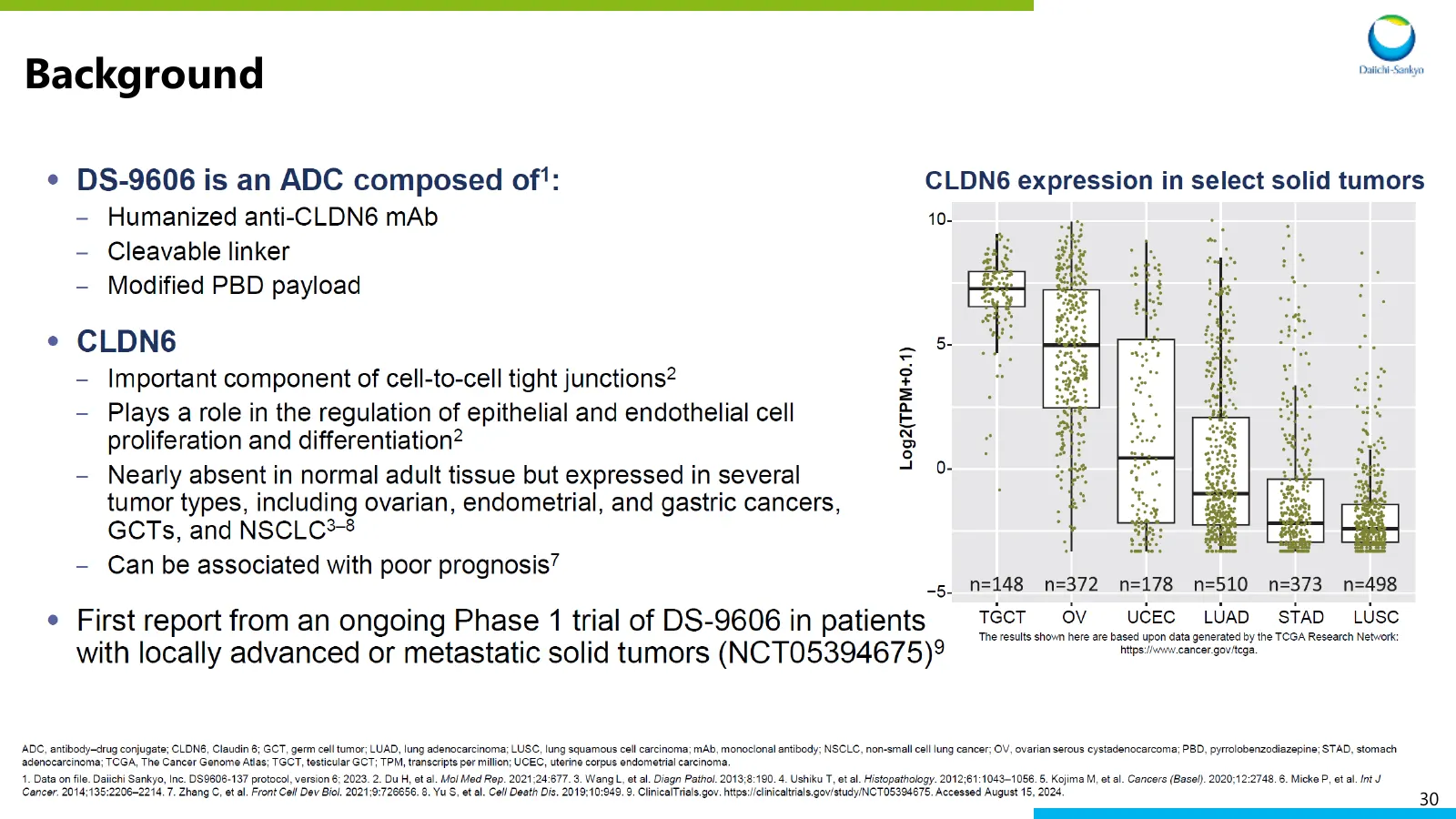
Slide 30: Background
Background ¢ DS-9606 is an ADC composed of": CLDN6 expression in select solid tumors — Humanized anti-CLDN6 mAb 10- — Cleavable linker - Modified PBD payload * CLDNG => — Important component of cell-to-cell tight junctions? g — Plays a role in the regulation of epithelial and endothelial cell - prol
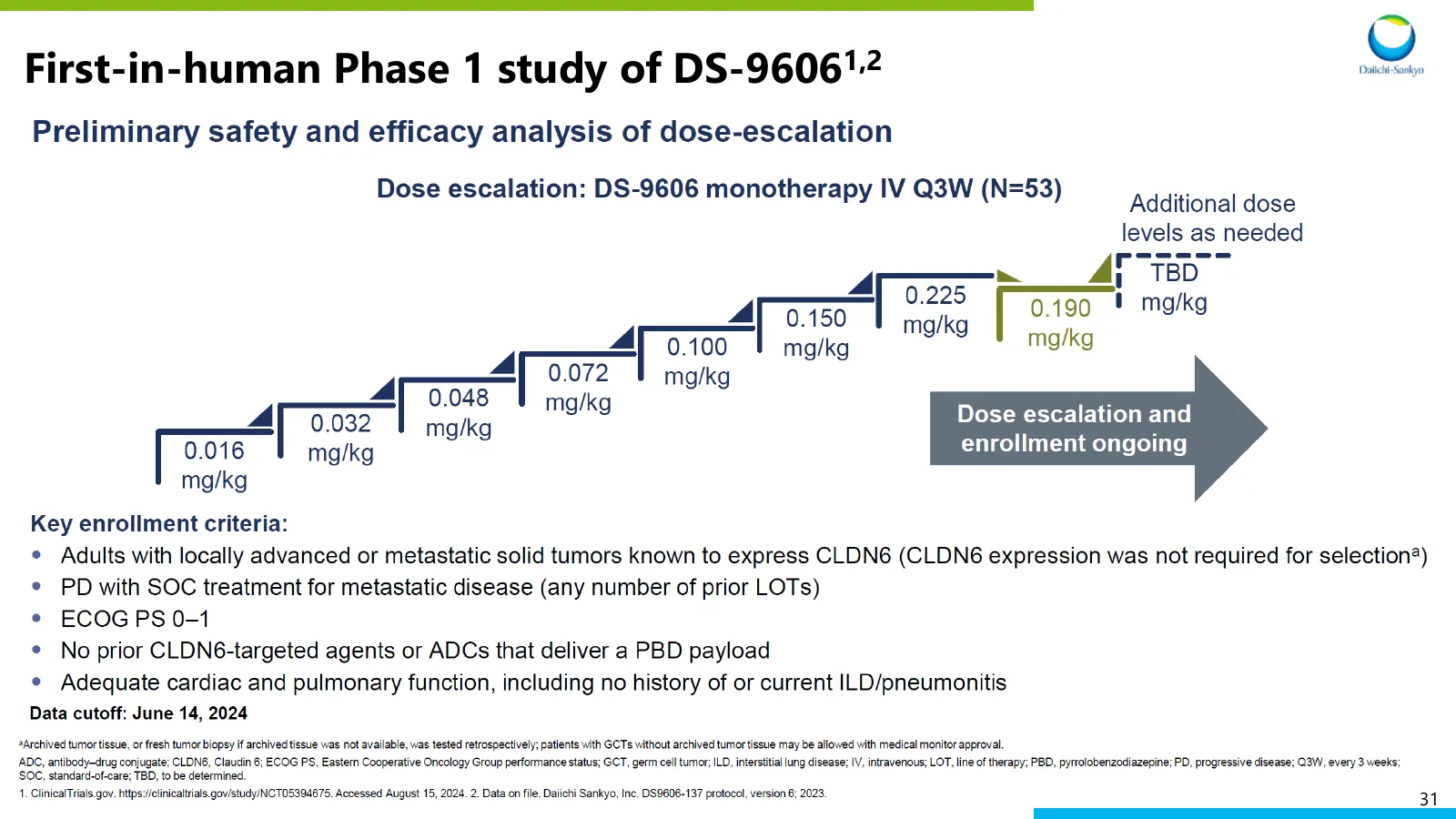
Slide 31: First-in-human Phase 1 study of DS-9606
First-in-human Phase 1 study of DS-96061,2 31
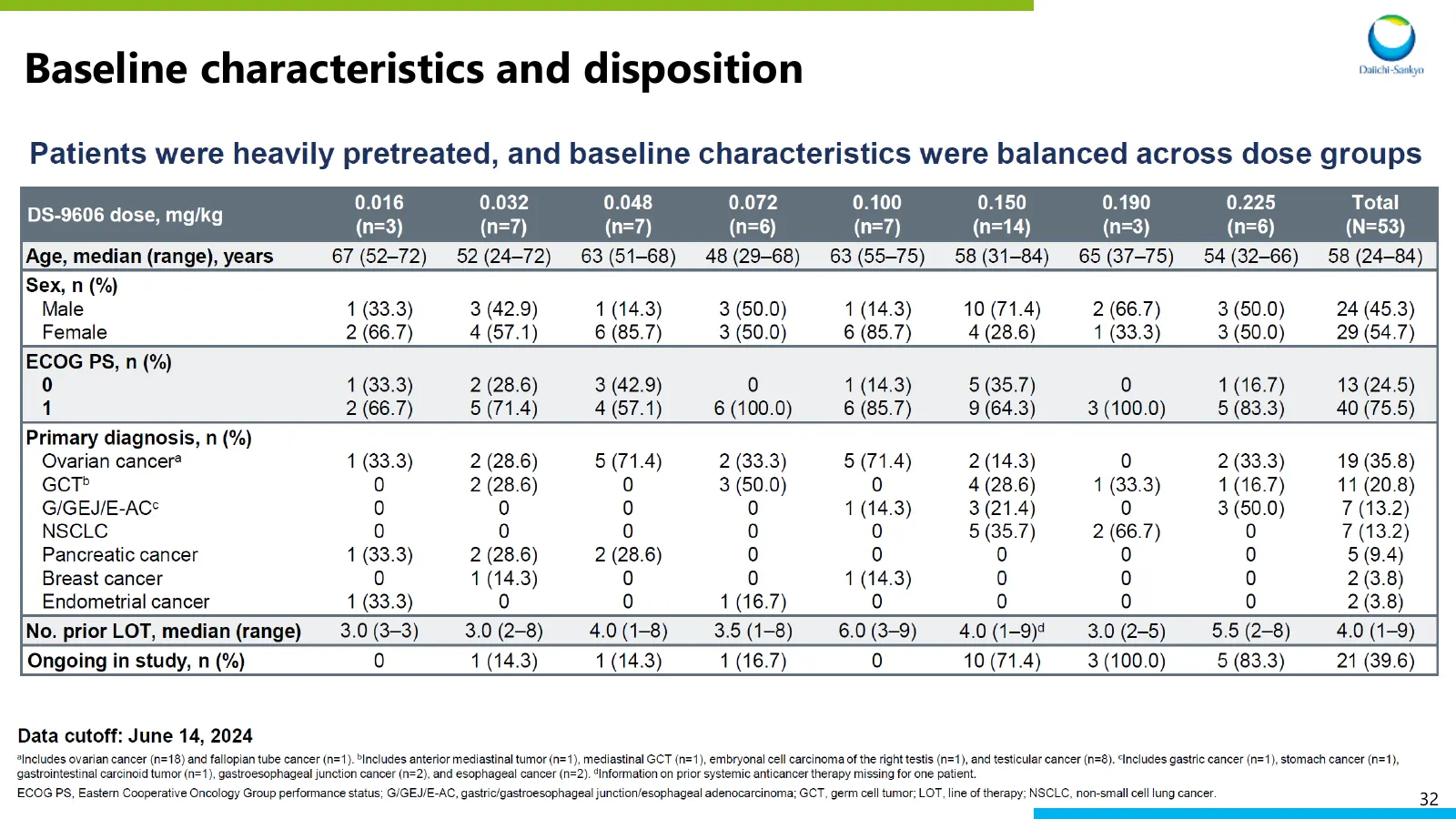
Slide 32: Baseline characteristics and disposition
Baseline characteristics and disposition 32
Slide 33: Pharmacokinetics
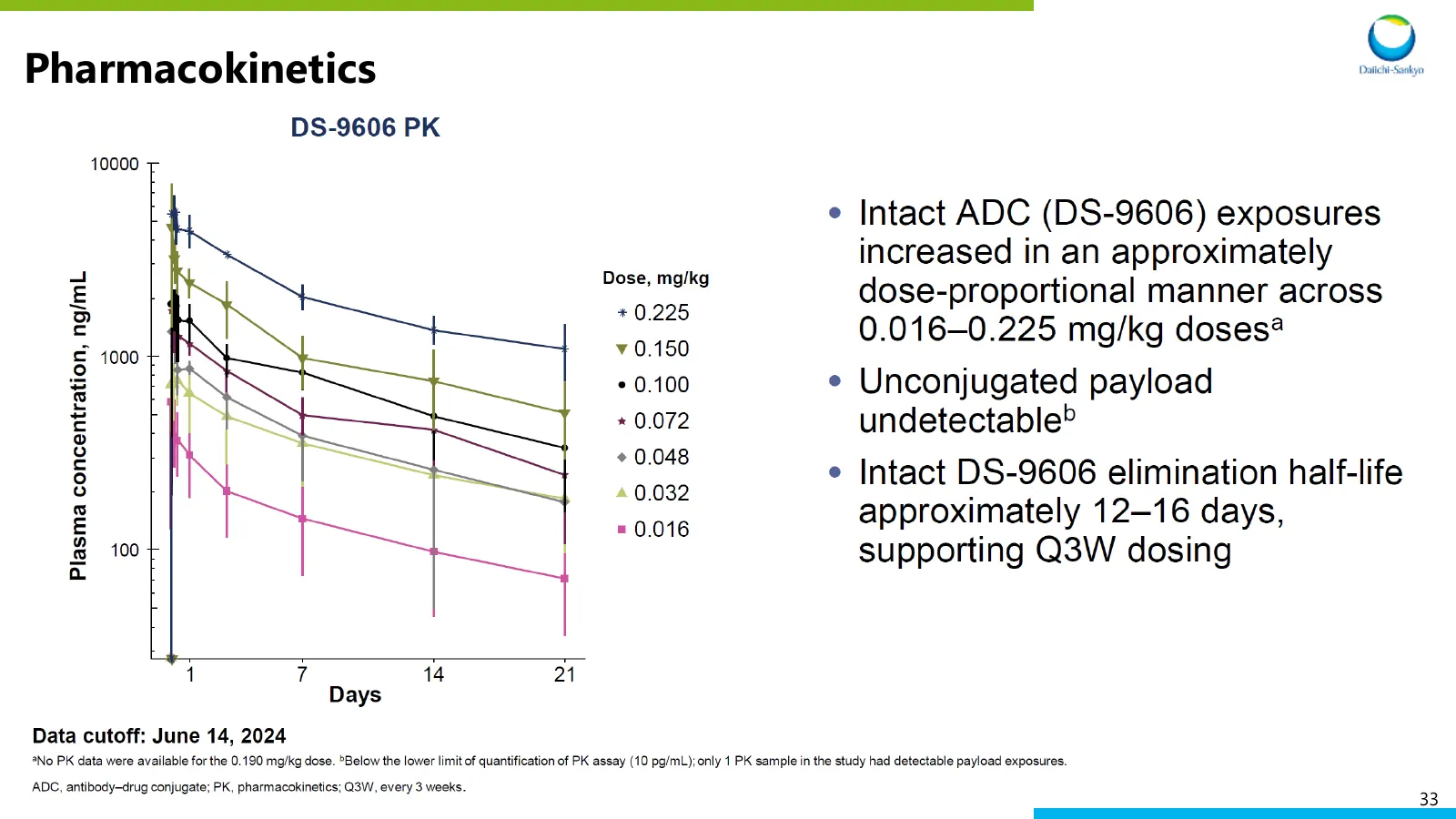
Pharmacokinetics on DS-9606 PK 10000 + e Intact ADC (DS-9606) exposures increased in an approximately E eon dose-proportional manner across 2 0150 0.016—-0.225 mg/kg doses? < 1000 vo. 2 + 0.100 e Unconjugated payload z «0.072 undetectable’ 5 owe * Intact DS-9606 elimination half-life g - 0016 approx
Slide 34: Safety: Overview of TEAEs and related TEAEs
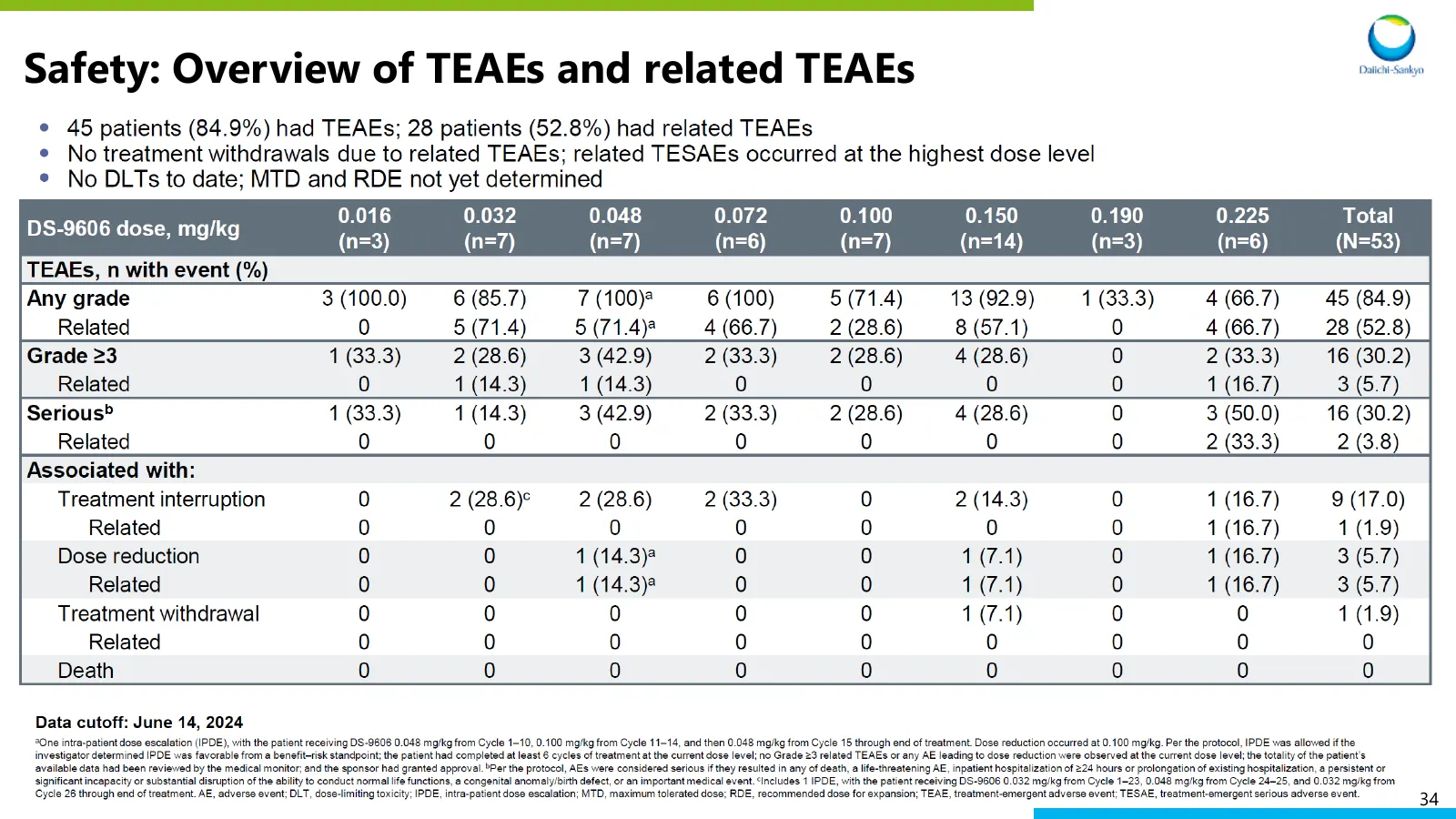
Safety: Overview of TEAEs and related TEAEs 34
Slide 35: Safety: Most common TEAEs and related TEAEs
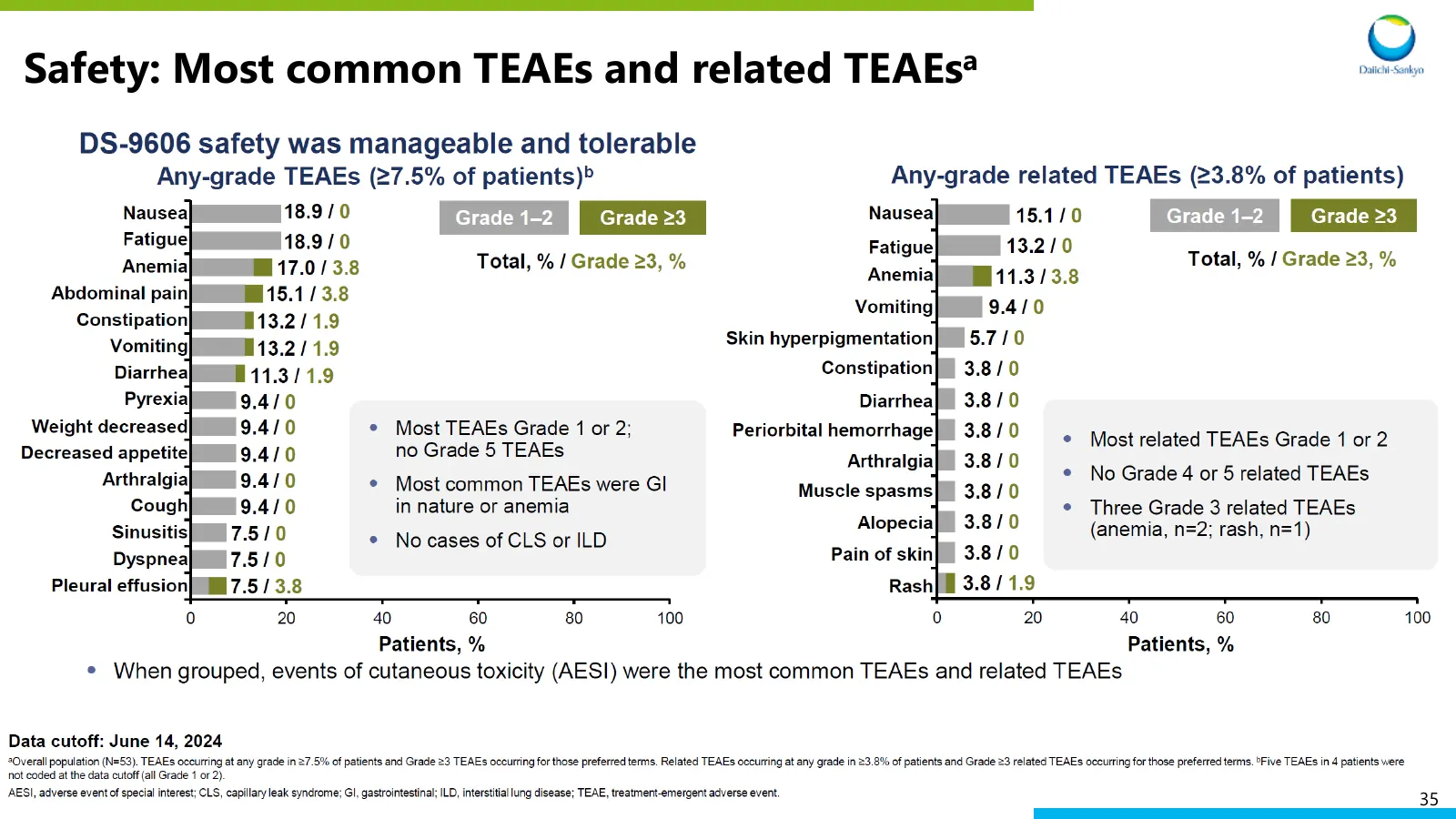
Safety: Most common TEAEs and related TEAEsa 35
Slide 36: Safety: Cutaneous toxicity (AESI)
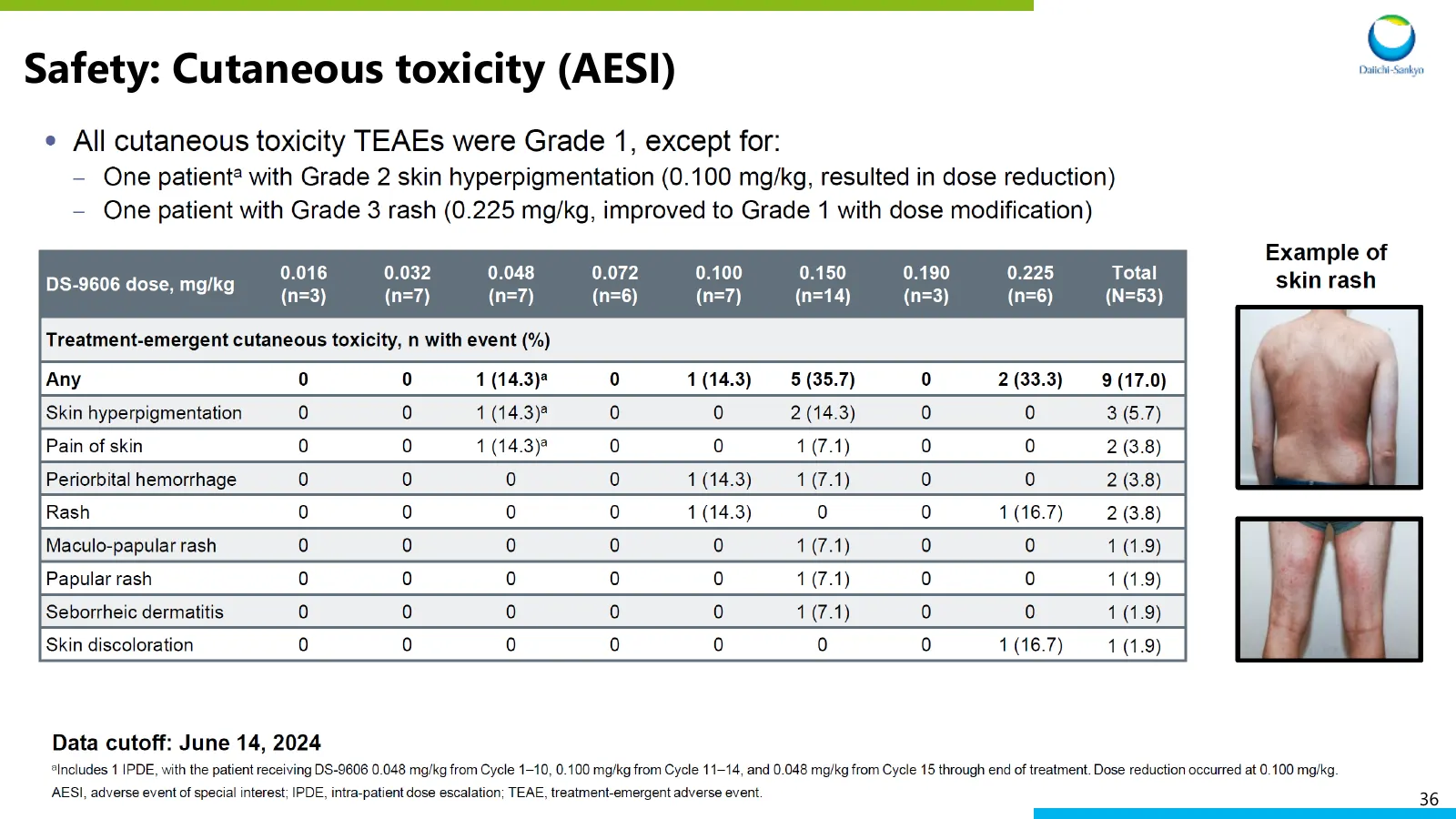
Safety: Cutaneous toxicity (AESI) 36
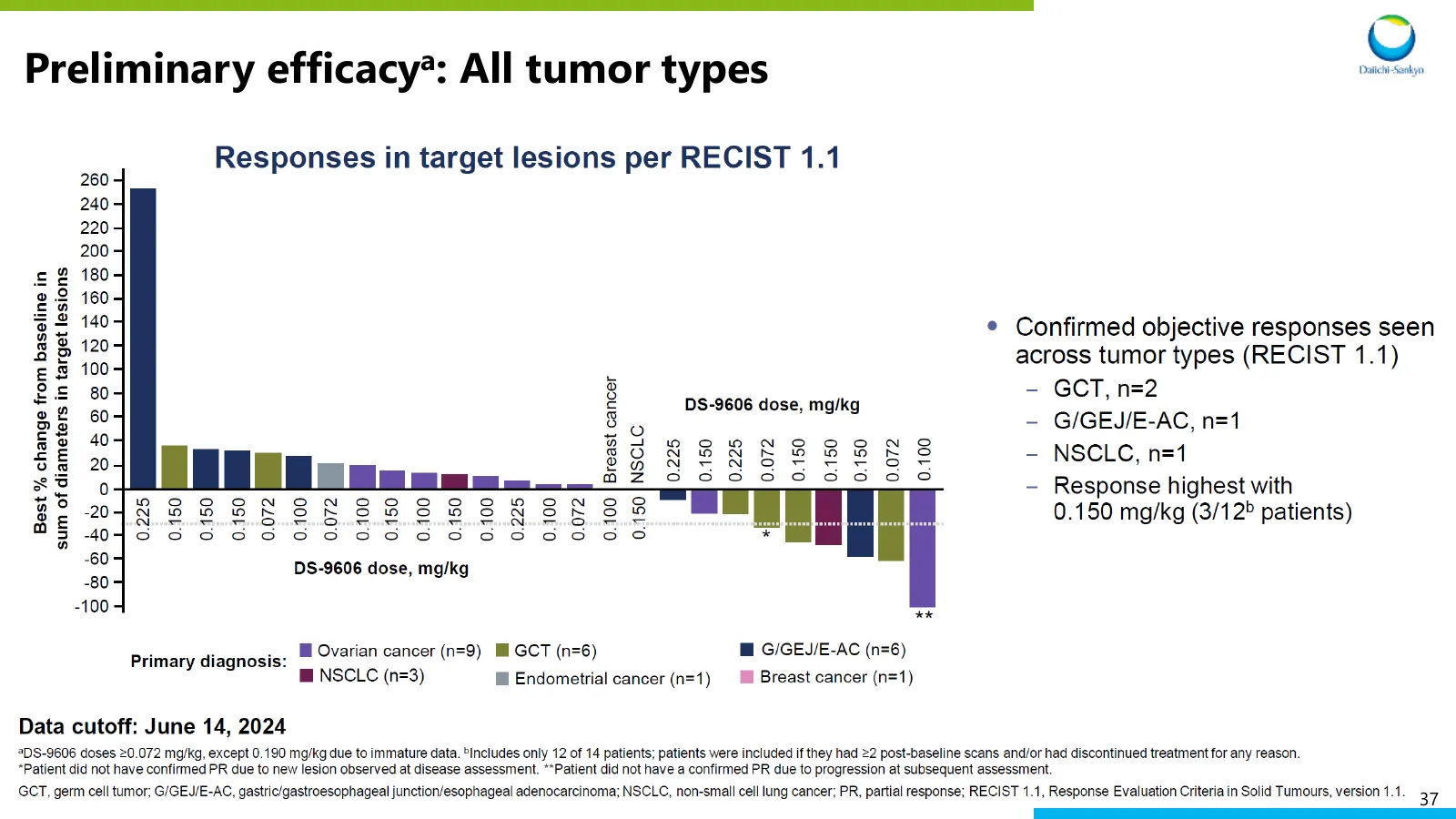
Slide 37: Preliminary efficacy: All tumor types
Preliminary efficacya: All tumor types 37
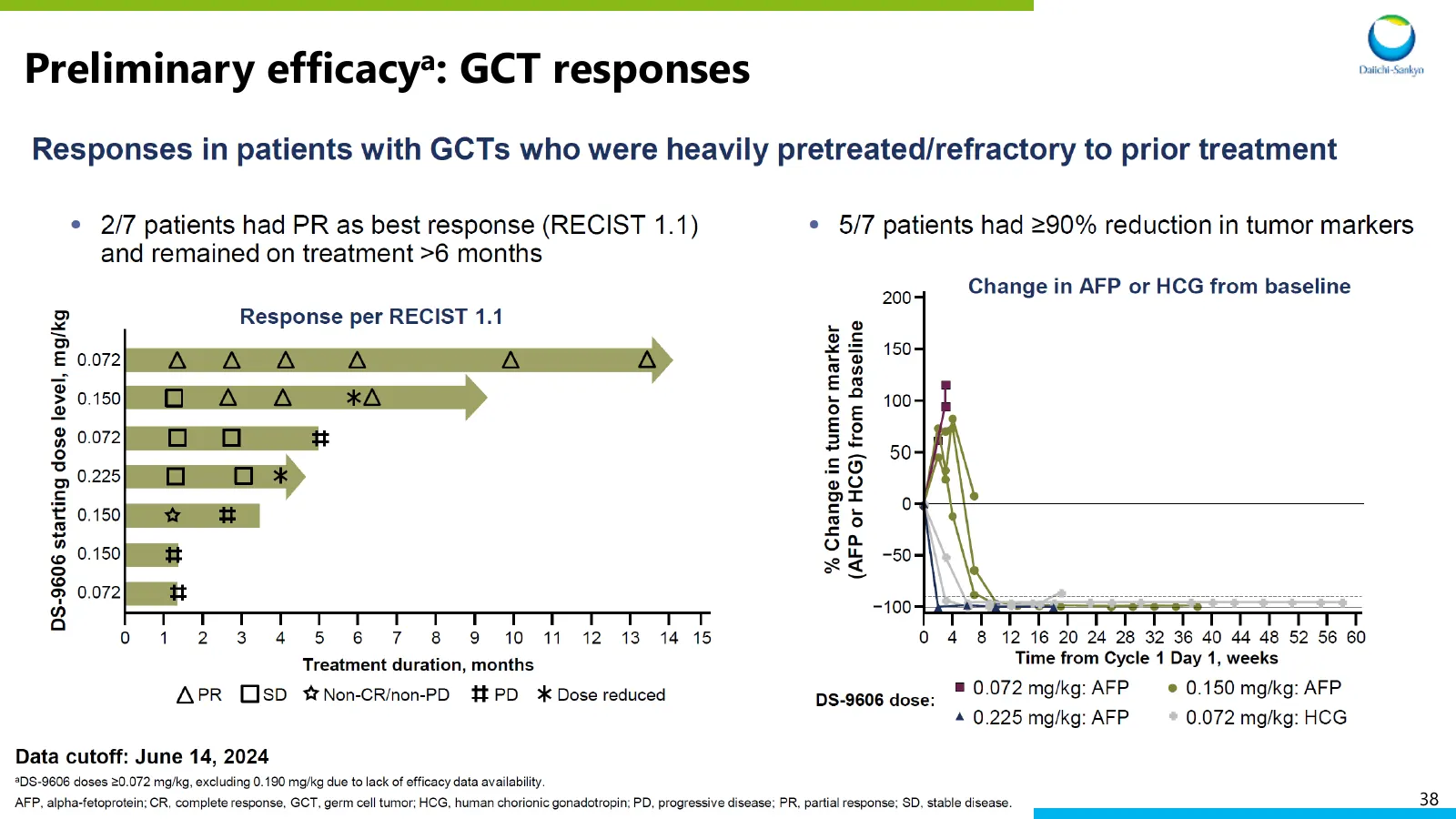
Slide 38: Preliminary efficacy: GCT responses
Preliminary efficacya: GCT responses 38
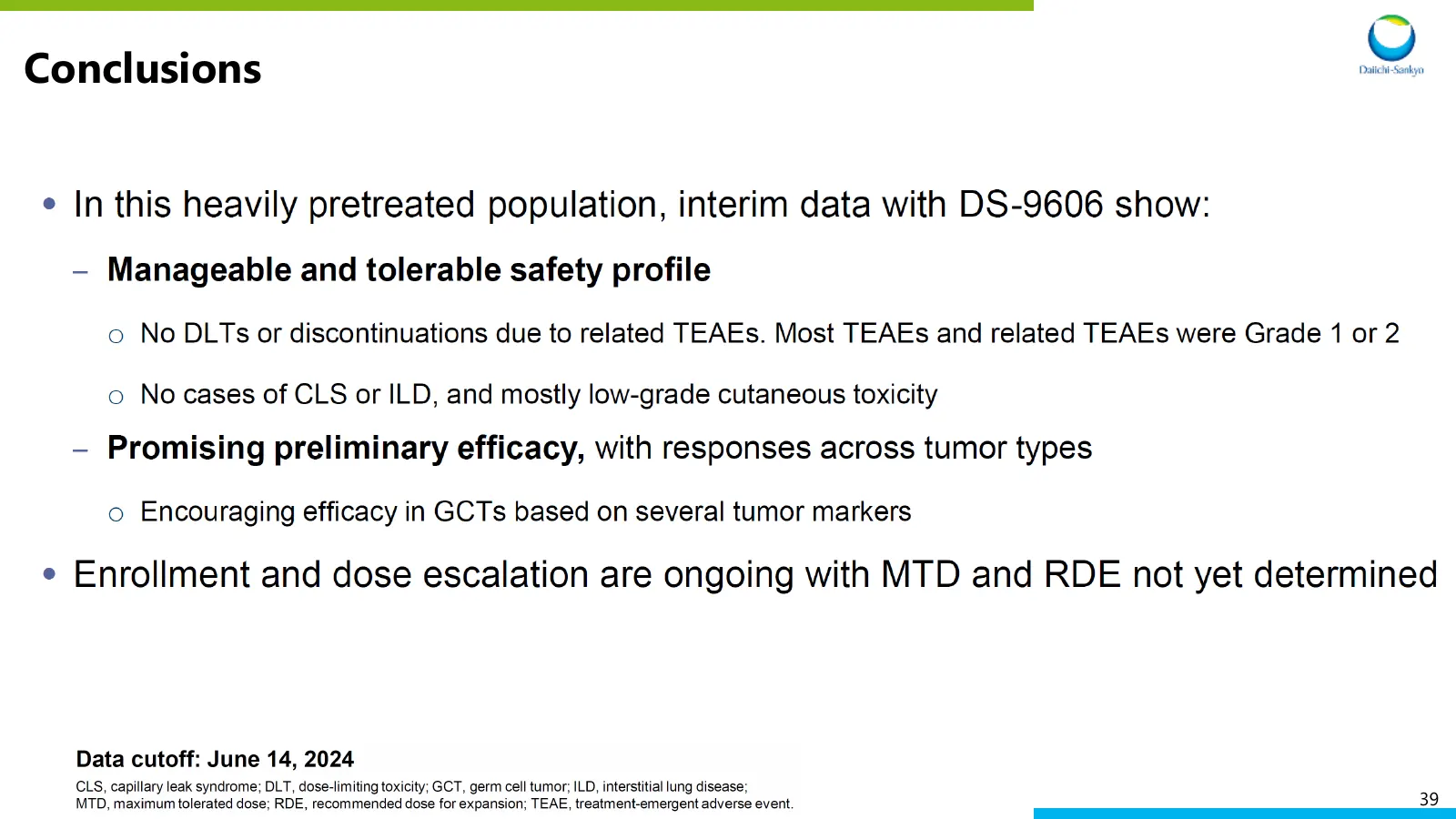
Slide 39: Conclusions
Conclusions aw, e In this heavily pretreated population, interim data with DS-9606 show: — Manageable and tolerable safety profile o No DLTs or discontinuations due to related TEAEs. Most TEAEs and related TEAEs were Grade 1 or 2 o No cases of CLS or ILD, and mostly low-grade cutaneous toxicity — Pr
Source: company website
More decks from Daiichi Sankyo Company, Limited
 Q2 2026 Earnings Presentation40 slides · Oct 30, 2026
 Q2 FY2026 Earnings Presentation40 slides · Oct 30, 2026
 Q1 FY2026 Earnings Presentation38 slides · Jul 31, 2026
 Q1 FY2026 Earnings Presentation38 slides · Jul 31, 2026
 FY2025 Earnings Presentation80 slides · May 11, 2026
 FY2025 Earnings Presentation80 slides · May 11, 2026