Corcept Therapeutics Incorporated · NASDAQ:CORT
Corcept Therapeutics — Q3 2026 Earnings Presentation
49 slides from Corcept Therapeutics's earnings presentation, Nov 3, 2026

Slide 1: November 2026
November 2026 November 2026 – PROPRIETARY – Do not republish, redistribute or modify without Corcept’s express written permission
Slide 2: Safe Harbor
Safe Harbor Statements in this presentation (this “presentation”), other than statements of historical fact, are forward-looking statements based on the current plans and expectations of Corcept Therapeutics Incorporated (“we,” “us,” “our” or the “Company”) and are subject to risks and uncertainties
Slide 3: Discovering, developing and commercializing medications modulating cortisol
Discovering, developing and commercializing medications that treat severe diseases by modulating the effects of the stress hormone CORTISOL 3 November 2026 – PROPRIETARY – Do not republish, redistribute or modify without Corcept’s express written permission
Slide 4: Cortisol – The Stress Hormone
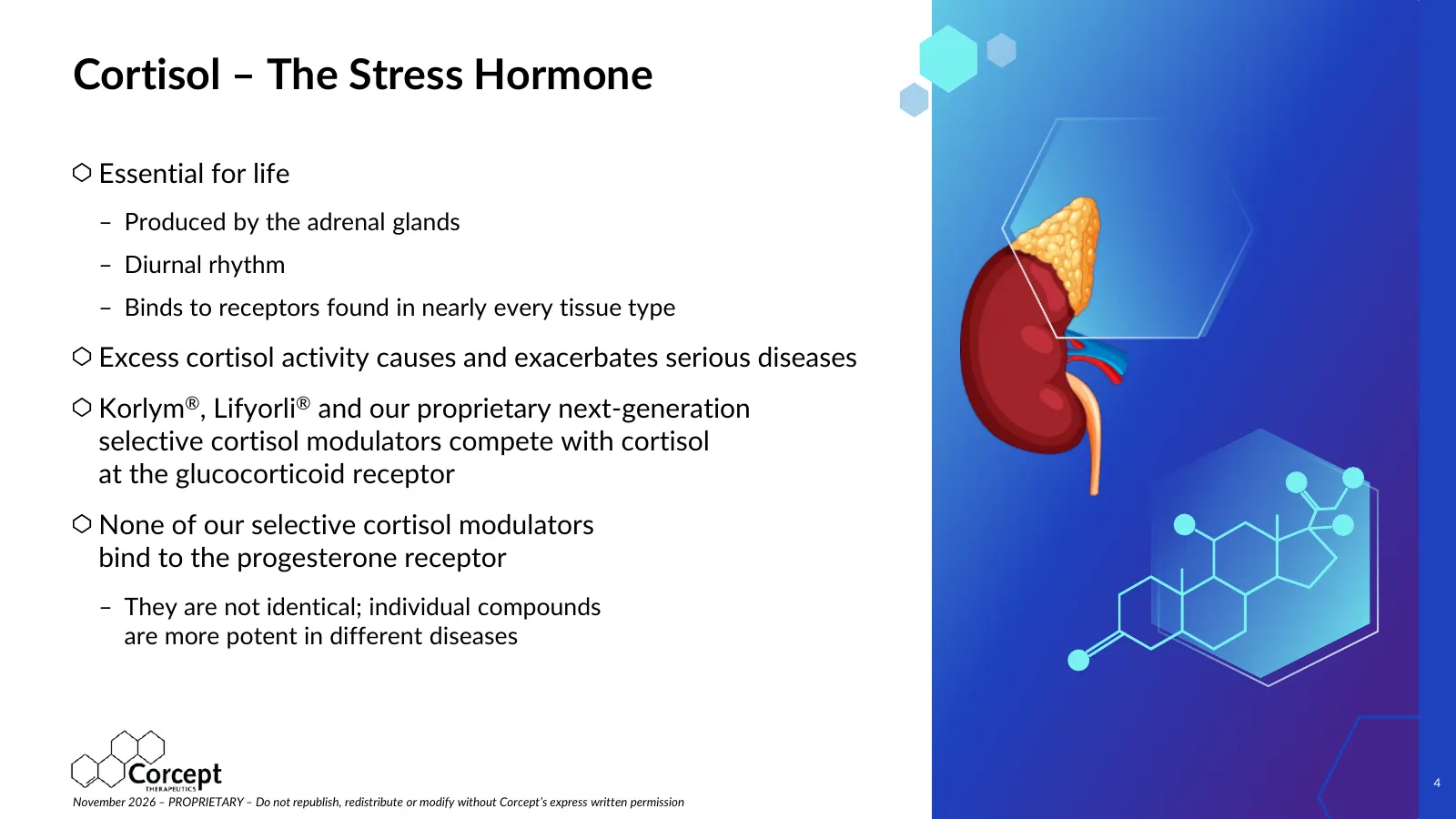
Cortisol – The Stress Hormone Essential for life – Produced by the adrenal glands – Diurnal rhythm – Binds to receptors found in nearly every tissue type Excess cortisol activity causes and exacerbates serious diseases Korlym®, Lifyorli® and our proprietary next-generation selective cortisol modulat
Slide 5: Corcept's Model for Growth
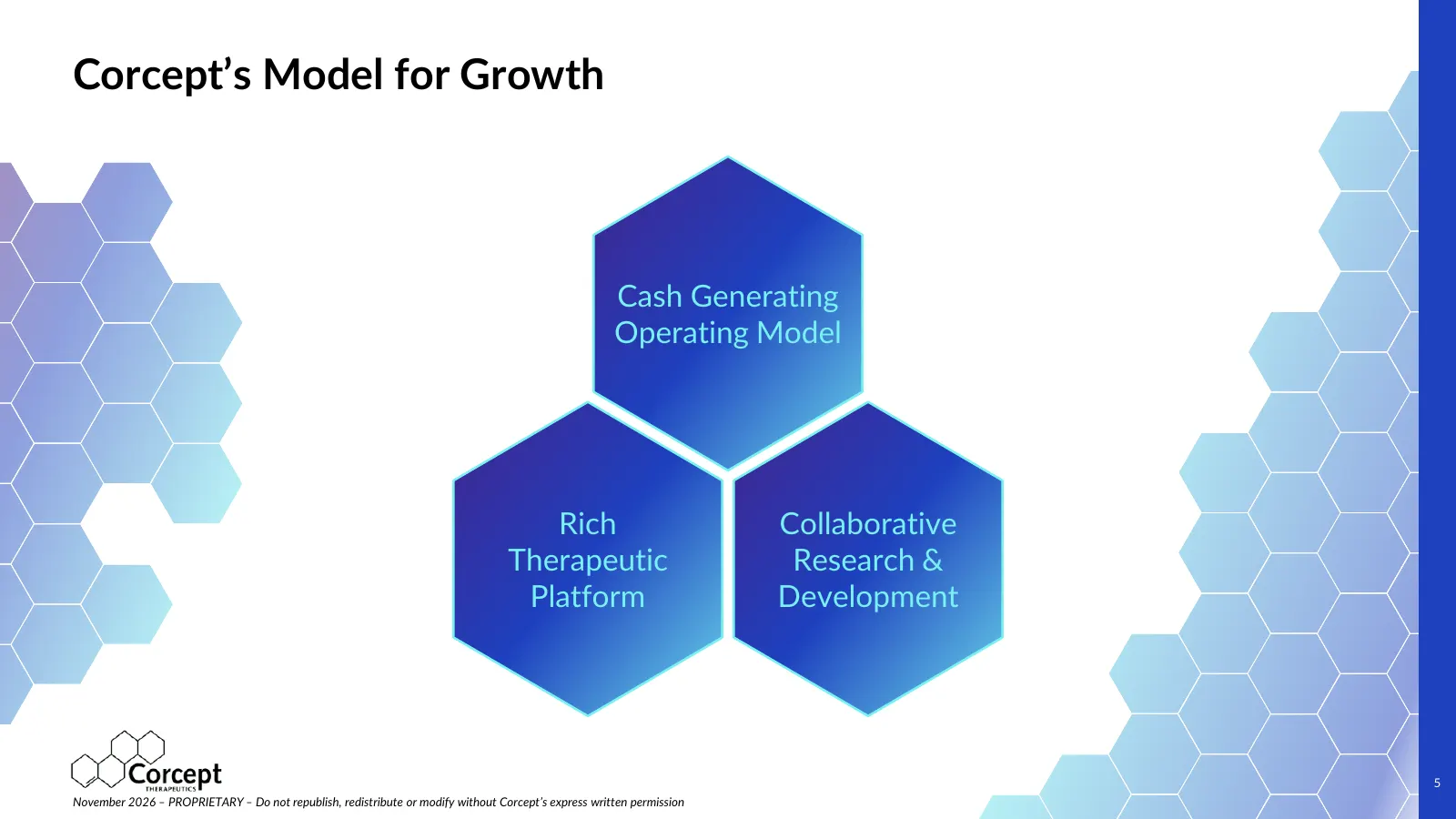
Corcept’s Model for Growth Cash Generating Operating Model Rich Collaborative Therapeutic Research & Platform Development 5 November 2026 – PROPRIETARY – Do not republish, redistribute or modify without Corcept’s express written permission
Slide 6: Cash Generating Operating Model
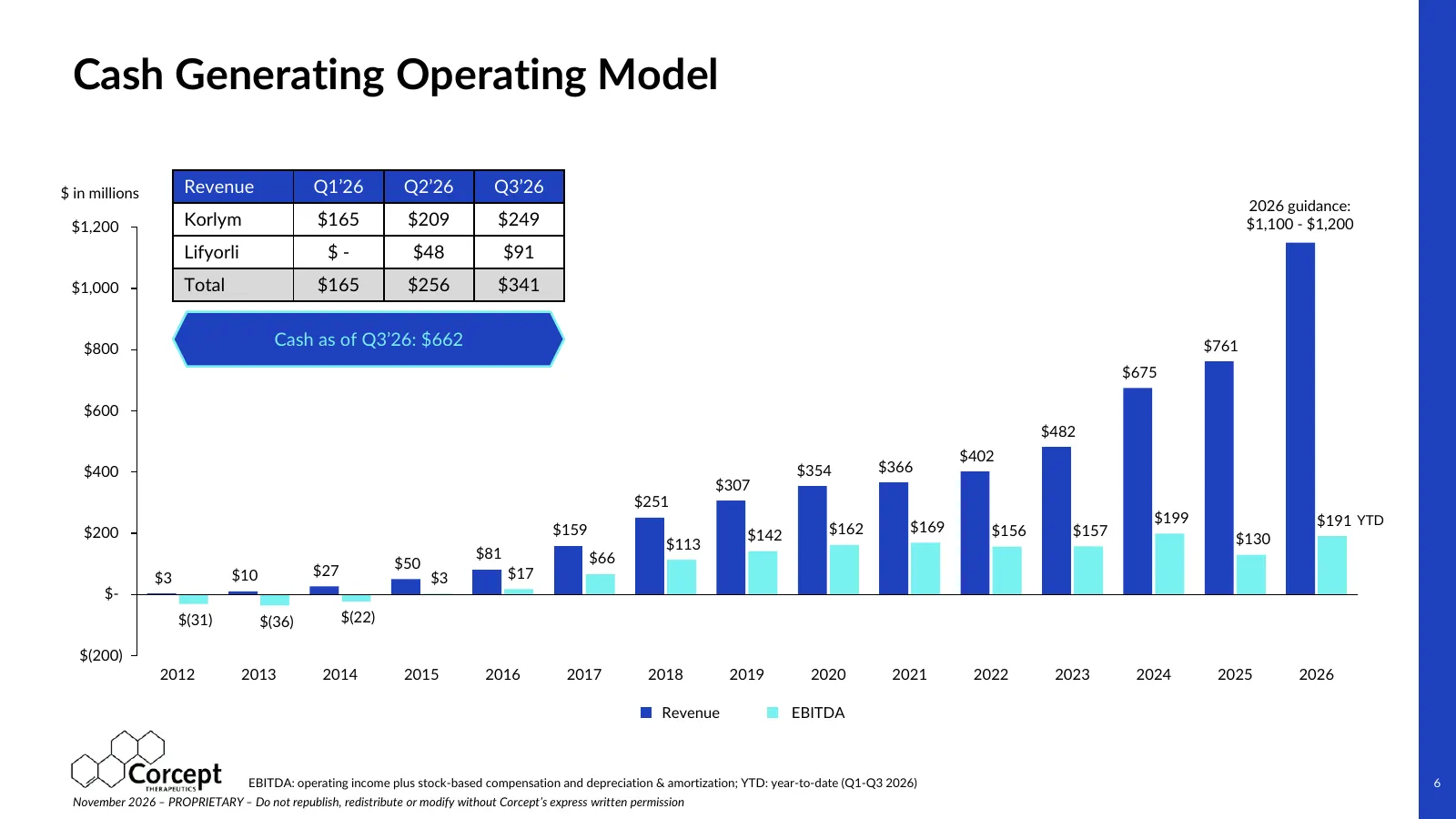
Cash Generating Operating Model $ in millions Revenue Q1’26 Q2’26 Q3’26 2026 guidance: $1,200 Korlym $165 $209 $249 $1,100 - $1,200 Lifyorli $- $48 $91 $1,000 Total $165 $256 $341 $800 Cash as of Q3’26: $662 $761 $675 $600 $482 $402 $400 $354 $366 $307 $251 $199 $191 YTD $200 $159 $162 $169 $156 $15
Slide 7: Rich Therapeutic Platform – Hypercortisolism (Cushing's Syndrome)
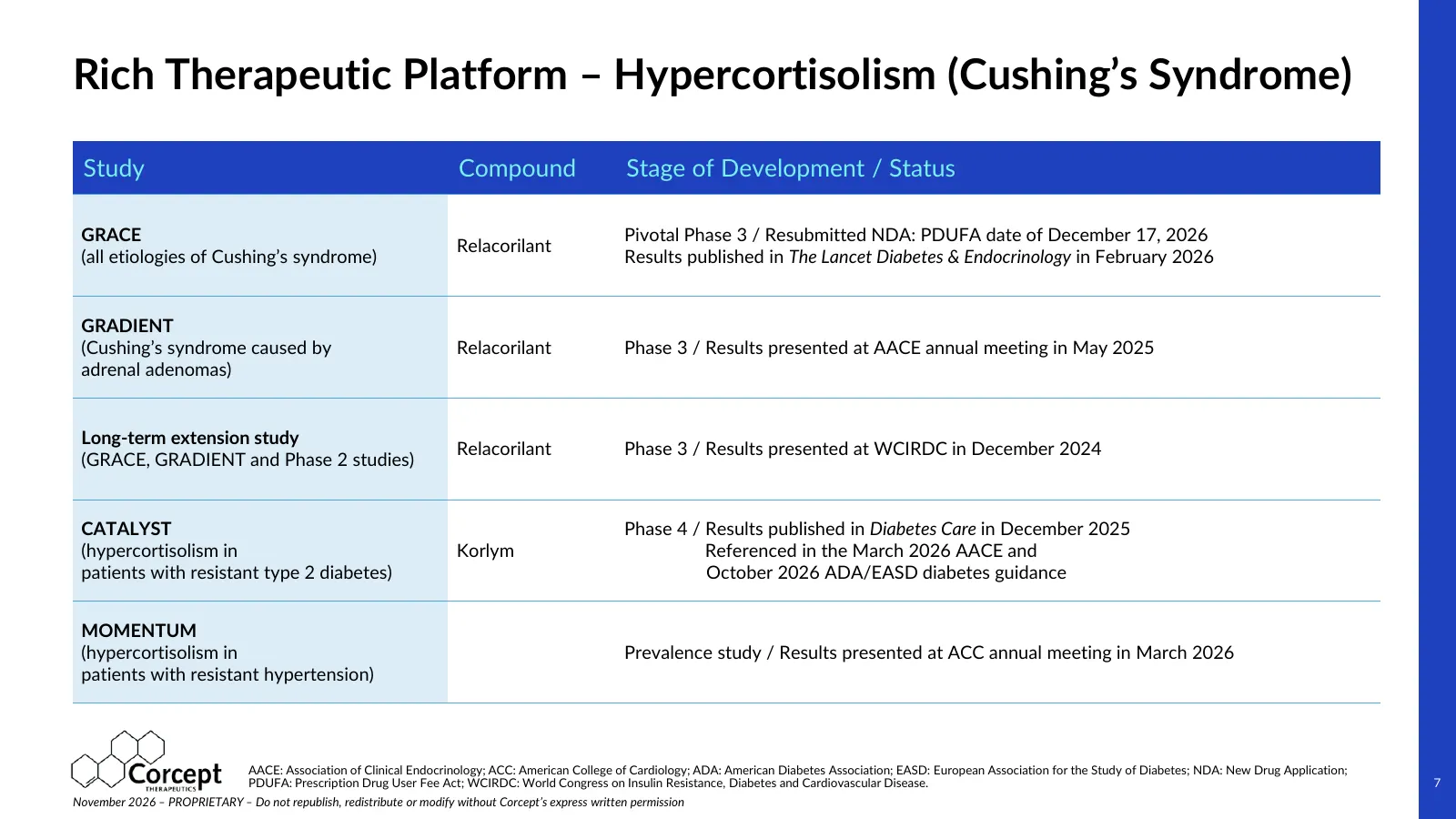
Rich Therapeutic Platform – Hypercortisolism (Cushing’s Syndrome) Study Compound Stage of Development / Status GRACE Pivotal Phase 3 / Resubmitted NDA: PDUFA date of December 17, 2026 Relacorilant (all etiologies of Cushing’s syndrome) Results published in The Lancet Diabetes & Endocrinology in Febr
Slide 8: Rich Therapeutic Platform – Oncology
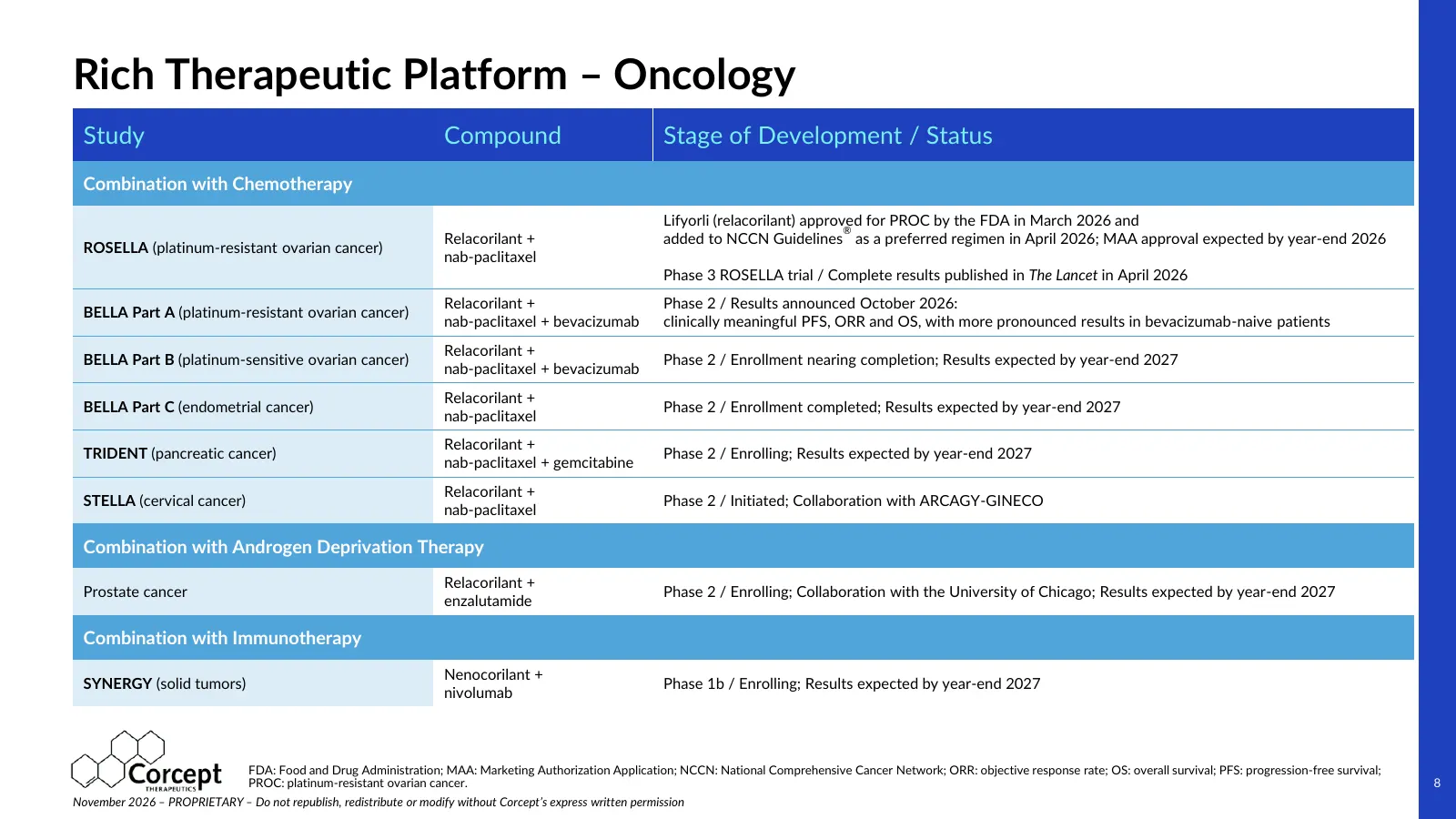
Rich Therapeutic Platform – Oncology Study Compound Stage of Development / Status Combination with Chemotherapy Lifyorli (relacorilant) approved for PROC by the FDA in March 2026 and ® Relacorilant + added to NCCN Guidelines as a preferred regimen in April 2026; MAA approval expected by year-end 202
Slide 9: Rich Therapeutic Platform – Liver Disease and Neurology
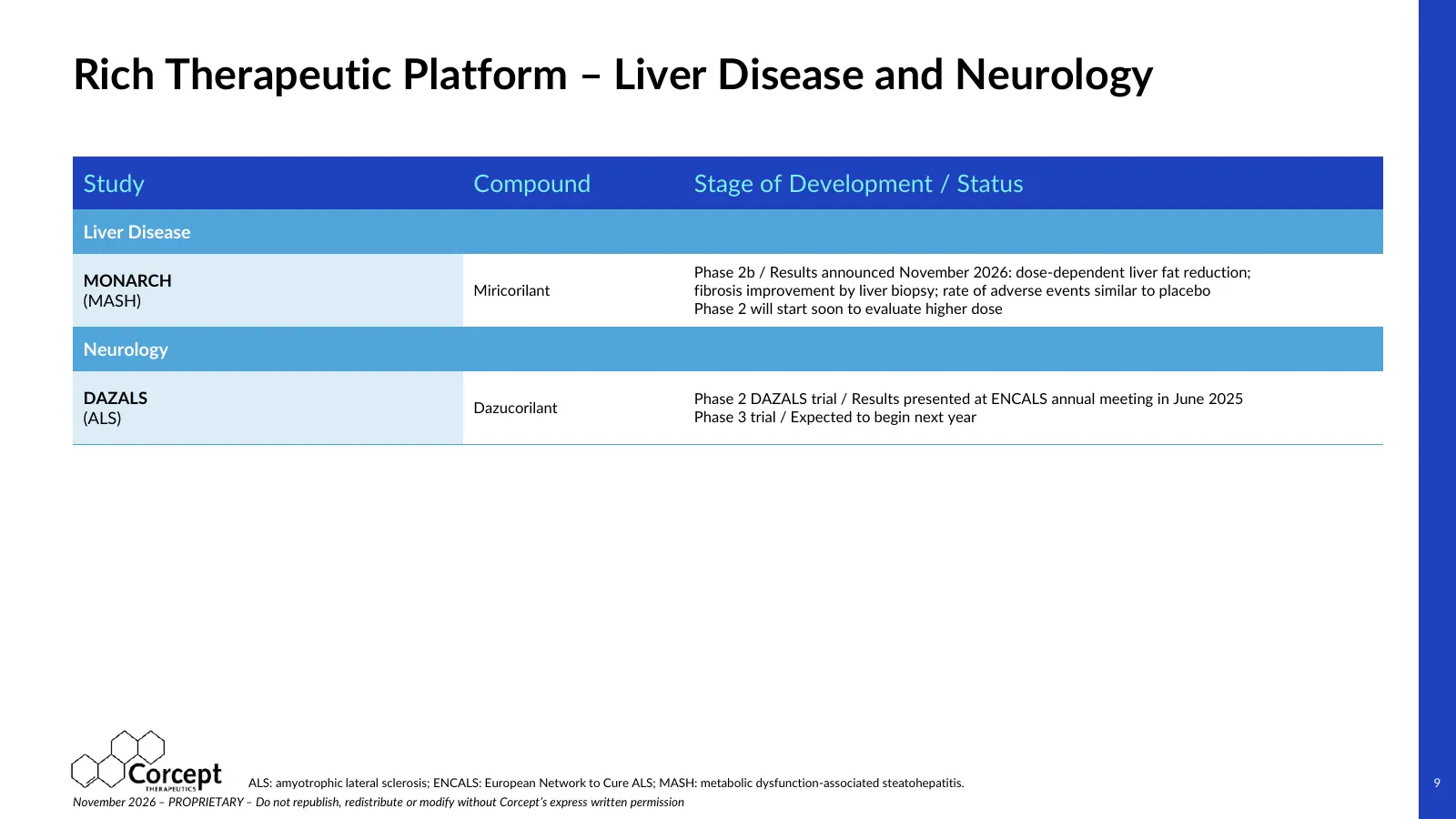
Rich Therapeutic Platform – Liver Disease and Neurology Study Compound Stage of Development / Status Liver Disease Phase 2b / Results announced November 2026: dose-dependent liver fat reduction; MONARCH Miricorilant fibrosis improvement by liver biopsy; rate of adverse events similar to placebo (MAS
Slide 10: Hypercortisolism (Cushing's Syndrome)
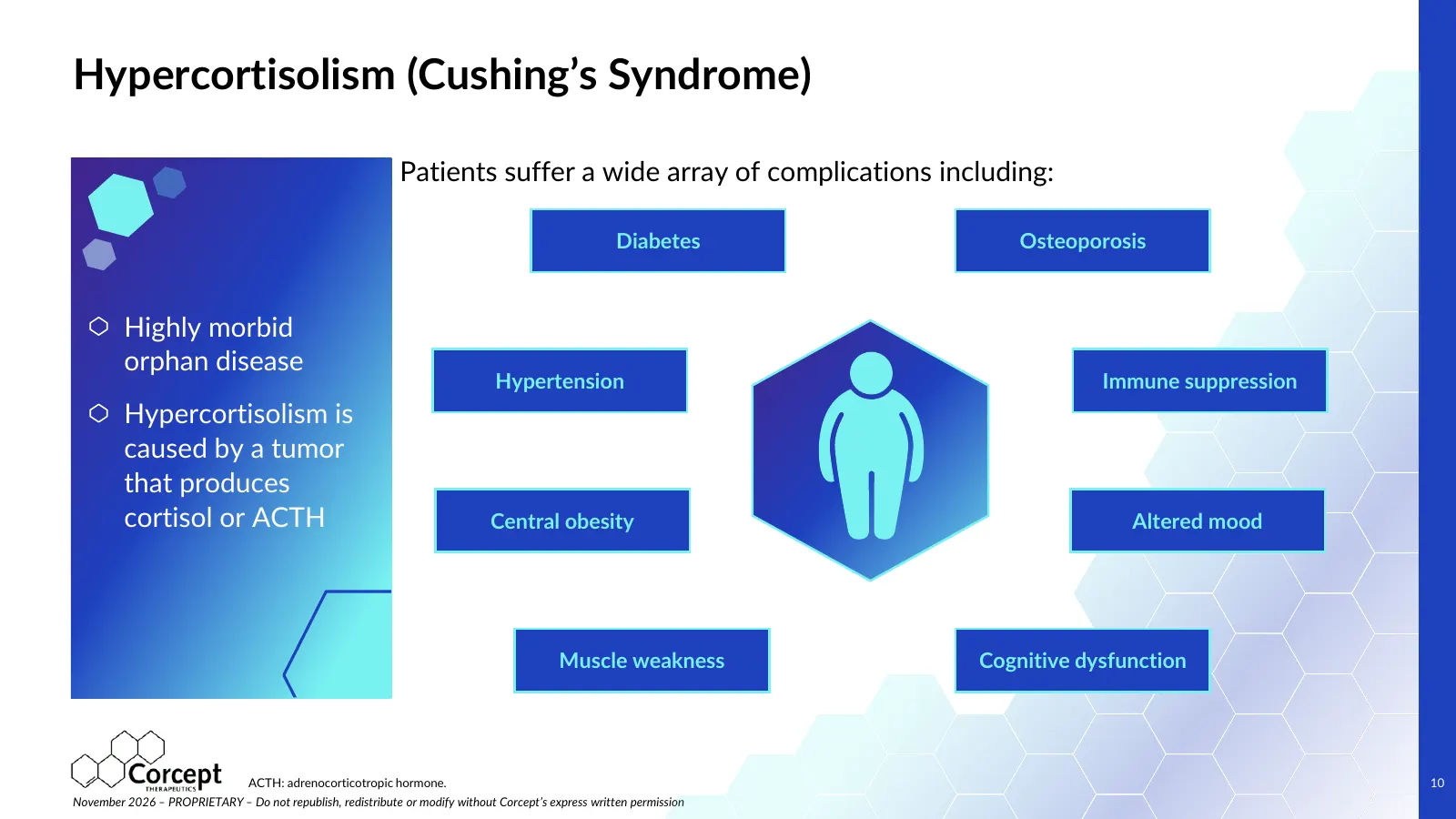
Hypercortisolism (Cushing’s Syndrome) Patients suffer a wide array of complications including: Diabetes Osteoporosis Highly morbid orphan disease Hypertension Immune suppression Hypercortisolism is caused by a tumor that produces cortisol or ACTH Central obesity Altered mood Muscle weakness Cognitiv
Slide 11: Cushing's Syndrome: Significant Unmet Need
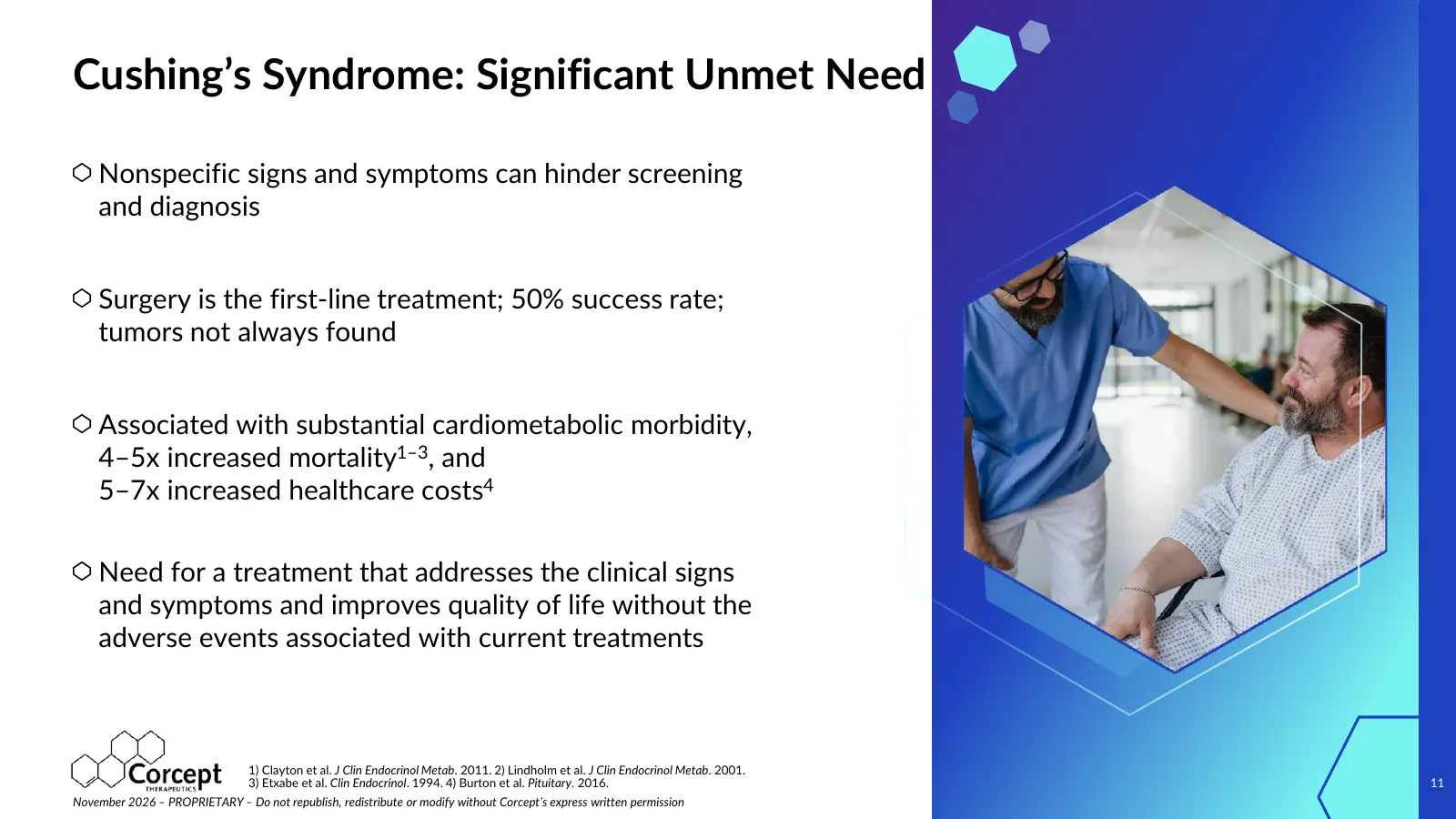
Cushing’s Syndrome: Significant Unmet Need Nonspecific signs and symptoms can hinder screening and diagnosis Surgery is the first-line treatment; 50% success rate; tumors not always found Associated with substantial cardiometabolic morbidity, 4–5x increased mortality1–3, and 5–7x increased healthcar
Slide 12: CATALYST Trial: Screening and Treatment in Resistant Type 2 Diabetes
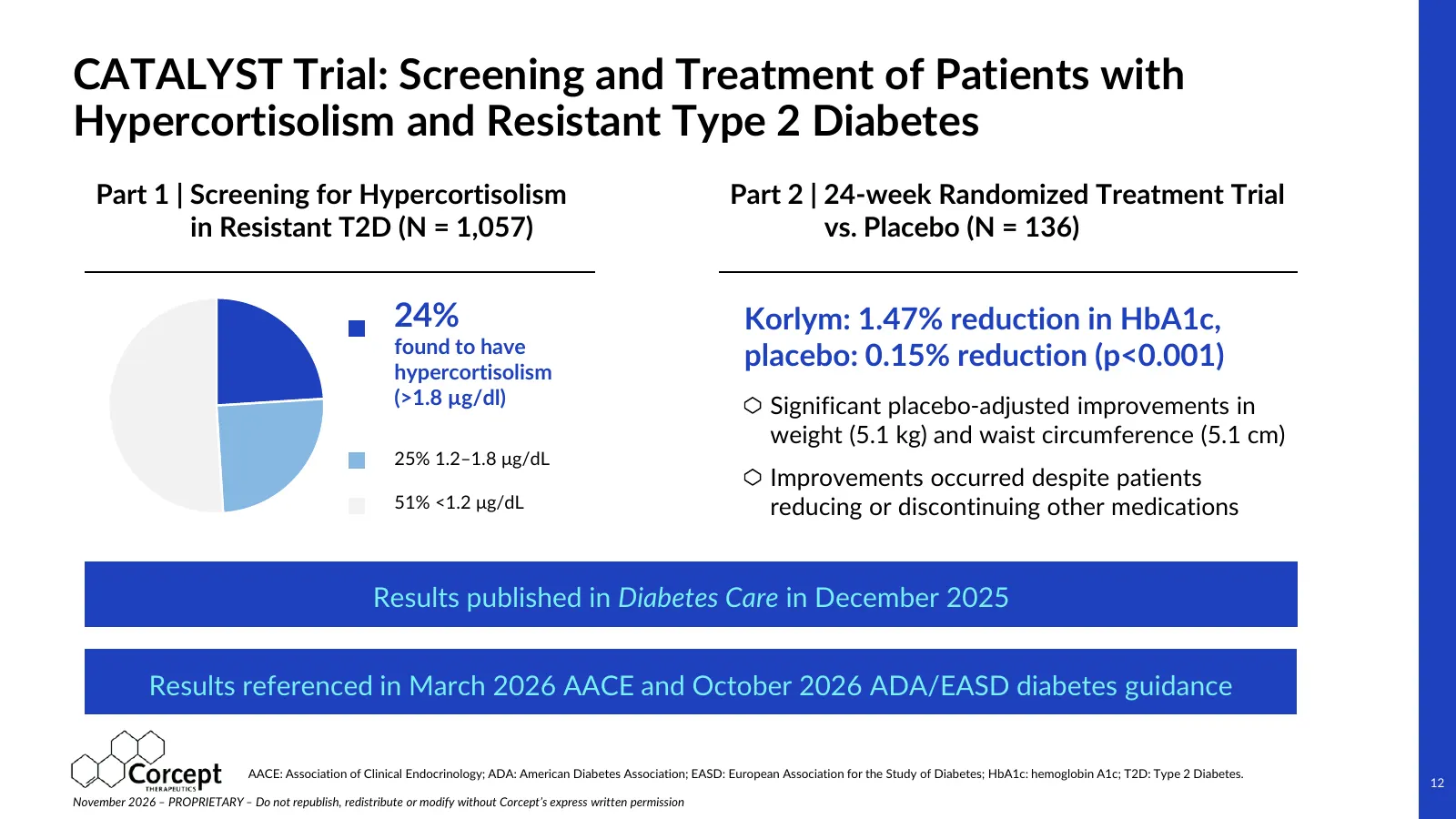
CATALYST Trial: Screening and Treatment of Patients with Hypercortisolism and Resistant Type 2 Diabetes Part 1 | Screening for Hypercortisolism Part 2 | 24-week Randomized Treatment Trial in Resistant T2D (N = 1,057) vs. Placebo (N = 136) 24% Korlym: 1.47% reduction in HbA1c, found to have hypercort
Slide 13: MOMENTUM Trial: Screening in Resistant Hypertension
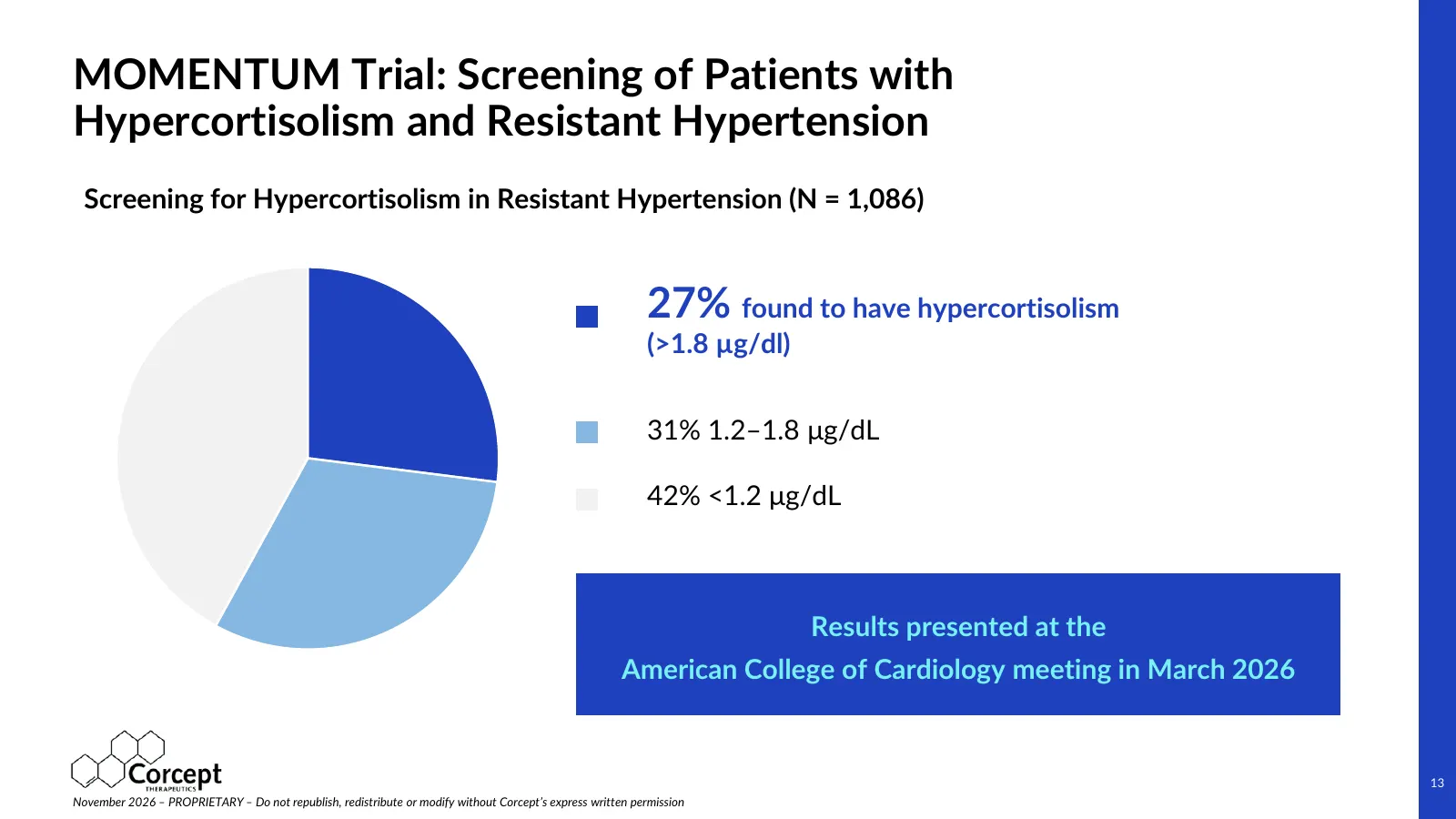
MOMENTUM Trial: Screening of Patients with Hypercortisolism and Resistant Hypertension Screening for Hypercortisolism in Resistant Hypertension (N = 1,086) 27% found to have hypercortisolism (>1.8 µg/dl) 31% 1.2–1.8 μg/dL 42% <1.2 μg/dL Results presented at the American College of Cardiology meeting
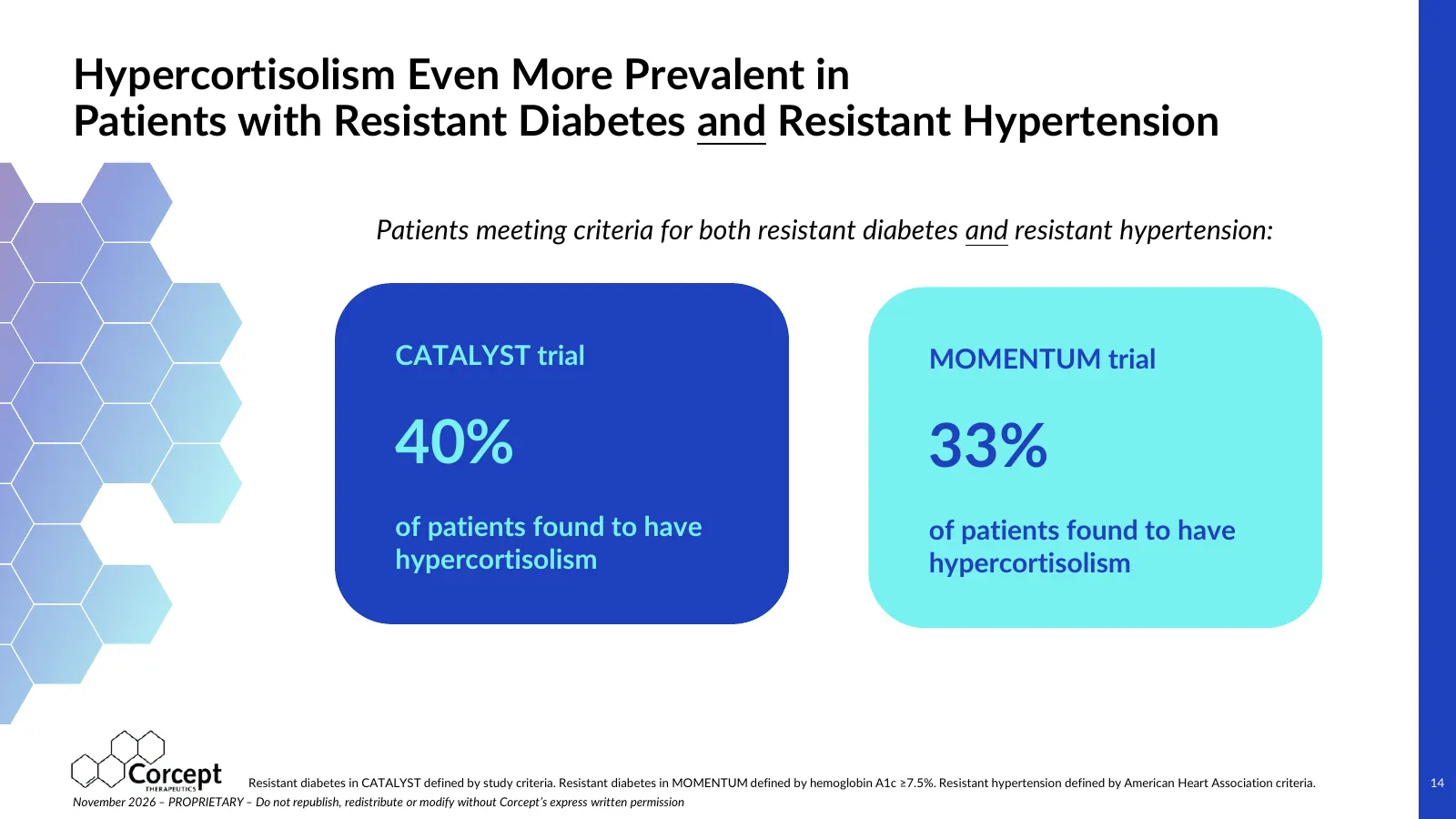
Slide 14: Hypercortisolism Even More Prevalent in Resistant Diabetes and Hypertension
Hypercortisolism Even More Prevalent in Patients with Resistant Diabetes and Resistant Hypertension Patients meeting criteria for both resistant diabetes and resistant hypertension: CATALYST trial MOMENTUM trial 40% 33% of patients found to have of patients found to have hypercortisolism hypercortis
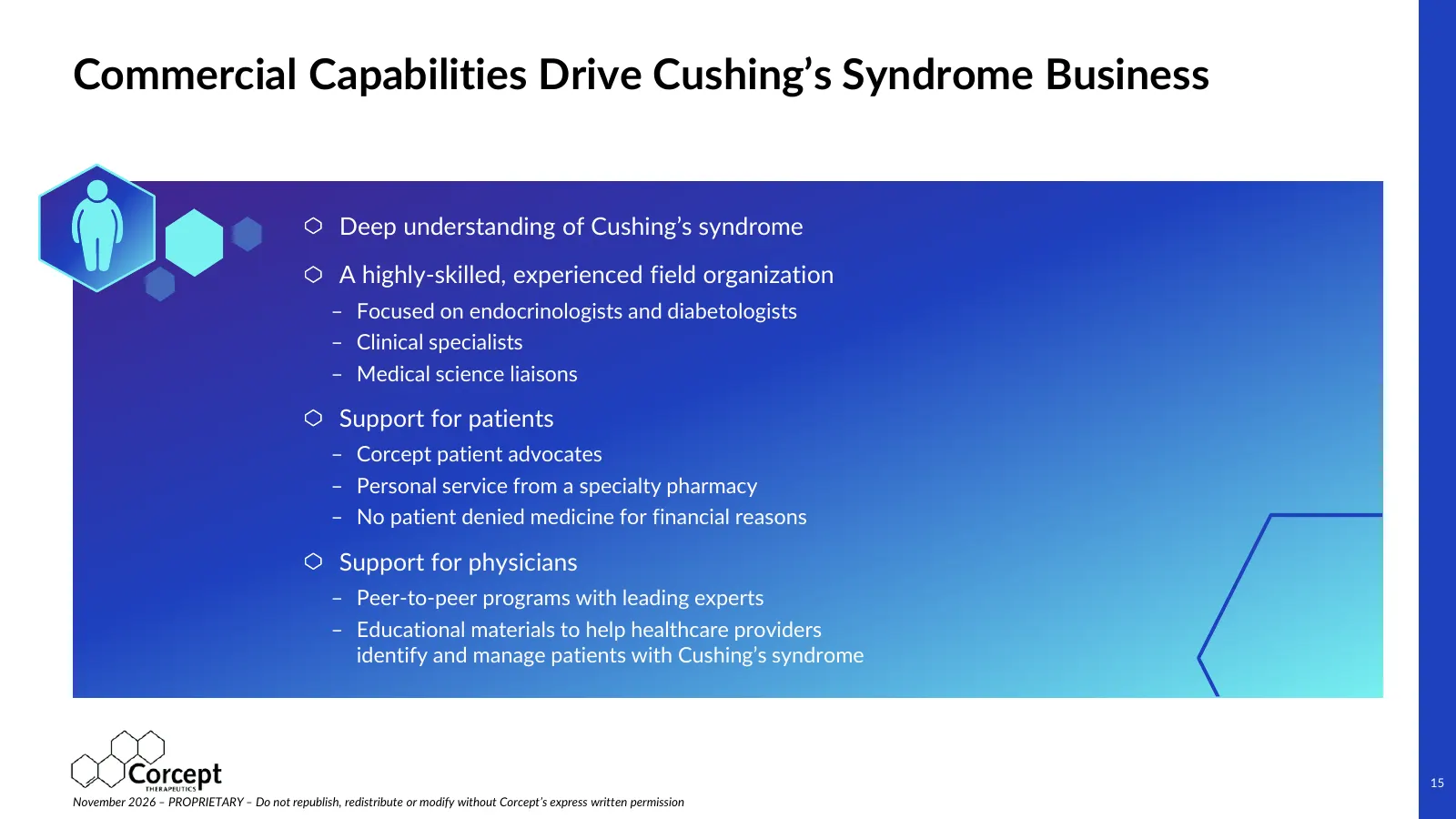
Slide 15: Commercial Capabilities Drive Cushing's Syndrome Business
Commercial Capabilities Drive Cushing’s Syndrome Business Deep understanding of Cushing’s syndrome A highly-skilled, experienced field organization – Focused on endocrinologists and diabetologists – Clinical specialists – Medical science liaisons Support for patients – Corcept patient advocates – Pe
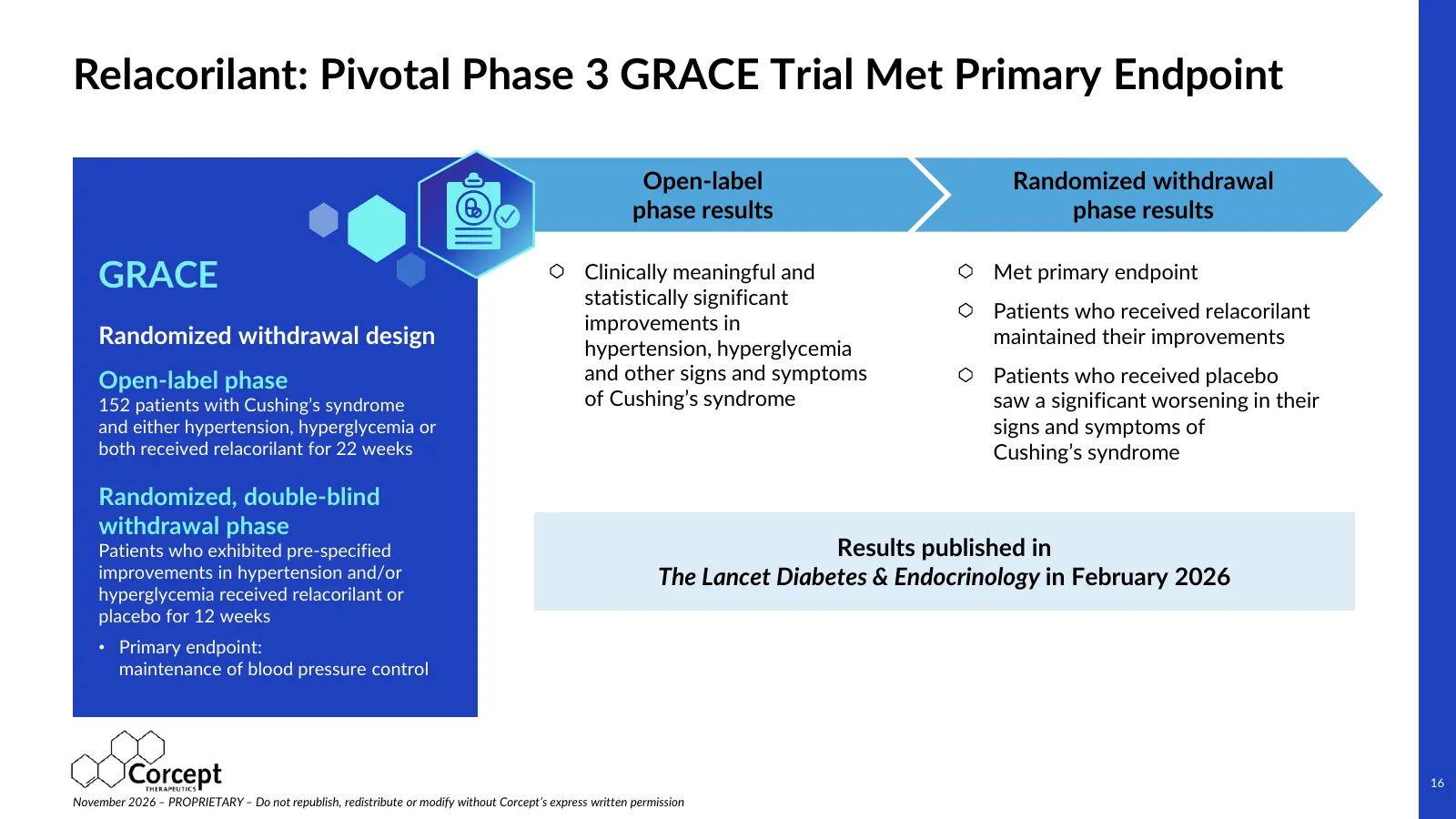
Slide 16: Relacorilant: Pivotal Phase 3 GRACE Trial Met Primary Endpoint
Relacorilant: Pivotal Phase 3 GRACE Trial Met Primary Endpoint Open-label Randomized withdrawal phase results phase results GRACE Clinically meaningful and statistically significant Met primary endpoint Patients who received relacorilant improvements in Randomized withdrawal design hypertension, hyp
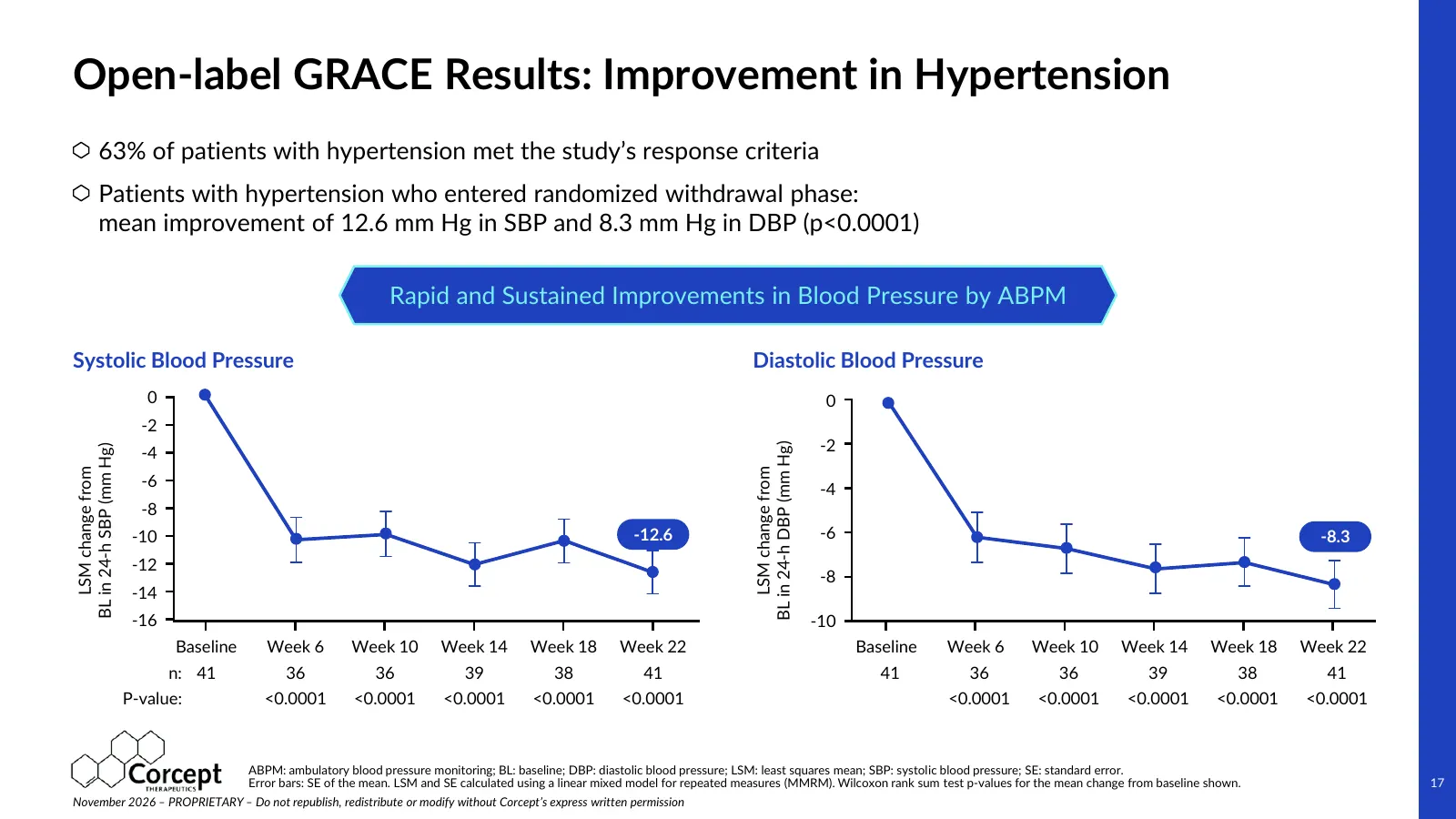
Slide 17: Open-label GRACE Results: Improvement in Hypertension
Open-label GRACE Results: Improvement in Hypertension 63% of patients with hypertension met the study’s response criteria Patients with hypertension who entered randomized withdrawal phase: mean improvement of 12.6 mm Hg in SBP and 8.3 mm Hg in DBP (p<0.0001) Rapid and Sustained Improvements in Bloo
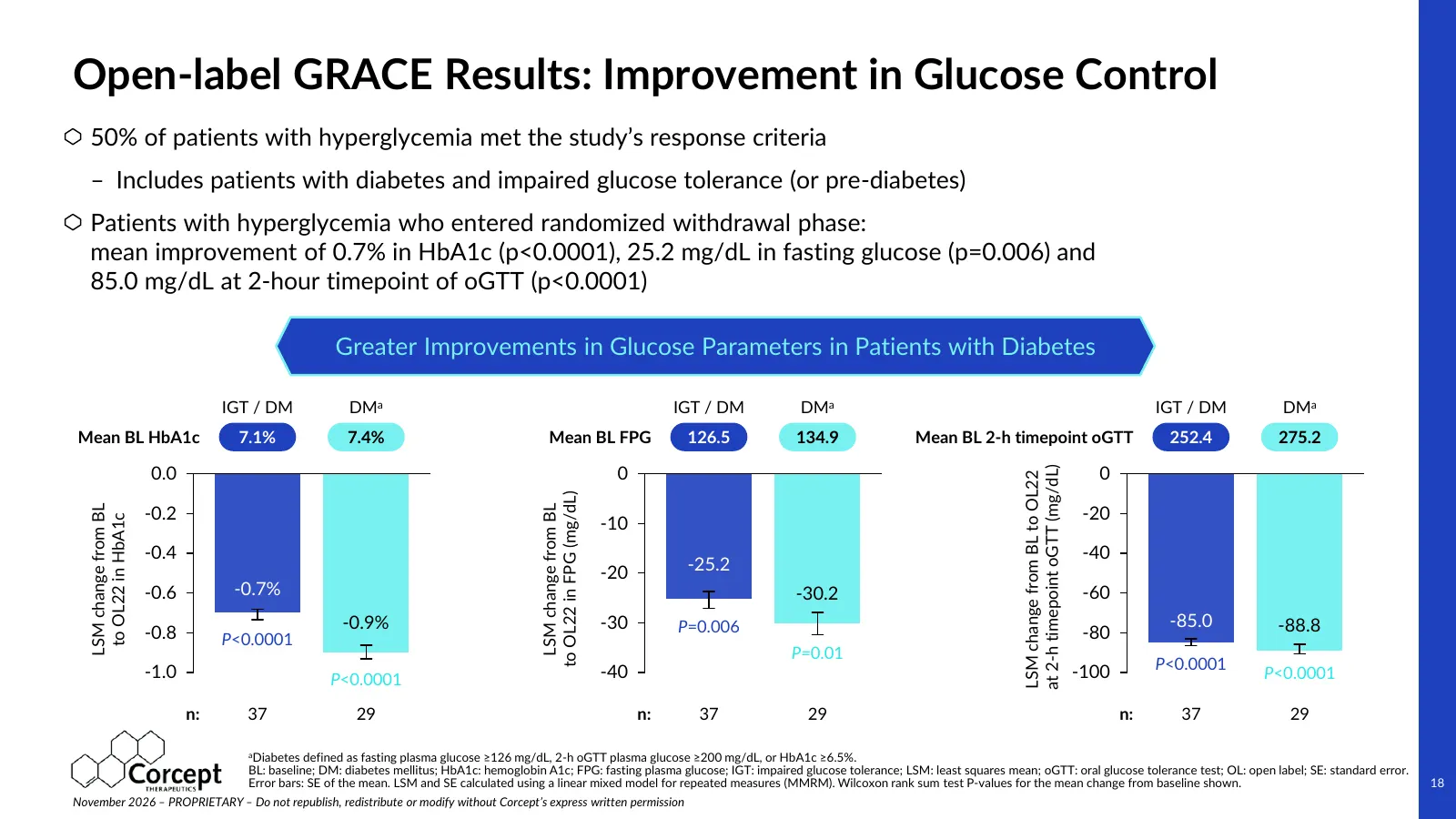
Slide 18: Open-label GRACE Results: Improvement in Glucose Control
Open-label GRACE Results: Improvement in Glucose Control 50% of patients with hyperglycemia met the study’s response criteria – Includes patients with diabetes and impaired glucose tolerance (or pre-diabetes) Patients with hyperglycemia who entered randomized withdrawal phase: mean improvement of 0.
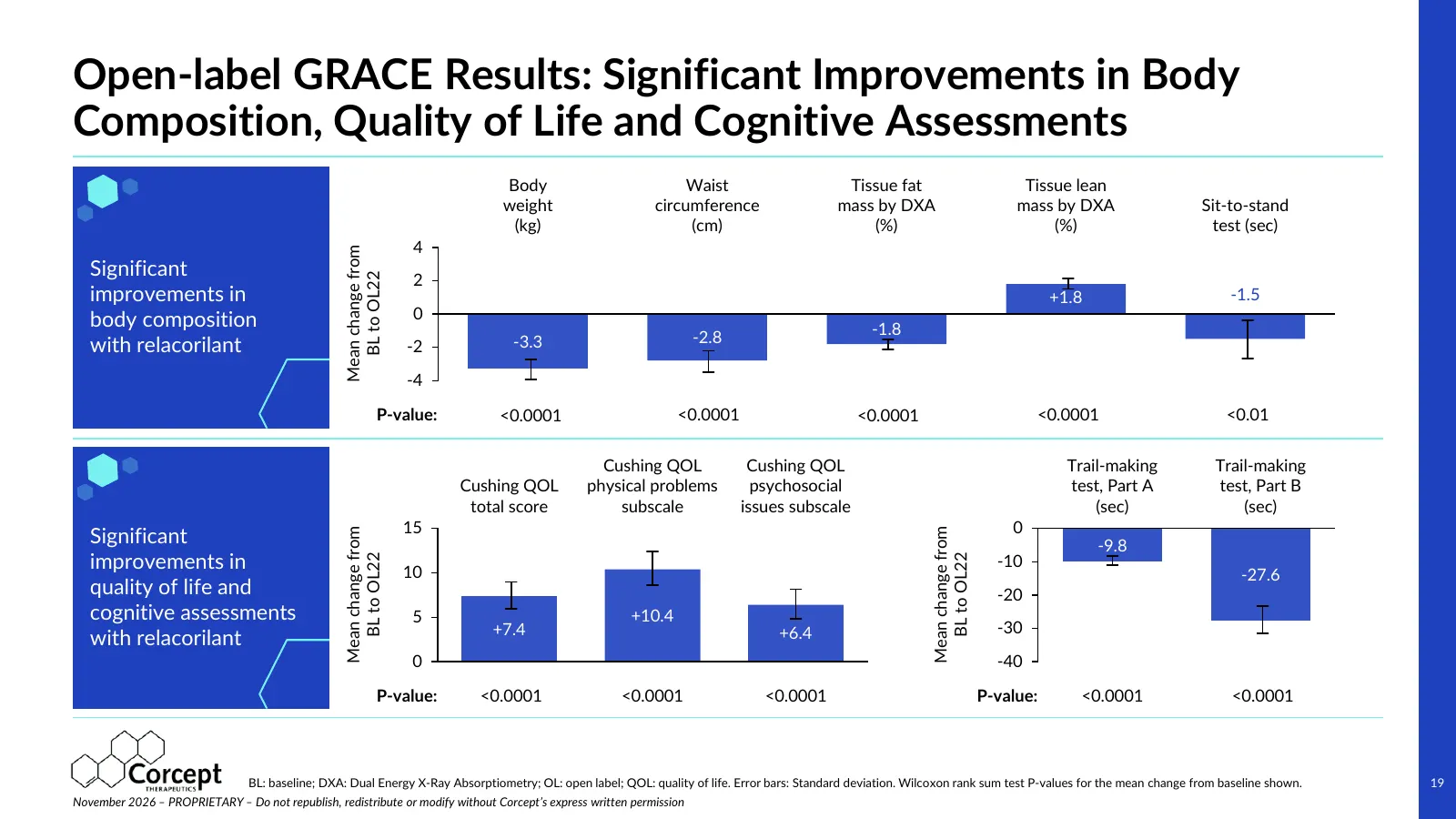
Slide 19: Open-label GRACE Results: Body Composition, Quality of Life, Cognition
Open-label GRACE Results: Significant Improvements in Body Composition, Quality of Life and Cognitive Assessments Body Waist Tissue fat Tissue lean weight circumference mass by DXA mass by DXA Sit-to-stand (kg) (cm) (%) (%) test (sec) 4 Mean change from Significant 2 BL to OL22 improvements in +1.8
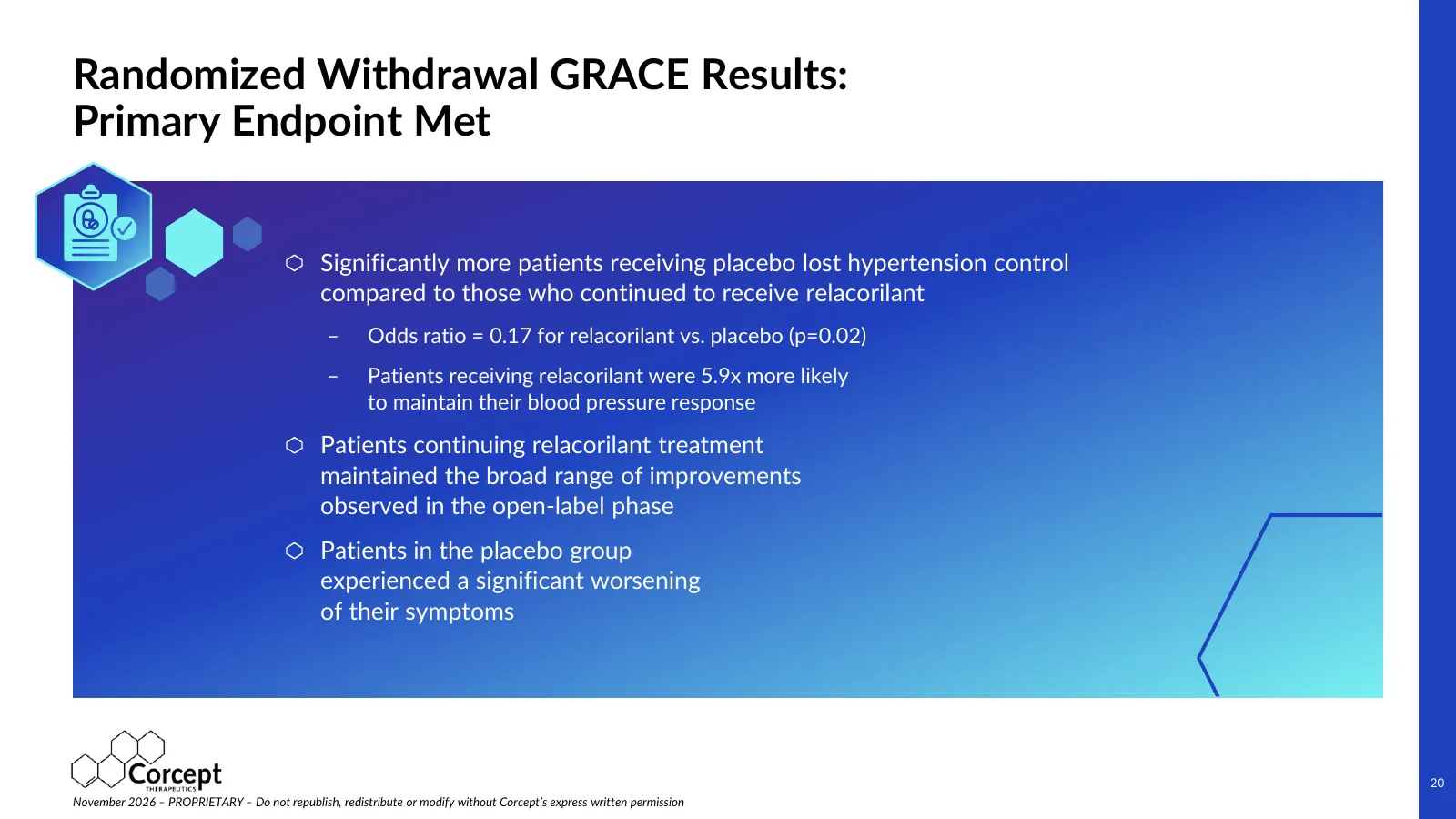
Slide 20: Randomized Withdrawal GRACE Results: Primary Endpoint Met
Randomized Withdrawal GRACE Results: Primary Endpoint Met Significantly more patients receiving placebo lost hypertension control compared to those who continued to receive relacorilant – Odds ratio = 0.17 for relacorilant vs. placebo (p=0.02) – Patients receiving relacorilant were 5.9x more likely
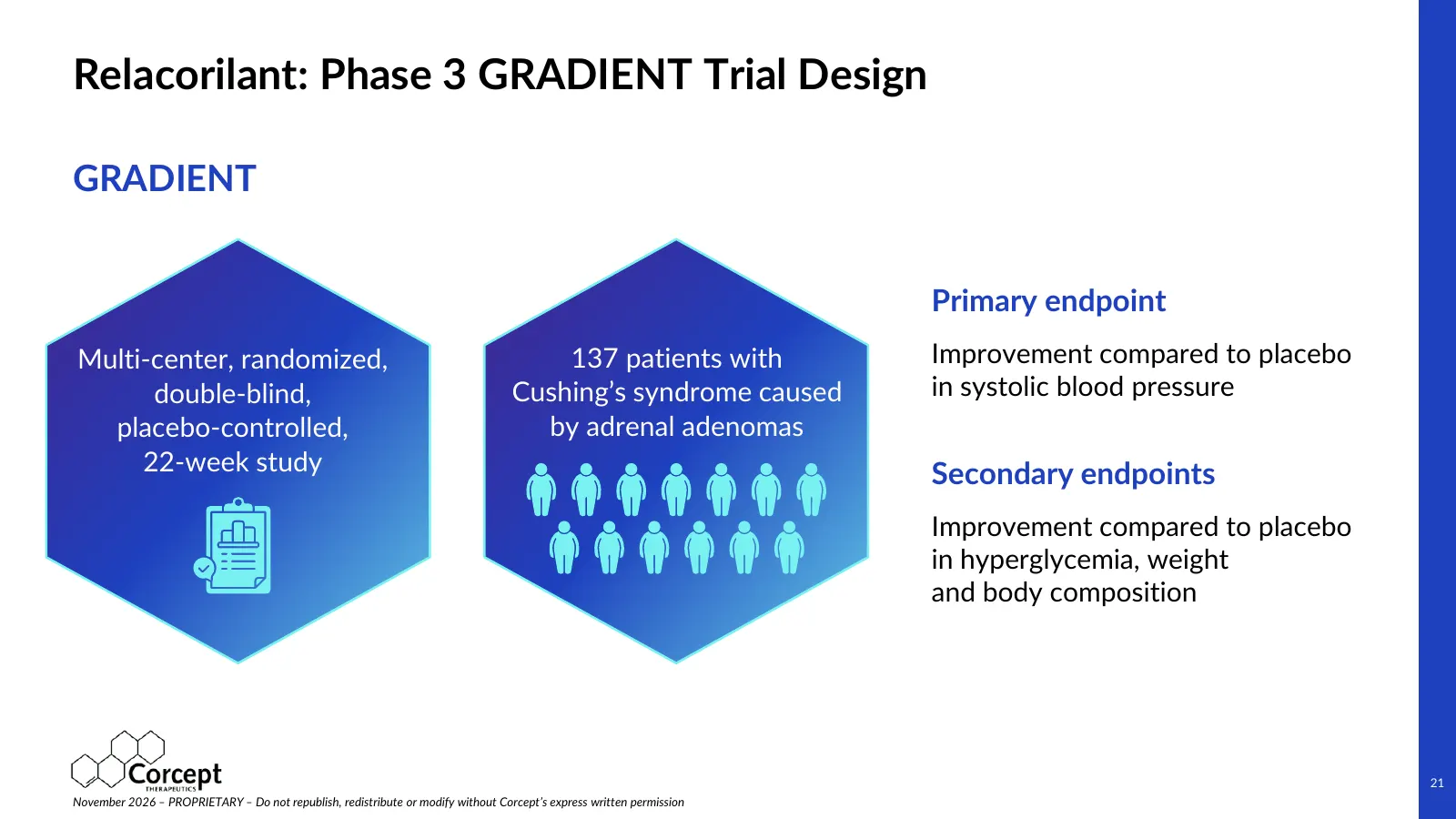
Slide 21: Relacorilant: Phase 3 GRADIENT Trial Design
Relacorilant: Phase 3 GRADIENT Trial Design GRADIENT Primary endpoint Multi-center, randomized, 137 patients with Improvement compared to placebo double-blind, Cushing’s syndrome caused in systolic blood pressure placebo-controlled, by adrenal adenomas 22-week study Secondary endpoints Improvement c
Slide 22: GRADIENT Results Support Findings from Pivotal GRACE Trial
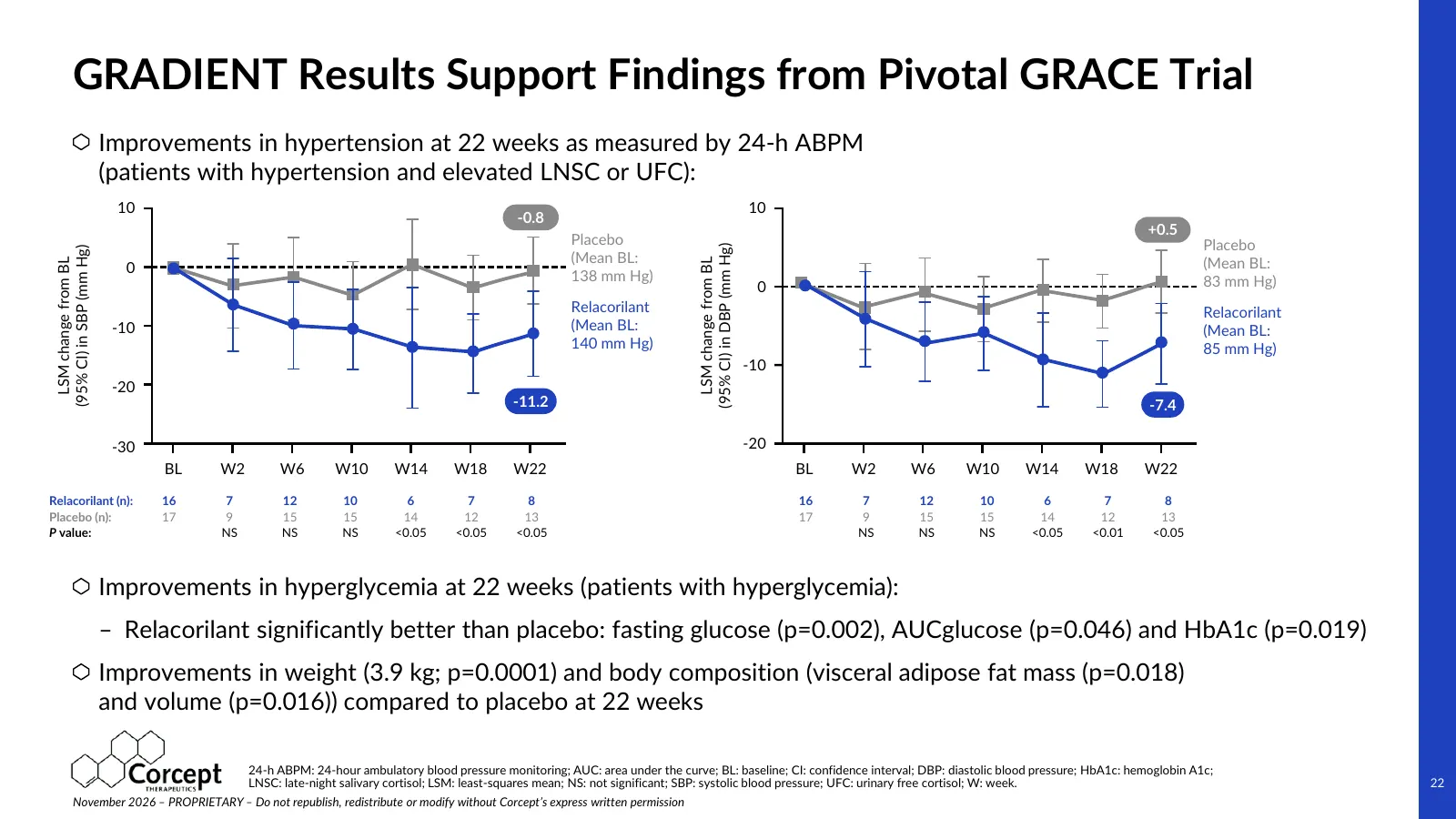
GRADIENT Results Support Findings from Pivotal GRACE Trial Improvements in hypertension at 22 weeks as measured by 24-h ABPM (patients with hypertension and elevated LNSC or UFC): 10 10 -0.8 +0.5 Placebo Placebo (95% CI) in DBP (mm Hg) (95% CI) in SBP (mm Hg) (Mean BL: (Mean BL: LSM change from BL L
Slide 23: Phase 3 Long-Term Extension Study Demonstrates Durable Cardiometabolic Benefits
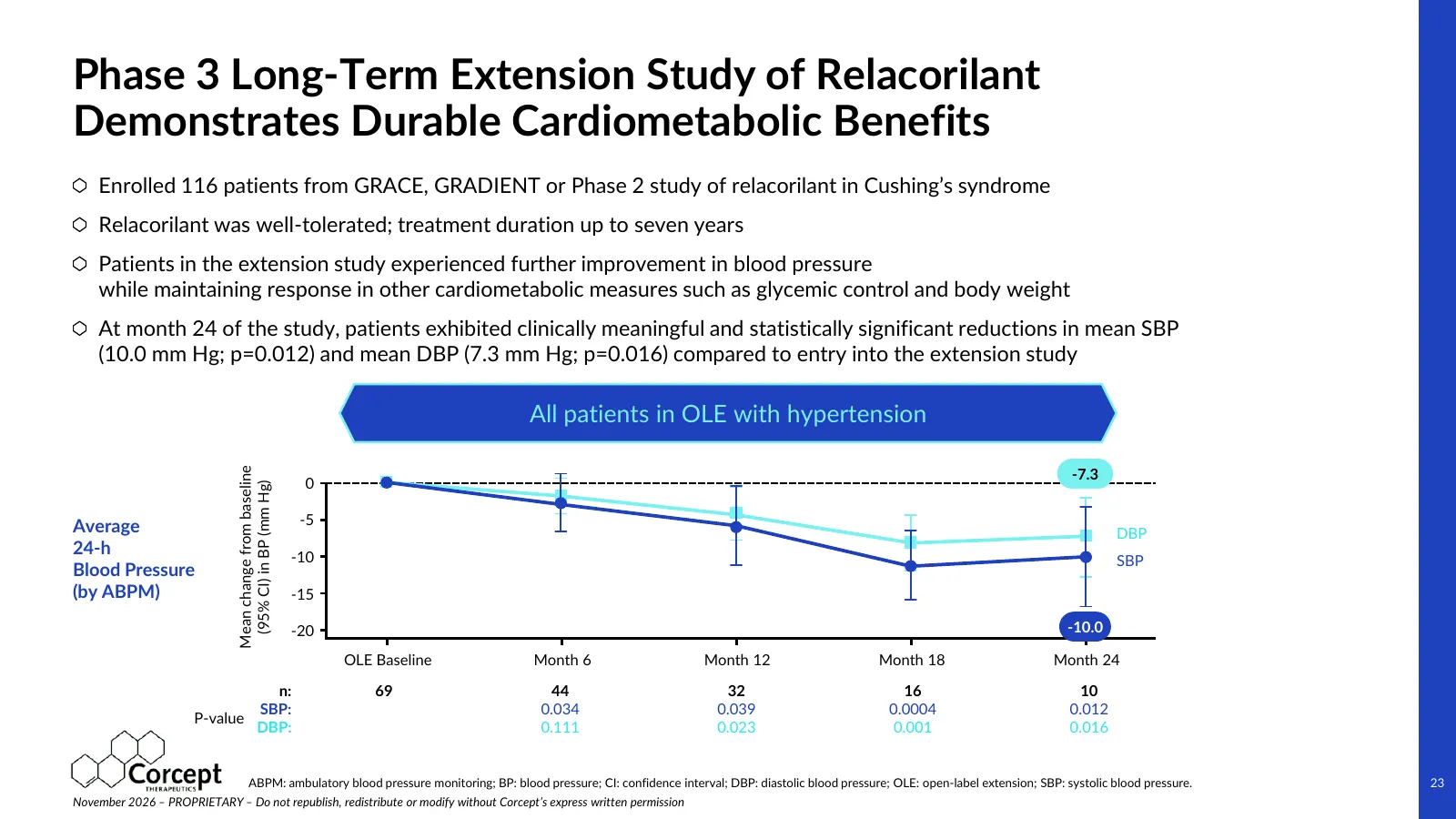
Phase 3 Long-Term Extension Study of Relacorilant Demonstrates Durable Cardiometabolic Benefits Enrolled 116 patients from GRACE, GRADIENT or Phase 2 study of relacorilant in Cushing’s syndrome Relacorilant was well-tolerated; treatment duration up to seven years Patients in the extension study expe
Slide 24: Relacorilant Safety Results
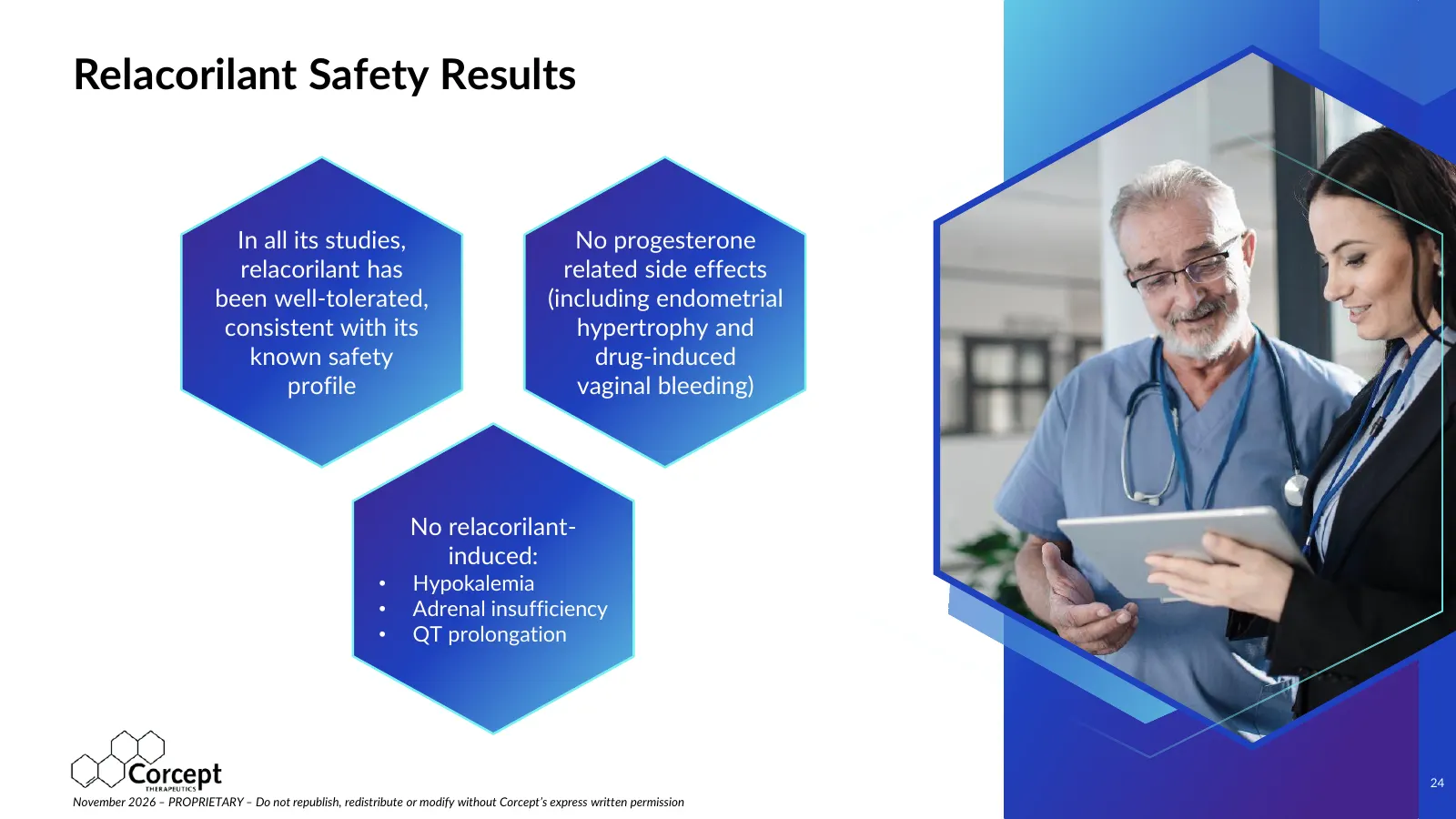
Relacorilant Safety Results In all its studies, No progesterone relacorilant has related side effects been well-tolerated, (including endometrial consistent with its hypertrophy and known safety drug-induced profile vaginal bleeding) No relacorilant- induced: • Hypokalemia • Adrenal insufficiency •
Slide 25: Relacorilant for Cushing's Syndrome
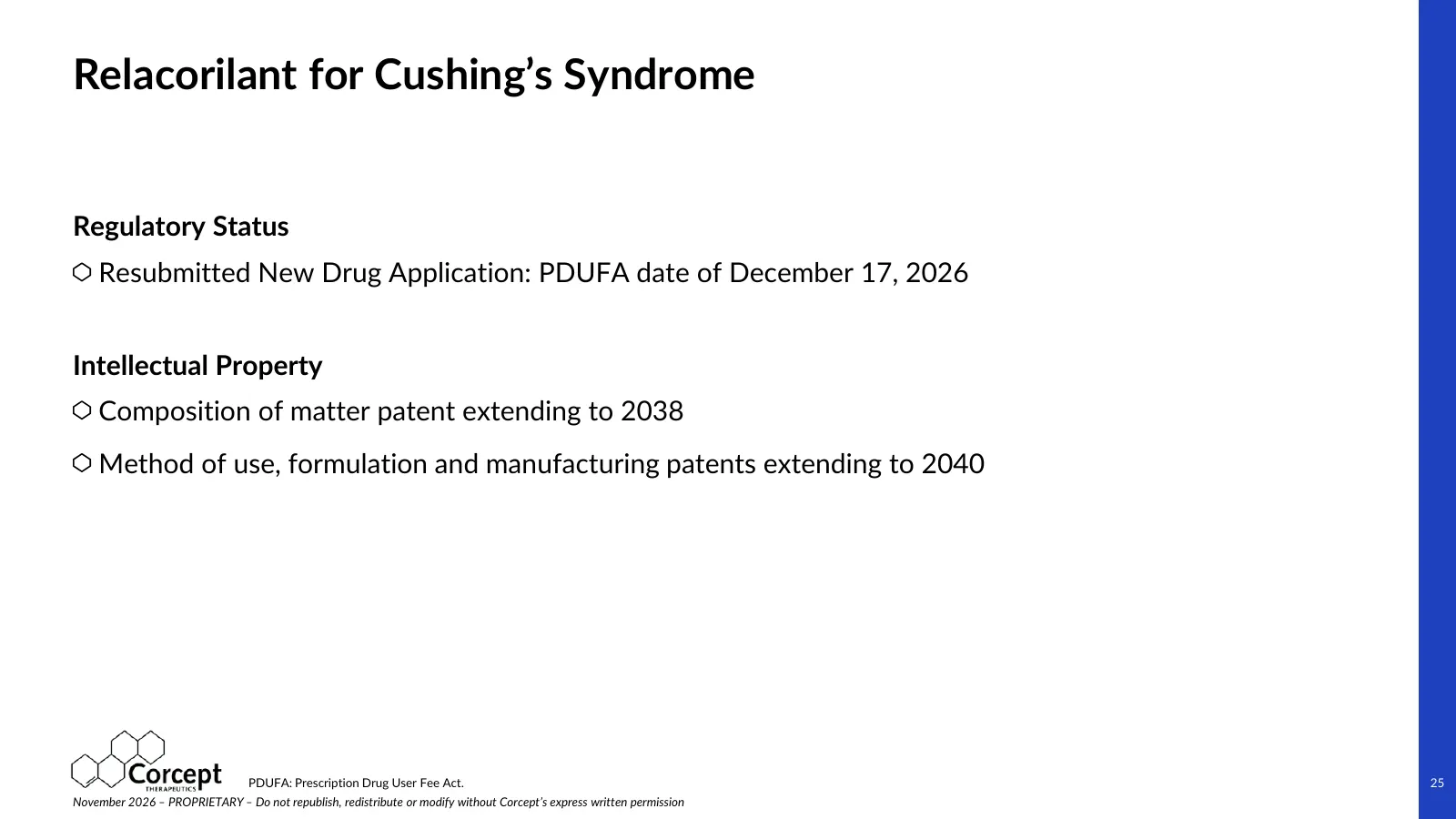
Relacorilant for Cushing’s Syndrome Regulatory Status Resubmitted New Drug Application: PDUFA date of December 17, 2026 Intellectual Property Composition of matter patent extending to 2038 Method of use, formulation and manufacturing patents extending to 2040 PDUFA: Prescription Drug User Fee Act. 2
Slide 26: Corcept: What's Next? Cortisol Modulation is a Rich Therapeutic Platform
Corcept: What’s Next? Cortisol Modulation is a Rich Therapeutic Platform 26 November 2026 – PROPRIETARY – Do not republish, redistribute or modify without Corcept’s express written permission
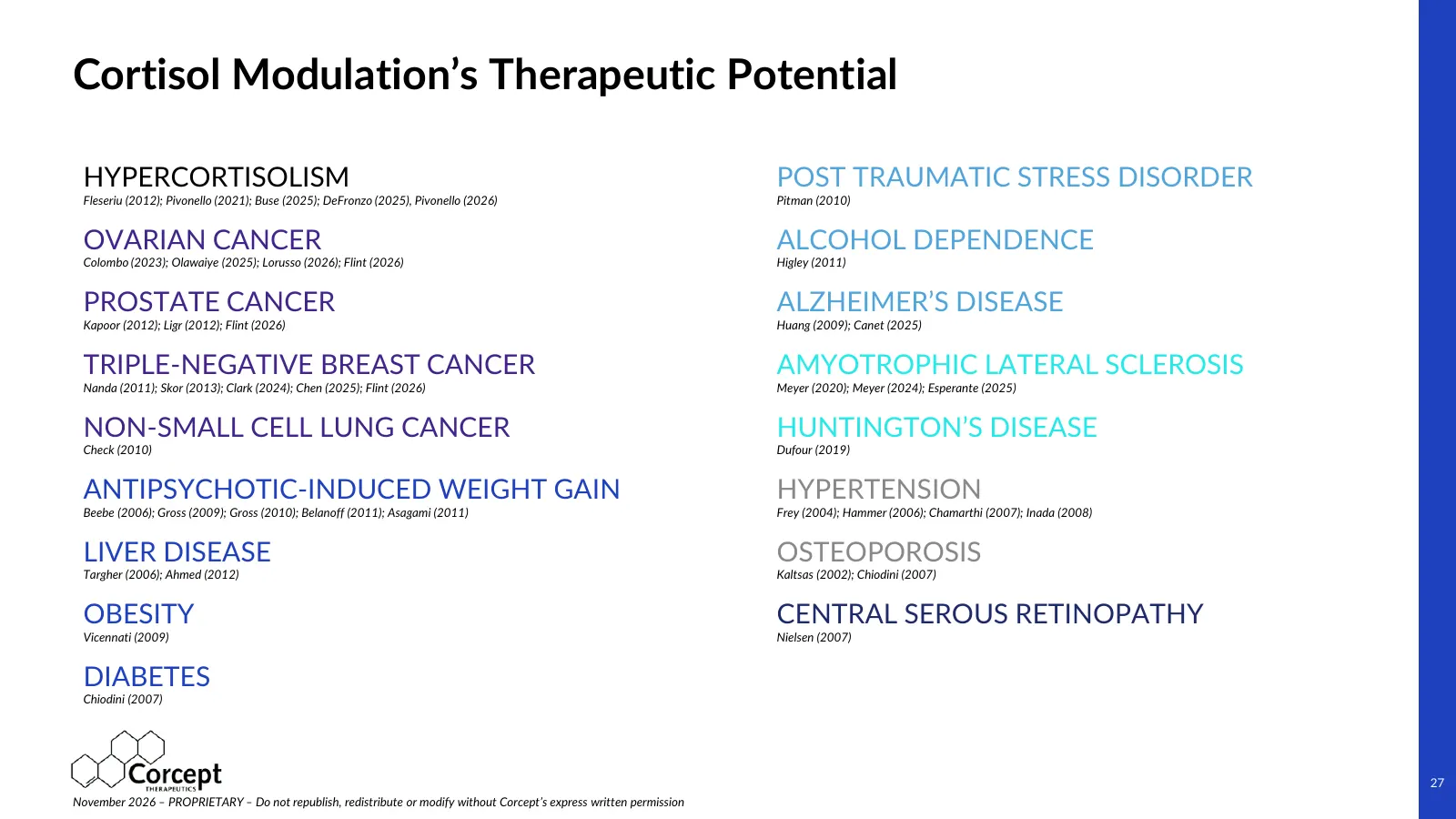
Slide 27: Cortisol Modulation's Therapeutic Potential
Cortisol Modulation’s Therapeutic Potential HYPERCORTISOLISM POST TRAUMATIC STRESS DISORDER Fleseriu (2012); Pivonello (2021); Buse (2025); DeFronzo (2025), Pivonello (2026) Pitman (2010) OVARIAN CANCER ALCOHOL DEPENDENCE Colombo (2023); Olawaiye (2025); Lorusso (2026); Flint (2026) Higley (2011) PR
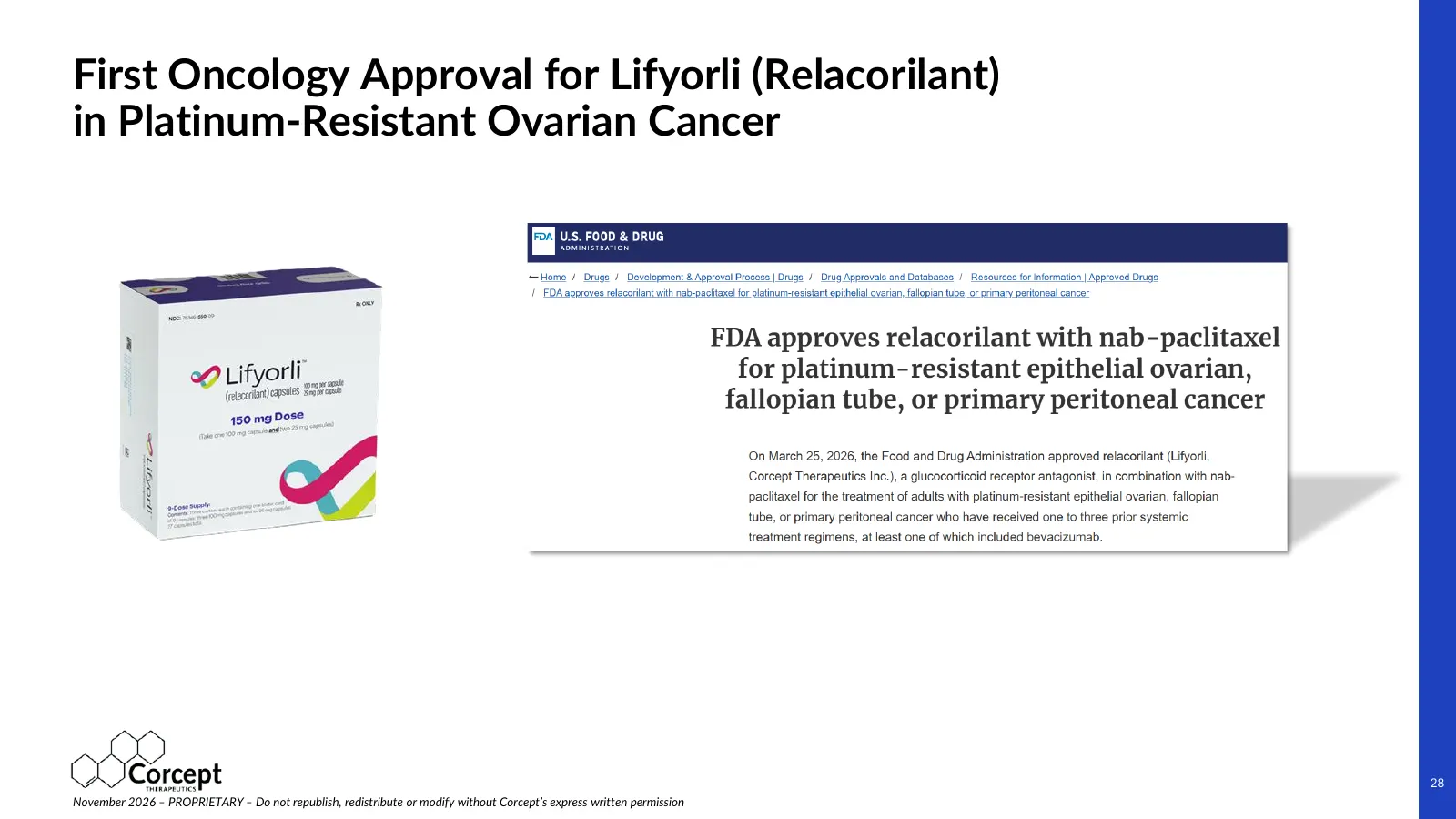
Slide 28: First Oncology Approval for Lifyorli in Platinum-Resistant Ovarian Cancer
First Oncology Approval for Lifyorli (Relacorilant) in Platinum-Resistant Ovarian Cancer 28 November 2026 – PROPRIETARY – Do not republish, redistribute or modify without Corcept’s express written permission
Slide 29: Commercial Capabilities Drive Oncology Business
Commercial Capabilities Drive Oncology Business Deep oncology expertise A highly-skilled, experienced field organization – Focused on gynecologic oncologists and medical oncologists Broad range of patient support services Added to NCCN Guidelines for platinum-resistant ovarian cancer as a preferred
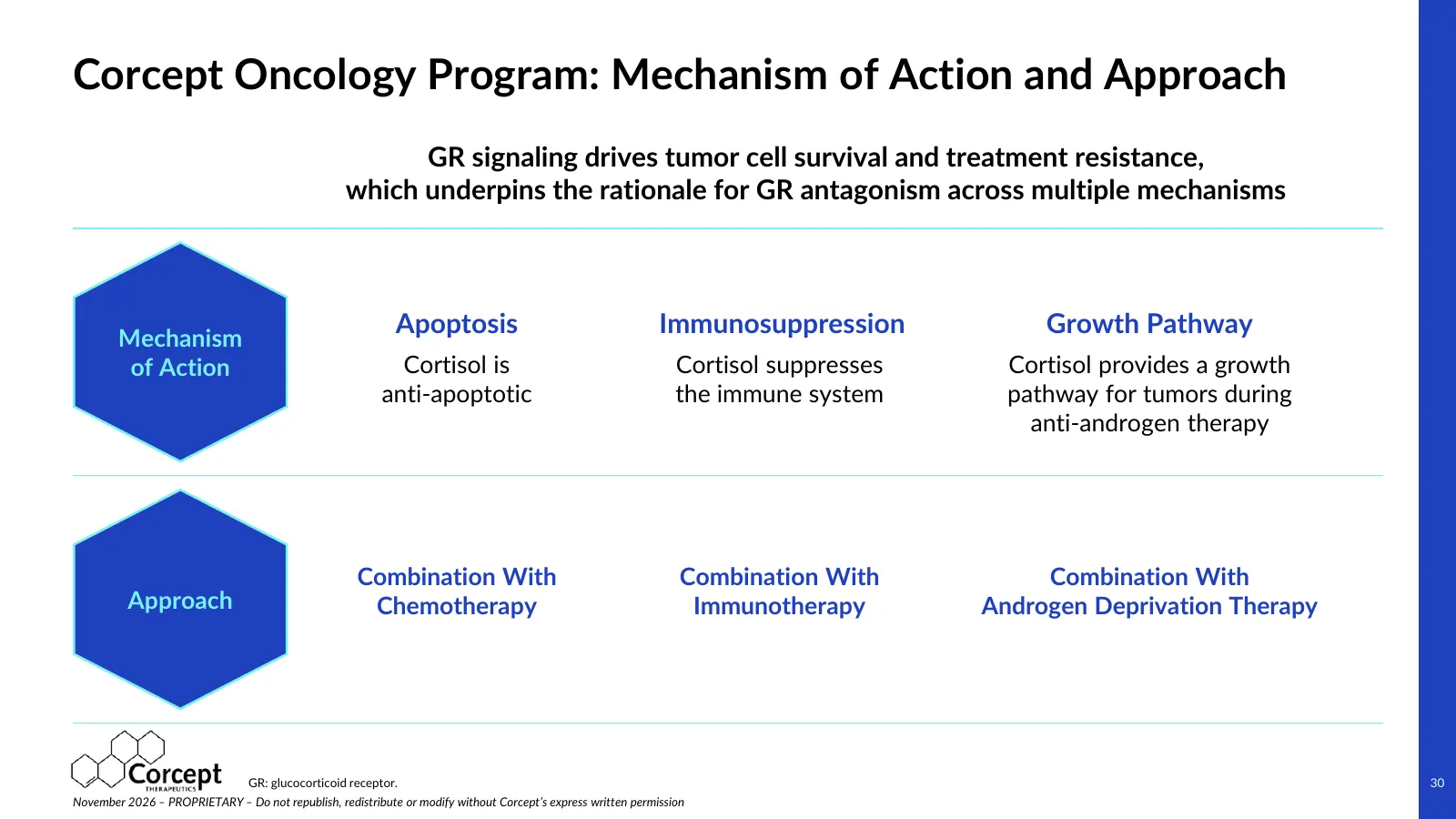
Slide 30: Corcept Oncology Program: Mechanism of Action and Approach
Corcept Oncology Program: Mechanism of Action and Approach GR signaling drives tumor cell survival and treatment resistance, which underpins the rationale for GR antagonism across multiple mechanisms Mechanism Apoptosis Immunosuppression Growth Pathway of Action Cortisol is Cortisol suppresses Corti
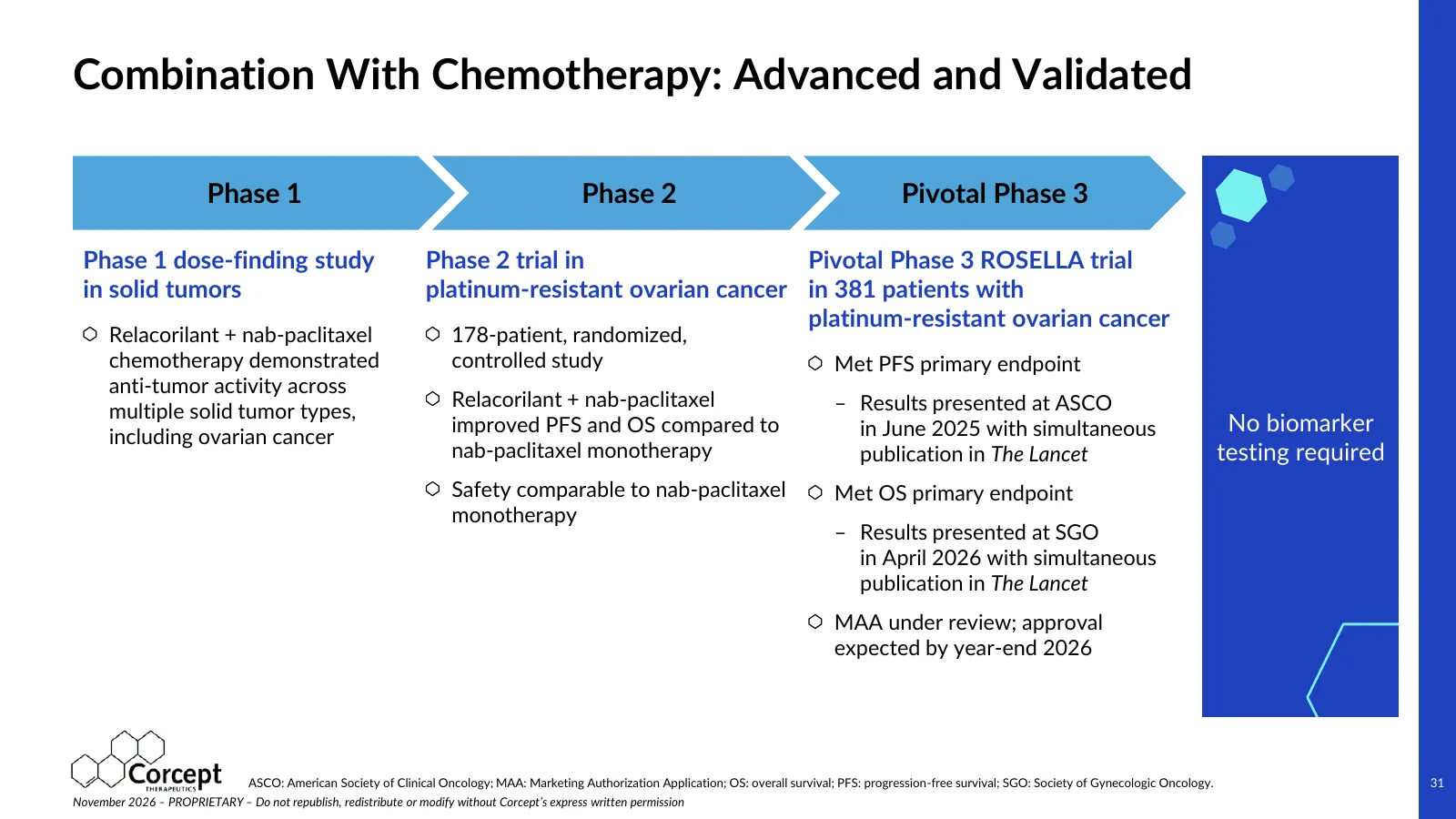
Slide 31: Combination With Chemotherapy: Advanced and Validated
Combination With Chemotherapy: Advanced and Validated Phase 1 Phase 2 Pivotal Phase 3 Phase 1 dose-finding study Phase 2 trial in Pivotal Phase 3 ROSELLA trial in solid tumors platinum-resistant ovarian cancer in 381 patients with platinum-resistant ovarian cancer Relacorilant + nab-paclitaxel 178-p
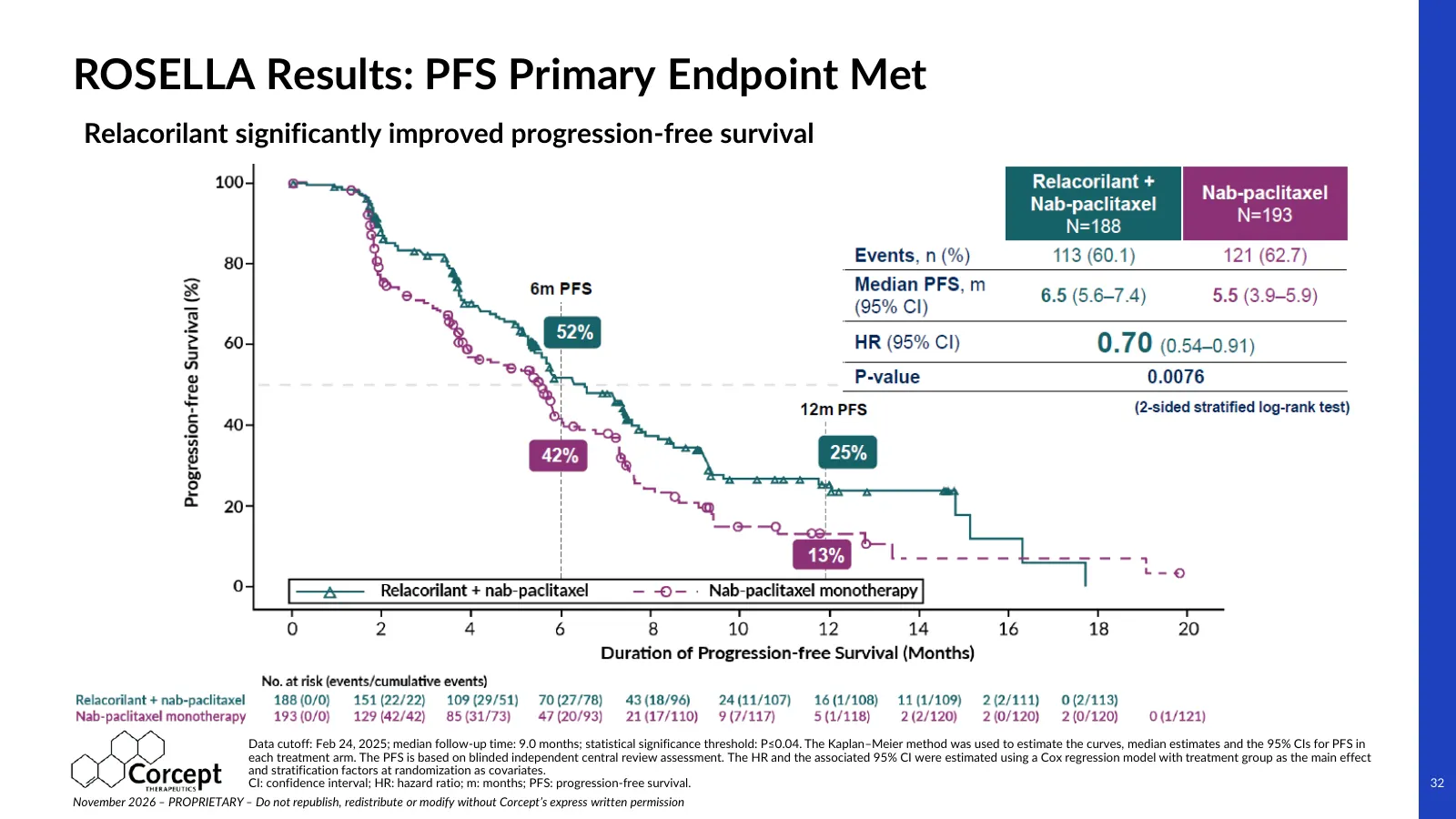
Slide 32: ROSELLA Results: PFS Primary Endpoint Met
ROSELLA Results: PFS Primary Endpoint Met Relacorilant significantly improved progression-free survival Data cutoff: Feb 24, 2025; median follow-up time: 9.0 months; statistical significance threshold: P≤0.04. The Kaplan–Meier method was used to estimate the curves, median estimates and the 95% CIs
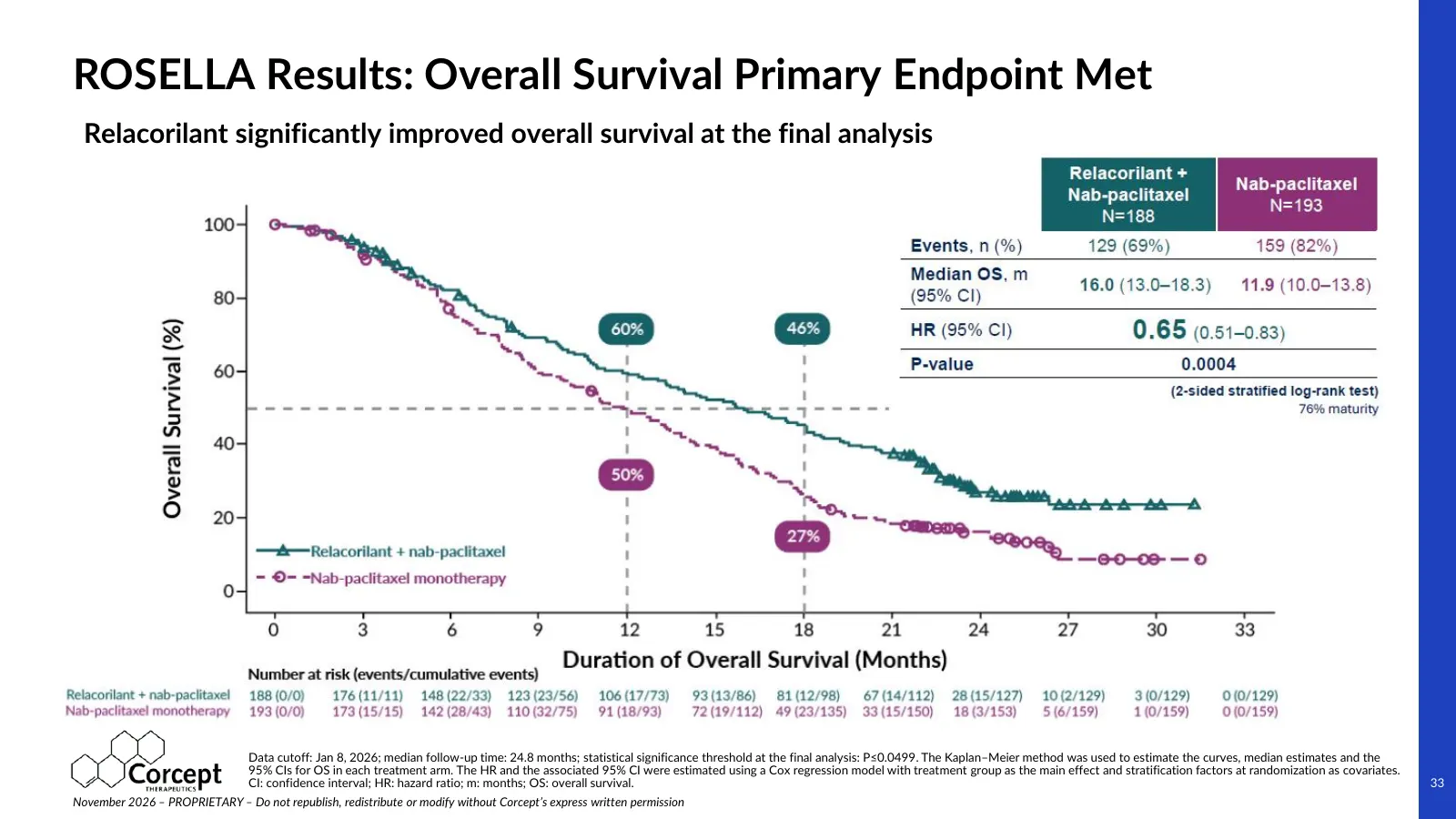
Slide 33: ROSELLA Results: Overall Survival Primary Endpoint Met
ROSELLA Results: Overall Survival Primary Endpoint Met Relacorilant significantly improved overall survival at the final analysis Data cutoff: Jan 8, 2026; median follow-up time: 24.8 months; statistical significance threshold at the final analysis: P≤0.0499. The Kaplan–Meier method was used to esti
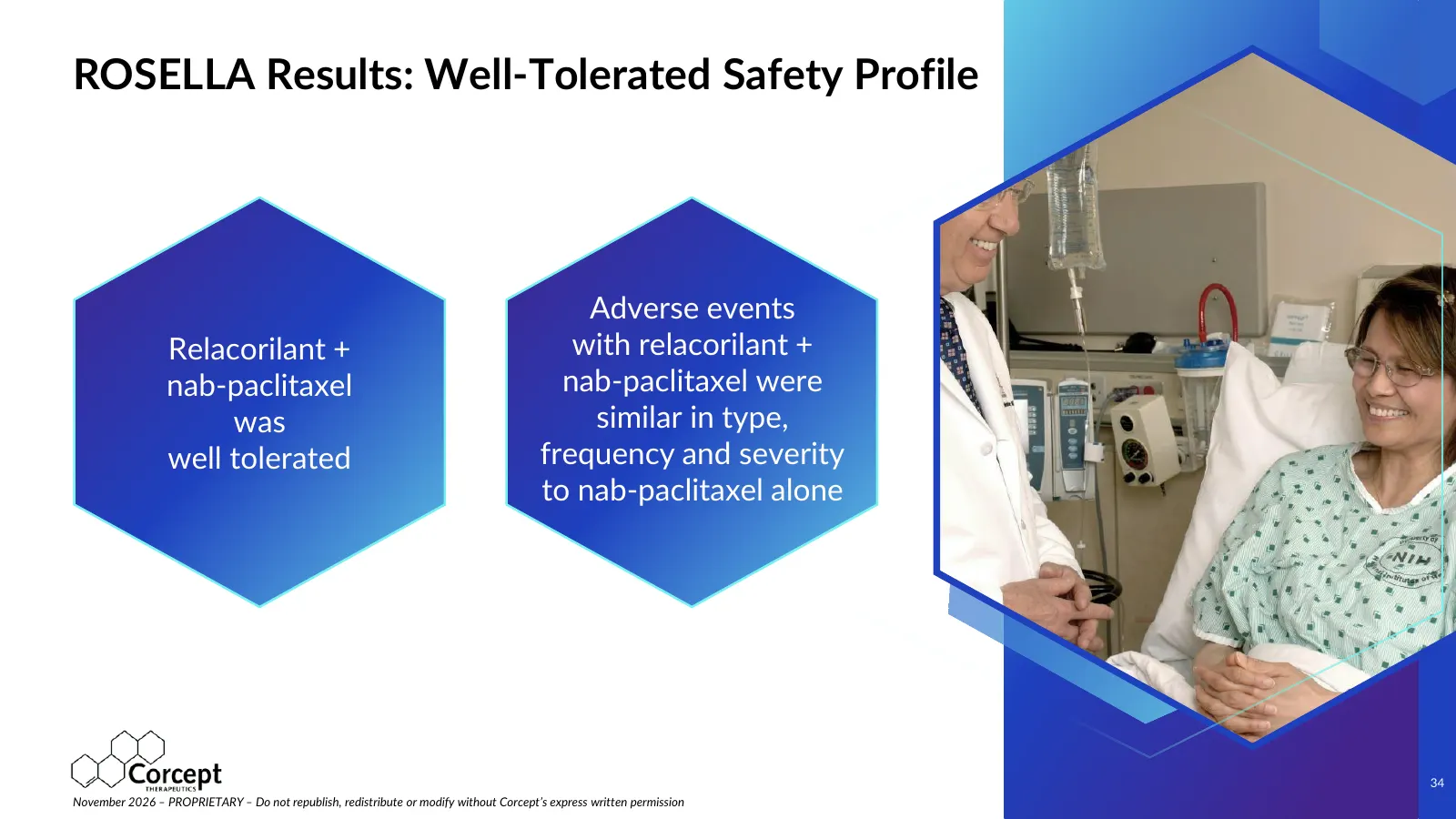
Slide 34: ROSELLA Results: Well-Tolerated Safety Profile
ROSELLA Results: Well-Tolerated Safety Profile Adverse events Relacorilant + with relacorilant + nab-paclitaxel nab-paclitaxel were was similar in type, well tolerated frequency and severity to nab-paclitaxel alone 34 November 2026 – PROPRIETARY – Do not republish, redistribute or modify without Cor
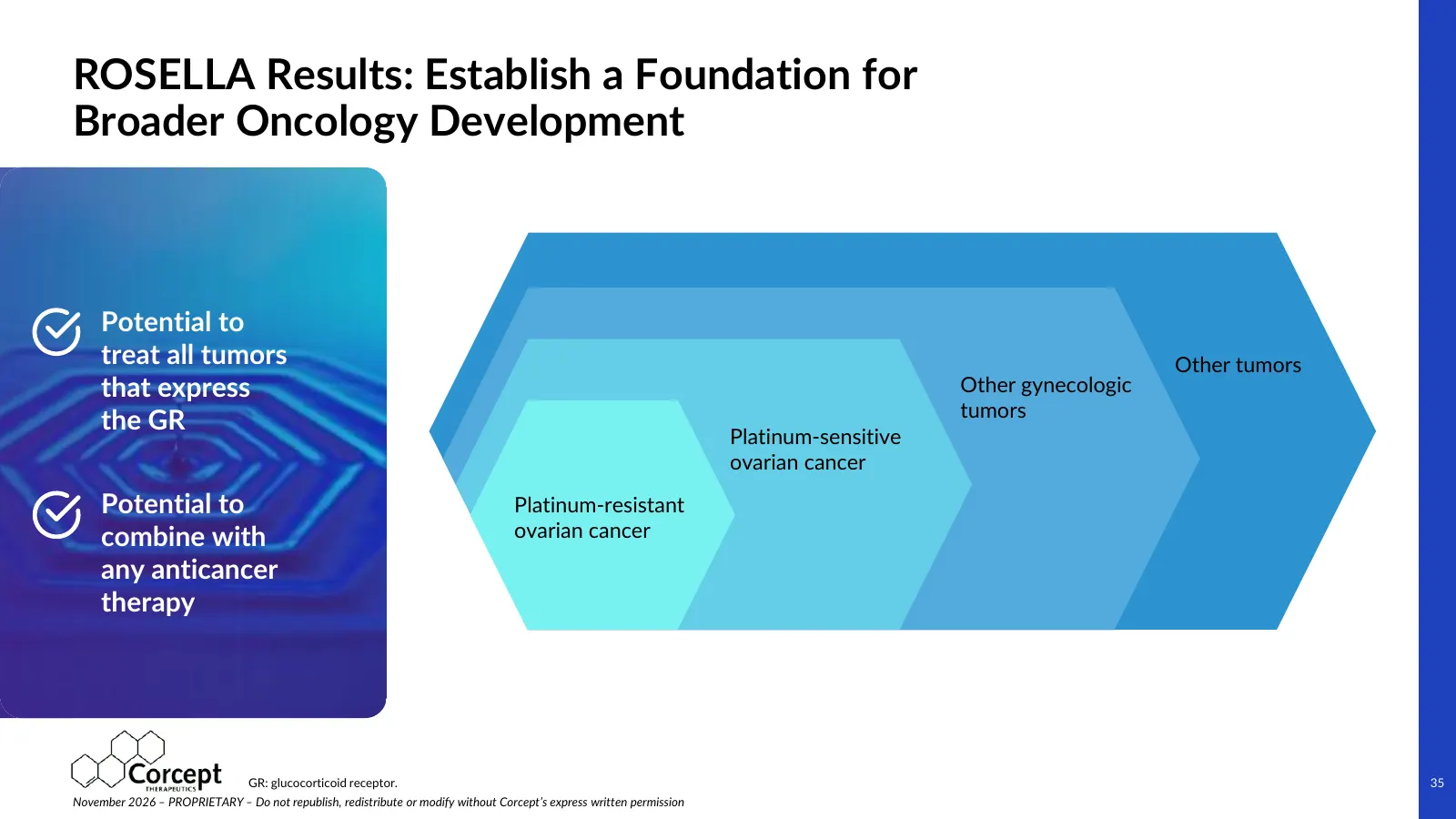
Slide 35: ROSELLA Results: Foundation for Broader Oncology Development
ROSELLA Results: Establish a Foundation for Broader Oncology Development Potential to treat all tumors Other tumors that express Other gynecologic tumors the GR Platinum-sensitive ovarian cancer Potential to Platinum-resistant combine with ovarian cancer any anticancer therapy GR: glucocorticoid rec
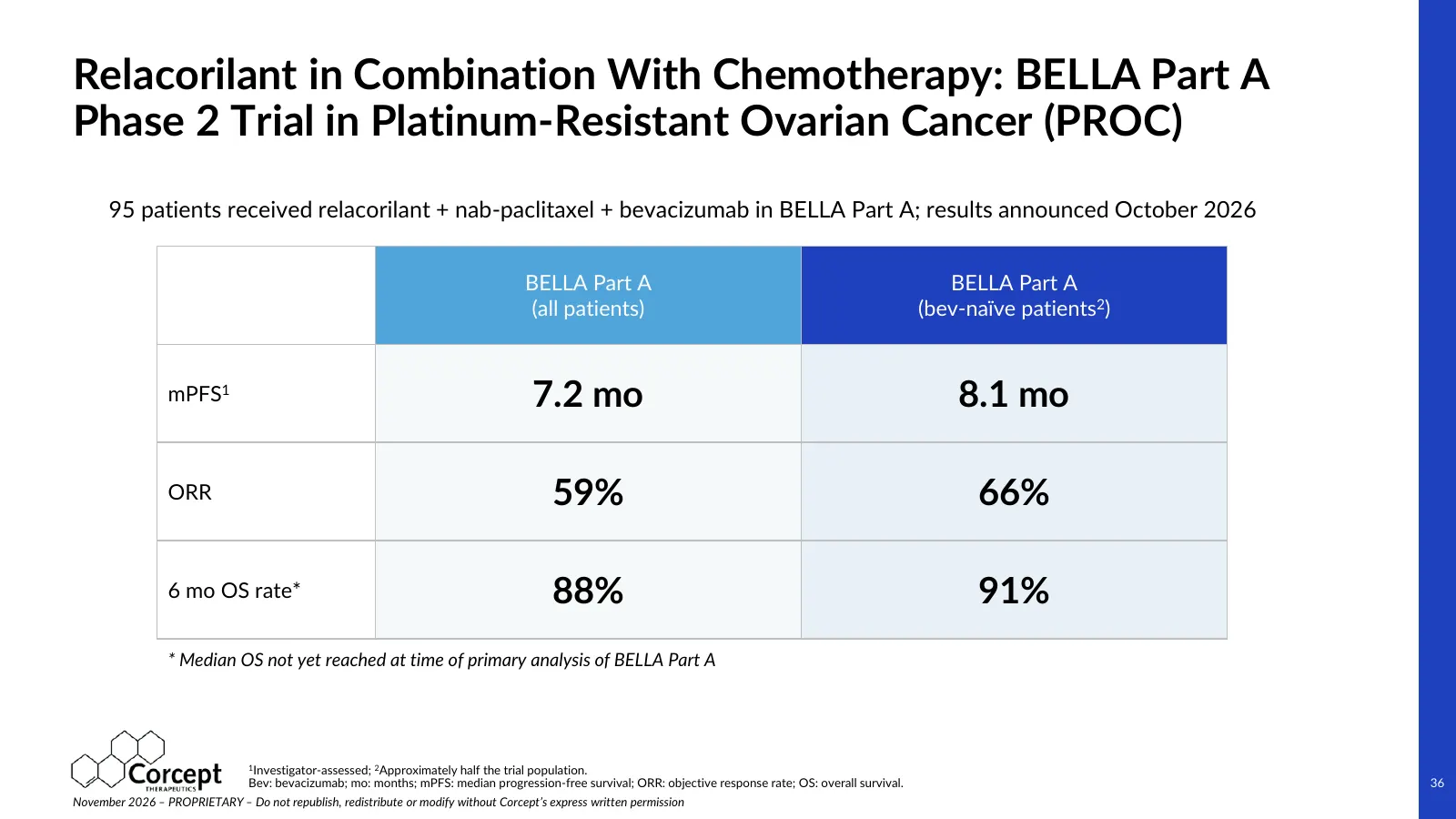
Slide 36: BELLA Part A Phase 2 Trial in Platinum-Resistant Ovarian Cancer
Relacorilant in Combination With Chemotherapy: BELLA Part A Phase 2 Trial in Platinum-Resistant Ovarian Cancer (PROC) 95 patients received relacorilant + nab-paclitaxel + bevacizumab in BELLA Part A; results announced October 2026 BELLA Part A BELLA Part A (all patients) (bev-naïve patients2) mPFS1
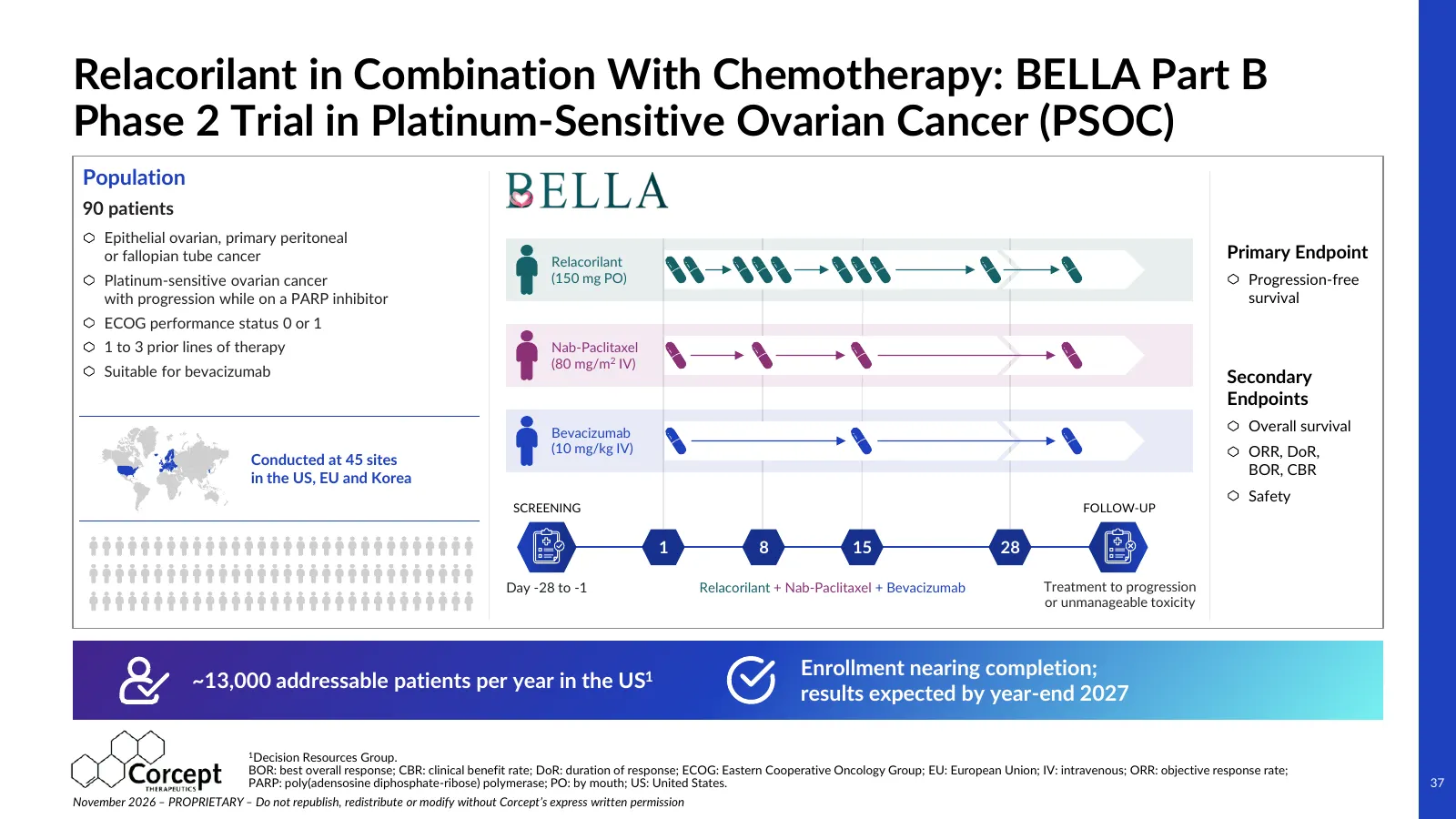
Slide 37: BELLA Part B Phase 2 Trial in Platinum-Sensitive Ovarian Cancer
Relacorilant in Combination With Chemotherapy: BELLA Part B Phase 2 Trial in Platinum-Sensitive Ovarian Cancer (PSOC) Population 90 patients Epithelial ovarian, primary peritoneal or fallopian tube cancer Relacorilant Primary Endpoint Platinum-sensitive ovarian cancer (150 mg PO) Progression-free wi
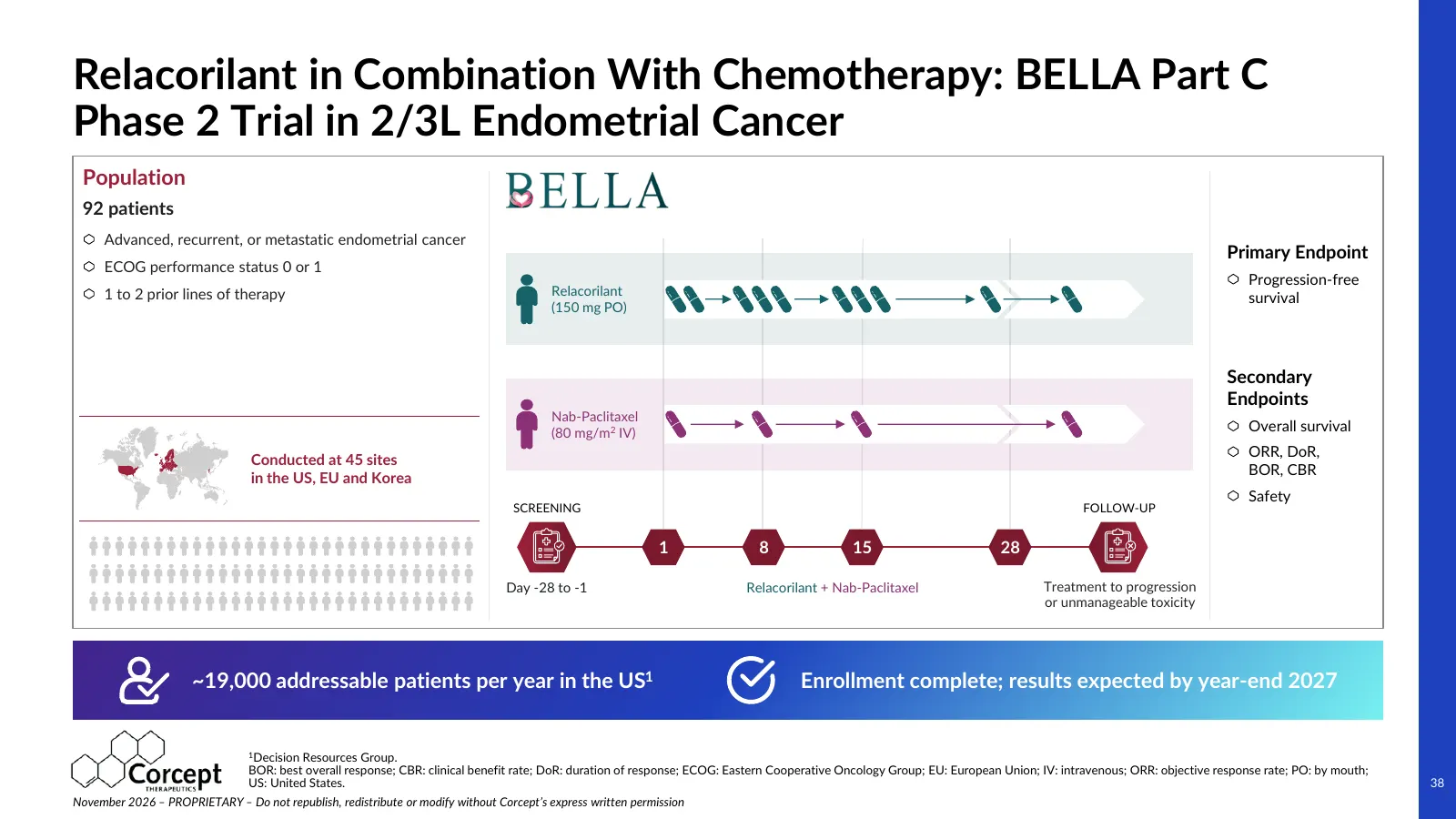
Slide 38: BELLA Part C Phase 2 Trial in 2/3L Endometrial Cancer
Relacorilant in Combination With Chemotherapy: BELLA Part C Phase 2 Trial in 2/3L Endometrial Cancer Population 92 patients Advanced, recurrent, or metastatic endometrial cancer Primary Endpoint ECOG performance status 0 or 1 Progression-free 1 to 2 prior lines of therapy Relacorilant survival (150
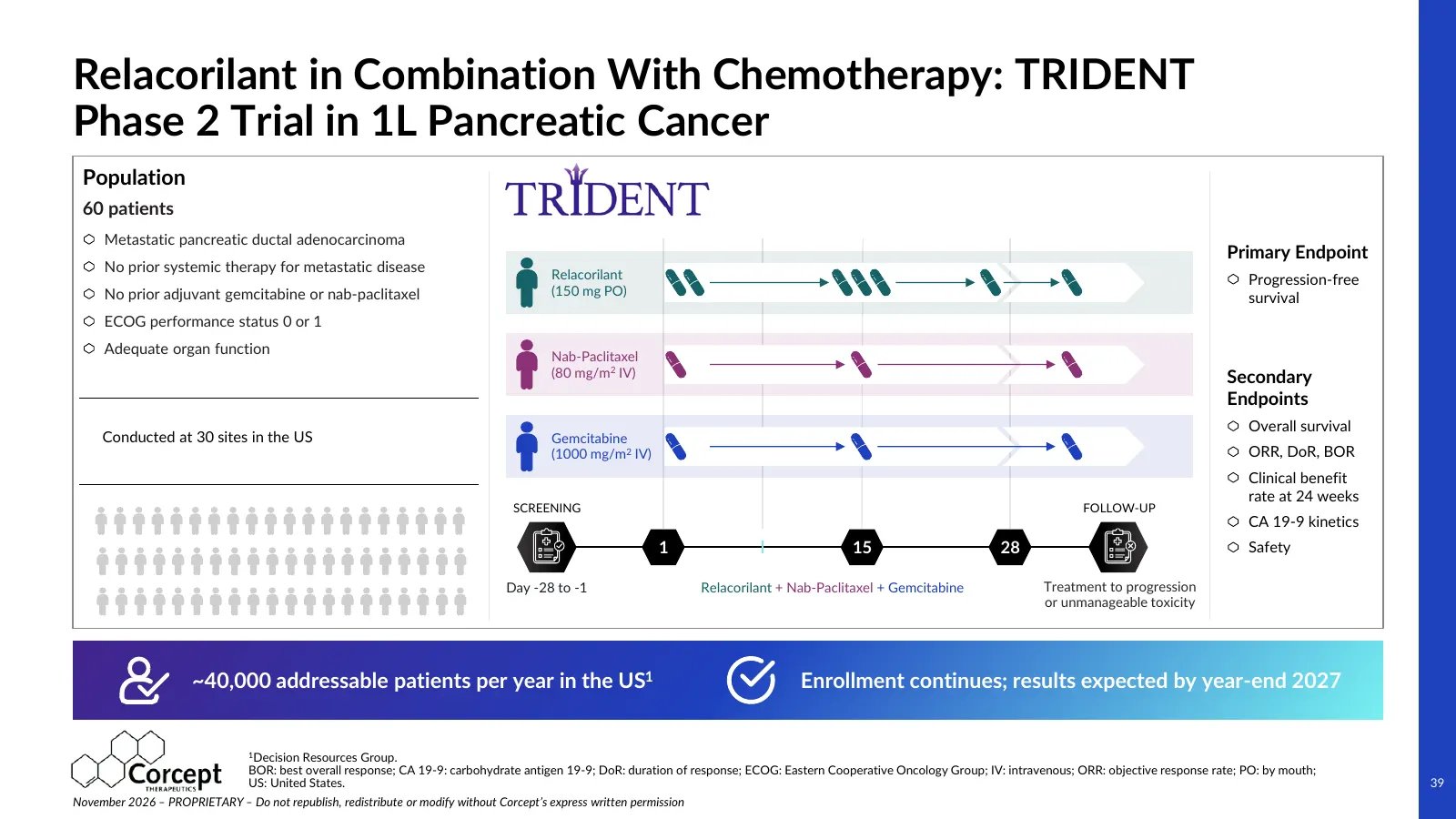
Slide 39: TRIDENT Phase 2 Trial in 1L Pancreatic Cancer
Relacorilant in Combination With Chemotherapy: TRIDENT Phase 2 Trial in 1L Pancreatic Cancer Population 60 patients Metastatic pancreatic ductal adenocarcinoma Primary Endpoint No prior systemic therapy for metastatic disease Relacorilant Progression-free No prior adjuvant gemcitabine or nab-paclita
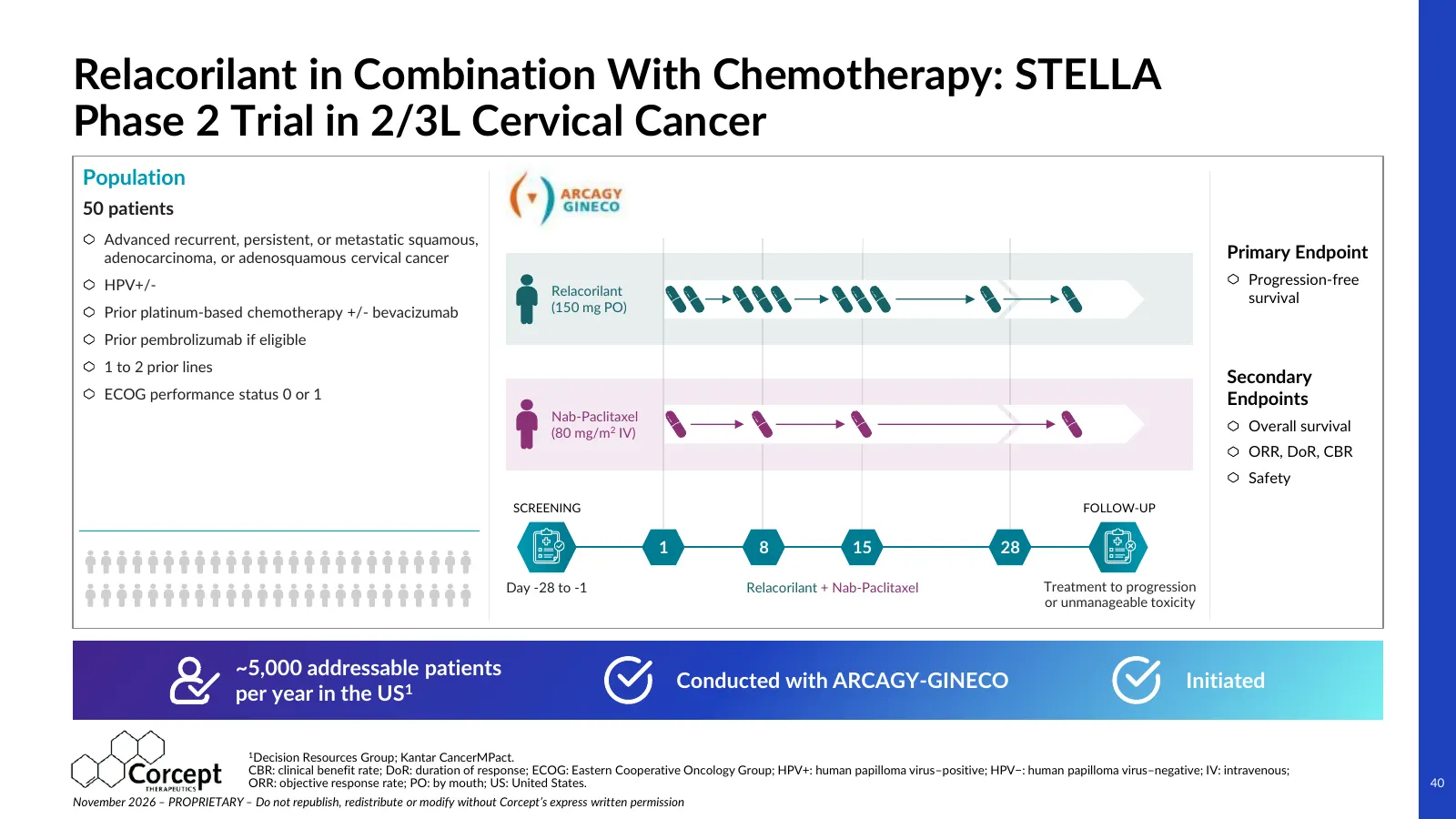
Slide 40: STELLA Phase 2 Trial in 2/3L Cervical Cancer
Relacorilant in Combination With Chemotherapy: STELLA Phase 2 Trial in 2/3L Cervical Cancer Population 50 patients Advanced recurrent, persistent, or metastatic squamous, adenocarcinoma, or adenosquamous cervical cancer Primary Endpoint HPV+/- Progression-free Relacorilant survival Prior platinum-ba
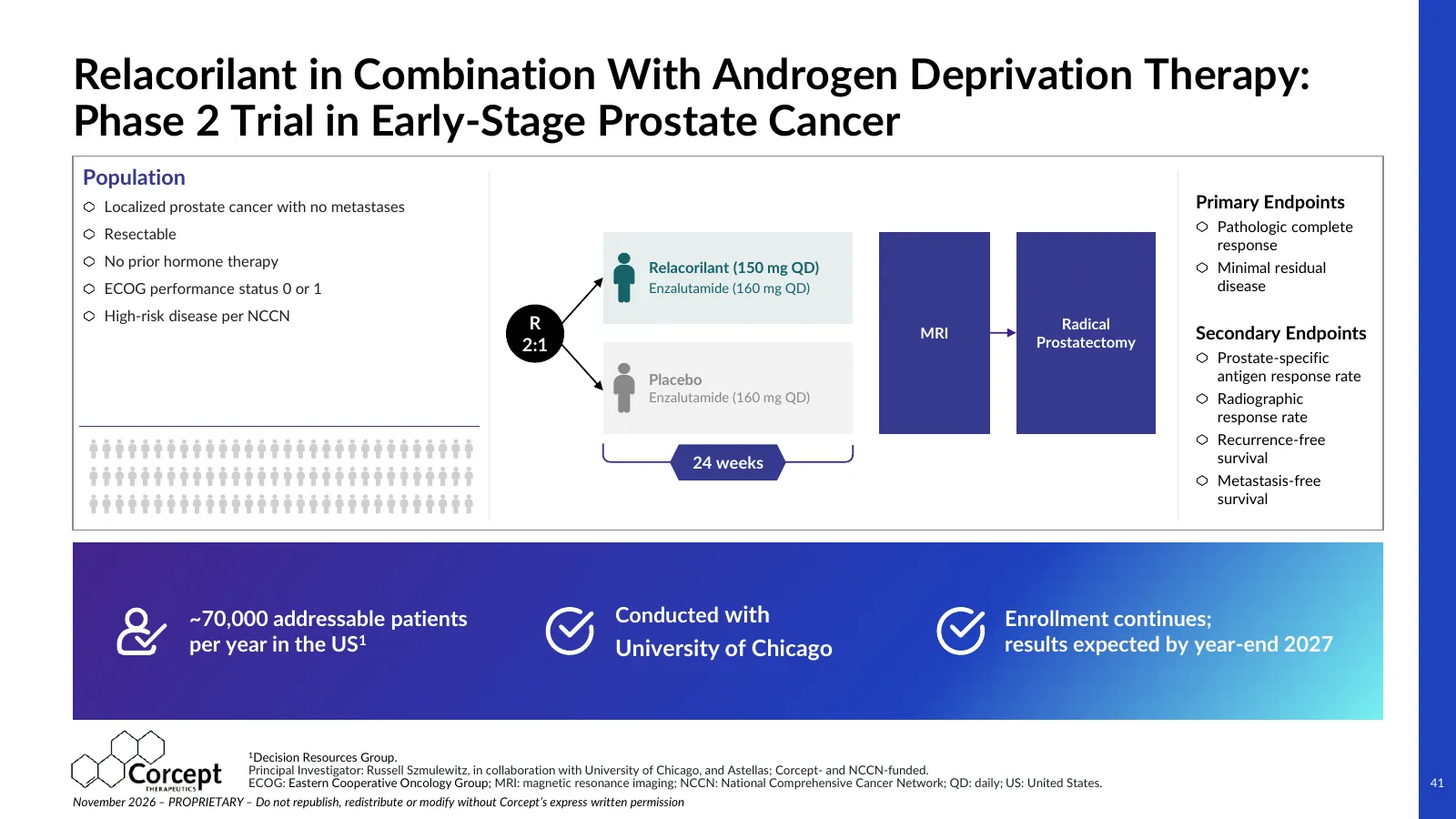
Slide 41: Relacorilant With Androgen Deprivation Therapy: Phase 2 Early-Stage Prostate Cancer
Relacorilant in Combination With Androgen Deprivation Therapy: Phase 2 Trial in Early-Stage Prostate Cancer Population Localized prostate cancer with no metastases Primary Endpoints Resectable Pathologic complete response No prior hormone therapy Relacorilant (150 mg QD) Minimal residual ECOG perfor
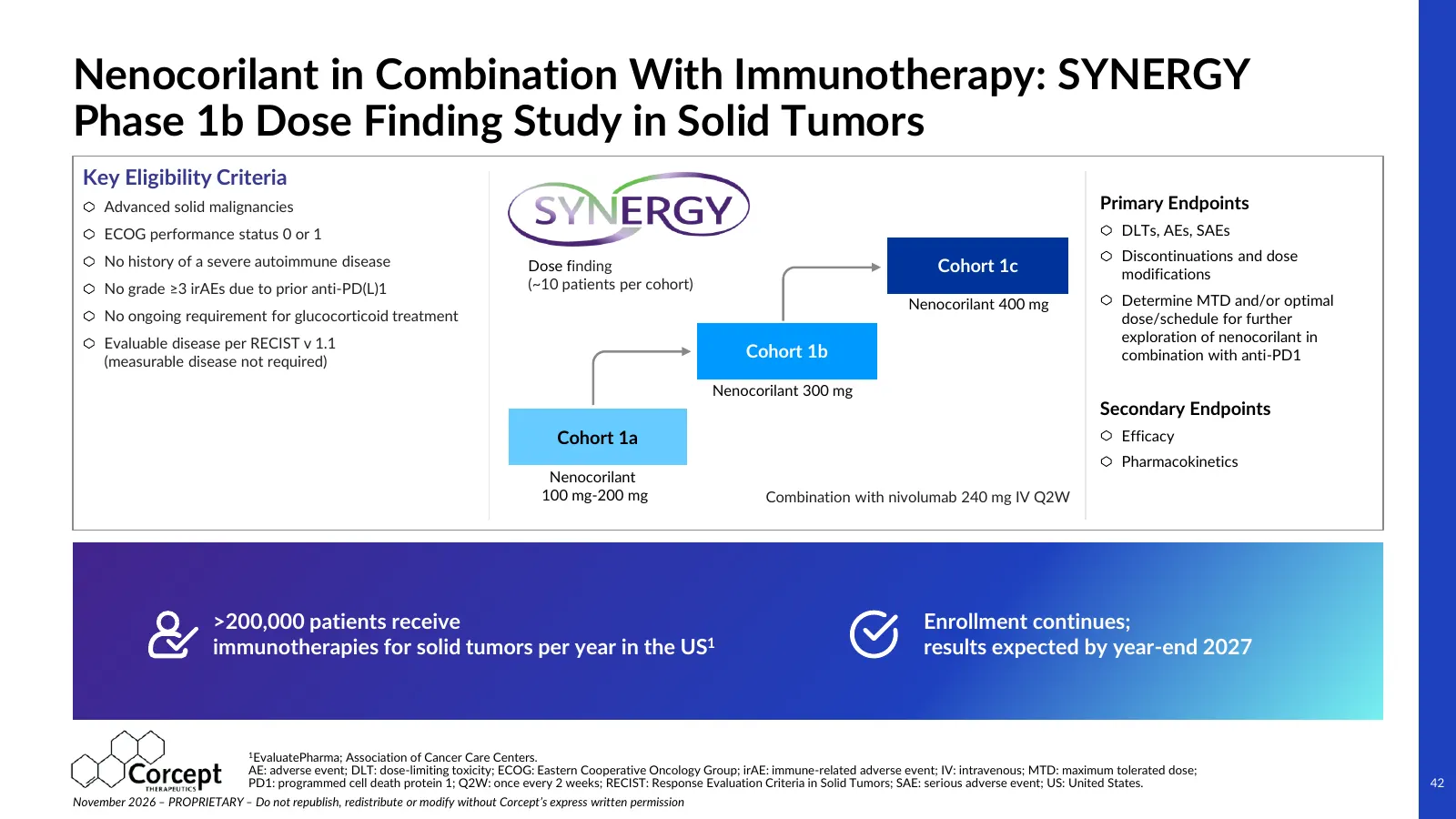
Slide 42: Nenocorilant With Immunotherapy: SYNERGY Phase 1b Study
Nenocorilant in Combination With Immunotherapy: SYNERGY Phase 1b Dose Finding Study in Solid Tumors Key Eligibility Criteria Advanced solid malignancies Primary Endpoints ECOG performance status 0 or 1 DLTs, AEs, SAEs No history of a severe autoimmune disease Discontinuations and dose Dose finding C
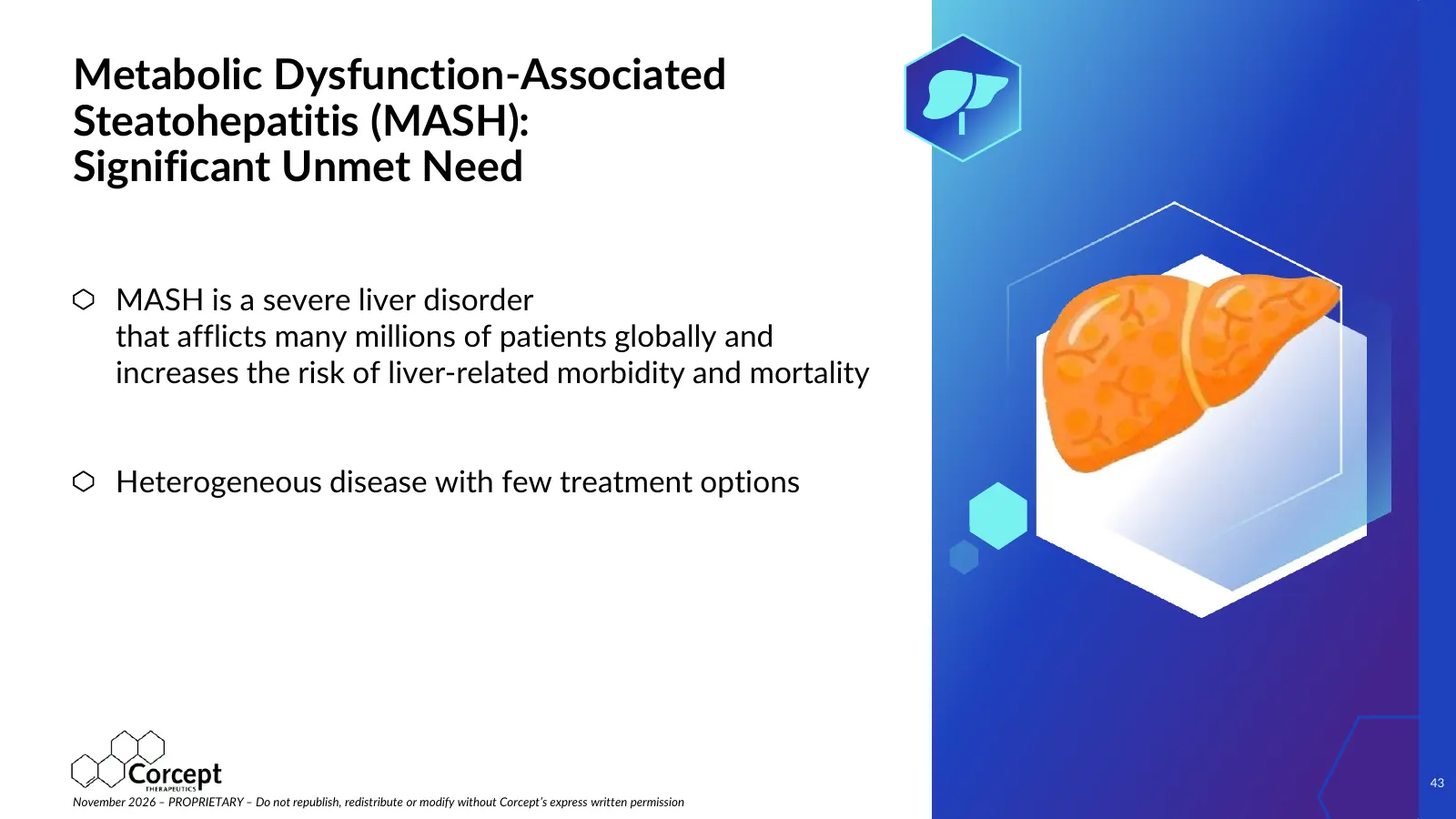
Slide 43: MASH: Significant Unmet Need
Metabolic Dysfunction-Associated Steatohepatitis (MASH): Significant Unmet Need MASH is a severe liver disorder that afflicts many millions of patients globally and increases the risk of liver-related morbidity and mortality Heterogeneous disease with few treatment options 43 November 2026 – PROPRIE
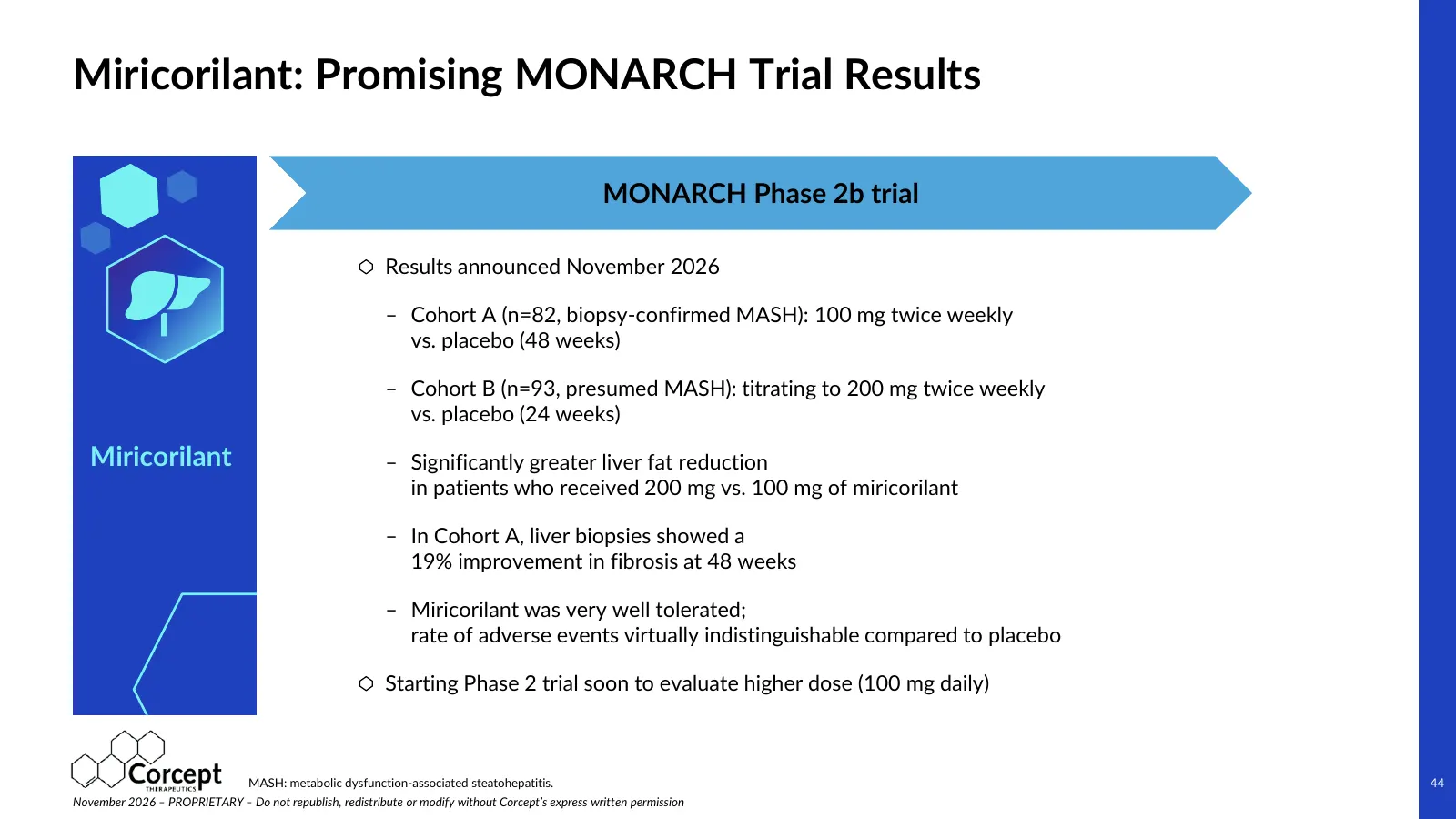
Slide 44: Miricorilant: Promising MONARCH Trial Results
Miricorilant: Promising MONARCH Trial Results MONARCH Phase 2b trial Results announced November 2026 – Cohort A (n=82, biopsy-confirmed MASH): 100 mg twice weekly vs. placebo (48 weeks) – Cohort B (n=93, presumed MASH): titrating to 200 mg twice weekly vs. placebo (24 weeks) Miricorilant – Significa
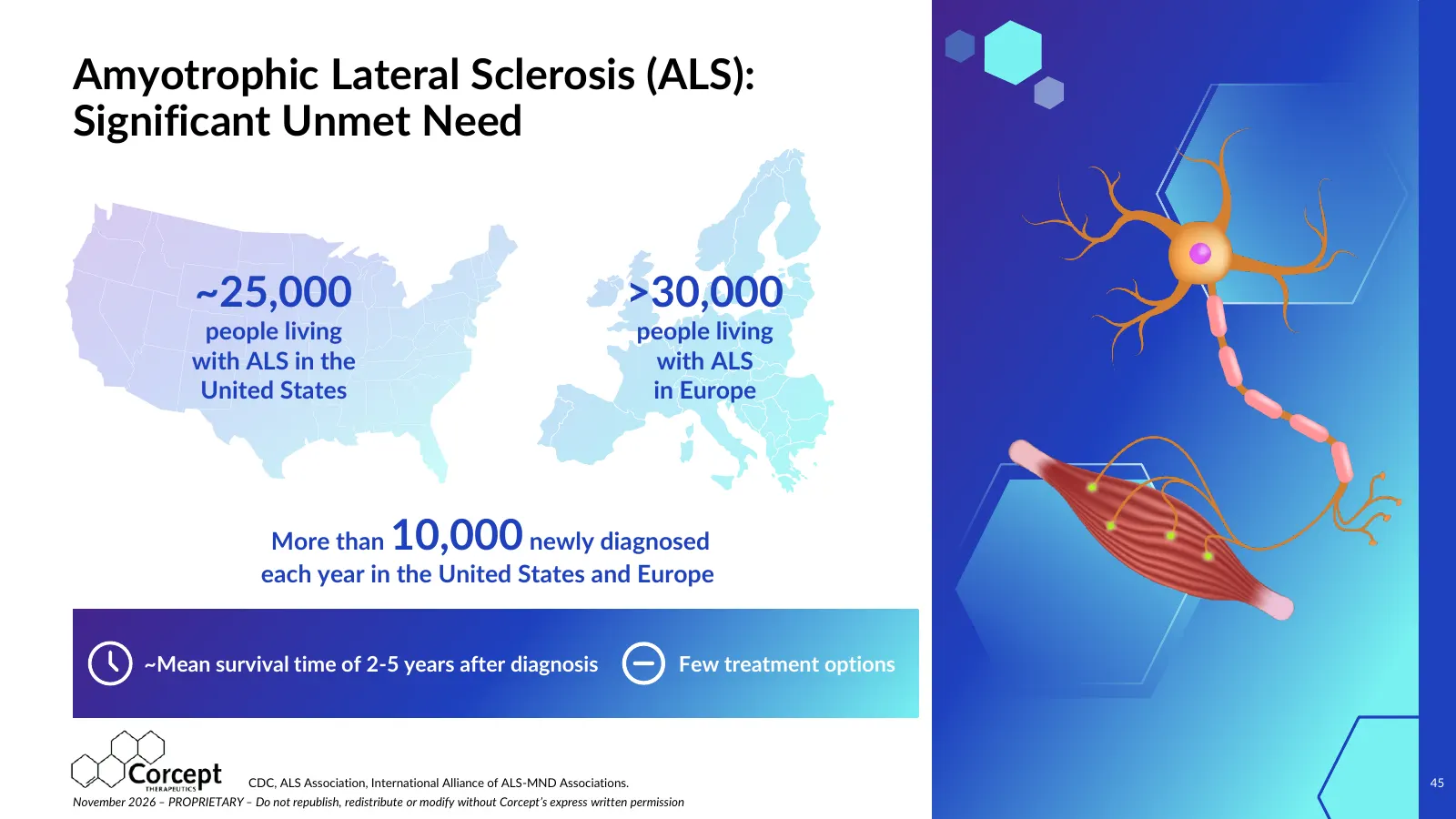
Slide 45: ALS: Significant Unmet Need
Amyotrophic Lateral Sclerosis (ALS): Significant Unmet Need ~25,000 >30,000 people living people living with ALS in the with ALS United States in Europe More than 10,000 newly diagnosed each year in the United States and Europe ~Mean survival time of 2-5 years after diagnosis Few treatment options C
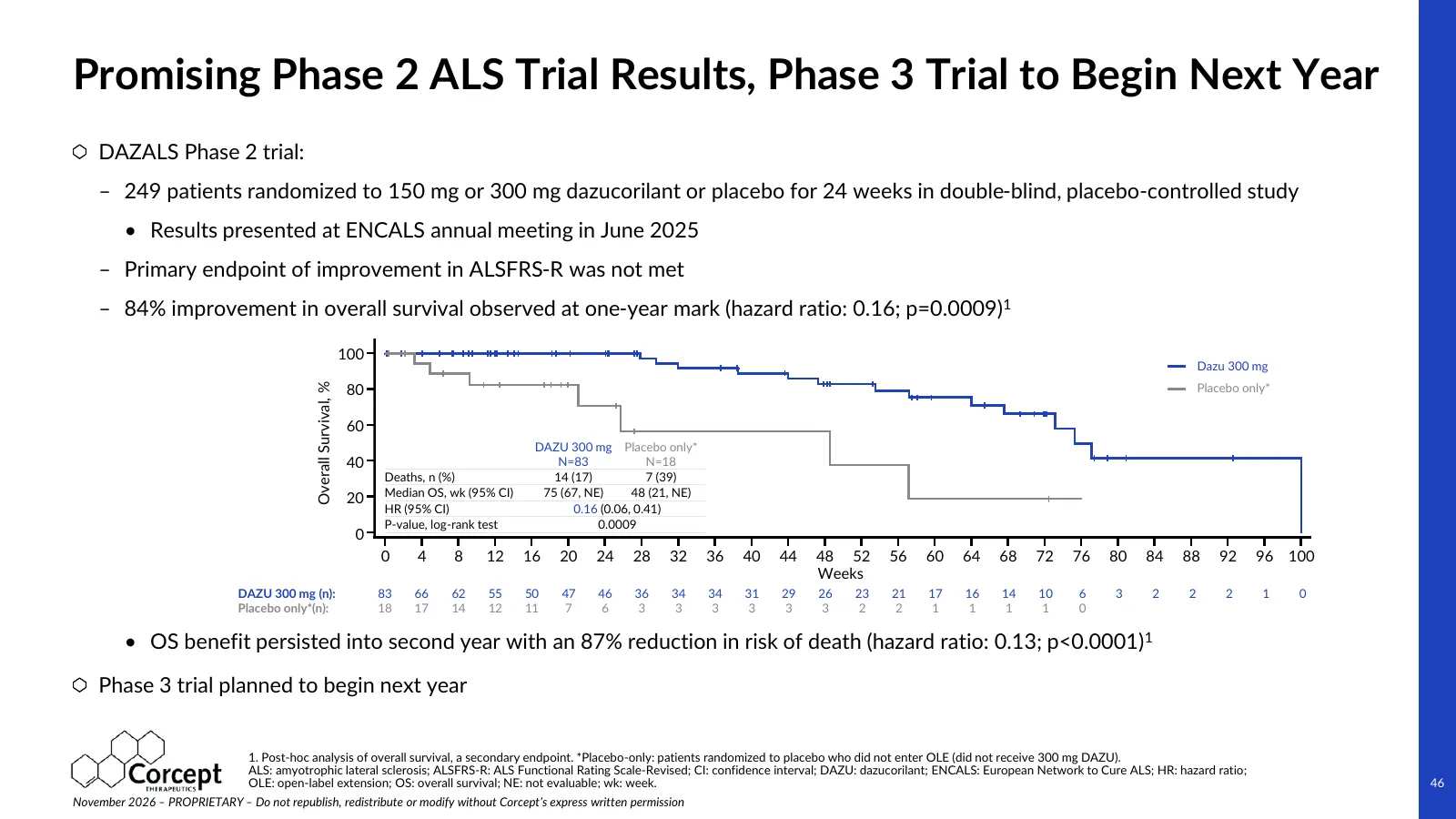
Slide 46: Promising Phase 2 ALS Trial Results, Phase 3 Trial to Begin Next Year
Promising Phase 2 ALS Trial Results, Phase 3 Trial to Begin Next Year DAZALS Phase 2 trial: – 249 patients randomized to 150 mg or 300 mg dazucorilant or placebo for 24 weeks in double-blind, placebo-controlled study • Results presented at ENCALS annual meeting in June 2025 – Primary endpoint of imp
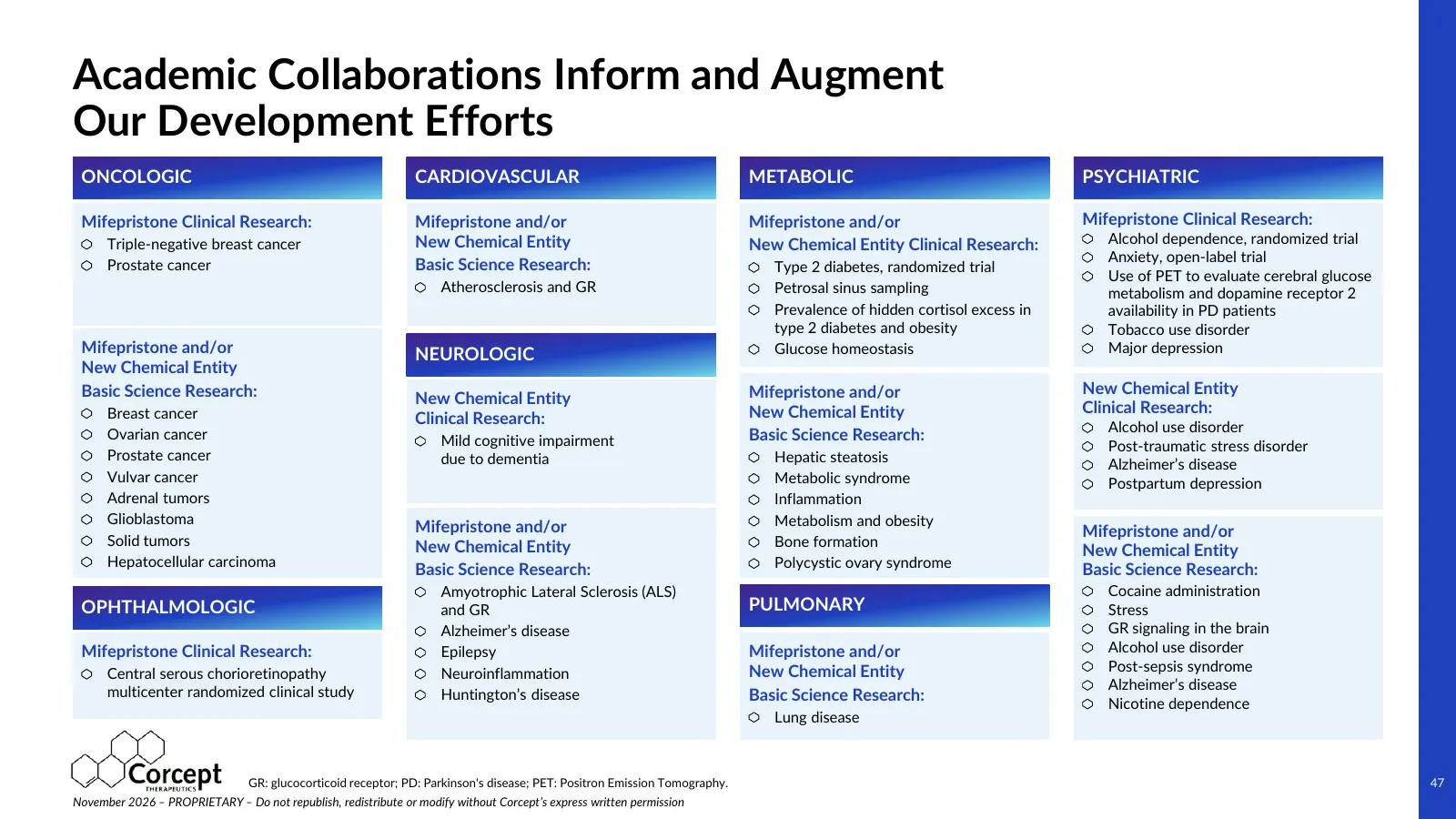
Slide 47: Academic Collaborations Inform and Augment Our Development Efforts
Academic Collaborations Inform and Augment Our Development Efforts ONCOLOGIC CARDIOVASCULAR METABOLIC PSYCHIATRIC Mifepristone Clinical Research: Mifepristone and/or Mifepristone and/or Mifepristone Clinical Research: Triple-negative breast cancer New Chemical Entity New Chemical Entity Clinical Res
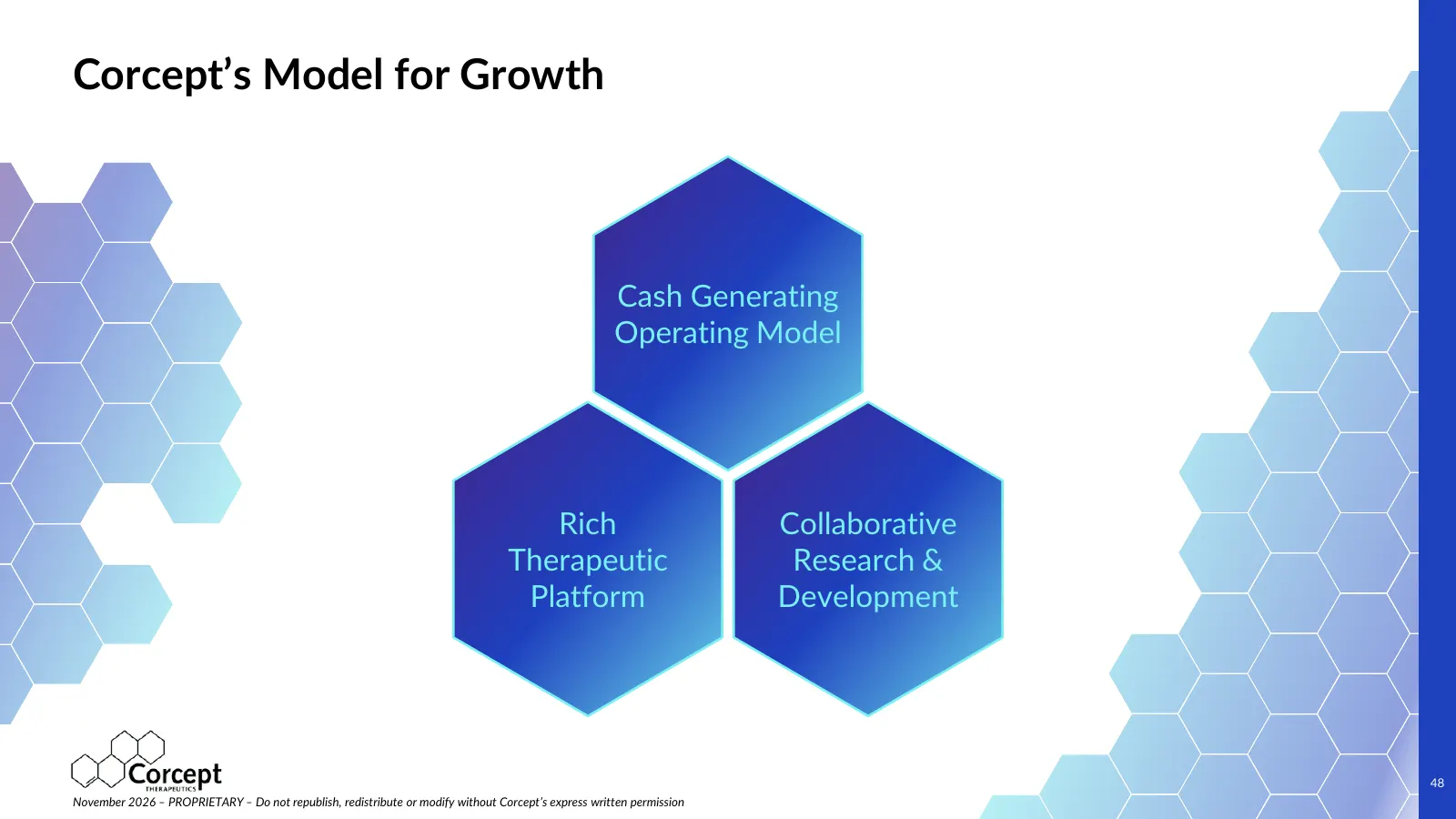
Slide 48: Corcept's Model for Growth
Corcept’s Model for Growth Cash Generating Operating Model Rich Collaborative Therapeutic Research & Platform Development 48 November 2026 – PROPRIETARY – Do not republish, redistribute or modify without Corcept’s express written permission
Slide 49: Thank you
Thank you 49 November 2026 – PROPRIETARY – Do not republish, redistribute or modify without Corcept’s express written permission
Source: 6ix earnings call
More decks from Corcept Therapeutics Incorporated
 Investor Presentation (July 2026)49 slides · July 2026
 Technical Presentation (2026)15 slides · Apr 23, 2026
 SGO Annual Meeting on Women's Cancer 202618 slides · Apr 10, 2026
 ENCALS 202513 slides · Dec 15, 2025
 Technical Presentation (May 2025)37 slides · May 13, 2025
 Q1 2025 Earnings Presentation37 slides · May 5, 2025