Simulations Plus, Inc. · NASDAQ:SLP
Simulations Plus — Technical Presentation (April 2023)
22 slides from Simulations Plus's technical presentation, Apr 27, 2023
Slide 1: Using GastroPlus, PBBM and PKPD to define dissolution safe space in support of registration specifications
Using GastroPlus, PBBM and PKPD to define dissolution safe space in support of registration specifications Xavier Pepin, Simulations Plus James Mann, AstraZeneca Ltd. 27th April 2023 1 NASDAQ: SLP
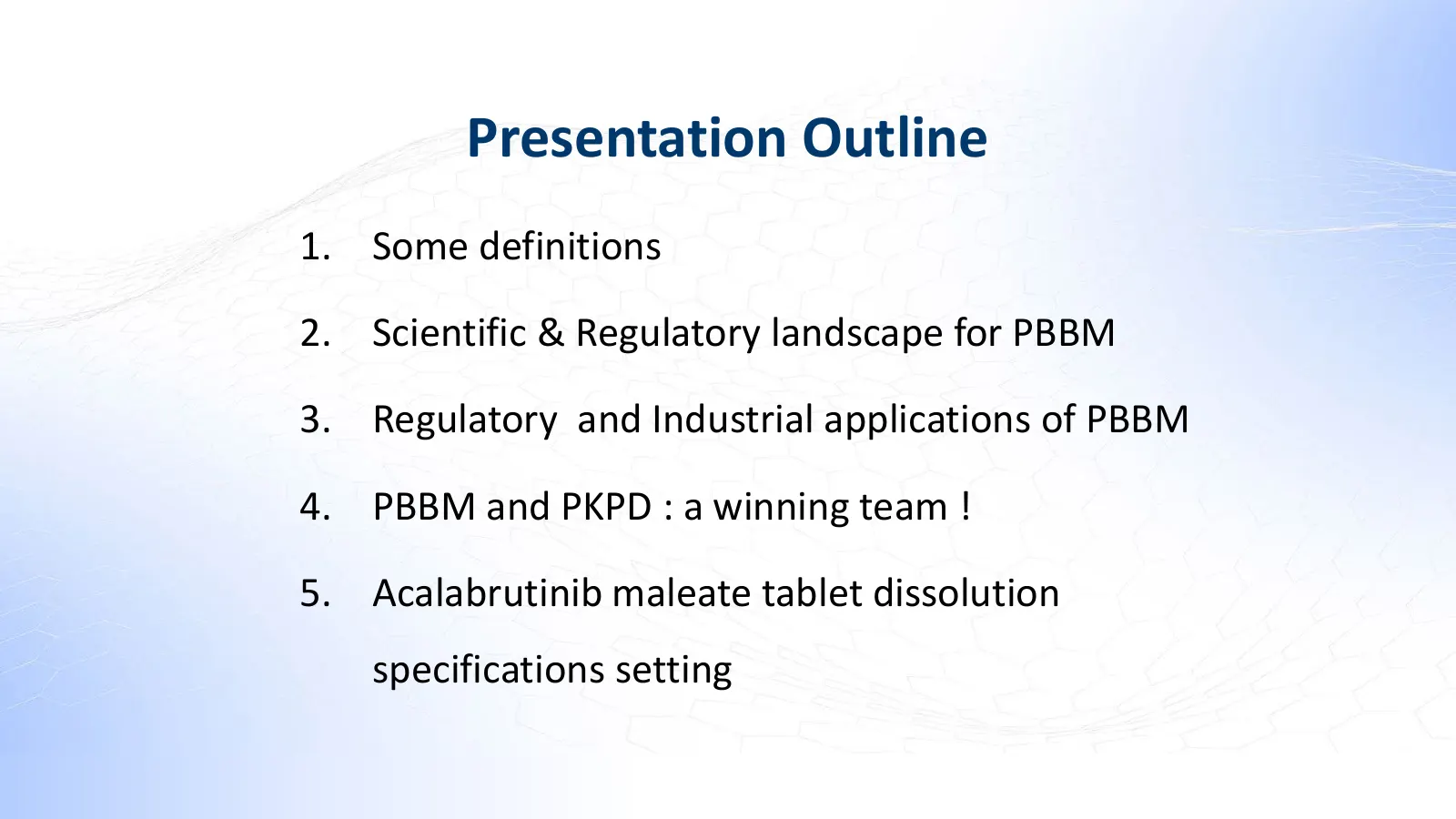
Slide 2: Presentation Outline
Presentation Outline 1. Some definitions 2. Scientific & Regulatory landscape for PBBM 3. Regulatory and Industrial applications of PBBM 4. PBBM and PKPD : a winning team ! 5. Acalabrutinib maleate tablet dissolution specifications setting 2 NASDAQ: SLP

Slide 3: Some Definitions
1 Some Definitions
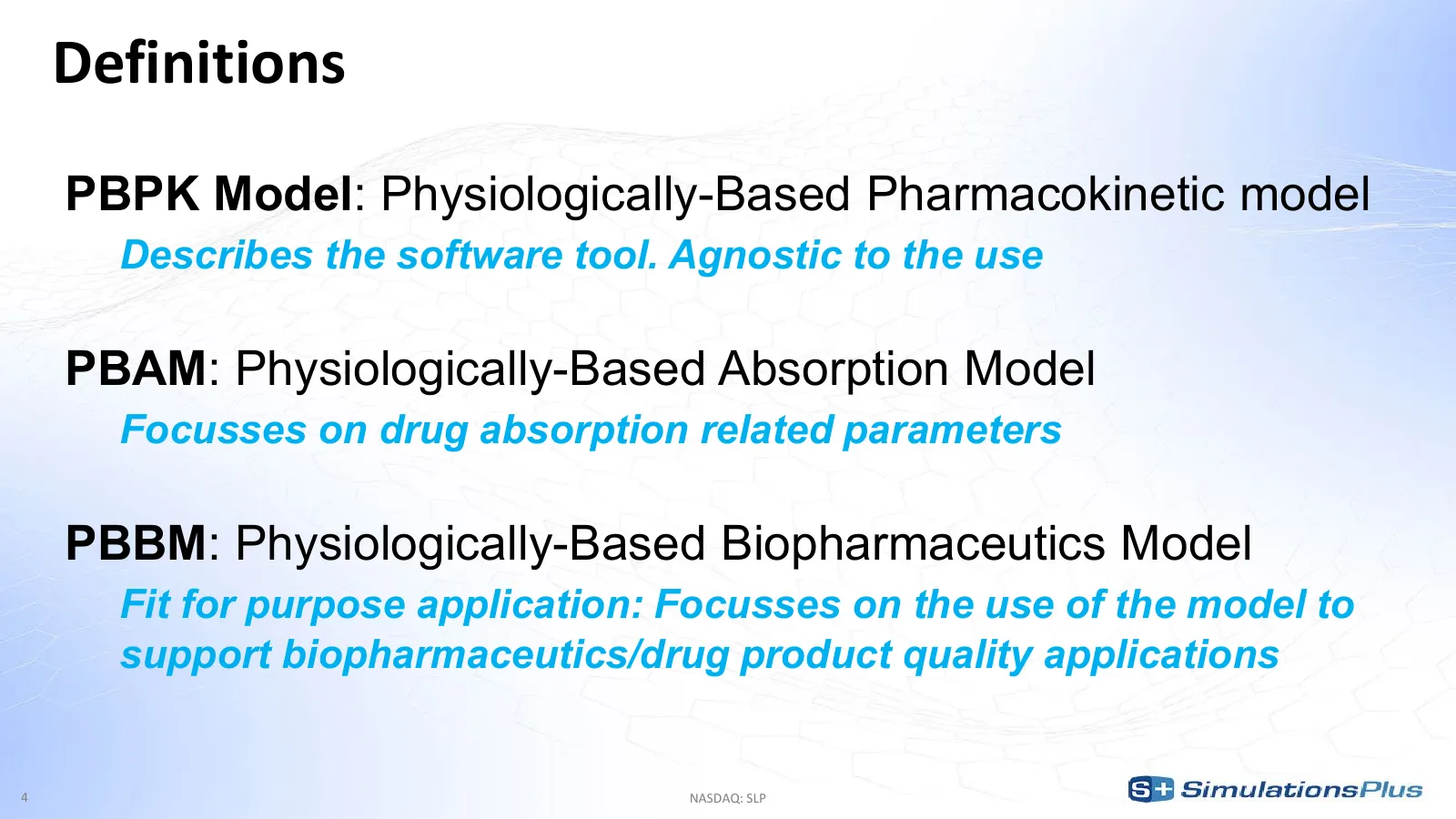
Slide 4: Definitions
Definitions PBPK Model: Physiologically-Based Pharmacokinetic model Describes the software tool. Agnostic to the use PBAM: Physiologically-Based Absorption Model Focusses on drug absorption related parameters PBBM: Physiologically-Based Biopharmaceutics Model Fit for purpose application: Focusses on
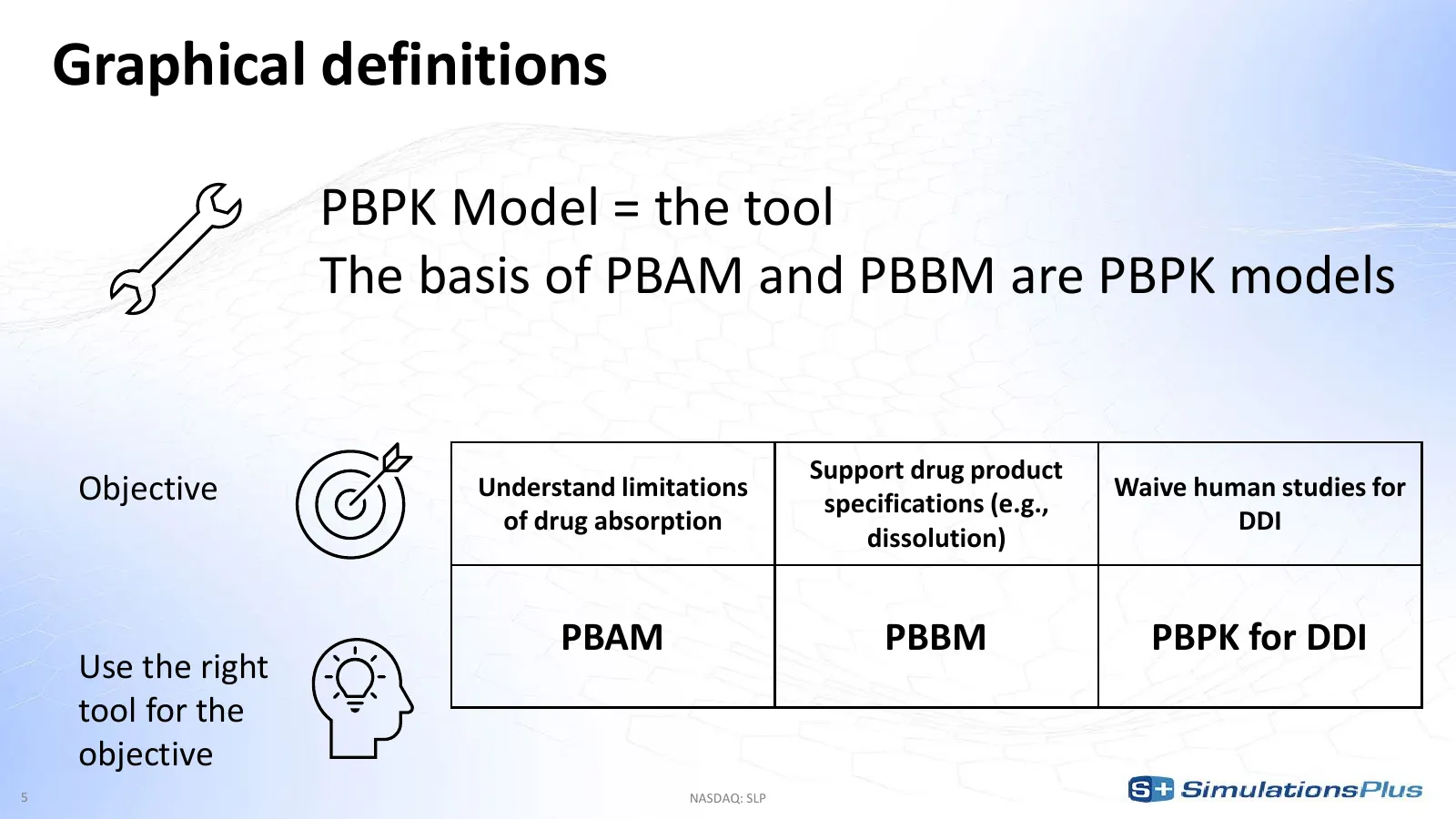
Slide 5: Graphical definitions
Graphical definitions PBPK Model = the tool The basis of PBAM and PBBM are PBPK models Support drug product Objective Understand limitations specifications (e.g., Waive human studies for of drug absorption DDI dissolution) PBAM PBBM PBPK for DDI Use the right tool for the objective 5 NASDAQ: SLP
Slide 6: The concept of safe space
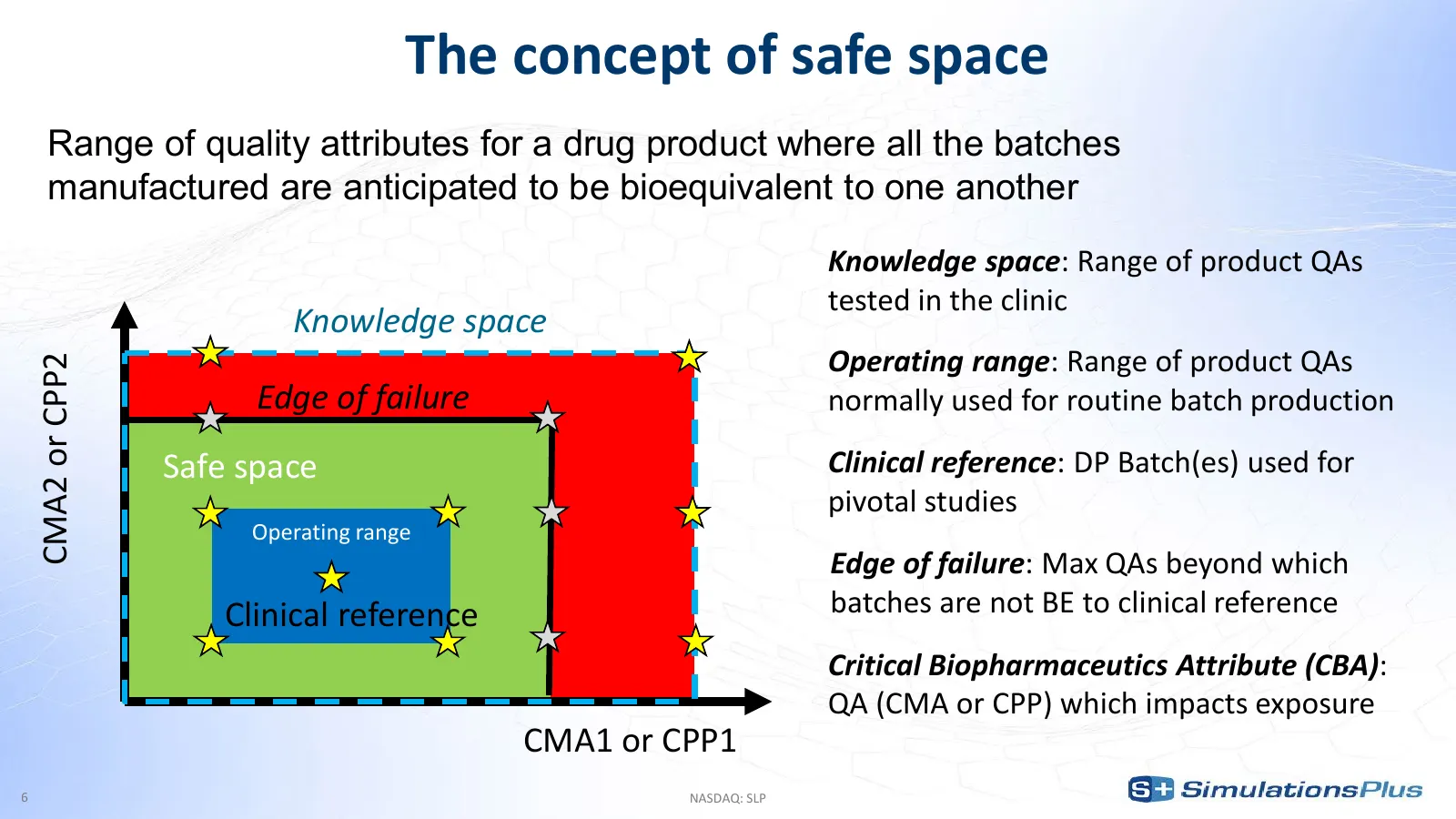
The concept of safe space Range of quality attributes for a drug product where all the batches manufactured are anticipated to be bioequivalent to one another Knowledge space: Range of product QAs tested in the clinic Knowledge space Operating range: Range of product QAs CMA2 or CPP2 Edge of failure
Slide 7: Dissolution methods
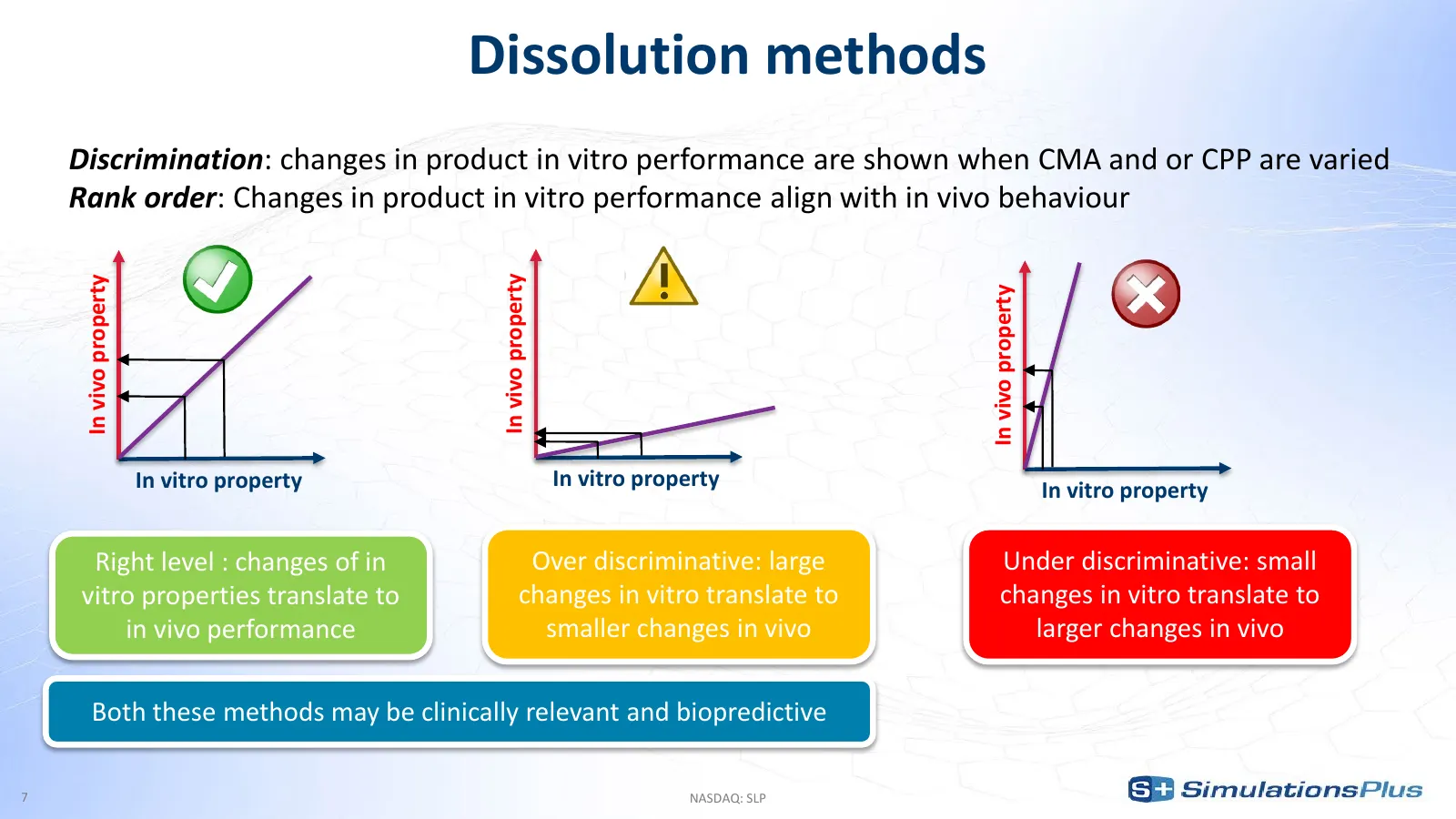
Dissolution methods Discrimination: changes in product in vitro performance are shown when CMA and or CPP are varied Rank order: Changes in product in vitro performance align with in vivo behaviour In vivo property In vivo property In vivo property In vitro property In vitro property In vitro proper
Slide 8: Dissolution methods
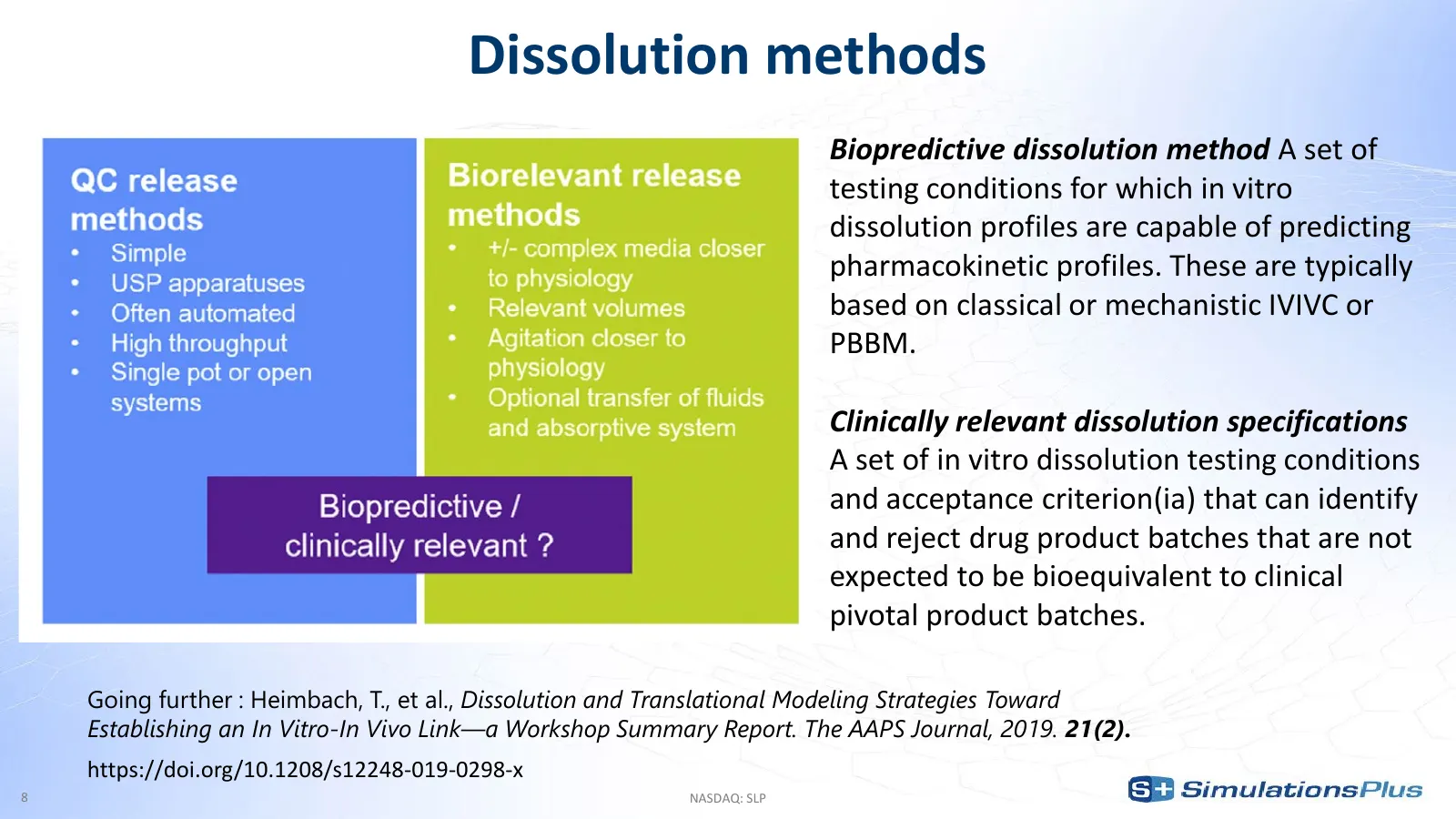
Dissolution methods Biopredictive dissolution method A set of testing conditions for which in vitro dissolution profiles are capable of predicting pharmacokinetic profiles. These are typically based on classical or mechanistic IVIVC or PBBM. Clinically relevant dissolution specifications A set of in
Slide 9: Scientific & regulatory landscape for PBBMs
2 Scientific & regulatory landscape for PBBMs
Slide 10: Scientific landscape
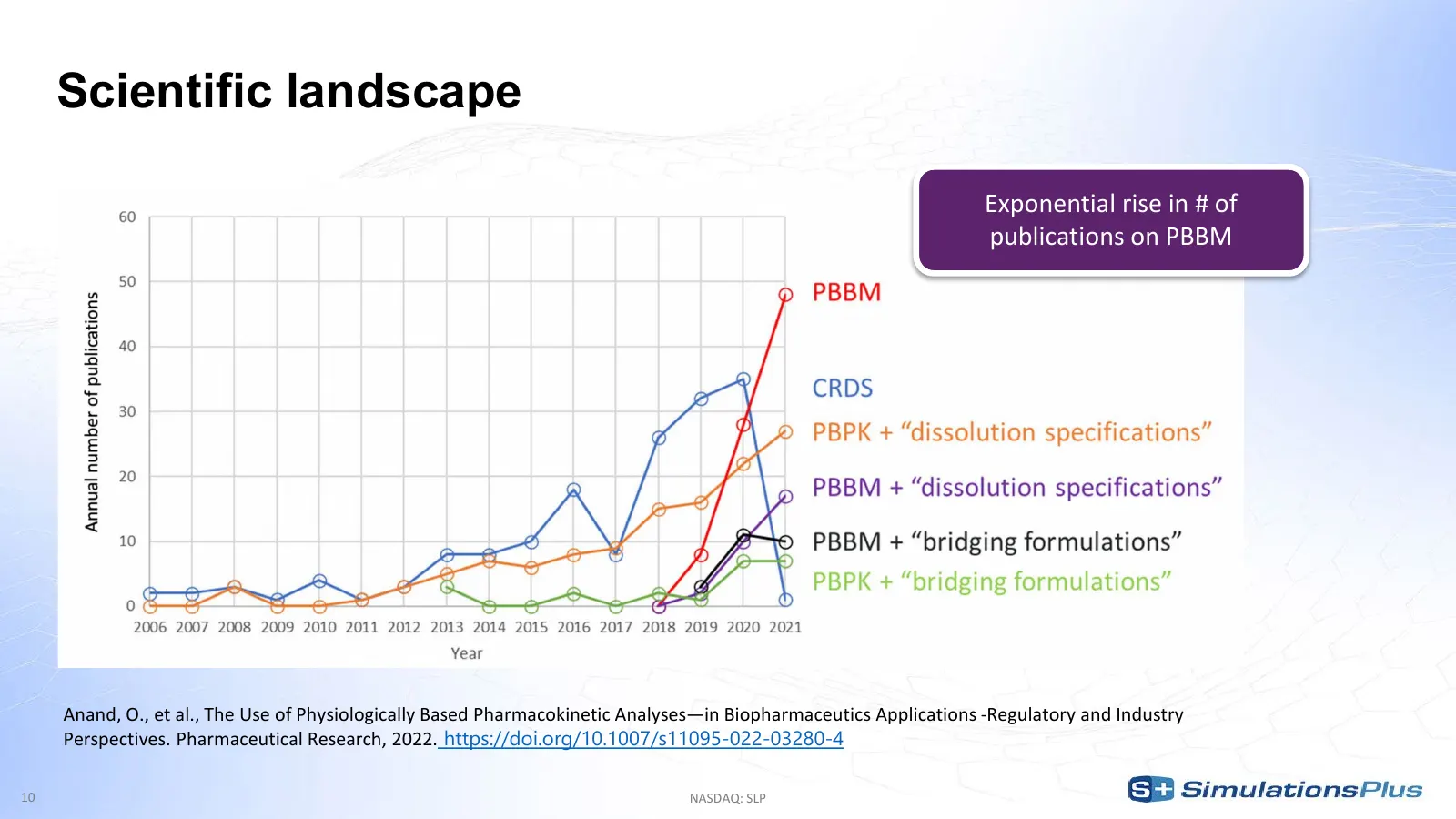
Scientific landscape Exponential rise in # of publications on PBBM Anand, O., et al., The Use of Physiologically Based Pharmacokinetic Analyses—in Biopharmaceutics Applications -Regulatory and Industry Perspectives. Pharmaceutical Research, 2022. https://doi.org/10.1007/s11095-022-03280-4 10 NASDAQ:
Slide 11: Scientific landscape
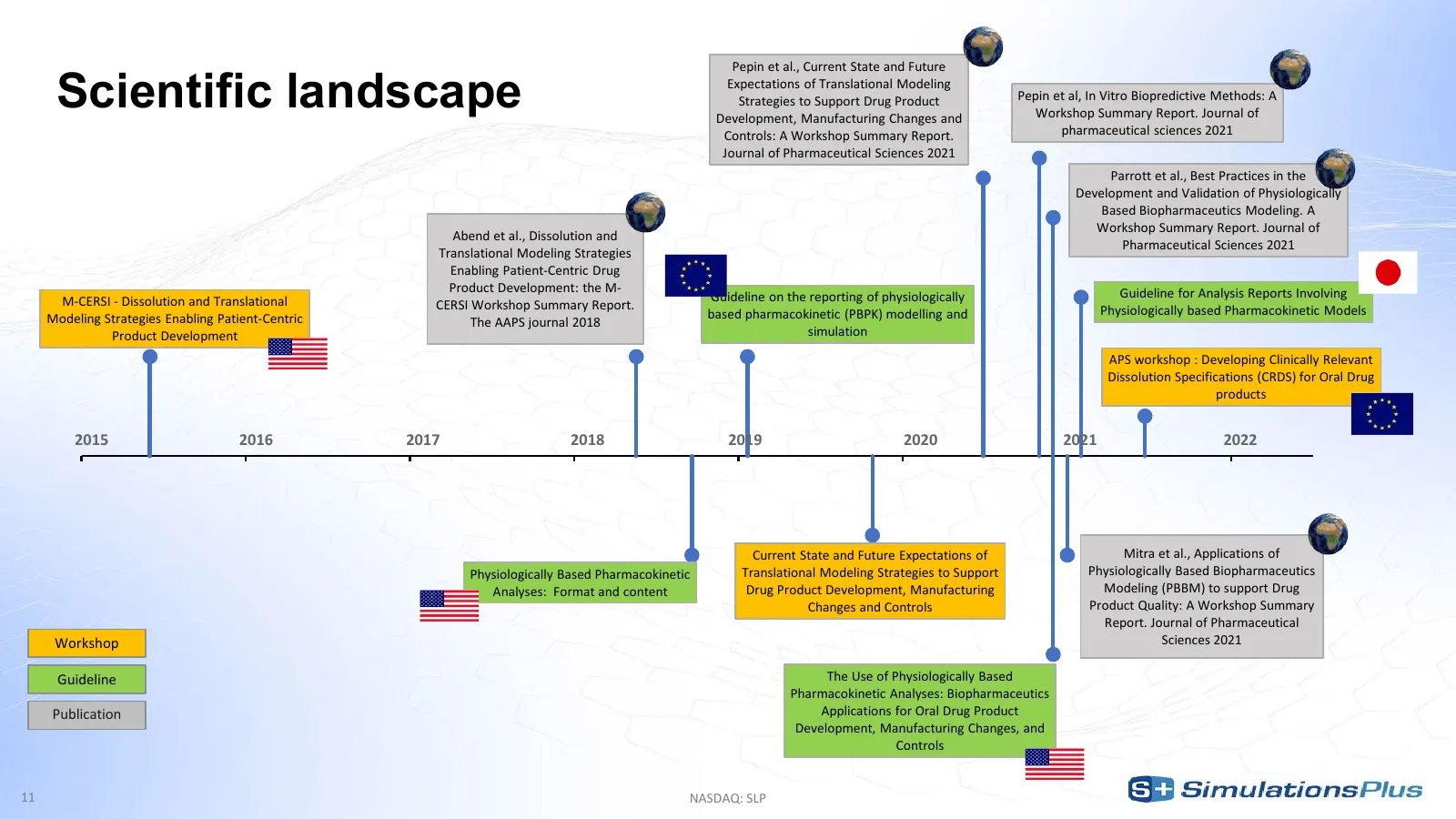
Scientific landscape Pepin et al., Current State and Future Expectations of Translational Modeling Strategies to Support Drug Product Pepin et al, In Vitro Biopredictive Methods: A Development, Manufacturing Changes and Workshop Summary Report. Journal of Controls: A Workshop Summary Report. pharmac
Slide 12: Regulatory landscape: Existing guidances
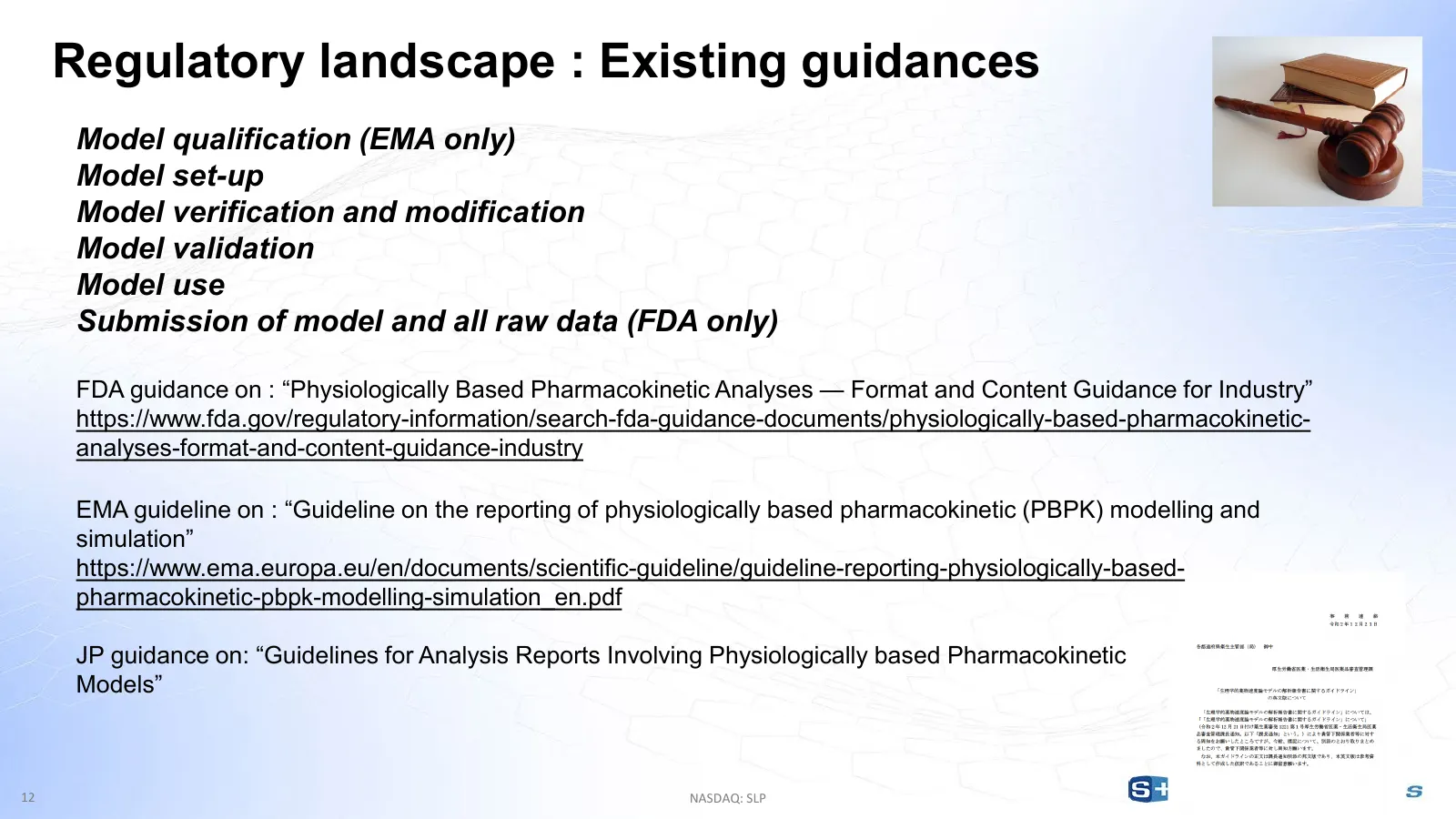
Regulatory landscape : Existing guidances Model qualification (EMA only) Model set-up Model verification and modification Model validation Model use Submission of model and all raw data (FDA only) FDA guidance on : “Physiologically Based Pharmacokinetic Analyses — Format and Content Guidance for Ind
Slide 13: Model application focussing on biopharmaceutics
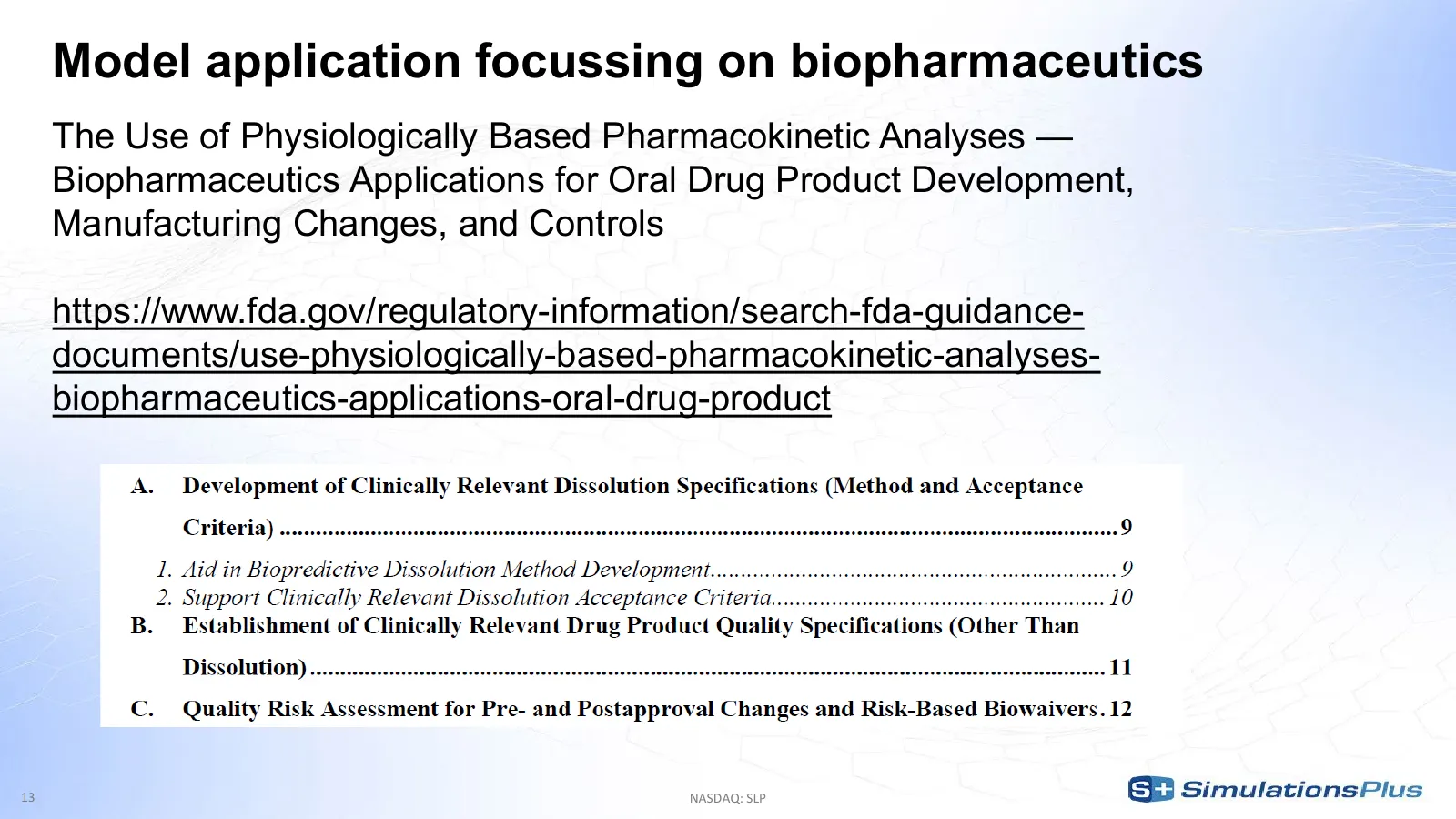
Model application focussing on biopharmaceutics The Use of Physiologically Based Pharmacokinetic Analyses — Biopharmaceutics Applications for Oral Drug Product Development, Manufacturing Changes, and Controls https://www.fda.gov/regulatory-information/search-fda-guidance- documents/use-physiological
Slide 14: Regulatory and industrial applications of PBBM
3 Regulatory and industrial applications of PBBM
Slide 15: Benefits of PBBM
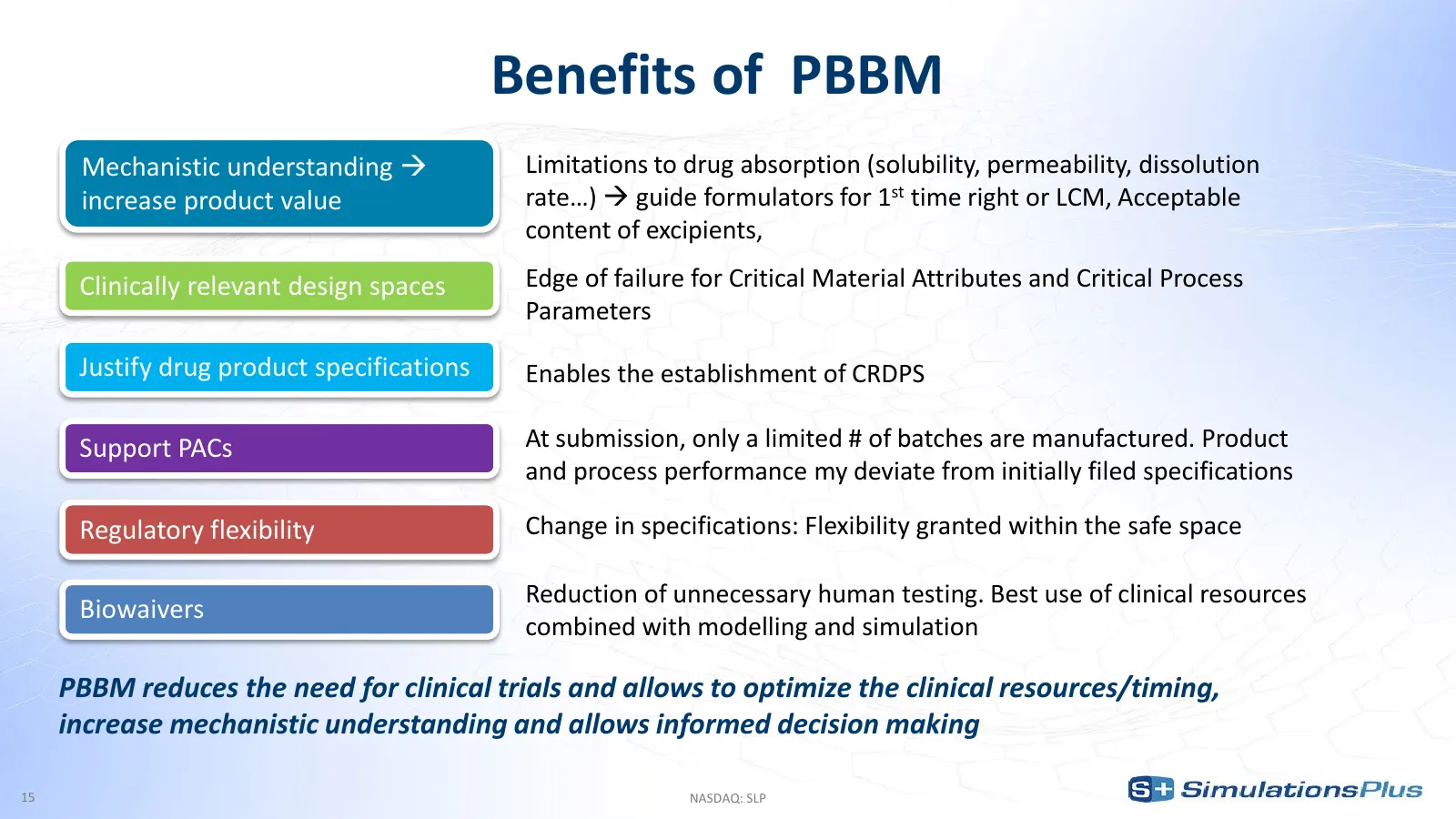
Benefits of PBBM Mechanistic understanding Limitations to drug absorption (solubility, permeability, dissolution increase product value rate…) guide formulators for 1st time right or LCM, Acceptable content of excipients, Clinically relevant design spaces Edge of failure for Critical Material At
Slide 16: Typical savings of PBBM along the value chain
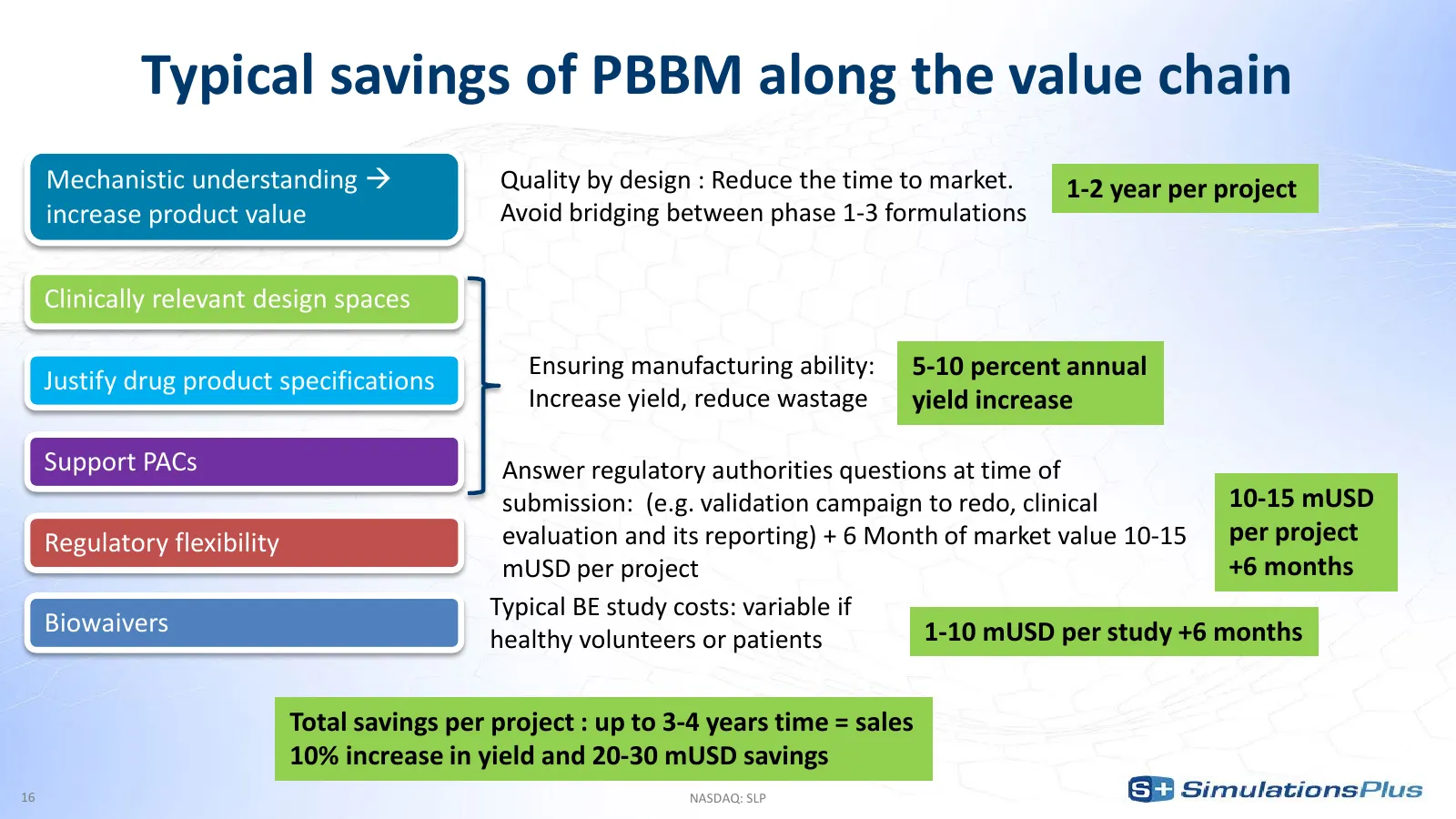
Typical savings of PBBM along the value chain Mechanistic understanding Quality by design : Reduce the time to market. 1-2 year per project increase product value Avoid bridging between phase 1-3 formulations Clinically relevant design spaces Ensuring manufacturing ability: 5-10 percent annual Jus
Slide 17: Objectives of PBBM
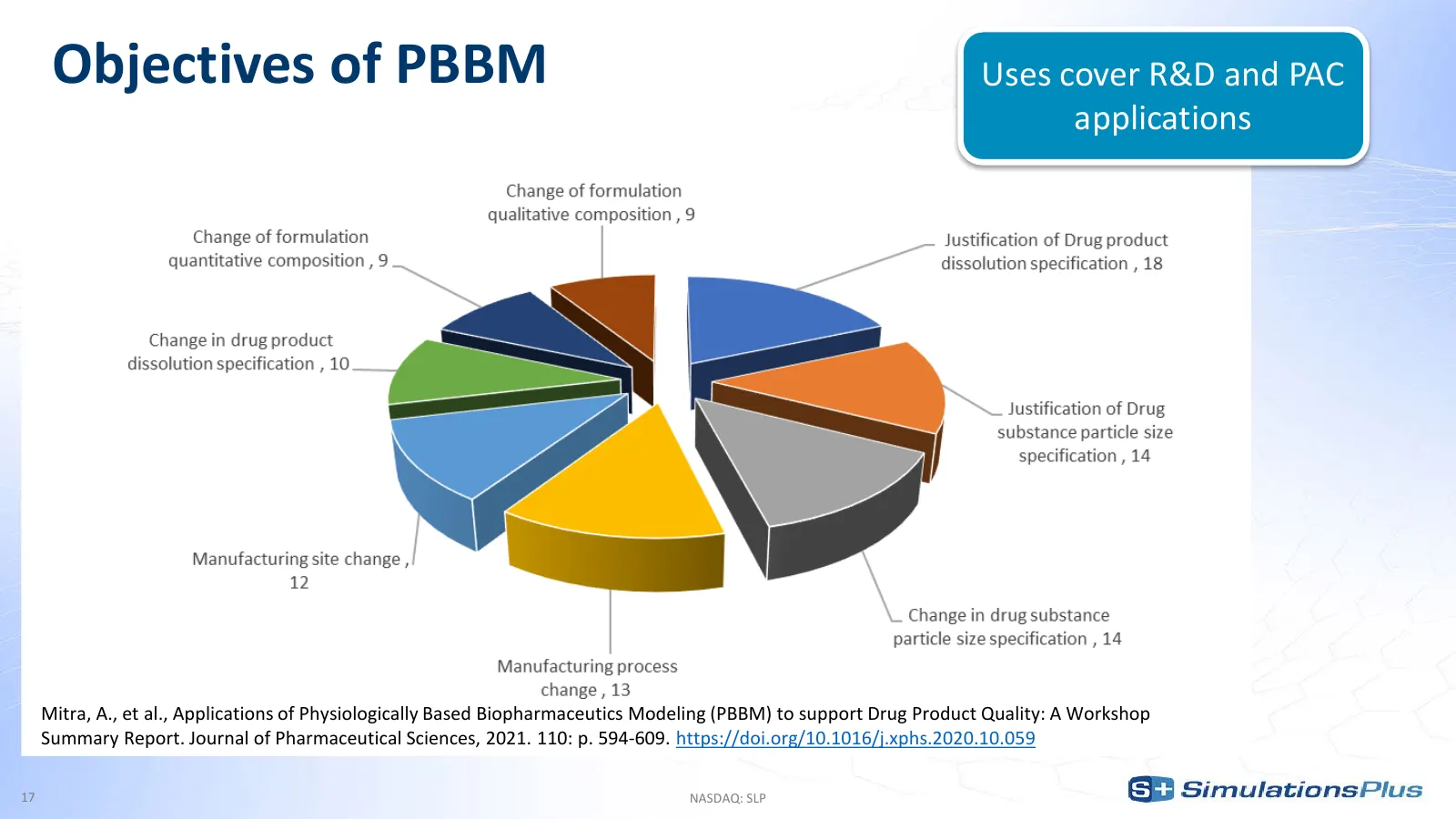
Objectives of PBBM Uses cover R&D and PAC applications Mitra, A., et al., Applications of Physiologically Based Biopharmaceutics Modeling (PBBM) to support Drug Product Quality: A Workshop Summary Report. Journal of Pharmaceutical Sciences, 2021. 110: p. 594-609. https://doi.org/10.1016/j.xphs.2020.
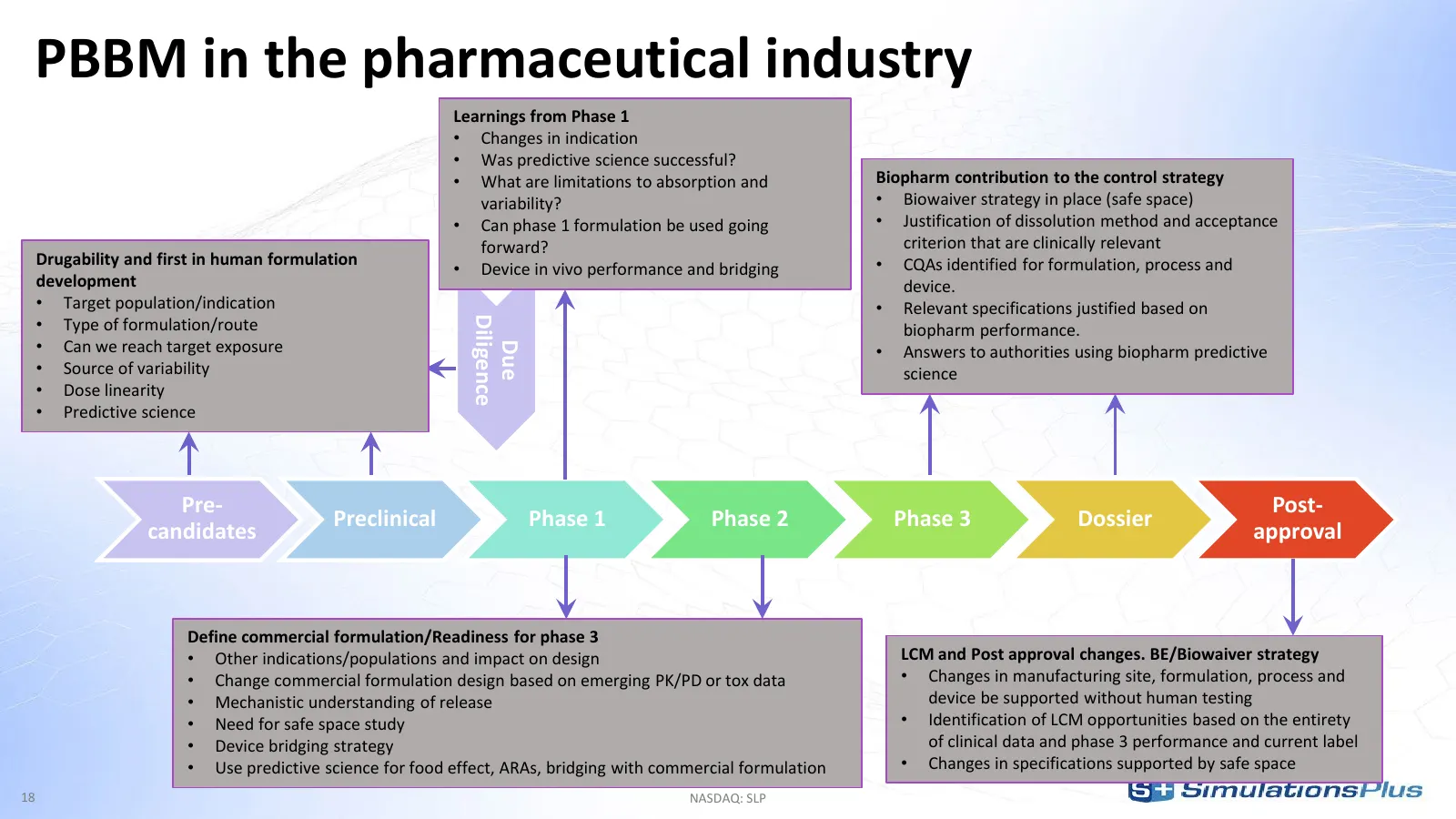
Slide 18: PBBM in the pharmaceutical industry
PBBM in the pharmaceutical industry Learnings from Phase 1 • Changes in indication • Was predictive science successful? • What are limitations to absorption and Biopharm contribution to the control strategy variability? • Biowaiver strategy in place (safe space) • Can phase 1 formulation be used goi

Slide 19: PBPK and PBBM: A winning team!
4 PBPK and PBBM: A winning team !
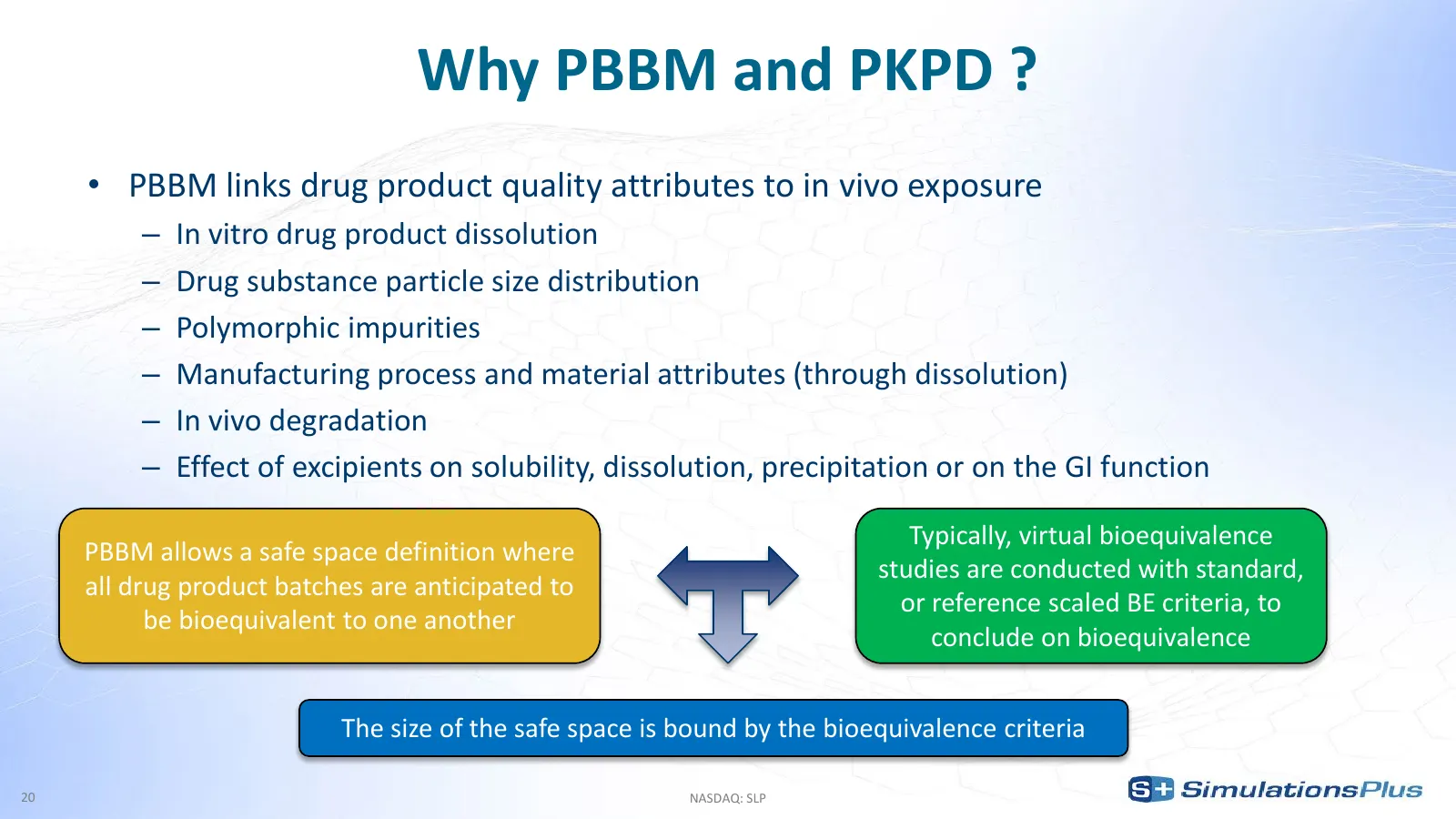
Slide 20: Why PBBM and PKPD?
Why PBBM and PKPD ? • PBBM links drug product quality attributes to in vivo exposure – In vitro drug product dissolution – Drug substance particle size distribution – Polymorphic impurities – Manufacturing process and material attributes (through dissolution) – In vivo degradation – Effect of excipi
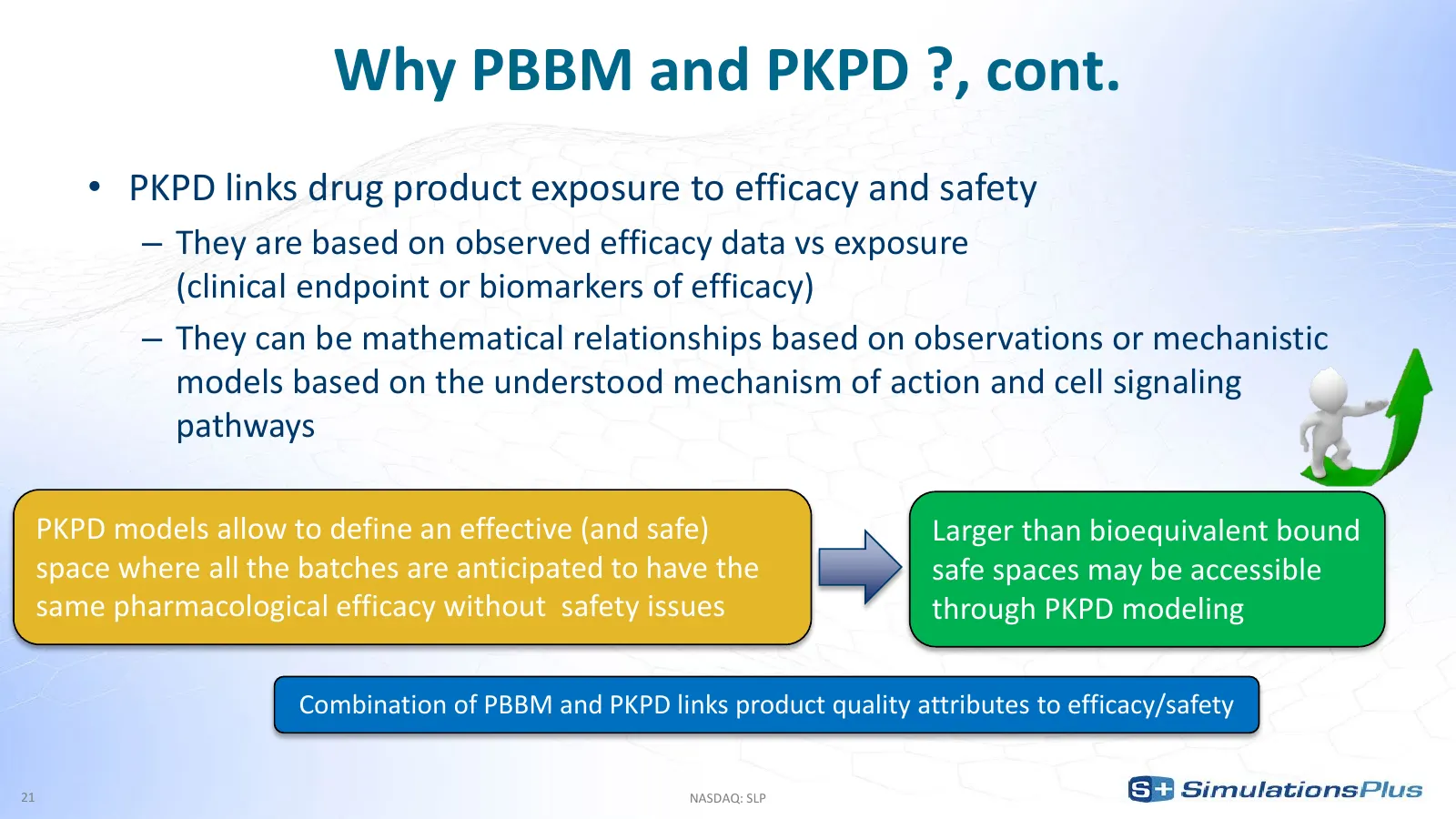
Slide 21: Why PBBM and PKPD?, cont.
Why PBBM and PKPD ?, cont. • PKPD links drug product exposure to efficacy and safety – They are based on observed efficacy data vs exposure (clinical endpoint or biomarkers of efficacy) – They can be mathematical relationships based on observations or mechanistic models based on the understood mecha
Slide 22: Acalabrutinib maleate tablets: Justification of Clinically Relevant Drug Product Specifications
5 Acalabrutinib maleate tablets : Justification of Clinically Relevant Drug Product Specifications
Source: Internet Archive copy of simulations-plus.com
More decks from Simulations Plus, Inc.
 Q3 FY2026 Earnings Presentation21 slides · Jul 9, 2026
 Q2 FY2026 Earnings Presentation21 slides · Apr 9, 2026
 Q2 2026 Earnings Presentation21 slides · Apr 9, 2026
 Technical Presentation (January 2026)37 slides · Jan 22, 2026
 Q1 2026 Earnings Presentation19 slides · Jan 8, 2026
 Investor Day (2026)76 slides · 2026