Ardea Biosciences — Investor Day (April 2009)
70 slides from Ardea Biosciences's investor day presentation, Apr 20, 2009

Slide 1: Investor and Analyst Event April 20, 2009
Investor and Analyst Event April 20, 2009
Slide 2: Safe Harbor Statement
Safe Harbor Statement Statements contained in this presentation regarding matters that are not historical facts are "forward- looking statements" within the meaning of the Private Securities Litigation Reform Act of 1995. Because such statements are subject to risks and uncertainties, actual results
Slide 3: Investment Highlights
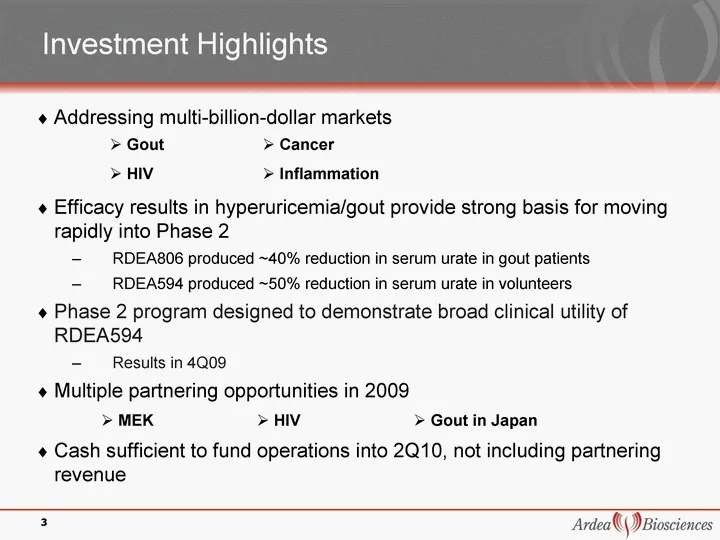
3 Investment Highlights Addressing multi-billion-dollar markets Efficacy results in hyperuricemia/gout provide strong basis for moving rapidly into Phase 2 RDEA806 produced ~40% reduction in serum urate in gout patients RDEA594 produced ~50% reduction in serum urate in volunteers Phase 2 program des
Slide 4: Five NCEs in Clinical Development for Four Indications
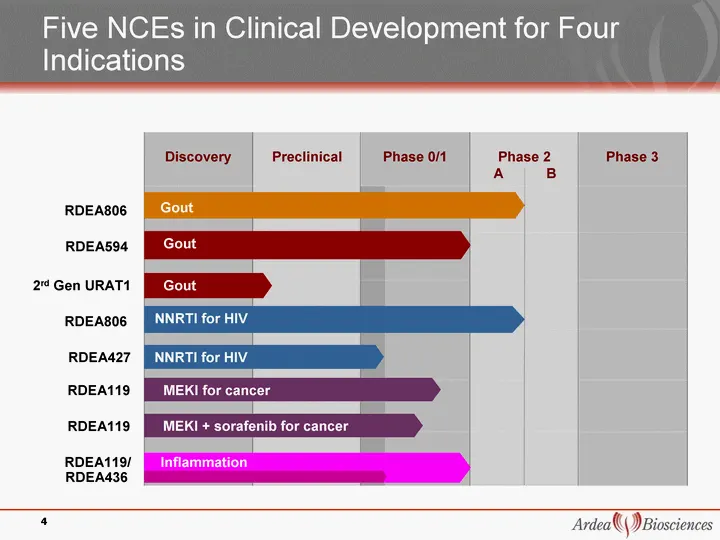
Five NCEs in Clinical Development for Four Indications RDEA806 RDEA427 RDEA806 RDEA119 RDEA119/ RDEA436 Discovery Preclinical Phase 0/1 Phase 2 A B Phase 3 NNRTI for HIV NNRTI for HIV Gout MEKI for cancer Inflammation 4 Gout RDEA594 2rd Gen URAT1 MEKI + sorafenib for cancer RDEA119 Gout
Slide 5: HIV
HIV Ardea) Biosciences
Slide 6: RDEA806 Appears to Be an Ideal Candidate for the Majority of Naive HIV Patients
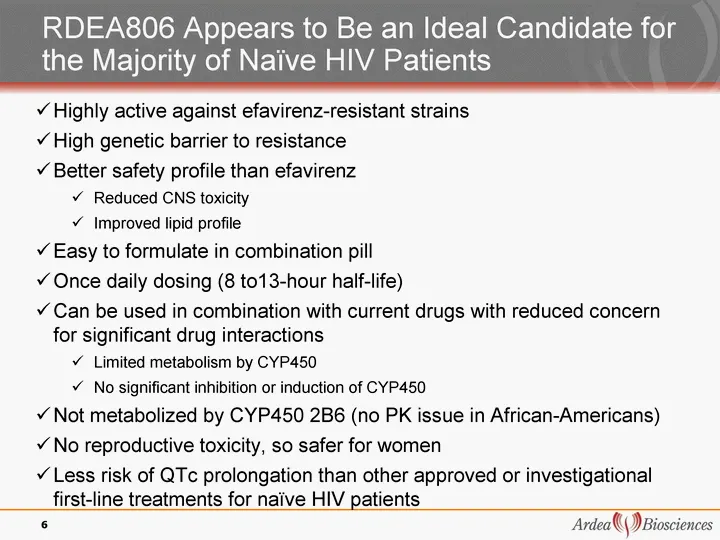
RDEA806 Appears to Be an Ideal Candidate for the Majority of Naive HIV Patients Highly active against efavirenz-resistant strains High genetic barrier to resistance Better safety profile than efavirenz Reduced CNS toxicity Improved lipid profile Easy to formulate in combination pill Once daily dosin
Slide 7: Efavirenz is Not Suited for the Majority of Naive Patients
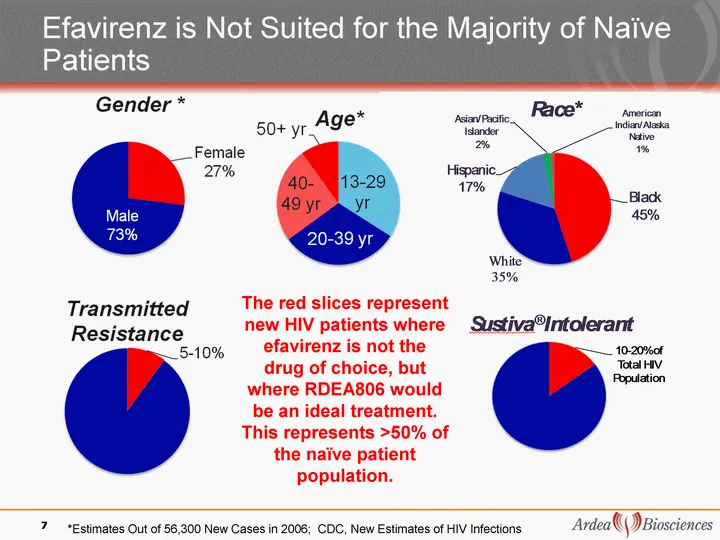
Efavirenz is Not Suited for the Majority of Naive Patients *Estimates Out of 56,300 New Cases in 2006; CDC, New Estimates of HIV Infections The red slices represent new HIV patients where efavirenz is not the drug of choice, but where RDEA806 would be an ideal treatment. This represents >50% of the
Slide 8: No Cardiovascular Signal and Good Exposure in Blacks and Women in RDEA806 TQT Study
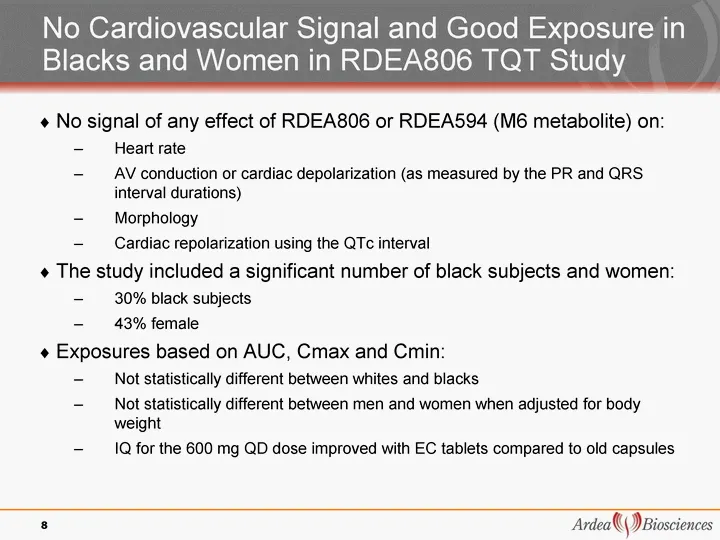
No Cardiovascular Signal and Good Exposure in Blacks and Women in RDEA806 TQT Study No signal of any effect of RDEA806 or RDEA594 (M6 metabolite) on: Heart rate AV conduction or cardiac depolarization (as measured by the PR and QRS interval durations) Morphology Cardiac repolarization using the QTc
Slide 9: ECG Intervals Prolonged with TMC278, Efavirenz and Lopinavir/ritonavir
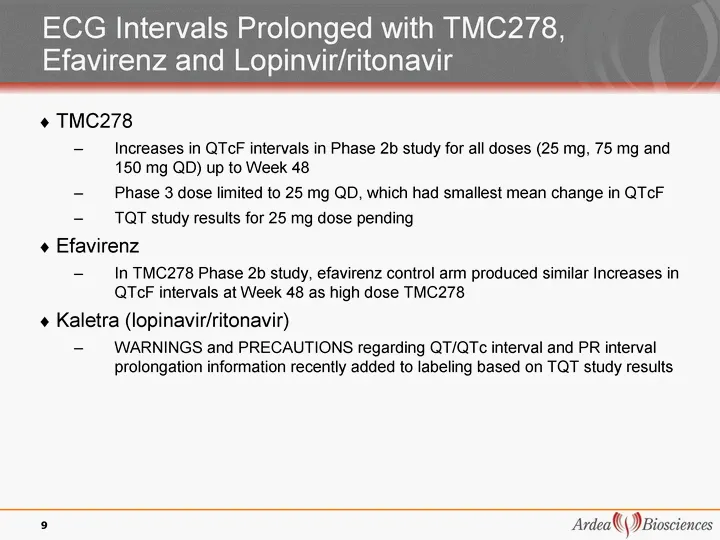
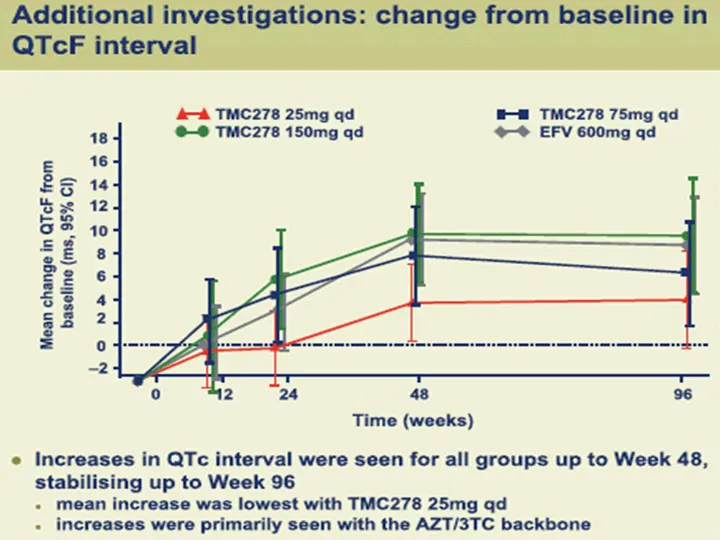
ECG Intervals Prolonged with TMC278, Efavirenz and Lopinvir/ritonavir TMC278 Increases in QTcF intervals in Phase 2b study for all doses (25 mg, 75 mg and 150 mg QD) up to Week 48 Phase 3 dose limited to 25 mg QD, which had smallest mean change in QTcF TQT study results for 25 mg dose pending Efavir
Slide 10: 4A TMC278 25mg qd mm TMC278 75mg qd © TMC278 150mg qd EFV 600mg
4A TMC278 25mg qd mm TMC278 75mg qd 18 © TMC278 150mg qd 4 EFV 600mg qd baseline (ms, 95% Cl) Mean change in QTcF from Time (weeks) e Increases in QTc interval were seen for all groups up to Week 48, stabilising up to Week 96 + mean increase was lowest with TMC278 25mg qd » increases were primarily
Slide 11: Median Change in Viral Load in Phase 2a RDEA806 Monotherapy Study in Naive HIV Patients
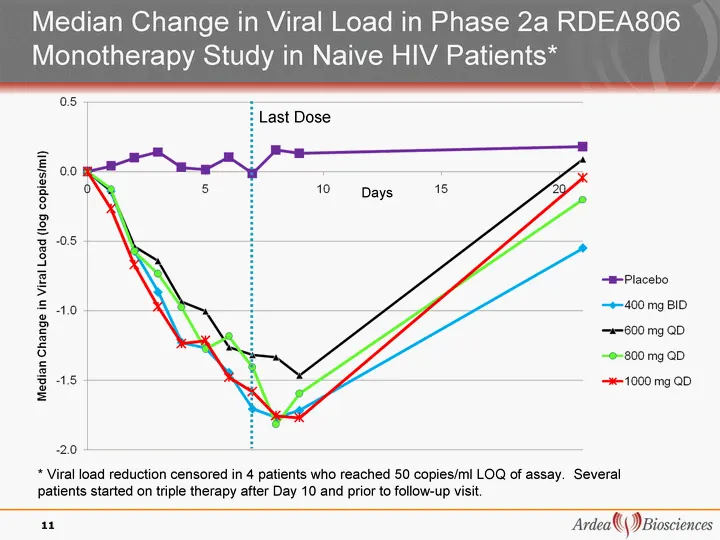
Days Median Change in Viral Load in Phase 2a RDEA806 Monotherapy Study in Naive HIV Patients* Last Dose * Viral load reduction censored in 4 patients who reached 50 copies/ml LOQ of assay. Several patients started on triple therapy after Day 10 and prior to follow-up visit. 11
Slide 12: Cancer/Inflammation
Cancer/Inflammation Ardea) Biosciences
Slide 13: Product Profile of Lead MEK Inhibitor - RDEA119
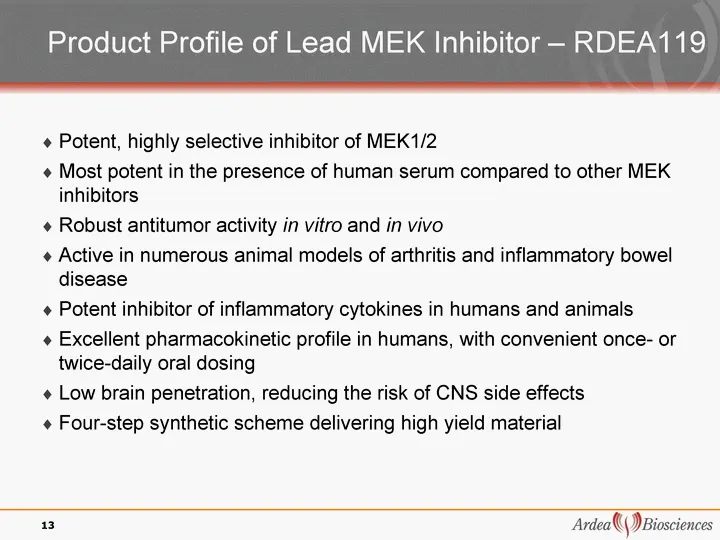
Product Profile of Lead MEK Inhibitor - RDEA119 13 Potent, highly selective inhibitor of MEK1/2 Most potent in the presence of human serum compared to other MEK inhibitors Robust antitumor activity in vitro and in vivo Active in numerous animal models of arthritis and inflammatory bowel disease Pote
Slide 14: Pancreatic MiaPaCa-2 Xenograft Study with RDEA119
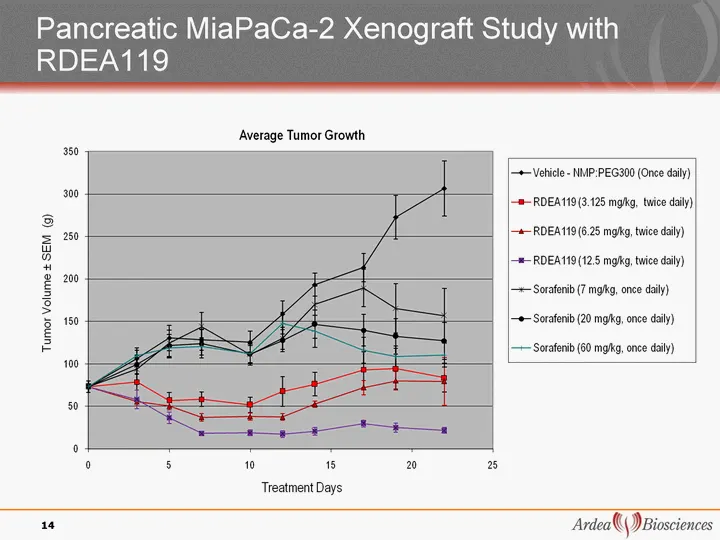
Pancreatic MiaPaCa-2 Xenograft Study with RDEA119 14
Slide 15: RDEA119 Highly Active in Hepatoma Cells That Exhibit Resistance to Sorafenib
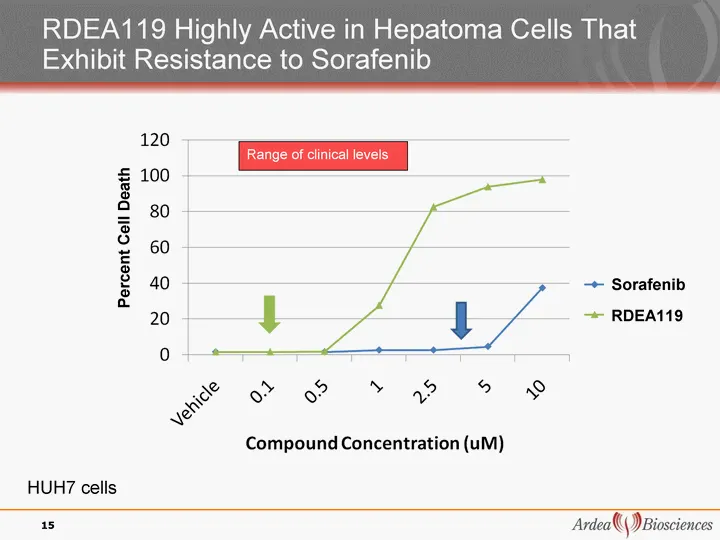
RDEA119 Highly Active in Hepatoma Cells That Exhibit Resistance to Sorafenib HUH7 cells Percent Cell Death Range of clinical levels 15 Sorafenib RDEA119
Slide 16: Sorafenib-Resistant Hepatoma Cells Show Remarkable Response to Combination Therapy
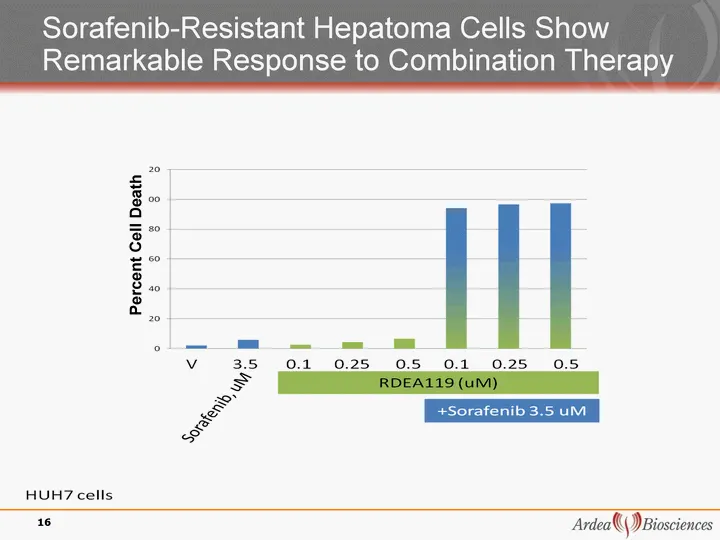
Sorafenib-Resistant Hepatoma Cells Show Remarkable Response to Combination Therapy Percent Cell Death 16
Slide 17: RDEA119 Steady-State Plasma Concentrations in Advanced Cancer Patients
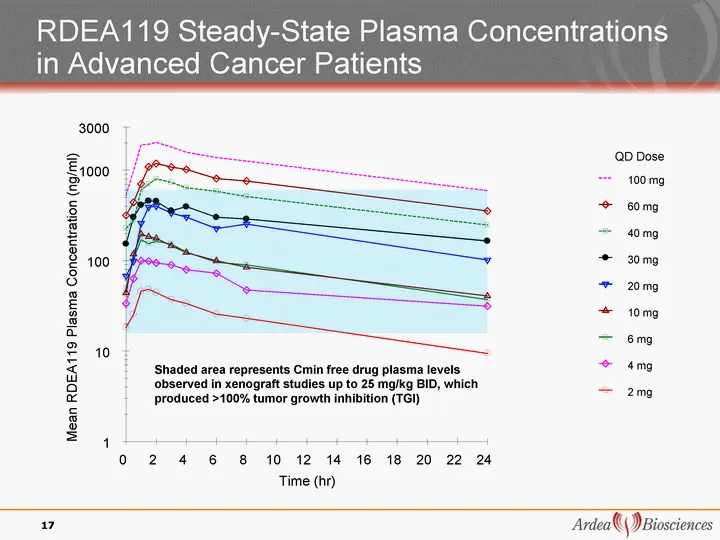
RDEA119 Steady-State Plasma Concentrations in Advanced Cancer Patients 100 mg 60 mg 40 mg 30 mg 20 mg 10 mg 6 mg 4 mg 2 mg Shaded area represents Cmin free drug plasma levels observed in xenograft studies up to 25 mg/kg BID, which produced >100% tumor growth inhibition (TGI) QD Dose 17 Mean RDEA119
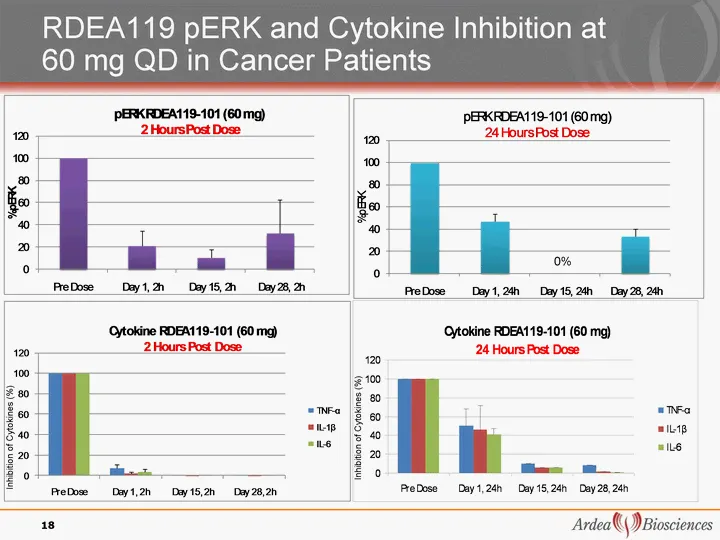
Slide 18: RDEA119 pERK and Cytokine Inhibition in Cancer Patients
RDEA119 pERK and Cytokine Inhibition at 60 mg QD in Cancer Patients 0% 18 Inhibition of Cytokines (%) Inhibition of Cytokines (%)
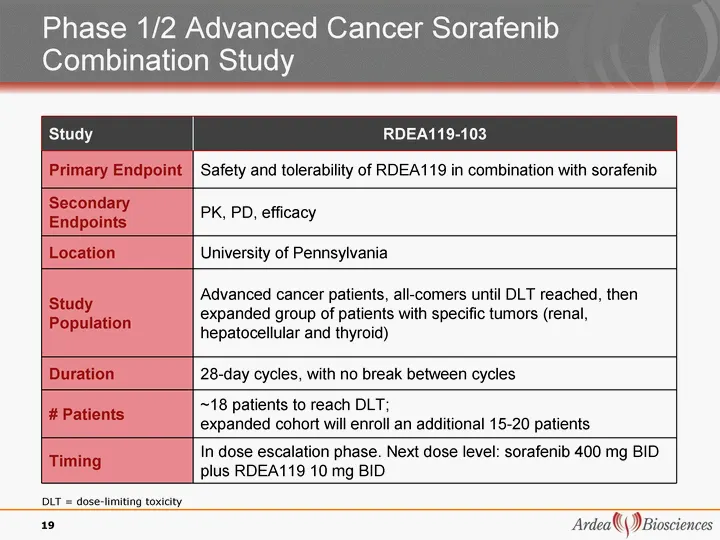
Slide 19: Phase 1/2 Advanced Cancer Sorafenib Combination Study
Study RDEA119-103 Primary Endpoint Safety and tolerability of RDEA119 in combination with sorafenib Secondary Endpoints PK, PD, efficacy Location University of Pennsylvania Study Population Advanced cancer patients, all-comers until DLT reached, then expanded group of patients with specific tumors (
Slide 20: Gout/Hyperuricemia
Gout/Hyperuricemia Ardea) Biosciences
Slide 21: Guest Speakers
Guest Speakers 21 Mark C. Genovese, MD Professor of Medicine Co-Chief of the Division of Immunology and Rheumatology Stanford University Medical Center Palo Alto, CA Fernando Perez-Ruiz, MD, PhD Assistant Head of the Rheumatology Division Hospital de Cruces Vizcaya, Spain
Slide 22: Gout: A Major Unmet Medical Need
22 Gout: A Major Unmet Medical Need Mark C. Genovese, MD
Slide 23: Gout: A Major Public Health Problem
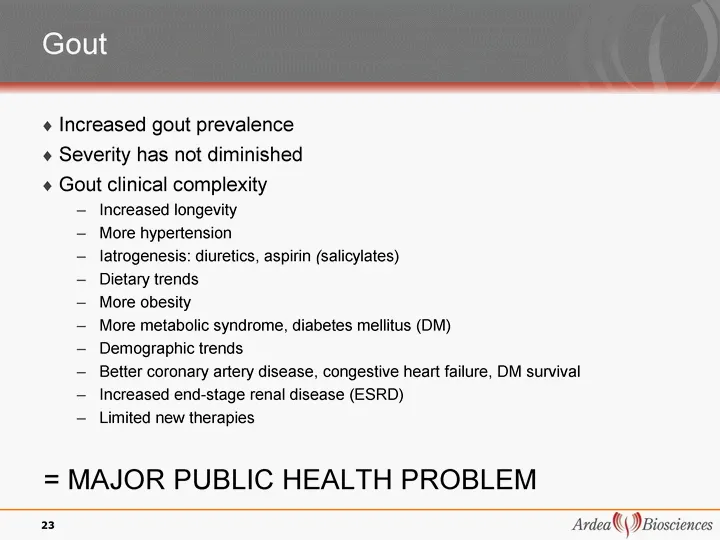
Gout Increased gout prevalence Severity has not diminished Gout clinical complexity Increased longevity More hypertension Iatrogenesis: diuretics, aspirin (salicylates) Dietary trends More obesity More metabolic syndrome, diabetes mellitus (DM) Demographic trends Better coronary artery disease, cong
Slide 24: Refractory Disease Has Not Disappeared
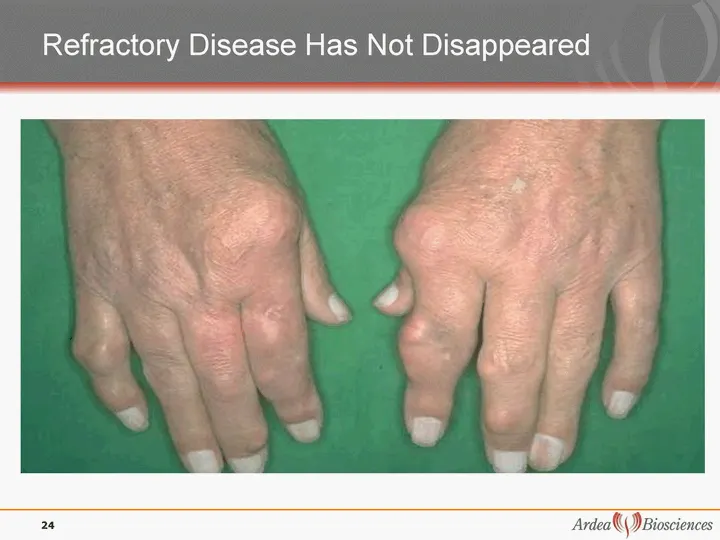
Refractory Disease Has Not Disappeared 24
Slide 25: Rising Incidence of Gout
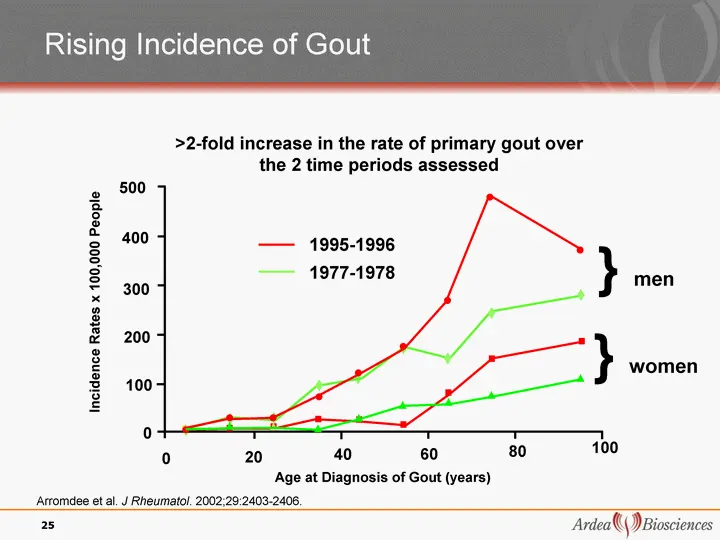
Rising Incidence of Gout Arromdee et al. J Rheumatol. 2002;29:2403-2406. Incidence Rates x 100,000 People Age at Diagnosis of Gout (years) >2-fold increase in the rate of primary gout over the 2 time periods assessed 500 400 300 200 100 0 0 20 40 60 80 100 1995-1996 1977-1978 } men } women 25
Slide 26: Increased Gout Prevalence
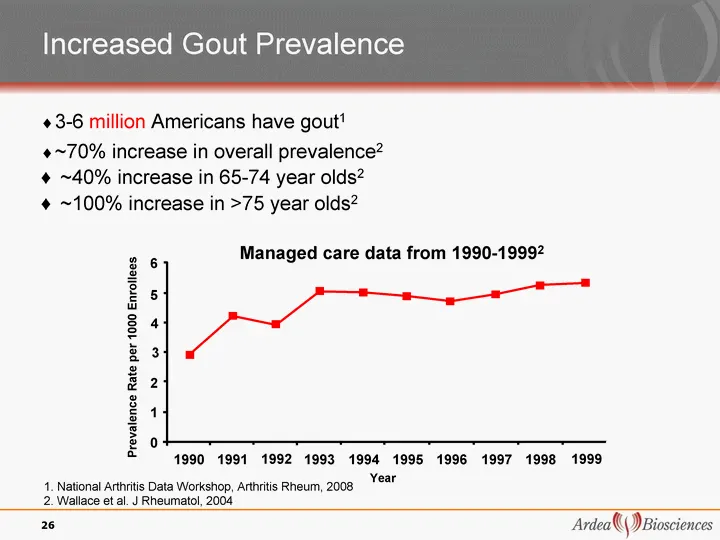
Increased Gout Prevalence 3-6 million Americans have gout1 ~70% increase in overall prevalence2 ~40% increase in 65-74 year olds2 ~100% increase in >75 year olds2 Managed care data from 1990-19992 1990 1991 1992 1993 1994 1995 1996 1997 1998 1999 Prevalence Rate per 1000 Enrollees 0 1 2 3 4 5 6 Year
Slide 27: Hyperuricemia
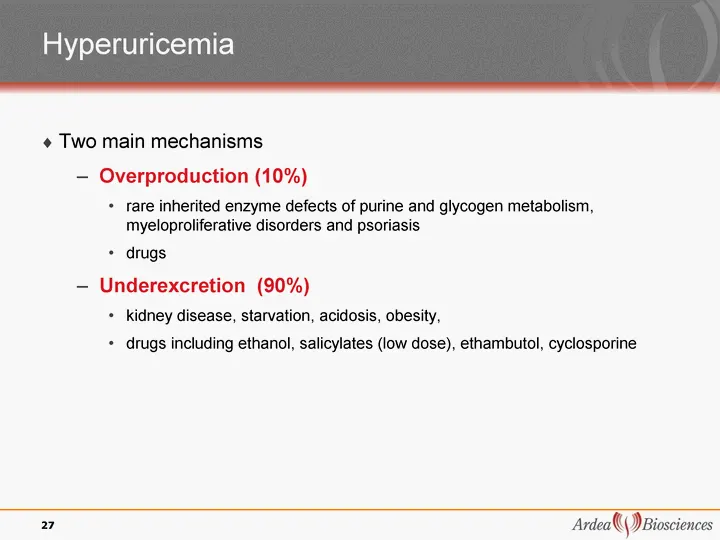
Hyperuricemia Two main mechanisms Overproduction (10%) rare inherited enzyme defects of purine and glycogen metabolism, myeloproliferative disorders and psoriasis drugs Underexcretion (90%) kidney disease, starvation, acidosis, obesity, drugs including ethanol, salicylates (low dose), ethambutol, cy
Slide 28: Uric Acid Production and Elimination
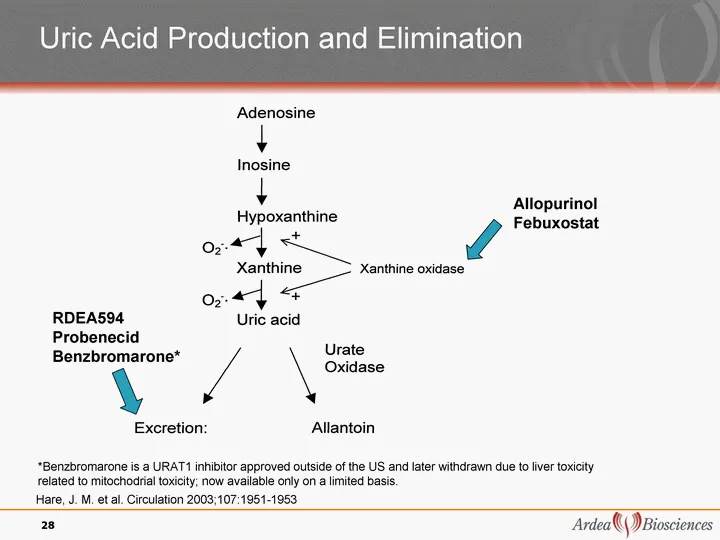
Hare, J. M. et al. Circulation 2003;107:1951-1953 Uric Acid Production and Elimination Allopurinol Febuxostat RDEA594 Probenecid Benzbromarone* 28 *Benzbromarone is a URAT1 inhibitor approved outside of the US and later withdrawn due to liver toxicity related to mitochodrial toxicity; now available
Slide 29: Current Treatment Pattern for Chronic Gout
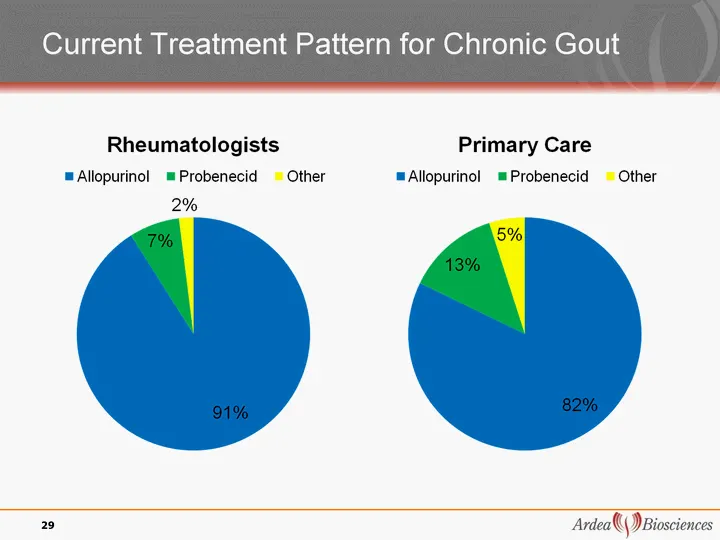
Current Treatment Pattern for Chronic Gout 29
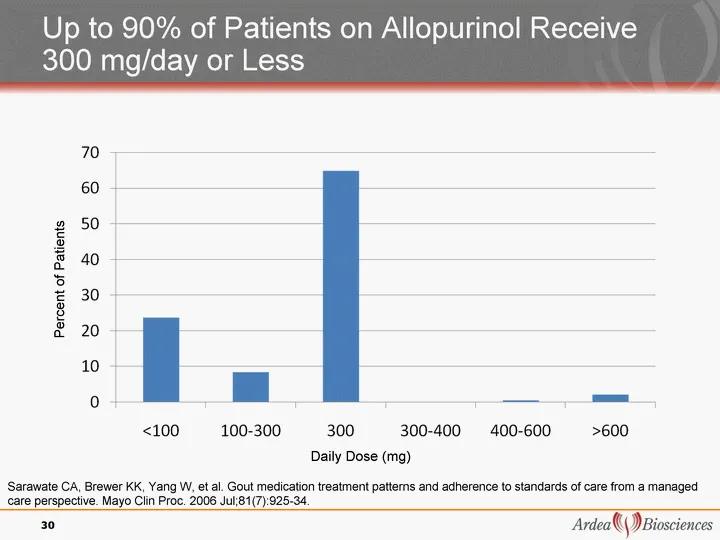
Slide 30: Up to 90% of Patients on Allopurinol Receive Low Daily Doses
Up to 90% of Patients on Allopurinol Receive 300 mg/day or Less Sarawate CA, Brewer KK, Yang W, et al. Gout medication treatment patterns and adherence to standards of care from a managed care perspective. Mayo Clin Proc. 2006 Jul;81(7):925-34. 30 Percent of Patients Daily Dose (mg)
Slide 31: Gout - Treatment with Allopurinol
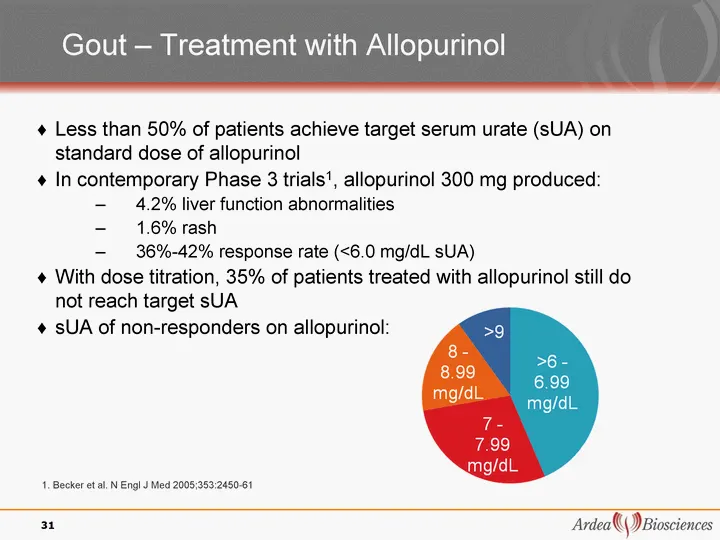
Gout - Treatment with Allopurinol Less than 50% of patients achieve target serum urate (sUA) on standard dose of allopurinol In contemporary Phase 3 trials1, allopurinol 300 mg produced: 4.2% liver function abnormalities 1.6% rash 36%-42% response rate (<6.0 mg/dL sUA) With dose titration, 35% of pa
Slide 32: Opportunities
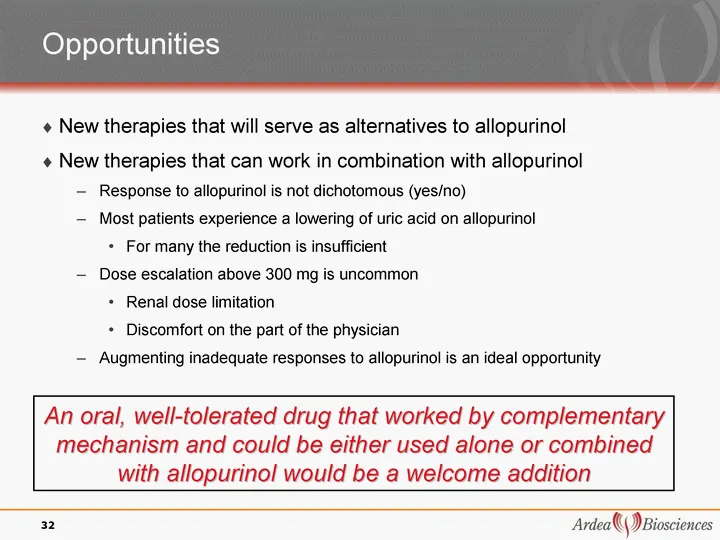
Opportunities New therapies that will serve as alternatives to allopurinol New therapies that can work in combination with allopurinol Response to allopurinol is not dichotomous (yes/no) Most patients experience a lowering of uric acid on allopurinol For many the reduction is insufficient Dose escal
Slide 33: URAT1 Transport Inhibition: The Next Breakthrough in the Treatment of Hyperuricemia/Gout?
URAT1 Transport Inhibition: The Next Breakthrough in the Treatment of Hyperuricemia/Gout? Fernando Perez-Ruiz, MD, PhD 33
Slide 34: URAT1 as a Target
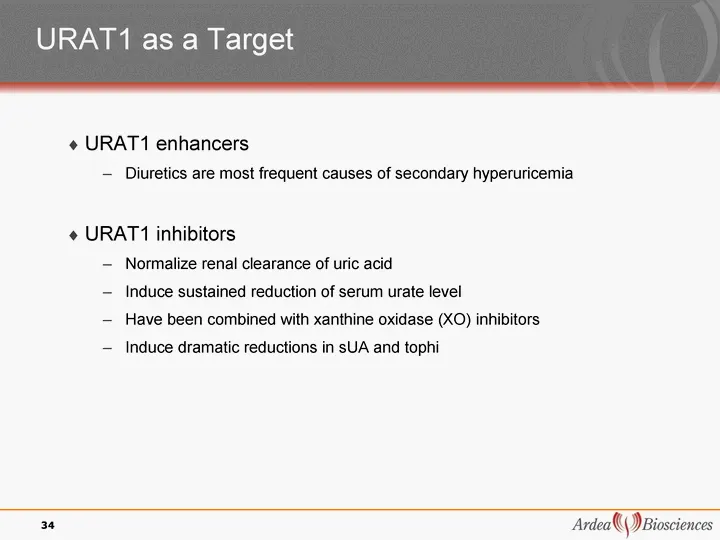
URAT1 as a Target URAT1 enhancers Diuretics are most frequent causes of secondary hyperuricemia URAT1 inhibitors Normalize renal clearance of uric acid Induce sustained reduction of serum urate level Have been combined with xanthine oxidase (XO) inhibitors Induce dramatic reductions in sUA and tophi
Slide 35: Normalized Renal Clearance of Uric Acid Induces Sustained Reduction of Serum Urate Levels
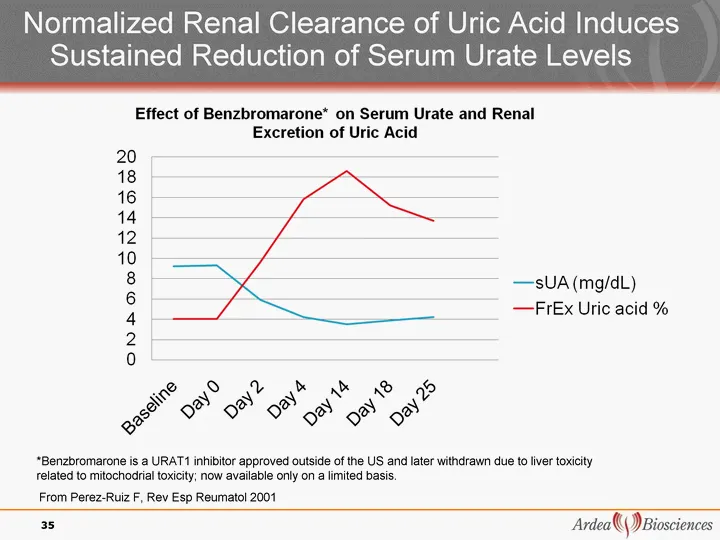
Normalized Renal Clearance of Uric Acid Induces Sustained Reduction of Serum Urate Levels 35 From Perez-Ruiz F, Rev Esp Reumatol 2001 *Benzbromarone is a URAT1 inhibitor approved outside of the US and later withdrawn due to liver toxicity related to mitochodrial toxicity; now available only on a lim
Slide 36: URAT1 Inhibitors Have Been Used with Xanthine Oxidase (XO) Inhibitors
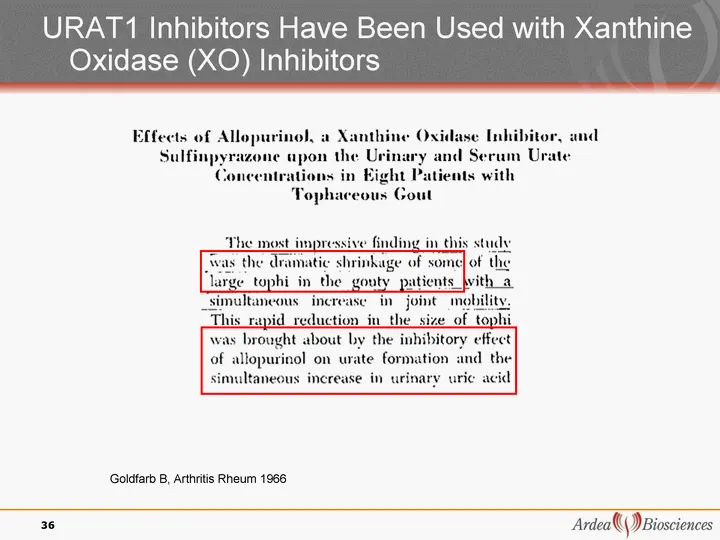
URAT1 Inhibitors Have Been Used with Xanthine Oxidase (XO) Inhibitors 36 Goldfarb B, Arthritis Rheum 1966
Slide 37: Velocity of Tophi Reduction Is Related to Activity of Urate-Lowering Therapy
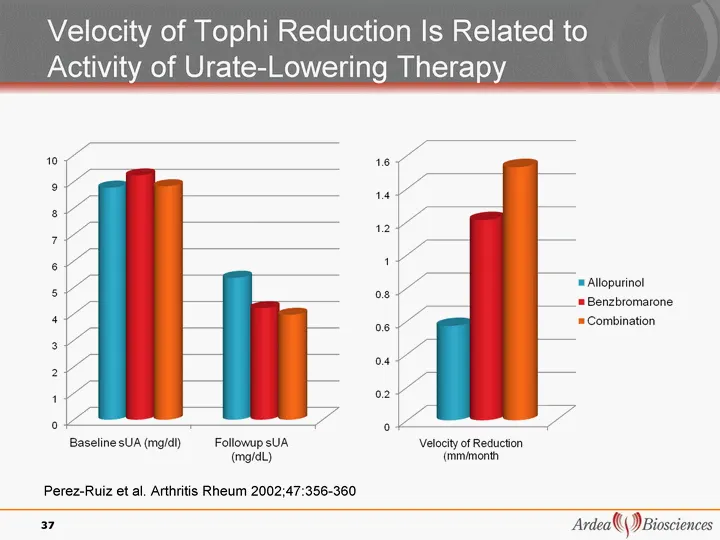
37 Velocity of Tophi Reduction Is Related to Activity of Urate-Lowering Therapy Perez-Ruiz et al. Arthritis Rheum 2002;47:356-360 Perez-Ruiz et al. Arthritis Rheum 2002;47:356-360 Perez-Ruiz et al. Arthritis Rheum 2002;47:356-360
Slide 38: Velocity of Tophi Reduction Related to Activity of Urate-Lowering Therapy
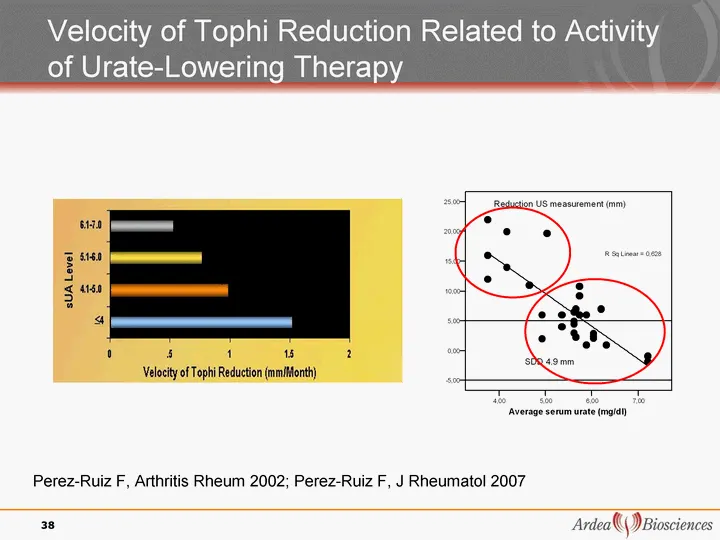
38 Velocity of Tophi Reduction Related to Activity of Urate-Lowering Therapy Perez-Ruiz F, Arthritis Rheum 2002; Perez-Ruiz F, J Rheumatol 2007
Slide 39: Combining XO inhibitors and Uricosuric Drugs
Combining XO inhibitors and Uricosuric Drugs Overproduction (normal renal excretion) XO inhibitors as first choice To reduce renal uric acid load Uricosuric to be added if necessary To achieve serum urate level target for treatment Underexcretion Uricosuric may be first choice XO inhibitor to be add
Slide 40: Risk of Lithiasis: Much Ado About Nothing
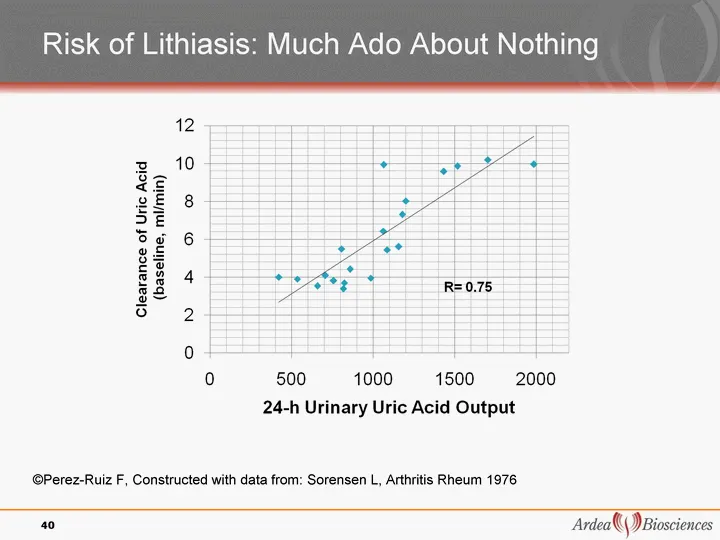
Risk of Lithiasis: Much Ado About Nothing 40 (c)Perez-Ruiz F, Constructed with data from: Sorensen L, Arthritis Rheum 1976
Slide 41: Risk of Lithiasis: Evaluating Risk Factors
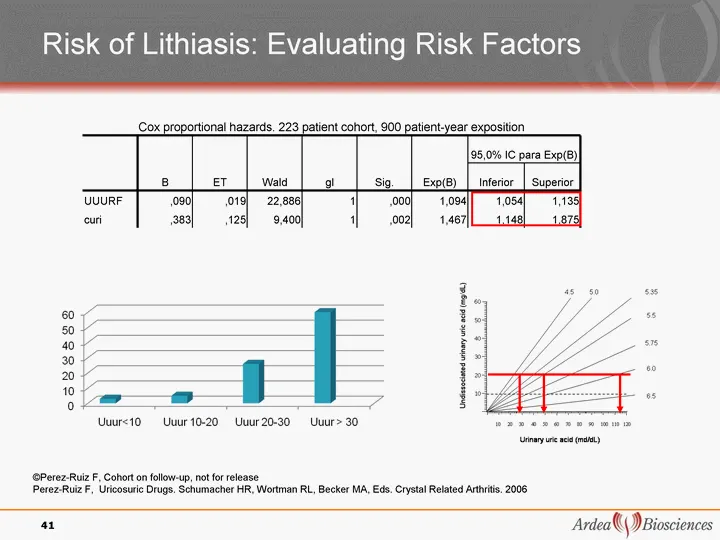
Risk of Lithiasis: Evaluating Risk Factors 41 (c)Perez-Ruiz F, Cohort on follow-up, not for release Perez-Ruiz F, Uricosuric Drugs. Schumacher HR, Wortman RL, Becker MA, Eds. Crystal Related Arthritis. 2006 Cox proportional hazards. 223 patient cohort, 900 patient-year exposition Cox proportional ha
Slide 42: RDEA594: A Novel URAT1 Transport Inhibitor with Proof-of-Concept Now Achieved
RDEA594: A Novel URAT1 Transport Inhibitor with Proof-of-Concept Now Achieved 42 Barry D. Quart, PharmD
Slide 43: Target Product Profile for Novel URAT1 Inhibitor
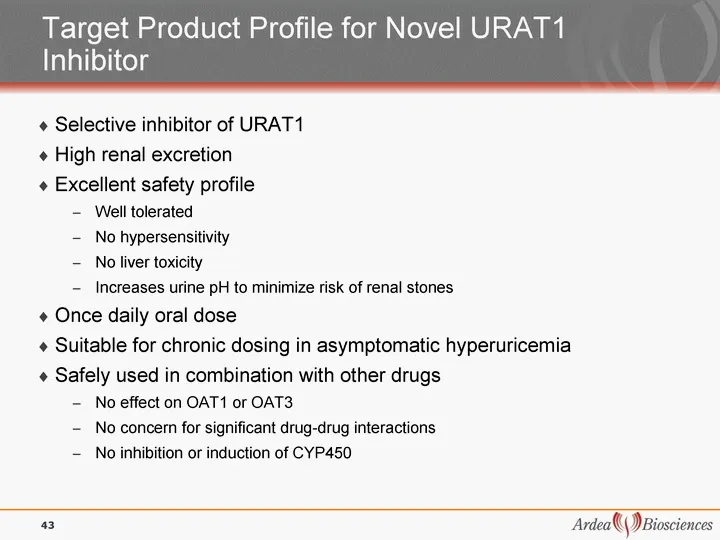
Target Product Profile for Novel URAT1 Inhibitor Selective inhibitor of URAT1 High renal excretion Excellent safety profile Well tolerated No hypersensitivity No liver toxicity Increases urine pH to minimize risk of renal stones Once daily oral dose Suitable for chronic dosing in asymptomatic hyperu
Slide 44: How It Started: Observation from RDEA806 Phase 1 Study
44 How It Started: Observation from RDEA806 Phase 1 Study
Slide 45: 37%-45% Reduction in Uric Acid Observed in RDEA806 MAD Study
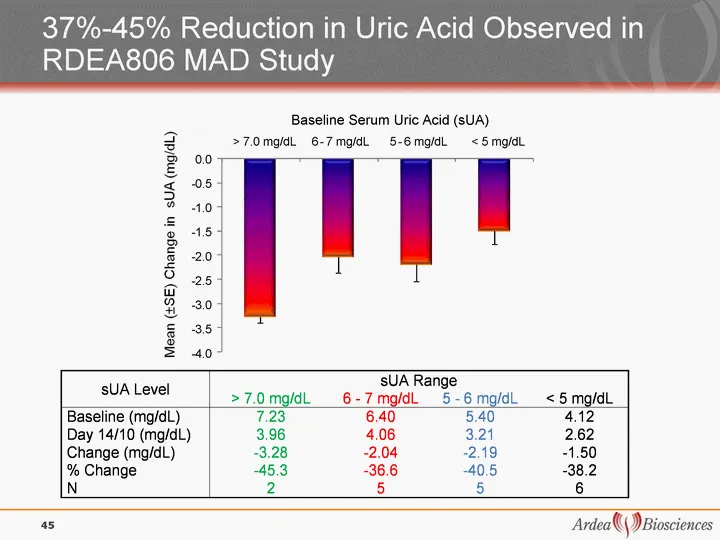
37%-45% Reduction in Uric Acid Observed in RDEA806 MAD Study Baseline Serum Uric Acid (sUA) 45 - - 4.0 - - 3.5 - - 3.0 - - 2.5 - - 2.0 - - 1.5 - - 1.0 - - 0.5 0.0 > 7.0 mg/dL 6 - - 7 mg/dL 5 - - 6 mg/dL < 5 mg/dL
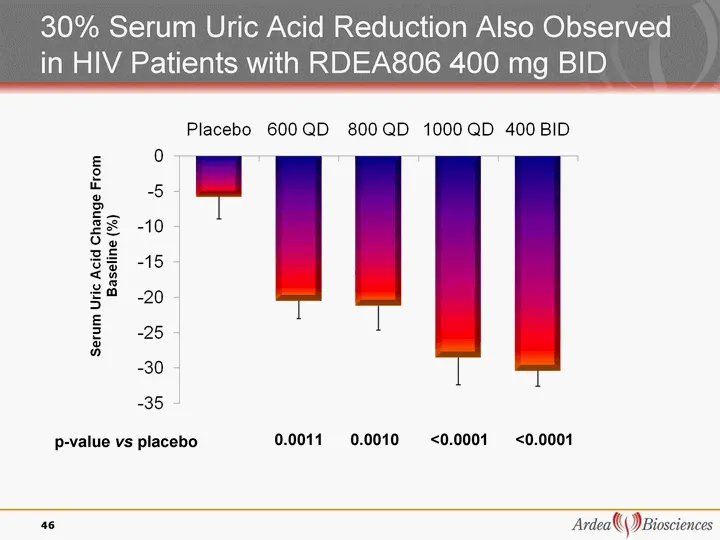
Slide 46: 30% Serum Uric Acid Reduction Also Observed in HIV Patients with RDEA806
30% Serum Uric Acid Reduction Also Observed in HIV Patients with RDEA806 400 mg BID p-value vs placebo 0.0011 0.0010 <0.0001 <0.0001 46
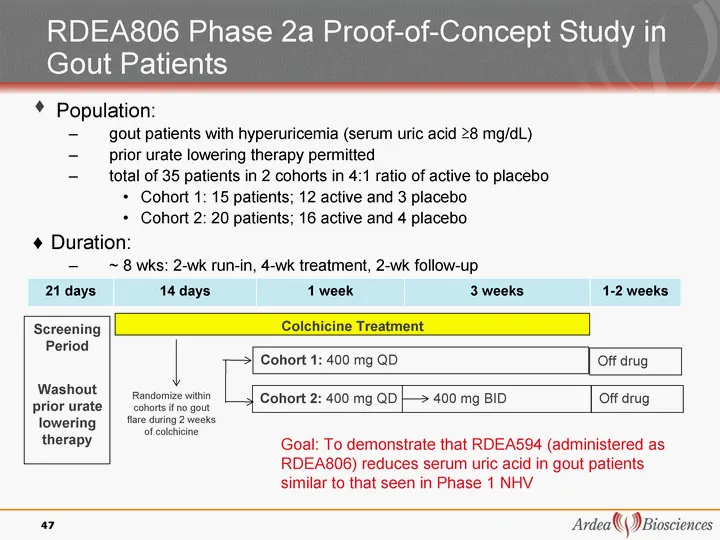
Slide 47: RDEA806 Phase 2a Proof-of-Concept Study in Gout Patients
Cohort 1: 400 mg QD RDEA806 Phase 2a Proof-of-Concept Study in Gout Patients Screening Period Washout prior urate lowering therapy Colchicine Treatment 21 days 14 days 1 week 3 weeks 1-2 weeks Population: gout patients with hyperuricemia (serum uric acid ^8 mg/dL) prior urate lowering therapy permit
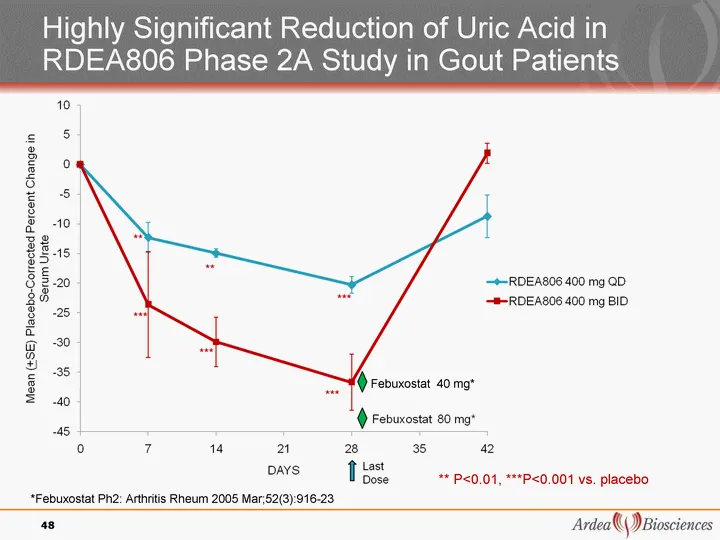
Slide 48: Highly Significant Reduction of Uric Acid in RDEA806 Phase 2a Study in Gout Patients
Highly Significant Reduction of Uric Acid in RDEA806 Phase 2A Study in Gout Patients Febuxostat 40 mg* *Febuxostat Ph2: Arthritis Rheum 2005 Mar;52(3):916-23 *** *** *** ** ** *** ** P<0.01, ***P<0.001 vs. placebo 48
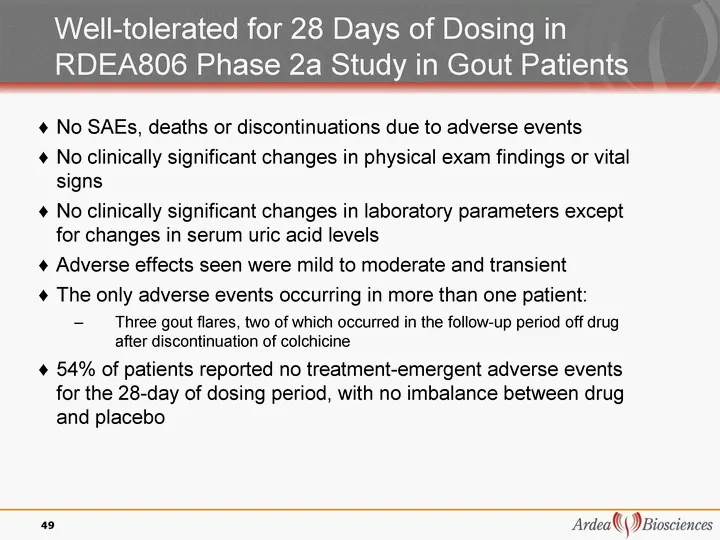
Slide 49: Well-tolerated in RDEA806 Phase 2a Study in Gout Patients
Well-tolerated for 28 Days of Dosing in RDEA806 Phase 2a Study in Gout Patients No SAEs, deaths or discontinuations due to adverse events No clinically significant changes in physical exam findings or vital signs No clinically significant changes in laboratory parameters except for changes in serum
Slide 50: The Development of RDEA594, Metabolite of RDEA806 Responsible for Uric Acid-Lowering Effects
50 The Development of RDEA594, Metabolite of RDEA806 Responsible for Uric Acid-Lowering Effects
Slide 51: RDEA594 Preclinical Background
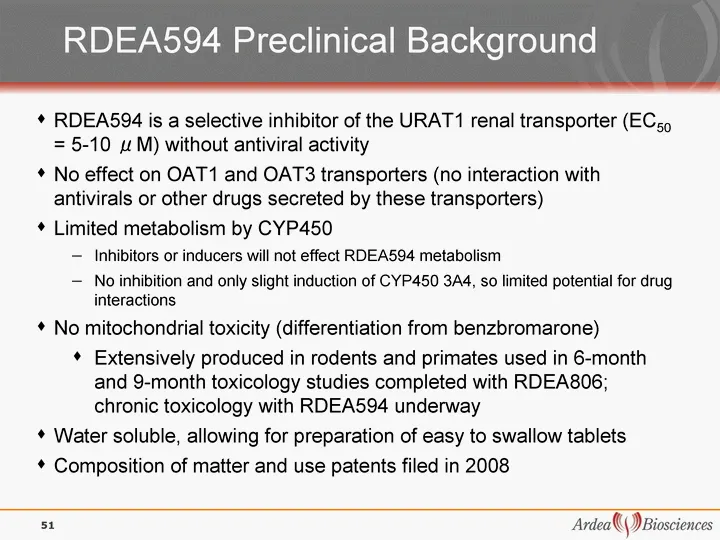
RDEA594 Preclinical Background RDEA594 is a selective inhibitor of the URAT1 renal transporter (EC50 = 5-10 ^M) without antiviral activity No effect on OAT1 and OAT3 transporters (no interaction with antivirals or other drugs secreted by these transporters) Limited metabolism by CYP450 Inhibitors or
Slide 52: RDEA594 Phase 1 Studies in Normal Healthy Volunteers
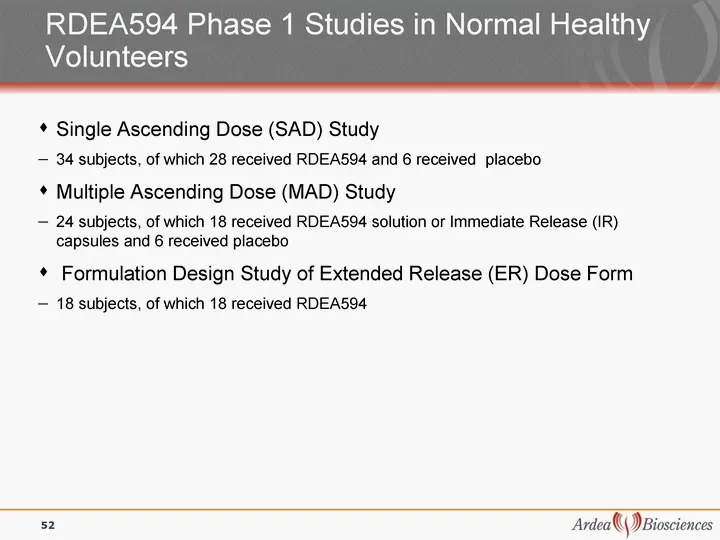
RDEA594 Phase 1 Studies in Normal Healthy Volunteers Single Ascending Dose (SAD) Study 34 subjects, of which 28 received RDEA594 and 6 received placebo Multiple Ascending Dose (MAD) Study 24 subjects, of which 18 received RDEA594 solution or Immediate Release (IR) capsules and 6 received placebo For
Slide 53: RDEA594-101 Single Ascending Dose Study Design
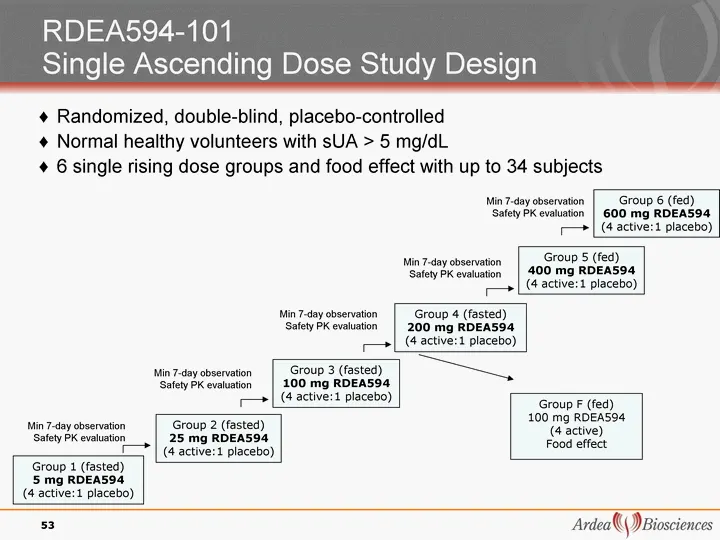
RDEA594-101 Single Ascending Dose Study Design Group 1 (fasted) 5 mg RDEA594 (4 active:1 placebo) Group 2 (fasted) 25 mg RDEA594 (4 active:1 placebo) Group 3 (fasted) 100 mg RDEA594 (4 active:1 placebo) Group 4 (fasted) 200 mg RDEA594 (4 active:1 placebo) Min 7-day observation Safety PK evaluation M
Slide 54: RDEA594 Shows Dose-Proportional Increases in AUC and Cmax Following Single Oral Doses
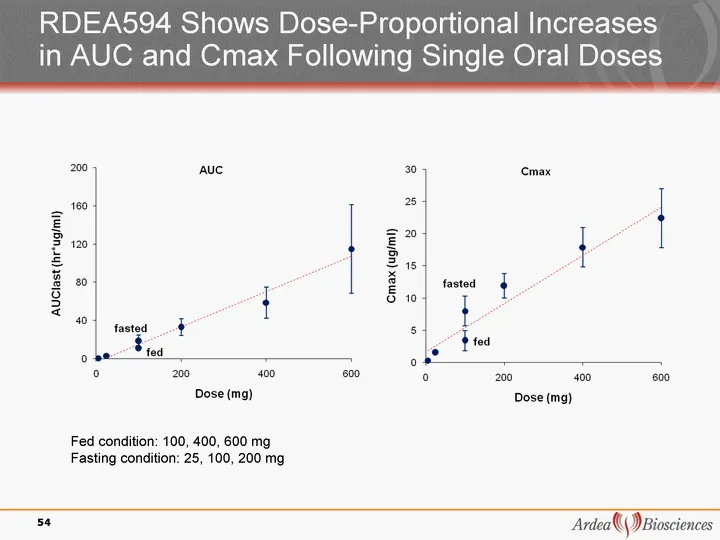
RDEA594 Shows Dose-Proportional Increases in AUC and Cmax Following Single Oral Doses 54 Fed condition: 100, 400, 600 mg Fasting condition: 25, 100, 200 mg
Slide 55: Mean Change in 24-Hour Serum Uric Acid after Single Doses of RDEA594 and Comparators
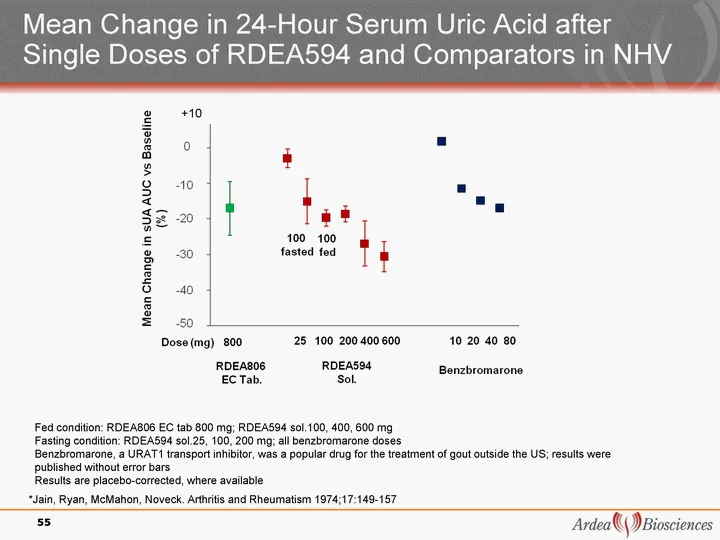
Mean Change in 24-Hour Serum Uric Acid after Single Doses of RDEA594 and Comparators in NHV Fed condition: RDEA806 EC tab 800 mg; RDEA594 sol.100, 400, 600 mg Fasting condition: RDEA594 sol.25, 100, 200 mg; all benzbromarone doses Benzbromarone, a URAT1 transport inhibitor, was a popular drug for th
Slide 56: RDEA594-101 SAD Safety Summary
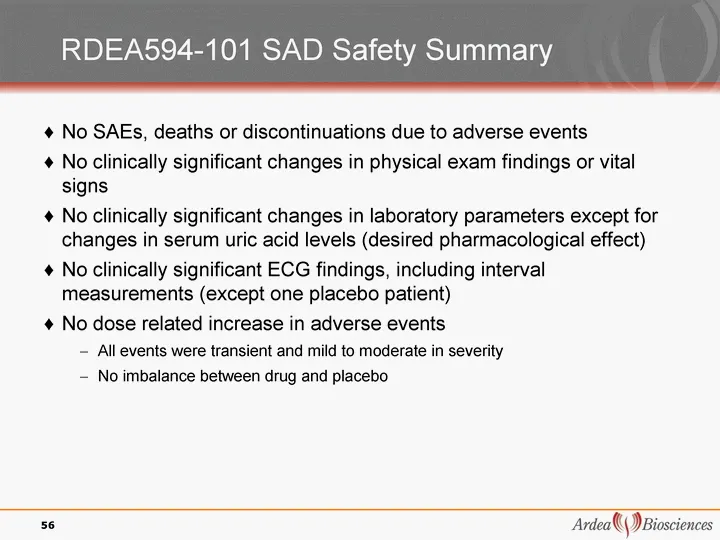
RDEA594-101 SAD Safety Summary No SAEs, deaths or discontinuations due to adverse events No clinically significant changes in physical exam findings or vital signs No clinically significant changes in laboratory parameters except for changes in serum uric acid levels (desired pharmacological effect)
Slide 57: RDEA594-102 Phase 1 Multiple Ascending Dose Study Design
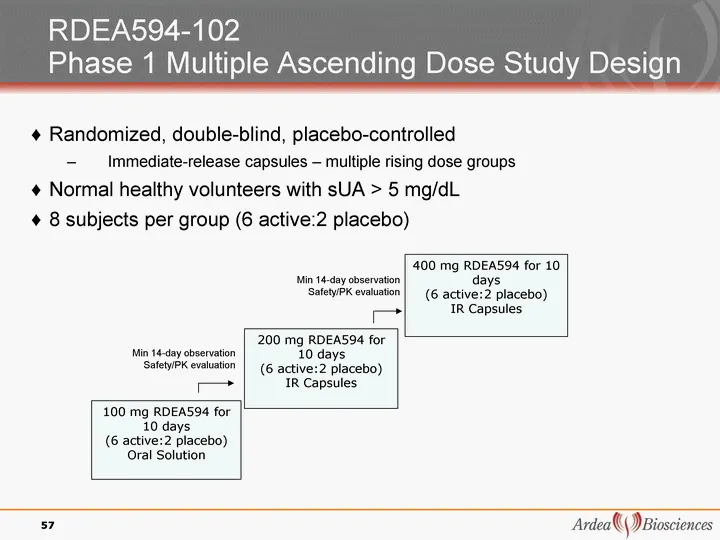
RDEA594-102 Phase 1 Multiple Ascending Dose Study Design Phase 1 Multiple Ascending Dose Study Design Phase 1 Multiple Ascending Dose Study Design Randomized, double-blind, placebo-controlled Immediate-release capsules - multiple rising dose groups Normal healthy volunteers with sUA > 5 mg/dL 8 subj
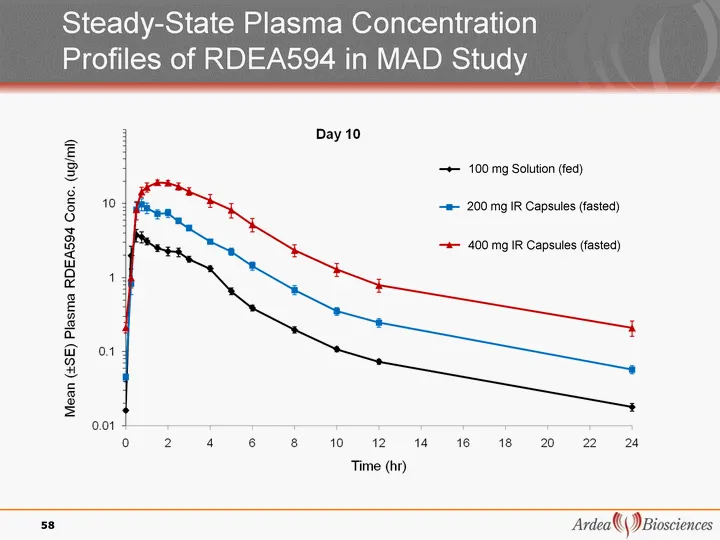
Slide 58: Steady-State Plasma Concentration Profiles of RDEA594 in MAD Study
Steady-State Plasma Concentration Profiles of RDEA594 in MAD Study 58 100 mg Solution (fed) 200 mg IR Capsules (fasted) 400 mg IR Capsules (fasted)
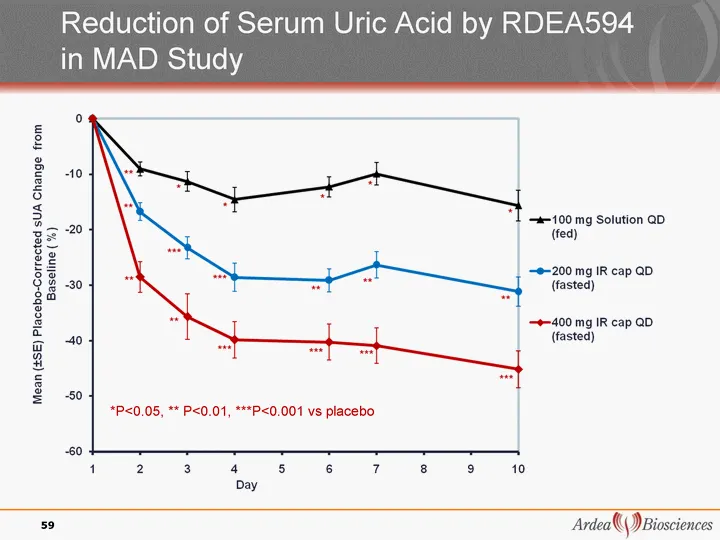
Slide 59: Reduction of Serum Uric Acid by RDEA594 in MAD Study
Reduction of Serum Uric Acid by RDEA594 in MAD Study 59 *P<0.05, ** P<0.01, ***P<0.001 vs placebo ** *** *** ** ** ** ** *** *** *** *** ** ** * * * * *
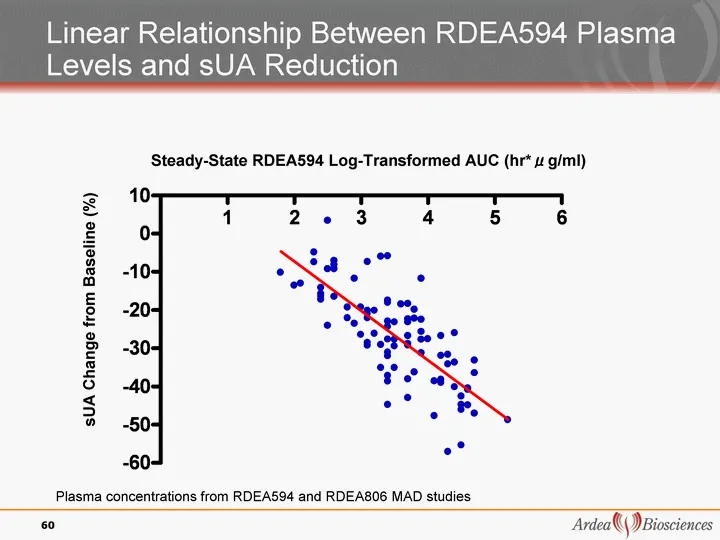
Slide 60: Linear Relationship Between RDEA594 Plasma Levels and sUA Reduction
Linear Relationship Between RDEA594 Plasma Levels and sUA Reduction 60 Plasma concentrations from RDEA594 and RDEA806 MAD studies sUA Change from Baseline (%) Steady-State RDEA594 Log-Transformed AUC (hr*^g/ml)
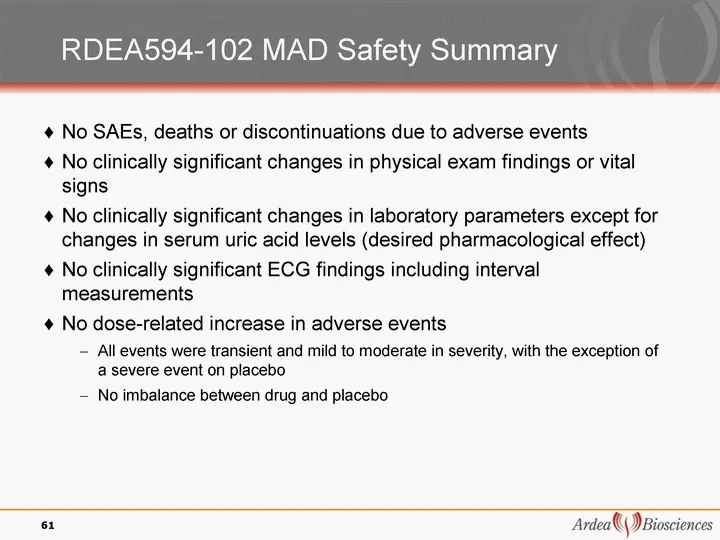
Slide 61: RDEA594-102 MAD Safety Summary
RDEA594-102 MAD Safety Summary No SAEs, deaths or discontinuations due to adverse events No clinically significant changes in physical exam findings or vital signs No clinically significant changes in laboratory parameters except for changes in serum uric acid levels (desired pharmacological effect)
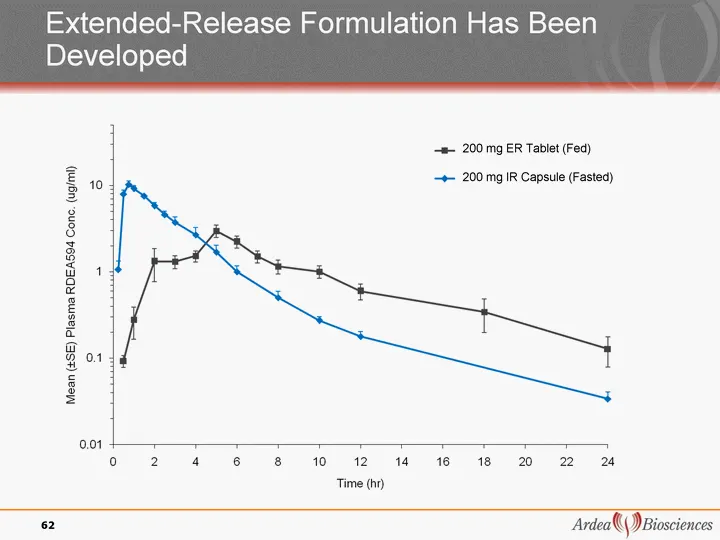
Slide 62: Extended-Release Formulation Has Been Developed
Extended-Release Formulation Has Been Developed 200 mg ER Tablet (Fed) 200 mg IR Capsule (Fasted) 62
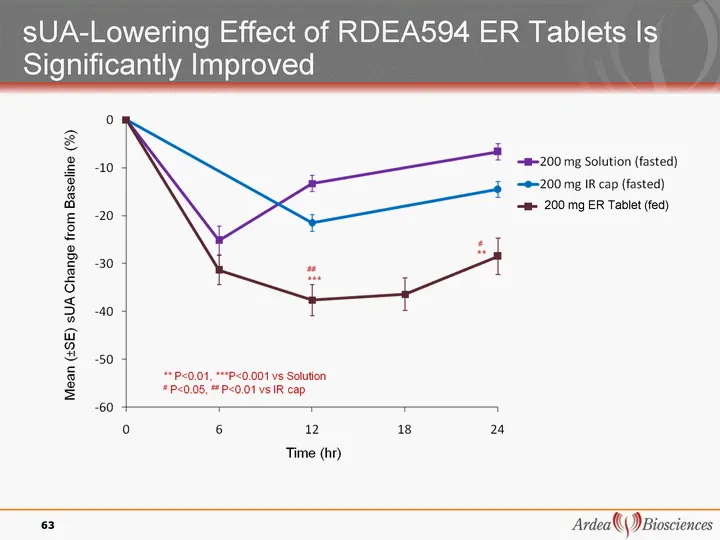
Slide 63: sUA-Lowering Effect of RDEA594 ER Tablets Is Significantly Improved
sUA-Lowering Effect of RDEA594 ER Tablets Is Significantly Improved 63 200 mg ER Tablet (fed)
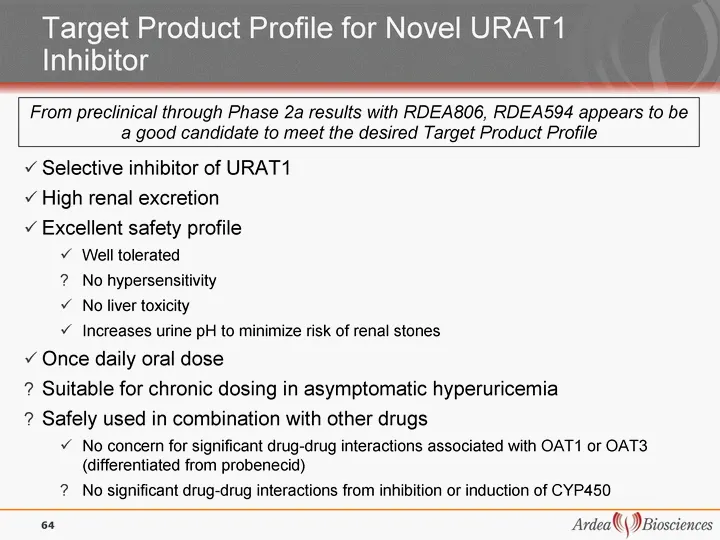
Slide 64: Target Product Profile for Novel URAT1 Inhibitor
Target Product Profile for Novel URAT1 Inhibitor Selective inhibitor of URAT1 High renal excretion Excellent safety profile Well tolerated No hypersensitivity No liver toxicity Increases urine pH to minimize risk of renal stones Once daily oral dose Suitable for chronic dosing in asymptomatic hyperu
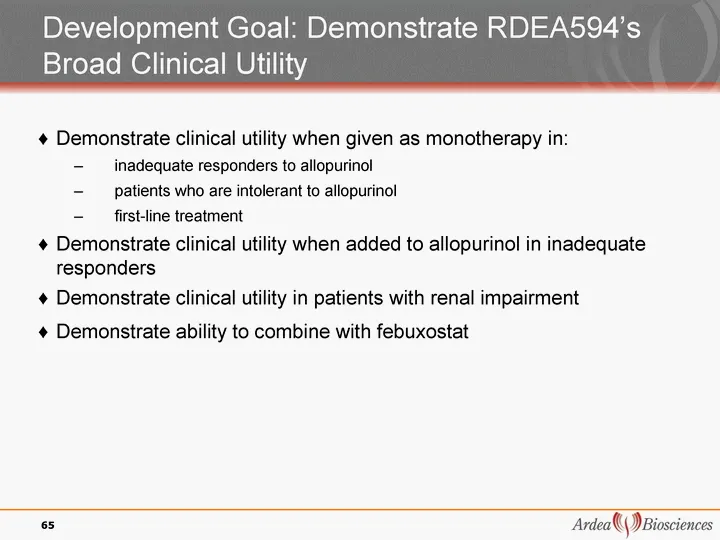
Slide 65: Development Goal: Demonstrate RDEA594's Broad Clinical Utility
65 Development Goal: Demonstrate RDEA594's Broad Clinical Utility Demonstrate clinical utility when given as monotherapy in: inadequate responders to allopurinol patients who are intolerant to allopurinol first-line treatment Demonstrate clinical utility when added to allopurinol in inadequate respo
Slide 66: Planned RDEA594 Phase 2 Evaluations in 2009
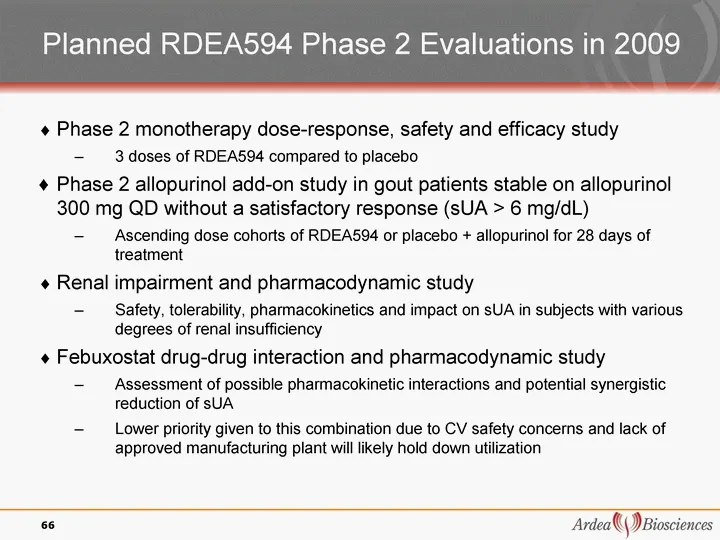
Planned RDEA594 Phase 2 Evaluations in 2009 Phase 2 monotherapy dose-response, safety and efficacy study 3 doses of RDEA594 compared to placebo Phase 2 allopurinol add-on study in gout patients stable on allopurinol 300 mg QD without a satisfactory response (sUA > 6 mg/dL) Ascending dose cohorts of
Slide 67: RDEA594 Phase 2 Monotherapy Dose-Response, Safety and Efficacy Study
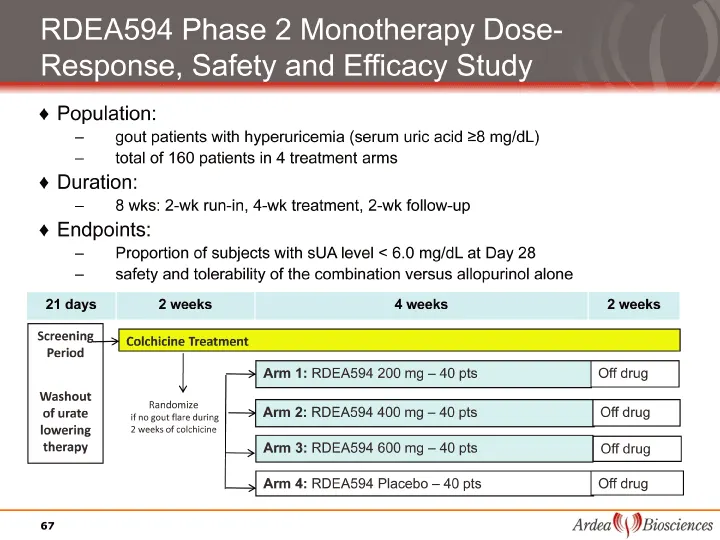
RDEA594 Phase 2 Monotherapy Dose- Response, Safety and Efficacy Study 21 days 2 weeks 4 weeks 2 weeks Population: gout patients with hyperuricemia (serum uric acid ^8 mg/dL) total of 160 patients in 4 treatment arms Duration: 8 wks: 2-wk run-in, 4-wk treatment, 2-wk follow-up Endpoints: Proportion o
Slide 68: RDEA594 Phase 2 Allopurinol Add-On Combination Safety and Efficacy Study
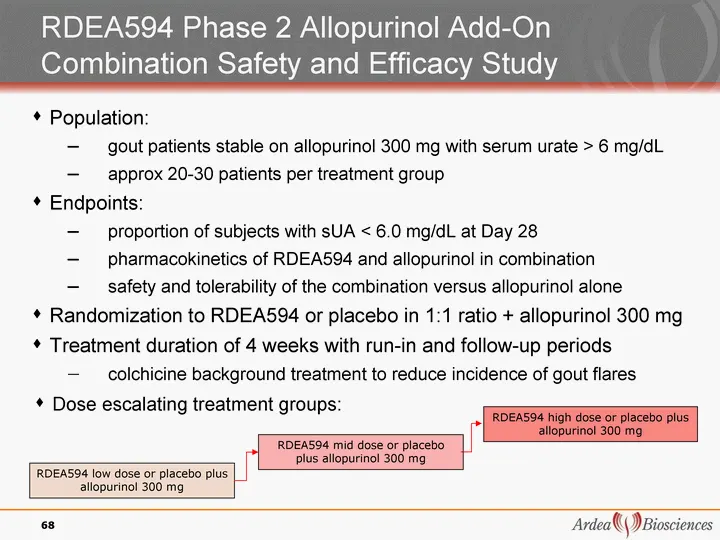
RDEA594 Phase 2 Allopurinol Add-On Combination Safety and Efficacy Study Population: gout patients stable on allopurinol 300 mg with serum urate > 6 mg/dL approx 20-30 patients per treatment group Endpoints: proportion of subjects with sUA < 6.0 mg/dL at Day 28 pharmacokinetics of RDEA594 and allopu
Slide 69: Gout/Hyperuricemia Program Summary
69 There is a large unmet need for new treatments for this debilitating disease RDEA594, a URAT1 transport inhibitor, targets the physiologic cause of the vast majority of patients with hyperuricemia: uric acid under- excretion Clinical proof-of-concept has been achieved, with statistically and clin
Slide 70: Questions?
Questions? Ardea) Biosciences
Source: SEC EDGAR · 8-K filed Apr 20, 2009
More decks from Ardea Biosciences Inc
 Corporate Update (January 2012)56 slides · Jan 9, 2012
 Corporate Update (November 2011)49 slides · Nov 7, 2011
 Technical Presentation (September 2011)6 slides · Sep 7, 2011
 Annual European Congress of Rheumatology EULAR 201134 slides · May 25, 2011
 Corporate Update (January 2011)13 slides · Jan 6, 2011
 Corporate Update (November 2010)37 slides · Nov 8, 2010