Ardea Biosciences — Annual European Congress of Rheumatology EULAR 2011
34 slides from Ardea Biosciences's conference presentation, May 25, 2011
Slide 1: Efficacy and Safety of Lesinurad in Combination with Allopurinol in Refractory Gout
EFFICACY AND SAFETY OF LESINURAD (RDEA594), A NOVEL URICOSURIC AGENT, GIVEN IN COMBINATION WITH ALLOPURINOL IN ALLOPURINOL-REFRACTORY GOUT PATIENTS: RANDOMIZED, DOUBLE-BLIND, PLACEBO- CONTROLLED, PHASE 2B STUDY F. Perez-Ruiz, J. Sundy, E. Krishnan, V. Hingorani, J. Welp, M. Suster, K. Manhard, Z. Sh
Slide 2: Disclosures
Disclosures F. Perez-Ruiz: Grant / Research support from: Asociacion de Reumatologos del Hospital de Cruces y Ministerio de Sanidad, Gobierno de Espana, Consultant for: Ardea Biosciences, Inc., Menarini, Novartis, Speakers Bureau: Menarini, Novartis. J. Sundy: Grant / Research support from: Ardea Bi
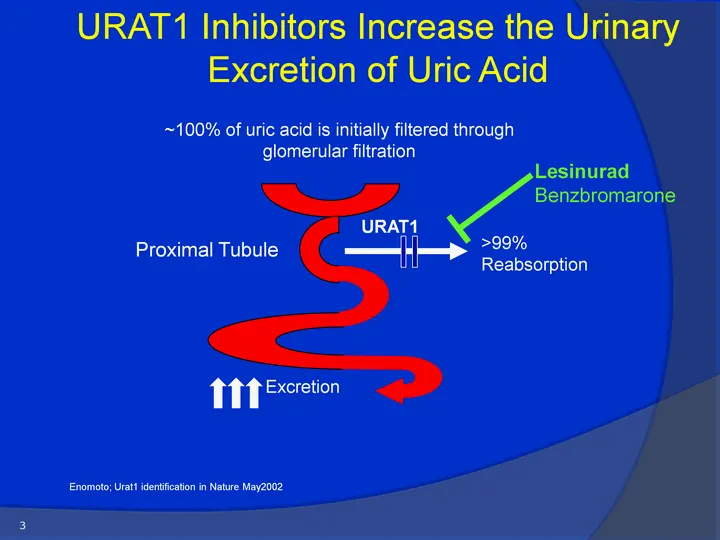
Slide 3: URAT1 Inhibitors Increase the Urinary Excretion of Uric Acid
>99%Reabsorption Excretion ~100% of uric acid is initially filtered through glomerular filtration URAT1 Inhibitors Increase the Urinary Excretion of Uric Acid URAT1 Enomoto; Urat1 identification in Nature May2002 Proximal Tubule LesinuradBenzbromarone 3
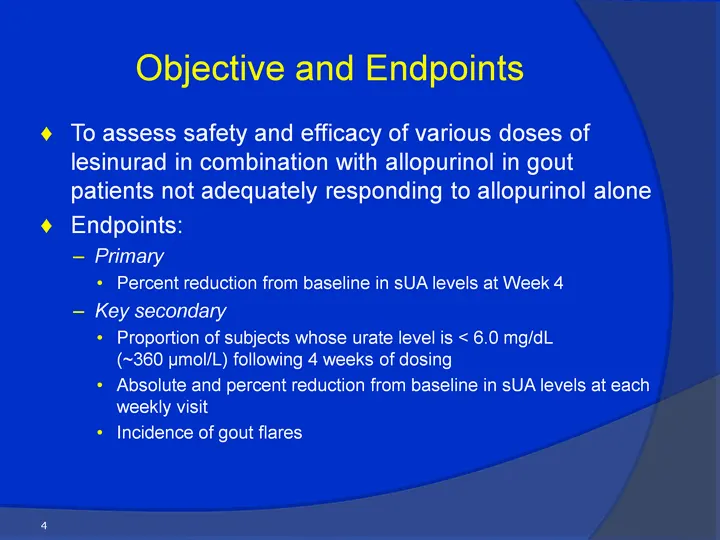
Slide 4: Objective and Endpoints
Objective and Endpoints To assess safety and efficacy of various doses of lesinurad in combination with allopurinol in gout patients not adequately responding to allopurinol alone Endpoints:Primary Percent reduction from baseline in sUA levels at Week 4Key secondary Proportion of subjects whose urat
Slide 5: Study Population
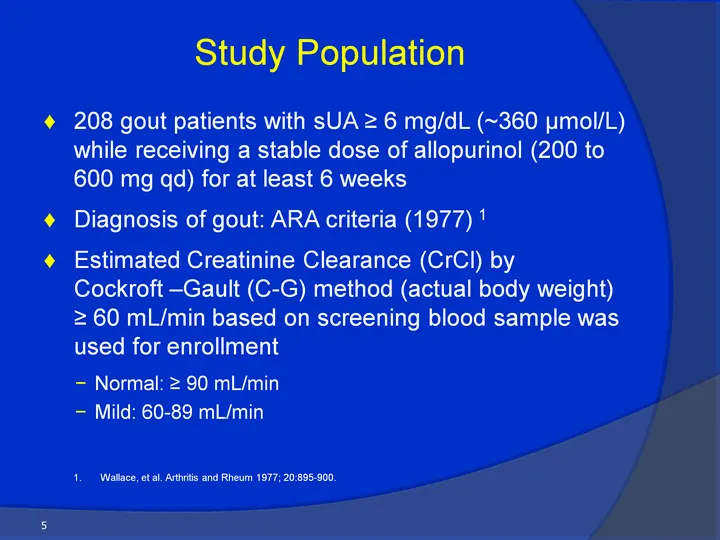
Study Population 208 gout patients with sUA ^ 6 mg/dL (~360 µmol/L) while receiving a stable dose of allopurinol (200 to 600 mg qd) for at least 6 weeksDiagnosis of gout: ARA criteria (1977) 1Estimated Creatinine Clearance (CrCl) by Cockroft -Gault (C-G) method (actual body weight) ^ 60 mL/min based
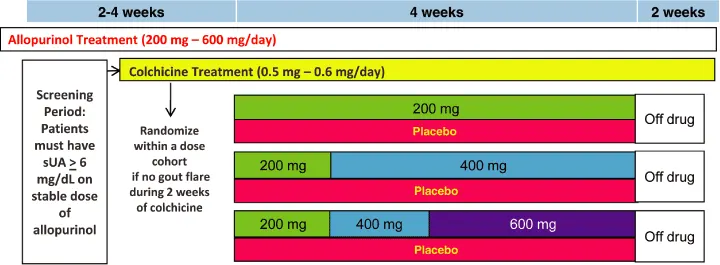
Slide 6: Study Design and Dose Titration Schema
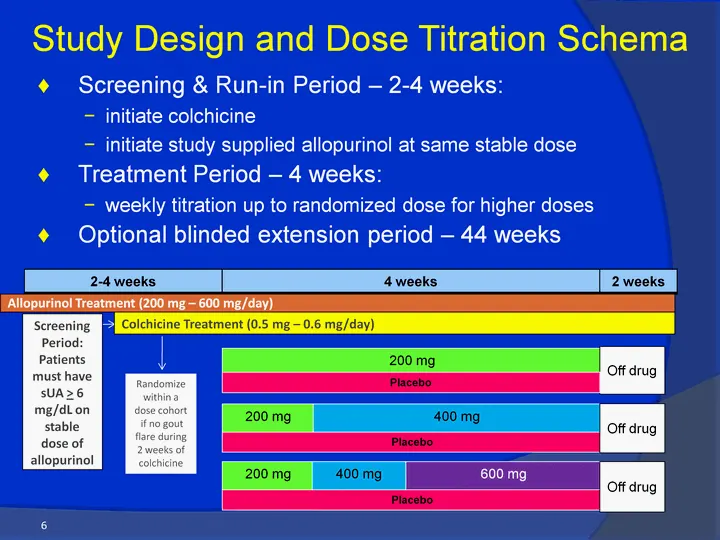
Study Design and Dose Titration Schema 2-4 weeks 4 weeks 2 weeks Screening & Run-in Period - 2-4 weeks: initiate colchicineinitiate study supplied allopurinol at same stable doseTreatment Period - 4 weeks: weekly titration up to randomized dose for higher dosesOptional blinded extension period - 44
Slide 7: Patient Disposition
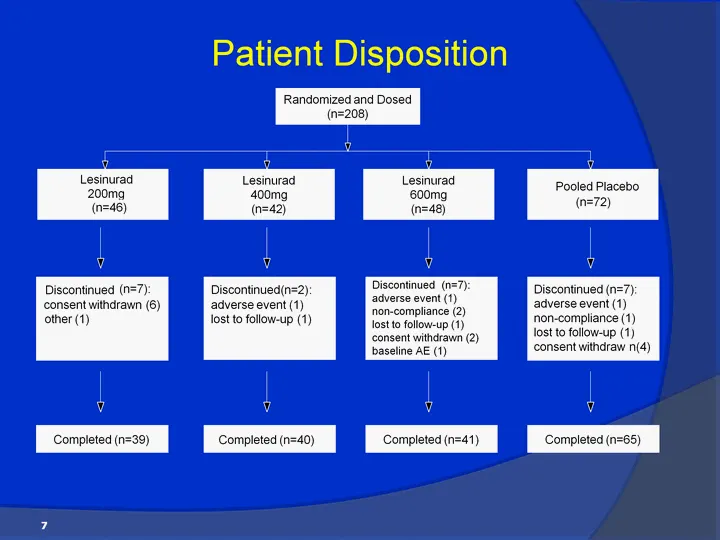
Patient Disposition 7 Randomized and Dosed ( n =208 ) Lesinurad 600 mg ( n = 48 ) Discontinued (n=7): consent withdrawn (6) other (1) Discontinued (n=7):adverse event (1)non-compliance (2)lost to follow-up (1)consent withdrawn (2)baseline AE (1) Completed (n=39) Completed (n=40) Completed (n=41) Com
Slide 8: Subject Characteristics
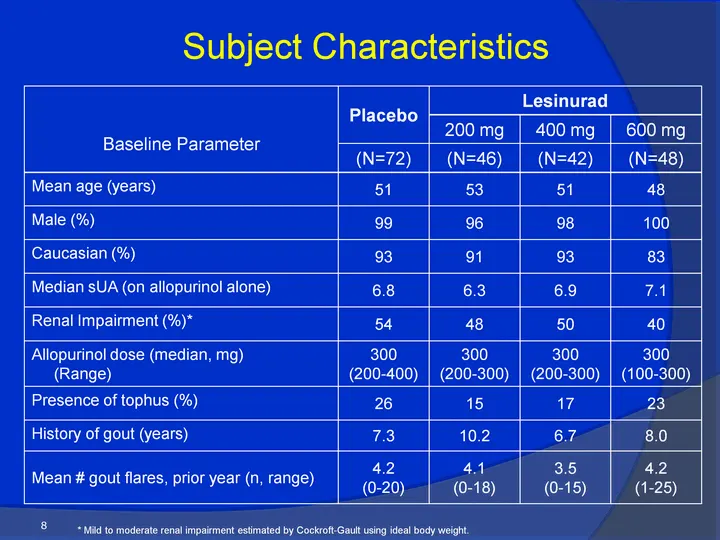
Subject Characteristics Placebo Lesinurad Lesinurad Lesinurad Baseline Parameter Placebo 200 mg 400 mg 600 mg Baseline Parameter (N=72) (N=46) (N=42) (N=48) Mean age (years) 51 53 51 48 Male (%) 99 96 98 100 Caucasian (%) 93 91 93 83 Median sUA (on allopurinol alone) 6.8 6.3 6.9 7.1 Renal Impairment
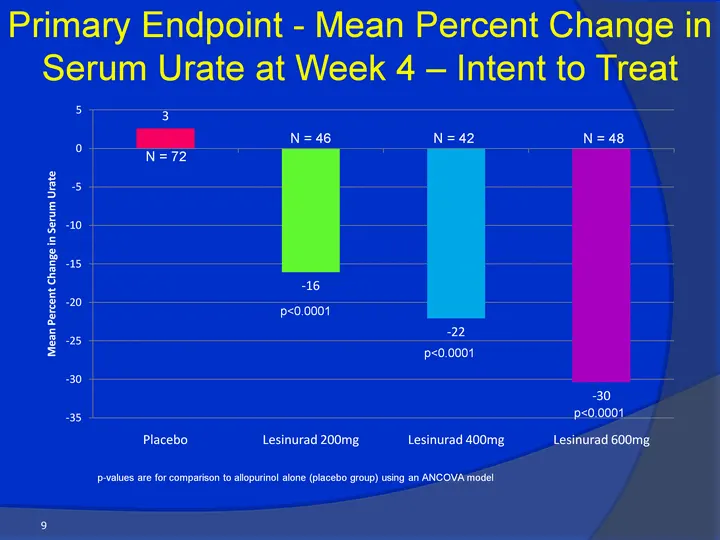
Slide 9: Primary Endpoint - Mean Percent Change in Serum Urate at Week 4
(CHART) Primary Endpoint - Mean Percent Change in Serum Urate at Week 4 - Intent to Treat p<0.0001 9 p<0.0001 p<0.0001 p-values are for comparison to allopurinol alone (placebo group) using an ANCOVA model N = 72 N = 46 N = 42 N = 48
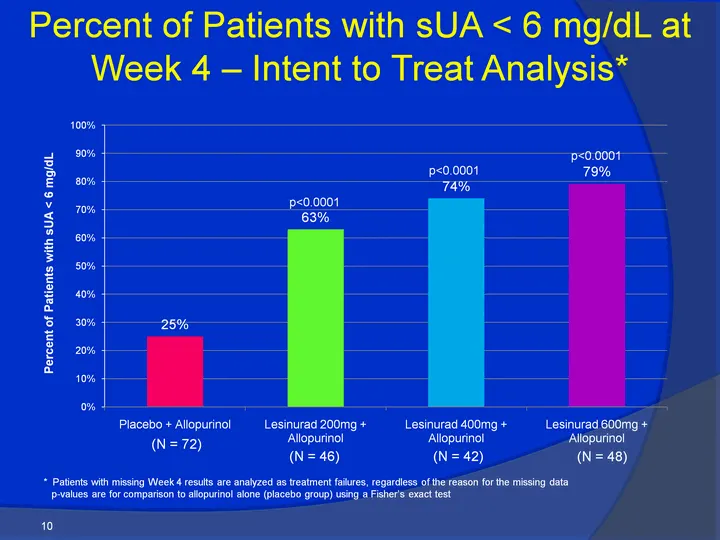
Slide 10: Percent of Patients with sUA <6 mg/dL at Week 4 - ITT
(CHART) Percent of Patients with sUA < 6 mg/dL at Week 4 - Intent to Treat Analysis* 10 p<0.0001 p<0.0001 p<0.0001 * Patients with missing Week 4 results are analyzed as treatment failures, regardless of the reason for the missing data p-values are for comparison to allopurinol alone (placebo group)
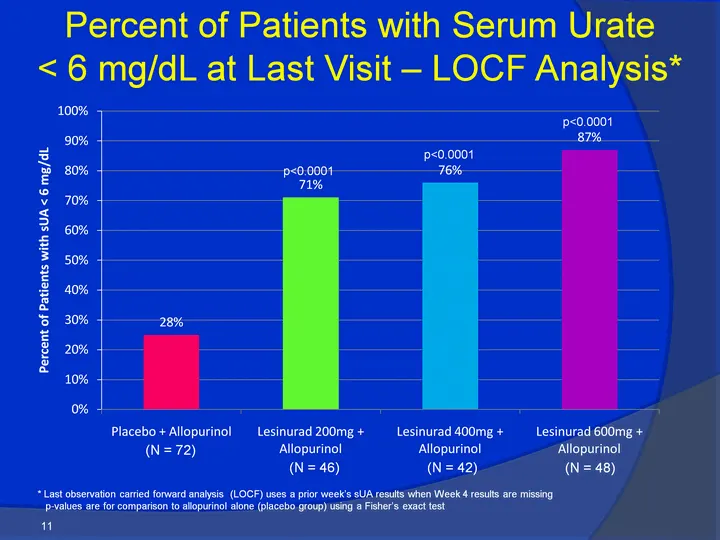
Slide 11: Percent of Patients with Serum Urate <6 mg/dL at Last Visit - LOCF
(CHART) Percent of Patients with Serum Urate < 6 mg/dL at Last Visit - LOCF Analysis* 11 p<0.0001 p<0.0001 p<0.0001 * Last observation carried forward analysis (LOCF) uses a prior week's sUA results when Week 4 results are missing p-values are for comparison to allopurinol alone (placebo group) usin
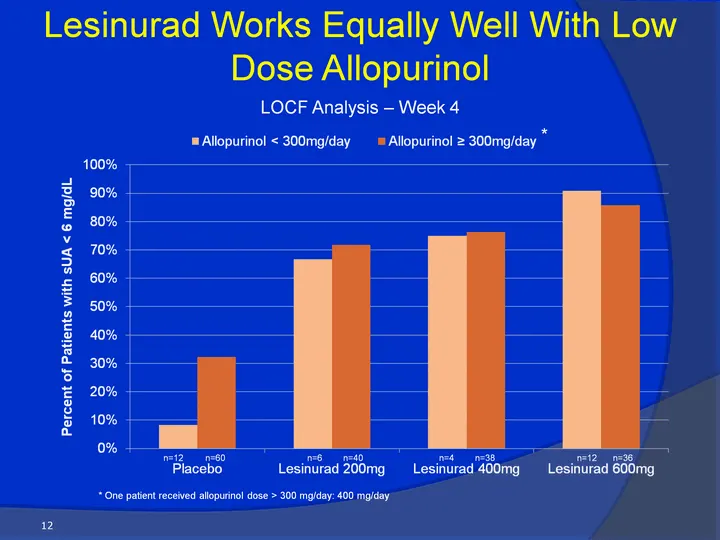
Slide 12: Lesinurad Works Equally Well With Low Dose Allopurinol
Lesinurad Works Equally Well With Low Dose Allopurinol LOCF Analysis - Week 4 12 * One patient received allopurinol dose > 300 mg/day: 400 mg/day * n=12 n=60 n=6 n=40 n=4 n=38 n=12 n=36
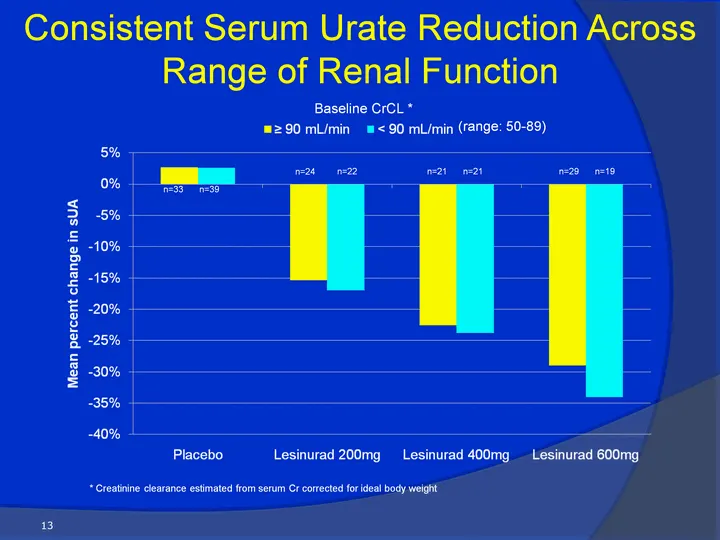
Slide 13: Consistent Serum Urate Reduction Across Range of Renal Function
Consistent Serum Urate Reduction Across Range of Renal Function 13 * Creatinine clearance estimated from serum Cr corrected for ideal body weight Baseline CrCL * n=33 n=39 n=24 n=22 n=21 n=21 n=29 n=19 (range: 50-89)
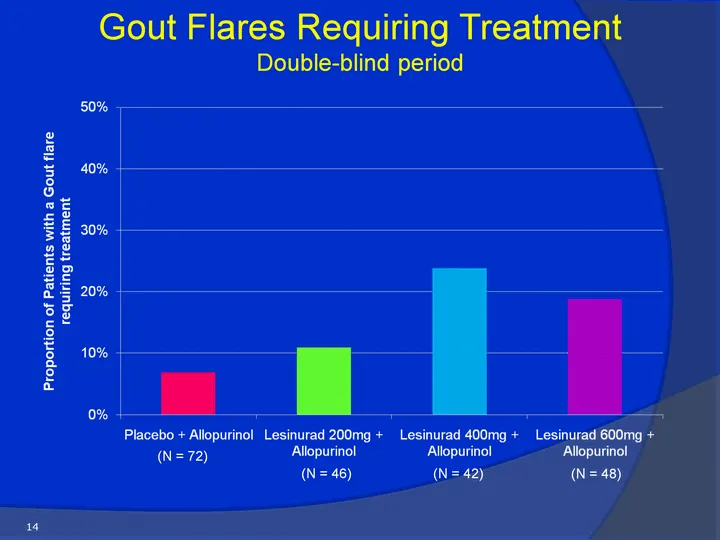
Slide 14: Gout Flares Requiring Treatment
14 Gout Flares Requiring Treatment Double-blind period (N = 72) (N = 46) (N = 42) (N = 48)
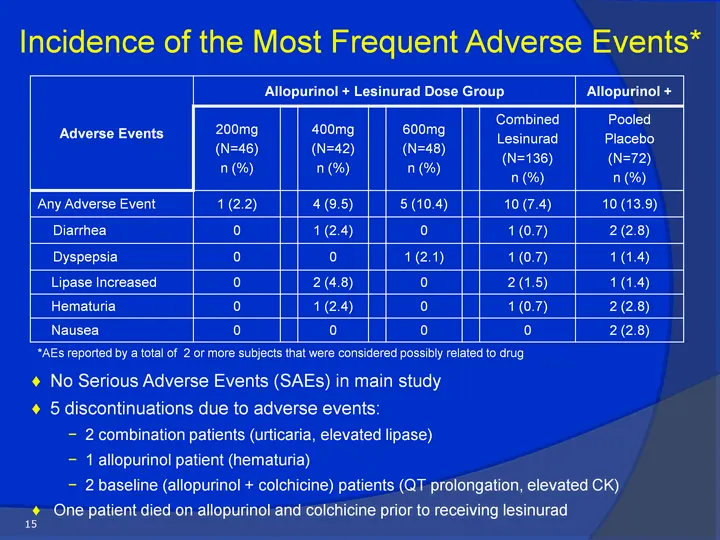
Slide 15: Incidence of the Most Frequent Adverse Events
Incidence of the Most Frequent Adverse Events* 15 Adverse Events Allopurinol + Lesinurad Dose Group Allopurinol + Lesinurad Dose Group Allopurinol + Lesinurad Dose Group Allopurinol + Lesinurad Dose Group Allopurinol + Lesinurad Dose Group Allopurinol + Lesinurad Dose Group Allopurinol + Lesinurad D
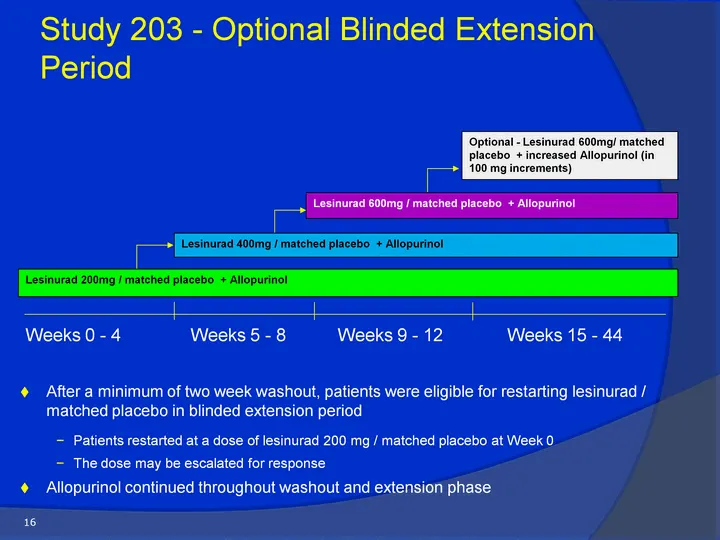
Slide 16: Study - Optional Blinded Extension Period
Study 203 - Optional Blinded Extension Period After a minimum of two week washout, patients were eligible for restarting lesinurad / matched placebo in blinded extension periodPatients restarted at a dose of lesinurad 200 mg / matched placebo at Week 0The dose may be escalated for responseAllopurino
Slide 17: Optional Blinded Extension Period
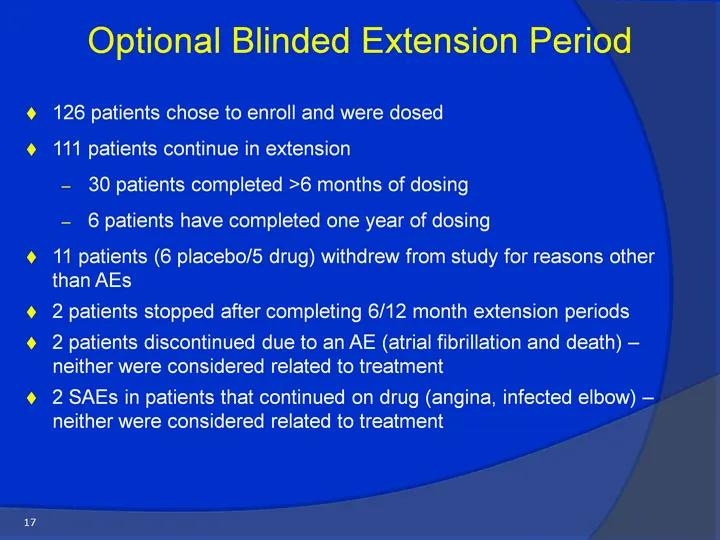
126 patients chose to enroll and were dosed111 patients continue in extension30 patients completed >6 months of dosing6 patients have completed one year of dosing 11 patients (6 placebo/5 drug) withdrew from study for reasons other than AEs 2 patients stopped after completing 6/12 month extension pe
Slide 18: Patients Continue to Respond in Long-Term Extension
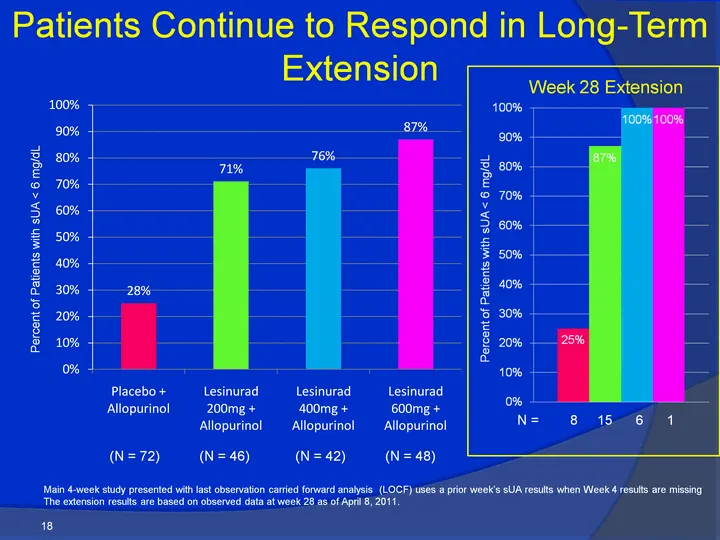
(CHART) Patients Continue to Respond in Long-Term Extension 18 Main 4-week study presented with last observation carried forward analysis (LOCF) uses a prior week's sUA results when Week 4 results are missingThe extension results are based on observed data at week 28 as of April 8, 2011. (N = 72) (N
Slide 19: Patients on Lesinurad 200mg Continue to Decline for at Least 8 Weeks
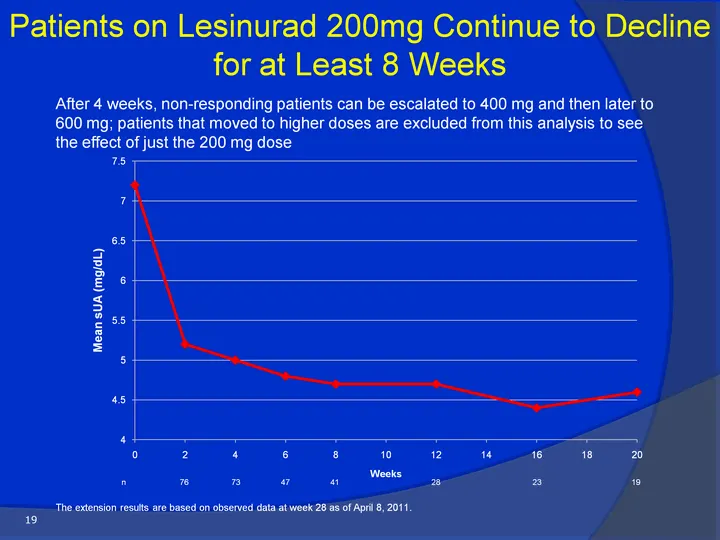
Patients on Lesinurad 200mg Continue to Decline for at Least 8 Weeks After 4 weeks, non-responding patients can be escalated to 400 mg and then later to 600 mg; patients that moved to higher doses are excluded from this analysis to see the effect of just the 200 mg dose 19 (CHART) The extension resu
Slide 20: Conclusions
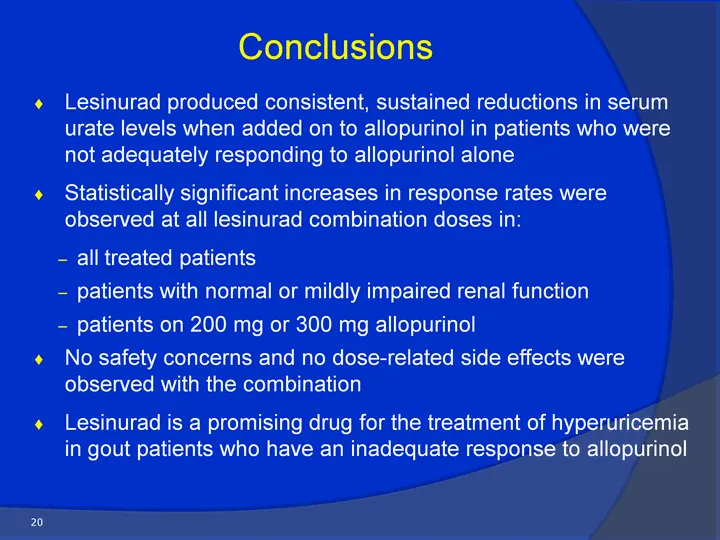
Conclusions Lesinurad produced consistent, sustained reductions in serum urate levels when added on to allopurinol in patients who were not adequately responding to allopurinol aloneStatistically significant increases in response rates were observed at all lesinurad combination doses in:all treated

Slide 21: Acknowledgements
Acknowledgements Patients for their participation in the studiesInvestigators and their staff members: 21 Ukraine A. GnylorybovV. KovalenkoI. Shepet'ko M. StanislavchukA. Ter-Vartanian V. Tseluyko Canada W. Arkinstall R. Hart B. Lasko D. Shu G. Tellier I. Wilderman United KingdomJ. Calvert Georgia L
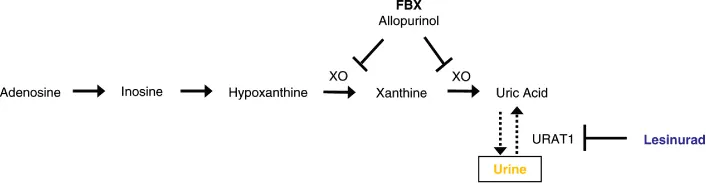
Slide 22: Lesinurad in Combination with Febuxostat: Methods
In a prior drug-drug interaction study in healthy volunteers, lesinurad 200 mg and 400 mg in combination with FBX 40 mg showed no clinically relevant pharmacokinetic (PK) drug-drug interaction between lesinurad and FBX. Lesinurad with a low dose of FBX produced substantial additive effects on sUA in
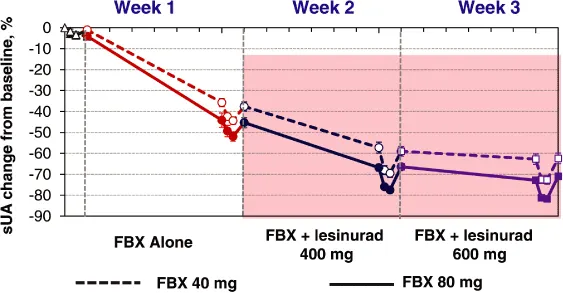
Slide 23: Reductions in sUA of up to 80% with Lesinurad and FBX
Ø Clinically important reductions in sUA of up to 80% were observed in gout subjects with the combination of lesinurad and FBX Ø With lesinurad 400 mg dose in panels 1 and 2, subjects achieved median sUA levels of 3.9 mg/dL and 3.3 mg/dL at trough, respectively; and 2.7 mg/dL and 2.3 mg/ dL, respect
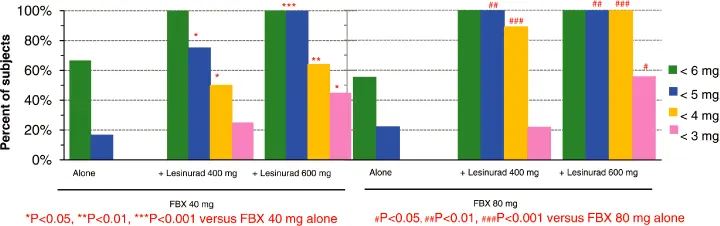
Slide 24: Subjects Achieving sUA Targets at Trough
Ø At trough; • 100% of subjects receiving the combination of lesinurad and FBX achieved sUA levels below the clinically important target of 6 mg/dL, compared to 67% and 56% for 40 mg and 80 mg, respectively, with FBX alone • 75 to 100% of subjects receiving the combination of lesinurad and FBX achie
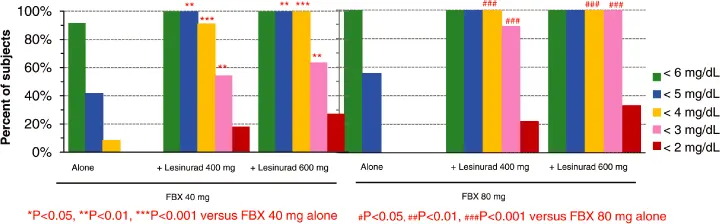
Slide 25: Responses at 12 Hours Post-Dose
Ø At 12-hrs post-dose; • Even greater responses were seen with combination therapy compared to FBX alone. • 100% of subjects achieved sUA levels below 4 mg/dL on lesinurad 400 mg or 600 mg combined with 80 mg FBX, and 100% of subjects achieved levels below 3 mg/dL on lesinurad 600 mg combined with 8
Slide 26: HCTZ Enhancement of Uric Acid Uptake by OAT4
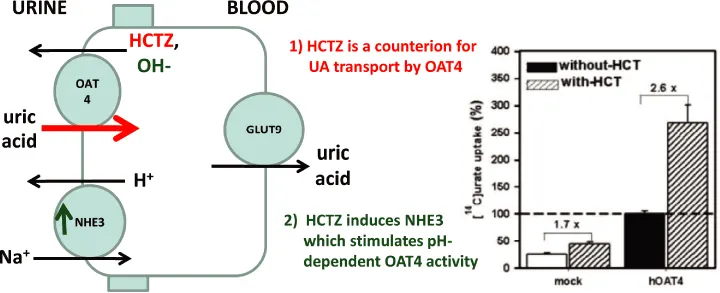
• Direct -HCTZ enhancement of Uric acid uptake by OAT4 2 • Indirect -HCTZ enhances an OAT4 stimulatory protein (NHE3) 3 Data presented with permission Johannes Hagos Methods The UA transporter OAT4 was stably expressed in cultured cells and oocytes. For cultured cells, HEK293 cells stably expressing
Slide 27: OAT4-Dependent Transport Blocked by Lesinurad
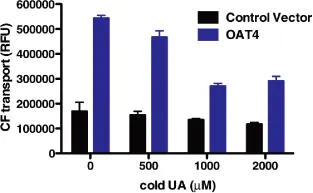
Human Kidney cells (HEK293) exhibit OAT4-dependent transport of CF that is blocked by lesinurad. 293T cells transiently transfected with OAT4 or control plasmid lacking OAT4 (pCMV) were incubated with CF, with vehicle (green) or 50 uM Lesinurad (red). EC50 ~900 uM 293T cells transiently transfected
Slide 28: Lesinurad Inhibits URAT1 and OAT4 with Similar Potency
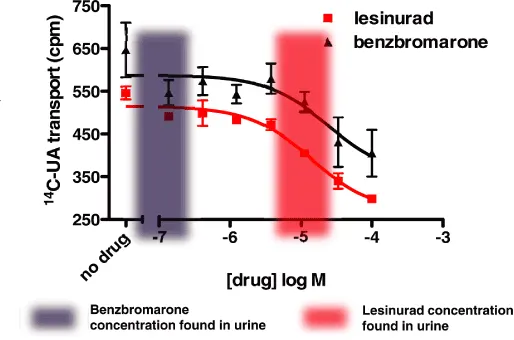
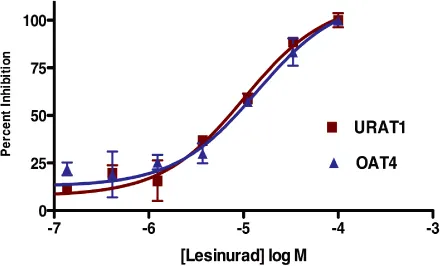
Figure 5. Lesinurad inhibits URAT1 and OAT4 with similar potency UA transport was measured in 293T cells transiently expressing URAT1 or 293 cells stably expressing OAT4. Inhibition was measured after a 5 minute incubation in the indicated concentrations of lesinurad.
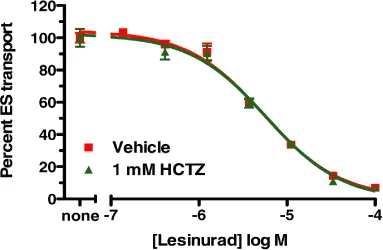
Slide 29: HCTZ Has No Effect on Lesinurad Inhibition of OAT4
Figure 6. HCTZ has no effect on lesinurad-mediated inhibition of OAT4 transporter activity 293 cells stably expressing OAT4 were incubated with 3H-Estrone sulphate for 5 min in the presence or absence of 1 mM HCTZ in the media. A dose response was conducted with lesinurad and percent transported ES
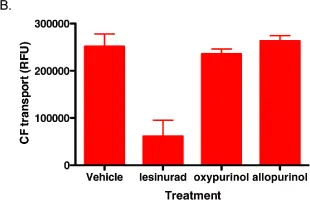
Slide 30: Oxypurinol and Allopurinol Do Not Inhibit OAT4
Figure 7. Oxypurinol and allopurinol do not inhibit OAT4 transport activity
Slide 31: Lesinurad Likely Inhibits OAT4 from the Extracellular Side
Results (cont’d) 100 µM of lesinurad, oxypurinol, or allopurinol was incubated for 5 minutes with OAT4-expressing 293 cells prior to addition of OAT4 substrates 14C-UA (A) or CF (B). Figure 8A. Lesinurad likely inhibits OAT4 from the extracellular (apical) side Oat4-expressing oocytes were injected
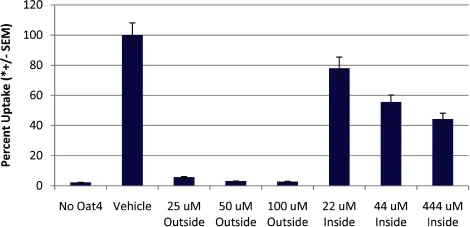
Slide 32: Control Experiment: Lesinurad Remains Inside Injected Oocytes
Figure 8B. Control experiment demonstrating that lesinurad remains inside injected oocytes for the duration of the experiment Oat4-expressing oocytes were injected with 50 nl of 14 C-labeled lesinurad in water. 14 C was measured in 8 Oocytes immediately (T=0). Remaining oocytes were incubated for 30
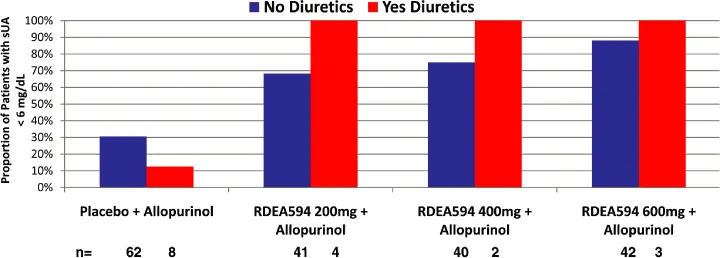
Slide 33: Proportion of Patients Responding in Study 203
Figure 10. Proportion of patients responding in Study 203. Patients receiving diuretics had an excellent response to lesinurad
Slide 34: Results (cont'd) Conclusions
Results (cont’d) Conclusions Ø The ability of OAT4 to transport urate from the urine side to the blood side is enhanced by thiazide diuretics, which are known to produce hyperuricemia Ø Lesinurad inhibits OAT4 from the apical (urine) side in the proximal tubule Ø Lesinurad inhibits OAT4 with similar
Source: SEC EDGAR · 8-K filed May 25, 2011
More decks from Ardea Biosciences Inc
 Corporate Update (January 2012)56 slides · Jan 9, 2012
 Corporate Update (November 2011)49 slides · Nov 7, 2011
 Technical Presentation (September 2011)6 slides · Sep 7, 2011
 Corporate Update (January 2011)13 slides · Jan 6, 2011
 Corporate Update (November 2010)37 slides · Nov 8, 2010
 Annual European Congress of Rheumatology EULAR 201022 slides · Jun 18, 2010