Lara Exploration Ltd. · TSXV:LRA
Lara Exploration — Technical Presentation (May 2023)
11 slides from Lara Exploration's technical presentation, May 29, 2023
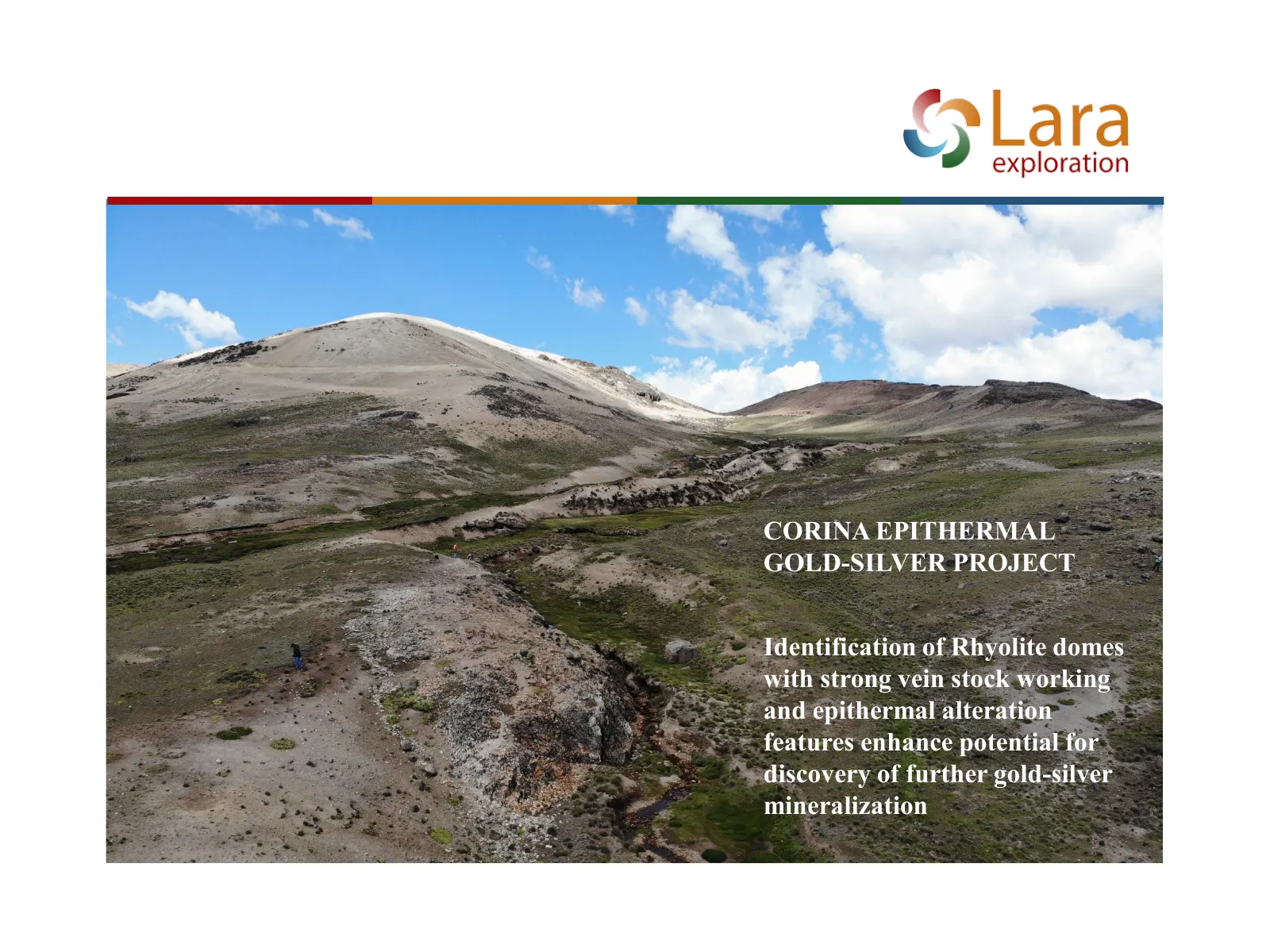
Slide 1: Corina Epithermal Gold-Silver Project
CORINA EPITHERMAL GOLD-SILVER PROJECT Identification of Rhyolite domes with strong vein stock working and epithermal alteration features enhance potential for discovery of further gold-silver mineralization
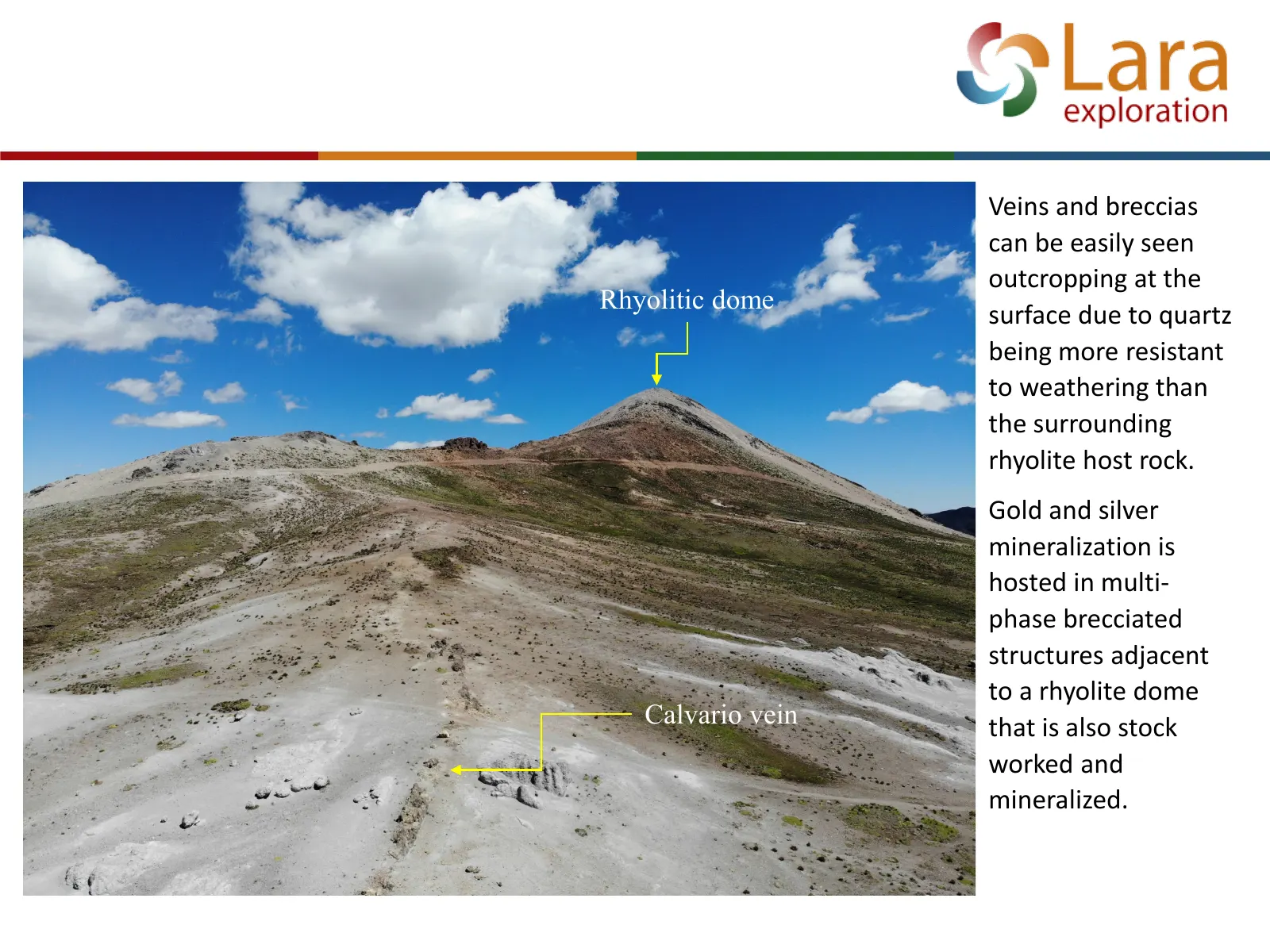
Slide 2: Veins and breccias outcropping at the rhyolitic dome
Veins and breccias can be easily seen outcropping at the Rhyolitic dome surface due to quartz being more resistant to weathering than the surrounding rhyolite host rock. Gold and silver mineralization is hosted in multi- phase brecciated structures adjacent to a rhyolite dome Calvario vein that is a
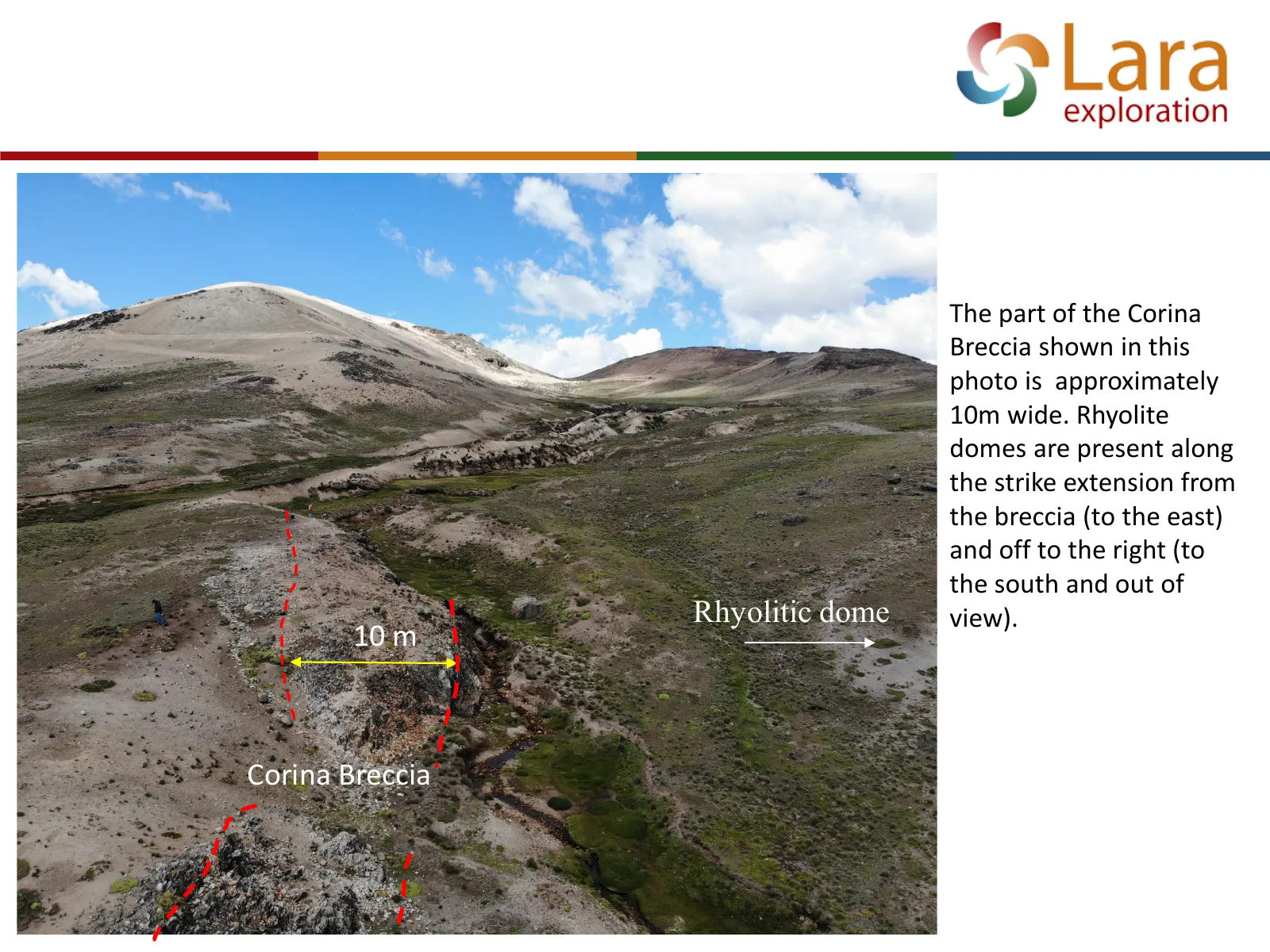
Slide 3: Corina Breccia outcrop approximately 10 m wide
The part of the Corina Breccia shown in this photo is approximately 10m wide. Rhyolite domes are present along the strike extension from the breccia (to the east) and off to the right (to the south and out of Rhyolitic dome view). 10 m Corina Breccia
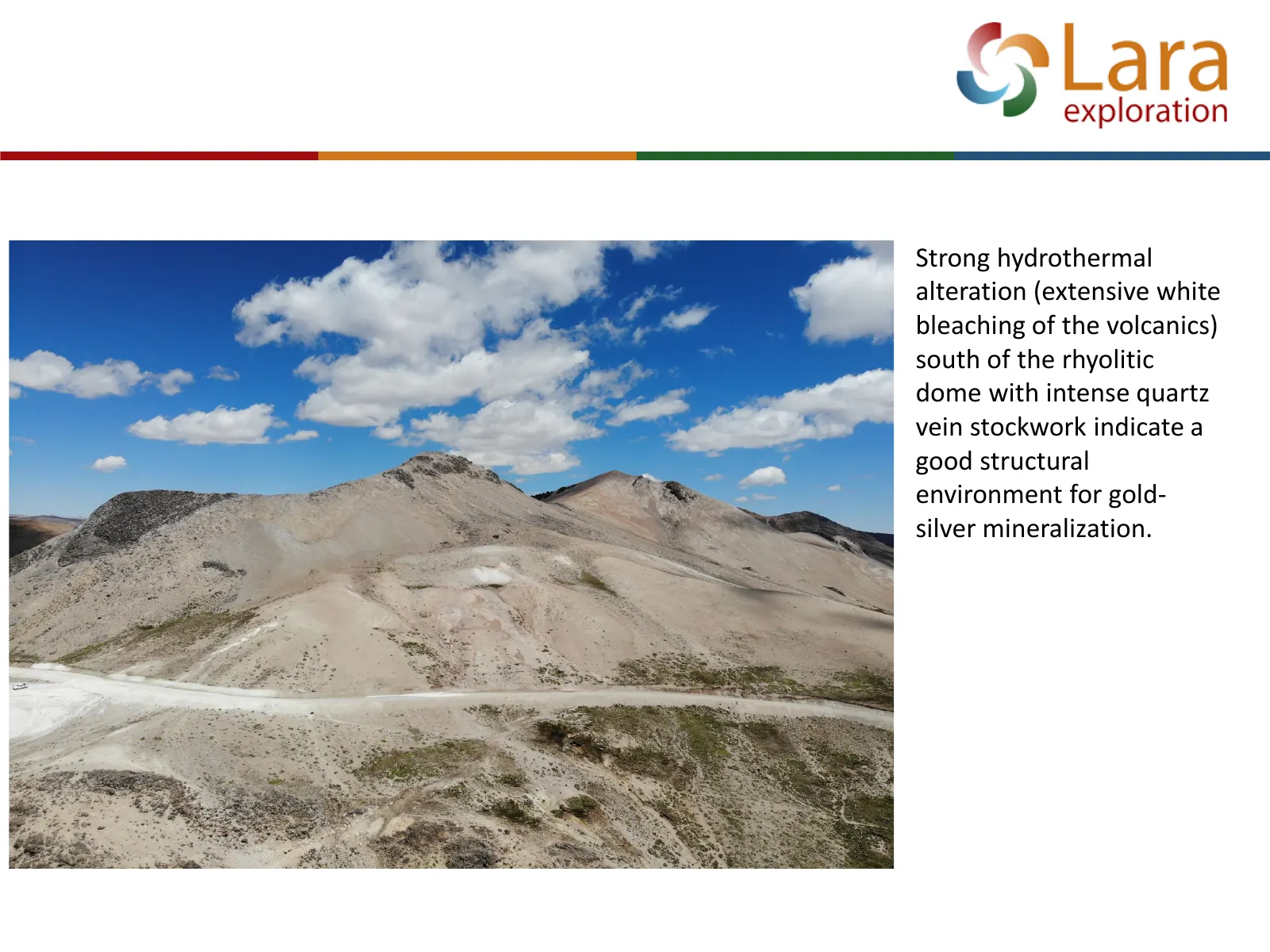
Slide 4: Strong hydrothermal alteration south of the rhyolitic dome
Strong hydrothermal alteration (extensive white bleaching of the volcanics) south of the rhyolitic dome with intense quartz vein stockwork indicate a good structural environment for gold- silver mineralization.
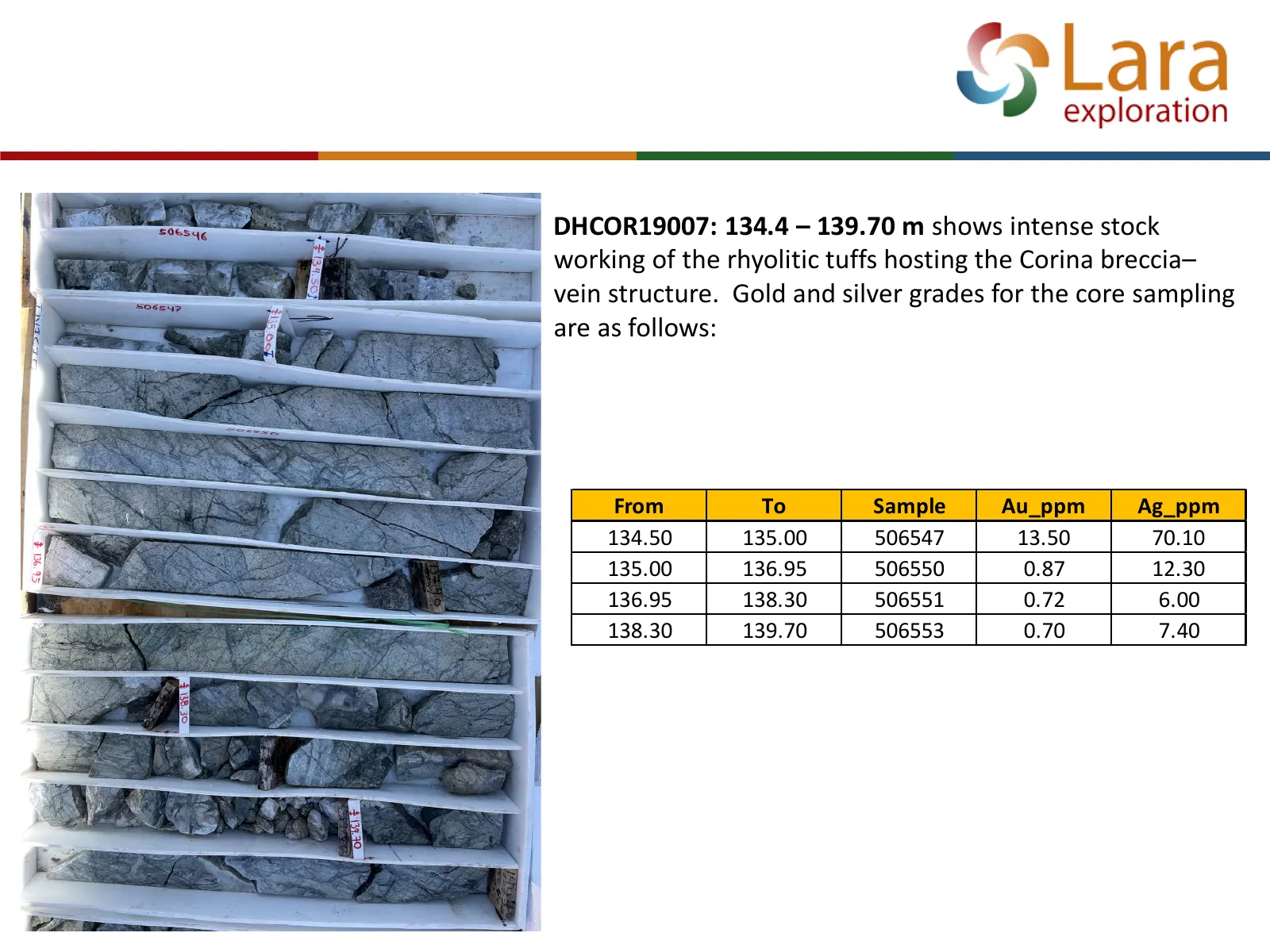
Slide 5: DHCOR19007 intense stockworking and assays
DHCOR19007: 134.4 – 139.70 m shows intense stock working of the rhyolitic tuffs hosting the Corina breccia– vein structure. Gold and silver grades for the core sampling are as follows: From To Sample Au_ppm Ag_ppm 134.50 135.00 506547 13.50 70.10 135.00 136.95 506550 0.87 12.30 136.95 138.30 506551
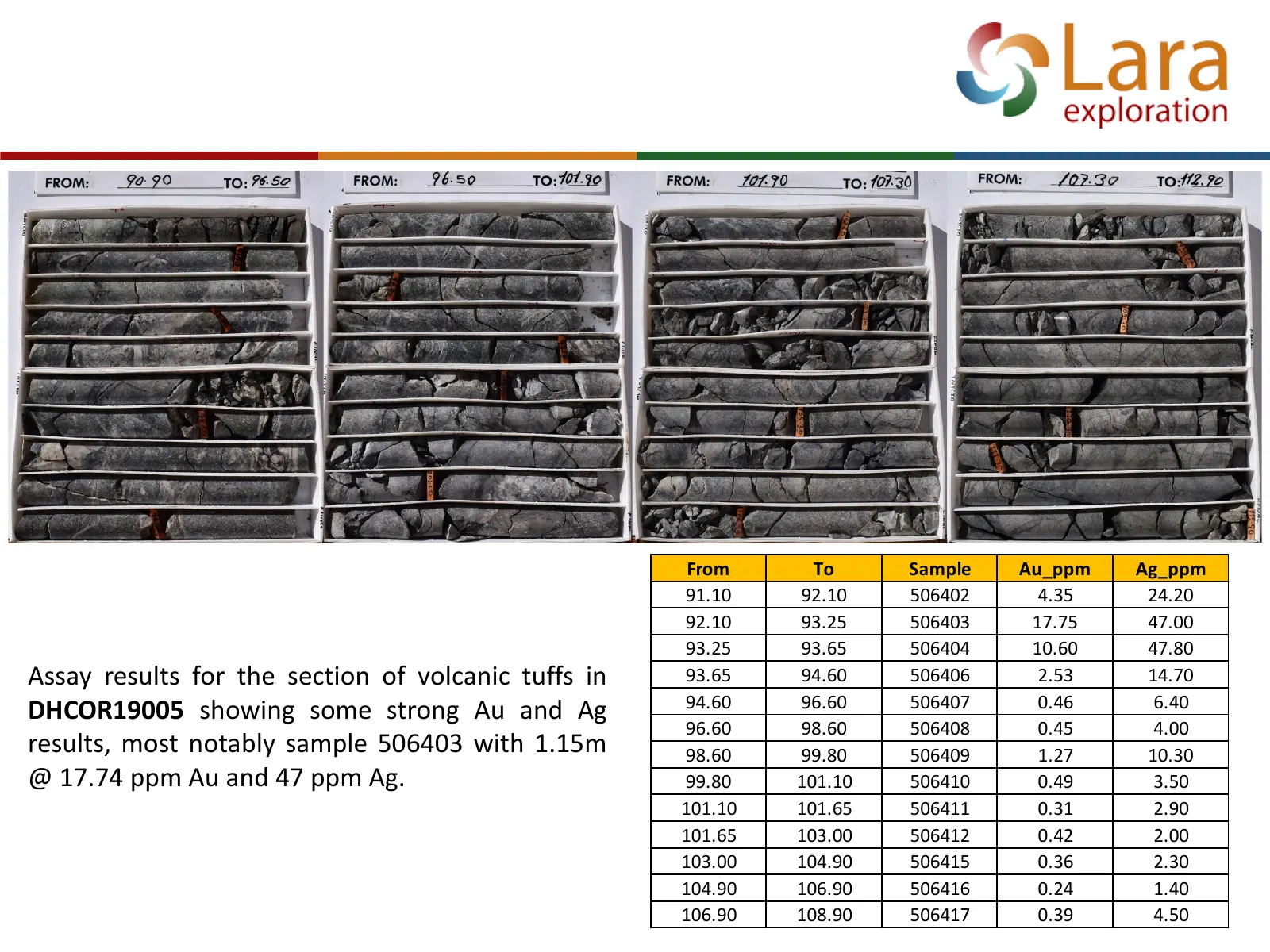
Slide 6: Assay results for volcanic tuffs in DHCOR19005
From To Sample Au_ppm Ag_ppm 91.10 92.10 506402 4.35 24.20 92.10 93.25 506403 17.75 47.00 93.25 93.65 506404 10.60 47.80 Assay results for the section of volcanic tuffs in 93.65 94.60 506406 2.53 14.70 94.60 96.60 506407 0.46 6.40 DHCOR19005 showing some strong Au and Ag 96.60 98.60 506408 0.45 4.00
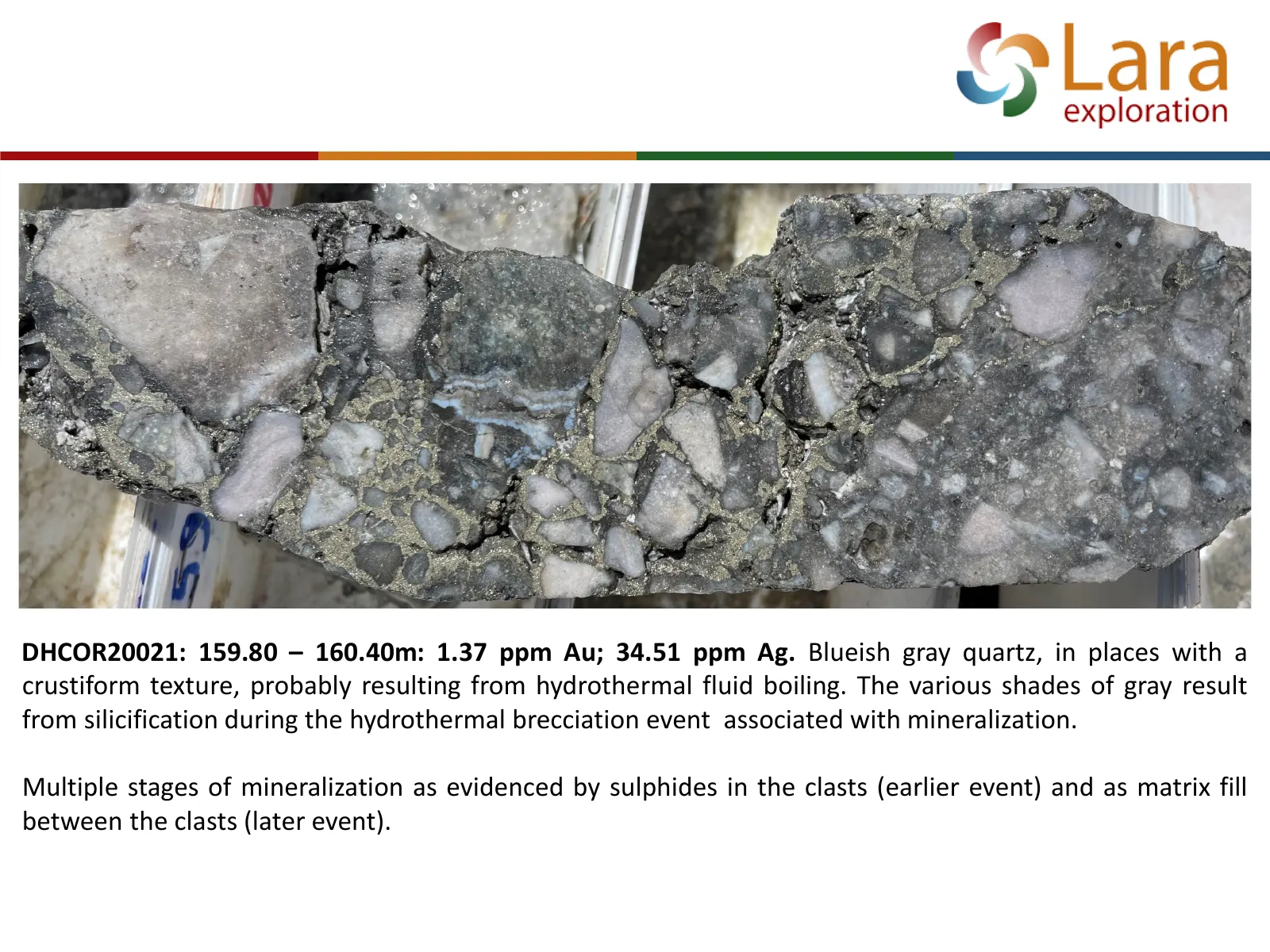
Slide 7: DHCOR20021: 159.80–160.40 m core
DHCOR20021: 159.80 – 160.40m: 1.37 ppm Au; 34.51 ppm Ag. Blueish gray quartz, in places with a crustiform texture, probably resulting from hydrothermal fluid boiling. The various shades of gray result from silicification during the hydrothermal brecciation event associated with mineralization. Multi
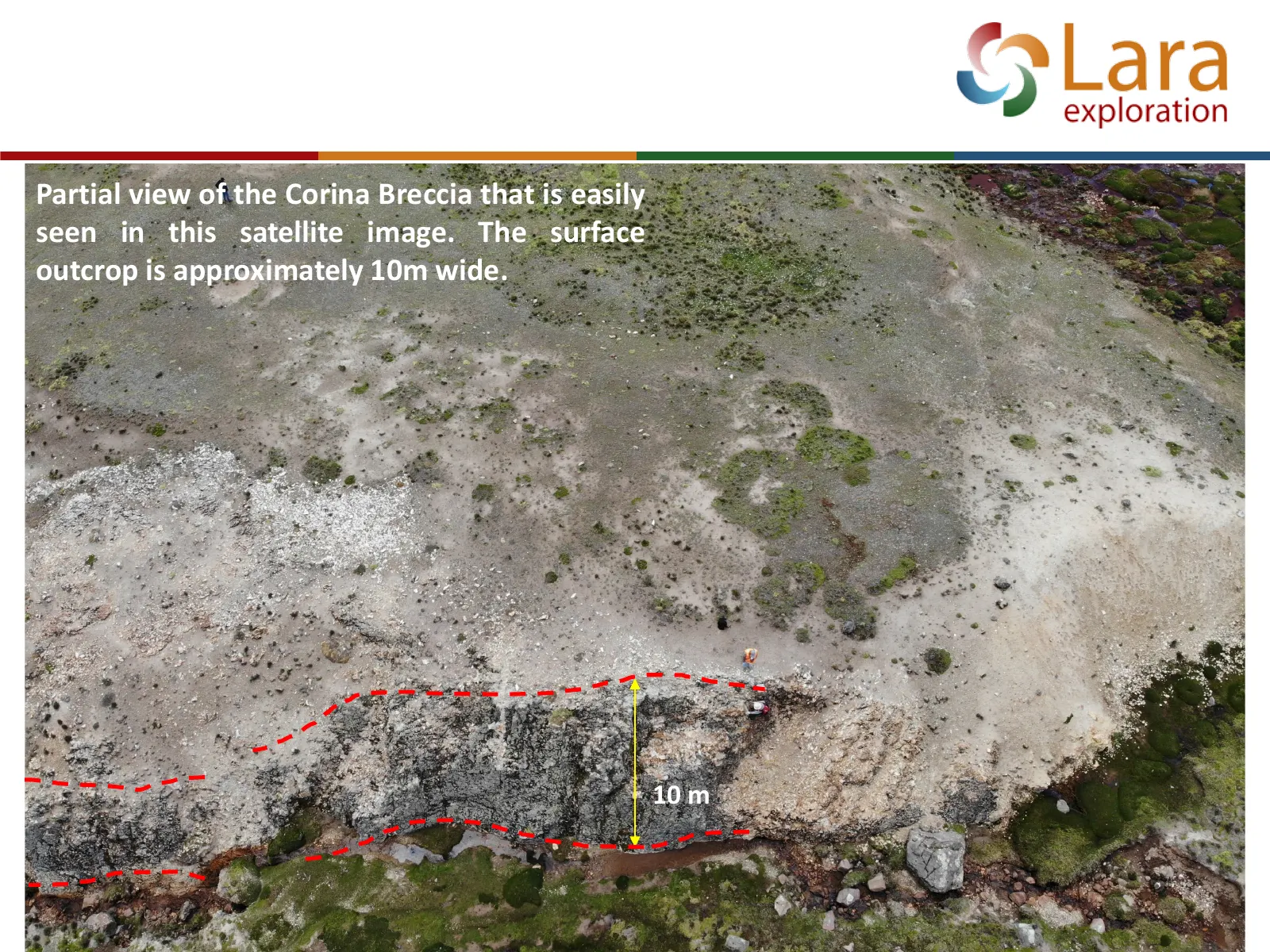
Slide 8: Partial view of the Corina Breccia in satellite image
Partial view of the Corina Breccia that is easily seen in this satellite image. The surface outcrop is approximately 10m wide. 10 m
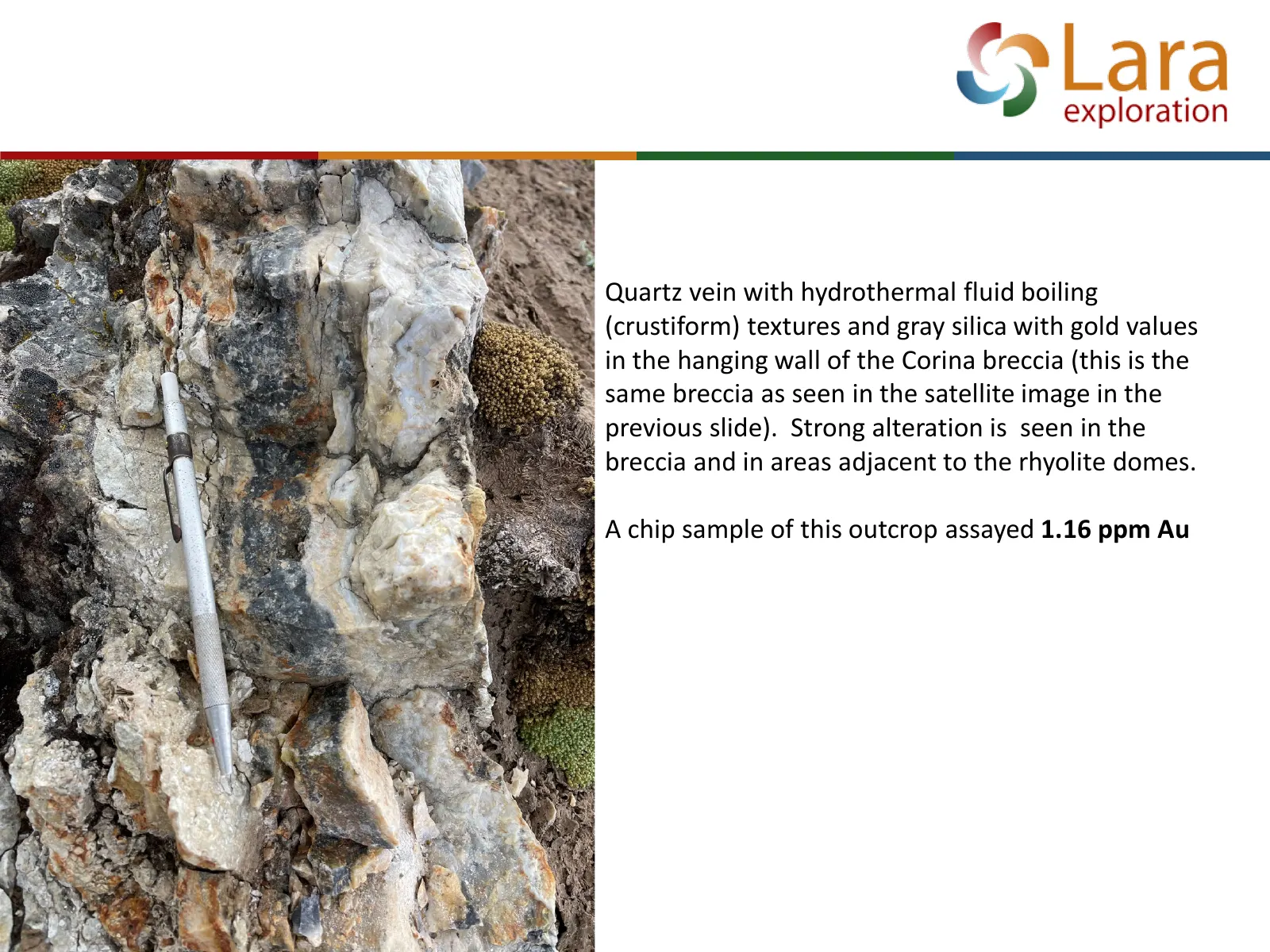
Slide 9: Quartz vein with crustiform textures in hanging wall
Quartz vein with hydrothermal fluid boiling (crustiform) textures and gray silica with gold values in the hanging wall of the Corina breccia (this is the same breccia as seen in the satellite image in the previous slide). Strong alteration is seen in the breccia and in areas adjacent to the rhyolite
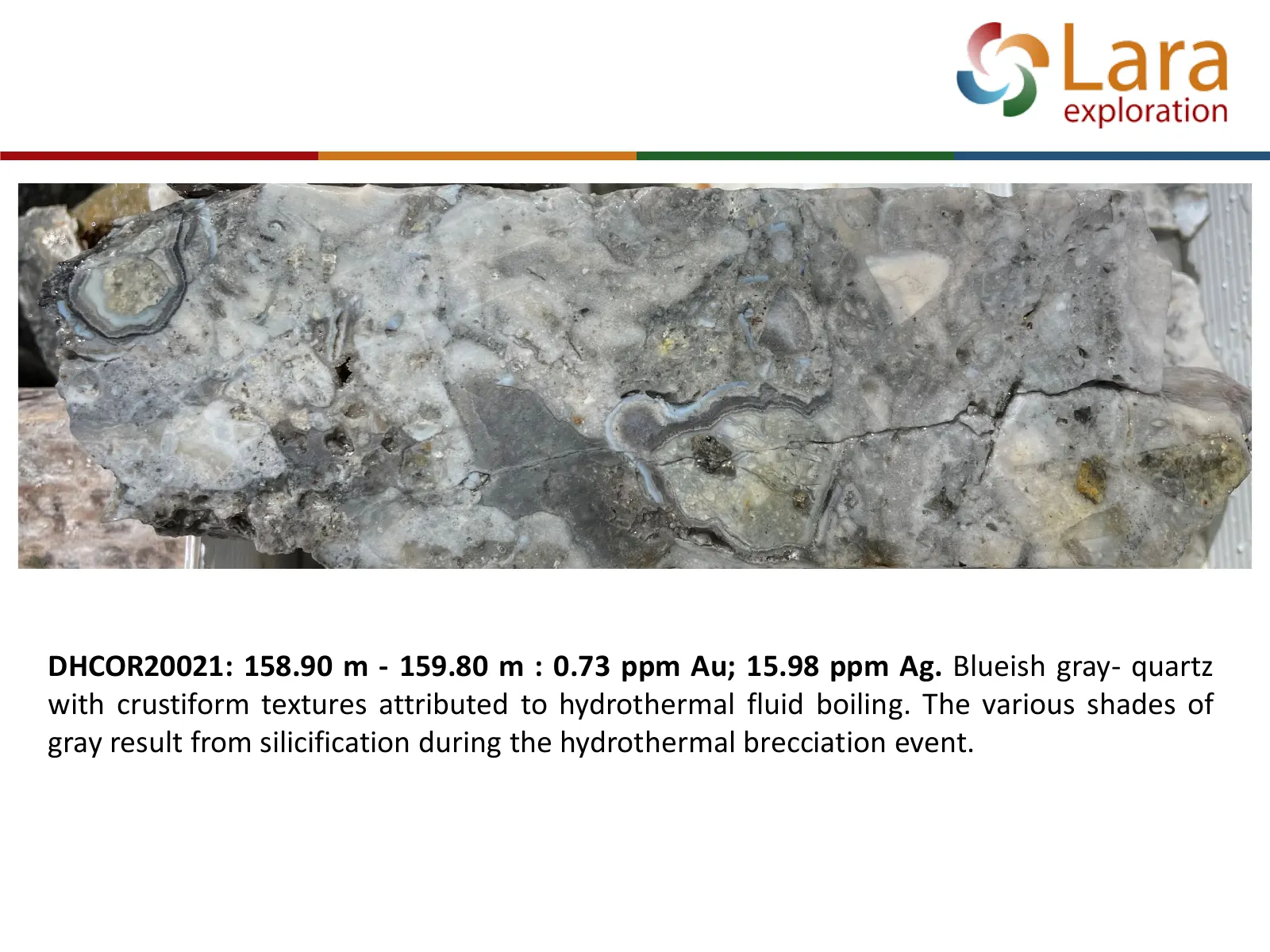
Slide 10: DHCOR20021: 158.90–159.80 m core
DHCOR20021: 158.90 m - 159.80 m : 0.73 ppm Au; 15.98 ppm Ag. Blueish gray- quartz with crustiform textures attributed to hydrothermal fluid boiling. The various shades of gray result from silicification during the hydrothermal brecciation event.
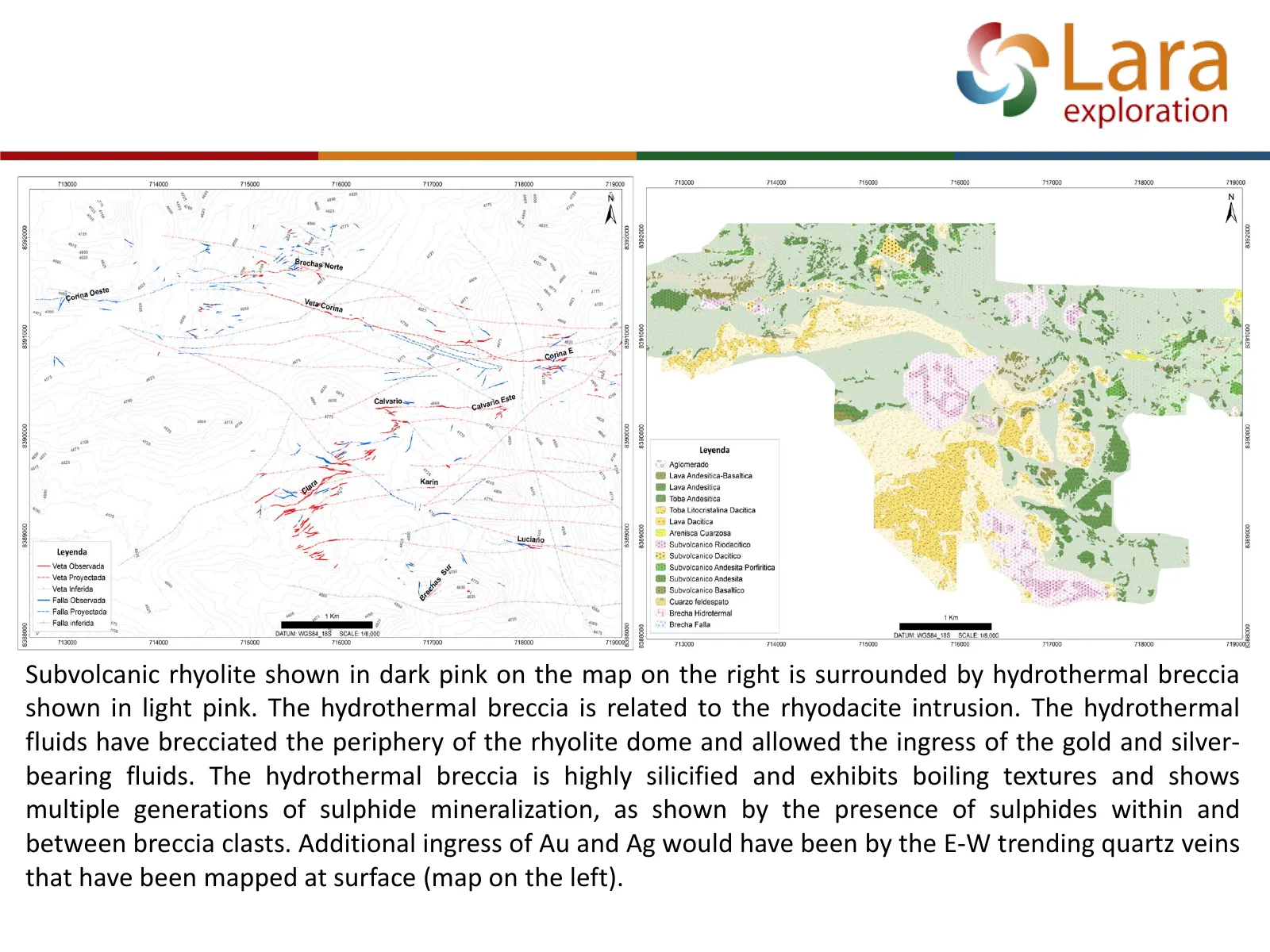
Slide 11: Subvolcanic rhyolite surrounded by hydrothermal breccia
Subvolcanic rhyolite shown in dark pink on the map on the right is surrounded by hydrothermal breccia shown in light pink. The hydrothermal breccia is related to the rhyodacite intrusion. The hydrothermal fluids have brecciated the periphery of the rhyolite dome and allowed the ingress of the gold a
Source: Internet Archive copy of laraexploration.com
More decks from Lara Exploration Ltd.
 Investor Presentation (October 2026)32 slides · October 2026
 Investor Presentation (May 2026)31 slides · May 2026
 Investor Presentation (March 2026)31 slides · March 2026
 Investor Presentation (October 2025)30 slides · October 2025
 Investor Presentation (July 2025)29 slides · July 2025
 Investor Presentation (January 2024)24 slides · Jan 23, 2024