Wave Life Sciences Ltd. · NASDAQ:WVE
Wave Life Sciences — Investor Presentation (January 2026)
62 slides from Wave Life Sciences's investor presentation, Jan 12, 2026

Slide 1: Wave Life Sciences Corporate Presentation
Exhibit 99.2 Wave Life Sciences Corporate Presentation January 12, 2026

Slide 2: Forward-looking statements
Forward-looking statements This document contains forward-looking statements. All statements other than statements of historical facts contained in this document, including statements regarding possible or assumed future results of operations, preclinical and clinical studies, business strategies, r

Slide 3: Our Mission
Our Mission To unlock the broad potential of RNA medicines to transform human health 3
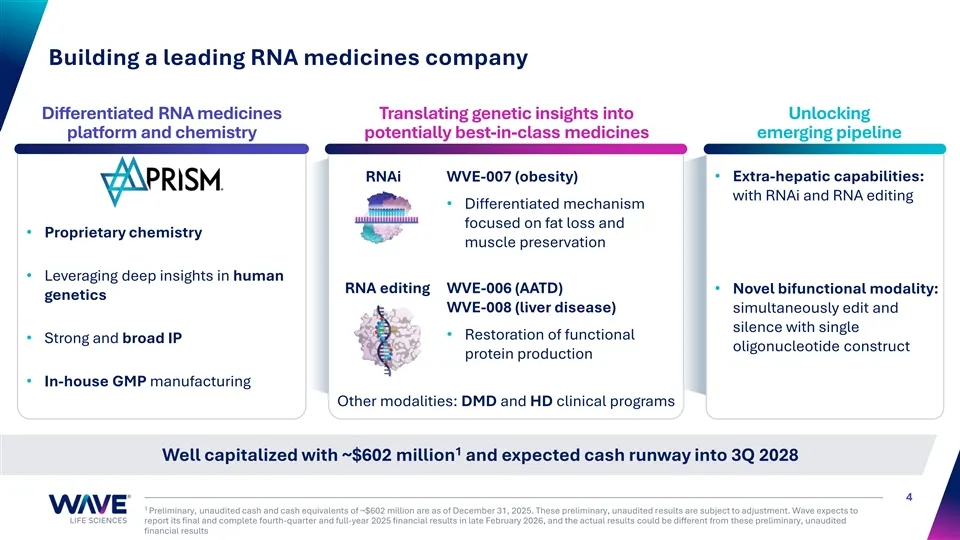
Slide 4: Building a leading RNA medicines company
Building a leading RNA medicines company Differentiated RNA medicines Translating genetic insights into Unlocking platform and chemistry potentially best-in-class medicines emerging pipeline RNAi WVE-007 (obesity)• Extra-hepatic capabilities: with RNAi and RNA editing • Differentiated mechanism focu
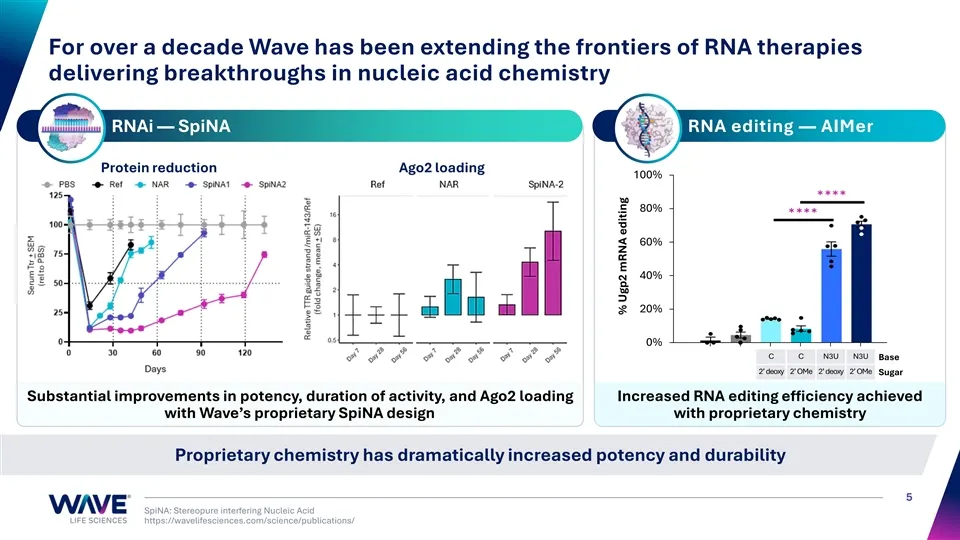
Slide 5: Extending the frontiers of RNA therapies with breakthroughs in nucleic acid chemistry
For over a decade Wave has been extending the frontiers of RNA therapies delivering breakthroughs in nucleic acid chemistry RNAi — SpiNA RNA editing — AIMer Protein reduction Ago2 loading 100% 80% 60% 40% 20% 0% C C N3U N3U Base 2’ deoxy 2’ OMe 2’ deoxy 2’ OMe Sugar Substantial improvements in poten
Slide 6: Robust, diversified RNA medicines pipeline
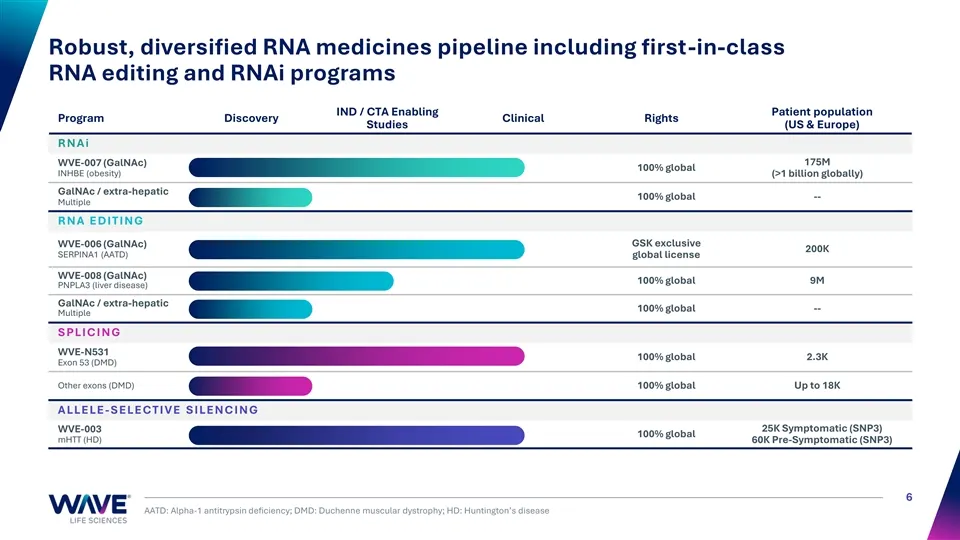
Robust, diversified RNA medicines pipeline including first-in-class RNA editing and RNAi programs IND / CTA Enabling Patient population Program Discovery Clinical Rights Studies (US & Europe) R N A i 175M WVE-007 (GalNAc) 100% global INHBE (obesity) (>1 billion globally) GalNAc / extra-hepatic 100%

Slide 7: WVE-007 GalNAc-siRNA silencing Obesity
WVE-007 GalNAc-siRNA silencing Obesity 7
Slide 8: Obesity is a metabolic disease in need of a treatment paradigm shift
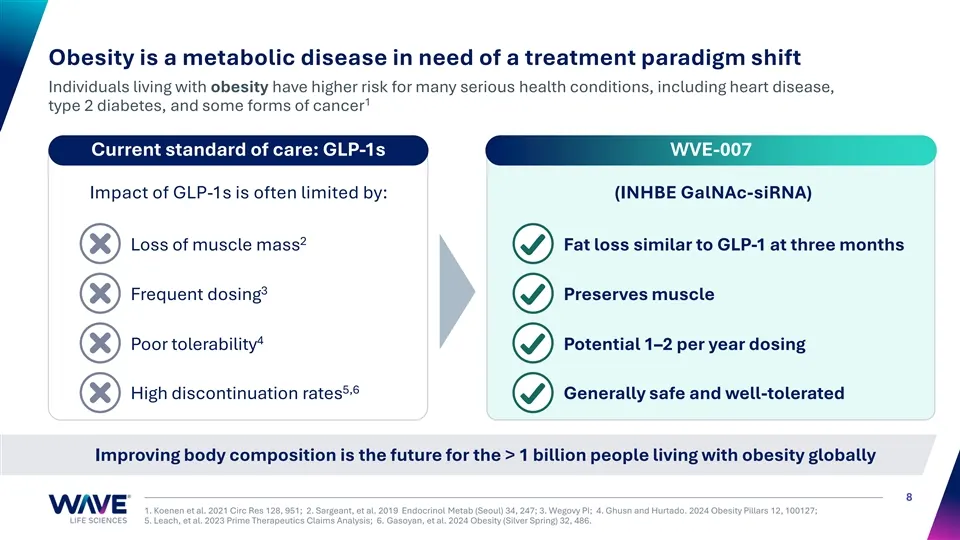
Obesity is a metabolic disease in need of a treatment paradigm shift Individuals living with obesity have higher risk for many serious health conditions, including heart disease, 1 type 2 diabetes, and some forms of cancer Current standard of care: GLP-1s WVE-007 Impact of GLP-1s is often limited by
Slide 9: Body composition improvements: reducing fat while preserving lean mass
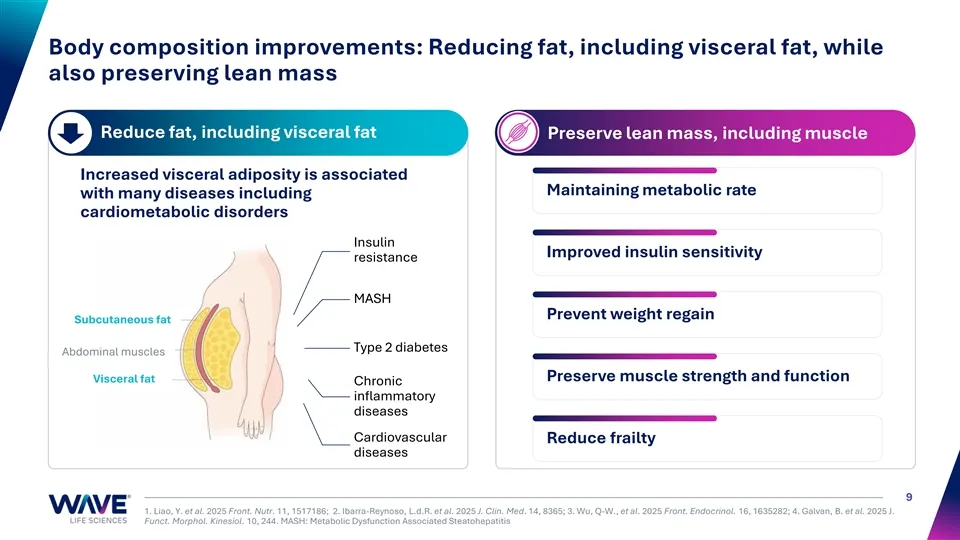
Body composition improvements: Reducing fat, including visceral fat, while also preserving lean mass Reduce fat, including visceral fat Preserve lean mass, including muscle Increased visceral adiposity is associated Maintaining metabolic rate with many diseases including cardiometabolic disorders In
Slide 10: Human genetic data show INHBE loss-of-function carriers have a healthy metabolic profile
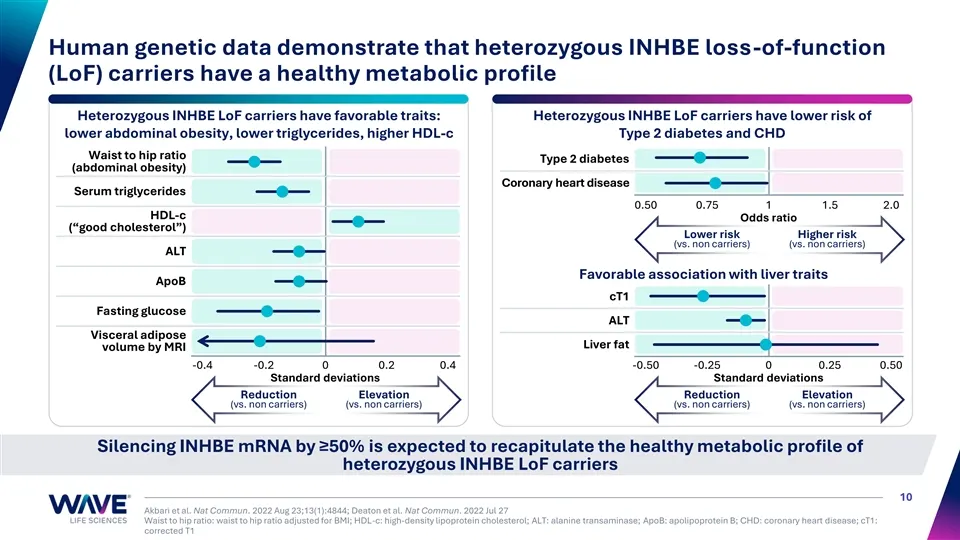
Human genetic data demonstrate that heterozygous INHBE loss-of-function (LoF) carriers have a healthy metabolic profile Heterozygous INHBE LoF carriers have favorable traits: Heterozygous INHBE LoF carriers have lower risk of lower abdominal obesity, lower triglycerides, higher HDL-c Type 2 diabetes
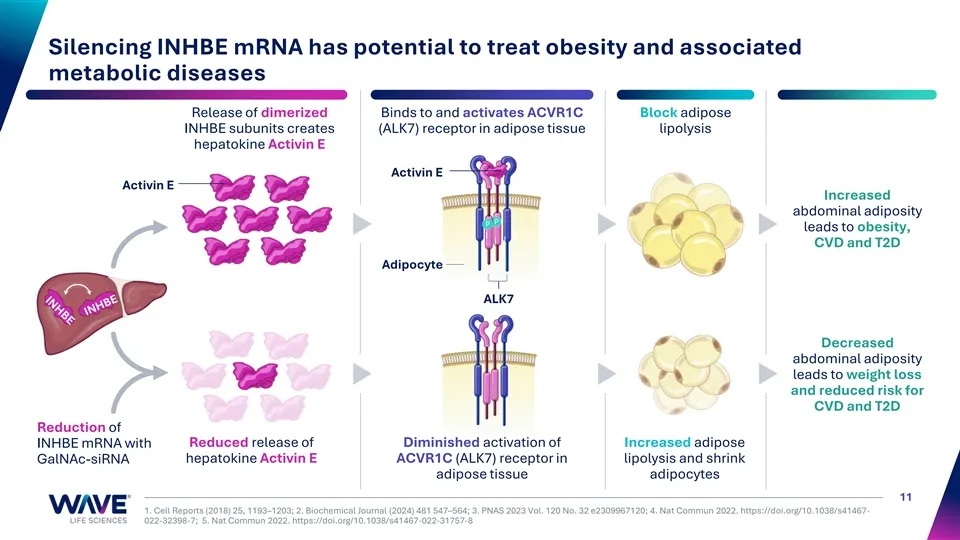
Slide 11: Silencing INHBE mRNA has potential to treat obesity
Silencing INHBE mRNA has potential to treat obesity and associated metabolic diseases Release of dimerized Binds to and activates ACVR1C Block adipose INHBE subunits creates (ALK7) receptor in adipose tissue lipolysis hepatokine Activin E Activin E Activin E Increased abdominal adiposity leads to ob
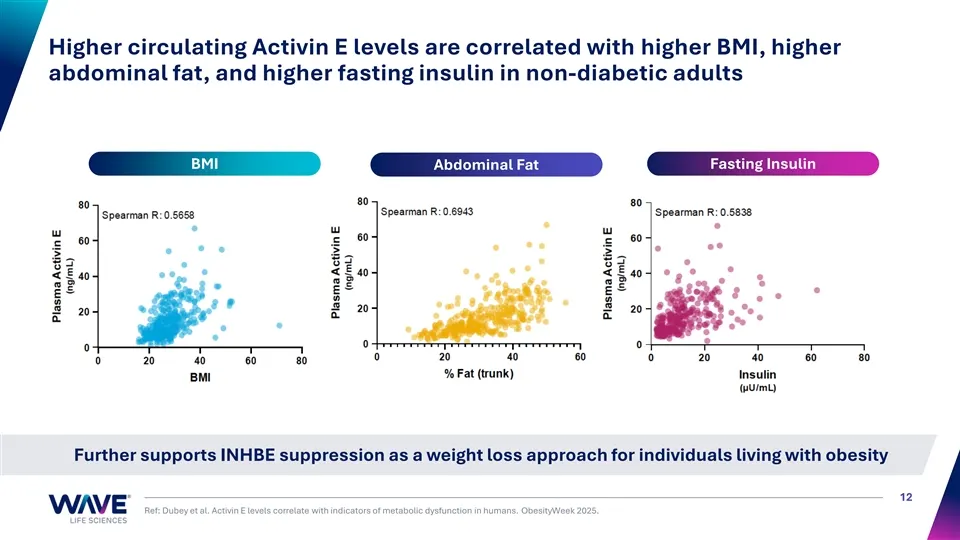
Slide 12: Higher circulating Activin E correlates with higher BMI and abdominal fat
Higher circulating Activin E levels are correlated with higher BMI, higher abdominal fat, and higher fasting insulin in non-diabetic adults BMI Fasting Insulin Abdominal Fat Further supports INHBE suppression as a weight loss approach for individuals living with obesity 12 Ref: Dubey et al. Activin
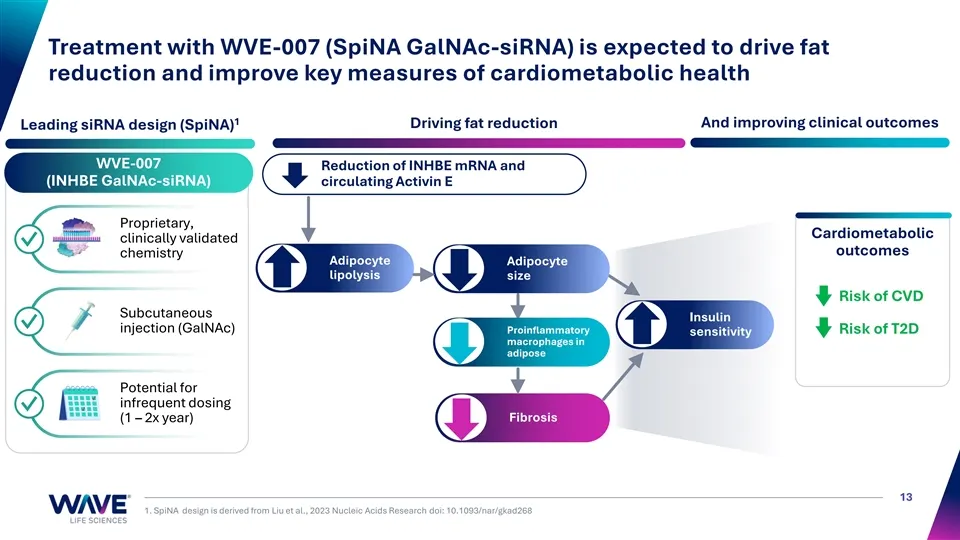
Slide 13: WVE-007 expected to drive fat reduction and improve cardiometabolic health
Treatment with WVE-007 (SpiNA GalNAc-siRNA) is expected to drive fat reduction and improve key measures of cardiometabolic health 1 Driving fat reduction And improving clinical outcomes Leading siRNA design (SpiNA) WVE-007 Reduction of INHBE mRNA and (INHBE GalNAc-siRNA) circulating Activin E Propri
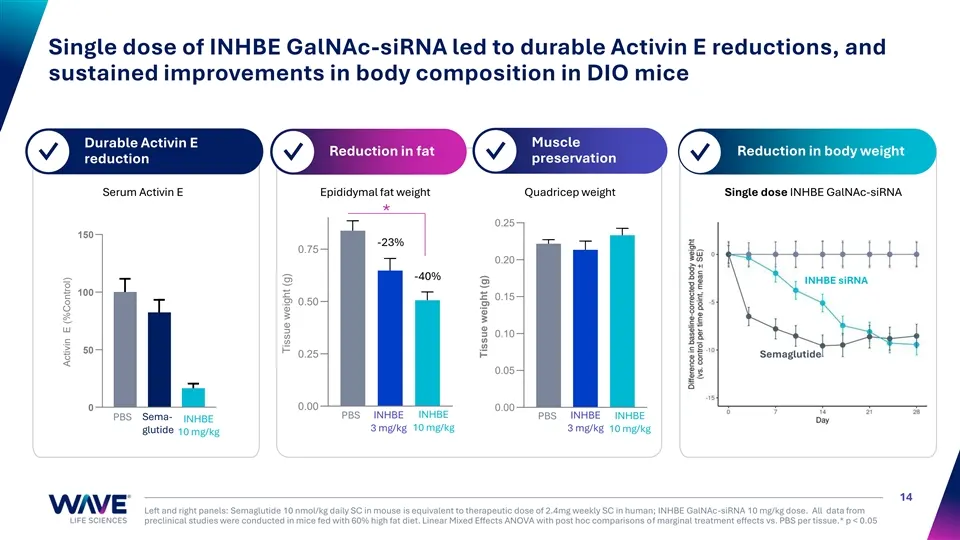
Slide 14: Single dose of INHBE GalNAc-siRNA in DIO mice
Single dose of INHBE GalNAc-siRNA led to durable Activin E reductions, and sustained improvements in body composition in DIO mice Muscle Durable Activin E Reduction in fat Reduction in body weight ✓ ✓ ✓ preservation ✓ reduction Serum Activin E Epididymal fat weight Quadricep weight Single dose INHBE
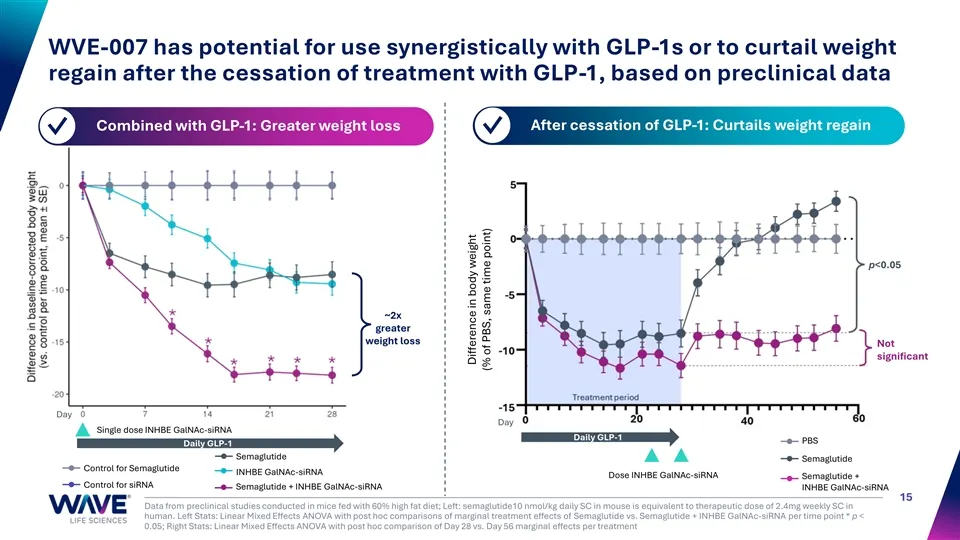
Slide 15: WVE-007 potential synergy with GLP-1s or to curtail weight regain
WVE-007 has potential for use synergistically with GLP-1s or to curtail weight regain after the cessation of treatment with GLP-1, based on preclinical data Combined with GLP-1: Greater weight loss After cessation of GLP-1: Curtails weight regain ✓ ✓ p<0.05 ~2x greater weight loss Not significant Da
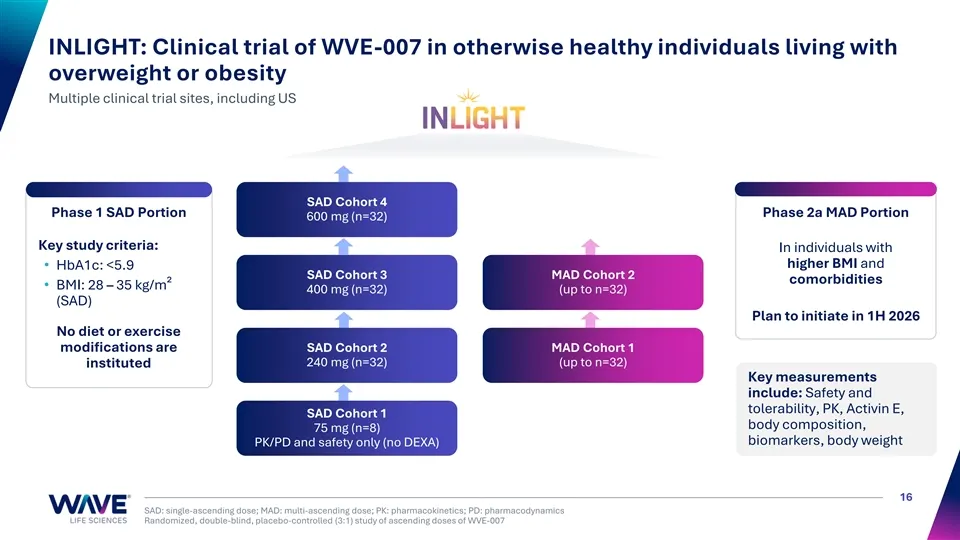
Slide 16: INLIGHT: Clinical trial of WVE-007
INLIGHT: Clinical trial of WVE-007 in otherwise healthy individuals living with overweight or obesity Multiple clinical trial sites, including US SAD Cohort 4 Phase 1 SAD Portion Phase 2a MAD Portion 600 mg (n=32) Key study criteria: In individuals with higher BMI and • HbA1c: <5.9 SAD Cohort 3 MAD
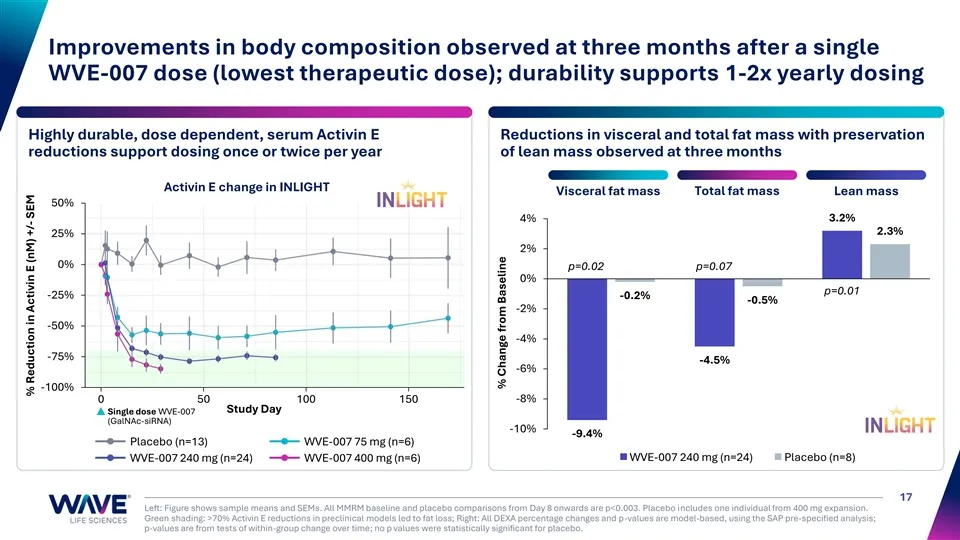
Slide 17: Improvements in body composition at three months after a single dose
Improvements in body composition observed at three months after a single WVE-007 dose (lowest therapeutic dose); durability supports 1-2x yearly dosing Highly durable, dose dependent, serum Activin E Reductions in visceral and total fat mass with preservation reductions support dosing once or twice
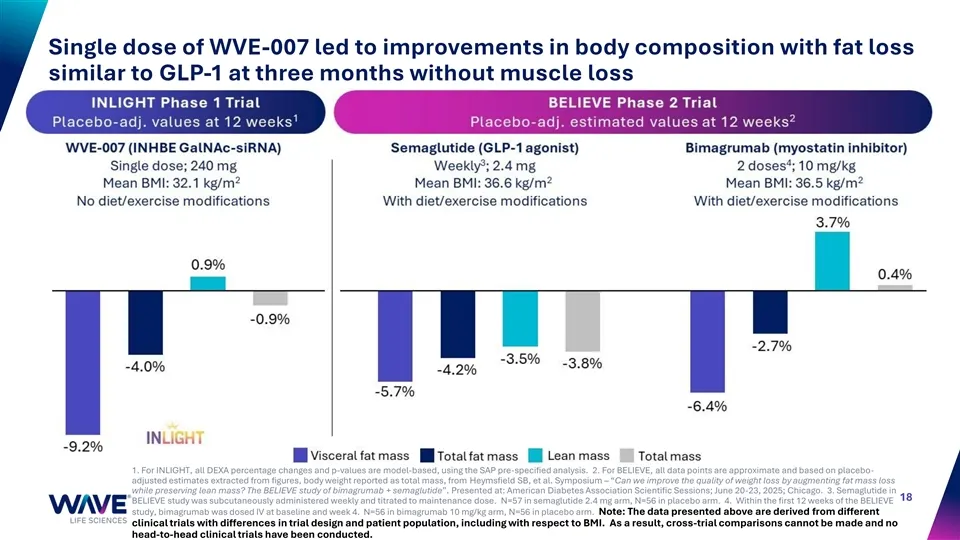
Slide 18: Fat loss similar to GLP-1 at three months without muscle loss
Single dose of WVE-007 led to improvements in body composition with fat loss similar to GLP-1 at three months without muscle loss 1. For INLIGHT, all DEXA percentage changes and p-values are model-based, using the SAP pre-specified analysis. 2. For BELIEVE, all data points are approximate and based
Slide 19: Visceral fat associated with insulin sensitivity, MASH, T2D and CVD
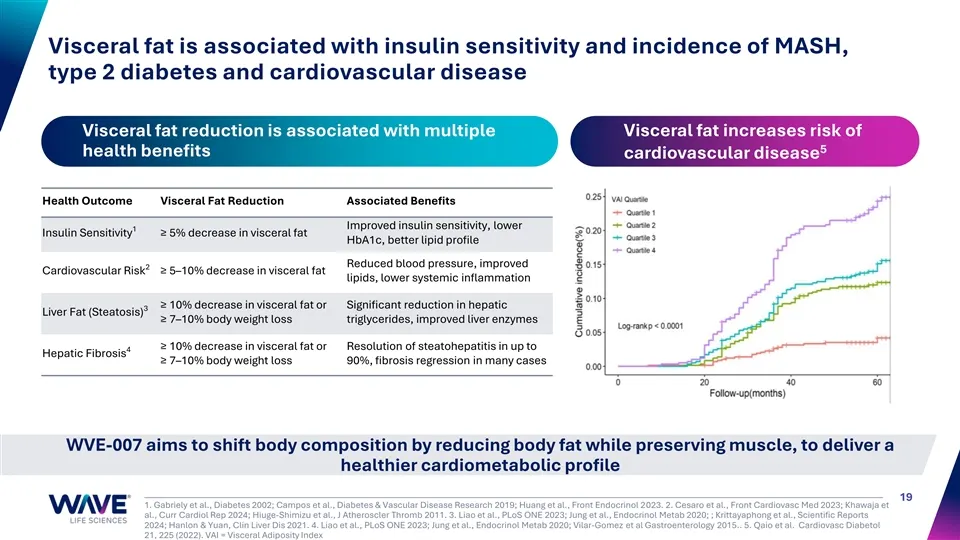
Visceral fat is associated with insulin sensitivity and incidence of MASH, type 2 diabetes and cardiovascular disease Visceral fat reduction is associated with multiple Visceral fat increases risk of 5 health benefits cardiovascular disease Health Outcome Visceral Fat Reduction Associated Benefits I
Slide 20: Potential to address more than one billion individuals with obesity
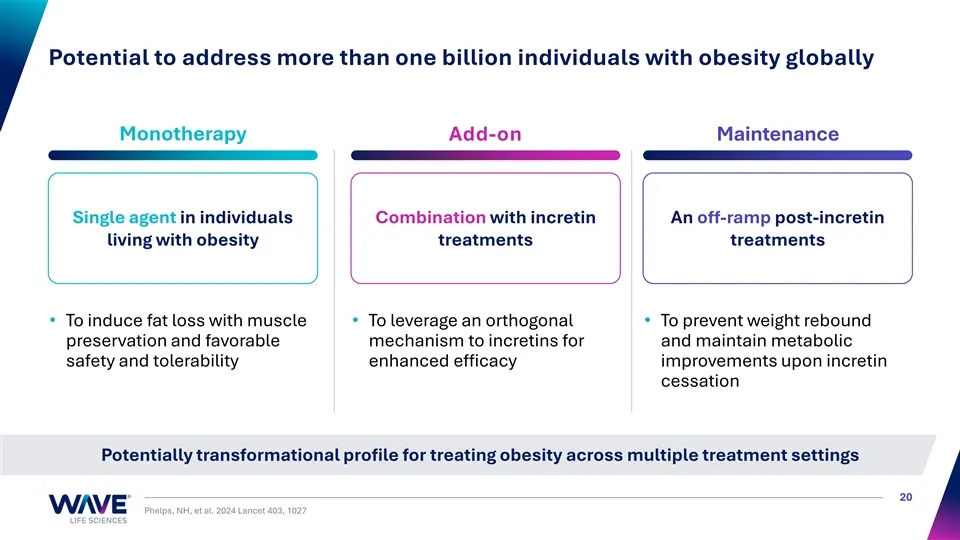
Potential to address more than one billion individuals with obesity globally Monotherapy Add-on Maintenance Single agent in individuals Combination with incretin An off-ramp post-incretin living with obesity treatments treatments • To induce fat loss with muscle • To leverage an orthogonal • To prev
Slide 21: Near term anticipated updates for WVE-007
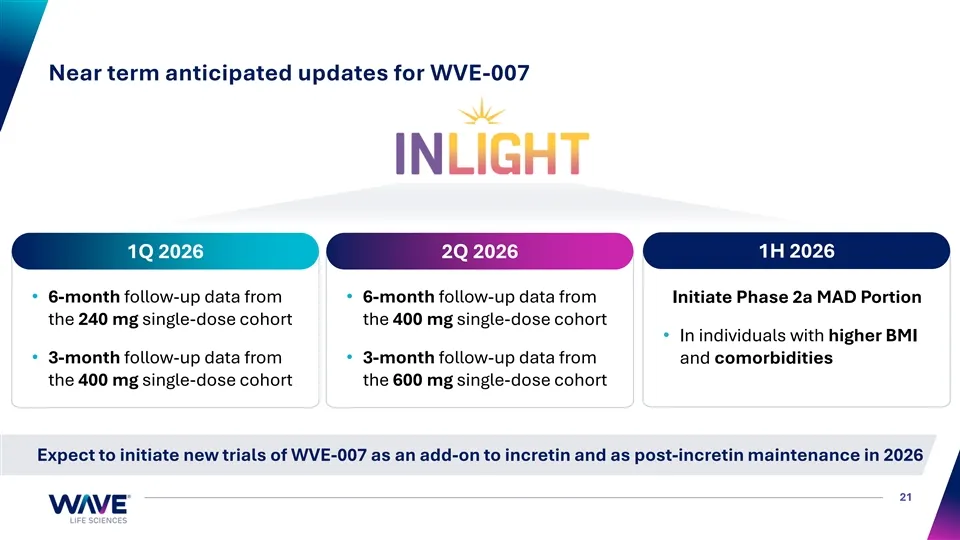
Near term anticipated updates for WVE-007 1H 2026 1Q 2026 2Q 2026 • 6-month follow-up data from • 6-month follow-up data from Initiate Phase 2a MAD Portion the 240 mg single-dose cohort the 400 mg single-dose cohort • In individuals with higher BMI • 3-month follow-up data from • 3-month follow-up d

Slide 22: WVE-006 RNA editing (AIMer) Alpha-1 antitrypsin deficiency
WVE-006 RNA editing (AIMer) Alpha-1 antitrypsin deficiency (AATD) 22
Slide 23: AATD impacts multiple organ systems and has limited treatment options
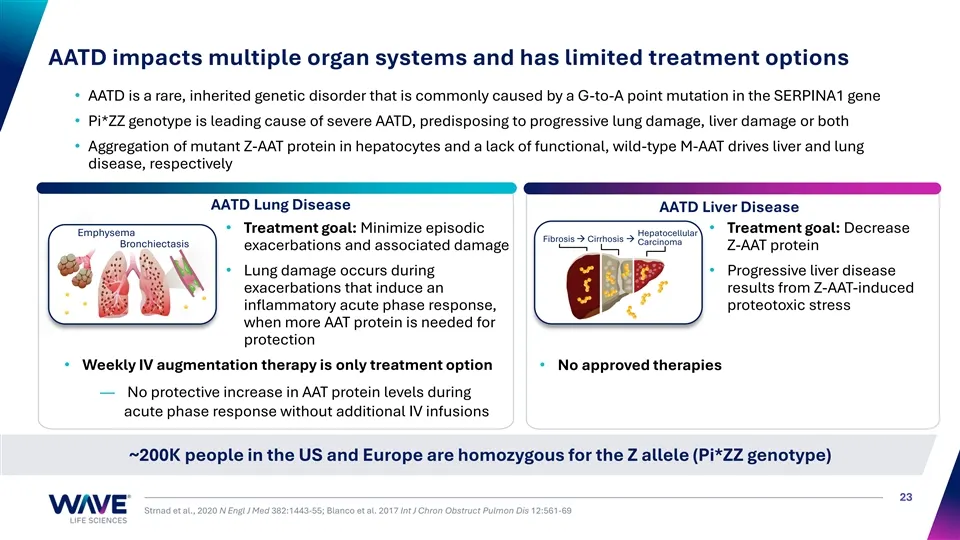
AATD impacts multiple organ systems and has limited treatment options • AATD is a rare, inherited genetic disorder that is commonly caused by a G-to-A point mutation in the SERPINA1 gene • Pi*ZZ genotype is leading cause of severe AATD, predisposing to progressive lung damage, liver damage or both •
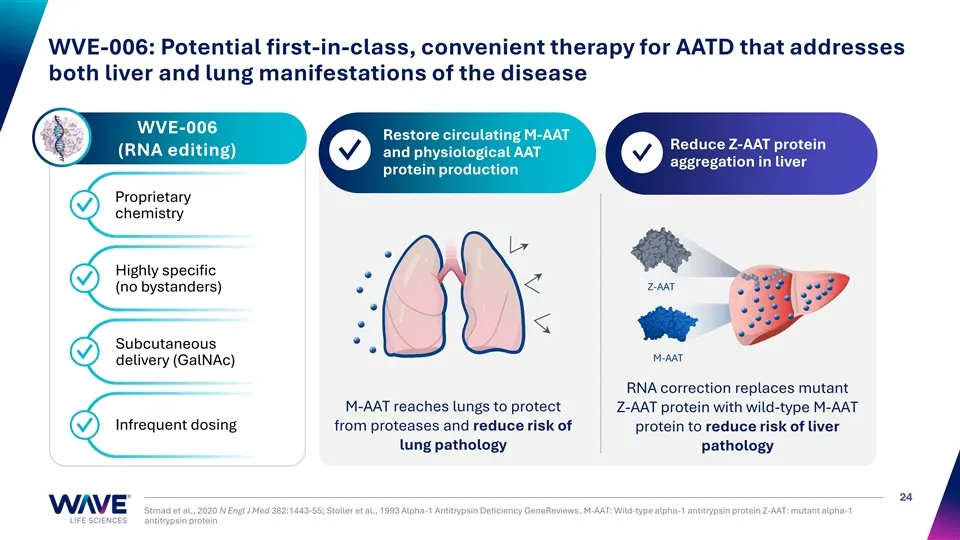
Slide 24: WVE-006: potential first-in-class therapy for AATD
WVE-006: Potential first-in-class, convenient therapy for AATD that addresses both liver and lung manifestations of the disease WVE-006 Restore circulating M-AAT 1 2 Reduce Z-AAT protein (RNA editing) and physiological AAT ✓ ✓ aggregation in liver protein production Proprietary ✓ chemistry Highly sp
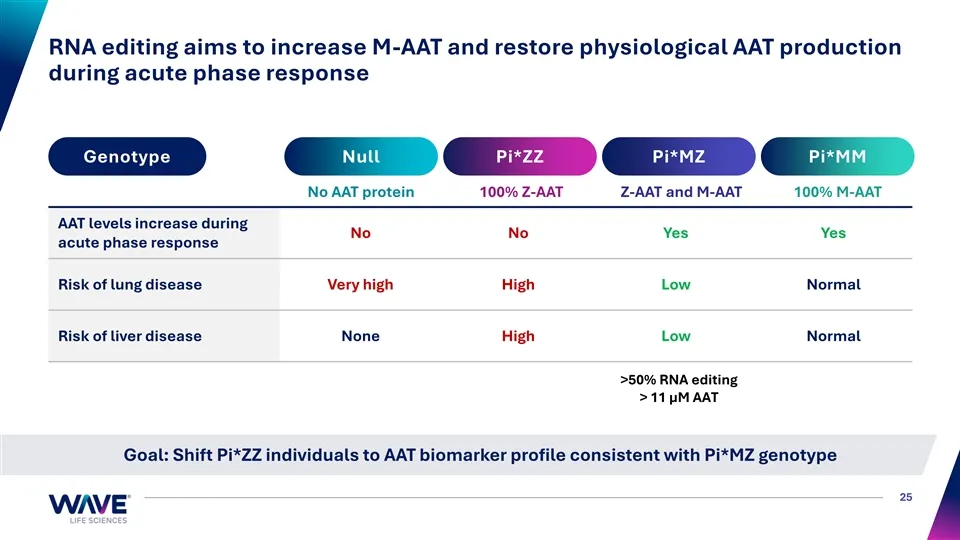
Slide 25: RNA editing aims to increase M-AAT and restore physiological AAT production
RNA editing aims to increase M-AAT and restore physiological AAT production during acute phase response Genotype Null Pi*ZZ Pi*MZ Pi*MM No AAT protein 100% Z-AAT Z-AAT and M-AAT 100% M-AAT AAT levels increase during No No Yes Yes acute phase response Risk of lung disease Very high High Low Normal Ri
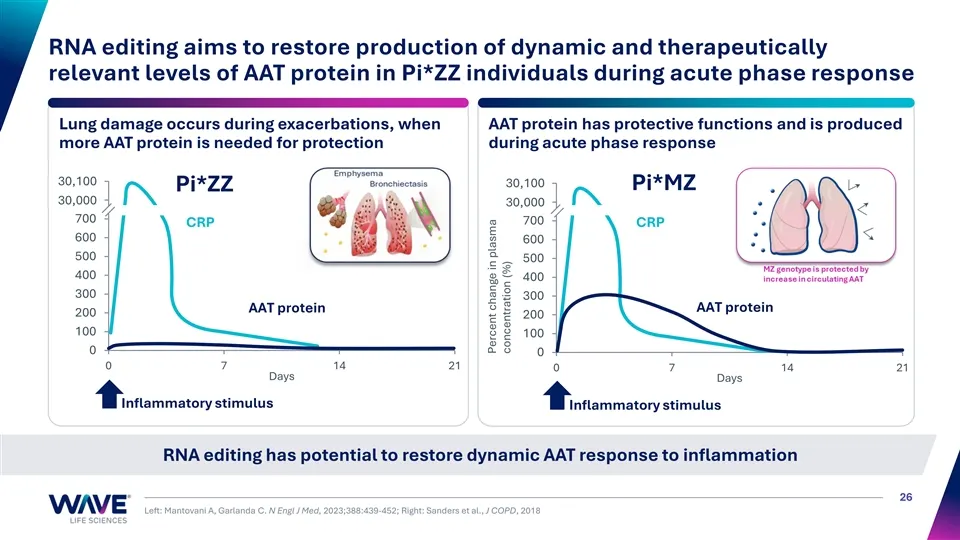
Slide 26: RNA editing aims to restore dynamic AAT levels during acute phase response
RNA editing aims to restore production of dynamic and therapeutically relevant levels of AAT protein in Pi*ZZ individuals during acute phase response Lung damage occurs during exacerbations, when AAT protein has protective functions and is produced more AAT protein is needed for protection during ac
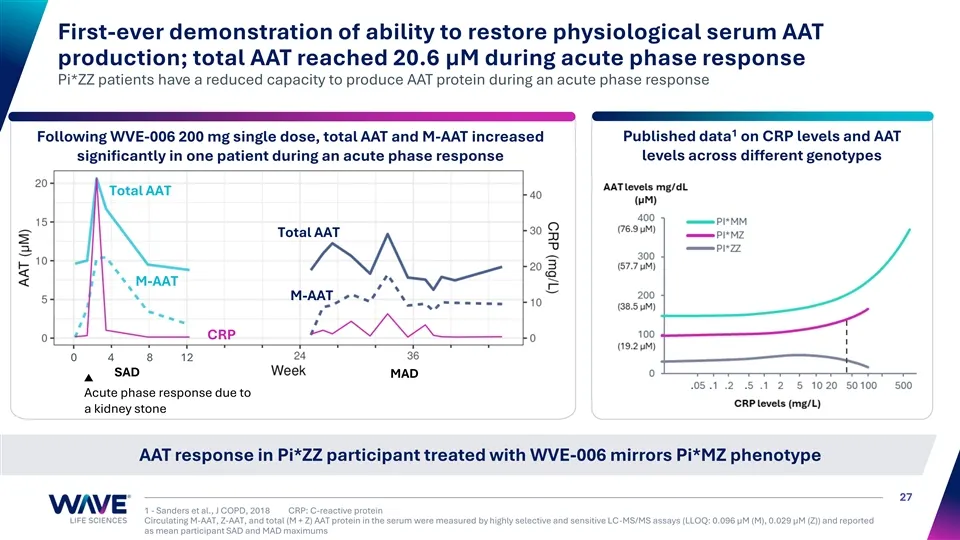
Slide 27: First demonstration of restoring physiological serum AAT production
First-ever demonstration of ability to restore physiological serum AAT production; total AAT reached 20.6 µM during acute phase response Pi*ZZ patients have a reduced capacity to produce AAT protein during an acute phase response 1 Following WVE-006 200 mg single dose, total AAT and M-AAT increased
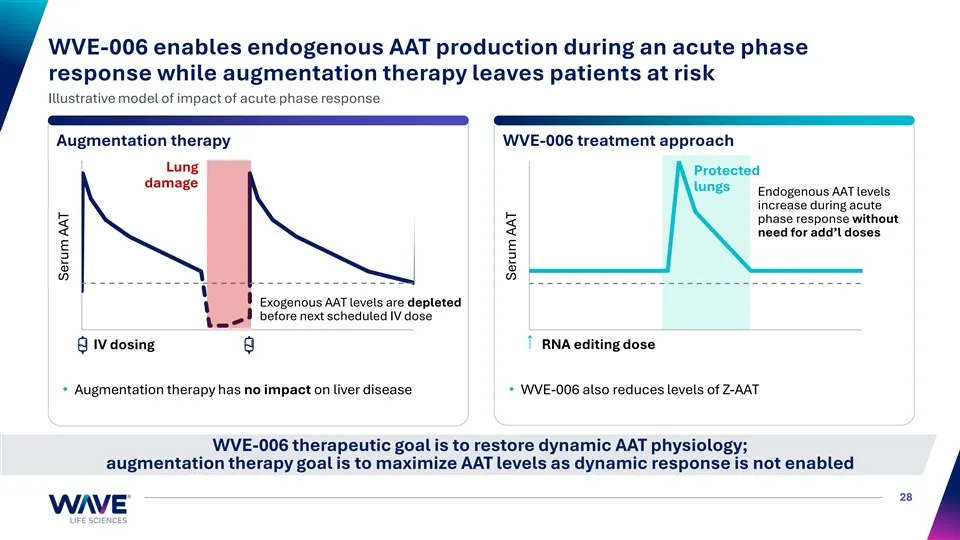
Slide 28: WVE-006 enables endogenous AAT production versus augmentation therapy
WVE-006 enables endogenous AAT production during an acute phase response while augmentation therapy leaves patients at risk Illustrative model of impact of acute phase response Augmentation therapy WVE-006 treatment approach Lung Protected damage lungs Endogenous AAT levels increase during acute pha
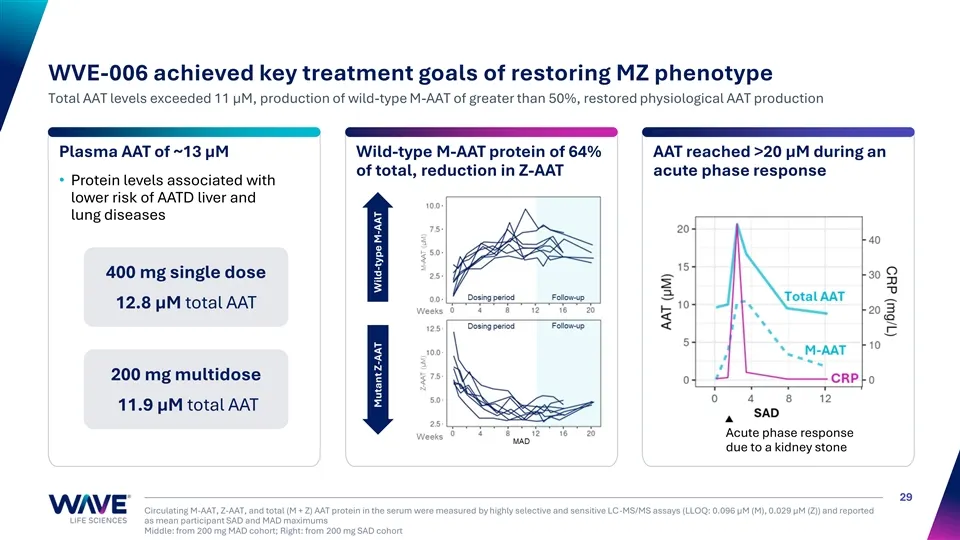
Slide 29: WVE-006 achieved key treatment goals of restoring MZ phenotype
CRP (mg/L) WVE-006 achieved key treatment goals of restoring MZ phenotype Total AAT levels exceeded 11 µM, production of wild-type M-AAT of greater than 50%, restored physiological AAT production Plasma AAT of ~13 µM Wild-type M-AAT protein of 64% AAT reached >20 μM during an of total, reduction in
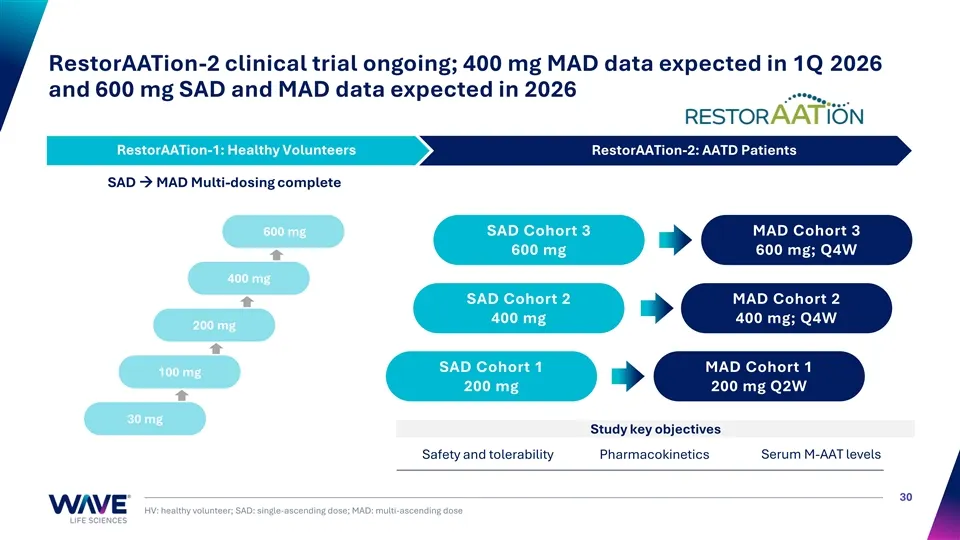
Slide 30: RestorAATion-2 clinical trial ongoing
RestorAATion-2 clinical trial ongoing; 400 mg MAD data expected in 1Q 2026 and 600 mg SAD and MAD data expected in 2026 RestorAATion-1: Healthy Volunteers RestorAATion-2: AATD Patients RestorAATion-1: Healthy Volunteers SAD → MAD Multi-dosing complete 600 mg SAD Cohort 3 MAD Cohort 3 600 mg 600 mg;

Slide 31: WVE-008 RNA editing (AIMer) PNPLA3 I148M liver disease
WVE-008 RNA editing (AIMer) PNPLA3 I148M liver disease 31
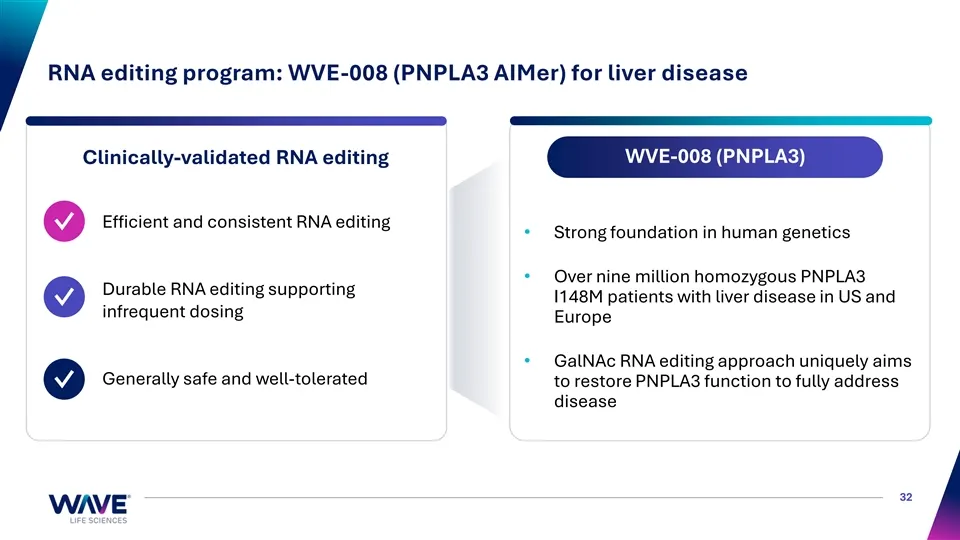
Slide 32: RNA editing program: WVE-008 for liver disease
RNA editing program: WVE-008 (PNPLA3 AIMer) for liver disease WVE-008 (PNPLA3) Clinically-validated RNA editing Efficient and consistent RNA editing ✓ • Strong foundation in human genetics • Over nine million homozygous PNPLA3 Durable RNA editing supporting I148M patients with liver disease in US an
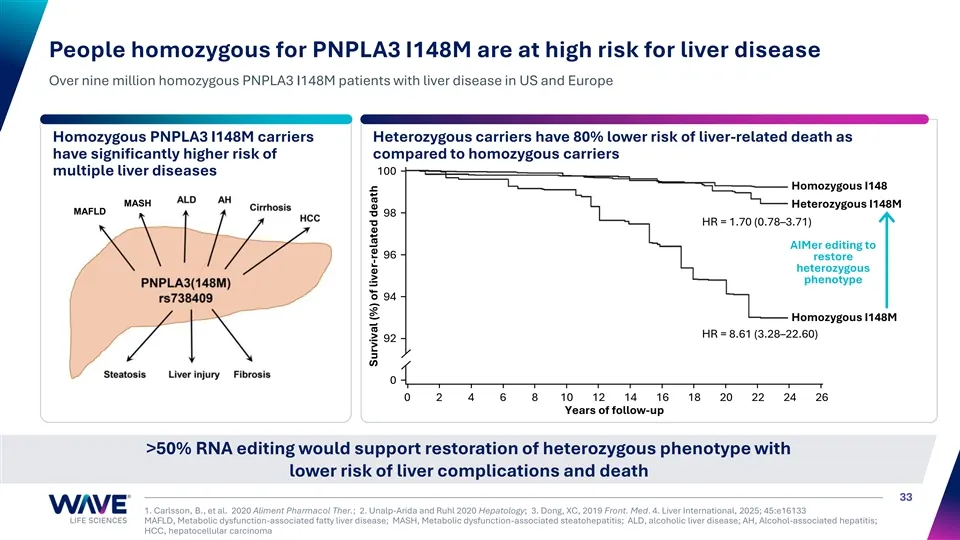
Slide 33: People homozygous for PNPLA3 I148M are at high risk for liver disease
People homozygous for PNPLA3 I148M are at high risk for liver disease Over nine million homozygous PNPLA3 I148M patients with liver disease in US and Europe Homozygous PNPLA3 I148M carriers Heterozygous carriers have 80% lower risk of liver-related death as have significantly higher risk of compared
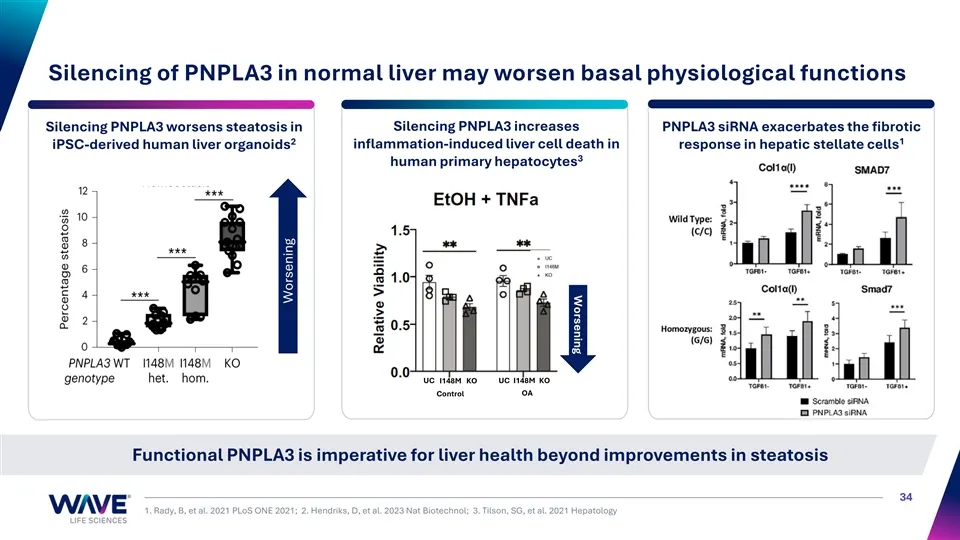
Slide 34: Silencing PNPLA3 in normal liver may worsen physiological functions
Worsening Silencing of PNPLA3 in normal liver may worsen basal physiological functions Silencing PNPLA3 increases Silencing PNPLA3 worsens steatosis in PNPLA3 siRNA exacerbates the fibrotic 1 2 iPSC-derived human liver organoids inflammation-induced liver cell death in response in hepatic stellate c
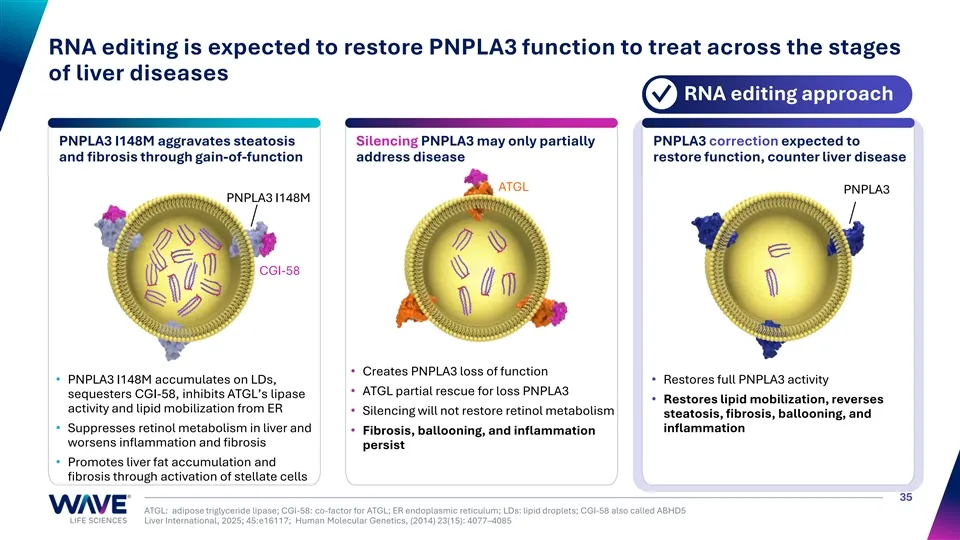
Slide 35: RNA editing expected to restore PNPLA3 function across stages of liver disease
RNA editing is expected to restore PNPLA3 function to treat across the stages of liver diseases RNA editing approach ✓ PNPLA3 I148M aggravates steatosis Silencing PNPLA3 may only partially PNPLA3 correction expected to and fibrosis through gain-of-function address disease restore function, counter l
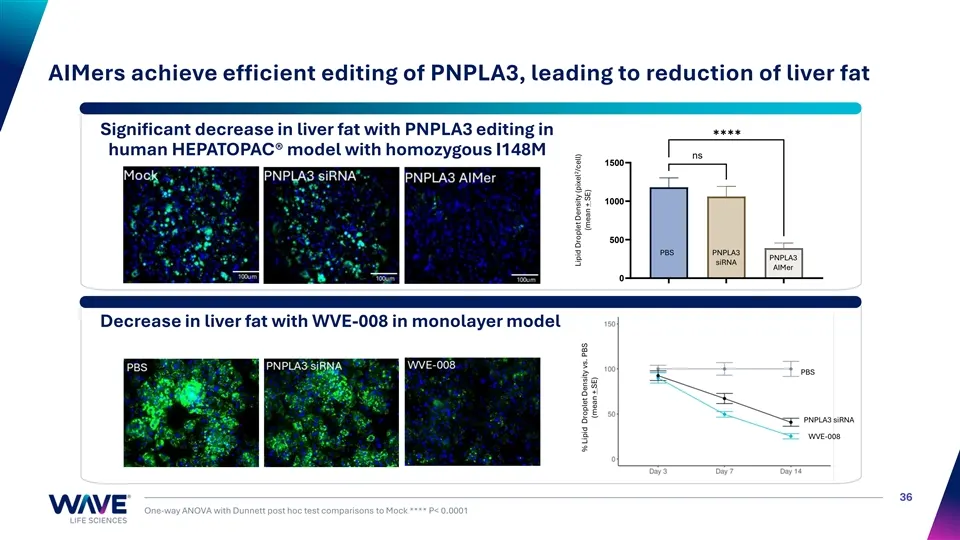
Slide 36: AIMers achieve efficient editing of PNPLA3, reducing liver fat
AIMers achieve efficient editing of PNPLA3, leading to reduction of liver fat ✱✱✱✱ Significant decrease in liver fat with PNPLA3 editing in human HEPATOPAC® model with homozygous I148M ns 1500 1000 500 PBS PNPLA3 PNPLA3 siRNA AIMer 0 Decrease in liver fat with WVE-008 in monolayer model PNPLA3 siRNA
Slide 37: WVE-008: potential first-in-class disease modifying therapy
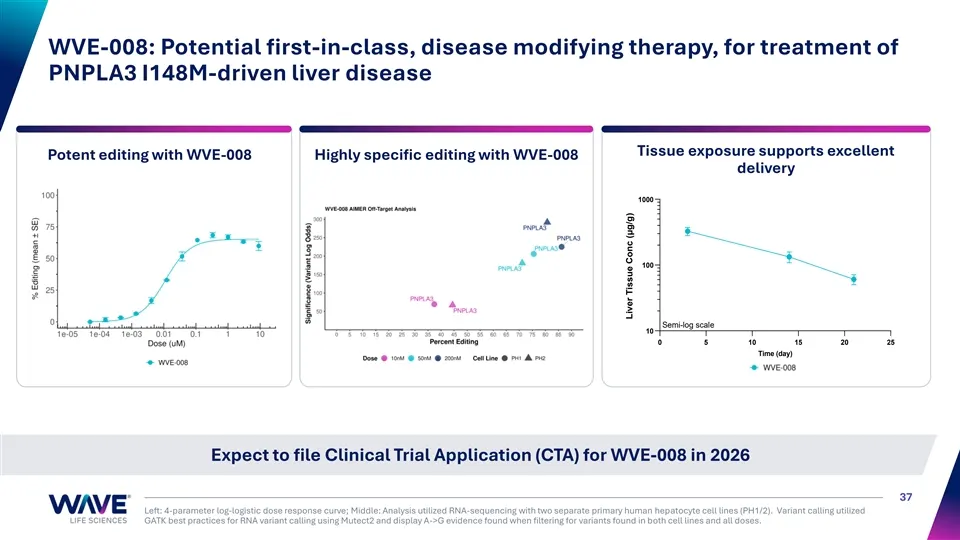
WVE-008: Potential first-in-class, disease modifying therapy, for treatment of PNPLA3 I148M-driven liver disease Tissue exposure supports excellent Potent editing with WVE-008 Highly specific editing with WVE-008 delivery 1000 100 Semi-log scale 10 0 5 10 15 20 25 Time (day) Expect to file Clinical

Slide 38: Single oligonucleotide construct: bifunctional modality
Single oligonucleotide construct Bifunctional modality Simultaneously knockdown and edit RNA 38
Slide 39: Bifunctional modality to simultaneously knockdown and edit RNA
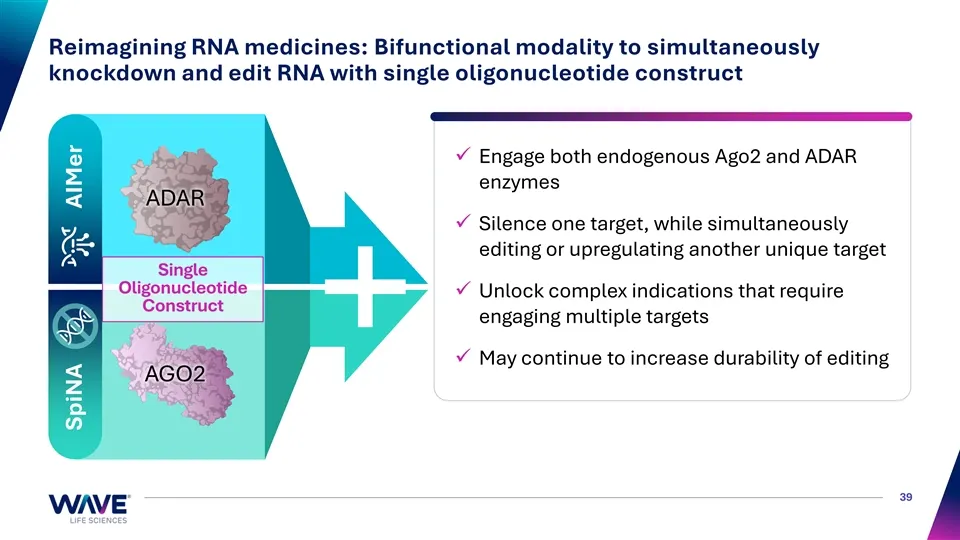
Reimagining RNA medicines: Bifunctional modality to simultaneously knockdown and edit RNA with single oligonucleotide construct ✓ Engage both endogenous Ago2 and ADAR enzymes ADAR ✓ Silence one target, while simultaneously editing or upregulating another unique target Single Oligonucleotide ✓ Unlock
Slide 40: Single construct can upregulate and silence protein in vitro
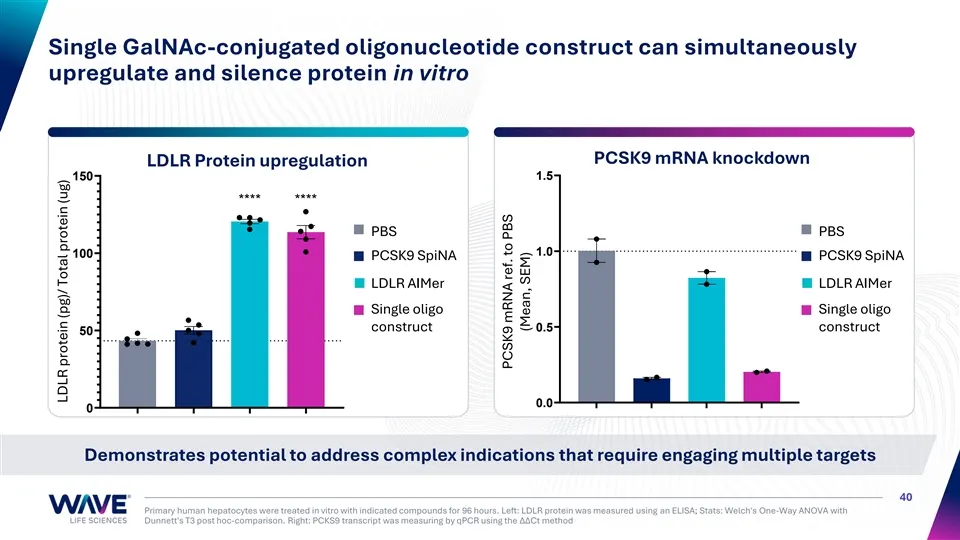
Single GalNAc-conjugated oligonucleotide construct can simultaneously upregulate and silence protein in vitro PCSK9 mRNA knockdown LDLR Protein upregulation 1.5 150 **** **** PBS PBS 1.0 100 PCSK9 SpiNA PCSK9 SpiNA LDLR AIMer LDLR AIMer Single oligo Single oligo construct 0.5 construct 50 0.0 0 Demo

Slide 41: WVE-N531 Splicing Duchenne muscular dystrophy
WVE-N531 Splicing Duchenne muscular dystrophy 41
Slide 42: Advancing WVE-N531 in exon amenable DMD
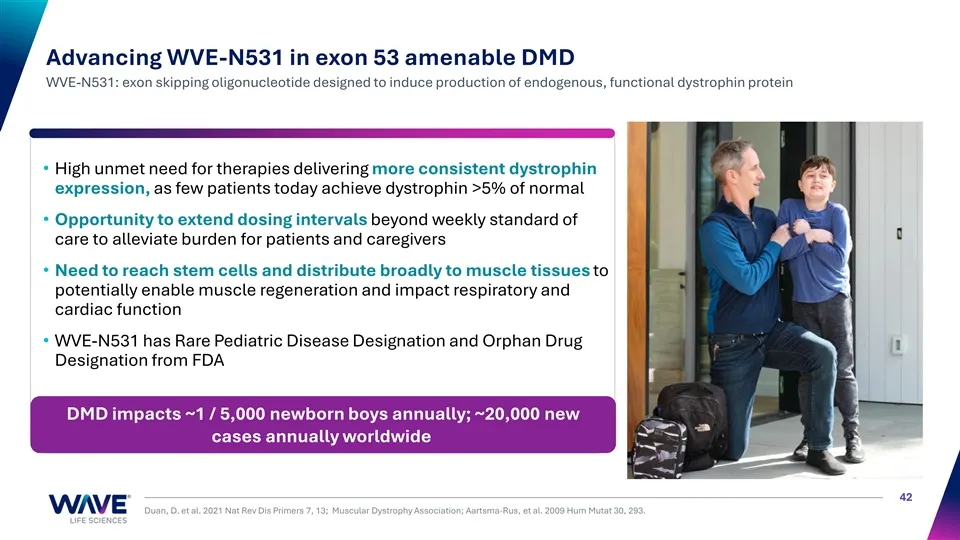
Advancing WVE-N531 in exon 53 amenable DMD WVE-N531: exon skipping oligonucleotide designed to induce production of endogenous, functional dystrophin protein • High unmet need for therapies delivering more consistent dystrophin expression, as few patients today achieve dystrophin >5% of normal • Opp
Slide 43: FORWARD-53 48-week clinical trial results
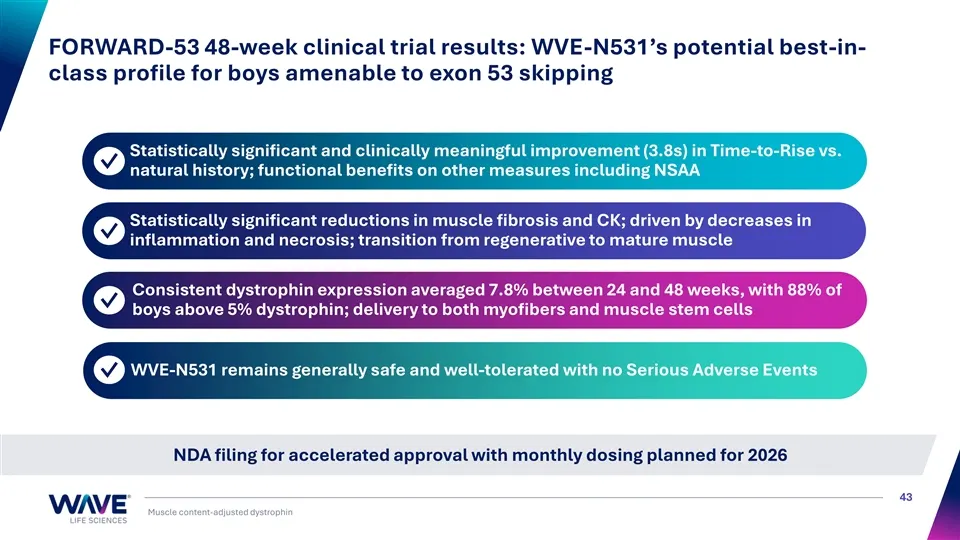
FORWARD-53 48-week clinical trial results: WVE-N531’s potential best-in- class profile for boys amenable to exon 53 skipping Statistically significant and clinically meaningful improvement (3.8s) in Time-to-Rise vs. ✓ natural history; functional benefits on other measures including NSAA Statisticall
Slide 44: Consistent dystrophin expression and exon skipping
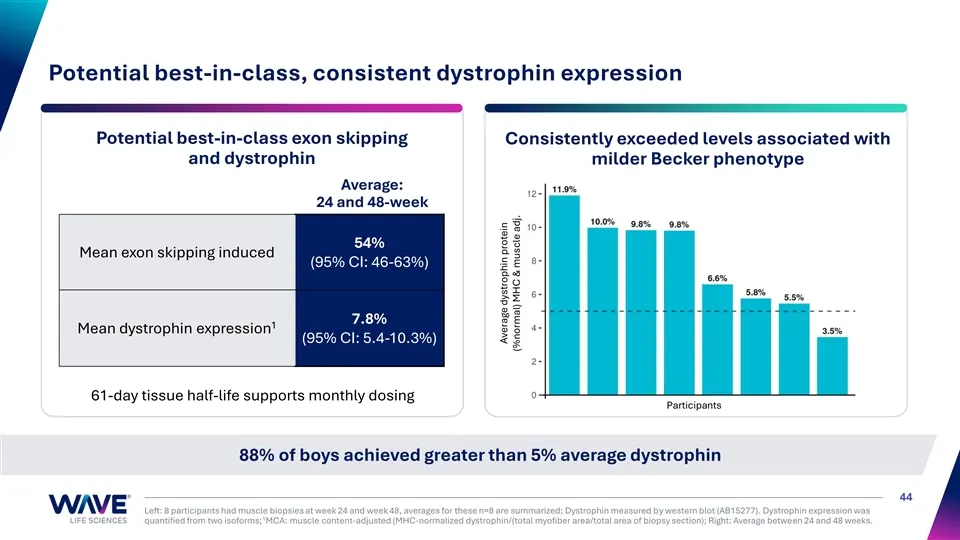
Potential best-in-class, consistent dystrophin expression Potential best-in-class exon skipping Consistently exceeded levels associated with and dystrophin milder Becker phenotype Average: 24 and 48-week 54% Mean exon skipping induced (95% CI: 46-63%) 7.8% 1 Mean dystrophin expression (95% CI: 5.4-1
Slide 45: WVE-N531 appears to shift dystrophic muscle towards healthy muscle
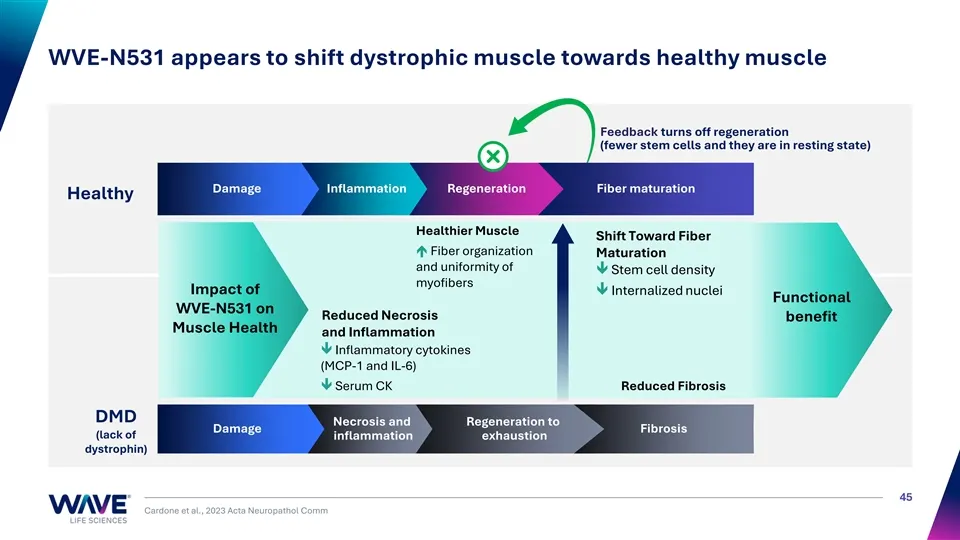
WVE-N531 appears to shift dystrophic muscle towards healthy muscle Feedback turns off regeneration (fewer stem cells and they are in resting state) Damage Inflammation Regeneration Fiber maturation Healthy Healthier Muscle Shift Toward Fiber é Fiber organization Maturation and uniformity of ê Stem c
Slide 46: Evidence of reversal of fibrosis across majority of participants
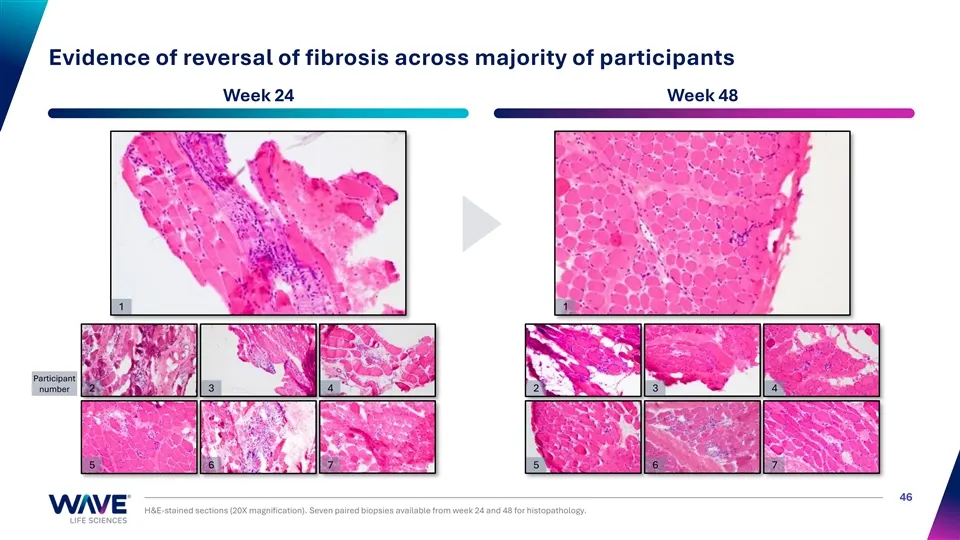
Evidence of reversal of fibrosis across majority of participants Week 24 Week 48 1 1 Participant number 2 3 4 2 3 4 5 6 7 5 6 7 46 H&E-stained sections (20X magnification). Seven paired biopsies available from week 24 and 48 for histopathology.
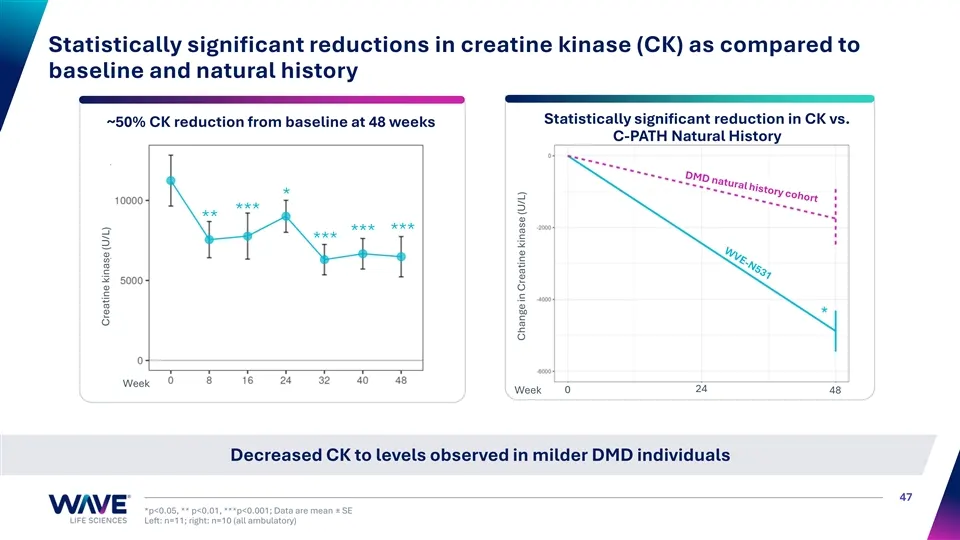
Slide 47: Statistically significant reductions in creatine kinase
Statistically significant reductions in creatine kinase (CK) as compared to baseline and natural history Statistically significant reduction in CK vs. ~50% CK reduction from baseline at 48 weeks C-PATH Natural History * *** ** *** *** *** Week 24 Week 0 48 Decreased CK to levels observed in milder D
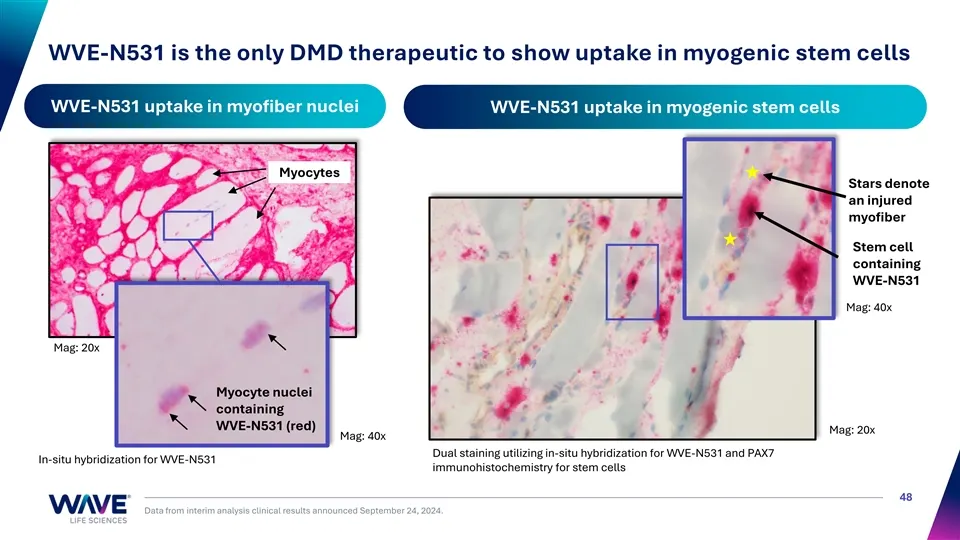
Slide 48: Only DMD therapeutic to show uptake in myogenic stem cells
WVE-N531 is the only DMD therapeutic to show uptake in myogenic stem cells WVE-N531 uptake in myofiber nuclei WVE-N531 uptake in myogenic stem cells Myocytes Stars denote an injured myofiber Stem cell containing WVE-N531 Mag: 40x Mag: 20x Myocyte nuclei containing WVE-N531 (red) Mag: 20x Mag: 40x Du
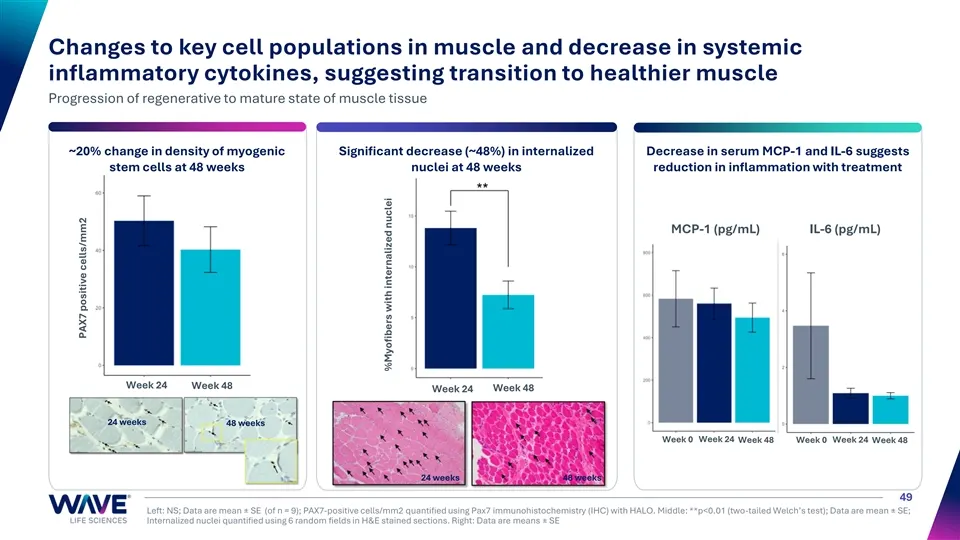
Slide 49: Changes to key cell populations and decrease in inflammatory cytokines
Changes to key cell populations in muscle and decrease in systemic inflammatory cytokines, suggesting transition to healthier muscle Progression of regenerative to mature state of muscle tissue ~20% change in density of myogenic Significant decrease (~48%) in internalized Decrease in serum MCP-1 and
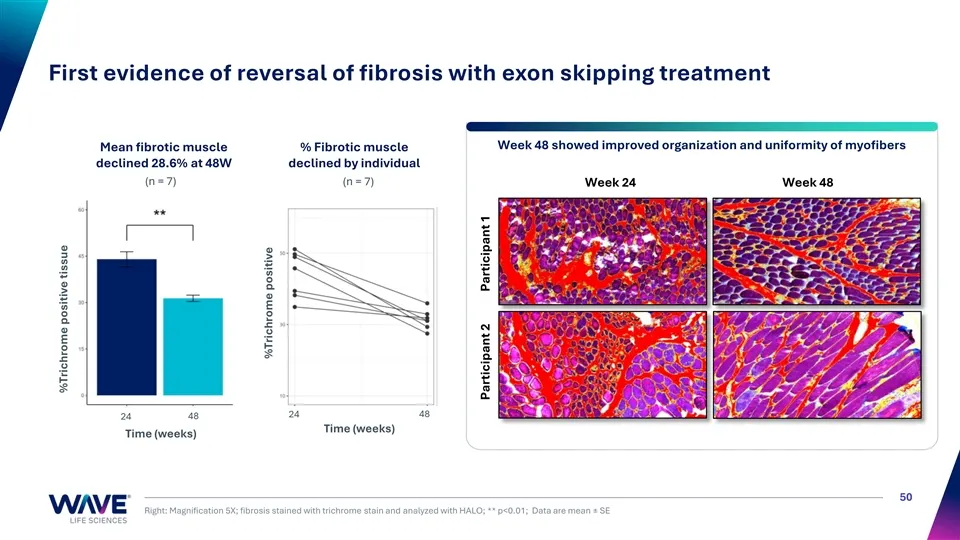
Slide 50: First evidence of reversal of fibrosis with exon skipping treatment
First evidence of reversal of fibrosis with exon skipping treatment Week 48 showed improved organization and uniformity of myofibers Mean fibrotic muscle % Fibrotic muscle declined 28.6% at 48W declined by individual (n = 7) (n = 7) Week 24 Week 48 24 48 24 48 Time (weeks) Time (weeks) 50 Right: Mag
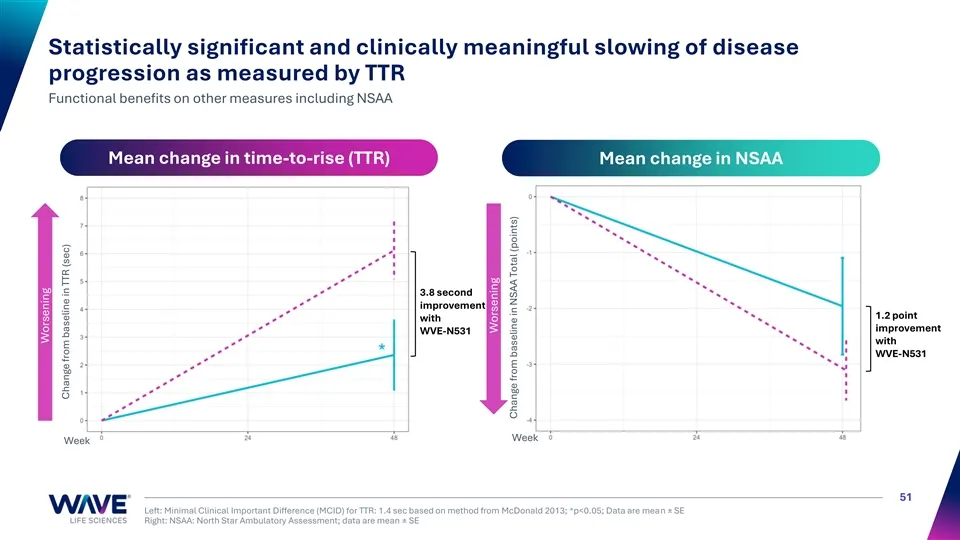
Slide 51: Clinically meaningful slowing of disease progression by TTR and NSAA
Statistically significant and clinically meaningful slowing of disease progression as measured by TTR Functional benefits on other measures including NSAA Mean change in time-to-rise (TTR) Mean change in NSAA 3.8 second improvement 1.2 point with improvement WVE-N531 with WVE-N531 Week Week 51 Left:
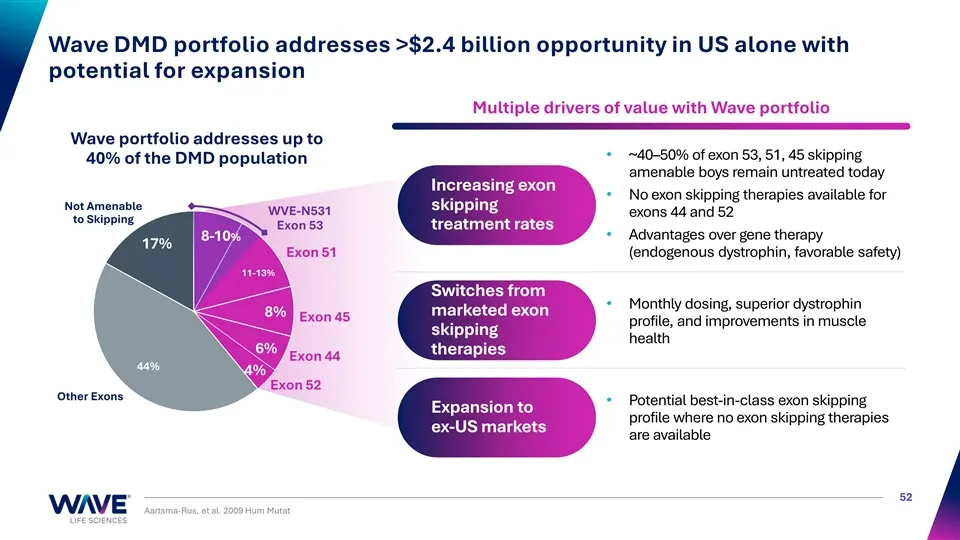
Slide 52: Wave DMD portfolio addresses >$2.4 billion opportunity in US
Wave DMD portfolio addresses >$2.4 billion opportunity in US alone with potential for expansion Multiple drivers of value with Wave portfolio Wave portfolio addresses up to • ~40–50% of exon 53, 51, 45 skipping 40% of the DMD population amenable boys remain untreated today Increasing exon • No exon

Slide 53: WVE-003 Allele-selective silencing Huntington's Disease
WVE-003 Allele-selective silencing Huntington’s Disease 53
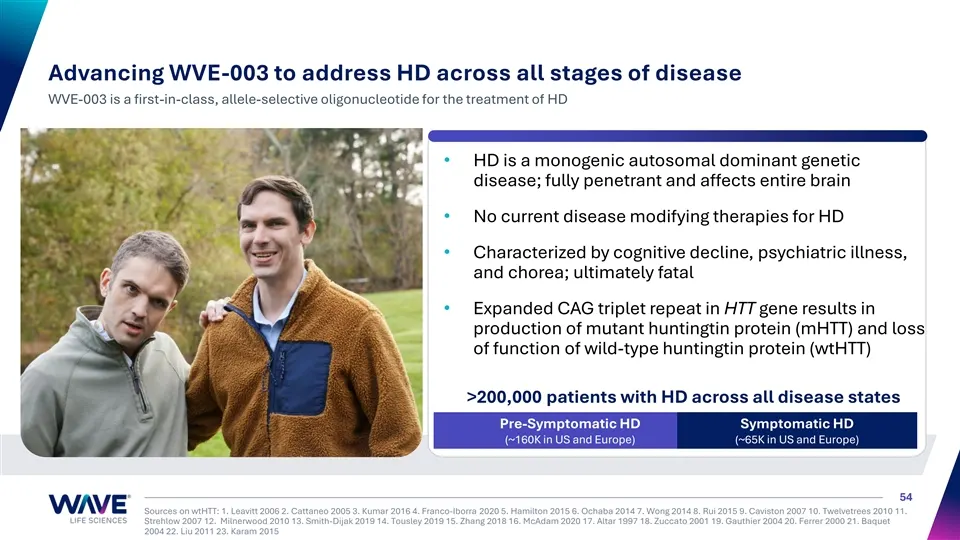
Slide 54: Advancing WVE-003 to address HD across all stages of disease
Advancing WVE-003 to address HD across all stages of disease WVE-003 is a first-in-class, allele-selective oligonucleotide for the treatment of HD • HD is a monogenic autosomal dominant genetic disease; fully penetrant and affects entire brain • No current disease modifying therapies for HD • Charac
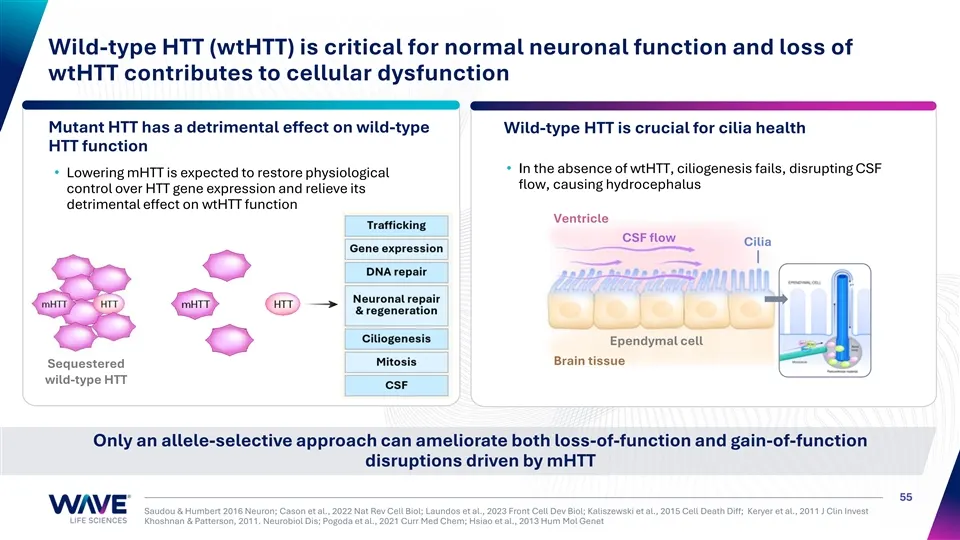
Slide 55: Wild-type HTT is critical for normal neuronal function
Wild-type HTT (wtHTT) is critical for normal neuronal function and loss of wtHTT contributes to cellular dysfunction Mutant HTT has a detrimental effect on wild-type Wild-type HTT is crucial for cilia health HTT function • In the absence of wtHTT, ciliogenesis fails, disrupting CSF • Lowering mHTT i
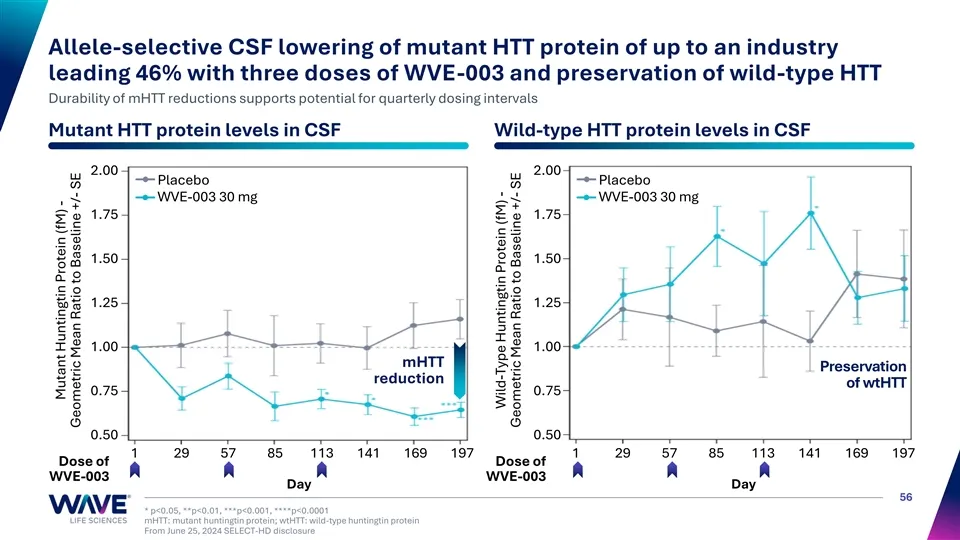
Slide 56: Allele-selective CSF lowering of mutant HTT protein of up to 46%
Allele-selective CSF lowering of mutant HTT protein of up to an industry leading 46% with three doses of WVE-003 and preservation of wild-type HTT Durability of mHTT reductions supports potential for quarterly dosing intervals Mutant HTT protein levels in CSF Wild-type HTT protein levels in CSF 2.00
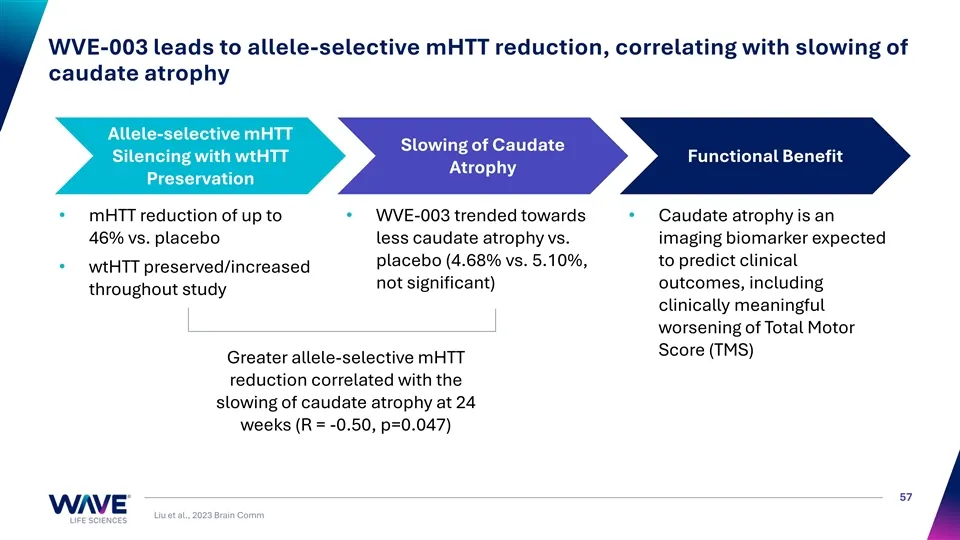
Slide 57: Allele-selective mHTT reduction correlating with slowing of caudate atrophy
WVE-003 leads to allele-selective mHTT reduction, correlating with slowing of caudate atrophy Allele-selective mHTT Slowing of Caudate Silencing with wtHTT Functional Benefit Atrophy Preservation • mHTT reduction of up to • WVE-003 trended towards • Caudate atrophy is an 46% vs. placebo less caudate
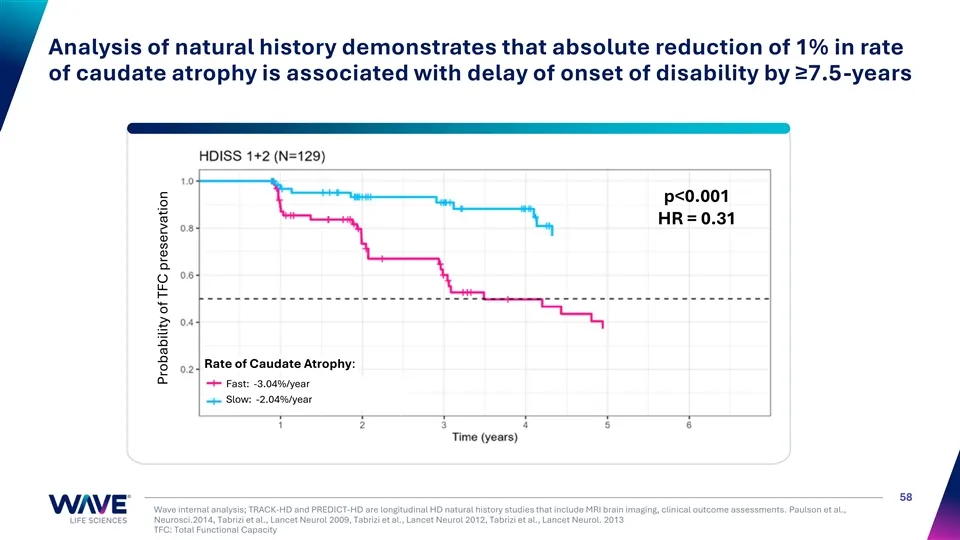
Slide 58: Natural history: 1% reduction in caudate atrophy delays onset of disability
Analysis of natural history demonstrates that absolute reduction of 1% in rate of caudate atrophy is associated with delay of onset of disability by ≥7.5-years p<0.001 HR = 0.31 Rate of Caudate Atrophy: Fast: -3.04%/year Slow: -2.04%/year 58 Wave internal analysis; TRACK-HD and PREDICT-HD are longit

Slide 59: Reimagining RNA medicines
Reimagining RNA medicines 59
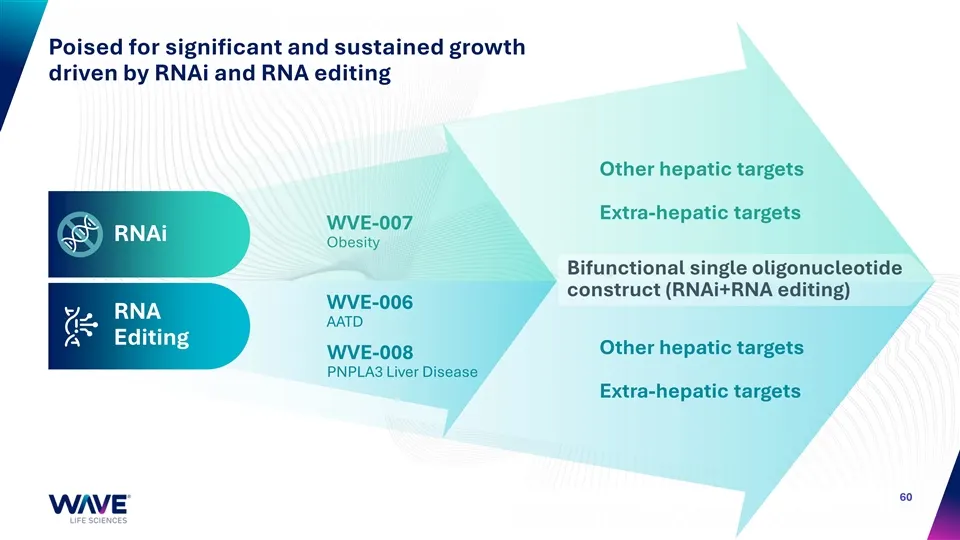
Slide 60: Poised for significant and sustained growth driven by RNAi and RNA editing
Poised for significant and sustained growth driven by RNAi and RNA editing Other hepatic targets Extra-hepatic targets WVE-007 RNAi Obesity Bifunctional single oligonucleotide construct (RNAi+RNA editing) WVE-006 RNA AATD Editing Other hepatic targets WVE-008 PNPLA3 Liver Disease Extra-hepatic targe
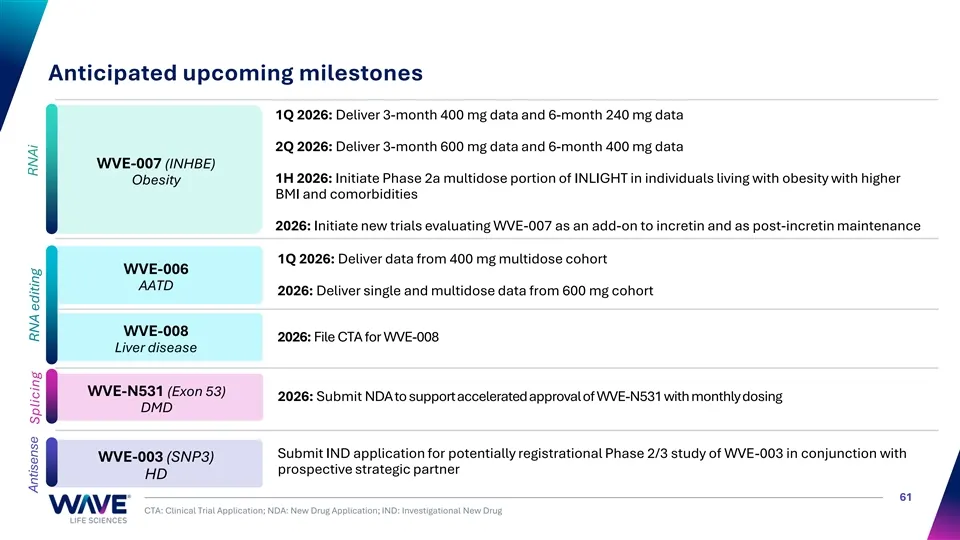
Slide 61: Anticipated upcoming milestones
Anticipated upcoming milestones 1Q 2026: Deliver 3-month 400 mg data and 6-month 240 mg data 2Q 2026: Deliver 3-month 600 mg data and 6-month 400 mg data WVE-007 (INHBE) 1H 2026: Initiate Phase 2a multidose portion of INLIGHT in individuals living with obesity with higher Obesity BMI and comorbiditi

Slide 62: For questions contact: investorrelations@wavelifesci.com
For questions contact: investorrelations@wavelifesci.com
Source: SEC EDGAR · 8-K filed Jan 12, 2026