Wave Life Sciences Ltd. · NASDAQ:WVE
Wave Life Sciences — AASLD 2026
16 slides from Wave Life Sciences's conference presentation, Nov 9, 2026
Slide 1: RNA Editing for the Treatment of AATD: Interim Results From RestorAATion-2
RNA Editing for the Treatment of Alpha-1 Antitrypsin Deficiency (AATD): Interim Results From RestorAATion-2 Prof. Dr. Pavel Strnad Department of Internal Medicine III, University Hospital RWTH Aachen, Pauwelsstraße 30, 52074 Aachen, Germany November 9, 2026 10:30 am-12:00 pm Presented at AASLD Novem
Slide 2: Disclosures
Disclosures Prof. Dr. Pavel Strnad has received grants and honoraria from Arrowhead Pharmaceuticals, CSL Behring, and Grifols Inc; has received consulting fees and honoraria from AiRNA Pharmaceuticals, Alnylam Pharmaceuticals, Arrowhead Pharmaceuticals, Beam Therapeutics Inc., BioMarin Pharmaceutica
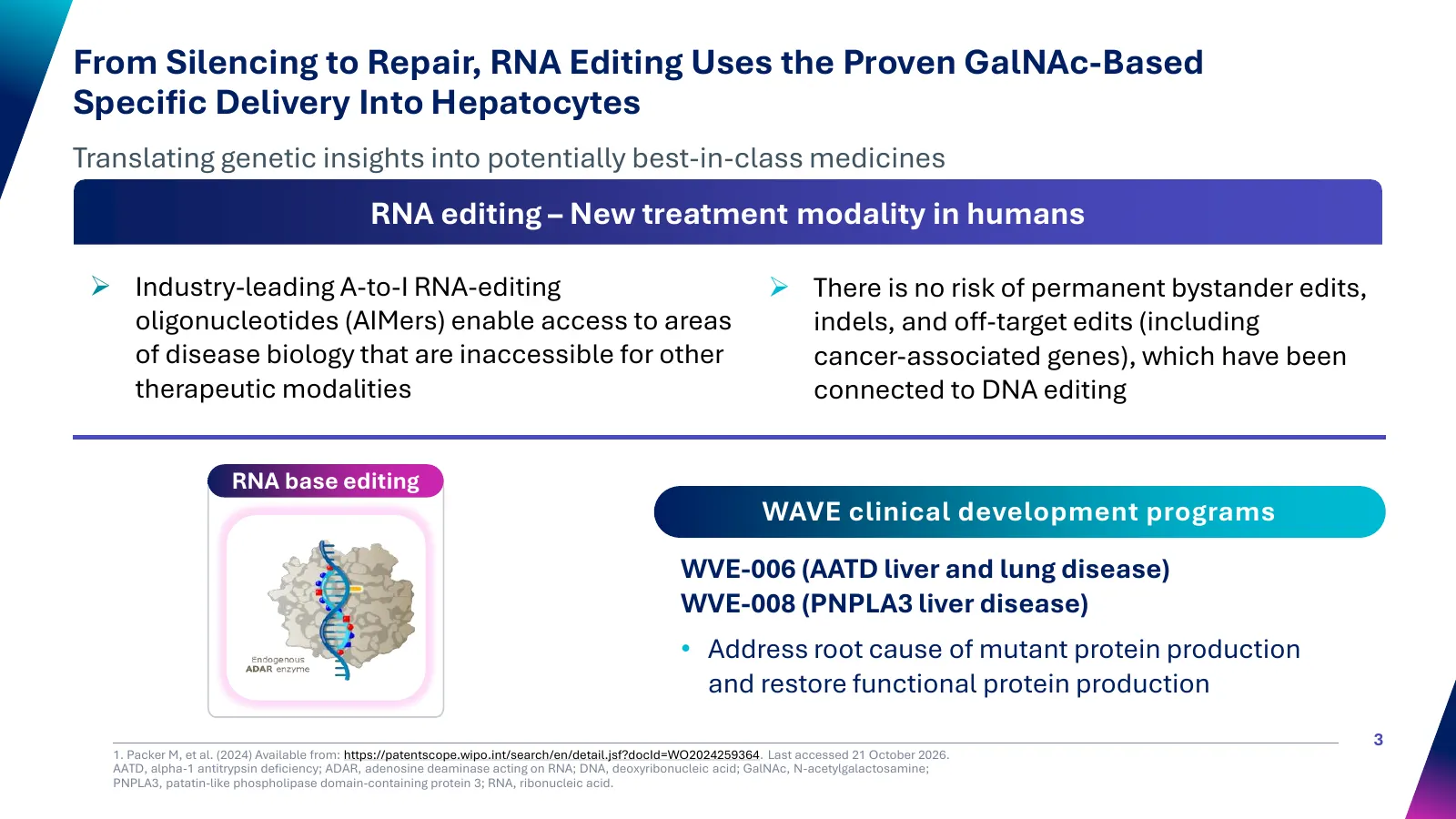
Slide 3: From Silencing to Repair, RNA Editing Uses Proven GalNAc-Based Delivery Into Hepatocytes
From Silencing to Repair, RNA Editing Uses the Proven GalNAc-Based Specific Delivery Into Hepatocytes Translating genetic insights into potentially best-in-class medicines RNA editing – New treatment modality in humans ➢ Industry-leading A-to-I RNA-editing ➢ There is no risk of permanent bystander e
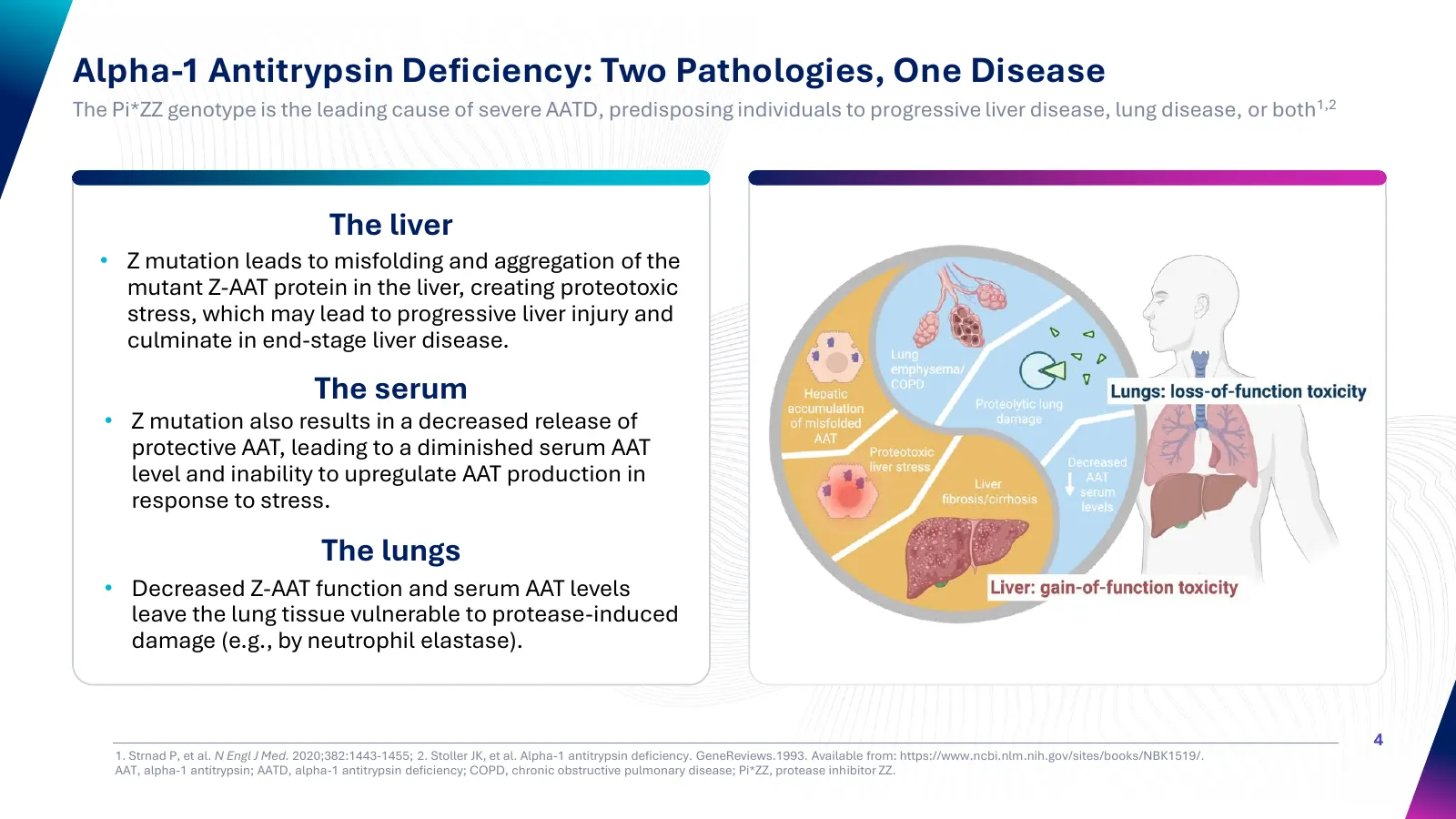
Slide 4: Alpha-1 Antitrypsin Deficiency: Two Pathologies, One Disease
Alpha-1 Antitrypsin Deficiency: Two Pathologies, One Disease The Pi*ZZ genotype is the leading cause of severe AATD, predisposing individuals to progressive liver disease, lung disease, or both1,2 The liver • Z mutation leads to misfolding and aggregation of the mutant Z-AAT protein in the liver, cr
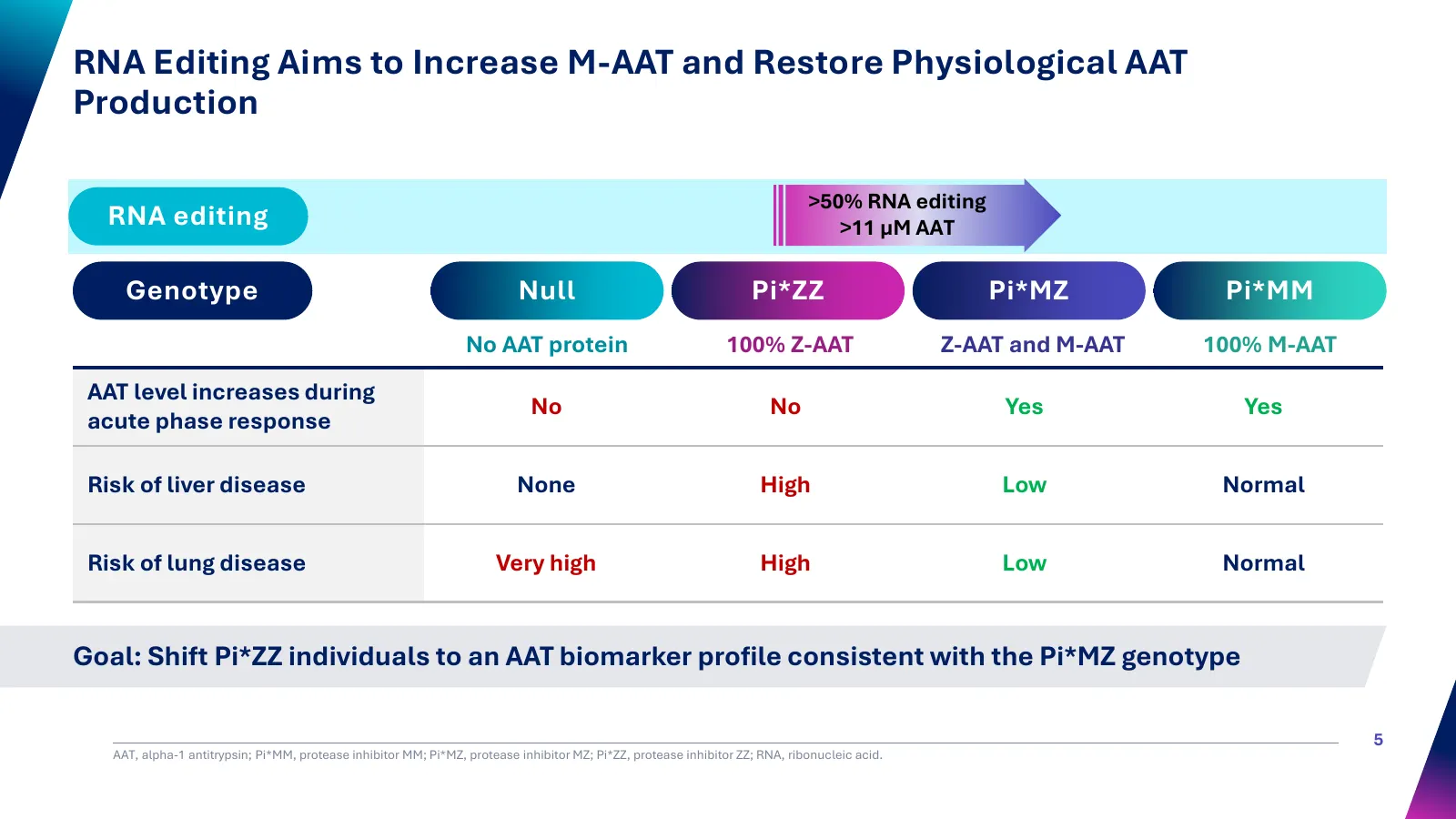
Slide 5: RNA Editing Aims to Increase M-AAT and Restore Physiological AAT Production
RNA Editing Aims to Increase M-AAT and Restore Physiological AAT Production >50% RNA editing RNA editing >11 µM AAT Genotype Null Pi*ZZ Pi*MZ Pi*MM No AAT protein 100% Z-AAT Z-AAT and M-AAT 100% M-AAT AAT level increases during No No Yes Yes acute phase response Risk of liver disease None High Low N
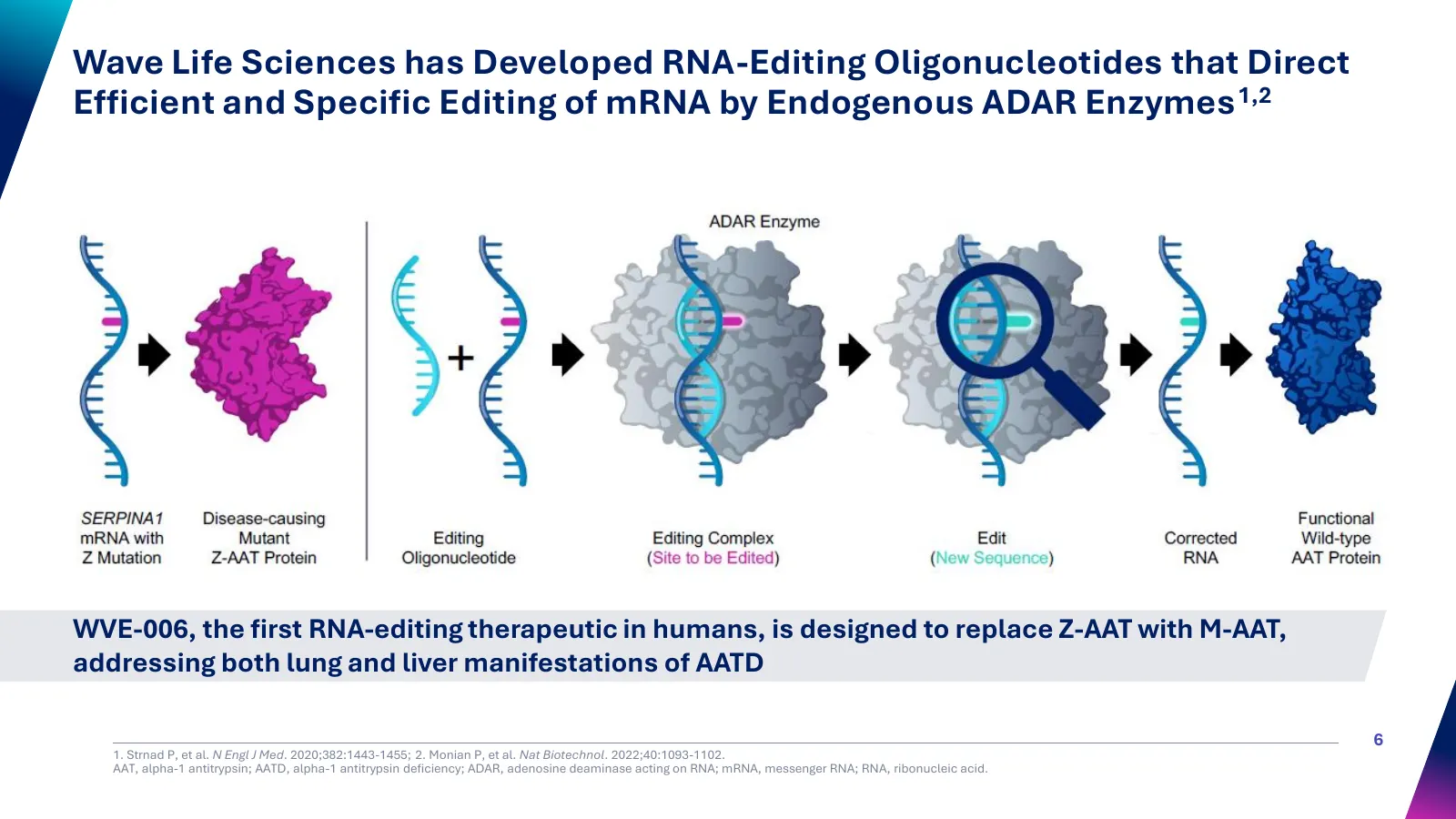
Slide 6: Wave Has Developed RNA-Editing Oligonucleotides That Direct Efficient and Specific Editing
Wave Life Sciences has Developed RNA-Editing Oligonucleotides that Direct Efficient and Specific Editing of mRNA by Endogenous ADAR Enzymes 1,2 WVE-006, the first RNA-editing therapeutic in humans, is designed to replace Z-AAT with M-AAT, addressing both lung and liver manifestations of AATD 6 1. St

Slide 7: RestorAATion-2
RestorAATion-2 7
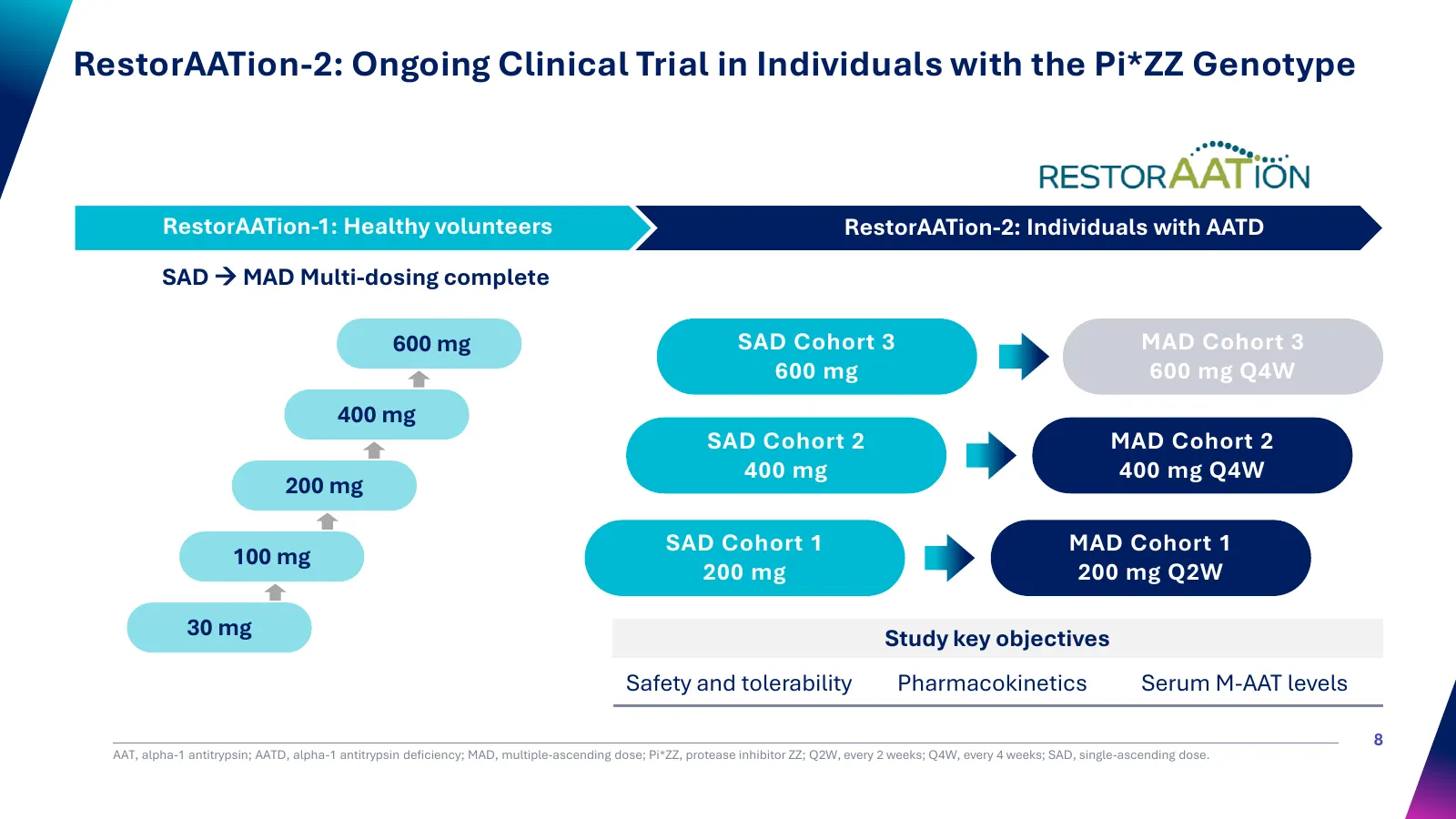
Slide 8: RestorAATion-2: Ongoing Clinical Trial in Individuals with the Pi*ZZ Genotype
RestorAATion-2: Ongoing Clinical Trial in Individuals with the Pi*ZZ Genotype RestorAATion-1: RestorAATion-1: Healthy Healthy volunteers Volunteers RestorAATion-2: Individuals with AATD SAD → MAD Multi-dosing complete 600 mg SAD Cohort 3 MAD Cohort 3 600 mg 600 mg Q4W 400 mg SAD Cohort 2 MAD Cohort
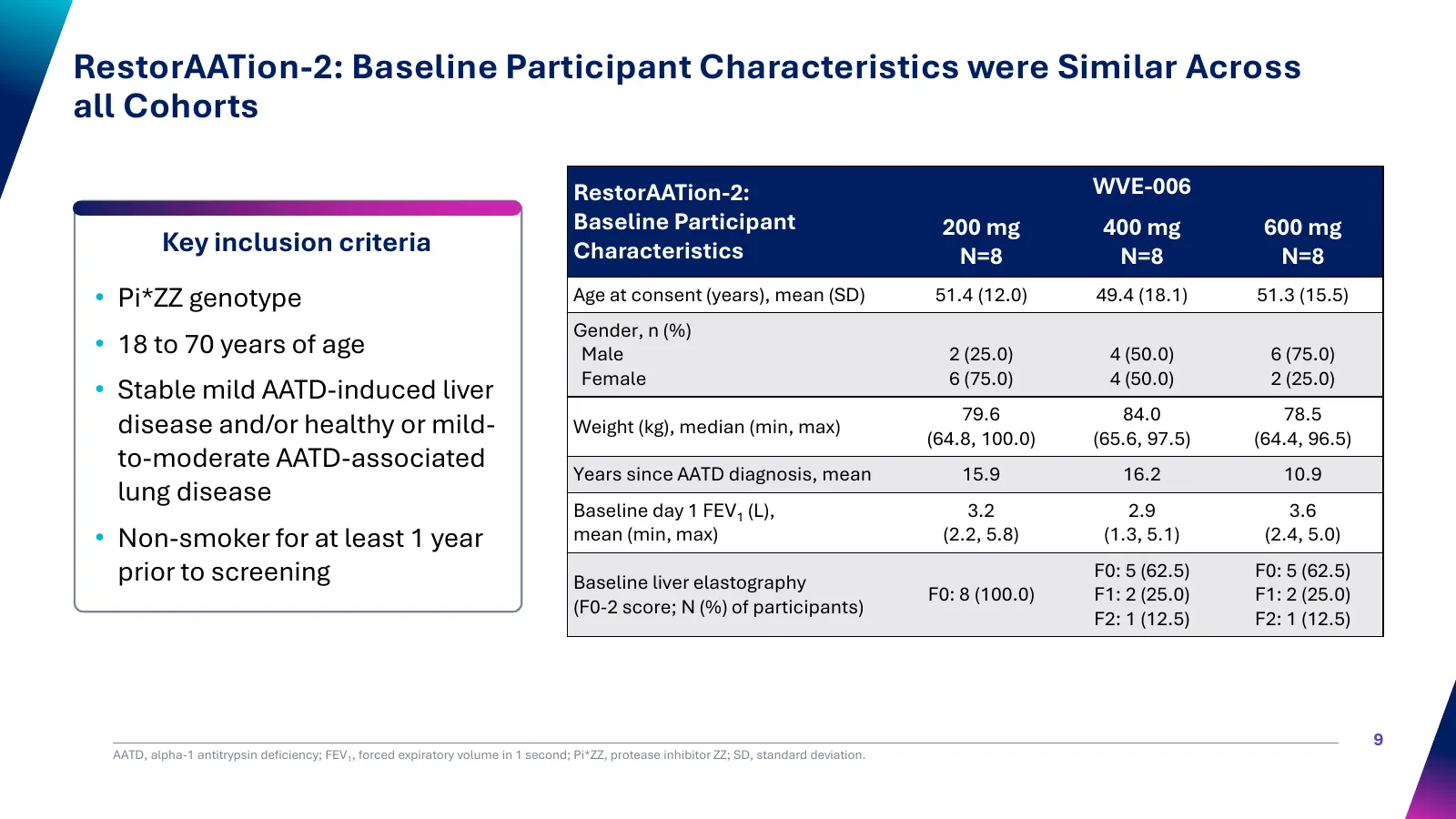
Slide 9: RestorAATion-2: Baseline Participant Characteristics Were Similar Across All Cohorts
RestorAATion-2: Baseline Participant Characteristics were Similar Across all Cohorts RestorAATion-2: WVE-006 Baseline Participant 200 mg 400 mg 600 mg Key inclusion criteria Characteristics N=8 N=8 N=8 • Pi*ZZ genotype Age at consent (years), mean (SD) 51.4 (12.0) 49.4 (18.1) 51.3 (15.5) Gender, n (
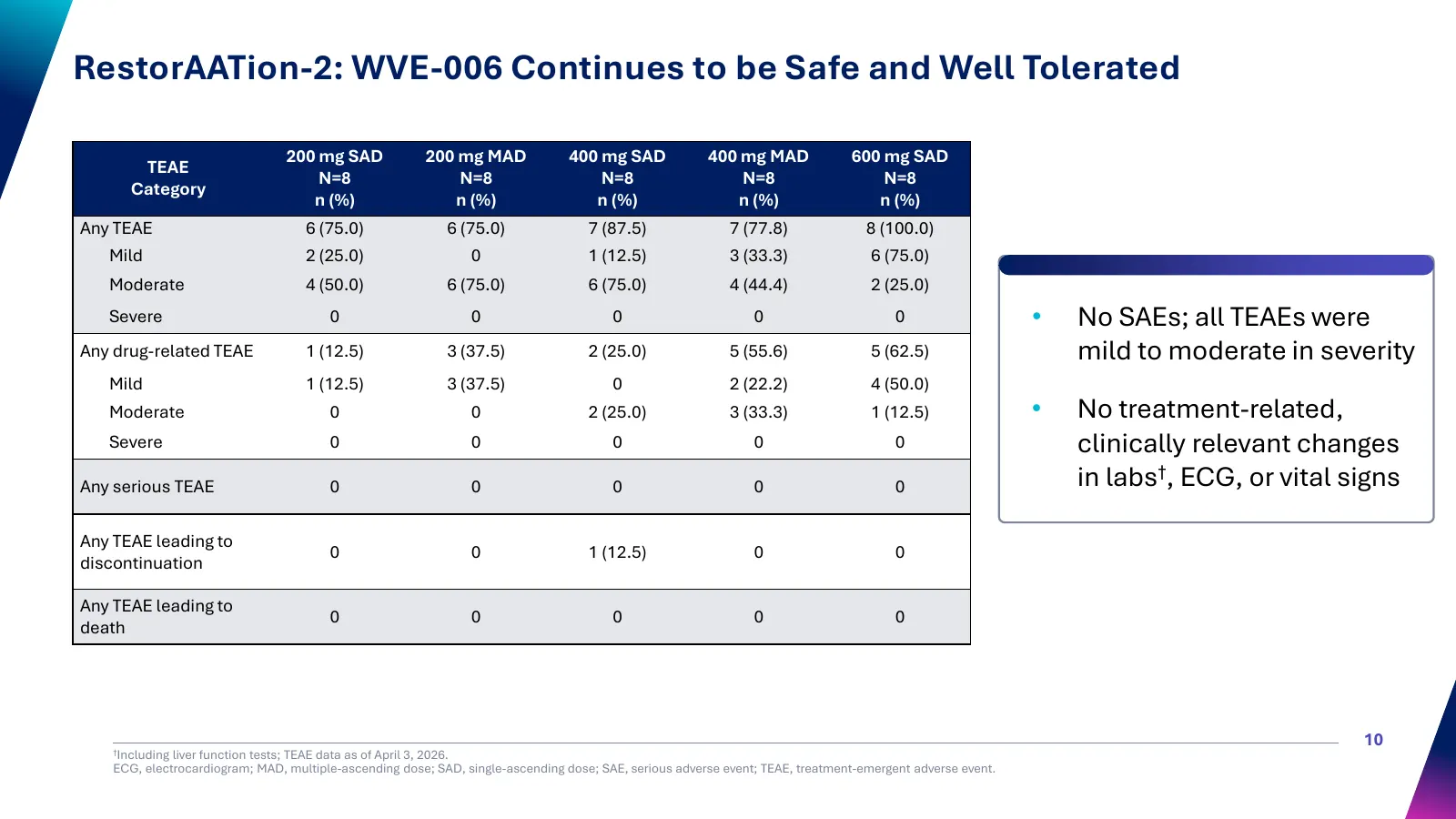
Slide 10: RestorAATion-2: WVE-006 Continues to Be Safe and Well Tolerated
RestorAATion-2: WVE-006 Continues to be Safe and Well Tolerated 200 mg SAD 200 mg MAD 400 mg SAD 400 mg MAD 600 mg SAD TEAE N=8 N=8 N=8 N=8 N=8 Category n (%) n (%) n (%) n (%) n (%) Any TEAE 6 (75.0) 6 (75.0) 7 (87.5) 7 (77.8) 8 (100.0) Mild 2 (25.0) 0 1 (12.5) 3 (33.3) 6 (75.0) Moderate 4 (50.0) 6
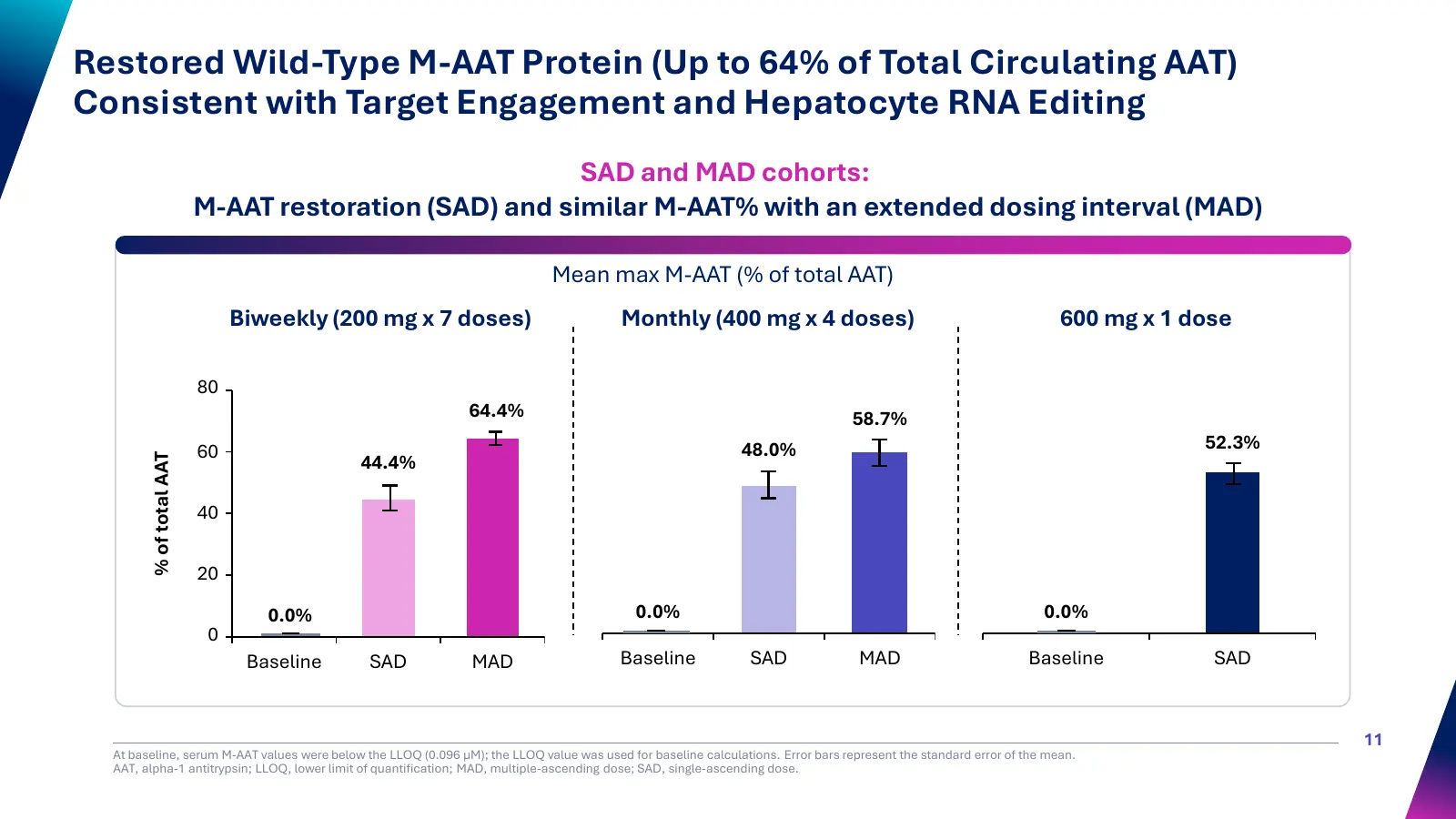
Slide 11: Restored Wild-Type M-AAT Protein Up to 64% of Total Circulating AAT
Restored Wild-Type M-AAT Protein (Up to 64% of Total Circulating AAT) Consistent with Target Engagement and Hepatocyte RNA Editing SAD and MAD cohorts: M-AAT restoration (SAD) and similar M-AAT% with an extended dosing interval (MAD) Mean max M-AAT (% of total AAT) Biweekly (200 mg x 7 doses) Monthl
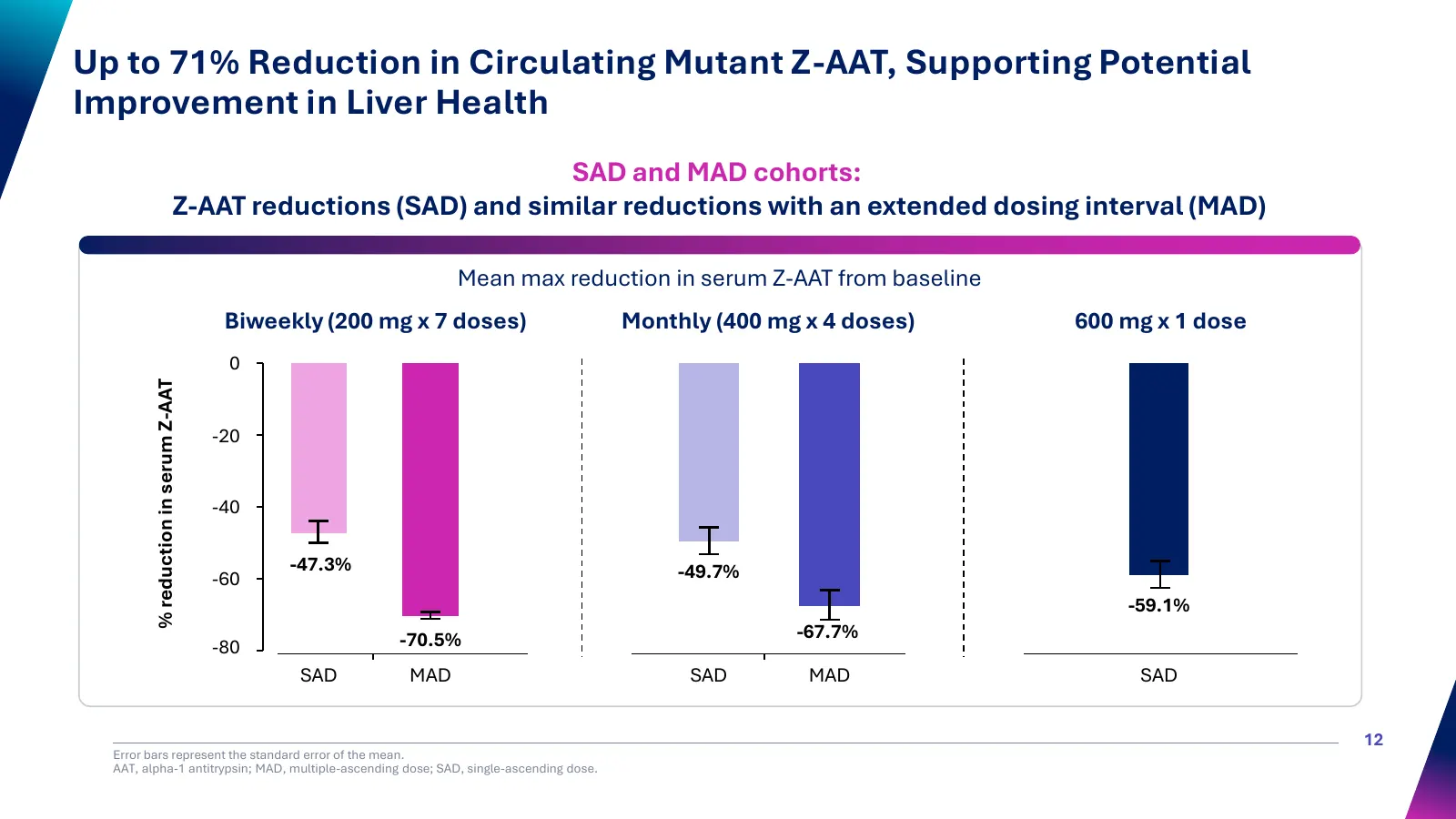
Slide 12: Up to 71% Reduction in Circulating Mutant Z-AAT
Up to 71% Reduction in Circulating Mutant Z-AAT, Supporting Potential Improvement in Liver Health SAD and MAD cohorts: Z-AAT reductions (SAD) and similar reductions with an extended dosing interval (MAD) Mean max reduction in serum Z-AAT from baseline Biweekly (200 mg x 7 doses) Monthly (400 mg x 4
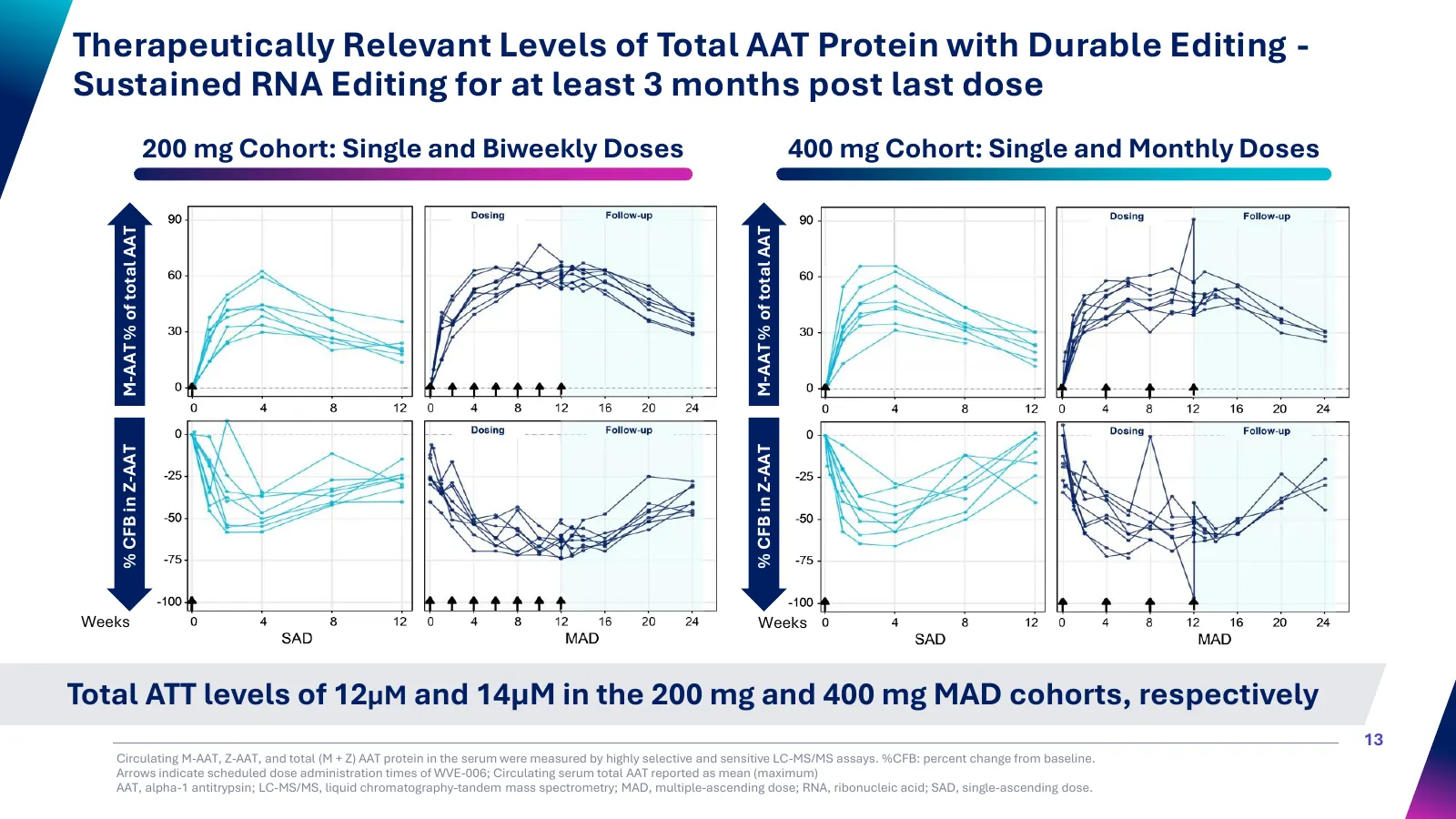
Slide 13: Therapeutically Relevant Levels of Total AAT with Durable Editing
Therapeutically Relevant Levels of Total AAT Protein with Durable Editing - Sustained RNA Editing for at least 3 months post last dose 200 mg Cohort: Single and Biweekly Doses 400 mg Cohort: Single and Monthly Doses M-AAT % of total AAT M-AAT % of total AAT % CFB in Z-AAT % CFB in Z-AAT Weeks Weeks
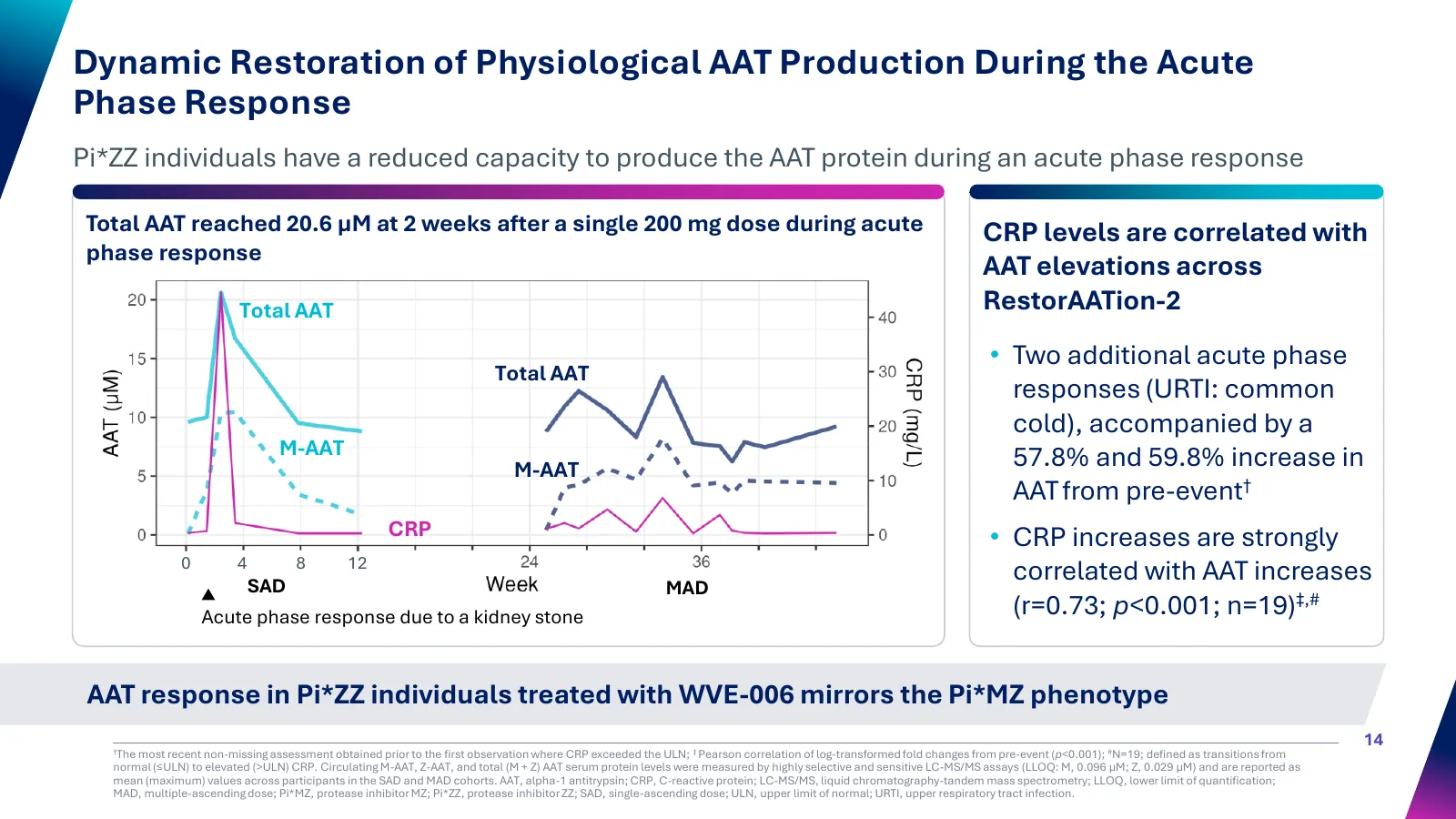
Slide 14: Dynamic Restoration of Physiological AAT Production During the Acute Phase Response
Dynamic Restoration of Physiological AAT Production During the Acute Phase Response Pi*ZZ individuals have a reduced capacity to produce the AAT protein during an acute phase response Total AAT reached 20.6 µM at 2 weeks after a single 200 mg dose during acute CRP levels are correlated with phase re
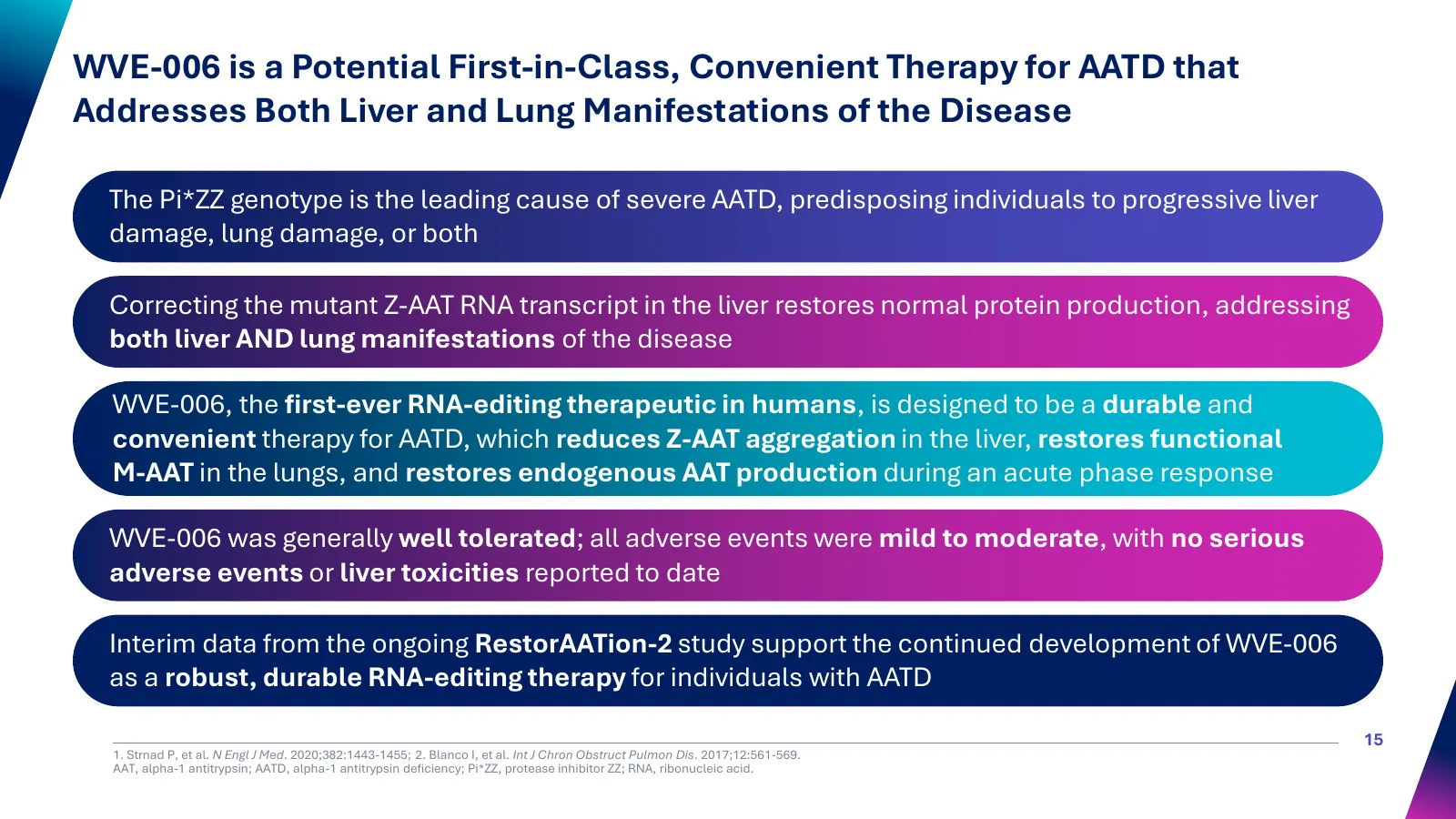
Slide 15: WVE-006 Is a Potential First-in-Class, Convenient Therapy for AATD
WVE-006 is a Potential First-in-Class, Convenient Therapy for AATD that Addresses Both Liver and Lung Manifestations of the Disease The Pi*ZZ genotype is the leading cause of severe AATD, predisposing individuals to progressive liver damage, lung damage, or both Correcting the mutant Z-AAT RNA trans

Slide 16: Thank you
Thank you 16
Source: company website
More decks from Wave Life Sciences Ltd.
 Investor Presentation (July 2026)50 slides · Jul 30, 2026
 ATS 202619 slides · May 18, 2026
 Investor Presentation (February 2026)49 slides · Feb 26, 2026
 Investor Presentation (January 2026)62 slides · Jan 12, 2026
 Investor Presentation (November 2025)58 slides · Nov 17, 2025
 ObesityWeek 202521 slides · Oct 31, 2025