Asterias Biotherapeutics — Investor Day (May 2015)
20 slides from Asterias Biotherapeutics's investor day presentation, May 8, 2015
Slide 1: AST-OPC1 Development Program for Spinal Cord Injury
AST-OPC1 Development Program for Spinal Cord Injury Asterias Biotherapeutics Inc. NYSE MKT: ASTInvestor DayMay 8, 2015 *
Slide 2: Forward Looking Statements
Forward Looking Statements Statements pertaining to future financial and/or operating results, future growth in research, technology, clinical development, and potential opportunities for Asterias, along with other statements about the future expectations, beliefs, goals, plans, or prospects express
Slide 3: Asterias Biotherapeutics, Inc.
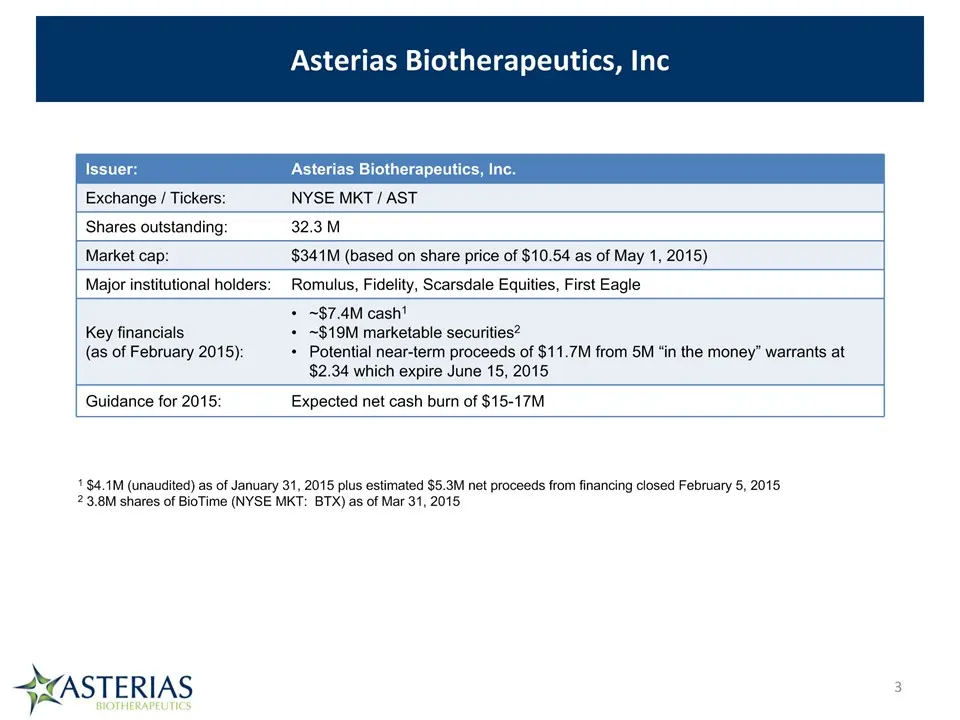
* Asterias Biotherapeutics, Inc Issuer: Asterias Biotherapeutics, Inc. Exchange / Tickers: NYSE MKT / AST Shares outstanding: 32.3 M Market cap: $341M (based on share price of $10.54 as of May 1, 2015) Major institutional holders: Romulus, Fidelity, Scarsdale Equities, First Eagle Key financials (as
Slide 4: Key Highlights of Asterias
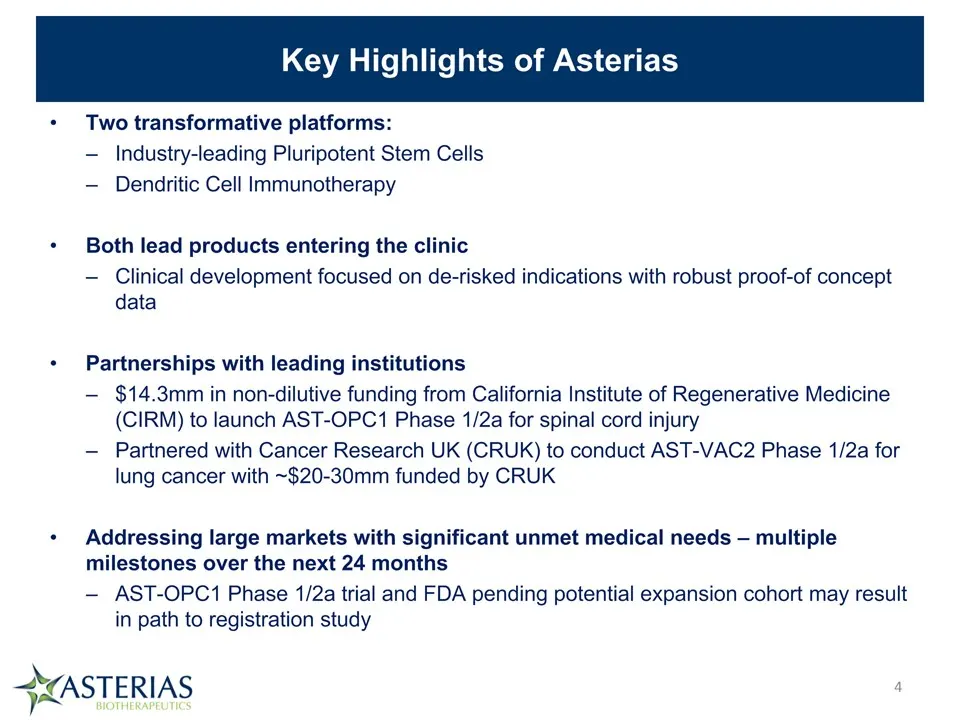
Two transformative platforms: Industry-leading Pluripotent Stem Cells Dendritic Cell ImmunotherapyBoth lead products entering the clinicClinical development focused on de-risked indications with robust proof-of concept dataPartnerships with leading institutions $14.3mm in non-dilutive funding from C
Slide 5: Today's Agenda: AST-OPC1 Development Program for SCI
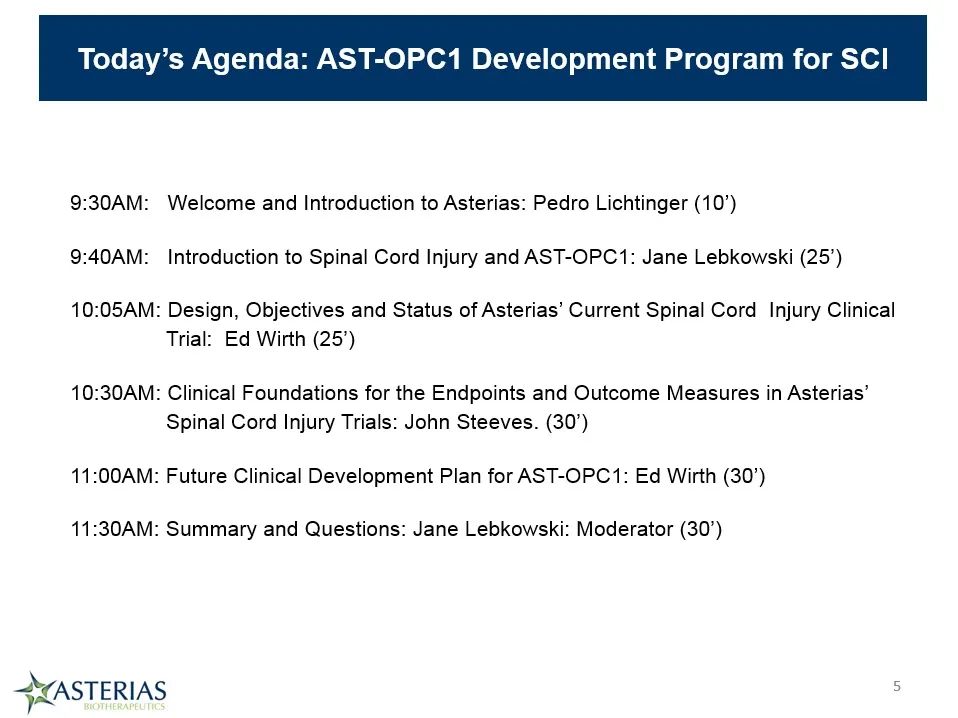
* Today’s Agenda: AST-OPC1 Development Program for SCI 9:30AM: Welcome and Introduction to Asterias: Pedro Lichtinger (10’)9:40AM: Introduction to Spinal Cord Injury and AST-OPC1: Jane Lebkowski (25’) 10:05AM: Design, Objectives and Status of Asterias’ Current Spinal Cord Injury Clinical Trial: Ed W
Slide 6: Introduction to Spinal Cord Injury and AST-OPC1
Introduction to Spinal Cord Injury and AST-OPC1 Jane Lebkowski Ph.D. President of R&D Investor DayMay 8, 2015 *
Slide 7: Spinal Cord Injury: Multiple Devastating Life-Changing Effects
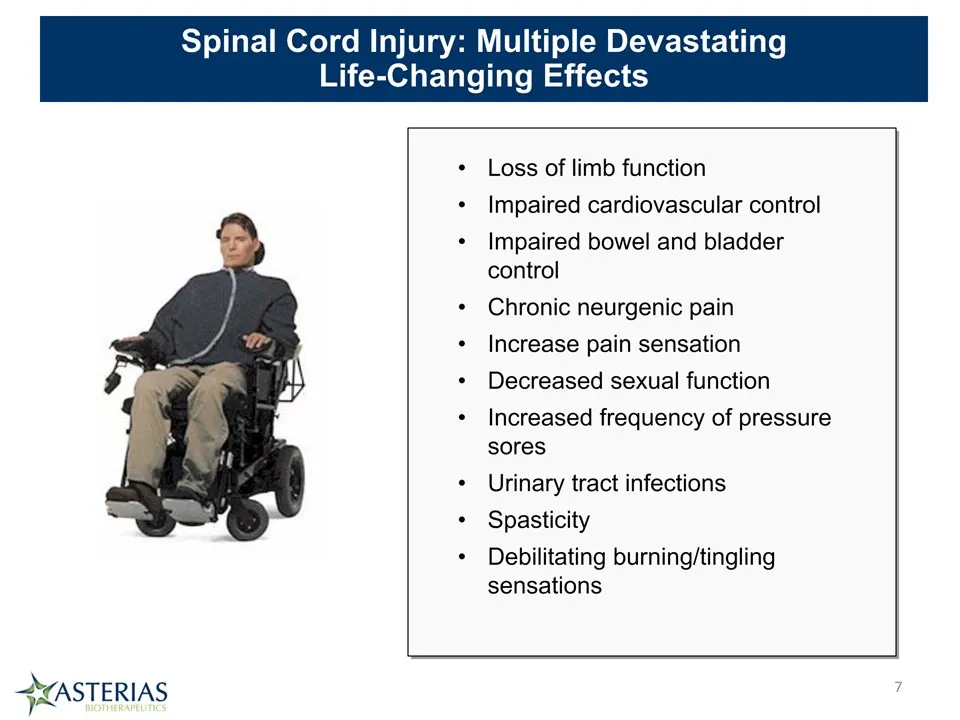
* Spinal Cord Injury: Multiple Devastating Life-Changing Effects Loss of limb functionImpaired cardiovascular controlImpaired bowel and bladder controlChronic neurgenic painIncrease pain sensationDecreased sexual functionIncreased frequency of pressure soresUrinary tract infections SpasticityDebilit
Slide 8: Spinal Cord Injury: Incidence and Costs
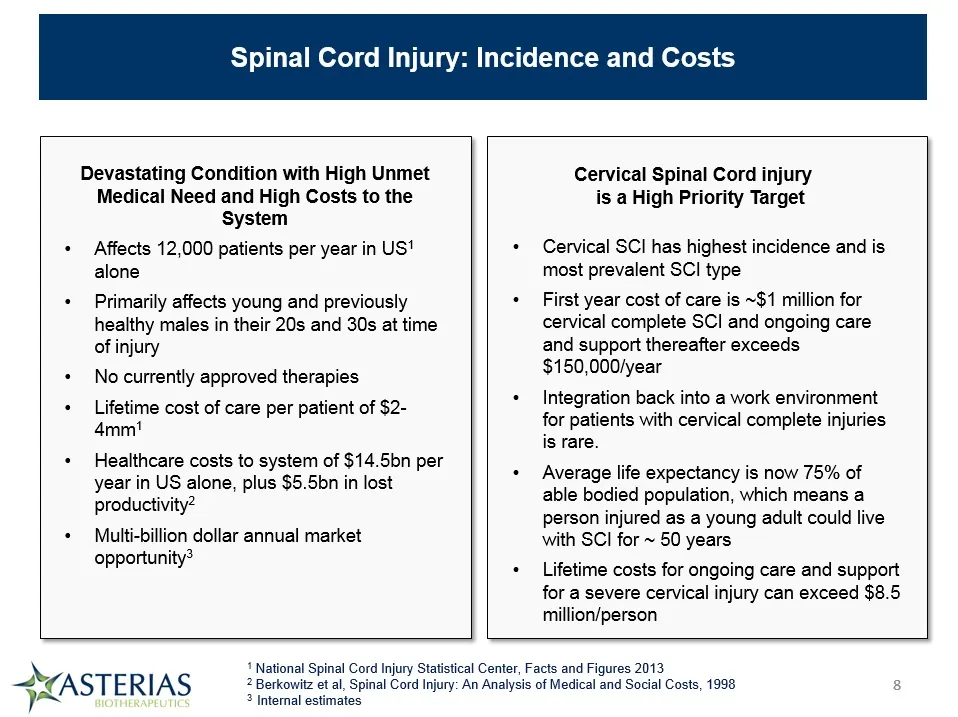
Spinal Cord Injury: Incidence and Costs Devastating Condition with High Unmet Medical Need and High Costs to the SystemAffects 12,000 patients per year in US1 alonePrimarily affects young and previously healthy males in their 20s and 30s at time of injuryNo currently approved therapiesLifetime cost
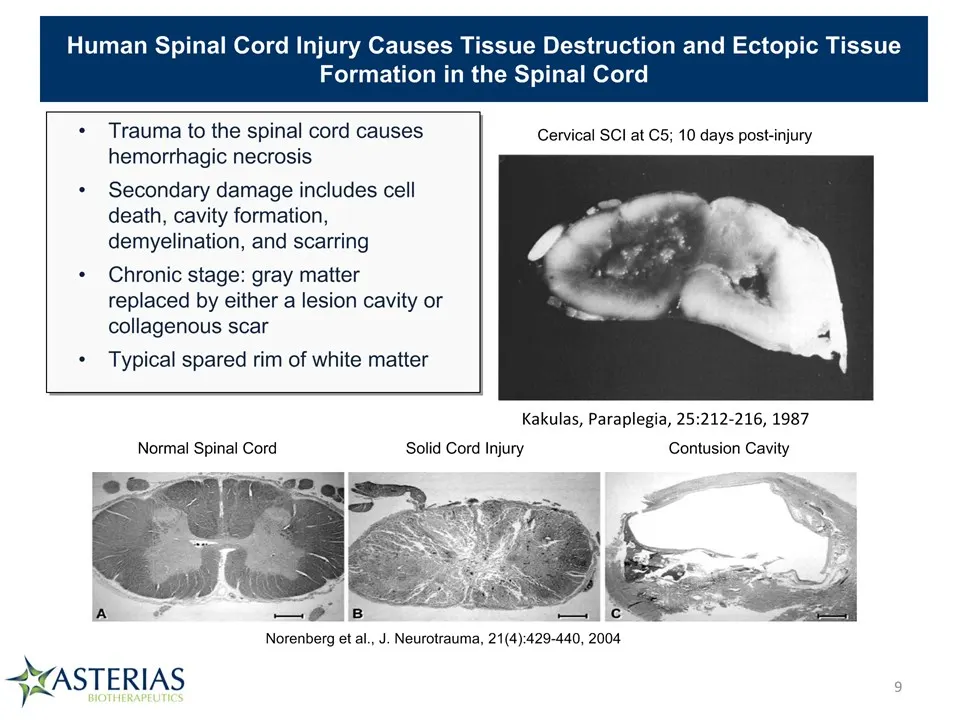
Slide 9: Human Spinal Cord Injury Causes Tissue Destruction and Ectopic Tissue Formation
Human Spinal Cord Injury Causes Tissue Destruction and Ectopic Tissue Formation in the Spinal Cord Trauma to the spinal cord causes hemorrhagic necrosisSecondary damage includes cell death, cavity formation, demyelination, and scarringChronic stage: gray matter replaced by either a lesion cavity or
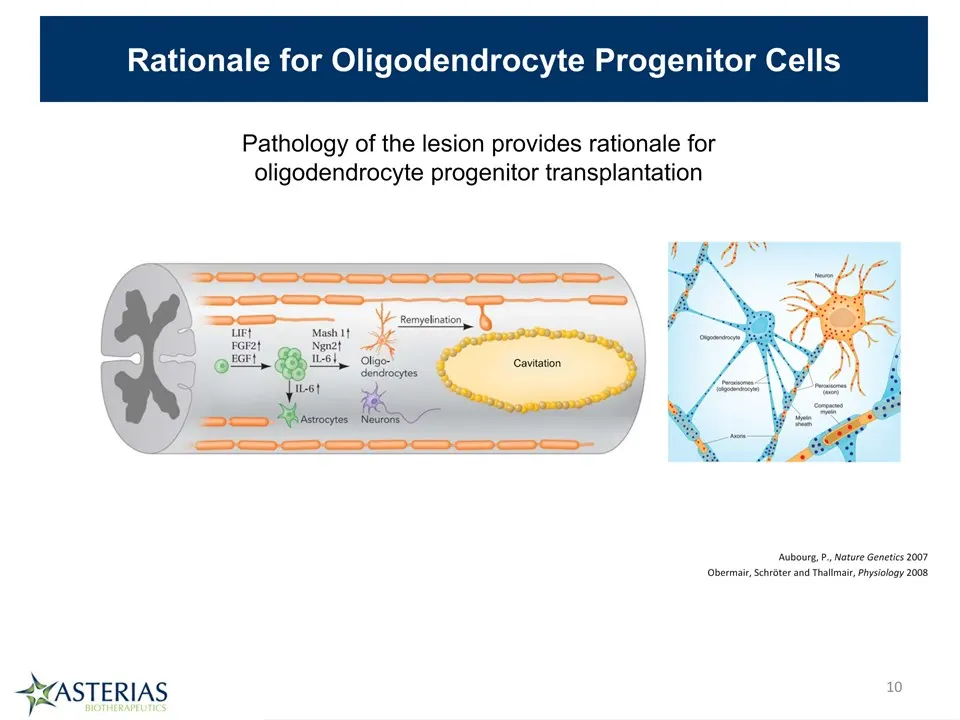
Slide 10: Rationale for Oligodendrocyte Progenitor Cells
* Rationale for Oligodendrocyte Progenitor Cells Cavitation Aubourg, P., Nature Genetics 2007 Obermair, Schröter and Thallmair, Physiology 2008 Pathology of the lesion provides rationale for oligodendrocyte progenitor transplantation
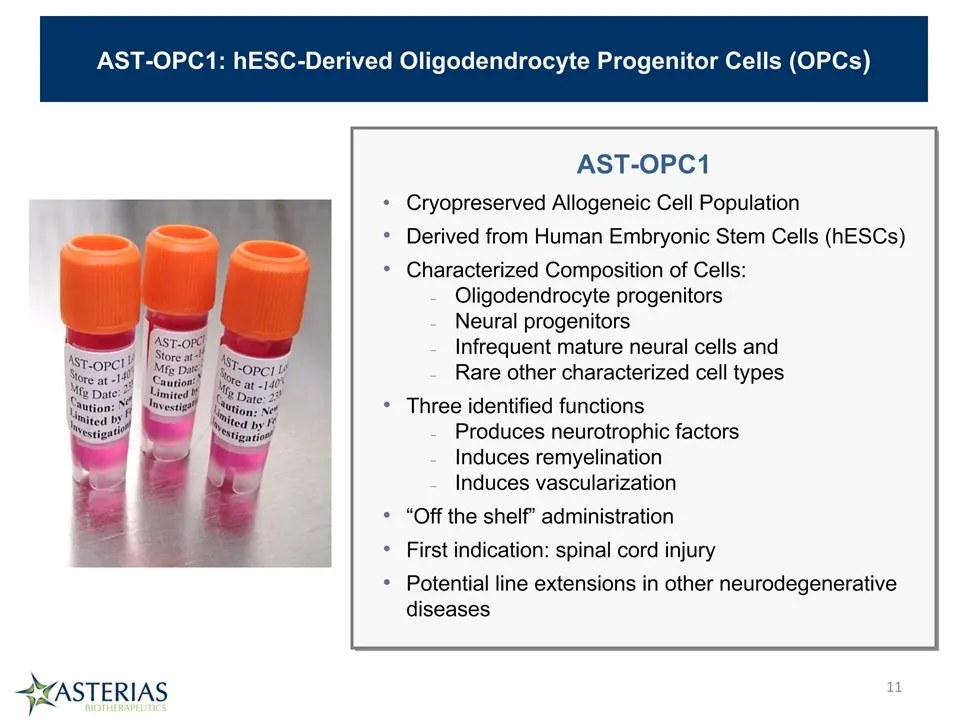
Slide 11: AST-OPC1: hESC-Derived Oligodendrocyte Progenitor Cells
AST-OPC1: hESC-Derived Oligodendrocyte Progenitor Cells (OPCs) Cryopreserved Allogeneic Cell PopulationDerived from Human Embryonic Stem Cells (hESCs)Characterized Composition of Cells:Oligodendrocyte progenitorsNeural progenitorsInfrequent mature neural cells and Rare other characterized cell types
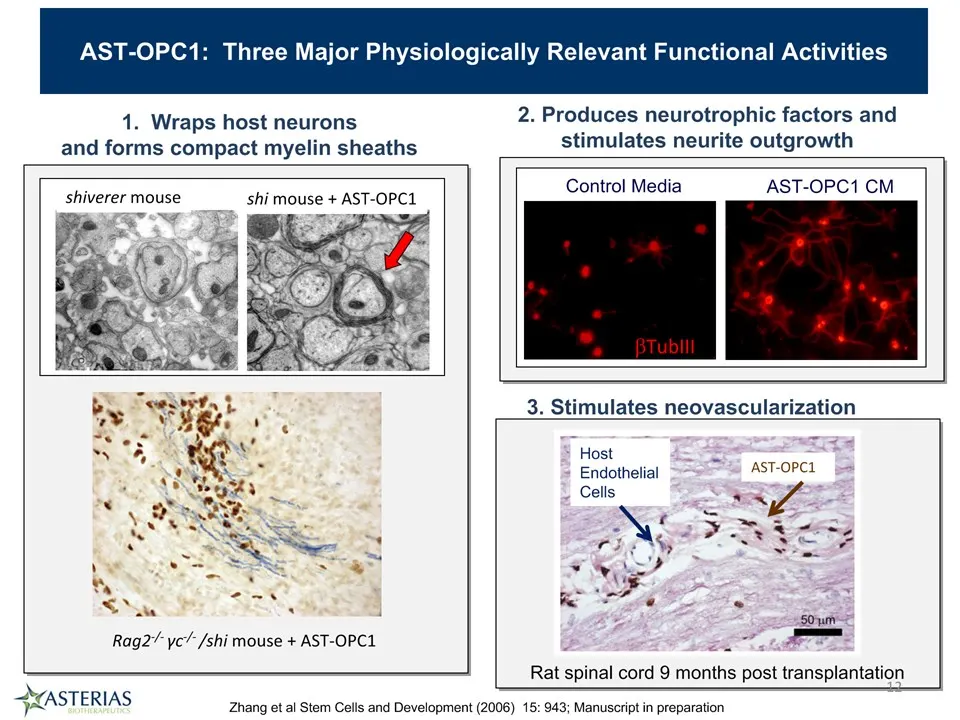
Slide 12: AST-OPC1: Three Major Physiologically Relevant Functional Activities
AST-OPC1: Three Major Physiologically Relevant Functional Activities 2. Produces neurotrophic factors and stimulates neurite outgrowth Promote increased neurite outgrowth 1. Wraps host neuronsand forms compact myelin sheaths Host Endothelial Cells AST-OPC1 Rat spinal cord 9 months post transplantati
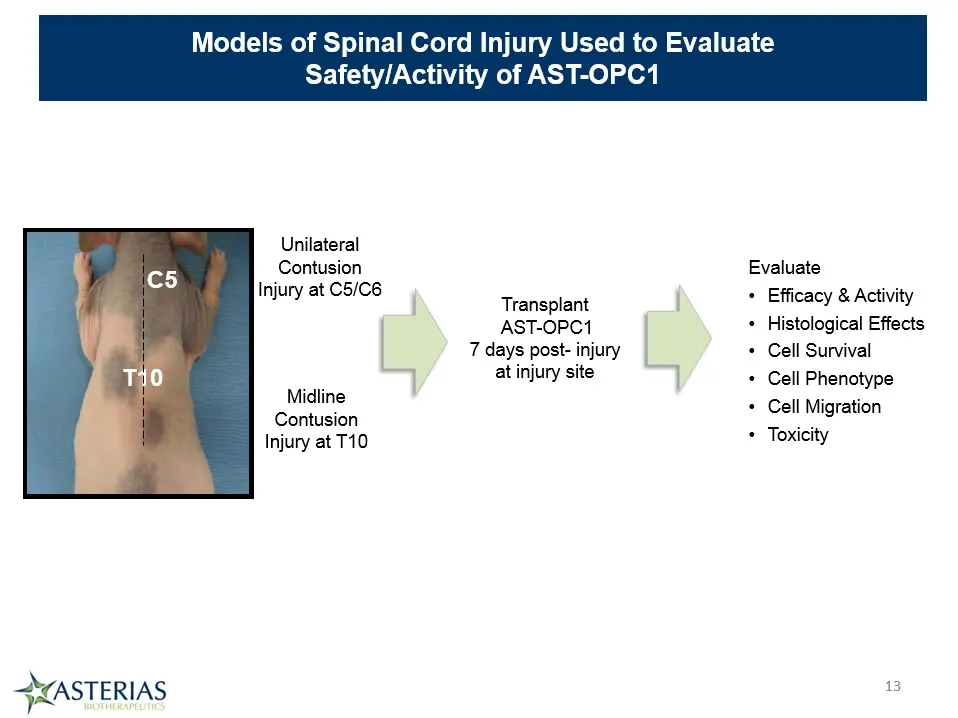
Slide 13: Models of Spinal Cord Injury Used to Evaluate AST-OPC1
Models of Spinal Cord Injury Used to Evaluate Safety/Activity of AST-OPC1 MidlineContusion Injury at T10 Unilateral ContusionInjury at C5/C6 Thoracic Injury Cervical Injury Transplant AST-OPC1 7 days post- injury at injury site EvaluateEfficacy & ActivityHistological EffectsCell SurvivalCell Phenoty
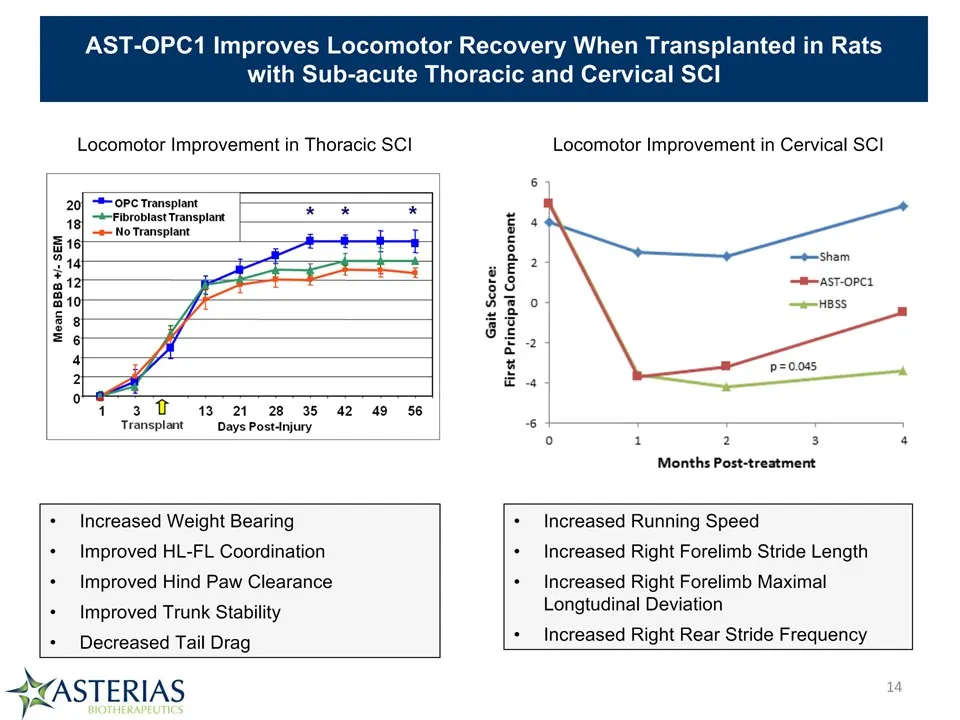
Slide 14: AST-OPC1 Improves Locomotor Recovery in Rats with SCI
AST-OPC1 Improves Locomotor Recovery When Transplanted in Rats with Sub-acute Thoracic and Cervical SCI Locomotor Improvement in Thoracic SCI Locomotor Improvement in Cervical SCI Increased Running SpeedIncreased Right Forelimb Stride LengthIncreased Right Forelimb Maximal Longtudinal DeviationIncre
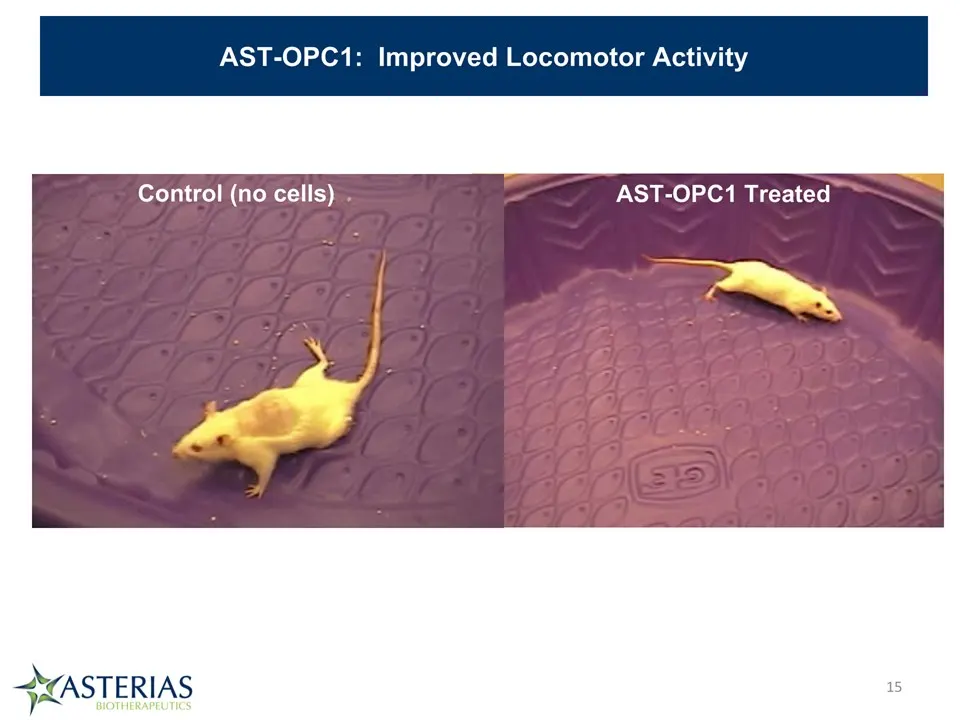
Slide 15: AST-OPC1: Improved Locomotor Activity
AST-OPC1: Improved Locomotor Activity * Control (no cells) AST-OPC1 Treated
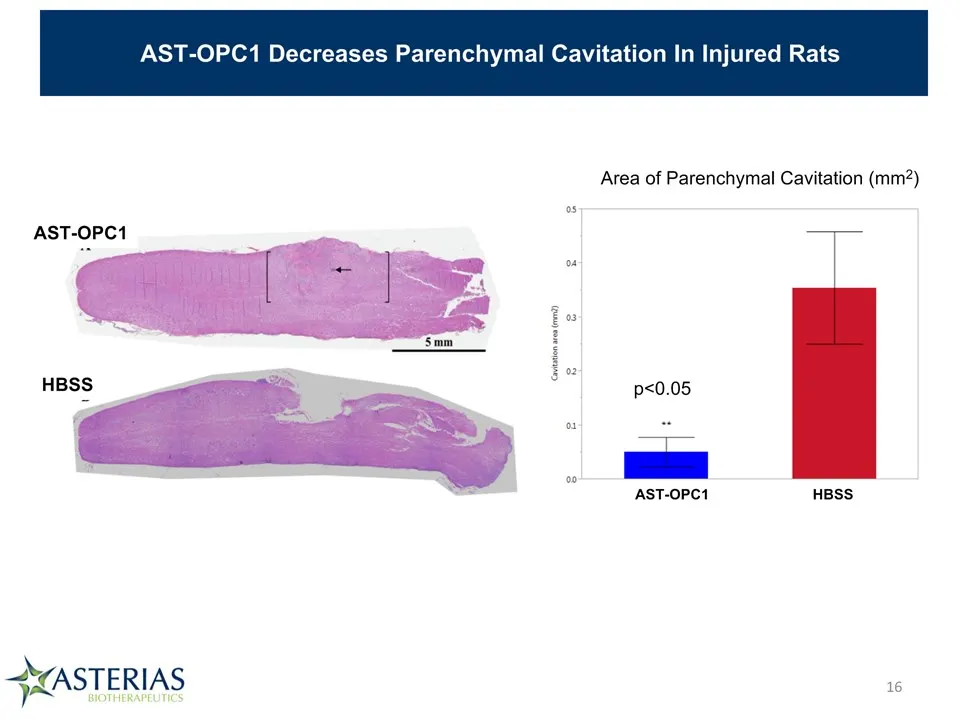
Slide 16: AST-OPC1 Decreases Parenchymal Cavitation In Injured Rats
AST-OPC1 Decreases Parenchymal Cavitation In Injured Rats AST-OPC1 HBSS Area of Parenchymal Cavitation (mm2) p<0.05 AST-OPC1 HBSS *
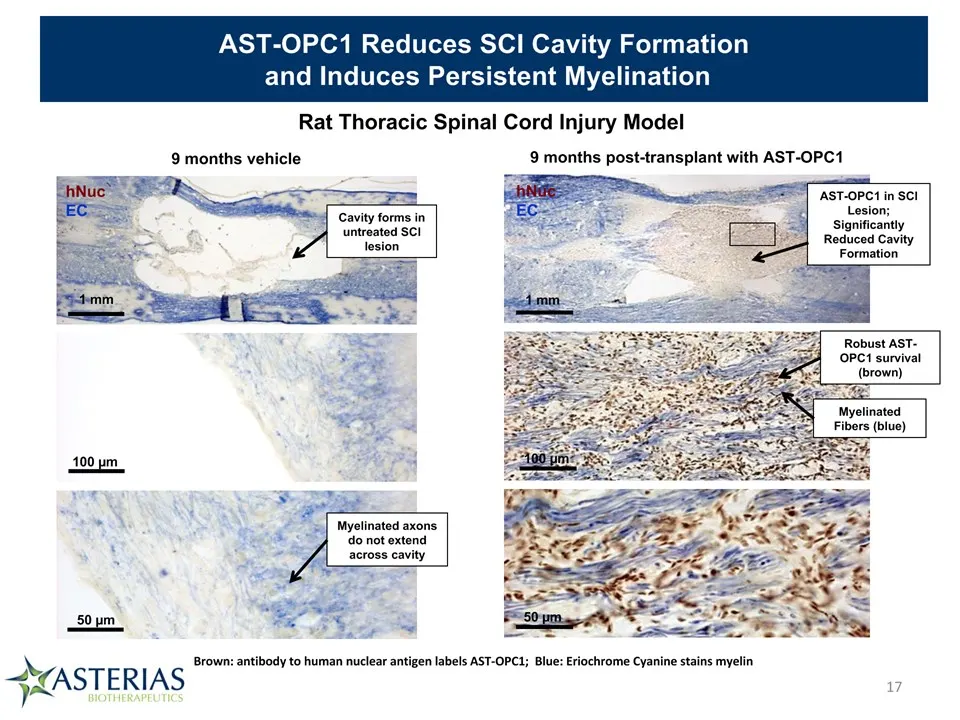
Slide 17: AST-OPC1 Reduces SCI Cavity Formation and Induces Persistent Myelination
AST-OPC1 Reduces SCI Cavity Formation and Induces Persistent Myelination Brown: antibody to human nuclear antigen labels AST-OPC1; Blue: Eriochrome Cyanine stains myelin hNucEC 1 mm 100 µm 50 µm AST-OPC1 in SCI Lesion; Significantly Reduced Cavity Formation Robust AST-OPC1 survival (brown) Myelinate
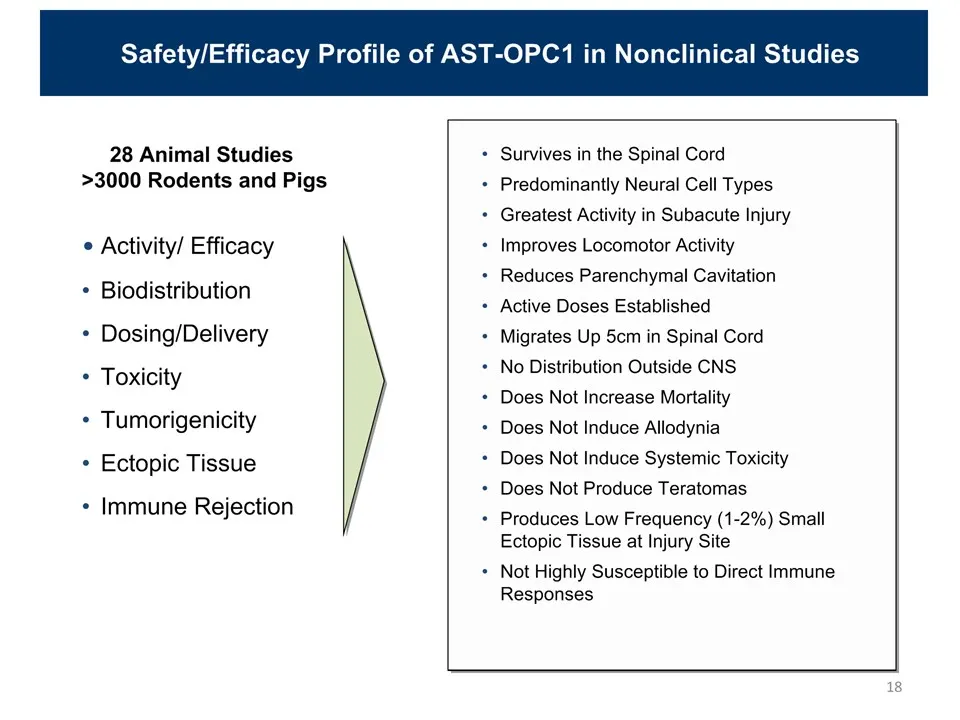
Slide 18: Safety/Efficacy Profile of AST-OPC1 in Nonclinical Studies
Activity/ Efficacy Biodistribution Dosing/Delivery Toxicity Tumorigenicity Ectopic Tissue Immune Rejection Survives in the Spinal CordPredominantly Neural Cell TypesGreatest Activity in Subacute InjuryImproves Locomotor ActivityReduces Parenchymal CavitationActive Doses EstablishedMigrates Up 5cm in
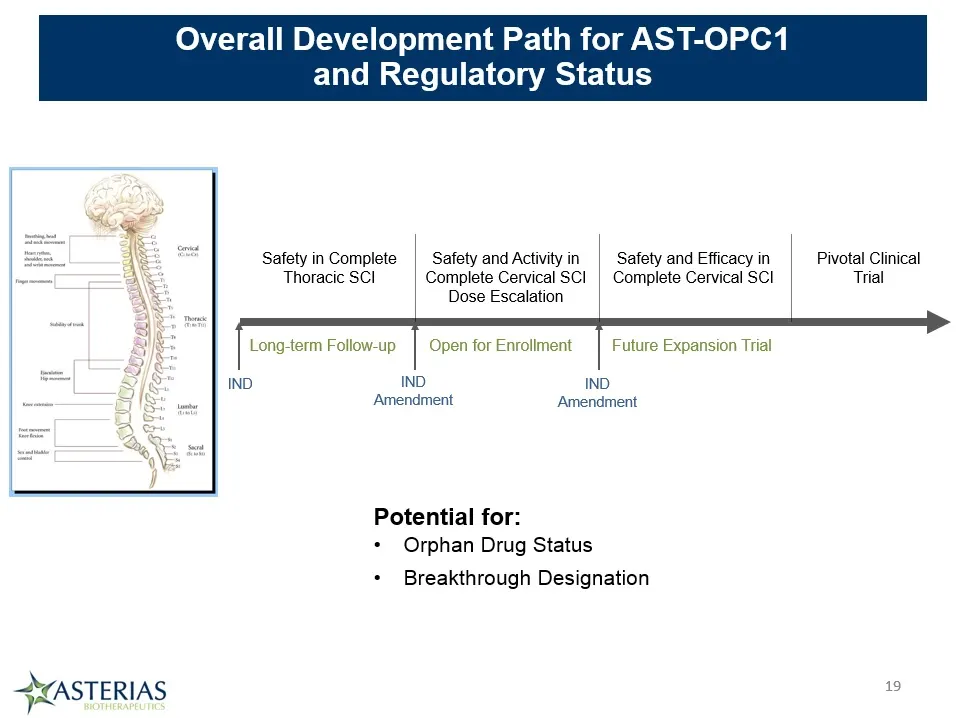
Slide 19: Overall Development Path for AST-OPC1 and Regulatory Status
* Overall Development Path for AST-OPC1 and Regulatory Status IND Potential for:Orphan Drug StatusBreakthrough Designation Safety in Complete Thoracic SCI Safety and Activity in Complete Cervical SCI Dose Escalation Safety and Efficacy in Complete Cervical SCI Pivotal Clinical Trial INDAmendment Lon
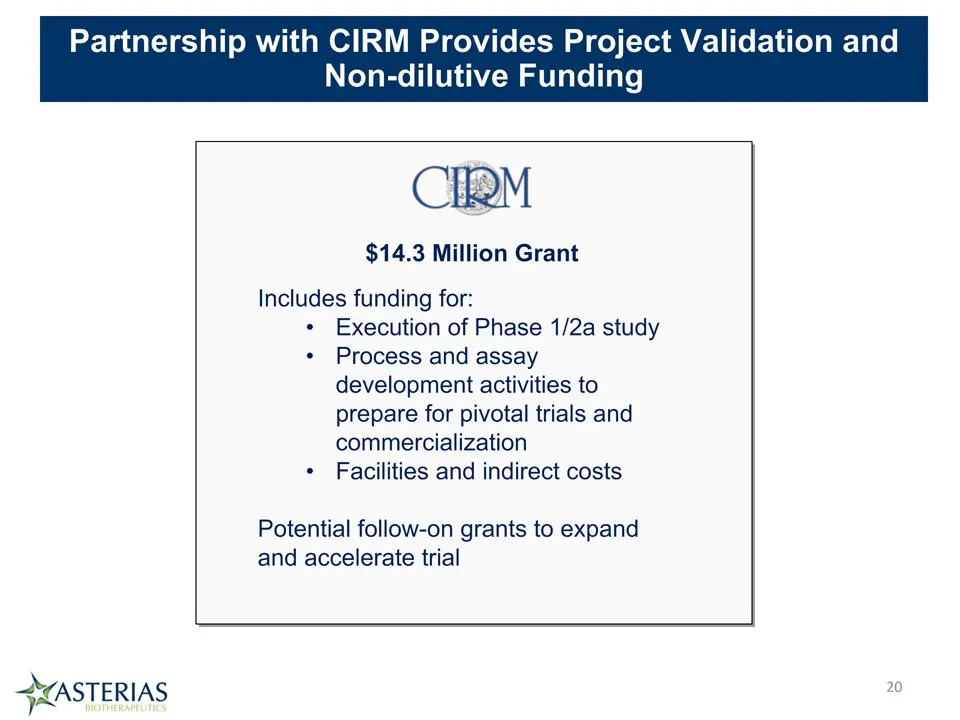
Slide 20: Partnership with CIRM Provides Project Validation and Non-dilutive Funding
* Partnership with CIRM Provides Project Validation and Non-dilutive Funding $14.3 Million Grant Includes funding for:Execution of Phase 1/2a studyProcess and assay development activities to prepare for pivotal trials and commercializationFacilities and indirect costsPotential follow-on grants to ex
Source: SEC EDGAR · 8-K filed May 8, 2015
More decks from Asterias Biotherapeutics Inc
 Merger or Acquisition (December 2018)22 slides · Dec 4, 2018
 Investor Presentation (May 2017)21 slides · May 15, 2017
 Investor Presentation (January 2017)33 slides · Jan 24, 2017
 Investor Presentation (November 2016)29 slides · Nov 17, 2016
 Investor Presentation (September 2016)39 slides · Sep 12, 2016
 Investor Presentation (August 2016)36 slides · Aug 22, 2016