Molina Healthcare Inc · NYSE:MOH
Molina Healthcare — Baby in Bloom Webinar (October 2024)
63 slides from Molina Healthcare's conference presentation, Oct 24, 2024

Slide 1: October 24, 2024
October 24, 2024 We will begin at 9am ☺
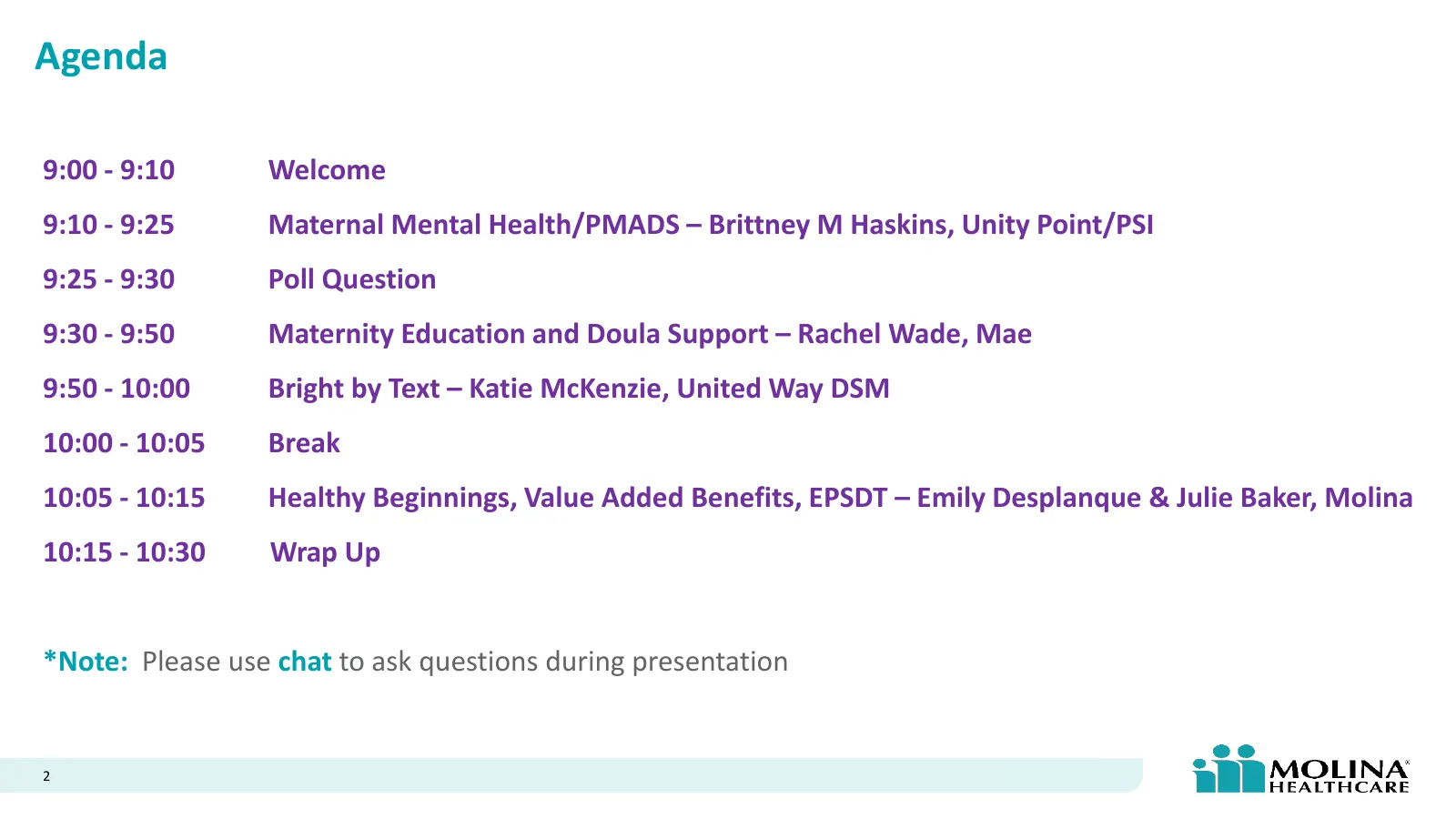
Slide 2: Agenda
Agenda 9:00 - 9:10 Welcome 9:10 - 9:25 Maternal Mental Health/PMADS – Brittney M Haskins, Unity Point/PSI 9:25 - 9:30 Poll Question 9:30 - 9:50 Maternity Education and Doula Support – Rachel Wade, Mae 9:50 - 10:00 Bright by Text – Katie McKenzie, United Way DSM 10:00 - 10:05 Break 10:05 - 10:15 Heal
Slide 3: Perinatal Mood & Anxiety Disorders
Perinatal Mood & Anxiety Disorders Postpartum Support International - lowa
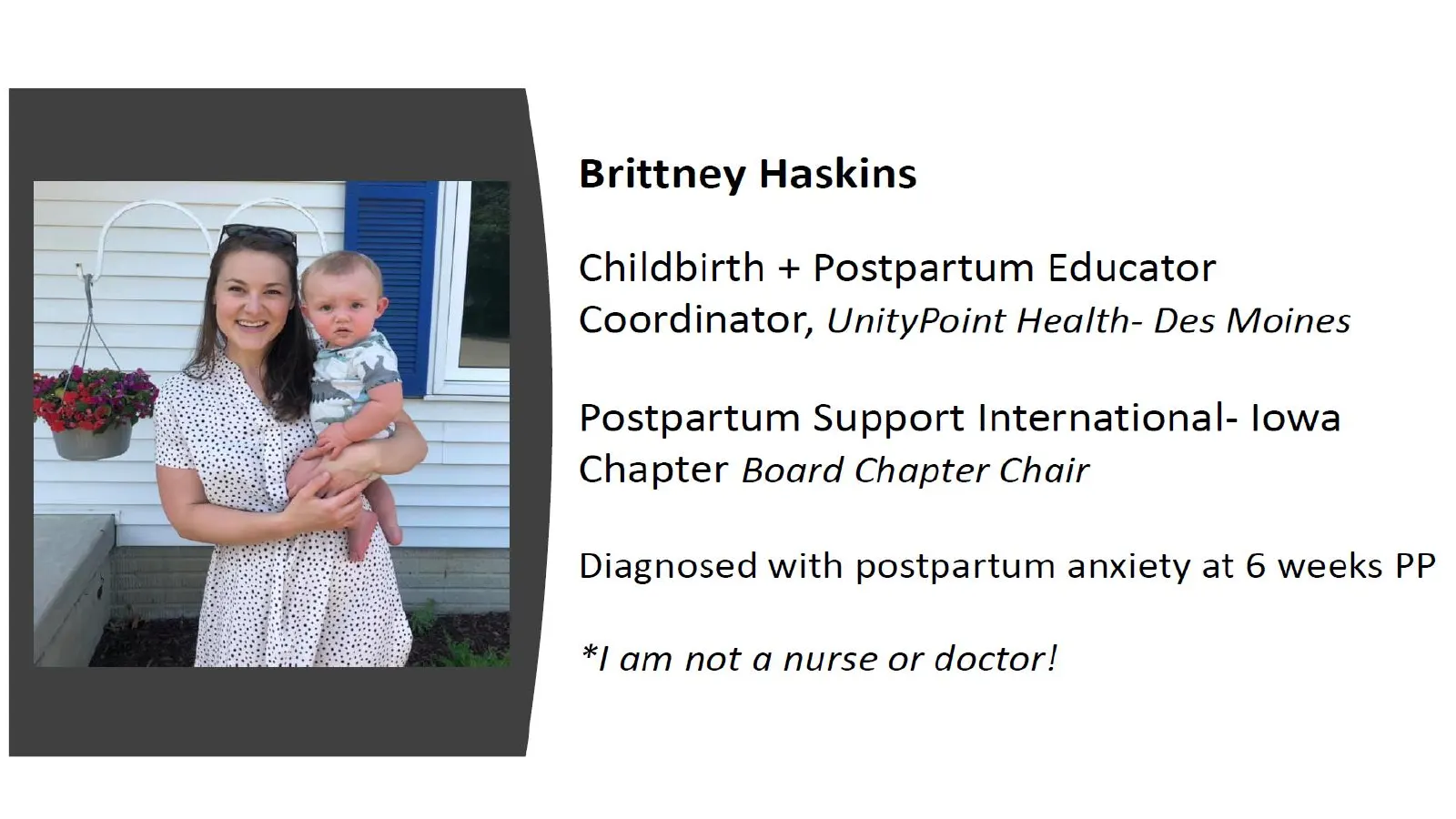
Slide 4: Brittney Haskins
Brittney Haskins Childbirth + Postpartum Educator Coordinator, UnityPoint Health- Des Moines Postpartum Support International- lowa Chapter Board Chapter Chair Diagnosed with postpartum anxiety at 6 weeks PP *!am not a nurse or doctor!
Slide 5: What are PMADs?
What are PMADs? Perinatal mood and anxiety disorders (PMADs) occur during pregnancy and up to the first two years after a mother gives birth. Perinatal mood and anxiety disorders are triggered mainly by hormonal changes, which affect neurotransmitters in the brain. Lack of sleep can also greatly con
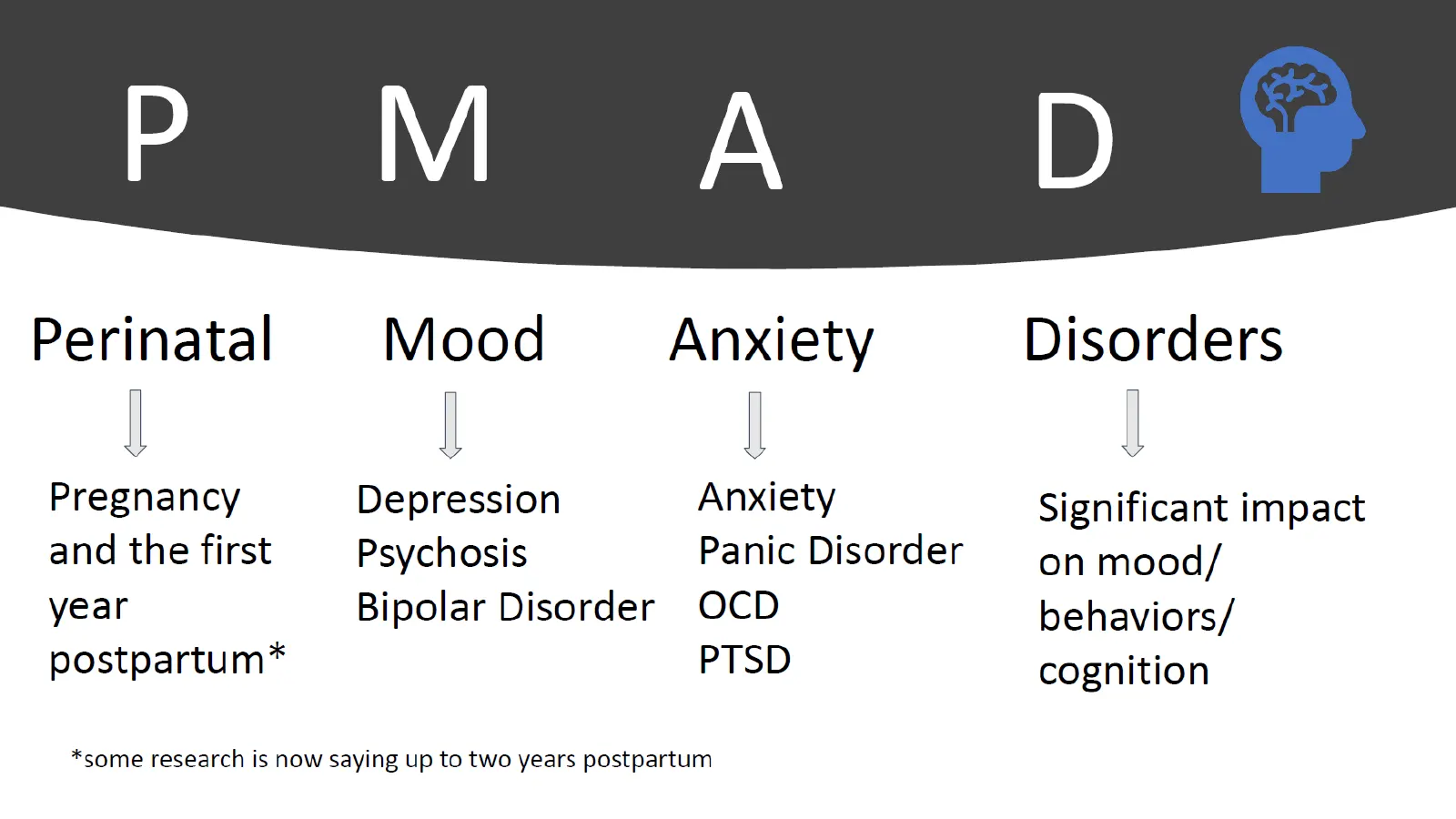
Slide 6: PMAD
P MA D°©® Perinatal Mood Anxiety Disorders Pregnancy Depression Anxiety Significant impact and the first Psychosis Panic Disorder = gn mood/ year Bipolar Disorder OCD behaviors/ postpartum* PTSD cognition *some research is now saying up to two years postpartum
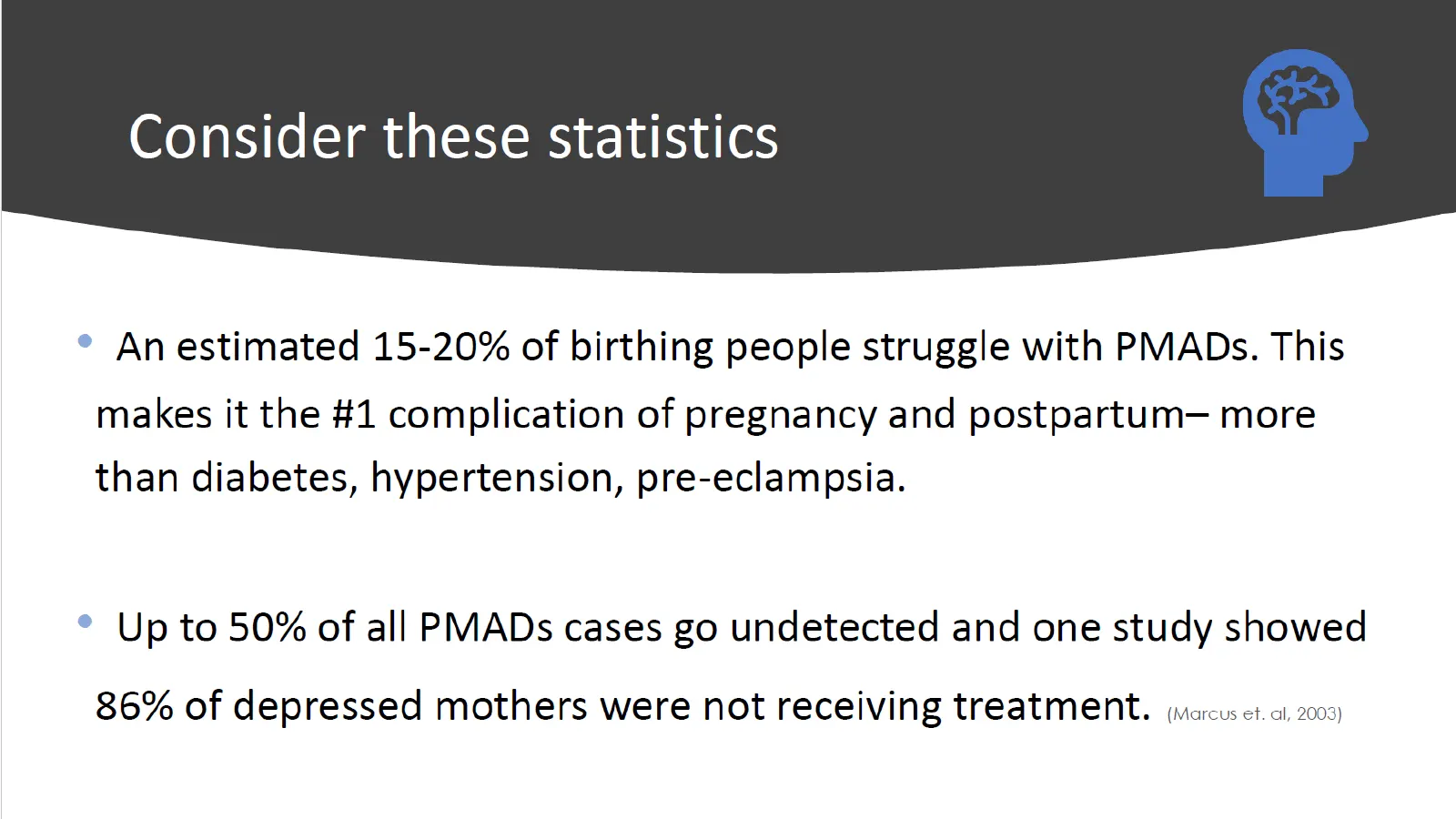
Slide 7: Consider these statistics
Consider these statistics PN An estimated 15-20% of birthing people struggle with PMADs. This makes it the #1 complication of pregnancy and postpartum— more than diabetes, hypertension, pre-eclampsia. Up to 50% of all PMADs cases go undetected and one study showed 86% of depressed mothers were not r
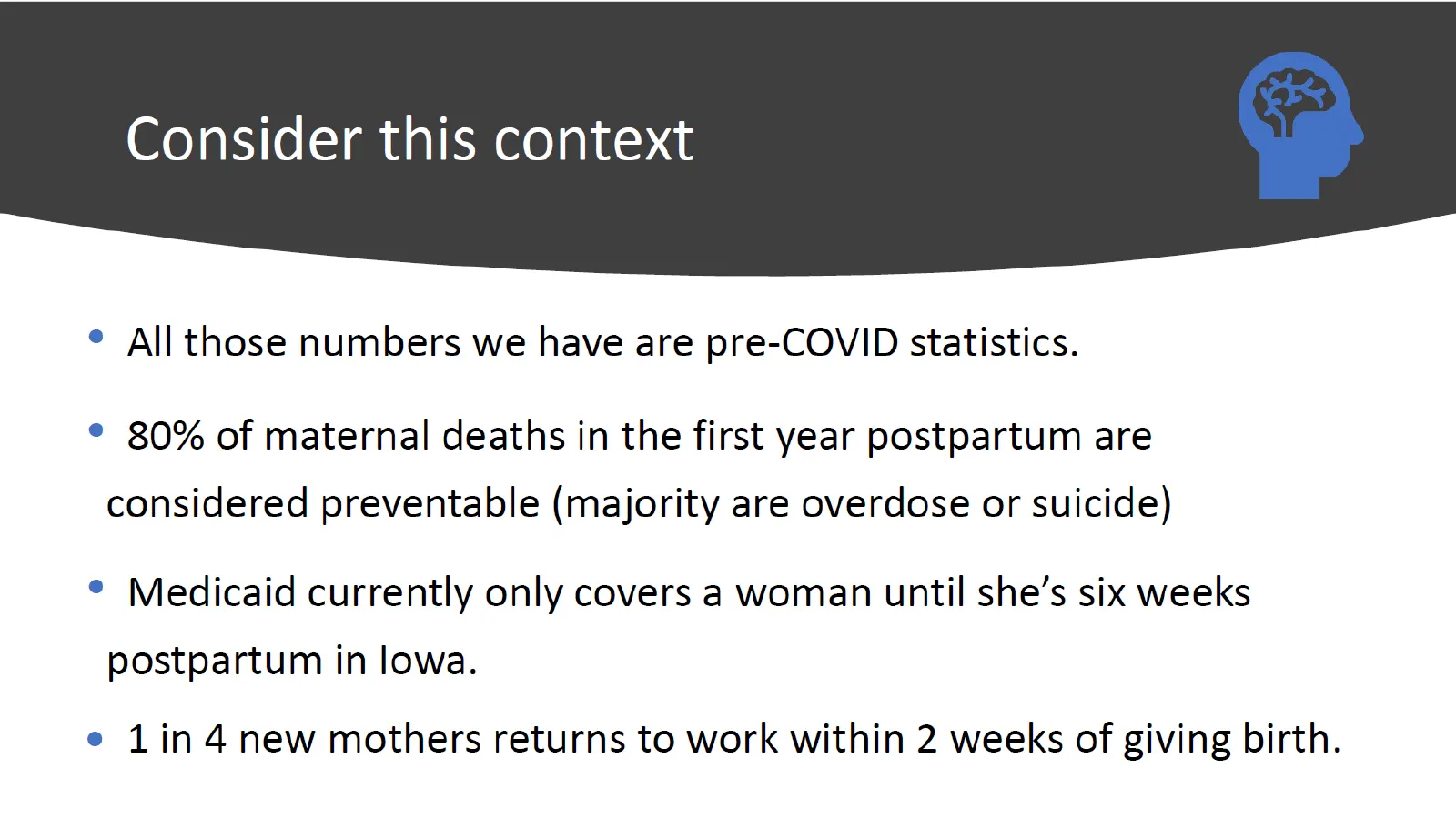
Slide 8: Consider this context
Consider this context All those numbers we have are pre-COVID statistics. 80% of maternal deaths in the first year postpartum are considered preventable (majority are overdose or suicide) Medicaid currently only covers a woman until she’s six weeks postpartum in lowa. 1 in 4 new mothers returns to w
Slide 9: Prevalence of PMADs
Prevalence of PMADs How many parents suffer from PMADs? It’s not just birthing people!
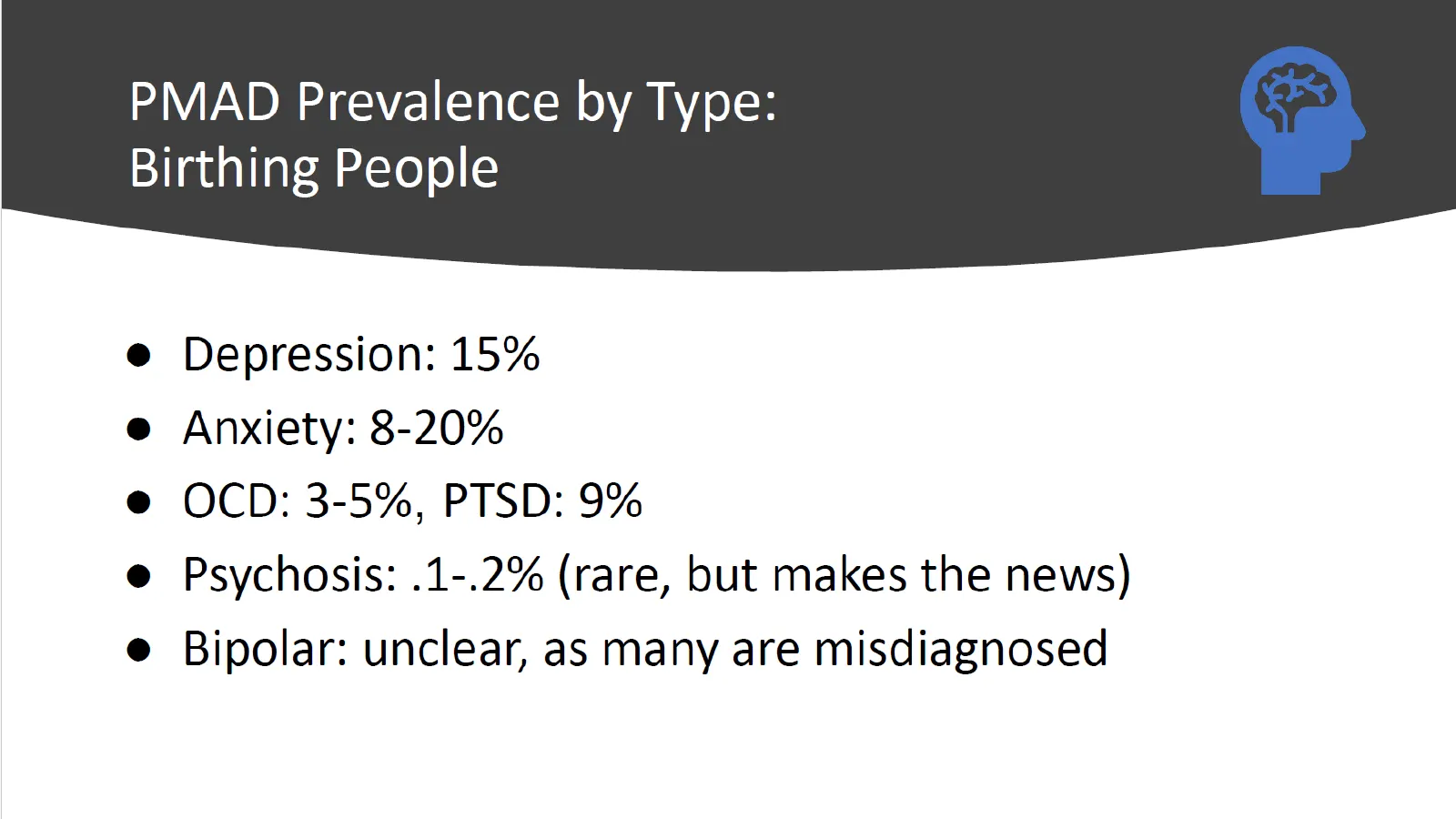
Slide 10: PMAD Prevalence by Type: Birthing People
PMAD Prevalence by Type: © Birthing People Depression: 15% Anxiety: 8-20% OCD: 3-5%, PTSD: 9% Psychosis: .1-.2% (rare, but makes the news) Bipolar: unclear, as many are misdiagnosed
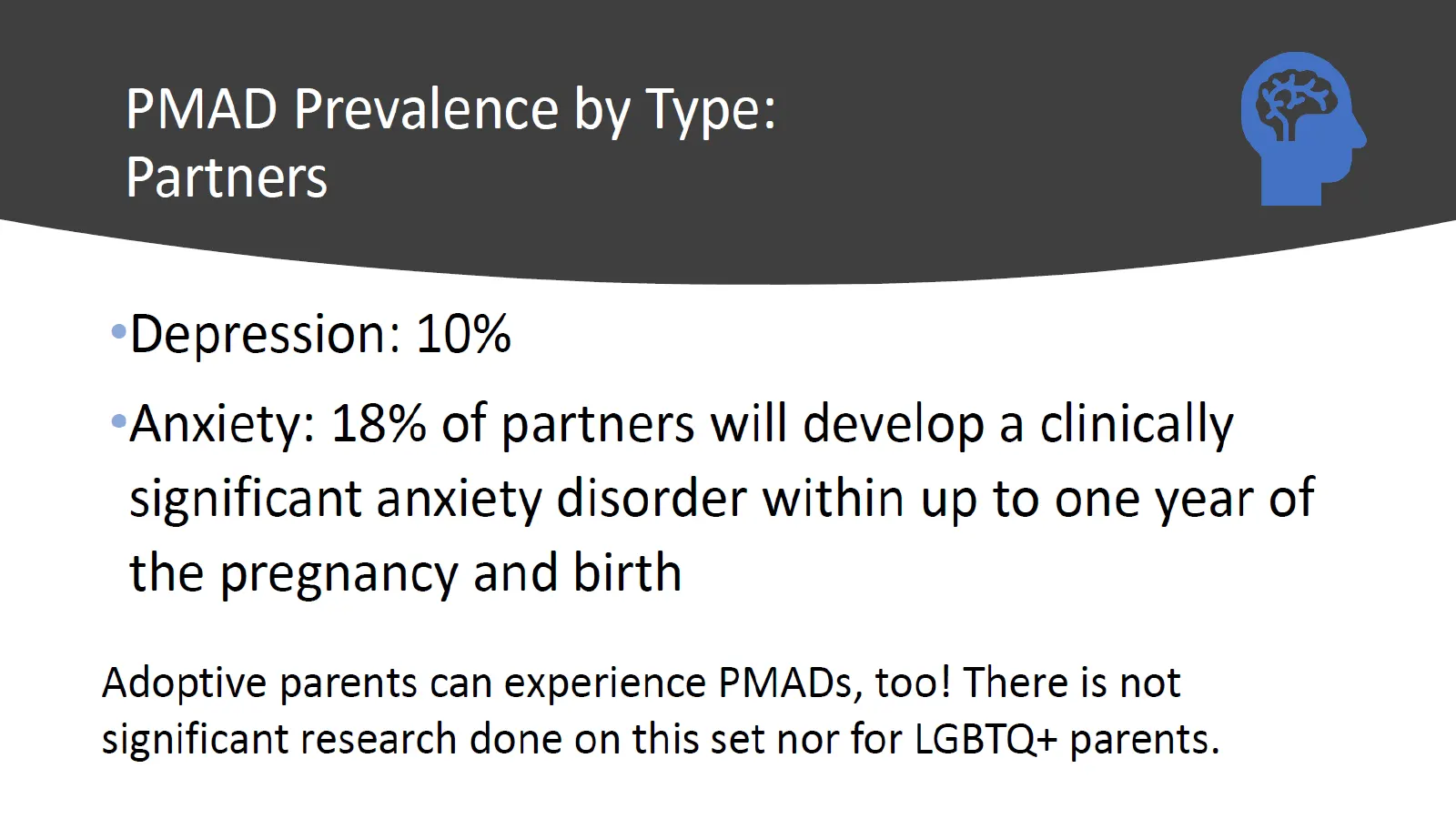
Slide 11: PMAD Prevalence by Type: Partners
PMAD Prevalence by Type: Oo Partners Depression: 10% Anxiety: 18% of partners will develop a clinically significant anxiety disorder within up to one year of the pregnancy and birth Adoptive parents can experience PMADs, too! There is not significant research done on this set nor for LGBTQ+ parents.
Slide 12: Baby blues vs. concern of PMADs
“Baby blues" vs. concern of PMADs When to seek help and how?
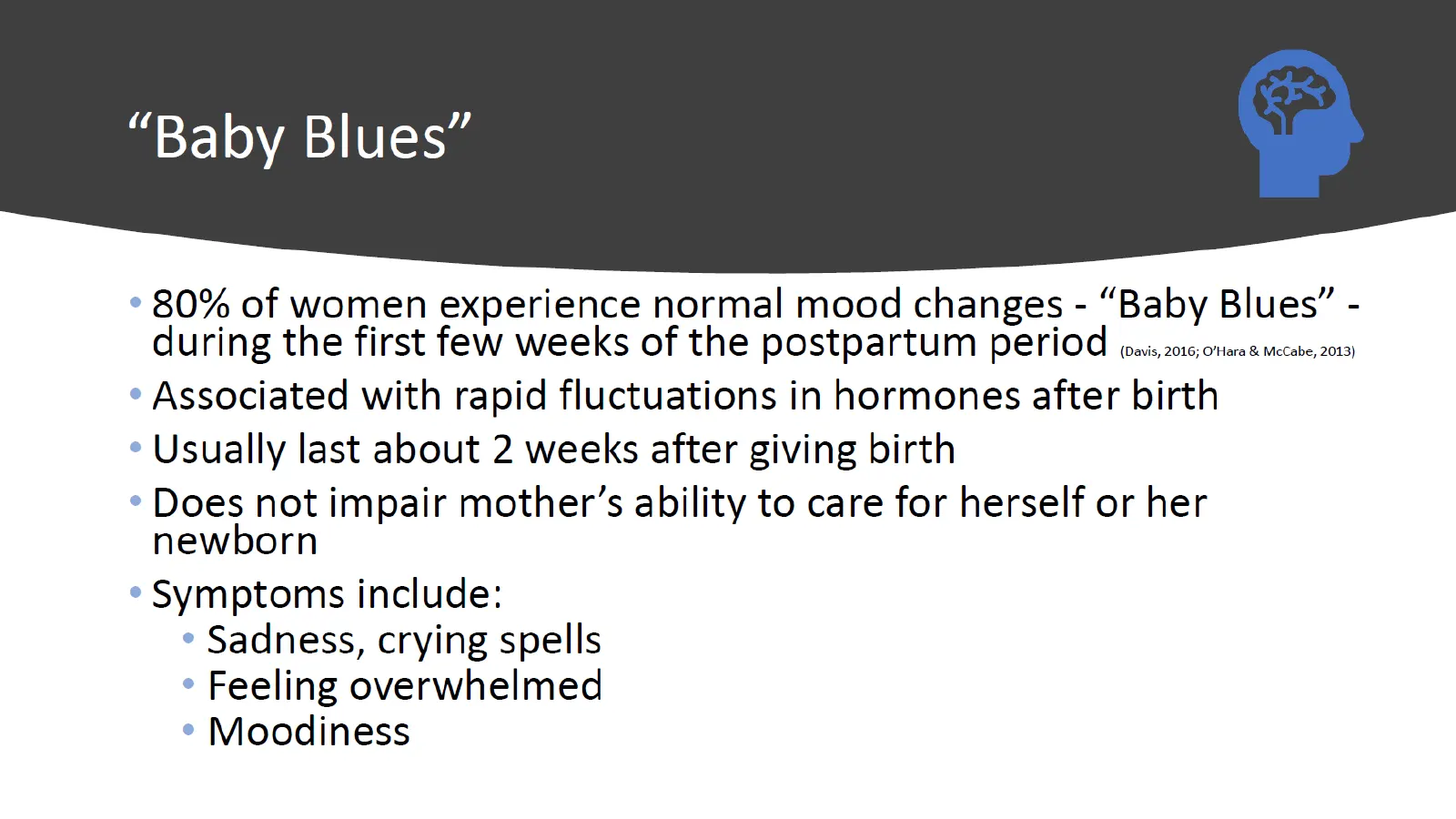
Slide 13: Baby Blues
“Baby Blues” 80% of women experience normal mood changes - “Baby Blues” - during the first few weeks of the postpartuM PeLiOd cus. 2016:c10& mcabe, 2013 avis, Associated with rapid fluctuations in hormones after birth Usually last about 2 weeks after giving birth Does not impair mother’s ability to
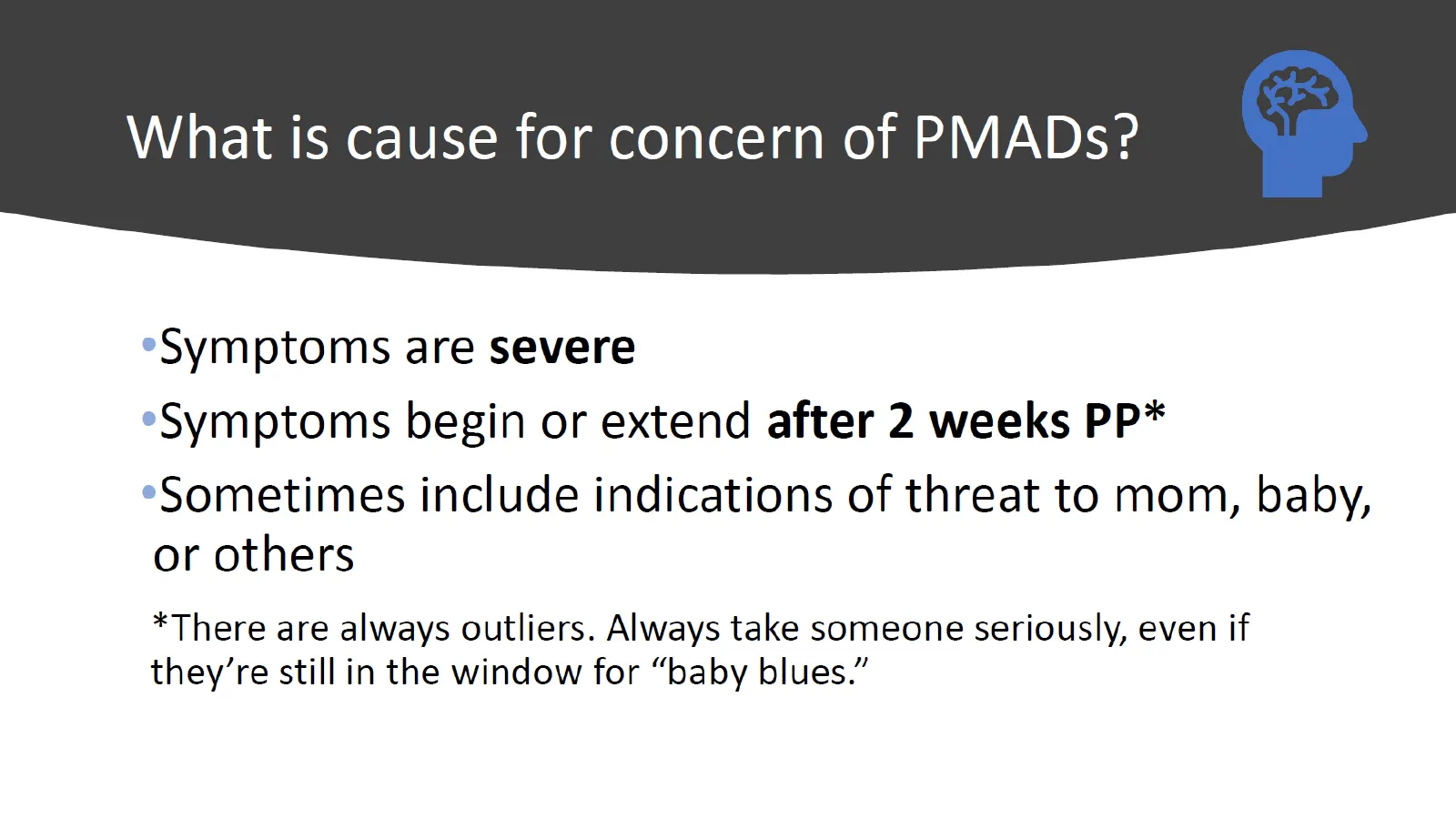
Slide 14: What is cause for concern of PMADs?
What is cause for concern of PMADs? Py Symptoms are severe Symptoms begin or extend after 2 weeks PP* Sometimes include indications of threat to mom, baby, or others *There are always outliers. Always take someone seriously, even if they’re still in the window for “baby blues.”
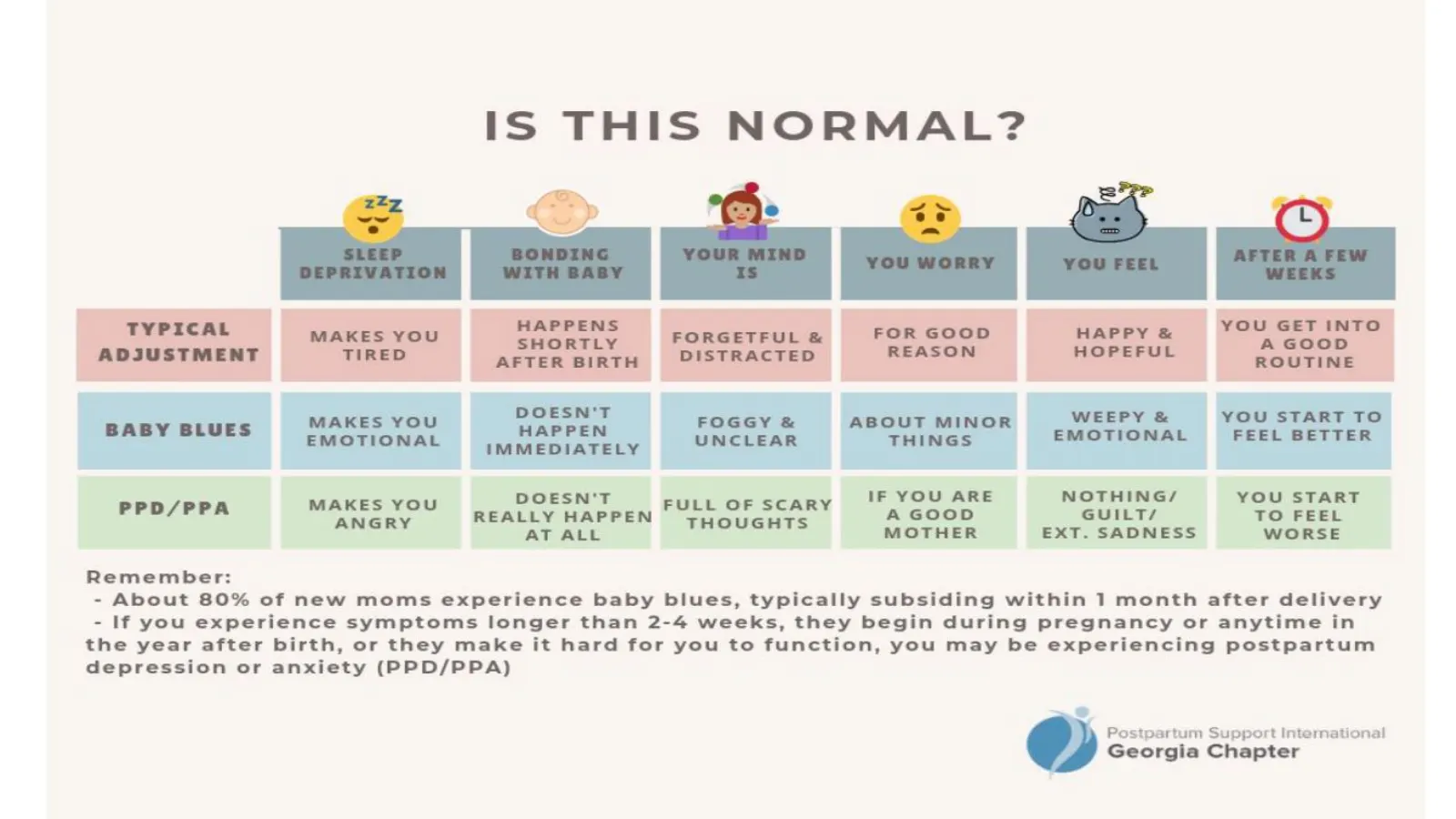
Slide 15: Is this normal?
IS THIS NORMAL? F P MAKES YOU nee FULL OF SCARY Pro/PrA _ ANGRY : d ‘THOUGHTS Remember: - About 80% of new moms experience baby blues, typically subsiding within 1 month after delivery - If you experience symptoms longer than 2-4 weeks, they begin during pregnancy or anytime in the year after birth,
Slide 16: Risk factors and symptoms of PMADs
Risk factors and symptoms of PMADs Why are some people more susceptible to PMADs? What behaviors might parents with PMADs exhibit?
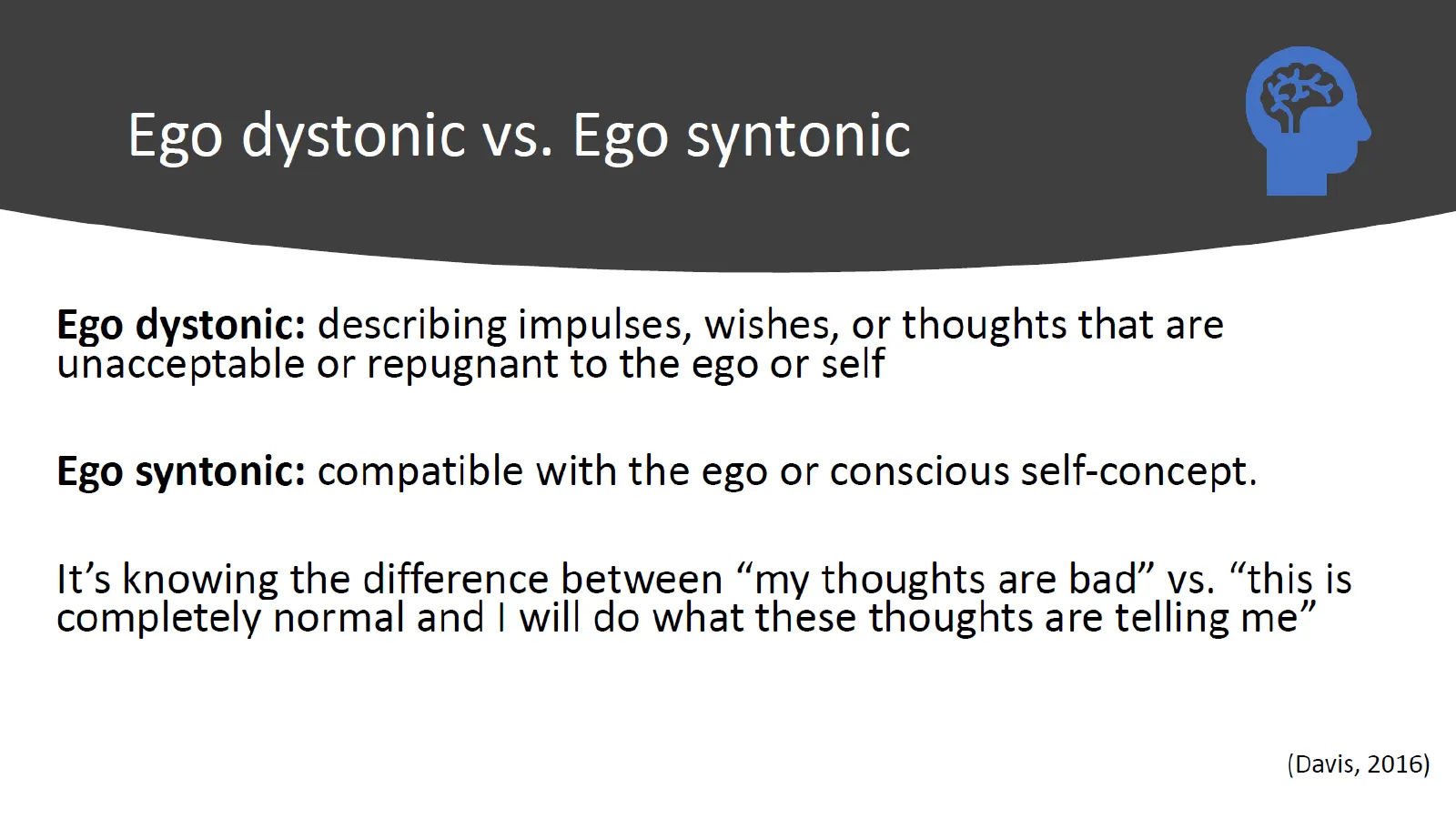
Slide 17: Ego dystonic vs. Ego syntonic
Ego dystonic vs. Ego syntonic PI Ego dystonic: describing impulses, wishes, or thoughts that are unacceptable or repugnant to the ego or self Ego syntonic: compatible with the ego or conscious self-concept. It’s knowing the difference between “my thoughts are bad” vs. “this is completely normal and
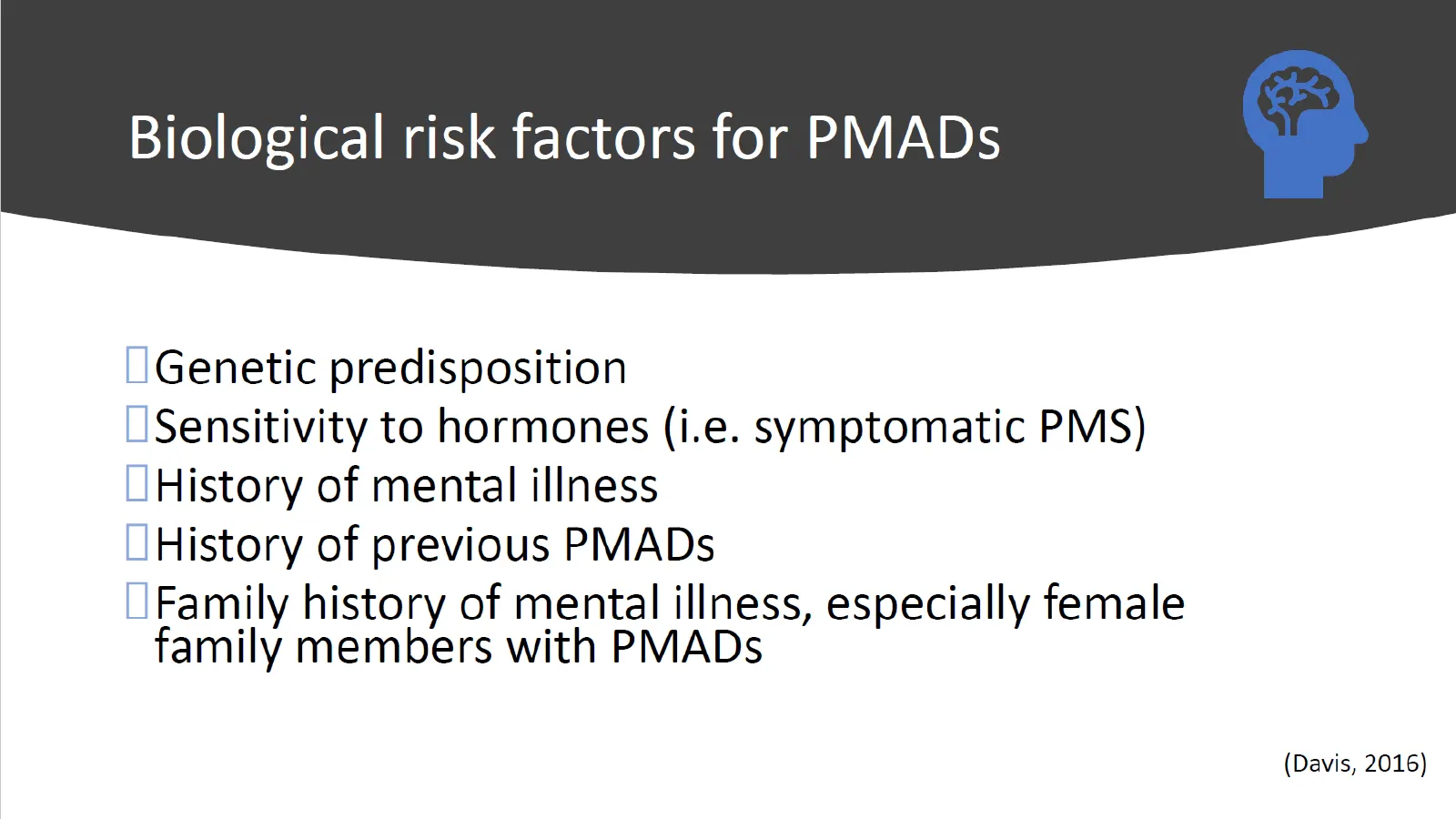
Slide 18: Biological risk factors for PMADs
Biological risk factors for PMADs my Genetic predisposition Sensitivity to hormones (i.e. symptomatic PMS) History of mental illness History of previous PMADs Family history of mental illness, especially female family members with PMADs (Davis, 2016)
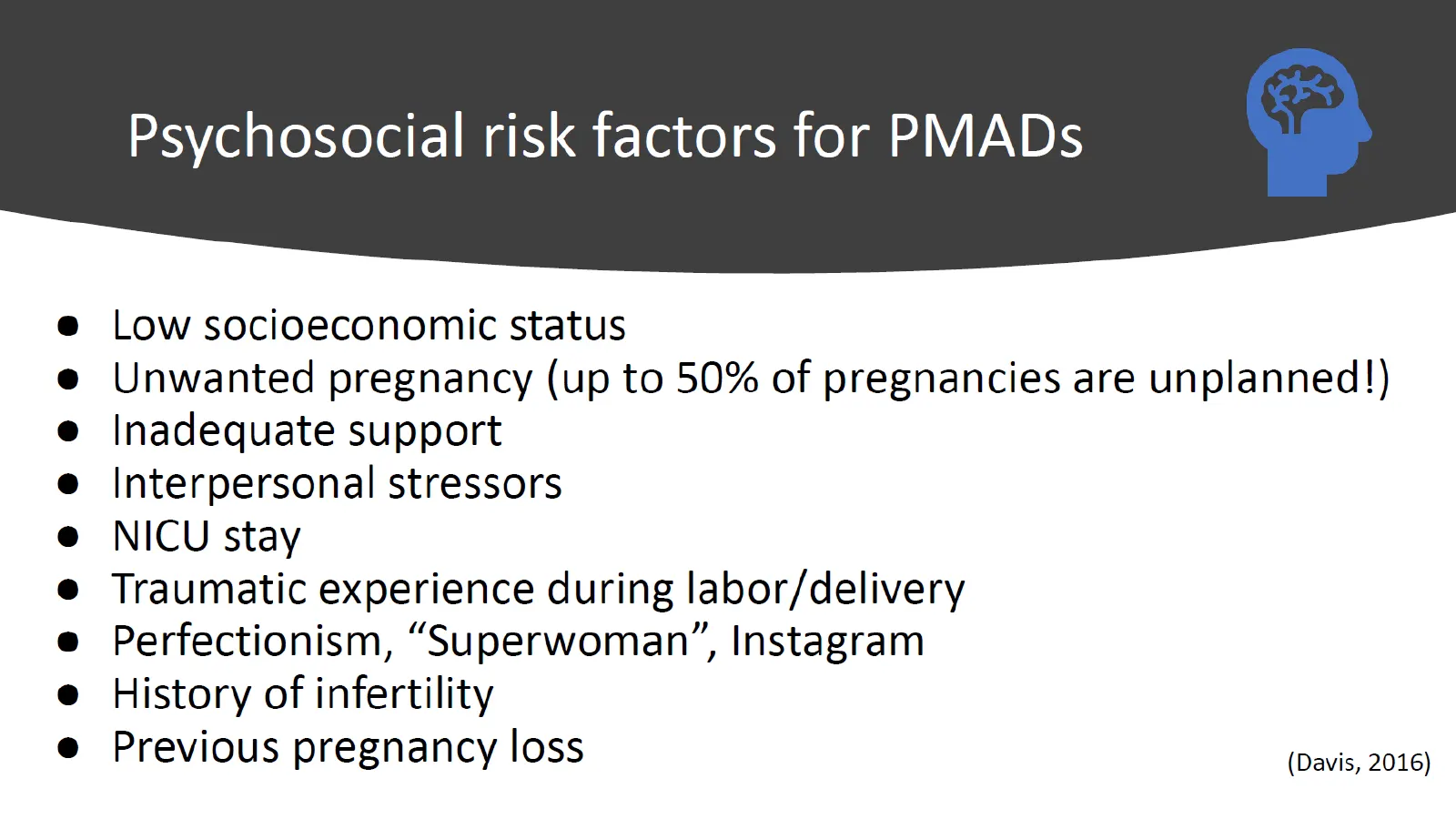
Slide 19: Psychosocial risk factors for PMADs
Psychosocial risk factors for PMADs © Low socioeconomic status Unwanted pregnancy (up to 50% of pregnancies are unplanned!) nadequate support nterpersonal stressors NICU stay Traumatic experience during labor/delivery Perfectionism, “Superwoman”, Instagram History of infertility Previous pregnancy l
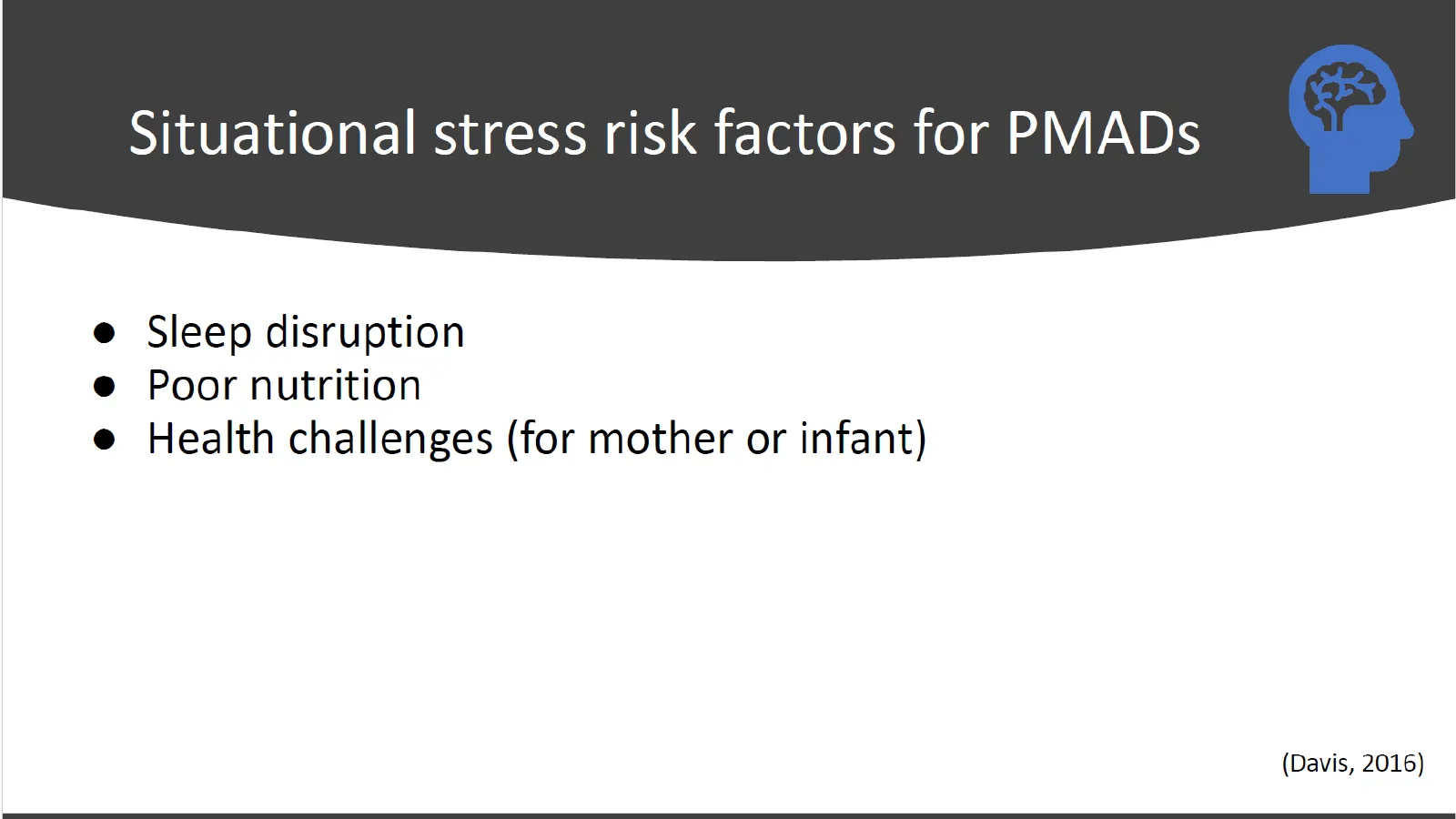
Slide 20: Situational stress risk factors for PMADs
Situational stress risk factors for PMADs Oo e Sleep disruption e@ Poor nutrition e@ Health challenges (for mother or infant) (Davis, 2016)
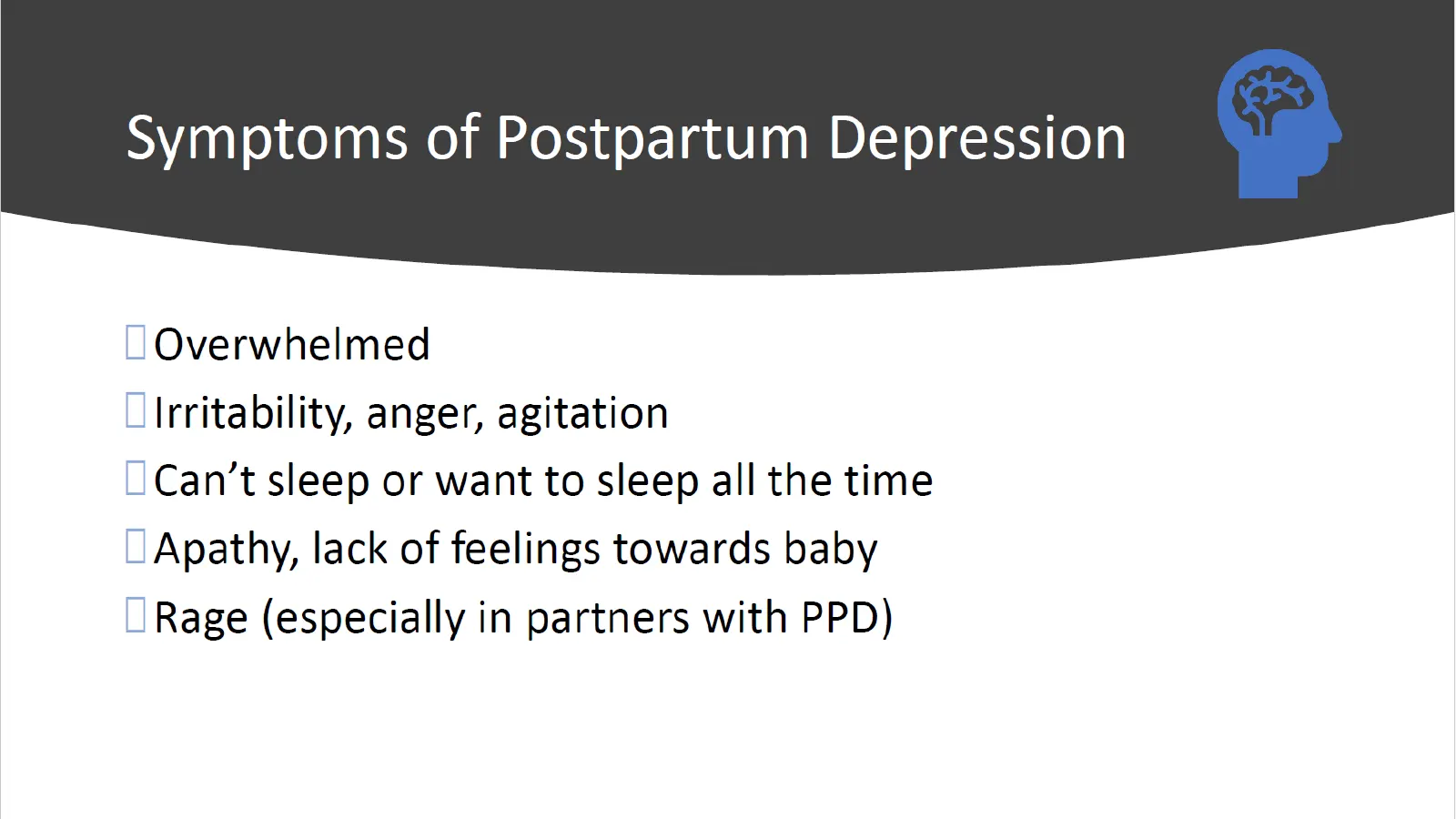
Slide 21: Symptoms of Postpartum Depression
Symptoms of Postpartum Depression O Overwhelmed Irritability, anger, agitation Can’t sleep or want to sleep all the time Apathy, lack of feelings towards baby Rage (especially in partners with PPD)
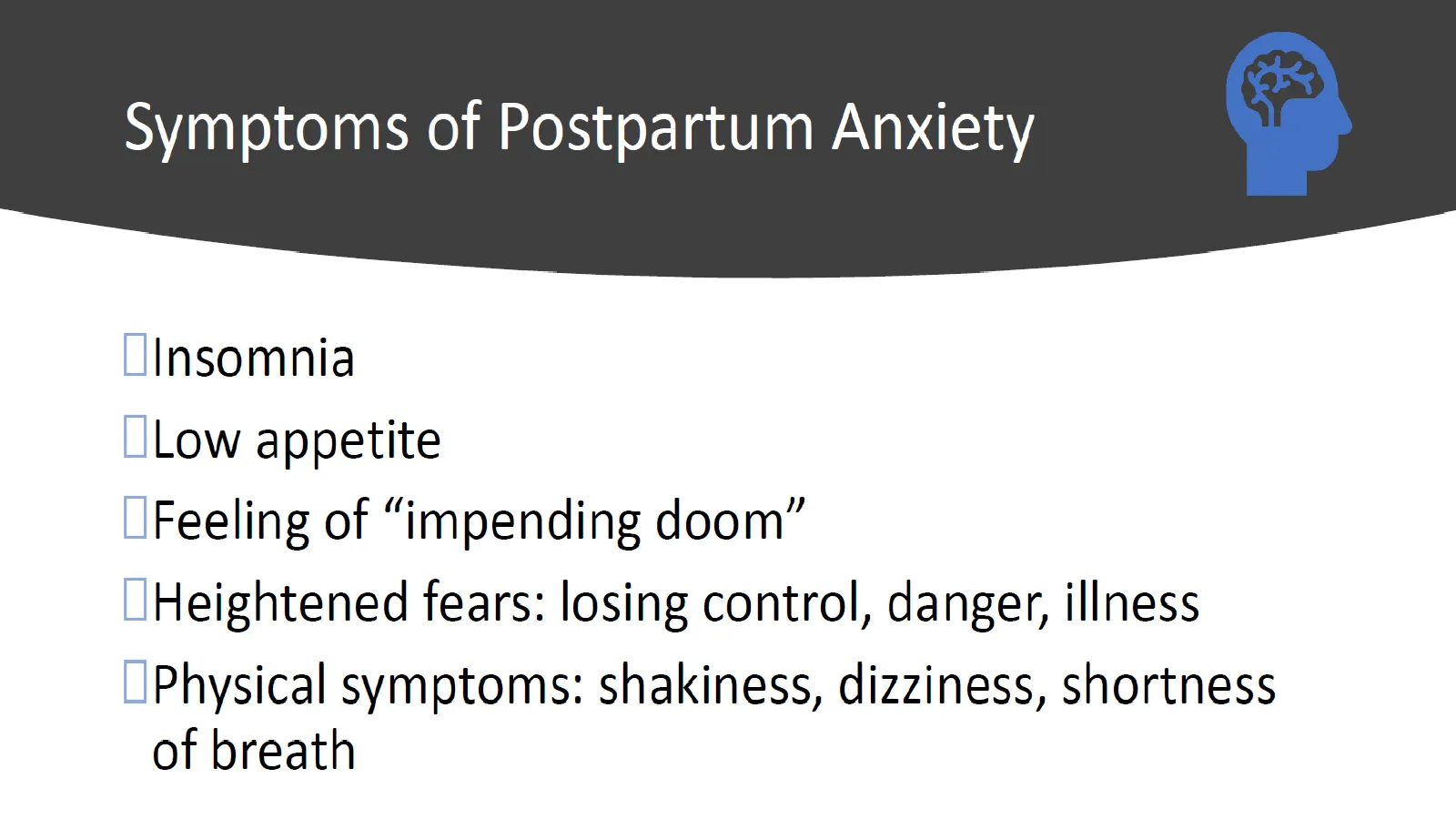
Slide 22: Symptoms of Postpartum Anxiety
Symptoms of Postpartum Anxiety @ nsomnia Low appetite Feeling of “impending doom” Heightened fears: losing control, danger, illness Physical symptoms: shakiness, dizziness, shortness of breath
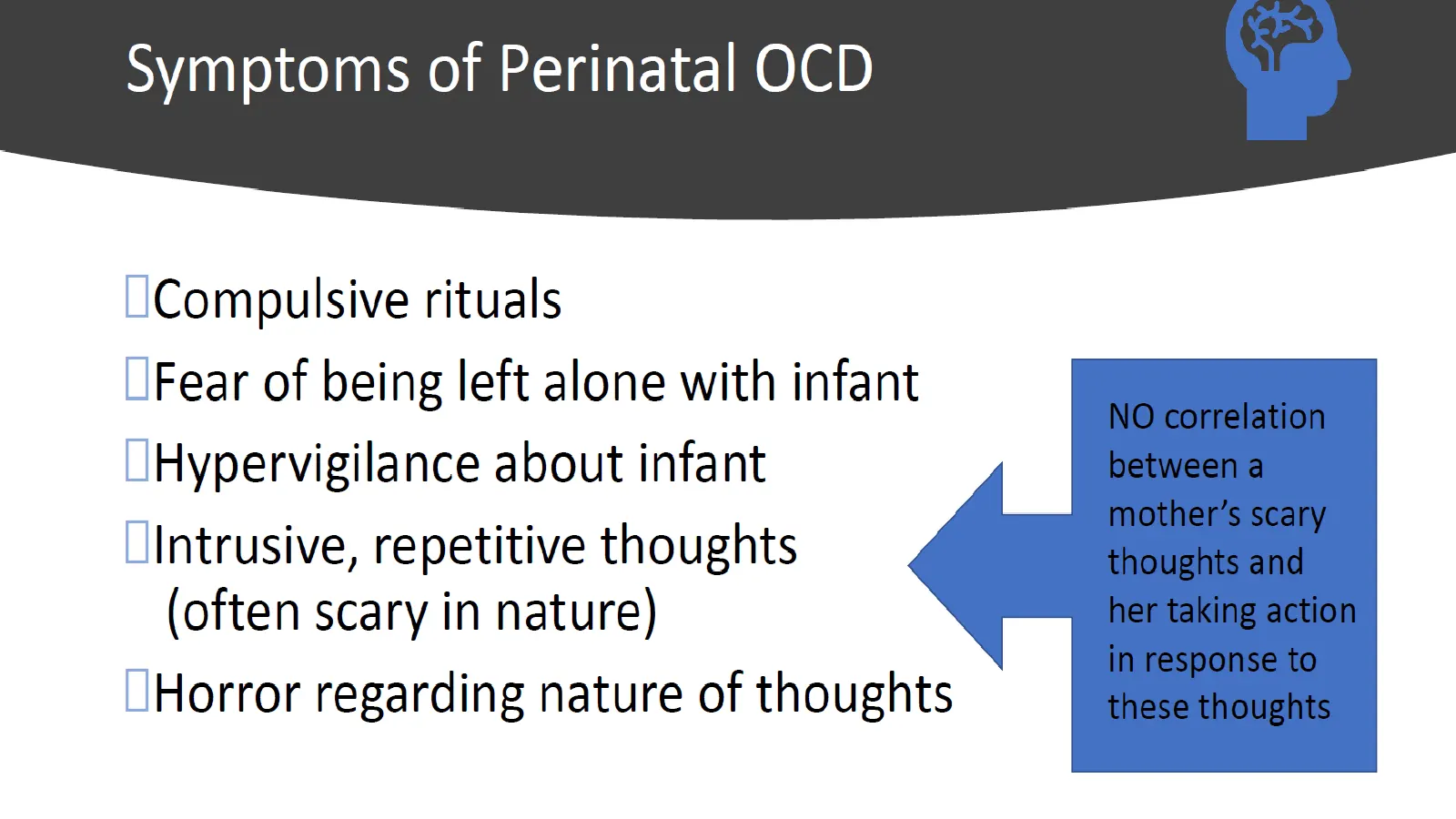
Slide 23: Symptoms of Perinatal OCD
Symptoms of Perinatal OCD Compulsive rituals Fear of being left alone with infant NO correlation Hypervigilance about infant between a . a mother’s scary Intrusive, repetitive thoughts : thoughts and (often scary in nature) ~q her taking action ‘ in response to Horror regarding nature of thoughts th
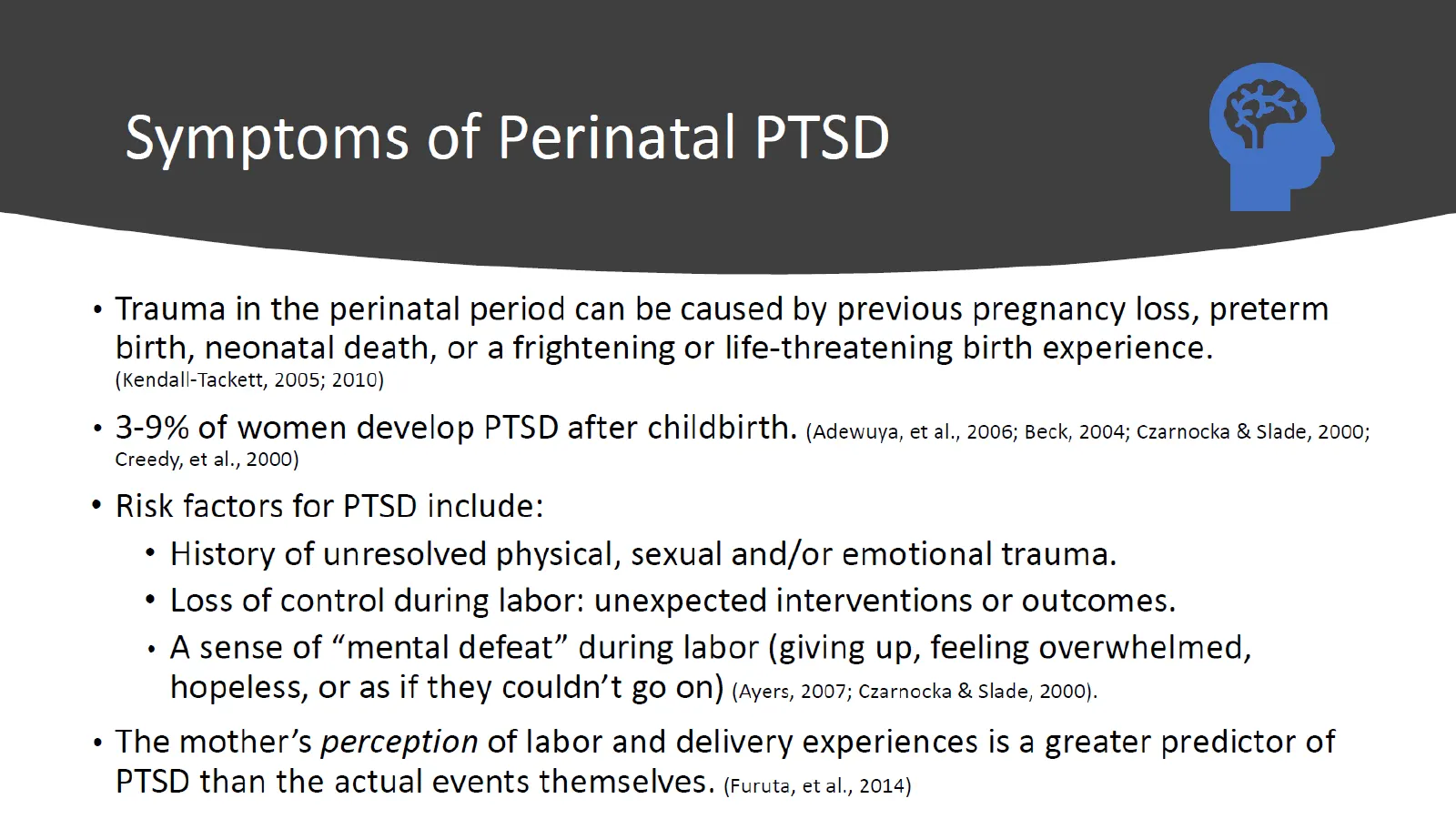
Slide 24: Symptoms of Perinatal PTSD
Symptoms of Perinatal PTSD * Trauma in the perinatal period can be caused by previous pregnancy loss, preterm birth, neonatal death, or a frightening or life-threatening birth experience. (Kendall-Tackett, 2005; 2010) + 3-9% of women develop PTSD after childbirth. (Adewuya, et al., 2006; Beck, 2004;
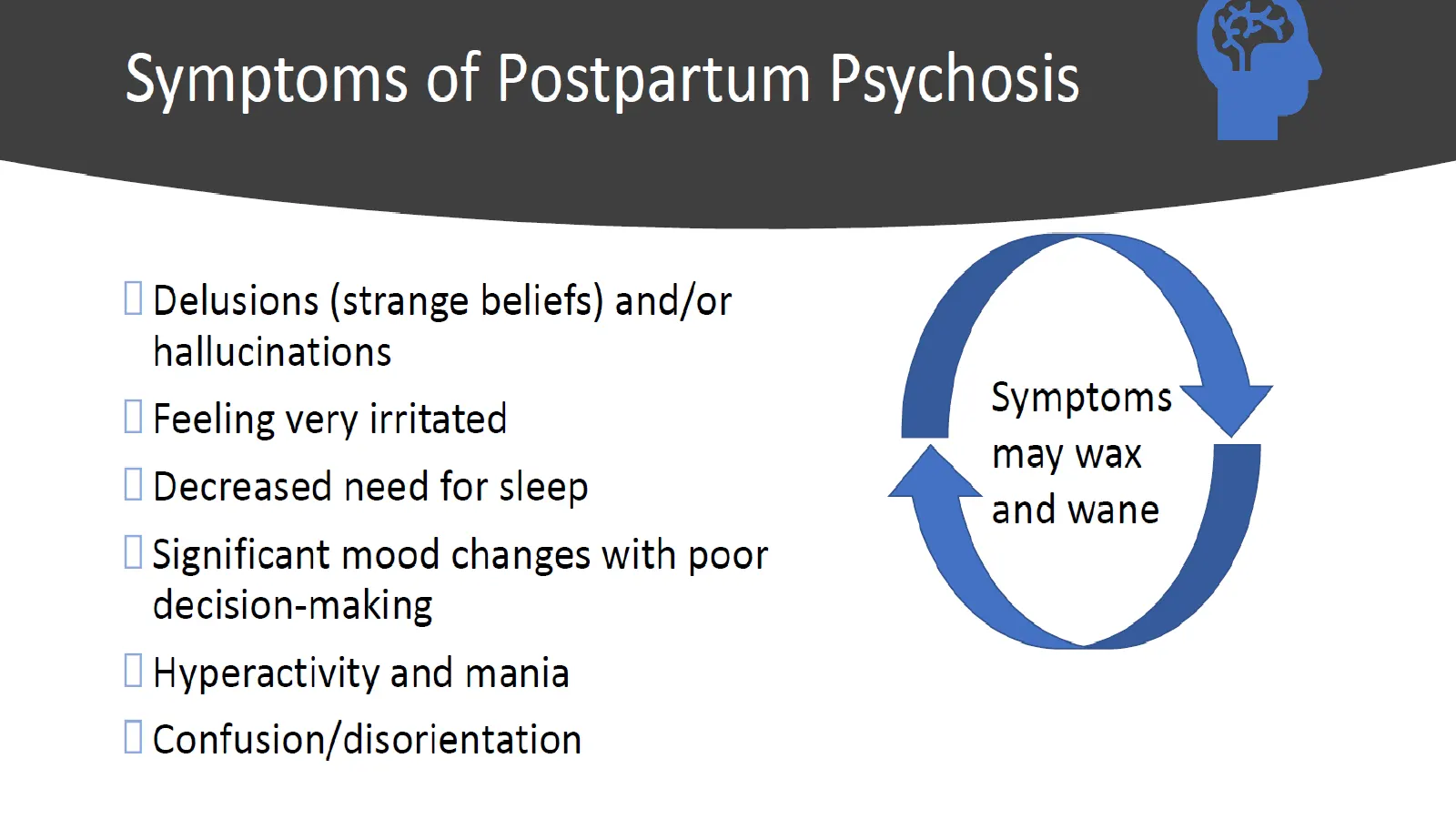
Slide 25: Symptoms of Postpartum Psychosis
Symptoms of Postpartum Psychosis Delusions (strange beliefs) and/or hallucinations N | Feeling very irritated symptoms may wax Decreased need for sleep and wane Significant mood changes with poor . decision-making Hyperactivity and mania Confusion/disorientation
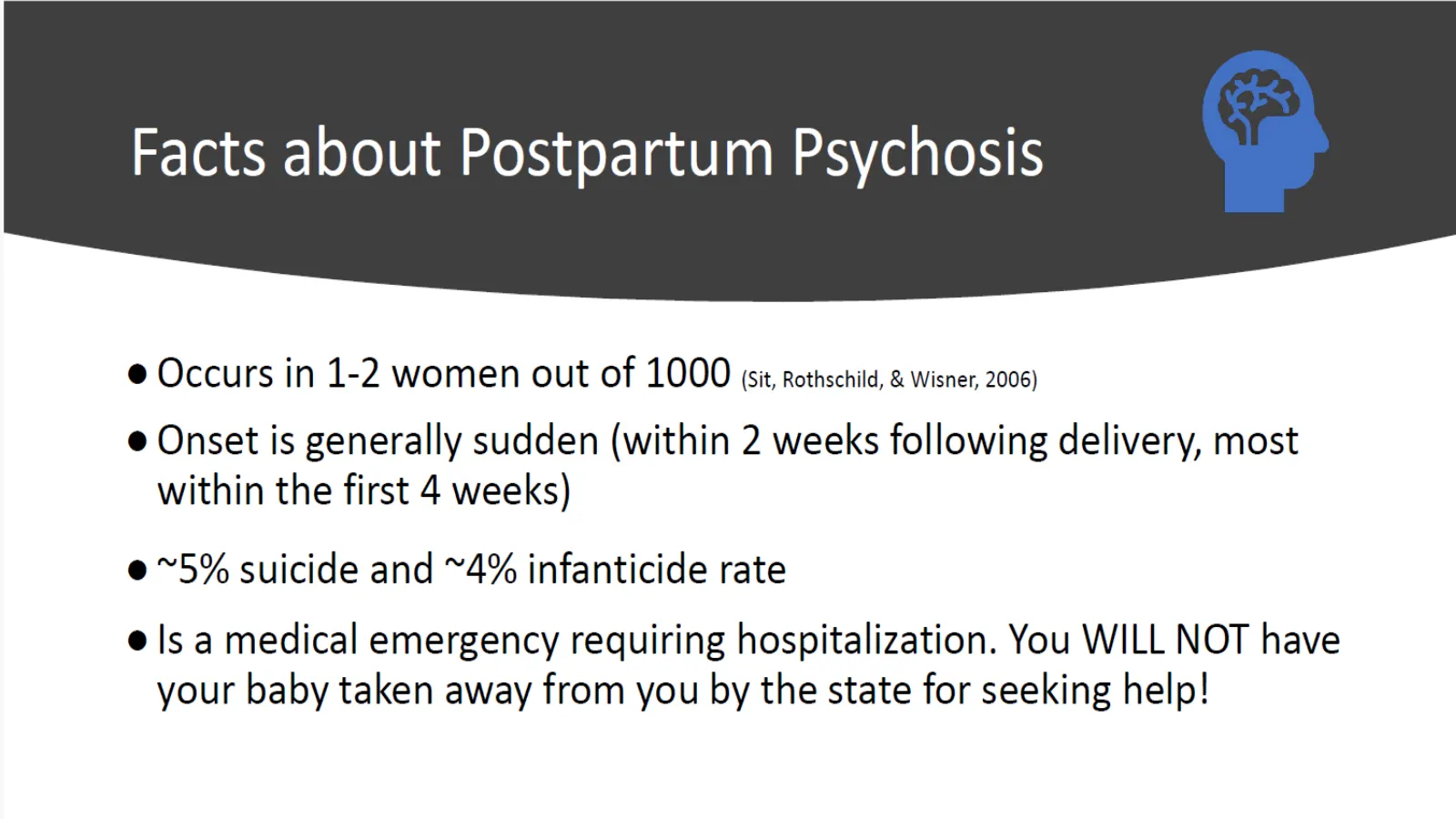
Slide 26: Facts about Postpartum Psychosis
Facts about Postpartum Psychosis © Occurs in 1-2 women out of 1000 ‘sit, Rothschild, & Wisner, 2006) @ Onset is generally sudden (within 2 weeks following delivery, most within the first 4 weeks) e ~5% suicide and ~4% infanticide rate @ Is a medical emergency requiring hospitalization. You WILL NOT
Slide 27: What if I think I have a PMAD?
What if | think | have a PMAD?
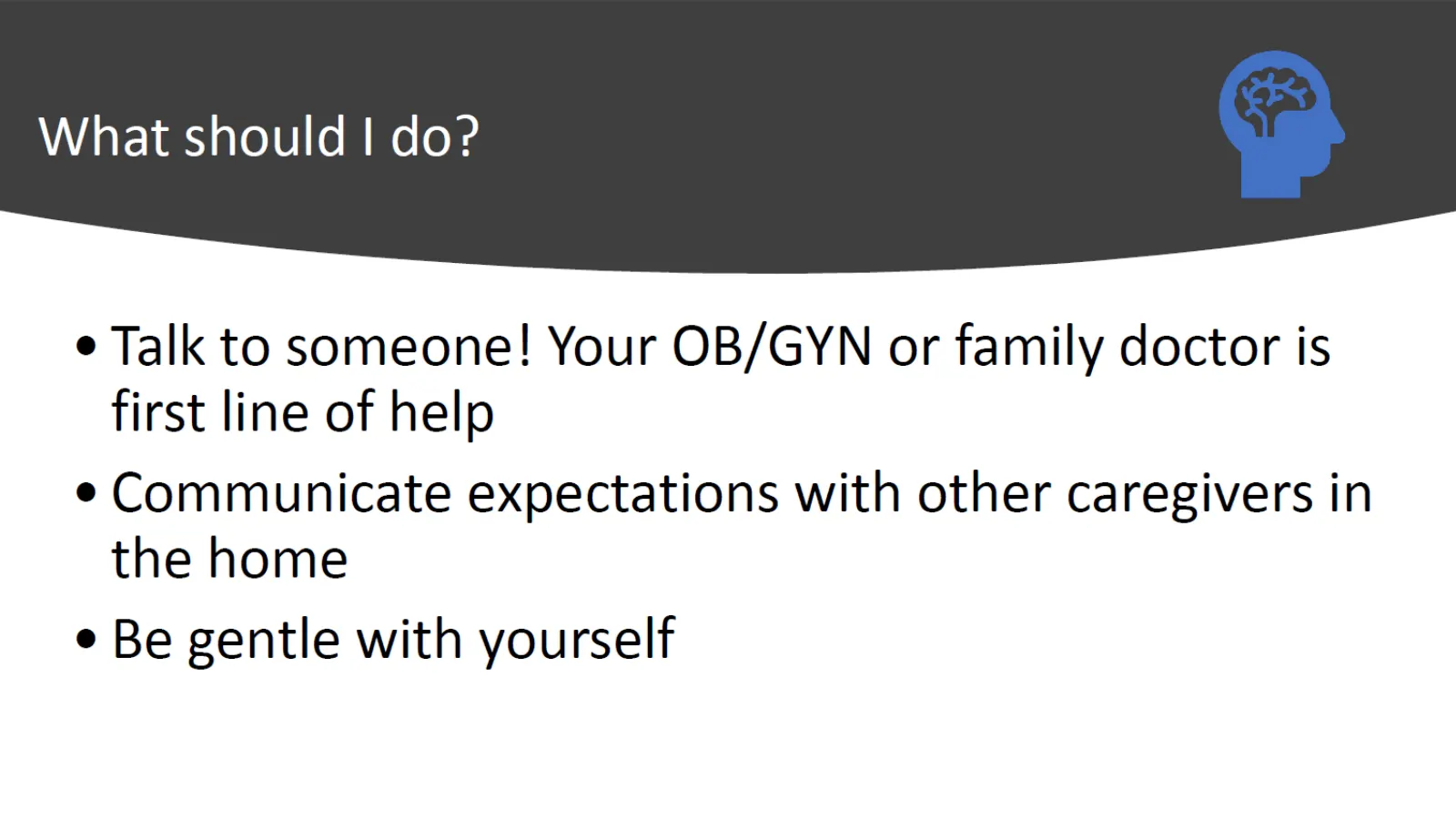
Slide 28: What should I do?
What should | do? ¢ Talk to someone! Your OB/GYN or family doctor is first line of help ¢ Communicate expectations with other caregivers in the home ¢ Be gentle with yourself
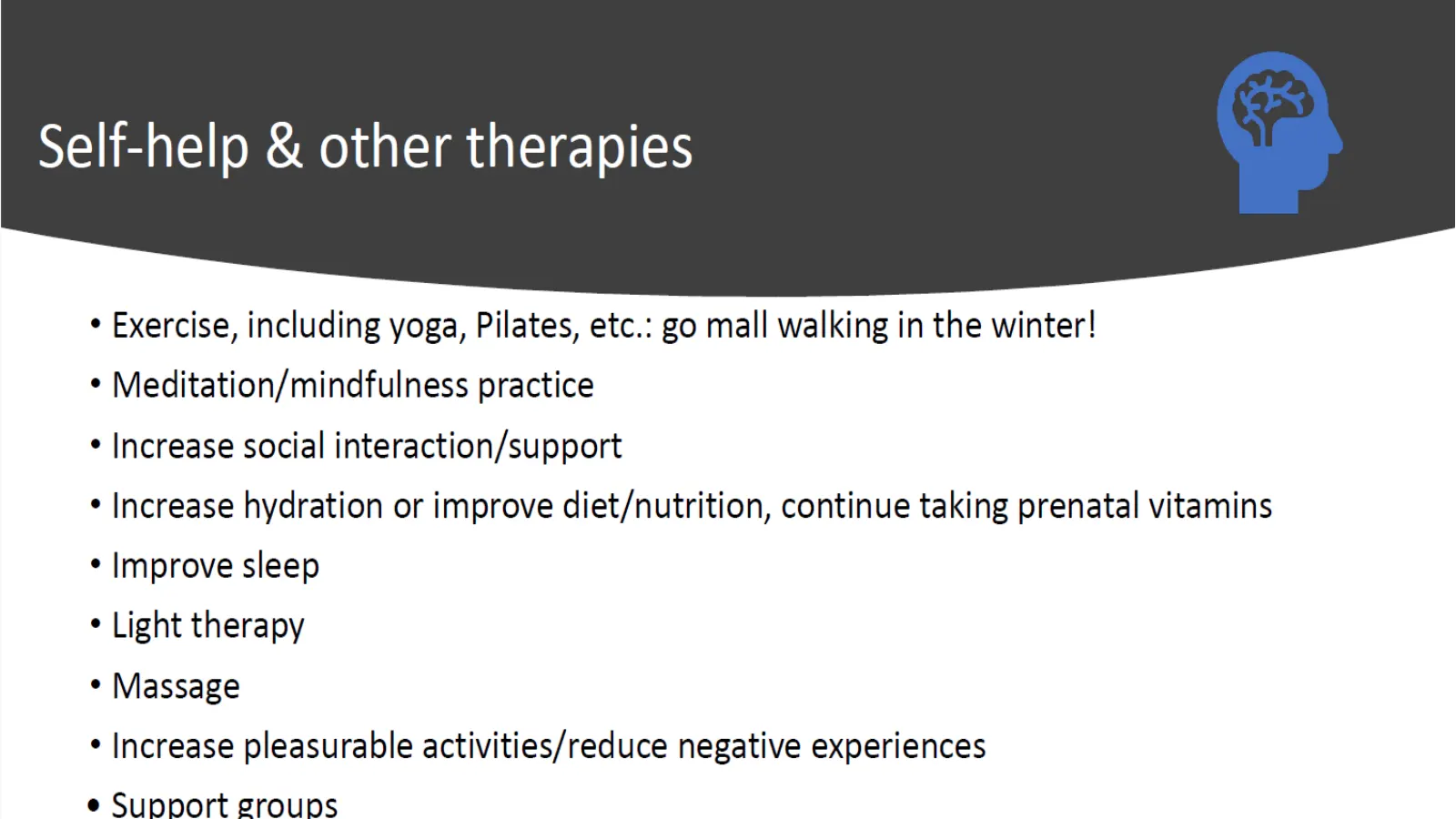
Slide 29: Self-help & other therapies
Self-help & other therapies * Exercise, including yoga, Pilates, etc.: go mall walking in the winter! * Meditation/mindfulness practice * Increase social interaction/support * Increase hydration or improve diet/nutrition, continue taking prenatal vitamins * Improve sleep * Light therapy * Massage *
Slide 30: Resources for PMADs
Resources for PMADs What are some local, regional, national, and online resources that can help?
Slide 31: For patients
For patients ¢ Postpartum Support International: postpartum.net ¢ Broadlawns Crisis Observation Center ¢ UnityPoint Behavioral Health Urgent Care e Suicide Prevention Lifeline: dial 988 ¢ PsychologyToday.com to find therapists accepting patients
Slide 32: Next Steps
Next Steps e Postpartum.net — free online support groups, peer mentors, crisis lines e Advocacy: working hard to get Medicaid expansion passed in the next legislative session! e Reduce the stigma by talking about it. Share your stories. Ask your pregnant and postpartum friends about their brains, no
Slide 33: Questions?
Questions? 515.321.7694
Slide 34: Poll Question: Hours of sleep for pregnant person
Poll Question: How many hours of sleep should a pregnant person try to get each night? → Drop answers in the chat ☺ 34
Slide 35: Meet Mae
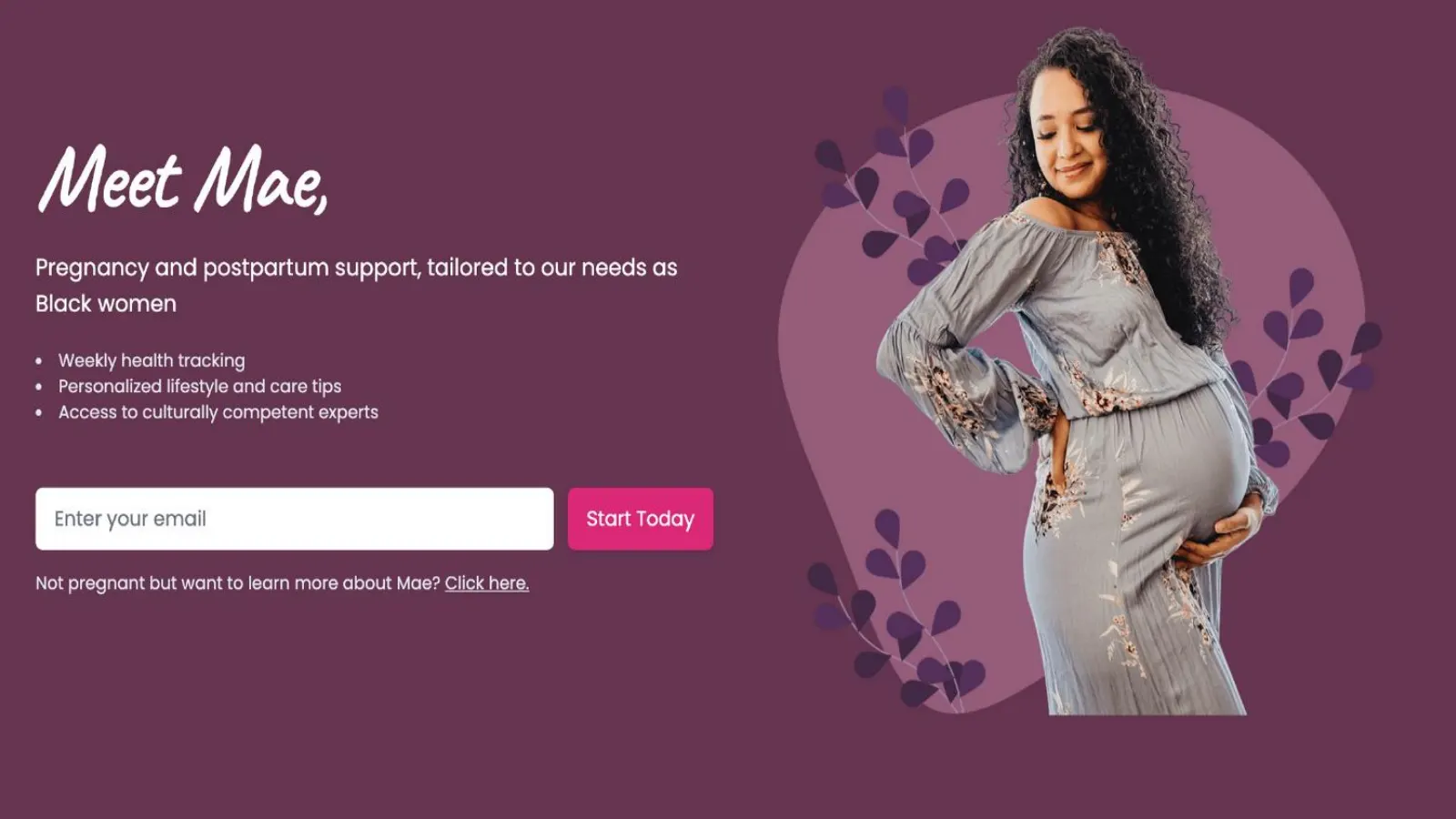
Meet Mae, Pregnancy and postpartum support, tailored to our needs as Black women * Weekly health tracking * Personalized lifestyle and care tips * Access to culturally competent experts Not pregnant but want to learn more about Mae? Click here.
Slide 36: What is Mae?
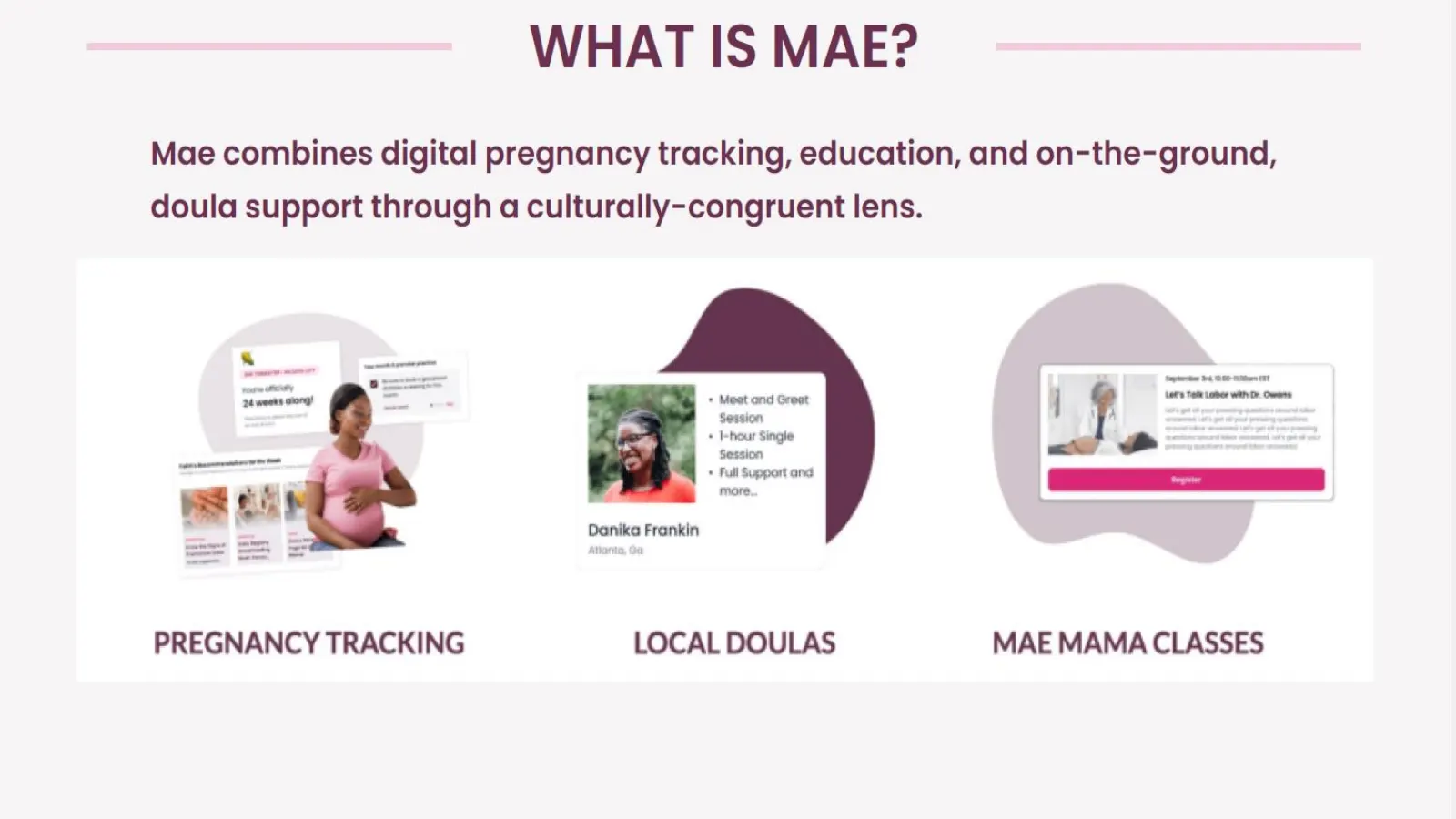
WHAT IS MAE? Mae combines digital pregnancy tracking, education, and on-the-ground, doula support through a culturally-congruent lens. PREGNANCY TRACKING + Moat and Groot Session + Ishour Single Session + Full Support and more. Danika Frankin LOCAL DOULAS MAE MAMA CLASSES
Slide 37: Pregnancy Tracking
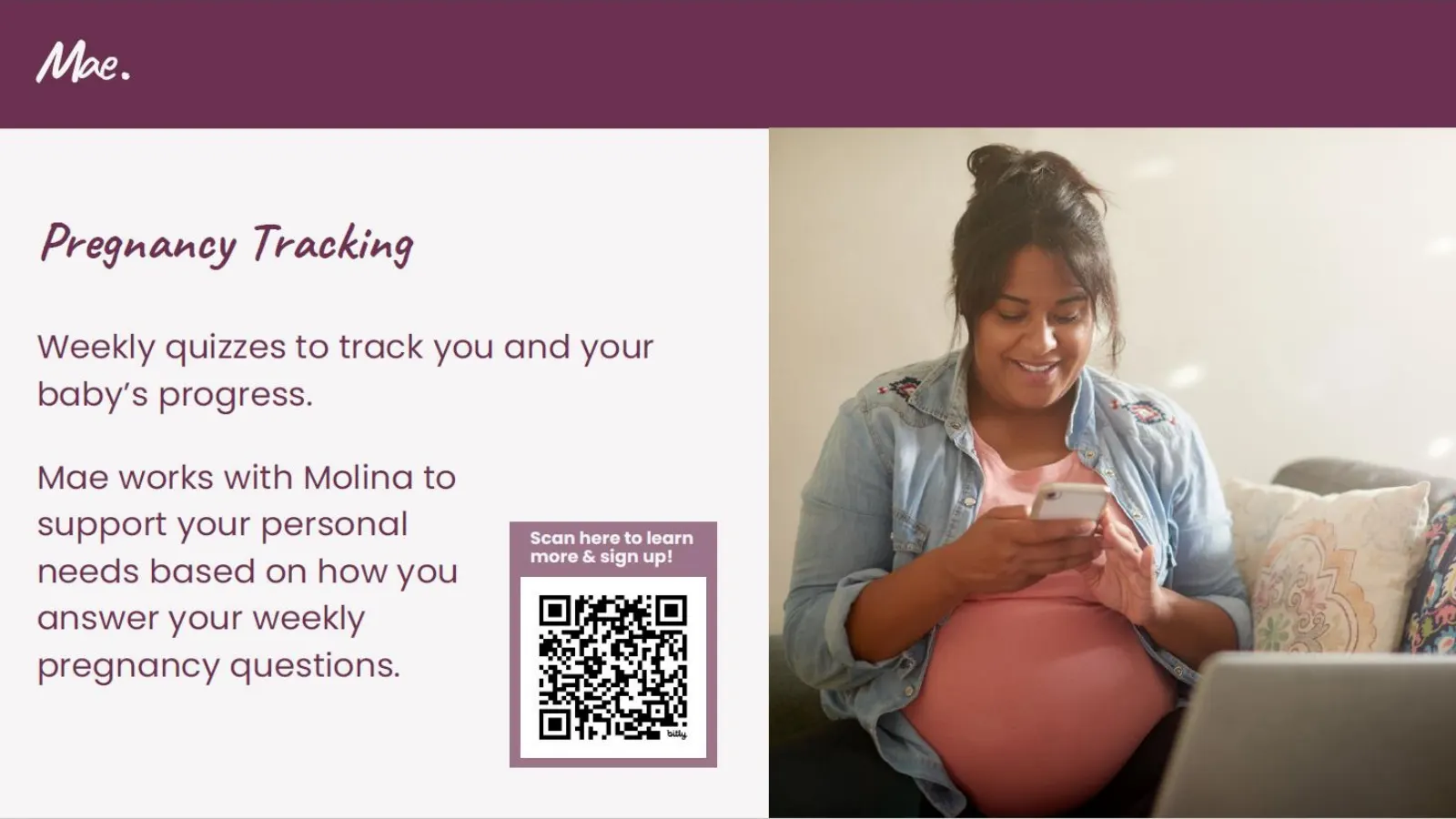
Me. Pregnancy Tracking Weekly quizzes to track you and your baby’s progress. Mae works with Molina to support your personal needs based on how you answer your weekly pregnancy questions. Scan here to learn more & sign up!
Slide 38: Local Doula Support
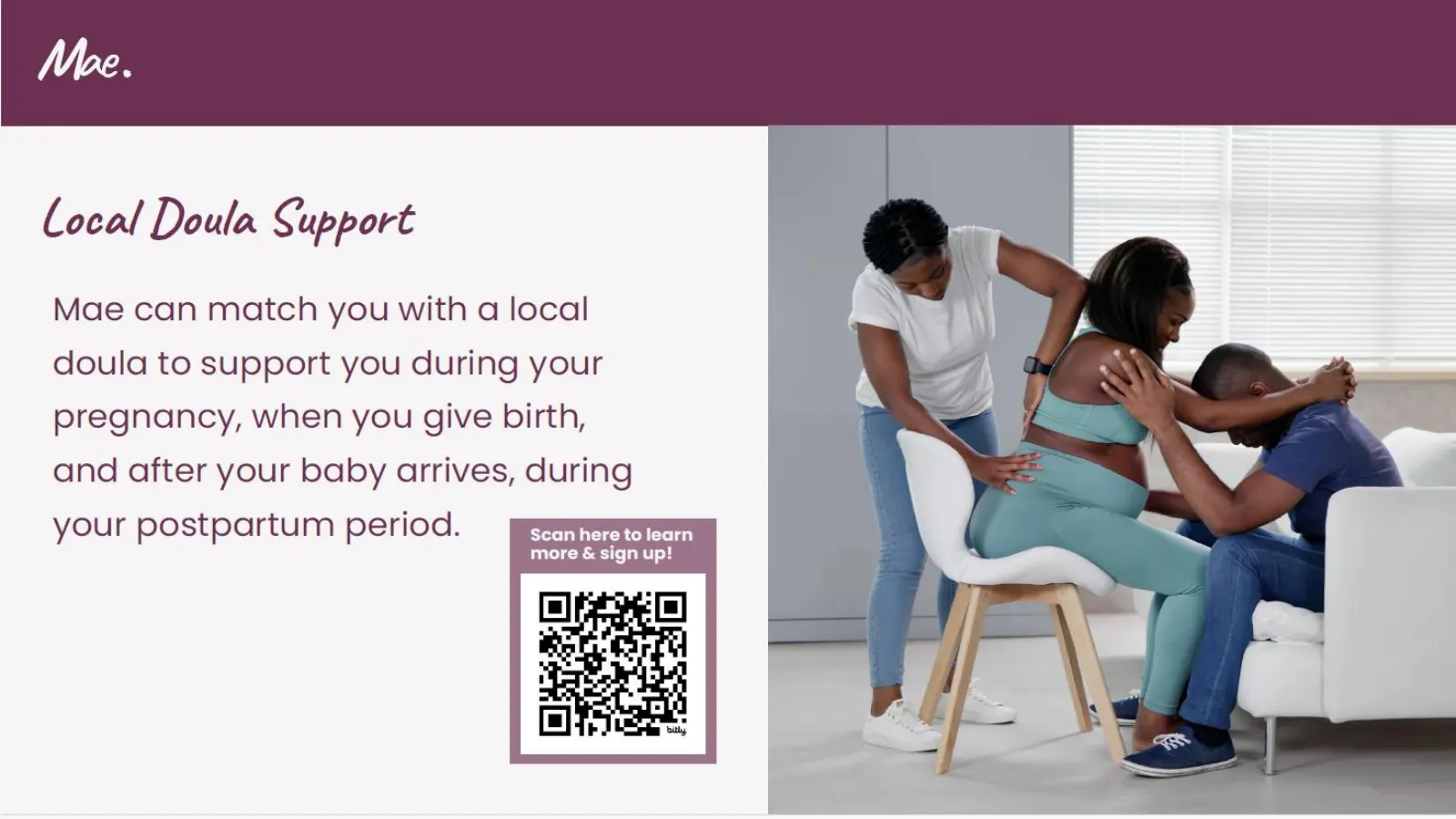
Cocal Doula Support Mae can match you with a local doula to support you during your pregnancy, when you give birth, and after your baby arrives, during your postpartum period. Scan here to learn
Slide 39: How Does a Doula Support You?
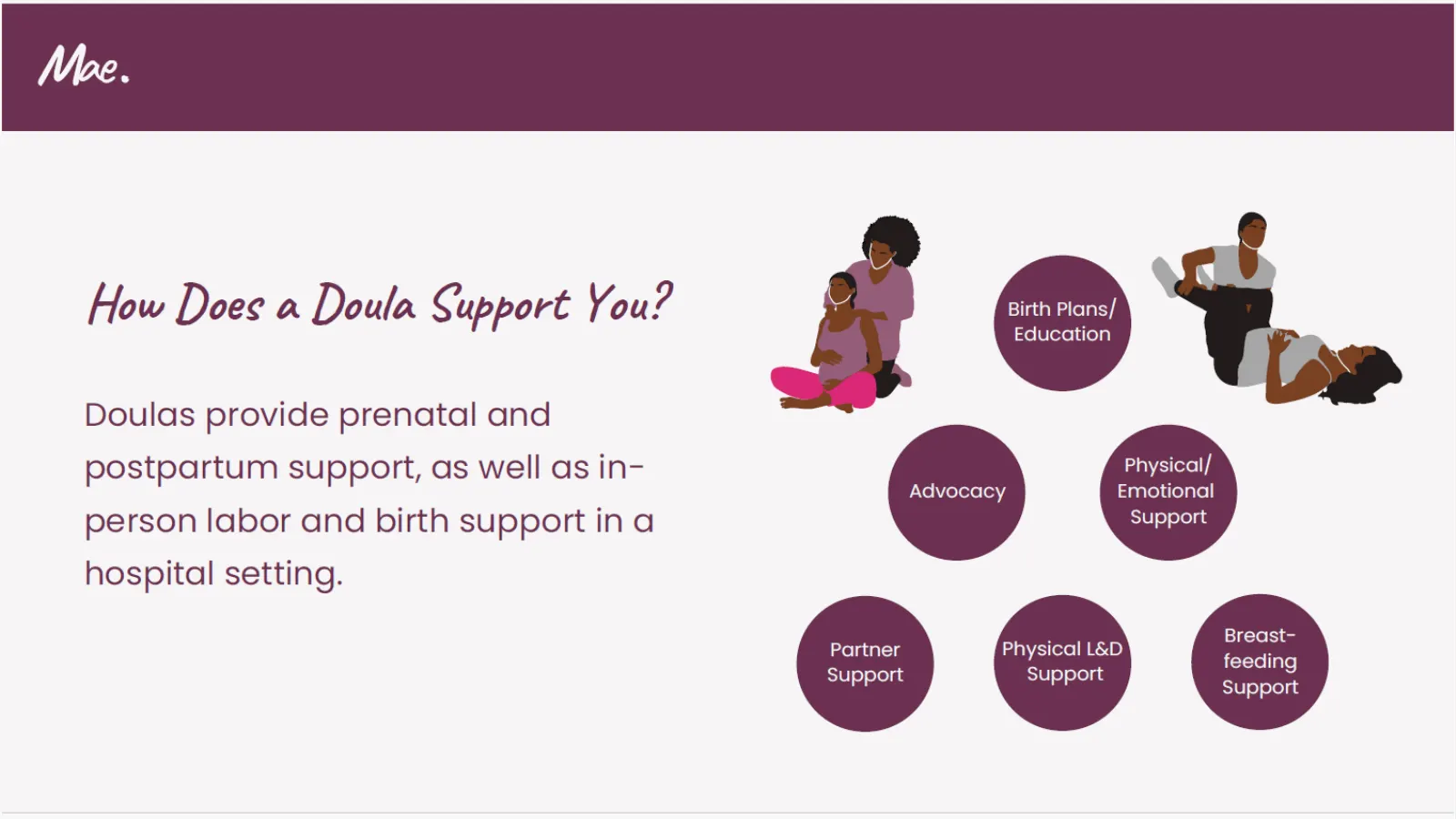
How Does a Doula Support You? Birth Plans/ Education Doulas provide prenatal and Physical/ Emotional Support postpartum support, as well as in- Advocacy person labor and birth support in a hospital setting. Breast- feeding Support Physical L&D Support

Slide 40: Free, Virtual Education
Free, Virtual Education Mae Mama Classes offer virtual, interactive, small group education with culturally-congruent pregnancy experts.
Slide 41: Care Coordination & Resources
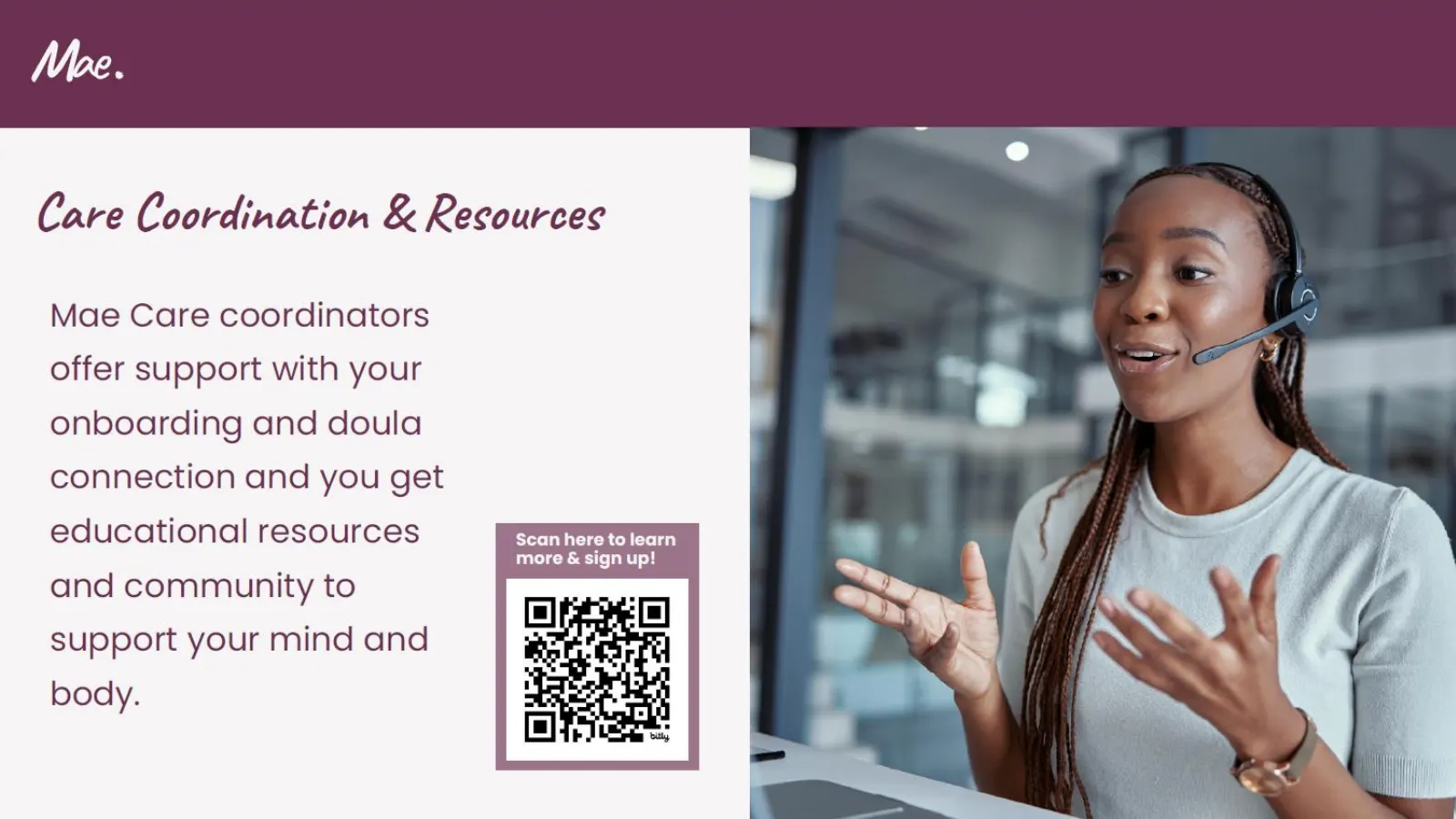
Care Coordination & Resources Mae Care coordinators offer support with your onboarding and doula connection and you get educational resources Scan here to learn more & sign up! and community to support your mind and body.
Slide 42: How Does Mae Work?
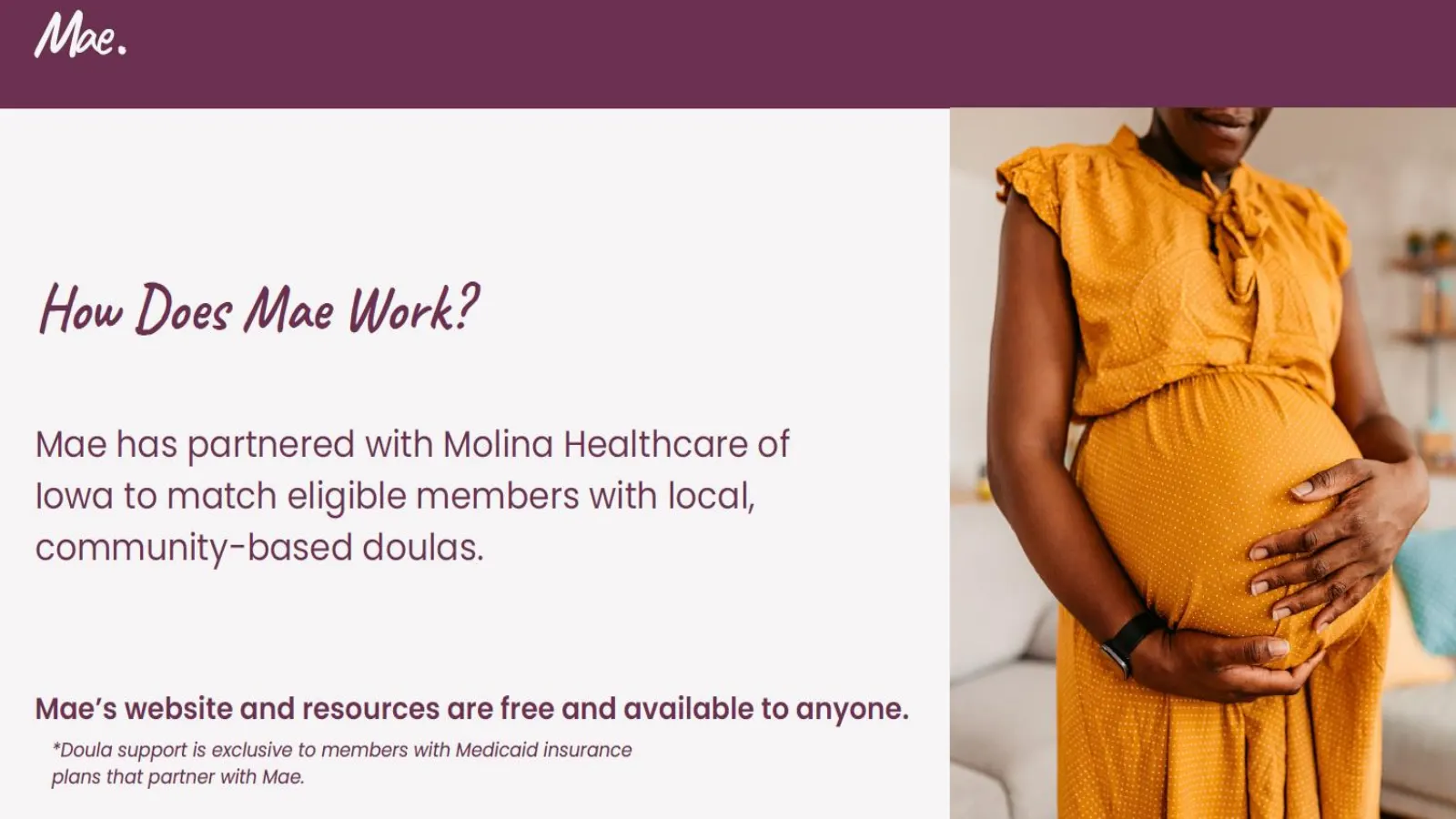
How Does Mae Work? Mae has partnered with Molina Healthcare of lowa to match eligible members with local, community-based doulas. Mae's website and resources are free and available to anyone. *Doula support is exclusive to members with Medicaid insurance plans that partner with Mae.
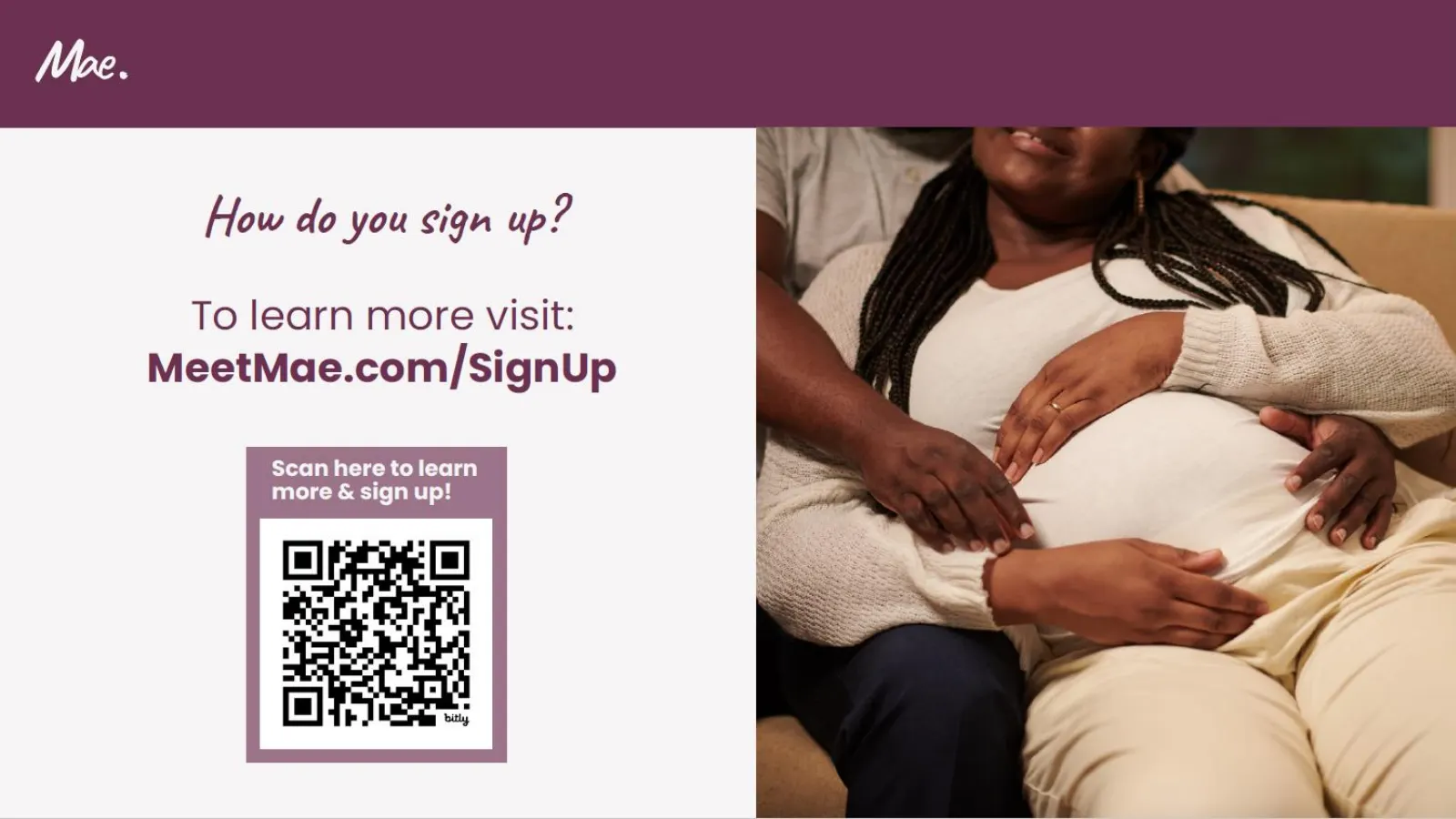
Slide 43: How do you sign up?
How do you sign up? To learn more visit: MeetMae.com/SignUp Scan here to learn more & sign up!
Slide 44: Katie McKenzie
conse) United Way of Central lowa Katie McKenzie HEALTHCARE
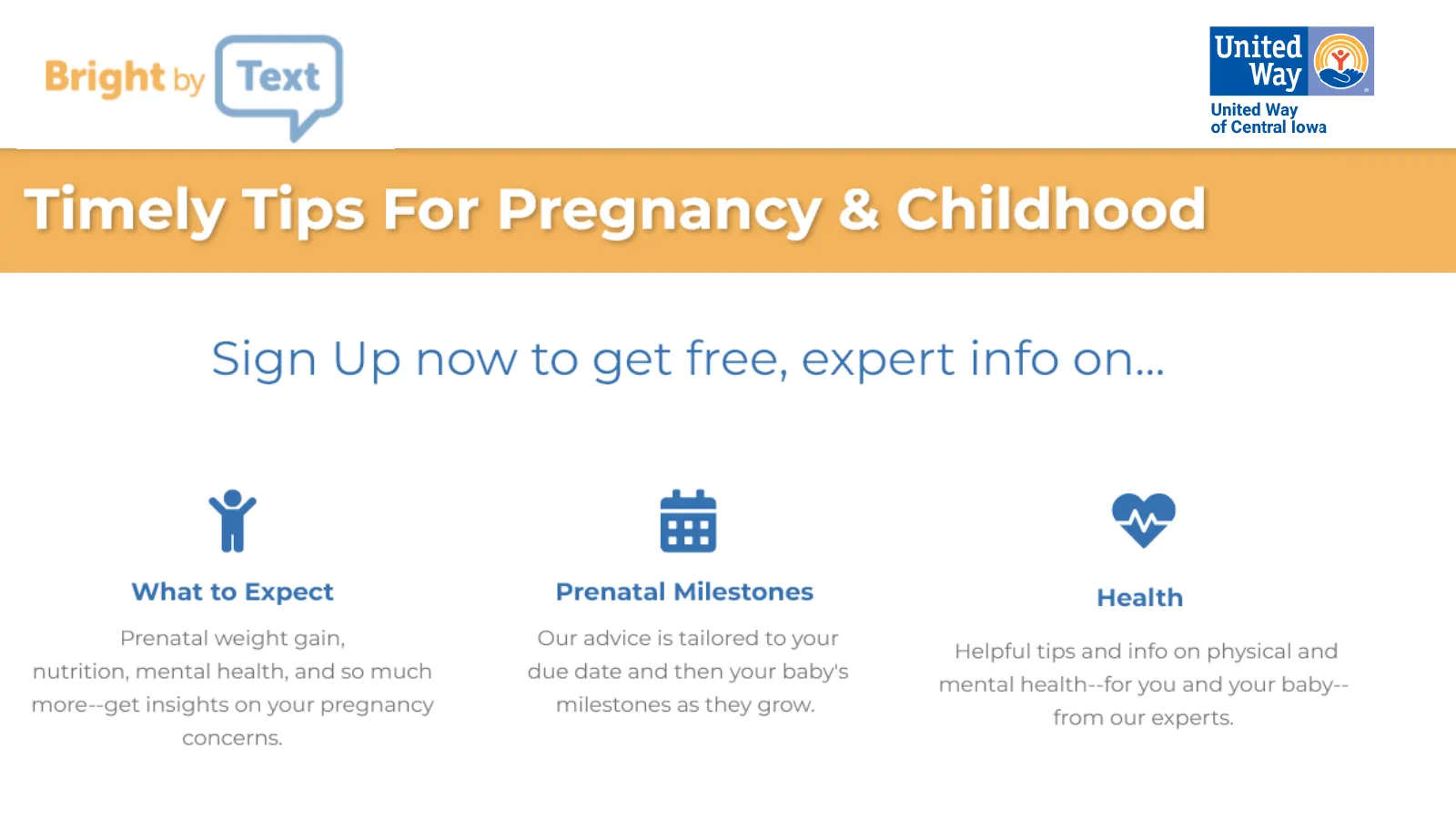
Slide 45: Bright by Text
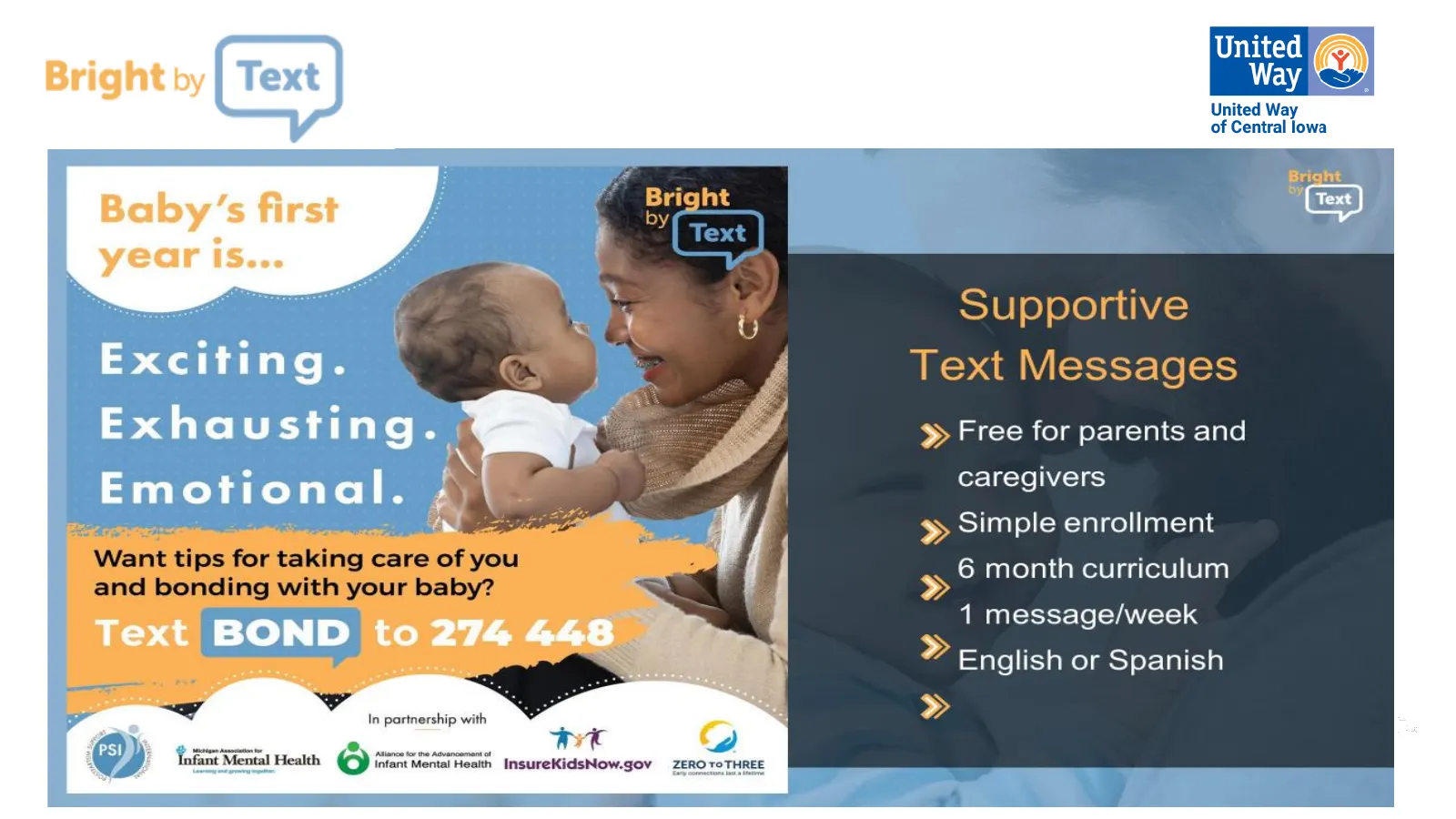
United Bright by Text Way a) nit fay of Central lowa Timely Tips For Pregnancy & Childhood Sign Up now to get free, expert info on... ¥ ES ¥ What to Expect Prenatal Milestones Health Prenatal weight gain, Our advice is tailored to your nutrition, mental health, and so much due date and then your bab
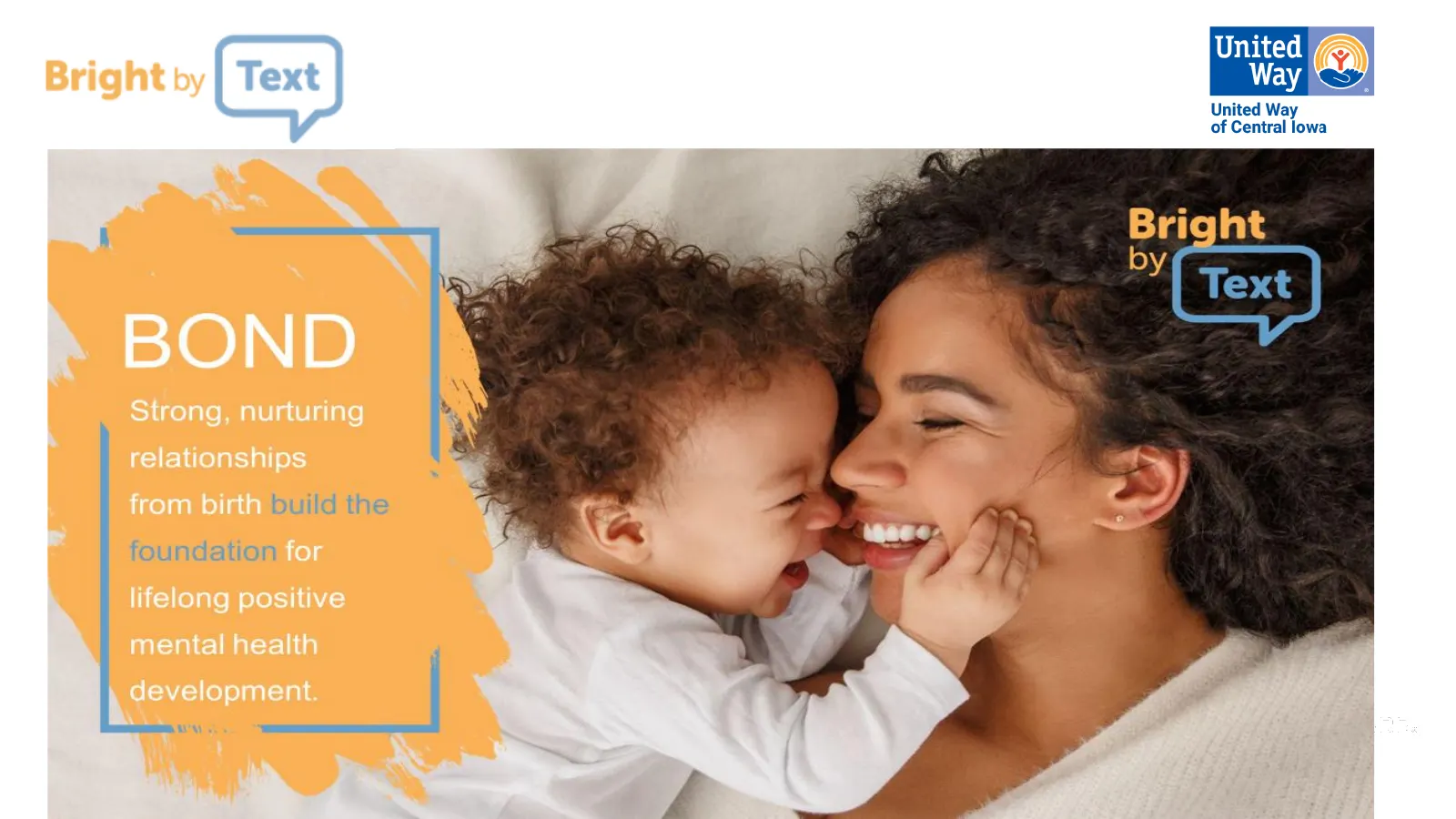
Slide 46: United Way of Central Iowa
United Way of Central lowa United (Text i build the foundation
Slide 47: Supportive Text Messages
United Way KY? United Way of Central lowa Supportive Text Messages > Free for parents and caregivers > Simple enrollment Want tips for taking care of you : 6 month curriculum and bonding with your baby? bs > 1 message/week > ae » English or Spanish 7 Li A) We B) » ip?) esigee Asencatn 7 sscoment ot
Slide 48: United
United Way S United Way of Central lowa
Slide 49: Molina My Health: Healthy Beginnings
& Molina My Health Healthy Beginnings HEALTHCARE
Slide 50: Care Management
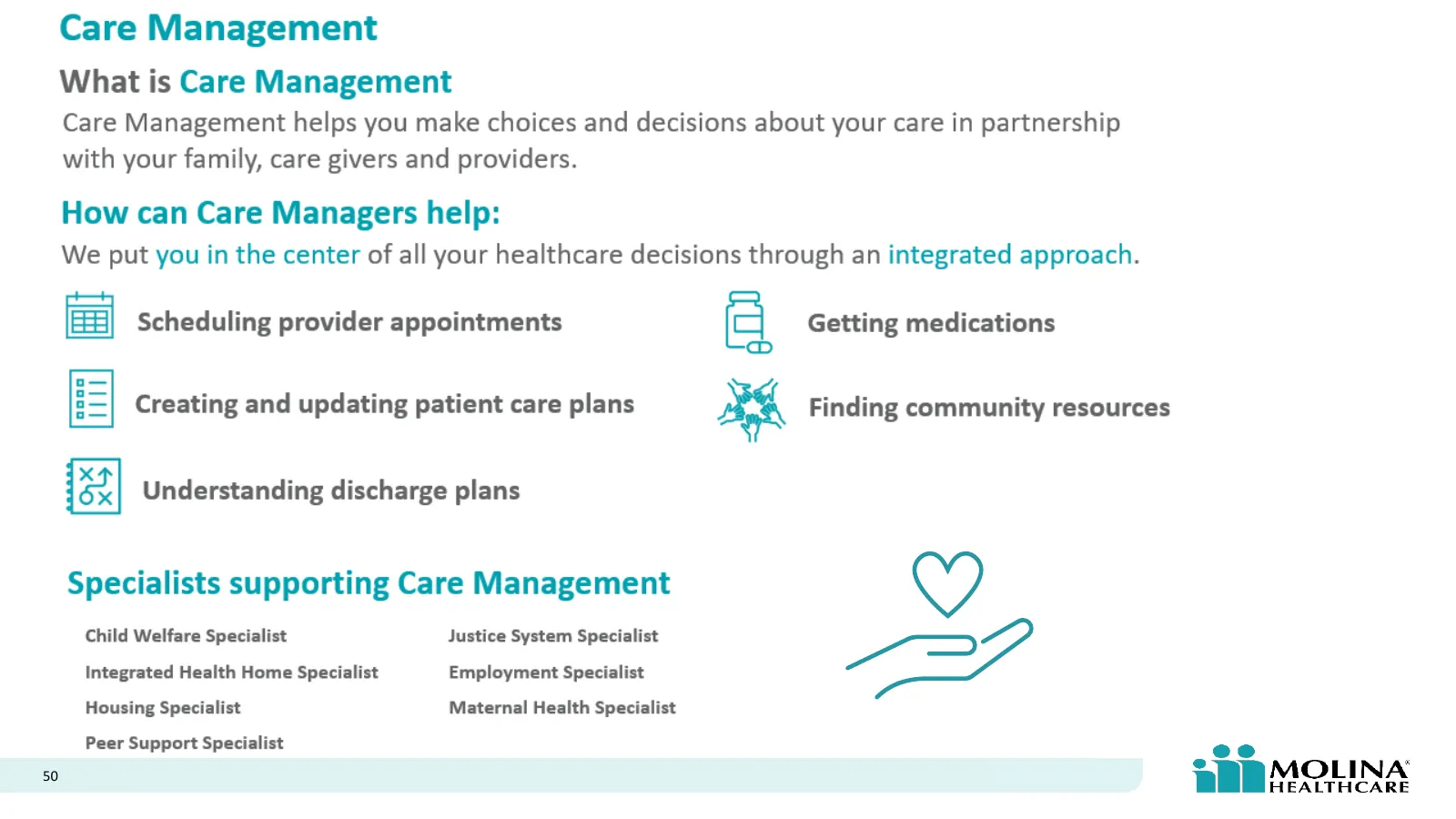
50 Care Management What is Care Management Care Management helps you make choices and decisions about your care in partnership with your family, care givers and providers. How can Care Managers help: We put you in the center of all your healthcare decisions through an integrated approach. EEE] Sched
Slide 51: We're here for you and your baby!
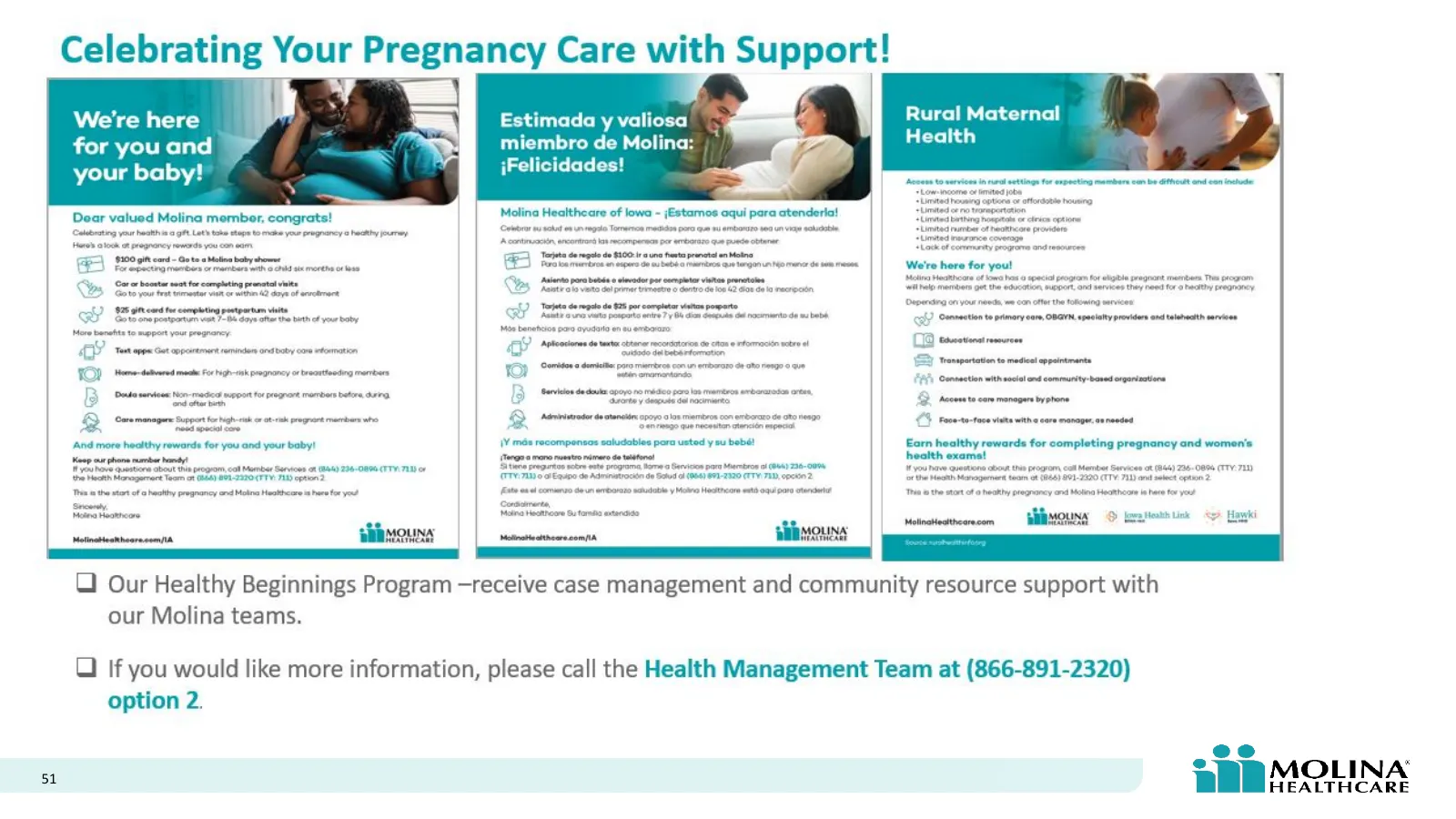
— We're here i for youand your baby! Dear valued Molina membor, congrats! Caluencting you heath a gf Lat tobe sap to mayer pregnancy @hacthy jury ew atch at gregnney rewerds yu con sam {$100 git card - Go tea Malina baby shower Feropeteng mney it rsrtars tho a mere se ‘Cora bootar wat fr competing p
Slide 52: Community Connectors
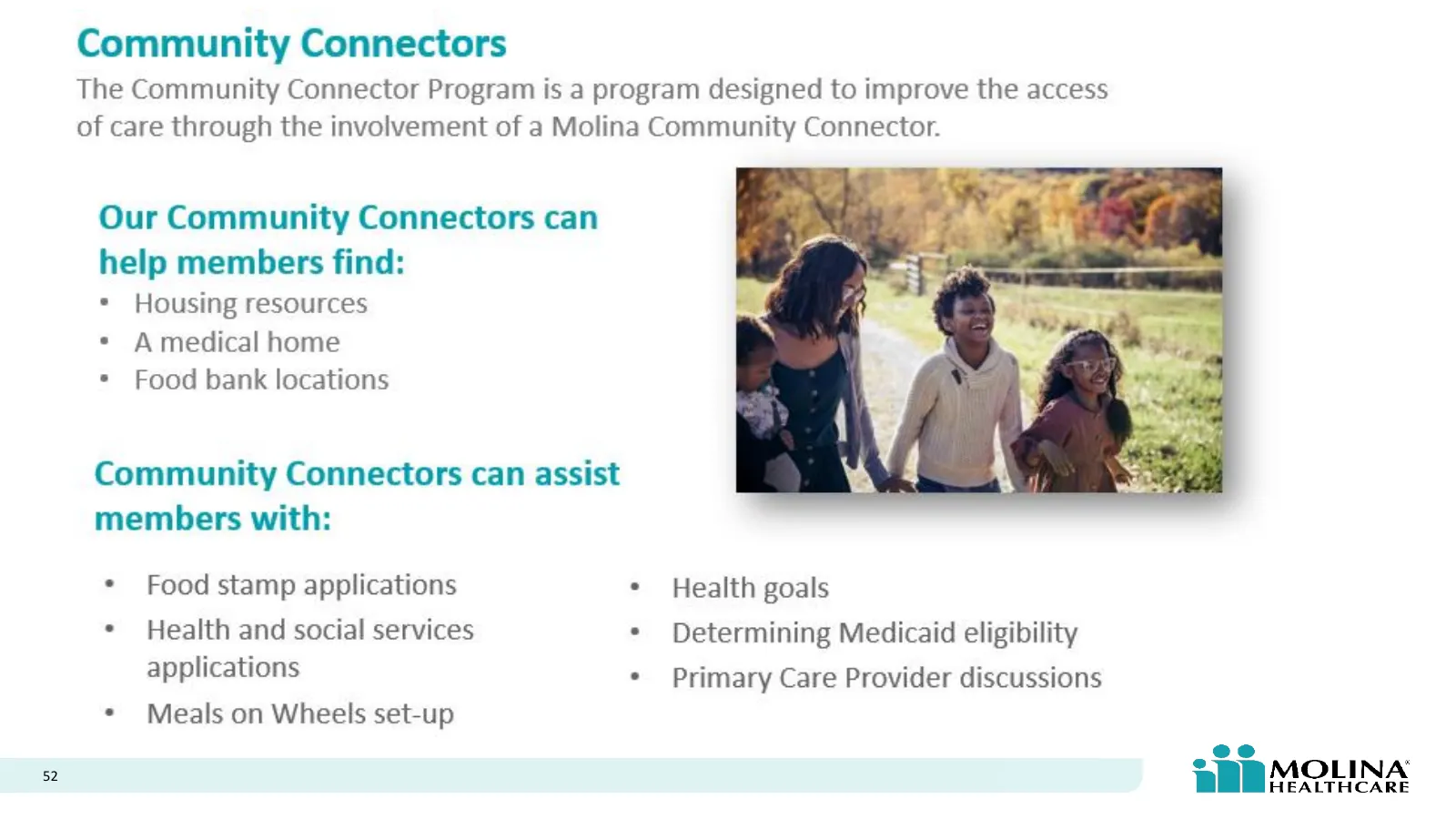
52 Community Connectors The Community Connector Program is a program designed to improve the access of care through the involvement of a Molina Community Connector. Our Community Connectors can help members find: * Housing resources * Amedical home * Food bank locations Community Connectors can assi
Slide 53: EPSDT Care for Kids Program
EPSDT (Early Periodic Screening Diagnosis Treatment) Care for Kids Program What to expect at a Well Care/EPSDT Visit • Talk about ways to keep your child healthy. Your child should have well child visits at: • Measure your child’s growth and development. • Birth • 3 to 5 days • Get information on sc
Slide 54: Molina Value-Added Services
Molina Value-Added Services
Slide 55: Healthy Rewards
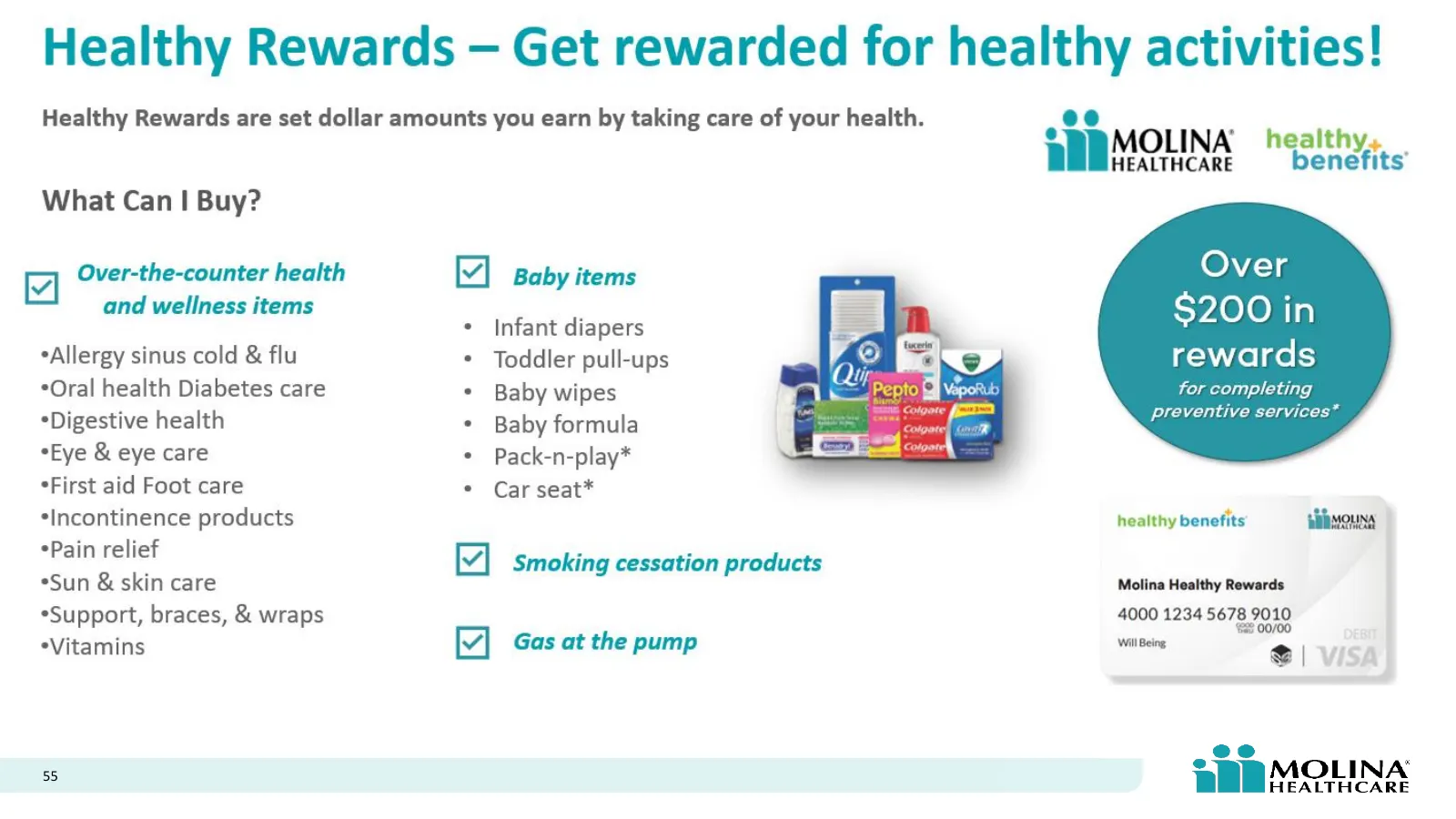
Healthy Rewards — Get rewarded for healthy activities! Healthy Rewards are set dollar amounts you earn by taking care of your health. ‘ ee What Can I Buy? Over-the-counter health i and wellness items Allergy sinus cold & flu *Oral health Diabetes care *Digestive health *Eye & eye care *First aid Foo
Slide 56: Access to Health & Wellness
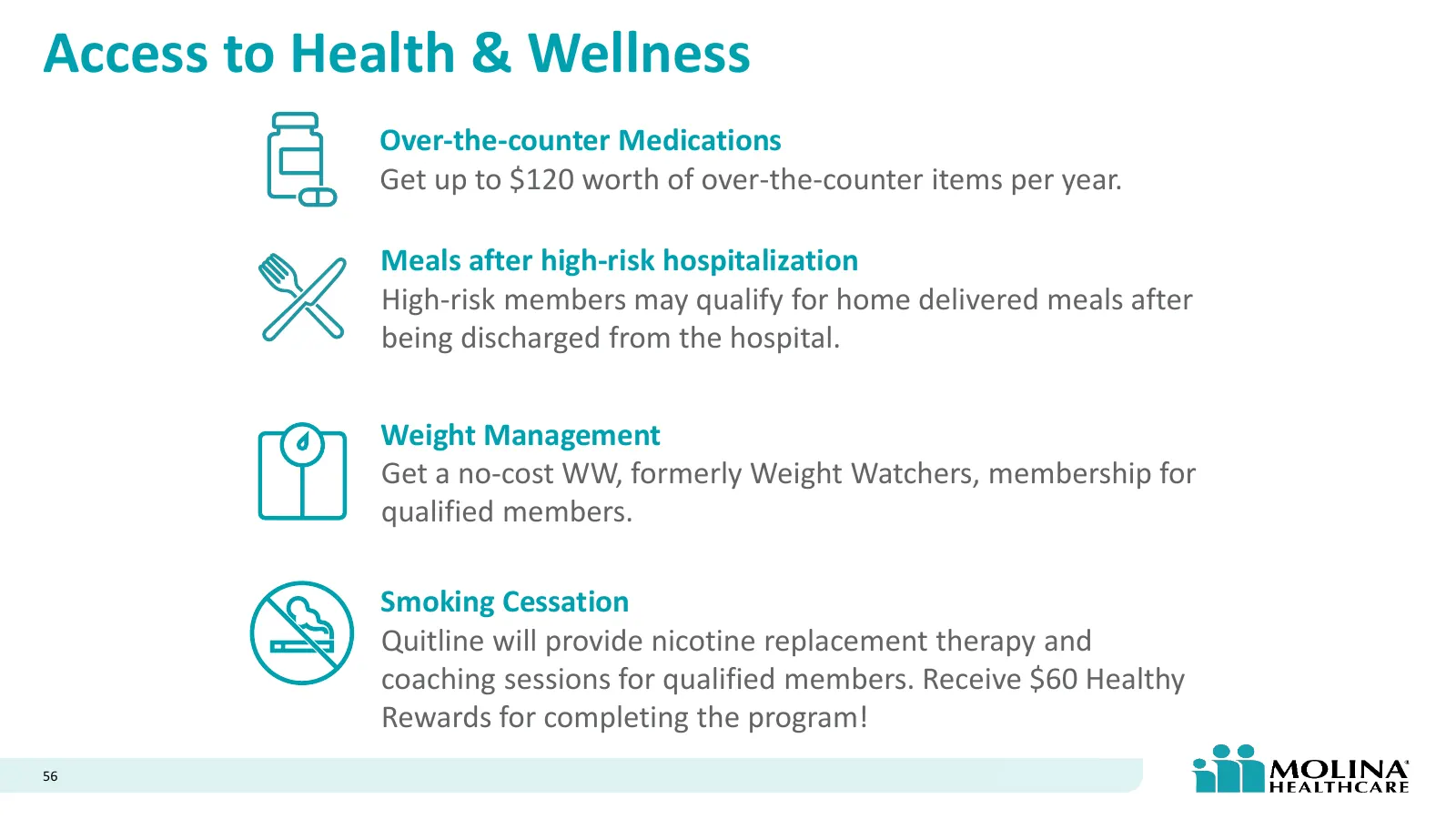
Access to Health & Wellness Over-the-counter Medications Get up to $120 worth of over-the-counter items per year. Meals after high-risk hospitalization High-risk members may qualify for home delivered meals after being discharged from the hospital. Weight Management Get a no-cost WW, formerly Weight
Slide 57: Transportation
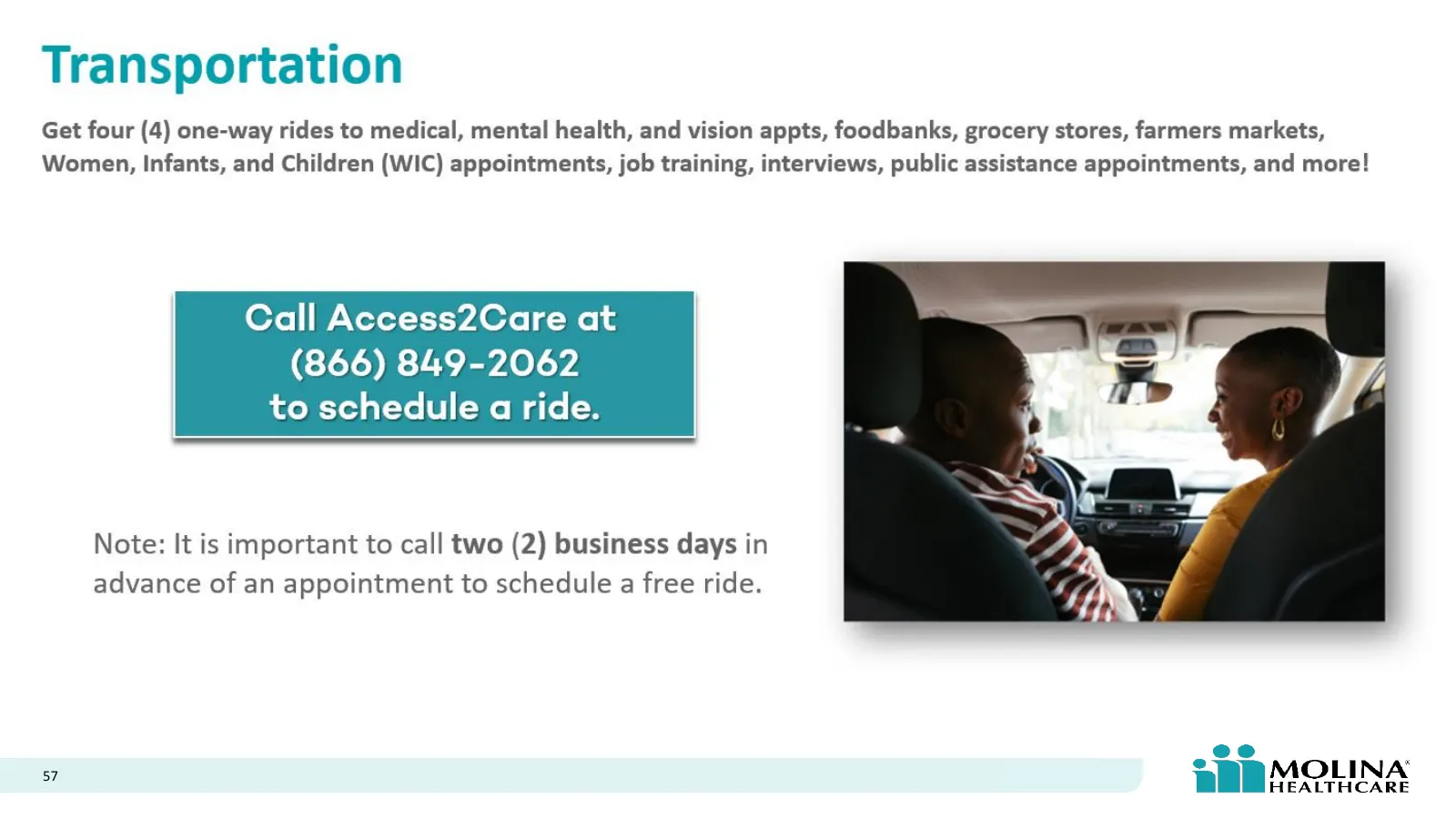
Transportation Get four (4) one-way rides to medical, mental health, and vision appts, foodbanks, grocery stores, farmers markets, Women, Infants, and Children (WIC) appointments, job training, interviews, public assistance appointments, and more! Call Access2Care at (866) 849-2062 to schedule a rid
Slide 58: Education & Learning
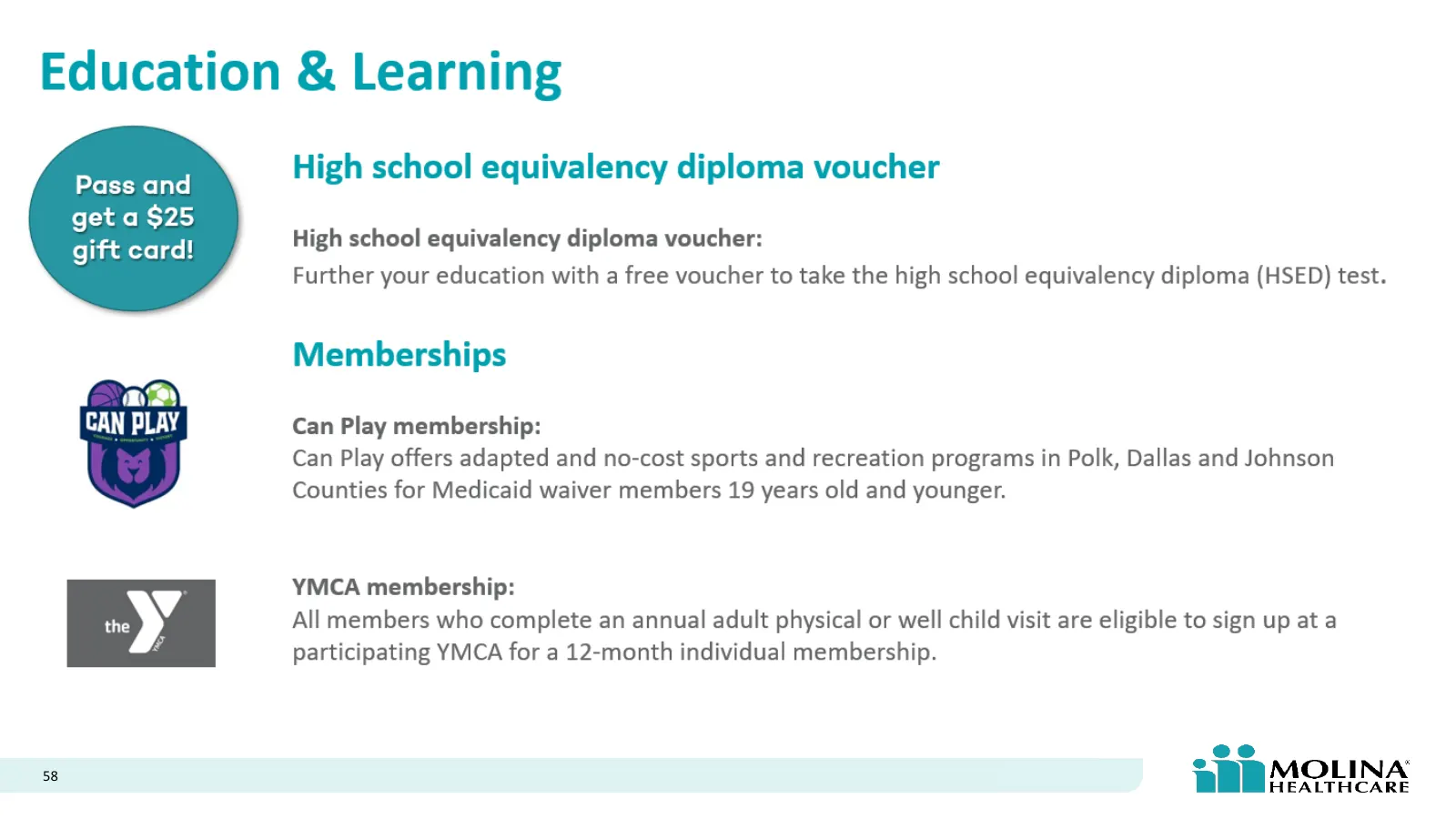
Education & Learning High school equivalency diploma voucher Pass and get a $25 - gift card! High school equivalency diploma voucher: Further your education with a free voucher to take the high school equivalency diploma (HSED) test. Memberships may CAN PLAY Can Play membership: Can Play offers adap
Slide 59: Pregnant Members and Babies Health
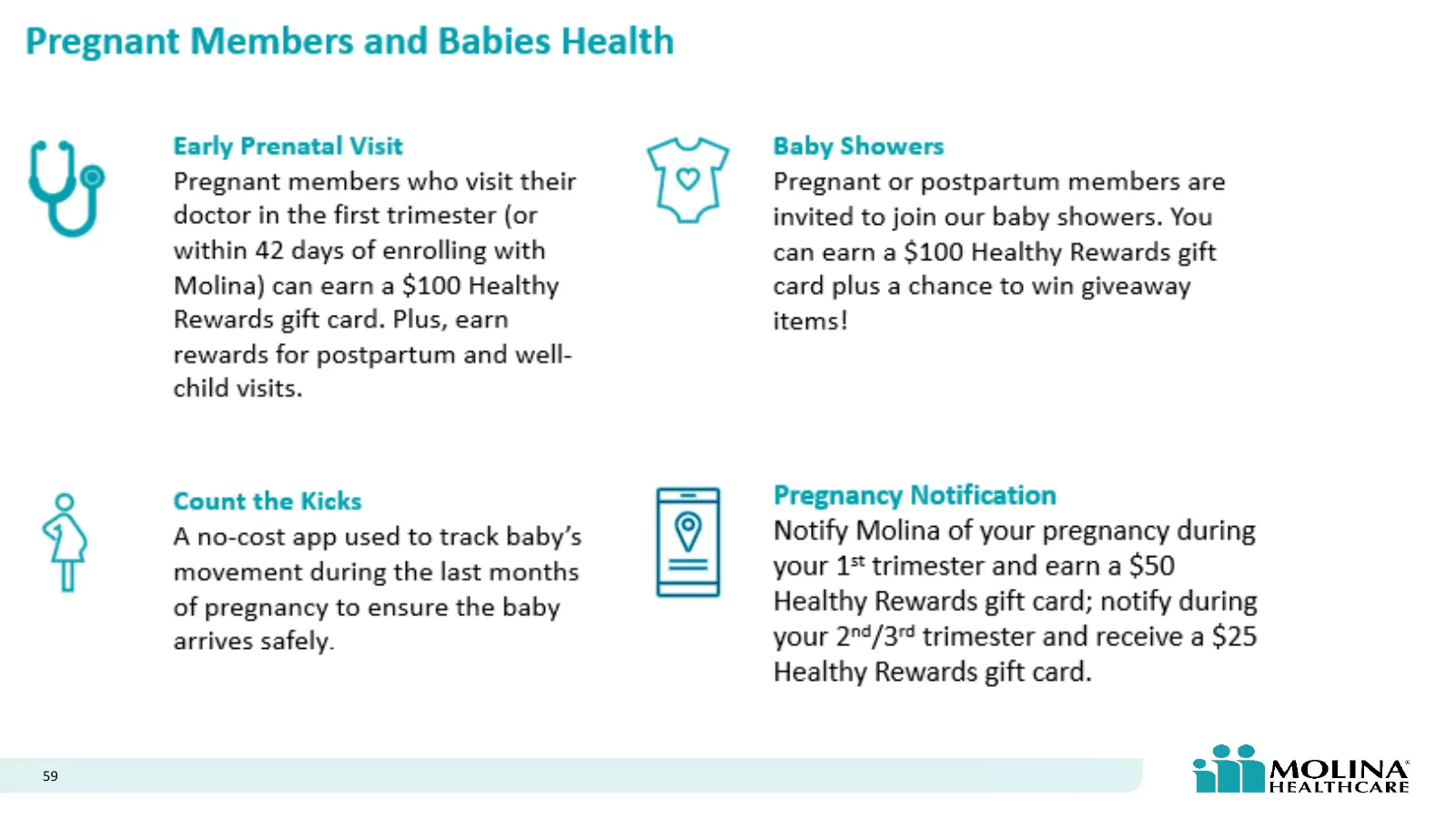
Pregnant Members and Babies Health 59 Early Prenatal Visit Pregnant members who visit their doctor in the first trimester (or within 42 days of enrolling with Molina) can earn a $100 Healthy Rewards gift card. Plus, earn rewards for postpartum and well- child visits. Count the Kicks A no-cost app us
Slide 60: Doula Support
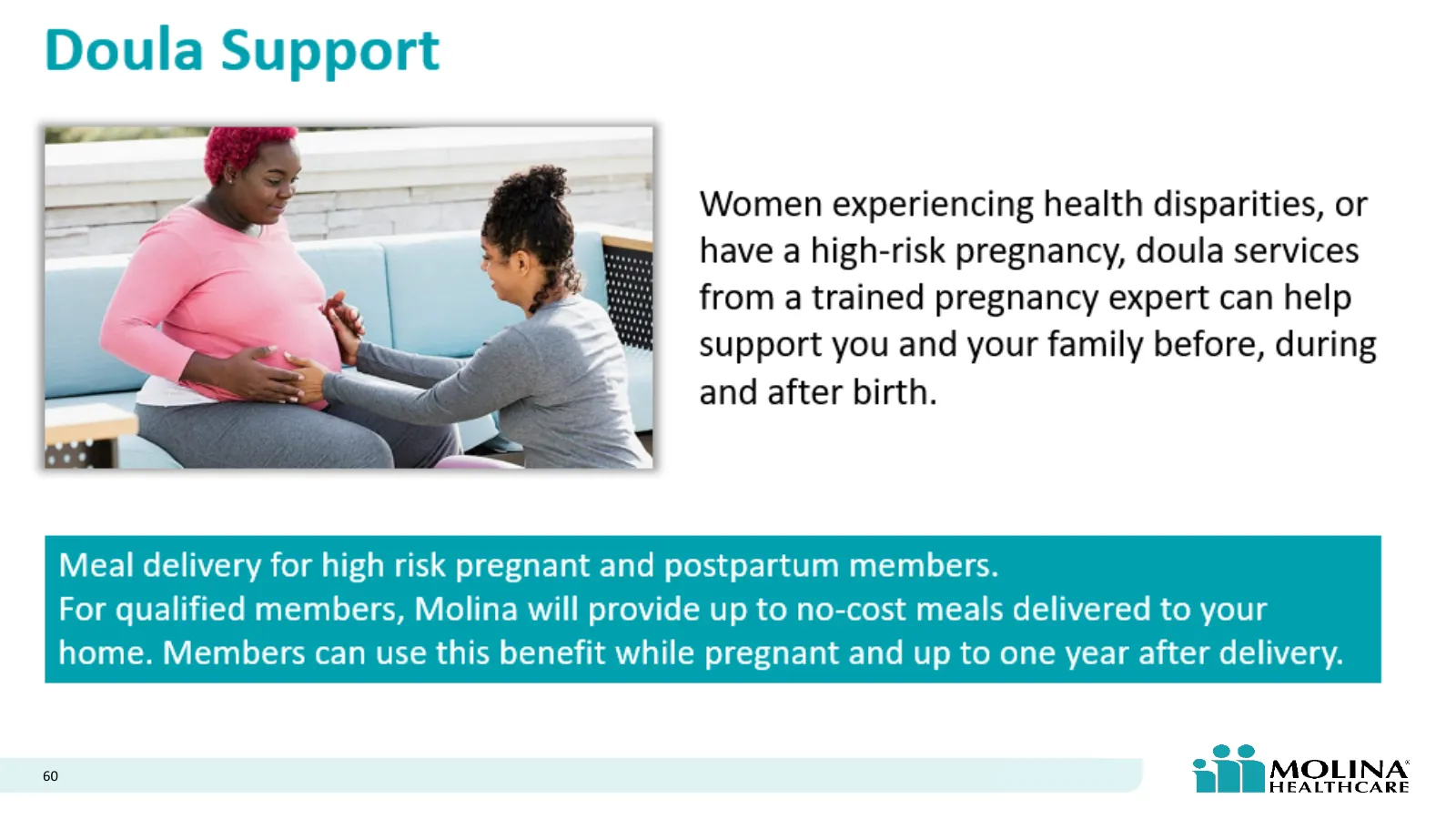
Doula Support Women experiencing health disparities, or have a high-risk pregnancy, doula services from a trained pregnancy expert can help support you and your family before, during and after birth. Meal delivery for high risk pregnant and postpartum members. For qualified members, Molina will prov
Slide 61: Call Member Services / Questions?
Call Member Services at (844) 236-0894 Contact your Care Manager Login to the My Molina app/Member Portal Questions? Email: MEIInquiries@MolinaHealthcare.com OR MolinaIAVABInfo@MolinaHealthCare.Com 61
Slide 62: Contact Information
Contact Information Care Management IA_CM@MolinaHealthcare.com Member Services Phone: (844) 236-0894 Hours: 7:30 am – 6:00 pm, Monday through Friday Website: https://MolinaHealthcare.com/IA Member Portal: MyMolina.com or My Molina App Email: IowaMemberServices@MolinaHealthcare.com 62
Slide 63: Thank you for joining today!
THANK YOU for joining today! Don’t forget … you’ll earn your healthy reward for attending the shower! There will be a follow-up survey emailed via ConstantContact – PLEASE COMPLETE! ☺ Special Thank You to: 63
Source: Internet Archive copy of molinahealthcare.com
More decks from Molina Healthcare Inc
 Investor Presentation (August 2026)31 slides · August 2026
 Investor Day (May 2026)76 slides · May 8, 2026
 Investor Presentation (January 2026)54 slides · January 2026
 Investor Presentation (2026)56 slides · 2026
 Investor Presentation (June 2025)29 slides · Jun 30, 2025
 Molina Healthcare of Illinois — MHIL 2025 Provider Orientation Webinar70 slides · Mar 20, 2025